Safeguards for Youth Briefing
March 5, 2020 at 11 am PST
Ask Questions!
We look forward to discussing more after the briefing.
Enter questions in the GoToWebinar question box.
Meet the Speakers
Lori Turk-Bicakci, PhD
Director, Lucile Packard Foundation for
Children’s Health
Troy Nichols
Senior Training and Consulting Specialist,
The Child Abuse Prevention Center
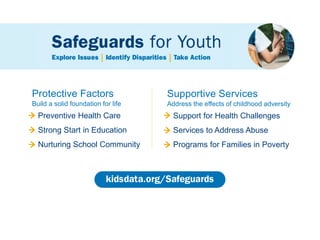
Protective Factors
Build a solid foundation for life
Preventive Health Care
Strong Start in Education
Nurturing School Community
Supportive Services
Address the effects of childhood adversity
Support for Health Challenges
Services to Address Abuse
Programs for Families in Poverty
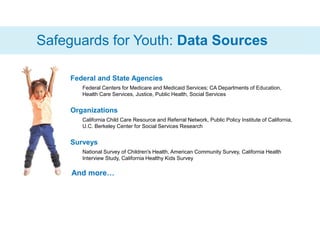
Safeguards for Youth: Data Sources
Federal and State Agencies
Federal Centers for Medicare and Medicaid Services; CA Departments of Education,
Health Care Services, Justice, Public Health, Social Services
Organizations
California Child Care Resource and Referral Network, Public Policy Institute of California,
U.C. Berkeley Center for Social Services Research
Surveys
National Survey of Children's Health, American Community Survey, California Health
Interview Study, California Healthy Kids Survey
And more…
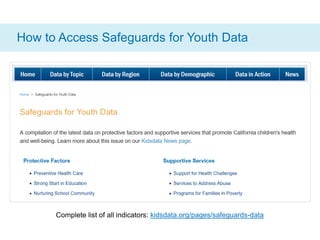
Complete list of all indicators: kidsdata.org/pages/safeguards-data
How to Access Safeguards for Youth Data
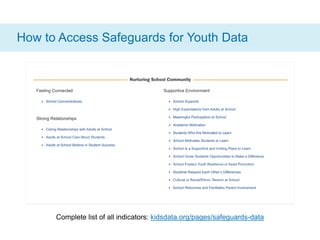
Complete list of all indicators: kidsdata.org/pages/safeguards-data
How to Access Safeguards for Youth Data
growing knowledge and networks
for professionals working with families
STRENGTHENING FAMILIES™
• Increase family strengths
• Enhance positive child outcomes
• Reduce likelihood of child abuse and neglect
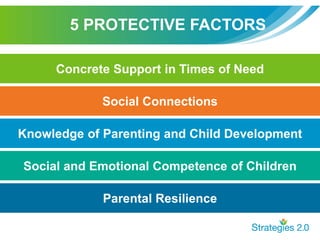
5 PROTECTIVE FACTORS
Concrete Support in Times of Need
Social Connections
Knowledge of Parenting and Child Development
Social and Emotional Competence of Children
Parental Resilience
HOW TO RECOGNIZE FAMILIES WITH
CONCRETE SUPPORT
Families who have strong Concrete
Support in Times of Need are:
• Resourceful
• Able to identify, find and receive
basic necessities
• Understand their rights to access
formal services
• Know how to navigate service
systems
• Ask for help
• Have the financial security needed
to cover costs
HOW TO RECOGNIZE FAMILIES WITH
SOCIAL CONNECTIONS
Parents and families with strong
Social Connections:
• Build trusting relationships
• Feel respected and appreciated by their
social connections
• Have family, friends, neighbors and others
who provide emotional, instrumental,
informational and spiritual support
• Feel connected, secure, and empowered to
have positive mutual interactions with
others
KNOWLEDGE OF PARENTING
AND CHILD DEVELOPMENT
Parents with strong Knowledge of
Parenting and Child Development:
• Seek and use accurate and age-
appropriate information to guide their
parenting behaviors
• Have appropriate developmental
expectations
• Use positive discipline techniques
• Know the importance of being emotionally
and physically available, attuned,
nurturing, responsive, reliable and
predictable for their children
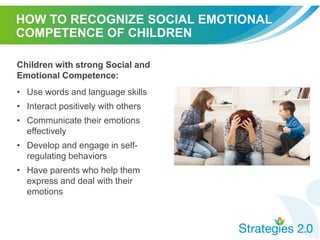
HOW TO RECOGNIZE SOCIAL EMOTIONAL
COMPETENCE OF CHILDREN
Children with strong Social and
Emotional Competence:
• Use words and language skills
• Interact positively with others
• Communicate their emotions
effectively
• Develop and engage in self-
regulating behaviors
• Have parents who help them
express and deal with their
emotions
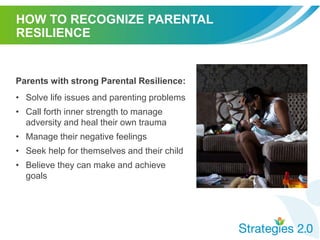
HOW TO RECOGNIZE PARENTAL
RESILIENCE
Parents with strong Parental Resilience:
• Solve life issues and parenting problems
• Call forth inner strength to manage
adversity and heal their own trauma
• Manage their negative feelings
• Seek help for themselves and their child
• Believe they can make and achieve
goals
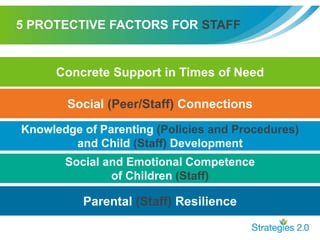
5 PROTECTIVE FACTORS FOR STAFF
Concrete Support in Times of Need
Social (Peer/Staff) Connections
Knowledge of Parenting (Policies and Procedures)
and Child (Staff) Development
Social and Emotional Competence
of Children (Staff)
Parental (Staff) Resilience
TRAUMA INFORMED CARE
Using a trauma-informed approach
represents the shift from
“What’s wrong?” to
“What has happened?”
KEY PRINCIPLES OF A
TRAUMA-INFORMED APPROACH
1. Safety
2. Trustworthiness and Transparency
3. Peer Support
4. Collaboration and Mutuality
5. Empowerment, Voice, and Choice
6. Cultural, Historical, and Gender Issues
SAFEGUARDS FOR YOUTH DATA:
CRITICAL AREAS
Protective Factors
Safeguards:
Preventive Health Care
Strong Start in Education
Nurturing School Community
Protective Factors:
CSSP
Concrete Supports in Times of Need
Social Emotional Competence of Children
Social Connections
SAFEGUARDS FOR YOUTH DATA:
CRITICAL AREAS
Supportive Services
Safeguards
Support for Health Challenges
Services to Address Abuse
Programs for Families in Poverty
Supportive Services
Strategies 2.0
Early start FRC’s
CAPC’s, County Prevention Plans
FRC’s, Training and Implementation
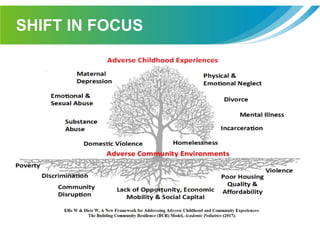
SHIFT IN FOCUS
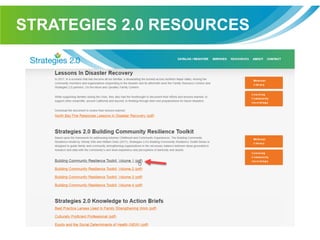
STRATEGIES 2.0 RESOURCES
StrategiesCA.org
Twitter.com/StrategiesCA
Fb.com/StrategiesCA
STAY CONNECTED
Safeguards for Youth Briefing

Safeguards for Youth Briefing

  • 1.
    Safeguards for YouthBriefing March 5, 2020 at 11 am PST
  • 2.
    Ask Questions! We lookforward to discussing more after the briefing. Enter questions in the GoToWebinar question box.
  • 3.
    Meet the Speakers LoriTurk-Bicakci, PhD Director, Lucile Packard Foundation for Children’s Health Troy Nichols Senior Training and Consulting Specialist, The Child Abuse Prevention Center
  • 4.
    Protective Factors Build asolid foundation for life Preventive Health Care Strong Start in Education Nurturing School Community Supportive Services Address the effects of childhood adversity Support for Health Challenges Services to Address Abuse Programs for Families in Poverty
  • 5.
    Safeguards for Youth:Data Sources Federal and State Agencies Federal Centers for Medicare and Medicaid Services; CA Departments of Education, Health Care Services, Justice, Public Health, Social Services Organizations California Child Care Resource and Referral Network, Public Policy Institute of California, U.C. Berkeley Center for Social Services Research Surveys National Survey of Children's Health, American Community Survey, California Health Interview Study, California Healthy Kids Survey And more…
  • 6.
    Complete list ofall indicators: kidsdata.org/pages/safeguards-data How to Access Safeguards for Youth Data
  • 7.
    Complete list ofall indicators: kidsdata.org/pages/safeguards-data How to Access Safeguards for Youth Data
  • 8.
    growing knowledge andnetworks for professionals working with families
  • 9.
    STRENGTHENING FAMILIES™ • Increasefamily strengths • Enhance positive child outcomes • Reduce likelihood of child abuse and neglect
  • 10.
    5 PROTECTIVE FACTORS ConcreteSupport in Times of Need Social Connections Knowledge of Parenting and Child Development Social and Emotional Competence of Children Parental Resilience
  • 11.
    HOW TO RECOGNIZEFAMILIES WITH CONCRETE SUPPORT Families who have strong Concrete Support in Times of Need are: • Resourceful • Able to identify, find and receive basic necessities • Understand their rights to access formal services • Know how to navigate service systems • Ask for help • Have the financial security needed to cover costs
  • 12.
    HOW TO RECOGNIZEFAMILIES WITH SOCIAL CONNECTIONS Parents and families with strong Social Connections: • Build trusting relationships • Feel respected and appreciated by their social connections • Have family, friends, neighbors and others who provide emotional, instrumental, informational and spiritual support • Feel connected, secure, and empowered to have positive mutual interactions with others
  • 13.
    KNOWLEDGE OF PARENTING ANDCHILD DEVELOPMENT Parents with strong Knowledge of Parenting and Child Development: • Seek and use accurate and age- appropriate information to guide their parenting behaviors • Have appropriate developmental expectations • Use positive discipline techniques • Know the importance of being emotionally and physically available, attuned, nurturing, responsive, reliable and predictable for their children
  • 14.
    HOW TO RECOGNIZESOCIAL EMOTIONAL COMPETENCE OF CHILDREN Children with strong Social and Emotional Competence: • Use words and language skills • Interact positively with others • Communicate their emotions effectively • Develop and engage in self- regulating behaviors • Have parents who help them express and deal with their emotions
  • 15.
    HOW TO RECOGNIZEPARENTAL RESILIENCE Parents with strong Parental Resilience: • Solve life issues and parenting problems • Call forth inner strength to manage adversity and heal their own trauma • Manage their negative feelings • Seek help for themselves and their child • Believe they can make and achieve goals
  • 16.
    5 PROTECTIVE FACTORSFOR STAFF Concrete Support in Times of Need Social (Peer/Staff) Connections Knowledge of Parenting (Policies and Procedures) and Child (Staff) Development Social and Emotional Competence of Children (Staff) Parental (Staff) Resilience
  • 17.
    TRAUMA INFORMED CARE Usinga trauma-informed approach represents the shift from “What’s wrong?” to “What has happened?”
  • 18.
    KEY PRINCIPLES OFA TRAUMA-INFORMED APPROACH 1. Safety 2. Trustworthiness and Transparency 3. Peer Support 4. Collaboration and Mutuality 5. Empowerment, Voice, and Choice 6. Cultural, Historical, and Gender Issues
  • 19.
    SAFEGUARDS FOR YOUTHDATA: CRITICAL AREAS Protective Factors Safeguards: Preventive Health Care Strong Start in Education Nurturing School Community Protective Factors: CSSP Concrete Supports in Times of Need Social Emotional Competence of Children Social Connections
  • 20.
    SAFEGUARDS FOR YOUTHDATA: CRITICAL AREAS Supportive Services Safeguards Support for Health Challenges Services to Address Abuse Programs for Families in Poverty Supportive Services Strategies 2.0 Early start FRC’s CAPC’s, County Prevention Plans FRC’s, Training and Implementation
  • 21.
  • 22.
  • 23.
  • 24.
  • 25.
  • 26.