SACON
SACON	International	2017
Abhisek Datta
Appsecco
Head	of	Technology
@abh1sek
India	|	Bangalore	|	November	10	– 11	|	Hotel	Lalit Ashok
SACON 2017
Lets	start	with	a	story..
SACON 2017
• To	be	able	to	see	where	the	entry	points	to	the	application	are	and	
the	associated	threats	with	each	entry	point
• To	be	able	to	create	a	security	roadmap
• To	be	able	to	create	more	secure	applications	in	general
• To	be	able	to	sustain	secure	software	development	practices
Why	to	perform	Threat	Modeling?
SACON 2017
• Threat	modelling	is	an	in-depth	approach	for	analyzing	the	security	of	
an	application	
• It	allows	the	reviewer	to	see	where	the	entry	points	to	the	application	
are	(i.e.	the	attack	surfaces)	
• The	associated	threats	with	each	entry	point	(i.e.	attack	vectors)	
• Design	and	adopt	various	counter	measures	and	mitigation	strategies	
to	enhance	security	of	the	application
What	is	Threat	Modeling	?
SACON 2017
• A	document	clearly	describing	application	components	and	applicable	
threats	for	each	component
• Risk	rated	prioritization	of	threats	and	how	it	should	be	addressed
• Accepted	risks
Outcome	of	Threat	Modeling	?
SACON 2017
Threat	Modeling
A	Generic	Approach
SACON 2017
• Threat
• A	potential	to	cause	harm	to	something	of	value	(asset)
• Vulnerability
• A	way	to	cause	harm	or	to	materialize	the	threat
A	Threat	is	not	a	Vulnerability
SACON 2017
A	Threat	is	not	a	Vulnerability
All	web	applications	with	SQL	backend	has	a	
threat	for	Injection	but	not	all	of	them	has	an	SQL	
Injection	vulnerability
SACON 2017
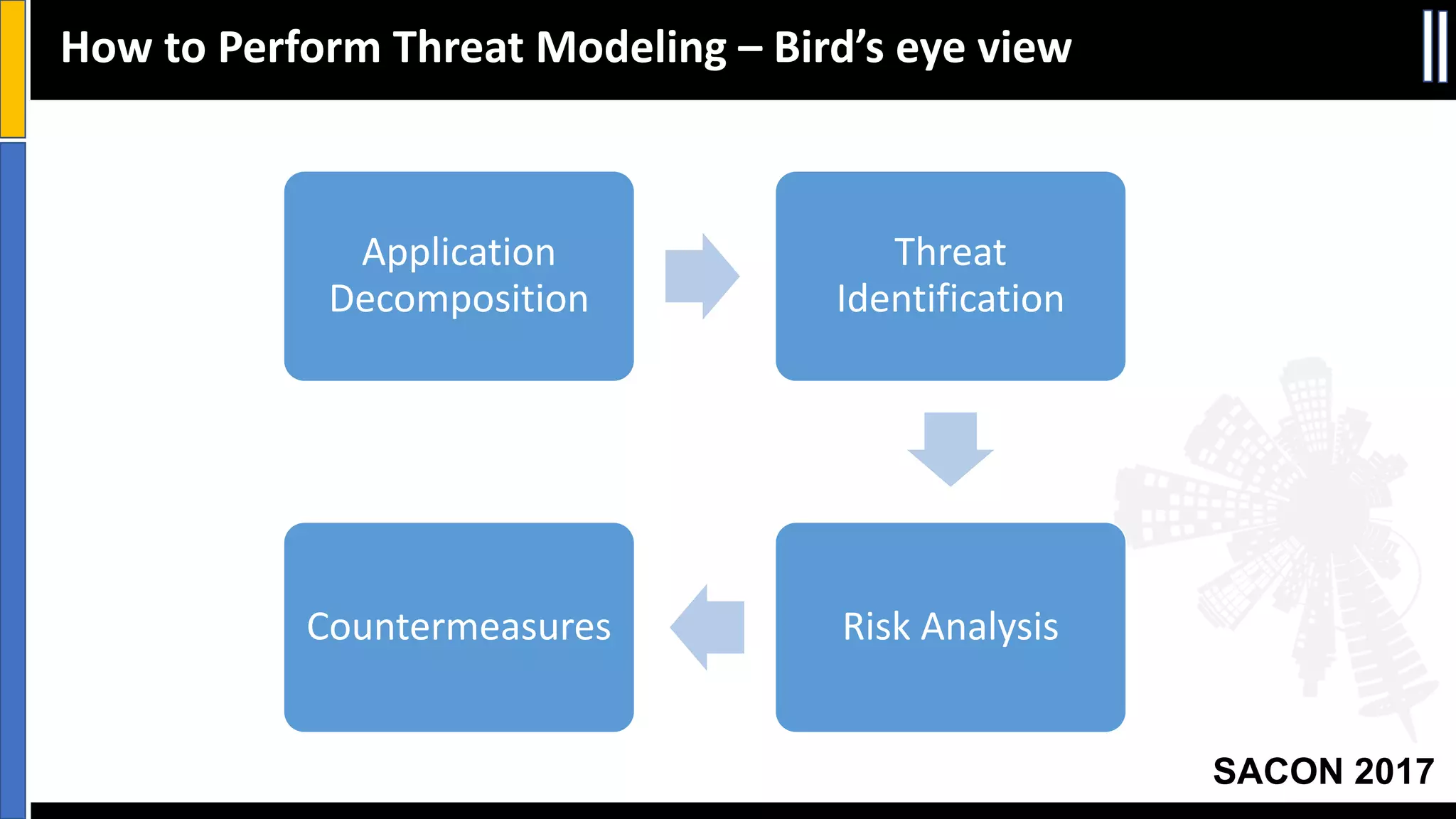
How	to	Perform	Threat	Modeling	– Bird’s	eye	view
Application	
Decomposition
Threat	
Identification
Risk	AnalysisCountermeasures
SACON 2017
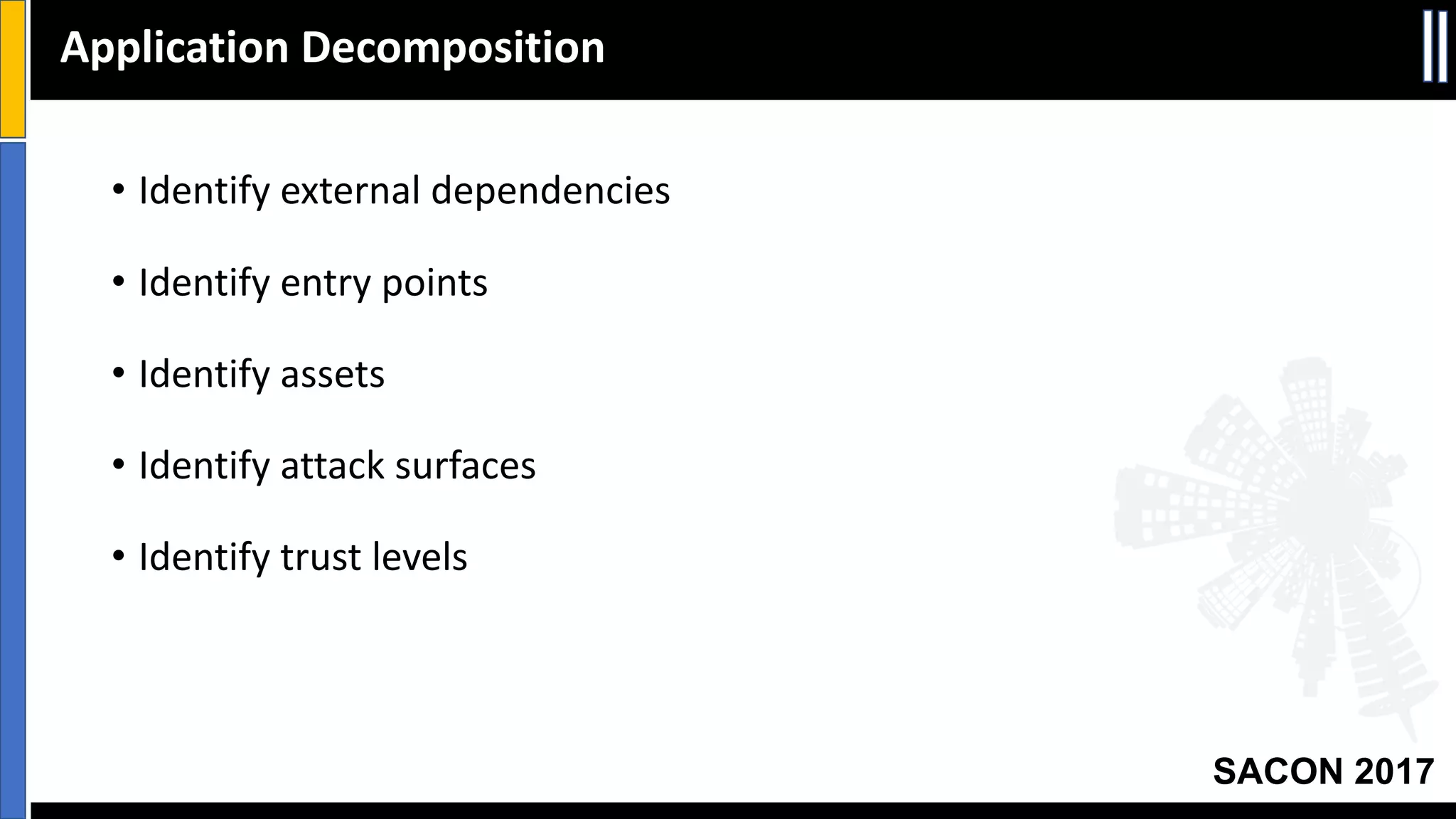
• Identify	external	dependencies
• Identify	entry	points
• Identify	assets
• Identify	attack	surfaces
• Identify	trust	levels
Application	Decomposition
SACON 2017
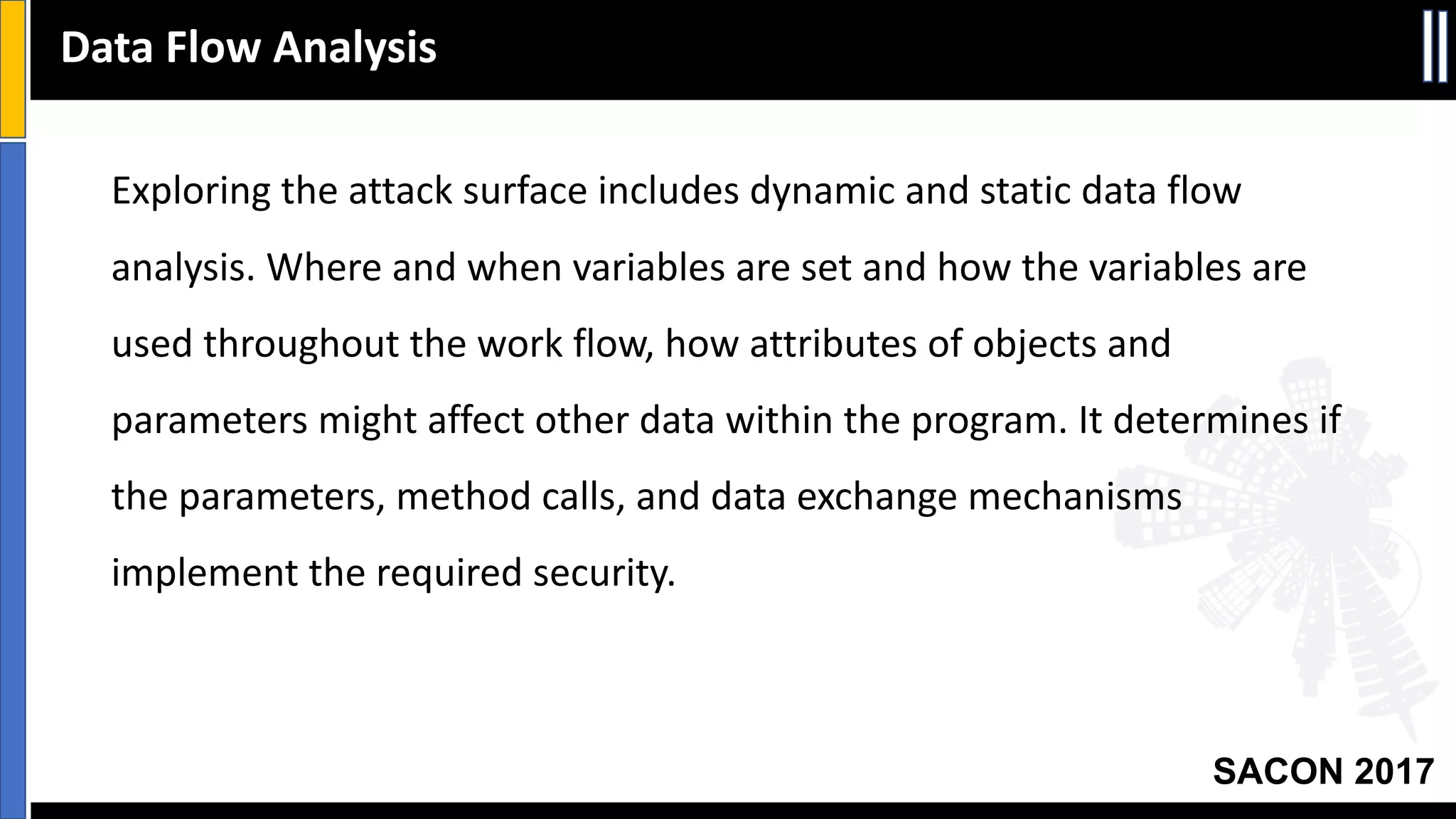
Exploring	the	attack	surface	includes	dynamic	and	static	data	flow	
analysis.	Where	and	when	variables	are	set	and	how	the	variables	are	
used	throughout	the	work	flow,	how	attributes	of	objects	and	
parameters	might	affect	other	data	within	the	program.	It	determines	if	
the	parameters,	method	calls,	and	data	exchange	mechanisms	
implement	the	required	security.	
Data	Flow	Analysis
SACON 2017
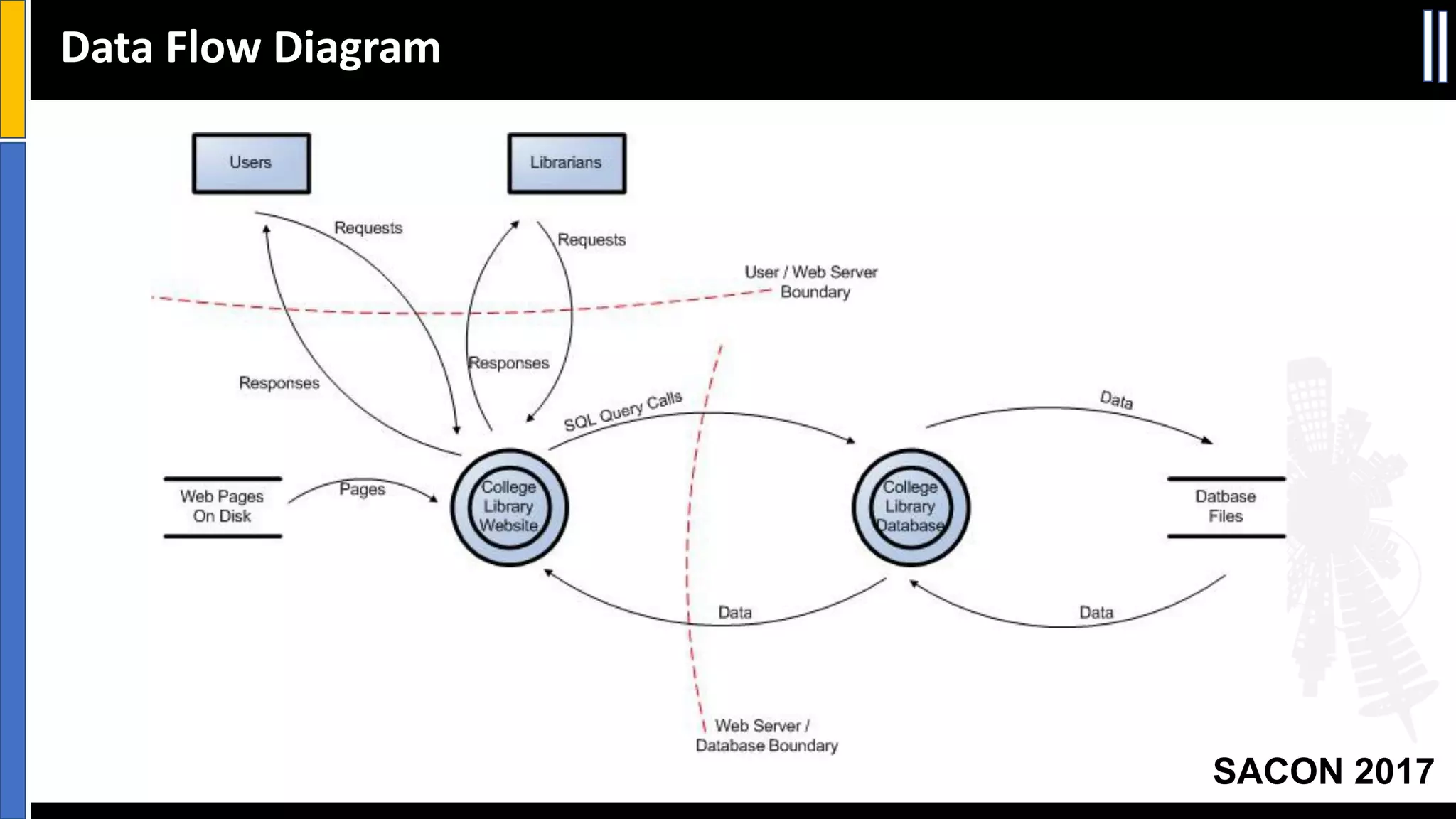
Data	Flow	Diagram
SACON 2017
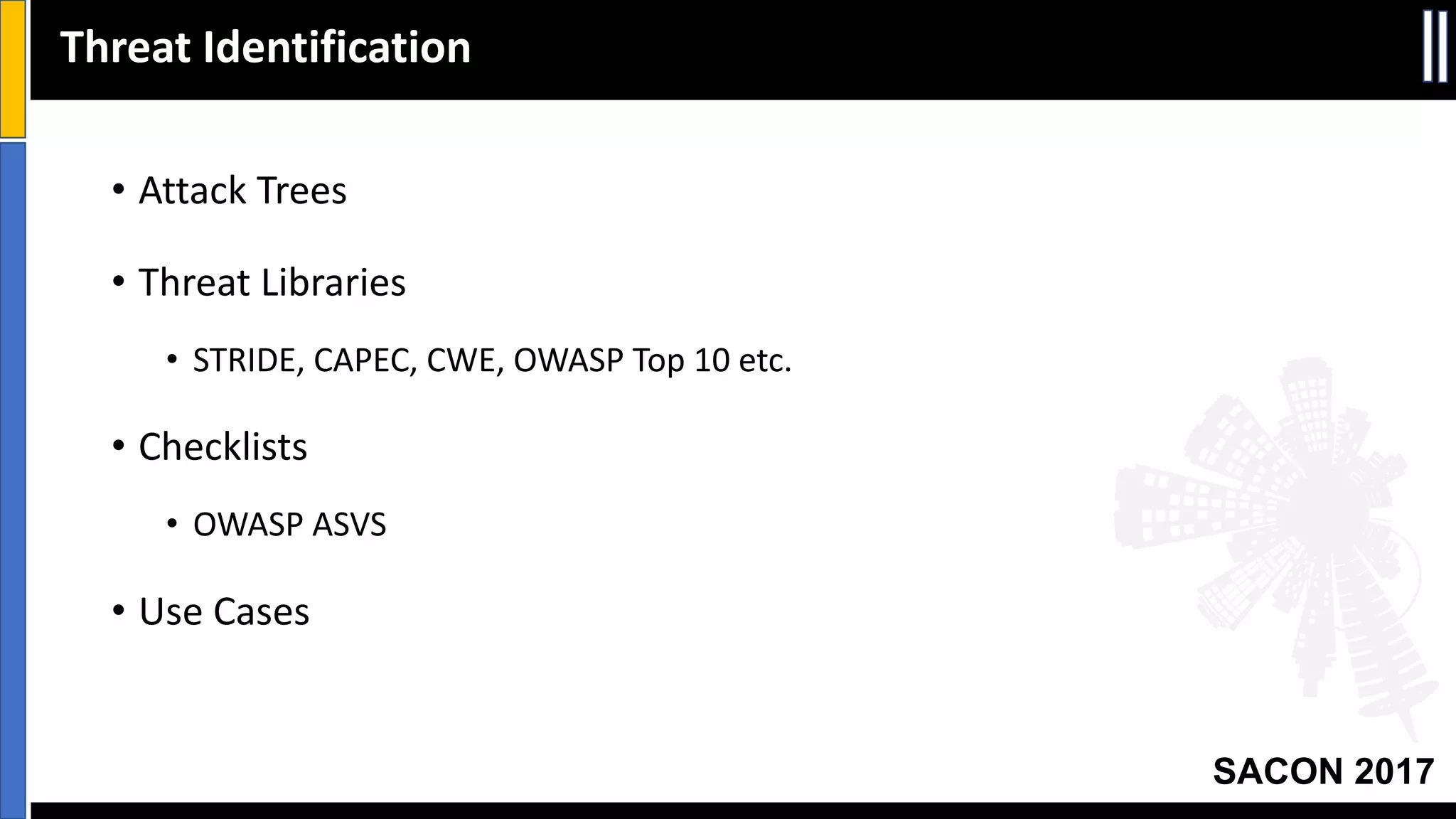
Threat	Identification
• Attack	Trees
• Threat	Libraries
• STRIDE,	CAPEC,	CWE,	OWASP	Top	10	etc.
• Checklists
• OWASP	ASVS
• Use	Cases
SACON 2017
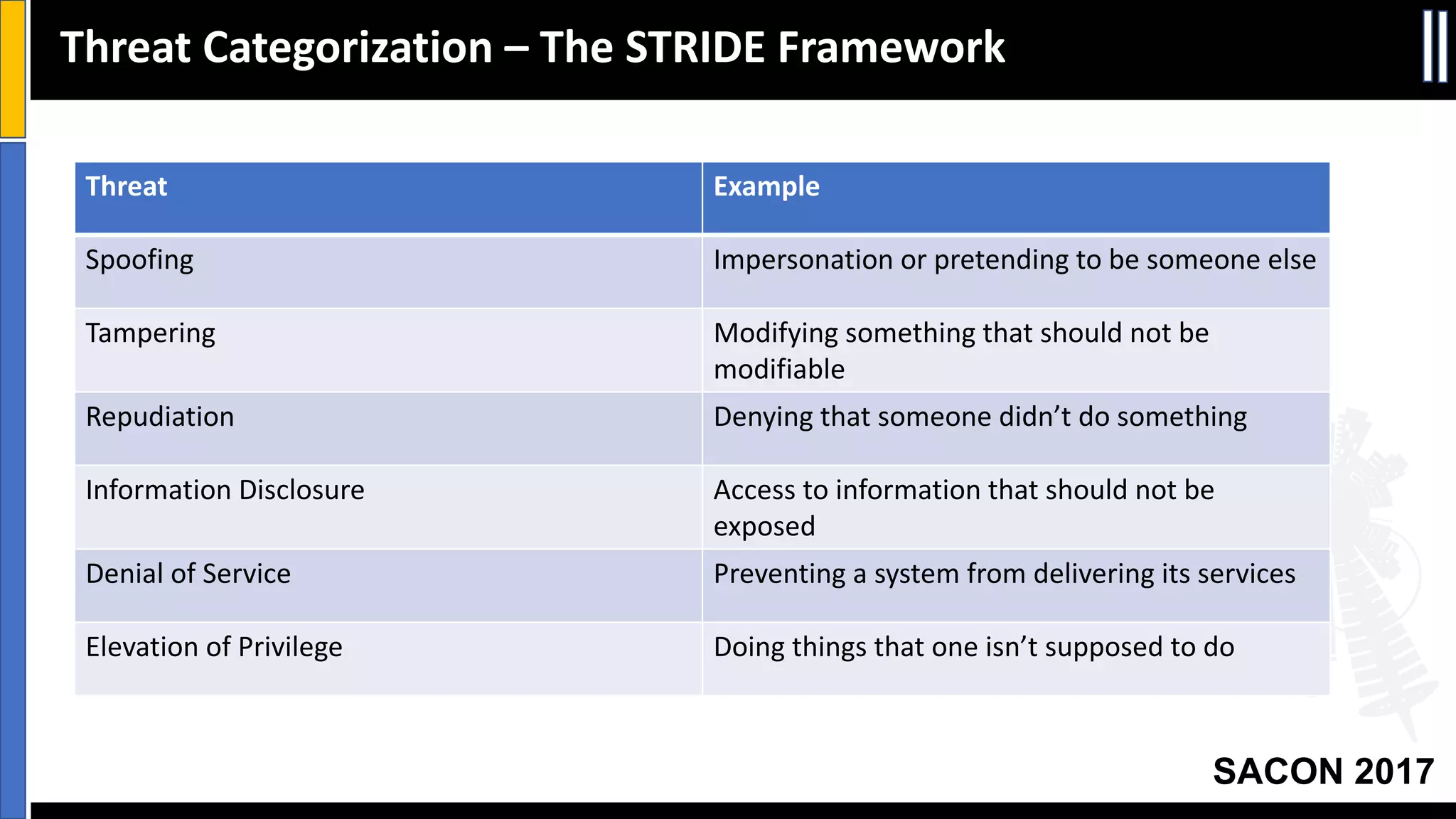
Threat	Categorization	– The	STRIDE	Framework
Threat Example
Spoofing Impersonation or	pretending	to	be	someone	else
Tampering Modifying	something	that	should	not	be	
modifiable
Repudiation Denying that	someone	didn’t	do	something
Information	Disclosure Access	to	information that	should	not	be	
exposed
Denial	of	Service Preventing	a	system	from	delivering	its	services
Elevation	of	Privilege Doing	things	that	one	isn’t	supposed	to	do
SACON 2017
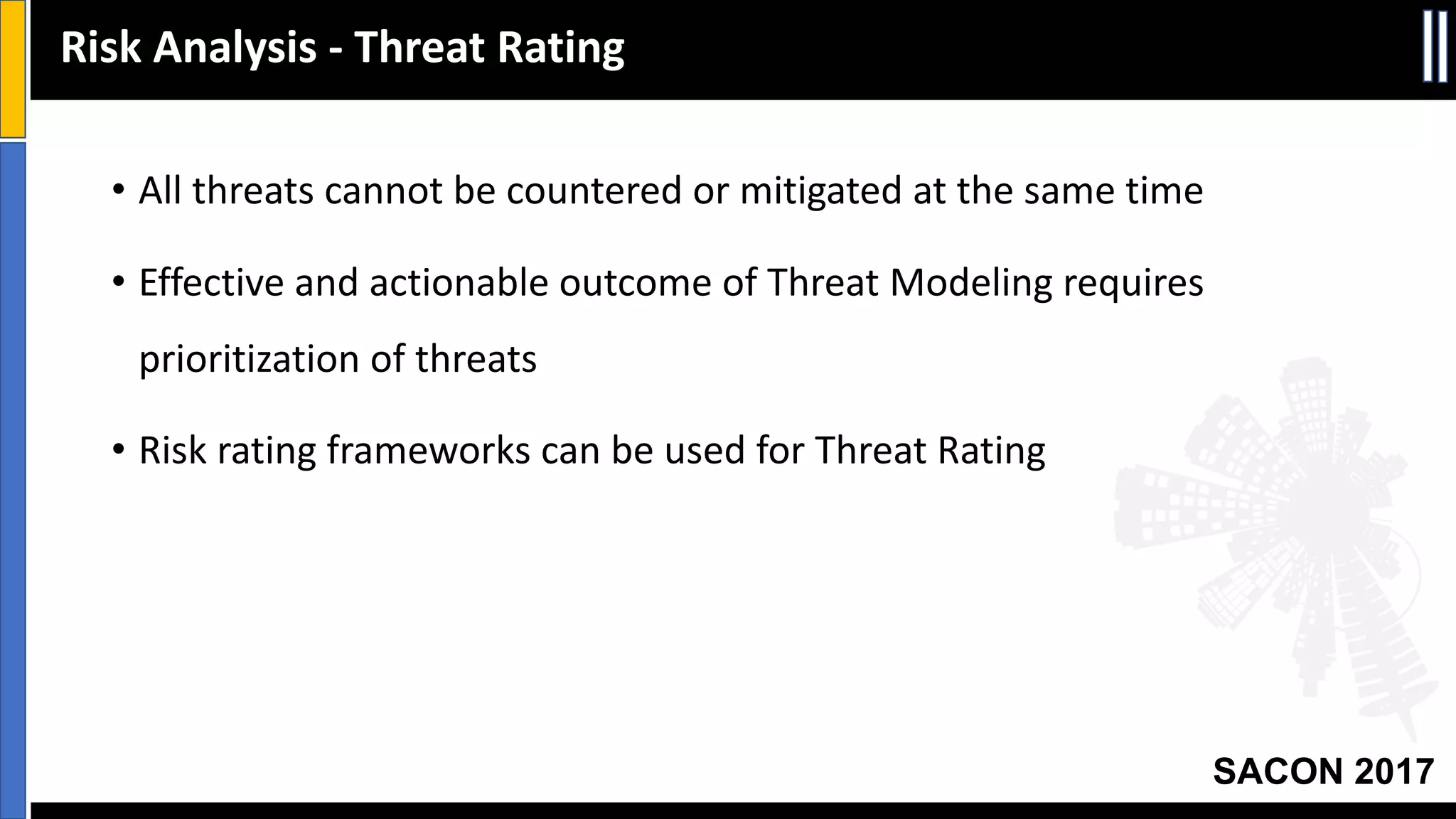
Risk	Analysis	- Threat	Rating
• All	threats	cannot	be	countered	or	mitigated	at	the	same	time
• Effective	and	actionable	outcome	of	Threat	Modeling	requires	
prioritization	of	threats
• Risk	rating	frameworks	can	be	used	for	Threat	Rating
SACON 2017
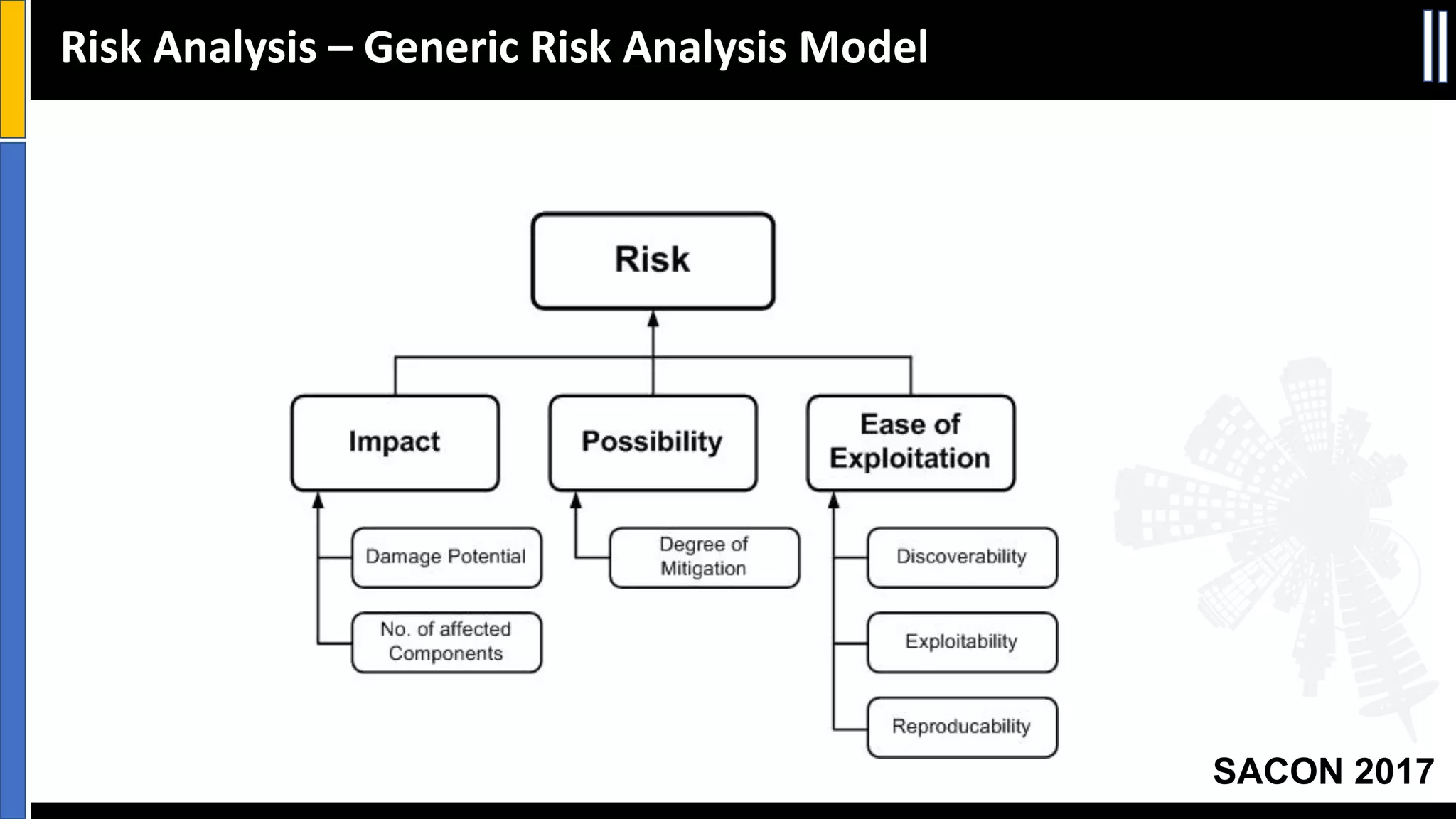
Risk	Analysis	– Generic	Risk	Analysis	Model
SACON 2017
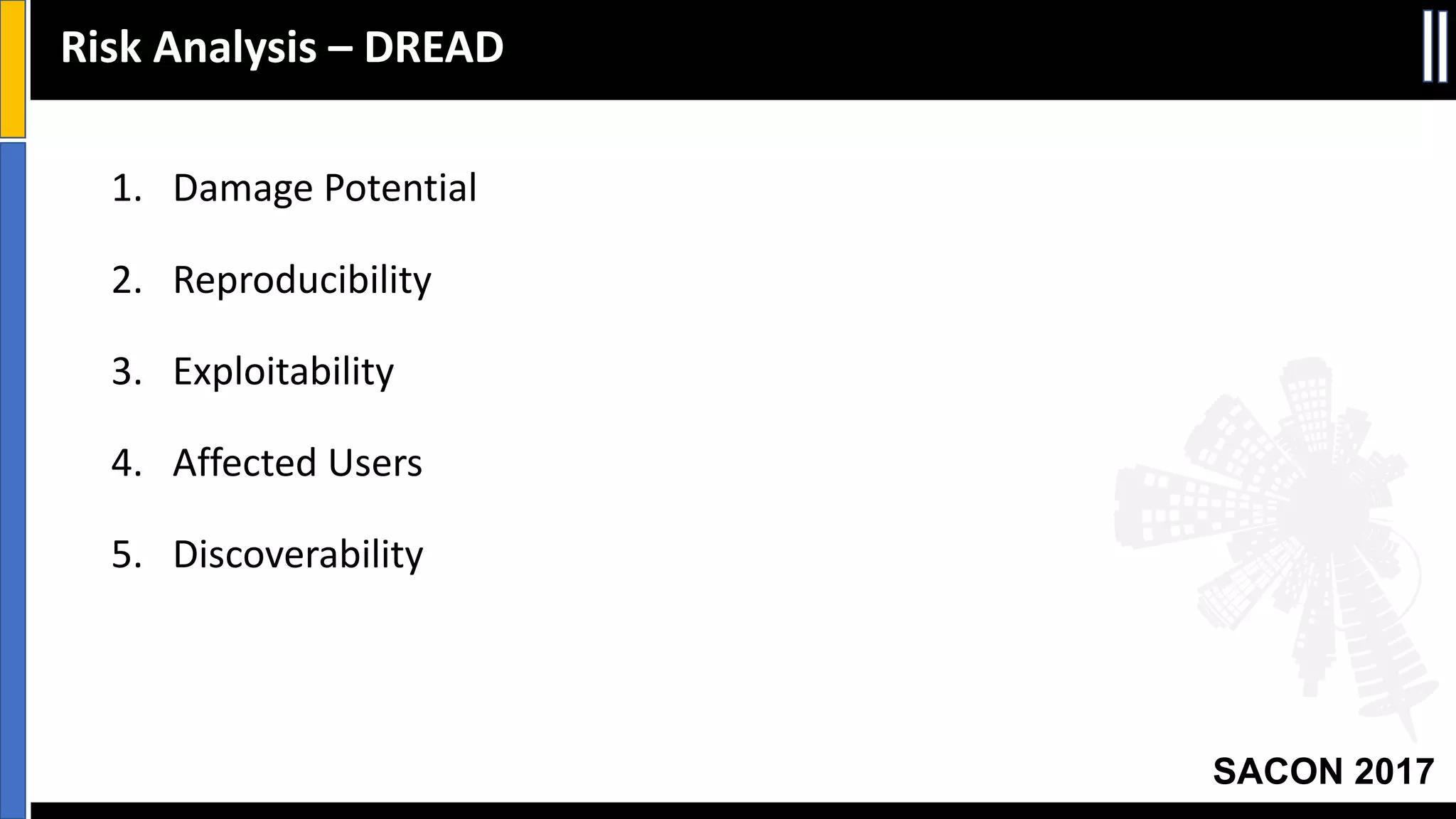
Risk	Analysis	– DREAD
1. Damage	Potential
2. Reproducibility
3. Exploitability
4. Affected	Users
5. Discoverability
SACON 2017
Countermeasures
The	purpose	of	the	countermeasure	identification	is	to	determine	if	
there	is	some	kind	of	protective	measure	(e.g.	security	control,	policy	
measures)	in	place	that	can	prevent	each	threat	previously	identified	
via	threat	analysis	from	being	realized.
SACON 2017
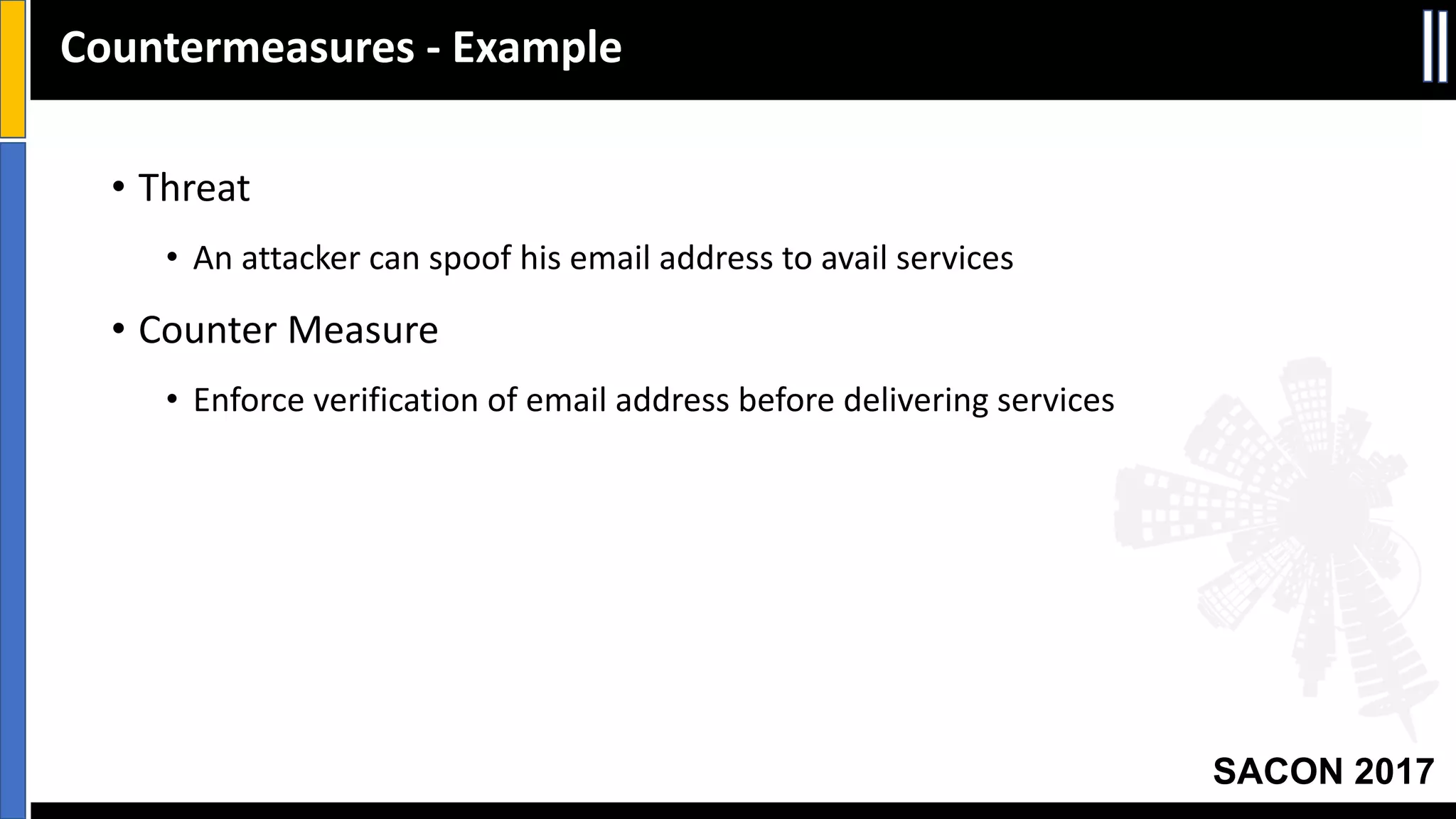
Countermeasures	- Example
• Threat
• An	attacker	can	spoof	his	email	address	to	avail	services
• Counter	Measure
• Enforce	verification	of	email	address	before	delivering	services

Sacon Threat Modeling Overview (Abhishek Datta)