
DevSecOps Services
Making a Successful Transition from DevOps to DevSecOps
Copyright © 2018 Veritis Group Inc
Contents
 The Need for DevSecOps
 Components of DevSecOps
 DevSecOps Approach
 Adopting a DevSecOps Strategy
 Business Benefits of Enterprise DevSecOps
 DevSecOps Tools
 DevSecOps, A Top Business Priority
Copyright © 2018 Veritis Group Inc
The Need for DevSecOps
 The concept of Security is not accorded a
high priority in DevOps implementation and
is often viewed as a roadblock to rapid
development of customized software and
business applications. This makes
organizations susceptible to the risk of
threats and vulnerabilities.
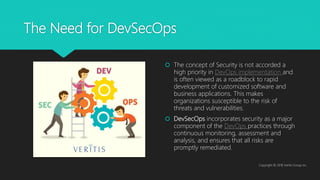
 DevSecOps incorporates security as a major
component of the DevOps practices through
continuous monitoring, assessment and
analysis, and ensures that all risks are
promptly remediated.
Copyright © 2018 Veritis Group Inc
Components of DevSecOps
 DevSecOps majorly focuses on tackling DevOps
Automation security issues, such as
configuration management, composition
analysis and others.
 Security Engineering, Security Operations,
Compliance Operations and Security Science
are the four major components influencing
DevSecOps implementation.
Copyright © 2018 Veritis Group Inc
DevSecOps Approach
Copyright © 2018 Veritis Group Inc
An effective DevSecOps approach includes:
 Analysis of code: This enables the quick identification of vulnerabilities through the delivery of code in small
chunks.
 Change management: This allows users to not only submit changes which can increase the speed and
efficiency, but also determine if the impact of the changes is positive or negative.
 Monitoring compliance: Organizations should be compliant with regulations such as General Data Protection
Regulation (GDPR) and Payment Card Industry Digital Security Standard (PCI DSS) and be prepared for audits
any time by the regulators.
 Investigating threats: Each code update is accompanied by potential emerging threats. It is very important to
identify these threats at the earliest and respond immediately.
 Vulnerability assessment: This involves the analysis of new vulnerabilities and the response to them.
 Training: Organizations need to involve their software and IT engineers in security-related training and equip
them with the guidelines for set routines.
Adopting a DevSecOps Strategy
Transition from DevOps to DevSecOps involves consideration of
three key steps:
 Assessment of Current Security Measures: Threat modeling and risk
assessments help security teams in analyzing the sensitivity levels of
an organization's assets and likely threats.
 Merging Security into DevOps: This leads to the examination of the
development workflow and ensuring minimal disruptions through
incorporation of security practices and automation.
 Integrating DevSecOps with Security Operations: Continuous
monitoring of any security concerns during development and
ensuring a quick response are key for integrating security
operations with the DevSecOps approach.
Copyright © 2018 Veritis Group Inc
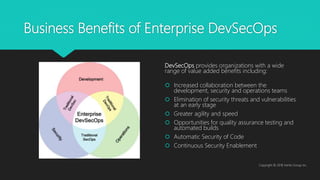
Business Benefits of Enterprise DevSecOps
DevSecOps provides organizations with a wide
range of value added benefits including:
 Increased collaboration between the
development, security and operations teams
 Elimination of security threats and vulnerabilities
at an early stage
 Greater agility and speed
 Opportunities for quality assurance testing and
automated builds
 Automatic Security of Code
 Continuous Security Enablement
Copyright © 2018 Veritis Group Inc
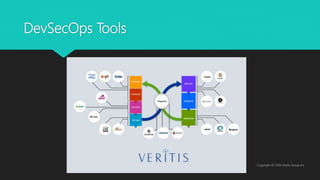
DevSecOps Tools
Copyright © 2018 Veritis Group Inc
DevSecOps, A Top Business Priority
DevSecOps not only ensures a secure
application delivery, but also a much-
quicker time to market.
By proactively adopting DevSecOps and
redefining their operations, engineering
and security to work in cohesion,
organizations can achieve unparalleled
levels of success.
Copyright © 2018 Veritis Group Inc
Veritis Group, Inc
1231 Greenway Drive,
Suite 1040
Irving, TX 75038
info@veritis.com
1-877-VERITIS (283-7484), 972-753-0022, 972-753-
0033
https://www.veritis.com/
Copyright © 2018 Veritis Group Inc

A journey from dev ops to devsecops

  • 1.
    DevSecOps Services Making aSuccessful Transition from DevOps to DevSecOps Copyright © 2018 Veritis Group Inc
  • 2.
    Contents  The Needfor DevSecOps  Components of DevSecOps  DevSecOps Approach  Adopting a DevSecOps Strategy  Business Benefits of Enterprise DevSecOps  DevSecOps Tools  DevSecOps, A Top Business Priority Copyright © 2018 Veritis Group Inc
  • 3.
    The Need forDevSecOps  The concept of Security is not accorded a high priority in DevOps implementation and is often viewed as a roadblock to rapid development of customized software and business applications. This makes organizations susceptible to the risk of threats and vulnerabilities.  DevSecOps incorporates security as a major component of the DevOps practices through continuous monitoring, assessment and analysis, and ensures that all risks are promptly remediated. Copyright © 2018 Veritis Group Inc
  • 4.
    Components of DevSecOps DevSecOps majorly focuses on tackling DevOps Automation security issues, such as configuration management, composition analysis and others.  Security Engineering, Security Operations, Compliance Operations and Security Science are the four major components influencing DevSecOps implementation. Copyright © 2018 Veritis Group Inc
  • 5.
    DevSecOps Approach Copyright ©2018 Veritis Group Inc An effective DevSecOps approach includes:  Analysis of code: This enables the quick identification of vulnerabilities through the delivery of code in small chunks.  Change management: This allows users to not only submit changes which can increase the speed and efficiency, but also determine if the impact of the changes is positive or negative.  Monitoring compliance: Organizations should be compliant with regulations such as General Data Protection Regulation (GDPR) and Payment Card Industry Digital Security Standard (PCI DSS) and be prepared for audits any time by the regulators.  Investigating threats: Each code update is accompanied by potential emerging threats. It is very important to identify these threats at the earliest and respond immediately.  Vulnerability assessment: This involves the analysis of new vulnerabilities and the response to them.  Training: Organizations need to involve their software and IT engineers in security-related training and equip them with the guidelines for set routines.
  • 6.
    Adopting a DevSecOpsStrategy Transition from DevOps to DevSecOps involves consideration of three key steps:  Assessment of Current Security Measures: Threat modeling and risk assessments help security teams in analyzing the sensitivity levels of an organization's assets and likely threats.  Merging Security into DevOps: This leads to the examination of the development workflow and ensuring minimal disruptions through incorporation of security practices and automation.  Integrating DevSecOps with Security Operations: Continuous monitoring of any security concerns during development and ensuring a quick response are key for integrating security operations with the DevSecOps approach. Copyright © 2018 Veritis Group Inc
  • 7.
    Business Benefits ofEnterprise DevSecOps DevSecOps provides organizations with a wide range of value added benefits including:  Increased collaboration between the development, security and operations teams  Elimination of security threats and vulnerabilities at an early stage  Greater agility and speed  Opportunities for quality assurance testing and automated builds  Automatic Security of Code  Continuous Security Enablement Copyright © 2018 Veritis Group Inc
  • 8.
    DevSecOps Tools Copyright ©2018 Veritis Group Inc
  • 9.
    DevSecOps, A TopBusiness Priority DevSecOps not only ensures a secure application delivery, but also a much- quicker time to market. By proactively adopting DevSecOps and redefining their operations, engineering and security to work in cohesion, organizations can achieve unparalleled levels of success. Copyright © 2018 Veritis Group Inc
  • 10.
    Veritis Group, Inc 1231Greenway Drive, Suite 1040 Irving, TX 75038 info@veritis.com 1-877-VERITIS (283-7484), 972-753-0022, 972-753- 0033 https://www.veritis.com/ Copyright © 2018 Veritis Group Inc