Downloaded 16 times


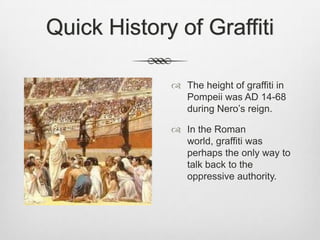

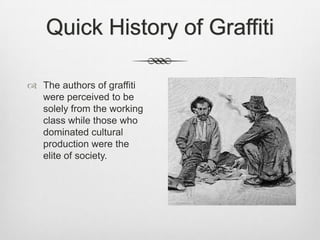
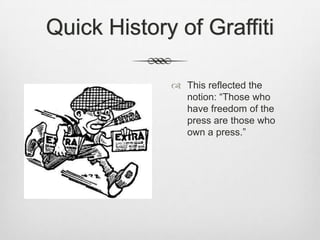
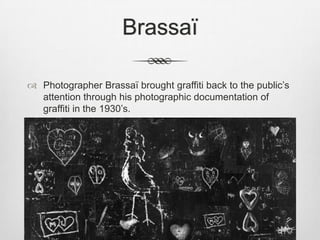
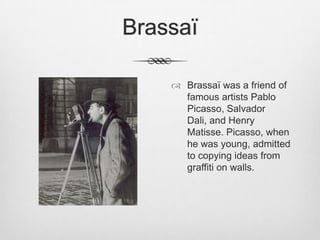
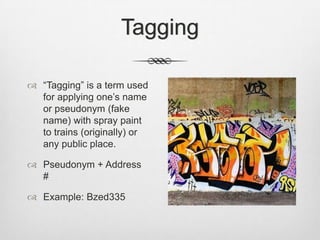
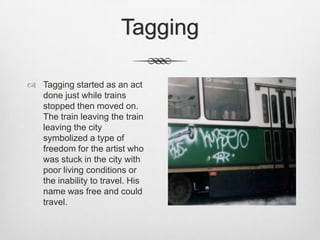
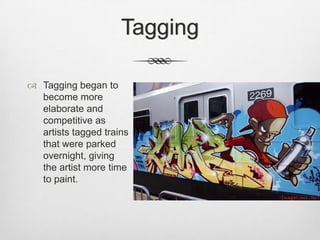

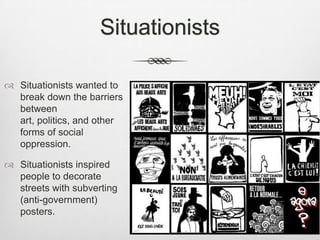



Lady Pink discusses graffiti as a form of rebellion that questions societal norms and status quo. Graffiti originated from markings found in Pompeii that were seen as a pure creative urge. Graffiti was most prominent in Roman times as a way for citizens to express dissent against oppressive authority. In the Victorian era, graffiti lost popularity but negative attitudes emerged by the late 19th century as it became associated with lower classes. Photographer Brassaï brought graffiti to public attention in the 1930s through his documentation. Tagging began as artists left names on trains, representing freedom of movement. Graffiti became more elaborate and competitive over time and is an addictive and dangerous male-dominated activity. Situationists used gra


