RECOGNITION AND
  MANAGEMENT OF
PESTICIDE POISONINGS

                     Fifth Edition, 1999

                        J. Routt Reigart, M.D.
       Professor of Pediatrics, Medical University of South Carolina

                  James R. Roberts, M.D., M.P.H.
   Assistant Professor of Pediatrics, Medical University of South Carolina


          Support for this publication was provided by:
             Certification and Worker Protection Branch
                 Field and External Affairs Division
                     Office of Pesticide Programs
               U.S. Environmental Protection Agency
                      401 M Street SW (7506C)
                        Washington, DC 20460

            For additional copies or more information:
                           Tel: 703-305-7666
                           Fax: 703-308-2962

 The manual is available in electronic format on the Internet at:
          http://www.epa.gov/pesticides/safety/healthcare
Acknowledgments
We are grateful to the Office of Pesticide Programs, Environmental Protection Agency, for giving us the
opportunity to collaborate on this new edition. Our thanks go to Kevin Keaney, Acting Branch Chief, for
his support and vision, and for giving this publication priority attention. Particular mention should also be
made of the efforts of Jerome M. Blondell, Ph.D., M.P.H., and Ameesha Mehta, M.P.H., whose oversight
and constant assistance were invaluable in moving this project forward. Ana Maria Osorio, M.D., M.P.H.,
contributed Chapter 3, Environmental and Occupational History, to this manual.
     Experts in clinical toxicology conducted critical reviews of draft material. We are greatly appreciative
of the time and effort of the following reviewers:

                              Jeffery Lloyd Burgess, M.D., M.P.H.
                              Assistant Professor
                              Environmental Occupational Health Unit
                              University of Arizona Prevention Center

                              Matthew C. Keifer, M.D., M.P.H.
                              Assistant Professor
                              Department of Medicine/Environmental Health
                              University of Washington

                              Wayne R. Snodgrass, M.D., Ph.D.
                              Professor and Head
                              Clinical Pharmacology-Toxicology
                              Texas Poison Center

                              Sheldon L. Wagner, M.D.
                              Professor of Clinical Toxicology
                              Oregon State University

     Many other individuals contributed their time and skill to this publication.We are very appreciative
of the tireless efforts of Patricia Clark, our administrative assistant, who spent endless hours in text
review, securing references, communicating with reviewers, and otherwise making the revision process
possible and easier than anticipated. Gilah Langner of Stretton Associates, Inc., provided editorial super-
vision. Will Packard and Sarah Carter of Free Hand Press, Inc. were responsible for the format and
layout of the manual.

Cover photographs by Steve Delaney, EPA.
CONTENTS


Section I: General Information
1    Introduction ........................................................................................................... 2
2    General Principles in the Management of Acute Pesticide Poisonings .................... 10
3    Environmental and Occupational History .............................................................. 17

Section II: Insecticides
4    Organophosphate Insecticides ............................................................................... 34
5    N-Methyl Carbamate Insecticides ......................................................................... 48
6    Solid Organochlorine Insecticides ......................................................................... 55
7    Biologicals and Insecticides of Biological Origin ................................................... 63
8    Other Insecticides, Acaricides, and Repellents ........................................................ 74

Section III: Herbicides
9    Chlorophenoxy Herbicides ................................................................................... 94
10 Pentachlorophenol ................................................................................................ 99
11 Nitrophenolic and Nitrocresolic Herbicides ........................................................ 104
12 Paraquat and Diquat ............................................................................................ 108
13 Other Herbicides ................................................................................................ 118

Section IV: Other Pesticides
14 Arsenical Pesticides ............................................................................................. 126
15 Fungicides .......................................................................................................... 137
16 Fumigants ........................................................................................................... 156
17 Rodenticides....................................................................................................... 169
18 Miscellaneous Pesticides, Solvents, and Adjuvants ................................................. 183
19 Disinfectants ....................................................................................................... 196

Section V
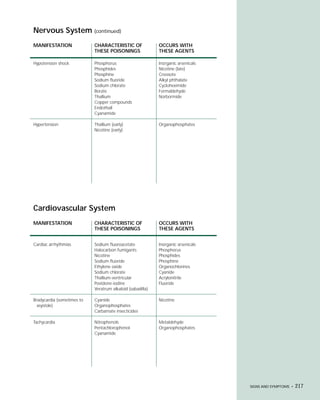
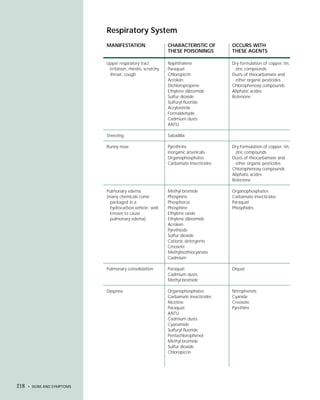
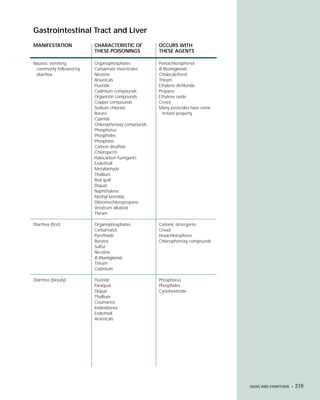
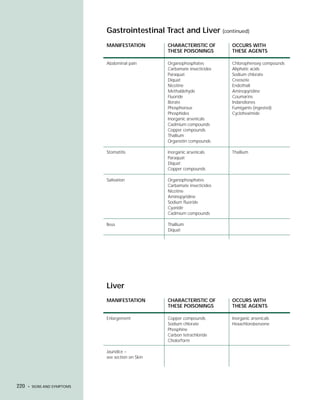
Index of Signs and Symptoms ...................................................................................... 210
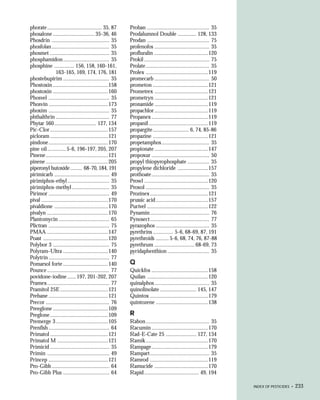
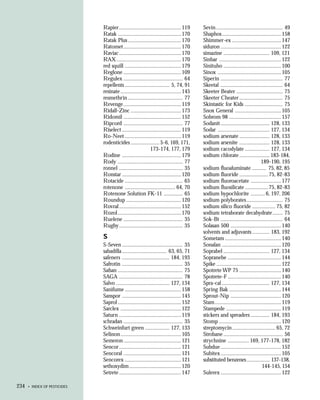
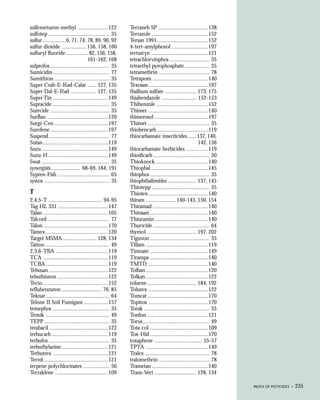
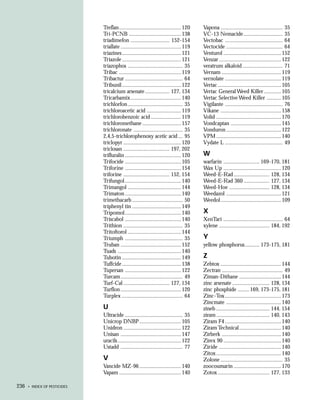
Index of Pesticide Products .......................................................................................... 223
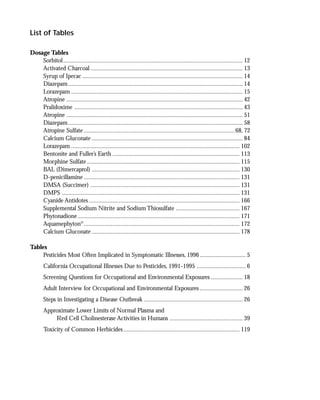
List of Tables

Dosage Tables
    Sorbitol ................................................................................................................. 12
    Activated Charcoal ................................................................................................ 13
    Syrup of Ipecac ..................................................................................................... 14
    Diazepam .............................................................................................................. 14
    Lorazepam ............................................................................................................ 15
    Atropine ............................................................................................................... 42
    Pralidoxime .......................................................................................................... 43
    Atropine ............................................................................................................... 51
    Diazepam .............................................................................................................. 58
    Atropine Sulfate ...............................................................................................68, 72
    Calcium Gluconate ............................................................................................... 84
    Lorazepam .......................................................................................................... 102
    Bentonite and Fuller’s Earth ................................................................................ 113
    Morphine Sulfate ................................................................................................ 115
    BAL (Dimercaprol) ............................................................................................. 130
    D-penicillamine .................................................................................................. 131
    DMSA (Succimer) .............................................................................................. 131
    DMPS ................................................................................................................ 131
    Cyanide Antidotes ............................................................................................... 166
    Supplemental Sodium Nitrite and Sodium Thiosulfate ........................................ 167
    Phytonadione ...................................................................................................... 171
    Aquamephyton® .................................................................................................. 172
    Calcium Gluconate ............................................................................................. 178

Tables
     Pesticides Most Often Implicated in Symptomatic Illnesses, 1996 ............................. 5
       California Occupational Illnesses Due to Pesticides, 1991-1995 ............................... 6
       Screening Questions for Occupational and Environmental Exposures .................... 18
       Adult Interview for Occupational and Environmental Exposures ........................... 26
       Steps in Investigating a Disease Outbreak .............................................................. 26
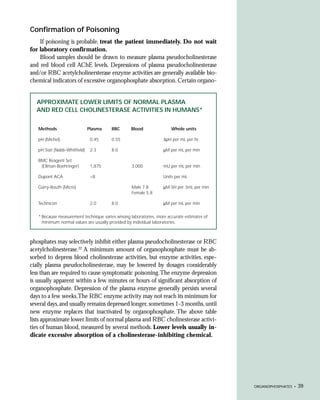
       Approximate Lower Limits of Normal Plasma and
           Red Cell Cholinesterase Activities in Humans .............................................. 39
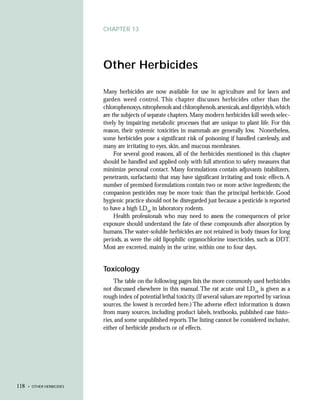
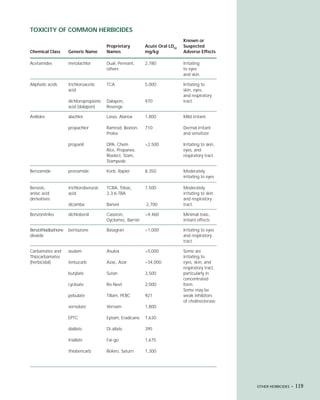
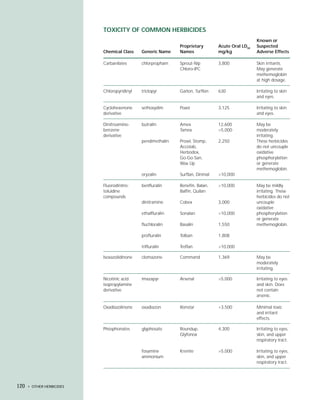
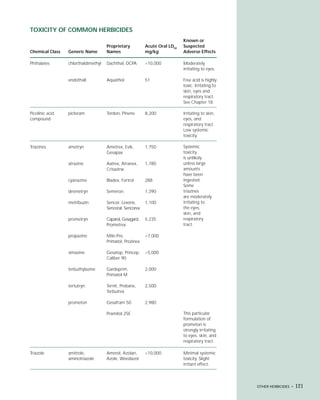
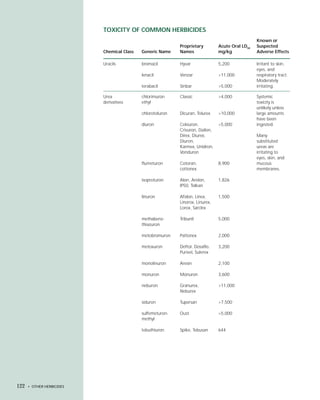
       Toxicity of Common Herbicides ......................................................................... 119
Section I
G E N E R A L I N F O R M AT I O N
CHAPTER 1


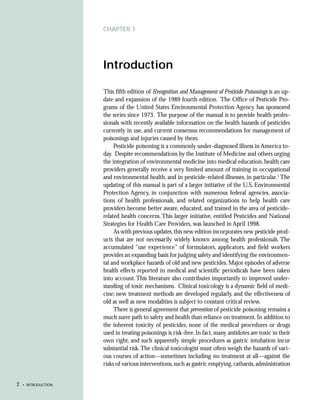
                     Introduction

                     This fifth edition of Recognition and Management of Pesticide Poisonings is an up-
                     date and expansion of the 1989 fourth edition. The Office of Pesticide Pro-
                     grams of the United States Environmental Protection Agency has sponsored
                     the series since 1973. The purpose of the manual is to provide health profes-
                     sionals with recently available information on the health hazards of pesticides
                     currently in use, and current consensus recommendations for management of
                     poisonings and injuries caused by them.
                          Pesticide poisoning is a commonly under-diagnosed illness in America to-
                     day. Despite recommendations by the Institute of Medicine and others urging
                     the integration of environmental medicine into medical education, health care
                     providers generally receive a very limited amount of training in occupational
                     and environmental health, and in pesticide-related illnesses, in particular.1 The
                     updating of this manual is part of a larger initiative of the U.S. Environmental
                     Protection Agency, in conjunction with numerous federal agencies, associa-
                     tions of health professionals, and related organizations to help health care
                     providers become better aware, educated, and trained in the area of pesticide-
                     related health concerns. This larger initiative, entitled Pesticides and National
                     Strategies for Health Care Providers, was launched in April 1998.
                          As with previous updates, this new edition incorporates new pesticide prod-
                     ucts that are not necessarily widely known among health professionals. The
                     accumulated “use experience” of formulators, applicators, and field workers
                     provides an expanding basis for judging safety and identifying the environmen-
                     tal and workplace hazards of old and new pesticides. Major episodes of adverse
                     health effects reported in medical and scientific periodicals have been taken
                     into account. This literature also contributes importantly to improved under-
                     standing of toxic mechanisms. Clinical toxicology is a dynamic field of medi-
                     cine; new treatment methods are developed regularly, and the effectiveness of
                     old as well as new modalities is subject to constant critical review.
                          There is general agreement that prevention of pesticide poisoning remains a
                     much surer path to safety and health than reliance on treatment. In addition to
                     the inherent toxicity of pesticides, none of the medical procedures or drugs
                     used in treating poisonings is risk-free. In fact, many antidotes are toxic in their
                     own right, and such apparently simple procedures as gastric intubation incur
                     substantial risk. The clinical toxicologist must often weigh the hazards of vari-
                     ous courses of action—sometimes including no treatment at all—against the
                     risks of various interventions, such as gastric emptying, catharsis, administration


2   • INTRODUCTION
of intravenous fluids, or administration of an antidote, if available. Clinical man-
agement decisions have to be made promptly and, as often as not, on the basis
of limited scientific and medical information. The complex circumstances of
human poisonings rarely allow precise comparisons of alternative management.
In no sense, then, are the treatment recommendations in this book infallible
guides to successful outcomes. They are no more than consensus judgments of
the best available clinical management options.
     This manual deals almost entirely with short-term (acute) harmful effects
of pesticides. Although obviously important, the subject of chronic effects is
too complex to deal with exhaustively in a manual designed as guidance for
emergency management. Nonetheless, appropriate treatment of serious expo-
sures to pesticides represents an important step in avoiding chronic as well as
acute disease.
     The pesticides and commercial products mentioned in this manual do not
represent the universe of pesticide products in existence. They were selected
based on frequency of use and exposure, severity of toxicity, and prior experi-
ence with acute poisonings. Products are discussed in this manual that have
been discontinued or whose U.S. pesticide registration has been revoked but
are judged to still be of risk due to use elsewhere or where there is a probability
of residual stocks. Agents long out of use in the U.S. and elsewhere were not
included in the manual.
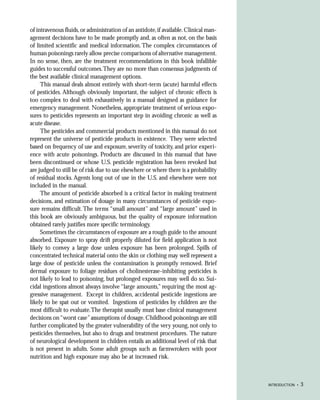
     The amount of pesticide absorbed is a critical factor in making treatment
decisions, and estimation of dosage in many circumstances of pesticide expo-
sure remains difficult. The terms “small amount” and “large amount” used in
this book are obviously ambiguous, but the quality of exposure information
obtained rarely justifies more specific terminology.
     Sometimes the circumstances of exposure are a rough guide to the amount
absorbed. Exposure to spray drift properly diluted for field application is not
likely to convey a large dose unless exposure has been prolonged. Spills of
concentrated technical material onto the skin or clothing may well represent a
large dose of pesticide unless the contamination is promptly removed. Brief
dermal exposure to foliage residues of cholinesterase-inhibiting pesticides is
not likely to lead to poisoning, but prolonged exposures may well do so. Sui-
cidal ingestions almost always involve “large amounts,” requiring the most ag-
gressive management. Except in children, accidental pesticide ingestions are
likely to be spat out or vomited. Ingestions of pesticides by children are the
most difficult to evaluate. The therapist usually must base clinical management
decisions on “worst case” assumptions of dosage. Childhood poisonings are still
further complicated by the greater vulnerability of the very young, not only to
pesticides themselves, but also to drugs and treatment procedures. The nature
of neurological development in children entails an additional level of risk that
is not present in adults. Some adult groups such as farmwrokers with poor
nutrition and high exposure may also be at increased risk.


                                                                                       INTRODUCTION •   3
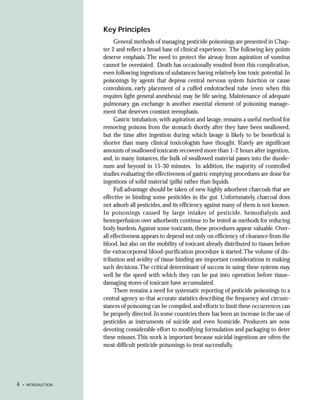
Key Principles
                          General methods of managing pesticide poisonings are presented in Chap-
                     ter 2 and reflect a broad base of clinical experience. The following key points
                     deserve emphasis. The need to protect the airway from aspiration of vomitus
                     cannot be overstated. Death has occasionally resulted from this complication,
                     even following ingestions of substances having relatively low toxic potential. In
                     poisonings by agents that depress central nervous system function or cause
                     convulsions, early placement of a cuffed endotracheal tube (even when this
                     requires light general anesthesia) may be life saving. Maintenance of adequate
                     pulmonary gas exchange is another essential element of poisoning manage-
                     ment that deserves constant reemphasis.
                          Gastric intubation, with aspiration and lavage, remains a useful method for
                     removing poisons from the stomach shortly after they have been swallowed,
                     but the time after ingestion during which lavage is likely to be beneficial is
                     shorter than many clinical toxicologists have thought. Rarely are significant
                     amounts of swallowed toxicants recovered more than 1-2 hours after ingestion,
                     and, in many instances, the bulk of swallowed material passes into the duode-
                     num and beyond in 15-30 minutes. In addition, the majority of controlled
                     studies evaluating the effectiveness of gastric emptying procedures are done for
                     ingestions of solid material (pills) rather than liquids.
                          Full advantage should be taken of new highly adsorbent charcoals that are
                     effective in binding some pesticides in the gut. Unfortunately, charcoal does
                     not adsorb all pesticides, and its efficiency against many of them is not known.
                     In poisonings caused by large intakes of pesticide, hemodialysis and
                     hemoperfusion over adsorbents continue to be tested as methods for reducing
                     body burdens. Against some toxicants, these procedures appear valuable. Over-
                     all effectiveness appears to depend not only on efficiency of clearance from the
                     blood, but also on the mobility of toxicant already distributed to tissues before
                     the extracorporeal blood-purification procedure is started. The volume of dis-
                     tribution and avidity of tissue binding are important considerations in making
                     such decisions. The critical determinant of success in using these systems may
                     well be the speed with which they can be put into operation before tissue-
                     damaging stores of toxicant have accumulated.
                          There remains a need for systematic reporting of pesticide poisonings to a
                     central agency so that accurate statistics describing the frequency and circum-
                     stances of poisoning can be compiled, and efforts to limit these occurrences can
                     be properly directed. In some countries there has been an increase in the use of
                     pesticides as instruments of suicide and even homicide. Producers are now
                     devoting considerable effort to modifying formulation and packaging to deter
                     these misuses. This work is important because suicidal ingestions are often the
                     most difficult pesticide poisonings to treat successfully.


4   • INTRODUCTION
Common Pesticide Poisonings
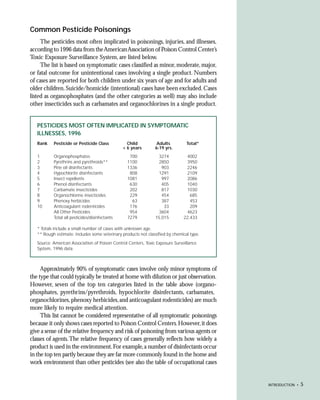
     The pesticides most often implicated in poisonings, injuries, and illnesses,
according to 1996 data from the American Association of Poison Control Center’s
Toxic Exposure Surveillance System, are listed below.
     The list is based on symptomatic cases classified as minor, moderate, major,
or fatal outcome for unintentional cases involving a single product. Numbers
of cases are reported for both children under six years of age and for adults and
older children. Suicide/homicide (intentional) cases have been excluded. Cases
listed as organophosphates (and the other categories as well) may also include
other insecticides such as carbamates and organochlorines in a single product.


   PESTICIDES MOST OFTEN IMPLICATED IN SYMPTOMATIC
   ILLNESSES, 1996
   Rank    Pesticide or Pesticide Class           Child          Adults          Total*
                                                < 6 years       6-19 yrs.
   1       Organophosphates                        700           3274           4002
   2       Pyrethrins and pyrethroids**           1100           2850           3950
   3       Pine oil disinfectants                 1336             903          2246
   4       Hypochlorite disinfectants              808           1291           2109
   5       Insect repellents                      1081             997          2086
   6       Phenol disinfectants                    630             405          1040
   7       Carbamate insecticides                  202             817          1030
   8       Organochlorine insecticides             229             454            685
   9       Phenoxy herbicides                       63             387            453
   10      Anticoagulant rodenticides              176              33            209
           All Other Pesticides                    954           3604           4623
           Total all pesticides/disinfectants     7279          15,015         22,433

   * Totals include a small number of cases with unknown age.
   ** Rough estimate: includes some veterinary products not classified by chemical type.
   Source: American Association of Poison Control Centers, Toxic Exposure Surveillance
   System, 1996 data.


     Approximately 90% of symptomatic cases involve only minor symptoms of
the type that could typically be treated at home with dilution or just observation.
However, seven of the top ten categories listed in the table above (organo-
phosphates, pyrethrins/pyrethroids, hypochlorite disinfectants, carbamates,
organochlorines, phenoxy herbicides, and anticoagulant rodenticides) are much
more likely to require medical attention.
     This list cannot be considered representative of all symptomatic poisonings
because it only shows cases reported to Poison Control Centers. However, it does
give a sense of the relative frequency and risk of poisoning from various agents or
classes of agents. The relative frequency of cases generally reflects how widely a
product is used in the environment. For example, a number of disinfectants occur
in the top ten partly because they are far more commonly found in the home and
work environment than other pesticides (see also the table of occupational cases


                                                                                           INTRODUCTION •   5
below). Denominator information on the population at risk (numbers exposed)
                     would be needed to better understand the relative risk of different pesticides.
                     However, the main purpose of these tables is to give physicians a sense of what
                     types of cases they are most likely to see in their practice.
                         Although suicide cases make up roughly 3% of pesticide-related calls to
                     Poison Control Centers, they may account for nearly 10% of the cases seen in
                     a health care facility. The leading types of products involved in suicidal cases
                     include anticoagulant rodenticides (20% of total suicide attempts), pine oil dis-
                     infectants (14%), organophosphates (11%), pyrethrins/pyrethroids (6%), unknown
                     rodenticides (5%), carbamate insecticides (4%), and phenol disinfectants (3%).


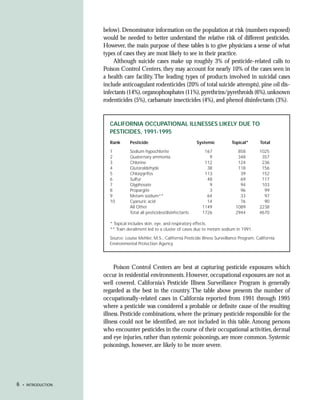
                       CALIFORNIA OCCUPATIONAL ILLNESSES LIKELY DUE TO
                       PESTICIDES, 1991-1995
                       Rank      Pesticide                            Systemic           Topical*        Total
                       1         Sodium hypochlorite                      167               858         1025
                       2         Quaternary ammonia                         9               348          357
                       3         Chlorine                                 112               124          236
                       4         Glutaraldehyde                            38               118          156
                       5         Chlorpyrifos                             113                39          152
                       6         Sulfur                                    48                69          117
                       7         Glyphosate                                 9                94          103
                       8         Propargite                                 3                96           99
                       9         Metam sodium**                            64                33           97
                       10        Cyanuric acid                             14                76           90
                                 All Other                               1149              1089         2238
                                 Total all pesticides/disinfectants      1726              2944         4670

                       * Topical includes skin, eye, and respiratory effects.
                       ** Train derailment led to a cluster of cases due to metam sodium in 1991.
                       Source: Louise Mehler, M.S., California Pesticide Illness Surveillance Program, California
                       Environmental Protection Agency.


                          Poison Control Centers are best at capturing pesticide exposures which
                     occur in residential environments. However, occupational exposures are not as
                     well covered. California’s Pesticide Illness Surveillance Program is generally
                     regarded as the best in the country. The table above presents the number of
                     occupationally-related cases in California reported from 1991 through 1995
                     where a pesticide was considered a probable or definite cause of the resulting
                     illness. Pesticide combinations, where the primary pesticide responsible for the
                     illness could not be identified, are not included in this table. Among persons
                     who encounter pesticides in the course of their occupational activities, dermal
                     and eye injuries, rather than systemic poisonings, are more common. Systemic
                     poisonings, however, are likely to be more severe.


6   • INTRODUCTION
Format of this Manual
      An effort has been made to format this book for quick reference by thor-
ough indexing and minimal references to other pages or chapters. However,
many different agents commonly require similar procedures in treating poison-
ings and it is not practical to repeat these protocols in every chapter. General
principles for management of pesticide poisoning, including skin and eye de-
contamination, gastrointestinal decontamination, and control of convulsions
are considered in Chapter 2, General Principles. These principles are refer-
enced throughout.
      Changes in this reformatted edition include: tabular listings of Commercial
Products in each chapter, the addition of a new chapter on Disinfectants (Chapter
19), and the addition of a chapter on Environmental and Occupational History
(Chapter 3), which places pesticide poisonings in the context of other environ-
mental and occupational exposures, provides questionnaires designed to elicit ex-
posure information, discusses resources available to the practitioner, and provides a
list of governmental and non-government contacts and Web sites for more infor-
mation. In addition, each chapter is referenced to key references in readily accessible
current literature. Most references were selected as primary references in peer
review journals, although some review papers are also included.
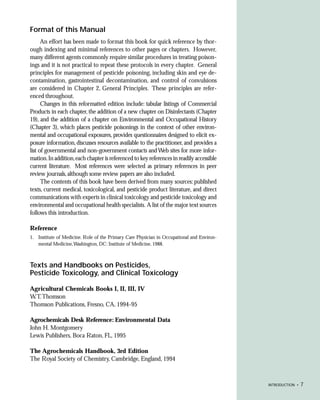
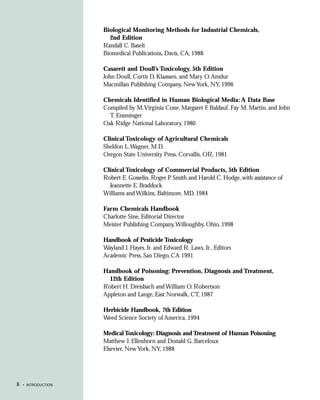
      The contents of this book have been derived from many sources: published
texts, current medical, toxicological, and pesticide product literature, and direct
communications with experts in clinical toxicology and pesticide toxicology and
environmental and occupational health specialists. A list of the major text sources
follows this introduction.

Reference
1. Institute of Medicine. Role of the Primary Care Physician in Occupational and Environ-
   mental Medicine, Washington, DC: Institute of Medicine, 1988.


Texts and Handbooks on Pesticides,
Pesticide Toxicology, and Clinical Toxicology

Agricultural Chemicals Books I, II, III, IV
W.T. Thomson
Thomson Publications, Fresno, CA, 1994-95

Agrochemicals Desk Reference: Environmental Data
John H. Montgomery
Lewis Publishers, Boca Raton, FL, 1995

The Agrochemicals Handbook, 3rd Edition
The Royal Society of Chemistry, Cambridge, England, 1994


                                                                                            INTRODUCTION •   7
Biological Monitoring Methods for Industrial Chemicals,
                       2nd Edition
                     Randall C. Baselt
                     Biomedical Publications, Davis, CA, 1988

                     Casarett and Doull’s Toxicology, 5th Edition
                     John Doull, Curtis D. Klaassen, and Mary O. Amdur
                     Macmillan Publishing Company, New York, NY, 1996

                     Chemicals Identified in Human Biological Media: A Data Base
                     Compiled by M.Virginia Cone, Margaret F. Baldauf, Fay M. Martin, and John
                       T. Ensminger
                     Oak Ridge National Laboratory, 1980

                     Clinical Toxicology of Agricultural Chemicals
                     Sheldon L. Wagner, M.D.
                     Oregon State University Press, Corvallis, OR, 1981

                     Clinical Toxicology of Commercial Products, 5th Edition
                     Robert E. Gosselin, Roger P. Smith and Harold C. Hodge, with assistance of
                       Jeannette E. Braddock
                     Williams and Wilkins, Baltimore, MD, 1984

                     Farm Chemicals Handbook
                     Charlotte Sine, Editorial Director
                     Meister Publishing Company, Willoughby, Ohio, 1998

                     Handbook of Pesticide Toxicology
                     Wayland J. Hayes, Jr. and Edward R. Laws, Jr., Editors
                     Academic Press, San Diego, CA 1991

                     Handbook of Poisoning: Prevention, Diagnosis and Treatment,
                       12th Edition
                     Robert H. Dreisbach and William O. Robertson
                     Appleton and Lange, East Norwalk, CT, 1987

                     Herbicide Handbook, 7th Edition
                     Weed Science Society of America, 1994

                     Medical Toxicology: Diagnosis and Treatment of Human Poisoning
                     Matthew J. Ellenhorn and Donald G. Barceloux
                     Elsevier, New York, NY, 1988


8   • INTRODUCTION
The Merck Index, 11th Edition
Martha Windholz and Susan Budavari, Editors
Merck and Company, Inc., Rahway, NJ, 1989

Patty’s Industrial Hygiene and Toxicology, 4th Revised Edition
George D. Clayton and Florence E. Clayton
Wiley Interscience, New York, NY, 1991-95

Pesticide Manual, 11th Edition
CDS Tomlin
The British Crop Protection Council, Farnham, Surrey, United Kingdom,1997

Pesticide Profiles: Toxicity, Environmental Impact, and Fate
Michael A. Kamrin (Editor)
Lewis Publishers, Boca Raton, FL, 1997

The Pharmacological Basis of Therapeutics, 8th Edition
Louis S. Goodman and Alfred Gilman
Pergamon Press, New York, NY, 1990

POISINDEX® System
Barry H. Rumack, N.K. Sayre, and C.R. Gelman, Editors
Micromedex, Englewood, CO, 1974-98

Poisoning: A Guide to Clinical Diagnosis and Treatment, 2nd Edition
W. F. Von Oettingen
W. B. Saunders Company, Philadelphia, PA, 1958


                                                                            INTRODUCTION •   9
CHAPTER 2


                            General Principles in
                            the Management of
                            Acute Pesticide Poisonings

                            This chapter describes basic management techniques applicable to most acute
                            pesticide poisonings. Where special considerations and treatments are required
                            for a particular pesticide, they are addressed separately in the appropriate chapter.


                            Skin Decontamination
                                 Decontamination must proceed concurrently with whatever resuscitative
                            and antidotal measures are necessary to preserve life. Shower patient with soap
                            and water, and shampoo hair to remove chemicals from skin and hair. If there
                            are any indications of weakness, ataxia, or other neurologic impairment, cloth-
                            ing should be removed and a complete bath and shampoo given while the
                            victim is recumbent. The possibility of pesticide sequestered under fingernails
                            or in skin folds should not be overlooked.
                                 Flush contaminating chemicals from eyes with copious amounts of clean
                            water for 10-15 minutes. If eye irritation is present after decontamination, oph-
                            thalmologic consultation is appropriate.
                                 Persons attending the victim should avoid direct contact with heavily con-
                            taminated clothing and vomitus. Contaminated clothing should be promptly
                            removed, bagged, and laundered before returning. Shoes and other leather items
                            cannot usually be decontaminated and should be discarded. Note that pesti-
                            cides can contaminate the inside surfaces of gloves, boots, and headgear. De-
                            contamination should especially be considered for emergency personnel such
                            as ambulance drivers at the site of a spill or contamination.Wear rubber gloves
                            while washing pesticide from skin and hair of patient. Latex and other surgical
                            or precautionary gloves usually will not always adequately protect from pesti-
                            cide contamination, so only rubber gloves are appropriate for this purpose.


                            Airway Protection
                                Ensure that a clear airway exists. Suction any oral secretions using a large
                            bore suction device if necessary. Intubate the trachea if the patient has respira-
                            tory depression or if the patient appears obtunded or otherwise neurologically

10   • GENERAL PRINCIPLES
impaired. Administer oxygen as necessary to maintain adequate tissue oxygen-
ation. In severe poisonings, it may be necessary to mechanically support pul-
monary ventilation for several days.
    Note on Specific Pesticides: There are several special considerations
with regard to certain pesticides. In organophosphate and carbamate poi-
soning, adequate tissue oxygenation is essential prior to administering atropine.
As important, in paraquat and diquat poisoning, oxygen is contraindicated
early in the poisoning because of progressive oxygen toxicity to the lung tissue.
See specific chapters for more details.


Gastrointestinal Decontamination
    A joint position statement has recently been released by the American
Academy of Clinical Toxicology and the European Association of Poisons Centres
and Clinical Toxicologists on various methods of gastrointestinal decontamina-
tion. A summary of the position statement accompanies the description of
each procedure.


1. Gastric Lavage
     If the patient presents within 60 minutes of ingestion, lavage may be con-
sidered. Insert an orogastric tube and follow with fluid, usually normal saline.
Aspirate back the fluid in an attempt to remove any toxicant. If the patient is
neurologically impaired, airway protection with a cuffed endotracheal tube is
indicated prior to gastric lavage.
     Lavage performed more than 60 minutes after ingestion has not proven to
be beneficial and runs the risk of inducing bleeding, perforation, or scarring
due to additional trauma to already traumatized tissues. It is almost always nec-
essary first to control seizures before attempting gastric lavage or any other
method of GI decontamination.
     Studies of poison recovery have been performed mainly with solid mate-
rial such as pills. There are no controlled studies of pesticide recovery by these
methods. Reported recovery of material at 60 minutes in several studies was
8%-32%.1,2 There is further evidence that lavage may propel the material into
the small bowel, thus increasing absorption.3
     Note on Specific Pesticides: Lavage is contraindicated in hydrocarbon
ingestion, a common vehicle in many pesticide formulations.
     Position Statement: Gastric lavage should not be routinely used in the
management of poisons. Lavage is indicated only when a patient has ingested a
potentially life-threatening amount of poison and the procedure can be done
within 60 minutes of ingestion. Even then, clinical benefit has not been con-
firmed in controlled studies.4


                                                                                     GENERAL PRINCIPLES •   11
2. Catharsis
                                 Sorbitol and magnesium citrate are commonly used cathartic agents. Be-
                            cause magnesium citrate has not been studied as much, its use is not described
                            here. Sorbitol is often included in charcoal formulations. It will increase gut
                            motility to improve excretion of the charcoal-poison complex. The dosage of
                            sorbitol is 1-2 g/kg as a one-time dose. Repeat doses of cathartics may result in
                            fluid and electrolyte imbalances, particularly in children, and are therefore not
                            recommended. Sorbitol is formulated in 70% and 35% solutions and usually
                            packaged in 100 mL bottles. The gram dosage of sorbitol in a 100 mL bottle
                            can be calculated by multiplying 100 (mL) x 0.7 (for 70% solution) x 1.285 g
                            sorbitol/mL. Therefore the dose in mL is as follows:


                                Dosage of Sorbitol:
                                 • Adults: 70% sorbitol, 1-2 mL/kg.
                                 • Children: 35% sorbitol, 1.5-2.3 mL/kg (maximum dosage: 50 g).


                                 Note on Specific Pesticides: Significant poisoning with organophos-
                            phates, carbamates, and arsenicals generally results in a profuse diarrhea. Poi-
                            soning with diquat and to a lesser extent paraquat results in an ileus.The use of
                            sorbitol is not recommended in any of the above pesticide poisonings.
                                 Position Statement: The administration of a cathartic alone has no role
                            in the management of the poisoned patient. There are no definite indications
                            for the use of cathartics in the management of the poisoned patient. Data are
                            conflicting with regard to use in combination with activated charcoal, and its
                            routine use is not endorsed. If a cathartic is used, it should be as a single dose in
                            order to minimize adverse effects. There are numerous contraindications,
                            including absent bowel sounds, abdominal trauma or surgery, or intestinal
                            perforation or obstruction. It is also contraindicated in volume depletion,
                            hypotension, electrolyte imbalance, or the ingestion of a corrosive substance.5


                            3. Activated Charcoal Adsorption
                                Activated charcoal is an effective absorbent for many poisonings.Volunteer
                            studies suggest that it will reduce the amount of poison absorbed if given within
                            60 minutes.6 There are insufficient data to support or exclude its use if time
                            from ingestion is prolonged, although some poisons that are less soluble may be
                            adsorbed beyond 60 minutes. Clinical trials with charcoal have been done with
                            poisons other than pesticides. There is some evidence that paraquat is well
                            adsorbed by activated charcoal.7,8 Charcoal has been anecdotally successful with
                            other pesticides.


12   • GENERAL PRINCIPLES
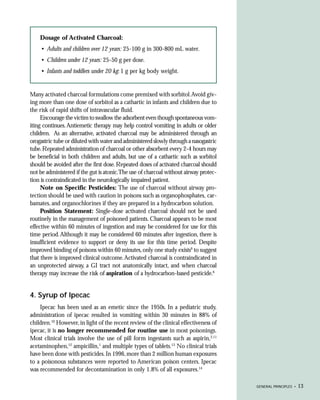
Dosage of Activated Charcoal:
     • Adults and children over 12 years: 25-100 g in 300-800 mL water.
     • Children under 12 years: 25-50 g per dose.
     • Infants and toddlers under 20 kg: 1 g per kg body weight.


Many activated charcoal formulations come premixed with sorbitol. Avoid giv-
ing more than one dose of sorbitol as a cathartic in infants and children due to
the risk of rapid shifts of intravascular fluid.
     Encourage the victim to swallow the adsorbent even though spontaneous vom-
iting continues. Antiemetic therapy may help control vomiting in adults or older
children. As an alternative, activated charcoal may be administered through an
orogastric tube or diluted with water and administered slowly through a nasogastric
tube. Repeated administration of charcoal or other absorbent every 2-4 hours may
be beneficial in both children and adults, but use of a cathartic such as sorbitol
should be avoided after the first dose. Repeated doses of activated charcoal should
not be administered if the gut is atonic.The use of charcoal without airway protec-
tion is contraindicated in the neurologically impaired patient.
     Note on Specific Pesticides: The use of charcoal without airway pro-
tection should be used with caution in poisons such as organophosphates, car-
bamates, and organochlorines if they are prepared in a hydrocarbon solution.
     Position Statement: Single-dose activated charcoal should not be used
routinely in the management of poisoned patients. Charcoal appears to be most
effective within 60 minutes of ingestion and may be considered for use for this
time period. Although it may be considered 60 minutes after ingestion, there is
insufficient evidence to support or deny its use for this time period. Despite
improved binding of poisons within 60 minutes, only one study exists9 to suggest
that there is improved clinical outcome. Activated charcoal is contraindicated in
an unprotected airway, a GI tract not anatomically intact, and when charcoal
therapy may increase the risk of aspiration of a hydrocarbon-based pesticide.6


4. Syrup of Ipecac
    Ipecac has been used as an emetic since the 1950s. In a pediatric study,
administration of ipecac resulted in vomiting within 30 minutes in 88% of
children.10 However, in light of the recent review of the clinical effectiveness of
ipecac, it is no longer recommended for routine use in most poisonings.
Most clinical trials involve the use of pill form ingestants such as aspirin,2,11
acetaminophen,12 ampicillin,1 and multiple types of tablets.13 No clinical trials
have been done with pesticides. In 1996, more than 2 million human exposures
to a poisonous substances were reported to American poison centers. Ipecac
was recommended for decontamination in only 1.8% of all exposures.14

                                                                                      GENERAL PRINCIPLES •   13
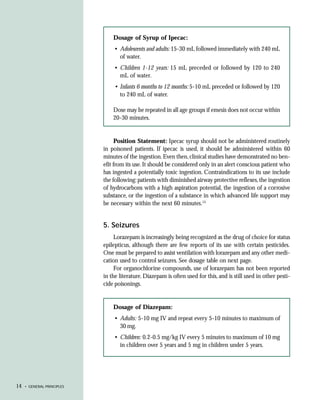
Dosage of Syrup of Ipecac:
                                 • Adolescents and adults: 15-30 mL followed immediately with 240 mL
                                   of water.
                                 • Children 1-12 years: 15 mL preceded or followed by 120 to 240
                                   mL of water.
                                 • Infants 6 months to 12 months: 5-10 mL preceded or followed by 120
                                   to 240 mL of water.

                                Dose may be repeated in all age groups if emesis does not occur within
                                20-30 minutes.


                                  Position Statement: Ipecac syrup should not be administered routinely
                            in poisoned patients. If ipecac is used, it should be administered within 60
                            minutes of the ingestion. Even then, clinical studies have demonstrated no ben-
                            efit from its use. It should be considered only in an alert conscious patient who
                            has ingested a potentially toxic ingestion. Contraindications to its use include
                            the following: patients with diminished airway protective reflexes, the ingestion
                            of hydrocarbons with a high aspiration potential, the ingestion of a corrosive
                            substance, or the ingestion of a substance in which advanced life support may
                            be necessary within the next 60 minutes.15


                            5. Seizures
                                 Lorazepam is increasingly being recognized as the drug of choice for status
                            epilepticus, although there are few reports of its use with certain pesticides.
                            One must be prepared to assist ventilation with lorazepam and any other medi-
                            cation used to control seizures. See dosage table on next page.
                                 For organochlorine compounds, use of lorazepam has not been reported
                            in the literature. Diazepam is often used for this, and is still used in other pesti-
                            cide poisonings.


                                Dosage of Diazepam:
                                 • Adults: 5-10 mg IV and repeat every 5-10 minutes to maximum of
                                   30 mg.
                                 • Children: 0.2-0.5 mg/kg IV every 5 minutes to maximum of 10 mg
                                   in children over 5 years and 5 mg in children under 5 years.


14   • GENERAL PRINCIPLES
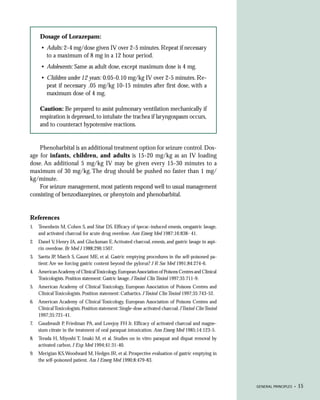
Dosage of Lorazepam:
      • Adults: 2-4 mg/dose given IV over 2-5 minutes. Repeat if necessary
        to a maximum of 8 mg in a 12 hour period.
      • Adolescents: Same as adult dose, except maximum dose is 4 mg.
      • Children under 12 years: 0.05-0.10 mg/kg IV over 2-5 minutes. Re-
        peat if necessary .05 mg/kg 10-15 minutes after first dose, with a
        maximum dose of 4 mg.

     Caution: Be prepared to assist pulmonary ventilation mechanically if
     respiration is depressed, to intubate the trachea if laryngospasm occurs,
     and to counteract hypotensive reactions.


    Phenobarbital is an additional treatment option for seizure control. Dos-
age for infants, children, and adults is 15-20 mg/kg as an IV loading
dose. An additional 5 mg/kg IV may be given every 15-30 minutes to a
maximum of 30 mg/kg. The drug should be pushed no faster than 1 mg/
kg/minute.
    For seizure management, most patients respond well to usual management
consisting of benzodiazepines, or phenytoin and phenobarbital.


References
1.   Tenenbein M, Cohen S, and Sitar DS. Efficacy of ipecac-induced emesis, orogastric lavage,
     and activated charcoal for acute drug overdose. Ann Emerg Med 1987;16:838- 41.
2.   Danel V, Henry JA, and Glucksman E. Activated charcoal, emesis, and gastric lavage in aspi-
     rin overdose. Br Med J 1988;296:1507.
3.   Saetta JP, March S, Gaunt ME, et al. Gastric emptying procedures in the self-poisoned pa-
     tient: Are we forcing gastric content beyond the pylorus? J R Soc Med 1991;84:274-6.
4.   American Academy of Clinical Toxicology, European Association of Poisons Centres and Clinical
     Toxicologists. Position statement: Gastric lavage. J Toxicol Clin Toxicol 1997;35:711-9.
5.   American Academy of Clinical Toxicology, European Association of Poisons Centres and
     Clinical Toxicologists. Position statement: Cathartics. J Toxicol Clin Toxicol 1997;35:743-52.
6.   American Academy of Clinical Toxicology, European Association of Poisons Centres and
     Clinical Toxicologists. Position statement: Single-dose activated charcoal. J Toxicol Clin Toxicol
     1997;35:721-41.
7.   Gaudreault P, Friedman PA, and Lovejoy FH Jr. Efficacy of activated charcoal and magne-
     sium citrate in the treatment of oral paraquat intoxication. Ann Emerg Med 1985;14:123-5.
8.   Terada H, Miyoshi T, Imaki M, et al. Studies on in vitro paraquat and diquat removal by
     activated carbon. J Exp Med 1994;41:31-40.
9.   Merigian KS, Woodward M, Hedges JR, et al. Prospective evaluation of gastric emptying in
     the self-poisoned patient. Am J Emerg Med 1990;8:479-83.


                                                                                                          GENERAL PRINCIPLES •   15
10. Robertson W. Syrup of ipecac: A slow or fast emetic? AJDC 1962;103:136-9.
                            11. Curtis RA, Barone J, and Giacona N. Efficacy of ipecac and activated charcoal/cathartic.
                                Arch Intern Med 1984;144:48-52.
                            12. McNamara RM, Aaron CK, Gemborys M, et al. Efficacy of charcoal cathartic versus ipecac in
                                reducing serum acetaminophen in a simulated overdose. Ann Emerg Med 1989;18:934-8.
                            13. Neuvonen PJ, Vartiainen M, and Tokola O. Comparison of activated charcoal and ipecac
                                syrup in prevention of drug absorption. Eur J Clin Pharmacol 1983;24:557-62.
                            14. Litovitz RL, Smilkstein M, Felberg L, et al. 1996 Annual Report of the American
                                Association of Poison Control Centers Toxic Exposure Surveillance System. Am J Emerg Med
                                1997;15:447-500.
                            15. American Academy of Clinical Toxicology, European Association of Poisons Centres and Clinical
                                Toxicologists. Position statement: Ipecac syrup. J Toxicol Clin Toxicol 1997;35:699-709.


16   • GENERAL PRINCIPLES
CHAPTER 3


Environmental and
Occupational History

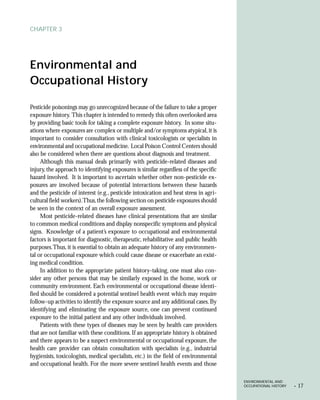
Pesticide poisonings may go unrecognized because of the failure to take a proper
exposure history. This chapter is intended to remedy this often overlooked area
by providing basic tools for taking a complete exposure history. In some situ-
ations where exposures are complex or multiple and/or symptoms atypical, it is
important to consider consultation with clinical toxicologists or specialists in
environmental and occupational medicine. Local Poison Control Centers should
also be considered when there are questions about diagnosis and treatment.
     Although this manual deals primarily with pesticide-related diseases and
injury, the approach to identifying exposures is similar regardless of the specific
hazard involved. It is important to ascertain whether other non-pesticide ex-
posures are involved because of potential interactions between these hazards
and the pesticide of interest (e.g., pesticide intoxication and heat stress in agri-
cultural field workers).Thus, the following section on pesticide exposures should
be seen in the context of an overall exposure assessment.
     Most pesticide-related diseases have clinical presentations that are similar
to common medical conditions and display nonspecific symptoms and physical
signs. Knowledge of a patient’s exposure to occupational and environmental
factors is important for diagnostic, therapeutic, rehabilitative and public health
purposes.Thus, it is essential to obtain an adequate history of any environmen-
tal or occupational exposure which could cause disease or exacerbate an exist-
ing medical condition.
     In addition to the appropriate patient history-taking, one must also con-
sider any other persons that may be similarly exposed in the home, work or
community environment. Each environmental or occupational disease identi-
fied should be considered a potential sentinel health event which may require
follow-up activities to identify the exposure source and any additional cases. By
identifying and eliminating the exposure source, one can prevent continued
exposure to the initial patient and any other individuals involved.
     Patients with these types of diseases may be seen by health care providers
that are not familiar with these conditions. If an appropriate history is obtained
and there appears to be a suspect environmental or occupational exposure, the
health care provider can obtain consultation with specialists (e.g., industrial
hygienists, toxicologists, medical specialists, etc.) in the field of environmental
and occupational health. For the more severe sentinel health events and those

                                                                                       ENVIRONMENTAL AND
                                                                                       OCCUPATIONAL HISTORY   •   17
that involve numerous exposed individuals, additional assistance can be ob-
                                tained by contacting the state health department, state regulatory agency (e.g.,
                                the agriculture department in the case of pesticide illness and injury), or other
                                related organizations (see list at end of chapter). Furthermore, some states re-
                                quire reporting of certain environmental and occupational conditions (e.g.,
                                pesticide case reporting in Arizona, California, Florida, Oregon, Texas, and
                                Washington).
                                     This chapter reviews the types of questions to be asked in taking an occupa-
                                tional and environmental history (for both adult and pediatric patients), discusses
                                legal, ethical, and public health considerations, and lists information resources.


                                Taking an Exposure History
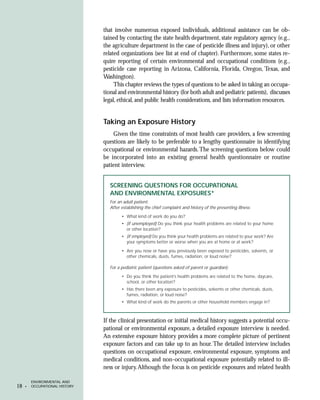
                                    Given the time constraints of most health care providers, a few screening
                                questions are likely to be preferable to a lengthy questionnaire in identifying
                                occupational or environmental hazards. The screening questions below could
                                be incorporated into an existing general health questionnaire or routine
                                patient interview.


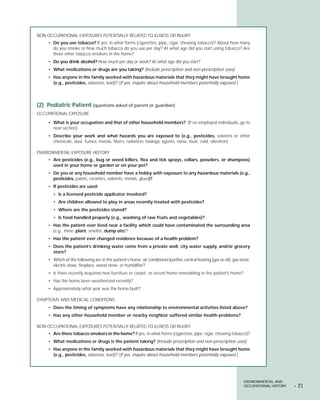
                                  SCREENING QUESTIONS FOR OCCUPATIONAL
                                  AND ENVIRONMENTAL EXPOSURES*
                                  For an adult patient:
                                  After establishing the chief complaint and history of the presenting illness:
                                        • What kind of work do you do?
                                        • (if unemployed) Do you think your health problems are related to your home
                                          or other location?
                                        • (if employed) Do you think your health problems are related to your work? Are
                                          your symptoms better or worse when you are at home or at work?

                                        • Are you now or have you previously been exposed to pesticides, solvents, or
                                          other chemicals, dusts, fumes, radiation, or loud noise?

                                  For a pediatric patient (questions asked of parent or guardian):
                                        • Do you think the patient’s health problems are related to the home, daycare,
                                          school, or other location?
                                        • Has there been any exposure to pesticides, solvents or other chemicals, dusts,
                                          fumes, radiation, or loud noise?
                                        • What kind of work do the parents or other household members engage in?


                                If the clinical presentation or initial medical history suggests a potential occu-
                                pational or environmental exposure, a detailed exposure interview is needed.
                                An extensive exposure history provides a more complete picture of pertinent
                                exposure factors and can take up to an hour. The detailed interview includes
                                questions on occupational exposure, environmental exposure, symptoms and
                                medical conditions, and non-occupational exposure potentially related to ill-
                                ness or injury. Although the focus is on pesticide exposures and related health

         ENVIRONMENTAL AND
18   •   OCCUPATIONAL HISTORY
effects, concurrent non-pesticide exposures need to be considered in the over-
all patient health assessment. Questions typical of a detailed interview are listed
on the next several pages, preceded by special concerns in addressing exposures
of children and agricultural workers. For further details on taking a history for
all types of occupational and environmental hazards, consult the ATSDR mono-
graph entitled “Taking an Exposure History”1 or a general occupational and
environmental medicine reference text.2


Special Patient Populations
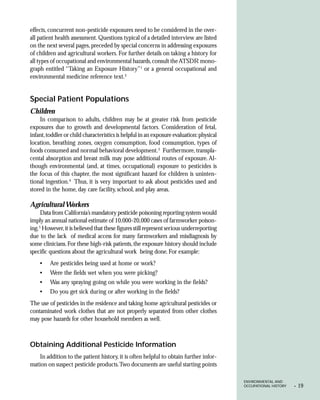
Children
    In comparison to adults, children may be at greater risk from pesticide
exposures due to growth and developmental factors. Consideration of fetal,
infant, toddler or child characteristics is helpful in an exposure evaluation: physical
location, breathing zones, oxygen consumption, food consumption, types of
foods consumed and normal behavioral development.3 Furthermore, transpla-
cental absorption and breast milk may pose additional routes of exposure. Al-
though environmental (and, at times, occupational) exposure to pesticides is
the focus of this chapter, the most significant hazard for children is uninten-
tional ingestion.4 Thus, it is very important to ask about pesticides used and
stored in the home, day care facility, school, and play areas.

Agricultural Workers
     Data from California’s mandatory pesticide poisoning reporting system would
imply an annual national estimate of 10,000-20,000 cases of farmworker poison-
ing.5 However, it is believed that these figures still represent serious underreporting
due to the lack of medical access for many farmworkers and misdiagnosis by
some clinicians. For these high-risk patients, the exposure history should include
specific questions about the agricultural work being done. For example:
    •    Are pesticides being used at home or work?
    •    Were the fields wet when you were picking?
    •    Was any spraying going on while you were working in the fields?
    •    Do you get sick during or after working in the fields?
The use of pesticides in the residence and taking home agricultural pesticides or
contaminated work clothes that are not properly separated from other clothes
may pose hazards for other household members as well.


Obtaining Additional Pesticide Information
    In addition to the patient history, it is often helpful to obtain further infor-
mation on suspect pesticide products.Two documents are useful starting points

                                                                                          ENVIRONMENTAL AND
                                                                                          OCCUPATIONAL HISTORY   •   19
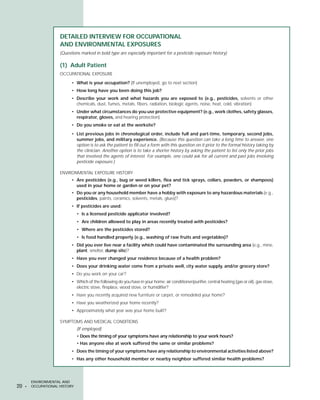
DETAILED INTERVIEW FOR OCCUPATIONAL
                      AND ENVIRONMENTAL EXPOSURES
                      (Questions marked in bold type are especially important for a pesticide exposure history)

                      (1) Adult Patient
                      OCCUPATIONAL EXPOSURE

                            • What is your occupation? (If unemployed, go to next section)
                            • How long have you been doing this job?
                            • Describe your work and what hazards you are exposed to (e.g., pesticides, solvents or other
                              chemicals, dust, fumes, metals, fibers, radiation, biologic agents, noise, heat, cold, vibration)
                            • Under what circumstances do you use protective equipment? (e.g., work clothes, safety glasses,
                              respirator, gloves, and hearing protection)
                            • Do you smoke or eat at the worksite?
                            • List previous jobs in chronological order, include full and part-time, temporary, second jobs,
                              summer jobs, and military experience. (Because this question can take a long time to answer, one
                              option is to ask the patient to fill out a form with this question on it prior to the formal history taking by
                              the clinician. Another option is to take a shorter history by asking the patient to list only the prior jobs
                              that involved the agents of interest. For example, one could ask for all current and past jobs involving
                              pesticide exposure.)

                      ENVIRONMENTAL EXPOSURE HISTORY
                            • Are pesticides (e.g., bug or weed killers, flea and tick sprays, collars, powders, or shampoos)
                              used in your home or garden or on your pet?
                            • Do you or any household member have a hobby with exposure to any hazardous materials (e.g.,
                              pesticides, paints, ceramics, solvents, metals, glues)?
                            • If pesticides are used:
                                • Is a licensed pesticide applicator involved?
                                • Are children allowed to play in areas recently treated with pesticides?
                                • Where are the pesticides stored?
                                • Is food handled properly (e.g., washing of raw fruits and vegetables)?
                            • Did you ever live near a facility which could have contaminated the surrounding area (e.g., mine,
                              plant, smelter, dump site)?
                            • Have you ever changed your residence because of a health problem?
                            • Does your drinking water come from a private well, city water supply, and/or grocery store?
                            • Do you work on your car?
                            • Which of the following do you have in your home: air conditioner/purifier, central heating (gas or oil), gas stove,
                              electric stove, fireplace, wood stove, or humidifier?
                            • Have you recently acquired new furniture or carpet, or remodeled your home?
                            • Have you weatherized your home recently?
                            • Approximately what year was your home built?

                      SYMPTOMS AND MEDICAL CONDITIONS
                                (If employed)
                                • Does the timing of your symptoms have any relationship to your work hours?
                                • Has anyone else at work suffered the same or similar problems?
                            • Does the timing of your symptoms have any relationship to environmental activities listed above?
                            • Has any other household member or nearby neighbor suffered similar health problems?


         ENVIRONMENTAL AND
20   •   OCCUPATIONAL HISTORY
NON-OCCUPATIONAL EXPOSURES POTENTIALLY RELATED TO ILLNESS OR INJURY
     • Do you use tobacco? If yes, in what forms (cigarettes, pipe, cigar, chewing tobacco)? About how many
       do you smoke or how much tobacco do you use per day? At what age did you start using tobacco? Are
       there other tobacco smokers in the home?
     • Do you drink alcohol? How much per day or week? At what age did you start?
     • What medications or drugs are you taking? (Include prescription and non-prescription uses)
     • Has anyone in the family worked with hazardous materials that they might have brought home
       (e.g., pesticides, asbestos, lead)? (If yes, inquire about household members potentially exposed.)


(2) Pediatric Patient (questions asked of parent or guardian)
OCCUPATIONAL EXPOSURE

     • What is your occupation and that of other household members? (If no employed individuals, go to
       next section)
     • Describe your work and what hazards you are exposed to (e.g., pesticides, solvents or other
       chemicals, dust, fumes, metals, fibers, radiation, biologic agents, noise, heat, cold, vibration)

ENVIRONMENTAL EXPOSURE HISTORY
     • Are pesticides (e.g., bug or weed killers, flea and tick sprays, collars, powders, or shampoos)
       used in your home or garden or on your pet?
     • Do you or any household member have a hobby with exposure to any hazardous materials (e.g.,
       pesticides, paints, ceramics, solvents, metals, glues)?
     • If pesticides are used:
       • Is a licensed pesticide applicator involved?
       • Are children allowed to play in areas recently treated with pesticides?
       • Where are the pesticides stored?
       • Is food handled properly (e.g., washing of raw fruits and vegetables)?
     • Has the patient ever lived near a facility which could have contaminated the surrounding area
       (e.g., mine, plant, smelter, dump site)?
     • Has the patient ever changed residence because of a health problem?
     • Does the patient’s drinking water come from a private well, city water supply, and/or grocery
       store?
     • Which of the following are in the patient’s home: air conditioner/purifier, central heating (gas or oil), gas stove,
       electric stove, fireplace, wood stove, or humidifier?
     • Is there recently acquired new furniture or carpet, or recent home remodeling in the patient’s home?
     • Has the home been weatherized recently?
     • Approximately what year was the home built?

SYMPTOMS AND MEDICAL CONDITIONS
     • Does the timing of symptoms have any relationship to environmental activities listed above?
     • Has any other household member or nearby neighbor suffered similar health problems?

NON-OCCUPATIONAL EXPOSURES POTENTIALLY RELATED TO ILLNESS OR INJURY
     • Are there tobacco smokers in the home? If yes, in what forms (cigarettes, pipe, cigar, chewing tobacco)?
     • What medications or drugs is the patient taking? (Include prescription and non-prescription uses)
     • Has anyone in the family worked with hazardous materials that they might have brought home
       (e.g., pesticides, asbestos, lead)? (If yes, inquire about household members potentially exposed.)


                                                                                                                       ENVIRONMENTAL AND
                                                                                                                       OCCUPATIONAL HISTORY   •   21
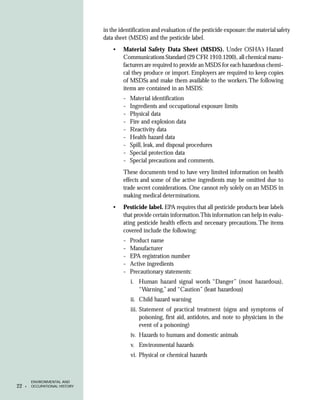
in the identification and evaluation of the pesticide exposure: the material safety
                                data sheet (MSDS) and the pesticide label.
                                    •   Material Safety Data Sheet (MSDS). Under OSHA’s Hazard
                                        Communications Standard (29 CFR 1910.1200), all chemical manu-
                                        facturers are required to provide an MSDS for each hazardous chemi-
                                        cal they produce or import. Employers are required to keep copies
                                        of MSDSs and make them available to the workers. The following
                                        items are contained in an MSDS:
                                        -   Material identification
                                        -   Ingredients and occupational exposure limits
                                        -   Physical data
                                        -   Fire and explosion data
                                        -   Reactivity data
                                        -   Health hazard data
                                        -   Spill, leak, and disposal procedures
                                        -   Special protection data
                                        -   Special precautions and comments.
                                        These documents tend to have very limited information on health
                                        effects and some of the active ingredients may be omitted due to
                                        trade secret considerations. One cannot rely solely on an MSDS in
                                        making medical determinations.
                                    •   Pesticide label. EPA requires that all pesticide products bear labels
                                        that provide certain information.This information can help in evalu-
                                        ating pesticide health effects and necessary precautions. The items
                                        covered include the following:
                                        -   Product name
                                        -   Manufacturer
                                        -   EPA registration number
                                        -   Active ingredients
                                        -   Precautionary statements:
                                            i. Human hazard signal words “Danger” (most hazardous),
                                               “Warning,” and “Caution” (least hazardous)
                                            ii. Child hazard warning
                                            iii. Statement of practical treatment (signs and symptoms of
                                                 poisoning, first aid, antidotes, and note to physicians in the
                                                 event of a poisoning)
                                            iv. Hazards to humans and domestic animals
                                            v. Environmental hazards
                                            vi. Physical or chemical hazards


         ENVIRONMENTAL AND
22   •   OCCUPATIONAL HISTORY
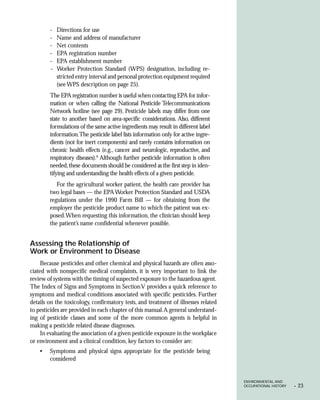
-   Directions for use
        -   Name and address of manufacturer
        -   Net contents
        -   EPA registration number
        -   EPA establishment number
        -   Worker Protection Standard (WPS) designation, including re-
            stricted entry interval and personal protection equipment required
            (see WPS description on page 25).
        The EPA registration number is useful when contacting EPA for infor-
        mation or when calling the National Pesticide Telecommunications
        Network hotline (see page 29). Pesticide labels may differ from one
        state to another based on area-specific considerations. Also, different
        formulations of the same active ingredients may result in different label
        information.The pesticide label lists information only for active ingre-
        dients (not for inert components) and rarely contains information on
        chronic health effects (e.g., cancer and neurologic, reproductive, and
        respiratory diseases).6 Although further pesticide information is often
        needed, these documents should be considered as the first step in iden-
        tifying and understanding the health effects of a given pesticide.
           For the agricultural worker patient, the health care provider has
        two legal bases — the EPA Worker Protection Standard and USDA
        regulations under the 1990 Farm Bill — for obtaining from the
        employer the pesticide product name to which the patient was ex-
        posed. When requesting this information, the clinician should keep
        the patient’s name confidential whenever possible.


Assessing the Relationship of
Work or Environment to Disease
     Because pesticides and other chemical and physical hazards are often asso-
ciated with nonspecific medical complaints, it is very important to link the
review of systems with the timing of suspected exposure to the hazardous agent.
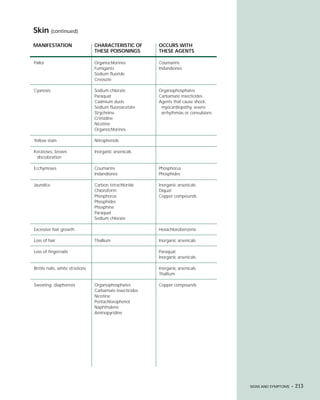
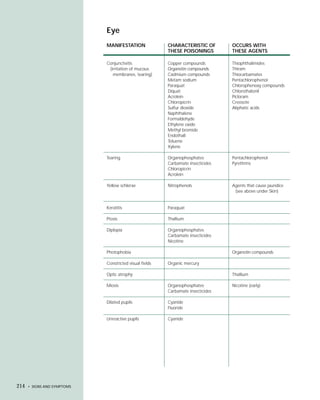
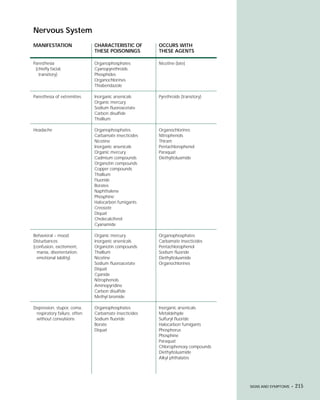
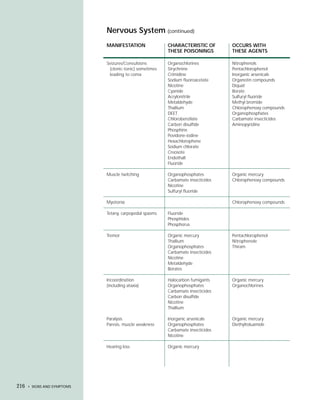
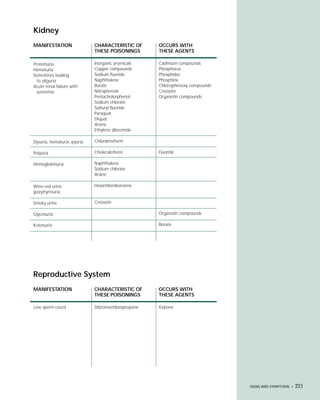
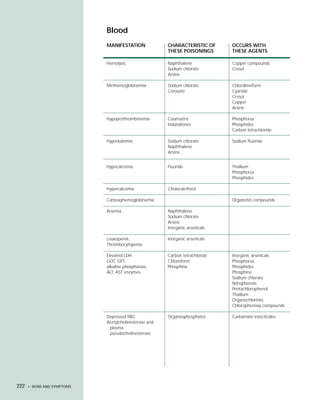
The Index of Signs and Symptoms in Section V provides a quick reference to
symptoms and medical conditions associated with specific pesticides. Further
details on the toxicology, confirmatory tests, and treatment of illnesses related
to pesticides are provided in each chapter of this manual. A general understand-
ing of pesticide classes and some of the more common agents is helpful in
making a pesticide related disease diagnoses.
     In evaluating the association of a given pesticide exposure in the workplace
or environment and a clinical condition, key factors to consider are:
    •   Symptoms and physical signs appropriate for the pesticide being
        considered


                                                                                    ENVIRONMENTAL AND
                                                                                    OCCUPATIONAL HISTORY   •   23
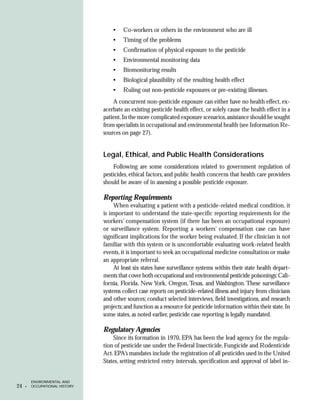
•    Co-workers or others in the environment who are ill
                                    •    Timing of the problems
                                    •    Confirmation of physical exposure to the pesticide
                                    •    Environmental monitoring data
                                    •    Biomonitoring results
                                    •    Biological plausibility of the resulting health effect
                                    •    Ruling out non-pesticide exposures or pre-existing illnesses.
                                    A concurrent non-pesticide exposure can either have no health effect, ex-
                                acerbate an existing pesticide health effect, or solely cause the health effect in a
                                patient. In the more complicated exposure scenarios, assistance should be sought
                                from specialists in occupational and environmental health (see Information Re-
                                sources on page 27).


                                Legal, Ethical, and Public Health Considerations
                                    Following are some considerations related to government regulation of
                                pesticides, ethical factors, and public health concerns that health care providers
                                should be aware of in assessing a possible pesticide exposure.

                                Reporting Requirements
                                     When evaluating a patient with a pesticide-related medical condition, it
                                is important to understand the state-specific reporting requirements for the
                                workers’ compensation system (if there has been an occupational exposure)
                                or surveillance system. Reporting a workers’ compensation case can have
                                significant implications for the worker being evaluated. If the clinician is not
                                familiar with this system or is uncomfortable evaluating work-related health
                                events, it is important to seek an occupational medicine consultation or make
                                an appropriate referral.
                                     At least six states have surveillance systems within their state health depart-
                                ments that cover both occupational and environmental pesticide poisonings: Cali-
                                fornia, Florida, New York, Oregon, Texas, and Washington. These surveillance
                                systems collect case reports on pesticide-related illness and injury from clinicians
                                and other sources; conduct selected interviews, field investigations, and research
                                projects; and function as a resource for pesticide information within their state. In
                                some states, as noted earlier, pesticide case reporting is legally mandated.

                                Regulatory Agencies
                                    Since its formation in 1970, EPA has been the lead agency for the regula-
                                tion of pesticide use under the Federal Insecticide, Fungicide and Rodenticide
                                Act. EPA’s mandates include the registration of all pesticides used in the United
                                States, setting restricted entry intervals, specification and approval of label in-


         ENVIRONMENTAL AND
24   •   OCCUPATIONAL HISTORY
formation, and setting acceptable food and water tolerance levels. In addition,
EPA works in partnership with state and tribal agencies to implement two field
programs — the certification and training program for pesticide applicators
and the agricultural worker protection standard — to protect workers and
handlers from pesticide exposures. EPA sets national standards for certification
of over 1 million private and commercial pesticide applicators.
     The authority to enforce EPA regulations is delegated to the states. For
example, calls concerning non-compliance with the worker protection stan-
dard can typically be made to the state agricultural department. In five states,
the department of the environment or other state agency has enforcement
authority. Anonymous calls can be made if workers anticipate possible retalia-
tory action by management. It should be noted that not all state departments of
agriculture have similar regulations. In California, for instance, employers are
required to obtain medical supervision and biological monitoring of agricul-
tural workers who apply pesticides containing cholinesterase-inhibiting com-
pounds. This requirement is not found in the federal regulations.
     Outside the agricultural setting, the Occupational Safety and Health
Administration (OSHA) has jurisdiction over workplace exposures.All workers
involved in pesticide manufacturing would be covered by OSHA. OSHA sets
permissible exposure levels for selected pesticides. Approximately half the states
are covered by the federal OSHA; the rest have their own state-plan OSHA.
Individual state plans may choose to be more protective in setting their workplace
standards. Anonymous calls can also be made to either state-plan or federal
OSHA agencies.
     For pesticide contamination in water, EPA sets enforceable maximum
containment levels. In food and drug-related outbreaks, EPA works jointly with
the Food and Drug Administration (FDA) and the U.S. Department of
Agriculture (USDA) to monitor and regulate pesticide residues and their
metabolites. Tolerance limits are established for many pesticides and their
metabolites in raw agricultural commodities.
     In evaluating a patient with pesticide exposure, the clinician may need
to report a pesticide intoxication to the appropriate health and/or regulatory
agency.

Worker Protection Standard
     EPA’s Worker Protection Standard (WPS) became fully effective in 1995.
The intent of the regulation is to eliminate or reduce pesticide exposure, mitigate
exposures that occur, and inform agricultural workers about the hazards of
pesticides. The WPS applies to two types of workers in the farm, greenhouse,
nursery, and forest industries: (1) agricultural pesticide handlers (mixer, loader,
applicator, equipment cleaner or repair person, and flagger), and (2) field workers
(cultivator or harvester).
     The WPS includes requirements that agricultural employers notify workers
about pesticide treatments in advance, offer basic pesticide safety training, provide

                                                                                        ENVIRONMENTAL AND
                                                                                        OCCUPATIONAL HISTORY   •   25
personal protective equipment for direct work with pesticides, and observe
                                restricted entry interval (REI) times. (The REI is a required waiting period before
                                workers can return to areas treated with pesticides.) Of special interest to health
                                care providers, the WPS also requires agricultural employers to:
                                    •    Post an emergency medical facility address and phone number in a
                                         central location.
                                    •    Arrange immediate transport from the agricultural establishment to
                                         a medical facility for a pesticide-affected worker.
                                    •    Supply the affected worker and medical personnel with product name,
                                         EPA registration number, active ingredient, label medical information,
                                         a description of how the pesticide was used, and exposure information.

                                Ethical Considerations
                                     Attempts to investigate an occupational pesticide exposure may call for ob-
                                taining further information from the worksite manager or owner. Any contact
                                with the worksite should be taken in consultation with the patient because of the
                                potential for retaliatory actions (such as loss of job or pay cuts). Ideally, a request
                                for a workplace visit or more information about pesticide exposure at the work-
                                place will occur with the patient’s agreement. In situations where the health
                                hazard is substantial and many individuals might be affected, a call to a state
                                pesticide surveillance system (if available), agricultural health and safety center (if
                                nearby), can provide the National Institute for Occupational Safety and Health
                                (NIOSH) or state agricultural agency the assistance needed for a disease out-
                                break investigation.
                                     Similarly, the discovery of pesticide contamination in a residence, school,
                                daycare setting, food product, or other environmental site or product can have
                                public health, financial, and legal consequences for the patient and other indi-
                                viduals (e.g., building owner, school district, food producer). It is prudent to
                                discuss these situations and follow-up options with the patient as well as a knowl-
                                edgeable environmental health specialist and appropriate state or local agencies.

                                Public Health Considerations
                                      Health care providers are often the first to identify a sentinel health event that
                                upon further investigation develops into a full-blown disease outbreak. A disease
                                outbreak is defined as a statistically elevated rate of disease among a well-defined
                                population as compared to a standard population. For example, complaints about
                                infertility problems among workers at a dibromochloropropane (DBCP) manufac-
                                turing plant in California led to diagnoses of azoospermia (lack of sperm) or oli-
                                gospermia (decreased sperm count) among a handful of otherwise healthy young
                                men working at the plant.7 An eventual disease outbreak investigation resulted in the
                                first published report of a male reproductive toxicant in the workplace. At the time,
                                DBCP was used as a nematocide; it has since been banned in the United States.
                                      Disease outbreak investigations are conducted for all kinds of exposures

         ENVIRONMENTAL AND
26   •   OCCUPATIONAL HISTORY
and health events, not only those in the occupational and environmental area.
Usually, assistance from government or university experts is needed in the in-
vestigation, which may require access to information, expertise, and resources
beyond that available to the average clinician. The steps involved in such an
investigation and the types of information typically gathered in the preliminary
clinical stages are outlined below.The clinician must be aware that an outbreak
investigation may be needed when a severe and widespread exposure and dis-
ease scenario exists. For more information on disease outbreak investigations,
consult the literature.8, 9


    STEPS IN INVESTIGATING A DISEASE OUTBREAK
     • Confirm diagnosis of initial case reports (the “index” cases)
     • Identify other unrecognized cases
     • Establish a case definition
     • Characterize cases by person, place, and time characteristics (e.g., age, race, ethnicity, gen-
       der, location within a company or a neighborhood, timeline of exposure and health events)
     • Create plot of case incidence by time (an epidemic curve)
     • Determine if a dose-response relationship exists (i.e., more severe clinical case presen-
       tation for individuals with higher exposures)
     • Derive an attack rate and determine if statistical significance is achieved (divide num-
       ber of incident cases by number of exposed individuals and multiply by 100 to obtain
       attack rate percentage)


Information Resources
Government Agencies:

EPA Office of Pesticide Programs
Overall pesticide regulation with special programs on agricultural workers and
pesticide applicators. Specific programs include the promotion of the reduc-
tion of pesticide use, establishment of tolerance levels for food, and investiga-
tion of pesticide releases and exposure events.
Address:         EPA – Office of Pesticide Programs
                 401 M Street SW (7501C)
                 Washington, DC 20460
Telephone:       703-305-7090
Web site:        www.epa.gov/pesticides

EPA – Certification and Worker Protection Branch
Within the Office of Pesticide Programs, the Certification and Worker Protec-
tion Branch addresses worker-related pesticide issues and pesticide applicator
certification activities. Special emphasis is placed on the adequate training of
farm workers, pesticide applicators, and health care providers.Various training

                                                                                                         ENVIRONMENTAL AND
                                                                                                         OCCUPATIONAL HISTORY   •   27
materials in several languages are available.
                                Address:      EPA – OPP
                                              401 M Street SW (7506C)
                                              Washington, DC 20460
                                Telephone:    703-305-7666
                                Web site:     www.epa.gov/pesticides/safety

                                Occupational Safety and Health Administration (OSHA)
                                More than 100 million workers and 6.5 million employers are covered under
                                the Occupational Safety and Health Act, which covers workers in pesticide
                                manufacturing as well as other industries. OSHA and its state partners have
                                approximately 2100 inspectors, plus investigators, standards writers, educators,
                                physicians, and other staff in over 200 offices across the country. OSHA sets
                                protective workplace standards, enforces the standards, and offers employers
                                and employees technical assistance and consultation programs. Note that some
                                states have their own OSHA plan.
                                Address:      OSHA – US DOL
                                              Room N3647
                                              Constitution Ave NW
                                              Washington, DC 20210
                                Telephone:    202-219-8021
                                Web site:     www.osha.gov

                                Food and Drug Administration (FDA)
                                Drug and food pesticide issues.
                                Address:    FDA
                                            National Center for Toxicological Research
                                            5600 Fishers Lane
                                            Rockville, MD 20857
                                Telephone: 301-443-3170
                                Internet:   gopher.nctr.fda.gov

                                USDA Extension Service
                                USDA’s Extension Service works with its university partners, the state land-
                                grant system, to provide farmers and ranchers information to reduce and
                                prevent agricultural-related work incidents. The Pesticide Applicator Training
                                program trains applicators in the safe use of pesticides and coordinates
                                pesticide-related safety training programs.
                                Address:      USDA
                                              14th & Independence SW
                                              Washington, DC 20250
                                Telephone:    202-720-2791
                                Web site:     www.reeusda.gov

         ENVIRONMENTAL AND
28   •   OCCUPATIONAL HISTORY
National Center for Environmental Health (NCEH),
Centers for Disease Control (CDC)
NCEH provides expertise in environmental pesticide case surveillance and dis-
ease outbreak investigations.
Address:      NCEH, CDC
              Mailstop F29
              4770 Buford Highway NE
              Atlanta, GA 30341
Tel:          770-488-7030
Web site:     www.cdc.gov/nceh/ncehhome.htm

National Institute for Occupational Safety and Health (NIOSH),
Centers for Disease Control (CDC)
NIOSH is the federal agency responsible for conducting research on occupational
disease and injury. NIOSH may investigate potentially hazardous working condi-
tions upon request, makes recommendations on preventing workplace disease and
injury, and provides training to occupational safety and health professionals.
Address:      NIOSH
              Humphrey Building, Room 715H
              200 Independence Ave SW
              Washington, DC 20201
Hotline:      1-800-356-4674
Web site:     www.cdc.gov/niosh/homepage.html

NIOSH Agricultural Health and Safety Centers
NIOSH has funded eight Agricultural Health and Safety Centers throughout
the country which involve clinicians and other health specialists in the area of
pesticide-related illness and injury. The NIOSH-supported centers are:


University of California Agricultural     Great Plains Center for Agricultural
Health and Safety Center                  Health
Old Davis Road                            University of Iowa
University of California                  Iowa City, IA 52242
Davis, CA 95616                           Tel: 319-335-4415
Tel: 916-752-4050
                                          Southeast Center for Agricultural
High Plains Intermountain Center          Health and Injury Prevention
for Agricultural Health and Safety        University of Kentucky
Colorado State University                 Department of Preventive Medicine
Fort Collins, CO 80523                    Lexington, KY 40536
Tel: 970-491-6152                         Tel: 606-323-6836


                                                                                   ENVIRONMENTAL AND
                                                                                   OCCUPATIONAL HISTORY   •   29
Northeast Center for Agricultural         Pacific Northwest Agricultural Safety
                                and Occupational Health                   and Health Center
                                One Atwell Road                           University of Washington
                                Cooperstown, NY 13326                     Department of Environmental Health
                                Tel: 607-547-6023                         Seattle, WA 98195
                                                                          Tel: 206-543-0916
                                Southwest Center for Agricultural
                                Health, Injury and Education              Midwest Center for Agricultural
                                University of Texas                       Research, Education and Disease and
                                Health Center at Tyler                    Injury Prevention
                                PO Box 2003                               National Farm Medicine Center
                                Tyler, TX 75710                           Marshfield, WI 54449-5790
                                Tel: 903-877-5896                         Tel: 715-389-3415


                                Non-Governmental Organizations:
                                National Pesticide Telecommunications Network
                                The National Pesticide Telecommunications Network (NPTN) is based at
                                Oregon State University and is cooperatively sponsored by the University and
                                EPA. NPTN serves as a source of objective, science-based pesticide informa-
                                tion on a wide range of pesticide-related topics, such as recognition and man-
                                agement of pesticide poisonings, safety information, health and environmental
                                effects, referrals for investigation of pesticide incidents and emergency treat-
                                ment for both humans and animals, and cleanup and disposal procedures.
                                     A toll-free telephone service provides pesticide information to callers in
                                the continental United States, Puerto Rico, and the Virgin Islands.Additionally,
                                pesticide questions and comments can be sent to an e-mail address. The Web
                                site has links to other sites and databases for further information.
                                NPTN hotline:         1-800-858-7378
                                Hours of operation:   9:30 am – 7:30 pm E.S.T. daily except holidays
                                Web site:             http://ace.orst.edu/info/nptn/
                                E-mail address:       nptn@ace.orst.edu

                                Farmworker Justice Fund
                                The Farmworker Justice Fund can provide an appropriate referral to a network of
                                legal services and nonprofit groups which represent farmworkers for free.
                                Address:               Farmworker Justice Fund
                                                      1111 19th Street, NW, Suite 1000
                                                      Washington, DC 20036
                                Telephone:             202-776-1757
                                E-mail address:        fjf@nclr.org


         ENVIRONMENTAL AND
30   •   OCCUPATIONAL HISTORY
American Farm Bureau Federation
The AFBF is the nation’s largest general farm organization. Information on how
to contact individual state-based farm bureaus is available on their Web site.
Web site:      www.fb.com

Association of Occupational and Environmental Clinics (AOEC)
This association is a network of 63 clinics representing more than 250 specialists.
Address:       AOEC
               1010 Vermont Ave, NW, Suite 513
               Washington, DC 20005
Telephone:     202-347-4976
Web site:      http://152.3.65.120/oem/aoec.htm

Poison Control Centers
For a list of state and regional poison control centers, or the nearest location,
consult the NPTN Web site (http://ace.orst.edu/info/nptn).

Pesticide Information Databases:
Extension Toxicology Network (EXTOXNET)
http://ace.ace.orst.edu/info/extoxnet
The Extension Service’s Toxicology Network, EXTOXNET, provides science-
based information about pesticides to health care providers treating pesticide-
related health concerns. Pesticide toxicological information is developed
cooperatively by the University of California-Davis, Oregon State University,
Michigan State University, Cornell University, and the University of Idaho.

IRIS
www.epa.gov/ngispgm3/iris
The Integrated Risk Information System – IRIS – is an electronic database, main-
tained by EPA, on human health effects that may result from exposure to various
chemicals in the environment. IRIS is intended for those without extensive training
in toxicology, but with some knowledge of health sciences. It provides hazard iden-
tification and dose-response assessment information. Combined with specific expo-
sure information, the data in IRIS can be used for characterization of the public
health risks of a chemical in a particular situation that can lead to a risk management
decision designed to protect public health. Extensive supporting documentation
available online.


                                                                                          ENVIRONMENTAL AND
                                                                                          OCCUPATIONAL HISTORY   •   31
Agency for Toxic Substances and Disease Registry
                                http://atsdr1.atsdr.cdc.gov:8080/toxfaq.html
                                ATSDR (part of the Department of Human Health and Services) publishes
                                fact sheets and other information on pesticides and other toxic substances.

                                California Pesticide Databases
                                http://www.cdpr.ca.gov/docs/database/database.htm
                                Includes Pesticidal Chemical Ingredients Queries, links to EPA’s Officeof Pesticide
                                Programs chemical dictionary, Product/Label Database Queries (updated nightly),
                                a current listing of California’s Section 18 Emergency Exemptions, and more.

                                References
                                1. Frank A and Balk S. ATSDR Case Studies in Environmental Medicine #26, Taking an
                                   Exposure History. Atlanta: Agency for Toxic Substances and Disease Registry, Oct. 1992.
                                2. LaDou J. Approach to the diagnosis of occupational illness. In: LaDou J (ed). Occupational
                                   and Environmental Medicine, 2nd ed. Stamford, CT: Appleton and Lange, 1997.
                                3. Bearer C. Chapter 10: Pediatric developmental toxicology. In: Brooks SM, Gochfield M, Herzstein
                                   J, et al. Environmental Medicine. St. Louis, MO: Mosby Yearbook, 1995, pp. 115-28.
                                4. Jackson RJ. Chapter 31: Hazards of pesticides to children. Ibid, pp. 377-82.
                                5. Blondell JM. Epidemiology of pesticide poisonings in the United States, with special refer-
                                   ence to occupational cases. In: Keifer MC (ed). Human Health Effects of Pesticides, Occu-
                                   pational Medicine: State of the Art Reviews, Philadelphia: Hanley & Belfus, Inc., 1997.
                                6. Keifer MC (ed). Ibid.
                                7. Osorio, AM. Chapter 26: Male reproductive toxicology. In: LaDou J (ed), op. cit.
                                8. Brooks SM, Gochfield M, Herzstein J, et al. Environmental Medicine. St. Louis, MO: Mosby
                                   Yearbook, 1995.
                                9. Steenland K. Case Studies in Occupational Epidemiology. New York: Oxford University
                                   Press, 1993.


         ENVIRONMENTAL AND
32   •   OCCUPATIONAL HISTORY
Section II
INSECTICIDES
CHAPTER 4


HIGHLIGHTS
                                 Organophosphate Insecticides
• Acts through
  phosphorylation of the
  acetylcholinesterase enzyme    Since the removal of organochlorine insecticides from use, organophosphate
  at nerve endings
                                 insecticides have become the most widely used insecticides available today. More
• Absorbed by inhalation,        than forty of them are currently registered for use and all run the risk of acute
  ingestion, and skin
                                 and subacute toxicity. Organophosphates are used in agriculture, in the home,
  penetration
                                 in gardens, and in veterinary practice. All apparently share a common mecha-
• Muscarinic, nicotinic & CNS
                                 nism of cholinesterase inhibition and can cause similar symptoms. Because they
  effects
                                 share this mechanism, exposure to the same organophosphate by multiple routes
                                 or to multiple organophosphates by multiple routes can lead to serious additive
Signs and Symptoms:              toxicity. It is important to understand, however, that there is a wide range of
• Headache, hypersecretion,      toxicity in these agents and wide variation in cutaneous absorption, making
  muscle twitching, nausea,      specific identification and management quite important.
  diarrhea
• Respiratory depression,
  seizures, loss of
                                 Toxicology
  consciousness
• Miosis is often a helpful            Organophosphates poison insects and mammals primarily by phosphory-
  diagnostic sign                lation of the acetylcholinesterase enzyme (AChE) at nerve endings. The result
                                 is a loss of available AChE so that the effector organ becomes overstimulated by
Treatment:                       the excess acetylcholine (ACh, the impulse-transmitting substance) in the nerve
                                 ending.The enzyme is critical to normal control of nerve impulse transmission
• Clear airway, improve tissue
  oxygenation                    from nerve fibers to smooth and skeletal muscle cells, glandular cells, and
• Administer atropine sulfate
                                 autonomic ganglia, as well as within the central nervous system (CNS). Some
  intravenously                  critical proportion of the tissue enzyme mass must be inactivated by phospho-
• Pralidoxime may be
                                 rylation before symptoms and signs of poisoning become manifest.
  indicated                            At sufficient dosage, loss of enzyme function allows accumulation of ACh
• Proceed concurrently with      peripherally at cholinergic neuroeffector junctions (muscarinic effects), skeletal
  decontamination                nerve-muscle junctions, and autonomic ganglia (nicotinic effects), as well as
                                 centrally. At cholinergic nerve junctions with smooth muscle and gland cells,
                                 high ACh concentration causes muscle contraction and secretion, respectively.
Contraindicated:
                                 At skeletal muscle junctions, excess ACh may be excitatory (cause muscle twitch-
• Morphine, succinylcholine,
                                 ing), but may also weaken or paralyze the cell by depolarizing the end-plate. In
  theophylline,
  phenothiazines, reserpine      the CNS, high ACh concentrations cause sensory and behavioral disturbances,
                                 incoordination, depressed motor function, and respiratory depression. Increased
                                 pulmonary secretions coupled with respiratory failure are the usual causes of
                                 death from organophosphate poisoning. Recovery depends ultimately on gen-
                                 eration of new enzyme in all critical tissues.


   34   • ORGANOPHOSPHATES
COMMERCIAL PRODUCTS
acephate              VC-13 Nemacide   hosalone            phosmet
   Orthene         dichlorvos             Zolone              Imidan
azinphos-methyl+      DDVP             IBP                    Prolate
   Gusathion          Vapona              Kitazin          phosphamidon+
   Guthion         dicrotophos+        iodofenphos            Dimecron
bensulide             Bidrin              Nuvanol-N        phostebupirim
   Betasan         dimefos+            isazofos               Aztec
   Lescosan           Hanane              Brace            phoxim
bomyl+                Pestox XIV          Miral                Baythion
   Swat            dimethoate             Triumph          pirimiphos-ethyl
bromophos             Cygon            isofenphos+            Primicid
   Nexion             DeFend              Amaze            pirimiphos-methyl
bromophos-ethyl    dioxathion+            Oftanol             Actellic
   Nexagan            Delnav           isoxathion          profenofos
cadusafos          disulfoton+            E-48                Curacron
   Apache             Disyston            Karphos          propetamphos
   Ebufos          ditalimfos          leptophos              Safrotin
   Rugby           edifenphos             Phosvel          propyl thiopyro-
carbophenothion+   endothion+          malathion            phosphate+
   Trithion        EPBP                   Cythion             Aspon
chlorethoxyfos        S-Seven          mephosfolan+        prothoate
   Fortress        EPN+                   Cytrolane           Fac
chlorfenvinphos    ethion              merphos             pyrazophos
   Apachlor           Ethanox             Easy off-D          Afugan
   Birlane         ethoprop               Folex               Curamil
chlormephos+          Mocap            methamidophos+      pyridaphenthion
   Dotan           ethyl parathion+       Monitor             Ofunack
chlorphoxim           E605             methidathion+       quinalphos
   Baythion-C         Parathion           Supracide           Bayrusil
chlorpyrifos          thiophos            Ultracide        ronnel
   Brodan          etrimfos            methyl parathion+      Fenchlorphos
   Dursban            Ekamet              E 601               Korlan
   Lorsban         famphur+               Penncap-M        schradan+
chlorthiophos+        Bash             methyl trithion        OMPA
   Celathion          Bo-Ana           mevinphos+          sulfotep+
coumaphos+            Famfos              Duraphos            Bladafum
   Asuntol         fenamiphos+            Phosdrin            Dithione
   Co-Ral             Nemacur          mipafox+               Thiotepp
crotoxyphos        fenitrothion           Isopestox        sulprofos
   Ciodrin            Accothion           Pestox XV           Bolstar
   Cypona             Agrothion        monocrotophos+         Helothion
crufomate             Sumithion           Azodrin          temephos
   Ruelene         fenophosphon+       naled                  Abate
cyanofenphos+         Agritox             Dibrom              Abathion
   Surecide           trichloronate    oxydemeton-methyl   terbufos
cyanophos          fensulfothion+         Metasystox-R        Contraven
   Cyanox             Dasanit          oxydeprofos            Counter
cythioate          fenthion               Metasystox-S     tetrachlorvinphos
   Cyflee             Baytex           phencapton             Gardona             + Indicates high toxicity. Highly
   Proban             Entex               G 28029             Rabon               toxic organophosphates have
DEF                   Tiguvon          phenthoate          tetraethyl pyrophos-   listed oral LD50 values (rat) less
   De-Green        fonofos+               dimephenthoate    phate+                than or equal to 50 mg/kg body
   E-Z-Off D          Dyfonate           Phenthoate           TEPP                weight. Most other organo-
demeton+              N-2790           phorate+            triazophos             phosphates included in this table
   systox          formothion             Rampart             Hostathion          are considered moderately toxic,
demeton-S-methyl      Anthio              Thimet           trichlorfon            with LD50 values in excess of 50
   Duratox         fosthietan+         phosalone              Dipterex            mg/kg and less than 500 mg/kg.
   MetasystoxI        Nem-A-Tak           Azofene             Dylox
dialifor+          heptenophos            Zolone              Neguvon
   Torak              Hostaquick       phosfolan+             Proxol
diazinon           hiometon               Cylan
dichlorofenthion      Ekatin              Cyolane
                                                                                      ORGANOPHOSPHATES •     35
Organophosphates are efficiently absorbed by inhalation, ingestion, and skin
                          penetration. There is considerable variation in the relative absorption by these
                          various routes. For instance, the oral LD50 of parathion in rats is between 3-8 mg/
                          kg, which is quite toxic,1,2 and essentially equivalent to dermal absorption with
                          an LD50 of 8 mg/kg.2 On the other hand, the toxicity of phosalone is much
                          lower from the dermal route than the oral route, with rat LD50s of 1500 mg/kg
                          and 120 mg/kg, respectively.2 In general, the highly toxic agents are more likely
                          to have high-order dermal toxicity than the moderately toxic agents.

                               Chemical Classes: To some degree, the occurrence of poisoning depends
                          on the rate at which the pesticide is absorbed. Breakdown occurs chiefly by
                          hydrolysis in the liver; rates of hydrolysis vary widely from one compound to
                          another. In the case of certain organophosphates whose breakdown is relatively
                          slow, significant temporary storage in body fat may occur. Some organophos-
                          phates such as diazinon and methyl parathion have significant lipid solubility,
                          allowing fat storage with delayed toxicity due to late release.3 Delayed toxicity
                          may also occur atypically with other organophosphates, specifically
                          dichlorofenthion and demeton-methyl.4 Many organothiophosphates readily
                          undergo conversion from thions (P=S) to oxons (P=O). Conversion occurs in
                          the environment under the influence of oxygen and light, and in the body,
                          chiefly by the action of liver microsomes. Oxons are much more toxic than
                          thions, but oxons break down more readily. Ultimately, both thions and oxons
                          are hydrolyzed at the ester linkage, yielding alkyl phosphates and leaving groups,
                          both of which are of relatively low toxicity. They are either excreted or further
                          transformed in the body before excretion.
                               The distinction between the different chemical classes becomes important
                          when the physician interprets tests from reference laboratories.This can be espe-
                          cially important when the lab analyzes for the parent compound (i.e., chlorpyrifos
                          in its thiophosphate form) instead of the metabolite form (chlorpyrifos will be
                          completely metabolized to the oxon after the first pass through the liver).
                               Within one or two days of initial organophosphate binding to AChE, some
                          phosphorylated acetylcholinesterase enzyme can be de-phosphorylated (reac-
                          tivated) by the oxime antidote pralidoxime. As time progresses, the enzyme-
                          phosphoryl bond is strengthened by loss of one alkyl group from the phosphoryl
                          adduct, a process called aging. Pralidoxime reactivation is therefore no longer
                          possible after a couple of days,5 although in some cases, improvement has still
                          been seen with pralidoxime administration days after exposure.6

                               OPIDN: Rarely, certain organophosphates have caused a different kind of
                          neurotoxicity consisting of damage to the afferent fibers of peripheral and cen-
                          tral nerves and associated with inhibition of “neuropathy target esterase” (NTE).
                          This delayed syndrome has been termed organophosphate-induced delayed
                          neuropathy (OPIDN), and is manifested chiefly by weakness or paralysis and
                          paresthesia of the extremities.7 OPIDN predominantly affects the legs and may


36   • ORGANOPHOSPHATES
persist for weeks to years.These rare occurrences have been found shortly after
an acute and often massive exposure, but in some cases, symptoms have per-
sisted for months to years. Only a few of the many organophosphates used as
pesticides have been implicated as causes of delayed neuropathy in humans.
EPA guidelines require that organophosphate and carbamate compounds which
are candidate pesticides be tested in susceptible animal species for this neuro-
toxic property.
     Three epidemiologic studies with an exposed group and a control group
also suggest that a proportion of patients acutely poisoned from any organo-
phosphate can experience some long-term neuropsychiatric sequelae. The
findings show significantly worse performance on a battery of neurobehavioral
tests, including memory, concentration, and mood, and compound-specific
peripheral neuropathy in some cases. These findings are subtle and may some-
times be picked up only on neuropsychologic testing rather than on a neuro-
logic exam.8-10 Follow-ups of case series have occasionally found some
individuals reporting persistent headaches, blurred vision, muscle weakness,
depression, memory and concentration problems, irritability, and/or develop-
ment of intolerance to selected chemical odors.11-15

     Intermediate Syndrome: In addition to acute poisoning episodes and
OPIDN, an intermediate syndrome has been described.This syndrome occurs
after resolution of the acute cholinergic crisis, generally 24-96 hours after ex-
posure. It is characterized by acute respiratory paresis and muscular weakness,
primarily in the facial, neck, and proximal limb muscles. In addition, it is often
accompanied by cranial nerve palsies and depressed tendon reflexes. Like OPIDN,
this syndrome lacks muscarinic symptomatology, and appears to result from a
combined pre- and post-synaptic dysfunction of neuromuscular transmission.
Symptoms do not respond well to atropine and oximes; therefore treatment is
mainly supportive.16,17 The most common compounds involved in this syn-
drome are methyl parathion, fenthion, and dimethoate, although one case with
ethyl parathion was also observed.17
     Other specific properties of individual organophosphates may render them
more hazardous than basic toxicity data suggest. By-products can develop in long-
stored malathion which strongly inhibit the hepatic enzymes operative in malathion
degradation, thus enhancing its toxicity. Certain organophosphates are exception-
ally prone to storage in fat tissue, prolonging the need for antidote for several days
as stored pesticide is released back into the circulation. Animal studies have demon-
strated potentiation of effect when two or more organophosphates are absorbed
simultaneously; enzymes critical to the degradation of one are inhibited by the
other. Animal studies have also demonstrated a protective effect from phenobar-
bital which induces hepatic degradation of the pesticide.1 Degradation of some
compounds to a trimethyl phosphate can cause restrictive lung disease.18


                                                                                         ORGANOPHOSPHATES •   37
Signs and Symptoms of Poisoning
                                Symptoms of acute organophosphate poisoning develop during or after
                          exposure, within minutes to hours, depending on the method of contact. Ex-
                          posure by inhalation results in the fastest appearance of toxic symptoms, fol-
                          lowed by the gastrointestinal route and finally the dermal route. All signs and
                          symptoms are cholinergic in nature and affect muscarinic, nicotinic, and central
                          nervous system receptors.5 The critical symptoms in management are the respi-
                          ratory symptoms. Sufficient muscular fasciculations and weakness are often
                          observed as to require respiratory support; respiratory arrest can occur sud-
                          denly. Likewise, bronchorrhea and bronchospasm may often impede efforts at
                          adequate oxygenation of the patient.
                                Bronchospasm and bronchorrhea can occur, producing tightness in the
                          chest, wheezing, productive cough, and pulmonary edema. A life threatening
                          severity of poisoning is signified by loss of consciousness, incontinence, con-
                          vulsions, and respiratory depression. The primary cause of death is respiratory
                          failure, and there usually is a secondary cardiovascular component. The classic
                          cardiovascular sign is bradycardia which can progress to sinus arrest. However,
                          this may be superseded by tachycardia and hypertension from nicotinic (sym-
                          pathetic ganglia) stimulation.19 Toxic myocardiopathy has been a prominent
                          feature of some severe organophosphate poisonings.
                                Some of the most commonly reported early symptoms include headache,
                          nausea, dizziness, and hypersecretion, the latter of which is manifested by sweat-
                          ing, salivation, lacrimation, and rhinorrhea. Muscle twitching, weakness, tremor,
                          incoordination, vomiting, abdominal cramps, and diarrhea all signal worsening of
                          the poisoned state. Miosis is often a helpful diagnostic sign and the patient may
                          report blurred and/or dark vision.Anxiety and restlessness are prominent, as are a
                          few reports of choreaform movements. Psychiatric symptoms including depres-
                          sion, memory loss, and confusion have been reported.Toxic psychosis, manifested
                          as confusion or bizarre behavior, has been misdiagnosed as alcohol intoxication.
                                Children will often present with a slightly different clinical picture than adults.
                          Some of the typical cholinergic signs of bradycardia, muscular fasciculations, lac-
                          rimation, and sweating were less common. Seizures (22%-25%) and mental status
                          changes including lethargy and coma (54%-96%) were common.20, 21 In com-
                          parison, only 2-3% of adults present with seizures. Other common presenting
                          signs in children include flaccid muscle weakness, miosis, and excessive salivation.
                          In one study, 80% of cases were transferred with the wrong preliminary diagno-
                          sis.20 In a second study, 88% of the parents initially denied any exposure history. 21
                                See the preceding Toxicology section for information regarding the fea-
                          tures of the intermediate syndrome and OPIDN.


38   • ORGANOPHOSPHATES
Confirmation of Poisoning
    If poisoning is probable, treat the patient immediately. Do not wait
for laboratory confirmation.
    Blood samples should be drawn to measure plasma pseudocholinesterase
and red blood cell AChE levels. Depressions of plasma pseudocholinesterase
and/or RBC acetylcholinersterase enzyme activities are generally available bio-
chemical indicators of excessive organophosphate absorption. Certain organo-


  APPROXIMATE LOWER LIMITS OF NORMAL PLASMA
  AND RED CELL CHOLINESTERASE ACTIVITIES IN HUMANS*


   Methods                    Plasma   RBC       Blood               Whole units

   pH (Michel)                 0.45    0.55                      ∆pH per mL per hr

   pH Stat (Nabb-Whitfield)    2.3     8.0                       µM per mL per min

   BMC Reagent Set
    (Ellman-Boehringer)        1,875             3,000           mU per mL per min

   Dupont ACA                  <8                                Units per mL

   Garry-Routh (Micro)                           Male 7.8        µM-SH per 3mL per min
                                                 Female 5.8

   Technicon                   2.0     8.0                       µM per mL per min


   * Because measurement technique varies among laboratories, more accurate estimates of
     minimum normal values are usually provided by individual laboratories.


phosphates may selectively inhibit either plasma pseudocholinesterase or RBC
acetylcholinesterase.22 A minimum amount of organophosphate must be ab-
sorbed to depress blood cholinesterase activities, but enzyme activities, espe-
cially plasma pseudocholinesterase, may be lowered by dosages considerably
less than are required to cause symptomatic poisoning.The enzyme depression
is usually apparent within a few minutes or hours of significant absorption of
organophosphate. Depression of the plasma enzyme generally persists several
days to a few weeks.The RBC enzyme activity may not reach its minimum for
several days, and usually remains depressed longer, sometimes 1-3 months, until
new enzyme replaces that inactivated by organophosphate. The above table
lists approximate lower limits of normal plasma and RBC cholinesterase activi-
ties of human blood, measured by several methods. Lower levels usually in-
dicate excessive absorption of a cholinesterase-inhibiting chemical.


                                                                                           ORGANOPHOSPHATES •   39
In certain conditions, the activities of plasma and RBC cholinesterase are
                          depressed in the absence of chemical inhibition. About 3% of individuals have
                          a genetically determined low level of plasma pseudocholinesterase. These
                          persons are particularly vulnerable to the action of the muscle-paralyzing drug
                          succinylcholine (often administered to surgical patients), but not to organo-
                          phosphates. Patients with hepatitis, cirrhosis, malnutrition, chronic alcoholism,
                          and dermatomyositis exhibit low plasma cholinesterase activities. A number of
                          toxicants, notably cocaine, carbon disulfide, benzalkonium salts, organic mer-
                          cury compounds, ciguatoxins, and solanines may reduce plasma pseudocho-
                          linesterase activity. Early pregnancy, birth control pills, and metoclopramide
                          may also cause some depression. The RBC acetylcholinesterase is less likely
                          than the plasma enzyme to be affected by factors other than organophosphates.
                          It is, however, reduced in certain rare conditions that damage the red cell mem-
                          brane, such as hemolytic anemia.
                                The alkyl phosphates and phenols to which organophosphates are hydro-
                          lyzed in the body can often be detected in the urine during pesticide absorp-
                          tion and up to about 48 hours thereafter.These analyses are sometimes useful in
                          identifying and quantifying the actual pesticide to which workers have been
                          exposed. Urinary alkyl phosphate and phenol analyses can demonstrate orga-
                          nophosphate absorption at lower dosages than those required to depress cho-
                          linesterase activities and at much lower dosages than those required to produce
                          symptoms and signs. Their presence may simply be a result of organophos-
                          phates in the food chain.
                                Detection of intact organophosphates in the blood is usually not possible
                          except during or soon after absorption of a substantial amount. In general,
                          organophosphates do not remain unhydrolyzed in the blood for more than a
                          few minutes or hours, unless the quantity absorbed is large or the hydrolyzing
                          liver enzymes are inhibited.

                          Treatment
                          Caution: Persons attending the victim should avoid direct contact with heavily contami-
                          nated clothing and vomitus. Wear rubber gloves while washing pesticide from skin and
                          hair. Vinyl gloves provide no protection.
                          1. Airway protection. Ensure that a clear airway exists. Intubate the patient
                          and aspirate the secretions with a large-bore suction device if necessary.
                          Administer oxygen by mechanically assisted pulmonary ventilation if respiration
                          is depressed. Improve tissue oxygenation as much as possible before
                          administering atropine, so as to minimize the risk of ventricular
                          fibrillation. In severe poisonings, it may be necessary to support pulmonary
                          ventilation mechanically for several days.


40   • ORGANOPHOSPHATES
2. Atropine sulfate. Administer atropine sulfate intravenously, or intramuscu-
larly if intravenous injection is not possible. Remember that atropine can be
administered through an endotracheal tube if initial IV access is difficult to
obtain. Depending on the severity of poisoning, doses of atropine ranging from
very low to as high as 300 mg per day may be required,23 or even continuous
infusion.24,25 (See dosage on next page.)
     The objective of atropine antidotal therapy is to antagonize the effects of
excessive concentrations of acetylcholine at end-organs having muscarinic re-
ceptors. Atropine does not reactivate the cholinesterase enzyme or accelerate
disposition of organophosphate. Recrudescence of poisoning may occur if tis-
sue concentrations of organophosphate remain high when the effect of atro-
pine wears off. Atropine is effective against muscarinic manifestations, but it is
ineffective against nicotinic actions, specifically muscle weakness and twitch-
ing, and respiratory depression.
     Despite these limitations, atropine is often a life-saving agent in organophos-
phate poisonings. Favorable response to a test dose of atropine (1 mg in adults,
0.01 mg/kg in children under 12 years) can help differentiate poisoning by anti-
cholinesterase agents from other conditions. However, lack of response, with no
evidence of atropinization (atropine refractoriness) is typical of more severe poi-
sonings. The adjunctive use of nebulized atropine has been reported to improve
respiratory distress, decrease bronchial secretions, and increase oxygenation.26

3. Glycopyrolate has been studied as an alternative to atropine and found to
have similar outcomes using continuous infusion. Ampules of 7.5 mg of
glycopyrolate were added to 200 mL of saline and this infusion was titrated to the
desired effects of dry mucous membranes and heart rate above 60 beats/min.
During this study, atropine was used as a bolus for a heart rate less than 60 beats/
min. The other apparent advantage to this regimen was a decreased number of
respiratory infections.This may represent an alternative when there is a concern
for respiratory infection due to excessive and difficult to control secretions, and in
the presence of altered level of consciousness where the distinction between
atropine toxicity or relapse of organophosphate poisoning is unclear.27

4. Pralidoxime. Before administration of pralidoxime, draw a blood sample
(heparinized) for cholinesterase analysis (since pralidoxime tends to reverse the
cholinesterase depression). Administer pralidoxime (Protopam, 2-PAM) a cho-
linesterase reactivator, in cases of severe poisoning by organophosphate pesti-
cides in which respiratory depression, muscle weakness, and/or twitching are
severe. (See dosage table on page 43.) When administered early (usually less
than 48 hours after poisoning), pralidoxime relieves the nicotinic as well as the
muscarinic effects of poisoning. Pralidoxime works by reactivating the cho-
linesterase and also by slowing the “aging” process of phosphorylated cho-
linesterase to a non-reactivatable form.
     Note: Pralidoxime is of limited value and may actually be hazardous in poi-
sonings by the cholinesterase-inhibiting carbamate compounds (see Chapter 5).

                                                                                         ORGANOPHOSPHATES •   41
Dosage of Atropine:
                          In moderately severe poisoning (hypersecretion and other end-organ
                          manifestations without central nervous system depression), the follow-
                          ing dosage schedules have been used:
                          • Adults and children over 12 years: 2.0-4.0 mg, repeated every 15 min-
                            utes until pulmonary secretions are controlled, which may be ac-
                            companied by other signs of atropinization, including flushing, dry
                            mouth, dilated pupils, and tachycardia (pulse of 140 per minute).
                            Warning: In cases of ingestion of liquid concentrates of organo-
                            phosphate pesticides, hydrocarbon aspiration may complicate these
                            poisonings. Pulmonary edema and poor oxygenation in these cases
                            will not respond to atropine and should be treated as a case of acute
                            respiratory distress syndrome.
                          • Children under 12 years: 0.05-0.1 mg/kg body weight, repeated ev-
                            ery 15 minutes until atropinization is achieved.There is a minimum
                            dose of 0.1 mg in children. Maintain atropinization by repeated
                            doses based on recurrence of symptoms for 2-12 hours or longer
                            depending on severity of poisoning.

                          Maintain atropinization with repeated dosing as indicated by clinical
                          status. Crackles in the lung bases nearly always indicate inadequate
                          atropinization. Pulmonary improvement may not parallel other signs
                          of atropinization. Continuation of, or return of, cholinergic signs indi-
                          cates the need for more atropine. When symptoms are stable for as
                          much as six hours, the dosing may be decreased.

                          Severely poisoned individuals may exhibit remarkable tolerance to at-
                          ropine; two or more times the dosages suggested above may be needed.
                          The dose of atropine may be increased and the dosing interval de-
                          creased as needed to control symptoms. Continuous intravenous infu-
                          sion of atropine may be necessary when atropine requirements are
                          massive. The desired end-point is the reversal of muscarinic
                          symptoms and signs with improvement in pulmonary status
                          and oxygenation, without an arbitrary dose limit. Preservative-free
                          atropine products should be used whenever possible.

                          Note: Persons not poisoned or only slightly poisoned by organophos-
                          phates may develop signs of atropine toxicity from such large doses.
                          Fever, muscle fibrillations, and delirium are the main signs of atropine
                          toxicity. If these appear while the patient is fully atropinized, atropine
                          administration should be discontinued, at least temporarily, while the
                          severity of poisoning is reevaluated.


42   • ORGANOPHOSPHATES
Dosage of Pralidoxime:
     • Adults and children over 12 years: 1.0-2.0 g by intravenous infusion at a
       rate of no more than 0.2 g per minute. Slow administration of pralidoxime
       is strongly recommended and may be achieved by administering the
       total dose in 100 mL of normal saline over 30 minutes, or longer.
     • Children under 12 years: 20-50 mg/kg body weight (depending on
       severity of poisoning) intravenously, mixed in 100 mL of normal
       saline and infused over 30 minutes.


Dosage of pralidoxime may be repeated in 1-2 hours, then at 10-12 hour inter-
vals if needed. In very severe poisonings, dosage rates may be doubled. Repeated
doses of pralidoxime are usually required. In cases that involve continuing ab-
sorption of organophosphate (as after ingestion of large amount), or continuing
transfer of highly lipophilic organophosphate from fat into blood, it may be nec-
essary to continue administration of pralidoxime for several days beyond the 48
hour post-exposure interval usually cited as the limit of its effectiveness. Pralidoxime
may also be given as a continuous infusion of approximately 500 mg/hour based
on animal case studies and adult patient reports.28,29
     Blood pressure should be monitored during administration because of the
occasional occurrence of hypertensive crisis. Administration should be slowed
or stopped if blood pressure rises to hazardous levels. Be prepared to assist
pulmonary ventilation mechanically if respiration is depressed during or after
pralidoxime administration. If intravenous injection is not possible, pralidoxime
may be given by deep intramuscular injection.

5. Skin decontamination. In patients who have been poisoned by organo-
phosphate contamination of skin, clothing, hair, and/or eyes, decontamination
must proceed concurrently with whatever resuscitative and antidotal measures
are necessary to preserve life. Flush the chemical from the eyes with copious
amounts of clean water. If no symptoms are evident in a patient who remains
alert and physically stable, a prompt shower and shampoo may be appropriate,
provided the patient is carefully observed to insure against any sudden appear-
ance of poisoning. If there are any indications of weakness, ataxia, or other
neurologic impairment, clothing should be removed and a complete bath and
shampoo given while the victim is recumbent, using copious amounts of soap
and water. Attendants should wear rubber gloves as vinyl provides no protec-
tion against skin absorption. Surgical green soap is excellent for this purpose,
but ordinary soap is about as good.Wash the chemical from skin folds and from
under fingernails.


                                                                                           ORGANOPHOSPHATES •   43
Contaminated clothing should be promptly removed, bagged, and laundered
                          before returning. Contaminated leather shoes should be discarded. Note that the
                          pesticide can contaminate the inside surfaces of gloves, boots, and headgear.

                          6. Gastrointestinal decontamination. If organophosphate has been ingested
                          in quantity probably sufficient to cause poisoning, consideration should be given
                          to gastrointestinal decontamination, as outlined in Chapter 2, General Prin-
                          ciples. If the patient has already vomited, which is most likely in serious expo-
                          sures, further efforts at GI decontamination may not be indicated. In significant
                          ingestions, diarrhea and/or vomiting are so constant that charcoal adsorption
                          and catharsis are not indicated.

                          7. Observation. Observe patient closely for at least 72 hours to ensure that
                          symptoms (sweating, visual disturbances, vomiting, diarrhea, chest and abdomi-
                          nal distress, and sometimes pulmonary edema) do not recur as atropinization is
                          withdrawn. In very severe poisonings by ingested organophosphates, particu-
                          larly the more lipophilic and slowly hydrolyzed compounds, metabolic dispo-
                          sition of toxicant may require as many as 5-14 days. In some cases, this slow
                          elimination may combine with profound cholinesterase inhibition to require
                          atropinization for several days or even weeks. As dosage is reduced, the lung
                          bases should be checked frequently for crackles. If crackles are heard, or if there
                          is a return of miosis, bradycardia, sweating, or other cholinergic signs, atropin-
                          ization must be re-established promptly.

                          8. Furosemide may be considered if pulmonary edema persists in the lungs
                          even after full atropinization. It should not be used until the maximum benefit of
                          atropine has been realized. Consult package insert for dosage and administration.

                          9. Pulmonary ventilation. Particularly in poisonings by large ingested doses
                          of organophosphate, monitor pulmonary ventilation carefully, even after recov-
                          ery from muscarinic symptomatology, to forestall respiratory failure. In some
                          cases, respiratory failure has developed several days following organophosphate
                          ingestion, and has persisted for days to weeks.

                          10. Hydrocarbon aspiration may complicate poisonings that involve inges-
                          tion of liquid concentrates of organophosphate pesticides. Pulmonary edema
                          and poor oxygenation in these cases will not respond to atropine and should be
                          treated as a case of acute respiratory distress syndrome.

                          11. Cardiopulmonary monitoring. In severely poisoned patients, monitor
                          cardiac status by continuous ECG recording. Some organophosphates have sig-
                          nificant cardiac toxicity.


44   • ORGANOPHOSPHATES
12. Seizure control. Rarely, in severe organophosphate poisonings, convul-
sions occur despite therapy with atropine and pralidoxime. Insure that causes
unrelated to pesticide toxicity are not responsible: head trauma, cerebral anoxia,
or mixed poisoning. Drugs useful in controlling convulsions are discussed in
Chapter 2. The benzodiazepines (diazepam or lorazepam) are the agents of
choice as initial therapy.

13. Contraindications. The following drugs are contraindicated in nearly all
organophosphate poisoning cases: morphine, succinylcholine, theophylline,
phenothiazines, and reserpine. Adrenergic amines should be given only if there
is a specific indication, such as marked hypotension.

14. Re-exposures. Persons who have been clinically poisoned by organo-
phosphate pesticides should not be re-exposed to cholinesterase-inhibiting
chemicals until symptoms and signs have resolved completely and blood cho-
linesterase activities have returned to at least 80 percent of pre-poisoning levels.
If blood cholinesterase was not measured prior to poisoning, blood enzyme
activities should reach at least minimum normal levels (see table on page 39)
before the patient is returned to a pesticide-contaminated environment.

15. Do not administer atropine or pralidoxime prophylactically to workers
exposed to organophosphate pesticides. Prophylactic dosage with either atropine
or pralidoxime may mask early signs and symptoms of organophosphate poison-
ing and thus allow the worker to continue exposure and possibly progress to
more severe poisoning. Atropine itself may enhance the health hazards of the
agricultural work setting: impaired heat loss due to reduced sweating and im-
paired ability to operate mechanical equipment due to blurred vision.This can
be caused by mydriasis, one of the effects of atropine.


General Chemical Structure
R is usually either ethyl or methyl. The insecticides with a double bonded sulfur are
organothiophosphates, but are converted to organophosphates in the liver. Phosphonate
contains an alkyl (R-) in place of one alkoxy group (RO-). “X” is called the “leaving
group” and is the principal metabolite for a specific identification.


                                                                                        ORGANOPHOSPHATES •   45
References
                          1. DuBois KP. The toxicity of organophosphorous compounds to mammals. Bull World Health
                             Organ 1971;44:233-40.
                          2.   Pasquet J, Mazuret A, Fournel J, et al. Acute oral and percutaneous toxicity of phosalone in the
                               rat, in comparison with azinphosmethyl and parathion. Toxicol Appl Pharmacol 1976;37:85-92.
                          3.   Garcia-Repetto R, Martinez D, and Repetto M. Coefficient of distribution of some organo-
                               phosphorus pesticides in rat tissue. Vet Hum Toxicol 1995;37:226-9.
                          4.   Gallo MA and Lawryk NJ. Organic phosphorus pesticides. In: Haves WJ and Laws ER (eds),
                               Handbook of Pesticide Toxicology, vol 2, Classes of Pesticides. San Diego, CA: Academic
                               Press Inc., 1991.
                          5.   Taylor P. Anticholinesterase agents. In: Gilman AG and Goodman LS (eds), The Pharmaco-
                               logical Basis of Therapeutics. New York: Macmillan Publishing Co. Inc.; 1985, pp.110-28.
                          6. De Kort WL, Kiestra SH, and Sangster B. The use of atropine and oximes in organophos-
                             phate intoxications: A modified approach. Clin Toxicol 1988;26:199-208.
                          7. Jamal JA. Neurological syndromes of organophosphorus compounds. Adverse Drug React

                             Toxicol Rev 1997;16(3):133-70.
                          8. Steenland K, Jenkins B, Ames RG, et al. Chronic neurological sequelae to organophosphate
                             poisoning. Am J Public Health 1994;84:731-6.
                          9. Savage E, Keefe T, Mounce L, et al. Chronic neurological sequelae of acute organophosphate
                             pesticide poisoning. Arch Environ Health 1988;43:38-45.
                          10. Rosenstock L, Keifer M, Daniell W, et al. Chronic central nervous system effects of acute
                              organophosphate pesticide intoxication. Lancet 1991;338:223-7.
                          11. Gershon S and Shaw FH. Psychiatric sequelae of chronic exposure to organophosphorus
                              insecticides. Lancet 1961; 1:1371-4.
                          12. Metcalf DR and Holmes JH. EEG, psychological, and neurological alterations in humans
                              with organophosphorus exposure. Ann NY Acad Sci 1969;160:357-65.
                          13. Holmes JH and Gaon MD. Observations on acute and multiple exposure to anticholinest-
                              erase agents. Trans Am Clin Climatol Assoc 1957; 68:86-103.
                          14. Hirshberg A and Lerman Y. Clinical problems in organophosphate insecticide poisoning: The
                              use of a computerized information system. Fundam Appl Toxicol 1984; 4:S209-14.
                          15. Miller CS and Mitzel HC. Chemical sensitivity attributed to pesticide exposure versus re-
                              modeling. Arch Environ Health 1995; 50:119-29.
                          16. DeBleeker J, Willems J, Van Den Neucker K, et al. Prolonged toxicity with intermediate
                              syndrome after combined parathion and methyl parathion poisoning. Clin Toxicol
                              1992;30:333-45.
                          17. DeBleecker J, Van Den Neucker K, and Colardyn F. Intermediate syndrome in organo-
                              phosphorous poisoning: A prospective study. Crit Care Med 1993;21:1706-11.
                          18. Aldridge WN and Nemery B. Toxicology of trialkylphosphorothioates with particular
                              reference to lung toxicity. Fundam Appl Toxicol 1984; 4:S215-23.
                          19. Bardin PG, Van Eeden SF, Moolman JA, et al. Organophosphate and carbamate poisoning.
                              Arch Intern Med 1994;154:1433-41.
                          20. Zwiener RJ and Ginsburg CM. Organophosphate and carbamate poisoning in infants and
                              children. Pediatrics 1988;81:121-683.
                          21. Sofer S,Tal A, and Shahak E. Carbamate and organophosphate poisoning in early childhood.
                              Pediatr Emerg Care 1989;5(4):222-5.


46   • ORGANOPHOSPHATES
22. Sullivan JB and Blose J. Organophosphate and carbamate insecticides. In: Sullivan JB and
    Krieger GR (eds), Hazardous Materials Toxicology. Baltimore, MD: Williams and Wilkins,
    1992, pp. 1015-26.
23. Goswamy R, Chaudhuri A, and Mahashur AA. Study of respiratory failure in organophos-
    phate and carbamate poisoning. Heart Lung 1994;23:466-72.
24. LeBlanc FN, Benson BE, and Gilg AD. A severe organophosphate poisoning requiring the
    use of an atropine drip. Clin Toxicol 1986;24:69-76.
25. DuToit PW, Muller FO,Van Tonder WM, et al. Experience with the intensive care manage-
    ment of organophosphate insecticide poisoning. S Afr Med J 1981;60:227-9.
26. Shockley LW. The use of inhaled nebulized atropine for the treatment of malathion poison-
    ing. Clin Toxicol 1989;27:183-92.
27. Bardin PG and van Eeden SF. Organophosphate poisoning: Grading the severity and compar-
    ing treatment between atropine and glycopyrrolate. Crit Care Med 1990;18:956-60.
28. Thompson DF, Thompson GD, Greenwood RB, et al. Therapeutic dosing of pralidoxime
    chloride. Drug Intell Clin Pharm 1987;21:590-2.
29. Tush GM and Anstead MI. Pralidoxime continuous infusion in the treatment of organo-
    phosphate poisoning. Ann Pharmacother 1997;31:441-4.


                                                                                                ORGANOPHOSPHATES •   47
CHAPTER 5


HIGHLIGHTS
                                 N-Methyl Carbamate
• Cause reversible
  carbamylation of AChE          Insecticides
• Muscarinic, nicotinic, CNS
  effects
                                 N-Methyl carbamate insecticides are widely used in homes, gardens, and agri-
Signs and Symptoms:              culture. They share with organophosphates the capacity to inhibit cholinest-
• Malaise, muscle weakness,
                                 erase enzymes and therefore share similar symptomatology during acute and
  dizziness, sweating            chronic exposures. Likewise, exposure can occur by several routes in the same
• Headache, salivation,          individual due to multiple uses, and there is likely to be additive toxicity with
  nausea, vomiting,              simultaneous exposure to organophosphates. However, due to the somewhat
  abdominal pain, diarrhea       different affinity for cholinesterases, as compared to organophosphates, these
• CNS depression, pulmonary      poisonings are often somewhat easier to treat, as discussed later in this chapter.
  edema in serious cases


Treatment:
                                 Toxicology
• Clear airway, improve tissue        The N-methyl carbamate esters cause reversible carbamylation of the ace-
  oxygenation                    tylcholinesterase enzyme, allowing accumulation of acetylcholine, the
• Administer atropine sulfate    neuromediator substance, at parasympathetic neuroeffector junctions (muscar-
  intravenously                  inic effects), at skeletal muscle myoneural junctions and autonomic ganglia (nico-
• Proceed immediately with       tinic effects), and in the brain (CNS effects).The carbamyl-acetylcholinesterase
  decontamination                combination dissociates more readily than the phosphoryl-acetylcholinesterase
  procedures
                                 complex produced by organophosphate compounds. This lability has several
                                 important consequences: (1) it tends to limit the duration of N-methyl car-
                                 bamate poisonings, (2) it accounts for the greater span between symptom-
                                 producing and lethal doses than in most organophosphate compounds, and (3)
                                 it frequently invalidates the measurement of blood cholinesterase activity as a
                                 diagnostic index of poisoning (see below).
                                      N-methyl carbamates are absorbed by inhalation and ingestion and some-
                                 what by skin penetration, although the latter tends to be the less toxic route. For
                                 example, carbofuran has a rat oral LD50 of 5 mg/kg, compared to a rat dermal
                                 LD50 of 120 mg/kg, which makes the oral route approximately 24 times more
                                 toxic when ingested.1 N-methyl carbamates are hydrolyzed enzymatically by the
                                 liver; degradation products are excreted by the kidneys and the liver.
                                      At cholinergic nerve junctions with smooth muscle and gland cells, high
                                 acetylcholine concentration causes muscle contraction and secretion, respec-
                                 tively. At skeletal muscle junctions, excess acetylcholine may be excitatory (cause
                                 muscle twitching), but may also weaken or paralyze the cell by depolarizing the
                                 end-plate. In the brain, elevated acetylcholine concentrations may cause sen-


  48   • N-METHYL CARBAMATES
sory and behavioral disturbances, incoordination, and depressed motor func-             Commercial Products
tion (rarely seizures), even though the N-methyl carbamates do not penetrate
the central nervous system very efficiently. Respiratory depression combined            aldicarb+
with pulmonary edema is the usual cause of death from poisoning by N-me-                   Temik
                                                                                        aminocarb+
thyl carbamate compounds.                                                                  Matacil
                                                                                        bendiocarb+
                                                                                           Dycarb
                                                                                           Ficam
Signs and Symptoms of Poisoning                                                            Multamat
                                                                                           Niomil
     As with organophosphate poisoning, the signs and symptoms are based on                Tattoo
excessive cholinergic stimulation. Unlike organophosphate poisoning, carbamate             Turcam
                                                                                        bufencarb
poisonings tend to be of shorter duration because the inhibition of nervous tissue         Bux
AchE is reversible, and carbamates are more rapidly metabolized.2 Bradycardia and          metalkamate
                                                                                        carbaryl
seizures are less common than in organophosphate poisonings. However, blood
                                                                                           Dicarbam
cholinesterase levels may be misleading due to in vitro reactivation of a                  Sevin
carbamylated enzyme.3,4 A falsely “normal” level can make the diagnosis more            carbofuran+
                                                                                           Crisfuran
difficult in the acute presentation in the absence of an exposure history.                 Curaterr
     The primary manifestations of serious toxicity are central nervous system             Furadan
                                                                                        cloethocarb+
depression, as manifested by coma, seizures, and hypotonicity, and nicotinic
                                                                                           Lance
effects including hypertension and cardiorespiratory depression. Dyspnea, bron-         dimetan
chospasm, and bronchorrhea with eventual pulmonary edema are other seri-                   Dimethan
                                                                                        dioxacarb
ous signs. Recent information indicates that children and adults differ in their           Elecron
clinical presentation. Children are more likely than adults to present with the            Famid
                                                                                        fenoxycarb
CNS symptoms above. While children can still develop the classic muscarinic
                                                                                           Torus
signs, the absence of them does not exclude the possibility of carbamate poi-           formetanate hydrochloride+
soning in the presence of CNS depression.5                                                 Carzol
                                                                                        isolan+
     Malaise, muscle weakness, dizziness, and sweating are commonly reported               Primin
early symptoms. Headache, salivation, nausea, vomiting, abdominal pain, and             isoprocarb
                                                                                           Etrofolan
diarrhea are often prominent. Miosis with blurred vision, incoordination, muscle
                                                                                           MIPC
twitching, and slurred speech are reported.                                             methiocarb+
                                                                                           Draza
                                                                                           Mesurol
                                                                                        methomyl+
Confirmation of Poisoning                                                                  Lannate
                                                                                           Lanox
     If there are strong clinical indications of acute N-methyl carbam-                    Nudrin
ate poisoning, and/or a history of carbamate exposure, treat the pa-                    mexacarbate
                                                                                           Zectran
tient immediately. Do not wait for laboratory confirmation.                             oxamyl+
     Blood for plasma pseudocholinesterase and RBC AChE should be ob-                      DPX 1410
                                                                                           Vydate L
tained. Be advised that unless a substantial amount of N-methyl carbamate has           pirimicarb
been absorbed and a blood sample is taken within an hour or two, it is unlikely            Abol
that blood cholinesterase activities will be found depressed. Even under the               Aficida
                                                                                           Aphox
above circumstances, a rapid test for enzyme activity must be used to detect an            Fernos
effect, because enzyme reactivation occurs in vitro as well as in vivo. See the table      Pirimor
                                                                                           Rapid
on page 39 for methods of measurement of blood cholinesterase activities, if
circumstances appear to warrant performance of the test.
                                                                                        (Continued on the next page)


                                                                                        N-METHYL CARBAMATES •   49
Commercial Products                     Absorption of some N-methyl carbamates can be confirmed by analysis of
(Continued)                        urine for unique metabolites: alpha-naphthol from carbaryl, isopropoxyphenol
                                   from propoxur, carbofuran phenol from carbofuran, and aldicarb sulfone, sul-
promecarb                          foxide, and nitrile from aldicarb.These complex analyses, when available, can be
   Carbamult                       useful in identifying the responsible agent and following the course of carbam-
propoxur
   aprocarb                        ate disposition.
   Baygon
thiodicarb
   Larvin
trimethacarb                       Treatment
   Broot
   Landrin                             Caution: Persons attending the victim should avoid direct contact with
                                   heavily contaminated clothing and vomitus.Wear rubber gloves while washing
+ Indicates high toxicity.
  Highly toxic N-methyl            pesticide from skin and hair. Vinyl gloves provide no protection.
  carbamates have listed oral
  LD50 values (rat) less than or
  equal to 50 mg/kg body
                                   1. Airway protection. Ensure that a clear airway exists. Intubate the patient
  weight. Most other               and aspirate the secretions with a large-bore suction device if necessary. Ad-
  carbamates included in this      minister oxygen by mechanically assisted pulmonary ventilation if respiration is
  table are considered
  moderately toxic, with LD50      depressed. Improve tissue oxygenation as much as possible before ad-
  values in excess of 50 mg/       ministering atropine, to minimize the risk of ventricular fibrillation.
  kg and less than 500 mg/kg.
                                   In severe poisonings, it may be necessary to support pulmonary ventilation
                                   mechanically for several days.

                                   2. Atropine. Administer atropine sulfate intravenously, or intramuscularly if
                                   intravenous injection is not possible. Remember that atropine can be adminis-
                                   tered through an endotracheal tube if initial IV access is difficult to obtain.
                                   Carbamates usually reverse with much smaller dosages of atropine than those
                                   required to reverse organophosphates.6 (See dosage on next page.)
                                         The objective of atropine antidotal therapy is to antagonize the effects of
                                   excessive concentrations of acetylcholine at end-organs having muscarinic re-
                                   ceptors. Atropine does not reactivate the cholinesterase enzyme or accelerate
                                   excretion or breakdown of carbamate. Recrudescence of poisoning may occur
                                   if tissue concentrations of toxicant remain high when the effect of atropine
                                   wears off. Atropine is effective against muscarinic manifestations, but is ineffec-
                                   tive against nicotinic actions, specifically, muscle weakness and twitching, and
                                   respiratory depression.
                                         Despite these limitations, atropine is often a life-saving agent in N-methyl
                                   carbamate poisonings. Favorable response to a test dose of atropine (1 mg in
                                   adults, 0.01 mg/kg in children under 12 years) given intravenously can help
                                   differentiate poisoning by anticholinesterase agents from other conditions such
                                   as cardiogenic pulmonary edema and hydrocarbon ingestion. However, lack of
                                   response to the test dose, indicating no atropinization (atropine refractoriness),
                                   is characteristic of moderately severe to severe poisoning and indicates a need
                                   for further atropine. If the test dose does not result in mydriasis and drying of
                                   secretions, the patient can be considered atropine refractory.


 50   • N-METHYL CARBAMATES
Dosage of Atropine:

In moderately severe poisoning (hypersecretion and other end-organ
manifestations without central nervous system depression), the follow-
ing dosage schedules have proven effective:
• Adults and children over 12 years: 2.0-4.0 mg, repeated every 15 min-
  utes until pulmonary secretions are controlled, which may be ac-
  companied by other signs of atropinization, including flushing, dry
  mouth, dilated pupils, and tachycardia (pulse of 140 per minute).
  Warning: In cases of ingestion of liquid concentrates of carbamate
  pesticides, hydrocarbon aspiration may complicate these poisonings.
  Pulmonary edema and poor oxygenation in these cases will not
  respond to atropine and should be treated as a case of acute respira-
  tory distress syndrome.
• Children under 12 years: 0.05-0.1 mg/kg body weight, repeated every
  15 minutes until pulmonary secretions are controlled, which may be
  accompanied by other signs of atropinization as above (heart rates
  vary depending on age of child with young toddlers having a rate
  approaching 200).There is a minimum dose of 0.1 mg in children.

Maintain atropinization by repeated doses based on recurrence of symp-
toms for 2-12 hours or longer depending on severity of poisoning. Crack-
les in the lung bases nearly always indicate inadequate atropinization and
pulmonary improvement may not parallel other signs. Continuation or
return of cholinergic signs indicates the need for more atropine.

Severely poisoned individuals may exhibit remarkable tolerance to at-
ropine; two or more times the dosages suggested above may be needed.
Reversal of muscarinic manifestations, rather than a specific dosage, is
the object of atropine therapy. However, prolonged intensive intrave-
nous administration of atropine sometimes required in organophos-
phate poisonings is rarely needed in treating carbamate poisoning.

Note: Persons not poisoned or only slightly poisoned by N-methyl
carbamates may develop signs of atropine toxicity from such large doses.
Fever, muscle fibrillations, and delirium are the main signs of atropine
toxicity. If these signs appear while the patient is fully atropinized, atro-
pine administration should be discontinued, at least temporarily, while
the severity of poisoning is reevaluated.


                                                                                N-METHYL CARBAMATES •   51
3. Skin decontamination. In patients with contaminated skin, clothing, hair,
                             and/or eyes, decontamination must proceed concurrently with what-
                             ever resuscitative and antidotal measures are needed to preserve life.
                             Flush the chemical from eyes with copious amounts of clean water. For asymp-
                             tomatic individuals who are alert and physically able, a prompt shower and
                             shampoo may be appropriate for thorough skin decontamination, provided the
                             patient is carefully observed to insure against sudden appearance of poisoning.
                             If there are any indications of weakness ataxia or other neurologic impairment,
                             clothing should be removed and a complete bath and shampoo given while the
                             victim is recumbent, using copious amounts of soap and water.Attendants should
                             wear rubber gloves as vinyl provides no protection against skin absorption.
                             Wash the chemical from skin folds and from under fingernails.
                                  Contaminated clothing should be promptly removed, bagged, and laundered
                             before returning. Contaminated leather shoes should be discarded. Note that the
                             pesticide can contaminate the inside surfaces of gloves, boots, and headgear.

                             4. Gastrointestinal decontamination. If N-methyl carbamate has been ingested
                             in a quantity probably sufficient to cause poisoning, consideration should be given
                             to gastrointestinal decontamination as outlined in Chapter 2. If the patient has
                             presented with a recent ingestion and is still asymptomatic, adsorption of poison
                             with activated charcoal may be beneficial. In significant ingestions, diarrhea and/or
                             vomiting are so constant that charcoal adsorption and catharsis are not indicated.
                             Attention should be given to oxygen, airway management, and atropine.

                             5. Urine sample. Save a urine sample for metabolite analysis if there is need to
                             identify the agent responsible for the poisoning.

                             6. Pralidoxime is probably of little value in N-methyl carbamate poisonings,
                             because atropine alone is effective. Although not indicated in isolated carbam-
                             ate poisoning, pralidoxime appears to be useful in cases of mixed carbamate/
                             organophosphate poisonings, and cases of an unknown pesticide with muscar-
                             inic symptoms on presentation.7,8 See Chapter 4, Treatment section, p. 41.

                             7. Observation. Observe patient closely for at least 24 hours to ensure that symp-
                             toms (sweating, visual disturbances, vomiting, diarrhea, chest and abdominal distress,
                             and sometimes pulmonary edema) do not recur as atropinization is withdrawn.The
                             observation period should be longer in the case of a mixed pesticide ingestion,
                             because of the prolonged and delayed symptoms associated with organophosphate
                             poisoning. As the dosage of atropine is reduced over time, check the lung bases
                             frequently for crackles. Atropinization must be re-established promptly, if crackles
                             are heard, or if there is a return of miosis, sweating, or other signs of poisoning.

                             8. Furosemide may be considered for relief of pulmonary edema if crackles
                             persist in the lungs even after full atropinization. It should not be considered


52   • N-METHYL CARBAMATES
until the maximum effect of atropine has been achieved. Consult package in-
sert for dosage and administration.

9. Pulmonary ventilation. Particularly in poisonings by large doses of N-
methyl carbamates, monitor pulmonary ventilation carefully, even after recov-
ery from muscarinic symptomatology, to forestall respiratory failure.

10. Cardiopulmonary monitoring. In severely poisoned patients, monitor
cardiac status by continuous ECG recording.

11. Contraindications. The following drugs are probably contraindicated in
nearly all N-methyl carbamate poisoning cases: morphine, succinlycholine, theo-
phylline, phenothiazines, and reserpine. Adrenergic amines should be given
only if there is a specific indication, such as marked hypotension.

12. Hydrocarbon aspiration may complicate poisonings that involve inges-
tion of liquid concentrates of some carbamates that are formulated in a petro-
leum product base. Pulmonary edema and poor oxygenation in these cases will
not respond to atropine and should be treated as cases of acute respiratory
distress syndrome.

13. Do not administer atropine prophylactically to workers exposed to
N-methyl carbamate pesticides. Prophylactic dosage may mask early symptoms
and signs of carbamate poisoning and thus allow the worker to continue expo-
sure and possibly progress to more severe poisoning. Atropine itself may en-
hance the health hazards of the agricultural work setting: impaired heat loss
due to reduced sweating and impaired ability to operate mechanical equip-
ment due to blurred vision (mydriasis).


General Chemical Structure


References
1.   Registry of Toxic Effects of Chemical Substances. National Institute for Occupational Safety
     and Health, Cincinnati, OH. (CD-ROM Version, Micromedex, Inc. Englewood, CA 1991.)
2.   Ecobichon DJ. Toxic effect of pesticides. In: Klaassen CD (ed), Casarett & Doull’s Toxicol-
     ogy: The Basic Science of Poisons, 5th ed. New York: McGraw-Hill, 1996, p. 659.
3.   Rotenberg M and Almog S. Evaluation of the decarbamylation process of cholinesterase
     during assay of enzyme activity. Clin Chim Acta 1995;240:107-16.


                                                                                                    N-METHYL CARBAMATES •   53
4.   Jokanovic M and Maksimovic M. Abnormal cholinesterase activity: Understanding and in-
                                  terpretation. Eur J Clin Chem Clin Biochem 1997;35:11-6.
                             5.   Lifshitz M, Shahak E, Bolotin A, et al. Carbamate poisoning in early childhood and in adults.
                                  Clin Toxicol 1997;35:25-7.
                             6.   Goswamy R et al. Study of respiratory failure in organophosphate and carbamate poisoning.
                                  Heart Lung 1994;23:466-72.
                             7.   Lifshitz M,Totenberg M, Sofer S, et al. Carbamate poisoning and oxime treatment in chil-
                                  dren: A clinical and laboratory study. Pediatrics 1994;93:652-5.
                             8.   Kurtz PH. Pralidoxime in the treatment of carbamate intoxication. Am J Emerg Med 1990;8:68-70.


54   • N-METHYL CARBAMATES
CHAPTER 6


Solid Organochlorine Insecticides                                                      HIGHLIGHTS

                                                                                       Signs and Symptoms:
                                                                                       • Absorbed dose is stored in
EPA has sharply curtailed the availability of many organochlorines, particularly         fat tissue
DDT, aldrin, dieldrin, heptachlor, mirex, chlordecone, and chlordane. Others,          • Sensory disturbances:
however, remain the active ingredients of various home and garden products               hyperesthesia and
and some agricultural, structural, and environmental pest control products.              paresthesia, headache,
Hexachlorobenzene is a fungicide used as a seed protectant and is discussed              dizziness, nausea,
                                                                                         hyperexcitable state
further in Chapter 15, Fungicides.
    Technical hexachlorocyclohexane (misnamed benzene hexachloride, BHC)               • Convulsions

includes multiple stereoisomers; only the gamma isomer (lindane) is insecticidal.
Lindane is the active ingredient of some pest control products used in the home        Treatment:
and garden, on the farm, and in forestry and animal husbandry. It is also the active   • Anticonvulsants
agent in the medicine Kwell®, used for human ectoparasitic disease. Lindane has          (benzodiazepines)
been reported on numerous occasions to be associated with acute neurological           • Administer oxygen
toxicity either from ingestion or in persons treated for scabies or lice.1-6           • Cardiopulmonary
                                                                                         monitoring

Toxicology                                                                             Contraindicated:
     In varying degrees, organochlorines are absorbed from the gut and also by         • Epinephrine, other
the lung and across the skin. The efficiency of dermal absorption is variable.           adrenergic amines, atropine
Hexachlorocyclohexane, including lindane, the cyclodienes (aldrin, dieldrin,           • Animal or vegetable oils or
endrin, chlordane, heptachlor), and endosulfan are efficiently absorbed across           fats taken orally
the skin, while dermal absorption efficiencies of DDT, dicofol, marlate, tox-
aphene, and mirex are substantially less.7 Lindane has a documented 9.3% der-
mal absorption rate,8 and is absorbed even more efficiently across abraded skin.1,9
This becomes especially important when taking into account its use on chil-
dren with severe dermatitis associated with scabies. Fat and fat solvents enhance
gastrointestinal, and probably dermal, absorption of organochlorines.While most
of the solid organochlorines are not highly volatile, pesticide-laden aerosol or
dust particles trapped in respiratory mucous and subsequently swallowed may
lead to significant gastrointestinal absorption.
     Following exposure to some organochlorines (notably DDT), a significant
part of the absorbed dose is stored in fat tissue as the unchanged parent com-
pound. Most organochlorines are in some degree dechlorinated, oxidized, then
conjugated. The chief route of excretion is biliary, although nearly all orga-
nochlorines yield measurable urinary metabolites. Unfortunately, many of the
unmetabolized pesticides are efficiently reabsorbed by the intestine (enterohepatic
circulation), substantially retarding fecal excretion.


                                                                                       SOLID ORGANOCHLORINES •   55
Commercial Products                   Metabolic dispositions of DDT and DDE (a DDT degradation product), the
                                 beta isomer of hexachlorocyclohexane, dieldrin, heptachlor epoxide, and mirex
aldrin*                          tend to be slow, leading to storage in body fat. Storable lipophilic compounds are
benzene hexachloride (BHC)*
   HCH                           likely to be excreted in maternal milk.6,10,11 On the other hand, rapid metabolic
   hexachlor                     dispositions of lindane, methoxychlor, dienochlor, endrin, chlorobenzilate, dicofol,
   hexachloran
chlordane*
                                 toxaphene, perthane, and endosulfan reduce the likelihood that these organochlo-
   (multiple trade names)        rines will be detected as residues in body fat, blood, or milk.
chlordecone*                          The chief acute toxic action of organochlorine pesticides is on the nervous
   Kepone
chlorobenzilate                  system, where these compounds induce a hyperexcitable state in the brain.12
DDT*                             This effect is manifest mainly as convulsions, sometimes limited to myoclonic
   (multiple trade names)
dicofol
                                 jerking, but often expressed as violent seizures. Convulsions caused by cyclodienes
   Kelthane                      may recur over periods of several days. Other less severe signs of neurologic
   (multiple trade names)        toxicity such as paresthesias, tremor, ataxia, and hyperreflexia are also characteristic
dieldrin*
   Dieldrite                     of acute organochlorine poisoning. Agents such as DDT and methoxychlor
dienochlor                       tend to cause the less severe effects, while the cyclodienes, mirex, and lindane
   Pentac
endosulfan
                                 are associated with the more severe seizures and fatalities.7 Convulsions may
   (multiple trade names)        cause death by interfering with pulmonary gas exchange and by generating
endrin*                          severe metabolic acidosis.
   Hexadrin
heptachlor**                          High tissue concentrations of organochlorines increase myocardial irritability,
   (multiple trade names)        predisposing to cardiac arrhythmia.When tissue organochlorine concentrations
hexacholorobenzene*
lindane
                                 drop below threshold levels, recovery from the poisoning occurs.
   gamma BHC or HCH              Organochlorines are not cholinesterase inhibitors.
   Kwell                              High tissue levels of some organochlorines (notably DDT, DDE, and cy-
   (multiple trade names)
methoxychlor                     clodienes) have been shown to induce hepatic microsomal drug-metabolizing
   Marlate                       enzymes.13 This tends to accelerate excretion of the pesticides themselves, but
mirex*
terpene polychlorinates*
                                 may also stimulate biotransformation of critical natural substances, such as ste-
   Strobane                      roid hormones and therapeutic drugs, occasionally necessitating re-evaluation
toxaphene*                       of required dosages in persons intensively exposed to organochlorines. Human
 * All U.S. registrations have   absorption of organochlorine sufficient to cause enzyme induction is likely to
   been cancelled.               occur only as a result of prolonged intensive exposure.
** Registered in the United
                                      Ingestion of hexachlorobenzene-treated wheat has been associated with
   States only for               human dermal toxicity diagnosed as porphyria cutanea tarda.The skin blisters,
   underground use in            becomes very sensitive to sunlight, and heals poorly, resulting in scarring and
   power lines for fire ants.
                                 contracture formation.14 Unlike other organochlorine compounds, there have
                                 been no reported cases of convulsions caused by the fungicide hexachloro-
                                 benzene. Lindane and chlordane have rarely been associated anecdotally with
                                 certain hematological disorders, including aplastic anemia and megaloblastic
                                 anemia.15,16
                                      There has been considerable interest recently in the interaction of orga-
                                 nochlorines with endocrine receptors, particularly estrogen and androgen
                                 receptors. In vitro studies and animal experimentation have supported the view
                                 that the function of the endocrine system may be altered by these interac-
                                 tions.17,18 This in turn may alter the reproductive development and success of
                                 animals and humans. In addition, some organochlorines may inhibit lactation
                                 and may also be developmental toxicants.10 Due to evidence of carcinogenic

 56   • SOLID ORGANOCHLORINES
potential, some organochlorines have lost registration for use in the United
States or had their uses restricted. Although these effects are important, they are
beyond the scope of this manual.


Signs and Symptoms of Poisoning
     Early manifestations of poisoning by some organochlorine pesticides, par-
ticularly DDT, are often sensory disturbances: hyperesthesia and paresthesia of
the face and extremities. Headache, dizziness, nausea, vomiting, incoordination,
tremor, and mental confusion are also reported. More severe poisoning causes
myoclonic jerking movements, then generalized tonic-clonic convulsions. Coma
and respiratory depression may follow the seizures.
     Poisoning by the cyclodienes and toxaphene is more likely to begin with
the sudden onset of convulsions, and is often not preceded by the premonitory
manifestations mentioned above. Seizures caused by cyclodienes may appear as
long as 48 hours after exposure, and then may recur periodically over several
days following the initial episode. Because lindane and toxaphene are more
rapidly biotransformed in the body and excreted, they are less likely than diel-
drin, aldrin, and chlordane to cause delayed or recurrent seizures.


Confirmation of Poisoning
     Organochlorine pesticides and/or their metabolites can sometimes be iden-
tified in blood by gas-liquid chromatographic examination of samples taken
within a few days of significant pesticide absorption. Such tests are performed
by a limited number of government, university, and private laboratories, which
can usually be contacted through poison control centers or health departments.
Some organochlorine pesticides or their products (notably DDT, dieldrin, mirex,
heptachlor, epoxide, chlordecone) persist in tissues and blood for weeks or
months after absorption, but others are likely to be excreted in a few days,
limiting the likelihood of detection. Blood levels tend to correlate more with
acute toxicity, while levels found in adipose tissue and breast milk usually re-
flect more long-term and historic exposure.19
     Chromatographic methods make possible detection of most organochlo-
rines at concentrations much lower than those associated with symptoms of
toxicity. Therefore, a positive finding in a blood sample does not, of itself, justify
a diagnosis of acute poisoning. Lindane appears in the literature more frequently
than other compounds.The time of acquisition of the blood level in relation to
exposure time must be taken into account when interpreting blood levels. In
one study, lindane levels were measured at 10.3 ng/mL in healthy volunteers
three days after application to the skin.20
     In a study with childhood dermal absorption using children with scabies
and a non-affected control group, lindane peaked at 28 ng/mL 6 hours after
application in the affected group, and at 24 ng/mL in the control group. At 48

                                                                                         SOLID ORGANOCHLORINES •   57
hours, levels were 6 ng/mL and 5 ng/mL respectively. Findings from this study
                               also provide evidence for increased absorption across abraded skin.9 A child
                               with severely abraded skin was treated for scabies and developed seizures.Three
                               days after exposure, his lindane level was 54 ng/mL.1 Most reports of acute
                               toxicity from lindane involve blood levels of 130 ng/mL or greater, with the
                               most severe and fatal cases involving levels exceeding 500 ng/mL.2
                                    DDT, DDE, and a few other organochlorines are still found at very low
                               levels in blood samples from the general U.S. population, presumably due to
                               past and/or current low-level contamination of food by these environmentally
                               persistent pesticides.
                                    In the absence of corresponding elevations of blood levels, the amount of
                               stored pesticides is not likely to be of clinical significance. Measurements of uri-
                               nary metabolites of some organochlorine pesticides can be useful in monitoring
                               occupational exposures; however, the analytical methods are complex, and are
                               not likely to detect amounts of metabolites generated by minimal exposures.


                               Treatment
                               1. Observation. Persons exposed to high levels of organochlorine pesticides
                               by any route should be observed for sensory disturbances, incoordination, speech
                               slurring, mental aberrations, and involuntary motor activity that would warn of
                               imminent convulsions.

                               2. Convulsions. If convulsions occur, place the victim in the left lateral decu-
                               bitus position with the head down. Move away furniture or other solid objects
                               that could be a source of injury. If jaw movements are violent, place padded
                               tongue blades between the teeth to protect the tongue. Whenever possible,
                               remove dentures and other removable dental work. Aspirate oral and pharyn-
                               geal secretion, and when possible, insert an oropharyngeal airway to maintain
                               an open passage unobstructed by the tongue. Minimize noise and any manipu-
                               lation of the patient that may trigger seizure activity.


                                   Dosage of Diazepam:
                                    • Adults: 5-10 mg IV and repeat every 5-10 minutes to maximum of 30 mg.
                                    • Children: 0.2 to 0.5 mg/kg every 5 minutes to maximum of 10 mg in
                                      children over 5 years, and maximum of 5 mg in children under 5 years.

                                   Although lorazepam is widely accepted as a treatment of choice for
                                   status epilepticus, there are no reports of its use for organochlorine
                                   intoxication. Some cases have required aggressive seizure management
                                   including the addition of phenobarbital and the induction of pento-
                                   barbital coma.


58   • SOLID ORGANOCHLORINES
Seizures in patients caused by organochlorine toxicity are likely to be pro-
longed and difficult to control. Status epilepticus is common. For this reason,
patients with seizures that do not respond immediately to anticonvulsants should
be transferred as soon as possible to a trauma center and will generally require
intensive care admission until seizures are controlled and neurologic status is
improved. Initial therapy with benzodiazepines should be instituted.

3. Oxygen. Administer oxygen by mask. Maintain pulmonary gas exchange by
mechanically assisted ventilation whenever respiration is depressed.

4. Skin decontamination. Skin decontamination should be done thoroughly,
as outlined in Chapter 2.

5. Gastrointestinal decontamination. If organochlorine has been ingested
in a quantity sufficient to cause poisoning and the patient presents within an
hour, consideration should be given to gastric decontamination procedures, as
outlined in Chapter 2. If the patient presents more than an hour after ingestion,
activated charcoal may still be beneficial. If the victim is convulsing, it is almost
always necessary first to control seizures before attempting gastric decontami-
nation. Activated charcoal administration has been advocated in such poison-
ings, but there is little human or experimental evidence to support it.

6. Respiratory failure. Particularly in poisonings by large doses of
organochlorine, monitor pulmonary ventilation carefully to forestall
respiratory failure. Assist pulmonary ventilation mechanically with oxygen
whenever respiration is depressed. Since these compounds are often formulated
in a hydrocarbon vehicle, hydrocarbon aspiration may occur with ingestion of
these agents. The hydrocarbon aspiration should be managed in accordance
with accepted medical practice as a case of acute respiratory distress syndrome
which will usually require intensive care management.

7. Cardiac monitoring. In severely poisoned patients, monitor cardiac status
by continuous ECG recording to detect arrhythmia.

8. Contraindications. Do not give epinephrine, other adrenergic amines, or
atropine unless absolutely necessary because of the enhanced myocardial irrita-
bility induced by chlorinated hydrocarbons, which predisposes to ventricular
fibrillation. Do not give animal or vegetable oils or fats by mouth. They en-
hance gastrointestinal absorption of the lipophilic organochlorines.

9. Phenobarbital. To control seizures and myoclonic movements that some-
times persist for several days following acute poisoning by the more slowly
excreted organochlorines, phenobarbital given orally is likely to be effective.


                                                                                        SOLID ORGANOCHLORINES •   59
Dosage should be based on manifestations in the individual case and on infor-
                               mation contained in the package insert.

                               10. Cholestryamine resin accelerates the biliary-fecal excretion of the more
                               slowly eliminated organochlorine compounds.21 It is usually administered in 4
                               g doses, 4 times a day, before meals and at bedtime. The usual dose for children
                               is 240 mg/kg/24 hours, divided Q 8 hours. The dose may be mixed with a
                               pulpy fruit or liquid. It should never be given in its dry form and must always
                               be administered with water, other liquids or a pulpy fruit. Prolonged treatment
                               (several weeks or months) may be necessary.

                               11. Convalescence. During convalescence, enhance carbohydrate, protein, and
                               vitamin intake by diet or parenteral therapy.


                               General Chemical Structures


                                      CI            H                                                    CI
                                            CI          CI                                    CI                                  CI
                                      H
                                H     CI     H                                                      CI-C-CI
                                                                    CI                        CI                                  CI
                                      H      H CI
                                CI                           CI                                          CI
                                       Lindane                    CI-C-CI        H-C-H   O               Chlordane
                                                             CI
                                             CI                     CI
                                                                                                        CI
                                           CI C CI                   Dieldrin                                          C O
                                                                                             CI
                                                                                                   CI-C-CI                       S=O
                               CI            C               CI                              CI
                                                                                                                       C O
                                             OH                                                         CI
                                                                            CI                           Endosulfan
                                           Dicofol
                                                                   CI
                                                                         CI-C-CI
                                                                   CI
                                                                          CI      CI
                                                                          Heptachlor
                                                                                                   CI        CI             CI    CI
                                                  H
                               CH3O               C               OCH3                                                 CI
                                                                                                                  CI
                                              CI C CI
                                                                                                   CI        CI             CI    CI
                                               CI
                                           Methoxychlor                                                      Dienochlor


60   • SOLID ORGANOCHLORINES
O
                                                                             CI
                  CI        CI                                CI    CI            CI

                                                                   CI
                           CI                            CI                  CI
                                      CI                            CI
                 CI
                            CI
                                                       CI          CI       CI
                                      CI                    CI
            CI             CI                                      Mirex
                 CI
                       Chlordecone


References
1. Friedman SJ. Lindane neurotoxic reaction in nonbullous congenital ichthyosiform erythro-
   derma. Arch Dermatol 1987;123:1056-8.
2. Aks SE, Krantz A, Hryhorczuk DO, et al. Acute accidental lindane ingestion in toddlers. Ann
   Emerg Med 1995;25(5):647-51.
3. Tenenbein M. Seizures after lindane therapy. J Am Geriatr Soc 1991;39(4):394-5.
4. Solomon BA, Haut SR, Carr EM, and Shalita AR. Neurotoxic reaction to lindane in an HIV-
   seropositive patient: An old medication’s new problem. J Fam Pract 1995;40(3):291-6.
5. Fischer TF. Lindane toxicity in a 24-year-old woman. Ann Emerg Med 1994;24(5):972-4.
6. Solomon LM, Fahrner L, and West DP. Gamma benzene hexachloride toxicity. Arch Dermatol
   1977;113:353-7.
7. Echobichon DJ.Toxic effects of pesticides. In Klaassen CD (ed), Casarett & Doull’s Toxicol-
   ogy: The Basic Science of Poisons, 5th ed. New York: McGraw-Hill, 1996, pp. 649-55.
8. Feldmann RJ and Maibach HI. Percutaneous penetration of some pesticides and herbicides
   in man. Toxicol and Appl Pharmacol 1974;28:126-32.
9. Ginsburg CM, Lowry W, and Reisch JS. Absorption of lindane (gamma benzene hexachlo-
   ride) in infants and children. J Pediatr 1997;91(6):998-1000.
10. Rogan WJ. Pollutants in breast milk. Arch Pediatr Adolesc Med 1996;150:981-90.
11. Stevens MF, Ebell GF, and Psaila-Savona P. Organochlorine pesticides in Western Australian
    nursing mothers. Med J Aust 1993;158(4):238-41.
12. Joy RM.The effects of neurotoxicants on kindling and kindled seizures. Fundam Appl Toxicol
    1985;5:41-65.
13. Hunter J, Maxwell JD, Stewart DA, et al. Increased hepatic microsomal enzyme activity from
    occupational exposure to certain organochlorine pesticides. Nature 1972;237:399-401.
14. Booth NH and McDowell JR. Toxicity of hexachlorobenzene and associated residues in
    edible animal tissues. J AmVet Med Assoc 1975;166(6):591-5.
15. Rauch AE, Kowalsky SF, Lesar TS, et al. Lindane (Kwell)-induced aplastic anemia. Arch Intern
    Med 1990;150:2393-5.
16. Furie B and Trubowitz S. Insecticides and blood dyscrasias. Chlordane exposure and self-
    limited refractory megaloblastic anemia. JAMA 1976;235(16):1720-2.
17. Vonier PM, Crain DA, McLachlan JA, et al. Interaction of environmental chemicals with the
    estrogen and progesterone receptors from the oviduct of the American alligator. Environ
    Health Perspect 1996;104(12):1318-22.


                                                                                                   SOLID ORGANOCHLORINES •   61
18. Fry DM. Reproductive effects in birds exposed to pesticides and industrial chemicals. Environ
                                   Health Perspect 1995;103(Suppl 7):165-71.
                               19. Frank R, Rasper J, Smout MS, and Braun HE. Organochlorine residues in adipose tissues,
                                   blood and milk from Ontario residents, 1976-1985. Can J Public Health 1988;79:150-8.
                               20. Hosler J, Tschan C, Hignite CE, et al. Topical application of lindane cream (Kwell) and
                                   antipyrine metabolism. J Invest Dermatol 1980;74:51-3.
                               21. Cohn WJ, Boylan JJ, Blanke RV, et al. Treatment of chlordecone (Kepone) toxicity with
                                   cholestyramine. New Engl J Med 1978;298(5):243-8.


62   • SOLID ORGANOCHLORINES
CHAPTER 7


Biologicals and Insecticides                                                               HIGHLIGHTS

                                                                                           • Derived from living systems
of Biological Origin                                                                       • Bacillus thuringensis is the
                                                                                             most important live agent
                                                                                           • Generally of low order
This chapter covers several widely-used insecticidal products of natural origin, as          toxicity
well as certain agents often identified as biological control agents. Of the many
living control agents, only the bacterial agent Bacillus thuringiensis will be discussed   Signs and Symptoms:
in detail, since it is one of the most widely used. Many other agents, such as             • Highly variable based on
parasitic wasps and insects, are so host-specific that they pose little or no risk to        specific agents
human health. The agents are discussed in this chapter in alphabetic order.                • Several cause
                                                                                             gastrointestinal irritation
                                                                                           • Nicotine and rotenone may
AZADIRACHTIN                                                                                 have serious CNS effects

   This biologically-obtained insecticide is derived from the Neem tree                    • Nicotine and sabadilla may
                                                                                             have cardiovascular effects
(Azadirachta indica). It is an insect growth regulator that interferes with the
molting hormone ecdysone.
                                                                                           Treatment:
                                                                                           • Specific to the agent
Toxicology                                                                                 • Skin, eye, and GI
                                                                                             decontamination may be
     Azadirachtin causes severe dermal and gastrointestinal irritation. Central
                                                                                             indicated
nervous system stimulation and depression have been seen.This agent is prima-
                                                                                           • Nicotine, rotenone, and
rily used and manufactured in India; little use or exposures are expected in the
                                                                                             sabadilla require aggressive
United States.                                                                               support


Treatment
1. Skin decontamination. If skin exposure occurs, the skin should be thor-
oughly washed with soap and water.

2. Gastrointestinal decontamination. Due to the severe gastrointestinal ir-
ritation, gastric emptying and catharsis are not indicated. Consideration should
be given to administration of activated charcoal as outlined in Chapter 2.


                                                                                                       BIOLOGICALS •   63
Commercial Products            BACILLUS THURINGIENSIS
azadirachtin                        Several strains of Bacillus thuringiensis are pathogenic to some insects. The
  Align                        bacterial organisms are cultured, then harvested in spore form for use as insec-
  Azatin
  Bollwhip                     ticide. Production methods vary widely. Proteinaceous and nucleotide-like toxins
  Neemazad                     generated by the vegetative forms (which infect insects) are responsible for the
  Neemazal
                               insecticidal effect.The spores are formulated as wettable powders, flowable con-
  Neemix
  Turplex                      centrates, and granules for application to field crops and for control of mosqui-
Bacillus thuringiensis         toes and black flies.
 Variety aizawai:
  Agree
  Design
  Mattch                       Toxicology
  XenTari
 Variety israelensis:               The varieties of Bacillus thuringiensis used commercially survive when in-
  Aquabac
  Bactimos                     jected into mice, and at least one of the purified insecticidal toxins is toxic to
  Gnatrol                      mice. Infections of humans have been extremely rare. A single case report of
  Skeetal
  Teknar
                               ingestion by volunteers of Bacillus thuringiensis var. galleriae resulted in fever and
  Vectobac                     gastrointestinal symptoms. However, this agent is not registered as a pesticide.
  Vectocide                    B. thuringiensis products are exempt from tolerance on raw agricultural com-
 Variety kurstaki:
  Bactospeine                  modities in the United States. Neither irritative nor sensitizing effects have
  Bactur                       been reported in workers preparing and applying commercial products.
  Dipel
  Futura
  Sok-Bt
  Thuricide                    Treatment
  Tribactur
 Variety morrisoni             1. Skin decontamination. Skin contamination should be removed with soap
 Variety tenebrionis:
  Novodor                      and water. Eye contamination should be flushed from the eyes with clean water
eugenol                        or saline. If irritation persists, or if there is any indication of infection, treatment
gibberellic acid (GA3)
                               by a physician should be obtained.
  Activol
  Berelex                           A single case of corneal ulcer caused by a splash of B. thuringiensis suspen-
  Cekugib                      sion into the eye was successfully treated by subconjunctival injection of gen-
  Gibberellin
  Gibrel                       tamicin (20 mg) and cefazolin (25 mg).1
  Grocel
  Pro-Gibb
                               2. Gastrointestinal decontamination. If a B. thuringiensis product has been
  Pro-Gibb Plus
  Regulex                      ingested, the patient should be observed for manifestations of bacterial gastro-
nicotine                       enteritis: abdominal cramps, vomiting, and diarrhea. The illness is likely to be
  Black Leaf 40
  Nico Soap                    self-limited if it occurs at all.The patient should be treated symptomatically and
pyrethrins                     fluid support provided as appropriate.
rotenone
  Chem-Fish
  Noxfire
  Noxfish                      EUGENOL
  Nusyn-Foxfish
  Prenfish                         This compound is derived from clove oil. It is used as an insect attractant.

(Continued on the next page)


   64   • BIOLOGICALS
Toxicology                                                                            Commercial Products
                                                                                      (Continued)
    Eugenol is similar in its clinical effects to phenol. Although it works as an
anesthetic, in large doses it can cause burns to epithelial surfaces.2 Sloughing of
                                                                                         Rotacide
mucous membranes has occurred as an allergic reaction to a small dose applied            Rotenone Solution FK-11
topically in the mouth.3 Gastric mucosal lesions have been reported in animals,          Sypren-Fish
                                                                                      sabadilla
but no lesions were seen on endoscopy after clove oil ingestion.4 Large doses         streptomycin
may result in coma and liver dysfunction.5                                               Agri-Mycin 17
                                                                                         Paushamycin, Tech.
                                                                                         Plantomycin
Treatment
                                                                                      *Discontinued in the U.S.
    Treatment is primarily supportive as there is no antidote. If mucosal burns
are present, consider endoscopy to look for other ulcerations.


GIBBERELLIC ACID (Gibberellin, GA3)
     Gibberellic acid is not a pesticide, but it is commonly used in agricultural
production as a growth-promoting agent. It is a metabolic product of a cul-
tured fungus, formulated in tablets, granules, and liquid concentrates for appli-
cation to soil beneath growing plants and trees.


Toxicology
     Experimental animals tolerate large oral doses without apparent adverse
effect. No human poisonings have been reported. Sensitization has not been
reported, and irritant effects are not remarkable.


Treatment
1. Skin decontamination. Wash contamination from skin with soap and
water. Flush contamination from eyes with clean water or saline. If irritation
occurs, obtain medical treatment.

2. Gastrointestinal decontamination. If gibberellic acid has been swallowed,
there is no reason to expect adverse effects.


NICOTINE
     Nicotine is an alkaloid contained in the leaves of many species of plants,
but is usually obtained commercially from tobacco. A 14% preparation of the
free alkaloid is marketed as a greenhouse fumigant. Significant volatilization of
nicotine occurs. Commercial nicotine insecticides have long been known as
Black Leaf 40. This formulation was discontinued in 1992. Other currently


                                                                                                BIOLOGICALS •     65
available formulations include dusts formulated with naphthalene and dried
                     blood used to repel dogs and rabbits. Be aware of Green Tobacco Syndrome
                     from dermal absorption.Very little nicotine insecticide is currently used in the
                     United States, although old preparations of nicotine insecticides may still be
                     found on occasion.6 Today, most nicotine poisonings are the result of ingestion
                     of tobacco products and incorrect use of nicotine skin patches.


                     Toxicology
                          Nicotine alkaloid is efficiently absorbed by the gut, lung, and skin. Exten-
                     sive biotransformation occurs in the liver with 70-75% occurring as a first pass
                     effect.7 Both the liver and kidney participate in the formation and excretion of
                     multiple end-products, which are excreted within a few hours. Estimates of the
                     half-life of nicotine range from about one hour in smokers to as much as two
                     hours in non-smokers.8,9
                          Toxic action is complex. At low doses, autonomic ganglia are stimulated.
                     Higher doses result in blockade of autonomic ganglia and skeletal muscle neuro-
                     muscular junctions, and direct effects on the central nervous system. Paralysis and
                     vascular collapse are prominent features of acute poisoning, but death is often due
                     to respiratory paralysis, which may ensue promptly after the first symptoms of
                     poisoning. Nicotine is not an inhibitor of the cholinesterase enzyme.


                     Signs and Symptoms of Poisoning
                         Early and prominent symptoms of poisoning include salivation, sweating,
                     dizziness, nausea, vomiting, and diarrhea. Burning sensations in the mouth and
                     throat, agitation, confusion, headache, and abdominal pain are reported. If dos-
                     age has been high, vascular collapse with hypotension, bradycardia or other
                     arrythmias, dyspnea then respiratory failure, and unconsciousness may ensue
                     promptly.6,10,11,12 In some cases, hypertension and tachycardia may precede hy-
                     potension and bradycardia, with the latter two signs leading to shock.11,12 Sei-
                     zures may also occur.6,11 In one case of ingestion of a large dose of nicotine
                     alkaloid pesticide, the patient developed asystole within two minutes. He later
                     developed seizures and refractory hypotension.6


                     Confirmation of Poisoning
                         Urine content of the metabolite cotinine can be used to confirm absorp-
                     tion of nicotine.


66   • BIOLOGICALS
Treatment
1. Skin decontamination. If liquid or aerosol spray has come in contact with
skin, wash the area thoroughly with soap and water. If eyes have been contami-
nated, flush them thoroughly with clean water or saline. If irritation persists,
obtain specialized medical treatment.
    If symptoms of poisoning appear during exposure to an airborne nicotine
insecticide, remove the person from the contaminated environment immediately,
wash any skin areas that may be contaminated, then transport the victim to the
nearest treatment facility. Although mild poisoning may resolve without treat-
ment, it is often difficult to predict the ultimate severity of poisoning at the onset.

2. Pulmonary ventilation. If there is any indication of loss of respiratory
drive, maintain pulmonary ventilation by mechanical means, using supplemen-
tal oxygen if available, or mouth-to-mouth or mouth-to-nose methods if nec-
essary. Toxic effects of nicotine other than respiratory depression are usually
survivable. The importance of maintaining adequate gas exchange is therefore
paramount.

3. Gastrointestinal decontamination. If a nicotine-containing product has
been ingested recently, immediate steps must be taken to limit gastrointestinal
absorption. If the patient is fully alert, immediate oral administration of acti-
vated charcoal as outlined in Chapter 2 is probably the best initial step in man-
agement. Repeated administration of activated charcoal at half or more the
initial dosage every 2-4 hours may be beneficial. Since diarrhea is often a part
of this poisoning, it is usually not necessary or appropriate to administer a
cathartic. Do not administer syrup of ipecac.

4. Cardiac monitoring. Monitor cardiac status by electrocardiography, and
measure blood pressure frequently. Cardiopulmonary resuscitation may
be necessary. Vascular collapse may require administration of norepinephrine
and/or dopamine. Consult package inserts for dosages and routes of adminis-
tration. Infusions of electrolyte solutions, plasma, and/or blood may also be
required to combat shock.

5. Atropine sulfate. There is no specific antidote for nicotine poisoning. Se-
vere hypersecretion (especially salivation and diarrhea) or bradycardia may be
treated with intravenous atropine sulfate. See dosage on next page.


                                                                                          BIOLOGICALS •   67
Dosage of Atropine Sulfate:
                          • Adults and children over 12 years: 0.4-0.5 mg slowly IV, repeated every
                            5 minutes if necessary.
                          • Children under 12 years: 0.01 mg/kg body weight, slowly IV, repeated
                            every 5 minutes if necessary. There is a minimum dose of 0.1 mg.


                     6. Convulsions should be controlled as outlined in Chapter 2. If the patient
                     survives for four hours, complete recovery is likely.


                     PYRETHRUM AND PYRETHRINS
                          Pyrethrum is the oleoresin extract of dried chrysanthemum flowers. The
                     extract contains about 50% active insecticidal ingredients known as pyrethrins.
                     The ketoalcoholic esters of chrysanthemic and pyrethroic acids are known as
                     pyrethrins, cinerins, and jasmolins. These strongly lipophilic esters rapidly pen-
                     etrate many insects and paralyze their nervous systems. Both crude pyrethrum
                     extract and purified pyrethrins are contained in various commercial products,
                     commonly dissolved in petroleum distillates. Some are packaged in pressurized
                     containers (“bug-bombs”), usually in combination with the synergists piperonyl
                     butoxide and n-octyl bicycloheptene dicarboximide.The synergists retard enzy-
                     matic degradation of pyrethrins. Some commercial products also contain
                     organophosphate or carbamate insecticides.These are included because the rapid
                     paralytic effect of pyrethrins on insects (“quick knockdown”) is not always lethal.
                          Pyrethrum and pyrethrin products are used mainly for indoor pest control.
                     They are not sufficiently stable in light and heat to remain as active residues on
                     crops. The synthetic insecticides known as pyrethroids (chemically similar to
                     pyrethrins) do have the stability needed for agricultural applications. Pyrethroids
                     are discussed separately in Chapter 8.


                     Toxicology
                          Crude pyrethrum is a dermal and respiratory allergen, probably due mainly
                     to non-insecticidal ingredients. Contact dermatitis and allergic respiratory re-
                     actions (rhinitis and asthma) have occurred following exposures.13,14 Single cases
                     exhibiting anaphylactic15 and pneumonitic manifestations16 have also been re-
                     ported. The refined pyrethrins are probably less allergenic, but appear to retain
                     some irritant and/or sensitizing properties.
                          Pyrethrins are absorbed across the gut and pulmonary membrane, but only
                     slightly across intact skin.They are very effectively hydrolyzed to inert products
                     by mammalian liver enzymes.This rapid degradation combined with relatively


68   • BIOLOGICALS
poor bioavailability probably accounts in large part for their relatively low mam-
malian toxicity. Dogs fed extraordinary doses exhibit tremor, ataxia, labored
breathing, and salivation. Similar neurotoxicity rarely, if ever, has been observed
in humans, even in individuals who have used pyrethrins for body lice control
(extensive contact) or pyrethrum as an anthelmintic (ingestion).
     In cases of human exposure to commercial products, the possible role of
other toxicants in the products should be kept in mind. The synergists pipero-
nyl butoxide and n-octyl bicycloheptene dicarboximide have low toxic poten-
tial in humans, but organophosphates or carbamates included in the product
may have significant toxicity. Pyrethrins themselves do not inhibit cholinest-
erase enzyme.


Confirmation of Poisoning
     There are at present no practical tests for pyrethrin metabolites or pyrethrin
effects on human enzymes or tissues that can be used to confirm absorption.


Treatment
1. Antihistamines are effective in controlling most allergic reactions. Severe
asthmatic reactions, particularly in predisposed persons, may require adminis-
tration of inhaled B2-agonists and/or systemic corticosteroids. Inhalation ex-
posure should be carefully avoided in the future.

2. Anaphylaxis-type reactions may require sub-cutaneous epinephrine,
epinepherine, and respiratory support.15

3. Contact dermatitis may require extended administration of topical corti-
costeroid preparations. This should be done under the supervision of a physi-
cian. Future contact with the allergen must be avoided.

4. Eye contamination should be removed by flushing the eye with large
amounts of clean water or saline. Specialized ophthalmologic care should be
obtained if irritation persists.

5. Other toxic manifestations caused by other ingredients must be treated ac-
cording to their respective toxic actions, independent of pyrethrin-related effects.

6. Gastrointestinal decontamination. Even though most ingestions of pyre-
thrin products present little risk, if a large amount of pyrethrin-containing
material has been ingested and the patient is seen within one hour, consider
gastric emptying. If the patient is seen later, or if gastric emptying is performed,
consider administration of activated charcoal as described in Chapter 2.


                                                                                       BIOLOGICALS •   69
ROTENONE
                          Although this natural substance is present in a number of plants, the source
                     of most rotenone used in the United States is the dried derris root imported
                     from Central and South America. It is formulated as dusts, powders, and sprays
                     (less than 5% active ingredient) for use in gardens and on food crops. Many
                     products contain piperonyl butoxide as synergist, and other pesticides are in-
                     cluded in some commercial products. Rotenone degrades rapidly in the envi-
                     ronment. Emulsions of rotenone are applied to lakes and ponds to kill fish.


                     Toxicology
                          Although rotenone is toxic to the nervous systems of insects, fish, and birds,
                     commercial rotenone products have presented little hazard to humans over
                     many decades. Neither fatalities nor systemic poisonings have been reported in
                     relation to ordinary use. However, there is one report of a fatality in a child
                     who ingested a product called Gallocide, which contains rotenone and etheral
                     oils, including clove oil. She developed a gradual loss of consciousness over two
                     hours and died of respiratory arrest.17
                          Numbness of oral mucous membranes has been reported in workers who
                     got dust from the powdered derris root in their mouths. Dermatitis and respira-
                     tory tract irritation have also been reported in occupationally exposed persons.
                          When rotenone has been injected into animals, tremors, vomiting, incoor-
                     dination, convulsions, and respiratory arrest have been observed. These effects
                     have not been reported in occupationally exposed humans.


                     Treatment
                     1. Skin decontamination. Skin contamination should be removed by wash-
                     ing with soap and water. Eye contamination should be removed by flushing the
                     eye thoroughly with clean water or saline. Dust in the mouth should be washed
                     out. If irritation persists, medical treatment should be obtained.

                     2. Gastrointestinal decontamination. If a large amount of a rotenone-con-
                     taining product has been swallowed and retained and the patient is seen within
                     an hour of exposure, consideration should be given to gastric emptying.Whether
                     or not gastric emptying is performed, consider use of activated charcoal as
                     outlined in Chapter 2.

                     3. Respiratory support should be used as necessary if mental status changes
                     and/or respiratory depression occurs.


70   • BIOLOGICALS
SABADILLA (Veratrum alkaloid)
    Sabadilla consists of the powdered ripe seeds of a South American lily. It is
used as dust, with lime or sulfur, or dissolved in kerosene, mainly to kill ecto-
parasites on domestic animals and humans. Insecticidal alkaloids are those of
the veratrum type. The concentration of alkaloids in commercial sabadilla is
usually less than 0.5%. Little or no sabadilla is used in the United States today,
but some is probably used in other countries. Most toxic encounters with ver-
atrum alkaloid occur from the inadvertent ingestion of the plant.18


Toxicology
     Sabadilla dust is very irritating to the upper respiratory tract, causing sneez-
ing, and is also irritating to the skin. Veratrin alkaloids are apparently absorbed
across the skin and gut, and probably by the lung as well. Veratrin alkaloids have a
digitalis-like action on the heart muscles (impaired conduction and arrhythmia).
     Although poisoning by medicinal veratrum preparations may have occurred
in the past, systemic poisoning by sabadilla preparations used as insecticides has
been very rare. The prominent symptoms of veratrum alkaloid poisoning are
severe nausea and vomiting, followed by hypotension and bradycardia. Other
arrythmias or A-V block may occur.18,19


Treatment
1. Skin decontamination. Contaminated skin should be washed thoroughly
with soap and water. If eyes are affected, they should be flushed with copious
amounts of clean water or saline. If skin or eye irritation persists, medical treat-
ment should be obtained.

2. Gastrointestinal decontamination. If a large amount of sabadilla pesticide
product has been ingested in the past hour and retained, consider gastric empty-
ing.This may be followed by administration of charcoal. If only a small amount of
sabadilla pesticide has been ingested and retained, or if treatment is delayed, and if
the patient remains fully alert, immediate oral administration of activated char-
coal probably represents reasonable management, as outlined in Chapter 2.

3. Cardiac monitoring. If there is a suspicion that significant amounts of
sabadilla alkaloids have been absorbed, ECG monitoring of cardiac activity for
arrhythmia and conduction defects is appropriate. Bradycardia may be treated
with atropine.18,19 See dosage on next page.


                                                                                         BIOLOGICALS •   71
Dosage of Atropine Sulfate:
                           • Adults and children over 12 years: 0.4-0.5 mg slowly IV, repeated ev-
                             ery 5 minutes if necessary.
                           • Children under 12 years: 0.01 mg/kg body weight, slowly IV, repeated
                             every 5 minutes if necessary. (There is a minimum dose of 0.1 mg).


                     STREPTOMYCIN
                         Streptomycin sulfate and nitrate are used as pesticides for the control of a
                     variety of commercially important bacterial plant pathogens. Streptomycin is
                     an antibiotic derived from the growth of Streptomyces griseus.


                     Toxicology
                          This antibiotic shares a toxic profile with the aminoglycoside antibiotics
                     commonly used to treat human diseases. Its major modes of toxicity are neph-
                     rotoxicity and ototoxicity. Fortunately, it is poorly absorbed from the gastrointes-
                     tinal tract, so systemic toxicity is unlikely with ingestion.


                     Treatment
                         If a large amount of streptomycin has been ingested within one hour of the
                     patient’s receiving care, gastric emptying should be considered. Administration
                     of activated charcoal, as outlined in Chapter 2, should be considered.


                     References
                     1. Samples JR and Buettner H. Corneal ulcer caused by a biological insecticide (Bacillus
                        thuringiensis). Am J Ophthalmol 1983;95:258.
                     2. Isaacs G. Permanent local anesthesia and anhydrosis after clove oil spillage. Lancet 1983;1:882.
                     3. Barkin ME, Boyd JP, and Cohen S. Acute allergic reaction to eugenol. Oral Surg Oral Med Oral
                        Pathol 1984;57:441-2.
                     4. Lane BW, Ellenhorn MJ, Hulbert TV, et al. Clove oil ingestion in an infant. Hum Exp Toxicol
                        1991;10:291-4.
                     5. Hartnoll G, Moore D, and Douek D. Near fatal ingestion of oil of cloves. Arch Dis Child
                        1993;69:392-3.
                     6. Lavoie FW and Harris TM. Fatal nicotine ingestion. J Emerg Med 1991;9:133-6.
                     7. Svensson CK. Clinical pharmacokinetics of nicotine. Clin Pharm 1987;12:30-40.


72   • BIOLOGICALS
8. Kyerematen MS, Damiano MD, Dvorchik BH, et al. Smoking-induced changes in nicotine
   disposition: Application of a new HPLC assay for nicotine and its metabolites. Clin Pharmacol
   Ther 1982;32:769-80.
9. Feyerabend C, Ings RMJ, and Russell MAH. Nicotine pharmacokinetics and its application
   to intake from smoking. Br J Clin Pharmacol 1985;19:239-47.
10. Woolf A, Burkhart K, Caraccio T, et al. Self-poisoning among adults using multiple transdermal
    nicotine patches. J Toxicol Clin Toxicol 1996;34:691-8.
11. Sanchez P, Ducasse JL, Lapeyre-Mestre M, et al. Nicotine poisoning as a cause of cardiac
    arrest? (letter). J Toxicol Clin Toxicol 1996;34:475-6.
12. Malizia E, Andreucci G, Alfani F, et al. Acute intoxication with nicotine alkaloids and can-
    nabinoids in children from ingestion of cigarettes. Hum Toxicol 1983;2:315-6.
13. Moretto A. Indoor spraying with the pyrethroid insecticide lambda-cyhalothrin: Effects on
    spraymen and inhabitants of sprayed houses. Bull World Health Organ 1991; 69:591-4.
14. Newton JG and Breslin ABX. Asthmatic reactions to a commonly used aerosol insect killer.
    Med J Aust 1983; 1:378-80.
15. Culver CA, Malina JJ, and Talbert RL. Probable anaphylactoid reaction to a pyrethrin
    pediculocide shampoo. Clin Pharm 1988;7:846-9.
16. Carlson JE and Villaveces JW. Hypersensitivity pneumonitis due to pyrethrum. JAMA
    1977;237:1718-9.
17. DeWilde AR. A case of fatal rotenone poisoning in a child. J Forensic Sci 1986;31(4):1492-8.
18. Jaffe AM, Gephardt D, and Courtemanche L. Poisoning due to ingestion of veratrum viride
    (false hellebore). J Emerg Med 1990;8:161-7.
19. Quatrehomme G, Bertrand F, Chauvet C, et al. Intoxication from veratrum album. Hum Exp
    Toxicol 1993;12:111-5.


                                                                                                     BIOLOGICALS •   73
CHAPTER 8


HIGHLIGHTS
                                 Other Insecticides,
• Multiple agents, with
  widely varying toxicity        Acaricides, and Repellents
• Careful history will usually
  reveal exposure history
• Agents of particular           This chapter discusses insecticides, acaricides, and repellents that have toxico-
  concern due to wide use        logic characteristics distinct from the insecticides discussed in previous chap-
  are pyrethroids,               ters. Pesticides reviewed include: alkyl phthalates, benzyl benzoate, borates,
  diethyltoluamide, and          chlordimeform, chlorobenzilate, cyhexatin, diethyltoluamide, fluorides,
  borates
                                 haloaromatic urea compounds, methoprene, propargite, pyrethroids, and sulfur.

Signs and Symptoms:
• Variable and highly related    ALKYL PHTHALATES
  to the specific agent
                                     Dimethyl phthalate has been widely used as an insect repellent applied
• Boric acid causes severe
  erythematous and
                                 directly to the skin. Dibutylphthalate is impregnated into fabric for the same
  exfoliative rash (boiled       purpose. It is more resistant to laundering than dimethyl phthalate.
  lobster appearance)
• Agents such as boric acid,
  diethyltoluamide, and          Toxicology
  pyrethroids should be
  suspected in cases of
                                      Dimethyl phthalate is strongly irritating to the eyes and mucous membranes.
  unusual nervous system         It has caused little or no irritation when applied to skin, and dermal absorption is
  symptoms                       apparently minimal. It has not caused sensitization.Tests in rodents have indicated
                                 low systemic toxicity, but large ingested doses cause gastrointestinal irritation,
Treatment:                       central nervous system depression, coma, and hypotension.
• Specific to the agents
• Skin and GI                    Treatment
  decontamination
• Severe CNS symptoms may            No antidote is available. Supportive measures (hydration, oxygen if needed)
  require intensive care         are probably adequate to manage all but the most severe poisonings.
  management


                                 BENZYL BENZOATE

                                 Toxicology
                                     Incorporated into lotions and ointments, this agent has been used for many
                                 years in veterinary and human medicine against mites and lice. Apart from
                                 occasional cases of skin irritation, adverse effects have been few. The efficiency


    74   • OTHER INSECTICIDES
of skin absorption is not known. Absorbed benzyl benzoate is rapidly                  Commercial Products
biotransformed to hippuric acid which is excreted in the urine.When given in
large doses to laboratory animals, benzyl benzoate causes excitement, incoordi-       ALKYL PHTHALATES
nation, paralysis of the limbs, convulsions, respiratory paralysis, and death. No      dibutylphthalate
human poisonings have been reported.                                                   dimethyl phthalate
                                                                                        DMP

                                                                                      BENZYL BENZOATE
Treatment
                                                                                      BORIC ACID AND BORATES
1. Skin decontamination. If significant irritant effect appears, medications           boric acid
should be discontinued and the skin cleansed with soap and water. Eye con-             sodium polyborates
tamination should be treated by prolonged flushing with clean water or saline.          Polybor 3
                                                                                       sodium tetraborate
                                                                                       decahydrate
2. Gastrointestinal decontamination. If a potentially toxic amount has been             Borax
swallowed and retained and the patient is seen soon after exposure, gastrointes-
                                                                                      CHLORDIMEFORM (nr)
tinal decontamination should be considered as outlined in Chapter 2.
                                                                                      CHLOROBENZILATE (nr)
3. Seizures. If seizures occur, control may require anticonvulsant medication           Acaraben
as outlined in Chapter 2.                                                               Akar
                                                                                        Benzilan
                                                                                        Folbex


BORIC ACID AND BORATES                                                                CYHEXATIN (nr)
                                                                                        Acarstin
    Boric acid is formulated as tablets and powder to kill larvae in livestock          Metaran
confinement areas and cockroaches, ants, and other insects in residences. Rarely,       Oxotin
                                                                                        Pennstyl
solutions are sprayed as a nonselective herbicide.                                      Plictran

                                                                                      DIETHYLTOLUAMIDE (DEET)
Toxicology                                                                              Auton
                                                                                        Detamide
     Boric acid powders and pellets scattered on the floors of homes do present         Metadelphene
                                                                                        MGK
a hazard to children. Their frequent use for roach control increases access for         Muskol
ingestion. A series of 784 patients has been described with no fatalities and           Off!
minimum toxicity. Only 12% of these patients had symptoms of toxicity, mostly           Skeeter Beater
                                                                                        Skeeter Cheater
to the gastrointestinal tract.1 However, there have been some recent reports of         Skintastic for Kids
fatal poisonings,2,3 and a great many poisonings of newborns which occurred
in the 1950s and 1960s often ended in death.4,5 Historically, many poisonings         FLUORIDES
have resulted from injudicious uses in human medicine aimed at suppressing             sodium fluoride (wood
                                                                                       protection only)
bacterial growth, such as compresses for burns, powders for diaper rash, and           sodium fluosilicate (sodium
irrigation solutions.6,7 With the increased use of boric acid for roach control,       silico fluoride) (nr)
suicidal or accidental ingestion is still likely to occur.3,7                           Prodan
                                                                                        Safsan
     Borax dust is moderately irritating to skin. Inhaled dust caused irritation of    sodium fluoaluminate
the respiratory tract among workers in a borax plant. Symptoms included nasal           Cryolite
                                                                                        Kryocide
irritation, mucous membrane dryness, cough, shortness of breath, and chest              Prokil
tightness.8,9
                                                                                      (Continued on the next page)


                                                                                          OTHER INSECTICIDES •   75
Commercial Products                 When determining toxicity to boric acid from ingestion, it is important to
(Continued)                    distinguish between acute and chronic exposure. Chronic ingestion is more
                               likely to cause significant toxicity than acute exposure.1,2 Borates are well ab-
HALOAROMATIC                   sorbed by the gut and by abraded or burned skin, but not by intact skin.6 The
SUBSTITUTED UREAS              kidney efficiently excretes them.The residence half-life in humans averages 13
 diflubenzuron                 hours, in a range of 4-28 hours.1
  Dimilin                           The gastrointestinal tract, skin, vascular system, and brain are the principal
  Micromite
  Vigilante
                               organs and tissues effected. Nausea, persistent vomiting, abdominal pain, and
 teflubenzuron                 diarrhea reflect a toxic gastroenteritis.1,2,7 Lethargy and headache may occur,
  Dart                         but are more infrequent.1 In severe poisonings, a beefy red skin rash, most often
  Diaract
  Nomolt                       affecting palms, soles, buttocks, and scrotum, has been described. It has been
                               characterized as a “boiled lobster appearance.” The intense erythema is fol-
METHOPRENE                     lowed by extensive exfoliation.2,5,10 This may be difficult to distinguish from
  Altosid                      staphylcoccal scalded skin syndrome.10
  Apex
  Diacon
                                    Headache, weakness, lethargy, restlessness, and tremors may occur, but are
  Dianex                       less frequent than gastrointestinal effects.1 Seven infants who were exposed to a
  Kabat                        mixture of borax and honey on their pacifiers developed seizures.11 Uncon-
  Minex
  Pharorid                     sciousness and respiratory depression signify life-threatening brain injury. Cy-
  Precor                       anosis, weak pulse, hypotension, and cold clammy skin indicate shock, which is
                               sometimes the cause of death in borate poisoning.2,3,7
PROPARGITE
                                    Acute renal failure (oliguria or anuria) may be a consequence of shock, of
  Comite
  Fenpropar                    direct toxic action on renal tubule cells, or both. It occurs in severe borate
  Omite                        poisoning.2,3,5,10 Metabolic acidosis may be a consequence of the acid itself, of
  Ornamite
                               seizure activity, or of metabolic derangements.2 Fever is sometimes present in
  Mightikill
                               the absence of infection.
PYRETHROIDS
 allethrin
  Pynamin                      Confirmation of Poisoning
 barthrin (nr)
 bioallethrin                      Borate can be measured in serum by colorimetric methods, as well by
  D-trans
 biopermethrin (nr)
                               high-temperature atomic spectrometric methods. Urine borate concentrations
 bioresmethrin (nr)            in non-exposed individuals are in the range of 0.004-.66 mg/dL. Normal se-
 cismethrin (nr)               rum levels range up to 0.2 mg/dL in adults, and in children to 0.125 mg/dL.7
 cyfluthrin
  Baythroid                    Levels reported in toxic incidents have varied widely, and it is felt that serum
 cypermethrin                  levels are of little use in guiding therapy.1
  Ammo
  Barricade
  CCN52
  Cymbush                      Treatment
  Cymperator
  Cynoff                       1. Skin decontamination. Wash skin with soap and water as outlined in
  Cyperkill
  Cyrux                        Chapter 2. Eye contamination should be removed by prolonged flushing of the
                               eye with copious amounts of clean water or saline. If irritation persists, special-
(Continued on the next page)
                               ized medical treatment should be obtained.

                               2. Gastrointestinal decontamination. In acute poisonings, if a large amount


76   • OTHER INSECTICIDES
has been ingested and the patient is seen within one hour of exposure, gas-        Commercial Products
trointestinal decontamination should be considered as outlined in Chapter 2. It    (Continued)
is important to keep in mind that vomiting and diarrhea are common, and
severe poisoning may be associated with seizures.Therefore induction of eme-          Demon
sis by syrup of ipecac is probably contraindicated in these exposures. Catharsis      Flectron
                                                                                      Folcord
is not indicated if diarrhea is present.                                              KafilSuper
                                                                                      NRDC 149
3. Intravenous fluids. If ingestion of borate has been massive (several grams),       Polytrin
                                                                                      Ripcord
or has extended over several days, administer intravenous glucose and electro-        Siperin
lyte solutions to sustain urinary excretion of borate. Monitor fluid balance and      Ustadd
                                                                                      others
serum electrolytes (including bicarbonate capacity) regularly. Monitor cardiac      deltamethrin
status by ECG. Test the urine for protein and cells to detect renal injury, and       Decis
monitor serum concentration of borate. Metabolic acidosis may be treated with         DeltaDust
                                                                                      DeltaGard
sodium bicarbonate. If shock develops, it may be necessary to infuse plasma or        Deltex
whole blood. Administer oxygen continuously. If oliguria (less than 25-30 mL          Suspend
                                                                                    dimethrin
urine formed per hour) occurs, intravenous fluids must be slowed or stopped to      fenothrin (nr)
avoid overloading the circulation. Such patients should usually be referred to a    fenpropanate (nr)
center capable of providing intensive care for critically ill patients.             fenpropathrin
                                                                                      Danitol
                                                                                      Herald
4. Hemodialysis. If renal failure occurs, hemodialysis may be necessary to            Meothrin
                                                                                      Rody
sustain fluid balance and normal extracellular fluid composition. Hemodialysis      fenvalerate
has had limited success in enhancing clearance of borates.1                           Belmark
                                                                                      Fenkill
                                                                                      Sumicidin
5. Peritoneal dialysis has been performed in borate poisoning5,12 and is felt to    flucythrinate
be as effective as, and safer than, exchange transfusion in removing borate. No       Cybolt
                                                                                      Fluent
large study of efficacy has been done, but it is still used somewhat less fre-        Payoff
quently than hemodialysis.1                                                         fluvalinate
                                                                                    furethrin (nr)
                                                                                    permethrin
6. Seizures should be controlled as recommended for other agents and out-             Ambush
lined Chapter 2.                                                                      Dragnet
                                                                                      Eksmin
                                                                                      Elimite
                                                                                      Kafil
CHLORDIMEFORM                                                                         Nix
                                                                                      Outflank
                                                                                      Permasect
   Chlordimeform is an ovicide and acaricide. Formulations are emulsifiable
                                                                                      Perthrine
concentrates and water-soluble powders.                                               Pounce
                                                                                      Pramex
                                                                                      Talcord
                                                                                      others
Toxicology                                                                          phthalthrin (nr)
                                                                                    resmethrin
    In a reported episode of occupational exposure to chlordimeform, several          Benzofuroline
workers developed hematuria. Hemorrhagic cystitis, probably due to chloraniline       Chrysron
                                                                                      Pynosect
biodegradation products, was the source of the blood in the urine. Symptoms
reported by the affected workers included gross hematuria, dysuria, urinary        (Continued on the next page)
frequency and urgency, penile discharge, abdominal and back pain, a general-


                                                                                      OTHER INSECTICIDES •   77
Commercial Products                ized “hot” sensation, sleepiness, skin rash and desquamation, a sweet taste, and
(Continued)                        anorexia. Symptoms persisted for 2-8 weeks after exposure was terminated.13
                                   In a single case, methemoglobinemia was reported.14 Chlordimeform is not a
 tetramethrin                      cholinesterase inhibitor. Chlordimeform has been voluntarily cancelled in the
   Neopynamin                      U.S. due to concerns regarding increased bladder cancer incidence seen in
 tralomethrin
   SAGA
                                   manufacturing workers.
   Tralex

SULFUR                             Confirmation of Poisoning
  many commercial products
                                       Although methods do exist for measurement of urinary excretion prod-
nr = not registered or withdrawn   ucts, these tests are not generally available.


                                   Treatment
                                   1. Precautions. Strenuous efforts should be made to protect against inhalation
                                   and dermal contact with chlordimeform because absorption is evidently effi-
                                   cient.

                                   2. Skin decontamination. Wash skin with soap and water as outlined in
                                   Chapter 2. Eye contamination should be removed by prolonged flushing of the
                                   eye with copious amounts of clean water or saline. If irritation persists, special-
                                   ized medical treatment should be obtained.

                                   3. Gastrointestinal decontamination. If chlordimeform has been ingested
                                   no more than an hour prior to treatment, consider gastrointestinal decontami-
                                   nation as outlined in Chapter 2. Repeated doses of charcoal every 2-4 hours
                                   may be beneficial.

                                   4. Hydration. Because catharsis may cause serious dehydration and electrolyte
                                   disturbances in young children, fluid balance and serum electrolytes should be
                                   monitored. An adequate state of hydration should be maintained by oral and/
                                   or intravenous fluids to support chlordimeform excretion.

                                   5. Urinary analysis. Repeated analyses of urine for protein and red cells
                                   should be done to detect injury to the urinary tract. Disappearance of hema-
                                   turia can ordinarily be expected in 2-8 weeks. Relief from other symptoms can
                                   usually be expected earlier.


                                   CHLOROBENZILATE
                                       Chlorobenzilate is a chlorinated hydrocarbon acaricide, usually formulated
                                   as an emulsion or wettable powder for application in orchards. Use in the
                                   United States has been discontinued.


78   • OTHER INSECTICIDES
Toxicology
     Chlorobenzilate is moderately irritating to the skin and eyes.Although struc-
turally similar to DDT, chlorobenzilate is much more rapidly excreted following
absorption, chiefly in the urine as the benzophenone and benzoic acid deriva-
tives. Based on observation of dosed animals, extreme absorbed doses may cause
tremors, ataxia, and muscle weakness.There has been one case in humans of toxic
encephalopathy following spraying in a field for 14 days at 10 hours per day.The
patient did not wear a mask while spraying. His symptoms included muscle pain,
weakness, fever, and mental status changes progressing to a tonic-clonic seizure.
He recovered without sequelae within 6 days. Treatment included respiratory
support and seizure control with phenobarbital and phenytoin.15
     Chlorobenzilate is not a cholinesterase inhibitor.


Treatment
1. Skin decontamination. Wash skin with soap and water as outlined in
Chapter 2. Eye contamination should be removed by prolonged flushing of the
eye with copious amounts of clean water or saline. If irritation persists, special-
ized medical treatment should be obtained.

2. Gastrointestinal decontamination. If a large amount of chlorobenzilate
was ingested within a few hours prior to treatment, consider gastrointestinal
decontamination as outlined in Chapter 2. If the absorbed dose of chlorobenzilate
was small, if treatment is delayed, and if the patient is asymptomatic, oral ad-
ministration of activated charcoal and sorbitol may be indicated. Do not give
fats or oils.

3. Seizures. Any seizures should be treated as outlined in Chapter 2.


CYHEXATIN

Toxicology
     Tricyclohexyl tin hydroxide is formulated as a 50% wettable powder for
control of mites on ornamentals, hops, nut trees, and some fruit trees. It is
moderately irritating, particularly to the eyes. While information on the sys-
temic toxicity of this specific tin compound is lacking, it should probably be
assumed that cyhexatin can be absorbed to some extent across the skin, and that
substantial absorbed doses would cause nervous system injury (see organotin
compounds in Chapter 15, Fungicides). Cyhexatin has been voluntarily can-
celled in the United States.


                                                                                      OTHER INSECTICIDES •   79
Treatment
                            1. Skin decontamination. Wash skin with soap and water. Remove contami-
                            nation from the eyes by prolonged flushing with clean water or saline.

                            2. Gastrointestinal decontamination. Management of poisonings by inges-
                            tion should proceed on the assumption that cyhexatin is toxic, even though
                            rodent LD50 values are fairly high, and no human poisonings have been re-
                            ported. Treatment should be as with other organotin compounds.


                            DIETHYLTOLUAMIDE (DEET)
                                 This chemical is a widely-used liquid insect repellent, suitable for application
                            to skin or to fabrics. It comes in a wide range of concentrations from 5% (Off!,
                            Skintastic for KidsR) to 100% (MuskolR). Compared to the widespread use of the
                            product, there are relatively few cases of toxicity.16 However, if used improperly,
                            ingested, or a very high concentration is used on children, especially repeatedly
                            over large skin surfaces, the potential for severe toxicity exists.17 DEET is formu-
                            lated with ethyl or isopropyl alcohol.


                            Toxicology
                                 For many years, diethyltoluamide has been effective and generally well
                            tolerated as an insect repellent applied to human skin, although tingling, mild
                            irritation, and sometimes desquamation have followed repeated application. In
                            some cases, DEET has caused contact dermatitis and excerbation of pre-exist-
                            ing skin disease.18,19 It is very irritating to the eyes, but not corrosive.
                                 Serious adverse effects have occurred when used under tropical condition,
                            when it was applied to areas of skin that were occluded during sleep (mainly
                            the antecubital and popliteal fossae). Under these conditions, the skin became
                            red and tender, then exhibited blistering and erosion, leaving painful weeping
                            denuded areas that were slow to heal. Severe scarring occasionally resulted
                            from some of these severe reactions.20
                                 DEET is efficiently absorbed across the skin and by the gut. Blood concen-
                            trations of about 0.3 mg/dL have been reported several hours after dermal
                            application in the prescribed fashion.17 The amount absorbed increases as the
                            concentration of DEET rises. In addition, many commercial formulations are
                            prepared with ethanol as a solvent, which further increases absorption.21 Toxic
                            encephalopathic reactions have apparently occurred in rare instances following
                            dermal application, mainly in children who were intensively treated.22, 23,24 The
                            more frequent cause of systemic toxicity has been ingestion: deliberate in adults
                            and accidental in young children.16,17


80   • OTHER INSECTICIDES
Manifestations of toxic encephalopathy have been behavioral disorders in-
cluding headache, restlessness, irritability, ataxia, rapid loss of consciousness,
hypotension, and seizures. Some cases have shown flaccid paralysis and areflexia.
Deaths have occurred following very large doses.16,17,22 Blood levels of DEET
found in fatal systemic poisonings have ranged from 168 to 240 mg per liter.17
Interpretation of DEET toxicity in some fatal cases has been complicated by
effects of simultaneously ingested ethanol, tranquilizers, and other drugs. One
well-documented case of anaphylactic reaction to DEET has been reported.
One fatal case of encephalopathy in a child heterozygous for ornithine car-
bamoyl transferase deficiency resembled Reyes syndrome, but the postmortem
appearance of the liver was not characteristic of the syndrome.
     Discretion should be exercised in recommending DEET for persons who have
acne, psoriasis, an atopic predisposition, or other chronic skin condition. It should
not be applied to any skin area that is likely to be opposed to another skin surface
for a significant period of time (antecubital and popliteal fossae, inguinal areas).22
     Great caution should be exercised in using DEET on children. Avoid re-
peated application day after day. Applications should be limited to exposed
areas of skin, using as little repellent as possible and washing off after use. Do
not apply to eyes and mouth and, with young children, do not apply to their
hands. Low concentrations (10% or below) are effective and may be preferred
in most situations. There are formulations labeled for children that have
concentrations of 5 to 6.5% DEET.25 If continuous repellent protection is
necessary, DEET should be alternated with a repellent having another active
ingredient. If headache or any kind of emotional or behavioral change occurs,
use of DEET should be discontinued immediately.


Confirmation of Poisoning
    Methods exist for measurement of DEET in blood and tissues and of me-
tabolites in urine, but these are not widely available.


Treatment
1. Skin decontamination. Wash skin with soap and water as outlined in
Chapter 2. Eye contamination should be removed by prolonged flushing of
the eye with copious amounts of clean water or saline. If irritation persists,
specialized medical treatment should be obtained. Topical steroids and oral
antihistamines have been used for severe skin reactions that occasionally
follow application of DEET.21

2. Gastrointestinal decontamination. If a substantial amount of DEET
has been ingested within an hour of treatment, gastrointestinal decontami-
nation should be considered as outlined in Chapter 2. Induced emesis is


                                                                                         OTHER INSECTICIDES •   81
usually considered contraindicated in these poisonings due to the rapid
                            onset of seizures.

                            3. Seizures. Treatment is primarily supportive, with control of seizures by
                            anticonvulsants, as outlined in Chapter 2. Persons surviving poisoning by in-
                            gestion of DEET have usually recovered within 36 hours or less.16,17


                            FLUORIDES
                                 Sodium fluoride is a crystalline mineral once widely used in the United
                            States for control of larvae and crawling insects in homes, barns, warehouses,
                            and other storage areas. It is highly toxic to all plant and animal life. The only
                            remaining use permitted is for wood treatement
                                 Sodium fluosilicate (sodium silico fluoride) has been used to control ec-
                            toparasites on livestock, as well as crawling insects in homes and work build-
                            ings. It is approximately as toxic as sodium fluoride. All uses in the U.S. have
                            been cancelled.
                                 Sodium fluoaluminate (Cryolite) is a stable mineral containing fluoride. It
                            is used as an insecticide on some vegetables and fruits. Cryolite has very low
                            water solubility, does not yield fluoride ion on decomposition, and presents
                            very little toxic hazard to mammals, including humans.
                                 Hydrofluoric acid is an important industrial toxicant, but is not used as a
                            pesticide. Sulfuryl fluoride is discussed in Chapter 16, Fumigants.


                            Toxicology
                                 Sodium fluoride and fluosilicate used as insecticides present a serious haz-
                            ard to humans because of high inherent toxicity, and the possibility that chil-
                            dren crawling on floors of treated dwellings will ingest the material.
                                 Absorption across the skin is probably slight, and methods of pesticide use
                            rarely include a hazard of inhalation, but uptake of ingested fluoride by the gut
                            is efficient and potentially lethal. Excretion is chiefly in the urine. Within the
                            first 24 hours of intoxication, renal clearance of fluoride from the blood is
                            rapid. However, patients go on to continue to excrete large amounts of fluoride
                            for several days. This is thought to be due to a rapid binding of fluoride to a
                            body store, probably bone. The subsequent release of fluoride from bone is
                            gradual enough not to cause a recurrence of toxicity.26, 27 Large loads of ab-
                            sorbed fluoride may potentially poison renal tubule cells, resulting in acute
                            renal failure. Children will have greater skeletal uptake of fluoride than adults,
                            therefore limiting the amount the kidney needs to handle. Despite this, chil-
                            dren are still at great risk because of their smaller body mass compared to adults
                            in relation to the amount ingested.27


82   • OTHER INSECTICIDES
The toxic effects of fluoride in mammals are multiple, and all may threaten
life.The primary effects from fluoride result from an inhibition of critical intra-
cellular enzymes and the direct effect on ionized calcium in extra-cellular fluid.
Hypocalcemia commonly occurs.26, 28,29, 30
     Ingested fluoride is transformed in the stomach to hydrofluoric acid, which
has a corrosive effect on the epithelial lining of the gastrointestinal tract.Thirst,
abdominal pain, vomiting, and diarrhea are usual symptoms. Hemorrhage in
the gastric mucosa, ulceration, erosions, and edema are common signs.31
     Absorbed fluoride ion reduces extracellular fluid concentrations of
calcium and magnesium. Hypocalcemia sometimes results in tetany.30 Cardiac
arrhythmia and shock are often prominent features of severe poisoning.
Hypotension and severe arrhythmia, sometimes progressing to ventricular
fibrillation, may also occur.26, 32 These probably result from combinations of
effects of fluid and electrolyte disturbances including hyperkalemia32 and direct
actions of fluoride on heart and vascular tissues. Fluoride may directly affect the
central nervous system, resulting in headache, muscle weakness, stupor,
convulsions, and coma.26,27,28 Respiratory failure and ventricular arrythmias are
common causes of death.26,27


Confirmation of Poisoning
     A population drinking water with a concentration of 1 mg per liter will
have a plasma inorganic fluoride concentration between 0.01 and 0.03 mg per
liter28 and rarely above 0.10 mg per liter. In fatal cases of poisoning, plasma
levels of 3.5 mg per liter and higher have been recorded, although survival has
been reported in patients with levels as high as 14 mg per liter.26,28


Treatment: Fluoride Toxicosis
1. Skin decontamination. Wash skin with soap and water as outlined in
Chapter 2. Eye contamination should be removed by prolonged flushing of the
eye with copious amounts of clean water or saline. If irritation persists, special-
ized medical treatment should be obtained.

2. Gastrointestinal decontamination. If sodium fluoride or sodium
fluosilicate has been ingested, consider gastric decontamination as outlined in
Chapter 2.
    If the victim is obtunded or if vomiting precludes oral administration, the
airway should be protected by endotracheal intubation, then the stomach should
be gently intubated and lavaged with several ounces of one of the liquids named
below. Activated charcoal is not likely to be of use because it does not bind the
fluoride ion well.


                                                                                        OTHER INSECTICIDES •   83
3. Calcium and magnesium. If the victim is fully alert, and if vomiting does
                            not totally prevent swallowing of a neutralizing agent, prompt oral administra-
                            tion of milk, calcium gluconate, or magnesium citrate will precipitate
                            fluoride ion in the gut and therefore may be life-saving.The milk provides the
                            calcium ions that will bind to fluoride, thereby reducing absorption. Magne-
                            sium-based antacids have also been used to neutralize the acid and facilitate the
                            production of poorly absorbed salts.26 There are no data on the optimum
                            amounts to be administered.

                            4. Blood analysis. A blood specimen should be drawn for serum electrolyte
                            analysis for sodium, potassium, calcium, magnesium, fluoride, and bicarbon-
                            ate capacity. Blood should also be drawn to type and cross match for blood
                            transfusion.

                            5. Intravenous fluids (initially 5% dextrose in 0.9% saline) should be started
                            to combat dehydration, shock, and metabolic acidosis. Fluid balance should be
                            monitored closely to forestall fluid overload if renal failure occurs. If metabolic
                            acidosis is detected, sodium bicarbonate should be administered to keep the
                            urine alkaline as this may hasten excretion.27 Intravenous fluids must be stopped
                            if anuria or oliguria (less than 25-30 mL per hour) develops.

                            6. Hemodialysis should be reserved for compromised renal function.26

                            7. Monitor cardiac status by continuous electrocardiography. Ventricular
                            arrhythmia may necessitate DC cardioversion.

                            8. Tetany. If overt or latent tetany occurs, or if hypocalcemia is demonstrated,
                            or if it appears likely that a significant amount of fluoride has been absorbed,
                            administer 10 mL of 10% calcium gluconate intravenously, at no more than
                            1 mL per minute.


                                Dosage of Calcium Gluconate:
                                Supplied as 100 mg/mL (10% solution)
                                 • Adults and children over 12 years: 10 mL of 10% solution, given slowly,
                                   intravenously. Repeat as necessary.
                                 • Children under 12 years: 200-500 mg/kg/24 hr divided Q6 hr. For
                                   cardiac arrest, 100 mg/kg/dose. Repeat dosage as needed.


                            9. Oxygen by mask should be administered for hypotension, shock, cardiac
                            arrhythmia, or cyanosis. Shock may require administration of plasma or blood.


84   • OTHER INSECTICIDES
10. Acid Burns. Since these compounds can cause severe acid burns to the
esophagus and stomach, patients should be referred for surgical evaluation and
endoscopy. If burns are documented, treatment for acid burns should be con-
tinued by a surgeon or gastroenterologist.


Treatment: Sodium Fluoaluminate (Cryolite)
    Cryolite is much less toxic than other fluorides. If a very large amount has
been ingested, it may be appropriate to measure serum calcium to insure that
hypocalcemia has not occurred. If so, intravenous 10% calcium gluconate would
be indicated (see 8 above). It is unlikely that treatment for fluoride toxicity
would be necessary following ingestion of sodium fluoaluminate.


HALOAROMATIC SUBSTITUTED UREAS
     Diflubenzuron is a haloaromatic substituted urea which controls insects by
impairing chitin deposition in the larval exoskeleton. It is formulated in wet-
table powders, oil dispersible concentrate, and granules for use in agriculture
and forestry, for aerial application against gypsy moth, and in settings where fly
populations tend to be large, such as feedlots. Teflubenzuron is another
haloaromatic substituted urea insecticide with similar toxicologic properties.


Toxicology
     There is limited absorption of diflubenzuron across the skin and intestinal
lining of mammals, after which enzymatic hydrolysis and excretion rapidly
eliminate the pesticide from tissues. Irritant effects are not reported and sys-
temic toxicity is low. Methemoglobinemia is a theoretical risk from chloraniline
formed hydrolytically, but no reports of this form of toxicity have been re-
ported in humans or animals from diflubenzuron exposure.Teflubenzuron also
shows low systemic toxicity.


Treatment
1. Skin decontamination. Wash skin with soap and water as outlined in
Chapter 2. Eye contamination should be removed by prolonged flushing of the
eye with copious amounts of clean water or saline. If irritation persists, obtain
specialized medical treatment. Sensitization reactions may require steroid therapy.

2. Gastrointestinal decontamination. If large amounts of propargite have
been ingested and the patient is seen within an hour, consider gastrointestinal
decontamination. For small ingestions, consider oral administration of activated
charcoal and sorbitol.

                                                                                      OTHER INSECTICIDES •   85
METHOPRENE
                                 Methoprene is a long chain hydrocarbon ester active as an insect growth
                            regulator. It is effective against several insect species. Formulations include slow-
                            release briquets, sprays, foggers, and baits.


                            Toxicology
                                Methoprene is neither an irritant nor a sensitizer in humans or laboratory
                            animals. Systemic toxicity in laboratory animals is very low. No human poi-
                            sonings or adverse reactions in exposed workers have been reported.


                            Treatment
                            1. Skin decontamination. Wash contaminated skin with soap and water.
                            Flush contamination from eyes with copious amounts of clean water or saline.
                            If irritation persists, medical attention must be obtained.

                            2. Gastrointestinal decontamination. If a very large amount of methoprene
                            has been ingested, oral administration of charcoal may be considered.


                            PROPARGITE
                               Propargite is an acaricide with residual action. Formulations are wettable
                            powders and emulsifiable concentrates.


                            Toxicology
                                 Propargite exhibits very little systemic toxicity in animals. No systemic
                            poisonings have been reported in humans. However, many workers having
                            dermal contact with this acaricide, especially during the summer months, have
                            experienced skin irritation and possibly sensitization in some cases.33 Eye irri-
                            tation has also occurred. For this reason, stringent measures should be taken to
                            prevent inhalation or any skin or eye contamination by propargite.


                            Confirmation of Poisoning
                                There is no readily available method for detecting absorption of propargite.


86   • OTHER INSECTICIDES
Treatment
    Treatment of contamination and ingestions should proceed essentially as
outlined for haloaromatic substituted urea.


PYRETHROIDS
     These modern synthetic insecticides are similar chemically to natural pyre-
thrins, but modified to increase stability in the natural environment. They are
now widely used in agriculture, in homes and gardens, and for treatment of
ectoparasitic disease.
     Pyrethroids are formulated as emulsifiable concentrates, wettable powders,
granules, and concentrates for ultra low volume application.They may be com-
bined with additional pesticides (sometimes highly toxic) in the technical product
or tank-mixed with other pesticides at the time of application. AASTAR (dis-
continued 1992), for instance, was a combination of flucythrinate and phorate.
Phorate is a highly toxic organophosphate. Nix and Elimite are permethrin
creams applied to control human ectoparasites.


Toxicology
     Certain pyrethroids exhibit striking neurotoxicity in laboratory animals when
administered by intravenous injection, and some are toxic by the oral route. How-
ever, systemic toxicity by inhalation and dermal absorption is low. Although lim-
ited absorption may account for the low toxicity of some pyrethroids, rapid
biodegradation by mammalian liver enzymes (ester hydrolysis and oxidation) is
probably the major factor responsible for this phenomenon.34 Most pyrethroid
metabolites are promptly excreted, at least in part, by the kidney.
     The most severe, although more uncommon, toxicity is to the central ner-
vous system. Seizures have been reported in severe cases of pyrethroid intoxica-
tion. Of 573 cases reviewed in China, there were 51 cases with disturbed
consciousness and 34 cases with seizures. Of those, only 5 were from occupa-
tional exposure.35 Seizures are more common with exposure to the more toxic
cyano-pyrethroids, which include fenvalerate, flucythrinate, cypermethrin,
deltapermethrin, and fluvalinate.34 There are no reports in the literature of sei-
zures in humans from exposure to permethrin.
     Apart from central nervous system toxicity, some pyrethroids do cause dis-
tressing paresthesias when liquid or volatilized materials contact human skin.
Again, these symptoms are more common with exposure to the pyrethroids
whose structures include cyano-groups.34 Sensations are described as stinging,
burning, itching, and tingling, progressing to numbness.35, 36,37 The skin of the
face seems to be most commonly affected, but the face, hands, forearms, and
neck are sometimes involved. Sweating, exposure to sun or heat, and applica-


                                                                                     OTHER INSECTICIDES •   87
tion of water enhance the disagreeable sensations. Sometimes the effect is noted
                            within minutes of exposure, but a 1-2 hour delay in appearance of symptoms is
                            more common.36, 37 Sensations rarely persist more than 24 hours. Little or no
                            inflammatory reaction is apparent where the paresthesia are reported; the effect
                            is presumed to result from pyrethroid contact with sensory nerve endings in
                            the skin.The paresthetic reaction is not allergic in nature, although sensitization
                            and allergic responses have been reported as an independent phenomenon with
                            pyrethroid exposure. Neither race, skin type, nor disposition to allergic disease
                            affects the likelihood or severity of the reaction.
                                 Persons treated with permethrin for lice or flea infestations sometimes ex-
                            perience itching and burning at the site of application, but this is chiefly an
                            exacerbation of sensations caused by the parasites themselves, and is not typical
                            of the paresthetic reaction described above.
                                 Other signs and symptoms of toxicity include abnormal facial sensation, diz-
                            ziness, salivation, headache, fatigue, vomiting, diarrhea, and irritability to sound
                            and touch. In more severe cases, pulmonary edema and muscle fasciculations can
                            develop.35 Due to the inclusion of unique solvent ingredients, certain formula-
                            tions of fluvalinate are corrosive to the eyes. Pyrethroids are not cholinesterase
                            inhibitors. However, there have been some cases in which pyrethroid poisoning
                            has been misdiagnosed as organophosphate poisoning, due to some of the similar
                            presenting signs, and some patients have died from atropine toxicity.35


                            Treatment
                            1. Skin decontamination. Wash skin promptly with soap and water as out-
                            lined in Chapter 2. If irritant or paresthetic effects occur, obtain treatment by a
                            physician. Because volatilization of pyrethroids apparently accounts for pares-
                            thesia affecting the face, strenuous measures should be taken (ventilation, pro-
                            tective face mask and hood) to avoid vapor contact with the face and eyes.
                            Vitamin E oil preparations (dL-alpha tocopheryl acetate) are uniquely effective
                            in preventing and stopping the paresthetic reaction.37, 38 They are safe for appli-
                            cation to the skin under field conditions. Corn oil is somewhat effective, but
                            possible side effects with continuing use make it less suitable. Vaseline is less
                            effective than corn oil. Zinc oxide actually worsens the reaction.

                            2. Eye contamination. Some pyrethroid compounds can be very corrosive
                            to the eyes. Extraordinary measures should be taken to avoid eye contamina-
                            tion. The eye should be treated immediately by prolonged flushing of the eye
                            with copious amounts of clean water or saline. If irritation persists, obtain pro-
                            fessional ophthalmologic care.

                            3. Gastrointestinal decontamination. If large amounts of pyrethroids, espe-
                            cially the cyano-pyrethroids, have been ingested and the patient is seen soon


88   • OTHER INSECTICIDES
after exposure, consider gastrointestinal decontamination as outlined in Chap-
ter 2. Based on observations in laboratory animals34 and humans,35 large ingestions
of allethrin, cismethrin, fluvalinate, fenvalerate, or deltamethrin would be the
most likely to generate neurotoxic manifestations.
     If only small amounts of pyrethroid have been ingested, or if treatment
has been delayed, oral administration of activated charcoal and cathartic prob-
ably represents optimal management. Do not give cathartic if patient has
diarrhea or an ileus.

4. Other treatments. Several drugs are effective in relieving the pyrethroid
neurotoxic manifestations observed in deliberately poisoned laboratory animals,
but none has been tested in human poisonings. Therefore, neither efficacy nor
safety under these circumstances is known. Furthermore, moderate neurotoxic
symptoms and signs are likely to resolve spontaneously if they do occur.

5. Seizures. Any seizures should be treated as outlined in Chapter 2.


SULFUR
    Elemental sulfur is an acaricide and fungicide widely used on orchard,
ornamental, vegetable, grain, and other crops. It is prepared as dust in various
particle sizes and applied as such, or it may be formulated with various minerals
to improve flowability, or applied as an aqueous emulsion or wettable powder.


Toxicology
     Elemental sulfur is moderately irritating to the skin and is associated with
occupationally related irritant dermatitis.39 Airborne dust is irritating to the
eyes and the respiratory tract. In hot sunny environments, there may be some
oxidation of foliage-deposited sulfur to gaseous sulfur oxides, which are very
irritating to the eyes and respiratory tract.
     Ingested sulfur powder induces catharsis, and has been used medicinally
(usually with molasses) for that purpose. Some hydrogen sulfide is formed in
the large intestine and this may present a degree of toxic hazard.The character-
istic smell of rotten eggs may aid in the diagnosis. An adult has survived inges-
tion of 200 grams.40
     Ingested colloidal sulfur is efficiently absorbed by the gut and is promptly
excreted in the urine as inorganic sulfate.


                                                                                      OTHER INSECTICIDES •   89
Treatment
                            1. Skin decontamination. Wash skin with soap and water. Contamination of
                            the eyes should be removed by prolonged flushing with clean saline or water. If
                            eye irritation persists, obtain ophthamologic care.

                            2. Gastrointestinal decontamination. Unless an extraordinary amount of
                            sulfur (several grams) has been ingested shortly prior to treatment, there is
                            probably no need for gastrointestinal decontamination. Adsorbability of sulfur
                            on activated charcoal has not been tested.
                                 The most serious consequence of sulfur ingestion is likely to be that of
                            catharsis, resulting in dehydration and electrolyte depletion, particularly in chil-
                            dren. If diarrhea is severe, oral or intravenous administration of glucose and/or
                            electrolyte solutions may be appropriate.


                            References
                            1. Litovitz TL, Klein-Schwartz W, Oderda GM, and Schmitz BF. Clinical manifestations of
                               toxicity in a series of 784 boric acid ingestions. Am J Emerg Med 1988;6(3):209- 13.
                            2. Restuccio A, Mortensen ME, and Kelley MT. Fatal ingestion of boric acid in an adult. Am J
                               Emerg Med 1992;10(6):545-7.
                            3. Ishii Y, Fujizuka N, Takahashi T, et al. A fatal case of acute boric acid poisoning. Clin Toxicol
                               1993;31(2):345- 52.
                            4. Goldbloom RB and Goldbloom A. Boric acid poisoning. J Pediatr 1953; 43(6):631- 43.
                            5. Wong LC, Heimbach MD, Truscott DR, and Duncan BD. Boric acid poisoning. Can Med
                               Assoc J 1964;90:1018-23.
                            6. Ducey J and Williams DB.Transcutaneous absorption of boric acid. J Pediatr 1953;43(6):644-
                               51.
                            7. Linden CH, Hall AH, Kulig KW, and Rumack BH. Acute ingestions of boric acid. Clin
                               Toxicol 1986;24(4):269-79.
                            8. Hu X, Wegman DG, Eisen EA, et al. Dose related acute irritant symptom responses to
                               occupational exposure to sodium borate dusts. Br J Ind Med 1992;49:706-13.
                            9. Garabrant DH, Bernstein L, Peters JM, et al. Respiratory effects of borax dust. Br J Ind Med
                               1985;42:831-7.
                            10. Schillinger BM, Berstein M, Goldbert LA, and Shalita AR. Boric acid poisoning. J Am Acad
                                Dermatol 1982;7(5):667-73.
                            11. O’Sullivan K and Taylor M. Chronic boric acid poisoning in infants. Arch Dis Child
                                1983;58:737-49.
                            12. Segar WE. Peritoneal dialysis in the treatment of boric acid poisoning. New Engl J Med,
                                1960;262(16):798-800.
                            13. Folland DS, Kimbrough RD, Cline RE, et al. Acute hemorrhagic cystitis. JAMA
                                1978;239(11):1052-5.
                            14. Arima T, Morooka H,Tanigawa T, et al. Methemoglobinemia induced by chlorphenamidine.
                                Acta Med Okayama 1976;30:57-60.


90   • OTHER INSECTICIDES
15. Ravindran M. Toxic encephalopathy from chlorobenzilate poisoning: Report of a case. Clin
    Electroencephalogr 1978;9(4):170-2.
16. Veltri JC, Osimitz TG, Bradford DC, et al. Retrospective analysis of calls to poison control
    centers resulting from exposure to the insect repellent N, N-diethyltoluamide (DEET) from
    1985-1989. Clin Toxicol 1994;32:1.
17. Tenebein M. Severe toxic reactions and death following ingestion of diethyltoluamide-con-
    taining insect repellents. JAMA 1987;258:1509.
18. Maibach HI and Johnson HL. Contact urticaria syndrome. Arch Dermatol 1975;111:726.
19. Wantke F, Focke M, Hemmer W, et al. Generalized urticaria induced by a diethyltoluamide-
    containing insect repellent in a child. Contact Dermatitis 1996;35(3):186.
20. Reuveni H.and Yagupsky P. Diethyltoluamide-containing insect repellent: Adverse effects in
    worldwide use. Arch Dermatol 1982;118:582.
21. Stinecipher J and Shaw J. Percutaneous permeation of N,N-diethyl-m-toluamide (DEET)
    from commercial mosquito repellents and the effect of solvent. J Toxicol Environ Health
    1997;52:119.
22. Lipscomb JW, Kramer JE, and Leikin JB. Seizure following brief exposure to the insect
    repellent N,N-diethyl-m-toluamide. Ann Emerg Med 1992;21(3):315-17.
23. Zadikoff CM. Toxic encephalopathy associated with use of insect repellent. J Pediatr
    1979;95:140-2.
24. Pronczuk de Garbino J and Laborda A.Toxicity of an insect repellent: N,N- diethyltoluamide.
    Vet Hum Toxicol 1983;25:422-3.
25. Hebert AA and Carlton S. Getting bugs to bug off: A review of insect repellents. Contemp
    Pediatr 1998;15:85-95.
26. Yolken R, Konecny P, and McCarthy P. Acute fluoride poisoning. Pediatrics 1976;58(1):90-3.
27. Heifetz SB and Horowitz HS. Amounts of fluoride in self-administered dental products:
    Safety considerations for children. Pediatrics 1986;77(6):876-82.
28. Gessner BD, Beler M, Middaugh JP, and Whitford GM. Acute fluoride poisoning from a
    public water system. New Engl J Med 1994;330(2):95-9.
29. Swanson L, Filandrinos DT, Shevlin JM, and Willett JR. Death from accidental ingestion of
    an ammonium and sodium bifluoride glass etching compound. Vet HumToxicol 1993; 35(4):351.
30. Harchelroad F and Goetz C. Systemic fluoride intoxication with leukocytosis and pyrexia.
    Vet Hum Toxicol 1993;35(4):351.
31. Spak CJ, Sjöstedt S, Eleborg L, et al. Tissue response of gastric mucosa after ingestion of
    fluoride. Br Med J 1989;298:1686-7.
32. Baltazar RD, Mower MM, Reider R, et al. Acute fluoride poisoning leading to fatal hyper-
    kalemia. Chest 1980;78:660.
33. Saunders LD, Ames RG, Knaak JB, et al. Outbreak of omite-cr-induced dermatitis among
    orange pickers in Tulare County, California. J Occup Med 1987;29:409-13.
34. Dorman DC and Beasley VR. Neurotoxicology of pyrethrin and the pyrethroid insecticides.
    Vet Hum Toxicol 1991;33(3):238-43.
35. He F, Wang S, Lui L, et al. Clinical manifestations and diagnosis of acute pyrethroid poison-
    ing. Arch Toxicol 1989;63:54-8.
36. Tucker SB and Flannigan SA. Cutaneous effects from occupational exposure to fenvalerate.
    Arch Toxicol 1983;54:195-202.
37. Flannigan SA,Tucker SB, Key MM, et al. Synthetic pyrethroid insecticides: A dermatological
    evaluation. Br J Ind Med 1985;42:363-72.


                                                                                                    OTHER INSECTICIDES •   91
38. Tucker SB, Flannigan SA, and Ross CE. Inhibitions of cutaneous paresthesia resulting from
                                synthetic pyrethroid exposure. Int J Dermatol 1984;10:686-9.
                            39. O’Malley MA. Skin reactions to pesticides. Occup Med 1997;12:327-45.
                            40. Schwartz SM, Carroll HM, and Scharschmidt LA. Sublimed (inorganic) sulfur ingestion - A
                                cause of life-threatening metabolic acidosis with a high anion gap. Arch Intern Med
                                1986;146:1437-8.


92   • OTHER INSECTICIDES
Section III
HERBICIDES
CHAPTER 9


HIGHLIGHTS
                               Chlorophenoxy Herbicides
Signs and Symptoms:
• Irritating to skin and
  mucous membranes             Chlorophenoxy compounds are sometimes mixed into commercial fertilizers
• Vomiting, diarrhea,          to control growth of broadleaf weeds. Several hundred commercial products
  headache, confusion,         contain chlorophenoxy herbicides in various forms, concentrations, and com-
  bizarre or aggressive        binations. In some cases, the same name is used for products with different
  behavior, peculiar odor on   ingredients. The exact composition must therefore be determined from the
  breath
                               product label. Sodium, potassium, and alkylamine salts are commonly formu-
• Metabolic acidosis, renal    lated as aqueous solutions, while the less water-soluble esters are applied as
  failure, tachycardia
                               emulsions. Low molecular weight esters are more volatile than the acids, salts,
                               or long-chain esters.
Treatment:
• Washing, GI
  decontamination              Toxicology
• Administer IV
                                    Some of the chlorophenoxy acids, salts, and esters are moderately irritating
• Forced alkaline diuresis     to skin, eyes, and respiratory and gastrointestinal linings. In a few individuals,
                               local depigmentation has apparently resulted from protracted dermal contact
                               with chlorophenoxy compounds.
                                    Chlorophenoxy compounds are well absorbed from the gastrointestinal
                               tract.1 They are less well absorbed from the lung. Cutaneous absorption appears
                               to be minimal.2 The compounds are not significantly stored in fat. Excretion
                               occurs almost entirely by way of urine. Apart from some conjugation of the
                               acids, there is limited biotransformation in the body.1,2 The compounds are
                               highly protein bound.2 The average residence half-life of 2,4-D in humans is
                               between 13 and 39 hours,1,3,4,5 while that of 2,4,5-T is about 24 hours. Excre-
                               tion is greatly enhanced in alkaline urine,4,5,6 and with a half-life as prolonged
                               as 70-90 hours with acidic urine.6 Half-life is also longer with large doses and
                               prolonged exposure.
                                    Given in large doses to experimental animals, 2,4-D causes vomiting, diar-
                               rhea, anorexia, weight loss, ulcers of the mouth and pharynx, and toxic injury
                               to the liver, kidneys, and central nervous system. Myotonia (stiffness and inco-
                               ordination of hind extremities) develops in some species and is apparently due
                               to CNS damage: demyelination has been observed in the dorsal columns of the
                               cord, and EEG changes have indicated functional disturbances in the brains of
                               heavily-dosed experimental animals.
                                    Ingestion of large amounts of chlorophenoxy acids has resulted in severe
                               metabolic acidosis in humans. Such cases have been associated with electrocar-


            CHLOROPHENOXY
   94   •   HERBICIDES
diographic changes, myotonia, muscle weakness, myoglobinuria, and elevated            Commercial Products
serum creatine phosphokinase, all reflecting injury to striated muscle.
Chlorophenoxy acids are weak uncouplers of oxidative phosphorylation; there-          2,4-dichlorophenoxyacetic acid
                                                                                       (2,4-D)
fore, extraordinary doses may produce hyperthermia from increased produc-             2,4-dichlorophenoxypropionic
tion of body heat.5                                                                    acid (2,4-DP)
                                                                                        dichlorprop
     In the manufacture of some of these herbicides, other more toxic sub-            2,4-dichlorophenoxybutyric
stances can be formed at excessive temperatures. These include chlorinated             acid (2,4-DB)
dibenzo dioxin (CDD) and chlorinated dibenzo furan (CDF). The 2,3,7,8-                2,4,5-trichlorophenoxy acetic
                                                                                       acid (2,4,5-T)
tetra CDD form is extraordinarily toxic to multiple mammalian tissues; it is          MCPA
formed only in the synthesis of 2,4,5-T. Hexa-, hepta-, and octa-compounds            MCPB
                                                                                      mecoprop (MCPP)
exhibit less systemic toxicity, but are the likely cause of chloracne (a chronic,     2-methyl-3, 6 dichlorobenzoic
disfiguring skin condition) seen in workers engaged in the manufacture of              acid
2,4,5-T and certain other chlorinated organic compounds.7 Although toxic                Banvel
                                                                                        Dicamba
effects, notably chloracne, have been observed in manufacturing plant workers,
these effects have not been observed in formulators or applicators regularly
exposed to 2,4,5-T or other chlorophenoxy compounds. All uses of 2,4,5-T in
the U.S. have been cancelled.
     The medical literature contains reports of peripheral neuropathy following
what seemed to be minor dermal exposures to 2,4-D.8 It is not certain that
exposures to other neurotoxicants were entirely excluded in these cases. Single
doses of 5 mg/kg body weight of 2,4-D and 2,4,5-T have been administered to
human subjects without any adverse effects. One subject consumed 500 mg of
2,4-D per day for 3 weeks without experiencing symptoms or signs of illness.


Signs and Symptoms of Poisoning
     Chlorophenoxy compounds are moderately irritating to skin and mucous
membranes. Inhalation of sprays may cause burning sensations in the nasophar-
ynx and chest, and coughing may result. Prolonged inhalation sometimes causes
dizziness. Adjuvant chemicals added to enhance foliage penetration might ac-
count for the irritant effects of some formulations.
     Manifestations of systemic toxicity of chlorophenoxy compounds are known
mainly from clinical experience with cases of deliberate suicidal ingestion of
large quantities. Most reports of fatal outcomes involve renal failure, acidosis,
electrolyte imbalance, and a resultant multiple organ failure.3,6,9 The agents most
often involved in these incidents have been 2,4-D and mecoprop. The toxic
effects of other chlorophenoxy compounds are probably similar but not identical.
     Patients will present within a few hours of ingestion with vomiting, diar-
rhea, headache, confusion, and bizarre or aggressive behavior. Mental status
changes occur with progression to coma in severe cases.4,5,6 A peculiar odor is
often noticed on the breath. Body temperature may be moderately elevated,
but this is rarely a life-threatening feature of the poisoning. The respiratory
drive is not depressed. Conversely, hyperventilation is sometimes evident, prob-


                                                                                           CHLOROPHENOXY
                                                                                           HERBICIDES        •   95
ably secondary to the metabolic acidosis that occurs. Muscle weakness and
                         peripheral neuropathy have been reported after occupational exposure.6 Con-
                         vulsions occur very rarely. With effective urinary excretion of the toxicant,
                         consciousness usually returns in 48-96 hours.4,5,6
                              As mentioned above, chlorophenoxy compounds cause significant meta-
                         bolic changes. Metabolic acidosis is manifest as a low arterial pH and bicarbon-
                         ate content. The urine is usually acidic. Skeletal muscle injury, if it occurs, is
                         reflected in elevated creatine phosphokinase, and sometimes myoglobinuria.
                         Moderate elevations of blood urea nitrogen and serum creatinine are com-
                         monly found as the toxicant is excreted. Cases of renal failure are reported,
                         often with an accompanying hyperkalemia or hypocalcemia that was thought
                         to result in the cardiovascular instability that led to death.3,9 Tachycardia is com-
                         monly observed, and hypotension has also been reported.3,4,6 T-wave flattening
                         has also been observed.5 Mild leukocytosis and biochemical changes indicative
                         of liver cell injury have been reported.
                              Myotonia and muscle weakness may persist for months after acute poison-
                              5
                         ing. Electromyographic and nerve conduction studies in some recovering pa-
                         tients have demonstrated a mild proximal neuropathy and myopathy.


                         Confirmation of Poisoning
                             Gas-liquid chromatographic methods are available for detecting
                         chlorophenoxy compounds in blood and urine. These analyses are useful in
                         confirming and assessing the magnitude of chlorophenoxy absorption. Poison-
                         ing characterized by unconsciousness has shown initial blood chlorophenoxy
                         concentrations ranging from 80 to more than 1000 mg per liter.4 Urine samples
                         should be collected as soon as possible after exposure because the herbicides
                         may be almost completely excreted in 24-72 hours under normal conditions.
                         Urine samples can also confirm overexposure. In a study of asymptomatic her-
                         bicide applicators, their urinary excretion of chlorophenoxy compounds rarely
                         exceeded 1-2 mg/L.10 The half-life may be much longer in cases of intoxica-
                         tion depending on the extent of absorption and urine pH.
                             Analyses can be performed at special laboratories usually known to local poi-
                         son control centers. If the clinical scenario indicates that excessive exposure to
                         chlorophenoxy compounds has occurred, initiate appropriate treatment measures
                         immediately. Do not wait for chemical confirmation of toxicant absorption.


                         Treatment
                         1. Precautions. Individuals with chronic skin disease or known sensitivity to
                         these herbicides should either avoid using them or take strict precautions to
                         avoid contact (respirator, gloves, etc.).


         CHLOROPHENOXY
96   •   HERBICIDES
2. Respiratory protection. If any symptoms of illness occur during or fol-
lowing inhalation of spray, remove victim from contact with the material for at
least 2-3 days. Allow subsequent contact with chlorophenoxy compounds only
if effective respiratory protection is practiced.

3. Skin decontamination. Flush contaminating chemicals from eyes with
copious amounts of clean water for 10-15 minutes. If irritation persists, an
ophthalmologic examination should be performed.

4. Gastrointestinal decontamination. If substantial amounts of chlorophenoxy
compounds have been ingested, spontaneous emesis may occur. Gastric decon-
tamination procedures may be considered, as outlined in Chapter 2.

5. Intravenous fluids. Administer intravenous fluids to accelerate excretion of
the chlorophenoxy compound, and to limit concentration of the toxicant in
the kidney. A urine flow of 4-6 mL/minute is desirable. Intravenous saline/
dextrose has sufficed to rescue comatose patients who drank 2,4-D and mecoprop
several hours before hospital admission.
     Caution: Monitor urine protein and cells, BUN, serum creatinine, serum
electrolytes, and fluid intake/output carefully to insure that renal function re-
mains unimpaired and that fluid overload does not occur.

6. Diuresis. Forced alkaline diuresis has been used successfully in management
of suicidal ingestions of chlorophenoxy compounds, especially when initiated
early.4,5,6 Alkalinizing the urine by including sodium bicarbonate (44-88 mEq
per liter) in the intravenous solution accelerates excretion of 2,4-D dramati-
cally and mecoprop excretion substantially. Urine pH should be maintained
between 7.6 and 8.8. Include potassium chloride as needed to offset increased
potassium losses: add 20-40 mEq of potassium chloride to each liter of intrave-
nous solution. It is crucial to monitor serum electrolytes carefully, especially
potassium and calcium.
     There may possibly be some hazard to the kidneys when urine concentra-
tions of toxicant are very high, so the integrity of renal function and fluid
balance should be monitored carefully as the chlorophenoxy compound is ex-
creted. Renal failure has occurred in patients with severe intoxication during
alkaline diuresis. In one case, the diuresis was begun 26 hours after ingestion,6
and the other two were initiated a couple days after poisoning.3,9

7. Hemodialysis is not likely to be of significant benefit in poisonings by
chlorophenoxy compounds. It has been used in four patients who survived
intoxication.11 However, given the highly protein-bound nature of these herbi-
cides and lack of any other evidence, hemodialysis is not recommended.2


                                                                                    CHLOROPHENOXY
                                                                                    HERBICIDES      •   97
8. Follow-up clinical examination should include electromyographic and
                         nerve conduction studies to detect any neuropathic changes and neuromuscu-
                         lar junction defects.


                         General Chemical Structure

                                                CI (or CH3)                            Ester
                                                                                       Group
                                                         H
                                     CI              —O— C —O—H                   or   Sodium
                                                         H                             Alkyl
                                                                                       Amine


                         References
                         1.   Kohli JD, Khanna RN, Gupta BN, et al. Absorption and excretion of 2,4-dichlorophenoxy-
                              acetic. Xenobiotica 1974;4(2):97-100.
                         2. Arnold EK, Beasley MS, and Beasley VR. The pharmacokinetics of chlorinated phenoxy
                            acid Herbicides: A literature review. Vet Hum Toxicol 1989;31(2):121-5.
                         3. Keller T, Skopp G, Wu M, et al. Fatal overdose of 2,4-dichlorophenoxyacetic acid (2,4-D).
                            Forensic Sci Int 1994;65:13-8.
                         4. Friesen EG, Jones GR, and Vaughan D. Clinical presentation and management of acute 2,4-
                            D oral ingestion. Drug Saf 1990;5(2):155-90.
                         5. Prescott LF, Park J, and Darrien I. Treatment of severe 2,4-D and mecoprop intoxication
                            with alkaline diuresis. Bri Journal of Clinical Pharmacology 1979;7:111-116.
                         6. Flanagan RJ, Meredith TJ, Ruprah M, et al. Alkaline diuresis for acute poisoning with
                            chlorophenoxy herbicides and ioxynil. Lancet 1990;335:454-8.
                         7. Poskitt LB, Duffill MB, and Rademaker M. Chloracne, palmoplantar keratoderma and local-
                            ized scleroderma in a weed sprayer. Clin and Exp Dermatol 1994; 19:264-7.
                         8. O’Reilly JF. Prolonged coma and delayed peripheral neuropathy after ingestion of
                            phenoxyacetic acid weedkillers. Postgrad Med Journal 1984;60:76-7.
                         9. Kancir CB, Anderson C, and Olesen AS. Marked hypocalcemia in a fatal poisoning with
                            chlorinated phenoxy acid derivatives. Clin Toxicol 26(3&4):257-64.
                         10. Kolmodin-Hedman B, Hoglund S, and Akerblom M. Studies on phenoxy acid herbicides, I,
                             Field study: Occupational exposure to phenoxy acid herbicides (MCPA, dichlorprop,
                             mecoprop, and 2,4-D) in agriculture. Arch Toxicol 1983;54:257-65.
                         11. Durakovic Z, Durakovic A, Durakovic S, et al. Poisoning with 2,4- dichlorophenoxyacetic
                             acid treated by hemodialysis. Arch Toxicol 1992;66:518-21.


         CHLOROPHENOXY
98   •   HERBICIDES
CHAPTER 10


Pentachlorophenol                                                                     HIGHLIGHTS

                                                                                      • Absorbed by skin, lung, GI
                                                                                        lining
Pentachlorophenol (PCP) is currently registered in the United States only as          • Fatalities reported,
a restricted use pesticide for use as a wood preservative. PCP has been used as         associated with intensive
an herbicide, algacide, defoliant, wood preservative, germicide, fungicide, and         exposure in hot
                                                                                        environments
molluscicide.1 As a wood preservative, it is commonly applied as a 0.1% solu-
tion in mineral spirits, No. 2 fuel oil, or kerosene. It is used in pressure treat-
ment of lumber at 5% concentration. Weed killers have contained higher                Signs and Symptoms:
concentrations.                                                                       • Irritation of the nose,
     Pentachlorophenol volatilizes from treated wood and fabric. It has a signifi-      throat, and eyes
cant phenolic odor, which becomes quite strong when the material is heated.           • Hyperthermia, muscle
Excessively treated interior surfaces may be a source of exposure sufficient to         spasm, tremor, labored
                                                                                        breathing, and chest
cause irritation of eyes, nose, and throat.
                                                                                        tightness indicate serious
     Technical PCP contains lower chlorinated phenols (4-12%) plus traces of            poisoning
chlorobenzodioxins, chlorobenzofurans, and chlorobenzenes. Incomplete com-
bustion of PCP-treated wood may lead to the formation of these compounds.
                                                                                      Treatment:
                                                                                      • No specific antidote
Toxicology                                                                            • Control fever, replace fluids,
                                                                                        oxygen
     PCP is readily absorbed across the skin, the lungs, and the gastrointestinal
                                                                                      • Decontaminate eyes, skin,
lining. In animals, the dermal LD50 is of the same order of magnitude as the            hair, clothing
oral. With acute exposure it is rapidly excreted, mainly in the urine, as un-
                                                                                      • Monitor cardiac status,
changed PCP and as PCP glucuronide. In chronic exposures, the elimination               control agitation
half-life has been reported to be very long, up to 20 days.2 In another study,
three volunteers took consecutive oral doses of PCP, and a half-life of 20 days
                                                                                      Contraindicated:
was also found. The long half-life was attributed to the low urinary clearance
                                                                                      • Salicylates for fever control
because of high protein binding.3 In the blood, a large fraction of absorbed
PCP is protein-bound. It is widely distributed to other tissues in the body,
including kidney, heart, and adrenal glands.
     At certain concentrations, PCP is irritating to mucous membranes and
skin. Contact dermatitis is common among workers having contact with PCP.
In a study of employees involved in the manufacture of PCP, chloracne was
found in 7% of the workers, and the risk was significantly higher among em-
ployees with documented skin contact compared to employees without skin
contact.4 Urticaria has also been reported as an uncommon response in ex-
posed persons.


                                                                                         PENTACHLOROPHENOL •      99
Commercial Products                 The primary toxicological mechanism is increased cellular oxidative me-
                               tabolism resulting from the uncoupling of oxidative phosphorylation. Heat pro-
Chlorophen                     duction is increased and leads to clinical hyperthermia. This clinical state may
PCP                            mimic the signs and symptoms found in hyperthyroidism. Internally, large doses
Penchlorol
Penta                          are toxic to the liver, kidneys, and nervous system.
Pentacon                            Based on laboratory experimentation on animals, PCP has been reported
Penwar
Sinituho
                               to have fetotoxic and embrotoxic properties and to bind to various hormone
                               receptors.5, 6 Epidemiological evidence suggests exposed persons may be at risk
The sodium salt is sodium      for miscarriages, reduced birth weight, and other malformations.7,8
  pentachlorophenate.
                                    Albuminuria, glycosuria, aminoaciduria, and elevated BUN reflect renal
                               injury. Liver enlargement, anemia, and leukopenia have been reported in some
                               intensively exposed workers. Elevated serum alkaline phosphatase, AST, and
                               LDH enzymes indicate significant insult to the liver, including both cellular
                               damage and some degree of biliary obstruction.


                               Signs and Symptoms of Poisoning
                                    The most common effects of airborne PCP include local irritation of the
                               nose, throat, and eyes, producing a stuffy nose, scratchy throat, and tearing.
                               Dermal exposure is also common and may lead to irritation, contact dermatitis,
                               or more rarely, diffuse urticaria or chloracne. Individual cases of exfoliative
                               dermatitis of the hands and diffuse urticaria and angioedema of the hands have
                               been reported in intensively exposed workers. Several infant deaths occurred in
                               a nursery where a PCP-containing diaper rinse had been used.
                                    Severe poisoning and death have occurred as a result of intensive PCP
                               exposure. Acute poisoning occurs with systemic absorption which can occur
                               by any route of sufficient dosage. Most occupational poisonings occur through
                               dermal contact. Hyperthermia, muscle spasm, tremor, labored breathing, and
                               chest tightness indicate serious poisoning. The patient may also complain of
                               abdominal pain, and exhibit vomiting, restlessness, and mental confusion. Ta-
                               chycardia and increased respiratory rate are usually apparent. Other commonly
                               reported signs and symptoms of systemic poisoning include profuse sweating,
                               weakness, dizziness, anorexia, and intense thirst. Workers exposed over long
                               periods may experience weight loss.
                                    Most adult fatalities have occurred in persons working in hot environ-
                               ments where hyperthermia is poorly tolerated. Cases of aplastic anemia and
                               leukemia have been reported which were associated temporally with PCP ex-
                               posure. Causal relationships in these cases were not established.9 Peripheral neu-
                               ropathies have also been reported in some cases of long-term occupational
                               exposure; however, a causal relationship has not been supported by longitudi-
                               nal studies.10


   100   • PENTACHLOROPHENOL
Confirmation of Poisoning
    If poisoning is strongly suspected on the basis of exposure, symptoms, and
signs, do not postpone treatment until diagnosis is confirmed.
    PCP can be measured in blood, urine, and adipose tissue by gas-liquid
chromatography. Plasma levels can be much greater than urine levels (ratio of
blood to urine is 1.0 to 2.5) so care must be taken in interpreting results.10,11
There is no clear-cut determination of what constitutes an abnormally high
level of PCP, and there is great variability among different references. Most
information on the extent of serum levels in relation to toxicity is based on
individual cases or small series of patients. Reports exist of asymptomatic in-
fants with serum levels as high as 26 parts per million (ppm).11,12 However, most
reports of non-occupational exposure in the general public involve levels in the
parts per billion range.1,13-15 Food is probably the main source of this nano-
gram-level dosage.1 Serum levels among occupationally exposed persons often
exceed 1 ppm.1 A report of a lethal case describes a plasma level of 16 ppm,16
but most cases generally involve serum levels in the range of 100 ppm or
higher.11,17 It is reasonable to assume that levels greater than 1 ppm are consis-
tent with an unusual exposure and that levels approaching 100 ppm are cause
for great concern.


Treatment
1. Supportive treatment and hyperthermia control. There is no specific
antidote to the poisoning; therefore treatment is supportive in nature including
oxygen, fluid replacement, and most importantly, fever control.
     Reduce elevated body temperature by physical means. Administer sponge
baths and use fans to increase evaporation.18 In fully conscious patients, admin-
ister cold, sugar-containing liquids by mouth as tolerated. Cooling blankets and
ice packs to body surfaces may also be used.
     Antipyretic therapy with salicylates is strongly contraindicated as salicy-
lates also uncouple oxidative phosphorylation. Other antipyretics are thought
to be of no use because of the peripherally mediated mechanism of hyperther-
mia in poisoning of this nature. Neither the safety nor the effectiveness of the
other antipyretics has been tested.
     Administer oxygen continuously by mask to minimize tissue anoxia. Un-
less there are manifestations of cerebral or pulmonary edema or of inadequate
renal function, administer intravenous fluids to restore hydration and support
physiologic mechanisms for heat loss and toxicant disposition. Monitor serum
electrolytes, adjusting IV infusions to stabilize electrolyte concentrations. Fol-
low urine contents of albumin and cells, and keep an accurate hourly record of
intake/output to forestall fluid overload if renal function declines.
     Caution: In the presence of cerebral edema and/or impaired renal func-
tion, intravenous fluids must be administered very cautiously to avoid increased


                                                                                     PENTACHLOROPHENOL •   101
intracranial pressure and pulmonary edema. Central monitoring of venous and
                            pulmonary wedge pressures may be indicated. Such critically ill patients should
                            be treated in an intensive care unit.

                            2. Skin decontamination. Flush the chemical from eyes with copious amounts
                            of clean water. Perform skin decontamination as described in Chapter 2.

                            3. Cardiopulmonary monitoring. In severe poisonings, monitor pulmo-
                            nary status carefully to insure adequate gas exchange, and monitor cardiac sta-
                            tus by ECG to detect arrhythmias. The toxicant itself and severe electrolyte
                            disturbances may predispose to arrhythmias and myocardial weakness.

                            4. Neurological. To reduce production of heat in the body, control agitation and
                            involuntary motor activity with sedation. Lorazepam or other benzodiazepines
                            should be effective, although use of these drugs in these poisonings has not been
                            reported. If lorazepam is chosen, administer slowly, intravenously.


                                Dosage of Lorazepam:
                                 • Adults: 2-4 mg/dose IV given over 2-5 minutes. Repeat if necessary
                                   to a maximum of 8 mg in a 12-hour period.
                                 • Adolescents: Same as adult dose, except maximum dose is 4 mg.
                                 • Children under 12 years: 0.05-0.10 mg/kg IV over 2-5 minutes. Re-
                                   peat if necessary 0.05 mg/kg 10-15 minutes after first dose, with a
                                   maximum dose of 4 mg.

                                Caution: Be prepared to assist pulmonary ventilation mechanically if
                                respiration is depressed, to intubate the trachea if laryngospasm occurs,
                                and to counteract hypotensive reactions.


                            5. Gastrointestinal decontamination. If PCP has been ingested in a quan-
                            tity sufficient to cause poisoning and the patient presents within one hour,
                            consider gastric decontamination as outlined in Chapter 2.

                            6. Nutrition. During convalescence, administer a high-calorie, high-vitamin
                            diet to restore body fat and carbohydrates. Discourage subsequent contact with
                            the toxicant for 4-8 weeks (depending on severity of poisoning) to allow full
                            restoration of normal metabolic processes.


102   • PENTACHLOROPHENOL
Chemical Structure


References
1. Jorens PG and Schepens PJC. Human pentachlorophenol poisoning. Hum Exp Toxicol
   1993;479-95.
2. Kalman DA and Horstman SW. Persistence of tetrachlorophenol and pentachlorophenol in
   exposed woodworkers. J Toxicol Clin Toxicol 1983;20:343.
3. Uhl S, Schmid P, and Schlatter C. Pharmacokinetics of pentachlorophenol in man. Arch
   Toxicol 1986;58:182-6.
4. O’Malley MA, Carpenter AV, Sweeney MH, et al. Chloracne associated with employment in
   the production of pentachlorophenol. Am J Ind Med 1990;17:411-21.
5. Danzo BJ. Environmental xenobiotics may disrupt normal endocrine function by interfer-
   ing with the binding of physiological ligands to steroid receptors and binding proteins.
   Environ Health Perspect 1997;105:294-301.
6. Tran DQ, Klotz DM, Ladlie BL, et al. Inhibition of progesterone receptor activity in yeast by
   synthetic chemicals. Biochem Biophys Res Commun 1996;229:518-23.
7. Dimich-Ward H, Hertzman C,Teschke K, et al. Reproductive effects of paternal exposure to
   chlorophenate wood preservatives in the sawmill industry. Scand J Work Environ Health
   1996;22:267-73.
8. DeMaeyer J, Schepens PJ, Jorens PG, and Verstaete R. Exposure to pentachlorophenol as a
   possible cause of miscarriages. Br J Obstet Gynaecol 1995;102:1010-1.
9. Roberts HJ. Aplastic anemia due to pentachlorophenol. New Engl J Med 1981;305:1650-1.
10. Casarett LJ, Bevenue A,Yauger WL, and Whalen SA. Observations on pentachlorophenol in
    human blood and urine. Am Ind Hyg Assoc J 1969;30:360-6.
11. Clayton GD and Clayton FE (eds). Patty’s Industrial Hygiene and Toxicology, vol 2B, 4th ed.
    New York: John Wiley & Sons, 1994, pp. 1605-13.
12. Robson AM, Kissane JM, Elvick WH, et al. Pentachclorophenol poisoning in a nursery for
    newborn infants: Clinical features and treatment. J Pediatr 1969;75:309-16.
13. Gomez-Catalan J,To-Figueras J, Planas J, et al. Pentachlorophenol and hexachlorobenzene in
    serum and urine of the population of Barcelona. Hum Toxicol 1987;6:397-400.
14. Wylie JA, Gabica J, Benson WW, and Yoder J. Exposure and contamination of the air and
    employees of a pentachlorophenol plant, Idaho-1972. Pest Monit J 1975;9:150-3.
15. Wagner SL. Pentachlorophenol. In: Clinical Toxicology of Agricultural Chemicals. Corvallis,
    OR: Oregon State University Press, 1981, pp. 131-7.
16. Wood S, Rom WN, White GL, and Logan DC. Pentachlorophenol poisoning. J Occup Med
    1983;25:527-30.
17. Gray RE, Gilliland RD, Smith EE, et al. Pentachlorophenol intoxication: Report of a fatal
    case, with comments on the clinical course and pathologic anatomy. Arch Environ Health
    1985;40:161-4.
18. Graham BS, Lichtenstein MJ, Hinson JM, et al. Nonexertional heatstroke: Physiologic man-
    agement and cooling in 14 patients. Arch Intern Med 1986;146:87-90.


                                                                                                   PENTACHLOROPHENOL •   103
CHAPTER 11


HIGHLIGHTS
                                 Nitrophenolic and
• Highly toxic herbicides
• Affect hepatic, renal, and
                                 Nitrocresolic Herbicides
  nervous systems


Signs and Symptoms:              These highly toxic chemicals have many uses in agriculture worldwide, as her-
                                 bicides (weed-killing and defoliation), acaricides, nematocides, ovicides, and
• Sweating, thirst, fever,
  headache, confusion,           fungicides. Relatively insoluble in water, most technical products are dissolved
  malaise, and restlessness      in organic solvents and formulated for spray application as emulsions. There are
• Hyperthermia, tachycardia,     some wettable powder formulations. Only dinocap continues to have active
  tachypnea in serious cases     registrations in the United States.
• Characteristic bright yellow
  staining of skin and hair
  often present with topical     Toxicology
  exposure
                                      Nitroaromatic compounds are highly toxic to humans and animals with
                                 LD50s in the range of 25 to 50 mg/kg.1 Most nitrophenols and nitrocresols are
Treatment:                       well absorbed by the skin, gastrointestinal tract, or lung when fine droplets are
• No specific antidote           inhaled.2 Fatal poisonings have occurred as a result of dermal contamination;
• Replace oxygen and fluids,     more common is a moderate irritation of the skin and mucous membranes.
  control temperature                 Nitrophenols and nitrocresols undergo some biotransformation in humans,
• Decontaminate skin, hair,      chiefly reduction (one nitro group to an amino group) and conjugation at the
  clothing                       phenolic site. Although nitrophenols and metabolites appear consistently in
                                 the urine of poisoned individuals, hepatic excretion is probably the main route
Contraindicated:                 of disposition. Elimination is slow with a documented half-life in humans be-
• Antipyretic therapy with       tween 5 and 14 days.1 Blood and tissue concentrations tend to increase pro-
  salicylates                    gressively if an individual is substantially exposed on successive days.
• Atropine                            The basic mechanism of toxicity is stimulation of oxidative metabolism in
                                 cell mitochondria, by the uncoupling of oxidative phosphorylation. This leads
                                 to hyperthermia, tachycardia, headache, malaise, and dehydration, and in time,
                                 depletes carbohydrate and fat stores. The major systems prone to toxicity are
                                 the hepatic, renal, and nervous systems. The nitrophenols are more active as
                                 uncouplers than chlorophenols such as pentachlorophenol (described in chap-
                                 ter 10). Hyperthermia and direct toxicity on the brain cause restlessness and
                                 headache, and in severe cases, seizures, coma, and cerebral edema. The higher
                                 the ambient temperature, such as in an outdoor agricultural environment, the
                                 more difficult it is to dissipate the heat.1,2 Liver parenchyma and renal tubules
                                 show degenerative changes. Albuminuria, pyuria, hematuria, and azotemia are
                                 signs of renal injury.


           NITROPHENOLS &
   104   • NITROCRESOLS
Cataracts occur in laboratory animals given nitrophenols, and have oc-             Commercial Products
curred in humans, both as a result of ill-advised medicinal use and as a conse-
quence of chronic, occupational exposure.3 Cataract formation is sometimes              dinitrocresol*
accompanied by glaucoma.                                                                  Chemsect DNOC
                                                                                          DNC
                                                                                          DNOC
                                                                                          Elgetol 30
Signs and Symptoms of Poisoning                                                           Nitrador
                                                                                          Selinon
     Most patients present within a few hours of exposure with generalized                Sinox
                                                                                          Trifocide
non-specific signs and symptoms including profuse sweating, thirst, fever, head-        dinitrophenol*
ache, confusion, malaise, and restlessness.The skin may appear warm and flushed           Chermox PE
as hyperthermia develops, along with tachycardia, and tachypnea, all of which           dinobuton*
                                                                                          Acrex
indicate a serious degree of poisoning. Apprehension, anxiety, manic behavior,            Dessin
seizures, and coma reflect cerebral injury; seizures and coma signify an immedi-          Dinofen
                                                                                          Drawinol
ately life-threatening intoxication. Labored breathing and cyanosis are conse-            Talan
quences of the stimulated metabolism and tissue anoxia. Renal failure may               dinocap
occur early in cases of severe exposure. Liver damage is first manifested by              Crotothane
                                                                                          Karathane
jaundice, and cell death can occur within 48 hours and is dose-dependent.4              dinopenton
Death may occur within 24 to 48 hours after exposure in cases of severe poi-            dinoprop*
                                                                                        dinosam*
soning.2 In cases of survival of severe poisoning, complete resolution of symp-           Chemox General
toms may be slow due to the toxicant’s long half-life.1,5                                 DNAP
     A characteristic bright yellow staining of skin and hair is often present with     dinoseb*
                                                                                          Basanite
topical exposure and can be an important diagnostic clue to the clinician.1,2,5           Caldon
Yellow staining of the sclerae and urine indicates absorption of potentially              Chemox General
                                                                                          Chemox PE
toxic amounts. Weight loss occurs in persons continually exposed to relatively            Chemsect DNBP
low doses of nitrophenols or nitrocresols.1,3                                             Dinitro
                                                                                          Dinitro-3
                                                                                          Dinitro General Dynamyte
                                                                                          Dinitro Weed Killer 5
Confirmation of Poisoning                                                                 DNBP
                                                                                          Elgetol 318
      If poisoning is probable, do not await confirmation before beginning treatment.     Gebutox
Save urine and blood specimens on ice at temperature below 20° C in the event             Hel-Fire
                                                                                          Kiloseb
confirmation is necessary later on. Unmetabolized nitrophenols and nitrocresols           Nitropone C
can be identified spectrophotometrically, or by gas-liquid chromatography, in the         Premerge 3
                                                                                          Snox General
serum at concentrations well below those that have been associated with acute             Subitex
poisonings.The data on exposure and systemic levels of compounds in this group            Unicrop DNBP
are limited, and most reports specify the compound dinitro-ortho-cresol. In general,      Vertac
                                                                                          Vertac General Weed Killer
blood levels of 10 mcg/dL or greater are usually seen when systemic toxicity is           Vertac Selective Weed Killer
evident.1,6 One fatal case occured with a level of 75 mcg/dL.6 Blood analysis is        dinoseb acetate*
                                                                                          Aretit
useful in confirming the cause of poisoning. Monitoring of levels should be done        dinoseb methacrylate*
routinely during acute intoxication in order to establish a decay curve to determine      Acricid
when therapy can be safely discontinued.                                                  Ambox
                                                                                          binapacryl


                                                                                        (Continued on the next page)


                                                                                              NITROPHENOLS &
                                                                                              NITROCRESOLS   •   105
Commercial Products             Treatment
(Continued)
                                1. Supportive treatment and hyperthermia control. There is no specific
                                antidote to poisoning with nitrophenolic or nitrocresolic herbicides.Treatment
  Dapacryl
                                is supportive in nature and includes oxygen, fluid replacement, and tempera-
  Endosan
  FMC 9044                      ture control.
  Hoe 002784                         Reduce elevated body temperature by physical means. Administer
  Morrocid
  NIA 9044                      sponge baths and ice packs, and use a fan to promote air flow and evaporation.7
dinosulfon*                     In fully conscious patients, administer cold, sugar-containing liquids by mouth
dinoterb acetate*
                                as tolerated.
dinoterb salts*
dinoterbon*
                                2. Contraindications. Antipyretic therapy with salicylates is strongly
* All U.S. registrations have
  been cancelled                contraindicated as salicylates also uncouple oxidative phosphorylation. Other
                                antipyretics are thought to be of no use because of the peripherally mediated
                                mechanism of hyperthermia in poisoning of this nature. Neither the safety nor
                                the effectiveness of other antipyretics has been tested.
                                    Atropine is also absolutely contraindicated! It is essential not to con-
                                fuse the clinical signs for dinitrophenol with manifestations for cholinesterase
                                inhibition poisoning.2

                                3. Skin decontamination. If poisoning has been caused by contamination of
                                body surfaces, bathe and shampoo contaminated skin and hair promptly and
                                thoroughly with soap and water, or water alone if soap is not available.Wash the
                                chemical from skin folds and from under fingernails. Care should be taken to
                                prevent dermal contamination of hospital staff. See Chapter 2.

                                4. Other Treatment. Other aspects of treatment are identical to management
                                of pentachlorophenol poisoning, detailed in Chapter 10.


                                General Chemical Structure


                                References
                                1. Leftwich RB, Floro JF, Neal RA, et al. Dinitrophenol poisoning: A diagnosis to consider in
                                   undiagnosed fever. South Med J 1982;75:182-5.
                                2. Finkel AJ. Herbicides: Dinitrophenols. In: Hamilton and Hardy’s Industrial Toxicology, 4th ed.
                                   Boston: John Wright PSG, Inc., 1983, pp. 301-2.
                                3. Kurt TL, Anderson R, Petty C, et al. Dinitrophenol in weight loss: The poison center and
                                   public safety. Vet Hum Toxicol 1986;28:574-5.


           NITROPHENOLS &
   106   • NITROCRESOLS
4. Palmeira CM, Moreno AJ, and Madeira VM. Thiols metabolism is altered by the herbicides
   paraquat, dinoseb, and 2.4-D: A study in isolated hepatocytes. Toxicol Lett 1995;81:115-23.
5.   Smith WD. An investigation of suspected dinoseb poisoning after agricultural use of a herbi-
     cide. Practitioner 1981;225:923-6.
6. NIOSH. Criteria document: Occupational exposure to dinitro-orthocresol. Cincinnati: NIOSH,
   1978.
7. Graham BS, Lichtenstein MJ, Hinson JM, et al. Nonexertional heatstroke: Physiologic man-
   agement and cooling in 14 patients. Arch Intern Med 1986;146:87-90.


                                                                                                    NITROPHENOLS &
                                                                                                    NITROCRESOLS   •   107
CHAPTER 12


HIGHLIGHTS
                                    Paraquat and Diquat
• Life-threatening effects on
  GI tract, kidney, liver, heart,
  other organs                      The dipyridyl compounds paraquat and diquat are non-selective contact
• Pulmonary fibrosis is the         herbicides that are relatively widely-used, primarily in agriculture and by
  usual cause of death in           government agencies and industries for control of weeds. While paraquat is a
  paraquat poisoning (but not
                                    restricted-use pesticide in most forms for most uses in the United States, its
  diquat)
                                    wide usage leads to significant potential for misuse and accidental and inten-
                                    tional poisonings. In the past few decades, paraquat has been a popular agent
Signs and Symptoms:                 for suicide, but recent experience indicates a decline in such intentional
• Paraquat and diquat               poisonings. Paraquat and diquat are highly toxic compounds and management
  (ingestion): burning pain in
                                    of poisonings requires a great deal of skill and knowledge of proper manage-
  the mouth, throat, chest,
                                    ment procedures.
  upper abdomen; pulmonary
  edema, pancreatitis, other
  renal, CNS effects
• Paraquat (dermal): dry and
                                    PARAQUAT
  fissured hands, horizontal
  ridging or loss of fingernails,
  ulceration and abrasion
                                    Toxicology
• Diquat: neurologic toxicity           When ingested in adequate dosage (see below), paraquat has life-threaten-
                                    ing effects on the gastrointestinal tract, kidney, liver, heart, and other organs.
Treatment:                          The LD50 in humans is approximately 3-5 mg/kg, which translates into as little
                                    as 10-15 mL of a 20% solution.1,2
• Immediate GI
  decontamination with                  The lung is the primary target organ of paraquat, and pulmonary effects
  Bentonite, Fuller’s Earth, or     represent the most lethal and least treatable manifestation of toxicity. However,
  activated charcoal                toxicity from inhalation is rare.The primary mechanism is through the genera-
• Maintain urinary output by        tion of free radicals with oxidative damage to lung tissue.1,2 While acute pul-
  administering IV, but             monary edema and early lung damage may occur within a few hours of severe
  monitor fluids in case of         acute exposures,3,4 the delayed toxic damage of pulmonary fibrosis, the usual
  renal failure
                                    cause of death, most commonly occurs 7-14 days after the ingestion.5 In pa-
• Decontaminate eyes and            tients who ingested a very large amount of concentrated solution (20%), some
  skin
                                    have died more rapidly (within 48 hours) from circulatory failure.5
                                        Both types I and II pneumatocytes appear to selectively accumulate paraquat.
Contraindicated:                    Biotransformation of paraquat in these cells results in free-radical production
• No supplemental oxygen            with resulting lipid peroxidation and cell injury.1,2,4 Hemorrhage proteinaceous
  unless patient develops           edema fluid and leukocytes infiltrate the alveolar spaces, after which there is rapid
  severe hypoxemia                  proliferation of fibroblasts.There is a progressive decline in arterial oxygen tension
                                    and CO2 diffusion capacity. Such a severe impairment of gas exchange causes
                                    progressive proliferation of fibrous connective tissue in the alveoli and eventual
                                    death from asphyxia and tissue anoxia.6 One prospective study of survivors suggests

    108   • PARAQUAT & DIQUAT
that some of the fibrous toxic damage may be reversible as evidence exists of            Commercial Products
markedly improved pulmonary function three months after survival.7
     Local skin damage includes contact dermatitis. Prolonged contact will pro-          Paraquat
duce erythema, blistering, abrasion and ulceration, and fingernail changes.8,9           Liquid Concentrates:
Although absorption across intact skin is slow, abraded or eroded skin allows            Cekuquat
                                                                                         Crisquat
efficient absorption.                                                                    Dextrone
     The gastrointestinal (GI) tract is the site of initial or phase I toxicity to the   Esgram
                                                                                         Goldquat
mucosal surfaces following ingestion of the substance.This toxicity is manifested        Gramocil
by swelling, edema, and painful ulceration of the mouth, pharynx, esophagus,             Gramonol
stomach, and intestine.With higher levels, other GI toxicity includes centrizonal        Gramoxone

hepatocellular injury which can cause elevated bilirubin, and hepatocellular en-         In combination with other
zymes such as AST, ALT, and LDH.                                                         herbicides:
                                                                                         With diquat:
     Damage to the proximal renal tubule is often more reversible than the                  Actor
destruction to lung tissue. However, impaired renal function may play a critical            Preeglone
role in determining the outcome of paraquat poisoning. Normal tubule cells                  Preglone
                                                                                            Weedol (a 2.5% soluble
actively secrete paraquat into the urine, efficiently clearing it from the blood.           granule formulation)
However, high blood concentrations poison the secretory mechanism and may
                                                                                         With diuron:
destroy the cells. Diquat poisoning typically results in greater renal injury com-        Dexuron
pared to paraquat.                                                                        Gramuron
     Focal necrosis of the myocardium and skeletal muscle are the main features           Para-col
                                                                                          Tota-col
of toxicity to any type of muscle tissue, and typically occur as a second phase.
Ingestion has also been reported to cause cerebral edema and brain damage.10             With monolinuron:
                                                                                          Gramonol
      Although much concern has been expressed about the effects of smoking
paraquat-contaminated marijuana, toxic effects caused by this mechanism have             With simazine:
been either very rare or nonexistent. Most paraquat that contaminates marijuana           Pathclear
                                                                                          Terraklene
is pyrolyzed during smoking to dipyridyl, which is a product of combustion of
the leaf material itself (including marijuana) and presents little toxic hazard.
                                                                                         Diquat
                                                                                         Aquacide
                                                                                         Dextrone
Signs and Symptoms of Poisoning                                                          Ortho Diquat
                                                                                         Reglone
     Initial clinical signs depend upon the route of exposure. Early symptoms
and signs of poisoning by ingestion are burning pain in the mouth, throat,
chest, and upper abdomen, due to the corrosive effect of paraquat on the mu-
cosal lining. Diarrhea, which is sometimes bloody, can also occur. Giddiness,
headache, fever, myalgia, lethargy, and coma are other examples of CNS and
systemic findings. Pancreatitis may cause severe abdominal pain. Proteinuria,
hematuria, pyuria, and azotemia reflect renal injury. Oliguria/anuria indicate
acute tubular necrosis.
     Because the kidney is almost the exclusive route of paraquat elimination
from body tissues, renal failure fosters a build-up of tissue concentrations, in-
cluding those in the lung. Unfortunately, this pathogenic sequence may occur
in the first several hours following paraquat ingestion, generating lethal con-
centrations of paraquat in lung tissue before therapeutic measures to limit ab-
sorption and enhance disposition have taken effect. It is probably for this reason


                                                                                           PARAQUAT & DIQUAT •   109
that methods for enhancing paraquat disposition several hours following inges-
                            tion have had little effect on mortality.
                                 Cough, dyspnea, and tachypnea usually appear 2-4 days following paraquat
                            ingestion, but may be delayed as long as 14 days. Progressive cyanosis and dys-
                            pnea reflect deteriorating gas exchange in the damaged lung. In some cases, the
                            coughing up of frothy sputum (pulmonary edema) is the early and principal
                            manifestation of paraquat lung injury.
                                 Clinical experience has offered a rough dose-effect scale on which to base
                            prognosis in cases of paraquat ingestion:9
                                •   Less than 20 mg paraquat ion per kg body weight (less than 7.5
                                    mL of 20% [w/v] paraquat concentrate): No symptoms or only
                                    gastrointestinal symptoms occur. Recovery is likely.
                                •   Twenty to 40 mg paraquat ion per kg body weight (7.5-15.0 mL
                                    of 20% [w/v] paraquat concentrate): Pulmonary fibroplasia ensues.
                                    Death occurs in most cases, but may be delayed 2-3 weeks.
                                •   More than 40 mg paraquat ion per kg body weight (more than
                                    15.0 mL of 20% [w/v] paraquat concentrate): Multiple organ
                                    damage occurs as in class II, but is more rapidly progressive. Often
                                    characterized by marked ulceration of the oropharynx. Mortality is
                                    essentially 100% in 1-7 days.

                                 Dermal signs are common among agriculture workers with acute paraquat
                            toxicity. Particularly in concentrated form, paraquat causes localized injury to
                            tissues with which it comes into contact. Fatal poisonings are reported to
                            have occurred as a result of protracted dermal contamination by paraquat, but
                            this is likely to occur only when the skin is abraded, eroded, or diseased,
                            when more efficient systemic absorption can occur. With an intact dermal
                            barrier, paraquat leaves the skin of the hands dry and fissured, can cause hori-
                            zontal ridging of the fingernails, and may even result in the loss of fingernails.
                            Prolonged contact with skin will create ulceration and abrasion, sufficient to
                            allow systemic absorption.
                                 In addition, some agriculture workers can be exposed through prolonged
                            inhalation of spray droplets, and develop nosebleeds due to local damage.
                            However, inhalation has not resulted in systemic toxicity, due to the low
                            vapor pressure and lower concentration of paraquat field formulations. Eye
                            contamination with diquat concentrate or stronger solutions results in severe
                            conjunctivitis and sometimes protracted corneal opacification.
                                 The hepatic injury from paraquat may be severe enough to cause jaun-
                            dice, which signifies severe injury. However, hepatotoxicity is rarely a major
                            determinant to clinical outcome. No other hepatic signs or symptoms are
                            present other than the abnormal laboratory values mentioned in the Toxicol-
                            ogy section.


110   • PARAQUAT & DIQUAT
DIQUAT

Toxicology
     Diquat poisoning is much less common than paraquat poisoning, so that
human reports and animal experimental data for diquat poisoning are less ex-
tensive than for paraquat. Systemically absorbed diquat is not selectively con-
centrated in lung tissue, as is paraquat, and pulmonary injury by diquat is less
prominent. In animal studies, diquat causes mild, reversible injury to type I
pneumatocytes, but does not injure the type II cells. No progressive pulmonary
fibrosis has been noted in diquat poisoning.11-13
     However, diquat has severe toxic effects on the central nervous system that
are not typical of paraquat poisoning.12,13 While laboratory experimentation has
suggested that diquat is not directly neurotoxic, there have been relatively con-
sistent pathologic brain changes noted in reported fatal cases of diquat poison-
ing. These consist of brain stem infarction, particularly involving the pons.12 It
is not clear whether these post-mortem changes represent direct toxicity or
secondary effects related to the systemic illness and therapy. (See Signs and
Symptoms section for CNS clinical effects.)
     There is probably significant absorption of diquat across abraded or ulcer-
ated skin.


Signs and Symptoms of Poisoning
     In many human diquat poisoning cases, clinical signs of neurologic toxicity
are the most important. These include nervousness, irritability, restlessness, com-
bativeness, disorientation, nonsensical statements, inability to recognize friends
or family members, and diminished reflexes. Neurologic effects may progress to
coma, accompanied by tonic-clonic seizures, and result in the death of the
patient.12,13 Parkinsonism has also been reported following dermal exposure to
diquat.14
     Except for the CNS signs listed in the preceding paragraph, early symp-
toms of poisoning by ingested diquat are similar to those from paraquat, reflect-
ing its corrosive effect on tissues. They include burning pain in the mouth,
throat, chest, and abdomen, intense nausea and vomiting, and diarrhea. If the
dosage was small, these symptoms may be delayed 1-2 days. Blood may appear
in the vomitus and feces. Intestinal ileus, with pooling of fluid in the gut, has
characterized several human poisonings by diquat.
     The kidney is the principal excretory pathway for diquat absorbed into the
body. Renal damage is therefore an important feature of poisonings. Proteinuria,
hematuria, and pyuria may progress to renal failure and azotemia. Elevations of
serum alkaline phosphatase, AST, ALT, and LDH reflect liver injury. Jaundice
may develop.


                                                                                      PARAQUAT & DIQUAT •   111
If the patient survives several hours or days, circulatory function may fail
                            due to dehydration. Hypotension and tachycardia can occur, with shock result-
                            ing in death. Other cardiorespiratory problems may develop, such as toxic car-
                            diomyopathy or a secondary infection such as bronchopneumonia.
                                 Diquat is somewhat less damaging to the skin than paraquat, but irritant
                            effects may appear following dermal contamination with the concentrate. There
                            is probably significant absorption of diquat across abraded or ulcerated skin.
                                 The great majority of poisonings by paraquat and diquat (discussed below)
                            have been caused by ingestion with suicidal intent in most cases, particularly in
                            Japan11 and many developing countries. Since 1987, there has been a decline in
                            most countries in the total numbers of suicidal deaths attributed to paraquat
                            and diquat. Nearly all of the few poisonings caused by occupational exposure
                            have been survived, but the mortality rate among persons who have swallowed
                            paraquat or diquat remains high.1,5 Avoidance of this mortality will probably
                            have to rely on preventive strategies or on stopping gastrointestinal absorption
                            very soon after the toxicant has been ingested.
                                 Even though intestinal absorption of dipyridyls is relatively slow, lethal
                            uptake by critical organs and tissues apparently occurs within 18 hours, and
                            possibly within 6 hours, following ingestion of toxic quantities of paraquat or
                            diquat. Bipyridyls have large volumes of distribution. Once distribution to tis-
                            sues has occurred, measures to remove bipyridyls from the blood are very inef-
                            ficient in reducing the total body burden.
                                  Several strategies are being tested to reduce the frequency of these occur-
                            rences. These include the addition of emetics, stenching agents, gelling sub-
                            stances, and bittering agents such as sodim denatonium.


                            Confirmation of Poisoning: Paraquat and Diquat
                                At some treatment facilities, a simple colorimetric test is used to identify
                            paraquat and diquat in the urine, and to give a rough indication of the magni-
                            tude of absorbed dose. To one volume of urine, add 0.5 volume of freshly
                            prepared 1% sodium dithionite (sodium hydrosulfite) in one normal sodium
                            hydroxide (1.0 N NaOH). Observe color at the end of one minute. A blue
                            color indicates the presence of paraquat in excess of 0.5 mg per liter. Both
                            positive and negative controls should be run to ensure that the dithionite has
                            not undergone oxidation in storage.
                                When urine collected within 24 hours of paraquat ingestion is tested, the
                            dithionite test appears to have some prognostic value: concentrations less than
                            one milligram per liter (no color to light blue) generally predict survival, while
                            concentrations in excess of one milligram per liter (navy blue to dark blue)
                            often foretell a fatal outcome.
                                Diquat in urine yields a green color with the dithionite test. Although
                            there is less experience with this test in diquat poisonings, the association of
                            bad prognosis with intense color is probably similar.


112   • PARAQUAT & DIQUAT
Paraquat and diquat can be measured in blood and urine by spectrophoto-
metric, gas chromatographic, liquid chromatographic, and radioimmunoassay
methods. These tests are available in numerous clinical reference laboratories
and sometimes by the manufacturing company. Survival is likely if plasma con-
centrations do not exceed 2.0, 0.6, 0.3, 0.16, and 0.1 mg per liter at 4, 6, 10, 16,
and 24 hours, respectively, after ingestion.15


Treatment
1. Skin and eye decontamination. Flush skin immediately with copious
amounts of water. Material splashed in the eyes must be removed by pro-
longed irrigation with clean water. Eye contamination should thereafter be
treated by an ophthalmologist. Mild skin reactions usually respond if there is no
further contact with the pesticide, but the irritation may take several weeks to
resolve. Severe injuries with inflammation, cracking, secondary infection, or
nail injury should be treated by a dermatologist.

2. Gastrointestinal decontamination. If paraquat or diquat have been in-
gested, immediate administration of adsorbent is the one therapeutic
measure most likely to have a favorable effect. Bentonite (7.5% suspension)
and Fuller’s Earth (15% suspension) are highly effective, but sometimes not
available.


    Dosage of Bentonite and Fuller’s Earth:
     • Adults and children over 12 years: 100-150 g.
     • Children under 12 years: 2 gm/kg body weight.
    Caution: Hypercalcemia and fecaliths have sometimes occurred fol-
    lowing administration of Fuller’s Earth.


     Activated charcoal is nearly as effective, and is widely available. See Chapter
2 for dosage of charcoal and further information on gastric decontamination.
     Lavage has not been shown to be effective and should not be performed
unless the patient is seen within an hour of ingestion. Later lavage runs the risk
of inducing bleeding, perforation, or scarring due to additional trauma to al-
ready traumatized tissues. Repeated administration of charcoal or other absor-
bent every 2-4 hours may be beneficial in both children and adults, but use of
a cathartic such as sorbitol should be avoided after the first dose. Cathartics and
repeat doses of activated charcoal should not be administered if the gut is atonic.
Check frequently for bowel sounds. Ileus occurs commonly in diquat
poisoning, less often in paraquat poisoning.


                                                                                       PARAQUAT & DIQUAT •   113
3. Samples. Secure a blood sample as soon as possible for paraquat analysis, and
                            urine samples for either paraquat and/or diquat. Serial samples of urine for either
                            agent and plasma for paraquat may be followed for prognostic information.

                            4. Respiration. Do not administer supplemental oxygen until the pa-
                            tient develops severe hypoxemia. High concentrations of oxygen in the lung
                            increase the injury induced by paraquat, and possibly by diquat as well. There
                            may be some advantage in placing the patient in a moderately hypoxic envi-
                            ronment, i.e., 15%-16% oxygen, although the benefit of this treatment measure
                            has not been established empirically in human poisonings. Inhalation of nitric
                            oxide has been suggested as a method to maintain tissue oxygenation at low
                            inspired oxygen concentrations, but its efficacy is unproven. When the lung
                            injury is so far advanced that there is no expectation of recovery, oxygen may
                            be given to relieve air hunger.

                            5. Intensive care. In serious poisonings, care should be provided in an inten-
                            sive care setting, to allow proper monitoring of body functions and skilled
                            performance of necessary invasive monitoring and procedures.

                            6. Fluids. It is essential to maintain adequate urinary output.4 Administer in-
                            travenous fluids: isotonic saline, Ringer’s solution, or 5% glucose in water. This
                            is highly advantageous early in poisonings as a means of correcting dehydra-
                            tion, accelerating toxicant excretion, reducing tubular fluid concentrations of
                            paraquat, and correcting any metabolic acidosis. However, fluid balance must
                            be monitored carefully to forestall fluid overload if renal failure develops. Monitor
                            the urine regularly for protein and cells, to warn of impending tubular necrosis.
                            Intravenous infusions must be stopped if renal failure occurs, and extracorpo-
                            real hemodialysis is indicated. Hemodialysis is not effective in clearing paraquat
                            or diquat from the blood and tissues.

                            7. Hemoperfusion over cellophane-coated activated charcoal may be consid-
                            ered. The procedure has been used in many paraquat poisonings because the
                            adsorbent does efficiently remove paraquat from the perfused blood. However,
                            recent reviews of effectiveness have failed to show any reduction in mortality as
                            a result of hemoperfusion.1,4 The apparent reason for this is the very small
                            proportion of paraquat body burden carried in the circulating blood even when
                            only a few hours have elapsed after ingestion. Theoretically, a patient who can
                            be hemoperfused within 10 hours of paraquat ingestion may derive some mar-
                            ginal benefit, but this has not been demonstrated.
                                 If hemoperfusion is attempted, blood calcium and platelet concentrations
                            must be monitored. Calcium and platelets must be replenished if these con-
                            stituents are depleted by the procedure.


114   • PARAQUAT & DIQUAT
8. Seizure control. Convulsions and psychotic behavior sometimes encoun-
tered in diquat poisoning may be best controlled by lorazepam, given slowly
intravenously, as outlined in Chapter 2. Control convulsions as outlined in
Chapter 2.

9. Other drugs. Many drugs have been tested in animals or given in human
bipyridyl poisonings without clear evidence of benefit or harm: corticoster-
oids, superoxide dismutase, propranolol, cyclophosphamide, vitamin E, ribofla-
vin, niacin, ascorbic acid, clofibrate, desferrioxamine, acetylcysteine, and terpin
hydrate. However, recent evidence regarding the use of cyclophosphamide
and methylprednisolone may be effective in reducing the mortality associ-
ated with moderate to severe paraquat poisoning.Two studies found a reduced
mortality associated with the treatment, while one study found no difference.16
The dosages used for cyclophosphamide and methylprednisolone were 1 gram
daily for two days and 1 gram daily for three days respectively, and were given
after hemoperfusion. Each drug was administered as a two hour infusion, and
white cell counts, serum creatinine levels, chest radiography, and liver function
tests were monitored.16

10. Pain management. Morphine sulfate is usually required to control the
pain associated with deep mucosal erosions of the mouth, pharynx, and esophagus,
as well as abdominal pain from pancreatitis and enteritis. Mouthwashes, cold
fluids, ice cream, or anesthetic lozenges may also help to relieve pain in the
mouth and throat.


    Dosage of Morphine Sulfate:
     • Adults and children over 12 years: 10-15 mg subcutaneously every 4
       hours.
     • Children under 12 years: 0.1 - 0.2 mg /kg body weight every 4 hours.


11. Transplantation. With severe pulmonary toxicity, recovery of the patient
may only be accomplished by lung transplantation. However, the transplanted
lung is susceptible to subsequent damage due to redistribution of paraquat.17


                                                                                      PARAQUAT & DIQUAT •   115
General Chemical Structures

                                      CI        CI
                                     +                              +
                            CH3       N                         N       CH3
                                                                               –                   +   +
                                                                        2 CI                   N           N
                                               CI
                                                                                                                      –
                                              Paraquat                                        CH2      CH2     2 Br
                                                                                                Diquat

                            References
                            1. Pond SM. Manifestations and management of paraquat poisoning. Med J Aust 1990;152:256-9.
                            2. Giulivi C, Lavagno CC, Lucesoli F, et al. Lung damage in paraquat poisoning and hyper-
                               baric oxyen exposure: superoxide-mediated inhibition of phospholipase A2. Free Radic
                               Biol Med 1995;18:203-13.
                            3.   Nordquist RE, Nguyen H, Poyer JL, et al. The role of free radicals in paraquat-induced
                                 corneal lesions. Free Radic Res 1995;23:61-71.
                            4.   Honore P, Hantson P, Fauville JP, et al. Paraquat poisoning: State of the art. Acta Clin Belg
                                 1994;49:220-8.
                            5.   Bismuth C, Garnier R, Dally S, et al. Prognosis and treatment of paraquat poisoning: A
                                 review of 28 cases. J Toxicol Clin Toxicol 1982;19:461-74.
                            6.   Harsanyi L, Nemeth A, and Lang A. Paraquat (gramoxone) poisoning in south-west Hun-
                                 gary, 1977-1984. Am J Forensic Med Pathol 1987;8:131-4.
                            7.   Lee CC, Lin JL, and Liu L. Recovery of respiratory function in survivors with paraquat
                                 intoxication (abstract). Ann Emerg Med 1995;26:721-2.
                            8.   Tungsanga K, Chusilp S, Israsena S, et al. Paraquat poisoning: Evidence of systemic toxicity
                                 after dermal exposure. Postgrad Med J 1983;59:338-9.
                            9.   Vale JA, Meredith TJ, and Buckley BM. Paraquat poisoning: Clinical features and immediate
                                 general management. Hum Toxicol 1987;6:41-7.
                            10. Hughes JT. Brain damage due to paraquat poisoning: A fatal case with neuropathological
                                examination of the brain. Neurotoxicology 1988;9:243-8.
                            11. Lam HF, Azawa J, Gupta BN, et al. A comparison of the effects of paraquat and diquat on
                                lung compliance, lung volume, and single-breath diffusing capacity in the rat. Toxicology
                                1980;18:111-23.
                            12. Vanholder R, Colardyn F, DeReuck J, et al. Diquat intoxication: Report of two cases and
                                review of the literature. Am J Med 1981;70:1267-71.
                            13. Olson KR. Paraquat and diquat. In: Olson KR et al. (eds), Poisoning and Drug Overdose, 2nd
                                ed. Norwalk CT: Appelton and Lange, 1994, pp. 245-6.
                            14. Sechi GP, Agnetti V, Piredda M, et al. Acute and persistent Parkinsonism after use of diquat.
                                Neurology 1992;42:261-3.
                            15. Proudfoot AT, Stewart MS, Levitt T, et al. Paraquat poisoning: Significance of plasma-paraquat
                                concentrations. Lancet 1979;2:330-2.


116   • PARAQUAT & DIQUAT
16. Lin JL, Wei MC, and Liu YC. Pulse therapy with cyclophosphamide and methyprednislone
    in patients with moderate to severe paraquat poisoning: A preliminary report. Thorax
    1996;51:661-3.
17. Toronto Lung Transplant Group. Sequential bilateral lung transplantation for paraquat poi-
    soning. A case report. J Thoracic Cardiovas Surg 1985;89:734-42.


                                                                                                 PARAQUAT & DIQUAT •   117
CHAPTER 13


                           Other Herbicides

                           Many herbicides are now available for use in agriculture and for lawn and
                           garden weed control. This chapter discusses herbicides other than the
                           chlorophenoxys, nitrophenols and chlorophenols, arsenicals, and dipyridyls, which
                           are the subjects of separate chapters. Many modern herbicides kill weeds selec-
                           tively by impairing metabolic processes that are unique to plant life. For this
                           reason, their systemic toxicities in mammals are generally low. Nonetheless,
                           some herbicides pose a significant risk of poisoning if handled carelessly, and
                           many are irritating to eyes, skin, and mucous membranes.
                                For several good reasons, all of the herbicides mentioned in this chapter
                           should be handled and applied only with full attention to safety measures that
                           minimize personal contact. Many formulations contain adjuvants (stabilizers,
                           penetrants, surfactants) that may have significant irritating and toxic effects. A
                           number of premixed formulations contain two or more active ingredients; the
                           companion pesticides may be more toxic than the principal herbicide. Good
                           hygienic practice should not be disregarded just because a pesticide is reported
                           to have a high LD50 in laboratory rodents.
                                Health professionals who may need to assess the consequences of prior
                           exposure should understand the fate of these compounds after absorption by
                           humans. The water-soluble herbicides are not retained in body tissues for long
                           periods, as were the old lipophilic organochlorine insecticides, such as DDT.
                           Most are excreted, mainly in the urine, within one to four days.


                           Toxicology
                                The table on the following pages lists the more commonly used herbicides
                           not discussed elsewhere in this manual. The rat acute oral LD50 is given as a
                           rough index of potential lethal toxicity. (If several values are reported by various
                           sources, the lowest is recorded here.) The adverse effect information is drawn
                           from many sources, including product labels, textbooks, published case histo-
                           ries, and some unpublished reports.The listing cannot be considered inclusive,
                           either of herbicide products or of effects.


118   • OTHER HERBICIDES
TOXICITY OF COMMON HERBICIDES
                                                                               Known or
                                         Proprietary         Acute Oral LD50   Suspected
Chemical Class       Generic Name        Names               mg/kg             Adverse Effects

Acetamides           metolachlor         Dual, Pennant,      2,780             Irritating
                                         others                                to eyes
                                                                               and skin.

Aliphatic acids      trichloroacetic     TCA                 5,000             Irritating to
                     acid                                                      skin, eyes,
                                                                               and respiratory
                     dichloropropionic   Dalapon,            970               tract.
                     acid (dalapon)      Revenge

Anilides             alachlor            Lasso, Alanox       1,800             Mild irritant.

                     propachlor          Ramrod, Bexton,     710               Dermal irritant
                                         Prolex                                and sensitizer.

                     propanil            DPA, Chem           >2,500            Irritating to skin,
                                         Rice, Propanex,                       eyes, and
                                         Riselect, Stam,                       respiratory tract.
                                         Stampede

Benzamide            pronamide           Kerb, Rapier        8,350             Moderately
                                                                               irritating to eyes

Benzoic,             trichlorobenzoic    TCBA, Tribac,       1,500             Moderately
anisic acid          acid                2,3,6-TBA                             irritating to skin
derivatives                                                                    and respiratory
                     dicamba             Banvel              2,700             tract.

Benzonitriles        dichlobenil         Casoron,            >4,460            Minimal toxic,
                                         Dyclomec, Barrier                     irritant effects

Benzothiadiazinone   bentazone           Basagran            >1,000            Irritating to eyes
dioxide                                                                        and respiratory
                                                                               tract.

Carbamates and       asulam              Asulox              >5,000            Some are
Thiocarbamates                                                                 irritating to
(herbicidal)         terbucarb           Azac, Azar          >34,000           eyes, skin, and
                                                                               respiratory tract,
                     butylate            Sutan               3,500             particularly in
                                                                               concentrated
                     cycloate            Ro-Neet             2,000             form.
                                                                               Some may be
                     pebulate            Tillam, PEBC        921               weak inhibitors
                                                                               of cholinesterase.
                     vernolate           Vernam              1,800

                     EPTC                Eptam, Eradicane    1,630

                     diallate            Di-allate           395

                     triallate           Far-go              1,675

                     thiobencarb         Bolero, Saturn      1,300


                                                                                                     OTHER HERBICIDES •   119
TOXICITY OF COMMON HERBICIDES
                                                                                                  Known or
                                                             Proprietary        Acute Oral LD50   Suspected
                           Chemical Class    Generic Name    Names              mg/kg             Adverse Effects

                           Carbanilates      chlorpropham    Sprout-Nip         3,800             Skin irritants.
                                                             Chloro-IPC                           May generate
                                                                                                  methemoglobin
                                                                                                  at high dosage.

                           Chloropyridinyl   triclopyr       Garlon, Turflon    630               Irritating to skin
                                                                                                  and eyes.

                           Cyclohexenone     sethoxydim      Poast              3,125             Irritating to skin
                           derivative                                                             and eyes.

                           Dinitroamino-     butralin        Amex               12,600            May be
                           benzene                           Tamex              >5,000            moderately
                           derivative                                                             irritating.
                                             pendimethalin   Prowl, Stomp,      2,250             These herbicides
                                                             Accotab,                             do not uncouple
                                                             Herbodox,                            oxidative
                                                             Go-Go-San,                           phosphorylation
                                                             Wax Up                               or generate
                                                                                                  methemoglobin.
                                             oryzalin        Surflan, Dirimal   >10,000

                           Fluorodinitro-    benfluralin     Benefin, Balan,    >10,000           May be mildly
                           toluidine                         Balfin, Quilan                       irritating. These
                           compounds                                                              herbicides do not
                                             dinitramine     Cobex              3,000             uncouple
                                                                                                  oxidative
                                             ethalfluralin   Sonalan            >10,000           phosphorylation
                                                                                                  or generate
                                             fluchloralin    Basalin            1,550             methemoglobin.

                                             profluralin     Tolban             1,808

                                             trifluralin     Treflan            >10,000

                           Isoxazolidinone   clomazone       Command            1,369             May be
                                                                                                  moderately
                                                                                                  irritating.

                           Nicotinic acid    imazapyr        Arsenal            >5,000            Irritating to eyes
                           isopropylamine                                                         and skin. Does
                           derivative                                                             not contain
                                                                                                  arsenic.

                           Oxadiazolinone    oxadiazon       Ronstar            >3,500            Minimal toxic
                                                                                                  and irritant
                                                                                                  effects.

                           Phosphonates      glyphosate      Roundup,           4,300             Irritating to eyes,
                                                             Glyfonox                             skin, and upper
                                                                                                  respiratory tract.

                                             fosamine        Krenite            >5,000            Irritating to eyes,
                                             ammonium                                             skin, and upper
                                                                                                  respiratory tract.


120   • OTHER HERBICIDES
TOXICITY OF COMMON HERBICIDES
                                                                            Known or
                                     Proprietary          Acute Oral LD50   Suspected
Chemical Class   Generic Name        Names                mg/kg             Adverse Effects

Phthalates       chlorthaldimethyl   Dachthal, DCPA       >10,000           Moderately
                                                                            irritating to eyes.

                 endothall           Aquathol             51                Free acid is highly
                                                                            toxic. Irritating to
                                                                            skin, eyes and
                                                                            respiratory tract.
                                                                            See Chapter 18.

Picolinic acid   picloram            Tordon, Pinene       8,200             Irritating to skin,
compound                                                                    eyes, and
                                                                            respiratory tract.
                                                                            Low systemic
                                                                            toxicity.

Triazines        ametryn             Ametrex, Evik,       1,750             Systemic
                                     Gesapax                                toxicity
                                                                            is unlikely
                 atrazine            Aatrex, Atranex,     1,780             unless large
                                     Crisazina                              amounts
                                                                            have been
                 cyanazine           Bladex, Fortrol      288               ingested.
                                                                            Some
                 desmetryn           Semeron              1,390             triazines
                                                                            are moderately
                 metribuzin          Sencor, Lexone,      1,100             irritating to
                                     Sencoral, Sencorex                     the eyes,
                                                                            skin, and
                 prometryn           Caparol, Gesagard,   5.235             respiratory
                                     Prometrex                              tract.

                 propazine           Milo-Pro,            >7,000
                                     Primatol, Prozinex

                 simazine            Gesatop, Princep,    >5,000
                                     Caliber 90

                 terbuthylazine      Gardoprim,           2,000
                                     Primatol M

                 tertutryn           Ternit, Prebane,     2,500
                                     Terbutrex

                 prometon            Gesafram 50          2,980

                                     Pramitol 25E                           This particular
                                                                            formulation of
                                                                            prometon is
                                                                            strongly irritating
                                                                            to eyes, skin, and
                                                                            respiratory tract.

Triazole         amitrole,           Amerol, Azolan,      >10,000           Minimal systemic
                 aminotriazole       Azole, Weedazol                        toxicity. Slight
                                                                            irritant effect.


                                                                                                   OTHER HERBICIDES •   121
TOXICITY OF COMMON HERBICIDES
                                                                                                  Known or
                                                            Proprietary         Acute Oral LD50   Suspected
                           Chemical Class   Generic Name    Names               mg/kg             Adverse Effects

                           Uracils          bromacil        Hyvar               5,200             Irritant to skin,
                                                                                                  eyes, and
                                            lenacil         Venzar              >11,000           respiratory tract.
                                                                                                  Moderately
                                            terabacil       Sinbar              >5,000            irritating.

                           Urea             chlorimuron     Classic             >4,000            Systemic
                           derivatives      ethyl                                                 toxicity is
                                                                                                  unlikely unless
                                            chlorotoluron   Dicuran, Tolurex    >10,000           large amounts
                                                                                                  have been
                                            diuron          Cekiuron,           >5,000            ingested.
                                                            Crisuron, Dailon,
                                                            Direx, Diurex,                        Many
                                                            Diuron,                               substituted
                                                            Karmex, Unidron,                      ureas are
                                                            Vonduron                              irritating to
                                                                                                  eyes, skin, and
                                            flumeturon      Cotoran,            8,900             mucous
                                                            cottonex                              membranes.

                                            isoproturon     Alon, Arelon,       1,826
                                                            IP50, Tolkan

                                            linuron         Afalon, Linex,      1,500
                                                            Linorox, Linurex,
                                                            Lorox, Sarclex

                                            methabenz-      Tribunil            5,000
                                            thiazuron

                                            metobromuron    Pattonex            2,000

                                            metoxuron       Deftor, Dosaflo,    3,200
                                                            Purivel, Sulerex

                                            monolinuron     Aresin              2,100

                                            monuron         Monuron             3,600

                                            neburon         Granurex,           >11,000
                                                            Neburex

                                            siduron         Tupersan            >7,500

                                            sulfemeturon-   Oust                >5,000
                                            methyl

                                            tebuthiuron     Spike, Tebusan      644


122   • OTHER HERBICIDES
Confirmation of Poisoning
    Although there are analytical methods for residues of many of the herbi-
cides mentioned in this chapter and for some of the mammalian metabolites
generated from them, these procedures are not generally available to confirm
human absorption of the chemicals. Exposure must be determined from a re-
cent history of occupational contact or accidental or deliberate ingestion.


Treatment
1. Skin decontamination. Skin contamination should be treated promptly
by washing with soap and water. Contamination of the eyes should be treated
immediately by prolonged flushing of the eyes with large amounts of clean
water. If dermal or ocular irritation persists, medical attention should be ob-
tained without delay. See Chapter 2.

2. Gastrointestinal decontamination. Ingestions of these herbicides are likely
to be followed by vomiting and diarrhea due to their irritant properties. Man-
agement depends on: (1) the best estimate of the quantity ingested, (2) time
elapsed since ingestion, and (3) the clinical status of the subject.
     Activated charcoal is probably effective in limiting irritant effects and
reducing absorption of most or all of these herbicides. Aluminum hydroxide
antacids may be useful in neutralizing the irritant actions of more acidic agents.
Sorbitol should be given to induce catharsis if bowel sounds are present and if
spontaneous diarrhea has not already commenced. Dehydration and electrolyte
disturbances may be severe enough to require oral or intravenous fluids.
     There are no specific antidotes for poisoning by these herbicides. In the
case of suicidal ingestions, particularly, the possibility must always be kept in
mind that multiple toxic substances may have been swallowed.
     If large amounts of herbicide have been ingested and the patient is seen
within an hour of the ingestion, gastrointestinal decontamination should be
considered, as outlined in Chapter 2.
     If the amount of ingested herbicides was small, if effective emesis has al-
ready occurred, or if treatment is delayed, administer activated charcoal and
sorbitol by mouth.

3. Intravenous fluids. If serious dehydration and electrolyte depletion have
occurred as a result of vomiting and diarrhea, monitor blood electrolytes and
fluid balance and administer intravenous infusions of glucose, normal saline, Ringer’s
solution, or Ringer’s lactate to restore extracellular fluid volume and electrolytes.
Follow this with oral nutrients as soon as fluids can be retained.


                                                                                         OTHER HERBICIDES •   123
4. Supportive measures are ordinarily sufficient for successful management
                           of excessive exposures to these herbicides (endothall is an exception—see Chap-
                           ter 18, p. 187). If the patient’s condition deteriorates in spite of good supportive
                           care, the operation of an alternative or additional toxicant should be suspected.


124   • OTHER HERBICIDES
Section IV
OTHER PESTICIDES
CHAPTER 14


HIGHLIGHTS
                                Arsenical Pesticides
• Life-threatening effects
  on CNS, blood vessels,
  kidney, liver                 Many arsenic compounds have been discontinued in the United States as a
                                result of government regulations. However, arsenical pesticides are still widely
Signs and Symptoms:             available in some countries, and many homes and farms have leftover supplies
• In acute cases, garlic odor   that continue to represent some residual risk.
  of the breath and feces,           Arsine gas is discussed separately on page 132.
  metallic taste in mouth,
  adverse GI symptoms
• In chronic cases, muscle      Toxicology
  weakness, fatigue,
  weight loss,                       Arsenic is a natural element that has both metal and nonmetal physical/
  hyperpigmentation,            chemical properties. In some respects, it resembles nitrogen, phosphorus, anti-
  hyperkeratosis, Mees          mony, and bismuth in its chemical behavior. In nature, it exists in elemental,
  lines                         trivalent (-3 or +3), and pentavalent (+5) states. It binds covalently with most
                                nonmetals (notably oxygen and sulfur) and with metals (for example, calcium
Treatment:                      and lead). It forms stable trivalent and pentavalent organic compounds. In bio-
• GI decontamination            chemical behavior, it resembles phosphorus, competing with phosphorus ana-
• Chelation therapy
                                logs for chemical binding sites.
  Dimercaprol (BAL) or               Toxicity of the various arsenic compounds in mammals extends over a
  DMPS to accelerate            wide range, determined in part by the unique biochemical actions of each
  arsenic excretion             compound, but also by absorbability and efficiency of biotransformation and
                                disposition. Overall, arsines present the greatest toxic hazard, followed closely
                                by arsenites (inorganic trivalent compounds). Inorganic pentavalent compounds
                                (arsenates) are somewhat less toxic than arsenites, while the organic (methy-
                                lated) pentavalent compounds represent the least hazard of the arsenicals that
                                are used as pesticides.1
                                     The pentavalent arsenicals are relatively water soluble and absorbable across
                                mucous membranes.Trivalent arsenicals, having greater lipid solubility, are more
                                readily absorbed across the skin.2 However, poisonings by dermal absorption of
                                either form have been extremely rare. Ingestion has been the usual basis of
                                poisoning; gut absorption efficiency depends on the physical form of the com-
                                pound, its solubility characteristics, the gastric pH, gastrointestinal motility, and
                                gut microbial transformation. Arsine exposure occurs primarily through inha-
                                lation, and toxic effects may also occur with other arsenicals through inhalation
                                of aerosols.
                                     Once absorbed, many arsenicals cause toxic injury to cells of the nervous
                                system, blood vessels, liver, kidney, and other tissues. Two biochemical mecha-


 126   • ARSENICALS
nisms of toxicity are recognized: (1) reversible combination with thiol groups       Commercial Products
contained in tissue proteins and enzymes, and (2) substitution of arsenic anions     (Many have been discontinued)
for phosphate in many reactions, including those critical to oxidative phosphory-
lation. Arsenic is readily metabolized in the kidney to a methylated form, which     arsenic acid
is much less toxic and easily excreted. However, it is generally safest to manage       Hi-Yield Dessicant H-10
                                                                                        Zotox
cases of arsenical pesticide ingestion as though all forms are highly toxic.         arsenic trioxide
     The unique toxicology of arsine gas is described later in this chapter.         cacodylic acid (sodium
                                                                                        cacodylate)
                                                                                        Bolate
                                                                                        Bolls-Eye
Signs and Symptoms of Poisoning                                                         Bophy
                                                                                        Dilie
     Manifestations of acute poisoning are distinguishable from those of chronic        Kack
                                                                                        Phytar 560
poisoning.
                                                                                        Rad-E-Cate 25
     Acute arsenic poisoning: Symptoms and signs usually appear within                  Salvo
one hour after ingestion, but may be delayed several hours. Garlic odor of the       calcium acid methane arsonate
                                                                                        (CAMA)
breath and feces may help to identify the toxicant in a severely poisoned pa-           Calar
tient. There is often a metallic taste in the mouth. Adverse gastrointestinal (GI)      Super Crab-E-Rad-Calar
                                                                                        Super Dal-E-Rad
effects predominate, with vomiting, abdominal pain, and rice-water or bloody
                                                                                     calcium arsenate
diarrhea being the most common. Other GI effects include inflammation, vesicle          Spra-cal
formation and eventual sloughing of the mucosa in the mouth, pharynx, and               tricalcium arsenate
                                                                                        Turf-Cal
esophagus.3 These effects result from the action of an arsenical metabolite on       calcium arsenite
blood vessels generally, and the splanchnic vasculature in particular, causing          London purple
                                                                                        mono-calcium arsenite
dilation and increased capillary permeability.
                                                                                     copper acetoarsenite
     The central nervous system is also commonly affected during acute expo-            Emerald green
sure. Symptoms may begin with headache, dizziness, drowsiness, and confusion.           French green
                                                                                        Mitis green
Symptoms may progress to include muscle weakness and spasms, hypothermia,               Paris green
lethargy, delirium, coma, and convulsions.1 Renal injury is manifest as pro-            Schweinfurt green
                                                                                     copper arsenite (acid copper
teinuria, hematuria, glycosuria, oliguria, casts in the urine, and, in severe poi-
                                                                                        arsenite)
soning, acute tubular necrosis. Cardiovascular manifestations include shock,         disodium methane arsonate
cyanosis, and cardiac arrhythmia,4,5 which are due to direct toxic action and           Ansar 8100
                                                                                        Arrhenal
electrolyte disturbances. Liver damage may be manifested by elevated liver en-          Arsinyl
zymes and jaundice. Injury to blood-forming tissues may cause anemia, leuko-            Crab-E-Rad
                                                                                        Di-Tac
penia, and thrombocytopenia.
                                                                                        DMA
     Death usually occurs one to three days following onset of symptoms and is          DSMA
often the result of circulatory failure, although renal failure also may contrib-       Methar 30
                                                                                        Sodar
ute.1 If the patient survives, painful paresthesias, tingling, and numbness in the      Weed-E-Rad 360
hands and feet may be experienced as a delayed sequela of acute exposure.This        lead arsenate
                                                                                        Gypsine
sensorimotor peripheral neuropathy, which may include muscle weakness and
                                                                                        Soprabel
spasms, typically begins 1-3 weeks after exposure.6 The muscle weakness may          methane arsonic acid (MAA)
be confused with Guillain-Barre syndrome.7                                           monoammonium methane
                                                                                        arsonate (MAMA)
     Chronic arsenic poisoning from repeated absorption of toxic amounts             monosodium methane arsonate
generally has an insidious onset of clinical effects and may be difficult to diag-      (MSMA)
                                                                                        Ansar 170
nose. Neurologic, dermal, and nonspecific manifestations are usually more promi-
nent than the gastrointestinal effects that characterize acute poisoning. Muscle     (Continued on the next page)


                                                                                               ARSENICALS •   127
Commercial Products     weakness and fatigue can occur, as can anorexia and weight loss. Hyperpig-
(Continued)             mentation is a common sign, and tends to be accentuated in areas that are
                        already more pigmented, such as the groin and areola. Hyperkeratosis is an-
   Arsonate Liquid      other very common sign, especially on the palms and soles.8,9 Subcutaneous
   Bueno 6              edema of the face, eyelids, and ankles, stomatitis, white striations across the nails
   Daconate 6
   Dal-E-Rad
                        (Mees lines), and sometimes loss of nails or hair are other signs of chronic,
   Drexar 530           continuous exposure.1,9 On occasion, these hyperkeratotic papules have under-
   Herbi-All            gone malignant transformation.8 Years after exposure, dermatologic findings
   Merge 823
   Mesamate             include squamous cell and basal cell carcinoma, often in sun-protected areas.
   Target MSMA               Neurologic symptoms are also common with chronic exposure. Peripheral
   Trans-Vert
   Weed-E-Rad
                        neuropathy, manifested by paresthesia, pain, anesthesia, paresis, and ataxia, may
   Weed-Hoe             be a prominent feature. It may often begin with sensory symptoms in the lower
sodium arsenate         extremities and progress to muscular weakness and eventually paralysis and
   disodium arsenate
   Jones Ant Killer     muscle wasting. Although less common, encephalopathy can develop with speech
sodium arsenite         and mental disturbances very much like those seen in thiamine deficiency
   Prodalumnol Double
   Sodanit
                        (Wernicke’s syndrome).
zinc arsenate                Other organ systems are affected with arsenic toxicity. Liver injury reflected
                        in hepatomegaly and jaundice may progress to cirrhosis, portal hypertension,
                        and ascites. Arsenic has direct glomerular and tubular toxicity resulting in oliguria,
                        proteinuria, and hematuria. Electrocardiographic abnormalities (prolongation
                        of the Q-T interval) and peripheral vascular disease have been reported. The
                        latter includes acrocyanosis, Raynaud’s phenomenon, and frank gangrene.1,10
                        Hematologic abnormalities include anemia, leukopenia, and thrombocytopenia.1
                        Late sequelae of protracted high intakes of arsenic include skin cancer as described
                        above and an increased risk of lung cancer.1,8


                        Confirmation of Poisoning
                             Measurement of 24-hour urinary excretion of arsenic (micrograms per
                        day) is the most common way to confirm excessive absorption and is the
                        preferred method to follow serial levels and evaluate chronic exposure.1,11
                        Spot urine arsenic analysis expressed as a ratio with urinary creatinine is the
                        recommended method to evaluate occupational exposures.12 Methods to de-
                        termine blood arsenic concentration are available; however blood levels tend
                        to poorly correlate with exposure except in the initial acute phase.11,13 Spe-
                        cial metal-free acid-washed containers should be used for sample collection.
                        Arsenic excretion above 100 mcg per day should be viewed with suspicion
                        and the test should be repeated.
                             Excretions above 200 mcg per day reflect a toxic intake, unless seafood was
                        ingested.11,13,14,15 Diets rich in seafood, primarily shellfish in the previous 48
                        hours, may generate 24-hour urine excretion levels as high as 200 mcg per day
                        and sometimes more.3,14 The majority of marine arsenic that is excreted is in
                        the methylated form (arsenobetaine) and is not considered acutely toxic. How-


   128   • ARSENICALS
ever, a recent study supports that some of the arsenic released from mussels may
contain higher amounts of arsenic trioxide than previously thought.14 Urinary
arsenic may be speciated into inorganic and organic fractions to help deter-
mine the source of the exposure and to help guide treatment.
     Concentrations of arsenic in blood, urine, or other biologic materials can be
measured by either wet or dry ashing, followed by colorimetric or atomic ab-
sorption spectrometric analysis.The latter method is preferred. Blood concentra-
tions in excess of about 100 mcg per liter probably indicate excessive intake or
occupational exposure, provided that seafood was not ingested before the sample
was taken.3,11,13,15 Blood samples tend to correlate with urine samples during the
early stages of acute ingestion,11 but because arsenic is rapidly cleared from the
blood, the 24-hour urine sample remains the preferred method for detection and
for ongoing monitoring.1,11,13 Hair has been used for evaluation of chronic expo-
sure. Levels in unexposed people are usually less than 1 mg/kg; levels in individu-
als with chronic poisoning range between 1 and 5 mg/kg.15 Hair samples should
be viewed with caution because external environmental contamination such as
air pollution may artificially elevate arsenic levels.
     Special tests for arsine toxicosis are described on page 132 under “Arsine
Gas.”


Treatment
     The following discussion applies principally to poisonings by arsenicals in
solid or dissolved form. Treatment of poisoning by arsine gas requires special
measures described below on page 132.

1. Skin decontamination. Wash arsenical pesticide from skin and hair with
copious amounts of soap and water. Flush contaminant from eyes with clean
water. If irritation persists, specialized medical treatment should be obtained.
See Chapter 2.

2. Gastrointestinal decontamination. If arsenical pesticide has been in-
gested within the first hour of treatment, consideration should be given to GI
decontamination, as outlined in Chapter 2. Because poisoning by ingested ar-
senic almost always results in profuse diarrhea, it is generally not appropriate to
administer a cathartic.

3. Intravenous fluids. Administer intravenous fluids to restore adequate hy-
dration, support urine flow, and correct electrolyte imbalances. Monitor in-
take/output continuously to guard against fluid overload. If acute renal failure
occurs, monitor blood electrolytes regularly. Blood transfusions and oxygen by
mask may be needed to combat shock.


                                                                                      ARSENICALS •   129
4. Cardiopulmonary monitoring. Monitor cardiac status by ECG to detect
                     ventricular arrhythmias including prolonged Q-T interval and ventricular ta-
                     chycardia, and toxic myocardiopathy (T wave inversion, long S-T interval).

                     5. Chelation therapy. Administration of Dimercaprol (BAL) is usually indi-
                     cated in symptomatic arsenic poisonings, although DMPS, where available, may
                     prove to be a better antidote. The following dosage schedule has proven to be
                     effective in accelerating arsenic excretion.
                          Monitor urinary arsenic excretion while any chelating agent is being ad-
                     ministered. When 24-hour excretion falls below 50 mcg per day, it usually is
                     advisable to discontinue the chelation therapy.


                       RECOMMENDED INTRAMUSCULAR DOSAGE OF BAL
                       (DIMERCAPROL) IN ARSENIC POISONING

                                                           Severe Poisoning                 Mild Poisoning

                       1st day                              3.0 mg/kg q4h                    2.5 mg/kg q6h
                                                            (6 injections)                   (4 injections)
                       2nd day                              3.0 mg/kg q4h                    2.5 mg/kg q6h
                                                            (6 injections)                   (4 injections)
                       3rd day                              3.0 mg/kg q6h                    2.5 mg/kg q12h
                                                            (4 injections)                   (2 injections)
                       Each of the following                3.0 mg/kg q12 hr                 2.5 mg/kg qd
                       days for 10 days, or                 (2 injections)                   (1 injection)
                       until recovery


                       BAL is provided as a 100 mg/mL solution in oil. Dosages in the table are in terms of BAL
                       itself, not of the solution. Dosages for children are consistent with the “Mild Poisoning”
                       schedule and can be between 2.5 and 3.0 mg/kg per dose.16


                     Caution: Disagreeable side effects often accompany the use of BAL: nausea,
                     headache, burning and tingling sensations, sweating, pain in the back and abdo-
                     men, tremor, restlessness, tachycardia, hypertension, and fever. Coma and con-
                     vulsions occur at very high dosage. Sterile abscesses may form at injection sites.
                     Acute symptoms usually subside in 30-90 minutes. Antihistamine drugs or an
                     oral dose of 25-50 mg ephedrine sulfate or pseudoephedrine provide relief.
                     These are more effective if given a few minutes before the injection of BAL.
                     BAL may potentially have other adverse effects. In rabbits, treatment of arsenite
                     exposure with BAL increased brain arsenic levels.17

                     6. Oral treatments. After the gastrointestinal tract is reasonably free of arsenic,
                     oral administration of d-penicillamine, Succimer (DMSA), or DMPS should
                     probably replace BAL therapy. However, d-penicillamine has demonstrated lim-
                     ited effectiveness for arsenic exposure in experimental models.18


130   • ARSENICALS
Dosage of d-penicillamine:
     • Adults and children over 12 years: 0.5 g every 6 hours, given 30-60
       minutes before meals and at bedtime for about 5 days.
     • Children under 12 years: 0.1 g/kg body weight, every 6 hours, given
       30-60 minutes before meals and at bedtime for about 5 days. Not to
       exceed 1.0 g per day.

    Caution: Adverse reactions to short-term therapy are rare. However,
    persons allergic to penicillin should not receive d-penicillamine
    as they may suffer allergic reactions to it.


    Succimer (DMSA) has been shown to be an effective chelator of arsenic,
though it is not labeled for this indication.19 In Europe, DMPS has been used
successfully in treatment of arsenic poisoning. In light of the lack of effective-
ness of d-penicillamine, coupled with the low toxicity and high therapeutic
index of DMPS and DMSA, it appears that the latter two agents may be the
preferred method for chronic toxicity or when oral chelation is acceptable.18,19


    Dosage of DMSA (Succimer):
     • Adults and Children: 10 mg/kg every 8 hours for 5 days, followed by
       10 mg/kg every 12 hours for an additional 14 days. (Maximum 500
       mg per dose). Should be given with food.

    Dosage of DMPS:
     • Adults: 100 mg every 8 hours for 3 weeks to 9 months.


7. Hemodialysis. Extracorporeal hemodialysis, used in combination with
BAL therapy, has limited effectiveness in removing arsenic from the blood.
Hemodialysis is clearly indicated to enhance arsenic elimination and main-
tain extracellular fluid composition if acute renal failure occurs.

8. Renal function. In patients with intact renal function, alkalinization of
the urine by sodium bicarbonate to maintain urine pH >7.5 may help pro-
tect renal function in the face of hemolysis occurring as part of the acute
poisoning.


                                                                                     ARSENICALS •   131
ARSINE GAS
                                     Arsine is not used as a pesticide. However, some poisonings by arsine
                                have occurred in pesticide manufacturing plants and metal refining op-
                                erations when arsenicals came into contact with mineral acids or strong
                                reducing agents.

HIGHLIGHTS                      Toxicology
                                     Arsine is a powerful hemolysin, a toxic action not exhibited by other
• Powerful hemolysin
                                arsenicals. In some individuals, very little inhalation exposure is required to
                                cause a serious hemolytic reaction. Exposure times of 30 minutes at 25-50
Signs and Symptoms:             parts per million are considered lethal.20 Symptoms of poisoning usually
• Malaise, dizziness, nausea,   appear 1-24 hours after exposure: headache, malaise, weakness, dizziness,
  abdominal pain                dyspnea, nausea, abdominal pain, and vomiting. Dark red urine (hemoglo-
• Hemoglobinuria and            binuria) is often passed 4-6 hours after exposure. Usually 1-2 days after
  jaundice.                     hemoglobinuria appears, jaundice is evident. Hemolytic anemia, sometimes
                                profound, usually provides diagnostic confirmation and can cause severe
Treatment:                      weakness. Abdominal tenderness and liver enlargement are often apparent.
• Supportive                    Basophilic stippling of red cells, red cell fragments, and ghosts are seen in
                                the blood smear. Methemoglobinemia and methemoglobinuria are evi-
• Exchange transfusion may
  be considered                 dent. Elevated concentrations of arsenic are found in the urine, but these
                                are not nearly as high as are found in poisonings by solid arsenicals. Plasma
                                content of unconjugated bilirubin is elevated.
                                     Renal failure due to direct toxic action of arsine and to products of
                                hemolysis represents the chief threat to life in arsine poisoning.21
                                     Polyneuropathy and a mild psycho-organic syndrome are reported to
                                have followed arsine intoxication after a latency of 1-6 months.

                                Treatment
                                1. Remove the victim to fresh air.
                                2. Administer intravenous fluids to keep the urine as dilute as possible and to
                                support excretion of arsenic and products of hemolysis. Include sufficient
                                sodium bicarbonate to keep the urine alkaline (pH greater than 7.5).
                                    Caution: Monitor fluid balance carefully to avoid fluid overload if
                                renal failure supervenes. Monitor plasma electrolytes to detect disturbances
                                (particularly hyperkalemia) as early as possible.
                                3. Monitor urinary arsenic excretion to assess severity of poisoning.The
                                amount of arsine that must be absorbed to cause poisoning is small, and
                                therefore high levels of urinary arsenic excretion may not always occur,
                                even in the face of significant poisoning.21,22
                                4. If poisoning is severe, exchange blood transfusion may be considered.
                                It was successful in rescuing one adult victim of arsine poisoning.
                                5. Extracorporeal hemodialysis may be necessary to maintain normal extra-
                                cellular fluid composition and to enhance arsenic elimination if renal failure
                                occurs, but it is not very effective in removing arsine carried in the blood.
  132   • ARSENICALS
General Chemical Structures
     INORGANIC TRIVALENT

        Arsenic trioxide                   “White arsenic.” Arsenous oxide. Has been
                    O                      discontinued but still may be available
                                           from prior registrations.
           As       O    As
                    O

        Sodium arsenite                    Sodanit, Prodalumnol Double. All uses
                                           discontinued in the U.S.
       Na       O       As        O


       Calcium arsenite                    Mono-calcium arsenite, London purple.
           O        As           O         Flowable powder for insecticidal use on
                                           fruit. All uses discontinued in the U.S.
           Ca    (approx.)


           O        As           O

        Copper arsenite                    Wettable powder, for use as insecticide,
     (Acid copper arsenite)                wood preservative. All uses discontinued
     HO     Cu      O        As        O
                                           in the U.S.

     Copper acetoarsenite                  Insecticide. Paris green, Schweinfurt green,
                    O                      Emerald green, French green, Mitis green.
                                           No longer used in the U.S.; still used
      Cu    (O      C        CH3)2
                                           outside U.S.
     3Cu    (O      As           O)2

                Arsine                     Not a pesticide. Occasionally generated
                                           during manufacture of arsenicals.
            H            H
                 As

                    H

    INORGANIC PENTAVALENT

           Arsenic acid                    Hi-Yield Dessicant H-10, Zotox. Water
                 OH                        solutions used as defoliants, herbicides, and
           HO
                                           wood preservatives.
                 As          O
           HO

       Sodium arsenate                     Disodium arsenate. Jones Ant Killer. All
                    OH                     uses discontinued, but may still be
           NaO                             encountered from old registration.
                    As       O
           NaO


                                                                                           ARSENICALS •   133
Calcium arsenate               Tricalcium arsenate, Spra-cal, Turf-Cal.
                                                                   Flowable powder formulations used
                          O         O                    O    O    against weeds, grubs. No longer used in
                     Ca        As    O        Ca       O   As   Ca the U.S.
                          O                                           O

                                        Lead arsenate                          Gypsine, Soprabel. Limited use in the
                                                   OH                          U.S.; wettable powder used as insecticide
                                              O                                outside the U.S.
                                        Pb         As       O
                                              O

                                        Zinc arsenate                          Powder once used in U.S. as insecticide
                                                                               on potatoes and tomatoes.
                          O         O                       O         O
                     Zn        As    O        Zn       O        As        Zn
                          O                                           O


                               ORGANIC (PENTAVALENT)

                      Cacodylic acid (sodium cacodylate) Non-selective herbicide, defoliant,
                                                                               silvicide. Bolate, Bolls-Eye, Bophy, Dilic,
                                    CH3             CH3
                                                                               Kack, Phytar 560, Rad-E-Cate 25, Salvo.
                                              As
                                        O              OH
                                                            (or Na)


                                 Methane arsonic acid                          MAA. Non-selective herbicide.
                                        CH3            OH
                                                  As
                                         O              OH

                          Monosodium methane arsonate                          MSMA. Non-selective herbicide,
                                        CH3            OH                      defoliant, silvicide. Ansar 170, Arsonate
                                                                               Liquid, Bueno 6, Daconate 6, Dal-E-Rad,
                                              As
                                                                               Drexar 530, Herbi-All, Merge 823,
                                        O              OH                      Mesamate,Target MSMA,Trans-Vert,
                                                                               Weed-E-Rad, Weed-Hoe.

                              Disodium methane arsonate                        DSMA. Selective post-emergence
                                        CH3             ONa                    herbicide, silvicide. Ansar 8100, Arrhenal,
                                                  As                           Arsinyl, Crab-E-Rad, Di-Tac, DMA,
                                                                               Methar 30, Sodar, Weed-E-Rad 360.
                                         O              ONa


                      Monoammonium methane arsonate MAMA. Selective post-emergence
                                        CH3            ONH4                    herbicide. No longer used in the U.S.
                                               As
                                        O               OH


134   • ARSENICALS
Calcium acid methane arsonate                CAMA. Selective post-emergence
    CH3        OH           HO          CH3
                                                 herbicide. Calar, Super Crab-E-Rad-
                                                 Calar, Super Dal-E-Rad.
          As                      As
     O          O     Ca      O         O


References
1. Malachowski ME. An update on arsenic. Clin Lab Med 1990; 10(3):459-72.
2. Ellenhorn, MJ. Arsenic: Metals and related compounds. In: Ellenhorn’s Medical Toxicology,
   Diagnosis and Treatment of Human Poisoning, 2nd ed. Baltimore: Williams & Wilkins,
   1997, p. 1540.
3. Campbell JP and Alvarez JA. Acute arsenic intoxication. Am Fam Physician 1989; 40(6):93-7.
4. St. Petery J, Gross C, and Victorica BE. Ventricular fibrillation caused by arsenic poisoning.
   AJDC 1970;120:367-71.
5. Goldsmith S and From AHL. Arsenic-induced atypical ventricular tachycardia. New Engl J
   Med 1980; 303(19).1096-8.
6. Heyman A, Pfeiffer JB Jr., Willett R et al. Peripheral neuropathy caused by arsenical in-
                                       W,
   toxication. A study of 41 cases with observations on the effects of BAL (2,3-dimercapto-
   propanol). N Engl J Med 1956;254:401-9.
7. Donofrio PD,Wilbourn AJ,Albers JW, et al.Acute arsenic intoxication presenting as Guillain-
   Barre-like syndrome. Muscle Nerve 1987; 10:114-20.
8. Maloney ME. Arsenic in dermatology. Dermatol Surg 1996;22:301-4.
9. Navarro B, Sayas MJ, Atienza A, and León P. An unhappily married man with thick soles.
   Lancet 1996;347:1596.
10. Lin TH, Huang YL, and Wang MY. Arsenic species in drinking water, hair, fingernails, and
    urine of patients with blackfoot disease. J Toxicol Environ Health 1998;53A:85-93.
11. Fesmire FM, Schauben JL, and Roberge RJ. Survival following massive arsenic ingestion.
    Am J Emerg Med, 1998;6(6):602-6.
12. ACGIH. 1997 TLVs and BEIs. Threshold limit values for chemical substances and physical
    agents. Biological exposure indices. Cincinnati, 1997.
13. Wagner SL and Weswig P. Arsenic in blood and urine of forest workers. Arch Environ Health
    1974; 28:77-9.
14. Buchet JP, Pauwels J, and Lauwerys R. Assessment of exposure to inorganic arsenic follow-
    ing ingestion of marine organisms by volunteers. Environ Res 1994;66:44-51.
15. Baselt RA and Cravey RH. Arsenic. In: Disposition of Toxic Drugs and Chemicals in Men,
    3rd ed. Chicago, IL: Year Book Medical Publishers, 1990, pp. 65-9.
16. Barone MA. Drug doses; Dimercaprol. In: The Harriet Lane Handbook, 14th ed. Baltimore:
    Mosby, 1996, p. 525.
17. Hoover TD and Aposhian HV. BAL increased the arsenic-74 content of rabbit brain. Toxicol
    Appl Pharmacol 1983; 70:160-2.


                                                                                                    ARSENICALS •   135
18. Kreppel H, Reichl FX, Forth W, and Fichtl B. Lack of effectiveness of d-penicillamine in
                         experimental arsenic poisoning. Vet Hum Toxicol 1989;31:1-5.
                     19. Mückter H, Liebl B, Beichl FX, et al. Are we ready to replace dimercaprol (BAL) as an
                         arsenic antidote? Hum Exp Toxicol 1997;16:460-5.
                     20. Blackwell M and Robbins A. NIOSH Current Intelligence Bulletin #32, Arsine (arsenic
                         hydride) poisoning in the workplace. Am Ind Hyg Assoc J 1979;40:A56-61.
                     21. Fowler BA and Weissberg JB. Arsine poisoning. New Engl J Med 1974;291:1171-4.
                     22. Rathus E, Stingon RG, and Putman JL. Arsine poisoning, country style. Med J Aust 1979;1:163-6.


136   • ARSENICALS
CHAPTER 15


                                                                                     HIGHLIGHTS
Fungicides
                                                                                     • Numerous fungicides in use
                                                                                       with varying levels of
                                                                                       toxicity
Fungicides are extensively used in industry, agriculture, and the home and gar-
den for a number of purposes, including: protection of seed grain during stor-       • Other than organomercury
                                                                                       compounds, most
age, shipment, and germination; protection of mature crops, berries, seedlings,
                                                                                       fungicides are unlikely to be
flowers, and grasses in the field, in storage, and during shipment; suppression of     absorbed enough to cause
mildews that attack painted surfaces; control of slime in paper pulps; and pro-        systemic poisonings
tection of carpet and fabrics in the home.
     Fungicides vary enormously in their potential for causing adverse effects in
                                                                                     Signs and Symptoms:
humans. Historically, some of the most tragic epidemics of pesticide poisoning
                                                                                     • Variable
occurred because of mistaken consumption of seed grain treated with organic
mercury or hexachlorobenzene. However, most fungicides currently in use are
unlikely to cause frequent or severe systemic poisonings for several reasons.        Treatment:
First, many have low inherent toxicity in mammals and are inefficiently ab-          • Dermal and eye
sorbed. Second, many fungicides are formulated as suspensions of wettable pow-         decontamination
ders or granules, from which rapid, efficient absorption is unlikely. And third,     • GI decontamination
methods of application are such that relatively few individuals are intensively      • Intravenous fluids
exposed. Apart from systemic poisonings, fungicides as a class are probably re-
sponsible for a disproportionate number of irritant injuries to skin and mucous      Contraindicated:
membranes, as well as dermal sensitization.
                                                                                     • Atropine. Fungicides are
     The following discussion covers the recognized adverse effects of widely          not cholinesterase
used fungicides. For fungicides that have caused systemic poisoning, recom-            inhibitors
mendations for management of poisonings and injuries are set forth. For fungi-
cides not known to have caused systemic poisonings in the past, only general
guidelines can be offered.
     The discussion of fungicide-related adverse effects proceeds in this order:
    •   Substituted Benzenes
    •   Thiocarbamates
    •   Ethylene Bis Dithiocarbamates
    •   Thiophthalimides
    •   Copper Compounds
    •   Organomercury Compounds
    •   Organotin Compounds
    •   Cadmium Compounds
    •   Miscellaneous Organic Fungicides
                                                                                                FUNGICIDES •   137
Commercial Products          SUBSTITUTED BENZENES
SUBSTITUTED BENZENES         Toxicology
chloroneb                         Chloroneb is supplied as wettable powder for treatment of soil and seed.
  Terraneb SP
chlorothalonil               This agent exhibits very low oral toxicity in mammals. It may be moderately
  Bravo                      irritating to skin and mucous membranes. The metabolite dichloromethoxy-
  Clorto Caffaro
  Clortosip
                             phenol is excreted in the urine. No cases of systemic poisoning in humans have
  Daconil 2787               been reported.
  Exotherm Termil                 Chlorothalonil is available as wettable powder, water dispersible granules,
  Tuffcide
  others                     and flowable powders. Chlorothalonil has caused irritation of skin and mucous
dicloran                     membranes of the eye and respiratory tract on contact. Cases of allergic contact
  Allisan
  Clortran
                             dermatitis have been reported.There is one report of immediate anaphylactoid
  DCNA                       reaction to skin contact.1 It is apparently poorly absorbed across the skin and
hexachlorobenzene*           the gastrointestinal lining. No cases of systemic poisoning in humans have been
  Anticarie
  Ceku C.B.                  reported.
  HCB                             Dicloran is a broad-spectrum fungicide widely used to protect perishable
  No Bunt
pentachloronitrobenzene
                             produce. It is formulated as wettable powder, dusts, and flowable powders.
  Avicol                     Dicloran is absorbed by occupationally exposed workers, but it is promptly
  Earthcide                  eliminated, at least partly in the urine. Biotransformation products include
  Folosan
  Kobu                       dichloroaminophenol, which is an uncoupler of oxidative phosphorylation (en-
  Kobutol                    hances heat production). Extraordinary doses of dicloran given to laboratory
  PCNB
  Pentagen
                             animals cause liver injury and corneal opacities.
  quintozene                      Based on laboratory animal studies and effects of similar compounds, large
  Tri-PCNB                   doses might be expected to cause liver injury, pyrexia, corneal opacities, and
  others
                             possibly methemoglobinemia. None of these have been observed in humans
* Discontinued in the U.S.   exposed to DCNA.
                                  Hexachlorobenzene.Principal formulations are dusts and powders.
                             Hexachlorobenzene differs chemically and toxicologically from hexachlorocy-
                             clohexane, the gamma isomer of which (lindane) is still a widely-used insecticide.
                                  Although this seed protectant fungicide has only slight irritant effects and
                             relatively low single-dose toxicity, long-term ingestion of HCB-treated grain
                             by Turkish farm dwellers in the late 1950s caused several thousand cases of
                             toxic porphyria resembling porphyria cutanea tarda.2 This condition was due
                             to impaired hemoglobin synthesis, leading to toxic end-products (porphyrins)
                             in body tissues.The disease was characterized by excretion of red-tinged (por-
                             phyrin-containing) urine, bullous lesions of light-exposed skin, scarring and
                             atrophy of skin with overgrowth of hair, liver enlargement, loss of appetite,
                             arthritic disease, and wasting of skeletal muscle mass. Although most adults
                             ultimately recovered after they stopped consuming the HCB-treated grain, some
                             infants nursed by affected mothers died.
                                  Hexachlorobenzene is effectively dechlorinated and oxidized in humans;
                             trichlorophenols are the major urinary excretion products. Disposition is suffi-
                             ciently prompt that occupationally exposed workers usually show only slight


 138   • FUNGICIDES
elevation of blood HCB concentrations. HCB is sometimes present in blood
specimens from “non-occupationally exposed” persons in concentrations of up
to 5 mcg per liter. Residues in food are the probable cause.
     Pentachloronitrobenzene is used to dress seed and treat soil. Formula-
tions include emulsifiable concentrates, wettable powders, and granules.
Hexachlorobenzene is a minor contaminant to technical PCNB.
     High concentrations in prolonged contact with skin have caused sensitiza-
tion in some tested volunteers, but neither irritation nor sensitization has been
reported in occupationally exposed workers. One case of conjunctivitis and keratitis
occurred following eye contamination. This resolved slowly but completely.
     Systemic poisonings have not been reported. Clearance in laboratory ani-
mals is slow, probably due to enterohepatic recirculation. Excretion is chiefly
biliary, with some conversion to pentachloroaniline, pentachlorophenol, and
other metabolites in the liver. Although a methemoglobinemic effect might be
suspected (as from nitrobenzene), this has not been reported in humans or
animals, nor has toxic porphyria (as from hexachlorobenzene) been reported.


Confirmation of Poisoning
    Hexachlorobenzene (HCB) can be measured in blood by gas chromatog-
raphy. Chlorophenol metabolites can be measured in the urine. Although in-
herited disease and a number of exogenous agents may cause porphyrins to
appear in the urine, a test for porphyrins may be useful for toxicological diag-
nosis if there has been a known exposure to HCB or if a patient exhibits signs
suggestive of porphyria cutanea tarda.
    Gas chromatography can be used to measure PCNB and metabolites,
chlorothalonil, and chloroneb, but the analysis is not widely available. Methods
have also been described for analysis of dicloran, but they are not widely available.


Treatment
1. Skin decontamination. Dermal contamination should be washed off with
soap and water. Flush contamination from the eyes with copious amounts of
water. If irritation persists, specialized medical care should be obtained. See
Chapter 2.

2. Gastrointestinal decontamination. If a large amount of the fungicide has
been ingested in the last few hours, and if copious vomiting has not already
occurred, it may be reasonable to consider GI decontamination.Activated char-
coal can be used along with the addition of the cathartic sorbitol to the char-
coal slurry. If sorbitol is given separately, it should be diluted with an equal
volume of water before administration. No more than one dose of sorbitol is
recommended and it should be used with caution in children and the elderly.
See Chapter 2 for appropriate dosages.

                                                                                        FUNGICIDES •   139
Commercial Products       If contact with the toxicant has been minimal (for example, oral contami-
                      nation only, promptly flushed out of the mouth), administration of charcoal
THIOCARBAMATES        without a cathartic, followed by careful observation of the patient, probably
ferbam
                      represents optimal management.
   Carbamate WDG
   Ferbam             3. Porphyria. Persons affected by porphyria should avoid sunlight, which ex-
   Ferberk
   Hexaferb           acerbates the dermal injury by porphyrins.
   Knockmate
   Trifungol
metam-sodium
   A7 Vapam           THIOCARBAMATES
   Busan 1020
   Karbation          Thiocarbamates are commonly formulated as dusts, wettable powders, or water
   Maposol
   Metam-Fluid BASF
                      suspensions. They are used to protect seeds, seedlings, ornamentals, turf, veg-
   Nemasol            etables, fruit, and apples. Unlike the N-methyl carbamates (Chapter 5),
   Solasan 500        thiocarbamates have very little insecticidal potency. A few exhibit weak anti-
   Sometam
   Trimaton           cholinesterase activity, but most have no significant effect on this enzyme. Overall,
   Vapam              they are less of a threat to human health than the insecticidal carbamates. Fun-
   VPM
thiram
                      gicidal thiocarbamates are discussed in this section, while those used as herbi-
   Aules              cides are considered in Chapter 13.
   Chipco Thiram 75
   Fermide 850
   Fernasan
   Hexathir           METAM-SODIUM
   Mercuram
   Nomersam               Metam-sodium is formulated in aqueous solutions for application as a soil
   Polyram-Ultra      biocide and fumigant to kill fungi, bacteria, weed seeds, nematodes, and insects.
   Pomarsol forte
   Spotrete-F         All homeowner uses have been cancelled in the United States.
   Spotrete WP 75
   Tetrapom
   Thimer
                      Toxicology
   Thioknock
   Thiotex
                          Metam-sodium can be very irritating to the skin. Poisonings by ingestion
   Thiramad           of metam-sodium have not been reported. Although animal feeding studies do
   Thirasan           not indicate extraordinary toxicity of metam-sodium by ingestion, its decom-
   Thiuramin
   Tirampa            position in water yields methyl isothiocyanate, a gas that is extremely irritating
   TMTD               to respiratory mucous membranes, to the eyes, and to the lungs. Inhalation of
   Trametan
   Tripomol
                      methyl isothiocyanate may cause pulmonary edema (severe respiratory distress,
   Tuads              coughing of bloody, frothy sputum). For this reason, metam-sodium is consid-
ziram                 ered a fumigant. It must be used in outdoor settings only, and stringent precau-
   Cuman
   Hexazir            tions must be taken to avoid inhalation of evolved gas.
   Mezene                 Theoretically, exposure to metam-sodium may predispose the individual
   Tricarbamix
   Triscabol
                      to Antabuse reactions if alcohol is ingested after exposure. (See Thiram.) How-
   Vancide MZ-96      ever, no such occurrences have been reported.
   Zincmate
   Ziram F4
   Ziram Technical
   Zirberk
   Zirex 90
   Ziride
   Zitox


 140   • FUNGICIDES
Confirmation of Poisoining
     No tests for metam-sodium or its breakdown products in body fluids are
available.


Treatment
1. Skin decontamination. Skin contamination should be washed off with
soap and water. Flush contamination from the eyes with copious amounts of
water to avoid burns and corneal injury. If dermal or eye irritation persists,
specialized medical treatment should be obtained. See Chapter 2.

2. Gastrointestinal decontamination. If a large amount has been ingested
recently, consider gastric emptying or charcoal and cathartic. See Chapter 2 for
appropriate dosages.

3. Pulmonary edema. If pulmonary irritation or edema occur as a result of
inhaling methyl isothiocyanate, transport the victim promptly to a medical fa-
cility. Treatment for pulmonary edema should proceed as outlined in Chapter
16, Fumigants.

4. Contraindicated: Metam-sodium is not a cholinesterase inhibitor. Atro-
pine is not an antidote.


THIRAM
   Thiram is a common component of latex and possibly responsible for
some of the allergies attributed to latex.


Toxicology
     Thiram dust is moderately irritating to human skin, eyes, and respiratory
mucous membranes. Contact dermatitis has occurred in occupationally ex-
posed workers. A few individuals have experienced sensitization to thiram.3
     Systemic human poisonings by thiram itself have been very few, probably
due to limited absorption in most circumstances involving human exposure.
Those which have been reported have been similar clinically to toxic reactions
to disulfiram (Antabuse), the ethyl analogue of thiram which has been exten-
sively used in alcohol aversion therapy.3 In laboratory animals, thiram at high
dosage has effects similar to those of disulfiram (hyperactivity, ataxia, loss of
muscle tone, dyspnea, and convulsions), but thiram appears to be about 10
times as toxic as disulfiram.


                                                                                    FUNGICIDES •   141
Neither thiram nor disulfiram are cholinesterase inhibitors. Both, however,
                     inhibit the enzyme acetaldehyde dehydrogenase, which is critical to the
                     conversion of acetaldehyde to acetic acid. This is the basis for the “Antabuse
                     reaction” that occurs when ethanol is consumed by a person on regular disulfiram
                     dosage. The reaction includes symptoms of nausea, vomiting, pounding headache,
                     dizziness, faintness, mental confusion, dyspnea, chest and abdominal pain, profuse
                     sweating, and skin rash. In rare instances, Antabuse reactions may have occurred
                     in workers who drank alcohol after previously being exposed to thiram.


                     Confirmation of Poisoning
                        Urinary xanthurenic acid excretion has been used to monitor workers
                     exposed to thiram. The test is not generally available.


                     Treatment: Thiram Toxicosis
                     1. Skin decontamination. Wash thiram from the skin with soap and water.
                     Flush contamination from the eyes with copious amounts of clean water. If irri-
                     tation of skin or eyes persists, specialized medical treatment should be obtained.

                     2. Gastrointestinal decontamination. If a large amount of thiram has been
                     swallowed within 60 minutes of presentation, and effective vomiting has not
                     already occurred, the stomach may be emptied by intubation, aspiration, and
                     lavage, taking all precautions to protect the airway from aspiration of vomitus.
                     Lavage should be followed by instillation of activated charcoal and cathartic. If
                     only a small amount of thiram has been ingested and/or treatment has been
                     delayed, oral administration of activated charcoal and cathartic probably repre-
                     sents optimal management.

                     3. Intravenous fluids. Appropriate IV fluids should be infused, especially if
                     vomiting and diarrhea are severe. Serum electrolytes and glucose should be
                     monitored and replaced as needed.


                     Treatment: Acetaldehyde Toxicosis (Antabuse Reaction)
                     1. Immediate management. Oxygen inhalation, Trendelenburg position-
                     ing, and intravenous fluids are usually effective in relieving manifestations of
                     Antabuse reactions.

                     2. Alochol avoidance. Persons who have absorbed any significant amount of
                     thiocarbamates must avoid alcoholic beverages for at least three weeks. Dispo-
                     sition of thiocarbamates is slow, and their inhibitory effects on enzymes are
                     slowly reversible.


142   • FUNGICIDES
ZIRAM AND FERBAM
     These are formulated as flowable and wettable powders, used widely on
fruit and nut trees, apples, vegetables, and tobacco.


Toxicology
     Dust from these fungicides is irritating to the skin, respiratory tract, and
eyes. Prolonged inhalation of ziram is said to have caused neural and visual
disturbances, and, in a single case of poisoning, a fatal hemolytic reaction.Theo-
retically, exposure to ziram or ferbam may predispose the individual to Antabuse
reactions if alcohol is ingested after exposure. (See Thiram.) However, no such
occurrences have been reported.


Confirmation of Poisoning
     No tests for these fungicides or their breakdown products in body fluids
are available.


Treatment
1. Skin decontamination. Skin contamination should be washed off with
soap and water. Flush contamination from the eyes with copious amounts of
water. If dermal or eye irritation persists, specialized medical treatment should
be obtained. See Chapter 2.

2. Gastrointestinal decontamination. If substantial amounts of ferbam or
ziram have been ingested recently, consideration should be given to gastric
emptying. If dosage was small and/or several hours have elapsed since inges-
tion, oral administration of charcoal and a cathartic probably represents optimal
management.

3. Hemolysis. If hemolysis occurs, intravenous fluids should be administered,
and induction of diuresis considered.


                                                                                     FUNGICIDES •   143
Commercial Products   ETHYLENE BIS DITHIOCARBAMATES
                        (EBDC COMPOUNDS)
ETHYLENE BIS
DITHIOCARBAMATES
(EBDC COMPOUNDS)      MANEB, ZINEB, NABAM, AND MANCOZEB
mancozeb
   Dithane                 Maneb and zineb are formulated as wettable and flowable powders. Nabam
   Mancozin           is provided as a soluble powder and in water solution. Mancozeb is a coordina-
   manzeb
   Manzin
                      tion product of zinc ion and maneb. It is formulated as a dust and as wettable
   Nemispor           and liquid flowable powders.
   Penncozeb
   Ziman-Dithane
maneb
   Kypman 80          Toxicology
   Maneba
   Manex                   These fungicides may cause irritation of the skin, respiratory tract, and eyes.
   Manex 80           Both maneb and zineb have apparently been responsible for some cases of chronic
   M-Diphar
   Sopranebe          skin disease in occupationally exposed workers, possibly by sensitization.
   Trimangol               Although marked adverse effects may follow injection of EBDC compounds
nabam
   Chem Bam
                      into animals, systemic toxicity by oral and dermal routes is generally low. Nabam
   DSE                exhibits the greatest toxicity, probably due to its greater water solubility and
   Parzate            absorbability. Maneb is moderately soluble in water, but mancozeb and zineb
   Spring Bak
zineb                 are essentially water insoluble. Absorption of the latter fungicides across skin
   Aspor              and mucous membranes is probably very limited. Systemic poisonings of humans
   Dipher
   Hexathane
                      have been extremely rare. However, zineb apparently precipitated an episode of
   Kypzin             hemolytic anemia in one worker predisposed by reason of multiple red cell
   Parzate C          enzyme deficiencies.4 Maneb exposure has been reported in one person who
   Tritoftorol
   Zebtox             developed acute renal failure and was treated with hemodialysis.5 Another person
                      developed behavioral and neurological symptoms including tonic-clonic seizures
                      after handling maneb. He recovered uneventfully with supportive care.6
                           The EBDC compounds are not inhibitors of cholinesterase or of acetalde-
                      hyde dehydrogenase. They do not induce cholinergic illness or “Antabuse” re-
                      actions.


                      Confirmation of Poisoining
                           No tests for these fungicides or their breakdown products in body fluids
                      are available.


                      Treatment
                          See Treatment for Substituted Benzenes, p. 139.


 144   • FUNGICIDES
THIOPHTHALIMIDES                                                                      Commercial Products


CAPTAN, CAPTAFOL, AND FOLPET                                                          THIOPHTHALIMIDES
                                                                                      captafol*
    These agents are widely used to protect seed, field crops, and stored pro-           Crisfolatan
duce.They are formulated as dusts and wettable powders. Captafol is no longer            Difolatan
                                                                                         Foltaf
registered for use in the United States.                                                 Haipen
                                                                                         Merpafol
                                                                                         Mycodifol
                                                                                         Sanspor
Toxicology                                                                            captan
                                                                                         Captaf
     All of these fungicides are moderately irritating to the skin, eyes, and            Captanex
respiratory tract. Dermal sensitization may occur; captafol appears to have been         Merpan
                                                                                         Orthocide
responsible for several episodes of occupational contact dermatitis.7,8 No systemic      Vondcaptan
poisonings by thiophthalimides have been reported in humans, although captafol        folpet
                                                                                         Folpan
has been reported to have exacerbated asthma after occupational exposure.9               Fungitrol II
Laboratory animals given very large doses of captan exhibit hypothermia,                 Phaltan
irritability, listlessness, anorexia, hyporeflexia, and oliguria, the latter with        Thiophal

glycosuria and hematuria.
                                                                                      COPPER COMPOUNDS
                                                                                      Inorganic Copper Compounds
                                                                                      copper acetate
Confirmation of Poisoning                                                             copper ammonium carbonate
                                                                                      copper carbonate, basic
    Captan fungicides are metabolized in the body to yield two metabolites            copper hydroxide
                                                                                      copper lime dust
that can be measured in the urine.10
                                                                                      copper oxychloride
                                                                                      copper potassium sulfide
                                                                                      copper silicate
                                                                                      copper sulfate
Treatment                                                                             cupric oxide
                                                                                      cuprous oxide
    See Treatment for Substituted Benzenes, p. 139.                                   tribasic
                                                                                         Bordeaux Mixture

                                                                                      Organic Copper Compunds
COPPER COMPOUNDS                                                                      copper linoleate
                                                                                      copper naphthenate
                                                                                      copper oleate
INORGANIC AND ORGANIC COMPOUNDS                                                       copper phenyl salicylate
                                                                                      copper quinolinolate
     Insoluble compounds are formulated as wettable powders and dusts. Soluble        copper resinate
salts are prepared as aqueous solutions. Some organometallic compounds are
soluble in mineral oils.                                                              * Discontinued in the U.S.
     A great many commercial copper-containing fungicides are available. Some
are mixtures of copper compounds. Others include lime, other metals, and
other fungicides. Compositions of specific products can usually be provided by
manufacturers or by poison control centers.
     Copper-arsenic compounds such as Paris green may still be used in agri-
culture outside the U.S. Toxicity of these compounds is chiefly due to arsenic
content (see Chapter 14, Arsenical Pesticides).


                                                                                                 FUNGICIDES •   145
Toxicology
                          The dust and powder preparations of copper compounds are irritating to the
                     skin, respiratory tract, and particularly to the eyes. Soluble copper salts (such as
                     the sulfate and acetate) are corrosive to mucous membranes and the cornea.
                     Limited solubility and absorption probably account for the generally low sys-
                     temic toxicity of most compounds. The more absorbable organic copper com-
                     pounds exhibit the greatest systemic toxicity in laboratory animals. Irritant effects
                     from occupational exposures to copper-containing fungicides have been fairly
                     frequent. Most of what is known about mammalian toxicity of copper com-
                     pounds has come from veterinary toxicology (livestock seem uniquely vulner-
                     able) and poisonings in humans due to deliberate ingestion of copper sulfate or to
                     consumption of water or food that had been contained in copper vessels.
                          Early signs and symptoms of copper poisoning include a metallic taste,
                     nausea, vomiting, and epigastric pain. In more severe poisonings, the gastrointes-
                     tinal irritation will worsen with hemetemesis and melanotic stools. Jaundice
                     and hepatomegaly are common.11,12 Hemolysis can occur, resulting in circula-
                     tory collapse and shock. Methemoglobinemia has been reported in these
                     cases.11,13,14 Acute renal failure with oliguria can also occur. Shock is a primary
                     cause of death early in the course, and renal failure and hepatic failure contrib-
                     ute to death more than 24 hours after poisoning.15


                     Treatment
                          Management of poisonings by ingestion of copper-containing fungicides
                     depends entirely on the chemical nature of the compound: the strongly ionized
                     salts present the greatest hazard; the oxides, hydroxides, oxychloride, and
                     oxysulfate are less likely to cause severe systemic poisoning.

                     1. Skin decontamination. Dust and powder should be washed from the skin
                     with soap and water. Flush the eyes free of irritating dust, powder, or solution,
                     using clean water or saline. If eye or dermal irritation persists, specialized medi-
                     cal treatment should be obtained. Eye irritation may be severe. See Chapter 2.

                     2. Anti-corrosive. Give water or milk as soon as possible to dilute the toxicant
                     and mitigate corrosive action on the mouth, esophagus, and gut.

                     3. Gastrointestinal decontamination. Vomiting is usually spontaneous in
                     acute copper ingestion. Further induction of emesis is contraindicated because
                     the corrosive nature of some copper salts can cause further damage to the
                     esophagus. Further GI decontamination should be determined on a case-by-
                     case basis, as outlined in Chapter 2. Gastric lavage may cause further damage.15
                     Charcoal has not been widely studied in metal poisonings as an effective
                     adsorbant.


146   • FUNGICIDES
Caution: Gastric intubation may pose a serious risk of esophageal perfo-          Commercial Products
ration if corrosive action has been severe. In this event, it may be best to avoid
gastric intubation.                                                                    ORGANOMERCURY
                                                                                       COMPOUNDS
4. Intravenous fluids. If indications of systemic illness appear, administer in-       Methyl Mercury
                                                                                        Compounds
travenous fluids containing glucose and electrolytes. Monitor fluid balance, and       methyl mercury acetate
correct blood electrolyte concentrations as needed. If shock develops, give blood       propionate
transfusions and vasopressor amines, as required.                                       quinolinolate

                                                                                       Methoxyethyl Mercury
5. Hemolysis. Monitor plasma for evidence of hemolysis (free hemoglobin)                Compounds
                                                                                       methoxyethyl mercury acetate
and the red cells for methemoglobin. If hemolysis occurs, alkalinize the urine          MEMA
to about pH 7.5 by adding sodium bicarbonate to the intravenous infusion                Panogen
fluid. Also, mannitol diuresis may be considered. If methemoglobinemia is se-           Panogen M
                                                                                       methoxyethyl mercury chloride
vere (> 30%), or the patient is cyanotic, administer methylene blue.The dosage          Ceresan
for adults/child is 1-2 mg/kg/dose, given as a slow IV push over a few minutes,         Emisan 6
                                                                                        MEMC
every 4 hours as needed.15
                                                                                       Phenylmercuric Acetate
6. Pain management. Severe pain may require the administration of mor-                   Agrosan
                                                                                         Setrete
phine.                                                                                   Gallotox
                                                                                         PMAA
                                                                                         Shimmer-ex
7. Chelating agents. The value of chelating agents in copper poisoning has               Tag HL 331
not been established.16 However, BAL appears to accelerate copper excretion              Unisan
and may alleviate illness. D-penicillamine is the treatment for Wilson’s disease
due to chronic copper toxicity; however, in the context of severe vomiting
and/or mental status changes from an acute ingestion, BAL would be a more
likely initial choice.13,15 For a recommended schedule of dosage for initial therapy
with BAL and subsequent penicillamine administration, see Chapter 14, Ar-
senical Pesticides.

8. Hemodialysis. Although hemodialysis is indicated for patients with renal
failure, copper is not effectively removed in the dialysate.11


ORGANOMERCURY COMPOUNDS

METHYL MERCURY AND METHOXYETHYL
MERCURY COMPOUNDS, PHENYLMERCURIC ACETATE
    These fungicides have been formulated as aqueous solutions and dusts.
They have been used chiefly as seed protectants. Use of alkyl mercury fungicides
in the United States has been virtually prohibited for several years. Phenyl-
mercuric acetate is no longer permitted to be used in the United States.


                                                                                                FUNGICIDES •    147
Toxicology
                           The mercurial fungicides are among the most toxic pesticides ever
                     developed, for both chronic and acute hazards. Epidemics of severe, often fatal,
                     neurologic disease have occurred when indigent residents of less developed
                     countries consumed methyl mercury-treated grain intended for planting of
                     crops.17,18 Poisoning has also occurred from eating meat from animals fed
                     mercury-treated seed.19 Most of what is known of poisoning by organic mercurial
                     fungicides has come from these occurrences.
                          Organic mercury compounds are efficiently absorbed across the gut and
                     possibly across the skin.Volatile organic mercury is readily taken up across the
                     pulmonary membrane. Methyl mercury is selectively concentrated in the tissue
                     of the nervous system, and also in red blood cells. Other alkyl mercury com-
                     pounds are probably distributed similarly. Excretion occurs almost entirely by
                     way of the bile into the bowel. The residence half-life of methyl mercury in
                     humans is about 65 days.20 There is significant conversion of organic mercury
                     to inorganic mercury in the red cell.
                          Early symptoms of poisoning are metallic taste in the mouth, numbness
                     and tingling of the digits and face, tremor, headache, fatigue, emotional lability,
                     and difficulty thinking. Manifestations of more severe poisoning are incoordi-
                     nation, slurred speech, loss of position sense, hearing loss, constriction of visual
                     fields, spasticity or rigidity of muscle movements, and deterioration of mental
                     capacity. Many poisonings caused by ingestion of organic mercurials have ter-
                     minated fatally, and a large percentage of survivors have suffered severe perma-
                     nent neurologic damage.17-19
                          Phenylmercuric acetate is not as extremely toxic as the alkyl mercury com-
                     pounds. It is not as efficiently absorbed from the gut as methyl mercury.21 Phenyl-
                     mercuric acetate had been used to prevent fungal growth in latex paint. There
                     have been reports of acrodynia in persons exposed to mercury vapor from use of
                     interior latex paint. Symptoms include fever, erythema and desquamation of hands
                     and feet, muscular weakness, leg cramps, and personality changes.22 Phenyl-
                     mercuric compounds have since been banned from latex paint.20


                     Confirmation of Poisoning
                         Mercury content of blood and tissues can be measured by atomic absorp-
                     tion spectrometry. Blood levels of 5 mcg/dL or greater are considered elevated
                     for acute exposure.21 Special procedures are needed for extraction and mea-
                     surement of organic mercury compounds specifically.


148   • FUNGICIDES
Treatment                                                                            Commercial Products

     Every possible precaution should be taken to avoid exposure to organic
                                                                                     ORGANOTIN
mercury compounds. Ingestion of an organic mercury compound, even at low             COMPOUNDS
dosage, is life threatening, and management is difficult.Very little can be done     fentin acetate*
to mitigate neurologic damage caused by organic mercurials.                             Batasan
     Persons experiencing symptoms (metallic taste in mouth) after inhalation of        Brestan
                                                                                        Phenostat-A
volatile organic mercury compounds (methyl mercury is the most volatile) should         Phentinoacetate
be removed promptly from the contaminated environment and observed closely              Suzu
                                                                                        TPTA
for indications of neurologic impairment. Following are the basic steps in man-      fentin chloride*
agement of poisoning:                                                                   Tinmate
                                                                                     fentin hydroxide
                                                                                        Super Tin
1. Skin decontamination. Skin and hair contaminated by mercury-contain-                 Suzu-H
ing dust or solution should be cleansed with soap and water. Flush contamina-           Tubotin
                                                                                     triphenyl tin
tion from the eyes with clean water. If irritation persists, specialized medical
care should be obtained. See Chapter 2.                                              * Discontinued in the U.S.


2. Gastrointestinal decontamination. Consider gastrointestinal decontami-
nation as outlined in Chapter 2.

3. Chelation is an essential part of the management of mercury poisoning. For
dosages of specific agents, see Chapter 14, Arsenical Pesticides. Succimer (DMSA)
appears to be the most effective agent available in the United States. Dimerca-
prol (BAL) is contraindicated in these poisonings due to its potential to in-
crease brain levels of mercury.20 EDTA is apparently of little value in poisonings
by organic mercury. D-penicillamine is probably useful, is available in the United
States, and has proven effective in reducing the residence half-life of methyl
mercury in poisoned humans.20 2,3-dimercaptopropane-1-sulfonate acid
(DMPS) and N-acetyl-D,L-penicillamine (NAP) are probably also useful but
are not currently approved for use in the United States.

4. Hemodialysis. Extracorporeal hemodialysis and hemoperfusion may be
considered, although experience to date has not been encouraging.


ORGANOTIN COMPOUNDS
     These compounds are formulated as wettable and flowable powders for use
mainly as fungicides to control blights on field crops and orchard trees. Fentin
chloride was also prepared as an emulsifiable concentrate for use as a mollusci-
cide (Aquatin 20 EC, discontinued 1995). Tributyltin salts are used as fungi-
cides and antifouling agents on ships. They are somewhat more toxic by the
oral route than triphenyltin, but toxic actions are otherwise probably similar.


                                                                                               FUNGICIDES •   149
Commercial Products          Toxicology
CADMIUM                           These agents are irritating to the eyes, respiratory tract, and skin. They are
COMPOUNDS                    probably absorbed to a limited extent by the skin and gastrointestinal tract. Manifes-
cadmium chloride*            tations of toxicity are due principally to effects on the central nervous system:
  Caddy                      headache, nausea, vomiting, dizziness, and sometimes convulsions and loss of
cadmium succinate*
  Cadminate                  consciousness. Photophobia and mental disturbances occur. Epigastric pain is
cadmium sulfate*             reported, even in poisoning caused by inhalation. Elevation of blood sugar, suffi-
  Cad-Trete
  Crag Turf Fungicide
                             cient to cause glycosuria, has occurred in some cases. The phenyltin fungicides
  Kromad                     are less toxic than ethyltin compounds, which have caused cerebral edema,
  Miller 531                 neurologic damage, and death in severely poisoned individuals who were
* Discontinued in the U.S.   exposed dermally to a medicinal compound of this type.23 No deaths and very
                             few poisonings have been reported as a result of occupational exposures to phenyltin
                             compounds.


                             Treatment
                             1. Skin decontamination. Skin contamination should be removed by wash-
                             ing with soap and water. Flush contaminants from the eyes with clean water or
                             saline. If irritation persists, specialized medical treatment should be obtained.
                             See Chapter 2.

                             2. Gastrointestinal decontamination. If large amounts of phenyltin com-
                             pound have been ingested in the past hour, measures may be taken to decon-
                             taminate the gastrointestinal tract, as outlined in Chapter 2.

                             3. Chelating agents. Neither BAL, penicillamine, nor other chelating agents
                             have been effective in lowering tissue stores of organotin compounds in ex-
                             perimental animals.


                             CADMIUM COMPOUNDS
                                  Cadmium salts have been used to treat fungal diseases affecting turf and the
                             bark of orchard trees. They were formulated as solutions and emulsions. Miller
                             531 and Crag Turf Fungicide 531 were complexes of cadmium, calcium, cop-
                             per, chromium, and zinc oxides.They are now marketed as a generic fungicide.
                             Kromad is a mixture of cadmium sebacate, potassium chromate, and thiram.
                             Cad-Trete is a mixture of cadmium chloride and thiram. All cadmium fungi-
                             cides in the U.S. have been discontinued.


 150   • FUNGICIDES
Toxicology
     Cadmium salts and oxides are very irritating to the respiratory and gas-
trointestinal tracts. Inhaled cadmium dust or fumes can cause respiratory toxic-
ity after a latency period of several hours, including a mild, self-limited illness
of fever, cough, malaise, headaches, and abdominal pain, similar to metal fume
fever. A more severe form of toxicity includes chemical pneumonitis, and is
associated with labored breathing, chest pain, and a sometimes fatal hemor-
rhagic pulmonary edema.24,25 Symptoms may persist for weeks.
     Ingested cadmium causes nausea, vomiting, diarrhea, abdominal pain, and
tenesmus. Relatively small inhaled and ingested doses produce serious symp-
toms. Protracted absorption of cadmium has led to renal damage (proteinuria
and azotemia), anemia, liver injury (jaundice), and defective bone structure
(pathologic fractures) in chronically exposed persons. Prolonged inhalation of
cadmium dust has contributed to chronic obstructive pulmonary disease.26


Confirmation of Poisoning
      Cadmium can be measured in body fluids by appropriate extraction, fol-
lowed by flame absorption spectrometry. It is reported that blood cadmium
concentrations tend to correlate with acute exposure and urine levels tend to
reflect total body burden. Blood levels exceeding 5 mcg/dL suggest excessive
exposure.25 Urinary excretion in excess of 100 mcg per day suggests an unusu-
ally high body burden.


Treatment
1. Skin decontamination. Skin contamination should be removed by wash-
ing with soap and water. Flush contamination from the eyes with copious
amounts of clean water or saline. If irritation persists, specialized medical treat-
ment should be obtained. See Chapter 2.

2. Pulmonary edema. Respiratory irritation resulting from inhalation of
small amounts of cadmium dust may resolve spontaneously, requiring no
treatment. More severe reactions, including pulmonary edema and pneumonitis,
may require aggressive measures, including positive pressure mechanical
pulmonary ventilation, monitoring of blood gases, administration of diuretics,
steroid medications, and antibiotics.25 Codeine sulfate may be needed to control
cough and chest pain.

3. Gastrointestinal decontamination. The irritant action of ingested cadmium
products on the gastrointestinal tract is so strong that spontaneous vomiting
and diarrhea often eliminate nearly all unabsorbed cadmium from the gut. If


                                                                                       FUNGICIDES •   151
Commercial Products          retention of some cadmium in the lower GI tract is suspected, further
                             gastrointestinal decontamination may be considered, as outlined in Chapter 2.
MISCELLANEOUS
ORGANIC FUNGICIDES           4. Intravenous fluids may be required to overcome dehydration caused by
anilazine*                   vomiting and diarrhea. Also, fluids limit cadmium toxicity affecting the kidneys
   Dyrene
benomyl
                             and liver. However, great care must be taken to monitor fluid balance and
   Benex                     blood electrolyte concentrations, so that failing renal function does not lead to
   Benlate                   fluid overload.
   Tersan 1991
cycloheximide*
   naramycin                 5. Chelation therapy with calcium disodium EDTA may be considered for
dodine
   Carpene
                             acute poisoning, depending on measured cadmium in blood and urine, and the
   Curitan                   status of renal function. Its therapeutic value in cadmium poisoning has not
   Melprex                   been established, and use of the agent carries the risk that unduly rapid transfer
   Venturol
etridiazole                  of cadmium to the kidney may precipitate renal failure. Urine protein and
   Aaterra                   blood urea nitrogen and creatinine should be carefully monitored during therapy.
   Ethazol
   Koban
                             The dosage should be 75 mg/kg/day in three to six divided doses for 5 days.
   Pansoil                   The total dose for the 5-day course should not exceed 500 mg/kg.27 Succimer
   Terrazole                 (DMSA) has also been used in this poisoning, but has not been demonstrated
   Truban
iprodione                    to be efficacious.
   Glycophene
   Rovral
metalaxyl
                             6. Contraindications: Dimercaprol (BAL) is not recommended for treatment
   Ridomil                   of cadmium poisoning, chiefly because of the risk of renal injury by mobilized
   Subdue                    cadmium.
thiabendazole
   Apl-Luster
   Arbotect                  7. Liver function. Monitor urine content of protein and cells regularly, and
   Mertect
   Tecto
                             perform liver function tests for indications of injury to these organs.
   Thibenzole
triadimefon
   Amiral
   Bayleton                  MISCELLANEOUS ORGANIC FUNGICIDES
triforine
   Denarin                        Some modern organic fungicides are widely used. Reports of adverse ef-
   Funginex                  fects on humans are few. Some of the known properties of these agents are
   Saprol
                             listed below.
* Discontinued in the U.S.        Anilazine is supplied as wettable and flowable powders. Used on veg-
                             etables, cereals, coffee, ornamentals, and turf. This product has caused skin irri-
                             tation in exposed workers. Acute oral and dermal toxicity in laboratory animals
                             is low. Human systemic poisonings have not been reported.
                                  Benomyl is a synthetic organic fungistat having little or no acute toxic
                             effect in mammals. No systemic poisonings have been reported in humans.
                             Although the molecule contains a carbamate grouping, benomyl is not a cho-
                             linesterase inhibitor. It is poorly absorbed across skin; whatever is absorbed is
                             promptly metabolized and excreted.
                                  Skin injuries to exposed individuals have occurred, and dermal sensitiza-
                             tion has been found among agricultural workers exposed to foliage residues.


 152   • FUNGICIDES
Cycloheximide is formulated as wettable powder, sometimes combined
with other fungicides. Cycloheximide is a product of fungal culture, effective
against fungal diseases of ornamentals and grasses. It is selectively toxic to rats,
much less toxic to dogs and monkeys. No human poisonings have been reported.
Animals given toxic doses exhibit salivation, bloody diarrhea, tremors, and
excitement, leading to coma and death due to cardiovascular collapse.
Hydrocortisone increases the rate of survival of deliberately poisoned rats.
Atropine, epinephrine, methoxyphenamine, and hexamethonium all relieved
the symptoms of poisoning, but did not improve survival.
      Dodine is formulated as a wettable powder. It is commonly applied to
berries, nuts, peaches, apples, pears, and to trees afflicted with leaf blight. Dodine
is a cationic surfactant with antifungal activity. It is absorbed across the skin and
is irritating to skin, eyes, and gastrointestinal tract. Acute oral and dermal toxic-
ity in laboratory animals is moderate. Poisonings in humans have not been
reported. Based on animal studies, ingestion would probably cause nausea, vom-
iting, and diarrhea.
      Iprodione is supplied as wettable powder and other formulations. It is
used on berries, grapes, fruit, vegetables, grasses, and ornamentals, and as a seed
dressing. Iprodione exhibits low acute oral and dermal toxicity in laboratory
animals. No human poisonings have been reported.
      Metalaxyl is supplied as emulsifiable and flowable concentrates. It is used
to control soil-borne fungal diseases on fruit trees, cotton, hops, soybeans, pea-
nuts, ornamentals and grasses. Also used as seed dressing. Metalaxyl exhibits low
acute oral and dermal toxicity in laboratory animals. No human poisonings
have been reported.
      Etridiazole is supplied as wettable powder and granules for application to
soil as a fungicide and nitrification inhibitor. Contact may result in irritation of
skin and eyes. Systemic toxicity is low. Human poisonings have not been re-
ported.
      Thiabendazole is widely used as an agricultural fungicide, but most ex-
perience with its toxicology in humans has come from medicinal use against
intestinal parasites. Oral doses administered for this purpose are far greater than
those likely to be absorbed in the course of occupational exposure.Thiabenda-
zole is rapidly metabolized and excreted in the urine, mostly as a conjugated
hydroxy-metabolite. Symptoms and signs that sometimes follow ingestion are:
dizziness, nausea, vomiting, diarrhea, epigastric distress, lethargy, fever, flushing,
chills, rash and local edema, headache, tinnitus, paresthesia, and hypotension.
Blood enzyme tests may indicate liver injury. Persons with liver and kidney
disease may be unusually vulnerable to toxic effects. Adverse effects from use of
thiabendazole as a fungicide have not been reported.
      Triadimefon is supplied as wettable powder, emulsifiable concentrate, sus-
pension concentrate, paste, and dry flowable powder. Used on fruit, cereals,
vegetables, coffee, ornamentals, sugarcane, pineapple, and turf, triadimefon ex-
hibits moderate acute oral toxicity in laboratory animals, but dermal toxicity is


                                                                                         FUNGICIDES •   153
low. It causes irritation if eyes are contaminated.Triadimefon is absorbed across
                     the skin. Overexposures of humans are said to have resulted in hyperactivity
                     followed by sedation.
                          Triforine is supplied as emulsifiable concentrate and wettable powder.
                     Used on berries, fruit, vegetables, and ornamentals, triforine exhibits low acute
                     oral and dermal toxicity in laboratory animals. Mammals rapidly excrete it
                     chiefly as a urinary metabolite. No human poisonings have been reported.


                     Confirmation of Poisoining
                         There are no generally available laboratory tests for these organic fungi-
                     cides or their metabolites in body fluids.


                     Treatment
                          See Treatment for Substituted Benzenes, p. 139.


                     References
                     1. Dannaker CJ, Maibach HI, and O’Malley M. Contact urticaria and anaphylaxis to the fun-
                        gicide chlorothalonil. Cutis 1993;52:3120-5.
                     2. Peters HA, Gocmen A, Cripps DJ, et al. Epidemiology of hexachlorobenzene-induced por-
                        phyria in Turkey: Clinical and laboratory follow-up after 25 years. Arch Neurol 1992;39:744-9.
                     3. Dalvi RR. Toxicology of thiram (tetramethylthiuram disulfide): A review. Vet Hum Toxicol
                        1988;30:480-2.
                     4. Pinkhans J, Djaldetti M, Joshua H, et al. Sulfahemoglobinemia and acute hemolytic anemia
                        with Heinz bodies following contact with a fungicide-zinc ethylene bisdithiocarbamate in a
                        subject with glucose-6-phosphate dehydrogenase deficiency and hypocatalasemia. Blood
                        1963;21:484-93.
                     5. Koizumi A, Shiojima S, Omiya M, et al. Acute renal failure and maneb (manganouis
                        ethylenebis[dithiocarbamate]) exposure. JAMA 1979;242:2583-5.
                     6. Israeli R, Sculsky M, and Tiberin P. Acute intoxication due to exposure to maneb and zineb:
                        A case with behavioral and central nervous system changes. Scand J Work Environ Health
                        1983;9:47-51.
                     7. Peluso AM, Tardio M, Adamo F, et al. Multiple sensitization due to bis-dithiocarbamate and
                        thiophthalimide pesticides. Contact Dermatitis 1991;25:327.
                     8. Vilaplana J and Romaguera C. Captan, a rare contact sensitizer in hairdressing. Contact Der-
                        matitis 1993;29:107.
                     9. Royce S, Wald P, Sheppard D, et al. Occupational asthma in a pesticides manufacturing
                        worker. Chest 1993;103:295-6.
                     10. Krieger RI and Thongsinthusak T. Captan metabolism in humans yields two biomarkers,
                         tetrahydrophthalimide (THPI) and thiazolidine-2-thione-4-carboxylic acid (TTCA) in urine.
                         Drug Chem Toxicol 1993;16:207-25.


154   • FUNGICIDES
11. Agarwal SK, Tiwari SC, and Dash SC. Spectrum of poisoning requiring haemodialysis in a
    tertiary care hospital in India. Int J Artif Organs 1993;16:20-3.
12. Lamont DL and Duflou JALC. Copper sulfate: Not a harmless chemical. Am J Forensic Med
    Pathol 1988;9:226-7.
13. Chugh KS, Singhal PC, and Sharma BK. Methemoglobinemia in acute copper sulfate poi-
    soning. Ann Intern Med 1975;82:226-9.
14. Jantsch W, Kulig K, and Rumack BH. Massive copper sulfate ingestion resulting in hepato-
    toxicity. Clin Toxicol 1984-85;22:585-8.
15. POISINDEX®: Copper poisoning. Englewood, CO: Micromedex, 1998.
16. Hantson P, Lievens M, and Mahieu P. Accidental ingestion of a zinc and copper sulfate
    preparation. Clin Toxicol 1996;34:725-30.
17. Bakir F, Rustam H, Tikritis S, et al. Clinical and epidemiological aspects of methylmercury
    poisoning. Postgrad Med J 1980;56:1-10.
18. Grandjean P, Weihe P, and Nielsen JB. Methylmercury; Significance of intrauterine and
    postnatal exposures. Clin Chem 1994;40:1395-1400.
19. Snyder RD. Congenital mercury poisoning. New Engl J Med 1971;284:1014-5.
20. Clarkson TW. Mercury— An element of mystery. New Engl J Med 1990;323:1137-8.
21. Agency for Toxic Substances and Disease Registry. Mercury toxicity. Am Fam Physician
    1992;46:1731-41.
22. Agocs MM, Etzel RA, Parrish RG, et al. Mercury exposure from interior latex paint. New
    Engl J Med 1990;323:1096-100.
23. Colosio C, Tomasini M, Cairoli S, et al. Occupational triphenyltin acetate poisoning: A case
    report. Br J Ind Med 1991;48:136-9.
24. Barnhart S and Rosenstock L. Cadmium chemical pneumonitis. Chest 1984;86:789-91.
25. Ando Y, Shibata E,Tsuchiyama F, et al. Elevated urinary cadmium concentrations in a patient
    with acute cadmium pneumonitis. Scand J Work Environ Health 1996;22:150-3.
26. Hendrick DJ. Occupational and chronic obstructive pulmonary disease (COPD). Thorax
    1996;51:947-55.
27. Klaassen CD. Heavy metals and heavy metal antagonists. In: Gilman AG, Rall TW, Niew AS,
    et al (eds). Goodman and Gilman’s The Pharmacological Basis of Therapeutics, 3rd ed. New
    York: Pergamon Press, 1990, pp. 1605-6.


                                                                                                   FUNGICIDES •   155
CHAPTER 16


HIGHLIGHTS
                                  Fumigants
• Easily absorbed in lung, gut,
  skin
                                  Fumigants have remarkable capacities for diffusion, a property essential to their
Signs and Symptoms:               function. Some readily penetrate rubber and neoprene personal protective gear,
• Highly variable based on        as well as human skin. They are rapidly absorbed across the pulmonary mem-
  agent                           brane, gut, and skin. Special adsorbents are required in respirator canisters to
• Many are irritants              protect exposed workers from airborne fumigant gases. Even these may not
• Carbon disulfide,
                                  provide complete protection when air concentrations of fumigants are high.
  chloroform, hydrogen                 The packaging and formulation of fumigants are complex. Fumigants which
  cyanide, and naphthalene        are gases at room temperature (methyl bromide, ethylene oxide, sulfur dioxide,
  may have serious CNS            hydrogen cyanide, sulfuryl fluoride) are provided in compressed gas cylinders. Liq-
  effects                         uids are marketed in cans or drums. Solids which sublime, such as naphthalene,
• Methyl bromide and              must be packaged so as to prevent significant contact with air before they are used.
  aluminum phosphide                   Mixtures of fumigants have several advantages. Carbon tetrachloride re-
  (phosphine gas) cause
                                  duces the explosiveness of carbon disulfide and acrylonitrile. Chloropicrin, having
  pulmonary edema
                                  a strong odor and irritant effect, is often added as a “warning agent” to other
• Hydrogen cyanide causes
                                  liquid fumigants.
  severe hypoxia without
  cyanosis in early stages             Liquid halocarbons and carbon disulfide evaporate into the air while naph-
                                  thalene sublimes. Paraformaldehyde slowly depolymerizes to formaldehyde.
                                  Aluminum phosphide slowly reacts with water vapor in the air to liberate phos-
Treatment:
                                  phine, an extremely toxic gas. Metam sodium, also a fumigant, is covered under
• Skin and eye
                                  thiocarbamates in Chapter 15, Fungicides.
  decontamination
• Oxygen and diuresis for
  pulmonary edema
                                  Toxicology (in alphabetical order)
• Specific measures needed
  for various agents                   Acrolein (acrylaldehyde) is an extremely irritating gas used as a fumigant
                                  and an aquatic herbicide. The vapor causes lacrimation and upper respiratory
Contraindicated:
                                  tract irritation, which may lead to laryngeal edema, bronchospasm, and delayed
                                  pulmonary edema. The consequences of ingestion are essentially the same as
• Ipecac should not be used
  in cyanide poisoning
                                  those that follow ingestion of formaldehyde. Contact with the skin may cause
                                  blistering.
                                       Acrylonitrile is biotransformed in the body to hydrogen cyanide. Toxic-
                                  ity and mechanisms of poisoning are essentially the same as for cyanide (see
                                  under hydrogen cyanide below), except that acrylonitrile is irritating to the
                                  eyes and to the upper respiratory tract.
                                       Carbon disulfide vapor is only moderately irritating to upper respiratory
                                  membranes, but it has an offensive “rotten cabbage” odor. Acute toxicity is due


   156   • FUMIGANTS
chiefly to effects on the central nervous system. Inhalation of high concentra-         Commercial Products
tions for short periods has caused headache, dizziness, nausea, hallucinations,
delirium, progressive paralysis, and death from respiratory failure. More pro-          HALOCARBONS
longed exposure to lesser amounts has lead to blindness, deafness, paresthesia,           carbon tetrachloride*
painful neuropathy, and paralysis. Carbon disulfide is a potent skin irritant,            chloroform*
often causing severe burns. Long-term occupational exposures have been shown to               trichloromethane
                                                                                          chloropicrin
accelerate atherosclerosis, leading to ischemic myocardiopathy, polyneuropathy,               Aquinite
and gastrointestinal dysfunction.1 Toxic damage to the liver and kidneys may                  Dojyopicrin
                                                                                              Dolochlor
result in severe functional deficits of these organs. Reproductive failure has                Larvacide
been noted.                                                                                   Pic-Clor
     Carbon tetrachloride is less toxic than chloroform as a central nervous              dibromochloropropane*
                                                                                              Nemafume
system depressant, but is much more severely hepatotoxic, particularly follow-                Nemanax
ing ingestion. Liver cell damage is apparently due to free radicals generated in              Nemaset
                                                                                          1,2-dichloropropane*
the process of initial dechlorination.2 Cardiac arrhythmias, progressing to                   propylene dichloride
fibrillation, may follow inhalation of high concentrations of carbon tetra-               1,3-dichloropropene
chloride or ingestion of the liquid. Kidney injury also occurs sometimes with                 D-D92
                                                                                              Telone II Soil Fumigant
minimal hepatic toxicity.The kidney injury may be manifested by acute tubular             ethylene dibromide*
necrosis or by azotemia and general renal failure. Even topical exposure has                  Bromofume
                                                                                              Celmide
resulted in acute renal toxicity.3                                                            dibromoethane
     Chloroform has an agreeable sweet odor and is only slightly irritating to                E-D-Bee
the respiratory tract. It is well absorbed from the lungs and is also absorbed                EDB
                                                                                              Kopfume
from the skin and gastrointestinal tract. It is a powerful central nervous system             Nephis
depressant (in fact, an anesthetic).4 Inhalation of toxic concentrations in air           ethylene dichloride*
                                                                                              dichloroethane
leads to dizziness, loss of sensation and motor power, and then unconsciousness.              EDC
Inhalation of large amounts causes cardiac arrhythmias, sometimes progressing             methyl bromide
to ventricular fibrillation. Large absorbed doses damage the functional cells of              Celfume
                                                                                              Kayafume
the liver and kidney. Ingestion is more likely to cause serious liver and kidney              Meth-O-Gas
injury than is inhalation of the vapor.                                                       MeBr
                                                                                              Sobrom 98
     Chloropicrin is severely irritating to the upper respiratory tract, eyes, and        methylene chloride*
skin. Inhalation of an irritant concentration sometimes leads to vomiting. In-            paradichlorobenzene
gestion could be expected to cause a corrosive gastroenteritis.
                                                                                        HYDROCARBONS
     Dibromochloropropane is irritating to skin, eyes, and the respiratory
                                                                                          naphthalene
tract. Eye damage has resulted from repeated exposure to the vapors. When
absorbed, it causes headache, nausea, vomiting, ataxia, and slurred speech. Liver       NITROGEN COMPOUNDS
and kidney damage are prominent features of acute poisoning. Chronic                      acrylonitrile*
exposure to relatively low concentrations has led to temporary or permanent               hydrogen cyanide*
sterility of workers in a manufacturing plant, by causing diffuse necrosis of                 hydrocyanic acid
                                                                                              prussic acid
seminiferous tubule cells. Because it is much less odiferous than ethylene
dibromide, exposure of workers to toxic concentrations of DBCP is more likely.
                                                                                        (Continued on the next page)
Its use has been cancelled in the U.S.
     Dichloropropene and dichloropropane are strongly irritating to the
skin, eyes, and respiratory tract. Bronchospasm may result from inhalation of
high concentrations. Liver, kidney, and cardiac toxicity are seen in animals, but
there are limited data in humans. It appears that risk of such toxicity is relatively
low for humans except via ingestion of large quantities.

                                                                                                    FUMIGANTS •   157
Commercial Products                Ethylene dibromide is a severe irritant to skin, eyes, and respiratory tract.
(Continued)                   The liquid causes blistering and erosion of skin, and is corrosive to the eyes.
                              Once absorbed, it may cause pulmonary edema and central nervous system
OXIDES AND ALDEHYDES          depression. Damage to testicular tissue has occurred in animals.5 Long-term
  acrolein                    exposure may have some damaging effect on testicular tissue. Persons poisoned
      Magnacide B             by ingestion have suffered chemical gastroenteritis, liver necrosis, and renal tu-
      Magnacide H
                              bular damage. Death is usually due to respiratory or circulatory failure. A pow-
  1,2-epoxyethane
  ethylene oxide              erful disagreeable odor is advantageous in warning occupationally exposed
      ETO                     workers of the presence of this gas.
  formaldehyde
  oxirane                          Ethylene dichloride is moderately irritating to the eyes and respiratory
  paraformaldehyde            tract. Respiratory symptoms may have a delayed onset. It depresses the central
                              nervous system, induces cardiac arrhythmias, and damages the liver and kidney,
PHOSPHORUS COMPOUNDS          in much the same way as carbon tetrachloride. Symptoms and signs of poison-
  phosphine (liberated from   ing include headache, nausea, vomiting, dizziness, diarrhea, hypotension, cy-
  aluminum phosphide or
  magnesium phosphide)
                              anosis, and unconsciousness.
     Agtoxin                       Ethylene oxide and propylene oxide are irritants to all tissues they
     Alphos                   contact.Aqueous solutions of ethylene oxide cause blistering and erosion of the
     Fumex
     Fumitoxin                affected skin. The area of skin may thereafter be sensitized to the fumigant.
     Phostoxin                Inhalation of high concentrations is likely to cause pulmonary edema and car-
     Quickfos
     Sanifume
                              diac arrhythmias. Headache, nausea, vomiting, weakness, and a persistent cough
     Shaphos                  are common early manifestations of acute poisoning. Coughing of bloody, frothy
     others                   sputum is characteristic of pulmonary edema.
SULFUR COMPOUNDS
                                   Airborne formaldehyde is irritating to the eyes and to membranes of the
                              upper respiratory tract. In some individuals, it is a potent sensitizer, causing aller-
  carbon disulfide*
  sulfur dioxide              gic dermatitis. In addition, it has been associated with asthma-like symptoms,
  sulfuryl fluoride           though there remains some controversy as to whether these represent true aller-
      Vikane
                              gic asthma caused by formaldehyde.6,7,8 High air concentrations may cause laryn-
* Discontinued in the U.S.    geal edema, asthma, or tracheobronchitis, but apparently not pulmonary edema.
                              Aqueous solutions in contact with the skin cause hardening and roughness, due
                              to superficial coagulation of the keratin layer. Ingested formaldehyde attacks the
                              membrane lining of the stomach and intestine, causing necrosis and ulceration.
                              Absorbed formaldehyde is rapidly converted to formic acid. The latter is partly
                              responsible for the metabolic acidosis that is characteristic of formaldehyde poi-
                              soning. Circulatory collapse and renal failure may follow the devastating effects of
                              ingested formaldehyde on the gut, leading to death. Paraformaldehyde is a poly-
                              mer which slowly releases formaldehyde into the air. Toxicity is somewhat less
                              than that of formaldehyde, because of the slow evolution of gas.
                                   Hydrogen cyanide gas causes poisoning by inactivating cytochrome oxi-
                              dase, the final enzyme essential to mammalian cellular respiration. The patient
                              will have signs of severe hypoxia, however, and in some cases may not appear
                              cyanotic. This is due to the failure of hemoglobin reduction in the face of loss
                              of cellular respiration. This will result in a pink or red color to the skin and
                              arteriolization of retinal veins. In addition to the suggestive physical findings,


   158   • FUMIGANTS
one may also find an unusually high pO2 on a venous blood gas.9 Cyanosis is a
late sign and indicates circulatory collapse.
     The cells of the brain appear to be the most vulnerable to cyanide action.
Presenting signs are nonspecific and can be found with many poisonings.
Unconsciousness and death may occur immediately following inhalation of a
high cyanide concentration, respiratory failure being the principal mechanism.
Metabolic acidosis is another common presenting sign. Lesser exposures cause
a constriction and numbness in the throat, stiffness of the jaw, salivation, nausea,
vomiting, lightheadedness, and apprehension. Worsening of the poisoning
is manifest as violent tonic or clonic convulsions. Fixed, dilated pupils,
bradycardia, and irregular gasping respiration (or apnea) are typical of profound
poisoning. The heart often continues to beat after breathing has stopped.9,10
A bitter almond odor to the breath or vomitus may be a clue to poisoning, but
not all individuals are able to detect this odor.9
     Methyl bromide is colorless and nearly odorless, but is severely irritating
to the lower respiratory tract, sometimes inducing pulmonary edema, hemor-
rhage, or a confluent pneumonia. The onset of respiratory distress may be
delayed 4-12 hours after exposure. It is a central nervous system depressant, but
may also cause convulsions. Early symptoms of acute poisoning include
headache, dizziness, nausea, vomiting, tremor, slurred speech, and ataxia. The
more severe cases of poisoning exhibit myoclonic and generalized tonic clonic
seizures, which are sometimes refractory to initial therapy. Residual neurologi-
cal deficits including myoclonic seizures, ataxia, muscle weakness, tremors,
behavioral disturbances, and diminished reflexes may persist in more severely
poisoned patients.11,12 If liquid methyl bromide contacts the skin, severe
burning, itching, and blister formation occur. Skin necrosis may be deep and
extensive.
     Methylene chloride is one of the less toxic halocarbons. It is absorbed by
inhalation and to a limited extent across the skin. Exposure to high concentra-
tions may cause central nervous system depression, manifested as fatigue,
weakness, and drowsiness. Some absorbed methylene chloride is degraded to
carbon monoxide in humans, yielding increased blood concentrations of
carboxyhemoglobin. However, concentrations are rarely high enough to cause
symptoms of carbon monoxide poisoning. Ingestion has caused death from
gastrointestinal hemorrhage, severe liver damage, coma, shock, metabolic
acidosis, and renal injury. In laboratory animals, extraordinary dosage has caused
irritability, tremor, and narcosis, leading to death. When heated to that point of
decomposition, one of the products is the highly toxic phosgene gas that has
caused a significant acute pneumonitis.13
      Naphthalene is a solid white hydrocarbon long used in ball, flake, or cake
form as a moth repellent. It sublimes slowly.The vapor has a sharp, pungent odor
that is irritating to the eyes and upper respiratory tract. Inhalation of high con-
centrations causes headache, dizziness, nausea, and vomiting. Intensive prolonged
inhalation exposure, or ingestion or dermal exposure (from contact with heavily


                                                                                       FUMIGANTS •   159
treated fabric) may cause hemolysis, particularly in persons afflicted with glu-
                    cose-6-phosphate dehydrogenase deficiency.14 The inheritance of glucose-6-
                    phosphate dehydrogenase (G-6-PD) deficiency is by a sex-linked gene with
                    intermediate dominance. For this reason it is most commonly expressed in
                    heterozygous males. However, homozygous females, who are far less common,
                    will have a similar expression. Heterozygous females have only a mild depres-
                    sion of this enzyme. This illness is most common in non-white African and
                    African-American ethnic groups. It is also seen in some Mediterranean ethnic
                    populations.
                          It is actually the metabolites of naphthalene that are responsible for the hemoly-
                        15
                    sis. Secondary renal tubular damage may ensue from the naphthol and from the
                    products of hemolysis. Convulsions and coma may occur, particularly in children.
                    In infants, high levels of hemoglobin, methemoglobin, and bilirubin in the plasma
                    may lead to encephalopathy. Kernicterus has been specifically described as a com-
                    plication of exposure to naphthalene with severe hemolysis and resulting hyper-
                    bilirubinemia. Some individuals exhibit dermal sensitivity to naphthalene.
                          Paradichlorobenzene is solid at room temperature, and is now widely
                    used as a moth repellent, air freshener, and deodorizer in homes and in public
                    facilities. The vapor is only mildly irritating to the nose and eyes. Liver injury
                    and tremor may occur following ingestion of large amounts. Although acci-
                    dental ingestions, especially by children, have been fairly common, symptom-
                    atic human poisonings have been rare. Other stereoisomers of dichlorobenzene
                    are more toxic than the para-isomer.
                          Phosphine gas is extremely irritating to the respiratory tract. It also pro-
                    duces severe systemic toxicity. It is used as a fumigant by placing solid aluminum
                    phosphide (phostoxin) near produce or in other storage spaces. Through hy-
                    drolysis, phosphine gas is slowly released. Most severe acute exposures have in-
                    volved ingestion of the solid aluminum phosphide, which is rapidly converted to
                    phosphine by acid hydrolysis in the stomach. Poisoning due to ingestion carries a
                    high mortality rate (50 to 90%). 16,17 Mechanisms of toxicity are not well under-
                    stood. Extracellular magnesium levels have been found to be slightly elevated,
                    suggesting a depletion of intracellular magnesium from myocardial damage.18
                          Poisonings had become quite frequent during the late 1980s and early
                    1990s in some parts of India.16,17 The principal manifestations of poisoning are
                    fatigue, nausea, headache, dizziness, thirst, cough, shortness of breath, tachycar-
                    dia, chest tightness, paresthesia, and jaundice. Cardiogenic shock is present in
                    more severe cases. Pulmonary edema is a common cause of death. In other
                    fatalities, ventricular arrythmias, conduction disturbances, and asystole devel-
                    oped.16,19 Odor is said to resemble that of decaying fish.
                          Sulfur dioxide is a highly irritant gas, so disagreeable that persons inhal-
                    ing it are usually prompted to seek uncontaminated air as soon as possible.
                    However, laryngospasm and pulmonary edema have occurred, occasionally lead-
                    ing to severe respiratory distress and death. It is sometimes a cause of reactive
                    airways disease in occupationally exposed persons.


160   • FUMIGANTS
Sulfuryl fluoride has been used extensively for structural fumigation.
Although use experience has generally been good, some fatalities have oc-
curred when fumigated buildings have been prematurely reentered by unpro-
tected individuals.20 Since this material is heavier than air, fatal hypoxia may
follow early reentry. Manifestations of poisoning have been nose, eye, and throat
irritation, weakness, nausea, vomiting, dyspnea, cough, restlessness, muscle twitch-
ing, and seizures. Renal injury may induce proteinuria and azotemia.


Confirmation of Poisoning
      There are no practical tests for absorbed alkyl oxides, aldehydes, or
phosphine that would be helpful in diagnosis of poisoning.
      Carbon disulfide can be measured in urine by gas chromatography, but
the test is not generally available.
      Cyanide ion from cyanide itself or acrylonitrile can be measured in
whole blood and urine by an ion-specific electrode or by colorimetry. Symp-
toms of toxicity may appear at blood levels above 0.10 mg per liter.10 Urine
cyanide is usually less than 0.30 mg per liter in nonsmokers, but as much as 0.80
mg per liter in smokers. Thiocyanate, the metabolite of cyanide, can also be
measured in blood and urine. It is elevated at blood levels exceeding 12 mg per
liter.10 Urine thiocyanate is usually less than 4 mg per liter in nonsmokers, but
may be as high as 17 mg per liter in smokers.
      Methyl bromide yields inorganic bromide in the body. Methyl bromide
itself has a short half-life and is usually not detectable after 24 hours.The bromide
anion is slowly excreted in the urine (half-life about 10 days), and is the preferred
method of serum measurement.11 The serum from persons having no excep-
tional exposure to bromide usually contains less than 1 mg bromide ion per 100
mL.The possible contributions of medicinal bromides to elevated blood content
and urinary excretion must be considered, but if methyl bromide is the exclusive
source, serum bromide exceeding 6 mg per 100 mL probably means some ab-
sorption, and 15 mg per 100 mL is consistent with symptoms of acute poisoning.
Inorganic bromide is considerably less toxic than methyl bromide; serum con-
centrations in excess of 150 mg per 100 mL occur commonly in persons taking
inorganic bromide medications. In some European countries, blood bromide
concentrations are monitored routinely in workers exposed to methyl bromide.
Blood levels over 3 mg per 100 mL are considered a warning that personal pro-
tective measures must be improved. A bromide concentration over 5 mg per 100
mL requires that the worker be removed from the fumigant-contaminated envi-
ronment until blood concentrations decline to less than 3 mg per 100 mL.
      Methylene chloride is converted to carbon monoxide in the body, gener-
ating carboxyhemoglobinemia, which can be measured by clinical laboratories.
      Naphthalene is converted mainly to alpha naphthol in the body and promptly
excreted in conjugated form in the urine.Alpha naphthol can be measured by gas


                                                                                        FUMIGANTS •   161
chromatography. Many halocarbons can be measured in blood by gas chromato-
                    graphic methods. Some can be measured in the expired air as well.
                         Paradichlorobenzene is metabolized mainly to 2,5-dichlorophenol, which
                    is conjugated and excreted in the urine. This product can be measured chro-
                    matographically.
                         A serum fluoride concentration of 0.5 mg per liter was measured in one
                    fatality from sulfuryl fluoride fumigation. Serum fluoride in persons not
                    exceptionally exposed rarely exceeds 0.1 mg per liter.
                           Large industrial concerns sometimes monitor human absorption of
                    halocarbons by analysis of expired air. Similar technology is available in some
                    departments of anesthesiology. These analyses are rarely needed to identify the
                    offending toxicant, because this is known from the exposure history. In managing
                    difficult cases of poisoning, however, it may be helpful to monitor breath concen-
                    trations of toxic gas to evaluate disposition of the fumigant. Testing of the urine
                    for protein and red cells is needed to detect renal injury. Free hemoglobin in
                    urine most likely reflects hemolysis, as from naphthalene. Elevations of alkaline
                    phosphatase, lactate dehydrogenase (LDH), serum GGT, ALT, AST, and certain
                    other enzymes are sensitive indices of insult to liver cells. More severe damage
                    increases plasma concentrations of bilirubin. The chest x-ray may be used to
                    confirm the occurrence of pulmonary edema. Electromyography may be useful
                    in evaluating peripheral nerve injury. Sperm counts may be appropriate for workers
                    exposed to dibromochloropropane and ethylene dibromide.
                         Some occupational health agencies now urge periodic neurologic and
                    neuropsychologic testing of workers heavily exposed to fumigants and solvents
                    to detect injury to the nervous system as early as possible. This would be par-
                    ticularly desirable in the case of exposures to such agents as methyl bromide
                    and carbon disulfide which have well-documented chronic neurotoxic effects.


                    Treatment
                    1. Skin decontamination. Flush contaminating fumigants from the skin and
                    eyes with copious amounts of water or saline for at least 15 minutes. Some
                    fumigants are corrosive to the cornea and may cause blindness. Specialized
                    medical treatment should be obtained promptly following decontamination.
                    Skin contamination may cause blistering and deep chemical burns. Absorption
                    of some fumigants across the skin may be sufficient to cause systemic poisoning
                    in the absence of fumigant inhalation. For all these reasons, decontamination of
                    eyes and skin must be immediate and thorough. See Chapter 2.

                    2. Physical placement. Remove victims of fumigant inhalation to fresh air
                    immediately. Even though initial symptoms and signs are mild, keep the victim
                    quiet, in a semi-reclining position. Minimum physical activity limits the likeli-
                    hood of pulmonary edema.


162   • FUMIGANTS
3. Respiration. If victim is not breathing, clear the airway of secretions and
resuscitate with positive pressure oxygen apparatus. If this is not available, use
chest compression to sustain respiration. If victim is pulseless, employ cardiac
resuscitation.

4. Pulmonary edema. If pulmonary edema is evident, there are several mea-
sures available to sustain life. Medical judgment must be relied upon, however,
in the management of each case. The following procedures are generally
recommended:
    •   Put the victim in a sitting position with a backrest.
    •   Use intermittent and/or continuous positive pressure oxygen to
        relieve hypoxemia. (Do not give oxygen at greater concentrations
        or longer periods than necessary, because it may exaggerate the fu-
        migant injury to lung tissue. Monitor arterial pO2.)
    •   Slowly administer furosemide, 40 mg, intravenously (0.5-1 mg/kg
        in children up to 20 mg), to reduce venous load by inducing diure-
        sis. Consult package insert for additional directions and warnings.

Some patients may benefit from careful administration of anxiolytic drugs.
Whenever possible, such patients should be managed by intensivists in an in-
tensive care center. Limit victim’s physical activity for at least 4 weeks. Severe
physical weakness usually indicates persistent pulmonary injury. Serial pulmo-
nary function testing may be useful in assessing recovery.

5. Shock. Combat shock by placing victim in the Trendelenburg position and
administering plasma, whole blood, and/or electrolyte and glucose solutions
intravenously, with great care, to avoid pulmonary edema. Central venous pres-
sure should be monitored continuously. Vasopressor amines must be given with
great caution, because of the irritability of the myocardium.

6. Control convulsions. Seizures are most likely to occur in poisonings by
methyl bromide, hydrogen cyanide, acrylonitrile, phosphine, and carbon disul-
fide. See Chapter 2 for seizure management. In some cases of methyl bromide,
seizures have been refractory to benzodiazepines and diphenylhydantoin, and
the authors resorted to anesthesia using thiopental.11

7. Gastrointestinal decontamination. If a fumigant liquid or solid has been
ingested less than an hour prior to treatment, consider gastric emptying, fol-
lowed by activated charcoal, as suggested in Chapter 2.

8. Fluid balance should be monitored, and urine sediment should be checked
regularly for indications of tubular injury. Measure serum alkaline phosphatase,
LDH, ALT, AST, and bilirubin to assess liver injury.

                                                                                     FUMIGANTS •   163
9. Extracorporeal hemodialysis may be needed to regulate extracellular
                    fluid composition if renal failure supervenes. It is probably not very effective in
                    removing lipophilic fumigant compounds from blood, but it is, of course, effec-
                    tive in controlling extracellular fluid composition if renal failure occurs.

                    10. Specific fumigants. Certain specific measures are recommended in poi-
                    sonings by particular fumigants (carbon disulfide, carbon tetrachloride, naph-
                    thalene, phosphine gas, and hydrogen cyanide and acrylonitrile):


                        •   Carbon Disulfide: Mild poisonings by carbon disulfide inhalation
                            may be managed best by no more than careful observation, even
                            though sensory hallucinations, delirium, and behavioral aberrations
                            can be alarming. Severe poisonings may require specific measures. If
                            manic behavior threatens the safety of the victim, diazepam (5-10
                            mg in adults, 0.2-0.4 mg/kg in children), administered slowly, intra-
                            venously, may be helpful as a tranquilizer. Give as much as is neces-
                            sary to achieve sedation. Do not give catecholamine-releasing agents
                            such as reserpine and amphetamines.

                        •   Carbon Tetrachloride: For carbon tetrachloride poisoning, sev-
                            eral treatment measures have been suggested to limit the severity of
                            hepatic necrosis. Hyperbaric oxygen has been used with some suc-
                            cess.2 Oral administration of N-acetyl cysteine (MucomystR) may
                            be worthwhile as a means of reducing free radical injury.21 Dilute
                            the proprietary 20% product 1:4 in a carbonated beverage, and give
                            about 140 mg/kg body weight of the diluted solution as a loading
                            dose.Then give 70 mg/kg every 4 hours after the loading dose for a
                            total of 17 doses. (This dosage schedule is used for acetaminophen
                            poisonings.) Administration via duodenal tube may be necessary in
                            a few patients who cannot tolerate Mucomyst.22 Intravenous ad-
                            ministration of N-acetyl cysteine may be used; more information is
                            available through poison control centers.

                        •   Naphthalene: Naphthalene toxicosis caused by vapor inhalation
                            can usually be managed simply by removing the individual to fresh
                            air. Skin contamination should be removed promptly by washing
                            with soap and water. Eye contamination should be removed by flush-
                            ing with copious amounts of clean water. Eye irritation may be
                            severe, and if it persists, should receive ophthalmalogic attention.
                                Examine the plasma for evidence of hemolysis: a reddish-brown
                            tinge, especially in the blood smear for “ghosts” and Heinz bodies. If
                            present, monitor red blood cell count and hematocrit for anemia,
                            urine for protein and cells. Measure direct-and indirect-reacting bi-


164   • FUMIGANTS
lirubin in the plasma. Monitor fluid balance and blood electrolytes.
    If possible, monitor urinary excretion of naphthol to assess severity
    of poisoning and clinical progress.
       If hemolysis is clinically significant, administer intravenous fluids
    to accelerate urinary excretion of the naphthol metabolite and pro-
    tect the kidney from products of hemolysis. Use Ringer’s lactate or
    sodium bicarbonate to keep urine pH above 7.5. Consider the use
    of mannitol or furosemide to promote diuresis. If urine flow de-
    clines, intravenous infusions must be stopped to prevent fluid over-
    load and hemodialysis should be considered.15 If anemia is severe,
    blood transfusions may be needed.

•   Phosphine Gas: Recent experience in India suggests that therapy
    with magnesium sulfate may decrease the likelihood of a fatal out-
    come.16,19,23 The mechanism is unclear, but may possibly be due to
    the membrane stabilization properties of magnesium in protecting
    the heart from fatal arrythmias. In one series of 90 patients, magne-
    sium sulfate was found to decrease the mortality from 90% to 52%.16
    Two controlled studies have been done, one of which showed a
    reduction in mortality from 52% to 22%.23 The other study found
    no effect on mortality.24 The dosage for magnesium sulfate is: 3
    grams during the first 3 hours as a continous infusion, followed by 6
    grams per 24 hours for the next 3 to 5 days.16

•   Hydrogen Cyanide and Acrylonitrile: Poisonings by hydrogen
    cyanide and acrylonitrile gases or liquids are treated essentially the
    same as poisoning by cyanide salts. Because cyanide is so promptly
    absorbed following ingestion, treatment should commence with
    prompt administration of oxygen and antidotes. Gastrointestinal
    decontamination should be considered if the patient presents within
    a short interval after ingestion, and only after the above life-saving
    treatment has commenced. Ipecac should be avoided due to the
    potential for rapid onset of loss of consciousness.
    The three antidotes — amyl nitrite, sodium nitrite, and sodium thio-
    sulfate — are available as a kit called the Lilly Cyanide Antidote Kit,
    available from Eli Lilly and Company, Indianapolis, IN.The dosages
    vary between adults and children and are outlined below.


                                                                               FUMIGANTS •   165
Dosage of Cyanide Antidotes

                    Adults:
                    • Administer oxygen continuously. Hyperbaric oxygen has been evalu-
                      ated as effective in this condition.25 If respiration fails, maintain pul-
                      monary ventilation mechanically.
                    • Administer amyl nitrite ampules by inhalation for 15-30 seconds
                      of every minute, while a fresh solution of 3% sodium nitrite is being
                      prepared. This solution is ready prepared in commercial cyanide
                      antidote kits.
                    • As soon as solution is available, inject intravenously 10 mL of 3%
                      sodium nitrite solution over a 5-minute interval, keeping the needle
                      in place.

                    Caution: Monitor pulse and blood pressure during administration of amyl
                    nitrite and sodium nitrite. If systolic blood pressure falls below 80 mm Hg,
                    slow or stop nitrite administration until blood pressure recovers.
                    • Follow sodium nitrite injection with an infusion of 50 mL of 25%
                      aqueous solution of sodium thiosulfate administered over a 10-
                      minute period. Initial adult dose should not exceed 12.5 g.
                    • If symptoms persist or recur, treatment by sodium nitrite and so-
                      dium thiosulfate should be repeated at half the dosages listed above.
                    • Measure hemoglobin and methemoglobin in blood. If more than
                      50% of total hemoglobin has been converted to methemoglobin,
                      blood transfusion or exchange transfusion should be considered, be-
                      cause conversion back to normal hemoglobin proceeds slowly.

                    Children:
                    • Give amyl nitrite, oxygen, and mechanical respiratory support as
                      recommended for adults. The following dosages of antidotes have
                      been recommended for children.26
                    • Children over 25 kg body weight should receive adult dosages of
                      sodium nitrite and sodium thiosulfate.
                    • Children less than 25 kg body weight should first have two 3-4 mL
                      samples of blood drawn and then, through the same needle, receive
                      0.15-0.33 mL/kg up to 10 mL of the 3% solution of sodium nitrite
                      injected over a 5-minute interval. Following sodium nitrite, admin-
                      ister an infusion of 1.65 mL/kg of 25% sodium thiosulfate at a rate
                      of 3-5 mL per minute.
                                                                            ... continued


166   • FUMIGANTS
• At this point, determine the hemoglobin content of the pretreat-
        ment blood sample. If symptoms and signs of poisoning persist or
        return, give supplemental infusions of sodium nitrite and sodium
        thiosulfate based on hemoglobin level, as presented in the table.These
        recommended quantities are calculated to avoid life-threatening
        methemoglobinemia in anemic children. They are aimed at con-
        verting approximately 40% of circulating hemoglobin to methemo-
        globin. If possible, monitor blood methemoglobin concentrations as
        treatment proceeds.


      RECOMMENDED DOSAGES OF SUPPLEMENTAL SODIUM
      NITRITE AND SODIUM THIOSULFATE BASED ON
      HEMOGLOBIN LEVEL

      Initial                                                      Dose
      Hemoglobin                     Volume of 3%                  25% Sodium
      Concentration                  Sodium Nitrite                Thiosulfate
      g/100 mL                       mL/kg                         mL/kg


      14.0                           0.20                          1.00
      12.0                           0.16                          0.83
      10.0                           0.14                          0.68
      8.0                            0.11                          0.55


Although various cobalt salts, chelates, and organic combinations have shown
some promise as antidotes to cyanide, they are not generally available in the
United States. None has been shown to surpass the nitrite-thiosulfate regimen
in effectiveness.


References
1. Wilcosky TC and Tyroler HA. Mortality from heart disease among workers exposed to
   solvents. J Occup Med 1983;25:879-85.
2. Truss C and Killenberg P. Treatment of carbon tetrachloride poisoning with hyperbaric
   oxygen. Gastroenterology 1982;82:767-9.
3. Perez AJ, Courel M, Sobrado J, et al. Acute renal failure after topical application of carbon
   tetrachloride. Lancet 1987;1:515-6.
4. Dykes MH. Halogenated hydrocarbon ingestion. Intern Anesthesiol Clin 1970;8:357-68.
5. Amir D. The spermicidal effect of ethylene dibromide in bulls and rams. Mol Reprod Dev
   1991;28:99-109.


                                                                                                   FUMIGANTS •   167
6. Smedley J. Is formaldehyde an important cause of allergic respiratory disease? Clin Exp
                       Allergy 1996;26:247-9.
                    7. Krzyzanowski M, Quackenboss JJ, and Lebowitz MD. Chronic respiratory effects of indoor
                       formaldehyde exposure. Environ Res 1990;52:117-25.
                    8. Harving H, Korsgaard J, Pedersen OF, et al. Pulmonary function and bronchial reactivity in
                       asthmatics during low-level formaldehyde exposure. Lung 1990;168:15-21.
                    9. Johnson RP and Mellors JW. Arteriolization of venous blood gases:A clue to the diagnosis of
                       cyanide poisoning. J Emerg Med 1988;6:401-4.
                    10. Yen D,Tsai J,Wang LM, et al.The clinical experience of acute cyanide poisoning. Am J Emerg
                        Med 1995;13:524-8.
                    11. Hustinx WNM, van de Laar RTH, van Huffelen A, et al. Systemic effects of inhalational
                        methyl bromide poisoning: A study of nine cases occupationally exposed due to inadvertent
                        spread during fumigation. Br J Ind Med 1993;50:155-9.
                    12. Deschamps FJ and Turpin JC. Methyl bromide intoxication during grain store fumigation.
                        Occupat Med 1996;48:89-90.
                    13. Snyder RW, Mishel HS, and Christensen GC. Pulmonary toxicity following exposure to
                        methylene chloride and its combustion product, phosgene. Chest 1992;101:860-1.
                    14. Shannon K and Buchanan GR. Severe hemolytic anemia in black children with glucose-6-
                        phosphate dehydrogenase deficiency. Pediatrics 1982;70:364-9.
                    15. Gosselin RE, Smith HC, and Hodge HC (eds). Naphthalene. In: Clinical Toxicology of
                        Commercial Products, 5th ed. Baltimore: Williams &Wilkins, 1984, pp. III-307-11.
                    16. Katira R, Elhence GP, Mehrotra ML, et al. A study of aluminum phosphide poisoning with
                        special reference to electrocardiographic changes. J Assoc Physicians India 1990;38:471-3.
                    17. Singh S, Singh D, Wig N, et al. Aluminum phosphide ingestion: A clinico-pathologic study.
                        Clin Toxicol 1996;34:703-6.
                    18. Singh RB, Singh RG, and Singh U. Hypermagnesemia following aluminum phosphide
                        poisoning. Int J Clin Pharmacol Ther Toxicol 1991;29:82-5.
                    19. Gupta S and Ahlawat SK.Aluminum phosphide poisoning:A review. Clin Toxicol 1995;33:19-24.
                    20. Scheuerman EH. Suicide by exposure to sulfuryl fluoride. J Forensic Sci 1986;31:1154-8.
                    21. Ruprah M, Mant TGK, and Flanagan RJ. Acute carbon tetrachloride poisoning in 19 pa-
                        tients: Implications for diagnosis and treatment. Lancet 1985;1:1027-9.
                    22. Anker AL and Smilkenstein MJ. Acetominophen: Concepts and controversies. Emerg Med
                        Clin North Am 1994;12:335-49.
                    23. Chugh SN, Kumar P, Sharma A, et al. Magnesium status and parenteral magnesium sulphate
                        therapy in acute aluminum phosphide intoxication. Magnesium Res 1994;7:289-94.
                    24. Siwach SB, Singh P, Ahlawat S, et al. Serum and tissue magnesium content in patients of
                        aluminum phosphide poisoning and critical evaluation of high dose magnesium sulphate
                        therapy in reducing mortality. J Assoc Physicians India 1994;42:107-10.
                    25. Myers RAM and Schnitzer BM. Hyperbaric oxygen use: Update 1984. Postgrad Med
                        1984;76:83-95.
                    26. Mofenson HC, Greensher J, Horowitz R, and Berlin CM. Treatment of cyanide poisoning.
                        Pediatrics 1970;46:793-6.


168   • FUMIGANTS
CHAPTER 17


Rodenticides                                                                             HIGHLIGHTS

                                                                                         • Newer “superwarfarins”
                                                                                           are widely available and
A wide variety of materials are used as rodenticides.They pose particular risks for        toxic at much lower doses
                                                                                           than conventional warfarin
accidental poisonings for several reasons. First, as agents specifically designed to
kill mammals, often their toxicity is very similar for the target rodents and for
humans. (Warfarin and other anticoagulant rodenticides were initially developed          Signs and Symptoms:
to overcome this problem by creating compounds that were highly toxic to ro-             • Variable depending on
dents, particularly after repeated exposures, but much less toxic to humans.) Sec-         agent
ond, since rodents usually share environments with humans and other mammals,             • Warfarin compounds cause
the risk of accidental exposure is an integral part of the placement of baits for the      bleeding
rodents. Finally, as rodents have developed resistance to existing rodenticides, there   • Pulmonary edema results
is a continuous need to develop new and potentially more toxic rodenticides. As            from phosphine gas (from
                                                                                           zinc phosphide)
rodents have become resistant to warfarin baits, for example, the development of
“superwarfarins” has increased the risk to humans.1,2 It is important to be familiar     • Cardiovascular, GI, and CNS
                                                                                           effects predominate with
with use patterns and development of more toxic compounds and to make every
                                                                                           thallium
effort to identify the actual agent used in order to institute the most appropriate
                                                                                         • Seizures are primary
management for these poisonings.
                                                                                           manifestation of strychnine
                                                                                           and fluoroacetamide

COUMARINS AND INDANDIONES
                                                                                         Treatment:
                                                                                         • Specific to agent
Toxicology                                                                               • Vitamin K1 (phytonadione)
                                                                                           for warfarin-related
     Warfarin and related compounds (coumarins and indandiones) are the most
                                                                                           compounds
commonly ingested rodenticides in the United States, with 13,345 exposures
                                                                                         • Control seizures
reported in 1996.3 Gastrointestinal absorption of these toxicants is efficient.
Warfarin can be absorbed across the skin, but this has occurred only under               • Proceed with
                                                                                           decontamination
extraordinary circumstances.
                                                                                           concurrently with life-saving
     Coumarins and indandiones depress the hepatic synthesis of vitamin K                  measures
dependent blood-clotting factors (II (prothrombin),VII, IX, and X). The anti-
prothrombin effect is best known, and is the basis for detection and assessment
                                                                                         Contraindicated:
of clinical poisoning.The agents also increase permeability of capillaries through-
                                                                                         • Neither Vitamins K3 nor K4
out the body, predisposing the animal to widespread internal hemorrhage.This
                                                                                           may be used as a substitute
generally occurs in the rodent after several days of warfarin ingestion due to the
                                                                                           for Vitamin K1
long half-lives of the vitamin K dependent clotting factors,1,2 although lethal
                                                                                         • Chelating agents are not
hemorrhage may follow smaller doses of the modern, more toxic compounds.1                  effective in thallium
     The lengthened prothrombin time (PT) from a toxic dose of coumarins or                poisoning
indandiones may be evident within 24 hours, but usually reaches a maximum


                                                                                                 RODENTICIDES •   169
Commercial Products
                            in 36-72 hours.1,4,5 Lengthened PT occurs in response to doses much lower
COUMARINS                   than that necessary to cause hemorrhage.There is concern that the more toxic
brodifacoum
                            modern compounds, such as brodifacoum and difenacoum, may cause serious
   Havoc                    poisoning of nontarget mammals, including humans, at much lower dosage.
   Klerat                   Brodifacoum, one of the superwarfarins, is much more toxic, with a dose as low
   Ratak Plus
   Talon                    as 1 mg in an adult or 0.014 mg/kg in a child sufficient to produce toxicity.1
   Volid                         Symptomatic poisoning, with prolonged symptoms due to the long half-
bromadiolone
   Bromone,
                            lives of superwarfarins, has been reported even with single exposures; however,
   Contrac                  these are usually intentional and are large single dosages.2 Because of their
   Maki                     toxicity in relation to warfarin, patients may require higher dosages of vitamin
coumachlor
   Famarin                  K and will require longer monitoring of their PT. One patient required vita-
coumatetralyl               min K for several months following discharge.6 Another patient was released
   Racumin
difenacoum
                            from the hospital with significant clinical improvement and only slightly el-
   Frunax-DS                evated coagulation studies after brodifacoum ingestion. Two and a half weeks
   Ratak                    later, he presented in a comatose state and was found to have massive intracra-
warfarin
   Co-Rax                   nial hemorrhage.7
   coumafene                     Clinical effects of these agents usually begin several days after ingestion, due
   Cov-R-Tox
   Kypfarin
                            to the long half-life of the factors. Primary manifestations include nosebleeds,
   Liqua-Tox                bleeding gums, hematuria, melena, and extensive ecchymoses.1,2,6,7,8 Patients may
   RAX                      also have symptoms of anemia, including fatigue and dyspnea on exertion.8 If the
   Tox-Hid
   zoocoumarin              poisoning is severe, the patient may progress to shock and death.
                                 Unlike the coumarin compounds, some indandiones cause symptoms and
INDANDIONES                 signs of neurologic and cardiopulmonary injury in laboratory rats leading to
chlorophacinone             death before hemorrhage occurs. These actions may account for the greater
   Caid
   Liphadione
                            toxicity of indandiones in rodents. Neither neurologic nor cardiopulmonary
   Microzul                 manifestations have been reported in human poisonings.
   Ramucide
   Ratomet
   Raviac
   Rozol                    Confirmation of Poisoning
   Topitox
diphacinone                      Coumarin or indandione poisoning results in an increase in prothrombin
   diphacin
   Ditrac
                            time, the result of reduced plasma prothrombin concentration. This is a reliable
   Ramik                    test for absorption of physiologically significant doses. Detectable reduction in
   Tomcat                   prothrombin occurs within 24-48 hours of ingestion and persists for 1-3 weeks.1,4,5
pivalyn*
   pindone                  The manufacturers can often measure blood levels of the more toxic coumarins.8
   pival
   pivaldione

                            Treatment
*Discontinued in the U.S.   1. Determine quantity ingested. If it is certain that the patient ingested no
                            more than a mouthful or two of warfarin- or indandione-treated bait, or a
                            single swallow or less of bait treated with the more toxic brodifacoum or
                            bromadiolone compounds, medical treatment is probably unnecessary.


 170   • RODENTICIDES
2. Vitamin K1. A patient presenting within 24 hours after ingestion will likely
have a normal PT. However, in a study of 110 children who were poisoned by
superwarfarins, primarily brodifacoum, a child’s PT was significantly more likely
to be prolonged at 48 hours after having a normal PT at 24 hours.5 Therefore, for
suicidal ingestions with large amounts taken, if there is uncertainty about the
amount of bait ingested or the general health of the patient, phytonadione (vita-
min Kl) given orally protects against the anticoagulant effect of these rodenti-
cides, with essentially no risk to the patient. In accidental ingestions with healthy
children involving only a taste or single swallow, no medical treatment is re-
quired, but children should be observed for bleeding and bruising. If a larger
amount may have been ingested, PT should be monitored at 24 and 48 hours,
with phytonadione therapy initiated for elevated PT or clinical signs of bleeding.
     Caution: Phytonadione, specifically, is required. Neither vitamin K3 (me-
nadione, HykinoneR) nor vitamin K4 (menadiol) is an antidote for these anti-
coagulants.


    Dosage of Phytonadione (oral):
     • Adults and children over 12 years: 15-25 mg.
     • Children under 12 years: 5-10 mg.

    Alternatively, a colloidal preparation of phytonadione, AquamephytonR,
    may be given intramuscularly. For adults and children over 12 years,
    give 5-10 mg; for children under 12, give 1-5 mg.
        Ensure that patients (especially children) are carefully observed for
    at least 4-5 days after ingestion.The indandiones and some of the more
    recently introduced coumarins may have other toxic effects.


3. Gastrointestinal decontamination. If large amounts of anticoagulant
have been ingested within several hours prior to treatment, consider gastric
decontamination procedures as outlined Chapter 2.

4. Determine prothrombin time. If anticoagulant has been ingested any
time in the preceding 15 days, determination of the PT provides a basis for
judging the severity of poisoning. Patients who ingest large amounts, particu-
larly of the superwarfarin compounds, will likely have a very prolonged period
of decreased prothrombin activity. Patients may need to be treated for as long as
3 or 4 months.6,7
     If the prothrombin time is significantly lengthened, give AquamephytonR
intramuscularly. See next page for dosage.


                                                                                        RODENTICIDES •   171
Dosage of AquamephytonR (intramuscular):
                            • Adults and children over 12 years: 5-10 mg.
                            • Children under 12 years: 1-5 mg.

                           Decide dose within these ranges according to the degree of prothrom-
                           bin time lengthening and, in children, the age and weight of the child.
                           Substantially higher doses of phytonadione (50 to 125 mg) have been
                           required in some poisonings with brodifacoum when bleeding and PT
                           elevation persisted despite therapy.6,7,9
                               Repeat prothrombin time in 24 hours. If it has not decreased from
                           the original value, repeat AquamephytonR dosage.


                       5. Bleeding. If victim is bleeding as a result of anticoagulant poisoning, ad-
                       minister AquamephytonR intravenously: up to 10 mg in adults and children
                       over 12 years, and up to 5 mg in children under 12 years. Initial dosage should
                       be decided chiefly on the basis of the severity of bleeding. Subsequent dosages
                       may need to be adjusted based on response, especially in the case of the
                       superwarfarins.6,7,9 Repeat intravenous AquamephytonR in 24 hours if bleeding
                       continues. Inject at rates not exceeding 5% of the total dose per minute. Intra-
                       venous infusion of the AquamephytonR diluted in saline or glucose solution is
                       recommended. Bleeding is usually controlled in 3-6 hours.
                            Caution: Adverse reactions, some fatal, have occurred from intravenous
                       phytonadione injections, even when recommended dosage limits and injection
                       rates were observed. For this reason, the intravenous route should be used only
                       in cases of severe poisoning. Flushing, dizziness, hypotension, dyspnea, and cy-
                       anosis have characterized adverse reactions.
                            Antidotal therapy in cases of severe bleeding should be supplemented with
                       transfusion of fresh blood or plasma. Use of fresh blood or plasma represents the
                       most rapidly effective method of stopping hemorrhage due to these anticoagu-
                       lants, but the effect may not endure.Therefore, the transfusions should be given
                       along with phytonadione therapy.
                            Determine PT and hemoglobin concentrations every 6-12 hours to assess
                       effectiveness of antihemorrhagic measures. When normal blood coagulation is
                       restored, it may be advisable to drain large hematomata.
                            Ferrous sulfate therapy may be appropriate in the recuperative period to
                       rebuild lost erythrocyte mass.


172   • RODENTICIDES
Commercial Products
INORGANIC RODENTICIDES
                                                                                       INORGANICS
Toxicology                                                                             thallium sulfate
                                                                                       yellow phosphorus
     Thallium sulfate is well absorbed from the gut and across the skin. It            zinc phosphide
exhibits a very large volume of distribution (tissue uptake) and is distributed           Phosvin
                                                                                          Ridall-Zinc
chiefly to the kidney and liver, both of which participate in thallium excretion.         Zinc-Tox
Most blood-borne thallium is in the red cells. Elimination half-life from blood
                                                                                       Yellow phosphorus is not sold
in the adult human is about 1.9 days. Most authors report the LD50 in humans           in the United States. Zinc
to be between 10 and 15 mg/kg.10                                                       phosphide is still registered in
     Unlike other inorganic rodenticides like yellow phosphorus and zinc phos-         the United States, and can be
                                                                                       found in U.S. retail stores.
phide, thallium poisoning tends to have a more insidious onset with a wide             Thallium sulfate is no longer
variety of toxic manifestations. Alopecia is a fairly consistent feature of thallium   registered for pesticidal use,
                                                                                       but is used by government
poisoning that is often helpful diagnostically; however, it occurs two weeks or        agencies only.
more after poisoning and is not helpful early in the presentation.10,11 In addi-
tion to hair loss, the gastrointestinal system, central nervous system, cardiovas-
cular system, renal system, and skin are prominently affected by toxic intakes.
     Early symptoms include abdominal pain, nausea, vomiting, bloody diar-
rhea, stomatitis, and salivation. Ileus may appear later on. Elevated liver enzymes
may occur, indicating tissue damage. Other patients experience signs of central
nervous system toxicity including headache, lethargy, muscle weakness,
paresthesias, tremor, ptosis, and ataxia.These usually occur several days to more
than a week after exposure.10,12 Extremely painful paraesthesias, either in the
presence or absence of gastrointestinal signs, may be the primary presenting
complaint.11,13 Myoclonic movements, convulsions, delirium, and coma reflect
more severe neurologic involvement. Fever is a bad prognostic indication of
brain damage.
     Cardiovascular effects include early hypotension, due at least in part to a
toxic myocardiopathy.Ventricular arrythmias may occur. Hypertension occurs
later and is probably a result of vasoconstriction. The urine may show protein
and red cells. Patients may also develop alveolar edema and hyaline membrane
formation in the lungs, consistent with a diagnosis of Acute Respiratory Dis-
tress Syndrome.14 Death from thallium poisoning may be caused by respiratory
paralysis or cardiovascular collapse. Absorption of nonlethal doses of thallium
has caused protracted painful neuropathies and paresis, optic nerve atrophy,
persistent ataxia, dementia, seizures, and coma.11
     Yellow phosphorus (also known as white phosphorus) is a corrosive agent
and damages all tissues it comes in contact with, including skin and the gut
lining. Initial symptoms usually reflect mucosal injury and occur a few minutes
to 24 hours following ingestion. The first symptoms include severe vomiting
and burning pain in the throat, chest, and abdomen.The emesis may be bloody
(either red, brown, or black)15 and on occasion may have a garlic smell.16,17 In
some cases, central nervous system signs such as lethargy, restlessness, and irrita-


                                                                                                 RODENTICIDES •   173
bility are the earliest symptoms, followed by symptoms of gastrointestinal in-
                       jury. Shock and cardiopulmonary arrest leading to death may occur early in
                       severe ingestions.17
                            If the patient survives, a relatively symptom-free period of a few hours or
                       days may occur, although this is not always the case.15 The third stage of toxicity
                       then ensues with systemic signs indicating severe injury to the liver, myocar-
                       dium, and brain. This is due to phosphine gas (PH3) formed in and absorbed
                       from the gut. Nausea and vomiting recur. Hemorrhage occurs at various sites
                       reflecting a depression of clotting factor synthesis in the damaged liver. Also,
                       thrombocytopenia may contribute. Hepatomegaly and jaundice appear. Hypo-
                       volemic shock and toxic myocarditis may develop. Brain injury is manifested by
                       convulsions, delirium, and coma. Anuric renal failure commonly develops due
                       to shock and to the toxic effects of phosphorus products and accumulating
                       bilirubin on renal tubules.The mortality rate of phosphorus poisonings may be
                       as high as 50 percent.15
                            Zinc phosphide is much less corrosive to skin and mucous membranes
                       than yellow phosphorus, but inhalation of dust may induce pulmonary edema.
                       The emetic effect of zinc released in the gut may provide a measure of protection;
                       however, phosphine will be produced in the gut and absorbed along with the
                       zinc. Nausea and vomiting, excitement, chills, chest tightness, dyspnea, and cough
                       may progress to pulmonary edema. Patients face many of the same systemic tox-
                       icities as encountered with yellow phosphorus, including hepatic failure with
                       jaundice and hemorrhage, delirium, convulsions, and coma (from toxic encepha-
                       lopathy), tetany from hypocalcemia, and anuria from renal tubular damage.Ven-
                       tricular arrythmias from cardiomyopathy and shock also occur and are another
                       common cause of death.16,18 Inhalation of phosphine gas from improper use of
                       phosphide rodenticides has resulted in pulmonary edema, myocardial injury, and
                       multisystem involvement.19 For more information about the effects of phosphine
                       gas poisoning, see the section on phosphine in Chapter 16, Fumigants.


                       Confirmation of Poisoning
                            Phosphorus and phosphides sometimes impart a foul rotten fish odor
                       to vomitus, feces, and sometimes the breath. Luminescence of vomitus or feces
                       is an occasional feature of phosphorus ingestion. Hyperphosphatemia and hy-
                       pocalcemia occur in some cases, but are not consistent findings.
                            Thallium can be measured in the serum, urine, and hair. Hair analysis is
                       likely to be useful only in establishing protracted prior absorption. Serum con-
                       centration does not exceed 30 mcg per liter in non-exposed persons.The most
                       reliable method for diagnosis is considered a 24-hour urine excretion. The
                       normal value is less than 10 mcg/liter per 24 hours.10,13


174   • RODENTICIDES
Treatment: Thallium Sulfate
1. Gastrointestinal decontamination. If thallium sulfate was swallowed less
than an hour prior to treatment, consider gastrointestinal decontamination as
outlined in Chapter 2. Multiple doses of activated charcoal may be helpful in
increasing thallium elimination.13

2. Electrolyte and glucose solutions should be given by intravenous infu-
sion to support urinary excretion of thallium by diuresis. Monitor fluid balance
carefully to insure that fluid overload does not occur. If shock develops, give
whole blood, plasma, or plasma expanders. Pressor amines must be used very
carefully in light of myocardial injury. Monitor ECG for arrhythmias.

3. Convulsions. Control seizures and myoclonic jerking as outlined in Chap-
ter 2.

4. Combined hemodialysis and hemoperfusion has proven moderately
effective in reducing the body burden of thallium in victims of severe poison-
ing. In one case, peritoneal dialysis was not effective.

5. Chelation therapy. Several methods for chelating and/or accelerating dis-
position of thallium have been tested and found either relatively ineffective or
hazardous. Chelating agents are not recommended in thallium poisoning. Po-
tassium chloride has been recommended. However it has been reported to
increase toxicity to the brain,11,14 and has not shown to increase elimination in
some cases.20

6. Potassium ferric ferrocyanide (Prussian Blue) orally enhances fecal
excretion of thallium by exchange of potassium for thallium in the gut. It is not
available or approved for use in humans in the United States. Reports of its use
in humans are anecdotal and do not strongly support its use.


Treatment: Yellow Phosphorus and Zinc Phosphide
1. Skin decontamination. Brush or scrape non-adherent phosphorus from
the skin. Wash skin burns with copious amounts of water. Make sure all par-
ticles of phosphorus have been removed. If burned area is infected, cover with
an antimicrobial creme. See Chapter 2.

2. Supportive management. Poisonings by ingested yellow phosphorus or
zinc phosphide are extremely difficult to manage. Treatment is basically sup-
portive and symptomatic. Control of airway and convulsions must be estab-
lished prior to considering gastrointestinal decontamination as described in
Chapter 2.


                                                                                    RODENTICIDES •   175
Caution: Highly toxic phosphine gas may evolve from emesis, lavage fluid,
                       and feces of victims of these poisons. The patient’s room should be well venti-
                       lated. Persons attending the patient must wear gloves to avoid contact with the
                       phosphorus.

                       3. Lavage with 1:5000 potassium permanganate solution has been used in the
                       management of ingested phosphorus compounds in the past; however, there is
                       not sufficient evidence for its efficacy and we do not recommend it.

                       4. Catharsis is probably not indicated, but there may be some benefit in ad-
                       ministering mineral oil. Dosage is 100 mL for adults and children over 12 years,
                       and 1.5 mL/kg body weight in children under 12 years. Do not give vegetable
                       oils or fats.

                       5. Transfusions. Combat shock and acidosis with transfusions of whole blood
                       and appropriate intravenous fluids. Monitor fluid balance and central venous
                       pressure to avoid fluid overload. Monitor blood electrolytes, glucose, and pH to
                       guide choice of intravenous solutions. Administer 100% oxygen by mask or
                       nasal tube.

                       6. Oxygen. Combat pulmonary edema with intermittent or continuous posi-
                       tive pressure oxygen.

                       7. Renal protection. Monitor urine albumin, glucose, and sediment to detect
                       early renal injury. Extracorporeal hemodialysis will be required if acute renal
                       failure occurs, but it does not enhance excretion of phosphorus. Monitor ECG
                       to detect myocardial impairment.

                       8. Liver damage. Monitor serum alkaline phosphatase, LDH, ALT, AST, pro-
                       thrombin time, and bilirubin to evaluate liver damage. Administer
                       AquamephytonR (vitamin K1) if prothrombin level declines.

                       9. Pain management. Morphine sulphate may be necessary to control pain.
                       Adult dose: 2-15 mg IM/IV/SC Q 2-6 hours prn. Child’s dose: 0.1-0.2 mg/
                       kg/dose Q 2-4 hours.

                       10. Phosphine gas. For specific therapy due to phosphine gas, refer to the
                       treatment of phosphine poisoning in Chapter 16, Fumigants.


176   • RODENTICIDES
CONVULSANTS                                                                             Commercial Products

                                                                                        CONVULSANTS
Toxicology
                                                                                        crimidine
     Crimidine is a synthetic chlorinated pyrimidine compound that, in adequate            Castrix
                                                                                        fluoroacetamide*
dosage, causes violent convulsions similar to those produced by strychnine.                Compound 1081
     Sodium fluoroacetate and fluoroacetamide are readily absorbed by                   sodium fluoroacetate
                                                                                           Compound 1080
the gut, but only to a limited extent across skin.The toxic mechanism is distinct       strychnine
from that of fluoride salts.Three molecules of fluoroacetate or fluoroacetamide
are combined in the liver to form a molecule of fluorocitrate, which poisons            * Discontinued in the U.S.

critical enzymes of the tricarboxylic acid (Krebs) cycle, blocking cellular             Only specially trained
respiration. The heart, brain, and kidneys are the organs most prominently a            personnel are allowed to use
                                                                                        strychnine. Crimidine and
ffected. The effect on the heart is to cause arrhythmias, progressing to ventri-        sodium fluoroacetate are no
cular fibrillation, which is a common cause of death. Metabolic acidosis, shock,        longer registered for use as
electrolyte imbalance, and respiratory distress are all poor prognostic signs.          pesticides.

Neurotoxicity is expressed as violent tonic-clonic convulsions, spasms, and
rigor, sometimes not occurring for hours after ingestion.21
     Strychnine is a natural toxin (nux vomica) which causes violent convul-
sions by direct excitatory action on the cells of the central nervous system,
chiefly the spinal cord. Death is caused by convulsive interference with pulmo-
nary function, by depression of respiratory center activity, or both. Strychnine
is detoxified in the liver. Residence half-life is about 10 hours in humans. On-
set of symptoms is usually within 15-20 minutes of ingestion. Lethal dose in
adults is reported to be between 50 and 100 mg, although as little as 15 mg can
kill a child.22


Confirmation of Poisoning
    There are no generally available tests to confirm poisoning by the convul-
sant rodenticides.


Treatment: Sodium Fluoroacetate and Fluoroacetamide
     Poisonings by these compounds have occurred almost entirely as a result of
accidental and suicidal ingestions. If the poison was ingested shortly before
treatment and convulsions have not yet occurred, the first step in treatment is
to remove the toxicant from the gut. If the victim is already convulsing, how-
ever, it is necessary first to control the seizures before gastric lavage and cathar-
sis are undertaken.

1. Control seizures as outlined in Chapter 2. Seizure activity from these
compounds may be so severe that doses necessary for seizure control may para-
lyze respiration. For this reason, it is best to intubate the trachea as early as


                                                                                                RODENTICIDES •   177
possible in the course of seizure control, and support pulmonary ventilation
                       mechanically.This has the added advantage of protecting the airway from aspi-
                       ration of regurgitated gastric contents.

                       2. Gastrointestinal decontamination. If the patient is seen within an hour
                       of exposure and is not convulsing, consider gastrointestinal decontamination as
                       outlined in Chapter 2.

                       3. Administer intravenous fluids cautiously to support excretion of ab-
                       sorbed toxicant. It is especially important to avoid fluid overload in the pres-
                       ence of a weak and irritable myocardium.

                       4. Monitor electocardiogram for arrhythmias and, if detected, treat with an
                       appropriate antiarrhythmic drug. Facilities for electroshock cardioversion should
                       be at hand. Some victims of fluoroacetate poisoning have been rescued after
                       repeated cardioversions.

                       5. Calcium gluconate (10% solution) given slowly intravenously should be
                       given to relieve hypocalcemia. Care must be taken to avoid extravasation.


                           Dosage of Calcium Gluconate:
                           Supplied as 100 mg/mL (10% solution)
                            • Adults and children over 12 years: 10 mL of 10% solution, given slowly,
                              intravenously. Repeat as necessary.
                            • Children under 12 years: 200-500 mg/kg/24 hr divided Q6 hr. For
                              cardiac arrest, 100 mg/kg/dose. Repeat dosage as needed.


                       6. Other therapies. Antidotal efficacy of glycerol monacetate and ethanol,
                       observed in animals, has not been substantiated in humans. These therapies are
                       not recommended in humans.


                       Treatment: Strychnine or Crimidine
                            Strychnine and crimidine cause violent convulsions shortly following in-
                       gestion of toxic doses. Both poisons are probably well adsorbed onto charcoal.
                       If the patient is seen fully conscious and not convulsing a few moments after
                       the ingestion, great benefit may derive from the immediate ingestion of acti-
                       vated charcoal. If the patient is already obtunded or convulsing, the involuntary
                       motor activity must be controlled before steps are taken to empty the gut and
                       limit toxicant absorption.


178   • RODENTICIDES
1. Control seizures as outlined in Chapter 2.                                         Commercial Products

2. Gastrointestinal decontamination. Consider gastrointestinal decontami-             MISCELLANEOUS
nation if patient is seen within an hour of ingestion.                                cholecalciferol
                                                                                        Muritan
                                                                                        Quintox
3. Administer intravenous fluids to support excretion of absorbed toxi-                 Rampage
cants. Inclusion of sodium bicarbonate in the infusion fluid counteracts meta-        red squill*
                                                                                        Dethdiet
bolic acidosis generated by convulsions. Effectiveness of hemodialysis and              Rodine
hemoperfusion has not been tested.
                                                                                      * Discontinued in the U.S.


MISCELLANEOUS RODENTICIDES:
RED SQUILL AND CHOLECALCIFEROL

Toxicology
     Red squill is a little-used rodenticide, consisting of the inner portions of a
small cabbage plant grown in eastern Mediterranean countries. Its toxic prop-
erties have been known since ancient times and are probably due to cardiac
glycosides. For several reasons, mammals other than rodents are unlikely to be
poisoned: (1) red squill is intensely nauseant, so that animals which vomit (ro-
dents do not) are unlikely to retain the poison; (2) the glycoside is not effi-
ciently absorbed from the gut; and (3) absorbed glycoside is rapidly excreted.
Injection of the glycosides leads to effects typical of digitalis: alterations in
cardiac impulse conduction and arrhythmias.
     Cholecalciferol is the activated form of vitamin D (vitamin D3). Its toxic
effect is probably a combination of actions on liver, kidney, and possibly the
myocardium, the last two toxicities being the result of hypercalcemia. Early symp-
toms and signs of vitamin D-induced hypercalcemia in humans are fatigue, weak-
ness, headache, and nausea. Polyuria, polydipsia, proteinuria, and azotemia result
from acute renal tubular injury by hypercalcemia.This is commonly the cause of
death. Prolonged hypercalcemia results ultimately in nephrolithiasis and nephro-
calcinosis. Azotemia occurs as renal tubular damage progresses.


Confirmation of Poisoning
     Cholecalciferol intoxication is indicated by an elevated concentration of
calcium (chiefly the unbound fraction) in the serum. There are no generally
available tests for the other rodenticides or their biotransformation products.


                                                                                               RODENTICIDES •   179
Treatment: Red Squill
                            Red squill is unlikely to cause poisoning unless ingested at substantial dos-
                       age. The problem is usually self-correcting due to its intense emetic effect. If,
                       for some reason, the squill is retained, syrup of ipecac, followed by 1-2 glasses of
                       water, should be administered to initiate vomiting. Monitor cardiac status elec-
                       trocardiographically.


                       Treatment: Cholecalciferol
                           Cholecalciferol at high dosage may cause severe poisoning and death.
                       Human poisonings from its use as a rodenticide have not been reported, but
                       vitamin D overdosage has occurred under clinical circumstances. Treatment is
                       directed at limiting gastrointestinal absorption, accelerating excretion, and
                       counteracting the hypercalcemic effect.

                       1. Gastrointestinal decontamination. If cholecalciferol has been ingested
                       within an hour prior to treatment, consider gastric decontamination, as out-
                       lined in Chapter 2. Repeated administration of charcoal at half or more the
                       initial dosage every 2-4 hours may be beneficial.

                       2. Administer intravenous fluids (normal saline or 5% glucose) at moderate
                       rates to support excretory mechanisms and excretion. Monitor fluid balance to
                       avoid overload, and measure serum electrolytes periodically. Measure total and
                       ionized calcium levels in the blood 24 hours after cholecalciferol ingestion to
                       determine severity of toxic effect. Monitor urine for protein, and red and white
                       cells to assess renal injury.

                       3. Furosemide (Lasix), 20-40 mg intravenously, or 40-120 mg daily by mouth
                       may be given to promote diuresis. Dosage for children under 12 is approximately
                       0.5-1.0 mg/kg body weight intravenously, 1.0-2.0 mg/kg body weight orally.
                       Monitor serum potassium after dosage; give potassium chloride if hypokalemia
                       occurs. Consult package insert for additional directions and warnings.

                       4. Predinisone and similar glucocorticoids reduce elevated blood calcium
                       levels in certain diseases. Although they have not been tested in cholecalciferol
                       overdosage, it is possible that they would be beneficial. Dosage is approximately
                       1 mg per kilogram per day, to a maximum of 20 mg per day.

                       5. Calcitonin (salmon calcitonin, CalcimarR) is a logical antidote for cholecal-
                       ciferol actions, but has only very limited use in human poisoning.23 In other
                       conditions, the usual dosage is 4 International Units per kg body weight every
                       12 hours, by intramuscular or subcutaneous injection, continued for 2-5 days.


180   • RODENTICIDES
The dose may be doubled if calcium-lowering effect is not sufficient. Calcium
gluconate for intravenous injection should be immediately available if indica-
tions of hypocalcemia (carpopedal spasm, cardiac arrhythmias) appear. Consult
package insert for additional directions and warnings.

6. Cholestryamine appears effective in the treatment of vitamin D toxicity in
animals.24 It has seen very limited use in humans.25,26


References
1.   Mack RB. Not all rats have four legs: Superwarfarin poisoning. N C Med J 1994;55:554-6.
2.   Katona B and Wason S. Superwarfarin poisoning. J Emerg Med 1989;7:627-31.
3. Litovitz TL, Smilkstein M, Felberg L, et al. 1996 Annual Report of the American Association of
   Poison Control Centers Toxic Exposure Surveillance System. Am J Emerg Med 1997;15:447-
   500.
4. Burucoa C, Mura P, Robert R, et al. Chlorophacinone intoxication. Clin Toxicol 1989;27:79-89.
5.   Smolinske SC, Scherger DL, Kearns PS, et al. Superwarfarin poisoning in children: A pro-
     spective study. Pediatrics 1989;84:490-4.
6.   Lipton RA and Klass EM. Human ingestion of a ‘superwarfarin’ rodenticide resulting in a
     prolonged anticoagulant effect. JAMA 1984;252:3004-5.
7.   Helmuth RA, McCloskey DW, Doedens DJ, et al. Fatal ingestion of a brodifacoum-contain-
     ing rodenticide. Lab Med 1989;20:25-7.
8.   Norcross WA, Ganiats TG, Ralph LP, et al. Accidental poisoning by warfarin-contaminated
     herbal tea. West J Med 1993;159:80-2.
9.   Kruse JA and Carlson RW. Fatal rodenticide poisoning with brodifacoum. Ann Emerg Med
     1992;21:331-6.
10. Mayfield SR, Morgan DP, and Roberts RJ. Acute thallium poisoning in a 3-year old child.
    Clin Pediatr (Phila) 1983;23:461-2.
11. Bank WJ, Pleasure DE, Suzuki K, et al. Thallium poisoning. Arch Neurol 1972;26:456-64.
12. Fred HL and Accad MF. Abdominal pain, leg weakness, and alopecia in a teenage boy. Hosp
    Pract 1997;32:69-70.
13. Meggs WJ, Hoffman RS, Shih RD, et al.Thallium poisoning from maliciously contaminated
    food. J Toxicol Clin Toxicol 1994;32:723-30.
14. Roby DS, Fein AM, Bennett RH, et al. Cardiopulmonary effects of acute thallium poison-
    ing. Chest 1984;85:236-40.
15. McMarron MM and Gaddis GP. Acute yellow phosphorus poisoning from pesticide pastes.
    Clin Toxicol 1981;18:693-711.
16. Dipalma JR. Human toxicity from rat poison. Am Fam Physician 1981;24:186-9.
17. Simon FA and Pickering LK. Acute yellow phosphorus poisoning: Smoking stool syndrome.
    JAMA 1976;235:1343-4.
18. Patial RK, Bansal SK, Kashyap S, et al. Hypoglycaemia following zinc phosphide poisoning.
    J Assoc Physicians India 1990;38:306-7.
19. Schoonbroodt D, Guffens P, Jousten P, et al. Acute phosphine poisoning? A case report and
    review. Acta Clin Belg 1992;47:280-4.


                                                                                                    RODENTICIDES •   181
20. Koshy KM and Lovejoy FH. Thallium ingestion with survival: Ineffectiveness of peritoneal
                           dialysis and potassium chloride diuresis. Clin Toxicol 1981;18:521-5.
                       21. Chi CH, Chen KW, Chan SH, et al. Clinical presentation and prognostic factors in sodium
                           monofluoroacetate intoxication. Clin Toxicol 1996;34:707-12.
                       22. Benomran FA and Henry JD. Homicide by strychnine poisoning. Med Sci Law 1996;36:271-3.
                       23. Buckle RM, Gamlen TR, and Pullen IM.Vitamin D intoxication treated with procine calci-
                           tonin. Br Med J 1972;3:205-7.
                       24. Queener SF and Bell NH. Treatment of experimental vitamin D3 intoxication in the rat
                           with cholestyramine. Clin Res 1976;24:583A.
                       25. Jibani M and Hodges NH. Prolonged hypercalcaemia after industrial exposure to vitamin D.
                           Br Med J 1985;290:748-9.
                       26. Thomson RB and Johnson JK. Another family with acute vitamin D intoxication: Another
                           cause of familial hypercalcaemia. Postgrad Med J 1986;62:1025-8.


182   • RODENTICIDES
CHAPTER 18


                                                                                            HIGHLIGHTS
Miscellaneous Pesticides,
                                                                                            • Physicians may need to
Solvents, and Adjuvants                                                                       actively seek information
                                                                                              from producers regarding
                                                                                              exact makeup of “inert
                                                                                              ingredients”
There are a variety of pesticides that do not fall into the broad categories
described in other chapters in this manual. Many of them are widely used and
are therefore associated with a high probability of human exposure. Some have               Signs and Symptoms:
significant toxicity as well as a likelihood of human exposure, and are of real             • Highly variable based on
                                                                                              agent
concern. Many of the solvents and adjuvants used in the formulation of pesti-
cides also present a high likelihood of human exposure. Such exposures can                  • Many are irritants and
                                                                                              corrosives
result in significant toxic effects that in many cases exceed the toxicity of the
active pesticide ingredient(s). Furthermore, it is sometimes more difficult to              • Creosote (phenolic
                                                                                              compounds) give a smoky
obtain information about the solvents and adjuvants, complicating the issues of
                                                                                              color to urine
diagnosis and management.
                                                                                            • Methemoglobinemia may
                                                                                              occur with sodium
                                                                                              chlorate and creosote
4-AMINOPYRIDINE                                                                               poisoning
                                                                                            • Sodium chlorate also
Toxicology                                                                                    causes renal injury,
                                                                                              arrhythmia, shock, and
     4-Aminopyridine is a highly toxic white powder used as a bird repellent. It              DIC
works by making one or two birds acutely ill, thus warning off the remaining                • Pneumonitis occurs with
birds by cries of distress. It is toxic to all vertebrates.1 It is usually added to grain     hydrocarbon aspiration
baits in 0.5%-3.0% concentration, but 25% and 50% concentrates in powdered
sugar are available. Recent human exposure has come from its use as an inves-               Treatment:
tigational drug in the treatment of multiple sclerosis.2,3 It is rapidly absorbed by        • Skin, eye, and GI
the gut, less effectively across skin.The chief mechanism of toxicity is enhance-             decontamination
ment of cholinergic transmission in the nervous system through the release of               • Supportive care and
acetylcholine both centrally and peripherally. Due to enhanced transmission at                seizure control
neuromuscular junctions, severe muscle spasms may be a prominent manifesta-                 • Methylene blue for
tion of toxicity.2 4-Aminopyridine is rapidly metabolized and excreted.                       methemoglobinemia
     No human poisonings have occurred as a result of ordinary use, but the
effects of ingestion of about 60 mg each by two adults have been reported.
Both experienced immediate abdominal discomfort, nausea and vomiting,
weakness, dizziness, and profuse diaphoresis, and one went on to develop a
tonic-clonic seizure and required ventilatory support. Acidosis was present in
both cases.1 Dizziness, giddiness, and gait disturbances are common, and sei-
zures may be severe, although recovery with supportive therapy and ventilatory
support has been the usual outcome.1,2,3

                                                                                                 MISCELLANEOUS •   183
Commercial Products          Treatment
                             1. Skin decontamination. If skin or eye contamination has occurred, thor-
MISCELLANEOUS PESTICIDES
                             ough washing of the skin or eyes is indicated. See Chapter 2.
4-Aminopyridine
  Avitrol
calcium cyanamide*           2. Gastrointestinal decontamination. If the patient is seen within an hour
  Cyanamide
  nitrolime
                             of ingestion of a significant quantity of this compound, gastrointestinal decon-
creosote                     tamination should be considered, as outlined in Chapter 2. If treatment is de-
endothall                    layed, immediate oral administration of charcoal and sorbitol may represent
  Accelerate
  Aquathol                   reasonable management.
  Des-i-cate
  Endothall Turf Herbicide
  Herbicide 273
                             3. Seizures may require anticonvulsant medication. See Chapter 2 for dosages.
  Hydrothol
metaldehyde                  4. Muscular spasms. Neuromuscular blockade with drugs such as d-
  Antimilace
  Cekumeta                   tubocuarine, metocurine and pancuronium bromide have been used sucessfully
  Halizan                    to relieve the muscular spasms that occur with this agent. Such therapy must be
  Metason
  Namekil
                             provided in an intensive care setting.1
  others
sodium chlorate              5. Dehydration should be treated with intravenous fluids if oral fluids cannot
  Defol
  De-Fol-Ate                 be retained.
  Drop-Leaf
  Fall
  KM
  Kusatol                    CALCIUM CYANAMIDE
  Leafex
                                  This synthetic compound is marketed as granules containing 44% calcium
SYNERGISTS                   cyanamide, yielding 19.5% nitrogen. It is incorporated into soil to serve as
piperonyl butoxide           fertilizer, fungicide, and herbicide. In contact with water, hydrogen cyanamide
                             is released. Acidic conditions accelerate this reaction. Hydrogen cyanamide is a
SOLVENTS & ADJUVANTS
                             solid with considerable vapor pressure. It has toxic properties totally different
anticaking agents
dusts
                             from those of cyanide, and it does not degrade to cyanide.
emulsifiers
granular formations
penetrants
petroleum distillants
                             Toxicology
   isopropanol
   methanol
                                  Calcium cyanamide is only moderately irritating to skin, but hydrogen
   toluene                   cyanamide is severely irritating and caustic to skin and the inhaled gas is strongly
   xylene                    irritating to mucous membranes.4 Dermal and mucosal lesions in the mouth,
safeners
stickers and spreaders       tongue, and upper esophagus have occurred after exposure. No systemic symp-
                             toms from dermal exposure have been reported.5 Systemic poisonings have
*Discontinued in the U.S.
                             followed inhalation of hydrogen cyanamide and ingestion of the salt. Manifes-
                             tations of poisoning include flushing, headache, vertigo, dyspnea, tachycardia,
                             and hypotension, sometimes progressing to shock.4 Because cyanamide is an
                             inhibitor of acetaldehyde dehydrogenase, ingestion of alcohol exaggerates the
                             symptoms. (A citrated form of cyanamide has been used in place of Antabuse in
                             alcohol aversion therapy.)


   184   • MISCELLANEOUS
Treatment
1. Skin decontamination. Skin contamination with either the calcium salt
or the free form should be removed by washing with soap and water. Flush eyes
with copious amounts of clean water. If skin or eye irritation persists, medical
attention should be obtained promptly. See Chapter 2.

2. Gastrointestinal decontamination. If large doses have been ingested within
an hour of exposure, gastrointestinal decontamination should be considered. If
dosage was small or treatment is delayed, oral administration of activated charcoal
and sorbitol probably represents reasonable management. See Chapter 2 for doses.

3. Hypotension or Antabuse-type reactions should be treated by placing
the patient in the Trendelenburg position, giving intravenous fluids, including
plasma or blood, if needed, and, if necessary, vasopressor drugs parenterally.

4. Atropine is not antidotal.


CREOSOTE
     Creosote is obtained by distillation of the tar formed by heating wood or
coal in the absence of oxygen. It is purified by extraction into oils. Creosote
from wood consists mainly of guaiacol (methoxy phenol) and cresol (methyl
phenol). Coal-derived creosote contains, in addition, some phenol, pyridine,
and pyridinol. Creosote is extensively used as a wood preservative, usually by
high-pressure impregnation of lumber. It has also been used as an animal dip
and disinfectant. Much of human exposure is in the form of various phenol
compounds.
     Creosote is irritating to skin, eyes, and mucous membranes. Workers in
contact with technical creosote or with treated timbers sometimes develop
skin irritation, vesicular or papular eruptions, dermal pigmentation, and
occasionally gangrene and skin cancer.6 Photosensitization has been reported.
Eye contamination has resulted in conjunctivitis and keratitis, sometimes resulting
in corneal scarring.The constituents of creosote are efficiently absorbed across
the skin, but systemic poisonings following dermal absorption have occurred
very rarely. Absorption of ingested creosote from the gut occurs promptly, and
there may be significant absorption of vapor by the lung. Conjugates of absorbed
phenolic constituents are excreted mainly in the urine. Acute toxic effects are
similar to those of lysol, but the corrosive nature of creosote is somewhat less
because of greater dilution of phenol in the creosote. 7 Irritation of the
gastrointestinal tract, toxic encephalopathy, and renal tubular injury are the
principal effects. A chronic toxicosis from continuing gastrointestinal absorption
(creosote used medicinally) has been described, consisting of gastroenteritis
and visual disturbances.


                                                                                      MISCELLANEOUS •   185
Manifestations of acute systemic poisoning are salivation, vomiting, dyspnea,
                        headache, dizziness, loss of pupillary reflexes, cyanosis, hypothermia, convulsions,
                        and coma. Death is due to multi-organ system failure as patients develop shock,
                        acidosis, respiratory depression, and anuric renal failure.


                        Confirmation of Poisoning
                             The presence of phenolic oxidation products imparts a dark, smoky color
                        to the urine.7 If there is suspicion of poisoning, addition of a few drops of ferric
                        chloride solution to the urine yields a violet or blue color, indicating the pres-
                        ence of phenolic compounds.


                        Treatment
                        1. Skin decontamination. Stringent measures should be taken to avoid con-
                        tamination of skin or eyes and inhalation of vapor. Skin contamination should
                        be promptly washed off with soap and water. Remove eye contamination by
                        washing with copious amounts of water, then obtain specialized medical atten-
                        tion promptly because corneal injury may be severe. See Chapter 2.

                        2. Gastrointestinal decontamination. If a significant amount of creosote has
                        been ingested and the patient is alert and able to swallow, immediately administer
                        a slurry of activated charcoal by mouth. Further efforts to limit absorption will
                        depend on whether there has been corrosive injury to the esophagus. If pharyn-
                        geal redness and swelling are evident, neither induced emesis nor gastric lavage is
                        advisable due to potential re-exposure of the esophagus to the creosote, or perfo-
                        ration of the esophagus from a gastric tube. For further information on gastric
                        decontamination, including charcoal dosing, see Chapter 2.

                        3. Maintain pulmonary ventilation mechanically with oxygen, if necessary.

                        4. Blood and urine samples. Draw a blood sample to test for methemoglo-
                        binemia, to measure BUN and blood electrolytes, and to check for signs of liver
                        injury (bilirubin, GGT, LDH, ALT, AST, and alkaline phosphatase). Examine
                        the urine for protein and cells, and for “smoky” phenolic excretion products.

                        5. Intravenous fluids. Give fluids intravenously to correct dehydration and
                        electrolyte disturbances. Include glucose to protect the liver and bicarbonate to
                        relieve metabolic acidosis, as necessary. Monitor fluid balance carefully to signal
                        discontinuation of intravenous fluids if renal failure occurs. Plasma or blood
                        transfusion may be needed to overcome shock.

                        6. Monitor ECG to detect arrhythmias and/or conduction defects that may
                        appear as manifestations of a toxic myocardiopathy.

186   • MISCELLANEOUS
7. Convulsions. Anticonvulsants may be needed to control seizures as out-
lined in Chapter 2.

8. Hemodialysis is not effective in accelerating disposition of phenol (or,
presumably, creosote), but hemoperfusion over charcoal probably is effective.8
This should be considered in severe creosote poisonings.

9. Methemoglobinemia is rarely severe, but intravenous administration of 1%
methylene blue may be considered if 25-30% of hemoglobin is converted. Dose
is 0.1 mL of 1% solution per kg body weight, given over no less than 10 minutes.
Nausea, dizziness, and a transient increase in blood pressure may occur.


ENDOTHALL
    As the free acid or as sodium, potassium, or amine salts, endothall is used as
a contact herbicide, defoliant, aquatic herbicide, and algacide. It is formulated in
aqueous solutions and granules at various strengths.


Toxicology
     Endothall is irritating to the skin, eyes, and mucous membranes. It is well
absorbed across abraded skin and from the gastrointestinal tract. Recognized
systemic toxic mechanisms in mammals are: corrosive effects on the gastrointes-
tinal tract (particularly from high concentrations of the free acid); cardiomy-
opathy and vascular injury leading to shock; and central nervous system injury,
causing convulsions and respiratory depression. A single case has been reported
of lethal poisoning in a previously healthy 21-year-old man who died after
ingestion of 7-8 grams of endothall. In this patient, hemorrhage and edema
were noted in the gastrointestinal tract and lungs.9 There are no standards for
levels, and they are not considered useful in management.


Treatment
1. Skin decontamination. Wash endothall from the skin with soap and water.
Flush contamination from the eyes with copious amounts of clean water. Ob-
tain medical attention if irritation of skin or eyes persists. See Chapter 2.

2. Gastrointestinal decontamination. If a large quantity has been ingested, the
patient is seen within an hour of exposure, and is fully alert and not convulsing,
gastrointestinal decontamination should be considered as outlined in Chapter 2.
Lavage is usually contraindicated due to the corrosive nature of this agent.


                                                                                       MISCELLANEOUS •   187
3. Intubation. If there are indications of corrosive effects in the pharynx,
                        gastric intubation should not be attempted because of the risk of esophageal
                        perforation.Treatment procedures appropriate for ingestions of corrosives (strong
                        acids and alkalis) may be necessary. Referral should be made to a surgeon or
                        gastroenterologist for consideration of endoscopy.

                        4. Oxygen should be given by mask. If respiratory drive is weak, pulmonary
                        ventilation may have to be supported mechanically.

                        5. Monitor blood pressure closely. Infusions of plasma, blood, other volume
                        expanders, and pressors may be needed to combat shock.

                        6. Administer intravenous fluids to correct dehydration, stabilize electro-
                        lytes, provide sugar, and support mechanisms for toxicant disposition. Give va-
                        soactive amines very carefully in light of possible myocardiopathy.

                        7. Convulsions. Seizures may require administration of diazepam and/or other
                        anticonvulsants.

                        8. Hemodialysis. It is not known whether hemodialysis or hemoperfusion
                        would be effective in removing endothall from the blood. This option should
                        be considered if the patient’s condition deteriorates despite supportive care.


                        METALDEHYDE

                        Toxicology
                             Metaldehyde is a four-unit cyclic polymer of acetaldehyde which has long
                        been used to kill slugs and snails, which are attracted to it without the use of
                        bait. Occasional poisonings of animals and children have resulted from inges-
                        tion of pellets intended as molluscicide, but tablets designed as a combustible
                        fuel (“meta-fuel”) have also been responsible for human poisonings.10 Another
                        form of exposure is “snow storm tablets,” which the user places at the end of a
                        lighted cigarette to create snow. Toxicity occurs through inhalation of
                        metaldehyde fumes.11 The biochemical mechanism of poisoning is not known.
                        Both acetaldehyde and metaldehyde produced similar effects in dogs; however,
                        acetaldehyde was not detected in the plasma or urine of the metaldehyde-
                        poisoned dogs.12
                             Ingestion of a toxic dose is often followed shortly by nausea and vomiting.
                        The other primary features of toxicity are pyrexia, generalized seizures, and
                        mental status changes, sometimes leading to coma.10,13 Other signs and symp-
                        toms that may occur include hypersalivation, facial flushing, dizziness, tachyp-
                        nea, and acidosis.10,11 Pneumonitis has followed inhalational exposure to


188   • MISCELLANEOUS
metaldehyde.11 While most cases are dramatic with significant seizures and coma,
fatal events are infrequent.10,13 Poisoned animals show tremors, ataxia, hyperes-
thesia, salivation, ataxia, and seizures.12 Autopsy findings in fatal human poison-
ings indicate severe damage to liver cells and renal tubular epithelium.


Confirmation of Poisoning
    Metaldehyde can be measured in the blood and urine, although there are
very few reports of levels among poisoned humans. One patient who had se-
vere tonic clonic seizures and was comatose had a metaldehyde level in the
serum of 125 mg/L with a half-life of 27 hours. This patient did not have
detectable acetaldehyde in the serum.13


Treatment
1. Gastrointestinal decontamination. If ingestion occurred within an hour
of treatment, consider gastrointestinal decontamination as outlined in Chapter 2.
Activated charcoal may well be useful against metaldehyde.

2. Convulsions. If seizures occur, sedative anticonvulsants must be adminis-
tered. See Chapter 2 for dosage.

3. Supportive treatment. Appropriate supportive treatment including intra-
venous fluids containing saline and glucose should be given. Sodium bicarbon-
ate may be considered in the event of severe metabolic acidosis. Fluid balance
and electrolytes must be monitored carefully to avoid fluid overload if renal
failure supervenes.

4. Renal failure. There is no specific antidote for metaldehyde poisoning.
Hemodialysis is probably not effective in removing metaldehyde, but must be
instituted if renal failure occurs. The effectiveness of hemoperfusion has not
been tested.

5. Liver function tests and urine sediment examination should be done to
assess liver and kidney injury in poisoned patients.


SODIUM CHLORATE
    Sodium chlorate is used in agriculture as a defoliant, nonselective contact
herbicide, and semipermanent soil sterilant. Because of its explosive nature, it
must be formulated with water-soluble fire retardant material, such as sodium
metaborate, soda ash, magnesium chloride, or urea. It is usually applied in water
solution.


                                                                                      MISCELLANEOUS •   189
Toxicology
                             Sodium chlorate is irritating to skin, eyes, and mucous membranes of the
                        upper respiratory tract.14 Dermal absorption is slight. Even though gastrointes-
                        tinal absorption is also inefficient, severe (sometimes fatal) poisoning follows
                        ingestion of a toxic dose, estimated at about 20 grams in the adult human.
                        Excretion is chiefly in the urine. The principal mechanisms of toxicity are
                        hemolysis, methemoglobin formation, cardiac arrhythmia (partly secondary to
                        hyperkalemia), and renal tubular injury.14,15
                             The irritant action on the gut causes nausea, vomiting, and abdominal pain.
                        Once absorbed, hemoglobin is rapidly oxidized to methemoglobin, and intravas-
                        cular hemolysis occurs.14 Cyanosis is prominent if methemoglobinemia is severe
                        and may be the only presenting sign.15 Acute tubular necrosis and hemoglobin-
                        uria may result from the hemolysis or direct toxic injury. Plasma and urine are
                        dark brown from the presence of free hemoglobin and methemoglobin.14,15,16
                        Release of potassium from red cell destruction results in hyperkalemia which
                        may be severe enough to cause life-threatening arrythmias.16 The liver and spleen
                        are often enlarged due to uptake of hemolyzed erythrocytes.15 Hypoxemia may
                        lead to convulsions. Death may be the result of shock, tissue hypoxia, renal failure,
                        hyperkalemia, or disseminated intravascular coagulation (DIC).14,15,16


                        Confirmation of Poisoning
                             There are no widely available tests specifically for chlorate. Dark brown
                        staining of the plasma and urine indicates the action of a strong oxidizing agent
                        on hemoglobin. See Chapter 2.


                        Treatment
                        1. Skin decontamination. Skin contamination should be removed immedi-
                        ately by washing with soap and water. Medical attention should be sought if
                        irritation persists. Flush contamination from eyes with copious amounts of clean
                        water, then obtain specialized medical attention promptly, because irritant ac-
                        tion may be severe. See Chapter 2.

                        2. Gastrointestinal decontamination. If sodium chlorate has been ingested
                        within an hour prior to treatment, consider gastrointestinal decontamination as
                        outlined in Chapter 2.

                        3. Oxygen. If respiration is depressed, ventilatory support may be necessary.

                        4. Sodium thiosulfate has been recommended as an antidote against absorbed
                        sodium chlorate.Thiosulfate is thought to inactivate the chlorate ion to form the


190   • MISCELLANEOUS
less toxic chloride ion. It can be given orally or as an IV infusion over 60-90
minutes.The dose is 2-5 g dissolved in 200 mL of 5% sodium bicarbonate.14

5. Monitor blood pressure, fluid balance, blood electrolytes, BUN, methemo-
globin, and bilirubin, as well as urine protein, cells and free hemoglobin con-
tent, and ECG. Widening of the QRS complex and prolongation of the PR
interval indicate hyperkalemic cardiac toxicity.

6. Milk may be helpful in relieving the pain of gastric irritation.

7. Administer intravenous fluids to sustain chlorate excretion. Maintain
urine pH in the alkaline range by adding sodium bicarbonate to the infusion
fluid. Monitor urine production closely, so that intravenous fluids can be slowed
or discontinued if renal failure occurs. Blood transfusion may be needed if
hemolysis and methemoglobinemia are severe. Exchange transfusion has been
recommended to enhance clearance and treat DIC.16

8. Hemodialysis may be life-saving in severe poisoning. It is effective in re-
moving chlorate from the blood, provides a means to control hyperkalemia,
and makes possible the control of extracellular fluid volume and composition
while renal function remains impaired.

9. Methemoglobinemia. Administration of methylene blue to reverse meth-
emoglobinemia may be considered if as much as 25-30% of hemoglobin is
converted. Give intravenously 0.1 mL/kg body weight of a 1% solution over a
period of at least 10 minutes. An increase in blood pressure, nausea, and dizzi-
ness may occur, but these effects are usually transient. As the use of this agent in
chlorate poisoning has not proven beneficial in the past, it is still advisable to
proceed to exchange transfusion as stated in #7.


SYNERGISTS:
PIPERONYL BUTOXIDE
     Synergists are chemical agents included in pesticide products to enhance
the killing power of the active ingredients. The widely-used insecticide syner-
gist, piperonyl butoxide, acts by inhibiting the enzymatic degradation of pyre-
thrins, rotenone, N-methyl carbamates, and possibly some other insecticides.
There is limited dermal absorption on contact. Inherent toxicity in mammals is
low. Large absorbed doses may theoretically enhance the toxic hazard of the
rapidly metabolized insecticides used today, although inhibition of human drug-
metabolizing enzymes by these agents has not actually been demonstrated.Their
presence in pesticide products to which humans are exposed does not change


                                                                                       MISCELLANEOUS •   191
the basic approach to management of poisoning, except that some possibility of
                        enhanced toxicity of the active insecticidal ingredients should be kept in mind.


                        SOLVENTS AND ADJUVANTS
                             Liquid materials in which pesticides are dissolved and the solids on which
                        they are adsorbed (sometimes called carriers or vehicles) are selected by pro-
                        ducers to achieve stability of the active ingredient, convenience in handling
                        and application, and maximum killing power following application. Often, the
                        particular solvents and adjuvants selected by pesticide manufacturers are re-
                        sponsible for giving their commercial products a competitive edge. For this
                        reason, their inclusion in marketed products is usually proprietary information,
                        not available to the general public except in emergencies. If a poisoning emer-
                        gency exists, pesticide companies will usually cooperate in supplying physicians
                        with information needed to provide treatment. Some companies will put the
                        inert ingredients on the Material Safety Data Sheet (MSDS). The physician
                        should seek this information to assist in evaluating all possible exposures. A
                        direct request to the producer is the quickest way to secure this information.
                        Physicians may also contact EPA directly for this information (tel: 703-305-
                        7090) if needed for proper management of a case.
                             Petroleum distillates are the most commonly used solvents for lipo-
                        philic pesticides. Most insecticides are lipophilic. The distillates are mixtures of
                        aliphatic and aromatic hydrocarbons and have low boiling points.
                             Sometimes specific hydrocarbons, such as toluene or xylene (strongly
                        odiferous), are added to stabilize the solution of insecticide or make it more
                        emulsifiable. Hydrocarbon-dissolved pesticides are usually diluted for applica-
                        tion by adding measured amounts of water to form emulsions. Some chlori-
                        nated hydrocarbons may be present in particular technical mixtures. A strong
                        odor lingering after application of a structural pest control spray is often due to
                        the solvent rather than the active ingredient.
                             Less lipophilic active ingredients are sometimes dissolved in mixtures of
                        alcohols, glycols, ethers, or various chlorinated solvents. It is possible that these
                        enhance the dermal absorbability of some pesticides. Some solvents, such as
                        methanol and isopropanol, may represent a significant toxic hazard if swallowed
                        in sufficient dosage.
                             Granular formulations utilize various clay materials which adsorb pesti-
                        cide, retain it in more or less stable form until application, then desorb the
                        material slowly into treated soil. There is some significant desorption when
                        granules are in contact with human skin and very substantial desorption into
                        gastrointestinal secretions if granules are swallowed. The clay materials them-
                        selves are not a toxic hazard.
                             Dusts are infrequently used today. Various forms of talc (silicatecarbonate
                        particles) have been used in the past to adsorb pesticides for application to


192   • MISCELLANEOUS
foliage. Particle sizes are such that these dusts are usually trapped in the upper
respiratory mucous when inhaled.When the mucous is swallowed, the particles
desorb pesticide into gastrointestinal secretions. Dust formulations may, there-
fore, release enough of some pesticides to cause systemic poisonings.
      Stickers and spreaders (film extenders) are organic substances added to
formulations to disperse pesticide over treated foliage surfaces and enhance
adhesion.The availability and persistence of residue on the leaf surfaces is thereby
increased. Substances used include proteinaceous materials (milk products, wheat
flour, blood albumin, gelatin), oils, gums, resins, clays, polyoxyethylene glycols,
terpenes, and other viscid organics. Some also include sulfated alcohols, fatty
acid esters, and alkyl and petroleum sulfonates. For persons exposed in the
course of formulation or application of pesticides, these adjuvants probably add
little or no toxic hazard to that inherent in the active pesticidal ingredients.
      Emulsifiers serve to stabilize water-oil emulsions formed when water is
added to technical hydrocarbon concentrates. Chemically, they resemble deter-
gents (one part of the molecule lipophilic, the other hydrophilic). Long-chain
alkyl sulfonate ethers of polyethylene glycol and polyoxyethylene oleate are
exemplary emulsifiers. They have low inherent mammalian toxicity, and their
presence probably has little effect on the overall toxicity of formulated products
which include them.
      Penetrants facilitate the transfer of herbicide from foliage surface to the
interior tissues. Some are lipids while others are detergent (surfactant) in na-
ture. Substances used include heavy petroleum oils and distillates, polyol fatty
acid esters, polyethoxylated fatty acid esters, aryl alkyl polyoxyethylene glycols,
alkyl amine acetate, alkyl aryl sulfonates, polyhydric alcohols, and alkyl phos-
phates. Some of these are eye and skin irritants, and may account for the irritant
effects of particular herbicide formulations whose active ingredients do not
have this property.
      Safeners are substances added to mixtures of fertilizers with pesticides (com-
monly herbicides) to limit the formation of undesirable reaction products. Some
substances used are alcohol sulfates, sodium alkyl butane diamate, polyesters of
sodium thiobutane dioate, and benzene acetonitrile derivatives. Some are mod-
erately irritating to the skin and eyes. Systemic toxicities are generally low.
      Anticaking agents are added to granular and dust formulations to facili-
tate application by preventing cakes and clumps. Among several products used
are the sodium salt of mono- and di-methyl naphthalene sulfonate, and diato-
maceous earth. Diatomaceous earth has little adverse effect except a drying
action on the skin. Methyl naphthalenes are said to be skin irritants and photo-
sensitizers; whether their derivatives have this effect is not known.


                                                                                       MISCELLANEOUS •   193
Treatment
                             Petroleum distillates are mineral hydrocarbons which undergo limited ab-
                        sorption across the gut. In general, clinical toxicologists do not recommend in-
                        duced emesis or gastric lavage in treating ingestions of these materials, because of
                        the serious risk of hydrocarbon pneumonitis if even tiny amounts of the liquid
                        are aspirated into the lung. However, this injunction against emptying the stom-
                        ach may be set aside when the petroleum distillate is a vehicle for toxic pesticides
                        in significant concentration. In such cases, if the patient is seen within one hour
                        of exposure, gastrointestinal decontamination should be considered.
                             Rapid respiration, cyanosis, tachycardia, and low-grade fever are the usual
                        indications of frank hydrocarbon pneumonitis. Patients with presumed hydrocar-
                        bon pneumonitis, who are symptomatic, should usually be hospitalized, prefer-
                        ably in an intensive care setting. If the patient has pulmonary symptoms, a chest
                        x-ray should be taken to detect or confirm signs of pneumonitis. In addition, the
                        urine should be examined for protein, sugar, acetone, casts, and cells, and an ECG
                        should be examined for arrhythmias and conduction defects. Mechanically as-
                        sisted pulmonary ventilation with 100% oxygen may be required. Hydrocarbon
                        pneumonitis is sometimes fatal, and survivors may require several weeks for full
                        recovery. In milder cases, clinical improvement usually occurs within several days,
                        although radiographic findings will remain abnormal for longer periods.17
                             The presence of chlorinated solvents in some formulations may add sig-
                        nificantly to the toxic hazard, particularly if the product is ingested. Certain
                        adjuvants are irritants to skin, eyes, and mucous membranes, and may account
                        for the irritant properties of some products whose active ingredients do not
                        have this effect. With these exceptions, however, the presence of adjuvants in
                        most finished pesticide products probably does not enhance or reduce systemic
                        mammalian toxicity to any great extent.


                        References
                        1. Spyker DA, Lynch C, Shabanowitz J, et al. Poisoning with 4-aminopyridine: Report of three
                           cases. Clin Toxicol 1980;16:487-97.
                        2. Pickett TA and Enns R. Atypical presentation of 4-aminopyridine overdose. Ann Emerg Med
                           1996;27:382-5.
                        3. Stork CM and Hoffman RS. Characterization of 4-aminopyridine in overdose. Clin Toxicol
                           1994;32:583-7.
                        4. Sittig M. Handbook of Toxic and Hazardous Chemicals and Carcinogens, 3rd ed. Park Ridge,
                           NJ: Noyes Publications, 1991, pp. 316-7.
                        5. Torrelo A, Soria C, Rocamora A, et al. Lichen planus-like eruption with esophageal involve-
                           ment as a result of cyanamide. J Am Acad Dermatol 1990;23:1168-9.
                        6. Sittig M. Handbook of Toxic and Hazardous Chemicals and Carcinogens, 3rd ed. Park Ridge,
                           NJ: Noyes Publications, 1991, pp. 450-3.
                        7. Bowman CE, Muhleman MF, and Walters E. A fatal case of creosote poisoning. Postgrad Med
                           J 1984;60:499-500.


194   • MISCELLANEOUS
8. Christiansen RG and Klaman JS. Successful treatment of phenol poisoning with charcoal
   hemoperfusion. Vet Hum Toxicol 1996;38:27-8.
9. Allender WJ. Suicidal poisoning by endothall. J Anal Toxicol 1983;7:79-82.
10. Longstreth WT and Pierson DJ. Metaldehyde poisoning from slug bait ingestion. West J Med
    1982;137:134-7.
11. Jay MS, Kearns GL, Stone V, et al.Toxic pneumonitis in an adolescent following exposure to
    snow storm tablets. J Adolesc Health 1988;9:431-3.
12. Booze TF and Oehme FW. An investigation of metaldehyde and acetaldehyde toxicities in
    dogs. Fundam Appl Toxicol 1986;6:440-6.
13. Moody JP and Inglis FG. Persistence of metaldehyde during acute molluscicide poisoning.
    Hum Exp Toxicol 1992;11:361-2.
14. Helliwell M and Nunn J. Mortality in sodium chlorate poisoning. Br Med J 1979;1:1119.
15. Steffen C and Seitz R. Severe chlorate poisoning: Report of a case. Arch Toxicol 1981;48:281-8.
16. Smith EA and Oehme FW. A review of selected herbicides and their toxicities. Vet Hum
    Toxicol 1991;33:596-608.
17. Anas N, Namasonthi V, and Ginsburg CM. Criteria for hospitalizing children who have
    ingested products containing hydrocarbons. JAMA 1981;246:840-3.


                                                                                                      MISCELLANEOUS •   195
CHAPTER 19


HIGHLIGHTS
                                  Disinfectants
• Compounds are registered
  for medical or medicinal use
  rather than as pesticides       A wide variety of disinfectant agents are used to destroy microorganisms and
• Several are among the most      they differ greatly in their toxic effects. Most disinfectants can conveniently be
  frequently reported human       grouped into a few categories, some of which are also represented in other
  poisonings in the U.S.
                                  classes of pesticides. Many of these materials are not registered as pesticides, but
• Iodine is well absorbed
                                  are registered for medical or medicinal use. This chapter reviews a few of the
  through abraded or burned
                                  more common or more severely toxic disinfectants.
  skin


Signs and Symptoms:               ALCOHOLS
• Highly variable based on
  agent                               Alcohols have a long history of use as disinfectants. Often disinfectants are
• Many are irritants and          mixtures, usually of ethanol and isopropyl alcohol (isopropanol). The alcohol
  corrosives                      most commonly used in households as a disinfectant is isopropyl alcohol, com-
• Iodine causes neurological      monly marketed as a 70% solution. It is a clear, colorless liquid with an odor
  symptoms, shock, renal          similar to ethanol.
  failure, and hyperkalemia
• Pine oil can cause aspiration
  pneumonia                       Toxicology of Isopropyl Alcohol
                                        Isopropyl alcohol is well and rapidly absorbed from the gastrointestinal tract.
Treatment:                        It is also well absorbed by skin and by inhalation. It is considered to be more toxic
   Follow general principles of   to the central nervous system than ethanol, with similar effects. Both ingestion
   decontamination and            and inhalation at high concentrations can result in the rapid onset of CNS
   supportive care
                                  depression with subsequent coma and death. Apnea commonly accompanies
                                  this CNS depression.1,2 Similar neurological toxicity has been reported with
Contraindicated:                  excessive topical exposure to the umbilicus of a neonate.3 Irritation of the
• Gastric emptying and            gastrointestinal tract results in gastritis and severe vomiting. Isopropyl alcohol may
  decontamination                 also produce mild hepatic injury with acute exposures.Acute tubular necrosis has
  procedures are                  been reported with this agent,1 but the renal toxicity is not as great as with
  contraindicated in
                                  methanol poisonings. Ketosis without metabolic acidosis but prominent hypogly-
  poisonings due to corrosive
  agents and pine oil
                                  cemia is common.2,3 This ketosis is the result of direct metabolism of this
                                  compound to acetone.1,3 Monitoring of isopropyl levels is useful, when available.
                                  In addition, blood levels of acetone and glucose should be determined to aid
                                  in management.


   196   • DISINFECTANTS
Confirmation of Poisoning                                                              Commercial Products

    Isopropyl alcohol can be measured in the blood and urine. Serum acetone
can also be measured. Blood isopropyl alcohol levels of 128-200 mg/dL have             ALCOHOLS
                                                                                         Isopropyl alcohol
been associated with death.
                                                                                       ALDEHYDES
                                                                                         formaldehyde
                                                                                         glutaraldehyde
Treatment: Isopropyl Alcohol
                                                                                       CATIONIC DETERGENTS
1. Gastrointestinal decontamination. Since the onset of coma is often rapid              benzalkonium chloride
with this poisoning, induced emesis is contraindicated, though spontaneous               cetrimide
vomiting often occurs. If the patient has ingested a large amount, has not vom-          cetylpyridium chloride

ited, and is seen within one hour of exposure, consideration should be given to        CHLORHEXIDINE
gastric emptying by lavage as outlined in Chapter 2.                                       Hibiclens
                                                                                           Hibistat
     Isopropyl alcohol is well adsorbed to charcoal, so activated charcoal should          Peridex
probably be administered, as outlined in Chapter 2.
                                                                                       HYPOCHLORITES
                                                                                        calcium hypochlorite
2. Supportive care for hypotension and respiratory depression is critical to            sodium hypochlorite
survival and should be administered whenever possible in an intensive care
                                                                                       IODINES
setting.                                                                                 povidone-iodine
                                                                                            Betadine
3. If hypoglycemia occurs, glucose administration is indicated in order to                  Ioprep
                                                                                            Pharmadine
maintain normoglycemia.
                                                                                       MERCURIALS
                                                                                        mercurobutol
4. Hemodialysis has been reported to be beneficial in patients with severe              mercurochrome
poisoning unresponsive to standard supportive therapy.1,4                               merthiolate
                                                                                        nitromersol
                                                                                        phenylmercuric acetate
                                                                                        phenylmercuric nitrate
ALDEHYDES                                                                               thimerosol

      The two aldehydes most commonly used as disinfectants are formaldehyde           PHENOLS
                                                                                         2-benzyl-4-chlorophenol
and glutaraldehyde. Formaldehyde is discussed in Chapter 17, Fumigants. Glu-             cresol
taraldehyde is very similar to formaldehyde in its toxicity and treatment, al-                Lysol
                                                                                         hexachlorophene
though it is probably slightly less toxic. Glutaraldehyde is commonly prepared
                                                                                              Bilevon
as an aqueous solution at a 2% concentration, and is slightly alkaline in this                Dermaadex
solution. It has been reported to cause respiratory irritation, resulting in rhini-           Exofene
                                                                                              Gamophen
tis5,6 and occupational asthma.6,7,8 It has also resulted rarely in palpitations and          Phisohex
tachycardia in human subjects. At high dosage, given orally, it results in gas-               Surgi-Cen
                                                                                              Surofene
trointestinal irritation with diarrhea, which may be hemorrhagic. Due to the
                                                                                              Texosan
irritant effects of glutaraldehyde, the wearing of personal protective equipment         o-phenylphenol
is required for the protection of skin (29 CFR 1910.132), and eyes (29 CFR               phenol
                                                                                         4-tert-amylphenol
1910.133). OSHA standards require the use of appropriate respirators by em-              thymol
ployees that may be exposed to glutaraldehyde during routine or emergency                triclosan
work procedures (29 CFR 1910.134).
                                                                                       PINE OIL


                                                                                              DISINFECTANTS •   197
Treatment: Glutaraldehyde
                        1. Gastrointestinal decontamination. If a large amount has been ingested
                        and retained, and the patient is seen within one hour of exposure, consider
                        gastric emptying as described in Chapter 2. Administration of activated char-
                        coal should be considered, as described in Chapter 2.

                        2. Oxygen. If patient has been in an area with strong odor of glutaraldehyde
                        due to vaporization, remove to fresh air area and administer oxygen as needed.

                        3. Skin decontamination. If skin irritation is noted, vigorous skin decon-
                        tamination is indicated. However, systemic toxicity from skin exposure appears
                        unlikely.


                        CATIONIC DETERGENTS
                             Several cationic detergents are used as disinfectants. All share the capacity,
                        in sufficient concentration, to behave as caustic agents, capable of causing rather
                        severe, caustic burns. It appears that concentrations greater than approximately
                        7.5% are necessary to produce significant caustic injuries. However, experience
                        with human exposures to these compounds is very limited. The three agents
                        most commonly used as detergent disinfectants are benzalkonium chloride,
                        cetrimide, and cetylpyridium chloride.
                             Though there are no cetrimide preparations available in the U.S., several
                        are available in European Union countries. Concentrated solutions are usually
                        only available in industrial settings, such as production of consumer products,
                        or for use in hospitals for disinfectant purposes.Therefore, acute poisonings are
                        uncommon.


                        Toxicology
                             In low-concentration solutions, these agents have been reported to cause
                        eye discomfort as well as skin rashes and irritation. In stronger concentrations,
                        they can cause severe corneal and skin burns. Likewise, strong concentrations
                        will result in caustic burns to lips, oral mucosa, esophagus, and stomach.9,10
                        Vomiting, diarrhea, and abdominal pain have been reported.11 Necrosis of the
                        gut, with peritonitis, has also been reported.12 In severe exposures, there are also
                        reports of CNS depression, liver injury, and pulmonary edema.9,11


                        Treatment
                        1. Skin decontamination. If a high-concentration solution has been applied
                        to skin, aggressive skin contamination and treatment of burns is appropriate. If


198   • DISINFECTANTS
a high concentration solution is in contact with the eyes, profuse washing of
the eyes is indicated followed by a careful exam of the corneas. If burns have
occurred, appropriate ophthalmologic care should be provided.

2. Gastrointestinal decontamination. Gastric emptying and other methods
of gastrointestinal decontamination are contraindicated in these poisonings.
Some experts recommend cautious dilution with small amounts of milk or
water.9,13 Acidic solutions such as juices should never be offered for dilution.

3. Endoscopy. If a highly concentrated solution was ingested or oral burns are
noted, the patient needs urgent endoscopy for grading of the caustic injury.The
endoscopy should be performed within 24 hours to minimize the risk of per-
foration from the procedure.12 A competent surgeon or gastroenterologist should
provide subsequent care.

4. Other agents. Although corticosteroids are commonly used to treat these
burns, their use remains controversial. Use of other agents, such as H2 antago-
nists and sulcralfate, has been reported but remains controversial at this time.

5. CNS, pulmonary and other systemic effects should be treated symptom-
atically, consistent with sound medical practice.


CHLORHEXIDINE
     Chlorhexidine is a cationic biguanide, available in concentrations up to 4%
as a topical agent used as a skin cleanser and mouthwash. Skin preparations of
0.5%-4% are marketed under the trade names HibiclensR and HibistatR. It is
also marketed as a mouthwash in a 0.12% solution under the trade name PeridexR.
There is very little human experience with poisonings, as these concentrations
do not appear to be significantly toxic.


Toxicology
     Chlorhexidine is poorly absorbed from skin or the gastrointestinal tract.
Therefore most effects noted have been primarily local. If a low concentration
solution is ingested or applied to the skin, mild local irritation can be seen.
Contact dermatitis, urticaria, and anaphylaxis have followed repeated skin ex-
posures to this agent.14,15 Corneal injuries have been described in several cases
after inadvertent exposure of the eyes to the 4% concentration. These injuries
have resulted in permanent corneal scarring.16 Esophageal burns have been
reported in a single case after ingestion of a large quantity of a 20% solution of
this agent.17 Ulcerative colitis has been described after an enema of the 4%


                                                                                     DISINFECTANTS •   199
solution mixed with tap water (10 mL in 2 liters water).18 Liver toxicity can
                        occur with large exposures.17


                        Treatment
                        1. Gastrointestinal decontamination. If ingestion of a large quantity has
                        occurred within an hour and the patient has not vomited, gastrointestinal de-
                        contamination as described in Chapter 2 should be considered. If a highly
                        concentrated solution has been ingested, manage as a caustic ingestion as de-
                        scribed in the cationic detergents, without gastrointestinal decontamination.

                        2. Liver injury panel should be performed with large ingestions.

                        3. Eye decontamination. If eye exposure has occurred, the eyes should be
                        vigorously irrigated and a careful ophthalmologic exam should be performed
                        for corneal injury. If an injury has occurred, an ophthalmologic consultation
                        should be obtained.


                        HYPOCHLORITES
                            Hypochlorites are implicated in a large proportion of the disinfectant
                        poisonings reported to poison control centers in the United States. Most are
                        solutions of sodium or calcium hypochlorite solutions. Chloramine, a disin-
                        fectant used by many municipal water supplies, is an infrequent cause of acute
                        poisonings. Sodium and calcium hypochlorite solutions are of relatively low
                        toxicity.They are mildly corrosive to the eyes,19 and mucous membrane burns
                        have been reported.20 Significant poisonings are very infrequent with these
                        agents in solution.21
                            When hypochlorite solutions are mixed with acids or ammonia solutions,
                        chlorine or chloramine gas is produced, resulting in an irritant with pulmonary
                        toxicity. Many brief exposures have led to transient symptoms requiring lim-
                        ited emergency department management.22 However, in cases of prolonged
                        exposure or exposure to high concentrations, there is the potential for severe
                        toxic pneumonitis.23 While severe injury may be the exception to the rule,
                        great efforts should be made to discourage mixing of these materials with acid
                        or ammonia.


                        Treatment
                        1. Gastric decontamination. After oral exposures, gastric emptying is not
                        indicated. If a granular material is ingested, and the patient has symptomatic
                        mucosal burns, referral to a surgeon or gastroenterologist for consideration of
                        endoscopy and management may be appropriate.


200   • DISINFECTANTS
2. Dilution with water or milk not to exceed approximately 15 mL/kg in a
child or 120-240 mL in an adult is probably appropriate if vomiting has not
occurred. Administration of acids is contraindicated, due to the risk or increas-
ing generation of chlorine gas.

3. Eye decontamination. If eyes were exposed, they should be irrigated
profusely with water or saline. If corneal burns are detected, referral to an
ophthalmologist is appropriate.

4. Skin decontamination. Skin exposure should also be managed by copi-
ous water dilutions. See Chapter 2.

5. Fresh air. If exposure to vapors or chlorine or chloramine gas has occurred,
patient should immediately be moved to fresh air. If symptoms occur or persist,
oxygenation should be assessed and oxygen should be administered as needed. If
persistent symptoms occur, a chest film should be obtained and hospital care
considered. Intensive care may need to be provided in severe inhalations.


IODINE
     The most common iodine-containing disinfectant is povidone-iodine
(proviodine), in 7.5-10% solutions. Povidone-iodine is described as an iodophor,
which is a complex of iodine and polyvinylpyrrolidone, a solubilizing agent. It
is intended to liberate free iodine in solution for its effect. Although reported
concentrations of iodine in these solutions is only 80-120 ugm/dL, the total
available iodine is approximately 10% of the povidone-iodine.Therefore a 10%
solution will have in the range of 1% total available iodine.


Toxicology of Povidone-Iodine
     This compound is very poorly absorbed from the gastrointestinal tract, due
to the rapid conversion of free iodine to iodide in the stomach. Although
highly concentrated iodine solutions or iodine salts are corrosive to the gas-
trointestinal tract,24 solutions of povidone-iodine have little caustic potential.
Likewise, the compound is poorly absorbed from intact skin. All symptomatic
poisonings reported have occurred either after repeated exposure to burned
skin, or following irrigation of wounds, joints, or serosal surfaces such as the
mediastinum.25-28 The one exception was an infant who received an enema of
povidone-iodine in a polyethylene glycol solution, followed by whole bowel
irrigation with polyethylene glycol mixed with povidone-iodine. This child
died with severe hyperglycemia and very high iodine levels.24
     In povidone-iodine exposures by these routes, the primary symptoms ini-
tially appear to be neurological, with headache, dizziness, delirium, hallucina-


                                                                                     DISINFECTANTS •   201
tions, and seizures.26 Hypotension, arrythmias, cyanosis, metabolic acidosis, shock,
                        and acute renal failure occur in severe cases.25,27,28 Hepatic injury, manifested by
                        elevated serum transaminase levels, has also been reported with very high level
                        exposures.27 Hyperkalemia has occurred, and the serum chloride may be falsely
                        elevated due to the presence of a second halide.25


                        Treatment: Povidone-Iodine
                        1. Skin decontamination. Remove skin contamination by vigorous washing
                        with soap and water. See Chapter 2.

                        2. Gastrointestinal decontamination. If the patient is seen soon after a very
                        large ingestion, and vomiting has not occurred, consider gastrointestinal de-
                        contamination, as outlined in Chapter 2. Consider single dose charcoal.

                        3. Iodine clearance is apparently enhanced by procedures that enhance chlo-
                        ride excretion. Therefore, osmotic or choluretic diuresis is probably indicated
                        in these poisonings, if symptomatic.

                        4. Seizures. Treat seizures with anticonvulsants, as outlined in Chapter 2.

                        5. Monitor thyroid function following recovery to confirm euthyroid state.


                        MERCURIALS
                             A wide variety of organic mercurials have been used as disinfectants and as
                        preservatives. Nearly all uses have been banned in the United States. The tox-
                        icity and treatment of exposure to these compounds is described in detail in
                        Chapter 15, Fungicides, under organomercury compounds and will not be
                        repeated here.


                        PHENOLS
                             Several phenols are used as disinfectants. Cresol and thymol are alkyl de-
                        rivatives of phenol, while hexachlorophene and triclosan are chlorinated phenols.
                        Common commercial preparations are LysolR, a 50% solution of mixed cresols
                        in soap, and hexachlorophene, marketed under several trade names in soap bars
                        and some cosmetics. Cresols and hexachlorophene are discussed individually as
                        examples of these compounds that are familiar and for which there are some
                        human data.


202   • DISINFECTANTS
Toxicology of Cresols
     Cresols, in common with phenol and other phenolic compounds, are highly
corrosive to all surfaces.With ingestion of concentrated forms they cause severe
corrosive injury to the mouth and upper gastrointestinal tract. Likewise, severe
eye and skin caustic injuries can occur with cresol exposure.29 Symptoms usu-
ally include nausea, vomiting, and diarrhea. Hypotension, myocardial failure,
pulmonary edema, and neurological changes may also occur.30 Liver and renal
toxicity, methemoglobinemia, and hemolysis have all been reported.30,31 After
long-term, repeated exposure, contact dermatitis may complicate these expo-
sures. These compounds are well absorbed from the gastrointestinal tract and
are also significantly absorbed from the skin and by inhalation.


Treatment: Cresols
1. Gastrointestinal decontamination. Due to the corrosive nature of these
compounds, gastrointestinal decontamination should not be attempted. Con-
sideration of dilution with milk or water is appropriate if vomiting has not
occurred.

2. Endoscopy. If a corrosive injury has occurred with burns to the mouth, or
if there is a clear history of gastrointestinal exposure, endoscopy should be
considered and a gastroenterologist or surgeon should be consulted for diagno-
sis and management.

3. Skin decontamination. If skin or eye contamination has occurred, copi-
ous irrigation should be performed. This should be followed by a careful eye
examination for corneal burns. If corneal burns are noted, ophthalmologic
consultation should be obtained.

4. Respiratory and circulatory support should be provided in accordance
with sound medical management. If severe systemic symptoms persist, the pa-
tient should be treated in an intensive care unit, if possible.


Toxicology of Hexachlorophene
    Hexachlorophene is well absorbed orally and dermally. Dermal exposures
have led to severe toxicity and death in neonates, due to application to dam-
aged skin, or repeated or high-concentration skin exposures.32 Hexachlorophene
should never be used as a disinfectant on open wounds or abraded or inflamed
skin surfaces. In distinction to other phenolic compounds, this agent is not
significantly caustic and exposure does not result in the severe caustic injuries
seen with other phenolic chemicals.


                                                                                    DISINFECTANTS •   203
Hexachlorophene is a potent neurotoxicant. It causes brain edema and
                        spongy degeneration of white matter.33 This neurotoxicity can be seen after
                        acute or chronic exposures, either by skin absorption or ingestion.The nervous
                        system symptoms are complex. Lethargy is an early manifestation, followed by
                        muscular weakness, muscular fasciculation, irritability, cerebral edema, and pa-
                        ralysis, leading to coma and death. Seizures commonly occur in more severe
                        cases.32,34 Blindness and optic atrophy have been reported following exposure
                        to hexachlorophene.35
                             In addition to the neurological effects, common early symptoms of poison-
                        ing are vomiting, diarrhea, and anorexia.34 These findings have been accompa-
                        nied in animals by significant hepatotoxicity.36 With skin exposure, an erythema-
                        tous desquamative rash is often noted at the site of exposure.34 With chronic
                        exposure, contact dermatitis may be noted. In severe poisonings, cardiovascular
                        symptoms, including hypotension and bradycardia, have been noted.37 In a single
                        case, repeated exposure to this compound led to asthma in a pediatric nurse.38


                        Treatment: Hexachlorophene
                        1. Gastrointestinal decontamination. Since this agent is not generally caustic,
                        consideration should be given to aggressive gastrointestinal decontamination. If
                        the patient has ingested a significant amount and is seen within one hour of
                        exposure, gastric emptying is likely to be useful, as described in Chapter 2.
                             Since hexachlorophene is thought to have an enterohepatic recirculation, it
                        is possible that repeated dosing of activated charcoal, as outlined in Chapter 2,
                        will enhance clearance of this compound. However, hexachlorophene does not
                        bind well to charcoal and there are no clinical trials of this therapy for this agent.

                        2. Other therapies. Though this compound is quite toxic systemically and
                        enhanced clearance methods would appear beneficial, there is no evidence to
                        support the efficacy of hemodialysis, peritoneal dialysis, hemoperfusion, or ex-
                        change transfusion.37

                        3. Skin decontamination. If exposure has occurred through the skin, aggres-
                        sive washing of skin with soap or detergent and water is probably beneficial, to
                        remove any residues still on the skin. Since hexachlorophene is not soluble in
                        water, water washing alone will provide no significant benefit. See Chapter 2.

                        4. Neurological support and control of seizures is critical to survival and
                        should be performed, when possible, in an intensive care setting. Seizure con-
                        trol should be in accordance with recommendations in Chapter 2.

                        5. Cardiovascular and respiratory support are also very important to suc-
                        cess in treating severe poisonings with this agent and should be provided in an
                        intensive care unit in accordance with accepted medical practice.


204   • DISINFECTANTS
PINE OIL
     Pine oil detergent and disinfectant solutions are among the most common
poisonings reported to poison control centers in the U.S. A relatively high
number of these are reported as serious or fatal. Pine oil is found in a variety of
household and commercial cleaners and disinfectants. It is a mixture of mono-
terpenes derived from the distillation of wood from various pine species, with
approximately 57% being alpha-pinene.39 Its most common side effects in smaller
dosage are irritation of mucous membranes, gastrointestinal irritation, mild res-
piratory and CNS depression, and renal toxicity. Larger ingestions can result in
severe respiratory distress, cardiovascular collapse, and severe CNS effects. Re-
nal failure and myoglobinuria have also been reported in severe poisonings.40
Since even small ingestions can result in severe aspiration pneumonia, all
ingestions should be considered potentially hazardous.
     While many of the reported effects of poisoning with this agent are related
to direct irritant effect on mucous membranes, gastrointestinal tract, and lung
(by aspiration), some reports suggest significant absorption from oral and rectal
exposures. Other reports suggest a lesser rate of absorption.39 While alpha-
terpineol can be measured in blood, there are no data relating levels to degree
of toxicity. Consequently, this measure is not considered useful in guiding
diagnosis and management.


Treatment
1. Gastrointestinal decontamination. Since there is a high risk of aspira-
tion pneumonia, induced emesis is usually considered contraindicated in these
poisonings. However, spontaneous emesis may occur due to direct irritation of
the gastric mucosa.
    If the patient is seen within an hour of ingestion and a large amount has
been ingested, gastric emptying by intubation and lavage may be considered, as
described in Chapter 2. However, some studies have suggested greater rates of
complications with lavage than with ipecac-induced emesis.40
    There is no evidence that activated charcoal is helpful in these poisonings.
Likewise, though a variety of enhanced elimination methods have been pro-
posed and tried, there is no evidence to support their efficacy.

2. Eye decontamination. If eye exposure has occurred, copious irrigation
of the eyes is appropriate.

3. Pulmonary symptoms. The patient should be observed for at least six
hours with any significant ingestion in order to observe the onset of any symp-
toms, particularly pulmonary symptoms. If any pulmonary symptoms are ob-
served, the patient should have a chest film and measurement of oxygenation,


                                                                                      DISINFECTANTS •   205
and hospitalization is appropriate. With severe pulmonary symptoms, transfer
                        to an intensive care unit is usually appropriate.With severe aspiration, manage-
                        ment should be handled as in any severe aspiration pneumonia, in accordance
                        with accepted medical practice. Other severe systemic effects should be treated
                        in accordance with accepted medical practice.

                        References
                        1. Lacouture PG,Wason S, Abrams A, et al. Acute isopropyl alcohol intoxication: Diagnosis and
                           management. Am J Med 1983;75:680-6.
                        2. Rich J, Scheife RT, Katz N, et al. Isopropyl alcohol intoxication. Arch Neurol 1990;47:322-4.
                        3. Vivier PM, Lewander WJ, Martin HF, et al. Isopropyl alcohol intoxication in a neonate
                           through chronic dermal exposure: A complication of a culturally-based umbilical care prac-
                           tice. Pediatr Emerg Care 1994;10:91-3.
                        4. Manring E, Meggs W, Pape G, et al.Toxicity of an intravenous infusion of isopropyl alcohol.
                           J Toxicol Clin Toxicol 1997;35:503.
                        5. Norback D. Skin and respiratory symptoms from exposure to alkaline glutaraldehyde in
                           medical services. Scand J Work Environ Health 1988;14:366-71.
                        6. Corrado OJ, Osman J, and Davies RJ. Asthma and rhinitis after exposure to glutaraldehyde
                           in endoscopy units. Hum Toxicol 1986;5:325-8.
                        7. Chan-Yeung M, McMurren T, Catonio-Begley F, et al. Occupational asthma in a technolo-
                           gist exposed to glutaraldehyde. J Allergy Clin Immunol 1993; 91(5):974-8.
                        8. Stenton SC, Beach JR, Dennis JH, et al. Glutaraldehyde, asthma, and work – a cautionary
                           tale. Occup Med 1994;44(2):95-8.
                        9. Mucklow ES. Accidental feeding of a dilute antiseptic solution (chlorhexidine 0.05% with
                           cetrimide 1%) to five babies. Hum Toxicol 1988;7:567-9.
                        10. Wilson JT and Burr IM. Benzaldonium chloride poisoning in infant twins. AJDC
                            1975;129:1208-9.
                        11. Chan TY. Poisoning due to savlon (cetrimide) liquid. Hum Exp Toxicol 1994;13:681-2.
                        12. Zargar SA, Kochhar R, Mehta S, et al. The role of fiberoptic endoscopy in the management
                            of corrosive ingestion and modified endoscopic classification of burns. Gastrointest Endosc
                            1991;37:165-9.
                        13. Consensus: POISINDEXR Editorial Board consensus opinion poll, Irritants/Caustics Spe-
                            cialty Board. Englewood, CO: Micromedex, 1988.
                        14. Wong WK, Goh CL, and Chan KW. Contact urticaria from chlorhexidine. Contact Dermatitis
                            1990;22:52.
                        15. Okano M, Nomura M, Hata S, et al. Anaphylactic symptoms due to chlorhexidine glucon-
                            ate. Arch Dermatol 1989;125:50-2.
                        16. Tabor E, Bostwick DC, and Evans CC. Corneal damage due to eye contact with chlorhexidine
                            gluconate. JAMA 1989;261:557-8.
                        17. Massano G, Ciocatto E, Rosabianca C, et al. Striking aminotransferase rise after chlorhexidine
                            self-poisoning. Lancet 1982;1:289.
                        18. Hardin RD and Tedesco FJ. Colitis after hibiclens enema. J Clin Gastroenterol 1986;8:572-5.
                        19. Ingram TA. Response of the human eye to accidental exposure to sodium hypochlorite. J
                            Endod 1990;16:235-8.


206   • DISINFECTANTS
20. French RJ, Tabb HJ, and Rutledge LJ. Esophogeal stenosis produced by ingestion of bleach.
    South Med J 1970;63:1140-4.
21. Landau GD and Saunders WH.The effect of chlorine bleach on the esophagus. Arch Otolaryngol
    1964;80:174-6.
22. Mrvos R, Dean BS, Krenzelok EP, et al. Home exposure to chlorine/chloramine gas: review
    of 216 cases. South Med J 1993;86:654-7.
23. Reisz GR and Gammon RS. Toxic penumonitis from mixing household cleaners. Chest
    1986:89:49-52.
24. Kurt TL, Hnilica V, Bost R, et al. Fatal iatrogenic iodine toxicity in a 9-week old infant. Vet
    Hum Toxicol 1992;34:333.
25. Means LJ, Rescorla FJ, and Grosfield JL. Iodine toxicity: An unusual cause of cardiovascu-
    lar collapse during anesthesia in an infant with Hirschsprung’s Disease. J Pediatr Surg
    1990;25:1278-9.
26. Ponn RB. Continuous povidone-iodine irrigation (letter). Ann Thorac Surg 1987;43:239.
27. Pietsch J and Meakins JL. Complications of povidne-iodine absorption in topically treated
    burn patients. Lancet 1976;7:280-2.
28. Campistol JM, Cipiano A, Nogué S, and Bertrán A. Acute renal failure in a patient treated by
    continuous povidone-iodine mediastinum irrigation. J Pediatr Surg 1988;29:410-2.
29. Pegg SP and Campbell DC. Children’s burning due to cresol. Burns 1985;11:294-6.
30. Arthus GJ, Wise CC, and Coles GA. Poisoning by cresol. Anaesthesia 1977;32:642-3.
31. Chan TK, Mak LW, and Ng RP. Methemoglobinemia, heme bodies, and acute massive intra-
    vascular hemolysis in lysol poisoning. Blood 1971;38:739-44.
32. Mullick FG. Hexachlorophene toxicity – Human experience at the Armed Forces Institute
    of Pathology. Pediatrics 1973;51(2)II:395-9.
33. Anderson JM, Cockburn F, Forfar J, et al. Neonatal spongioform myelinopathy after re-
    stricted application of hexachlorophane skin disinfectant. J Clin Pathol 1981;34:25-9.
34. Martin-Bouyer G, Lebreton R,Toga M, et al. Outbreak of accidental hexachlorophene poi-
    soning in France. Lancet 1982;1:91-5.
35. Slamovitz TL, Burde RM, and Klingele TG. Bilateral optic atrophy caused by chronic oral
    ingestion and topical application of hexachlorophene. Am J Ophthalmol 1980;89:676-9.
36. Prasad GV, Rajendra W, and Indira K. Brain ammonia metabolism in hexachlorophene-
    induced encephalopathy. Bull Environ Contam Toxicol 1987;38:561-4.
37. Boehm RM and Czajka PA. Hexachlorophene poisoning and the ineffectiveness of perito-
    neal dialysis. J Toxicol Clin Toxicol 1979;14(3);257-62.
38. Nagy L and Orosz M. Occupational asthma due to hexachlorophene. Thorax 1984;39:630-1.
39. Koppel C,Tenczer J, Tennesmann U, et al. Acute poisoning with pine oil - Metabolism of
    monoterpenes. Arch Toxicol 1981;49:73-8.
40. Litovitz TL, Schmidz BF Matyunas N, et al. 1987 Annual Report of the American Association of
                           ,
    Poison Control Centers National Data Collection System. Am J Emerg Med 1988;6:479-515.


                                                                                                      DISINFECTANTS •   207
Index of Signs and Symptoms

                             Presented in this chapter are lists of pesticides reported to have caused particu-
                             lar symptoms and signs, or combinations thereof, in poisoned individuals. The
                             lists may help direct the attention of health professionals to possible toxic causes
                             of the various disease manifestations, prompting inquiry into likelihood of ex-
                             posure to the listed chemicals. If certain agents appear suspect, inquiry can then
                             be made into the presence of additional manifestations typical of poisoning by
                             those substances.
                                   The limitations of this approach to diagnosis must be understood. First, all
                             manifestations of illness have multiple causes, pesticidal and nonpesticidal.
                             Second, there are no specific symptoms or signs that are invariably present in
                             poisonings by particular pesticides.Third, many poisonings are characterized by
                             unexpected manifestations.
                                   Finally, neither route of exposure nor dosage of pesticide is taken into
                             account in this listing. For example, effects of high-dose ingestion are not
                             distinguished from effects of relatively low-dose dermal absorption, nor are
                             topical effects distinguished from systemic dermal manifestations. The lists of
                             pesticides can only be regarded as clues to prompt further inquiry by the inter-
                             viewing professional.
                                   The term manifestation means either symptom or sign. The word “poison-
                             ing” is used loosely in these headings to include topical as well as systemic effects.
                             Pesticides which are relatively consistent in causing particular manifestations are
                             listed in the middle column, headed “Characteristic of These Agents.” Pesticides
                             that have caused various conditions with less consistency, or are less prominent
                             features of poisoning, are listed in the right-hand column, headed “Occurs
                             withThese Agents.” Obviously, the distinction is not clear-cut.
                                   Some symptoms (malaise, fatigue, dizziness) occur so commonly in poi-
                             soned individuals that they have little or no value in differential diagnosis, and
                             are therefore not included in these tables.


210   • SIGNS AND SYMPTOMS
General
MANIFESTATION           CHARACTERISTIC OF         OCCURS WITH
                        THESE AGENTS              THESE AGENTS

Rotten egg odor         Sulfur


Hypothermia             Creosote
                        Norbormide

Hyperthermia            Nitrophenols              Borate
(fever, pyrexia)        Pentachlorophenol         Thallium
                                                  Metaldehyde
                                                  Inorganic arsenicals
                                                  Chlorophenoxy compounds
                                                  Cadmium dusts
                                                  Naphthalene


Chills                  Phosphine
                        Arsine

Hot sensations          Nitrophenols              Pentachlorophenol
                        Chlordimeform

Myalgia                 Paraquat
                        Chlorophenoxy compounds

Thirst                  Pentachlorophenol         Borate
                        Nitrophenois              Endothall
                        Inorganic arsenicals
                        Phosphorus
                        Phosphides
                        Sodium fluoride
                        Cholecalciferol
                        Aminopyridine

Anorexia                Organophosphates          Halocarbon fumigants
                        Carbamate insecticides    Nitrophenols
                        Nicotine                  Inorganic arsenicals
                        Pentachlorophenol         Aminopyridine
                        Hexachlorobenzene
                        Chlordimeform
                        Cholecalciferol

Alcohol intolerance     Thiram
                        Calcium cyanamide

Sweet taste             Chlordimeform
in the mouth

Metallic taste in the   Inorganic arsenicals
mouth                   Organic mercury

Salty, soapy taste      Sodium fluoride
In the mouth


                                                                            SIGNS AND SYMPTOMS •   211
Skin
                             MANIFESTATION            CHARACTERISTIC OF            OCCURS WITH
                                                      THESE POISONINGS             THESE AGENTS

                             Irritation,              Copper, organotin, cadmium   Pentachlorophenol
                             Rash,                      compounds                  Picloram
                             Blistering, or           Metam sodium                 Chlorophenoxy compounds
                             Erosion (without         Paraquat                     Captan
                             sensitization)           Diquat                       Rotenone
                                                      Sodium chlorate              Diethyltoluamide
                                                      Phosphorus                   Creosote
                                                      Sulfur                       Fungicides
                                                      Glyphosate                   Herbicides with
                                                      Propargite                     irritant properties
                                                      Sodium hypochlorite          Petroleum distillate
                                                      Quaternary ammonia
                                                      Thiram
                                                      Chlordimeform
                                                      Cationic detergents
                                                      Hexachlorphene
                                                      Ethylene oxide
                                                      Formaldehyde
                                                      Acrolein
                                                      Methyl bromide
                                                      Ethylene dibromide
                                                      Dibromochloropropane
                                                      Dichloropropane
                                                      Endothall
                                                      Aliphatic acids

                             Contact dermatitis       PCP
                                                      Paraquat
                                                      DEET
                                                      Chlorhexidine
                                                      Creosote
                                                      Hexachlorphine
                                                      Pyrethrins
                                                      Chlorothalonil
                                                      Thiram
                                                      Thiophthalimides

                             Flushing                 Cyanamide                    Thiram plus alcohol
                                                      Nitrophenols

                             Dermal sensitization     Propachlor                   Anflazine
                                                      Propargite                   Chlorothalonil
                                                      Ethylene oxide               Barban
                                                                                   Captafol
                                                                                   Formaldehyde

                             Beefy red palms, soles   Borate

                             Urticaria                Chlorhexidine                Fluoride
                                                      PCP                          Pentachlorophenol
                                                      DEET

                             Bullae                   Liquid fumigants             Hexachlorobenzene


212   • SIGNS AND SYMPTOMS
Skin (continued)
MANIFESTATION                     CHARACTERISTIC OF        OCCURS WITH
                                  THESE POISONINGS         THESE AGENTS

Pallor                            Organochlorines          Coumarins
                                  Fumigants                Indandiones
                                  Sodium fluoride
                                  Creosote

Cyanosis                          Sodium chlorate          Organophosphates
                                  Paraquat                 Carbamate insecticides
                                  Cadmium dusts            Agents that cause shock,
                                  Sodium fluoroacetate      myocardiopathy, severe
                                  Strychnine                arrhythmias or convulsions
                                  Crimidine
                                  Nicotine
                                  Organochlorines

Yellow stain                      Nitrophenols

Keratoses, brown                  Inorganic arsenicals
 discoloration

Ecchymoses                        Coumarins                Phosphorus
                                  Indandiones              Phosphides

Jaundice                          Carbon tetrachloride     Inorganic arsenicals
                                  Chloroform               Diquat
                                  Phosphorus               Copper compounds
                                  Phosphides
                                  Phosphine
                                  Paraquat
                                  Sodium chlorate

Excessive hair growth                                      Hexachlorobenzene

Loss of hair                      Thallium                 Inorganic arsenicals

Loss of fingernails                                        Paraquat
                                                           Inorganic arsenicals

Brittle nails, white striations                            Inorganic arsenicals
                                                           Thallium

Sweating, diaphoresis             Organophosphates         Copper compounds
                                  Carbamate insecticides
                                  Nicotine
                                  Pentachlorophenol
                                  Naphthalene
                                  Aminopyridine


                                                                                         SIGNS AND SYMPTOMS •   213
Eye
                             MANIFESTATION               CHARACTERISTIC OF        OCCURS WITH
                                                         THESE POISONINGS         THESE AGENTS

                             Conjunctivitis              Copper compounds         Thiophthalimides
                              (irritation of mucous      Organotin compounds      Thiram
                                membranes, tearing)      Cadmium compounds        Thiocarbamates
                                                         Metam sodium             Pentachlorophenol
                                                         Paraquat                 Chlorophenoxy compounds
                                                         Diquat                   Chlorothalonil
                                                         Acrolein                 Picloram
                                                         Chloropicrin             Creosote
                                                         Sulfur dioxide           Aliphatic acids
                                                         Naphthalene
                                                         Formaldehyde
                                                         Ethylene oxide
                                                         Methyl bromide
                                                         Endothall
                                                         Toluene
                                                         Xylene

                             Tearing                     Organophosphates         Pentachlorophenol
                                                         Carbamate insecticides   Pyrethrins
                                                         Chloropicrin
                                                         Acrolein

                             Yellow schlerae             Nitrophenols             Agents that cause jaundice
                                                                                   (see above under Skin)


                             Keratitis                   Paraquat

                             Ptosis                      Thallium

                             Diplopia                    Organophosphates
                                                         Carbamate insecticides
                                                         Nicotine

                             Photophobia                                          Organotin compounds

                             Constricted visual fields   Organic mercury

                             Optic atrophy                                        Thallium

                             Miosis                      Organophosphates         Nicotine (early)
                                                         Carbamate insecticides

                             Dilated pupils              Cyanide
                                                         Fluoride

                             Unreactive pupils           Cyanide


214   • SIGNS AND SYMPTOMS
Nervous System
MANIFESTATION                 CHARACTERISTIC OF        OCCURS WITH
                              THESE POISONINGS         THESE AGENTS

Paresthesia                   Organophosphates         Nicotine (late)
 (chiefly facial,             Cyanopyrethroids
   transitory)                Phosphides
                              Organochlorines
                              Thiabendazole

Paresthesia of extremities    Inorganic arsenicals     Pyrethroids (transitory)
                              Organic mercury
                              Sodium fluoroacetate
                              Carbon disulfide
                              Thallium

Headache                      Organophosphates         Organochlorines
                              Carbamate insecticides   Nitrophenols
                              Nicotine                 Thiram
                              Inorganic arsenicals     Pentachlorophenol
                              Organic mercury          Paraquat
                              Cadmium compounds        Diethyltoluamide
                              Organotin compounds
                              Copper compounds
                              Thallium
                              Fluoride
                              Borates
                              Naphthalene
                              Phosphine
                              Halocarbon fumigants
                              Creosote
                              Diquat
                              Cholecalciferol
                              Cyanamide

Behavioral – mood             Organic mercury          Organophosphates
Disturbances                  Inorganic arsenicals     Carbamate insecticides
(confusion, excitement,       Organotin compounds      Pentachlorophenol
  mania, disorientation,      Thallium                 Sodium fluoride
  emotional lability)         Nicotine                 Diethyltoluamide
                              Sodium fluoroacetate     Organochlorines
                              Diquat
                              Cyanide
                              Nitrophenols
                              Aminopyridine
                              Carbon disulfide
                              Methyl bromide

Depression, stupor, coma,     Organophosphates         Inorganic arsenicals
 respiratory failure, often   Carbamate insecticides   Metaldehyde
 without convulsions          Sodium fluoride          Sulfuryl fluoride
                              Borate                   Halocarbon fumigants
                              Diquat                   Phosphorus
                                                       Phosphine
                                                       Paraquat
                                                       Chlorophenoxy compounds
                                                       Diethyltoluamide
                                                       Alkyl phthalates


                                                                                  SIGNS AND SYMPTOMS •   215
Nervous System (continued)
                             MANIFESTATION               CHARACTERISTIC OF        OCCURS WITH
                                                         THESE POISONINGS         THESE AGENTS

                             Seizures/Convulsions        Organochlorines          Nitrophenols
                              (clonic-tonic) sometimes   Strychnine               Pentachlorophenol
                              leading to coma            Crimidine                Inorganic arsenicals
                                                         Sodium fluoroacetate     Organotin compounds
                                                         Nicotine                 Diquat
                                                         Cyanide                  Borate
                                                         Acrylonitrile            Sulfuryl fluoride
                                                         Metaldehyde              Methyl bromide
                                                         Thallium                 Chlorophenoxy compounds
                                                         DEET                     Organophosphates
                                                         Chlorobenzilate          Carbamate insecticides
                                                         Carbon disulfide         Aminopyridine
                                                         Phosphine
                                                         Povidone-iodine
                                                         Hexachlorophene
                                                         Sodium chlorate
                                                         Creosote
                                                         Endothall
                                                         Fluoride

                             Muscle twitching            Organophosphates         Organic mercury
                                                         Carbamate insecticides   Chlorophenoxy compounds
                                                         Nicotine
                                                         Sulfuryl fluoride

                             Myotonia                                             Chlorophenoxy compounds

                             Tetany, carpopedal spasms   Fluoride
                                                         Phosphides
                                                         Phosphorus

                             Tremor                      Organic mercury          Pentachlorophenol
                                                         Thallium                 Nitrophenole
                                                         Organophosphates         Thiram
                                                         Carbamate insecticides
                                                         Nicotine
                                                         Metaldehyde
                                                         Borates

                             Incoordination              Halocarbon fumigants     Organic mercury
                             (including ataxia)          Organophosphates         Organochlorines
                                                         Carbamate insecticides
                                                         Carbon disulfide
                                                         Nicotine
                                                         Thallium

                             Paralysis                   Inorganic arsenicals     Organic mercury
                             Paresis, muscle weakness    Organophosphates         Diethyltoluamide
                                                         Carbamate insecticides
                                                         Nicotine

                             Hearing loss                Organic mercury


216   • SIGNS AND SYMPTOMS
Nervous System (continued)
MANIFESTATION               CHARACTERISTIC OF               OCCURS WITH
                            THESE POISONINGS                THESE AGENTS

Hypotension shock           Phosphorus                      Inorganic arsenicals
                            Phosphides                      Nicotine (late)
                            Phosphine                       Creosote
                            Sodium fluoride                 Alkyl phthalate
                            Sodium chlorate                 Cycloheximide
                            Borate                          Formaldehyde
                            Thallium                        Norbormide
                            Copper compounds
                            Endothall
                            Cyanamide

Hypertension                Thallium (early)                Organophosphates
                            Nicotine (early)


Cardiovascular System
MANIFESTATION               CHARACTERISTIC OF               OCCURS WITH
                            THESE POISONINGS                THESE AGENTS


Cardiac arrhythmias         Sodium fluoroacetate            Inorganic arsenicals
                            Halocarbon fumigants            Phosphorus
                            Nicotine                        Phosphides
                            Sodium fluoride                 Phosphine
                            Ethylene oxide                  Organochlorines
                            Sodium chlorate                 Cyanide
                            Thallium-ventricular            Acrylonitrile
                            Povidone-iodine                 Fluoride
                            Veratrum alkaloid (sabadilla)

Bradycardia (sometimes to   Cyanide                         Nicotine
  asystole)                 Organophosphates
                            Carbamate insecticides

Tachycardia                 Nitrophenols                    Metaldehyde
                            Pentachlorophenol               Organophosphates
                            Cyanamide


                                                                                   SIGNS AND SYMPTOMS •   217
Respiratory System
                             MANIFESTATION                     CHARACTERISTIC OF        OCCURS WITH
                                                               THESE POISONINGS         THESE AGENTS

                             Upper respiratory tract           Naphthalene              Dry formulation of copper, tin,
                              irritation, rhinitis, scratchy   Paraquat                  zinc compounds
                              throat, cough                    Chloropicrin             Dusts of thiocarbamate and
                                                               Acrolein                  other organic pesticides
                                                               Dichloropropene          Chlorophenoxy compounds
                                                               Ethylene dibromide       Aliphatic acides
                                                               Sulfur dioxide           Rotenone
                                                               Sulfuryl fluoride
                                                               Acrylonitrile
                                                               Formaldehyde
                                                               Cadmium dusts
                                                               ANTU

                             Sneezing                          Sabadilla

                             Runny nose                        Pyrethrins               Dry formulation of copper, tin,
                                                               Inorganic arsenicals      zinc compounds
                                                               Organophosphates         Dusts of thiocarbamate and
                                                               Carbamate insecticides    other organic pesticides
                                                                                        Chlorophenoxy compounds
                                                                                        Aliphatic acides
                                                                                        Rotenone

                             Pulmonary edema                   Methyl bromide           Organophosphates
                             (many chemicals come              Phosphine                Carbamate insecticides
                               packaged in a                   Phosphorus               Paraquat
                               hydrocarbon vehicle, well       Phosphine                Phosphides
                               known to cause                  Ethylene oxide
                               pulmonary edema)                Ethylene dibromide
                                                               Acrolein
                                                               Pyrethiods
                                                               Sulfur dioxide
                                                               Cationic detergents
                                                               Creosote
                                                               Methylisothiocyanate
                                                               Cadmium

                             Pulmonary consolidation           Paraquat                 Diquat
                                                               Cadmium dusts
                                                               Methyl bromide

                             Dyspnea                           Organophosphates         Nitrophenols
                                                               Carbamate insecticides   Cyanide
                                                               Nicotine                 Creosote
                                                               Paraquat                 Pyrethins
                                                               ANTU
                                                               Cadmium dusts
                                                               Cyanamide
                                                               Sulfuryl fluoride
                                                               Pentachlorophenol
                                                               Methyl bromide
                                                               Sulfur dioxide
                                                               Chloropicrin


218   • SIGNS AND SYMPTOMS
Gastrointestinal Tract and Liver
MANIFESTATION           CHARACTERISTIC OF         OCCURS WITH
                        THESE POISONINGS          THESE AGENTS

Nausea, vomiting,       Organophosphates          Pentachlorophenol
 commonly followed by   Carbamate insecticides    B.thuringiensis
 diarrhea               Nicotine                  Cholecalciferol
                        Arsenicals                Thiram
                        Fluoride                  Ethylene dichloride
                        Cadmium compounds         Propane
                        Organotin compounds       Ethylene oxide
                        Copper compounds          Cresol
                        Sodium chlorate           Many pesticides have some
                        Borate                      irritant property
                        Cyanide
                        Chlorophenoxy compounds
                        Phosphorus
                        Phosphides
                        Phosphine
                        Carbon disulfide
                        Chloropicrin
                        Halocarbon fumigants
                        Endothall
                        Metaldehyde
                        Thallium
                        Red quill
                        Diquat
                        Naphthalene
                        Methyl bromide
                        Dibromochloropropane
                        Veratrum alkaloid
                        Thiram

Diarrhea (first)        Organophosphates          Cationic detergents
                        Carbamates                Cresol
                        Pyrethoids                Hexachlorophene
                        Borates                   Chlorophenoxy compounds
                        Sulfur
                        Nicotine
                        B.thuringiensis
                        Thiram
                        Cadmium

Diarrhea (bloody)       Fluoride                  Phosphorus
                        Paraquat                  Phosphides
                        Diquat                    Cycloheximide
                        Thallium
                        Coumarins
                        Indandiones
                        Endothall
                        Arsenicals


                                                                              SIGNS AND SYMPTOMS •   219
Gastrointestinal Tract and Liver (continued)
                             MANIFESTATION         CHARACTERISTIC OF        OCCURS WITH
                                                   THESE POISONINGS         THESE AGENTS

                             Abdominal pain        Organophosphates         Chlorophenoxy compounds
                                                   Carbamate insecticides   Aliphatic acids
                                                   Paraquat                 Sodium chlorate
                                                   Diquat                   Creosote
                                                   Nicotine                 Endothall
                                                   Methaldehyde             Aminopyridine
                                                   Fluoride                 Coumarins
                                                   Borate                   Indandiones
                                                   Phosphorous              Fumigants (ingested)
                                                   Phosphides               Cycloheximide
                                                   Inorganic arsenicals
                                                   Cadmium compounds
                                                   Copper compounds
                                                   Thallium
                                                   Organotin compounds

                             Stomatitis            Inorganic arsenicals     Thallium
                                                   Paraquat
                                                   Diquat
                                                   Copper compounds

                             Salivation            Organophosphates
                                                   Carbamate insecticides
                                                   Nicotine
                                                   Aminopyridine
                                                   Sodium fluoride
                                                   Cyanide
                                                   Cadmium compounds

                             Ileus                 Thallium
                                                   Diquat


                             Liver
                             MANIFESTATION         CHARACTERISTIC OF        OCCURS WITH
                                                   THESE POISONINGS         THESE AGENTS

                             Enlargement           Copper compounds         Inorganic arsenicals
                                                   Sodium chlorate          Hexachlorobenzene
                                                   Phosphine
                                                   Carbon tetrachloride
                                                   Cholorform

                             Jaundice –
                             see section on Skin


220   • SIGNS AND SYMPTOMS
Kidney
MANIFESTATION                CHARACTERISTIC OF      OCCURS WITH
                             THESE POISONINGS       THESE AGENTS

Proteinuria                  Inorganic arsenicals   Cadmium compounds
Hematuria                    Copper compounds       Phosphorus
Sometimes leading            Sodium fluoride        Phosphides
  to oliguria                Naphthalene            Phosphine
Acute renal failure with     Borate                 Chlorophenoxy compounds
  azotemia                   Nitrophenols           Creosote
                             Pentacholorphenol      Organotin compounds
                             Sodium chlorate
                             Sulfuryl fluoride
                             Paraquat
                             Diquat
                             Arsine
                             Ethylene dibromide

Dysuria, hematuria, pyuria   Chlordimeform

Polyuria                     Cholecalciferol        Fluoride

Hemoglobinuria               Naphthalene
                             Sodium chlorate
                             Arsine

Wine-red urine               Hexachlorobenzene
(porphyrinuria

Smoky urine                  Creosote

Glycosuria                                          Organotin compounds

Ketonuria                                           Borate


Reproductive System
MANIFESTATION                CHARACTERISTIC OF      OCCURS WITH
                             THESE POISONINGS       THESE AGENTS

Low sperm count              Dibromochloropropane   Kepone


                                                                              SIGNS AND SYMPTOMS •   221
Blood
                             MANIFESTATION              CHARACTERISTIC OF      OCCURS WITH
                                                        THESE POISONINGS       THESE AGENTS

                             Hemolysis                  Naphthalene            Copper compounds
                                                        Sodium chlorate        Cresol
                                                        Arsine

                             Methemoglobinemia          Sodium chlorate        Chlordimeform
                                                        Creosote               Cyanide
                                                                               Cresol
                                                                               Copper
                                                                               Arsine

                             Hypoprothrombinemia        Coumarins              Phosphorus
                                                        Indandiones            Phosphides
                                                                               Carbon tetrachloride

                             Hyperkalemia               Sodium chlorate        Sodium fluoride
                                                        Naphthalene
                                                        Arsine


                             Hypocalcemia               Fluoride               Thallium
                                                                               Phosphorus
                                                                               Phosphides

                             Hypercalcemia              Cholecalciferol

                             Carboxyhemoglobinemia                             Organotin compounds

                             Anemia                     Naphthalene
                                                        Sodium chlorate
                                                        Arsine
                                                        Inorganic arsenicals

                             Leukopenia,                Inorganic arsenicals
                             Thrombocytopenia

                             Elevated LDH               Carbon tetrachloride   Inorganic arsenicals
                             GOT, GPT,                  Chloroform             Phosphorus
                             alkaline phosphatase,      Phosphine              Phosphides
                             ALT, AST enzymes                                  Phosphine
                                                                               Sodium chlorate
                                                                               Nitrophenols
                                                                               Pentachlorophenol
                                                                               Thallium
                                                                               Organochlorines
                                                                               Chlorophenoxy compounds

                             Depressed RBC              Organosphosphates      Carbamate insecticides
                             Acetylcholinesterase and
                              plasma
                              pseudocholinesterase


222   • SIGNS AND SYMPTOMS
Index of Pesticide Products
                                                          Akar ............................................... 75
Symbols
                                                          alachlor .........................................119
1,2-dichloropropane ......................157             Alanox ..........................................119
1,2-epoxyethane ............................158           alcohols ................... 192-193, 196-197
1,3-dichloropropene ......................157             aldehydes ........................ 158, 161, 197
2-benzyl-4-chlorophenol ...............197                aldicarb ..................................... 49, 50
2-methyl-3, 6 dichlorobenzoic acid . 95                   aldrin ........................................ 55-57
2,3,6-TBA ....................................119         Align .............................................. 64
2,4-D ............................. 94-95, 97-98          alkyl phthalates .......................... 74-75
2,4-DB .......................................... 95      allethrin .................................... 76, 89
2,4-dichlorophenoxyacetic acid . 95, 98                   Allisan ...........................................138
2,4-dichlorophenoxybutyric acid .... 95                   Alon ..............................................122
2,4-dichlorophenoxypropionic acid 95                      Alphos ..........................................158
2,4-DP ........................................... 95     Altosid ........................................... 76
2,4,5-T ..................................... 94-95       Amaze ............................................ 35
2,4,5-trichlorophenoxy acetic acid .. 95                  Ambox ..........................................105
4-Aminopyridine ........... 183-184, 194                  Ambush ......................................... 77
4-tert-amylphenol .........................197            Amerol ..........................................121
1080 ..............................................177    Ametrex ........................................121
1081 ..............................................177    ametryn .........................................121
                                                          Amex ............................................120
A                                                         aminocarb ...................................... 49
A7 Vapam ......................................140        4-Aminopyridine ........... 183-184, 194
Aaterra ..........................................152     aminotriazole ................................121
Aatrex ...........................................121     Amiral ...........................................152
Abate ............................................. 35    amitrole .........................................121
Abathion ........................................ 35      Ammo ........................................... 76
Abol ............................................... 49   anilazine ........................................152
Acaraben ........................................ 75      anilides ..........................................119
acaricides ................................. 74, 104      Ansar 170 .............................. 127, 134
Acarstin .......................................... 75    Ansar 8100 ............................ 127, 134
Accelerate .....................................184       Anthio ........................................... 35
Accotab .........................................120      anticaking agents ................... 184, 193
Accothion ...................................... 35       Anticarie .......................................138
acephate ......................................... 35     anticoagulant rodenticides .............. 5, 6
acetamides .....................................119       Antimilace .....................................184
Acrex ............................................105     Apache ........................................... 35
Acricid ..........................................105     Apachlor ........................................ 35
acrolein ................................. 156, 158       Apex .............................................. 76
acrylonitrile ..... 156-157, 161, 163-165                 Aphox ............................................ 49
Actellic ........................................... 35   Apl-Luster .....................................152
Activol ........................................... 64    aprocarb ......................................... 50
Actor ............................................109     Aquabac ......................................... 64
Afalon ...........................................122     Aquacide .......................................109
Aficida ........................................... 49    Aquathol ............................... 121, 184
Afugan ........................................... 35     Aquinite ........................................157
Agree ............................................. 64    Arbotect ........................................152
Agri-Mycin 17 ............................... 65          Arelon ...........................................122
Agritox .......................................... 35     Aresin ...........................................122
Agrosan .........................................147      Aretit ............................................105
Agrothion ...................................... 35       Arrhenal ................................ 127, 134
Agtoxin .........................................158      Arsenal ..........................................120

                                                                                                                    INDEX OF PESTICIDES •   223
arsenic acid ............................ 127, 133        Benlate ..........................................152
                              arsenic trioxide ............... 127, 129, 133            benomyl ........................................ 152
                              arsenical pesticides .. 126, 145, 147, 149                bensulide ........................................ 35
                              arsine gas ................. 126-127, 129, 132            bentazone ...................................... 119
                              Arsinyl .................................. 127, 134       benzalkonium chloride .......... 197-198
                              Arsonate Liquid ..................... 128, 134            Benzamide ....................................119
                              Aspon ............................................ 35     benzene hexachloride ..................... 56
                              Aspor ............................................144     Benzilan ......................................... 75
                              asulam ........................................... 119    Benzofuroline ................................. 77
                              Asulox ........................................... 119    Benzothiadiazinone dioxide ........... 119
                              Asuntol .......................................... 35     Benzyl benzoate ............................. 75
                              Atranex ......................................... 121     2-benzyl-4-chlorophenol ............... 197
                              atrazine ......................................... 121    Berelex ........................................... 64
                              Aules .............................................140    Betadine ........................................ 197
                              Auton ............................................ 75     Betasan ........................................... 35
                              Avicol ........................................... 138    Bexton ..........................................119
                              Avitrol ........................................... 184   Bidrin ............................................ 35
                              Azac .............................................. 119   Bilevon ......................................... 197
                              Azadirachtin .............................. 63-64         binapacryl ..................................... 105
                              Azar .............................................. 119   bioallethrin ..................................... 76
                              Azatin ............................................ 64    Biologicals ...................................... 63
                              azinphos-methyl ............................. 35          biopermethrin ................................ 76
                              Azodrin .......................................... 35     bioresmethrin ................................. 76
                              Azofene .......................................... 35     Birlane ........................................... 35
                              Azolan ..........................................121      Black Leaf 40 ............................ 64-65
                              Azole ............................................121     Bladafum ........................................ 35
                              Aztec ............................................. 35    Bladex ........................................... 121
                                                                                        Bo-Ana .......................................... 35
                              B                                                         Bolate ................................... 127, 134
                              Bacillus thuringiensis ................. 64, 72           Bolero ........................................... 119
                              Bactimos ........................................ 64      Bolls-Eye ............................... 127, 134
                              Bactospeine .................................... 64       Bollwhip ........................................ 64
                              Bactur ............................................ 64    Bolstar ............................................ 35
                              Balan .............................................120    bomyl ............................................. 35
                              Balfin ............................................120    Bophy ................................... 127, 134
                              Banvel ..................................... 95, 119      borates ...................................... 74-77
                              Barricade ....................................... 76      Borax ................................... 75-76, 90
                              Barrier ..........................................119     Bordeaux Mixture .........................145
                              barthrin .......................................... 76    boric acid ............................. 74-76, 90
                              Basagran ........................................ 119     Brace .............................................. 35
                              Basalin ........................................... 120   Bravo ............................................138
                              Basanite ......................................... 105    Brestan ..........................................149
                              Bash ............................................... 35   Brodan ........................................... 35
                              Batasan ..........................................149     brodifacoum ................... 170-172, 181
                              Baygon ........................................... 50     bromacil ........................................ 122
                              Bayleton ........................................ 152     bromadiolone ................................ 170
                              Bayrusil .......................................... 35    Bromofume ................................... 157
                              Baytex ............................................ 35    Bromone .......................................170
                              Baythion ........................................ 35      bromophos ..................................... 35
                              Baythroid ....................................... 76      bromophos-ethyl ............................ 35
                              Belmark ......................................... 77      Broot ............................................. 50
                              bendiocarb ..................................... 49       Bueno 6 ................................ 128, 134
                              Benefin ......................................... 120     bufencarb ....................................... 49
                              Benex ........................................... 152     Busan 1020 ................................... 140
                              benfluralin ..................................... 120     butralin ......................................... 120

224   • INDEX OF PESTICIDES
butylate .........................................119     cetrimide ........................ 197-198, 206
Bux ................................................ 49   cetylpyridium chloride .......... 197-198
                                                          Chem Bam ...................................144
C                                                         Chem-Fish ..................................... 64
cacodylic acid ........................ 127, 134          Chemox General ...........................105
Cad-Trete .....................................150        Chemox PE ..................................105
Caddy ...........................................150      Chemsect DNBP ..........................105
Cadminate ....................................150         Chemsect DNOC .........................105
cadmium chloride .........................150             Chermox PE .................................105
cadmium compounds ............ 137, 150                   Chipco Thiram 75 .........................140
cadmium succinate ........................150             chlordane ............................. 55-57, 61
cadmium sulfate ............................150           chlordecone ......................... 55-57, 62
cadusafos ........................................ 35     chlordimeform ............... 74-75, 77-78
Caid ..............................................170    chlorethoxyfos ................................ 35
Calar ..................................... 127, 135      chlorfenvinphos .............................. 35
calcium acid methane arsonate . 127, 135                  chlorhexidine ................. 197-199, 206
calcium arsenate .................... 127, 134            chlorimuron ..................................122
calcium arsenite ..................... 127, 133           chlormephos .................................. 35
calcium cyanamide ........................184             Chloro-IPC ..................................120
calcium hypochlorite ............. 197, 200               chlorobenzilate .... 56, 74-75, 78-79, 91
Caldon ..........................................105      chloroform ............................ 156-157
Caliber 90 .....................................121       chloroneb .............................. 138-139
CAMA .................................. 127, 135          chlorophacinone .................... 170, 181
Caparol .........................................121      Chlorophen ...................................100
Captaf ...........................................145     chlorophenoxy herbicides .......... 94, 98
captafol .........................................145     chloropicrin .......................... 156-157
captan ................................... 145, 154       chlorothalonil ................. 138-139, 154
Captanex .......................................145       chlorotoluron ................................122
Carbamate WDG ..........................140               chlorphoxim .................................. 35
carbamates .................. 5, 12-13, 49-50,            chlorpropham ...............................120
                                 53, 69, 119, 140         chlorpyrifos ............................6, 35-36
Carbamult ...................................... 50       chlorthaldimethyl ..........................121
Carbanilates ...................................120       chlorthiophos ................................. 35
carbaryl ..................................... 49-50      cholecalciferol ....................... 179-180
carbofuran ................................. 48-50        Chrysron ........................................ 77
carbon disulfide ................. 40, 156-158,           Ciodrin .......................................... 35
                                            161-164       cismethrin ................................. 76, 89
carbon tetrachloride ........ 157-158, 164,               Classic ...........................................122
                                            167-168       cloethocarb .................................... 49
carbophenothion ............................ 35           clomazone .....................................120
Carpene ........................................152       Clorto Caffaro ...............................138
Carzol ............................................ 49    Clortosip .......................................138
Casoron ........................................119       Clortran ........................................138
Castrix ..........................................177     Co-Ral .......................................... 35
cationic detergents .......... 197-198, 200               Co-Rax ........................................170
CCN52 .......................................... 76       Cobex ...........................................120
Cekiuron .......................................122       Comite .......................................... 76
Ceku C.B. .....................................138        Command .....................................120
Cekugib ......................................... 64      Compound 1080 ...........................177
Cekumeta .....................................184         Compound 1081 ...........................177
Cekuquat ......................................109        Contrac .........................................170
Celathion ....................................... 35      Contraven ...................................... 35
Celfume ........................................157       convulsants ....................................177
Celmide ........................................157       copper acetate ...............................145
Ceresan .........................................147      copper acetoarsenite .............. 127, 133

                                                                                                                   INDEX OF PESTICIDES •   225
copper ammonium carbonate ........ 145                   Cymbush ....................................... 76
                              copper arsenite                                          Cymperator .................................... 76
                                   (acid copper arsenite) .............127             Cynoff ........................................... 76
                              copper carbonate, basic .................. 145           Cyolane.......................................... 35
                              copper compounds ......... 137, 145-146                  Cyperkill ........................................ 76
                              copper hydroxide .......................... 145          cypermethrin ............................ 76, 87
                              copper lime dust ............................145         Cypona .......................................... 35
                              copper linoleate ............................. 145       Cyrux ............................................ 76
                              copper oxychloride ....................... 145           cythioate ........................................ 35
                              copper potassium sulfide ................145             Cythion ......................................... 35
                              copper silicate ................................ 145     Cytrolane ....................................... 35
                              copper sulfate ................. 145-146, 155
                              Cotoran ........................................ 122     D
                              cottonex ........................................ 122    2,4-D ............................. 94-95, 97-98
                              coumachlor ................................... 170       D-D92 ..........................................157
                              coumafene ....................................170        D-trans ........................................... 76
                              coumaphos ..................................... 35       Dachthal .......................................121
                              coumarins ............................. 169-171          Daconate 6 ............................ 128, 134
                              coumatetralyl .................................170       Daconil 2787 ................................ 138
                              Counter ......................................... 35     Dailon ........................................... 122
                              Cov-R-Tox ................................... 170        Dal-E-Rad ............................ 128, 134
                              Crab-E-Rad .......................... 127, 134           Dalapon ........................................ 119
                              Crag Turf Fungicide ......................150            Danitol ........................................... 77
                              creosote .......................... 183-187, 194         Dapacryl .......................................106
                              cresol ....... 105, 185, 197, 202-203, 207               Dart ............................................... 76
                              crimidine .............................. 177-178         Dasanit ........................................... 35
                              Crisazina .......................................121     2,4-DB .......................................... 95
                              Crisfolatan ..................................... 145    DBCP ..................................... 26, 157
                              Crisfuran ........................................ 49    DCNA ..........................................138
                              Crisquat ........................................ 109    DCPA ........................................... 121
                              Crisuron........................................ 122     DDT ............................ 55-58, 79, 118
                              Crotothane ....................................105       DDVP ............................................ 35
                              crotoxyphos .................................... 35      De-Fol-Ate ................................... 184
                              crufomate ....................................... 35     De-Green ....................................... 35
                              Cryolite............................... 75, 82, 85       Decis .............................................. 77
                              Cuman ..........................................140      DEET .................................. 80-82, 91
                              cupric oxide .................................. 145      DEF ............................................... 35
                              cuprous oxide ................................ 145       DeFend .......................................... 35
                              Curacron ........................................ 35     Defol .............................................184
                              Curamil .......................................... 35    Deftor ........................................... 122
                              Curaterr ......................................... 49    Delnav ........................................... 35
                              Curitan ......................................... 152    DeltaDust ....................................... 77
                              cyanamide ............................. 184, 194         DeltaGard ...................................... 77
                              cyanazine ...................................... 121     deltamethrin .............................. 77, 89
                              cyanofenphos ................................. 35        Deltex ............................................ 77
                              cyanophos ...................................... 35      demeton ......................................... 35
                              Cyanox .......................................... 35     demeton-S-methyl ......................... 35
                              Cybolt ............................................ 77   Demon .......................................... 77
                              cycloate ......................................... 119   Denarin......................................... 152
                              cycloheximide ....................... 152-153            Dermaadex ................................... 197
                              Cyflee ............................................ 35   Des-i-cate ..................................... 184
                              cyfluthrin ....................................... 76    Design ............................................ 64
                              Cygon ............................................ 35    desmetryn ..................................... 121
                              cyhexatin ....................... 74-75, 79-80           Dessin ........................................... 105
                              Cylan ............................................. 35   Detamide ....................................... 75

226   • INDEX OF PESTICIDES
Dethdiet ........................................179      dinitrocresol ..................................105
Dextrone .......................................109       dinitrophenol ........................ 105-106
Dexuron .......................................109        dinobuton .....................................105
Di-allate ........................................119     dinocap ................................. 104-105
Di-Tac .................................. 127, 134        Dinofen ........................................105
Diacon ........................................... 76     dinopenton ...................................105
dialifor ........................................... 35   dinoprop .......................................105
diallate ..........................................119    dinosam ........................................105
Dianex ........................................... 76     dinoseb ................................. 105, 107
Diaract ........................................... 76    dinoseb acetate ..............................105
diatomaceous earth ........................193            dinoseb methacrylate .....................105
diazinon .................................... 35-36       dinosulfon .....................................106
Dibrom .......................................... 35      dinoterb acetate .............................106
dibromochloropropane ..... 26, 157, 162                   dinoterb salts .................................106
dibromoethane ..............................157           dinoterbon ....................................106
dibutylphthalate ......................... 74-75          dioxacarb ........................................ 49
dicamba ................................... 95, 119       dioxathion ...................................... 35
Dicarbam ....................................... 49       Dipel .............................................. 64
dichlobenil ....................................119       diphacin ........................................170
dichloroethane ..............................157          diphacinone ..................................170
dichlorofenthion ........................ 35-36           Dipher ..........................................144
2,4-dichlorophenoxyacetic acid .. 95, 98                  Dipterex ......................................... 35
2,4-dichlorophenoxybutyric acid ..... 95                  diquat .................... 11-12, 15, 108-116
2,4-dichlorophenoxypropionic acid . 95                    Direx ............................................122
1,2-dichloropropane ......................157             Dirimal .........................................120
1,3-dichloropropene ......................157             disinfectants .................... 5-7, 196-199
dichloropropionic acid ...................119             disodium arsenate .................. 128, 133
dichlorprop ............................... 95, 98        disodium methane arsonate ... 127, 134
dichlorvos ...................................... 35      disulfoton ....................................... 35
dicloran ................................. 138-139        Disyston ......................................... 35
dicofol ....................................... 55-56     ditalimfos ....................................... 35
dicrotophos .................................... 35       Dithane .........................................144
Dicuran .........................................122      Dithione ........................................ 35
dieldrin ..................................... 55-57      Ditrac ............................................170
Dieldrite ........................................ 56     Diurex ..........................................122
dienochlor ...................................... 56      Diuron ..........................................122
diethyltoluamide ............. 74-75, 80, 91              diuron ................................... 109, 122
difenacoum ...................................170         DMA .................................... 127, 134
diflubenzuron ............................ 76, 85         DMP ............................................. 75
Difolatan .......................................145      DNAP ..........................................105
Dilie ...................................... 127, 134     DNBP ..........................................105
Dimecron ....................................... 35       DNC ............................................105
dimefos .......................................... 35     DNOC .........................................105
dimephenthoate ............................. 35           dodine ...........................................152
dimetan .......................................... 49     Dojyopicrin ...................................157
Dimethan ....................................... 49       Dolochlor .....................................157
dimethoate ................................ 35, 37        Dosaflo ..........................................122
dimethrin ....................................... 77      Dotan ............................................. 35
dimethyl phthalate ..................... 74, 75           2,4-DP ........................................... 95
Dimilin .......................................... 76     DPA ..............................................119
dinitramine ....................................120       DPX 1410 ...................................... 49
Dinitro .................................. 105, 107       Dragnet .......................................... 77
Dinitro General Dynamyte ............105                  Drawinol .......................................105
Dinitro Weed Killer 5 ....................105             Draza ............................................. 49
Dinitro-3 ......................................105       Drexar 530 ............................ 128, 134

                                                                                                                    INDEX OF PESTICIDES •   227
Drop-Leaf ..................................... 184       ethoprop ........................................ 35
                              DSE .............................................. 144    ethyl parathion .......................... 35, 37
                              DSMA .................................. 127, 134          ethylene dibromide .... 157-158, 162, 167
                              Dual .............................................. 119   ethylene dichloride ................ 157-158
                              Duraphos ....................................... 35       ethylene oxide ....................... 156, 158
                              Duratox.......................................... 35      ETO .............................................158
                              Dursban ......................................... 35      etridiazole ............................. 152-153
                              dusts ....................... 18, 66, 70, 90, 138,        etrimfos .......................................... 35
                                              140, 145, 147, 184, 192-193               Etrofolan ........................................ 49
                              Dycarb ........................................... 49     Eugenol ............................... 64-65, 72
                              Dyclomec ..................................... 119        Evik .............................................. 121
                              Dyfonate ........................................ 35      Exofene......................................... 197
                              Dylox ............................................. 35    Exotherm Termil ...........................138
                              Dyrene ..........................................152
                                                                                        F
                              E                                                         Fac ................................................. 35
                              E 601 ............................................. 35    Fall ................................................184
                              E-48 ............................................... 35   Famarin......................................... 170
                              E-D-Bee .......................................157        Famfos ........................................... 35
                              E-Z-Off D ..................................... 35        Famid ............................................. 49
                              E605 .............................................. 35    famphur ......................................... 35
                              Earthcide .......................................138      Far-go ........................................... 119
                              Easy off-D ...................................... 35      fenamiphos ..................................... 35
                              EBDC compounds ........................144                Fenchlorphos ................................. 35
                              Ebufos ............................................ 35    fenitrothion .................................... 35
                              EDB .............................................157      Fenkill ............................................ 77
                              EDC .............................................157      fenophosphon ................................ 35
                              edifenphos ...................................... 35      fenothrin ........................................ 77
                              Ekamet ........................................... 35     fenoxycarb ..................................... 49
                              Ekatin ............................................ 35    fenpropanate ................................... 77
                              Eksmin ........................................... 77     Fenpropar ....................................... 76
                              Elecron .......................................... 49     fenpropathrin ................................. 77
                              Elimite ........................................... 77    fensulfothion .................................. 35
                              Elgetol 30 ...................................... 105     fenthion .................................... 35, 37
                              Elgetol 318 ....................................105       fentin acetate .................................149
                              Emerald green ....................... 127, 133            fentin chloride ...............................149
                              Emisan 6 .......................................147       fentin hydroxide ............................149
                              emulsifiers ............................. 184, 193        fenvalerate ...................... 77, 87, 89, 91
                              Endosan ........................................ 106      ferbam ................................... 140, 143
                              endosulfan ................................. 55, 56       Ferberk ......................................... 140
                              endothall .. 121, 124, 184, 187-188, 195                  Fermide 850 .................................. 140
                              Endothall Turf Herbicide ............... 184              Fernasan ........................................ 140
                              endothion ...................................... 35       Fernos ............................................ 49
                              endrin ....................................... 55-56      Ficam ............................................. 49
                              Entex ............................................. 35    Flectron.......................................... 77
                              EPBP ............................................. 35     fluchloralin ....................................120
                              EPN ............................................... 35    flucythrinate .............................. 77, 87
                              1,2-epoxyethane ............................158           Fluent ............................................ 77
                              EPTC ........................................... 119      flumeturon ....................................122
                              Eradicane ...................................... 119      fluorides .............................. 74, 82, 85
                              Esgram ..........................................109      fluoroacetamide ..................... 169, 177
                              ethalfluralin ................................... 120     fluvalinate ............................. 77, 87-89
                              Ethanox ......................................... 35      FMC 9044 ....................................106
                              Ethazol ..........................................152     Folbex ............................................ 75
                              ethion ............................................ 35    Folcord .......................................... 77

228   • INDEX OF PESTICIDES
Folex .............................................. 35                                 gramoxone ....................................116
Folosan ..........................................138                                   Gramuron .....................................109
Folpan ...........................................145                                   granular formulations ....................192
folpet ............................................145                                  Granurex .......................................122
Foltaf .............................................145                                 Grocel ............................................ 64
fonofos ........................................... 35                                  Gusathion ...................................... 35
formaldehyde ......... 156, 158, 168, 197                                               Guthion ......................................... 35
formetanate hydrochloride ............. 49                                              Gypsine ................................. 127, 134
formothion .................................... 35
Fortress .......................................... 35                                  H
Fortrol ...........................................121                                  Haipen ..........................................145
fosamine ........................................120                                    Halizan ..........................................184
fosthietan ....................................... 35                                   haloaromatic substituted ureas ......... 85
French green ......................... 127, 133                                         halocarbon fumigants ............ 156-157,
Frunax-DS ....................................170                                                                                  159, 162
Fumex ..........................................158                                     Hanane .......................................... 35
fumigants ................. 82, 141, 156, 162,                                          Havoc ...........................................170
                              164, 174, 176, 197                                        HCB ..................................... 138-139
Fumitoxin .....................................158                                      HCH ............................................. 56
fungicides ................... 55, 79, 104, 137,                                        Hel-Fire ........................................105
                       143-150, 152-154, 156                                            Helothion ...................................... 35
Funginex .......................................152                                     heptachlor ................................. 55-57
Fungitrol II ...................................145                                     heptenophos ................................... 35
Furadan .......................................... 49                                   Herald ............................................ 77
furethrin ......................................... 77                                  Herbi-All .............................. 128, 134
Futura ............................................ 64                                  Herbicide 273 ...............................184
                                                                                        Herbodox......................................120
G                                                                                       hexachlor ....................................... 56
G 28029 ......................................... 35                                    hexachloran .................................... 56
GA3 ........................................................................... 64-65   hexachlorobenzene ....... 55-56, 61, 103,
Gallotox ........................................147                                                                        137-139, 154
gamma BHC or HCH ................... 56                                                 hexachlorophene ..... 197, 202-204, 207
Gamophen ....................................197                                        Hexadrin ........................................ 56
Gardona ......................................... 35                                    Hexaferb .......................................140
Gardoprim ....................................121                                       Hexathane .....................................144
Garlon ...........................................120                                   Hexathir ........................................140
Gebutox ........................................105                                     Hexazir .........................................140
Gesafram 50 ..................................121                                       Hi-Yield Dessicant H-10 ....... 127, 133
Gesagard .......................................121                                     Hibiclens ............................... 197, 206
Gesapax .........................................121                                    Hibistat .........................................197
Gesatop .........................................121                                    hiometon ....................................... 35
gibberellic Acid ......................... 64-65                                        Hoe 002784 ..................................106
Gibberellin ................................ 64-65                                      hosalone ......................................... 35
Gibrel ............................................. 64                                 Hostaquick ..................................... 35
glutaraldehyde .................... 6, 197-198                                          Hostathion ..................................... 35
Glycophene ...................................152                                       hydrocyanic acid ............................157
Glyfonox .......................................120                                     hydrogen cyanide .... 156-158, 163-165
Glyphosate ....................................... 6                                    Hydrothol .....................................184
glyphosate .....................................120                                     hypochlorites ........................ 197, 200
Gnatrol ........................................... 64                                  Hyvar ............................................122
Go-Go-San ...................................120
Goldquat .......................................109                                     I
Gramocil .......................................109                                     IBP ................................................ 35
Gramonol .....................................109                                       imazapyr ........................................120
Gramoxone ...................................109                                        Imidan ........................................... 35

                                                                                                                                                  INDEX OF PESTICIDES •   229
indandiones ........................... 169-171            Lannate .......................................... 49
                              inorganic copper compounds ......... 145                   Lanox ............................................. 49
                              Iodines ..........................................197      Larvacide .......................................157
                              iodofenphos ................................... 35         Larvin ............................................ 50
                              Ioprep ........................................... 197     Lasso .............................................119
                              IP50 .............................................. 122    Lead arsenate .................................134
                              iprodione .............................. 152-153           lead arsenate .................................. 127
                              isazofos ........................................... 35    Leafex ........................................... 184
                              isofenphos ...................................... 35       lenacil ........................................... 122
                              isolan ............................................. 49    leptophos ....................................... 35
                              Isopestox ........................................ 35      Lescosan ......................................... 35
                              isoprocarb ...................................... 49       Lexone ..........................................121
                              isopropanol .................... 184, 192, 196             lindane .................... 55-58, 61-62, 138
                              isopropyl alcohol .......80, 196-197, 206                  Linex ............................................122
                              isoproturon ....................................122        Linorox ......................................... 122
                              isoxathion ....................................... 35      Linurex ......................................... 122
                              isoxazolidinone ..............................120          linuron ..........................................122
                                                                                         Liphadione ....................................170
                              J                                                          Liqua-Tox ..................................... 170
                              Jones Ant Killer ..................... 128, 133            London purple ...................... 127, 133
                                                                                         Lorox ............................................122
                              K                                                          Lorsban .......................................... 35
                              Kabat ............................................. 76     Lysol .............................. 185, 197, 207
                              Kack ..................................... 127, 134
                              Kafil ............................................... 77   M
                              KafilSuper ...................................... 77       M-Diphar ..................................... 144
                              Karathane ...................................... 105       MAA .................................... 127, 134
                              Karbation ...................................... 140       Magnacide B .................................158
                              Karmex ......................................... 122       Magnacide H ................................ 158
                              Karphos ......................................... 35       Maki .............................................170
                              Kayafume ...................................... 157        malathion ............................ 35, 37, 47
                              Kelthane ......................................... 56      MAMA ................................. 127, 134
                              Kepone ..................................... 56, 62        mancozeb ...................................... 144
                              Kerb .............................................. 119    Mancozin ...................................... 144
                              Kiloseb ..........................................105      maneb ................................... 144, 154
                              Kitazin ........................................... 35     Maneba ......................................... 144
                              Klerat ............................................170     Manex ..........................................144
                              Knockmate ................................... 140          Manex 80 ...................................... 144
                              Koban ........................................... 152      manzeb ......................................... 144
                              Kobu .............................................138      Manzin ......................................... 144
                              Kobutol ......................................... 138      Maposol ........................................ 140
                              Kopfume .......................................157         Marlate ...................................... 55-56
                              Korlan ............................................ 35     Matacil ........................................... 49
                              Krenite ..........................................120      Mattch ........................................... 64
                              Kromad ......................................... 150       MCPA ...................................... 95, 98
                              Kryocide ........................................ 75       MCPB ........................................... 95
                              Kusatol ..........................................184      MCPP ........................................... 95
                              Kwell ............................. 55-56, 61-62           MeBr ............................................157
                              Kypfarin ........................................ 170      mecoprop ............................. 95, 97-98
                              Kypman 80 ................................... 144          Melprex ........................................ 152
                              Kypzin ..........................................144       MEMA ......................................... 147
                                                                                         MEMC ......................................... 147
                              L                                                          Meothrin ....................................... 77
                              Lance ............................................. 49     mephosfolan ................................... 35
                              Landrin .......................................... 50      Mercuram ..................................... 140

230   • INDEX OF PESTICIDES
mercurials ............... 148-149, 197, 202            Miller 531 .....................................150
mercurobutol ................................197        Milo-Pro .......................................121
mercurochrome .............................197          Minex ............................................ 76
Merge 823 ............................ 128, 134         mipafox .......................................... 35
Merpafol .......................................145     MIPC ............................................ 49
Merpan .........................................145     Miral .............................................. 35
merphos ......................................... 35    mirex ........................................ 55-57
Mertect .........................................152    Mitis green ............................ 127, 133
merthiolate ....................................197     Mocap ........................................... 35
Mesamate .............................. 128, 134        Monitor ......................................... 35
Mesurol .......................................... 49   mono-calcium arsenite .......... 127, 133
Metadelphene ................................ 75        monoammonium methane
metalaxyl ............................... 152-153            arsonate ......................... 127, 134
metaldehyde ............ 184, 188-189, 195              monocrotophos .............................. 35
metalkamate ................................... 49      monolinuron ......................... 109, 122
Metam-Fluid BASF .......................140             monosodium methane
metam-sodium ...................... 140-141                  arsonate ......................... 127, 134
Metaran ......................................... 75    monuron .......................................122
Metason ........................................184     Morrocid ......................................106
Metasystox-R ................................. 35       MSMA .................................. 127, 134
Metasystox-S .................................. 35      Multamat ....................................... 49
MetasystoxI .................................... 35     Muritan ........................................179
Meth-O-Gas .................................157         Muskol ........................................... 75
methabenzthiazuron ......................122            Mycodifol .....................................145
methamidophos .............................. 35
methane arsonic acid ............. 127, 134             N
methanol ........................ 184, 192, 196         N-2790 .......................................... 35
Methar 30 ............................. 127, 134        n-methyl carbamates ................. 48-51,
methidathion .................................. 35                                             53, 140, 191
methomyl ....................................... 49     nabam ...........................................144
methoprene ......................... 74, 76, 86         naled .............................................. 35
methoxychlor ................................. 56       Namekil ........................................184
methoxyethyl mercury acetate ......... 147              naphthalene ....... 66, 156-157, 159-162,
methoxyethyl mercury chloride ....... 147                                                    164, 168, 193
methoxyethyl mercury compounds .. 147                   naphthenate...................................145
methyl bromide ............... 156-157, 159,            naramycin .....................................152
                                    161-163, 168        Neburex ........................................122
2-methyl-3, 6 dichlorobenzoic acid ... 95               neburon ........................................122
methyl mercury acetate .................147             Neemazad ...................................... 64
methyl mercury compounds ..........147                  Neemazal ....................................... 64
methyl naphthalenes ......................193           Neemix .......................................... 64
methyl parathion .................. 35-37, 46           Neguvon ........................................ 35
methyl trithion ............................... 35      Nem-A-Tak ................................... 35
methylene chloride . 157, 159, 161, 168                 Nemacur ........................................ 35
metobromuron ..............................122          Nemafume ....................................157
metolachlor ...................................119      Nemanax ......................................157
metoxuron ....................................122       Nemaset ........................................157
metribuzin ....................................121      Nemasol ........................................140
mevinphos...................................... 35      Nemispor ......................................144
mexacarbate ................................... 49      Neopynamin .................................. 78
Mezene .........................................140     Nephis ..........................................157
MGK ............................................. 75    Nexagan ......................................... 35
Micromite ...................................... 76     Nexion .......................................... 35
Microzul .......................................170     NIA 9044 .....................................106
Mightikill ....................................... 76   Nico Soap ...................................... 64

                                                                                                                  INDEX OF PESTICIDES •   231
nicotine .......................... 63-67, 72-73          Pansoil ..........................................152
                              Niomil ........................................... 49     Para-col ......................................... 109
                              Nitrador ........................................ 105     paradichlorobenzene ....... 157, 160, 162
                              nitrocresolic herbicides .......... 104-105               paraformaldehyde .................. 156, 158
                              nitrolime .......................................184      paraquat ................ 11-12, 15, 107-117
                              nitromersol ....................................197       Parathion ................................... 35, 46
                              nitrophenolic herbicides . 104-105, 118                   Paris green ..................... 127, 133, 145
                              Nitropone C .................................105          Parzate ..........................................144
                              Nix ................................................ 77   Parzate C ...................................... 144
                              No Bunt .......................................138        Pathclear .......................................109
                              Nomersam ....................................140          Pattonex ........................................ 122
                              Nomolt .......................................... 76      Paushamycin, Tech. ......................... 65
                              Novodor ........................................ 64       Payoff ............................................. 77
                              Noxfire .......................................... 64     PCNB ................................... 138-139
                              Noxfish .......................................... 64     PCP ................................. 99, 100-102
                              NRDC 149 ................................... 77           PEBC ........................................... 119
                              Nudrin ........................................... 49     pebulate ........................................ 119
                              Nusyn-Foxfish ................................ 64         Penchlorol ..................................... 100
                              Nuvanol-N .................................... 35         pendimethalin ...............................120
                                                                                        penetrants ....................... 118, 184, 193
                              O                                                         Pennant ......................................... 119
                              o-phenylphenol ............................. 197          Penncap-M .................................... 35
                              Off! ........................................... 75, 80   Penncozeb ..................................... 144
                              Oftanol .......................................... 35     Pennstyl ......................................... 75
                              Ofunack ......................................... 35      Penta .............................................100
                              oleate .................................... 145, 193      Pentac ............................................ 56
                              Omite ....................................... 76, 91      pentachloronitrobenzene ....... 138-139
                              OMPA ........................................... 35       pentachlorophenol ............ 99, 103-104,
                              organic copper compounds ............ 146                                                             106, 139
                              organochlorines ................ 5, 13, 55-59             Pentacon .......................................100
                              organomercury compounds .......... 137,                   Pentagen .......................................138
                                                                           147, 202     Penwar ..........................................100
                              organophosphates .... 5-6, 12-13, 34-37,                  Peridex ..........................................197
                                                              39-40, 42, 44-45,         Permasect ....................................... 77
                                                                         48, 50, 69     permethrin ........................... 77, 87-88
                              organotin compounds ........ 79, 80, 137,                 Perthrine ........................................ 77
                                                                           149-150      Pestox XIV ..................................... 35
                              Ornamite ....................................... 76       Pestox XV ...................................... 35
                              Orthene ......................................... 35      petroleum distillates .......... 68, 192, 194
                              Ortho Diquat ................................ 109         Phaltan ..........................................145
                              Orthocide ..................................... 145       Pharmadine ................................... 197
                              oryzalin ......................................... 120    Pharorid ......................................... 76
                              Oust .............................................. 122   phencapton .................................... 35
                              Outflank ........................................ 77      phenol(s) ......... 5-6, 40, 50, 65, 99, 185,
                              Oxadiazolinone ............................. 120                                187, 195, 197, 202-203
                              oxadiazon ...................................... 120      Phenostat-A .................................. 149
                              oxamyl ........................................... 49     Phenthoate ..................................... 35
                              oxirane ..........................................158     phenthoate ..................................... 35
                              Oxotin ........................................... 75     Phentinoacetate ............................. 149
                              oxydemeton-methyl ....................... 35              phenyl salicylate ............................145
                              oxydeprofos .................................... 35       phenylmercuric acetate .................. 197
                                                                                        phenylmercuric nitrate .................. 197
                              P                                                         phenylphenol ................................ 197
                              Panogen ........................................ 147      Phisohex .......................................197
                              Panogen M....................................147          Phorate .......................................... 87

232   • INDEX OF PESTICIDES
phorate ...................................... 35, 87     Proban ........................................... 35
phosalone ............................. 35-36, 46         Prodalumnol Double ............. 128, 133
Phosdrin ........................................ 35      Prodan ........................................... 75
phosfolan ........................................ 35     profenofos ...................................... 35
phosmet ......................................... 35      profluralin .....................................120
phosphamidon ................................ 35          Prokil ............................................. 75
phosphine .............. 156, 158, 160-161,               Prolate ............................................ 35
                163-165, 169, 174, 176, 181               Prolex ...........................................119
phostebupirim ................................ 35         promecarb ...................................... 50
Phostoxin ......................................158       prometon ......................................121
phostoxin ......................................160       Prometrex .....................................121
Phosvel .......................................... 35     prometryn .....................................121
Phosvin .........................................173      pronamide .....................................119
phoxim .......................................... 35      propachlor .....................................119
phthalthrin ..................................... 77      Propanex .......................................119
Phytar 560 ............................. 127, 134         propanil .........................................119
Pic-Clor ........................................157      propargite ......................... 6, 74, 85-86
picloram ........................................121      propazine ......................................121
pindone .........................................170      propetamphos ................................. 35
pine oil ............. 5-6, 196-197, 205, 207             propionate .....................................147
Pinene ...........................................121     propoxur ........................................ 50
pinene ...........................................205     propyl thiopyrophosphate ............... 35
piperonyl butoxide ........ 68-70, 184, 191               propylene dichloride .....................157
pirimicarb ...................................... 49      prothoate ........................................ 35
pirimiphos-ethyl ............................. 35         Prowl ............................................120
pirimiphos-methyl .......................... 35           Proxol ............................................ 35
Pirimor .......................................... 49     Prozinex ........................................121
pival ..............................................170   prussic acid ....................................157
pivaldione .....................................170       Purivel ..........................................122
pivalyn ..........................................170     Pynamin ......................................... 76
Plantomycin ................................... 65        Pynosect ......................................... 77
Plictran .......................................... 75    pyrazophos ..................................... 35
PMAA ..........................................147        pyrethrins .............. 5-6, 68-69, 87, 191
Poast .............................................120    pyrethroids ......... 5-6, 68, 74, 76, 87-88
Polybor 3 ....................................... 75      pyrethrum ............................ 68-69, 73
Polyram-Ultra ...............................140          pyridaphenthion ............................. 35
Polytrin .......................................... 77
Pomarsol forte ...............................140         Q
Pounce ........................................... 77     Quickfos .......................................158
povidone-iodine ...... 197, 201-202, 207                  Quilan ..........................................120
Pramex ........................................... 77     quinalphos ...................................... 35
Pramitol 25E .................................121         quinolinolate ......................... 145, 147
Prebane .........................................121      Quintox ........................................179
Precor ............................................ 76    quintozene ....................................138
Preeglone ......................................109
Preglone ........................................109      R
Premerge 3 ....................................105        Rabon ............................................ 35
Prenfish .......................................... 64    Racumin .......................................170
Primatol ........................................121      Rad-E-Cate 25 ..................... 127, 134
Primatol M ...................................121         Ramik ...........................................170
Primicid ......................................... 35     Rampage .......................................179
Primin ........................................... 49     Rampart ......................................... 35
Princep .........................................121      Ramrod ........................................119
Pro-Gibb ........................................ 64      Ramucide .....................................170
Pro-Gibb Plus ................................ 64         Rapid ...................................... 49, 194

                                                                                                                    INDEX OF PESTICIDES •   233
Rapier ........................................... 119    Sevin .............................................. 49
                              Ratak ............................................170     Shaphos ......................................... 158
                              Ratak Plus ..................................... 170      Shimmer-ex .................................. 147
                              Ratomet ........................................ 170      siduron ..........................................122
                              Raviac ........................................... 170    simazine ................................ 109, 121
                              RAX .............................................170      Sinbar ........................................... 122
                              red squill .......................................179     Sinituho ........................................ 100
                              Reglone ........................................ 109      Sinox ............................................105
                              Regulex ......................................... 64      Siperin ........................................... 77
                              repellents ............................... 5, 74, 91      Skeetal ........................................... 64
                              resinate ..........................................145    Skeeter Beater ................................ 75
                              resmethrin ...................................... 77      Skeeter Cheater .............................. 75
                              Revenge ........................................ 119      Skintastic for Kids .......................... 75
                              Ridall-Zinc ................................... 173       Snox General ................................ 105
                              Ridomil ........................................ 152      Sobrom 98 ....................................157
                              Ripcord ......................................... 77      Sodanit .................................. 128, 133
                              Riselect ......................................... 119    Sodar .................................... 127, 134
                              Ro-Neet .......................................119        sodium arsenate ..................... 128, 133
                              rodenticides .................... 5-6, 169, 171,          sodium arsenite ..................... 128, 133
                                                           173-174, 177, 179            sodium cacodylate ................. 127, 134
                              Rodine ......................................... 179      sodium chlorate ..................... 183-184,
                              Rody ............................................. 77                                          189-190, 195
                              ronnel ............................................ 35    sodium fluoaluminate .......... 75, 82, 85
                              Ronstar ......................................... 120     sodium fluoride .................... 75, 82-83
                              Rotacide ........................................ 65      sodium fluoroacetate ..................... 177
                              rotenone ................................... 64, 70       sodium fluosilicate ................ 75, 82-83
                              Rotenone Solution FK-11 ............. 65                  sodium hypochlorite .......... 6, 197, 206
                              Roundup ...................................... 120        sodium polyborates ......................... 75
                              Rovral ........................................... 152    sodium silico fluoride ................ 75, 82
                              Rozol ............................................170     sodium tetraborate decahydrate ....... 75
                              Ruelene ......................................... 35      Sok-Bt ........................................... 64
                              Rugby ............................................ 35     Solasan 500 ................................... 140
                                                                                        solvents and adjuvants ............ 183, 192
                              S                                                         Sometam .......................................140
                              S-Seven .......................................... 35     Sonalan ......................................... 120
                              sabadilla ............................... 63, 65, 71      Soprabel ................................ 127, 134
                              safeners ................................. 184, 193       Sopranebe ..................................... 144
                              Safrotin .......................................... 35    Spike .............................................122
                              Safsan ............................................. 75   Spotrete WP 75 ............................. 140
                              SAGA ............................................ 78      Spotrete-F ..................................... 140
                              Salvo ..................................... 127, 134      Spra-cal ................................. 127, 134
                              Sanifume .......................................158       Spring Bak ....................................144
                              Sanspor ......................................... 145     Sprout-Nip ................................... 120
                              Saprol ............................................152    Stam .............................................. 119
                              Sarclex ..........................................122     Stampede ...................................... 119
                              Saturn ........................................... 119    stickers and spreaders ............. 184, 193
                              schradan ......................................... 35     Stomp ........................................... 120
                              Schweinfurt green ................. 127, 133              streptomycin.............................. 65, 72
                              Selinon ..........................................105     Strobane ......................................... 56
                              Semeron ........................................ 121      strychnine ............... 169, 177-178, 182
                              Sencor ........................................... 121    Subdue ..........................................152
                              Sencoral ........................................ 121     Subitex ..........................................105
                              Sencorex .......................................121       substituted benzenes ................ 137-138,
                              sethoxydim ....................................120                                              144-145, 154
                              Setrete ........................................... 147   Sulerex ..........................................122

234   • INDEX OF PESTICIDES
sulfemeturon-methyl .....................122              Terraneb SP ..................................138
sulfotep .......................................... 35    Terrazole .......................................152
sulfur ................ 6, 71, 74, 78, 89, 90, 92         Tersan 1991 ...................................152
sulfur dioxide ................. 156, 158, 160            4-tert-amylphenol .........................197
sulfuryl fluoride ............... 82, 156, 158,           tertutryn .......................................121
                                     161-162, 168         tetrachlorvinphos ........................... 35
sulprofos ......................................... 35    tetraethyl pyrophosphate ................. 35
Sumicidin ....................................... 77      tetramethrin ................................... 78
Sumithion ...................................... 35       Tetrapom ......................................140
Super Crab-E-Rad-Calar ...... 127, 135                    Texosan .........................................197
Super Dal-E-Rad .................. 127, 135               thallium sulfate ...................... 173, 175
Super Tin ......................................149       thiabendazole ........................ 152-153
Supracide ....................................... 35      Thibenzole ....................................152
Surecide ......................................... 35     Thimer .........................................140
Surflan ..........................................120     thimerosol .....................................197
Surgi-Cen .....................................197        Thimet ........................................... 35
Surofene ........................................197      thiobencarb ...................................119
Suspend .......................................... 77     thiocarbamate insecticides ...... 137, 140,
Sutan .............................................119                                                142, 156
Suzu ..............................................149    thiocarbamate herbicides ...............119
Suzu-H .........................................149       thiodicarb ....................................... 50
Swat ............................................... 35   Thioknock ....................................140
synergists .................... 68-69, 184, 191           Thiophal .......................................145
Sypren-Fish .................................... 65       thiophos ......................................... 35
systox ............................................. 35   thiophthalimides .................... 137, 145
                                                          Thiotepp ........................................ 35
T                                                         Thiotex .........................................140
2,4,5-T ..................................... 94-95       thiram ..................... 140-143, 150, 154
Tag HL 331 ...................................147         Thiramad ......................................140
Talan .............................................105    Thirasan ........................................140
Talcord ........................................... 77    Thiuramin .....................................140
Talon ............................................170     Thuricide ....................................... 64
Tamex ...........................................120      thymol .................................. 197, 202
Target MSMA ....................... 128, 134              Tiguvon ......................................... 35
Tattoo ............................................ 49    Tillam ...........................................119
2,3,6-TBA ....................................119         Tinmate ........................................149
TCA .............................................119      Tirampa ........................................140
TCBA ...........................................119       TMTD .........................................140
Tebusan .........................................122      Tolban ...........................................120
tebuthiuron ...................................122        Tolkan ...........................................122
Tecto .............................................152    toluene .................................. 184, 192
teflubenzuron ............................ 76, 85         Tolurex .........................................122
Teknar ............................................ 64    Tomcat ..........................................170
Telone II Soil Fumigant .................157              Topitox .........................................170
temephos ....................................... 35       Torak ............................................. 35
Temik ............................................ 49     Tordon ..........................................121
TEPP ............................................. 35     Torus .............................................. 49
terabacil ........................................122     Tota-col ........................................109
terbucarb .......................................119      Tox-Hid ........................................170
terbufos .......................................... 35    toxaphene ................................. 55-57
terbuthylazine ................................121        TPTA ...........................................149
Terbutrex ......................................121       Tralex ............................................. 78
Ternit ............................................121    tralomethrin ................................... 78
terpene polychlorinates .................. 56             Trametan .......................................140
Terraklene .....................................109       Trans-Vert ............................. 128, 134

                                                                                                                    INDEX OF PESTICIDES •   235
Treflan ........................................... 120   Vapona ........................................... 35
                              Tri-PCNB ....................................138          VC-13 Nemacide ........................... 35
                              triadimefon ........................... 152-154           Vectobac ........................................ 64
                              triallate ..........................................119   Vectocide ....................................... 64
                              triazines ......................................... 121   Venturol ........................................ 152
                              Triazole ......................................... 121    Venzar ........................................... 122
                              triazophos ...................................... 35      veratrum alkaloid ............................ 71
                              Tribac ........................................... 119    Vernam ......................................... 119
                              Tribactur ........................................ 64     vernolate .......................................119
                              Tribunil ......................................... 122    Vertac ............................................105
                              tricalcium arsenate ................. 127, 134            Vertac General Weed Killer ............ 105
                              Tricarbamix ................................... 140       Vertac Selective Weed Killer ..........105
                              trichlorfon ...................................... 35     Vigilante ........................................ 76
                              trichloroacetic acid ........................119          Vikane ..........................................158
                              trichlorobenzoic acid ..................... 119           Volid .............................................170
                              trichloromethane ...........................157           Vondcaptan ................................... 145
                              trichloronate .................................. 35       Vonduron ...................................... 122
                              2,4,5-trichlorophenoxy acetic acid ... 95                 VPM .............................................140
                              triclopyr ........................................ 120    Vydate L ........................................ 49
                              triclosan ................................ 197, 202
                              trifluralin .......................................120    W
                              Trifocide .......................................105      warfarin ......................... 169-170, 181
                              Triforine .......................................154      Wax Up ........................................ 120
                              triforine ................................ 152, 154       Weed-E-Rad ......................... 128, 134
                              Trifungol .......................................140      Weed-E-Rad 360 .................. 127, 134
                              Trimangol ..................................... 144       Weed-Hoe ............................ 128, 134
                              Trimaton .......................................140       Weedazol ...................................... 121
                              trimethacarb ................................... 50       Weedol ..........................................109
                              triphenyl tin .................................. 149
                              Tripomol .......................................140       X
                              Triscabol .......................................140      XenTari ......................................... 64
                              Trithion ......................................... 35     xylene ................................... 184, 192
                              Tritoftorol ..................................... 144
                              Triumph ........................................ 35       Y
                              Truban ..........................................152      yellow phosphorus .......... 173-175, 181
                              Tuads ............................................140
                              Tubotin ......................................... 149     Z
                              Tuffcide ......................................... 138    Zebtox ..........................................144
                              Tupersan .......................................122       Zectran .......................................... 49
                              Turcam ........................................... 49     Ziman-Dithane ............................. 144
                              Turf-Cal ................................ 127, 134        zinc arsenate .......................... 128, 134
                              Turflon ..........................................120     zinc phosphide ........ 169, 173-175, 181
                              Turplex .......................................... 64     Zinc-Tox .......................................173
                                                                                        Zincmate ...................................... 140
                              U                                                         zineb ..................................... 144, 154
                              Ultracide ........................................ 35     ziram ..................................... 140, 143
                              Unicrop DNBP ............................. 105            Ziram F4 .......................................140
                              Unidron ........................................ 122      Ziram Technical ............................. 140
                              Unisan ..........................................147      Zirberk ......................................... 140
                              uracils ............................................122   Zirex 90 ........................................ 140
                              Ustadd ........................................... 77     Ziride ........................................... 140
                                                                                        Zitox .............................................140
                              V                                                         Zolone ........................................... 35
                              Vancide MZ-96 ............................. 140           zoocoumarin .................................170
                              Vapam ........................................... 140     Zotox .................................... 127, 133

236   • INDEX OF PESTICIDES

Treatment of Pesticide Poisoning

  • 1.
    RECOGNITION AND MANAGEMENT OF PESTICIDE POISONINGS Fifth Edition, 1999 J. Routt Reigart, M.D. Professor of Pediatrics, Medical University of South Carolina James R. Roberts, M.D., M.P.H. Assistant Professor of Pediatrics, Medical University of South Carolina Support for this publication was provided by: Certification and Worker Protection Branch Field and External Affairs Division Office of Pesticide Programs U.S. Environmental Protection Agency 401 M Street SW (7506C) Washington, DC 20460 For additional copies or more information: Tel: 703-305-7666 Fax: 703-308-2962 The manual is available in electronic format on the Internet at: http://www.epa.gov/pesticides/safety/healthcare
  • 2.
    Acknowledgments We are gratefulto the Office of Pesticide Programs, Environmental Protection Agency, for giving us the opportunity to collaborate on this new edition. Our thanks go to Kevin Keaney, Acting Branch Chief, for his support and vision, and for giving this publication priority attention. Particular mention should also be made of the efforts of Jerome M. Blondell, Ph.D., M.P.H., and Ameesha Mehta, M.P.H., whose oversight and constant assistance were invaluable in moving this project forward. Ana Maria Osorio, M.D., M.P.H., contributed Chapter 3, Environmental and Occupational History, to this manual. Experts in clinical toxicology conducted critical reviews of draft material. We are greatly appreciative of the time and effort of the following reviewers: Jeffery Lloyd Burgess, M.D., M.P.H. Assistant Professor Environmental Occupational Health Unit University of Arizona Prevention Center Matthew C. Keifer, M.D., M.P.H. Assistant Professor Department of Medicine/Environmental Health University of Washington Wayne R. Snodgrass, M.D., Ph.D. Professor and Head Clinical Pharmacology-Toxicology Texas Poison Center Sheldon L. Wagner, M.D. Professor of Clinical Toxicology Oregon State University Many other individuals contributed their time and skill to this publication.We are very appreciative of the tireless efforts of Patricia Clark, our administrative assistant, who spent endless hours in text review, securing references, communicating with reviewers, and otherwise making the revision process possible and easier than anticipated. Gilah Langner of Stretton Associates, Inc., provided editorial super- vision. Will Packard and Sarah Carter of Free Hand Press, Inc. were responsible for the format and layout of the manual. Cover photographs by Steve Delaney, EPA.
  • 3.
    CONTENTS Section I: GeneralInformation 1 Introduction ........................................................................................................... 2 2 General Principles in the Management of Acute Pesticide Poisonings .................... 10 3 Environmental and Occupational History .............................................................. 17 Section II: Insecticides 4 Organophosphate Insecticides ............................................................................... 34 5 N-Methyl Carbamate Insecticides ......................................................................... 48 6 Solid Organochlorine Insecticides ......................................................................... 55 7 Biologicals and Insecticides of Biological Origin ................................................... 63 8 Other Insecticides, Acaricides, and Repellents ........................................................ 74 Section III: Herbicides 9 Chlorophenoxy Herbicides ................................................................................... 94 10 Pentachlorophenol ................................................................................................ 99 11 Nitrophenolic and Nitrocresolic Herbicides ........................................................ 104 12 Paraquat and Diquat ............................................................................................ 108 13 Other Herbicides ................................................................................................ 118 Section IV: Other Pesticides 14 Arsenical Pesticides ............................................................................................. 126 15 Fungicides .......................................................................................................... 137 16 Fumigants ........................................................................................................... 156 17 Rodenticides....................................................................................................... 169 18 Miscellaneous Pesticides, Solvents, and Adjuvants ................................................. 183 19 Disinfectants ....................................................................................................... 196 Section V Index of Signs and Symptoms ...................................................................................... 210 Index of Pesticide Products .......................................................................................... 223
  • 4.
    List of Tables DosageTables Sorbitol ................................................................................................................. 12 Activated Charcoal ................................................................................................ 13 Syrup of Ipecac ..................................................................................................... 14 Diazepam .............................................................................................................. 14 Lorazepam ............................................................................................................ 15 Atropine ............................................................................................................... 42 Pralidoxime .......................................................................................................... 43 Atropine ............................................................................................................... 51 Diazepam .............................................................................................................. 58 Atropine Sulfate ...............................................................................................68, 72 Calcium Gluconate ............................................................................................... 84 Lorazepam .......................................................................................................... 102 Bentonite and Fuller’s Earth ................................................................................ 113 Morphine Sulfate ................................................................................................ 115 BAL (Dimercaprol) ............................................................................................. 130 D-penicillamine .................................................................................................. 131 DMSA (Succimer) .............................................................................................. 131 DMPS ................................................................................................................ 131 Cyanide Antidotes ............................................................................................... 166 Supplemental Sodium Nitrite and Sodium Thiosulfate ........................................ 167 Phytonadione ...................................................................................................... 171 Aquamephyton® .................................................................................................. 172 Calcium Gluconate ............................................................................................. 178 Tables Pesticides Most Often Implicated in Symptomatic Illnesses, 1996 ............................. 5 California Occupational Illnesses Due to Pesticides, 1991-1995 ............................... 6 Screening Questions for Occupational and Environmental Exposures .................... 18 Adult Interview for Occupational and Environmental Exposures ........................... 26 Steps in Investigating a Disease Outbreak .............................................................. 26 Approximate Lower Limits of Normal Plasma and Red Cell Cholinesterase Activities in Humans .............................................. 39 Toxicity of Common Herbicides ......................................................................... 119
  • 5.
    Section I G EN E R A L I N F O R M AT I O N
  • 6.
    CHAPTER 1 Introduction This fifth edition of Recognition and Management of Pesticide Poisonings is an up- date and expansion of the 1989 fourth edition. The Office of Pesticide Pro- grams of the United States Environmental Protection Agency has sponsored the series since 1973. The purpose of the manual is to provide health profes- sionals with recently available information on the health hazards of pesticides currently in use, and current consensus recommendations for management of poisonings and injuries caused by them. Pesticide poisoning is a commonly under-diagnosed illness in America to- day. Despite recommendations by the Institute of Medicine and others urging the integration of environmental medicine into medical education, health care providers generally receive a very limited amount of training in occupational and environmental health, and in pesticide-related illnesses, in particular.1 The updating of this manual is part of a larger initiative of the U.S. Environmental Protection Agency, in conjunction with numerous federal agencies, associa- tions of health professionals, and related organizations to help health care providers become better aware, educated, and trained in the area of pesticide- related health concerns. This larger initiative, entitled Pesticides and National Strategies for Health Care Providers, was launched in April 1998. As with previous updates, this new edition incorporates new pesticide prod- ucts that are not necessarily widely known among health professionals. The accumulated “use experience” of formulators, applicators, and field workers provides an expanding basis for judging safety and identifying the environmen- tal and workplace hazards of old and new pesticides. Major episodes of adverse health effects reported in medical and scientific periodicals have been taken into account. This literature also contributes importantly to improved under- standing of toxic mechanisms. Clinical toxicology is a dynamic field of medi- cine; new treatment methods are developed regularly, and the effectiveness of old as well as new modalities is subject to constant critical review. There is general agreement that prevention of pesticide poisoning remains a much surer path to safety and health than reliance on treatment. In addition to the inherent toxicity of pesticides, none of the medical procedures or drugs used in treating poisonings is risk-free. In fact, many antidotes are toxic in their own right, and such apparently simple procedures as gastric intubation incur substantial risk. The clinical toxicologist must often weigh the hazards of vari- ous courses of action—sometimes including no treatment at all—against the risks of various interventions, such as gastric emptying, catharsis, administration 2 • INTRODUCTION
  • 7.
    of intravenous fluids,or administration of an antidote, if available. Clinical man- agement decisions have to be made promptly and, as often as not, on the basis of limited scientific and medical information. The complex circumstances of human poisonings rarely allow precise comparisons of alternative management. In no sense, then, are the treatment recommendations in this book infallible guides to successful outcomes. They are no more than consensus judgments of the best available clinical management options. This manual deals almost entirely with short-term (acute) harmful effects of pesticides. Although obviously important, the subject of chronic effects is too complex to deal with exhaustively in a manual designed as guidance for emergency management. Nonetheless, appropriate treatment of serious expo- sures to pesticides represents an important step in avoiding chronic as well as acute disease. The pesticides and commercial products mentioned in this manual do not represent the universe of pesticide products in existence. They were selected based on frequency of use and exposure, severity of toxicity, and prior experi- ence with acute poisonings. Products are discussed in this manual that have been discontinued or whose U.S. pesticide registration has been revoked but are judged to still be of risk due to use elsewhere or where there is a probability of residual stocks. Agents long out of use in the U.S. and elsewhere were not included in the manual. The amount of pesticide absorbed is a critical factor in making treatment decisions, and estimation of dosage in many circumstances of pesticide expo- sure remains difficult. The terms “small amount” and “large amount” used in this book are obviously ambiguous, but the quality of exposure information obtained rarely justifies more specific terminology. Sometimes the circumstances of exposure are a rough guide to the amount absorbed. Exposure to spray drift properly diluted for field application is not likely to convey a large dose unless exposure has been prolonged. Spills of concentrated technical material onto the skin or clothing may well represent a large dose of pesticide unless the contamination is promptly removed. Brief dermal exposure to foliage residues of cholinesterase-inhibiting pesticides is not likely to lead to poisoning, but prolonged exposures may well do so. Sui- cidal ingestions almost always involve “large amounts,” requiring the most ag- gressive management. Except in children, accidental pesticide ingestions are likely to be spat out or vomited. Ingestions of pesticides by children are the most difficult to evaluate. The therapist usually must base clinical management decisions on “worst case” assumptions of dosage. Childhood poisonings are still further complicated by the greater vulnerability of the very young, not only to pesticides themselves, but also to drugs and treatment procedures. The nature of neurological development in children entails an additional level of risk that is not present in adults. Some adult groups such as farmwrokers with poor nutrition and high exposure may also be at increased risk. INTRODUCTION • 3
  • 8.
    Key Principles General methods of managing pesticide poisonings are presented in Chap- ter 2 and reflect a broad base of clinical experience. The following key points deserve emphasis. The need to protect the airway from aspiration of vomitus cannot be overstated. Death has occasionally resulted from this complication, even following ingestions of substances having relatively low toxic potential. In poisonings by agents that depress central nervous system function or cause convulsions, early placement of a cuffed endotracheal tube (even when this requires light general anesthesia) may be life saving. Maintenance of adequate pulmonary gas exchange is another essential element of poisoning manage- ment that deserves constant reemphasis. Gastric intubation, with aspiration and lavage, remains a useful method for removing poisons from the stomach shortly after they have been swallowed, but the time after ingestion during which lavage is likely to be beneficial is shorter than many clinical toxicologists have thought. Rarely are significant amounts of swallowed toxicants recovered more than 1-2 hours after ingestion, and, in many instances, the bulk of swallowed material passes into the duode- num and beyond in 15-30 minutes. In addition, the majority of controlled studies evaluating the effectiveness of gastric emptying procedures are done for ingestions of solid material (pills) rather than liquids. Full advantage should be taken of new highly adsorbent charcoals that are effective in binding some pesticides in the gut. Unfortunately, charcoal does not adsorb all pesticides, and its efficiency against many of them is not known. In poisonings caused by large intakes of pesticide, hemodialysis and hemoperfusion over adsorbents continue to be tested as methods for reducing body burdens. Against some toxicants, these procedures appear valuable. Over- all effectiveness appears to depend not only on efficiency of clearance from the blood, but also on the mobility of toxicant already distributed to tissues before the extracorporeal blood-purification procedure is started. The volume of dis- tribution and avidity of tissue binding are important considerations in making such decisions. The critical determinant of success in using these systems may well be the speed with which they can be put into operation before tissue- damaging stores of toxicant have accumulated. There remains a need for systematic reporting of pesticide poisonings to a central agency so that accurate statistics describing the frequency and circum- stances of poisoning can be compiled, and efforts to limit these occurrences can be properly directed. In some countries there has been an increase in the use of pesticides as instruments of suicide and even homicide. Producers are now devoting considerable effort to modifying formulation and packaging to deter these misuses. This work is important because suicidal ingestions are often the most difficult pesticide poisonings to treat successfully. 4 • INTRODUCTION
  • 9.
    Common Pesticide Poisonings The pesticides most often implicated in poisonings, injuries, and illnesses, according to 1996 data from the American Association of Poison Control Center’s Toxic Exposure Surveillance System, are listed below. The list is based on symptomatic cases classified as minor, moderate, major, or fatal outcome for unintentional cases involving a single product. Numbers of cases are reported for both children under six years of age and for adults and older children. Suicide/homicide (intentional) cases have been excluded. Cases listed as organophosphates (and the other categories as well) may also include other insecticides such as carbamates and organochlorines in a single product. PESTICIDES MOST OFTEN IMPLICATED IN SYMPTOMATIC ILLNESSES, 1996 Rank Pesticide or Pesticide Class Child Adults Total* < 6 years 6-19 yrs. 1 Organophosphates 700 3274 4002 2 Pyrethrins and pyrethroids** 1100 2850 3950 3 Pine oil disinfectants 1336 903 2246 4 Hypochlorite disinfectants 808 1291 2109 5 Insect repellents 1081 997 2086 6 Phenol disinfectants 630 405 1040 7 Carbamate insecticides 202 817 1030 8 Organochlorine insecticides 229 454 685 9 Phenoxy herbicides 63 387 453 10 Anticoagulant rodenticides 176 33 209 All Other Pesticides 954 3604 4623 Total all pesticides/disinfectants 7279 15,015 22,433 * Totals include a small number of cases with unknown age. ** Rough estimate: includes some veterinary products not classified by chemical type. Source: American Association of Poison Control Centers, Toxic Exposure Surveillance System, 1996 data. Approximately 90% of symptomatic cases involve only minor symptoms of the type that could typically be treated at home with dilution or just observation. However, seven of the top ten categories listed in the table above (organo- phosphates, pyrethrins/pyrethroids, hypochlorite disinfectants, carbamates, organochlorines, phenoxy herbicides, and anticoagulant rodenticides) are much more likely to require medical attention. This list cannot be considered representative of all symptomatic poisonings because it only shows cases reported to Poison Control Centers. However, it does give a sense of the relative frequency and risk of poisoning from various agents or classes of agents. The relative frequency of cases generally reflects how widely a product is used in the environment. For example, a number of disinfectants occur in the top ten partly because they are far more commonly found in the home and work environment than other pesticides (see also the table of occupational cases INTRODUCTION • 5
  • 10.
    below). Denominator informationon the population at risk (numbers exposed) would be needed to better understand the relative risk of different pesticides. However, the main purpose of these tables is to give physicians a sense of what types of cases they are most likely to see in their practice. Although suicide cases make up roughly 3% of pesticide-related calls to Poison Control Centers, they may account for nearly 10% of the cases seen in a health care facility. The leading types of products involved in suicidal cases include anticoagulant rodenticides (20% of total suicide attempts), pine oil dis- infectants (14%), organophosphates (11%), pyrethrins/pyrethroids (6%), unknown rodenticides (5%), carbamate insecticides (4%), and phenol disinfectants (3%). CALIFORNIA OCCUPATIONAL ILLNESSES LIKELY DUE TO PESTICIDES, 1991-1995 Rank Pesticide Systemic Topical* Total 1 Sodium hypochlorite 167 858 1025 2 Quaternary ammonia 9 348 357 3 Chlorine 112 124 236 4 Glutaraldehyde 38 118 156 5 Chlorpyrifos 113 39 152 6 Sulfur 48 69 117 7 Glyphosate 9 94 103 8 Propargite 3 96 99 9 Metam sodium** 64 33 97 10 Cyanuric acid 14 76 90 All Other 1149 1089 2238 Total all pesticides/disinfectants 1726 2944 4670 * Topical includes skin, eye, and respiratory effects. ** Train derailment led to a cluster of cases due to metam sodium in 1991. Source: Louise Mehler, M.S., California Pesticide Illness Surveillance Program, California Environmental Protection Agency. Poison Control Centers are best at capturing pesticide exposures which occur in residential environments. However, occupational exposures are not as well covered. California’s Pesticide Illness Surveillance Program is generally regarded as the best in the country. The table above presents the number of occupationally-related cases in California reported from 1991 through 1995 where a pesticide was considered a probable or definite cause of the resulting illness. Pesticide combinations, where the primary pesticide responsible for the illness could not be identified, are not included in this table. Among persons who encounter pesticides in the course of their occupational activities, dermal and eye injuries, rather than systemic poisonings, are more common. Systemic poisonings, however, are likely to be more severe. 6 • INTRODUCTION
  • 11.
    Format of thisManual An effort has been made to format this book for quick reference by thor- ough indexing and minimal references to other pages or chapters. However, many different agents commonly require similar procedures in treating poison- ings and it is not practical to repeat these protocols in every chapter. General principles for management of pesticide poisoning, including skin and eye de- contamination, gastrointestinal decontamination, and control of convulsions are considered in Chapter 2, General Principles. These principles are refer- enced throughout. Changes in this reformatted edition include: tabular listings of Commercial Products in each chapter, the addition of a new chapter on Disinfectants (Chapter 19), and the addition of a chapter on Environmental and Occupational History (Chapter 3), which places pesticide poisonings in the context of other environ- mental and occupational exposures, provides questionnaires designed to elicit ex- posure information, discusses resources available to the practitioner, and provides a list of governmental and non-government contacts and Web sites for more infor- mation. In addition, each chapter is referenced to key references in readily accessible current literature. Most references were selected as primary references in peer review journals, although some review papers are also included. The contents of this book have been derived from many sources: published texts, current medical, toxicological, and pesticide product literature, and direct communications with experts in clinical toxicology and pesticide toxicology and environmental and occupational health specialists. A list of the major text sources follows this introduction. Reference 1. Institute of Medicine. Role of the Primary Care Physician in Occupational and Environ- mental Medicine, Washington, DC: Institute of Medicine, 1988. Texts and Handbooks on Pesticides, Pesticide Toxicology, and Clinical Toxicology Agricultural Chemicals Books I, II, III, IV W.T. Thomson Thomson Publications, Fresno, CA, 1994-95 Agrochemicals Desk Reference: Environmental Data John H. Montgomery Lewis Publishers, Boca Raton, FL, 1995 The Agrochemicals Handbook, 3rd Edition The Royal Society of Chemistry, Cambridge, England, 1994 INTRODUCTION • 7
  • 12.
    Biological Monitoring Methodsfor Industrial Chemicals, 2nd Edition Randall C. Baselt Biomedical Publications, Davis, CA, 1988 Casarett and Doull’s Toxicology, 5th Edition John Doull, Curtis D. Klaassen, and Mary O. Amdur Macmillan Publishing Company, New York, NY, 1996 Chemicals Identified in Human Biological Media: A Data Base Compiled by M.Virginia Cone, Margaret F. Baldauf, Fay M. Martin, and John T. Ensminger Oak Ridge National Laboratory, 1980 Clinical Toxicology of Agricultural Chemicals Sheldon L. Wagner, M.D. Oregon State University Press, Corvallis, OR, 1981 Clinical Toxicology of Commercial Products, 5th Edition Robert E. Gosselin, Roger P. Smith and Harold C. Hodge, with assistance of Jeannette E. Braddock Williams and Wilkins, Baltimore, MD, 1984 Farm Chemicals Handbook Charlotte Sine, Editorial Director Meister Publishing Company, Willoughby, Ohio, 1998 Handbook of Pesticide Toxicology Wayland J. Hayes, Jr. and Edward R. Laws, Jr., Editors Academic Press, San Diego, CA 1991 Handbook of Poisoning: Prevention, Diagnosis and Treatment, 12th Edition Robert H. Dreisbach and William O. Robertson Appleton and Lange, East Norwalk, CT, 1987 Herbicide Handbook, 7th Edition Weed Science Society of America, 1994 Medical Toxicology: Diagnosis and Treatment of Human Poisoning Matthew J. Ellenhorn and Donald G. Barceloux Elsevier, New York, NY, 1988 8 • INTRODUCTION
  • 13.
    The Merck Index,11th Edition Martha Windholz and Susan Budavari, Editors Merck and Company, Inc., Rahway, NJ, 1989 Patty’s Industrial Hygiene and Toxicology, 4th Revised Edition George D. Clayton and Florence E. Clayton Wiley Interscience, New York, NY, 1991-95 Pesticide Manual, 11th Edition CDS Tomlin The British Crop Protection Council, Farnham, Surrey, United Kingdom,1997 Pesticide Profiles: Toxicity, Environmental Impact, and Fate Michael A. Kamrin (Editor) Lewis Publishers, Boca Raton, FL, 1997 The Pharmacological Basis of Therapeutics, 8th Edition Louis S. Goodman and Alfred Gilman Pergamon Press, New York, NY, 1990 POISINDEX® System Barry H. Rumack, N.K. Sayre, and C.R. Gelman, Editors Micromedex, Englewood, CO, 1974-98 Poisoning: A Guide to Clinical Diagnosis and Treatment, 2nd Edition W. F. Von Oettingen W. B. Saunders Company, Philadelphia, PA, 1958 INTRODUCTION • 9
  • 14.
    CHAPTER 2 General Principles in the Management of Acute Pesticide Poisonings This chapter describes basic management techniques applicable to most acute pesticide poisonings. Where special considerations and treatments are required for a particular pesticide, they are addressed separately in the appropriate chapter. Skin Decontamination Decontamination must proceed concurrently with whatever resuscitative and antidotal measures are necessary to preserve life. Shower patient with soap and water, and shampoo hair to remove chemicals from skin and hair. If there are any indications of weakness, ataxia, or other neurologic impairment, cloth- ing should be removed and a complete bath and shampoo given while the victim is recumbent. The possibility of pesticide sequestered under fingernails or in skin folds should not be overlooked. Flush contaminating chemicals from eyes with copious amounts of clean water for 10-15 minutes. If eye irritation is present after decontamination, oph- thalmologic consultation is appropriate. Persons attending the victim should avoid direct contact with heavily con- taminated clothing and vomitus. Contaminated clothing should be promptly removed, bagged, and laundered before returning. Shoes and other leather items cannot usually be decontaminated and should be discarded. Note that pesti- cides can contaminate the inside surfaces of gloves, boots, and headgear. De- contamination should especially be considered for emergency personnel such as ambulance drivers at the site of a spill or contamination.Wear rubber gloves while washing pesticide from skin and hair of patient. Latex and other surgical or precautionary gloves usually will not always adequately protect from pesti- cide contamination, so only rubber gloves are appropriate for this purpose. Airway Protection Ensure that a clear airway exists. Suction any oral secretions using a large bore suction device if necessary. Intubate the trachea if the patient has respira- tory depression or if the patient appears obtunded or otherwise neurologically 10 • GENERAL PRINCIPLES
  • 15.
    impaired. Administer oxygenas necessary to maintain adequate tissue oxygen- ation. In severe poisonings, it may be necessary to mechanically support pul- monary ventilation for several days. Note on Specific Pesticides: There are several special considerations with regard to certain pesticides. In organophosphate and carbamate poi- soning, adequate tissue oxygenation is essential prior to administering atropine. As important, in paraquat and diquat poisoning, oxygen is contraindicated early in the poisoning because of progressive oxygen toxicity to the lung tissue. See specific chapters for more details. Gastrointestinal Decontamination A joint position statement has recently been released by the American Academy of Clinical Toxicology and the European Association of Poisons Centres and Clinical Toxicologists on various methods of gastrointestinal decontamina- tion. A summary of the position statement accompanies the description of each procedure. 1. Gastric Lavage If the patient presents within 60 minutes of ingestion, lavage may be con- sidered. Insert an orogastric tube and follow with fluid, usually normal saline. Aspirate back the fluid in an attempt to remove any toxicant. If the patient is neurologically impaired, airway protection with a cuffed endotracheal tube is indicated prior to gastric lavage. Lavage performed more than 60 minutes after ingestion has not proven to be beneficial and runs the risk of inducing bleeding, perforation, or scarring due to additional trauma to already traumatized tissues. It is almost always nec- essary first to control seizures before attempting gastric lavage or any other method of GI decontamination. Studies of poison recovery have been performed mainly with solid mate- rial such as pills. There are no controlled studies of pesticide recovery by these methods. Reported recovery of material at 60 minutes in several studies was 8%-32%.1,2 There is further evidence that lavage may propel the material into the small bowel, thus increasing absorption.3 Note on Specific Pesticides: Lavage is contraindicated in hydrocarbon ingestion, a common vehicle in many pesticide formulations. Position Statement: Gastric lavage should not be routinely used in the management of poisons. Lavage is indicated only when a patient has ingested a potentially life-threatening amount of poison and the procedure can be done within 60 minutes of ingestion. Even then, clinical benefit has not been con- firmed in controlled studies.4 GENERAL PRINCIPLES • 11
  • 16.
    2. Catharsis Sorbitol and magnesium citrate are commonly used cathartic agents. Be- cause magnesium citrate has not been studied as much, its use is not described here. Sorbitol is often included in charcoal formulations. It will increase gut motility to improve excretion of the charcoal-poison complex. The dosage of sorbitol is 1-2 g/kg as a one-time dose. Repeat doses of cathartics may result in fluid and electrolyte imbalances, particularly in children, and are therefore not recommended. Sorbitol is formulated in 70% and 35% solutions and usually packaged in 100 mL bottles. The gram dosage of sorbitol in a 100 mL bottle can be calculated by multiplying 100 (mL) x 0.7 (for 70% solution) x 1.285 g sorbitol/mL. Therefore the dose in mL is as follows: Dosage of Sorbitol: • Adults: 70% sorbitol, 1-2 mL/kg. • Children: 35% sorbitol, 1.5-2.3 mL/kg (maximum dosage: 50 g). Note on Specific Pesticides: Significant poisoning with organophos- phates, carbamates, and arsenicals generally results in a profuse diarrhea. Poi- soning with diquat and to a lesser extent paraquat results in an ileus.The use of sorbitol is not recommended in any of the above pesticide poisonings. Position Statement: The administration of a cathartic alone has no role in the management of the poisoned patient. There are no definite indications for the use of cathartics in the management of the poisoned patient. Data are conflicting with regard to use in combination with activated charcoal, and its routine use is not endorsed. If a cathartic is used, it should be as a single dose in order to minimize adverse effects. There are numerous contraindications, including absent bowel sounds, abdominal trauma or surgery, or intestinal perforation or obstruction. It is also contraindicated in volume depletion, hypotension, electrolyte imbalance, or the ingestion of a corrosive substance.5 3. Activated Charcoal Adsorption Activated charcoal is an effective absorbent for many poisonings.Volunteer studies suggest that it will reduce the amount of poison absorbed if given within 60 minutes.6 There are insufficient data to support or exclude its use if time from ingestion is prolonged, although some poisons that are less soluble may be adsorbed beyond 60 minutes. Clinical trials with charcoal have been done with poisons other than pesticides. There is some evidence that paraquat is well adsorbed by activated charcoal.7,8 Charcoal has been anecdotally successful with other pesticides. 12 • GENERAL PRINCIPLES
  • 17.
    Dosage of ActivatedCharcoal: • Adults and children over 12 years: 25-100 g in 300-800 mL water. • Children under 12 years: 25-50 g per dose. • Infants and toddlers under 20 kg: 1 g per kg body weight. Many activated charcoal formulations come premixed with sorbitol. Avoid giv- ing more than one dose of sorbitol as a cathartic in infants and children due to the risk of rapid shifts of intravascular fluid. Encourage the victim to swallow the adsorbent even though spontaneous vom- iting continues. Antiemetic therapy may help control vomiting in adults or older children. As an alternative, activated charcoal may be administered through an orogastric tube or diluted with water and administered slowly through a nasogastric tube. Repeated administration of charcoal or other absorbent every 2-4 hours may be beneficial in both children and adults, but use of a cathartic such as sorbitol should be avoided after the first dose. Repeated doses of activated charcoal should not be administered if the gut is atonic.The use of charcoal without airway protec- tion is contraindicated in the neurologically impaired patient. Note on Specific Pesticides: The use of charcoal without airway pro- tection should be used with caution in poisons such as organophosphates, car- bamates, and organochlorines if they are prepared in a hydrocarbon solution. Position Statement: Single-dose activated charcoal should not be used routinely in the management of poisoned patients. Charcoal appears to be most effective within 60 minutes of ingestion and may be considered for use for this time period. Although it may be considered 60 minutes after ingestion, there is insufficient evidence to support or deny its use for this time period. Despite improved binding of poisons within 60 minutes, only one study exists9 to suggest that there is improved clinical outcome. Activated charcoal is contraindicated in an unprotected airway, a GI tract not anatomically intact, and when charcoal therapy may increase the risk of aspiration of a hydrocarbon-based pesticide.6 4. Syrup of Ipecac Ipecac has been used as an emetic since the 1950s. In a pediatric study, administration of ipecac resulted in vomiting within 30 minutes in 88% of children.10 However, in light of the recent review of the clinical effectiveness of ipecac, it is no longer recommended for routine use in most poisonings. Most clinical trials involve the use of pill form ingestants such as aspirin,2,11 acetaminophen,12 ampicillin,1 and multiple types of tablets.13 No clinical trials have been done with pesticides. In 1996, more than 2 million human exposures to a poisonous substances were reported to American poison centers. Ipecac was recommended for decontamination in only 1.8% of all exposures.14 GENERAL PRINCIPLES • 13
  • 18.
    Dosage of Syrupof Ipecac: • Adolescents and adults: 15-30 mL followed immediately with 240 mL of water. • Children 1-12 years: 15 mL preceded or followed by 120 to 240 mL of water. • Infants 6 months to 12 months: 5-10 mL preceded or followed by 120 to 240 mL of water. Dose may be repeated in all age groups if emesis does not occur within 20-30 minutes. Position Statement: Ipecac syrup should not be administered routinely in poisoned patients. If ipecac is used, it should be administered within 60 minutes of the ingestion. Even then, clinical studies have demonstrated no ben- efit from its use. It should be considered only in an alert conscious patient who has ingested a potentially toxic ingestion. Contraindications to its use include the following: patients with diminished airway protective reflexes, the ingestion of hydrocarbons with a high aspiration potential, the ingestion of a corrosive substance, or the ingestion of a substance in which advanced life support may be necessary within the next 60 minutes.15 5. Seizures Lorazepam is increasingly being recognized as the drug of choice for status epilepticus, although there are few reports of its use with certain pesticides. One must be prepared to assist ventilation with lorazepam and any other medi- cation used to control seizures. See dosage table on next page. For organochlorine compounds, use of lorazepam has not been reported in the literature. Diazepam is often used for this, and is still used in other pesti- cide poisonings. Dosage of Diazepam: • Adults: 5-10 mg IV and repeat every 5-10 minutes to maximum of 30 mg. • Children: 0.2-0.5 mg/kg IV every 5 minutes to maximum of 10 mg in children over 5 years and 5 mg in children under 5 years. 14 • GENERAL PRINCIPLES
  • 19.
    Dosage of Lorazepam: • Adults: 2-4 mg/dose given IV over 2-5 minutes. Repeat if necessary to a maximum of 8 mg in a 12 hour period. • Adolescents: Same as adult dose, except maximum dose is 4 mg. • Children under 12 years: 0.05-0.10 mg/kg IV over 2-5 minutes. Re- peat if necessary .05 mg/kg 10-15 minutes after first dose, with a maximum dose of 4 mg. Caution: Be prepared to assist pulmonary ventilation mechanically if respiration is depressed, to intubate the trachea if laryngospasm occurs, and to counteract hypotensive reactions. Phenobarbital is an additional treatment option for seizure control. Dos- age for infants, children, and adults is 15-20 mg/kg as an IV loading dose. An additional 5 mg/kg IV may be given every 15-30 minutes to a maximum of 30 mg/kg. The drug should be pushed no faster than 1 mg/ kg/minute. For seizure management, most patients respond well to usual management consisting of benzodiazepines, or phenytoin and phenobarbital. References 1. Tenenbein M, Cohen S, and Sitar DS. Efficacy of ipecac-induced emesis, orogastric lavage, and activated charcoal for acute drug overdose. Ann Emerg Med 1987;16:838- 41. 2. Danel V, Henry JA, and Glucksman E. Activated charcoal, emesis, and gastric lavage in aspi- rin overdose. Br Med J 1988;296:1507. 3. Saetta JP, March S, Gaunt ME, et al. Gastric emptying procedures in the self-poisoned pa- tient: Are we forcing gastric content beyond the pylorus? J R Soc Med 1991;84:274-6. 4. American Academy of Clinical Toxicology, European Association of Poisons Centres and Clinical Toxicologists. Position statement: Gastric lavage. J Toxicol Clin Toxicol 1997;35:711-9. 5. American Academy of Clinical Toxicology, European Association of Poisons Centres and Clinical Toxicologists. Position statement: Cathartics. J Toxicol Clin Toxicol 1997;35:743-52. 6. American Academy of Clinical Toxicology, European Association of Poisons Centres and Clinical Toxicologists. Position statement: Single-dose activated charcoal. J Toxicol Clin Toxicol 1997;35:721-41. 7. Gaudreault P, Friedman PA, and Lovejoy FH Jr. Efficacy of activated charcoal and magne- sium citrate in the treatment of oral paraquat intoxication. Ann Emerg Med 1985;14:123-5. 8. Terada H, Miyoshi T, Imaki M, et al. Studies on in vitro paraquat and diquat removal by activated carbon. J Exp Med 1994;41:31-40. 9. Merigian KS, Woodward M, Hedges JR, et al. Prospective evaluation of gastric emptying in the self-poisoned patient. Am J Emerg Med 1990;8:479-83. GENERAL PRINCIPLES • 15
  • 20.
    10. Robertson W.Syrup of ipecac: A slow or fast emetic? AJDC 1962;103:136-9. 11. Curtis RA, Barone J, and Giacona N. Efficacy of ipecac and activated charcoal/cathartic. Arch Intern Med 1984;144:48-52. 12. McNamara RM, Aaron CK, Gemborys M, et al. Efficacy of charcoal cathartic versus ipecac in reducing serum acetaminophen in a simulated overdose. Ann Emerg Med 1989;18:934-8. 13. Neuvonen PJ, Vartiainen M, and Tokola O. Comparison of activated charcoal and ipecac syrup in prevention of drug absorption. Eur J Clin Pharmacol 1983;24:557-62. 14. Litovitz RL, Smilkstein M, Felberg L, et al. 1996 Annual Report of the American Association of Poison Control Centers Toxic Exposure Surveillance System. Am J Emerg Med 1997;15:447-500. 15. American Academy of Clinical Toxicology, European Association of Poisons Centres and Clinical Toxicologists. Position statement: Ipecac syrup. J Toxicol Clin Toxicol 1997;35:699-709. 16 • GENERAL PRINCIPLES
  • 21.
    CHAPTER 3 Environmental and OccupationalHistory Pesticide poisonings may go unrecognized because of the failure to take a proper exposure history. This chapter is intended to remedy this often overlooked area by providing basic tools for taking a complete exposure history. In some situ- ations where exposures are complex or multiple and/or symptoms atypical, it is important to consider consultation with clinical toxicologists or specialists in environmental and occupational medicine. Local Poison Control Centers should also be considered when there are questions about diagnosis and treatment. Although this manual deals primarily with pesticide-related diseases and injury, the approach to identifying exposures is similar regardless of the specific hazard involved. It is important to ascertain whether other non-pesticide ex- posures are involved because of potential interactions between these hazards and the pesticide of interest (e.g., pesticide intoxication and heat stress in agri- cultural field workers).Thus, the following section on pesticide exposures should be seen in the context of an overall exposure assessment. Most pesticide-related diseases have clinical presentations that are similar to common medical conditions and display nonspecific symptoms and physical signs. Knowledge of a patient’s exposure to occupational and environmental factors is important for diagnostic, therapeutic, rehabilitative and public health purposes.Thus, it is essential to obtain an adequate history of any environmen- tal or occupational exposure which could cause disease or exacerbate an exist- ing medical condition. In addition to the appropriate patient history-taking, one must also con- sider any other persons that may be similarly exposed in the home, work or community environment. Each environmental or occupational disease identi- fied should be considered a potential sentinel health event which may require follow-up activities to identify the exposure source and any additional cases. By identifying and eliminating the exposure source, one can prevent continued exposure to the initial patient and any other individuals involved. Patients with these types of diseases may be seen by health care providers that are not familiar with these conditions. If an appropriate history is obtained and there appears to be a suspect environmental or occupational exposure, the health care provider can obtain consultation with specialists (e.g., industrial hygienists, toxicologists, medical specialists, etc.) in the field of environmental and occupational health. For the more severe sentinel health events and those ENVIRONMENTAL AND OCCUPATIONAL HISTORY • 17
  • 22.
    that involve numerousexposed individuals, additional assistance can be ob- tained by contacting the state health department, state regulatory agency (e.g., the agriculture department in the case of pesticide illness and injury), or other related organizations (see list at end of chapter). Furthermore, some states re- quire reporting of certain environmental and occupational conditions (e.g., pesticide case reporting in Arizona, California, Florida, Oregon, Texas, and Washington). This chapter reviews the types of questions to be asked in taking an occupa- tional and environmental history (for both adult and pediatric patients), discusses legal, ethical, and public health considerations, and lists information resources. Taking an Exposure History Given the time constraints of most health care providers, a few screening questions are likely to be preferable to a lengthy questionnaire in identifying occupational or environmental hazards. The screening questions below could be incorporated into an existing general health questionnaire or routine patient interview. SCREENING QUESTIONS FOR OCCUPATIONAL AND ENVIRONMENTAL EXPOSURES* For an adult patient: After establishing the chief complaint and history of the presenting illness: • What kind of work do you do? • (if unemployed) Do you think your health problems are related to your home or other location? • (if employed) Do you think your health problems are related to your work? Are your symptoms better or worse when you are at home or at work? • Are you now or have you previously been exposed to pesticides, solvents, or other chemicals, dusts, fumes, radiation, or loud noise? For a pediatric patient (questions asked of parent or guardian): • Do you think the patient’s health problems are related to the home, daycare, school, or other location? • Has there been any exposure to pesticides, solvents or other chemicals, dusts, fumes, radiation, or loud noise? • What kind of work do the parents or other household members engage in? If the clinical presentation or initial medical history suggests a potential occu- pational or environmental exposure, a detailed exposure interview is needed. An extensive exposure history provides a more complete picture of pertinent exposure factors and can take up to an hour. The detailed interview includes questions on occupational exposure, environmental exposure, symptoms and medical conditions, and non-occupational exposure potentially related to ill- ness or injury. Although the focus is on pesticide exposures and related health ENVIRONMENTAL AND 18 • OCCUPATIONAL HISTORY
  • 23.
    effects, concurrent non-pesticideexposures need to be considered in the over- all patient health assessment. Questions typical of a detailed interview are listed on the next several pages, preceded by special concerns in addressing exposures of children and agricultural workers. For further details on taking a history for all types of occupational and environmental hazards, consult the ATSDR mono- graph entitled “Taking an Exposure History”1 or a general occupational and environmental medicine reference text.2 Special Patient Populations Children In comparison to adults, children may be at greater risk from pesticide exposures due to growth and developmental factors. Consideration of fetal, infant, toddler or child characteristics is helpful in an exposure evaluation: physical location, breathing zones, oxygen consumption, food consumption, types of foods consumed and normal behavioral development.3 Furthermore, transpla- cental absorption and breast milk may pose additional routes of exposure. Al- though environmental (and, at times, occupational) exposure to pesticides is the focus of this chapter, the most significant hazard for children is uninten- tional ingestion.4 Thus, it is very important to ask about pesticides used and stored in the home, day care facility, school, and play areas. Agricultural Workers Data from California’s mandatory pesticide poisoning reporting system would imply an annual national estimate of 10,000-20,000 cases of farmworker poison- ing.5 However, it is believed that these figures still represent serious underreporting due to the lack of medical access for many farmworkers and misdiagnosis by some clinicians. For these high-risk patients, the exposure history should include specific questions about the agricultural work being done. For example: • Are pesticides being used at home or work? • Were the fields wet when you were picking? • Was any spraying going on while you were working in the fields? • Do you get sick during or after working in the fields? The use of pesticides in the residence and taking home agricultural pesticides or contaminated work clothes that are not properly separated from other clothes may pose hazards for other household members as well. Obtaining Additional Pesticide Information In addition to the patient history, it is often helpful to obtain further infor- mation on suspect pesticide products.Two documents are useful starting points ENVIRONMENTAL AND OCCUPATIONAL HISTORY • 19
  • 24.
    DETAILED INTERVIEW FOROCCUPATIONAL AND ENVIRONMENTAL EXPOSURES (Questions marked in bold type are especially important for a pesticide exposure history) (1) Adult Patient OCCUPATIONAL EXPOSURE • What is your occupation? (If unemployed, go to next section) • How long have you been doing this job? • Describe your work and what hazards you are exposed to (e.g., pesticides, solvents or other chemicals, dust, fumes, metals, fibers, radiation, biologic agents, noise, heat, cold, vibration) • Under what circumstances do you use protective equipment? (e.g., work clothes, safety glasses, respirator, gloves, and hearing protection) • Do you smoke or eat at the worksite? • List previous jobs in chronological order, include full and part-time, temporary, second jobs, summer jobs, and military experience. (Because this question can take a long time to answer, one option is to ask the patient to fill out a form with this question on it prior to the formal history taking by the clinician. Another option is to take a shorter history by asking the patient to list only the prior jobs that involved the agents of interest. For example, one could ask for all current and past jobs involving pesticide exposure.) ENVIRONMENTAL EXPOSURE HISTORY • Are pesticides (e.g., bug or weed killers, flea and tick sprays, collars, powders, or shampoos) used in your home or garden or on your pet? • Do you or any household member have a hobby with exposure to any hazardous materials (e.g., pesticides, paints, ceramics, solvents, metals, glues)? • If pesticides are used: • Is a licensed pesticide applicator involved? • Are children allowed to play in areas recently treated with pesticides? • Where are the pesticides stored? • Is food handled properly (e.g., washing of raw fruits and vegetables)? • Did you ever live near a facility which could have contaminated the surrounding area (e.g., mine, plant, smelter, dump site)? • Have you ever changed your residence because of a health problem? • Does your drinking water come from a private well, city water supply, and/or grocery store? • Do you work on your car? • Which of the following do you have in your home: air conditioner/purifier, central heating (gas or oil), gas stove, electric stove, fireplace, wood stove, or humidifier? • Have you recently acquired new furniture or carpet, or remodeled your home? • Have you weatherized your home recently? • Approximately what year was your home built? SYMPTOMS AND MEDICAL CONDITIONS (If employed) • Does the timing of your symptoms have any relationship to your work hours? • Has anyone else at work suffered the same or similar problems? • Does the timing of your symptoms have any relationship to environmental activities listed above? • Has any other household member or nearby neighbor suffered similar health problems? ENVIRONMENTAL AND 20 • OCCUPATIONAL HISTORY
  • 25.
    NON-OCCUPATIONAL EXPOSURES POTENTIALLYRELATED TO ILLNESS OR INJURY • Do you use tobacco? If yes, in what forms (cigarettes, pipe, cigar, chewing tobacco)? About how many do you smoke or how much tobacco do you use per day? At what age did you start using tobacco? Are there other tobacco smokers in the home? • Do you drink alcohol? How much per day or week? At what age did you start? • What medications or drugs are you taking? (Include prescription and non-prescription uses) • Has anyone in the family worked with hazardous materials that they might have brought home (e.g., pesticides, asbestos, lead)? (If yes, inquire about household members potentially exposed.) (2) Pediatric Patient (questions asked of parent or guardian) OCCUPATIONAL EXPOSURE • What is your occupation and that of other household members? (If no employed individuals, go to next section) • Describe your work and what hazards you are exposed to (e.g., pesticides, solvents or other chemicals, dust, fumes, metals, fibers, radiation, biologic agents, noise, heat, cold, vibration) ENVIRONMENTAL EXPOSURE HISTORY • Are pesticides (e.g., bug or weed killers, flea and tick sprays, collars, powders, or shampoos) used in your home or garden or on your pet? • Do you or any household member have a hobby with exposure to any hazardous materials (e.g., pesticides, paints, ceramics, solvents, metals, glues)? • If pesticides are used: • Is a licensed pesticide applicator involved? • Are children allowed to play in areas recently treated with pesticides? • Where are the pesticides stored? • Is food handled properly (e.g., washing of raw fruits and vegetables)? • Has the patient ever lived near a facility which could have contaminated the surrounding area (e.g., mine, plant, smelter, dump site)? • Has the patient ever changed residence because of a health problem? • Does the patient’s drinking water come from a private well, city water supply, and/or grocery store? • Which of the following are in the patient’s home: air conditioner/purifier, central heating (gas or oil), gas stove, electric stove, fireplace, wood stove, or humidifier? • Is there recently acquired new furniture or carpet, or recent home remodeling in the patient’s home? • Has the home been weatherized recently? • Approximately what year was the home built? SYMPTOMS AND MEDICAL CONDITIONS • Does the timing of symptoms have any relationship to environmental activities listed above? • Has any other household member or nearby neighbor suffered similar health problems? NON-OCCUPATIONAL EXPOSURES POTENTIALLY RELATED TO ILLNESS OR INJURY • Are there tobacco smokers in the home? If yes, in what forms (cigarettes, pipe, cigar, chewing tobacco)? • What medications or drugs is the patient taking? (Include prescription and non-prescription uses) • Has anyone in the family worked with hazardous materials that they might have brought home (e.g., pesticides, asbestos, lead)? (If yes, inquire about household members potentially exposed.) ENVIRONMENTAL AND OCCUPATIONAL HISTORY • 21
  • 26.
    in the identificationand evaluation of the pesticide exposure: the material safety data sheet (MSDS) and the pesticide label. • Material Safety Data Sheet (MSDS). Under OSHA’s Hazard Communications Standard (29 CFR 1910.1200), all chemical manu- facturers are required to provide an MSDS for each hazardous chemi- cal they produce or import. Employers are required to keep copies of MSDSs and make them available to the workers. The following items are contained in an MSDS: - Material identification - Ingredients and occupational exposure limits - Physical data - Fire and explosion data - Reactivity data - Health hazard data - Spill, leak, and disposal procedures - Special protection data - Special precautions and comments. These documents tend to have very limited information on health effects and some of the active ingredients may be omitted due to trade secret considerations. One cannot rely solely on an MSDS in making medical determinations. • Pesticide label. EPA requires that all pesticide products bear labels that provide certain information.This information can help in evalu- ating pesticide health effects and necessary precautions. The items covered include the following: - Product name - Manufacturer - EPA registration number - Active ingredients - Precautionary statements: i. Human hazard signal words “Danger” (most hazardous), “Warning,” and “Caution” (least hazardous) ii. Child hazard warning iii. Statement of practical treatment (signs and symptoms of poisoning, first aid, antidotes, and note to physicians in the event of a poisoning) iv. Hazards to humans and domestic animals v. Environmental hazards vi. Physical or chemical hazards ENVIRONMENTAL AND 22 • OCCUPATIONAL HISTORY
  • 27.
    - Directions for use - Name and address of manufacturer - Net contents - EPA registration number - EPA establishment number - Worker Protection Standard (WPS) designation, including re- stricted entry interval and personal protection equipment required (see WPS description on page 25). The EPA registration number is useful when contacting EPA for infor- mation or when calling the National Pesticide Telecommunications Network hotline (see page 29). Pesticide labels may differ from one state to another based on area-specific considerations. Also, different formulations of the same active ingredients may result in different label information.The pesticide label lists information only for active ingre- dients (not for inert components) and rarely contains information on chronic health effects (e.g., cancer and neurologic, reproductive, and respiratory diseases).6 Although further pesticide information is often needed, these documents should be considered as the first step in iden- tifying and understanding the health effects of a given pesticide. For the agricultural worker patient, the health care provider has two legal bases — the EPA Worker Protection Standard and USDA regulations under the 1990 Farm Bill — for obtaining from the employer the pesticide product name to which the patient was ex- posed. When requesting this information, the clinician should keep the patient’s name confidential whenever possible. Assessing the Relationship of Work or Environment to Disease Because pesticides and other chemical and physical hazards are often asso- ciated with nonspecific medical complaints, it is very important to link the review of systems with the timing of suspected exposure to the hazardous agent. The Index of Signs and Symptoms in Section V provides a quick reference to symptoms and medical conditions associated with specific pesticides. Further details on the toxicology, confirmatory tests, and treatment of illnesses related to pesticides are provided in each chapter of this manual. A general understand- ing of pesticide classes and some of the more common agents is helpful in making a pesticide related disease diagnoses. In evaluating the association of a given pesticide exposure in the workplace or environment and a clinical condition, key factors to consider are: • Symptoms and physical signs appropriate for the pesticide being considered ENVIRONMENTAL AND OCCUPATIONAL HISTORY • 23
  • 28.
    Co-workers or others in the environment who are ill • Timing of the problems • Confirmation of physical exposure to the pesticide • Environmental monitoring data • Biomonitoring results • Biological plausibility of the resulting health effect • Ruling out non-pesticide exposures or pre-existing illnesses. A concurrent non-pesticide exposure can either have no health effect, ex- acerbate an existing pesticide health effect, or solely cause the health effect in a patient. In the more complicated exposure scenarios, assistance should be sought from specialists in occupational and environmental health (see Information Re- sources on page 27). Legal, Ethical, and Public Health Considerations Following are some considerations related to government regulation of pesticides, ethical factors, and public health concerns that health care providers should be aware of in assessing a possible pesticide exposure. Reporting Requirements When evaluating a patient with a pesticide-related medical condition, it is important to understand the state-specific reporting requirements for the workers’ compensation system (if there has been an occupational exposure) or surveillance system. Reporting a workers’ compensation case can have significant implications for the worker being evaluated. If the clinician is not familiar with this system or is uncomfortable evaluating work-related health events, it is important to seek an occupational medicine consultation or make an appropriate referral. At least six states have surveillance systems within their state health depart- ments that cover both occupational and environmental pesticide poisonings: Cali- fornia, Florida, New York, Oregon, Texas, and Washington. These surveillance systems collect case reports on pesticide-related illness and injury from clinicians and other sources; conduct selected interviews, field investigations, and research projects; and function as a resource for pesticide information within their state. In some states, as noted earlier, pesticide case reporting is legally mandated. Regulatory Agencies Since its formation in 1970, EPA has been the lead agency for the regula- tion of pesticide use under the Federal Insecticide, Fungicide and Rodenticide Act. EPA’s mandates include the registration of all pesticides used in the United States, setting restricted entry intervals, specification and approval of label in- ENVIRONMENTAL AND 24 • OCCUPATIONAL HISTORY
  • 29.
    formation, and settingacceptable food and water tolerance levels. In addition, EPA works in partnership with state and tribal agencies to implement two field programs — the certification and training program for pesticide applicators and the agricultural worker protection standard — to protect workers and handlers from pesticide exposures. EPA sets national standards for certification of over 1 million private and commercial pesticide applicators. The authority to enforce EPA regulations is delegated to the states. For example, calls concerning non-compliance with the worker protection stan- dard can typically be made to the state agricultural department. In five states, the department of the environment or other state agency has enforcement authority. Anonymous calls can be made if workers anticipate possible retalia- tory action by management. It should be noted that not all state departments of agriculture have similar regulations. In California, for instance, employers are required to obtain medical supervision and biological monitoring of agricul- tural workers who apply pesticides containing cholinesterase-inhibiting com- pounds. This requirement is not found in the federal regulations. Outside the agricultural setting, the Occupational Safety and Health Administration (OSHA) has jurisdiction over workplace exposures.All workers involved in pesticide manufacturing would be covered by OSHA. OSHA sets permissible exposure levels for selected pesticides. Approximately half the states are covered by the federal OSHA; the rest have their own state-plan OSHA. Individual state plans may choose to be more protective in setting their workplace standards. Anonymous calls can also be made to either state-plan or federal OSHA agencies. For pesticide contamination in water, EPA sets enforceable maximum containment levels. In food and drug-related outbreaks, EPA works jointly with the Food and Drug Administration (FDA) and the U.S. Department of Agriculture (USDA) to monitor and regulate pesticide residues and their metabolites. Tolerance limits are established for many pesticides and their metabolites in raw agricultural commodities. In evaluating a patient with pesticide exposure, the clinician may need to report a pesticide intoxication to the appropriate health and/or regulatory agency. Worker Protection Standard EPA’s Worker Protection Standard (WPS) became fully effective in 1995. The intent of the regulation is to eliminate or reduce pesticide exposure, mitigate exposures that occur, and inform agricultural workers about the hazards of pesticides. The WPS applies to two types of workers in the farm, greenhouse, nursery, and forest industries: (1) agricultural pesticide handlers (mixer, loader, applicator, equipment cleaner or repair person, and flagger), and (2) field workers (cultivator or harvester). The WPS includes requirements that agricultural employers notify workers about pesticide treatments in advance, offer basic pesticide safety training, provide ENVIRONMENTAL AND OCCUPATIONAL HISTORY • 25
  • 30.
    personal protective equipmentfor direct work with pesticides, and observe restricted entry interval (REI) times. (The REI is a required waiting period before workers can return to areas treated with pesticides.) Of special interest to health care providers, the WPS also requires agricultural employers to: • Post an emergency medical facility address and phone number in a central location. • Arrange immediate transport from the agricultural establishment to a medical facility for a pesticide-affected worker. • Supply the affected worker and medical personnel with product name, EPA registration number, active ingredient, label medical information, a description of how the pesticide was used, and exposure information. Ethical Considerations Attempts to investigate an occupational pesticide exposure may call for ob- taining further information from the worksite manager or owner. Any contact with the worksite should be taken in consultation with the patient because of the potential for retaliatory actions (such as loss of job or pay cuts). Ideally, a request for a workplace visit or more information about pesticide exposure at the work- place will occur with the patient’s agreement. In situations where the health hazard is substantial and many individuals might be affected, a call to a state pesticide surveillance system (if available), agricultural health and safety center (if nearby), can provide the National Institute for Occupational Safety and Health (NIOSH) or state agricultural agency the assistance needed for a disease out- break investigation. Similarly, the discovery of pesticide contamination in a residence, school, daycare setting, food product, or other environmental site or product can have public health, financial, and legal consequences for the patient and other indi- viduals (e.g., building owner, school district, food producer). It is prudent to discuss these situations and follow-up options with the patient as well as a knowl- edgeable environmental health specialist and appropriate state or local agencies. Public Health Considerations Health care providers are often the first to identify a sentinel health event that upon further investigation develops into a full-blown disease outbreak. A disease outbreak is defined as a statistically elevated rate of disease among a well-defined population as compared to a standard population. For example, complaints about infertility problems among workers at a dibromochloropropane (DBCP) manufac- turing plant in California led to diagnoses of azoospermia (lack of sperm) or oli- gospermia (decreased sperm count) among a handful of otherwise healthy young men working at the plant.7 An eventual disease outbreak investigation resulted in the first published report of a male reproductive toxicant in the workplace. At the time, DBCP was used as a nematocide; it has since been banned in the United States. Disease outbreak investigations are conducted for all kinds of exposures ENVIRONMENTAL AND 26 • OCCUPATIONAL HISTORY
  • 31.
    and health events,not only those in the occupational and environmental area. Usually, assistance from government or university experts is needed in the in- vestigation, which may require access to information, expertise, and resources beyond that available to the average clinician. The steps involved in such an investigation and the types of information typically gathered in the preliminary clinical stages are outlined below.The clinician must be aware that an outbreak investigation may be needed when a severe and widespread exposure and dis- ease scenario exists. For more information on disease outbreak investigations, consult the literature.8, 9 STEPS IN INVESTIGATING A DISEASE OUTBREAK • Confirm diagnosis of initial case reports (the “index” cases) • Identify other unrecognized cases • Establish a case definition • Characterize cases by person, place, and time characteristics (e.g., age, race, ethnicity, gen- der, location within a company or a neighborhood, timeline of exposure and health events) • Create plot of case incidence by time (an epidemic curve) • Determine if a dose-response relationship exists (i.e., more severe clinical case presen- tation for individuals with higher exposures) • Derive an attack rate and determine if statistical significance is achieved (divide num- ber of incident cases by number of exposed individuals and multiply by 100 to obtain attack rate percentage) Information Resources Government Agencies: EPA Office of Pesticide Programs Overall pesticide regulation with special programs on agricultural workers and pesticide applicators. Specific programs include the promotion of the reduc- tion of pesticide use, establishment of tolerance levels for food, and investiga- tion of pesticide releases and exposure events. Address: EPA – Office of Pesticide Programs 401 M Street SW (7501C) Washington, DC 20460 Telephone: 703-305-7090 Web site: www.epa.gov/pesticides EPA – Certification and Worker Protection Branch Within the Office of Pesticide Programs, the Certification and Worker Protec- tion Branch addresses worker-related pesticide issues and pesticide applicator certification activities. Special emphasis is placed on the adequate training of farm workers, pesticide applicators, and health care providers.Various training ENVIRONMENTAL AND OCCUPATIONAL HISTORY • 27
  • 32.
    materials in severallanguages are available. Address: EPA – OPP 401 M Street SW (7506C) Washington, DC 20460 Telephone: 703-305-7666 Web site: www.epa.gov/pesticides/safety Occupational Safety and Health Administration (OSHA) More than 100 million workers and 6.5 million employers are covered under the Occupational Safety and Health Act, which covers workers in pesticide manufacturing as well as other industries. OSHA and its state partners have approximately 2100 inspectors, plus investigators, standards writers, educators, physicians, and other staff in over 200 offices across the country. OSHA sets protective workplace standards, enforces the standards, and offers employers and employees technical assistance and consultation programs. Note that some states have their own OSHA plan. Address: OSHA – US DOL Room N3647 Constitution Ave NW Washington, DC 20210 Telephone: 202-219-8021 Web site: www.osha.gov Food and Drug Administration (FDA) Drug and food pesticide issues. Address: FDA National Center for Toxicological Research 5600 Fishers Lane Rockville, MD 20857 Telephone: 301-443-3170 Internet: gopher.nctr.fda.gov USDA Extension Service USDA’s Extension Service works with its university partners, the state land- grant system, to provide farmers and ranchers information to reduce and prevent agricultural-related work incidents. The Pesticide Applicator Training program trains applicators in the safe use of pesticides and coordinates pesticide-related safety training programs. Address: USDA 14th & Independence SW Washington, DC 20250 Telephone: 202-720-2791 Web site: www.reeusda.gov ENVIRONMENTAL AND 28 • OCCUPATIONAL HISTORY
  • 33.
    National Center forEnvironmental Health (NCEH), Centers for Disease Control (CDC) NCEH provides expertise in environmental pesticide case surveillance and dis- ease outbreak investigations. Address: NCEH, CDC Mailstop F29 4770 Buford Highway NE Atlanta, GA 30341 Tel: 770-488-7030 Web site: www.cdc.gov/nceh/ncehhome.htm National Institute for Occupational Safety and Health (NIOSH), Centers for Disease Control (CDC) NIOSH is the federal agency responsible for conducting research on occupational disease and injury. NIOSH may investigate potentially hazardous working condi- tions upon request, makes recommendations on preventing workplace disease and injury, and provides training to occupational safety and health professionals. Address: NIOSH Humphrey Building, Room 715H 200 Independence Ave SW Washington, DC 20201 Hotline: 1-800-356-4674 Web site: www.cdc.gov/niosh/homepage.html NIOSH Agricultural Health and Safety Centers NIOSH has funded eight Agricultural Health and Safety Centers throughout the country which involve clinicians and other health specialists in the area of pesticide-related illness and injury. The NIOSH-supported centers are: University of California Agricultural Great Plains Center for Agricultural Health and Safety Center Health Old Davis Road University of Iowa University of California Iowa City, IA 52242 Davis, CA 95616 Tel: 319-335-4415 Tel: 916-752-4050 Southeast Center for Agricultural High Plains Intermountain Center Health and Injury Prevention for Agricultural Health and Safety University of Kentucky Colorado State University Department of Preventive Medicine Fort Collins, CO 80523 Lexington, KY 40536 Tel: 970-491-6152 Tel: 606-323-6836 ENVIRONMENTAL AND OCCUPATIONAL HISTORY • 29
  • 34.
    Northeast Center forAgricultural Pacific Northwest Agricultural Safety and Occupational Health and Health Center One Atwell Road University of Washington Cooperstown, NY 13326 Department of Environmental Health Tel: 607-547-6023 Seattle, WA 98195 Tel: 206-543-0916 Southwest Center for Agricultural Health, Injury and Education Midwest Center for Agricultural University of Texas Research, Education and Disease and Health Center at Tyler Injury Prevention PO Box 2003 National Farm Medicine Center Tyler, TX 75710 Marshfield, WI 54449-5790 Tel: 903-877-5896 Tel: 715-389-3415 Non-Governmental Organizations: National Pesticide Telecommunications Network The National Pesticide Telecommunications Network (NPTN) is based at Oregon State University and is cooperatively sponsored by the University and EPA. NPTN serves as a source of objective, science-based pesticide informa- tion on a wide range of pesticide-related topics, such as recognition and man- agement of pesticide poisonings, safety information, health and environmental effects, referrals for investigation of pesticide incidents and emergency treat- ment for both humans and animals, and cleanup and disposal procedures. A toll-free telephone service provides pesticide information to callers in the continental United States, Puerto Rico, and the Virgin Islands.Additionally, pesticide questions and comments can be sent to an e-mail address. The Web site has links to other sites and databases for further information. NPTN hotline: 1-800-858-7378 Hours of operation: 9:30 am – 7:30 pm E.S.T. daily except holidays Web site: http://ace.orst.edu/info/nptn/ E-mail address: nptn@ace.orst.edu Farmworker Justice Fund The Farmworker Justice Fund can provide an appropriate referral to a network of legal services and nonprofit groups which represent farmworkers for free. Address: Farmworker Justice Fund 1111 19th Street, NW, Suite 1000 Washington, DC 20036 Telephone: 202-776-1757 E-mail address: fjf@nclr.org ENVIRONMENTAL AND 30 • OCCUPATIONAL HISTORY
  • 35.
    American Farm BureauFederation The AFBF is the nation’s largest general farm organization. Information on how to contact individual state-based farm bureaus is available on their Web site. Web site: www.fb.com Association of Occupational and Environmental Clinics (AOEC) This association is a network of 63 clinics representing more than 250 specialists. Address: AOEC 1010 Vermont Ave, NW, Suite 513 Washington, DC 20005 Telephone: 202-347-4976 Web site: http://152.3.65.120/oem/aoec.htm Poison Control Centers For a list of state and regional poison control centers, or the nearest location, consult the NPTN Web site (http://ace.orst.edu/info/nptn). Pesticide Information Databases: Extension Toxicology Network (EXTOXNET) http://ace.ace.orst.edu/info/extoxnet The Extension Service’s Toxicology Network, EXTOXNET, provides science- based information about pesticides to health care providers treating pesticide- related health concerns. Pesticide toxicological information is developed cooperatively by the University of California-Davis, Oregon State University, Michigan State University, Cornell University, and the University of Idaho. IRIS www.epa.gov/ngispgm3/iris The Integrated Risk Information System – IRIS – is an electronic database, main- tained by EPA, on human health effects that may result from exposure to various chemicals in the environment. IRIS is intended for those without extensive training in toxicology, but with some knowledge of health sciences. It provides hazard iden- tification and dose-response assessment information. Combined with specific expo- sure information, the data in IRIS can be used for characterization of the public health risks of a chemical in a particular situation that can lead to a risk management decision designed to protect public health. Extensive supporting documentation available online. ENVIRONMENTAL AND OCCUPATIONAL HISTORY • 31
  • 36.
    Agency for ToxicSubstances and Disease Registry http://atsdr1.atsdr.cdc.gov:8080/toxfaq.html ATSDR (part of the Department of Human Health and Services) publishes fact sheets and other information on pesticides and other toxic substances. California Pesticide Databases http://www.cdpr.ca.gov/docs/database/database.htm Includes Pesticidal Chemical Ingredients Queries, links to EPA’s Officeof Pesticide Programs chemical dictionary, Product/Label Database Queries (updated nightly), a current listing of California’s Section 18 Emergency Exemptions, and more. References 1. Frank A and Balk S. ATSDR Case Studies in Environmental Medicine #26, Taking an Exposure History. Atlanta: Agency for Toxic Substances and Disease Registry, Oct. 1992. 2. LaDou J. Approach to the diagnosis of occupational illness. In: LaDou J (ed). Occupational and Environmental Medicine, 2nd ed. Stamford, CT: Appleton and Lange, 1997. 3. Bearer C. Chapter 10: Pediatric developmental toxicology. In: Brooks SM, Gochfield M, Herzstein J, et al. Environmental Medicine. St. Louis, MO: Mosby Yearbook, 1995, pp. 115-28. 4. Jackson RJ. Chapter 31: Hazards of pesticides to children. Ibid, pp. 377-82. 5. Blondell JM. Epidemiology of pesticide poisonings in the United States, with special refer- ence to occupational cases. In: Keifer MC (ed). Human Health Effects of Pesticides, Occu- pational Medicine: State of the Art Reviews, Philadelphia: Hanley & Belfus, Inc., 1997. 6. Keifer MC (ed). Ibid. 7. Osorio, AM. Chapter 26: Male reproductive toxicology. In: LaDou J (ed), op. cit. 8. Brooks SM, Gochfield M, Herzstein J, et al. Environmental Medicine. St. Louis, MO: Mosby Yearbook, 1995. 9. Steenland K. Case Studies in Occupational Epidemiology. New York: Oxford University Press, 1993. ENVIRONMENTAL AND 32 • OCCUPATIONAL HISTORY
  • 37.
  • 38.
    CHAPTER 4 HIGHLIGHTS Organophosphate Insecticides • Acts through phosphorylation of the acetylcholinesterase enzyme Since the removal of organochlorine insecticides from use, organophosphate at nerve endings insecticides have become the most widely used insecticides available today. More • Absorbed by inhalation, than forty of them are currently registered for use and all run the risk of acute ingestion, and skin and subacute toxicity. Organophosphates are used in agriculture, in the home, penetration in gardens, and in veterinary practice. All apparently share a common mecha- • Muscarinic, nicotinic & CNS nism of cholinesterase inhibition and can cause similar symptoms. Because they effects share this mechanism, exposure to the same organophosphate by multiple routes or to multiple organophosphates by multiple routes can lead to serious additive Signs and Symptoms: toxicity. It is important to understand, however, that there is a wide range of • Headache, hypersecretion, toxicity in these agents and wide variation in cutaneous absorption, making muscle twitching, nausea, specific identification and management quite important. diarrhea • Respiratory depression, seizures, loss of Toxicology consciousness • Miosis is often a helpful Organophosphates poison insects and mammals primarily by phosphory- diagnostic sign lation of the acetylcholinesterase enzyme (AChE) at nerve endings. The result is a loss of available AChE so that the effector organ becomes overstimulated by Treatment: the excess acetylcholine (ACh, the impulse-transmitting substance) in the nerve ending.The enzyme is critical to normal control of nerve impulse transmission • Clear airway, improve tissue oxygenation from nerve fibers to smooth and skeletal muscle cells, glandular cells, and • Administer atropine sulfate autonomic ganglia, as well as within the central nervous system (CNS). Some intravenously critical proportion of the tissue enzyme mass must be inactivated by phospho- • Pralidoxime may be rylation before symptoms and signs of poisoning become manifest. indicated At sufficient dosage, loss of enzyme function allows accumulation of ACh • Proceed concurrently with peripherally at cholinergic neuroeffector junctions (muscarinic effects), skeletal decontamination nerve-muscle junctions, and autonomic ganglia (nicotinic effects), as well as centrally. At cholinergic nerve junctions with smooth muscle and gland cells, high ACh concentration causes muscle contraction and secretion, respectively. Contraindicated: At skeletal muscle junctions, excess ACh may be excitatory (cause muscle twitch- • Morphine, succinylcholine, ing), but may also weaken or paralyze the cell by depolarizing the end-plate. In theophylline, phenothiazines, reserpine the CNS, high ACh concentrations cause sensory and behavioral disturbances, incoordination, depressed motor function, and respiratory depression. Increased pulmonary secretions coupled with respiratory failure are the usual causes of death from organophosphate poisoning. Recovery depends ultimately on gen- eration of new enzyme in all critical tissues. 34 • ORGANOPHOSPHATES
  • 39.
    COMMERCIAL PRODUCTS acephate VC-13 Nemacide hosalone phosmet Orthene dichlorvos Zolone Imidan azinphos-methyl+ DDVP IBP Prolate Gusathion Vapona Kitazin phosphamidon+ Guthion dicrotophos+ iodofenphos Dimecron bensulide Bidrin Nuvanol-N phostebupirim Betasan dimefos+ isazofos Aztec Lescosan Hanane Brace phoxim bomyl+ Pestox XIV Miral Baythion Swat dimethoate Triumph pirimiphos-ethyl bromophos Cygon isofenphos+ Primicid Nexion DeFend Amaze pirimiphos-methyl bromophos-ethyl dioxathion+ Oftanol Actellic Nexagan Delnav isoxathion profenofos cadusafos disulfoton+ E-48 Curacron Apache Disyston Karphos propetamphos Ebufos ditalimfos leptophos Safrotin Rugby edifenphos Phosvel propyl thiopyro- carbophenothion+ endothion+ malathion phosphate+ Trithion EPBP Cythion Aspon chlorethoxyfos S-Seven mephosfolan+ prothoate Fortress EPN+ Cytrolane Fac chlorfenvinphos ethion merphos pyrazophos Apachlor Ethanox Easy off-D Afugan Birlane ethoprop Folex Curamil chlormephos+ Mocap methamidophos+ pyridaphenthion Dotan ethyl parathion+ Monitor Ofunack chlorphoxim E605 methidathion+ quinalphos Baythion-C Parathion Supracide Bayrusil chlorpyrifos thiophos Ultracide ronnel Brodan etrimfos methyl parathion+ Fenchlorphos Dursban Ekamet E 601 Korlan Lorsban famphur+ Penncap-M schradan+ chlorthiophos+ Bash methyl trithion OMPA Celathion Bo-Ana mevinphos+ sulfotep+ coumaphos+ Famfos Duraphos Bladafum Asuntol fenamiphos+ Phosdrin Dithione Co-Ral Nemacur mipafox+ Thiotepp crotoxyphos fenitrothion Isopestox sulprofos Ciodrin Accothion Pestox XV Bolstar Cypona Agrothion monocrotophos+ Helothion crufomate Sumithion Azodrin temephos Ruelene fenophosphon+ naled Abate cyanofenphos+ Agritox Dibrom Abathion Surecide trichloronate oxydemeton-methyl terbufos cyanophos fensulfothion+ Metasystox-R Contraven Cyanox Dasanit oxydeprofos Counter cythioate fenthion Metasystox-S tetrachlorvinphos Cyflee Baytex phencapton Gardona + Indicates high toxicity. Highly Proban Entex G 28029 Rabon toxic organophosphates have DEF Tiguvon phenthoate tetraethyl pyrophos- listed oral LD50 values (rat) less De-Green fonofos+ dimephenthoate phate+ than or equal to 50 mg/kg body E-Z-Off D Dyfonate Phenthoate TEPP weight. Most other organo- demeton+ N-2790 phorate+ triazophos phosphates included in this table systox formothion Rampart Hostathion are considered moderately toxic, demeton-S-methyl Anthio Thimet trichlorfon with LD50 values in excess of 50 Duratox fosthietan+ phosalone Dipterex mg/kg and less than 500 mg/kg. MetasystoxI Nem-A-Tak Azofene Dylox dialifor+ heptenophos Zolone Neguvon Torak Hostaquick phosfolan+ Proxol diazinon hiometon Cylan dichlorofenthion Ekatin Cyolane ORGANOPHOSPHATES • 35
  • 40.
    Organophosphates are efficientlyabsorbed by inhalation, ingestion, and skin penetration. There is considerable variation in the relative absorption by these various routes. For instance, the oral LD50 of parathion in rats is between 3-8 mg/ kg, which is quite toxic,1,2 and essentially equivalent to dermal absorption with an LD50 of 8 mg/kg.2 On the other hand, the toxicity of phosalone is much lower from the dermal route than the oral route, with rat LD50s of 1500 mg/kg and 120 mg/kg, respectively.2 In general, the highly toxic agents are more likely to have high-order dermal toxicity than the moderately toxic agents. Chemical Classes: To some degree, the occurrence of poisoning depends on the rate at which the pesticide is absorbed. Breakdown occurs chiefly by hydrolysis in the liver; rates of hydrolysis vary widely from one compound to another. In the case of certain organophosphates whose breakdown is relatively slow, significant temporary storage in body fat may occur. Some organophos- phates such as diazinon and methyl parathion have significant lipid solubility, allowing fat storage with delayed toxicity due to late release.3 Delayed toxicity may also occur atypically with other organophosphates, specifically dichlorofenthion and demeton-methyl.4 Many organothiophosphates readily undergo conversion from thions (P=S) to oxons (P=O). Conversion occurs in the environment under the influence of oxygen and light, and in the body, chiefly by the action of liver microsomes. Oxons are much more toxic than thions, but oxons break down more readily. Ultimately, both thions and oxons are hydrolyzed at the ester linkage, yielding alkyl phosphates and leaving groups, both of which are of relatively low toxicity. They are either excreted or further transformed in the body before excretion. The distinction between the different chemical classes becomes important when the physician interprets tests from reference laboratories.This can be espe- cially important when the lab analyzes for the parent compound (i.e., chlorpyrifos in its thiophosphate form) instead of the metabolite form (chlorpyrifos will be completely metabolized to the oxon after the first pass through the liver). Within one or two days of initial organophosphate binding to AChE, some phosphorylated acetylcholinesterase enzyme can be de-phosphorylated (reac- tivated) by the oxime antidote pralidoxime. As time progresses, the enzyme- phosphoryl bond is strengthened by loss of one alkyl group from the phosphoryl adduct, a process called aging. Pralidoxime reactivation is therefore no longer possible after a couple of days,5 although in some cases, improvement has still been seen with pralidoxime administration days after exposure.6 OPIDN: Rarely, certain organophosphates have caused a different kind of neurotoxicity consisting of damage to the afferent fibers of peripheral and cen- tral nerves and associated with inhibition of “neuropathy target esterase” (NTE). This delayed syndrome has been termed organophosphate-induced delayed neuropathy (OPIDN), and is manifested chiefly by weakness or paralysis and paresthesia of the extremities.7 OPIDN predominantly affects the legs and may 36 • ORGANOPHOSPHATES
  • 41.
    persist for weeksto years.These rare occurrences have been found shortly after an acute and often massive exposure, but in some cases, symptoms have per- sisted for months to years. Only a few of the many organophosphates used as pesticides have been implicated as causes of delayed neuropathy in humans. EPA guidelines require that organophosphate and carbamate compounds which are candidate pesticides be tested in susceptible animal species for this neuro- toxic property. Three epidemiologic studies with an exposed group and a control group also suggest that a proportion of patients acutely poisoned from any organo- phosphate can experience some long-term neuropsychiatric sequelae. The findings show significantly worse performance on a battery of neurobehavioral tests, including memory, concentration, and mood, and compound-specific peripheral neuropathy in some cases. These findings are subtle and may some- times be picked up only on neuropsychologic testing rather than on a neuro- logic exam.8-10 Follow-ups of case series have occasionally found some individuals reporting persistent headaches, blurred vision, muscle weakness, depression, memory and concentration problems, irritability, and/or develop- ment of intolerance to selected chemical odors.11-15 Intermediate Syndrome: In addition to acute poisoning episodes and OPIDN, an intermediate syndrome has been described.This syndrome occurs after resolution of the acute cholinergic crisis, generally 24-96 hours after ex- posure. It is characterized by acute respiratory paresis and muscular weakness, primarily in the facial, neck, and proximal limb muscles. In addition, it is often accompanied by cranial nerve palsies and depressed tendon reflexes. Like OPIDN, this syndrome lacks muscarinic symptomatology, and appears to result from a combined pre- and post-synaptic dysfunction of neuromuscular transmission. Symptoms do not respond well to atropine and oximes; therefore treatment is mainly supportive.16,17 The most common compounds involved in this syn- drome are methyl parathion, fenthion, and dimethoate, although one case with ethyl parathion was also observed.17 Other specific properties of individual organophosphates may render them more hazardous than basic toxicity data suggest. By-products can develop in long- stored malathion which strongly inhibit the hepatic enzymes operative in malathion degradation, thus enhancing its toxicity. Certain organophosphates are exception- ally prone to storage in fat tissue, prolonging the need for antidote for several days as stored pesticide is released back into the circulation. Animal studies have demon- strated potentiation of effect when two or more organophosphates are absorbed simultaneously; enzymes critical to the degradation of one are inhibited by the other. Animal studies have also demonstrated a protective effect from phenobar- bital which induces hepatic degradation of the pesticide.1 Degradation of some compounds to a trimethyl phosphate can cause restrictive lung disease.18 ORGANOPHOSPHATES • 37
  • 42.
    Signs and Symptomsof Poisoning Symptoms of acute organophosphate poisoning develop during or after exposure, within minutes to hours, depending on the method of contact. Ex- posure by inhalation results in the fastest appearance of toxic symptoms, fol- lowed by the gastrointestinal route and finally the dermal route. All signs and symptoms are cholinergic in nature and affect muscarinic, nicotinic, and central nervous system receptors.5 The critical symptoms in management are the respi- ratory symptoms. Sufficient muscular fasciculations and weakness are often observed as to require respiratory support; respiratory arrest can occur sud- denly. Likewise, bronchorrhea and bronchospasm may often impede efforts at adequate oxygenation of the patient. Bronchospasm and bronchorrhea can occur, producing tightness in the chest, wheezing, productive cough, and pulmonary edema. A life threatening severity of poisoning is signified by loss of consciousness, incontinence, con- vulsions, and respiratory depression. The primary cause of death is respiratory failure, and there usually is a secondary cardiovascular component. The classic cardiovascular sign is bradycardia which can progress to sinus arrest. However, this may be superseded by tachycardia and hypertension from nicotinic (sym- pathetic ganglia) stimulation.19 Toxic myocardiopathy has been a prominent feature of some severe organophosphate poisonings. Some of the most commonly reported early symptoms include headache, nausea, dizziness, and hypersecretion, the latter of which is manifested by sweat- ing, salivation, lacrimation, and rhinorrhea. Muscle twitching, weakness, tremor, incoordination, vomiting, abdominal cramps, and diarrhea all signal worsening of the poisoned state. Miosis is often a helpful diagnostic sign and the patient may report blurred and/or dark vision.Anxiety and restlessness are prominent, as are a few reports of choreaform movements. Psychiatric symptoms including depres- sion, memory loss, and confusion have been reported.Toxic psychosis, manifested as confusion or bizarre behavior, has been misdiagnosed as alcohol intoxication. Children will often present with a slightly different clinical picture than adults. Some of the typical cholinergic signs of bradycardia, muscular fasciculations, lac- rimation, and sweating were less common. Seizures (22%-25%) and mental status changes including lethargy and coma (54%-96%) were common.20, 21 In com- parison, only 2-3% of adults present with seizures. Other common presenting signs in children include flaccid muscle weakness, miosis, and excessive salivation. In one study, 80% of cases were transferred with the wrong preliminary diagno- sis.20 In a second study, 88% of the parents initially denied any exposure history. 21 See the preceding Toxicology section for information regarding the fea- tures of the intermediate syndrome and OPIDN. 38 • ORGANOPHOSPHATES
  • 43.
    Confirmation of Poisoning If poisoning is probable, treat the patient immediately. Do not wait for laboratory confirmation. Blood samples should be drawn to measure plasma pseudocholinesterase and red blood cell AChE levels. Depressions of plasma pseudocholinesterase and/or RBC acetylcholinersterase enzyme activities are generally available bio- chemical indicators of excessive organophosphate absorption. Certain organo- APPROXIMATE LOWER LIMITS OF NORMAL PLASMA AND RED CELL CHOLINESTERASE ACTIVITIES IN HUMANS* Methods Plasma RBC Blood Whole units pH (Michel) 0.45 0.55 ∆pH per mL per hr pH Stat (Nabb-Whitfield) 2.3 8.0 µM per mL per min BMC Reagent Set (Ellman-Boehringer) 1,875 3,000 mU per mL per min Dupont ACA <8 Units per mL Garry-Routh (Micro) Male 7.8 µM-SH per 3mL per min Female 5.8 Technicon 2.0 8.0 µM per mL per min * Because measurement technique varies among laboratories, more accurate estimates of minimum normal values are usually provided by individual laboratories. phosphates may selectively inhibit either plasma pseudocholinesterase or RBC acetylcholinesterase.22 A minimum amount of organophosphate must be ab- sorbed to depress blood cholinesterase activities, but enzyme activities, espe- cially plasma pseudocholinesterase, may be lowered by dosages considerably less than are required to cause symptomatic poisoning.The enzyme depression is usually apparent within a few minutes or hours of significant absorption of organophosphate. Depression of the plasma enzyme generally persists several days to a few weeks.The RBC enzyme activity may not reach its minimum for several days, and usually remains depressed longer, sometimes 1-3 months, until new enzyme replaces that inactivated by organophosphate. The above table lists approximate lower limits of normal plasma and RBC cholinesterase activi- ties of human blood, measured by several methods. Lower levels usually in- dicate excessive absorption of a cholinesterase-inhibiting chemical. ORGANOPHOSPHATES • 39
  • 44.
    In certain conditions,the activities of plasma and RBC cholinesterase are depressed in the absence of chemical inhibition. About 3% of individuals have a genetically determined low level of plasma pseudocholinesterase. These persons are particularly vulnerable to the action of the muscle-paralyzing drug succinylcholine (often administered to surgical patients), but not to organo- phosphates. Patients with hepatitis, cirrhosis, malnutrition, chronic alcoholism, and dermatomyositis exhibit low plasma cholinesterase activities. A number of toxicants, notably cocaine, carbon disulfide, benzalkonium salts, organic mer- cury compounds, ciguatoxins, and solanines may reduce plasma pseudocho- linesterase activity. Early pregnancy, birth control pills, and metoclopramide may also cause some depression. The RBC acetylcholinesterase is less likely than the plasma enzyme to be affected by factors other than organophosphates. It is, however, reduced in certain rare conditions that damage the red cell mem- brane, such as hemolytic anemia. The alkyl phosphates and phenols to which organophosphates are hydro- lyzed in the body can often be detected in the urine during pesticide absorp- tion and up to about 48 hours thereafter.These analyses are sometimes useful in identifying and quantifying the actual pesticide to which workers have been exposed. Urinary alkyl phosphate and phenol analyses can demonstrate orga- nophosphate absorption at lower dosages than those required to depress cho- linesterase activities and at much lower dosages than those required to produce symptoms and signs. Their presence may simply be a result of organophos- phates in the food chain. Detection of intact organophosphates in the blood is usually not possible except during or soon after absorption of a substantial amount. In general, organophosphates do not remain unhydrolyzed in the blood for more than a few minutes or hours, unless the quantity absorbed is large or the hydrolyzing liver enzymes are inhibited. Treatment Caution: Persons attending the victim should avoid direct contact with heavily contami- nated clothing and vomitus. Wear rubber gloves while washing pesticide from skin and hair. Vinyl gloves provide no protection. 1. Airway protection. Ensure that a clear airway exists. Intubate the patient and aspirate the secretions with a large-bore suction device if necessary. Administer oxygen by mechanically assisted pulmonary ventilation if respiration is depressed. Improve tissue oxygenation as much as possible before administering atropine, so as to minimize the risk of ventricular fibrillation. In severe poisonings, it may be necessary to support pulmonary ventilation mechanically for several days. 40 • ORGANOPHOSPHATES
  • 45.
    2. Atropine sulfate.Administer atropine sulfate intravenously, or intramuscu- larly if intravenous injection is not possible. Remember that atropine can be administered through an endotracheal tube if initial IV access is difficult to obtain. Depending on the severity of poisoning, doses of atropine ranging from very low to as high as 300 mg per day may be required,23 or even continuous infusion.24,25 (See dosage on next page.) The objective of atropine antidotal therapy is to antagonize the effects of excessive concentrations of acetylcholine at end-organs having muscarinic re- ceptors. Atropine does not reactivate the cholinesterase enzyme or accelerate disposition of organophosphate. Recrudescence of poisoning may occur if tis- sue concentrations of organophosphate remain high when the effect of atro- pine wears off. Atropine is effective against muscarinic manifestations, but it is ineffective against nicotinic actions, specifically muscle weakness and twitch- ing, and respiratory depression. Despite these limitations, atropine is often a life-saving agent in organophos- phate poisonings. Favorable response to a test dose of atropine (1 mg in adults, 0.01 mg/kg in children under 12 years) can help differentiate poisoning by anti- cholinesterase agents from other conditions. However, lack of response, with no evidence of atropinization (atropine refractoriness) is typical of more severe poi- sonings. The adjunctive use of nebulized atropine has been reported to improve respiratory distress, decrease bronchial secretions, and increase oxygenation.26 3. Glycopyrolate has been studied as an alternative to atropine and found to have similar outcomes using continuous infusion. Ampules of 7.5 mg of glycopyrolate were added to 200 mL of saline and this infusion was titrated to the desired effects of dry mucous membranes and heart rate above 60 beats/min. During this study, atropine was used as a bolus for a heart rate less than 60 beats/ min. The other apparent advantage to this regimen was a decreased number of respiratory infections.This may represent an alternative when there is a concern for respiratory infection due to excessive and difficult to control secretions, and in the presence of altered level of consciousness where the distinction between atropine toxicity or relapse of organophosphate poisoning is unclear.27 4. Pralidoxime. Before administration of pralidoxime, draw a blood sample (heparinized) for cholinesterase analysis (since pralidoxime tends to reverse the cholinesterase depression). Administer pralidoxime (Protopam, 2-PAM) a cho- linesterase reactivator, in cases of severe poisoning by organophosphate pesti- cides in which respiratory depression, muscle weakness, and/or twitching are severe. (See dosage table on page 43.) When administered early (usually less than 48 hours after poisoning), pralidoxime relieves the nicotinic as well as the muscarinic effects of poisoning. Pralidoxime works by reactivating the cho- linesterase and also by slowing the “aging” process of phosphorylated cho- linesterase to a non-reactivatable form. Note: Pralidoxime is of limited value and may actually be hazardous in poi- sonings by the cholinesterase-inhibiting carbamate compounds (see Chapter 5). ORGANOPHOSPHATES • 41
  • 46.
    Dosage of Atropine: In moderately severe poisoning (hypersecretion and other end-organ manifestations without central nervous system depression), the follow- ing dosage schedules have been used: • Adults and children over 12 years: 2.0-4.0 mg, repeated every 15 min- utes until pulmonary secretions are controlled, which may be ac- companied by other signs of atropinization, including flushing, dry mouth, dilated pupils, and tachycardia (pulse of 140 per minute). Warning: In cases of ingestion of liquid concentrates of organo- phosphate pesticides, hydrocarbon aspiration may complicate these poisonings. Pulmonary edema and poor oxygenation in these cases will not respond to atropine and should be treated as a case of acute respiratory distress syndrome. • Children under 12 years: 0.05-0.1 mg/kg body weight, repeated ev- ery 15 minutes until atropinization is achieved.There is a minimum dose of 0.1 mg in children. Maintain atropinization by repeated doses based on recurrence of symptoms for 2-12 hours or longer depending on severity of poisoning. Maintain atropinization with repeated dosing as indicated by clinical status. Crackles in the lung bases nearly always indicate inadequate atropinization. Pulmonary improvement may not parallel other signs of atropinization. Continuation of, or return of, cholinergic signs indi- cates the need for more atropine. When symptoms are stable for as much as six hours, the dosing may be decreased. Severely poisoned individuals may exhibit remarkable tolerance to at- ropine; two or more times the dosages suggested above may be needed. The dose of atropine may be increased and the dosing interval de- creased as needed to control symptoms. Continuous intravenous infu- sion of atropine may be necessary when atropine requirements are massive. The desired end-point is the reversal of muscarinic symptoms and signs with improvement in pulmonary status and oxygenation, without an arbitrary dose limit. Preservative-free atropine products should be used whenever possible. Note: Persons not poisoned or only slightly poisoned by organophos- phates may develop signs of atropine toxicity from such large doses. Fever, muscle fibrillations, and delirium are the main signs of atropine toxicity. If these appear while the patient is fully atropinized, atropine administration should be discontinued, at least temporarily, while the severity of poisoning is reevaluated. 42 • ORGANOPHOSPHATES
  • 47.
    Dosage of Pralidoxime: • Adults and children over 12 years: 1.0-2.0 g by intravenous infusion at a rate of no more than 0.2 g per minute. Slow administration of pralidoxime is strongly recommended and may be achieved by administering the total dose in 100 mL of normal saline over 30 minutes, or longer. • Children under 12 years: 20-50 mg/kg body weight (depending on severity of poisoning) intravenously, mixed in 100 mL of normal saline and infused over 30 minutes. Dosage of pralidoxime may be repeated in 1-2 hours, then at 10-12 hour inter- vals if needed. In very severe poisonings, dosage rates may be doubled. Repeated doses of pralidoxime are usually required. In cases that involve continuing ab- sorption of organophosphate (as after ingestion of large amount), or continuing transfer of highly lipophilic organophosphate from fat into blood, it may be nec- essary to continue administration of pralidoxime for several days beyond the 48 hour post-exposure interval usually cited as the limit of its effectiveness. Pralidoxime may also be given as a continuous infusion of approximately 500 mg/hour based on animal case studies and adult patient reports.28,29 Blood pressure should be monitored during administration because of the occasional occurrence of hypertensive crisis. Administration should be slowed or stopped if blood pressure rises to hazardous levels. Be prepared to assist pulmonary ventilation mechanically if respiration is depressed during or after pralidoxime administration. If intravenous injection is not possible, pralidoxime may be given by deep intramuscular injection. 5. Skin decontamination. In patients who have been poisoned by organo- phosphate contamination of skin, clothing, hair, and/or eyes, decontamination must proceed concurrently with whatever resuscitative and antidotal measures are necessary to preserve life. Flush the chemical from the eyes with copious amounts of clean water. If no symptoms are evident in a patient who remains alert and physically stable, a prompt shower and shampoo may be appropriate, provided the patient is carefully observed to insure against any sudden appear- ance of poisoning. If there are any indications of weakness, ataxia, or other neurologic impairment, clothing should be removed and a complete bath and shampoo given while the victim is recumbent, using copious amounts of soap and water. Attendants should wear rubber gloves as vinyl provides no protec- tion against skin absorption. Surgical green soap is excellent for this purpose, but ordinary soap is about as good.Wash the chemical from skin folds and from under fingernails. ORGANOPHOSPHATES • 43
  • 48.
    Contaminated clothing shouldbe promptly removed, bagged, and laundered before returning. Contaminated leather shoes should be discarded. Note that the pesticide can contaminate the inside surfaces of gloves, boots, and headgear. 6. Gastrointestinal decontamination. If organophosphate has been ingested in quantity probably sufficient to cause poisoning, consideration should be given to gastrointestinal decontamination, as outlined in Chapter 2, General Prin- ciples. If the patient has already vomited, which is most likely in serious expo- sures, further efforts at GI decontamination may not be indicated. In significant ingestions, diarrhea and/or vomiting are so constant that charcoal adsorption and catharsis are not indicated. 7. Observation. Observe patient closely for at least 72 hours to ensure that symptoms (sweating, visual disturbances, vomiting, diarrhea, chest and abdomi- nal distress, and sometimes pulmonary edema) do not recur as atropinization is withdrawn. In very severe poisonings by ingested organophosphates, particu- larly the more lipophilic and slowly hydrolyzed compounds, metabolic dispo- sition of toxicant may require as many as 5-14 days. In some cases, this slow elimination may combine with profound cholinesterase inhibition to require atropinization for several days or even weeks. As dosage is reduced, the lung bases should be checked frequently for crackles. If crackles are heard, or if there is a return of miosis, bradycardia, sweating, or other cholinergic signs, atropin- ization must be re-established promptly. 8. Furosemide may be considered if pulmonary edema persists in the lungs even after full atropinization. It should not be used until the maximum benefit of atropine has been realized. Consult package insert for dosage and administration. 9. Pulmonary ventilation. Particularly in poisonings by large ingested doses of organophosphate, monitor pulmonary ventilation carefully, even after recov- ery from muscarinic symptomatology, to forestall respiratory failure. In some cases, respiratory failure has developed several days following organophosphate ingestion, and has persisted for days to weeks. 10. Hydrocarbon aspiration may complicate poisonings that involve inges- tion of liquid concentrates of organophosphate pesticides. Pulmonary edema and poor oxygenation in these cases will not respond to atropine and should be treated as a case of acute respiratory distress syndrome. 11. Cardiopulmonary monitoring. In severely poisoned patients, monitor cardiac status by continuous ECG recording. Some organophosphates have sig- nificant cardiac toxicity. 44 • ORGANOPHOSPHATES
  • 49.
    12. Seizure control.Rarely, in severe organophosphate poisonings, convul- sions occur despite therapy with atropine and pralidoxime. Insure that causes unrelated to pesticide toxicity are not responsible: head trauma, cerebral anoxia, or mixed poisoning. Drugs useful in controlling convulsions are discussed in Chapter 2. The benzodiazepines (diazepam or lorazepam) are the agents of choice as initial therapy. 13. Contraindications. The following drugs are contraindicated in nearly all organophosphate poisoning cases: morphine, succinylcholine, theophylline, phenothiazines, and reserpine. Adrenergic amines should be given only if there is a specific indication, such as marked hypotension. 14. Re-exposures. Persons who have been clinically poisoned by organo- phosphate pesticides should not be re-exposed to cholinesterase-inhibiting chemicals until symptoms and signs have resolved completely and blood cho- linesterase activities have returned to at least 80 percent of pre-poisoning levels. If blood cholinesterase was not measured prior to poisoning, blood enzyme activities should reach at least minimum normal levels (see table on page 39) before the patient is returned to a pesticide-contaminated environment. 15. Do not administer atropine or pralidoxime prophylactically to workers exposed to organophosphate pesticides. Prophylactic dosage with either atropine or pralidoxime may mask early signs and symptoms of organophosphate poison- ing and thus allow the worker to continue exposure and possibly progress to more severe poisoning. Atropine itself may enhance the health hazards of the agricultural work setting: impaired heat loss due to reduced sweating and im- paired ability to operate mechanical equipment due to blurred vision.This can be caused by mydriasis, one of the effects of atropine. General Chemical Structure R is usually either ethyl or methyl. The insecticides with a double bonded sulfur are organothiophosphates, but are converted to organophosphates in the liver. Phosphonate contains an alkyl (R-) in place of one alkoxy group (RO-). “X” is called the “leaving group” and is the principal metabolite for a specific identification. ORGANOPHOSPHATES • 45
  • 50.
    References 1. DuBois KP. The toxicity of organophosphorous compounds to mammals. Bull World Health Organ 1971;44:233-40. 2. Pasquet J, Mazuret A, Fournel J, et al. Acute oral and percutaneous toxicity of phosalone in the rat, in comparison with azinphosmethyl and parathion. Toxicol Appl Pharmacol 1976;37:85-92. 3. Garcia-Repetto R, Martinez D, and Repetto M. Coefficient of distribution of some organo- phosphorus pesticides in rat tissue. Vet Hum Toxicol 1995;37:226-9. 4. Gallo MA and Lawryk NJ. Organic phosphorus pesticides. In: Haves WJ and Laws ER (eds), Handbook of Pesticide Toxicology, vol 2, Classes of Pesticides. San Diego, CA: Academic Press Inc., 1991. 5. Taylor P. Anticholinesterase agents. In: Gilman AG and Goodman LS (eds), The Pharmaco- logical Basis of Therapeutics. New York: Macmillan Publishing Co. Inc.; 1985, pp.110-28. 6. De Kort WL, Kiestra SH, and Sangster B. The use of atropine and oximes in organophos- phate intoxications: A modified approach. Clin Toxicol 1988;26:199-208. 7. Jamal JA. Neurological syndromes of organophosphorus compounds. Adverse Drug React Toxicol Rev 1997;16(3):133-70. 8. Steenland K, Jenkins B, Ames RG, et al. Chronic neurological sequelae to organophosphate poisoning. Am J Public Health 1994;84:731-6. 9. Savage E, Keefe T, Mounce L, et al. Chronic neurological sequelae of acute organophosphate pesticide poisoning. Arch Environ Health 1988;43:38-45. 10. Rosenstock L, Keifer M, Daniell W, et al. Chronic central nervous system effects of acute organophosphate pesticide intoxication. Lancet 1991;338:223-7. 11. Gershon S and Shaw FH. Psychiatric sequelae of chronic exposure to organophosphorus insecticides. Lancet 1961; 1:1371-4. 12. Metcalf DR and Holmes JH. EEG, psychological, and neurological alterations in humans with organophosphorus exposure. Ann NY Acad Sci 1969;160:357-65. 13. Holmes JH and Gaon MD. Observations on acute and multiple exposure to anticholinest- erase agents. Trans Am Clin Climatol Assoc 1957; 68:86-103. 14. Hirshberg A and Lerman Y. Clinical problems in organophosphate insecticide poisoning: The use of a computerized information system. Fundam Appl Toxicol 1984; 4:S209-14. 15. Miller CS and Mitzel HC. Chemical sensitivity attributed to pesticide exposure versus re- modeling. Arch Environ Health 1995; 50:119-29. 16. DeBleeker J, Willems J, Van Den Neucker K, et al. Prolonged toxicity with intermediate syndrome after combined parathion and methyl parathion poisoning. Clin Toxicol 1992;30:333-45. 17. DeBleecker J, Van Den Neucker K, and Colardyn F. Intermediate syndrome in organo- phosphorous poisoning: A prospective study. Crit Care Med 1993;21:1706-11. 18. Aldridge WN and Nemery B. Toxicology of trialkylphosphorothioates with particular reference to lung toxicity. Fundam Appl Toxicol 1984; 4:S215-23. 19. Bardin PG, Van Eeden SF, Moolman JA, et al. Organophosphate and carbamate poisoning. Arch Intern Med 1994;154:1433-41. 20. Zwiener RJ and Ginsburg CM. Organophosphate and carbamate poisoning in infants and children. Pediatrics 1988;81:121-683. 21. Sofer S,Tal A, and Shahak E. Carbamate and organophosphate poisoning in early childhood. Pediatr Emerg Care 1989;5(4):222-5. 46 • ORGANOPHOSPHATES
  • 51.
    22. Sullivan JBand Blose J. Organophosphate and carbamate insecticides. In: Sullivan JB and Krieger GR (eds), Hazardous Materials Toxicology. Baltimore, MD: Williams and Wilkins, 1992, pp. 1015-26. 23. Goswamy R, Chaudhuri A, and Mahashur AA. Study of respiratory failure in organophos- phate and carbamate poisoning. Heart Lung 1994;23:466-72. 24. LeBlanc FN, Benson BE, and Gilg AD. A severe organophosphate poisoning requiring the use of an atropine drip. Clin Toxicol 1986;24:69-76. 25. DuToit PW, Muller FO,Van Tonder WM, et al. Experience with the intensive care manage- ment of organophosphate insecticide poisoning. S Afr Med J 1981;60:227-9. 26. Shockley LW. The use of inhaled nebulized atropine for the treatment of malathion poison- ing. Clin Toxicol 1989;27:183-92. 27. Bardin PG and van Eeden SF. Organophosphate poisoning: Grading the severity and compar- ing treatment between atropine and glycopyrrolate. Crit Care Med 1990;18:956-60. 28. Thompson DF, Thompson GD, Greenwood RB, et al. Therapeutic dosing of pralidoxime chloride. Drug Intell Clin Pharm 1987;21:590-2. 29. Tush GM and Anstead MI. Pralidoxime continuous infusion in the treatment of organo- phosphate poisoning. Ann Pharmacother 1997;31:441-4. ORGANOPHOSPHATES • 47
  • 52.
    CHAPTER 5 HIGHLIGHTS N-Methyl Carbamate • Cause reversible carbamylation of AChE Insecticides • Muscarinic, nicotinic, CNS effects N-Methyl carbamate insecticides are widely used in homes, gardens, and agri- Signs and Symptoms: culture. They share with organophosphates the capacity to inhibit cholinest- • Malaise, muscle weakness, erase enzymes and therefore share similar symptomatology during acute and dizziness, sweating chronic exposures. Likewise, exposure can occur by several routes in the same • Headache, salivation, individual due to multiple uses, and there is likely to be additive toxicity with nausea, vomiting, simultaneous exposure to organophosphates. However, due to the somewhat abdominal pain, diarrhea different affinity for cholinesterases, as compared to organophosphates, these • CNS depression, pulmonary poisonings are often somewhat easier to treat, as discussed later in this chapter. edema in serious cases Treatment: Toxicology • Clear airway, improve tissue The N-methyl carbamate esters cause reversible carbamylation of the ace- oxygenation tylcholinesterase enzyme, allowing accumulation of acetylcholine, the • Administer atropine sulfate neuromediator substance, at parasympathetic neuroeffector junctions (muscar- intravenously inic effects), at skeletal muscle myoneural junctions and autonomic ganglia (nico- • Proceed immediately with tinic effects), and in the brain (CNS effects).The carbamyl-acetylcholinesterase decontamination combination dissociates more readily than the phosphoryl-acetylcholinesterase procedures complex produced by organophosphate compounds. This lability has several important consequences: (1) it tends to limit the duration of N-methyl car- bamate poisonings, (2) it accounts for the greater span between symptom- producing and lethal doses than in most organophosphate compounds, and (3) it frequently invalidates the measurement of blood cholinesterase activity as a diagnostic index of poisoning (see below). N-methyl carbamates are absorbed by inhalation and ingestion and some- what by skin penetration, although the latter tends to be the less toxic route. For example, carbofuran has a rat oral LD50 of 5 mg/kg, compared to a rat dermal LD50 of 120 mg/kg, which makes the oral route approximately 24 times more toxic when ingested.1 N-methyl carbamates are hydrolyzed enzymatically by the liver; degradation products are excreted by the kidneys and the liver. At cholinergic nerve junctions with smooth muscle and gland cells, high acetylcholine concentration causes muscle contraction and secretion, respec- tively. At skeletal muscle junctions, excess acetylcholine may be excitatory (cause muscle twitching), but may also weaken or paralyze the cell by depolarizing the end-plate. In the brain, elevated acetylcholine concentrations may cause sen- 48 • N-METHYL CARBAMATES
  • 53.
    sory and behavioraldisturbances, incoordination, and depressed motor func- Commercial Products tion (rarely seizures), even though the N-methyl carbamates do not penetrate the central nervous system very efficiently. Respiratory depression combined aldicarb+ with pulmonary edema is the usual cause of death from poisoning by N-me- Temik aminocarb+ thyl carbamate compounds. Matacil bendiocarb+ Dycarb Ficam Signs and Symptoms of Poisoning Multamat Niomil As with organophosphate poisoning, the signs and symptoms are based on Tattoo excessive cholinergic stimulation. Unlike organophosphate poisoning, carbamate Turcam bufencarb poisonings tend to be of shorter duration because the inhibition of nervous tissue Bux AchE is reversible, and carbamates are more rapidly metabolized.2 Bradycardia and metalkamate carbaryl seizures are less common than in organophosphate poisonings. However, blood Dicarbam cholinesterase levels may be misleading due to in vitro reactivation of a Sevin carbamylated enzyme.3,4 A falsely “normal” level can make the diagnosis more carbofuran+ Crisfuran difficult in the acute presentation in the absence of an exposure history. Curaterr The primary manifestations of serious toxicity are central nervous system Furadan cloethocarb+ depression, as manifested by coma, seizures, and hypotonicity, and nicotinic Lance effects including hypertension and cardiorespiratory depression. Dyspnea, bron- dimetan chospasm, and bronchorrhea with eventual pulmonary edema are other seri- Dimethan dioxacarb ous signs. Recent information indicates that children and adults differ in their Elecron clinical presentation. Children are more likely than adults to present with the Famid fenoxycarb CNS symptoms above. While children can still develop the classic muscarinic Torus signs, the absence of them does not exclude the possibility of carbamate poi- formetanate hydrochloride+ soning in the presence of CNS depression.5 Carzol isolan+ Malaise, muscle weakness, dizziness, and sweating are commonly reported Primin early symptoms. Headache, salivation, nausea, vomiting, abdominal pain, and isoprocarb Etrofolan diarrhea are often prominent. Miosis with blurred vision, incoordination, muscle MIPC twitching, and slurred speech are reported. methiocarb+ Draza Mesurol methomyl+ Confirmation of Poisoning Lannate Lanox If there are strong clinical indications of acute N-methyl carbam- Nudrin ate poisoning, and/or a history of carbamate exposure, treat the pa- mexacarbate Zectran tient immediately. Do not wait for laboratory confirmation. oxamyl+ Blood for plasma pseudocholinesterase and RBC AChE should be ob- DPX 1410 Vydate L tained. Be advised that unless a substantial amount of N-methyl carbamate has pirimicarb been absorbed and a blood sample is taken within an hour or two, it is unlikely Abol that blood cholinesterase activities will be found depressed. Even under the Aficida Aphox above circumstances, a rapid test for enzyme activity must be used to detect an Fernos effect, because enzyme reactivation occurs in vitro as well as in vivo. See the table Pirimor Rapid on page 39 for methods of measurement of blood cholinesterase activities, if circumstances appear to warrant performance of the test. (Continued on the next page) N-METHYL CARBAMATES • 49
  • 54.
    Commercial Products Absorption of some N-methyl carbamates can be confirmed by analysis of (Continued) urine for unique metabolites: alpha-naphthol from carbaryl, isopropoxyphenol from propoxur, carbofuran phenol from carbofuran, and aldicarb sulfone, sul- promecarb foxide, and nitrile from aldicarb.These complex analyses, when available, can be Carbamult useful in identifying the responsible agent and following the course of carbam- propoxur aprocarb ate disposition. Baygon thiodicarb Larvin trimethacarb Treatment Broot Landrin Caution: Persons attending the victim should avoid direct contact with heavily contaminated clothing and vomitus.Wear rubber gloves while washing + Indicates high toxicity. Highly toxic N-methyl pesticide from skin and hair. Vinyl gloves provide no protection. carbamates have listed oral LD50 values (rat) less than or equal to 50 mg/kg body 1. Airway protection. Ensure that a clear airway exists. Intubate the patient weight. Most other and aspirate the secretions with a large-bore suction device if necessary. Ad- carbamates included in this minister oxygen by mechanically assisted pulmonary ventilation if respiration is table are considered moderately toxic, with LD50 depressed. Improve tissue oxygenation as much as possible before ad- values in excess of 50 mg/ ministering atropine, to minimize the risk of ventricular fibrillation. kg and less than 500 mg/kg. In severe poisonings, it may be necessary to support pulmonary ventilation mechanically for several days. 2. Atropine. Administer atropine sulfate intravenously, or intramuscularly if intravenous injection is not possible. Remember that atropine can be adminis- tered through an endotracheal tube if initial IV access is difficult to obtain. Carbamates usually reverse with much smaller dosages of atropine than those required to reverse organophosphates.6 (See dosage on next page.) The objective of atropine antidotal therapy is to antagonize the effects of excessive concentrations of acetylcholine at end-organs having muscarinic re- ceptors. Atropine does not reactivate the cholinesterase enzyme or accelerate excretion or breakdown of carbamate. Recrudescence of poisoning may occur if tissue concentrations of toxicant remain high when the effect of atropine wears off. Atropine is effective against muscarinic manifestations, but is ineffec- tive against nicotinic actions, specifically, muscle weakness and twitching, and respiratory depression. Despite these limitations, atropine is often a life-saving agent in N-methyl carbamate poisonings. Favorable response to a test dose of atropine (1 mg in adults, 0.01 mg/kg in children under 12 years) given intravenously can help differentiate poisoning by anticholinesterase agents from other conditions such as cardiogenic pulmonary edema and hydrocarbon ingestion. However, lack of response to the test dose, indicating no atropinization (atropine refractoriness), is characteristic of moderately severe to severe poisoning and indicates a need for further atropine. If the test dose does not result in mydriasis and drying of secretions, the patient can be considered atropine refractory. 50 • N-METHYL CARBAMATES
  • 55.
    Dosage of Atropine: Inmoderately severe poisoning (hypersecretion and other end-organ manifestations without central nervous system depression), the follow- ing dosage schedules have proven effective: • Adults and children over 12 years: 2.0-4.0 mg, repeated every 15 min- utes until pulmonary secretions are controlled, which may be ac- companied by other signs of atropinization, including flushing, dry mouth, dilated pupils, and tachycardia (pulse of 140 per minute). Warning: In cases of ingestion of liquid concentrates of carbamate pesticides, hydrocarbon aspiration may complicate these poisonings. Pulmonary edema and poor oxygenation in these cases will not respond to atropine and should be treated as a case of acute respira- tory distress syndrome. • Children under 12 years: 0.05-0.1 mg/kg body weight, repeated every 15 minutes until pulmonary secretions are controlled, which may be accompanied by other signs of atropinization as above (heart rates vary depending on age of child with young toddlers having a rate approaching 200).There is a minimum dose of 0.1 mg in children. Maintain atropinization by repeated doses based on recurrence of symp- toms for 2-12 hours or longer depending on severity of poisoning. Crack- les in the lung bases nearly always indicate inadequate atropinization and pulmonary improvement may not parallel other signs. Continuation or return of cholinergic signs indicates the need for more atropine. Severely poisoned individuals may exhibit remarkable tolerance to at- ropine; two or more times the dosages suggested above may be needed. Reversal of muscarinic manifestations, rather than a specific dosage, is the object of atropine therapy. However, prolonged intensive intrave- nous administration of atropine sometimes required in organophos- phate poisonings is rarely needed in treating carbamate poisoning. Note: Persons not poisoned or only slightly poisoned by N-methyl carbamates may develop signs of atropine toxicity from such large doses. Fever, muscle fibrillations, and delirium are the main signs of atropine toxicity. If these signs appear while the patient is fully atropinized, atro- pine administration should be discontinued, at least temporarily, while the severity of poisoning is reevaluated. N-METHYL CARBAMATES • 51
  • 56.
    3. Skin decontamination.In patients with contaminated skin, clothing, hair, and/or eyes, decontamination must proceed concurrently with what- ever resuscitative and antidotal measures are needed to preserve life. Flush the chemical from eyes with copious amounts of clean water. For asymp- tomatic individuals who are alert and physically able, a prompt shower and shampoo may be appropriate for thorough skin decontamination, provided the patient is carefully observed to insure against sudden appearance of poisoning. If there are any indications of weakness ataxia or other neurologic impairment, clothing should be removed and a complete bath and shampoo given while the victim is recumbent, using copious amounts of soap and water.Attendants should wear rubber gloves as vinyl provides no protection against skin absorption. Wash the chemical from skin folds and from under fingernails. Contaminated clothing should be promptly removed, bagged, and laundered before returning. Contaminated leather shoes should be discarded. Note that the pesticide can contaminate the inside surfaces of gloves, boots, and headgear. 4. Gastrointestinal decontamination. If N-methyl carbamate has been ingested in a quantity probably sufficient to cause poisoning, consideration should be given to gastrointestinal decontamination as outlined in Chapter 2. If the patient has presented with a recent ingestion and is still asymptomatic, adsorption of poison with activated charcoal may be beneficial. In significant ingestions, diarrhea and/or vomiting are so constant that charcoal adsorption and catharsis are not indicated. Attention should be given to oxygen, airway management, and atropine. 5. Urine sample. Save a urine sample for metabolite analysis if there is need to identify the agent responsible for the poisoning. 6. Pralidoxime is probably of little value in N-methyl carbamate poisonings, because atropine alone is effective. Although not indicated in isolated carbam- ate poisoning, pralidoxime appears to be useful in cases of mixed carbamate/ organophosphate poisonings, and cases of an unknown pesticide with muscar- inic symptoms on presentation.7,8 See Chapter 4, Treatment section, p. 41. 7. Observation. Observe patient closely for at least 24 hours to ensure that symp- toms (sweating, visual disturbances, vomiting, diarrhea, chest and abdominal distress, and sometimes pulmonary edema) do not recur as atropinization is withdrawn.The observation period should be longer in the case of a mixed pesticide ingestion, because of the prolonged and delayed symptoms associated with organophosphate poisoning. As the dosage of atropine is reduced over time, check the lung bases frequently for crackles. Atropinization must be re-established promptly, if crackles are heard, or if there is a return of miosis, sweating, or other signs of poisoning. 8. Furosemide may be considered for relief of pulmonary edema if crackles persist in the lungs even after full atropinization. It should not be considered 52 • N-METHYL CARBAMATES
  • 57.
    until the maximumeffect of atropine has been achieved. Consult package in- sert for dosage and administration. 9. Pulmonary ventilation. Particularly in poisonings by large doses of N- methyl carbamates, monitor pulmonary ventilation carefully, even after recov- ery from muscarinic symptomatology, to forestall respiratory failure. 10. Cardiopulmonary monitoring. In severely poisoned patients, monitor cardiac status by continuous ECG recording. 11. Contraindications. The following drugs are probably contraindicated in nearly all N-methyl carbamate poisoning cases: morphine, succinlycholine, theo- phylline, phenothiazines, and reserpine. Adrenergic amines should be given only if there is a specific indication, such as marked hypotension. 12. Hydrocarbon aspiration may complicate poisonings that involve inges- tion of liquid concentrates of some carbamates that are formulated in a petro- leum product base. Pulmonary edema and poor oxygenation in these cases will not respond to atropine and should be treated as cases of acute respiratory distress syndrome. 13. Do not administer atropine prophylactically to workers exposed to N-methyl carbamate pesticides. Prophylactic dosage may mask early symptoms and signs of carbamate poisoning and thus allow the worker to continue expo- sure and possibly progress to more severe poisoning. Atropine itself may en- hance the health hazards of the agricultural work setting: impaired heat loss due to reduced sweating and impaired ability to operate mechanical equip- ment due to blurred vision (mydriasis). General Chemical Structure References 1. Registry of Toxic Effects of Chemical Substances. National Institute for Occupational Safety and Health, Cincinnati, OH. (CD-ROM Version, Micromedex, Inc. Englewood, CA 1991.) 2. Ecobichon DJ. Toxic effect of pesticides. In: Klaassen CD (ed), Casarett & Doull’s Toxicol- ogy: The Basic Science of Poisons, 5th ed. New York: McGraw-Hill, 1996, p. 659. 3. Rotenberg M and Almog S. Evaluation of the decarbamylation process of cholinesterase during assay of enzyme activity. Clin Chim Acta 1995;240:107-16. N-METHYL CARBAMATES • 53
  • 58.
    4. Jokanovic M and Maksimovic M. Abnormal cholinesterase activity: Understanding and in- terpretation. Eur J Clin Chem Clin Biochem 1997;35:11-6. 5. Lifshitz M, Shahak E, Bolotin A, et al. Carbamate poisoning in early childhood and in adults. Clin Toxicol 1997;35:25-7. 6. Goswamy R et al. Study of respiratory failure in organophosphate and carbamate poisoning. Heart Lung 1994;23:466-72. 7. Lifshitz M,Totenberg M, Sofer S, et al. Carbamate poisoning and oxime treatment in chil- dren: A clinical and laboratory study. Pediatrics 1994;93:652-5. 8. Kurtz PH. Pralidoxime in the treatment of carbamate intoxication. Am J Emerg Med 1990;8:68-70. 54 • N-METHYL CARBAMATES
  • 59.
    CHAPTER 6 Solid OrganochlorineInsecticides HIGHLIGHTS Signs and Symptoms: • Absorbed dose is stored in EPA has sharply curtailed the availability of many organochlorines, particularly fat tissue DDT, aldrin, dieldrin, heptachlor, mirex, chlordecone, and chlordane. Others, • Sensory disturbances: however, remain the active ingredients of various home and garden products hyperesthesia and and some agricultural, structural, and environmental pest control products. paresthesia, headache, Hexachlorobenzene is a fungicide used as a seed protectant and is discussed dizziness, nausea, hyperexcitable state further in Chapter 15, Fungicides. Technical hexachlorocyclohexane (misnamed benzene hexachloride, BHC) • Convulsions includes multiple stereoisomers; only the gamma isomer (lindane) is insecticidal. Lindane is the active ingredient of some pest control products used in the home Treatment: and garden, on the farm, and in forestry and animal husbandry. It is also the active • Anticonvulsants agent in the medicine Kwell®, used for human ectoparasitic disease. Lindane has (benzodiazepines) been reported on numerous occasions to be associated with acute neurological • Administer oxygen toxicity either from ingestion or in persons treated for scabies or lice.1-6 • Cardiopulmonary monitoring Toxicology Contraindicated: In varying degrees, organochlorines are absorbed from the gut and also by • Epinephrine, other the lung and across the skin. The efficiency of dermal absorption is variable. adrenergic amines, atropine Hexachlorocyclohexane, including lindane, the cyclodienes (aldrin, dieldrin, • Animal or vegetable oils or endrin, chlordane, heptachlor), and endosulfan are efficiently absorbed across fats taken orally the skin, while dermal absorption efficiencies of DDT, dicofol, marlate, tox- aphene, and mirex are substantially less.7 Lindane has a documented 9.3% der- mal absorption rate,8 and is absorbed even more efficiently across abraded skin.1,9 This becomes especially important when taking into account its use on chil- dren with severe dermatitis associated with scabies. Fat and fat solvents enhance gastrointestinal, and probably dermal, absorption of organochlorines.While most of the solid organochlorines are not highly volatile, pesticide-laden aerosol or dust particles trapped in respiratory mucous and subsequently swallowed may lead to significant gastrointestinal absorption. Following exposure to some organochlorines (notably DDT), a significant part of the absorbed dose is stored in fat tissue as the unchanged parent com- pound. Most organochlorines are in some degree dechlorinated, oxidized, then conjugated. The chief route of excretion is biliary, although nearly all orga- nochlorines yield measurable urinary metabolites. Unfortunately, many of the unmetabolized pesticides are efficiently reabsorbed by the intestine (enterohepatic circulation), substantially retarding fecal excretion. SOLID ORGANOCHLORINES • 55
  • 60.
    Commercial Products Metabolic dispositions of DDT and DDE (a DDT degradation product), the beta isomer of hexachlorocyclohexane, dieldrin, heptachlor epoxide, and mirex aldrin* tend to be slow, leading to storage in body fat. Storable lipophilic compounds are benzene hexachloride (BHC)* HCH likely to be excreted in maternal milk.6,10,11 On the other hand, rapid metabolic hexachlor dispositions of lindane, methoxychlor, dienochlor, endrin, chlorobenzilate, dicofol, hexachloran chlordane* toxaphene, perthane, and endosulfan reduce the likelihood that these organochlo- (multiple trade names) rines will be detected as residues in body fat, blood, or milk. chlordecone* The chief acute toxic action of organochlorine pesticides is on the nervous Kepone chlorobenzilate system, where these compounds induce a hyperexcitable state in the brain.12 DDT* This effect is manifest mainly as convulsions, sometimes limited to myoclonic (multiple trade names) dicofol jerking, but often expressed as violent seizures. Convulsions caused by cyclodienes Kelthane may recur over periods of several days. Other less severe signs of neurologic (multiple trade names) toxicity such as paresthesias, tremor, ataxia, and hyperreflexia are also characteristic dieldrin* Dieldrite of acute organochlorine poisoning. Agents such as DDT and methoxychlor dienochlor tend to cause the less severe effects, while the cyclodienes, mirex, and lindane Pentac endosulfan are associated with the more severe seizures and fatalities.7 Convulsions may (multiple trade names) cause death by interfering with pulmonary gas exchange and by generating endrin* severe metabolic acidosis. Hexadrin heptachlor** High tissue concentrations of organochlorines increase myocardial irritability, (multiple trade names) predisposing to cardiac arrhythmia.When tissue organochlorine concentrations hexacholorobenzene* lindane drop below threshold levels, recovery from the poisoning occurs. gamma BHC or HCH Organochlorines are not cholinesterase inhibitors. Kwell High tissue levels of some organochlorines (notably DDT, DDE, and cy- (multiple trade names) methoxychlor clodienes) have been shown to induce hepatic microsomal drug-metabolizing Marlate enzymes.13 This tends to accelerate excretion of the pesticides themselves, but mirex* terpene polychlorinates* may also stimulate biotransformation of critical natural substances, such as ste- Strobane roid hormones and therapeutic drugs, occasionally necessitating re-evaluation toxaphene* of required dosages in persons intensively exposed to organochlorines. Human * All U.S. registrations have absorption of organochlorine sufficient to cause enzyme induction is likely to been cancelled. occur only as a result of prolonged intensive exposure. ** Registered in the United Ingestion of hexachlorobenzene-treated wheat has been associated with States only for human dermal toxicity diagnosed as porphyria cutanea tarda.The skin blisters, underground use in becomes very sensitive to sunlight, and heals poorly, resulting in scarring and power lines for fire ants. contracture formation.14 Unlike other organochlorine compounds, there have been no reported cases of convulsions caused by the fungicide hexachloro- benzene. Lindane and chlordane have rarely been associated anecdotally with certain hematological disorders, including aplastic anemia and megaloblastic anemia.15,16 There has been considerable interest recently in the interaction of orga- nochlorines with endocrine receptors, particularly estrogen and androgen receptors. In vitro studies and animal experimentation have supported the view that the function of the endocrine system may be altered by these interac- tions.17,18 This in turn may alter the reproductive development and success of animals and humans. In addition, some organochlorines may inhibit lactation and may also be developmental toxicants.10 Due to evidence of carcinogenic 56 • SOLID ORGANOCHLORINES
  • 61.
    potential, some organochlorineshave lost registration for use in the United States or had their uses restricted. Although these effects are important, they are beyond the scope of this manual. Signs and Symptoms of Poisoning Early manifestations of poisoning by some organochlorine pesticides, par- ticularly DDT, are often sensory disturbances: hyperesthesia and paresthesia of the face and extremities. Headache, dizziness, nausea, vomiting, incoordination, tremor, and mental confusion are also reported. More severe poisoning causes myoclonic jerking movements, then generalized tonic-clonic convulsions. Coma and respiratory depression may follow the seizures. Poisoning by the cyclodienes and toxaphene is more likely to begin with the sudden onset of convulsions, and is often not preceded by the premonitory manifestations mentioned above. Seizures caused by cyclodienes may appear as long as 48 hours after exposure, and then may recur periodically over several days following the initial episode. Because lindane and toxaphene are more rapidly biotransformed in the body and excreted, they are less likely than diel- drin, aldrin, and chlordane to cause delayed or recurrent seizures. Confirmation of Poisoning Organochlorine pesticides and/or their metabolites can sometimes be iden- tified in blood by gas-liquid chromatographic examination of samples taken within a few days of significant pesticide absorption. Such tests are performed by a limited number of government, university, and private laboratories, which can usually be contacted through poison control centers or health departments. Some organochlorine pesticides or their products (notably DDT, dieldrin, mirex, heptachlor, epoxide, chlordecone) persist in tissues and blood for weeks or months after absorption, but others are likely to be excreted in a few days, limiting the likelihood of detection. Blood levels tend to correlate more with acute toxicity, while levels found in adipose tissue and breast milk usually re- flect more long-term and historic exposure.19 Chromatographic methods make possible detection of most organochlo- rines at concentrations much lower than those associated with symptoms of toxicity. Therefore, a positive finding in a blood sample does not, of itself, justify a diagnosis of acute poisoning. Lindane appears in the literature more frequently than other compounds.The time of acquisition of the blood level in relation to exposure time must be taken into account when interpreting blood levels. In one study, lindane levels were measured at 10.3 ng/mL in healthy volunteers three days after application to the skin.20 In a study with childhood dermal absorption using children with scabies and a non-affected control group, lindane peaked at 28 ng/mL 6 hours after application in the affected group, and at 24 ng/mL in the control group. At 48 SOLID ORGANOCHLORINES • 57
  • 62.
    hours, levels were6 ng/mL and 5 ng/mL respectively. Findings from this study also provide evidence for increased absorption across abraded skin.9 A child with severely abraded skin was treated for scabies and developed seizures.Three days after exposure, his lindane level was 54 ng/mL.1 Most reports of acute toxicity from lindane involve blood levels of 130 ng/mL or greater, with the most severe and fatal cases involving levels exceeding 500 ng/mL.2 DDT, DDE, and a few other organochlorines are still found at very low levels in blood samples from the general U.S. population, presumably due to past and/or current low-level contamination of food by these environmentally persistent pesticides. In the absence of corresponding elevations of blood levels, the amount of stored pesticides is not likely to be of clinical significance. Measurements of uri- nary metabolites of some organochlorine pesticides can be useful in monitoring occupational exposures; however, the analytical methods are complex, and are not likely to detect amounts of metabolites generated by minimal exposures. Treatment 1. Observation. Persons exposed to high levels of organochlorine pesticides by any route should be observed for sensory disturbances, incoordination, speech slurring, mental aberrations, and involuntary motor activity that would warn of imminent convulsions. 2. Convulsions. If convulsions occur, place the victim in the left lateral decu- bitus position with the head down. Move away furniture or other solid objects that could be a source of injury. If jaw movements are violent, place padded tongue blades between the teeth to protect the tongue. Whenever possible, remove dentures and other removable dental work. Aspirate oral and pharyn- geal secretion, and when possible, insert an oropharyngeal airway to maintain an open passage unobstructed by the tongue. Minimize noise and any manipu- lation of the patient that may trigger seizure activity. Dosage of Diazepam: • Adults: 5-10 mg IV and repeat every 5-10 minutes to maximum of 30 mg. • Children: 0.2 to 0.5 mg/kg every 5 minutes to maximum of 10 mg in children over 5 years, and maximum of 5 mg in children under 5 years. Although lorazepam is widely accepted as a treatment of choice for status epilepticus, there are no reports of its use for organochlorine intoxication. Some cases have required aggressive seizure management including the addition of phenobarbital and the induction of pento- barbital coma. 58 • SOLID ORGANOCHLORINES
  • 63.
    Seizures in patientscaused by organochlorine toxicity are likely to be pro- longed and difficult to control. Status epilepticus is common. For this reason, patients with seizures that do not respond immediately to anticonvulsants should be transferred as soon as possible to a trauma center and will generally require intensive care admission until seizures are controlled and neurologic status is improved. Initial therapy with benzodiazepines should be instituted. 3. Oxygen. Administer oxygen by mask. Maintain pulmonary gas exchange by mechanically assisted ventilation whenever respiration is depressed. 4. Skin decontamination. Skin decontamination should be done thoroughly, as outlined in Chapter 2. 5. Gastrointestinal decontamination. If organochlorine has been ingested in a quantity sufficient to cause poisoning and the patient presents within an hour, consideration should be given to gastric decontamination procedures, as outlined in Chapter 2. If the patient presents more than an hour after ingestion, activated charcoal may still be beneficial. If the victim is convulsing, it is almost always necessary first to control seizures before attempting gastric decontami- nation. Activated charcoal administration has been advocated in such poison- ings, but there is little human or experimental evidence to support it. 6. Respiratory failure. Particularly in poisonings by large doses of organochlorine, monitor pulmonary ventilation carefully to forestall respiratory failure. Assist pulmonary ventilation mechanically with oxygen whenever respiration is depressed. Since these compounds are often formulated in a hydrocarbon vehicle, hydrocarbon aspiration may occur with ingestion of these agents. The hydrocarbon aspiration should be managed in accordance with accepted medical practice as a case of acute respiratory distress syndrome which will usually require intensive care management. 7. Cardiac monitoring. In severely poisoned patients, monitor cardiac status by continuous ECG recording to detect arrhythmia. 8. Contraindications. Do not give epinephrine, other adrenergic amines, or atropine unless absolutely necessary because of the enhanced myocardial irrita- bility induced by chlorinated hydrocarbons, which predisposes to ventricular fibrillation. Do not give animal or vegetable oils or fats by mouth. They en- hance gastrointestinal absorption of the lipophilic organochlorines. 9. Phenobarbital. To control seizures and myoclonic movements that some- times persist for several days following acute poisoning by the more slowly excreted organochlorines, phenobarbital given orally is likely to be effective. SOLID ORGANOCHLORINES • 59
  • 64.
    Dosage should bebased on manifestations in the individual case and on infor- mation contained in the package insert. 10. Cholestryamine resin accelerates the biliary-fecal excretion of the more slowly eliminated organochlorine compounds.21 It is usually administered in 4 g doses, 4 times a day, before meals and at bedtime. The usual dose for children is 240 mg/kg/24 hours, divided Q 8 hours. The dose may be mixed with a pulpy fruit or liquid. It should never be given in its dry form and must always be administered with water, other liquids or a pulpy fruit. Prolonged treatment (several weeks or months) may be necessary. 11. Convalescence. During convalescence, enhance carbohydrate, protein, and vitamin intake by diet or parenteral therapy. General Chemical Structures CI H CI CI CI CI CI H H CI H CI-C-CI CI CI CI H H CI CI CI CI Lindane CI-C-CI H-C-H O Chlordane CI CI CI CI CI C CI Dieldrin C O CI CI-C-CI S=O CI C CI CI C O OH CI CI Endosulfan Dicofol CI CI-C-CI CI CI CI Heptachlor CI CI CI CI H CH3O C OCH3 CI CI CI C CI CI CI CI CI CI Methoxychlor Dienochlor 60 • SOLID ORGANOCHLORINES
  • 65.
    O CI CI CI CI CI CI CI CI CI CI CI CI CI CI CI CI CI CI CI CI CI Mirex CI Chlordecone References 1. Friedman SJ. Lindane neurotoxic reaction in nonbullous congenital ichthyosiform erythro- derma. Arch Dermatol 1987;123:1056-8. 2. Aks SE, Krantz A, Hryhorczuk DO, et al. Acute accidental lindane ingestion in toddlers. Ann Emerg Med 1995;25(5):647-51. 3. Tenenbein M. Seizures after lindane therapy. J Am Geriatr Soc 1991;39(4):394-5. 4. Solomon BA, Haut SR, Carr EM, and Shalita AR. Neurotoxic reaction to lindane in an HIV- seropositive patient: An old medication’s new problem. J Fam Pract 1995;40(3):291-6. 5. Fischer TF. Lindane toxicity in a 24-year-old woman. Ann Emerg Med 1994;24(5):972-4. 6. Solomon LM, Fahrner L, and West DP. Gamma benzene hexachloride toxicity. Arch Dermatol 1977;113:353-7. 7. Echobichon DJ.Toxic effects of pesticides. In Klaassen CD (ed), Casarett & Doull’s Toxicol- ogy: The Basic Science of Poisons, 5th ed. New York: McGraw-Hill, 1996, pp. 649-55. 8. Feldmann RJ and Maibach HI. Percutaneous penetration of some pesticides and herbicides in man. Toxicol and Appl Pharmacol 1974;28:126-32. 9. Ginsburg CM, Lowry W, and Reisch JS. Absorption of lindane (gamma benzene hexachlo- ride) in infants and children. J Pediatr 1997;91(6):998-1000. 10. Rogan WJ. Pollutants in breast milk. Arch Pediatr Adolesc Med 1996;150:981-90. 11. Stevens MF, Ebell GF, and Psaila-Savona P. Organochlorine pesticides in Western Australian nursing mothers. Med J Aust 1993;158(4):238-41. 12. Joy RM.The effects of neurotoxicants on kindling and kindled seizures. Fundam Appl Toxicol 1985;5:41-65. 13. Hunter J, Maxwell JD, Stewart DA, et al. Increased hepatic microsomal enzyme activity from occupational exposure to certain organochlorine pesticides. Nature 1972;237:399-401. 14. Booth NH and McDowell JR. Toxicity of hexachlorobenzene and associated residues in edible animal tissues. J AmVet Med Assoc 1975;166(6):591-5. 15. Rauch AE, Kowalsky SF, Lesar TS, et al. Lindane (Kwell)-induced aplastic anemia. Arch Intern Med 1990;150:2393-5. 16. Furie B and Trubowitz S. Insecticides and blood dyscrasias. Chlordane exposure and self- limited refractory megaloblastic anemia. JAMA 1976;235(16):1720-2. 17. Vonier PM, Crain DA, McLachlan JA, et al. Interaction of environmental chemicals with the estrogen and progesterone receptors from the oviduct of the American alligator. Environ Health Perspect 1996;104(12):1318-22. SOLID ORGANOCHLORINES • 61
  • 66.
    18. Fry DM.Reproductive effects in birds exposed to pesticides and industrial chemicals. Environ Health Perspect 1995;103(Suppl 7):165-71. 19. Frank R, Rasper J, Smout MS, and Braun HE. Organochlorine residues in adipose tissues, blood and milk from Ontario residents, 1976-1985. Can J Public Health 1988;79:150-8. 20. Hosler J, Tschan C, Hignite CE, et al. Topical application of lindane cream (Kwell) and antipyrine metabolism. J Invest Dermatol 1980;74:51-3. 21. Cohn WJ, Boylan JJ, Blanke RV, et al. Treatment of chlordecone (Kepone) toxicity with cholestyramine. New Engl J Med 1978;298(5):243-8. 62 • SOLID ORGANOCHLORINES
  • 67.
    CHAPTER 7 Biologicals andInsecticides HIGHLIGHTS • Derived from living systems of Biological Origin • Bacillus thuringensis is the most important live agent • Generally of low order This chapter covers several widely-used insecticidal products of natural origin, as toxicity well as certain agents often identified as biological control agents. Of the many living control agents, only the bacterial agent Bacillus thuringiensis will be discussed Signs and Symptoms: in detail, since it is one of the most widely used. Many other agents, such as • Highly variable based on parasitic wasps and insects, are so host-specific that they pose little or no risk to specific agents human health. The agents are discussed in this chapter in alphabetic order. • Several cause gastrointestinal irritation • Nicotine and rotenone may AZADIRACHTIN have serious CNS effects This biologically-obtained insecticide is derived from the Neem tree • Nicotine and sabadilla may have cardiovascular effects (Azadirachta indica). It is an insect growth regulator that interferes with the molting hormone ecdysone. Treatment: • Specific to the agent Toxicology • Skin, eye, and GI decontamination may be Azadirachtin causes severe dermal and gastrointestinal irritation. Central indicated nervous system stimulation and depression have been seen.This agent is prima- • Nicotine, rotenone, and rily used and manufactured in India; little use or exposures are expected in the sabadilla require aggressive United States. support Treatment 1. Skin decontamination. If skin exposure occurs, the skin should be thor- oughly washed with soap and water. 2. Gastrointestinal decontamination. Due to the severe gastrointestinal ir- ritation, gastric emptying and catharsis are not indicated. Consideration should be given to administration of activated charcoal as outlined in Chapter 2. BIOLOGICALS • 63
  • 68.
    Commercial Products BACILLUS THURINGIENSIS azadirachtin Several strains of Bacillus thuringiensis are pathogenic to some insects. The Align bacterial organisms are cultured, then harvested in spore form for use as insec- Azatin Bollwhip ticide. Production methods vary widely. Proteinaceous and nucleotide-like toxins Neemazad generated by the vegetative forms (which infect insects) are responsible for the Neemazal insecticidal effect.The spores are formulated as wettable powders, flowable con- Neemix Turplex centrates, and granules for application to field crops and for control of mosqui- Bacillus thuringiensis toes and black flies. Variety aizawai: Agree Design Mattch Toxicology XenTari Variety israelensis: The varieties of Bacillus thuringiensis used commercially survive when in- Aquabac Bactimos jected into mice, and at least one of the purified insecticidal toxins is toxic to Gnatrol mice. Infections of humans have been extremely rare. A single case report of Skeetal Teknar ingestion by volunteers of Bacillus thuringiensis var. galleriae resulted in fever and Vectobac gastrointestinal symptoms. However, this agent is not registered as a pesticide. Vectocide B. thuringiensis products are exempt from tolerance on raw agricultural com- Variety kurstaki: Bactospeine modities in the United States. Neither irritative nor sensitizing effects have Bactur been reported in workers preparing and applying commercial products. Dipel Futura Sok-Bt Thuricide Treatment Tribactur Variety morrisoni 1. Skin decontamination. Skin contamination should be removed with soap Variety tenebrionis: Novodor and water. Eye contamination should be flushed from the eyes with clean water eugenol or saline. If irritation persists, or if there is any indication of infection, treatment gibberellic acid (GA3) by a physician should be obtained. Activol Berelex A single case of corneal ulcer caused by a splash of B. thuringiensis suspen- Cekugib sion into the eye was successfully treated by subconjunctival injection of gen- Gibberellin Gibrel tamicin (20 mg) and cefazolin (25 mg).1 Grocel Pro-Gibb 2. Gastrointestinal decontamination. If a B. thuringiensis product has been Pro-Gibb Plus Regulex ingested, the patient should be observed for manifestations of bacterial gastro- nicotine enteritis: abdominal cramps, vomiting, and diarrhea. The illness is likely to be Black Leaf 40 Nico Soap self-limited if it occurs at all.The patient should be treated symptomatically and pyrethrins fluid support provided as appropriate. rotenone Chem-Fish Noxfire Noxfish EUGENOL Nusyn-Foxfish Prenfish This compound is derived from clove oil. It is used as an insect attractant. (Continued on the next page) 64 • BIOLOGICALS
  • 69.
    Toxicology Commercial Products (Continued) Eugenol is similar in its clinical effects to phenol. Although it works as an anesthetic, in large doses it can cause burns to epithelial surfaces.2 Sloughing of Rotacide mucous membranes has occurred as an allergic reaction to a small dose applied Rotenone Solution FK-11 topically in the mouth.3 Gastric mucosal lesions have been reported in animals, Sypren-Fish sabadilla but no lesions were seen on endoscopy after clove oil ingestion.4 Large doses streptomycin may result in coma and liver dysfunction.5 Agri-Mycin 17 Paushamycin, Tech. Plantomycin Treatment *Discontinued in the U.S. Treatment is primarily supportive as there is no antidote. If mucosal burns are present, consider endoscopy to look for other ulcerations. GIBBERELLIC ACID (Gibberellin, GA3) Gibberellic acid is not a pesticide, but it is commonly used in agricultural production as a growth-promoting agent. It is a metabolic product of a cul- tured fungus, formulated in tablets, granules, and liquid concentrates for appli- cation to soil beneath growing plants and trees. Toxicology Experimental animals tolerate large oral doses without apparent adverse effect. No human poisonings have been reported. Sensitization has not been reported, and irritant effects are not remarkable. Treatment 1. Skin decontamination. Wash contamination from skin with soap and water. Flush contamination from eyes with clean water or saline. If irritation occurs, obtain medical treatment. 2. Gastrointestinal decontamination. If gibberellic acid has been swallowed, there is no reason to expect adverse effects. NICOTINE Nicotine is an alkaloid contained in the leaves of many species of plants, but is usually obtained commercially from tobacco. A 14% preparation of the free alkaloid is marketed as a greenhouse fumigant. Significant volatilization of nicotine occurs. Commercial nicotine insecticides have long been known as Black Leaf 40. This formulation was discontinued in 1992. Other currently BIOLOGICALS • 65
  • 70.
    available formulations includedusts formulated with naphthalene and dried blood used to repel dogs and rabbits. Be aware of Green Tobacco Syndrome from dermal absorption.Very little nicotine insecticide is currently used in the United States, although old preparations of nicotine insecticides may still be found on occasion.6 Today, most nicotine poisonings are the result of ingestion of tobacco products and incorrect use of nicotine skin patches. Toxicology Nicotine alkaloid is efficiently absorbed by the gut, lung, and skin. Exten- sive biotransformation occurs in the liver with 70-75% occurring as a first pass effect.7 Both the liver and kidney participate in the formation and excretion of multiple end-products, which are excreted within a few hours. Estimates of the half-life of nicotine range from about one hour in smokers to as much as two hours in non-smokers.8,9 Toxic action is complex. At low doses, autonomic ganglia are stimulated. Higher doses result in blockade of autonomic ganglia and skeletal muscle neuro- muscular junctions, and direct effects on the central nervous system. Paralysis and vascular collapse are prominent features of acute poisoning, but death is often due to respiratory paralysis, which may ensue promptly after the first symptoms of poisoning. Nicotine is not an inhibitor of the cholinesterase enzyme. Signs and Symptoms of Poisoning Early and prominent symptoms of poisoning include salivation, sweating, dizziness, nausea, vomiting, and diarrhea. Burning sensations in the mouth and throat, agitation, confusion, headache, and abdominal pain are reported. If dos- age has been high, vascular collapse with hypotension, bradycardia or other arrythmias, dyspnea then respiratory failure, and unconsciousness may ensue promptly.6,10,11,12 In some cases, hypertension and tachycardia may precede hy- potension and bradycardia, with the latter two signs leading to shock.11,12 Sei- zures may also occur.6,11 In one case of ingestion of a large dose of nicotine alkaloid pesticide, the patient developed asystole within two minutes. He later developed seizures and refractory hypotension.6 Confirmation of Poisoning Urine content of the metabolite cotinine can be used to confirm absorp- tion of nicotine. 66 • BIOLOGICALS
  • 71.
    Treatment 1. Skin decontamination.If liquid or aerosol spray has come in contact with skin, wash the area thoroughly with soap and water. If eyes have been contami- nated, flush them thoroughly with clean water or saline. If irritation persists, obtain specialized medical treatment. If symptoms of poisoning appear during exposure to an airborne nicotine insecticide, remove the person from the contaminated environment immediately, wash any skin areas that may be contaminated, then transport the victim to the nearest treatment facility. Although mild poisoning may resolve without treat- ment, it is often difficult to predict the ultimate severity of poisoning at the onset. 2. Pulmonary ventilation. If there is any indication of loss of respiratory drive, maintain pulmonary ventilation by mechanical means, using supplemen- tal oxygen if available, or mouth-to-mouth or mouth-to-nose methods if nec- essary. Toxic effects of nicotine other than respiratory depression are usually survivable. The importance of maintaining adequate gas exchange is therefore paramount. 3. Gastrointestinal decontamination. If a nicotine-containing product has been ingested recently, immediate steps must be taken to limit gastrointestinal absorption. If the patient is fully alert, immediate oral administration of acti- vated charcoal as outlined in Chapter 2 is probably the best initial step in man- agement. Repeated administration of activated charcoal at half or more the initial dosage every 2-4 hours may be beneficial. Since diarrhea is often a part of this poisoning, it is usually not necessary or appropriate to administer a cathartic. Do not administer syrup of ipecac. 4. Cardiac monitoring. Monitor cardiac status by electrocardiography, and measure blood pressure frequently. Cardiopulmonary resuscitation may be necessary. Vascular collapse may require administration of norepinephrine and/or dopamine. Consult package inserts for dosages and routes of adminis- tration. Infusions of electrolyte solutions, plasma, and/or blood may also be required to combat shock. 5. Atropine sulfate. There is no specific antidote for nicotine poisoning. Se- vere hypersecretion (especially salivation and diarrhea) or bradycardia may be treated with intravenous atropine sulfate. See dosage on next page. BIOLOGICALS • 67
  • 72.
    Dosage of AtropineSulfate: • Adults and children over 12 years: 0.4-0.5 mg slowly IV, repeated every 5 minutes if necessary. • Children under 12 years: 0.01 mg/kg body weight, slowly IV, repeated every 5 minutes if necessary. There is a minimum dose of 0.1 mg. 6. Convulsions should be controlled as outlined in Chapter 2. If the patient survives for four hours, complete recovery is likely. PYRETHRUM AND PYRETHRINS Pyrethrum is the oleoresin extract of dried chrysanthemum flowers. The extract contains about 50% active insecticidal ingredients known as pyrethrins. The ketoalcoholic esters of chrysanthemic and pyrethroic acids are known as pyrethrins, cinerins, and jasmolins. These strongly lipophilic esters rapidly pen- etrate many insects and paralyze their nervous systems. Both crude pyrethrum extract and purified pyrethrins are contained in various commercial products, commonly dissolved in petroleum distillates. Some are packaged in pressurized containers (“bug-bombs”), usually in combination with the synergists piperonyl butoxide and n-octyl bicycloheptene dicarboximide.The synergists retard enzy- matic degradation of pyrethrins. Some commercial products also contain organophosphate or carbamate insecticides.These are included because the rapid paralytic effect of pyrethrins on insects (“quick knockdown”) is not always lethal. Pyrethrum and pyrethrin products are used mainly for indoor pest control. They are not sufficiently stable in light and heat to remain as active residues on crops. The synthetic insecticides known as pyrethroids (chemically similar to pyrethrins) do have the stability needed for agricultural applications. Pyrethroids are discussed separately in Chapter 8. Toxicology Crude pyrethrum is a dermal and respiratory allergen, probably due mainly to non-insecticidal ingredients. Contact dermatitis and allergic respiratory re- actions (rhinitis and asthma) have occurred following exposures.13,14 Single cases exhibiting anaphylactic15 and pneumonitic manifestations16 have also been re- ported. The refined pyrethrins are probably less allergenic, but appear to retain some irritant and/or sensitizing properties. Pyrethrins are absorbed across the gut and pulmonary membrane, but only slightly across intact skin.They are very effectively hydrolyzed to inert products by mammalian liver enzymes.This rapid degradation combined with relatively 68 • BIOLOGICALS
  • 73.
    poor bioavailability probablyaccounts in large part for their relatively low mam- malian toxicity. Dogs fed extraordinary doses exhibit tremor, ataxia, labored breathing, and salivation. Similar neurotoxicity rarely, if ever, has been observed in humans, even in individuals who have used pyrethrins for body lice control (extensive contact) or pyrethrum as an anthelmintic (ingestion). In cases of human exposure to commercial products, the possible role of other toxicants in the products should be kept in mind. The synergists pipero- nyl butoxide and n-octyl bicycloheptene dicarboximide have low toxic poten- tial in humans, but organophosphates or carbamates included in the product may have significant toxicity. Pyrethrins themselves do not inhibit cholinest- erase enzyme. Confirmation of Poisoning There are at present no practical tests for pyrethrin metabolites or pyrethrin effects on human enzymes or tissues that can be used to confirm absorption. Treatment 1. Antihistamines are effective in controlling most allergic reactions. Severe asthmatic reactions, particularly in predisposed persons, may require adminis- tration of inhaled B2-agonists and/or systemic corticosteroids. Inhalation ex- posure should be carefully avoided in the future. 2. Anaphylaxis-type reactions may require sub-cutaneous epinephrine, epinepherine, and respiratory support.15 3. Contact dermatitis may require extended administration of topical corti- costeroid preparations. This should be done under the supervision of a physi- cian. Future contact with the allergen must be avoided. 4. Eye contamination should be removed by flushing the eye with large amounts of clean water or saline. Specialized ophthalmologic care should be obtained if irritation persists. 5. Other toxic manifestations caused by other ingredients must be treated ac- cording to their respective toxic actions, independent of pyrethrin-related effects. 6. Gastrointestinal decontamination. Even though most ingestions of pyre- thrin products present little risk, if a large amount of pyrethrin-containing material has been ingested and the patient is seen within one hour, consider gastric emptying. If the patient is seen later, or if gastric emptying is performed, consider administration of activated charcoal as described in Chapter 2. BIOLOGICALS • 69
  • 74.
    ROTENONE Although this natural substance is present in a number of plants, the source of most rotenone used in the United States is the dried derris root imported from Central and South America. It is formulated as dusts, powders, and sprays (less than 5% active ingredient) for use in gardens and on food crops. Many products contain piperonyl butoxide as synergist, and other pesticides are in- cluded in some commercial products. Rotenone degrades rapidly in the envi- ronment. Emulsions of rotenone are applied to lakes and ponds to kill fish. Toxicology Although rotenone is toxic to the nervous systems of insects, fish, and birds, commercial rotenone products have presented little hazard to humans over many decades. Neither fatalities nor systemic poisonings have been reported in relation to ordinary use. However, there is one report of a fatality in a child who ingested a product called Gallocide, which contains rotenone and etheral oils, including clove oil. She developed a gradual loss of consciousness over two hours and died of respiratory arrest.17 Numbness of oral mucous membranes has been reported in workers who got dust from the powdered derris root in their mouths. Dermatitis and respira- tory tract irritation have also been reported in occupationally exposed persons. When rotenone has been injected into animals, tremors, vomiting, incoor- dination, convulsions, and respiratory arrest have been observed. These effects have not been reported in occupationally exposed humans. Treatment 1. Skin decontamination. Skin contamination should be removed by wash- ing with soap and water. Eye contamination should be removed by flushing the eye thoroughly with clean water or saline. Dust in the mouth should be washed out. If irritation persists, medical treatment should be obtained. 2. Gastrointestinal decontamination. If a large amount of a rotenone-con- taining product has been swallowed and retained and the patient is seen within an hour of exposure, consideration should be given to gastric emptying.Whether or not gastric emptying is performed, consider use of activated charcoal as outlined in Chapter 2. 3. Respiratory support should be used as necessary if mental status changes and/or respiratory depression occurs. 70 • BIOLOGICALS
  • 75.
    SABADILLA (Veratrum alkaloid) Sabadilla consists of the powdered ripe seeds of a South American lily. It is used as dust, with lime or sulfur, or dissolved in kerosene, mainly to kill ecto- parasites on domestic animals and humans. Insecticidal alkaloids are those of the veratrum type. The concentration of alkaloids in commercial sabadilla is usually less than 0.5%. Little or no sabadilla is used in the United States today, but some is probably used in other countries. Most toxic encounters with ver- atrum alkaloid occur from the inadvertent ingestion of the plant.18 Toxicology Sabadilla dust is very irritating to the upper respiratory tract, causing sneez- ing, and is also irritating to the skin. Veratrin alkaloids are apparently absorbed across the skin and gut, and probably by the lung as well. Veratrin alkaloids have a digitalis-like action on the heart muscles (impaired conduction and arrhythmia). Although poisoning by medicinal veratrum preparations may have occurred in the past, systemic poisoning by sabadilla preparations used as insecticides has been very rare. The prominent symptoms of veratrum alkaloid poisoning are severe nausea and vomiting, followed by hypotension and bradycardia. Other arrythmias or A-V block may occur.18,19 Treatment 1. Skin decontamination. Contaminated skin should be washed thoroughly with soap and water. If eyes are affected, they should be flushed with copious amounts of clean water or saline. If skin or eye irritation persists, medical treat- ment should be obtained. 2. Gastrointestinal decontamination. If a large amount of sabadilla pesticide product has been ingested in the past hour and retained, consider gastric empty- ing.This may be followed by administration of charcoal. If only a small amount of sabadilla pesticide has been ingested and retained, or if treatment is delayed, and if the patient remains fully alert, immediate oral administration of activated char- coal probably represents reasonable management, as outlined in Chapter 2. 3. Cardiac monitoring. If there is a suspicion that significant amounts of sabadilla alkaloids have been absorbed, ECG monitoring of cardiac activity for arrhythmia and conduction defects is appropriate. Bradycardia may be treated with atropine.18,19 See dosage on next page. BIOLOGICALS • 71
  • 76.
    Dosage of AtropineSulfate: • Adults and children over 12 years: 0.4-0.5 mg slowly IV, repeated ev- ery 5 minutes if necessary. • Children under 12 years: 0.01 mg/kg body weight, slowly IV, repeated every 5 minutes if necessary. (There is a minimum dose of 0.1 mg). STREPTOMYCIN Streptomycin sulfate and nitrate are used as pesticides for the control of a variety of commercially important bacterial plant pathogens. Streptomycin is an antibiotic derived from the growth of Streptomyces griseus. Toxicology This antibiotic shares a toxic profile with the aminoglycoside antibiotics commonly used to treat human diseases. Its major modes of toxicity are neph- rotoxicity and ototoxicity. Fortunately, it is poorly absorbed from the gastrointes- tinal tract, so systemic toxicity is unlikely with ingestion. Treatment If a large amount of streptomycin has been ingested within one hour of the patient’s receiving care, gastric emptying should be considered. Administration of activated charcoal, as outlined in Chapter 2, should be considered. References 1. Samples JR and Buettner H. Corneal ulcer caused by a biological insecticide (Bacillus thuringiensis). Am J Ophthalmol 1983;95:258. 2. Isaacs G. Permanent local anesthesia and anhydrosis after clove oil spillage. Lancet 1983;1:882. 3. Barkin ME, Boyd JP, and Cohen S. Acute allergic reaction to eugenol. Oral Surg Oral Med Oral Pathol 1984;57:441-2. 4. Lane BW, Ellenhorn MJ, Hulbert TV, et al. Clove oil ingestion in an infant. Hum Exp Toxicol 1991;10:291-4. 5. Hartnoll G, Moore D, and Douek D. Near fatal ingestion of oil of cloves. Arch Dis Child 1993;69:392-3. 6. Lavoie FW and Harris TM. Fatal nicotine ingestion. J Emerg Med 1991;9:133-6. 7. Svensson CK. Clinical pharmacokinetics of nicotine. Clin Pharm 1987;12:30-40. 72 • BIOLOGICALS
  • 77.
    8. Kyerematen MS,Damiano MD, Dvorchik BH, et al. Smoking-induced changes in nicotine disposition: Application of a new HPLC assay for nicotine and its metabolites. Clin Pharmacol Ther 1982;32:769-80. 9. Feyerabend C, Ings RMJ, and Russell MAH. Nicotine pharmacokinetics and its application to intake from smoking. Br J Clin Pharmacol 1985;19:239-47. 10. Woolf A, Burkhart K, Caraccio T, et al. Self-poisoning among adults using multiple transdermal nicotine patches. J Toxicol Clin Toxicol 1996;34:691-8. 11. Sanchez P, Ducasse JL, Lapeyre-Mestre M, et al. Nicotine poisoning as a cause of cardiac arrest? (letter). J Toxicol Clin Toxicol 1996;34:475-6. 12. Malizia E, Andreucci G, Alfani F, et al. Acute intoxication with nicotine alkaloids and can- nabinoids in children from ingestion of cigarettes. Hum Toxicol 1983;2:315-6. 13. Moretto A. Indoor spraying with the pyrethroid insecticide lambda-cyhalothrin: Effects on spraymen and inhabitants of sprayed houses. Bull World Health Organ 1991; 69:591-4. 14. Newton JG and Breslin ABX. Asthmatic reactions to a commonly used aerosol insect killer. Med J Aust 1983; 1:378-80. 15. Culver CA, Malina JJ, and Talbert RL. Probable anaphylactoid reaction to a pyrethrin pediculocide shampoo. Clin Pharm 1988;7:846-9. 16. Carlson JE and Villaveces JW. Hypersensitivity pneumonitis due to pyrethrum. JAMA 1977;237:1718-9. 17. DeWilde AR. A case of fatal rotenone poisoning in a child. J Forensic Sci 1986;31(4):1492-8. 18. Jaffe AM, Gephardt D, and Courtemanche L. Poisoning due to ingestion of veratrum viride (false hellebore). J Emerg Med 1990;8:161-7. 19. Quatrehomme G, Bertrand F, Chauvet C, et al. Intoxication from veratrum album. Hum Exp Toxicol 1993;12:111-5. BIOLOGICALS • 73
  • 78.
    CHAPTER 8 HIGHLIGHTS Other Insecticides, • Multiple agents, with widely varying toxicity Acaricides, and Repellents • Careful history will usually reveal exposure history • Agents of particular This chapter discusses insecticides, acaricides, and repellents that have toxico- concern due to wide use logic characteristics distinct from the insecticides discussed in previous chap- are pyrethroids, ters. Pesticides reviewed include: alkyl phthalates, benzyl benzoate, borates, diethyltoluamide, and chlordimeform, chlorobenzilate, cyhexatin, diethyltoluamide, fluorides, borates haloaromatic urea compounds, methoprene, propargite, pyrethroids, and sulfur. Signs and Symptoms: • Variable and highly related ALKYL PHTHALATES to the specific agent Dimethyl phthalate has been widely used as an insect repellent applied • Boric acid causes severe erythematous and directly to the skin. Dibutylphthalate is impregnated into fabric for the same exfoliative rash (boiled purpose. It is more resistant to laundering than dimethyl phthalate. lobster appearance) • Agents such as boric acid, diethyltoluamide, and Toxicology pyrethroids should be suspected in cases of Dimethyl phthalate is strongly irritating to the eyes and mucous membranes. unusual nervous system It has caused little or no irritation when applied to skin, and dermal absorption is symptoms apparently minimal. It has not caused sensitization.Tests in rodents have indicated low systemic toxicity, but large ingested doses cause gastrointestinal irritation, Treatment: central nervous system depression, coma, and hypotension. • Specific to the agents • Skin and GI Treatment decontamination • Severe CNS symptoms may No antidote is available. Supportive measures (hydration, oxygen if needed) require intensive care are probably adequate to manage all but the most severe poisonings. management BENZYL BENZOATE Toxicology Incorporated into lotions and ointments, this agent has been used for many years in veterinary and human medicine against mites and lice. Apart from occasional cases of skin irritation, adverse effects have been few. The efficiency 74 • OTHER INSECTICIDES
  • 79.
    of skin absorptionis not known. Absorbed benzyl benzoate is rapidly Commercial Products biotransformed to hippuric acid which is excreted in the urine.When given in large doses to laboratory animals, benzyl benzoate causes excitement, incoordi- ALKYL PHTHALATES nation, paralysis of the limbs, convulsions, respiratory paralysis, and death. No dibutylphthalate human poisonings have been reported. dimethyl phthalate DMP BENZYL BENZOATE Treatment BORIC ACID AND BORATES 1. Skin decontamination. If significant irritant effect appears, medications boric acid should be discontinued and the skin cleansed with soap and water. Eye con- sodium polyborates tamination should be treated by prolonged flushing with clean water or saline. Polybor 3 sodium tetraborate decahydrate 2. Gastrointestinal decontamination. If a potentially toxic amount has been Borax swallowed and retained and the patient is seen soon after exposure, gastrointes- CHLORDIMEFORM (nr) tinal decontamination should be considered as outlined in Chapter 2. CHLOROBENZILATE (nr) 3. Seizures. If seizures occur, control may require anticonvulsant medication Acaraben as outlined in Chapter 2. Akar Benzilan Folbex BORIC ACID AND BORATES CYHEXATIN (nr) Acarstin Boric acid is formulated as tablets and powder to kill larvae in livestock Metaran confinement areas and cockroaches, ants, and other insects in residences. Rarely, Oxotin Pennstyl solutions are sprayed as a nonselective herbicide. Plictran DIETHYLTOLUAMIDE (DEET) Toxicology Auton Detamide Boric acid powders and pellets scattered on the floors of homes do present Metadelphene MGK a hazard to children. Their frequent use for roach control increases access for Muskol ingestion. A series of 784 patients has been described with no fatalities and Off! minimum toxicity. Only 12% of these patients had symptoms of toxicity, mostly Skeeter Beater Skeeter Cheater to the gastrointestinal tract.1 However, there have been some recent reports of Skintastic for Kids fatal poisonings,2,3 and a great many poisonings of newborns which occurred in the 1950s and 1960s often ended in death.4,5 Historically, many poisonings FLUORIDES have resulted from injudicious uses in human medicine aimed at suppressing sodium fluoride (wood protection only) bacterial growth, such as compresses for burns, powders for diaper rash, and sodium fluosilicate (sodium irrigation solutions.6,7 With the increased use of boric acid for roach control, silico fluoride) (nr) suicidal or accidental ingestion is still likely to occur.3,7 Prodan Safsan Borax dust is moderately irritating to skin. Inhaled dust caused irritation of sodium fluoaluminate the respiratory tract among workers in a borax plant. Symptoms included nasal Cryolite Kryocide irritation, mucous membrane dryness, cough, shortness of breath, and chest Prokil tightness.8,9 (Continued on the next page) OTHER INSECTICIDES • 75
  • 80.
    Commercial Products When determining toxicity to boric acid from ingestion, it is important to (Continued) distinguish between acute and chronic exposure. Chronic ingestion is more likely to cause significant toxicity than acute exposure.1,2 Borates are well ab- HALOAROMATIC sorbed by the gut and by abraded or burned skin, but not by intact skin.6 The SUBSTITUTED UREAS kidney efficiently excretes them.The residence half-life in humans averages 13 diflubenzuron hours, in a range of 4-28 hours.1 Dimilin The gastrointestinal tract, skin, vascular system, and brain are the principal Micromite Vigilante organs and tissues effected. Nausea, persistent vomiting, abdominal pain, and teflubenzuron diarrhea reflect a toxic gastroenteritis.1,2,7 Lethargy and headache may occur, Dart but are more infrequent.1 In severe poisonings, a beefy red skin rash, most often Diaract Nomolt affecting palms, soles, buttocks, and scrotum, has been described. It has been characterized as a “boiled lobster appearance.” The intense erythema is fol- METHOPRENE lowed by extensive exfoliation.2,5,10 This may be difficult to distinguish from Altosid staphylcoccal scalded skin syndrome.10 Apex Diacon Headache, weakness, lethargy, restlessness, and tremors may occur, but are Dianex less frequent than gastrointestinal effects.1 Seven infants who were exposed to a Kabat mixture of borax and honey on their pacifiers developed seizures.11 Uncon- Minex Pharorid sciousness and respiratory depression signify life-threatening brain injury. Cy- Precor anosis, weak pulse, hypotension, and cold clammy skin indicate shock, which is sometimes the cause of death in borate poisoning.2,3,7 PROPARGITE Acute renal failure (oliguria or anuria) may be a consequence of shock, of Comite Fenpropar direct toxic action on renal tubule cells, or both. It occurs in severe borate Omite poisoning.2,3,5,10 Metabolic acidosis may be a consequence of the acid itself, of Ornamite seizure activity, or of metabolic derangements.2 Fever is sometimes present in Mightikill the absence of infection. PYRETHROIDS allethrin Pynamin Confirmation of Poisoning barthrin (nr) bioallethrin Borate can be measured in serum by colorimetric methods, as well by D-trans biopermethrin (nr) high-temperature atomic spectrometric methods. Urine borate concentrations bioresmethrin (nr) in non-exposed individuals are in the range of 0.004-.66 mg/dL. Normal se- cismethrin (nr) rum levels range up to 0.2 mg/dL in adults, and in children to 0.125 mg/dL.7 cyfluthrin Baythroid Levels reported in toxic incidents have varied widely, and it is felt that serum cypermethrin levels are of little use in guiding therapy.1 Ammo Barricade CCN52 Cymbush Treatment Cymperator Cynoff 1. Skin decontamination. Wash skin with soap and water as outlined in Cyperkill Cyrux Chapter 2. Eye contamination should be removed by prolonged flushing of the eye with copious amounts of clean water or saline. If irritation persists, special- (Continued on the next page) ized medical treatment should be obtained. 2. Gastrointestinal decontamination. In acute poisonings, if a large amount 76 • OTHER INSECTICIDES
  • 81.
    has been ingestedand the patient is seen within one hour of exposure, gas- Commercial Products trointestinal decontamination should be considered as outlined in Chapter 2. It (Continued) is important to keep in mind that vomiting and diarrhea are common, and severe poisoning may be associated with seizures.Therefore induction of eme- Demon sis by syrup of ipecac is probably contraindicated in these exposures. Catharsis Flectron Folcord is not indicated if diarrhea is present. KafilSuper NRDC 149 3. Intravenous fluids. If ingestion of borate has been massive (several grams), Polytrin Ripcord or has extended over several days, administer intravenous glucose and electro- Siperin lyte solutions to sustain urinary excretion of borate. Monitor fluid balance and Ustadd others serum electrolytes (including bicarbonate capacity) regularly. Monitor cardiac deltamethrin status by ECG. Test the urine for protein and cells to detect renal injury, and Decis monitor serum concentration of borate. Metabolic acidosis may be treated with DeltaDust DeltaGard sodium bicarbonate. If shock develops, it may be necessary to infuse plasma or Deltex whole blood. Administer oxygen continuously. If oliguria (less than 25-30 mL Suspend dimethrin urine formed per hour) occurs, intravenous fluids must be slowed or stopped to fenothrin (nr) avoid overloading the circulation. Such patients should usually be referred to a fenpropanate (nr) center capable of providing intensive care for critically ill patients. fenpropathrin Danitol Herald 4. Hemodialysis. If renal failure occurs, hemodialysis may be necessary to Meothrin Rody sustain fluid balance and normal extracellular fluid composition. Hemodialysis fenvalerate has had limited success in enhancing clearance of borates.1 Belmark Fenkill Sumicidin 5. Peritoneal dialysis has been performed in borate poisoning5,12 and is felt to flucythrinate be as effective as, and safer than, exchange transfusion in removing borate. No Cybolt Fluent large study of efficacy has been done, but it is still used somewhat less fre- Payoff quently than hemodialysis.1 fluvalinate furethrin (nr) permethrin 6. Seizures should be controlled as recommended for other agents and out- Ambush lined Chapter 2. Dragnet Eksmin Elimite Kafil CHLORDIMEFORM Nix Outflank Permasect Chlordimeform is an ovicide and acaricide. Formulations are emulsifiable Perthrine concentrates and water-soluble powders. Pounce Pramex Talcord others Toxicology phthalthrin (nr) resmethrin In a reported episode of occupational exposure to chlordimeform, several Benzofuroline workers developed hematuria. Hemorrhagic cystitis, probably due to chloraniline Chrysron Pynosect biodegradation products, was the source of the blood in the urine. Symptoms reported by the affected workers included gross hematuria, dysuria, urinary (Continued on the next page) frequency and urgency, penile discharge, abdominal and back pain, a general- OTHER INSECTICIDES • 77
  • 82.
    Commercial Products ized “hot” sensation, sleepiness, skin rash and desquamation, a sweet taste, and (Continued) anorexia. Symptoms persisted for 2-8 weeks after exposure was terminated.13 In a single case, methemoglobinemia was reported.14 Chlordimeform is not a tetramethrin cholinesterase inhibitor. Chlordimeform has been voluntarily cancelled in the Neopynamin U.S. due to concerns regarding increased bladder cancer incidence seen in tralomethrin SAGA manufacturing workers. Tralex SULFUR Confirmation of Poisoning many commercial products Although methods do exist for measurement of urinary excretion prod- nr = not registered or withdrawn ucts, these tests are not generally available. Treatment 1. Precautions. Strenuous efforts should be made to protect against inhalation and dermal contact with chlordimeform because absorption is evidently effi- cient. 2. Skin decontamination. Wash skin with soap and water as outlined in Chapter 2. Eye contamination should be removed by prolonged flushing of the eye with copious amounts of clean water or saline. If irritation persists, special- ized medical treatment should be obtained. 3. Gastrointestinal decontamination. If chlordimeform has been ingested no more than an hour prior to treatment, consider gastrointestinal decontami- nation as outlined in Chapter 2. Repeated doses of charcoal every 2-4 hours may be beneficial. 4. Hydration. Because catharsis may cause serious dehydration and electrolyte disturbances in young children, fluid balance and serum electrolytes should be monitored. An adequate state of hydration should be maintained by oral and/ or intravenous fluids to support chlordimeform excretion. 5. Urinary analysis. Repeated analyses of urine for protein and red cells should be done to detect injury to the urinary tract. Disappearance of hema- turia can ordinarily be expected in 2-8 weeks. Relief from other symptoms can usually be expected earlier. CHLOROBENZILATE Chlorobenzilate is a chlorinated hydrocarbon acaricide, usually formulated as an emulsion or wettable powder for application in orchards. Use in the United States has been discontinued. 78 • OTHER INSECTICIDES
  • 83.
    Toxicology Chlorobenzilate is moderately irritating to the skin and eyes.Although struc- turally similar to DDT, chlorobenzilate is much more rapidly excreted following absorption, chiefly in the urine as the benzophenone and benzoic acid deriva- tives. Based on observation of dosed animals, extreme absorbed doses may cause tremors, ataxia, and muscle weakness.There has been one case in humans of toxic encephalopathy following spraying in a field for 14 days at 10 hours per day.The patient did not wear a mask while spraying. His symptoms included muscle pain, weakness, fever, and mental status changes progressing to a tonic-clonic seizure. He recovered without sequelae within 6 days. Treatment included respiratory support and seizure control with phenobarbital and phenytoin.15 Chlorobenzilate is not a cholinesterase inhibitor. Treatment 1. Skin decontamination. Wash skin with soap and water as outlined in Chapter 2. Eye contamination should be removed by prolonged flushing of the eye with copious amounts of clean water or saline. If irritation persists, special- ized medical treatment should be obtained. 2. Gastrointestinal decontamination. If a large amount of chlorobenzilate was ingested within a few hours prior to treatment, consider gastrointestinal decontamination as outlined in Chapter 2. If the absorbed dose of chlorobenzilate was small, if treatment is delayed, and if the patient is asymptomatic, oral ad- ministration of activated charcoal and sorbitol may be indicated. Do not give fats or oils. 3. Seizures. Any seizures should be treated as outlined in Chapter 2. CYHEXATIN Toxicology Tricyclohexyl tin hydroxide is formulated as a 50% wettable powder for control of mites on ornamentals, hops, nut trees, and some fruit trees. It is moderately irritating, particularly to the eyes. While information on the sys- temic toxicity of this specific tin compound is lacking, it should probably be assumed that cyhexatin can be absorbed to some extent across the skin, and that substantial absorbed doses would cause nervous system injury (see organotin compounds in Chapter 15, Fungicides). Cyhexatin has been voluntarily can- celled in the United States. OTHER INSECTICIDES • 79
  • 84.
    Treatment 1. Skin decontamination. Wash skin with soap and water. Remove contami- nation from the eyes by prolonged flushing with clean water or saline. 2. Gastrointestinal decontamination. Management of poisonings by inges- tion should proceed on the assumption that cyhexatin is toxic, even though rodent LD50 values are fairly high, and no human poisonings have been re- ported. Treatment should be as with other organotin compounds. DIETHYLTOLUAMIDE (DEET) This chemical is a widely-used liquid insect repellent, suitable for application to skin or to fabrics. It comes in a wide range of concentrations from 5% (Off!, Skintastic for KidsR) to 100% (MuskolR). Compared to the widespread use of the product, there are relatively few cases of toxicity.16 However, if used improperly, ingested, or a very high concentration is used on children, especially repeatedly over large skin surfaces, the potential for severe toxicity exists.17 DEET is formu- lated with ethyl or isopropyl alcohol. Toxicology For many years, diethyltoluamide has been effective and generally well tolerated as an insect repellent applied to human skin, although tingling, mild irritation, and sometimes desquamation have followed repeated application. In some cases, DEET has caused contact dermatitis and excerbation of pre-exist- ing skin disease.18,19 It is very irritating to the eyes, but not corrosive. Serious adverse effects have occurred when used under tropical condition, when it was applied to areas of skin that were occluded during sleep (mainly the antecubital and popliteal fossae). Under these conditions, the skin became red and tender, then exhibited blistering and erosion, leaving painful weeping denuded areas that were slow to heal. Severe scarring occasionally resulted from some of these severe reactions.20 DEET is efficiently absorbed across the skin and by the gut. Blood concen- trations of about 0.3 mg/dL have been reported several hours after dermal application in the prescribed fashion.17 The amount absorbed increases as the concentration of DEET rises. In addition, many commercial formulations are prepared with ethanol as a solvent, which further increases absorption.21 Toxic encephalopathic reactions have apparently occurred in rare instances following dermal application, mainly in children who were intensively treated.22, 23,24 The more frequent cause of systemic toxicity has been ingestion: deliberate in adults and accidental in young children.16,17 80 • OTHER INSECTICIDES
  • 85.
    Manifestations of toxicencephalopathy have been behavioral disorders in- cluding headache, restlessness, irritability, ataxia, rapid loss of consciousness, hypotension, and seizures. Some cases have shown flaccid paralysis and areflexia. Deaths have occurred following very large doses.16,17,22 Blood levels of DEET found in fatal systemic poisonings have ranged from 168 to 240 mg per liter.17 Interpretation of DEET toxicity in some fatal cases has been complicated by effects of simultaneously ingested ethanol, tranquilizers, and other drugs. One well-documented case of anaphylactic reaction to DEET has been reported. One fatal case of encephalopathy in a child heterozygous for ornithine car- bamoyl transferase deficiency resembled Reyes syndrome, but the postmortem appearance of the liver was not characteristic of the syndrome. Discretion should be exercised in recommending DEET for persons who have acne, psoriasis, an atopic predisposition, or other chronic skin condition. It should not be applied to any skin area that is likely to be opposed to another skin surface for a significant period of time (antecubital and popliteal fossae, inguinal areas).22 Great caution should be exercised in using DEET on children. Avoid re- peated application day after day. Applications should be limited to exposed areas of skin, using as little repellent as possible and washing off after use. Do not apply to eyes and mouth and, with young children, do not apply to their hands. Low concentrations (10% or below) are effective and may be preferred in most situations. There are formulations labeled for children that have concentrations of 5 to 6.5% DEET.25 If continuous repellent protection is necessary, DEET should be alternated with a repellent having another active ingredient. If headache or any kind of emotional or behavioral change occurs, use of DEET should be discontinued immediately. Confirmation of Poisoning Methods exist for measurement of DEET in blood and tissues and of me- tabolites in urine, but these are not widely available. Treatment 1. Skin decontamination. Wash skin with soap and water as outlined in Chapter 2. Eye contamination should be removed by prolonged flushing of the eye with copious amounts of clean water or saline. If irritation persists, specialized medical treatment should be obtained. Topical steroids and oral antihistamines have been used for severe skin reactions that occasionally follow application of DEET.21 2. Gastrointestinal decontamination. If a substantial amount of DEET has been ingested within an hour of treatment, gastrointestinal decontami- nation should be considered as outlined in Chapter 2. Induced emesis is OTHER INSECTICIDES • 81
  • 86.
    usually considered contraindicatedin these poisonings due to the rapid onset of seizures. 3. Seizures. Treatment is primarily supportive, with control of seizures by anticonvulsants, as outlined in Chapter 2. Persons surviving poisoning by in- gestion of DEET have usually recovered within 36 hours or less.16,17 FLUORIDES Sodium fluoride is a crystalline mineral once widely used in the United States for control of larvae and crawling insects in homes, barns, warehouses, and other storage areas. It is highly toxic to all plant and animal life. The only remaining use permitted is for wood treatement Sodium fluosilicate (sodium silico fluoride) has been used to control ec- toparasites on livestock, as well as crawling insects in homes and work build- ings. It is approximately as toxic as sodium fluoride. All uses in the U.S. have been cancelled. Sodium fluoaluminate (Cryolite) is a stable mineral containing fluoride. It is used as an insecticide on some vegetables and fruits. Cryolite has very low water solubility, does not yield fluoride ion on decomposition, and presents very little toxic hazard to mammals, including humans. Hydrofluoric acid is an important industrial toxicant, but is not used as a pesticide. Sulfuryl fluoride is discussed in Chapter 16, Fumigants. Toxicology Sodium fluoride and fluosilicate used as insecticides present a serious haz- ard to humans because of high inherent toxicity, and the possibility that chil- dren crawling on floors of treated dwellings will ingest the material. Absorption across the skin is probably slight, and methods of pesticide use rarely include a hazard of inhalation, but uptake of ingested fluoride by the gut is efficient and potentially lethal. Excretion is chiefly in the urine. Within the first 24 hours of intoxication, renal clearance of fluoride from the blood is rapid. However, patients go on to continue to excrete large amounts of fluoride for several days. This is thought to be due to a rapid binding of fluoride to a body store, probably bone. The subsequent release of fluoride from bone is gradual enough not to cause a recurrence of toxicity.26, 27 Large loads of ab- sorbed fluoride may potentially poison renal tubule cells, resulting in acute renal failure. Children will have greater skeletal uptake of fluoride than adults, therefore limiting the amount the kidney needs to handle. Despite this, chil- dren are still at great risk because of their smaller body mass compared to adults in relation to the amount ingested.27 82 • OTHER INSECTICIDES
  • 87.
    The toxic effectsof fluoride in mammals are multiple, and all may threaten life.The primary effects from fluoride result from an inhibition of critical intra- cellular enzymes and the direct effect on ionized calcium in extra-cellular fluid. Hypocalcemia commonly occurs.26, 28,29, 30 Ingested fluoride is transformed in the stomach to hydrofluoric acid, which has a corrosive effect on the epithelial lining of the gastrointestinal tract.Thirst, abdominal pain, vomiting, and diarrhea are usual symptoms. Hemorrhage in the gastric mucosa, ulceration, erosions, and edema are common signs.31 Absorbed fluoride ion reduces extracellular fluid concentrations of calcium and magnesium. Hypocalcemia sometimes results in tetany.30 Cardiac arrhythmia and shock are often prominent features of severe poisoning. Hypotension and severe arrhythmia, sometimes progressing to ventricular fibrillation, may also occur.26, 32 These probably result from combinations of effects of fluid and electrolyte disturbances including hyperkalemia32 and direct actions of fluoride on heart and vascular tissues. Fluoride may directly affect the central nervous system, resulting in headache, muscle weakness, stupor, convulsions, and coma.26,27,28 Respiratory failure and ventricular arrythmias are common causes of death.26,27 Confirmation of Poisoning A population drinking water with a concentration of 1 mg per liter will have a plasma inorganic fluoride concentration between 0.01 and 0.03 mg per liter28 and rarely above 0.10 mg per liter. In fatal cases of poisoning, plasma levels of 3.5 mg per liter and higher have been recorded, although survival has been reported in patients with levels as high as 14 mg per liter.26,28 Treatment: Fluoride Toxicosis 1. Skin decontamination. Wash skin with soap and water as outlined in Chapter 2. Eye contamination should be removed by prolonged flushing of the eye with copious amounts of clean water or saline. If irritation persists, special- ized medical treatment should be obtained. 2. Gastrointestinal decontamination. If sodium fluoride or sodium fluosilicate has been ingested, consider gastric decontamination as outlined in Chapter 2. If the victim is obtunded or if vomiting precludes oral administration, the airway should be protected by endotracheal intubation, then the stomach should be gently intubated and lavaged with several ounces of one of the liquids named below. Activated charcoal is not likely to be of use because it does not bind the fluoride ion well. OTHER INSECTICIDES • 83
  • 88.
    3. Calcium andmagnesium. If the victim is fully alert, and if vomiting does not totally prevent swallowing of a neutralizing agent, prompt oral administra- tion of milk, calcium gluconate, or magnesium citrate will precipitate fluoride ion in the gut and therefore may be life-saving.The milk provides the calcium ions that will bind to fluoride, thereby reducing absorption. Magne- sium-based antacids have also been used to neutralize the acid and facilitate the production of poorly absorbed salts.26 There are no data on the optimum amounts to be administered. 4. Blood analysis. A blood specimen should be drawn for serum electrolyte analysis for sodium, potassium, calcium, magnesium, fluoride, and bicarbon- ate capacity. Blood should also be drawn to type and cross match for blood transfusion. 5. Intravenous fluids (initially 5% dextrose in 0.9% saline) should be started to combat dehydration, shock, and metabolic acidosis. Fluid balance should be monitored closely to forestall fluid overload if renal failure occurs. If metabolic acidosis is detected, sodium bicarbonate should be administered to keep the urine alkaline as this may hasten excretion.27 Intravenous fluids must be stopped if anuria or oliguria (less than 25-30 mL per hour) develops. 6. Hemodialysis should be reserved for compromised renal function.26 7. Monitor cardiac status by continuous electrocardiography. Ventricular arrhythmia may necessitate DC cardioversion. 8. Tetany. If overt or latent tetany occurs, or if hypocalcemia is demonstrated, or if it appears likely that a significant amount of fluoride has been absorbed, administer 10 mL of 10% calcium gluconate intravenously, at no more than 1 mL per minute. Dosage of Calcium Gluconate: Supplied as 100 mg/mL (10% solution) • Adults and children over 12 years: 10 mL of 10% solution, given slowly, intravenously. Repeat as necessary. • Children under 12 years: 200-500 mg/kg/24 hr divided Q6 hr. For cardiac arrest, 100 mg/kg/dose. Repeat dosage as needed. 9. Oxygen by mask should be administered for hypotension, shock, cardiac arrhythmia, or cyanosis. Shock may require administration of plasma or blood. 84 • OTHER INSECTICIDES
  • 89.
    10. Acid Burns.Since these compounds can cause severe acid burns to the esophagus and stomach, patients should be referred for surgical evaluation and endoscopy. If burns are documented, treatment for acid burns should be con- tinued by a surgeon or gastroenterologist. Treatment: Sodium Fluoaluminate (Cryolite) Cryolite is much less toxic than other fluorides. If a very large amount has been ingested, it may be appropriate to measure serum calcium to insure that hypocalcemia has not occurred. If so, intravenous 10% calcium gluconate would be indicated (see 8 above). It is unlikely that treatment for fluoride toxicity would be necessary following ingestion of sodium fluoaluminate. HALOAROMATIC SUBSTITUTED UREAS Diflubenzuron is a haloaromatic substituted urea which controls insects by impairing chitin deposition in the larval exoskeleton. It is formulated in wet- table powders, oil dispersible concentrate, and granules for use in agriculture and forestry, for aerial application against gypsy moth, and in settings where fly populations tend to be large, such as feedlots. Teflubenzuron is another haloaromatic substituted urea insecticide with similar toxicologic properties. Toxicology There is limited absorption of diflubenzuron across the skin and intestinal lining of mammals, after which enzymatic hydrolysis and excretion rapidly eliminate the pesticide from tissues. Irritant effects are not reported and sys- temic toxicity is low. Methemoglobinemia is a theoretical risk from chloraniline formed hydrolytically, but no reports of this form of toxicity have been re- ported in humans or animals from diflubenzuron exposure.Teflubenzuron also shows low systemic toxicity. Treatment 1. Skin decontamination. Wash skin with soap and water as outlined in Chapter 2. Eye contamination should be removed by prolonged flushing of the eye with copious amounts of clean water or saline. If irritation persists, obtain specialized medical treatment. Sensitization reactions may require steroid therapy. 2. Gastrointestinal decontamination. If large amounts of propargite have been ingested and the patient is seen within an hour, consider gastrointestinal decontamination. For small ingestions, consider oral administration of activated charcoal and sorbitol. OTHER INSECTICIDES • 85
  • 90.
    METHOPRENE Methoprene is a long chain hydrocarbon ester active as an insect growth regulator. It is effective against several insect species. Formulations include slow- release briquets, sprays, foggers, and baits. Toxicology Methoprene is neither an irritant nor a sensitizer in humans or laboratory animals. Systemic toxicity in laboratory animals is very low. No human poi- sonings or adverse reactions in exposed workers have been reported. Treatment 1. Skin decontamination. Wash contaminated skin with soap and water. Flush contamination from eyes with copious amounts of clean water or saline. If irritation persists, medical attention must be obtained. 2. Gastrointestinal decontamination. If a very large amount of methoprene has been ingested, oral administration of charcoal may be considered. PROPARGITE Propargite is an acaricide with residual action. Formulations are wettable powders and emulsifiable concentrates. Toxicology Propargite exhibits very little systemic toxicity in animals. No systemic poisonings have been reported in humans. However, many workers having dermal contact with this acaricide, especially during the summer months, have experienced skin irritation and possibly sensitization in some cases.33 Eye irri- tation has also occurred. For this reason, stringent measures should be taken to prevent inhalation or any skin or eye contamination by propargite. Confirmation of Poisoning There is no readily available method for detecting absorption of propargite. 86 • OTHER INSECTICIDES
  • 91.
    Treatment Treatment of contamination and ingestions should proceed essentially as outlined for haloaromatic substituted urea. PYRETHROIDS These modern synthetic insecticides are similar chemically to natural pyre- thrins, but modified to increase stability in the natural environment. They are now widely used in agriculture, in homes and gardens, and for treatment of ectoparasitic disease. Pyrethroids are formulated as emulsifiable concentrates, wettable powders, granules, and concentrates for ultra low volume application.They may be com- bined with additional pesticides (sometimes highly toxic) in the technical product or tank-mixed with other pesticides at the time of application. AASTAR (dis- continued 1992), for instance, was a combination of flucythrinate and phorate. Phorate is a highly toxic organophosphate. Nix and Elimite are permethrin creams applied to control human ectoparasites. Toxicology Certain pyrethroids exhibit striking neurotoxicity in laboratory animals when administered by intravenous injection, and some are toxic by the oral route. How- ever, systemic toxicity by inhalation and dermal absorption is low. Although lim- ited absorption may account for the low toxicity of some pyrethroids, rapid biodegradation by mammalian liver enzymes (ester hydrolysis and oxidation) is probably the major factor responsible for this phenomenon.34 Most pyrethroid metabolites are promptly excreted, at least in part, by the kidney. The most severe, although more uncommon, toxicity is to the central ner- vous system. Seizures have been reported in severe cases of pyrethroid intoxica- tion. Of 573 cases reviewed in China, there were 51 cases with disturbed consciousness and 34 cases with seizures. Of those, only 5 were from occupa- tional exposure.35 Seizures are more common with exposure to the more toxic cyano-pyrethroids, which include fenvalerate, flucythrinate, cypermethrin, deltapermethrin, and fluvalinate.34 There are no reports in the literature of sei- zures in humans from exposure to permethrin. Apart from central nervous system toxicity, some pyrethroids do cause dis- tressing paresthesias when liquid or volatilized materials contact human skin. Again, these symptoms are more common with exposure to the pyrethroids whose structures include cyano-groups.34 Sensations are described as stinging, burning, itching, and tingling, progressing to numbness.35, 36,37 The skin of the face seems to be most commonly affected, but the face, hands, forearms, and neck are sometimes involved. Sweating, exposure to sun or heat, and applica- OTHER INSECTICIDES • 87
  • 92.
    tion of waterenhance the disagreeable sensations. Sometimes the effect is noted within minutes of exposure, but a 1-2 hour delay in appearance of symptoms is more common.36, 37 Sensations rarely persist more than 24 hours. Little or no inflammatory reaction is apparent where the paresthesia are reported; the effect is presumed to result from pyrethroid contact with sensory nerve endings in the skin.The paresthetic reaction is not allergic in nature, although sensitization and allergic responses have been reported as an independent phenomenon with pyrethroid exposure. Neither race, skin type, nor disposition to allergic disease affects the likelihood or severity of the reaction. Persons treated with permethrin for lice or flea infestations sometimes ex- perience itching and burning at the site of application, but this is chiefly an exacerbation of sensations caused by the parasites themselves, and is not typical of the paresthetic reaction described above. Other signs and symptoms of toxicity include abnormal facial sensation, diz- ziness, salivation, headache, fatigue, vomiting, diarrhea, and irritability to sound and touch. In more severe cases, pulmonary edema and muscle fasciculations can develop.35 Due to the inclusion of unique solvent ingredients, certain formula- tions of fluvalinate are corrosive to the eyes. Pyrethroids are not cholinesterase inhibitors. However, there have been some cases in which pyrethroid poisoning has been misdiagnosed as organophosphate poisoning, due to some of the similar presenting signs, and some patients have died from atropine toxicity.35 Treatment 1. Skin decontamination. Wash skin promptly with soap and water as out- lined in Chapter 2. If irritant or paresthetic effects occur, obtain treatment by a physician. Because volatilization of pyrethroids apparently accounts for pares- thesia affecting the face, strenuous measures should be taken (ventilation, pro- tective face mask and hood) to avoid vapor contact with the face and eyes. Vitamin E oil preparations (dL-alpha tocopheryl acetate) are uniquely effective in preventing and stopping the paresthetic reaction.37, 38 They are safe for appli- cation to the skin under field conditions. Corn oil is somewhat effective, but possible side effects with continuing use make it less suitable. Vaseline is less effective than corn oil. Zinc oxide actually worsens the reaction. 2. Eye contamination. Some pyrethroid compounds can be very corrosive to the eyes. Extraordinary measures should be taken to avoid eye contamina- tion. The eye should be treated immediately by prolonged flushing of the eye with copious amounts of clean water or saline. If irritation persists, obtain pro- fessional ophthalmologic care. 3. Gastrointestinal decontamination. If large amounts of pyrethroids, espe- cially the cyano-pyrethroids, have been ingested and the patient is seen soon 88 • OTHER INSECTICIDES
  • 93.
    after exposure, considergastrointestinal decontamination as outlined in Chap- ter 2. Based on observations in laboratory animals34 and humans,35 large ingestions of allethrin, cismethrin, fluvalinate, fenvalerate, or deltamethrin would be the most likely to generate neurotoxic manifestations. If only small amounts of pyrethroid have been ingested, or if treatment has been delayed, oral administration of activated charcoal and cathartic prob- ably represents optimal management. Do not give cathartic if patient has diarrhea or an ileus. 4. Other treatments. Several drugs are effective in relieving the pyrethroid neurotoxic manifestations observed in deliberately poisoned laboratory animals, but none has been tested in human poisonings. Therefore, neither efficacy nor safety under these circumstances is known. Furthermore, moderate neurotoxic symptoms and signs are likely to resolve spontaneously if they do occur. 5. Seizures. Any seizures should be treated as outlined in Chapter 2. SULFUR Elemental sulfur is an acaricide and fungicide widely used on orchard, ornamental, vegetable, grain, and other crops. It is prepared as dust in various particle sizes and applied as such, or it may be formulated with various minerals to improve flowability, or applied as an aqueous emulsion or wettable powder. Toxicology Elemental sulfur is moderately irritating to the skin and is associated with occupationally related irritant dermatitis.39 Airborne dust is irritating to the eyes and the respiratory tract. In hot sunny environments, there may be some oxidation of foliage-deposited sulfur to gaseous sulfur oxides, which are very irritating to the eyes and respiratory tract. Ingested sulfur powder induces catharsis, and has been used medicinally (usually with molasses) for that purpose. Some hydrogen sulfide is formed in the large intestine and this may present a degree of toxic hazard.The character- istic smell of rotten eggs may aid in the diagnosis. An adult has survived inges- tion of 200 grams.40 Ingested colloidal sulfur is efficiently absorbed by the gut and is promptly excreted in the urine as inorganic sulfate. OTHER INSECTICIDES • 89
  • 94.
    Treatment 1. Skin decontamination. Wash skin with soap and water. Contamination of the eyes should be removed by prolonged flushing with clean saline or water. If eye irritation persists, obtain ophthamologic care. 2. Gastrointestinal decontamination. Unless an extraordinary amount of sulfur (several grams) has been ingested shortly prior to treatment, there is probably no need for gastrointestinal decontamination. Adsorbability of sulfur on activated charcoal has not been tested. The most serious consequence of sulfur ingestion is likely to be that of catharsis, resulting in dehydration and electrolyte depletion, particularly in chil- dren. If diarrhea is severe, oral or intravenous administration of glucose and/or electrolyte solutions may be appropriate. References 1. Litovitz TL, Klein-Schwartz W, Oderda GM, and Schmitz BF. Clinical manifestations of toxicity in a series of 784 boric acid ingestions. Am J Emerg Med 1988;6(3):209- 13. 2. Restuccio A, Mortensen ME, and Kelley MT. Fatal ingestion of boric acid in an adult. Am J Emerg Med 1992;10(6):545-7. 3. Ishii Y, Fujizuka N, Takahashi T, et al. A fatal case of acute boric acid poisoning. Clin Toxicol 1993;31(2):345- 52. 4. Goldbloom RB and Goldbloom A. Boric acid poisoning. J Pediatr 1953; 43(6):631- 43. 5. Wong LC, Heimbach MD, Truscott DR, and Duncan BD. Boric acid poisoning. Can Med Assoc J 1964;90:1018-23. 6. Ducey J and Williams DB.Transcutaneous absorption of boric acid. J Pediatr 1953;43(6):644- 51. 7. Linden CH, Hall AH, Kulig KW, and Rumack BH. Acute ingestions of boric acid. Clin Toxicol 1986;24(4):269-79. 8. Hu X, Wegman DG, Eisen EA, et al. Dose related acute irritant symptom responses to occupational exposure to sodium borate dusts. Br J Ind Med 1992;49:706-13. 9. Garabrant DH, Bernstein L, Peters JM, et al. Respiratory effects of borax dust. Br J Ind Med 1985;42:831-7. 10. Schillinger BM, Berstein M, Goldbert LA, and Shalita AR. Boric acid poisoning. J Am Acad Dermatol 1982;7(5):667-73. 11. O’Sullivan K and Taylor M. Chronic boric acid poisoning in infants. Arch Dis Child 1983;58:737-49. 12. Segar WE. Peritoneal dialysis in the treatment of boric acid poisoning. New Engl J Med, 1960;262(16):798-800. 13. Folland DS, Kimbrough RD, Cline RE, et al. Acute hemorrhagic cystitis. JAMA 1978;239(11):1052-5. 14. Arima T, Morooka H,Tanigawa T, et al. Methemoglobinemia induced by chlorphenamidine. Acta Med Okayama 1976;30:57-60. 90 • OTHER INSECTICIDES
  • 95.
    15. Ravindran M.Toxic encephalopathy from chlorobenzilate poisoning: Report of a case. Clin Electroencephalogr 1978;9(4):170-2. 16. Veltri JC, Osimitz TG, Bradford DC, et al. Retrospective analysis of calls to poison control centers resulting from exposure to the insect repellent N, N-diethyltoluamide (DEET) from 1985-1989. Clin Toxicol 1994;32:1. 17. Tenebein M. Severe toxic reactions and death following ingestion of diethyltoluamide-con- taining insect repellents. JAMA 1987;258:1509. 18. Maibach HI and Johnson HL. Contact urticaria syndrome. Arch Dermatol 1975;111:726. 19. Wantke F, Focke M, Hemmer W, et al. Generalized urticaria induced by a diethyltoluamide- containing insect repellent in a child. Contact Dermatitis 1996;35(3):186. 20. Reuveni H.and Yagupsky P. Diethyltoluamide-containing insect repellent: Adverse effects in worldwide use. Arch Dermatol 1982;118:582. 21. Stinecipher J and Shaw J. Percutaneous permeation of N,N-diethyl-m-toluamide (DEET) from commercial mosquito repellents and the effect of solvent. J Toxicol Environ Health 1997;52:119. 22. Lipscomb JW, Kramer JE, and Leikin JB. Seizure following brief exposure to the insect repellent N,N-diethyl-m-toluamide. Ann Emerg Med 1992;21(3):315-17. 23. Zadikoff CM. Toxic encephalopathy associated with use of insect repellent. J Pediatr 1979;95:140-2. 24. Pronczuk de Garbino J and Laborda A.Toxicity of an insect repellent: N,N- diethyltoluamide. Vet Hum Toxicol 1983;25:422-3. 25. Hebert AA and Carlton S. Getting bugs to bug off: A review of insect repellents. Contemp Pediatr 1998;15:85-95. 26. Yolken R, Konecny P, and McCarthy P. Acute fluoride poisoning. Pediatrics 1976;58(1):90-3. 27. Heifetz SB and Horowitz HS. Amounts of fluoride in self-administered dental products: Safety considerations for children. Pediatrics 1986;77(6):876-82. 28. Gessner BD, Beler M, Middaugh JP, and Whitford GM. Acute fluoride poisoning from a public water system. New Engl J Med 1994;330(2):95-9. 29. Swanson L, Filandrinos DT, Shevlin JM, and Willett JR. Death from accidental ingestion of an ammonium and sodium bifluoride glass etching compound. Vet HumToxicol 1993; 35(4):351. 30. Harchelroad F and Goetz C. Systemic fluoride intoxication with leukocytosis and pyrexia. Vet Hum Toxicol 1993;35(4):351. 31. Spak CJ, Sjöstedt S, Eleborg L, et al. Tissue response of gastric mucosa after ingestion of fluoride. Br Med J 1989;298:1686-7. 32. Baltazar RD, Mower MM, Reider R, et al. Acute fluoride poisoning leading to fatal hyper- kalemia. Chest 1980;78:660. 33. Saunders LD, Ames RG, Knaak JB, et al. Outbreak of omite-cr-induced dermatitis among orange pickers in Tulare County, California. J Occup Med 1987;29:409-13. 34. Dorman DC and Beasley VR. Neurotoxicology of pyrethrin and the pyrethroid insecticides. Vet Hum Toxicol 1991;33(3):238-43. 35. He F, Wang S, Lui L, et al. Clinical manifestations and diagnosis of acute pyrethroid poison- ing. Arch Toxicol 1989;63:54-8. 36. Tucker SB and Flannigan SA. Cutaneous effects from occupational exposure to fenvalerate. Arch Toxicol 1983;54:195-202. 37. Flannigan SA,Tucker SB, Key MM, et al. Synthetic pyrethroid insecticides: A dermatological evaluation. Br J Ind Med 1985;42:363-72. OTHER INSECTICIDES • 91
  • 96.
    38. Tucker SB,Flannigan SA, and Ross CE. Inhibitions of cutaneous paresthesia resulting from synthetic pyrethroid exposure. Int J Dermatol 1984;10:686-9. 39. O’Malley MA. Skin reactions to pesticides. Occup Med 1997;12:327-45. 40. Schwartz SM, Carroll HM, and Scharschmidt LA. Sublimed (inorganic) sulfur ingestion - A cause of life-threatening metabolic acidosis with a high anion gap. Arch Intern Med 1986;146:1437-8. 92 • OTHER INSECTICIDES
  • 97.
  • 98.
    CHAPTER 9 HIGHLIGHTS Chlorophenoxy Herbicides Signs and Symptoms: • Irritating to skin and mucous membranes Chlorophenoxy compounds are sometimes mixed into commercial fertilizers • Vomiting, diarrhea, to control growth of broadleaf weeds. Several hundred commercial products headache, confusion, contain chlorophenoxy herbicides in various forms, concentrations, and com- bizarre or aggressive binations. In some cases, the same name is used for products with different behavior, peculiar odor on ingredients. The exact composition must therefore be determined from the breath product label. Sodium, potassium, and alkylamine salts are commonly formu- • Metabolic acidosis, renal lated as aqueous solutions, while the less water-soluble esters are applied as failure, tachycardia emulsions. Low molecular weight esters are more volatile than the acids, salts, or long-chain esters. Treatment: • Washing, GI decontamination Toxicology • Administer IV Some of the chlorophenoxy acids, salts, and esters are moderately irritating • Forced alkaline diuresis to skin, eyes, and respiratory and gastrointestinal linings. In a few individuals, local depigmentation has apparently resulted from protracted dermal contact with chlorophenoxy compounds. Chlorophenoxy compounds are well absorbed from the gastrointestinal tract.1 They are less well absorbed from the lung. Cutaneous absorption appears to be minimal.2 The compounds are not significantly stored in fat. Excretion occurs almost entirely by way of urine. Apart from some conjugation of the acids, there is limited biotransformation in the body.1,2 The compounds are highly protein bound.2 The average residence half-life of 2,4-D in humans is between 13 and 39 hours,1,3,4,5 while that of 2,4,5-T is about 24 hours. Excre- tion is greatly enhanced in alkaline urine,4,5,6 and with a half-life as prolonged as 70-90 hours with acidic urine.6 Half-life is also longer with large doses and prolonged exposure. Given in large doses to experimental animals, 2,4-D causes vomiting, diar- rhea, anorexia, weight loss, ulcers of the mouth and pharynx, and toxic injury to the liver, kidneys, and central nervous system. Myotonia (stiffness and inco- ordination of hind extremities) develops in some species and is apparently due to CNS damage: demyelination has been observed in the dorsal columns of the cord, and EEG changes have indicated functional disturbances in the brains of heavily-dosed experimental animals. Ingestion of large amounts of chlorophenoxy acids has resulted in severe metabolic acidosis in humans. Such cases have been associated with electrocar- CHLOROPHENOXY 94 • HERBICIDES
  • 99.
    diographic changes, myotonia,muscle weakness, myoglobinuria, and elevated Commercial Products serum creatine phosphokinase, all reflecting injury to striated muscle. Chlorophenoxy acids are weak uncouplers of oxidative phosphorylation; there- 2,4-dichlorophenoxyacetic acid (2,4-D) fore, extraordinary doses may produce hyperthermia from increased produc- 2,4-dichlorophenoxypropionic tion of body heat.5 acid (2,4-DP) dichlorprop In the manufacture of some of these herbicides, other more toxic sub- 2,4-dichlorophenoxybutyric stances can be formed at excessive temperatures. These include chlorinated acid (2,4-DB) dibenzo dioxin (CDD) and chlorinated dibenzo furan (CDF). The 2,3,7,8- 2,4,5-trichlorophenoxy acetic acid (2,4,5-T) tetra CDD form is extraordinarily toxic to multiple mammalian tissues; it is MCPA formed only in the synthesis of 2,4,5-T. Hexa-, hepta-, and octa-compounds MCPB mecoprop (MCPP) exhibit less systemic toxicity, but are the likely cause of chloracne (a chronic, 2-methyl-3, 6 dichlorobenzoic disfiguring skin condition) seen in workers engaged in the manufacture of acid 2,4,5-T and certain other chlorinated organic compounds.7 Although toxic Banvel Dicamba effects, notably chloracne, have been observed in manufacturing plant workers, these effects have not been observed in formulators or applicators regularly exposed to 2,4,5-T or other chlorophenoxy compounds. All uses of 2,4,5-T in the U.S. have been cancelled. The medical literature contains reports of peripheral neuropathy following what seemed to be minor dermal exposures to 2,4-D.8 It is not certain that exposures to other neurotoxicants were entirely excluded in these cases. Single doses of 5 mg/kg body weight of 2,4-D and 2,4,5-T have been administered to human subjects without any adverse effects. One subject consumed 500 mg of 2,4-D per day for 3 weeks without experiencing symptoms or signs of illness. Signs and Symptoms of Poisoning Chlorophenoxy compounds are moderately irritating to skin and mucous membranes. Inhalation of sprays may cause burning sensations in the nasophar- ynx and chest, and coughing may result. Prolonged inhalation sometimes causes dizziness. Adjuvant chemicals added to enhance foliage penetration might ac- count for the irritant effects of some formulations. Manifestations of systemic toxicity of chlorophenoxy compounds are known mainly from clinical experience with cases of deliberate suicidal ingestion of large quantities. Most reports of fatal outcomes involve renal failure, acidosis, electrolyte imbalance, and a resultant multiple organ failure.3,6,9 The agents most often involved in these incidents have been 2,4-D and mecoprop. The toxic effects of other chlorophenoxy compounds are probably similar but not identical. Patients will present within a few hours of ingestion with vomiting, diar- rhea, headache, confusion, and bizarre or aggressive behavior. Mental status changes occur with progression to coma in severe cases.4,5,6 A peculiar odor is often noticed on the breath. Body temperature may be moderately elevated, but this is rarely a life-threatening feature of the poisoning. The respiratory drive is not depressed. Conversely, hyperventilation is sometimes evident, prob- CHLOROPHENOXY HERBICIDES • 95
  • 100.
    ably secondary tothe metabolic acidosis that occurs. Muscle weakness and peripheral neuropathy have been reported after occupational exposure.6 Con- vulsions occur very rarely. With effective urinary excretion of the toxicant, consciousness usually returns in 48-96 hours.4,5,6 As mentioned above, chlorophenoxy compounds cause significant meta- bolic changes. Metabolic acidosis is manifest as a low arterial pH and bicarbon- ate content. The urine is usually acidic. Skeletal muscle injury, if it occurs, is reflected in elevated creatine phosphokinase, and sometimes myoglobinuria. Moderate elevations of blood urea nitrogen and serum creatinine are com- monly found as the toxicant is excreted. Cases of renal failure are reported, often with an accompanying hyperkalemia or hypocalcemia that was thought to result in the cardiovascular instability that led to death.3,9 Tachycardia is com- monly observed, and hypotension has also been reported.3,4,6 T-wave flattening has also been observed.5 Mild leukocytosis and biochemical changes indicative of liver cell injury have been reported. Myotonia and muscle weakness may persist for months after acute poison- 5 ing. Electromyographic and nerve conduction studies in some recovering pa- tients have demonstrated a mild proximal neuropathy and myopathy. Confirmation of Poisoning Gas-liquid chromatographic methods are available for detecting chlorophenoxy compounds in blood and urine. These analyses are useful in confirming and assessing the magnitude of chlorophenoxy absorption. Poison- ing characterized by unconsciousness has shown initial blood chlorophenoxy concentrations ranging from 80 to more than 1000 mg per liter.4 Urine samples should be collected as soon as possible after exposure because the herbicides may be almost completely excreted in 24-72 hours under normal conditions. Urine samples can also confirm overexposure. In a study of asymptomatic her- bicide applicators, their urinary excretion of chlorophenoxy compounds rarely exceeded 1-2 mg/L.10 The half-life may be much longer in cases of intoxica- tion depending on the extent of absorption and urine pH. Analyses can be performed at special laboratories usually known to local poi- son control centers. If the clinical scenario indicates that excessive exposure to chlorophenoxy compounds has occurred, initiate appropriate treatment measures immediately. Do not wait for chemical confirmation of toxicant absorption. Treatment 1. Precautions. Individuals with chronic skin disease or known sensitivity to these herbicides should either avoid using them or take strict precautions to avoid contact (respirator, gloves, etc.). CHLOROPHENOXY 96 • HERBICIDES
  • 101.
    2. Respiratory protection.If any symptoms of illness occur during or fol- lowing inhalation of spray, remove victim from contact with the material for at least 2-3 days. Allow subsequent contact with chlorophenoxy compounds only if effective respiratory protection is practiced. 3. Skin decontamination. Flush contaminating chemicals from eyes with copious amounts of clean water for 10-15 minutes. If irritation persists, an ophthalmologic examination should be performed. 4. Gastrointestinal decontamination. If substantial amounts of chlorophenoxy compounds have been ingested, spontaneous emesis may occur. Gastric decon- tamination procedures may be considered, as outlined in Chapter 2. 5. Intravenous fluids. Administer intravenous fluids to accelerate excretion of the chlorophenoxy compound, and to limit concentration of the toxicant in the kidney. A urine flow of 4-6 mL/minute is desirable. Intravenous saline/ dextrose has sufficed to rescue comatose patients who drank 2,4-D and mecoprop several hours before hospital admission. Caution: Monitor urine protein and cells, BUN, serum creatinine, serum electrolytes, and fluid intake/output carefully to insure that renal function re- mains unimpaired and that fluid overload does not occur. 6. Diuresis. Forced alkaline diuresis has been used successfully in management of suicidal ingestions of chlorophenoxy compounds, especially when initiated early.4,5,6 Alkalinizing the urine by including sodium bicarbonate (44-88 mEq per liter) in the intravenous solution accelerates excretion of 2,4-D dramati- cally and mecoprop excretion substantially. Urine pH should be maintained between 7.6 and 8.8. Include potassium chloride as needed to offset increased potassium losses: add 20-40 mEq of potassium chloride to each liter of intrave- nous solution. It is crucial to monitor serum electrolytes carefully, especially potassium and calcium. There may possibly be some hazard to the kidneys when urine concentra- tions of toxicant are very high, so the integrity of renal function and fluid balance should be monitored carefully as the chlorophenoxy compound is ex- creted. Renal failure has occurred in patients with severe intoxication during alkaline diuresis. In one case, the diuresis was begun 26 hours after ingestion,6 and the other two were initiated a couple days after poisoning.3,9 7. Hemodialysis is not likely to be of significant benefit in poisonings by chlorophenoxy compounds. It has been used in four patients who survived intoxication.11 However, given the highly protein-bound nature of these herbi- cides and lack of any other evidence, hemodialysis is not recommended.2 CHLOROPHENOXY HERBICIDES • 97
  • 102.
    8. Follow-up clinicalexamination should include electromyographic and nerve conduction studies to detect any neuropathic changes and neuromuscu- lar junction defects. General Chemical Structure CI (or CH3) Ester Group H CI —O— C —O—H or Sodium H Alkyl Amine References 1. Kohli JD, Khanna RN, Gupta BN, et al. Absorption and excretion of 2,4-dichlorophenoxy- acetic. Xenobiotica 1974;4(2):97-100. 2. Arnold EK, Beasley MS, and Beasley VR. The pharmacokinetics of chlorinated phenoxy acid Herbicides: A literature review. Vet Hum Toxicol 1989;31(2):121-5. 3. Keller T, Skopp G, Wu M, et al. Fatal overdose of 2,4-dichlorophenoxyacetic acid (2,4-D). Forensic Sci Int 1994;65:13-8. 4. Friesen EG, Jones GR, and Vaughan D. Clinical presentation and management of acute 2,4- D oral ingestion. Drug Saf 1990;5(2):155-90. 5. Prescott LF, Park J, and Darrien I. Treatment of severe 2,4-D and mecoprop intoxication with alkaline diuresis. Bri Journal of Clinical Pharmacology 1979;7:111-116. 6. Flanagan RJ, Meredith TJ, Ruprah M, et al. Alkaline diuresis for acute poisoning with chlorophenoxy herbicides and ioxynil. Lancet 1990;335:454-8. 7. Poskitt LB, Duffill MB, and Rademaker M. Chloracne, palmoplantar keratoderma and local- ized scleroderma in a weed sprayer. Clin and Exp Dermatol 1994; 19:264-7. 8. O’Reilly JF. Prolonged coma and delayed peripheral neuropathy after ingestion of phenoxyacetic acid weedkillers. Postgrad Med Journal 1984;60:76-7. 9. Kancir CB, Anderson C, and Olesen AS. Marked hypocalcemia in a fatal poisoning with chlorinated phenoxy acid derivatives. Clin Toxicol 26(3&4):257-64. 10. Kolmodin-Hedman B, Hoglund S, and Akerblom M. Studies on phenoxy acid herbicides, I, Field study: Occupational exposure to phenoxy acid herbicides (MCPA, dichlorprop, mecoprop, and 2,4-D) in agriculture. Arch Toxicol 1983;54:257-65. 11. Durakovic Z, Durakovic A, Durakovic S, et al. Poisoning with 2,4- dichlorophenoxyacetic acid treated by hemodialysis. Arch Toxicol 1992;66:518-21. CHLOROPHENOXY 98 • HERBICIDES
  • 103.
    CHAPTER 10 Pentachlorophenol HIGHLIGHTS • Absorbed by skin, lung, GI lining Pentachlorophenol (PCP) is currently registered in the United States only as • Fatalities reported, a restricted use pesticide for use as a wood preservative. PCP has been used as associated with intensive an herbicide, algacide, defoliant, wood preservative, germicide, fungicide, and exposure in hot environments molluscicide.1 As a wood preservative, it is commonly applied as a 0.1% solu- tion in mineral spirits, No. 2 fuel oil, or kerosene. It is used in pressure treat- ment of lumber at 5% concentration. Weed killers have contained higher Signs and Symptoms: concentrations. • Irritation of the nose, Pentachlorophenol volatilizes from treated wood and fabric. It has a signifi- throat, and eyes cant phenolic odor, which becomes quite strong when the material is heated. • Hyperthermia, muscle Excessively treated interior surfaces may be a source of exposure sufficient to spasm, tremor, labored breathing, and chest cause irritation of eyes, nose, and throat. tightness indicate serious Technical PCP contains lower chlorinated phenols (4-12%) plus traces of poisoning chlorobenzodioxins, chlorobenzofurans, and chlorobenzenes. Incomplete com- bustion of PCP-treated wood may lead to the formation of these compounds. Treatment: • No specific antidote Toxicology • Control fever, replace fluids, oxygen PCP is readily absorbed across the skin, the lungs, and the gastrointestinal • Decontaminate eyes, skin, lining. In animals, the dermal LD50 is of the same order of magnitude as the hair, clothing oral. With acute exposure it is rapidly excreted, mainly in the urine, as un- • Monitor cardiac status, changed PCP and as PCP glucuronide. In chronic exposures, the elimination control agitation half-life has been reported to be very long, up to 20 days.2 In another study, three volunteers took consecutive oral doses of PCP, and a half-life of 20 days Contraindicated: was also found. The long half-life was attributed to the low urinary clearance • Salicylates for fever control because of high protein binding.3 In the blood, a large fraction of absorbed PCP is protein-bound. It is widely distributed to other tissues in the body, including kidney, heart, and adrenal glands. At certain concentrations, PCP is irritating to mucous membranes and skin. Contact dermatitis is common among workers having contact with PCP. In a study of employees involved in the manufacture of PCP, chloracne was found in 7% of the workers, and the risk was significantly higher among em- ployees with documented skin contact compared to employees without skin contact.4 Urticaria has also been reported as an uncommon response in ex- posed persons. PENTACHLOROPHENOL • 99
  • 104.
    Commercial Products The primary toxicological mechanism is increased cellular oxidative me- tabolism resulting from the uncoupling of oxidative phosphorylation. Heat pro- Chlorophen duction is increased and leads to clinical hyperthermia. This clinical state may PCP mimic the signs and symptoms found in hyperthyroidism. Internally, large doses Penchlorol Penta are toxic to the liver, kidneys, and nervous system. Pentacon Based on laboratory experimentation on animals, PCP has been reported Penwar Sinituho to have fetotoxic and embrotoxic properties and to bind to various hormone receptors.5, 6 Epidemiological evidence suggests exposed persons may be at risk The sodium salt is sodium for miscarriages, reduced birth weight, and other malformations.7,8 pentachlorophenate. Albuminuria, glycosuria, aminoaciduria, and elevated BUN reflect renal injury. Liver enlargement, anemia, and leukopenia have been reported in some intensively exposed workers. Elevated serum alkaline phosphatase, AST, and LDH enzymes indicate significant insult to the liver, including both cellular damage and some degree of biliary obstruction. Signs and Symptoms of Poisoning The most common effects of airborne PCP include local irritation of the nose, throat, and eyes, producing a stuffy nose, scratchy throat, and tearing. Dermal exposure is also common and may lead to irritation, contact dermatitis, or more rarely, diffuse urticaria or chloracne. Individual cases of exfoliative dermatitis of the hands and diffuse urticaria and angioedema of the hands have been reported in intensively exposed workers. Several infant deaths occurred in a nursery where a PCP-containing diaper rinse had been used. Severe poisoning and death have occurred as a result of intensive PCP exposure. Acute poisoning occurs with systemic absorption which can occur by any route of sufficient dosage. Most occupational poisonings occur through dermal contact. Hyperthermia, muscle spasm, tremor, labored breathing, and chest tightness indicate serious poisoning. The patient may also complain of abdominal pain, and exhibit vomiting, restlessness, and mental confusion. Ta- chycardia and increased respiratory rate are usually apparent. Other commonly reported signs and symptoms of systemic poisoning include profuse sweating, weakness, dizziness, anorexia, and intense thirst. Workers exposed over long periods may experience weight loss. Most adult fatalities have occurred in persons working in hot environ- ments where hyperthermia is poorly tolerated. Cases of aplastic anemia and leukemia have been reported which were associated temporally with PCP ex- posure. Causal relationships in these cases were not established.9 Peripheral neu- ropathies have also been reported in some cases of long-term occupational exposure; however, a causal relationship has not been supported by longitudi- nal studies.10 100 • PENTACHLOROPHENOL
  • 105.
    Confirmation of Poisoning If poisoning is strongly suspected on the basis of exposure, symptoms, and signs, do not postpone treatment until diagnosis is confirmed. PCP can be measured in blood, urine, and adipose tissue by gas-liquid chromatography. Plasma levels can be much greater than urine levels (ratio of blood to urine is 1.0 to 2.5) so care must be taken in interpreting results.10,11 There is no clear-cut determination of what constitutes an abnormally high level of PCP, and there is great variability among different references. Most information on the extent of serum levels in relation to toxicity is based on individual cases or small series of patients. Reports exist of asymptomatic in- fants with serum levels as high as 26 parts per million (ppm).11,12 However, most reports of non-occupational exposure in the general public involve levels in the parts per billion range.1,13-15 Food is probably the main source of this nano- gram-level dosage.1 Serum levels among occupationally exposed persons often exceed 1 ppm.1 A report of a lethal case describes a plasma level of 16 ppm,16 but most cases generally involve serum levels in the range of 100 ppm or higher.11,17 It is reasonable to assume that levels greater than 1 ppm are consis- tent with an unusual exposure and that levels approaching 100 ppm are cause for great concern. Treatment 1. Supportive treatment and hyperthermia control. There is no specific antidote to the poisoning; therefore treatment is supportive in nature including oxygen, fluid replacement, and most importantly, fever control. Reduce elevated body temperature by physical means. Administer sponge baths and use fans to increase evaporation.18 In fully conscious patients, admin- ister cold, sugar-containing liquids by mouth as tolerated. Cooling blankets and ice packs to body surfaces may also be used. Antipyretic therapy with salicylates is strongly contraindicated as salicy- lates also uncouple oxidative phosphorylation. Other antipyretics are thought to be of no use because of the peripherally mediated mechanism of hyperther- mia in poisoning of this nature. Neither the safety nor the effectiveness of the other antipyretics has been tested. Administer oxygen continuously by mask to minimize tissue anoxia. Un- less there are manifestations of cerebral or pulmonary edema or of inadequate renal function, administer intravenous fluids to restore hydration and support physiologic mechanisms for heat loss and toxicant disposition. Monitor serum electrolytes, adjusting IV infusions to stabilize electrolyte concentrations. Fol- low urine contents of albumin and cells, and keep an accurate hourly record of intake/output to forestall fluid overload if renal function declines. Caution: In the presence of cerebral edema and/or impaired renal func- tion, intravenous fluids must be administered very cautiously to avoid increased PENTACHLOROPHENOL • 101
  • 106.
    intracranial pressure andpulmonary edema. Central monitoring of venous and pulmonary wedge pressures may be indicated. Such critically ill patients should be treated in an intensive care unit. 2. Skin decontamination. Flush the chemical from eyes with copious amounts of clean water. Perform skin decontamination as described in Chapter 2. 3. Cardiopulmonary monitoring. In severe poisonings, monitor pulmo- nary status carefully to insure adequate gas exchange, and monitor cardiac sta- tus by ECG to detect arrhythmias. The toxicant itself and severe electrolyte disturbances may predispose to arrhythmias and myocardial weakness. 4. Neurological. To reduce production of heat in the body, control agitation and involuntary motor activity with sedation. Lorazepam or other benzodiazepines should be effective, although use of these drugs in these poisonings has not been reported. If lorazepam is chosen, administer slowly, intravenously. Dosage of Lorazepam: • Adults: 2-4 mg/dose IV given over 2-5 minutes. Repeat if necessary to a maximum of 8 mg in a 12-hour period. • Adolescents: Same as adult dose, except maximum dose is 4 mg. • Children under 12 years: 0.05-0.10 mg/kg IV over 2-5 minutes. Re- peat if necessary 0.05 mg/kg 10-15 minutes after first dose, with a maximum dose of 4 mg. Caution: Be prepared to assist pulmonary ventilation mechanically if respiration is depressed, to intubate the trachea if laryngospasm occurs, and to counteract hypotensive reactions. 5. Gastrointestinal decontamination. If PCP has been ingested in a quan- tity sufficient to cause poisoning and the patient presents within one hour, consider gastric decontamination as outlined in Chapter 2. 6. Nutrition. During convalescence, administer a high-calorie, high-vitamin diet to restore body fat and carbohydrates. Discourage subsequent contact with the toxicant for 4-8 weeks (depending on severity of poisoning) to allow full restoration of normal metabolic processes. 102 • PENTACHLOROPHENOL
  • 107.
    Chemical Structure References 1. JorensPG and Schepens PJC. Human pentachlorophenol poisoning. Hum Exp Toxicol 1993;479-95. 2. Kalman DA and Horstman SW. Persistence of tetrachlorophenol and pentachlorophenol in exposed woodworkers. J Toxicol Clin Toxicol 1983;20:343. 3. Uhl S, Schmid P, and Schlatter C. Pharmacokinetics of pentachlorophenol in man. Arch Toxicol 1986;58:182-6. 4. O’Malley MA, Carpenter AV, Sweeney MH, et al. Chloracne associated with employment in the production of pentachlorophenol. Am J Ind Med 1990;17:411-21. 5. Danzo BJ. Environmental xenobiotics may disrupt normal endocrine function by interfer- ing with the binding of physiological ligands to steroid receptors and binding proteins. Environ Health Perspect 1997;105:294-301. 6. Tran DQ, Klotz DM, Ladlie BL, et al. Inhibition of progesterone receptor activity in yeast by synthetic chemicals. Biochem Biophys Res Commun 1996;229:518-23. 7. Dimich-Ward H, Hertzman C,Teschke K, et al. Reproductive effects of paternal exposure to chlorophenate wood preservatives in the sawmill industry. Scand J Work Environ Health 1996;22:267-73. 8. DeMaeyer J, Schepens PJ, Jorens PG, and Verstaete R. Exposure to pentachlorophenol as a possible cause of miscarriages. Br J Obstet Gynaecol 1995;102:1010-1. 9. Roberts HJ. Aplastic anemia due to pentachlorophenol. New Engl J Med 1981;305:1650-1. 10. Casarett LJ, Bevenue A,Yauger WL, and Whalen SA. Observations on pentachlorophenol in human blood and urine. Am Ind Hyg Assoc J 1969;30:360-6. 11. Clayton GD and Clayton FE (eds). Patty’s Industrial Hygiene and Toxicology, vol 2B, 4th ed. New York: John Wiley & Sons, 1994, pp. 1605-13. 12. Robson AM, Kissane JM, Elvick WH, et al. Pentachclorophenol poisoning in a nursery for newborn infants: Clinical features and treatment. J Pediatr 1969;75:309-16. 13. Gomez-Catalan J,To-Figueras J, Planas J, et al. Pentachlorophenol and hexachlorobenzene in serum and urine of the population of Barcelona. Hum Toxicol 1987;6:397-400. 14. Wylie JA, Gabica J, Benson WW, and Yoder J. Exposure and contamination of the air and employees of a pentachlorophenol plant, Idaho-1972. Pest Monit J 1975;9:150-3. 15. Wagner SL. Pentachlorophenol. In: Clinical Toxicology of Agricultural Chemicals. Corvallis, OR: Oregon State University Press, 1981, pp. 131-7. 16. Wood S, Rom WN, White GL, and Logan DC. Pentachlorophenol poisoning. J Occup Med 1983;25:527-30. 17. Gray RE, Gilliland RD, Smith EE, et al. Pentachlorophenol intoxication: Report of a fatal case, with comments on the clinical course and pathologic anatomy. Arch Environ Health 1985;40:161-4. 18. Graham BS, Lichtenstein MJ, Hinson JM, et al. Nonexertional heatstroke: Physiologic man- agement and cooling in 14 patients. Arch Intern Med 1986;146:87-90. PENTACHLOROPHENOL • 103
  • 108.
    CHAPTER 11 HIGHLIGHTS Nitrophenolic and • Highly toxic herbicides • Affect hepatic, renal, and Nitrocresolic Herbicides nervous systems Signs and Symptoms: These highly toxic chemicals have many uses in agriculture worldwide, as her- bicides (weed-killing and defoliation), acaricides, nematocides, ovicides, and • Sweating, thirst, fever, headache, confusion, fungicides. Relatively insoluble in water, most technical products are dissolved malaise, and restlessness in organic solvents and formulated for spray application as emulsions. There are • Hyperthermia, tachycardia, some wettable powder formulations. Only dinocap continues to have active tachypnea in serious cases registrations in the United States. • Characteristic bright yellow staining of skin and hair often present with topical Toxicology exposure Nitroaromatic compounds are highly toxic to humans and animals with LD50s in the range of 25 to 50 mg/kg.1 Most nitrophenols and nitrocresols are Treatment: well absorbed by the skin, gastrointestinal tract, or lung when fine droplets are • No specific antidote inhaled.2 Fatal poisonings have occurred as a result of dermal contamination; • Replace oxygen and fluids, more common is a moderate irritation of the skin and mucous membranes. control temperature Nitrophenols and nitrocresols undergo some biotransformation in humans, • Decontaminate skin, hair, chiefly reduction (one nitro group to an amino group) and conjugation at the clothing phenolic site. Although nitrophenols and metabolites appear consistently in the urine of poisoned individuals, hepatic excretion is probably the main route Contraindicated: of disposition. Elimination is slow with a documented half-life in humans be- • Antipyretic therapy with tween 5 and 14 days.1 Blood and tissue concentrations tend to increase pro- salicylates gressively if an individual is substantially exposed on successive days. • Atropine The basic mechanism of toxicity is stimulation of oxidative metabolism in cell mitochondria, by the uncoupling of oxidative phosphorylation. This leads to hyperthermia, tachycardia, headache, malaise, and dehydration, and in time, depletes carbohydrate and fat stores. The major systems prone to toxicity are the hepatic, renal, and nervous systems. The nitrophenols are more active as uncouplers than chlorophenols such as pentachlorophenol (described in chap- ter 10). Hyperthermia and direct toxicity on the brain cause restlessness and headache, and in severe cases, seizures, coma, and cerebral edema. The higher the ambient temperature, such as in an outdoor agricultural environment, the more difficult it is to dissipate the heat.1,2 Liver parenchyma and renal tubules show degenerative changes. Albuminuria, pyuria, hematuria, and azotemia are signs of renal injury. NITROPHENOLS & 104 • NITROCRESOLS
  • 109.
    Cataracts occur inlaboratory animals given nitrophenols, and have oc- Commercial Products curred in humans, both as a result of ill-advised medicinal use and as a conse- quence of chronic, occupational exposure.3 Cataract formation is sometimes dinitrocresol* accompanied by glaucoma. Chemsect DNOC DNC DNOC Elgetol 30 Signs and Symptoms of Poisoning Nitrador Selinon Most patients present within a few hours of exposure with generalized Sinox Trifocide non-specific signs and symptoms including profuse sweating, thirst, fever, head- dinitrophenol* ache, confusion, malaise, and restlessness.The skin may appear warm and flushed Chermox PE as hyperthermia develops, along with tachycardia, and tachypnea, all of which dinobuton* Acrex indicate a serious degree of poisoning. Apprehension, anxiety, manic behavior, Dessin seizures, and coma reflect cerebral injury; seizures and coma signify an immedi- Dinofen Drawinol ately life-threatening intoxication. Labored breathing and cyanosis are conse- Talan quences of the stimulated metabolism and tissue anoxia. Renal failure may dinocap occur early in cases of severe exposure. Liver damage is first manifested by Crotothane Karathane jaundice, and cell death can occur within 48 hours and is dose-dependent.4 dinopenton Death may occur within 24 to 48 hours after exposure in cases of severe poi- dinoprop* dinosam* soning.2 In cases of survival of severe poisoning, complete resolution of symp- Chemox General toms may be slow due to the toxicant’s long half-life.1,5 DNAP A characteristic bright yellow staining of skin and hair is often present with dinoseb* Basanite topical exposure and can be an important diagnostic clue to the clinician.1,2,5 Caldon Yellow staining of the sclerae and urine indicates absorption of potentially Chemox General Chemox PE toxic amounts. Weight loss occurs in persons continually exposed to relatively Chemsect DNBP low doses of nitrophenols or nitrocresols.1,3 Dinitro Dinitro-3 Dinitro General Dynamyte Dinitro Weed Killer 5 Confirmation of Poisoning DNBP Elgetol 318 If poisoning is probable, do not await confirmation before beginning treatment. Gebutox Save urine and blood specimens on ice at temperature below 20° C in the event Hel-Fire Kiloseb confirmation is necessary later on. Unmetabolized nitrophenols and nitrocresols Nitropone C can be identified spectrophotometrically, or by gas-liquid chromatography, in the Premerge 3 Snox General serum at concentrations well below those that have been associated with acute Subitex poisonings.The data on exposure and systemic levels of compounds in this group Unicrop DNBP are limited, and most reports specify the compound dinitro-ortho-cresol. In general, Vertac Vertac General Weed Killer blood levels of 10 mcg/dL or greater are usually seen when systemic toxicity is Vertac Selective Weed Killer evident.1,6 One fatal case occured with a level of 75 mcg/dL.6 Blood analysis is dinoseb acetate* Aretit useful in confirming the cause of poisoning. Monitoring of levels should be done dinoseb methacrylate* routinely during acute intoxication in order to establish a decay curve to determine Acricid when therapy can be safely discontinued. Ambox binapacryl (Continued on the next page) NITROPHENOLS & NITROCRESOLS • 105
  • 110.
    Commercial Products Treatment (Continued) 1. Supportive treatment and hyperthermia control. There is no specific antidote to poisoning with nitrophenolic or nitrocresolic herbicides.Treatment Dapacryl is supportive in nature and includes oxygen, fluid replacement, and tempera- Endosan FMC 9044 ture control. Hoe 002784 Reduce elevated body temperature by physical means. Administer Morrocid NIA 9044 sponge baths and ice packs, and use a fan to promote air flow and evaporation.7 dinosulfon* In fully conscious patients, administer cold, sugar-containing liquids by mouth dinoterb acetate* as tolerated. dinoterb salts* dinoterbon* 2. Contraindications. Antipyretic therapy with salicylates is strongly * All U.S. registrations have been cancelled contraindicated as salicylates also uncouple oxidative phosphorylation. Other antipyretics are thought to be of no use because of the peripherally mediated mechanism of hyperthermia in poisoning of this nature. Neither the safety nor the effectiveness of other antipyretics has been tested. Atropine is also absolutely contraindicated! It is essential not to con- fuse the clinical signs for dinitrophenol with manifestations for cholinesterase inhibition poisoning.2 3. Skin decontamination. If poisoning has been caused by contamination of body surfaces, bathe and shampoo contaminated skin and hair promptly and thoroughly with soap and water, or water alone if soap is not available.Wash the chemical from skin folds and from under fingernails. Care should be taken to prevent dermal contamination of hospital staff. See Chapter 2. 4. Other Treatment. Other aspects of treatment are identical to management of pentachlorophenol poisoning, detailed in Chapter 10. General Chemical Structure References 1. Leftwich RB, Floro JF, Neal RA, et al. Dinitrophenol poisoning: A diagnosis to consider in undiagnosed fever. South Med J 1982;75:182-5. 2. Finkel AJ. Herbicides: Dinitrophenols. In: Hamilton and Hardy’s Industrial Toxicology, 4th ed. Boston: John Wright PSG, Inc., 1983, pp. 301-2. 3. Kurt TL, Anderson R, Petty C, et al. Dinitrophenol in weight loss: The poison center and public safety. Vet Hum Toxicol 1986;28:574-5. NITROPHENOLS & 106 • NITROCRESOLS
  • 111.
    4. Palmeira CM,Moreno AJ, and Madeira VM. Thiols metabolism is altered by the herbicides paraquat, dinoseb, and 2.4-D: A study in isolated hepatocytes. Toxicol Lett 1995;81:115-23. 5. Smith WD. An investigation of suspected dinoseb poisoning after agricultural use of a herbi- cide. Practitioner 1981;225:923-6. 6. NIOSH. Criteria document: Occupational exposure to dinitro-orthocresol. Cincinnati: NIOSH, 1978. 7. Graham BS, Lichtenstein MJ, Hinson JM, et al. Nonexertional heatstroke: Physiologic man- agement and cooling in 14 patients. Arch Intern Med 1986;146:87-90. NITROPHENOLS & NITROCRESOLS • 107
  • 112.
    CHAPTER 12 HIGHLIGHTS Paraquat and Diquat • Life-threatening effects on GI tract, kidney, liver, heart, other organs The dipyridyl compounds paraquat and diquat are non-selective contact • Pulmonary fibrosis is the herbicides that are relatively widely-used, primarily in agriculture and by usual cause of death in government agencies and industries for control of weeds. While paraquat is a paraquat poisoning (but not restricted-use pesticide in most forms for most uses in the United States, its diquat) wide usage leads to significant potential for misuse and accidental and inten- tional poisonings. In the past few decades, paraquat has been a popular agent Signs and Symptoms: for suicide, but recent experience indicates a decline in such intentional • Paraquat and diquat poisonings. Paraquat and diquat are highly toxic compounds and management (ingestion): burning pain in of poisonings requires a great deal of skill and knowledge of proper manage- the mouth, throat, chest, ment procedures. upper abdomen; pulmonary edema, pancreatitis, other renal, CNS effects • Paraquat (dermal): dry and PARAQUAT fissured hands, horizontal ridging or loss of fingernails, ulceration and abrasion Toxicology • Diquat: neurologic toxicity When ingested in adequate dosage (see below), paraquat has life-threaten- ing effects on the gastrointestinal tract, kidney, liver, heart, and other organs. Treatment: The LD50 in humans is approximately 3-5 mg/kg, which translates into as little as 10-15 mL of a 20% solution.1,2 • Immediate GI decontamination with The lung is the primary target organ of paraquat, and pulmonary effects Bentonite, Fuller’s Earth, or represent the most lethal and least treatable manifestation of toxicity. However, activated charcoal toxicity from inhalation is rare.The primary mechanism is through the genera- • Maintain urinary output by tion of free radicals with oxidative damage to lung tissue.1,2 While acute pul- administering IV, but monary edema and early lung damage may occur within a few hours of severe monitor fluids in case of acute exposures,3,4 the delayed toxic damage of pulmonary fibrosis, the usual renal failure cause of death, most commonly occurs 7-14 days after the ingestion.5 In pa- • Decontaminate eyes and tients who ingested a very large amount of concentrated solution (20%), some skin have died more rapidly (within 48 hours) from circulatory failure.5 Both types I and II pneumatocytes appear to selectively accumulate paraquat. Contraindicated: Biotransformation of paraquat in these cells results in free-radical production • No supplemental oxygen with resulting lipid peroxidation and cell injury.1,2,4 Hemorrhage proteinaceous unless patient develops edema fluid and leukocytes infiltrate the alveolar spaces, after which there is rapid severe hypoxemia proliferation of fibroblasts.There is a progressive decline in arterial oxygen tension and CO2 diffusion capacity. Such a severe impairment of gas exchange causes progressive proliferation of fibrous connective tissue in the alveoli and eventual death from asphyxia and tissue anoxia.6 One prospective study of survivors suggests 108 • PARAQUAT & DIQUAT
  • 113.
    that some ofthe fibrous toxic damage may be reversible as evidence exists of Commercial Products markedly improved pulmonary function three months after survival.7 Local skin damage includes contact dermatitis. Prolonged contact will pro- Paraquat duce erythema, blistering, abrasion and ulceration, and fingernail changes.8,9 Liquid Concentrates: Although absorption across intact skin is slow, abraded or eroded skin allows Cekuquat Crisquat efficient absorption. Dextrone The gastrointestinal (GI) tract is the site of initial or phase I toxicity to the Esgram Goldquat mucosal surfaces following ingestion of the substance.This toxicity is manifested Gramocil by swelling, edema, and painful ulceration of the mouth, pharynx, esophagus, Gramonol stomach, and intestine.With higher levels, other GI toxicity includes centrizonal Gramoxone hepatocellular injury which can cause elevated bilirubin, and hepatocellular en- In combination with other zymes such as AST, ALT, and LDH. herbicides: With diquat: Damage to the proximal renal tubule is often more reversible than the Actor destruction to lung tissue. However, impaired renal function may play a critical Preeglone role in determining the outcome of paraquat poisoning. Normal tubule cells Preglone Weedol (a 2.5% soluble actively secrete paraquat into the urine, efficiently clearing it from the blood. granule formulation) However, high blood concentrations poison the secretory mechanism and may With diuron: destroy the cells. Diquat poisoning typically results in greater renal injury com- Dexuron pared to paraquat. Gramuron Focal necrosis of the myocardium and skeletal muscle are the main features Para-col Tota-col of toxicity to any type of muscle tissue, and typically occur as a second phase. Ingestion has also been reported to cause cerebral edema and brain damage.10 With monolinuron: Gramonol Although much concern has been expressed about the effects of smoking paraquat-contaminated marijuana, toxic effects caused by this mechanism have With simazine: been either very rare or nonexistent. Most paraquat that contaminates marijuana Pathclear Terraklene is pyrolyzed during smoking to dipyridyl, which is a product of combustion of the leaf material itself (including marijuana) and presents little toxic hazard. Diquat Aquacide Dextrone Signs and Symptoms of Poisoning Ortho Diquat Reglone Initial clinical signs depend upon the route of exposure. Early symptoms and signs of poisoning by ingestion are burning pain in the mouth, throat, chest, and upper abdomen, due to the corrosive effect of paraquat on the mu- cosal lining. Diarrhea, which is sometimes bloody, can also occur. Giddiness, headache, fever, myalgia, lethargy, and coma are other examples of CNS and systemic findings. Pancreatitis may cause severe abdominal pain. Proteinuria, hematuria, pyuria, and azotemia reflect renal injury. Oliguria/anuria indicate acute tubular necrosis. Because the kidney is almost the exclusive route of paraquat elimination from body tissues, renal failure fosters a build-up of tissue concentrations, in- cluding those in the lung. Unfortunately, this pathogenic sequence may occur in the first several hours following paraquat ingestion, generating lethal con- centrations of paraquat in lung tissue before therapeutic measures to limit ab- sorption and enhance disposition have taken effect. It is probably for this reason PARAQUAT & DIQUAT • 109
  • 114.
    that methods forenhancing paraquat disposition several hours following inges- tion have had little effect on mortality. Cough, dyspnea, and tachypnea usually appear 2-4 days following paraquat ingestion, but may be delayed as long as 14 days. Progressive cyanosis and dys- pnea reflect deteriorating gas exchange in the damaged lung. In some cases, the coughing up of frothy sputum (pulmonary edema) is the early and principal manifestation of paraquat lung injury. Clinical experience has offered a rough dose-effect scale on which to base prognosis in cases of paraquat ingestion:9 • Less than 20 mg paraquat ion per kg body weight (less than 7.5 mL of 20% [w/v] paraquat concentrate): No symptoms or only gastrointestinal symptoms occur. Recovery is likely. • Twenty to 40 mg paraquat ion per kg body weight (7.5-15.0 mL of 20% [w/v] paraquat concentrate): Pulmonary fibroplasia ensues. Death occurs in most cases, but may be delayed 2-3 weeks. • More than 40 mg paraquat ion per kg body weight (more than 15.0 mL of 20% [w/v] paraquat concentrate): Multiple organ damage occurs as in class II, but is more rapidly progressive. Often characterized by marked ulceration of the oropharynx. Mortality is essentially 100% in 1-7 days. Dermal signs are common among agriculture workers with acute paraquat toxicity. Particularly in concentrated form, paraquat causes localized injury to tissues with which it comes into contact. Fatal poisonings are reported to have occurred as a result of protracted dermal contamination by paraquat, but this is likely to occur only when the skin is abraded, eroded, or diseased, when more efficient systemic absorption can occur. With an intact dermal barrier, paraquat leaves the skin of the hands dry and fissured, can cause hori- zontal ridging of the fingernails, and may even result in the loss of fingernails. Prolonged contact with skin will create ulceration and abrasion, sufficient to allow systemic absorption. In addition, some agriculture workers can be exposed through prolonged inhalation of spray droplets, and develop nosebleeds due to local damage. However, inhalation has not resulted in systemic toxicity, due to the low vapor pressure and lower concentration of paraquat field formulations. Eye contamination with diquat concentrate or stronger solutions results in severe conjunctivitis and sometimes protracted corneal opacification. The hepatic injury from paraquat may be severe enough to cause jaun- dice, which signifies severe injury. However, hepatotoxicity is rarely a major determinant to clinical outcome. No other hepatic signs or symptoms are present other than the abnormal laboratory values mentioned in the Toxicol- ogy section. 110 • PARAQUAT & DIQUAT
  • 115.
    DIQUAT Toxicology Diquat poisoning is much less common than paraquat poisoning, so that human reports and animal experimental data for diquat poisoning are less ex- tensive than for paraquat. Systemically absorbed diquat is not selectively con- centrated in lung tissue, as is paraquat, and pulmonary injury by diquat is less prominent. In animal studies, diquat causes mild, reversible injury to type I pneumatocytes, but does not injure the type II cells. No progressive pulmonary fibrosis has been noted in diquat poisoning.11-13 However, diquat has severe toxic effects on the central nervous system that are not typical of paraquat poisoning.12,13 While laboratory experimentation has suggested that diquat is not directly neurotoxic, there have been relatively con- sistent pathologic brain changes noted in reported fatal cases of diquat poison- ing. These consist of brain stem infarction, particularly involving the pons.12 It is not clear whether these post-mortem changes represent direct toxicity or secondary effects related to the systemic illness and therapy. (See Signs and Symptoms section for CNS clinical effects.) There is probably significant absorption of diquat across abraded or ulcer- ated skin. Signs and Symptoms of Poisoning In many human diquat poisoning cases, clinical signs of neurologic toxicity are the most important. These include nervousness, irritability, restlessness, com- bativeness, disorientation, nonsensical statements, inability to recognize friends or family members, and diminished reflexes. Neurologic effects may progress to coma, accompanied by tonic-clonic seizures, and result in the death of the patient.12,13 Parkinsonism has also been reported following dermal exposure to diquat.14 Except for the CNS signs listed in the preceding paragraph, early symp- toms of poisoning by ingested diquat are similar to those from paraquat, reflect- ing its corrosive effect on tissues. They include burning pain in the mouth, throat, chest, and abdomen, intense nausea and vomiting, and diarrhea. If the dosage was small, these symptoms may be delayed 1-2 days. Blood may appear in the vomitus and feces. Intestinal ileus, with pooling of fluid in the gut, has characterized several human poisonings by diquat. The kidney is the principal excretory pathway for diquat absorbed into the body. Renal damage is therefore an important feature of poisonings. Proteinuria, hematuria, and pyuria may progress to renal failure and azotemia. Elevations of serum alkaline phosphatase, AST, ALT, and LDH reflect liver injury. Jaundice may develop. PARAQUAT & DIQUAT • 111
  • 116.
    If the patientsurvives several hours or days, circulatory function may fail due to dehydration. Hypotension and tachycardia can occur, with shock result- ing in death. Other cardiorespiratory problems may develop, such as toxic car- diomyopathy or a secondary infection such as bronchopneumonia. Diquat is somewhat less damaging to the skin than paraquat, but irritant effects may appear following dermal contamination with the concentrate. There is probably significant absorption of diquat across abraded or ulcerated skin. The great majority of poisonings by paraquat and diquat (discussed below) have been caused by ingestion with suicidal intent in most cases, particularly in Japan11 and many developing countries. Since 1987, there has been a decline in most countries in the total numbers of suicidal deaths attributed to paraquat and diquat. Nearly all of the few poisonings caused by occupational exposure have been survived, but the mortality rate among persons who have swallowed paraquat or diquat remains high.1,5 Avoidance of this mortality will probably have to rely on preventive strategies or on stopping gastrointestinal absorption very soon after the toxicant has been ingested. Even though intestinal absorption of dipyridyls is relatively slow, lethal uptake by critical organs and tissues apparently occurs within 18 hours, and possibly within 6 hours, following ingestion of toxic quantities of paraquat or diquat. Bipyridyls have large volumes of distribution. Once distribution to tis- sues has occurred, measures to remove bipyridyls from the blood are very inef- ficient in reducing the total body burden. Several strategies are being tested to reduce the frequency of these occur- rences. These include the addition of emetics, stenching agents, gelling sub- stances, and bittering agents such as sodim denatonium. Confirmation of Poisoning: Paraquat and Diquat At some treatment facilities, a simple colorimetric test is used to identify paraquat and diquat in the urine, and to give a rough indication of the magni- tude of absorbed dose. To one volume of urine, add 0.5 volume of freshly prepared 1% sodium dithionite (sodium hydrosulfite) in one normal sodium hydroxide (1.0 N NaOH). Observe color at the end of one minute. A blue color indicates the presence of paraquat in excess of 0.5 mg per liter. Both positive and negative controls should be run to ensure that the dithionite has not undergone oxidation in storage. When urine collected within 24 hours of paraquat ingestion is tested, the dithionite test appears to have some prognostic value: concentrations less than one milligram per liter (no color to light blue) generally predict survival, while concentrations in excess of one milligram per liter (navy blue to dark blue) often foretell a fatal outcome. Diquat in urine yields a green color with the dithionite test. Although there is less experience with this test in diquat poisonings, the association of bad prognosis with intense color is probably similar. 112 • PARAQUAT & DIQUAT
  • 117.
    Paraquat and diquatcan be measured in blood and urine by spectrophoto- metric, gas chromatographic, liquid chromatographic, and radioimmunoassay methods. These tests are available in numerous clinical reference laboratories and sometimes by the manufacturing company. Survival is likely if plasma con- centrations do not exceed 2.0, 0.6, 0.3, 0.16, and 0.1 mg per liter at 4, 6, 10, 16, and 24 hours, respectively, after ingestion.15 Treatment 1. Skin and eye decontamination. Flush skin immediately with copious amounts of water. Material splashed in the eyes must be removed by pro- longed irrigation with clean water. Eye contamination should thereafter be treated by an ophthalmologist. Mild skin reactions usually respond if there is no further contact with the pesticide, but the irritation may take several weeks to resolve. Severe injuries with inflammation, cracking, secondary infection, or nail injury should be treated by a dermatologist. 2. Gastrointestinal decontamination. If paraquat or diquat have been in- gested, immediate administration of adsorbent is the one therapeutic measure most likely to have a favorable effect. Bentonite (7.5% suspension) and Fuller’s Earth (15% suspension) are highly effective, but sometimes not available. Dosage of Bentonite and Fuller’s Earth: • Adults and children over 12 years: 100-150 g. • Children under 12 years: 2 gm/kg body weight. Caution: Hypercalcemia and fecaliths have sometimes occurred fol- lowing administration of Fuller’s Earth. Activated charcoal is nearly as effective, and is widely available. See Chapter 2 for dosage of charcoal and further information on gastric decontamination. Lavage has not been shown to be effective and should not be performed unless the patient is seen within an hour of ingestion. Later lavage runs the risk of inducing bleeding, perforation, or scarring due to additional trauma to al- ready traumatized tissues. Repeated administration of charcoal or other absor- bent every 2-4 hours may be beneficial in both children and adults, but use of a cathartic such as sorbitol should be avoided after the first dose. Cathartics and repeat doses of activated charcoal should not be administered if the gut is atonic. Check frequently for bowel sounds. Ileus occurs commonly in diquat poisoning, less often in paraquat poisoning. PARAQUAT & DIQUAT • 113
  • 118.
    3. Samples. Securea blood sample as soon as possible for paraquat analysis, and urine samples for either paraquat and/or diquat. Serial samples of urine for either agent and plasma for paraquat may be followed for prognostic information. 4. Respiration. Do not administer supplemental oxygen until the pa- tient develops severe hypoxemia. High concentrations of oxygen in the lung increase the injury induced by paraquat, and possibly by diquat as well. There may be some advantage in placing the patient in a moderately hypoxic envi- ronment, i.e., 15%-16% oxygen, although the benefit of this treatment measure has not been established empirically in human poisonings. Inhalation of nitric oxide has been suggested as a method to maintain tissue oxygenation at low inspired oxygen concentrations, but its efficacy is unproven. When the lung injury is so far advanced that there is no expectation of recovery, oxygen may be given to relieve air hunger. 5. Intensive care. In serious poisonings, care should be provided in an inten- sive care setting, to allow proper monitoring of body functions and skilled performance of necessary invasive monitoring and procedures. 6. Fluids. It is essential to maintain adequate urinary output.4 Administer in- travenous fluids: isotonic saline, Ringer’s solution, or 5% glucose in water. This is highly advantageous early in poisonings as a means of correcting dehydra- tion, accelerating toxicant excretion, reducing tubular fluid concentrations of paraquat, and correcting any metabolic acidosis. However, fluid balance must be monitored carefully to forestall fluid overload if renal failure develops. Monitor the urine regularly for protein and cells, to warn of impending tubular necrosis. Intravenous infusions must be stopped if renal failure occurs, and extracorpo- real hemodialysis is indicated. Hemodialysis is not effective in clearing paraquat or diquat from the blood and tissues. 7. Hemoperfusion over cellophane-coated activated charcoal may be consid- ered. The procedure has been used in many paraquat poisonings because the adsorbent does efficiently remove paraquat from the perfused blood. However, recent reviews of effectiveness have failed to show any reduction in mortality as a result of hemoperfusion.1,4 The apparent reason for this is the very small proportion of paraquat body burden carried in the circulating blood even when only a few hours have elapsed after ingestion. Theoretically, a patient who can be hemoperfused within 10 hours of paraquat ingestion may derive some mar- ginal benefit, but this has not been demonstrated. If hemoperfusion is attempted, blood calcium and platelet concentrations must be monitored. Calcium and platelets must be replenished if these con- stituents are depleted by the procedure. 114 • PARAQUAT & DIQUAT
  • 119.
    8. Seizure control.Convulsions and psychotic behavior sometimes encoun- tered in diquat poisoning may be best controlled by lorazepam, given slowly intravenously, as outlined in Chapter 2. Control convulsions as outlined in Chapter 2. 9. Other drugs. Many drugs have been tested in animals or given in human bipyridyl poisonings without clear evidence of benefit or harm: corticoster- oids, superoxide dismutase, propranolol, cyclophosphamide, vitamin E, ribofla- vin, niacin, ascorbic acid, clofibrate, desferrioxamine, acetylcysteine, and terpin hydrate. However, recent evidence regarding the use of cyclophosphamide and methylprednisolone may be effective in reducing the mortality associ- ated with moderate to severe paraquat poisoning.Two studies found a reduced mortality associated with the treatment, while one study found no difference.16 The dosages used for cyclophosphamide and methylprednisolone were 1 gram daily for two days and 1 gram daily for three days respectively, and were given after hemoperfusion. Each drug was administered as a two hour infusion, and white cell counts, serum creatinine levels, chest radiography, and liver function tests were monitored.16 10. Pain management. Morphine sulfate is usually required to control the pain associated with deep mucosal erosions of the mouth, pharynx, and esophagus, as well as abdominal pain from pancreatitis and enteritis. Mouthwashes, cold fluids, ice cream, or anesthetic lozenges may also help to relieve pain in the mouth and throat. Dosage of Morphine Sulfate: • Adults and children over 12 years: 10-15 mg subcutaneously every 4 hours. • Children under 12 years: 0.1 - 0.2 mg /kg body weight every 4 hours. 11. Transplantation. With severe pulmonary toxicity, recovery of the patient may only be accomplished by lung transplantation. However, the transplanted lung is susceptible to subsequent damage due to redistribution of paraquat.17 PARAQUAT & DIQUAT • 115
  • 120.
    General Chemical Structures CI CI + + CH3 N N CH3 – + + 2 CI N N CI – Paraquat CH2 CH2 2 Br Diquat References 1. Pond SM. Manifestations and management of paraquat poisoning. Med J Aust 1990;152:256-9. 2. Giulivi C, Lavagno CC, Lucesoli F, et al. Lung damage in paraquat poisoning and hyper- baric oxyen exposure: superoxide-mediated inhibition of phospholipase A2. Free Radic Biol Med 1995;18:203-13. 3. Nordquist RE, Nguyen H, Poyer JL, et al. The role of free radicals in paraquat-induced corneal lesions. Free Radic Res 1995;23:61-71. 4. Honore P, Hantson P, Fauville JP, et al. Paraquat poisoning: State of the art. Acta Clin Belg 1994;49:220-8. 5. Bismuth C, Garnier R, Dally S, et al. Prognosis and treatment of paraquat poisoning: A review of 28 cases. J Toxicol Clin Toxicol 1982;19:461-74. 6. Harsanyi L, Nemeth A, and Lang A. Paraquat (gramoxone) poisoning in south-west Hun- gary, 1977-1984. Am J Forensic Med Pathol 1987;8:131-4. 7. Lee CC, Lin JL, and Liu L. Recovery of respiratory function in survivors with paraquat intoxication (abstract). Ann Emerg Med 1995;26:721-2. 8. Tungsanga K, Chusilp S, Israsena S, et al. Paraquat poisoning: Evidence of systemic toxicity after dermal exposure. Postgrad Med J 1983;59:338-9. 9. Vale JA, Meredith TJ, and Buckley BM. Paraquat poisoning: Clinical features and immediate general management. Hum Toxicol 1987;6:41-7. 10. Hughes JT. Brain damage due to paraquat poisoning: A fatal case with neuropathological examination of the brain. Neurotoxicology 1988;9:243-8. 11. Lam HF, Azawa J, Gupta BN, et al. A comparison of the effects of paraquat and diquat on lung compliance, lung volume, and single-breath diffusing capacity in the rat. Toxicology 1980;18:111-23. 12. Vanholder R, Colardyn F, DeReuck J, et al. Diquat intoxication: Report of two cases and review of the literature. Am J Med 1981;70:1267-71. 13. Olson KR. Paraquat and diquat. In: Olson KR et al. (eds), Poisoning and Drug Overdose, 2nd ed. Norwalk CT: Appelton and Lange, 1994, pp. 245-6. 14. Sechi GP, Agnetti V, Piredda M, et al. Acute and persistent Parkinsonism after use of diquat. Neurology 1992;42:261-3. 15. Proudfoot AT, Stewart MS, Levitt T, et al. Paraquat poisoning: Significance of plasma-paraquat concentrations. Lancet 1979;2:330-2. 116 • PARAQUAT & DIQUAT
  • 121.
    16. Lin JL,Wei MC, and Liu YC. Pulse therapy with cyclophosphamide and methyprednislone in patients with moderate to severe paraquat poisoning: A preliminary report. Thorax 1996;51:661-3. 17. Toronto Lung Transplant Group. Sequential bilateral lung transplantation for paraquat poi- soning. A case report. J Thoracic Cardiovas Surg 1985;89:734-42. PARAQUAT & DIQUAT • 117
  • 122.
    CHAPTER 13 Other Herbicides Many herbicides are now available for use in agriculture and for lawn and garden weed control. This chapter discusses herbicides other than the chlorophenoxys, nitrophenols and chlorophenols, arsenicals, and dipyridyls, which are the subjects of separate chapters. Many modern herbicides kill weeds selec- tively by impairing metabolic processes that are unique to plant life. For this reason, their systemic toxicities in mammals are generally low. Nonetheless, some herbicides pose a significant risk of poisoning if handled carelessly, and many are irritating to eyes, skin, and mucous membranes. For several good reasons, all of the herbicides mentioned in this chapter should be handled and applied only with full attention to safety measures that minimize personal contact. Many formulations contain adjuvants (stabilizers, penetrants, surfactants) that may have significant irritating and toxic effects. A number of premixed formulations contain two or more active ingredients; the companion pesticides may be more toxic than the principal herbicide. Good hygienic practice should not be disregarded just because a pesticide is reported to have a high LD50 in laboratory rodents. Health professionals who may need to assess the consequences of prior exposure should understand the fate of these compounds after absorption by humans. The water-soluble herbicides are not retained in body tissues for long periods, as were the old lipophilic organochlorine insecticides, such as DDT. Most are excreted, mainly in the urine, within one to four days. Toxicology The table on the following pages lists the more commonly used herbicides not discussed elsewhere in this manual. The rat acute oral LD50 is given as a rough index of potential lethal toxicity. (If several values are reported by various sources, the lowest is recorded here.) The adverse effect information is drawn from many sources, including product labels, textbooks, published case histo- ries, and some unpublished reports.The listing cannot be considered inclusive, either of herbicide products or of effects. 118 • OTHER HERBICIDES
  • 123.
    TOXICITY OF COMMONHERBICIDES Known or Proprietary Acute Oral LD50 Suspected Chemical Class Generic Name Names mg/kg Adverse Effects Acetamides metolachlor Dual, Pennant, 2,780 Irritating others to eyes and skin. Aliphatic acids trichloroacetic TCA 5,000 Irritating to acid skin, eyes, and respiratory dichloropropionic Dalapon, 970 tract. acid (dalapon) Revenge Anilides alachlor Lasso, Alanox 1,800 Mild irritant. propachlor Ramrod, Bexton, 710 Dermal irritant Prolex and sensitizer. propanil DPA, Chem >2,500 Irritating to skin, Rice, Propanex, eyes, and Riselect, Stam, respiratory tract. Stampede Benzamide pronamide Kerb, Rapier 8,350 Moderately irritating to eyes Benzoic, trichlorobenzoic TCBA, Tribac, 1,500 Moderately anisic acid acid 2,3,6-TBA irritating to skin derivatives and respiratory dicamba Banvel 2,700 tract. Benzonitriles dichlobenil Casoron, >4,460 Minimal toxic, Dyclomec, Barrier irritant effects Benzothiadiazinone bentazone Basagran >1,000 Irritating to eyes dioxide and respiratory tract. Carbamates and asulam Asulox >5,000 Some are Thiocarbamates irritating to (herbicidal) terbucarb Azac, Azar >34,000 eyes, skin, and respiratory tract, butylate Sutan 3,500 particularly in concentrated cycloate Ro-Neet 2,000 form. Some may be pebulate Tillam, PEBC 921 weak inhibitors of cholinesterase. vernolate Vernam 1,800 EPTC Eptam, Eradicane 1,630 diallate Di-allate 395 triallate Far-go 1,675 thiobencarb Bolero, Saturn 1,300 OTHER HERBICIDES • 119
  • 124.
    TOXICITY OF COMMONHERBICIDES Known or Proprietary Acute Oral LD50 Suspected Chemical Class Generic Name Names mg/kg Adverse Effects Carbanilates chlorpropham Sprout-Nip 3,800 Skin irritants. Chloro-IPC May generate methemoglobin at high dosage. Chloropyridinyl triclopyr Garlon, Turflon 630 Irritating to skin and eyes. Cyclohexenone sethoxydim Poast 3,125 Irritating to skin derivative and eyes. Dinitroamino- butralin Amex 12,600 May be benzene Tamex >5,000 moderately derivative irritating. pendimethalin Prowl, Stomp, 2,250 These herbicides Accotab, do not uncouple Herbodox, oxidative Go-Go-San, phosphorylation Wax Up or generate methemoglobin. oryzalin Surflan, Dirimal >10,000 Fluorodinitro- benfluralin Benefin, Balan, >10,000 May be mildly toluidine Balfin, Quilan irritating. These compounds herbicides do not dinitramine Cobex 3,000 uncouple oxidative ethalfluralin Sonalan >10,000 phosphorylation or generate fluchloralin Basalin 1,550 methemoglobin. profluralin Tolban 1,808 trifluralin Treflan >10,000 Isoxazolidinone clomazone Command 1,369 May be moderately irritating. Nicotinic acid imazapyr Arsenal >5,000 Irritating to eyes isopropylamine and skin. Does derivative not contain arsenic. Oxadiazolinone oxadiazon Ronstar >3,500 Minimal toxic and irritant effects. Phosphonates glyphosate Roundup, 4,300 Irritating to eyes, Glyfonox skin, and upper respiratory tract. fosamine Krenite >5,000 Irritating to eyes, ammonium skin, and upper respiratory tract. 120 • OTHER HERBICIDES
  • 125.
    TOXICITY OF COMMONHERBICIDES Known or Proprietary Acute Oral LD50 Suspected Chemical Class Generic Name Names mg/kg Adverse Effects Phthalates chlorthaldimethyl Dachthal, DCPA >10,000 Moderately irritating to eyes. endothall Aquathol 51 Free acid is highly toxic. Irritating to skin, eyes and respiratory tract. See Chapter 18. Picolinic acid picloram Tordon, Pinene 8,200 Irritating to skin, compound eyes, and respiratory tract. Low systemic toxicity. Triazines ametryn Ametrex, Evik, 1,750 Systemic Gesapax toxicity is unlikely atrazine Aatrex, Atranex, 1,780 unless large Crisazina amounts have been cyanazine Bladex, Fortrol 288 ingested. Some desmetryn Semeron 1,390 triazines are moderately metribuzin Sencor, Lexone, 1,100 irritating to Sencoral, Sencorex the eyes, skin, and prometryn Caparol, Gesagard, 5.235 respiratory Prometrex tract. propazine Milo-Pro, >7,000 Primatol, Prozinex simazine Gesatop, Princep, >5,000 Caliber 90 terbuthylazine Gardoprim, 2,000 Primatol M tertutryn Ternit, Prebane, 2,500 Terbutrex prometon Gesafram 50 2,980 Pramitol 25E This particular formulation of prometon is strongly irritating to eyes, skin, and respiratory tract. Triazole amitrole, Amerol, Azolan, >10,000 Minimal systemic aminotriazole Azole, Weedazol toxicity. Slight irritant effect. OTHER HERBICIDES • 121
  • 126.
    TOXICITY OF COMMONHERBICIDES Known or Proprietary Acute Oral LD50 Suspected Chemical Class Generic Name Names mg/kg Adverse Effects Uracils bromacil Hyvar 5,200 Irritant to skin, eyes, and lenacil Venzar >11,000 respiratory tract. Moderately terabacil Sinbar >5,000 irritating. Urea chlorimuron Classic >4,000 Systemic derivatives ethyl toxicity is unlikely unless chlorotoluron Dicuran, Tolurex >10,000 large amounts have been diuron Cekiuron, >5,000 ingested. Crisuron, Dailon, Direx, Diurex, Many Diuron, substituted Karmex, Unidron, ureas are Vonduron irritating to eyes, skin, and flumeturon Cotoran, 8,900 mucous cottonex membranes. isoproturon Alon, Arelon, 1,826 IP50, Tolkan linuron Afalon, Linex, 1,500 Linorox, Linurex, Lorox, Sarclex methabenz- Tribunil 5,000 thiazuron metobromuron Pattonex 2,000 metoxuron Deftor, Dosaflo, 3,200 Purivel, Sulerex monolinuron Aresin 2,100 monuron Monuron 3,600 neburon Granurex, >11,000 Neburex siduron Tupersan >7,500 sulfemeturon- Oust >5,000 methyl tebuthiuron Spike, Tebusan 644 122 • OTHER HERBICIDES
  • 127.
    Confirmation of Poisoning Although there are analytical methods for residues of many of the herbi- cides mentioned in this chapter and for some of the mammalian metabolites generated from them, these procedures are not generally available to confirm human absorption of the chemicals. Exposure must be determined from a re- cent history of occupational contact or accidental or deliberate ingestion. Treatment 1. Skin decontamination. Skin contamination should be treated promptly by washing with soap and water. Contamination of the eyes should be treated immediately by prolonged flushing of the eyes with large amounts of clean water. If dermal or ocular irritation persists, medical attention should be ob- tained without delay. See Chapter 2. 2. Gastrointestinal decontamination. Ingestions of these herbicides are likely to be followed by vomiting and diarrhea due to their irritant properties. Man- agement depends on: (1) the best estimate of the quantity ingested, (2) time elapsed since ingestion, and (3) the clinical status of the subject. Activated charcoal is probably effective in limiting irritant effects and reducing absorption of most or all of these herbicides. Aluminum hydroxide antacids may be useful in neutralizing the irritant actions of more acidic agents. Sorbitol should be given to induce catharsis if bowel sounds are present and if spontaneous diarrhea has not already commenced. Dehydration and electrolyte disturbances may be severe enough to require oral or intravenous fluids. There are no specific antidotes for poisoning by these herbicides. In the case of suicidal ingestions, particularly, the possibility must always be kept in mind that multiple toxic substances may have been swallowed. If large amounts of herbicide have been ingested and the patient is seen within an hour of the ingestion, gastrointestinal decontamination should be considered, as outlined in Chapter 2. If the amount of ingested herbicides was small, if effective emesis has al- ready occurred, or if treatment is delayed, administer activated charcoal and sorbitol by mouth. 3. Intravenous fluids. If serious dehydration and electrolyte depletion have occurred as a result of vomiting and diarrhea, monitor blood electrolytes and fluid balance and administer intravenous infusions of glucose, normal saline, Ringer’s solution, or Ringer’s lactate to restore extracellular fluid volume and electrolytes. Follow this with oral nutrients as soon as fluids can be retained. OTHER HERBICIDES • 123
  • 128.
    4. Supportive measuresare ordinarily sufficient for successful management of excessive exposures to these herbicides (endothall is an exception—see Chap- ter 18, p. 187). If the patient’s condition deteriorates in spite of good supportive care, the operation of an alternative or additional toxicant should be suspected. 124 • OTHER HERBICIDES
  • 129.
  • 130.
    CHAPTER 14 HIGHLIGHTS Arsenical Pesticides • Life-threatening effects on CNS, blood vessels, kidney, liver Many arsenic compounds have been discontinued in the United States as a result of government regulations. However, arsenical pesticides are still widely Signs and Symptoms: available in some countries, and many homes and farms have leftover supplies • In acute cases, garlic odor that continue to represent some residual risk. of the breath and feces, Arsine gas is discussed separately on page 132. metallic taste in mouth, adverse GI symptoms • In chronic cases, muscle Toxicology weakness, fatigue, weight loss, Arsenic is a natural element that has both metal and nonmetal physical/ hyperpigmentation, chemical properties. In some respects, it resembles nitrogen, phosphorus, anti- hyperkeratosis, Mees mony, and bismuth in its chemical behavior. In nature, it exists in elemental, lines trivalent (-3 or +3), and pentavalent (+5) states. It binds covalently with most nonmetals (notably oxygen and sulfur) and with metals (for example, calcium Treatment: and lead). It forms stable trivalent and pentavalent organic compounds. In bio- • GI decontamination chemical behavior, it resembles phosphorus, competing with phosphorus ana- • Chelation therapy logs for chemical binding sites. Dimercaprol (BAL) or Toxicity of the various arsenic compounds in mammals extends over a DMPS to accelerate wide range, determined in part by the unique biochemical actions of each arsenic excretion compound, but also by absorbability and efficiency of biotransformation and disposition. Overall, arsines present the greatest toxic hazard, followed closely by arsenites (inorganic trivalent compounds). Inorganic pentavalent compounds (arsenates) are somewhat less toxic than arsenites, while the organic (methy- lated) pentavalent compounds represent the least hazard of the arsenicals that are used as pesticides.1 The pentavalent arsenicals are relatively water soluble and absorbable across mucous membranes.Trivalent arsenicals, having greater lipid solubility, are more readily absorbed across the skin.2 However, poisonings by dermal absorption of either form have been extremely rare. Ingestion has been the usual basis of poisoning; gut absorption efficiency depends on the physical form of the com- pound, its solubility characteristics, the gastric pH, gastrointestinal motility, and gut microbial transformation. Arsine exposure occurs primarily through inha- lation, and toxic effects may also occur with other arsenicals through inhalation of aerosols. Once absorbed, many arsenicals cause toxic injury to cells of the nervous system, blood vessels, liver, kidney, and other tissues. Two biochemical mecha- 126 • ARSENICALS
  • 131.
    nisms of toxicityare recognized: (1) reversible combination with thiol groups Commercial Products contained in tissue proteins and enzymes, and (2) substitution of arsenic anions (Many have been discontinued) for phosphate in many reactions, including those critical to oxidative phosphory- lation. Arsenic is readily metabolized in the kidney to a methylated form, which arsenic acid is much less toxic and easily excreted. However, it is generally safest to manage Hi-Yield Dessicant H-10 Zotox cases of arsenical pesticide ingestion as though all forms are highly toxic. arsenic trioxide The unique toxicology of arsine gas is described later in this chapter. cacodylic acid (sodium cacodylate) Bolate Bolls-Eye Signs and Symptoms of Poisoning Bophy Dilie Manifestations of acute poisoning are distinguishable from those of chronic Kack Phytar 560 poisoning. Rad-E-Cate 25 Acute arsenic poisoning: Symptoms and signs usually appear within Salvo one hour after ingestion, but may be delayed several hours. Garlic odor of the calcium acid methane arsonate (CAMA) breath and feces may help to identify the toxicant in a severely poisoned pa- Calar tient. There is often a metallic taste in the mouth. Adverse gastrointestinal (GI) Super Crab-E-Rad-Calar Super Dal-E-Rad effects predominate, with vomiting, abdominal pain, and rice-water or bloody calcium arsenate diarrhea being the most common. Other GI effects include inflammation, vesicle Spra-cal formation and eventual sloughing of the mucosa in the mouth, pharynx, and tricalcium arsenate Turf-Cal esophagus.3 These effects result from the action of an arsenical metabolite on calcium arsenite blood vessels generally, and the splanchnic vasculature in particular, causing London purple mono-calcium arsenite dilation and increased capillary permeability. copper acetoarsenite The central nervous system is also commonly affected during acute expo- Emerald green sure. Symptoms may begin with headache, dizziness, drowsiness, and confusion. French green Mitis green Symptoms may progress to include muscle weakness and spasms, hypothermia, Paris green lethargy, delirium, coma, and convulsions.1 Renal injury is manifest as pro- Schweinfurt green copper arsenite (acid copper teinuria, hematuria, glycosuria, oliguria, casts in the urine, and, in severe poi- arsenite) soning, acute tubular necrosis. Cardiovascular manifestations include shock, disodium methane arsonate cyanosis, and cardiac arrhythmia,4,5 which are due to direct toxic action and Ansar 8100 Arrhenal electrolyte disturbances. Liver damage may be manifested by elevated liver en- Arsinyl zymes and jaundice. Injury to blood-forming tissues may cause anemia, leuko- Crab-E-Rad Di-Tac penia, and thrombocytopenia. DMA Death usually occurs one to three days following onset of symptoms and is DSMA often the result of circulatory failure, although renal failure also may contrib- Methar 30 Sodar ute.1 If the patient survives, painful paresthesias, tingling, and numbness in the Weed-E-Rad 360 hands and feet may be experienced as a delayed sequela of acute exposure.This lead arsenate Gypsine sensorimotor peripheral neuropathy, which may include muscle weakness and Soprabel spasms, typically begins 1-3 weeks after exposure.6 The muscle weakness may methane arsonic acid (MAA) be confused with Guillain-Barre syndrome.7 monoammonium methane arsonate (MAMA) Chronic arsenic poisoning from repeated absorption of toxic amounts monosodium methane arsonate generally has an insidious onset of clinical effects and may be difficult to diag- (MSMA) Ansar 170 nose. Neurologic, dermal, and nonspecific manifestations are usually more promi- nent than the gastrointestinal effects that characterize acute poisoning. Muscle (Continued on the next page) ARSENICALS • 127
  • 132.
    Commercial Products weakness and fatigue can occur, as can anorexia and weight loss. Hyperpig- (Continued) mentation is a common sign, and tends to be accentuated in areas that are already more pigmented, such as the groin and areola. Hyperkeratosis is an- Arsonate Liquid other very common sign, especially on the palms and soles.8,9 Subcutaneous Bueno 6 edema of the face, eyelids, and ankles, stomatitis, white striations across the nails Daconate 6 Dal-E-Rad (Mees lines), and sometimes loss of nails or hair are other signs of chronic, Drexar 530 continuous exposure.1,9 On occasion, these hyperkeratotic papules have under- Herbi-All gone malignant transformation.8 Years after exposure, dermatologic findings Merge 823 Mesamate include squamous cell and basal cell carcinoma, often in sun-protected areas. Target MSMA Neurologic symptoms are also common with chronic exposure. Peripheral Trans-Vert Weed-E-Rad neuropathy, manifested by paresthesia, pain, anesthesia, paresis, and ataxia, may Weed-Hoe be a prominent feature. It may often begin with sensory symptoms in the lower sodium arsenate extremities and progress to muscular weakness and eventually paralysis and disodium arsenate Jones Ant Killer muscle wasting. Although less common, encephalopathy can develop with speech sodium arsenite and mental disturbances very much like those seen in thiamine deficiency Prodalumnol Double Sodanit (Wernicke’s syndrome). zinc arsenate Other organ systems are affected with arsenic toxicity. Liver injury reflected in hepatomegaly and jaundice may progress to cirrhosis, portal hypertension, and ascites. Arsenic has direct glomerular and tubular toxicity resulting in oliguria, proteinuria, and hematuria. Electrocardiographic abnormalities (prolongation of the Q-T interval) and peripheral vascular disease have been reported. The latter includes acrocyanosis, Raynaud’s phenomenon, and frank gangrene.1,10 Hematologic abnormalities include anemia, leukopenia, and thrombocytopenia.1 Late sequelae of protracted high intakes of arsenic include skin cancer as described above and an increased risk of lung cancer.1,8 Confirmation of Poisoning Measurement of 24-hour urinary excretion of arsenic (micrograms per day) is the most common way to confirm excessive absorption and is the preferred method to follow serial levels and evaluate chronic exposure.1,11 Spot urine arsenic analysis expressed as a ratio with urinary creatinine is the recommended method to evaluate occupational exposures.12 Methods to de- termine blood arsenic concentration are available; however blood levels tend to poorly correlate with exposure except in the initial acute phase.11,13 Spe- cial metal-free acid-washed containers should be used for sample collection. Arsenic excretion above 100 mcg per day should be viewed with suspicion and the test should be repeated. Excretions above 200 mcg per day reflect a toxic intake, unless seafood was ingested.11,13,14,15 Diets rich in seafood, primarily shellfish in the previous 48 hours, may generate 24-hour urine excretion levels as high as 200 mcg per day and sometimes more.3,14 The majority of marine arsenic that is excreted is in the methylated form (arsenobetaine) and is not considered acutely toxic. How- 128 • ARSENICALS
  • 133.
    ever, a recentstudy supports that some of the arsenic released from mussels may contain higher amounts of arsenic trioxide than previously thought.14 Urinary arsenic may be speciated into inorganic and organic fractions to help deter- mine the source of the exposure and to help guide treatment. Concentrations of arsenic in blood, urine, or other biologic materials can be measured by either wet or dry ashing, followed by colorimetric or atomic ab- sorption spectrometric analysis.The latter method is preferred. Blood concentra- tions in excess of about 100 mcg per liter probably indicate excessive intake or occupational exposure, provided that seafood was not ingested before the sample was taken.3,11,13,15 Blood samples tend to correlate with urine samples during the early stages of acute ingestion,11 but because arsenic is rapidly cleared from the blood, the 24-hour urine sample remains the preferred method for detection and for ongoing monitoring.1,11,13 Hair has been used for evaluation of chronic expo- sure. Levels in unexposed people are usually less than 1 mg/kg; levels in individu- als with chronic poisoning range between 1 and 5 mg/kg.15 Hair samples should be viewed with caution because external environmental contamination such as air pollution may artificially elevate arsenic levels. Special tests for arsine toxicosis are described on page 132 under “Arsine Gas.” Treatment The following discussion applies principally to poisonings by arsenicals in solid or dissolved form. Treatment of poisoning by arsine gas requires special measures described below on page 132. 1. Skin decontamination. Wash arsenical pesticide from skin and hair with copious amounts of soap and water. Flush contaminant from eyes with clean water. If irritation persists, specialized medical treatment should be obtained. See Chapter 2. 2. Gastrointestinal decontamination. If arsenical pesticide has been in- gested within the first hour of treatment, consideration should be given to GI decontamination, as outlined in Chapter 2. Because poisoning by ingested ar- senic almost always results in profuse diarrhea, it is generally not appropriate to administer a cathartic. 3. Intravenous fluids. Administer intravenous fluids to restore adequate hy- dration, support urine flow, and correct electrolyte imbalances. Monitor in- take/output continuously to guard against fluid overload. If acute renal failure occurs, monitor blood electrolytes regularly. Blood transfusions and oxygen by mask may be needed to combat shock. ARSENICALS • 129
  • 134.
    4. Cardiopulmonary monitoring.Monitor cardiac status by ECG to detect ventricular arrhythmias including prolonged Q-T interval and ventricular ta- chycardia, and toxic myocardiopathy (T wave inversion, long S-T interval). 5. Chelation therapy. Administration of Dimercaprol (BAL) is usually indi- cated in symptomatic arsenic poisonings, although DMPS, where available, may prove to be a better antidote. The following dosage schedule has proven to be effective in accelerating arsenic excretion. Monitor urinary arsenic excretion while any chelating agent is being ad- ministered. When 24-hour excretion falls below 50 mcg per day, it usually is advisable to discontinue the chelation therapy. RECOMMENDED INTRAMUSCULAR DOSAGE OF BAL (DIMERCAPROL) IN ARSENIC POISONING Severe Poisoning Mild Poisoning 1st day 3.0 mg/kg q4h 2.5 mg/kg q6h (6 injections) (4 injections) 2nd day 3.0 mg/kg q4h 2.5 mg/kg q6h (6 injections) (4 injections) 3rd day 3.0 mg/kg q6h 2.5 mg/kg q12h (4 injections) (2 injections) Each of the following 3.0 mg/kg q12 hr 2.5 mg/kg qd days for 10 days, or (2 injections) (1 injection) until recovery BAL is provided as a 100 mg/mL solution in oil. Dosages in the table are in terms of BAL itself, not of the solution. Dosages for children are consistent with the “Mild Poisoning” schedule and can be between 2.5 and 3.0 mg/kg per dose.16 Caution: Disagreeable side effects often accompany the use of BAL: nausea, headache, burning and tingling sensations, sweating, pain in the back and abdo- men, tremor, restlessness, tachycardia, hypertension, and fever. Coma and con- vulsions occur at very high dosage. Sterile abscesses may form at injection sites. Acute symptoms usually subside in 30-90 minutes. Antihistamine drugs or an oral dose of 25-50 mg ephedrine sulfate or pseudoephedrine provide relief. These are more effective if given a few minutes before the injection of BAL. BAL may potentially have other adverse effects. In rabbits, treatment of arsenite exposure with BAL increased brain arsenic levels.17 6. Oral treatments. After the gastrointestinal tract is reasonably free of arsenic, oral administration of d-penicillamine, Succimer (DMSA), or DMPS should probably replace BAL therapy. However, d-penicillamine has demonstrated lim- ited effectiveness for arsenic exposure in experimental models.18 130 • ARSENICALS
  • 135.
    Dosage of d-penicillamine: • Adults and children over 12 years: 0.5 g every 6 hours, given 30-60 minutes before meals and at bedtime for about 5 days. • Children under 12 years: 0.1 g/kg body weight, every 6 hours, given 30-60 minutes before meals and at bedtime for about 5 days. Not to exceed 1.0 g per day. Caution: Adverse reactions to short-term therapy are rare. However, persons allergic to penicillin should not receive d-penicillamine as they may suffer allergic reactions to it. Succimer (DMSA) has been shown to be an effective chelator of arsenic, though it is not labeled for this indication.19 In Europe, DMPS has been used successfully in treatment of arsenic poisoning. In light of the lack of effective- ness of d-penicillamine, coupled with the low toxicity and high therapeutic index of DMPS and DMSA, it appears that the latter two agents may be the preferred method for chronic toxicity or when oral chelation is acceptable.18,19 Dosage of DMSA (Succimer): • Adults and Children: 10 mg/kg every 8 hours for 5 days, followed by 10 mg/kg every 12 hours for an additional 14 days. (Maximum 500 mg per dose). Should be given with food. Dosage of DMPS: • Adults: 100 mg every 8 hours for 3 weeks to 9 months. 7. Hemodialysis. Extracorporeal hemodialysis, used in combination with BAL therapy, has limited effectiveness in removing arsenic from the blood. Hemodialysis is clearly indicated to enhance arsenic elimination and main- tain extracellular fluid composition if acute renal failure occurs. 8. Renal function. In patients with intact renal function, alkalinization of the urine by sodium bicarbonate to maintain urine pH >7.5 may help pro- tect renal function in the face of hemolysis occurring as part of the acute poisoning. ARSENICALS • 131
  • 136.
    ARSINE GAS Arsine is not used as a pesticide. However, some poisonings by arsine have occurred in pesticide manufacturing plants and metal refining op- erations when arsenicals came into contact with mineral acids or strong reducing agents. HIGHLIGHTS Toxicology Arsine is a powerful hemolysin, a toxic action not exhibited by other • Powerful hemolysin arsenicals. In some individuals, very little inhalation exposure is required to cause a serious hemolytic reaction. Exposure times of 30 minutes at 25-50 Signs and Symptoms: parts per million are considered lethal.20 Symptoms of poisoning usually • Malaise, dizziness, nausea, appear 1-24 hours after exposure: headache, malaise, weakness, dizziness, abdominal pain dyspnea, nausea, abdominal pain, and vomiting. Dark red urine (hemoglo- • Hemoglobinuria and binuria) is often passed 4-6 hours after exposure. Usually 1-2 days after jaundice. hemoglobinuria appears, jaundice is evident. Hemolytic anemia, sometimes profound, usually provides diagnostic confirmation and can cause severe Treatment: weakness. Abdominal tenderness and liver enlargement are often apparent. • Supportive Basophilic stippling of red cells, red cell fragments, and ghosts are seen in the blood smear. Methemoglobinemia and methemoglobinuria are evi- • Exchange transfusion may be considered dent. Elevated concentrations of arsenic are found in the urine, but these are not nearly as high as are found in poisonings by solid arsenicals. Plasma content of unconjugated bilirubin is elevated. Renal failure due to direct toxic action of arsine and to products of hemolysis represents the chief threat to life in arsine poisoning.21 Polyneuropathy and a mild psycho-organic syndrome are reported to have followed arsine intoxication after a latency of 1-6 months. Treatment 1. Remove the victim to fresh air. 2. Administer intravenous fluids to keep the urine as dilute as possible and to support excretion of arsenic and products of hemolysis. Include sufficient sodium bicarbonate to keep the urine alkaline (pH greater than 7.5). Caution: Monitor fluid balance carefully to avoid fluid overload if renal failure supervenes. Monitor plasma electrolytes to detect disturbances (particularly hyperkalemia) as early as possible. 3. Monitor urinary arsenic excretion to assess severity of poisoning.The amount of arsine that must be absorbed to cause poisoning is small, and therefore high levels of urinary arsenic excretion may not always occur, even in the face of significant poisoning.21,22 4. If poisoning is severe, exchange blood transfusion may be considered. It was successful in rescuing one adult victim of arsine poisoning. 5. Extracorporeal hemodialysis may be necessary to maintain normal extra- cellular fluid composition and to enhance arsenic elimination if renal failure occurs, but it is not very effective in removing arsine carried in the blood. 132 • ARSENICALS
  • 137.
    General Chemical Structures INORGANIC TRIVALENT Arsenic trioxide “White arsenic.” Arsenous oxide. Has been O discontinued but still may be available from prior registrations. As O As O Sodium arsenite Sodanit, Prodalumnol Double. All uses discontinued in the U.S. Na O As O Calcium arsenite Mono-calcium arsenite, London purple. O As O Flowable powder for insecticidal use on fruit. All uses discontinued in the U.S. Ca (approx.) O As O Copper arsenite Wettable powder, for use as insecticide, (Acid copper arsenite) wood preservative. All uses discontinued HO Cu O As O in the U.S. Copper acetoarsenite Insecticide. Paris green, Schweinfurt green, O Emerald green, French green, Mitis green. No longer used in the U.S.; still used Cu (O C CH3)2 outside U.S. 3Cu (O As O)2 Arsine Not a pesticide. Occasionally generated during manufacture of arsenicals. H H As H INORGANIC PENTAVALENT Arsenic acid Hi-Yield Dessicant H-10, Zotox. Water OH solutions used as defoliants, herbicides, and HO wood preservatives. As O HO Sodium arsenate Disodium arsenate. Jones Ant Killer. All OH uses discontinued, but may still be NaO encountered from old registration. As O NaO ARSENICALS • 133
  • 138.
    Calcium arsenate Tricalcium arsenate, Spra-cal, Turf-Cal. Flowable powder formulations used O O O O against weeds, grubs. No longer used in Ca As O Ca O As Ca the U.S. O O Lead arsenate Gypsine, Soprabel. Limited use in the OH U.S.; wettable powder used as insecticide O outside the U.S. Pb As O O Zinc arsenate Powder once used in U.S. as insecticide on potatoes and tomatoes. O O O O Zn As O Zn O As Zn O O ORGANIC (PENTAVALENT) Cacodylic acid (sodium cacodylate) Non-selective herbicide, defoliant, silvicide. Bolate, Bolls-Eye, Bophy, Dilic, CH3 CH3 Kack, Phytar 560, Rad-E-Cate 25, Salvo. As O OH (or Na) Methane arsonic acid MAA. Non-selective herbicide. CH3 OH As O OH Monosodium methane arsonate MSMA. Non-selective herbicide, CH3 OH defoliant, silvicide. Ansar 170, Arsonate Liquid, Bueno 6, Daconate 6, Dal-E-Rad, As Drexar 530, Herbi-All, Merge 823, O OH Mesamate,Target MSMA,Trans-Vert, Weed-E-Rad, Weed-Hoe. Disodium methane arsonate DSMA. Selective post-emergence CH3 ONa herbicide, silvicide. Ansar 8100, Arrhenal, As Arsinyl, Crab-E-Rad, Di-Tac, DMA, Methar 30, Sodar, Weed-E-Rad 360. O ONa Monoammonium methane arsonate MAMA. Selective post-emergence CH3 ONH4 herbicide. No longer used in the U.S. As O OH 134 • ARSENICALS
  • 139.
    Calcium acid methanearsonate CAMA. Selective post-emergence CH3 OH HO CH3 herbicide. Calar, Super Crab-E-Rad- Calar, Super Dal-E-Rad. As As O O Ca O O References 1. Malachowski ME. An update on arsenic. Clin Lab Med 1990; 10(3):459-72. 2. Ellenhorn, MJ. Arsenic: Metals and related compounds. In: Ellenhorn’s Medical Toxicology, Diagnosis and Treatment of Human Poisoning, 2nd ed. Baltimore: Williams & Wilkins, 1997, p. 1540. 3. Campbell JP and Alvarez JA. Acute arsenic intoxication. Am Fam Physician 1989; 40(6):93-7. 4. St. Petery J, Gross C, and Victorica BE. Ventricular fibrillation caused by arsenic poisoning. AJDC 1970;120:367-71. 5. Goldsmith S and From AHL. Arsenic-induced atypical ventricular tachycardia. New Engl J Med 1980; 303(19).1096-8. 6. Heyman A, Pfeiffer JB Jr., Willett R et al. Peripheral neuropathy caused by arsenical in- W, toxication. A study of 41 cases with observations on the effects of BAL (2,3-dimercapto- propanol). N Engl J Med 1956;254:401-9. 7. Donofrio PD,Wilbourn AJ,Albers JW, et al.Acute arsenic intoxication presenting as Guillain- Barre-like syndrome. Muscle Nerve 1987; 10:114-20. 8. Maloney ME. Arsenic in dermatology. Dermatol Surg 1996;22:301-4. 9. Navarro B, Sayas MJ, Atienza A, and León P. An unhappily married man with thick soles. Lancet 1996;347:1596. 10. Lin TH, Huang YL, and Wang MY. Arsenic species in drinking water, hair, fingernails, and urine of patients with blackfoot disease. J Toxicol Environ Health 1998;53A:85-93. 11. Fesmire FM, Schauben JL, and Roberge RJ. Survival following massive arsenic ingestion. Am J Emerg Med, 1998;6(6):602-6. 12. ACGIH. 1997 TLVs and BEIs. Threshold limit values for chemical substances and physical agents. Biological exposure indices. Cincinnati, 1997. 13. Wagner SL and Weswig P. Arsenic in blood and urine of forest workers. Arch Environ Health 1974; 28:77-9. 14. Buchet JP, Pauwels J, and Lauwerys R. Assessment of exposure to inorganic arsenic follow- ing ingestion of marine organisms by volunteers. Environ Res 1994;66:44-51. 15. Baselt RA and Cravey RH. Arsenic. In: Disposition of Toxic Drugs and Chemicals in Men, 3rd ed. Chicago, IL: Year Book Medical Publishers, 1990, pp. 65-9. 16. Barone MA. Drug doses; Dimercaprol. In: The Harriet Lane Handbook, 14th ed. Baltimore: Mosby, 1996, p. 525. 17. Hoover TD and Aposhian HV. BAL increased the arsenic-74 content of rabbit brain. Toxicol Appl Pharmacol 1983; 70:160-2. ARSENICALS • 135
  • 140.
    18. Kreppel H,Reichl FX, Forth W, and Fichtl B. Lack of effectiveness of d-penicillamine in experimental arsenic poisoning. Vet Hum Toxicol 1989;31:1-5. 19. Mückter H, Liebl B, Beichl FX, et al. Are we ready to replace dimercaprol (BAL) as an arsenic antidote? Hum Exp Toxicol 1997;16:460-5. 20. Blackwell M and Robbins A. NIOSH Current Intelligence Bulletin #32, Arsine (arsenic hydride) poisoning in the workplace. Am Ind Hyg Assoc J 1979;40:A56-61. 21. Fowler BA and Weissberg JB. Arsine poisoning. New Engl J Med 1974;291:1171-4. 22. Rathus E, Stingon RG, and Putman JL. Arsine poisoning, country style. Med J Aust 1979;1:163-6. 136 • ARSENICALS
  • 141.
    CHAPTER 15 HIGHLIGHTS Fungicides • Numerous fungicides in use with varying levels of toxicity Fungicides are extensively used in industry, agriculture, and the home and gar- den for a number of purposes, including: protection of seed grain during stor- • Other than organomercury compounds, most age, shipment, and germination; protection of mature crops, berries, seedlings, fungicides are unlikely to be flowers, and grasses in the field, in storage, and during shipment; suppression of absorbed enough to cause mildews that attack painted surfaces; control of slime in paper pulps; and pro- systemic poisonings tection of carpet and fabrics in the home. Fungicides vary enormously in their potential for causing adverse effects in Signs and Symptoms: humans. Historically, some of the most tragic epidemics of pesticide poisoning • Variable occurred because of mistaken consumption of seed grain treated with organic mercury or hexachlorobenzene. However, most fungicides currently in use are unlikely to cause frequent or severe systemic poisonings for several reasons. Treatment: First, many have low inherent toxicity in mammals and are inefficiently ab- • Dermal and eye sorbed. Second, many fungicides are formulated as suspensions of wettable pow- decontamination ders or granules, from which rapid, efficient absorption is unlikely. And third, • GI decontamination methods of application are such that relatively few individuals are intensively • Intravenous fluids exposed. Apart from systemic poisonings, fungicides as a class are probably re- sponsible for a disproportionate number of irritant injuries to skin and mucous Contraindicated: membranes, as well as dermal sensitization. • Atropine. Fungicides are The following discussion covers the recognized adverse effects of widely not cholinesterase used fungicides. For fungicides that have caused systemic poisoning, recom- inhibitors mendations for management of poisonings and injuries are set forth. For fungi- cides not known to have caused systemic poisonings in the past, only general guidelines can be offered. The discussion of fungicide-related adverse effects proceeds in this order: • Substituted Benzenes • Thiocarbamates • Ethylene Bis Dithiocarbamates • Thiophthalimides • Copper Compounds • Organomercury Compounds • Organotin Compounds • Cadmium Compounds • Miscellaneous Organic Fungicides FUNGICIDES • 137
  • 142.
    Commercial Products SUBSTITUTED BENZENES SUBSTITUTED BENZENES Toxicology chloroneb Chloroneb is supplied as wettable powder for treatment of soil and seed. Terraneb SP chlorothalonil This agent exhibits very low oral toxicity in mammals. It may be moderately Bravo irritating to skin and mucous membranes. The metabolite dichloromethoxy- Clorto Caffaro Clortosip phenol is excreted in the urine. No cases of systemic poisoning in humans have Daconil 2787 been reported. Exotherm Termil Chlorothalonil is available as wettable powder, water dispersible granules, Tuffcide others and flowable powders. Chlorothalonil has caused irritation of skin and mucous dicloran membranes of the eye and respiratory tract on contact. Cases of allergic contact Allisan Clortran dermatitis have been reported.There is one report of immediate anaphylactoid DCNA reaction to skin contact.1 It is apparently poorly absorbed across the skin and hexachlorobenzene* the gastrointestinal lining. No cases of systemic poisoning in humans have been Anticarie Ceku C.B. reported. HCB Dicloran is a broad-spectrum fungicide widely used to protect perishable No Bunt pentachloronitrobenzene produce. It is formulated as wettable powder, dusts, and flowable powders. Avicol Dicloran is absorbed by occupationally exposed workers, but it is promptly Earthcide eliminated, at least partly in the urine. Biotransformation products include Folosan Kobu dichloroaminophenol, which is an uncoupler of oxidative phosphorylation (en- Kobutol hances heat production). Extraordinary doses of dicloran given to laboratory PCNB Pentagen animals cause liver injury and corneal opacities. quintozene Based on laboratory animal studies and effects of similar compounds, large Tri-PCNB doses might be expected to cause liver injury, pyrexia, corneal opacities, and others possibly methemoglobinemia. None of these have been observed in humans * Discontinued in the U.S. exposed to DCNA. Hexachlorobenzene.Principal formulations are dusts and powders. Hexachlorobenzene differs chemically and toxicologically from hexachlorocy- clohexane, the gamma isomer of which (lindane) is still a widely-used insecticide. Although this seed protectant fungicide has only slight irritant effects and relatively low single-dose toxicity, long-term ingestion of HCB-treated grain by Turkish farm dwellers in the late 1950s caused several thousand cases of toxic porphyria resembling porphyria cutanea tarda.2 This condition was due to impaired hemoglobin synthesis, leading to toxic end-products (porphyrins) in body tissues.The disease was characterized by excretion of red-tinged (por- phyrin-containing) urine, bullous lesions of light-exposed skin, scarring and atrophy of skin with overgrowth of hair, liver enlargement, loss of appetite, arthritic disease, and wasting of skeletal muscle mass. Although most adults ultimately recovered after they stopped consuming the HCB-treated grain, some infants nursed by affected mothers died. Hexachlorobenzene is effectively dechlorinated and oxidized in humans; trichlorophenols are the major urinary excretion products. Disposition is suffi- ciently prompt that occupationally exposed workers usually show only slight 138 • FUNGICIDES
  • 143.
    elevation of bloodHCB concentrations. HCB is sometimes present in blood specimens from “non-occupationally exposed” persons in concentrations of up to 5 mcg per liter. Residues in food are the probable cause. Pentachloronitrobenzene is used to dress seed and treat soil. Formula- tions include emulsifiable concentrates, wettable powders, and granules. Hexachlorobenzene is a minor contaminant to technical PCNB. High concentrations in prolonged contact with skin have caused sensitiza- tion in some tested volunteers, but neither irritation nor sensitization has been reported in occupationally exposed workers. One case of conjunctivitis and keratitis occurred following eye contamination. This resolved slowly but completely. Systemic poisonings have not been reported. Clearance in laboratory ani- mals is slow, probably due to enterohepatic recirculation. Excretion is chiefly biliary, with some conversion to pentachloroaniline, pentachlorophenol, and other metabolites in the liver. Although a methemoglobinemic effect might be suspected (as from nitrobenzene), this has not been reported in humans or animals, nor has toxic porphyria (as from hexachlorobenzene) been reported. Confirmation of Poisoning Hexachlorobenzene (HCB) can be measured in blood by gas chromatog- raphy. Chlorophenol metabolites can be measured in the urine. Although in- herited disease and a number of exogenous agents may cause porphyrins to appear in the urine, a test for porphyrins may be useful for toxicological diag- nosis if there has been a known exposure to HCB or if a patient exhibits signs suggestive of porphyria cutanea tarda. Gas chromatography can be used to measure PCNB and metabolites, chlorothalonil, and chloroneb, but the analysis is not widely available. Methods have also been described for analysis of dicloran, but they are not widely available. Treatment 1. Skin decontamination. Dermal contamination should be washed off with soap and water. Flush contamination from the eyes with copious amounts of water. If irritation persists, specialized medical care should be obtained. See Chapter 2. 2. Gastrointestinal decontamination. If a large amount of the fungicide has been ingested in the last few hours, and if copious vomiting has not already occurred, it may be reasonable to consider GI decontamination.Activated char- coal can be used along with the addition of the cathartic sorbitol to the char- coal slurry. If sorbitol is given separately, it should be diluted with an equal volume of water before administration. No more than one dose of sorbitol is recommended and it should be used with caution in children and the elderly. See Chapter 2 for appropriate dosages. FUNGICIDES • 139
  • 144.
    Commercial Products If contact with the toxicant has been minimal (for example, oral contami- nation only, promptly flushed out of the mouth), administration of charcoal THIOCARBAMATES without a cathartic, followed by careful observation of the patient, probably ferbam represents optimal management. Carbamate WDG Ferbam 3. Porphyria. Persons affected by porphyria should avoid sunlight, which ex- Ferberk Hexaferb acerbates the dermal injury by porphyrins. Knockmate Trifungol metam-sodium A7 Vapam THIOCARBAMATES Busan 1020 Karbation Thiocarbamates are commonly formulated as dusts, wettable powders, or water Maposol Metam-Fluid BASF suspensions. They are used to protect seeds, seedlings, ornamentals, turf, veg- Nemasol etables, fruit, and apples. Unlike the N-methyl carbamates (Chapter 5), Solasan 500 thiocarbamates have very little insecticidal potency. A few exhibit weak anti- Sometam Trimaton cholinesterase activity, but most have no significant effect on this enzyme. Overall, Vapam they are less of a threat to human health than the insecticidal carbamates. Fun- VPM thiram gicidal thiocarbamates are discussed in this section, while those used as herbi- Aules cides are considered in Chapter 13. Chipco Thiram 75 Fermide 850 Fernasan Hexathir METAM-SODIUM Mercuram Nomersam Metam-sodium is formulated in aqueous solutions for application as a soil Polyram-Ultra biocide and fumigant to kill fungi, bacteria, weed seeds, nematodes, and insects. Pomarsol forte Spotrete-F All homeowner uses have been cancelled in the United States. Spotrete WP 75 Tetrapom Thimer Toxicology Thioknock Thiotex Metam-sodium can be very irritating to the skin. Poisonings by ingestion Thiramad of metam-sodium have not been reported. Although animal feeding studies do Thirasan not indicate extraordinary toxicity of metam-sodium by ingestion, its decom- Thiuramin Tirampa position in water yields methyl isothiocyanate, a gas that is extremely irritating TMTD to respiratory mucous membranes, to the eyes, and to the lungs. Inhalation of Trametan Tripomol methyl isothiocyanate may cause pulmonary edema (severe respiratory distress, Tuads coughing of bloody, frothy sputum). For this reason, metam-sodium is consid- ziram ered a fumigant. It must be used in outdoor settings only, and stringent precau- Cuman Hexazir tions must be taken to avoid inhalation of evolved gas. Mezene Theoretically, exposure to metam-sodium may predispose the individual Tricarbamix Triscabol to Antabuse reactions if alcohol is ingested after exposure. (See Thiram.) How- Vancide MZ-96 ever, no such occurrences have been reported. Zincmate Ziram F4 Ziram Technical Zirberk Zirex 90 Ziride Zitox 140 • FUNGICIDES
  • 145.
    Confirmation of Poisoining No tests for metam-sodium or its breakdown products in body fluids are available. Treatment 1. Skin decontamination. Skin contamination should be washed off with soap and water. Flush contamination from the eyes with copious amounts of water to avoid burns and corneal injury. If dermal or eye irritation persists, specialized medical treatment should be obtained. See Chapter 2. 2. Gastrointestinal decontamination. If a large amount has been ingested recently, consider gastric emptying or charcoal and cathartic. See Chapter 2 for appropriate dosages. 3. Pulmonary edema. If pulmonary irritation or edema occur as a result of inhaling methyl isothiocyanate, transport the victim promptly to a medical fa- cility. Treatment for pulmonary edema should proceed as outlined in Chapter 16, Fumigants. 4. Contraindicated: Metam-sodium is not a cholinesterase inhibitor. Atro- pine is not an antidote. THIRAM Thiram is a common component of latex and possibly responsible for some of the allergies attributed to latex. Toxicology Thiram dust is moderately irritating to human skin, eyes, and respiratory mucous membranes. Contact dermatitis has occurred in occupationally ex- posed workers. A few individuals have experienced sensitization to thiram.3 Systemic human poisonings by thiram itself have been very few, probably due to limited absorption in most circumstances involving human exposure. Those which have been reported have been similar clinically to toxic reactions to disulfiram (Antabuse), the ethyl analogue of thiram which has been exten- sively used in alcohol aversion therapy.3 In laboratory animals, thiram at high dosage has effects similar to those of disulfiram (hyperactivity, ataxia, loss of muscle tone, dyspnea, and convulsions), but thiram appears to be about 10 times as toxic as disulfiram. FUNGICIDES • 141
  • 146.
    Neither thiram nordisulfiram are cholinesterase inhibitors. Both, however, inhibit the enzyme acetaldehyde dehydrogenase, which is critical to the conversion of acetaldehyde to acetic acid. This is the basis for the “Antabuse reaction” that occurs when ethanol is consumed by a person on regular disulfiram dosage. The reaction includes symptoms of nausea, vomiting, pounding headache, dizziness, faintness, mental confusion, dyspnea, chest and abdominal pain, profuse sweating, and skin rash. In rare instances, Antabuse reactions may have occurred in workers who drank alcohol after previously being exposed to thiram. Confirmation of Poisoning Urinary xanthurenic acid excretion has been used to monitor workers exposed to thiram. The test is not generally available. Treatment: Thiram Toxicosis 1. Skin decontamination. Wash thiram from the skin with soap and water. Flush contamination from the eyes with copious amounts of clean water. If irri- tation of skin or eyes persists, specialized medical treatment should be obtained. 2. Gastrointestinal decontamination. If a large amount of thiram has been swallowed within 60 minutes of presentation, and effective vomiting has not already occurred, the stomach may be emptied by intubation, aspiration, and lavage, taking all precautions to protect the airway from aspiration of vomitus. Lavage should be followed by instillation of activated charcoal and cathartic. If only a small amount of thiram has been ingested and/or treatment has been delayed, oral administration of activated charcoal and cathartic probably repre- sents optimal management. 3. Intravenous fluids. Appropriate IV fluids should be infused, especially if vomiting and diarrhea are severe. Serum electrolytes and glucose should be monitored and replaced as needed. Treatment: Acetaldehyde Toxicosis (Antabuse Reaction) 1. Immediate management. Oxygen inhalation, Trendelenburg position- ing, and intravenous fluids are usually effective in relieving manifestations of Antabuse reactions. 2. Alochol avoidance. Persons who have absorbed any significant amount of thiocarbamates must avoid alcoholic beverages for at least three weeks. Dispo- sition of thiocarbamates is slow, and their inhibitory effects on enzymes are slowly reversible. 142 • FUNGICIDES
  • 147.
    ZIRAM AND FERBAM These are formulated as flowable and wettable powders, used widely on fruit and nut trees, apples, vegetables, and tobacco. Toxicology Dust from these fungicides is irritating to the skin, respiratory tract, and eyes. Prolonged inhalation of ziram is said to have caused neural and visual disturbances, and, in a single case of poisoning, a fatal hemolytic reaction.Theo- retically, exposure to ziram or ferbam may predispose the individual to Antabuse reactions if alcohol is ingested after exposure. (See Thiram.) However, no such occurrences have been reported. Confirmation of Poisoning No tests for these fungicides or their breakdown products in body fluids are available. Treatment 1. Skin decontamination. Skin contamination should be washed off with soap and water. Flush contamination from the eyes with copious amounts of water. If dermal or eye irritation persists, specialized medical treatment should be obtained. See Chapter 2. 2. Gastrointestinal decontamination. If substantial amounts of ferbam or ziram have been ingested recently, consideration should be given to gastric emptying. If dosage was small and/or several hours have elapsed since inges- tion, oral administration of charcoal and a cathartic probably represents optimal management. 3. Hemolysis. If hemolysis occurs, intravenous fluids should be administered, and induction of diuresis considered. FUNGICIDES • 143
  • 148.
    Commercial Products ETHYLENE BIS DITHIOCARBAMATES (EBDC COMPOUNDS) ETHYLENE BIS DITHIOCARBAMATES (EBDC COMPOUNDS) MANEB, ZINEB, NABAM, AND MANCOZEB mancozeb Dithane Maneb and zineb are formulated as wettable and flowable powders. Nabam Mancozin is provided as a soluble powder and in water solution. Mancozeb is a coordina- manzeb Manzin tion product of zinc ion and maneb. It is formulated as a dust and as wettable Nemispor and liquid flowable powders. Penncozeb Ziman-Dithane maneb Kypman 80 Toxicology Maneba Manex These fungicides may cause irritation of the skin, respiratory tract, and eyes. Manex 80 Both maneb and zineb have apparently been responsible for some cases of chronic M-Diphar Sopranebe skin disease in occupationally exposed workers, possibly by sensitization. Trimangol Although marked adverse effects may follow injection of EBDC compounds nabam Chem Bam into animals, systemic toxicity by oral and dermal routes is generally low. Nabam DSE exhibits the greatest toxicity, probably due to its greater water solubility and Parzate absorbability. Maneb is moderately soluble in water, but mancozeb and zineb Spring Bak zineb are essentially water insoluble. Absorption of the latter fungicides across skin Aspor and mucous membranes is probably very limited. Systemic poisonings of humans Dipher Hexathane have been extremely rare. However, zineb apparently precipitated an episode of Kypzin hemolytic anemia in one worker predisposed by reason of multiple red cell Parzate C enzyme deficiencies.4 Maneb exposure has been reported in one person who Tritoftorol Zebtox developed acute renal failure and was treated with hemodialysis.5 Another person developed behavioral and neurological symptoms including tonic-clonic seizures after handling maneb. He recovered uneventfully with supportive care.6 The EBDC compounds are not inhibitors of cholinesterase or of acetalde- hyde dehydrogenase. They do not induce cholinergic illness or “Antabuse” re- actions. Confirmation of Poisoining No tests for these fungicides or their breakdown products in body fluids are available. Treatment See Treatment for Substituted Benzenes, p. 139. 144 • FUNGICIDES
  • 149.
    THIOPHTHALIMIDES Commercial Products CAPTAN, CAPTAFOL, AND FOLPET THIOPHTHALIMIDES captafol* These agents are widely used to protect seed, field crops, and stored pro- Crisfolatan duce.They are formulated as dusts and wettable powders. Captafol is no longer Difolatan Foltaf registered for use in the United States. Haipen Merpafol Mycodifol Sanspor Toxicology captan Captaf All of these fungicides are moderately irritating to the skin, eyes, and Captanex respiratory tract. Dermal sensitization may occur; captafol appears to have been Merpan Orthocide responsible for several episodes of occupational contact dermatitis.7,8 No systemic Vondcaptan poisonings by thiophthalimides have been reported in humans, although captafol folpet Folpan has been reported to have exacerbated asthma after occupational exposure.9 Fungitrol II Laboratory animals given very large doses of captan exhibit hypothermia, Phaltan irritability, listlessness, anorexia, hyporeflexia, and oliguria, the latter with Thiophal glycosuria and hematuria. COPPER COMPOUNDS Inorganic Copper Compounds copper acetate Confirmation of Poisoning copper ammonium carbonate copper carbonate, basic Captan fungicides are metabolized in the body to yield two metabolites copper hydroxide copper lime dust that can be measured in the urine.10 copper oxychloride copper potassium sulfide copper silicate copper sulfate Treatment cupric oxide cuprous oxide See Treatment for Substituted Benzenes, p. 139. tribasic Bordeaux Mixture Organic Copper Compunds COPPER COMPOUNDS copper linoleate copper naphthenate copper oleate INORGANIC AND ORGANIC COMPOUNDS copper phenyl salicylate copper quinolinolate Insoluble compounds are formulated as wettable powders and dusts. Soluble copper resinate salts are prepared as aqueous solutions. Some organometallic compounds are soluble in mineral oils. * Discontinued in the U.S. A great many commercial copper-containing fungicides are available. Some are mixtures of copper compounds. Others include lime, other metals, and other fungicides. Compositions of specific products can usually be provided by manufacturers or by poison control centers. Copper-arsenic compounds such as Paris green may still be used in agri- culture outside the U.S. Toxicity of these compounds is chiefly due to arsenic content (see Chapter 14, Arsenical Pesticides). FUNGICIDES • 145
  • 150.
    Toxicology The dust and powder preparations of copper compounds are irritating to the skin, respiratory tract, and particularly to the eyes. Soluble copper salts (such as the sulfate and acetate) are corrosive to mucous membranes and the cornea. Limited solubility and absorption probably account for the generally low sys- temic toxicity of most compounds. The more absorbable organic copper com- pounds exhibit the greatest systemic toxicity in laboratory animals. Irritant effects from occupational exposures to copper-containing fungicides have been fairly frequent. Most of what is known about mammalian toxicity of copper com- pounds has come from veterinary toxicology (livestock seem uniquely vulner- able) and poisonings in humans due to deliberate ingestion of copper sulfate or to consumption of water or food that had been contained in copper vessels. Early signs and symptoms of copper poisoning include a metallic taste, nausea, vomiting, and epigastric pain. In more severe poisonings, the gastrointes- tinal irritation will worsen with hemetemesis and melanotic stools. Jaundice and hepatomegaly are common.11,12 Hemolysis can occur, resulting in circula- tory collapse and shock. Methemoglobinemia has been reported in these cases.11,13,14 Acute renal failure with oliguria can also occur. Shock is a primary cause of death early in the course, and renal failure and hepatic failure contrib- ute to death more than 24 hours after poisoning.15 Treatment Management of poisonings by ingestion of copper-containing fungicides depends entirely on the chemical nature of the compound: the strongly ionized salts present the greatest hazard; the oxides, hydroxides, oxychloride, and oxysulfate are less likely to cause severe systemic poisoning. 1. Skin decontamination. Dust and powder should be washed from the skin with soap and water. Flush the eyes free of irritating dust, powder, or solution, using clean water or saline. If eye or dermal irritation persists, specialized medi- cal treatment should be obtained. Eye irritation may be severe. See Chapter 2. 2. Anti-corrosive. Give water or milk as soon as possible to dilute the toxicant and mitigate corrosive action on the mouth, esophagus, and gut. 3. Gastrointestinal decontamination. Vomiting is usually spontaneous in acute copper ingestion. Further induction of emesis is contraindicated because the corrosive nature of some copper salts can cause further damage to the esophagus. Further GI decontamination should be determined on a case-by- case basis, as outlined in Chapter 2. Gastric lavage may cause further damage.15 Charcoal has not been widely studied in metal poisonings as an effective adsorbant. 146 • FUNGICIDES
  • 151.
    Caution: Gastric intubationmay pose a serious risk of esophageal perfo- Commercial Products ration if corrosive action has been severe. In this event, it may be best to avoid gastric intubation. ORGANOMERCURY COMPOUNDS 4. Intravenous fluids. If indications of systemic illness appear, administer in- Methyl Mercury Compounds travenous fluids containing glucose and electrolytes. Monitor fluid balance, and methyl mercury acetate correct blood electrolyte concentrations as needed. If shock develops, give blood propionate transfusions and vasopressor amines, as required. quinolinolate Methoxyethyl Mercury 5. Hemolysis. Monitor plasma for evidence of hemolysis (free hemoglobin) Compounds methoxyethyl mercury acetate and the red cells for methemoglobin. If hemolysis occurs, alkalinize the urine MEMA to about pH 7.5 by adding sodium bicarbonate to the intravenous infusion Panogen fluid. Also, mannitol diuresis may be considered. If methemoglobinemia is se- Panogen M methoxyethyl mercury chloride vere (> 30%), or the patient is cyanotic, administer methylene blue.The dosage Ceresan for adults/child is 1-2 mg/kg/dose, given as a slow IV push over a few minutes, Emisan 6 MEMC every 4 hours as needed.15 Phenylmercuric Acetate 6. Pain management. Severe pain may require the administration of mor- Agrosan Setrete phine. Gallotox PMAA Shimmer-ex 7. Chelating agents. The value of chelating agents in copper poisoning has Tag HL 331 not been established.16 However, BAL appears to accelerate copper excretion Unisan and may alleviate illness. D-penicillamine is the treatment for Wilson’s disease due to chronic copper toxicity; however, in the context of severe vomiting and/or mental status changes from an acute ingestion, BAL would be a more likely initial choice.13,15 For a recommended schedule of dosage for initial therapy with BAL and subsequent penicillamine administration, see Chapter 14, Ar- senical Pesticides. 8. Hemodialysis. Although hemodialysis is indicated for patients with renal failure, copper is not effectively removed in the dialysate.11 ORGANOMERCURY COMPOUNDS METHYL MERCURY AND METHOXYETHYL MERCURY COMPOUNDS, PHENYLMERCURIC ACETATE These fungicides have been formulated as aqueous solutions and dusts. They have been used chiefly as seed protectants. Use of alkyl mercury fungicides in the United States has been virtually prohibited for several years. Phenyl- mercuric acetate is no longer permitted to be used in the United States. FUNGICIDES • 147
  • 152.
    Toxicology The mercurial fungicides are among the most toxic pesticides ever developed, for both chronic and acute hazards. Epidemics of severe, often fatal, neurologic disease have occurred when indigent residents of less developed countries consumed methyl mercury-treated grain intended for planting of crops.17,18 Poisoning has also occurred from eating meat from animals fed mercury-treated seed.19 Most of what is known of poisoning by organic mercurial fungicides has come from these occurrences. Organic mercury compounds are efficiently absorbed across the gut and possibly across the skin.Volatile organic mercury is readily taken up across the pulmonary membrane. Methyl mercury is selectively concentrated in the tissue of the nervous system, and also in red blood cells. Other alkyl mercury com- pounds are probably distributed similarly. Excretion occurs almost entirely by way of the bile into the bowel. The residence half-life of methyl mercury in humans is about 65 days.20 There is significant conversion of organic mercury to inorganic mercury in the red cell. Early symptoms of poisoning are metallic taste in the mouth, numbness and tingling of the digits and face, tremor, headache, fatigue, emotional lability, and difficulty thinking. Manifestations of more severe poisoning are incoordi- nation, slurred speech, loss of position sense, hearing loss, constriction of visual fields, spasticity or rigidity of muscle movements, and deterioration of mental capacity. Many poisonings caused by ingestion of organic mercurials have ter- minated fatally, and a large percentage of survivors have suffered severe perma- nent neurologic damage.17-19 Phenylmercuric acetate is not as extremely toxic as the alkyl mercury com- pounds. It is not as efficiently absorbed from the gut as methyl mercury.21 Phenyl- mercuric acetate had been used to prevent fungal growth in latex paint. There have been reports of acrodynia in persons exposed to mercury vapor from use of interior latex paint. Symptoms include fever, erythema and desquamation of hands and feet, muscular weakness, leg cramps, and personality changes.22 Phenyl- mercuric compounds have since been banned from latex paint.20 Confirmation of Poisoning Mercury content of blood and tissues can be measured by atomic absorp- tion spectrometry. Blood levels of 5 mcg/dL or greater are considered elevated for acute exposure.21 Special procedures are needed for extraction and mea- surement of organic mercury compounds specifically. 148 • FUNGICIDES
  • 153.
    Treatment Commercial Products Every possible precaution should be taken to avoid exposure to organic ORGANOTIN mercury compounds. Ingestion of an organic mercury compound, even at low COMPOUNDS dosage, is life threatening, and management is difficult.Very little can be done fentin acetate* to mitigate neurologic damage caused by organic mercurials. Batasan Persons experiencing symptoms (metallic taste in mouth) after inhalation of Brestan Phenostat-A volatile organic mercury compounds (methyl mercury is the most volatile) should Phentinoacetate be removed promptly from the contaminated environment and observed closely Suzu TPTA for indications of neurologic impairment. Following are the basic steps in man- fentin chloride* agement of poisoning: Tinmate fentin hydroxide Super Tin 1. Skin decontamination. Skin and hair contaminated by mercury-contain- Suzu-H ing dust or solution should be cleansed with soap and water. Flush contamina- Tubotin triphenyl tin tion from the eyes with clean water. If irritation persists, specialized medical care should be obtained. See Chapter 2. * Discontinued in the U.S. 2. Gastrointestinal decontamination. Consider gastrointestinal decontami- nation as outlined in Chapter 2. 3. Chelation is an essential part of the management of mercury poisoning. For dosages of specific agents, see Chapter 14, Arsenical Pesticides. Succimer (DMSA) appears to be the most effective agent available in the United States. Dimerca- prol (BAL) is contraindicated in these poisonings due to its potential to in- crease brain levels of mercury.20 EDTA is apparently of little value in poisonings by organic mercury. D-penicillamine is probably useful, is available in the United States, and has proven effective in reducing the residence half-life of methyl mercury in poisoned humans.20 2,3-dimercaptopropane-1-sulfonate acid (DMPS) and N-acetyl-D,L-penicillamine (NAP) are probably also useful but are not currently approved for use in the United States. 4. Hemodialysis. Extracorporeal hemodialysis and hemoperfusion may be considered, although experience to date has not been encouraging. ORGANOTIN COMPOUNDS These compounds are formulated as wettable and flowable powders for use mainly as fungicides to control blights on field crops and orchard trees. Fentin chloride was also prepared as an emulsifiable concentrate for use as a mollusci- cide (Aquatin 20 EC, discontinued 1995). Tributyltin salts are used as fungi- cides and antifouling agents on ships. They are somewhat more toxic by the oral route than triphenyltin, but toxic actions are otherwise probably similar. FUNGICIDES • 149
  • 154.
    Commercial Products Toxicology CADMIUM These agents are irritating to the eyes, respiratory tract, and skin. They are COMPOUNDS probably absorbed to a limited extent by the skin and gastrointestinal tract. Manifes- cadmium chloride* tations of toxicity are due principally to effects on the central nervous system: Caddy headache, nausea, vomiting, dizziness, and sometimes convulsions and loss of cadmium succinate* Cadminate consciousness. Photophobia and mental disturbances occur. Epigastric pain is cadmium sulfate* reported, even in poisoning caused by inhalation. Elevation of blood sugar, suffi- Cad-Trete Crag Turf Fungicide cient to cause glycosuria, has occurred in some cases. The phenyltin fungicides Kromad are less toxic than ethyltin compounds, which have caused cerebral edema, Miller 531 neurologic damage, and death in severely poisoned individuals who were * Discontinued in the U.S. exposed dermally to a medicinal compound of this type.23 No deaths and very few poisonings have been reported as a result of occupational exposures to phenyltin compounds. Treatment 1. Skin decontamination. Skin contamination should be removed by wash- ing with soap and water. Flush contaminants from the eyes with clean water or saline. If irritation persists, specialized medical treatment should be obtained. See Chapter 2. 2. Gastrointestinal decontamination. If large amounts of phenyltin com- pound have been ingested in the past hour, measures may be taken to decon- taminate the gastrointestinal tract, as outlined in Chapter 2. 3. Chelating agents. Neither BAL, penicillamine, nor other chelating agents have been effective in lowering tissue stores of organotin compounds in ex- perimental animals. CADMIUM COMPOUNDS Cadmium salts have been used to treat fungal diseases affecting turf and the bark of orchard trees. They were formulated as solutions and emulsions. Miller 531 and Crag Turf Fungicide 531 were complexes of cadmium, calcium, cop- per, chromium, and zinc oxides.They are now marketed as a generic fungicide. Kromad is a mixture of cadmium sebacate, potassium chromate, and thiram. Cad-Trete is a mixture of cadmium chloride and thiram. All cadmium fungi- cides in the U.S. have been discontinued. 150 • FUNGICIDES
  • 155.
    Toxicology Cadmium salts and oxides are very irritating to the respiratory and gas- trointestinal tracts. Inhaled cadmium dust or fumes can cause respiratory toxic- ity after a latency period of several hours, including a mild, self-limited illness of fever, cough, malaise, headaches, and abdominal pain, similar to metal fume fever. A more severe form of toxicity includes chemical pneumonitis, and is associated with labored breathing, chest pain, and a sometimes fatal hemor- rhagic pulmonary edema.24,25 Symptoms may persist for weeks. Ingested cadmium causes nausea, vomiting, diarrhea, abdominal pain, and tenesmus. Relatively small inhaled and ingested doses produce serious symp- toms. Protracted absorption of cadmium has led to renal damage (proteinuria and azotemia), anemia, liver injury (jaundice), and defective bone structure (pathologic fractures) in chronically exposed persons. Prolonged inhalation of cadmium dust has contributed to chronic obstructive pulmonary disease.26 Confirmation of Poisoning Cadmium can be measured in body fluids by appropriate extraction, fol- lowed by flame absorption spectrometry. It is reported that blood cadmium concentrations tend to correlate with acute exposure and urine levels tend to reflect total body burden. Blood levels exceeding 5 mcg/dL suggest excessive exposure.25 Urinary excretion in excess of 100 mcg per day suggests an unusu- ally high body burden. Treatment 1. Skin decontamination. Skin contamination should be removed by wash- ing with soap and water. Flush contamination from the eyes with copious amounts of clean water or saline. If irritation persists, specialized medical treat- ment should be obtained. See Chapter 2. 2. Pulmonary edema. Respiratory irritation resulting from inhalation of small amounts of cadmium dust may resolve spontaneously, requiring no treatment. More severe reactions, including pulmonary edema and pneumonitis, may require aggressive measures, including positive pressure mechanical pulmonary ventilation, monitoring of blood gases, administration of diuretics, steroid medications, and antibiotics.25 Codeine sulfate may be needed to control cough and chest pain. 3. Gastrointestinal decontamination. The irritant action of ingested cadmium products on the gastrointestinal tract is so strong that spontaneous vomiting and diarrhea often eliminate nearly all unabsorbed cadmium from the gut. If FUNGICIDES • 151
  • 156.
    Commercial Products retention of some cadmium in the lower GI tract is suspected, further gastrointestinal decontamination may be considered, as outlined in Chapter 2. MISCELLANEOUS ORGANIC FUNGICIDES 4. Intravenous fluids may be required to overcome dehydration caused by anilazine* vomiting and diarrhea. Also, fluids limit cadmium toxicity affecting the kidneys Dyrene benomyl and liver. However, great care must be taken to monitor fluid balance and Benex blood electrolyte concentrations, so that failing renal function does not lead to Benlate fluid overload. Tersan 1991 cycloheximide* naramycin 5. Chelation therapy with calcium disodium EDTA may be considered for dodine Carpene acute poisoning, depending on measured cadmium in blood and urine, and the Curitan status of renal function. Its therapeutic value in cadmium poisoning has not Melprex been established, and use of the agent carries the risk that unduly rapid transfer Venturol etridiazole of cadmium to the kidney may precipitate renal failure. Urine protein and Aaterra blood urea nitrogen and creatinine should be carefully monitored during therapy. Ethazol Koban The dosage should be 75 mg/kg/day in three to six divided doses for 5 days. Pansoil The total dose for the 5-day course should not exceed 500 mg/kg.27 Succimer Terrazole (DMSA) has also been used in this poisoning, but has not been demonstrated Truban iprodione to be efficacious. Glycophene Rovral metalaxyl 6. Contraindications: Dimercaprol (BAL) is not recommended for treatment Ridomil of cadmium poisoning, chiefly because of the risk of renal injury by mobilized Subdue cadmium. thiabendazole Apl-Luster Arbotect 7. Liver function. Monitor urine content of protein and cells regularly, and Mertect Tecto perform liver function tests for indications of injury to these organs. Thibenzole triadimefon Amiral Bayleton MISCELLANEOUS ORGANIC FUNGICIDES triforine Denarin Some modern organic fungicides are widely used. Reports of adverse ef- Funginex fects on humans are few. Some of the known properties of these agents are Saprol listed below. * Discontinued in the U.S. Anilazine is supplied as wettable and flowable powders. Used on veg- etables, cereals, coffee, ornamentals, and turf. This product has caused skin irri- tation in exposed workers. Acute oral and dermal toxicity in laboratory animals is low. Human systemic poisonings have not been reported. Benomyl is a synthetic organic fungistat having little or no acute toxic effect in mammals. No systemic poisonings have been reported in humans. Although the molecule contains a carbamate grouping, benomyl is not a cho- linesterase inhibitor. It is poorly absorbed across skin; whatever is absorbed is promptly metabolized and excreted. Skin injuries to exposed individuals have occurred, and dermal sensitiza- tion has been found among agricultural workers exposed to foliage residues. 152 • FUNGICIDES
  • 157.
    Cycloheximide is formulatedas wettable powder, sometimes combined with other fungicides. Cycloheximide is a product of fungal culture, effective against fungal diseases of ornamentals and grasses. It is selectively toxic to rats, much less toxic to dogs and monkeys. No human poisonings have been reported. Animals given toxic doses exhibit salivation, bloody diarrhea, tremors, and excitement, leading to coma and death due to cardiovascular collapse. Hydrocortisone increases the rate of survival of deliberately poisoned rats. Atropine, epinephrine, methoxyphenamine, and hexamethonium all relieved the symptoms of poisoning, but did not improve survival. Dodine is formulated as a wettable powder. It is commonly applied to berries, nuts, peaches, apples, pears, and to trees afflicted with leaf blight. Dodine is a cationic surfactant with antifungal activity. It is absorbed across the skin and is irritating to skin, eyes, and gastrointestinal tract. Acute oral and dermal toxic- ity in laboratory animals is moderate. Poisonings in humans have not been reported. Based on animal studies, ingestion would probably cause nausea, vom- iting, and diarrhea. Iprodione is supplied as wettable powder and other formulations. It is used on berries, grapes, fruit, vegetables, grasses, and ornamentals, and as a seed dressing. Iprodione exhibits low acute oral and dermal toxicity in laboratory animals. No human poisonings have been reported. Metalaxyl is supplied as emulsifiable and flowable concentrates. It is used to control soil-borne fungal diseases on fruit trees, cotton, hops, soybeans, pea- nuts, ornamentals and grasses. Also used as seed dressing. Metalaxyl exhibits low acute oral and dermal toxicity in laboratory animals. No human poisonings have been reported. Etridiazole is supplied as wettable powder and granules for application to soil as a fungicide and nitrification inhibitor. Contact may result in irritation of skin and eyes. Systemic toxicity is low. Human poisonings have not been re- ported. Thiabendazole is widely used as an agricultural fungicide, but most ex- perience with its toxicology in humans has come from medicinal use against intestinal parasites. Oral doses administered for this purpose are far greater than those likely to be absorbed in the course of occupational exposure.Thiabenda- zole is rapidly metabolized and excreted in the urine, mostly as a conjugated hydroxy-metabolite. Symptoms and signs that sometimes follow ingestion are: dizziness, nausea, vomiting, diarrhea, epigastric distress, lethargy, fever, flushing, chills, rash and local edema, headache, tinnitus, paresthesia, and hypotension. Blood enzyme tests may indicate liver injury. Persons with liver and kidney disease may be unusually vulnerable to toxic effects. Adverse effects from use of thiabendazole as a fungicide have not been reported. Triadimefon is supplied as wettable powder, emulsifiable concentrate, sus- pension concentrate, paste, and dry flowable powder. Used on fruit, cereals, vegetables, coffee, ornamentals, sugarcane, pineapple, and turf, triadimefon ex- hibits moderate acute oral toxicity in laboratory animals, but dermal toxicity is FUNGICIDES • 153
  • 158.
    low. It causesirritation if eyes are contaminated.Triadimefon is absorbed across the skin. Overexposures of humans are said to have resulted in hyperactivity followed by sedation. Triforine is supplied as emulsifiable concentrate and wettable powder. Used on berries, fruit, vegetables, and ornamentals, triforine exhibits low acute oral and dermal toxicity in laboratory animals. Mammals rapidly excrete it chiefly as a urinary metabolite. No human poisonings have been reported. Confirmation of Poisoining There are no generally available laboratory tests for these organic fungi- cides or their metabolites in body fluids. Treatment See Treatment for Substituted Benzenes, p. 139. References 1. Dannaker CJ, Maibach HI, and O’Malley M. Contact urticaria and anaphylaxis to the fun- gicide chlorothalonil. Cutis 1993;52:3120-5. 2. Peters HA, Gocmen A, Cripps DJ, et al. Epidemiology of hexachlorobenzene-induced por- phyria in Turkey: Clinical and laboratory follow-up after 25 years. Arch Neurol 1992;39:744-9. 3. Dalvi RR. Toxicology of thiram (tetramethylthiuram disulfide): A review. Vet Hum Toxicol 1988;30:480-2. 4. Pinkhans J, Djaldetti M, Joshua H, et al. Sulfahemoglobinemia and acute hemolytic anemia with Heinz bodies following contact with a fungicide-zinc ethylene bisdithiocarbamate in a subject with glucose-6-phosphate dehydrogenase deficiency and hypocatalasemia. Blood 1963;21:484-93. 5. Koizumi A, Shiojima S, Omiya M, et al. Acute renal failure and maneb (manganouis ethylenebis[dithiocarbamate]) exposure. JAMA 1979;242:2583-5. 6. Israeli R, Sculsky M, and Tiberin P. Acute intoxication due to exposure to maneb and zineb: A case with behavioral and central nervous system changes. Scand J Work Environ Health 1983;9:47-51. 7. Peluso AM, Tardio M, Adamo F, et al. Multiple sensitization due to bis-dithiocarbamate and thiophthalimide pesticides. Contact Dermatitis 1991;25:327. 8. Vilaplana J and Romaguera C. Captan, a rare contact sensitizer in hairdressing. Contact Der- matitis 1993;29:107. 9. Royce S, Wald P, Sheppard D, et al. Occupational asthma in a pesticides manufacturing worker. Chest 1993;103:295-6. 10. Krieger RI and Thongsinthusak T. Captan metabolism in humans yields two biomarkers, tetrahydrophthalimide (THPI) and thiazolidine-2-thione-4-carboxylic acid (TTCA) in urine. Drug Chem Toxicol 1993;16:207-25. 154 • FUNGICIDES
  • 159.
    11. Agarwal SK,Tiwari SC, and Dash SC. Spectrum of poisoning requiring haemodialysis in a tertiary care hospital in India. Int J Artif Organs 1993;16:20-3. 12. Lamont DL and Duflou JALC. Copper sulfate: Not a harmless chemical. Am J Forensic Med Pathol 1988;9:226-7. 13. Chugh KS, Singhal PC, and Sharma BK. Methemoglobinemia in acute copper sulfate poi- soning. Ann Intern Med 1975;82:226-9. 14. Jantsch W, Kulig K, and Rumack BH. Massive copper sulfate ingestion resulting in hepato- toxicity. Clin Toxicol 1984-85;22:585-8. 15. POISINDEX®: Copper poisoning. Englewood, CO: Micromedex, 1998. 16. Hantson P, Lievens M, and Mahieu P. Accidental ingestion of a zinc and copper sulfate preparation. Clin Toxicol 1996;34:725-30. 17. Bakir F, Rustam H, Tikritis S, et al. Clinical and epidemiological aspects of methylmercury poisoning. Postgrad Med J 1980;56:1-10. 18. Grandjean P, Weihe P, and Nielsen JB. Methylmercury; Significance of intrauterine and postnatal exposures. Clin Chem 1994;40:1395-1400. 19. Snyder RD. Congenital mercury poisoning. New Engl J Med 1971;284:1014-5. 20. Clarkson TW. Mercury— An element of mystery. New Engl J Med 1990;323:1137-8. 21. Agency for Toxic Substances and Disease Registry. Mercury toxicity. Am Fam Physician 1992;46:1731-41. 22. Agocs MM, Etzel RA, Parrish RG, et al. Mercury exposure from interior latex paint. New Engl J Med 1990;323:1096-100. 23. Colosio C, Tomasini M, Cairoli S, et al. Occupational triphenyltin acetate poisoning: A case report. Br J Ind Med 1991;48:136-9. 24. Barnhart S and Rosenstock L. Cadmium chemical pneumonitis. Chest 1984;86:789-91. 25. Ando Y, Shibata E,Tsuchiyama F, et al. Elevated urinary cadmium concentrations in a patient with acute cadmium pneumonitis. Scand J Work Environ Health 1996;22:150-3. 26. Hendrick DJ. Occupational and chronic obstructive pulmonary disease (COPD). Thorax 1996;51:947-55. 27. Klaassen CD. Heavy metals and heavy metal antagonists. In: Gilman AG, Rall TW, Niew AS, et al (eds). Goodman and Gilman’s The Pharmacological Basis of Therapeutics, 3rd ed. New York: Pergamon Press, 1990, pp. 1605-6. FUNGICIDES • 155
  • 160.
    CHAPTER 16 HIGHLIGHTS Fumigants • Easily absorbed in lung, gut, skin Fumigants have remarkable capacities for diffusion, a property essential to their Signs and Symptoms: function. Some readily penetrate rubber and neoprene personal protective gear, • Highly variable based on as well as human skin. They are rapidly absorbed across the pulmonary mem- agent brane, gut, and skin. Special adsorbents are required in respirator canisters to • Many are irritants protect exposed workers from airborne fumigant gases. Even these may not • Carbon disulfide, provide complete protection when air concentrations of fumigants are high. chloroform, hydrogen The packaging and formulation of fumigants are complex. Fumigants which cyanide, and naphthalene are gases at room temperature (methyl bromide, ethylene oxide, sulfur dioxide, may have serious CNS hydrogen cyanide, sulfuryl fluoride) are provided in compressed gas cylinders. Liq- effects uids are marketed in cans or drums. Solids which sublime, such as naphthalene, • Methyl bromide and must be packaged so as to prevent significant contact with air before they are used. aluminum phosphide Mixtures of fumigants have several advantages. Carbon tetrachloride re- (phosphine gas) cause duces the explosiveness of carbon disulfide and acrylonitrile. Chloropicrin, having pulmonary edema a strong odor and irritant effect, is often added as a “warning agent” to other • Hydrogen cyanide causes liquid fumigants. severe hypoxia without cyanosis in early stages Liquid halocarbons and carbon disulfide evaporate into the air while naph- thalene sublimes. Paraformaldehyde slowly depolymerizes to formaldehyde. Aluminum phosphide slowly reacts with water vapor in the air to liberate phos- Treatment: phine, an extremely toxic gas. Metam sodium, also a fumigant, is covered under • Skin and eye thiocarbamates in Chapter 15, Fungicides. decontamination • Oxygen and diuresis for pulmonary edema Toxicology (in alphabetical order) • Specific measures needed for various agents Acrolein (acrylaldehyde) is an extremely irritating gas used as a fumigant and an aquatic herbicide. The vapor causes lacrimation and upper respiratory Contraindicated: tract irritation, which may lead to laryngeal edema, bronchospasm, and delayed pulmonary edema. The consequences of ingestion are essentially the same as • Ipecac should not be used in cyanide poisoning those that follow ingestion of formaldehyde. Contact with the skin may cause blistering. Acrylonitrile is biotransformed in the body to hydrogen cyanide. Toxic- ity and mechanisms of poisoning are essentially the same as for cyanide (see under hydrogen cyanide below), except that acrylonitrile is irritating to the eyes and to the upper respiratory tract. Carbon disulfide vapor is only moderately irritating to upper respiratory membranes, but it has an offensive “rotten cabbage” odor. Acute toxicity is due 156 • FUMIGANTS
  • 161.
    chiefly to effectson the central nervous system. Inhalation of high concentra- Commercial Products tions for short periods has caused headache, dizziness, nausea, hallucinations, delirium, progressive paralysis, and death from respiratory failure. More pro- HALOCARBONS longed exposure to lesser amounts has lead to blindness, deafness, paresthesia, carbon tetrachloride* painful neuropathy, and paralysis. Carbon disulfide is a potent skin irritant, chloroform* often causing severe burns. Long-term occupational exposures have been shown to trichloromethane chloropicrin accelerate atherosclerosis, leading to ischemic myocardiopathy, polyneuropathy, Aquinite and gastrointestinal dysfunction.1 Toxic damage to the liver and kidneys may Dojyopicrin Dolochlor result in severe functional deficits of these organs. Reproductive failure has Larvacide been noted. Pic-Clor Carbon tetrachloride is less toxic than chloroform as a central nervous dibromochloropropane* Nemafume system depressant, but is much more severely hepatotoxic, particularly follow- Nemanax ing ingestion. Liver cell damage is apparently due to free radicals generated in Nemaset 1,2-dichloropropane* the process of initial dechlorination.2 Cardiac arrhythmias, progressing to propylene dichloride fibrillation, may follow inhalation of high concentrations of carbon tetra- 1,3-dichloropropene chloride or ingestion of the liquid. Kidney injury also occurs sometimes with D-D92 Telone II Soil Fumigant minimal hepatic toxicity.The kidney injury may be manifested by acute tubular ethylene dibromide* necrosis or by azotemia and general renal failure. Even topical exposure has Bromofume Celmide resulted in acute renal toxicity.3 dibromoethane Chloroform has an agreeable sweet odor and is only slightly irritating to E-D-Bee the respiratory tract. It is well absorbed from the lungs and is also absorbed EDB Kopfume from the skin and gastrointestinal tract. It is a powerful central nervous system Nephis depressant (in fact, an anesthetic).4 Inhalation of toxic concentrations in air ethylene dichloride* dichloroethane leads to dizziness, loss of sensation and motor power, and then unconsciousness. EDC Inhalation of large amounts causes cardiac arrhythmias, sometimes progressing methyl bromide to ventricular fibrillation. Large absorbed doses damage the functional cells of Celfume Kayafume the liver and kidney. Ingestion is more likely to cause serious liver and kidney Meth-O-Gas injury than is inhalation of the vapor. MeBr Sobrom 98 Chloropicrin is severely irritating to the upper respiratory tract, eyes, and methylene chloride* skin. Inhalation of an irritant concentration sometimes leads to vomiting. In- paradichlorobenzene gestion could be expected to cause a corrosive gastroenteritis. HYDROCARBONS Dibromochloropropane is irritating to skin, eyes, and the respiratory naphthalene tract. Eye damage has resulted from repeated exposure to the vapors. When absorbed, it causes headache, nausea, vomiting, ataxia, and slurred speech. Liver NITROGEN COMPOUNDS and kidney damage are prominent features of acute poisoning. Chronic acrylonitrile* exposure to relatively low concentrations has led to temporary or permanent hydrogen cyanide* sterility of workers in a manufacturing plant, by causing diffuse necrosis of hydrocyanic acid prussic acid seminiferous tubule cells. Because it is much less odiferous than ethylene dibromide, exposure of workers to toxic concentrations of DBCP is more likely. (Continued on the next page) Its use has been cancelled in the U.S. Dichloropropene and dichloropropane are strongly irritating to the skin, eyes, and respiratory tract. Bronchospasm may result from inhalation of high concentrations. Liver, kidney, and cardiac toxicity are seen in animals, but there are limited data in humans. It appears that risk of such toxicity is relatively low for humans except via ingestion of large quantities. FUMIGANTS • 157
  • 162.
    Commercial Products Ethylene dibromide is a severe irritant to skin, eyes, and respiratory tract. (Continued) The liquid causes blistering and erosion of skin, and is corrosive to the eyes. Once absorbed, it may cause pulmonary edema and central nervous system OXIDES AND ALDEHYDES depression. Damage to testicular tissue has occurred in animals.5 Long-term acrolein exposure may have some damaging effect on testicular tissue. Persons poisoned Magnacide B by ingestion have suffered chemical gastroenteritis, liver necrosis, and renal tu- Magnacide H bular damage. Death is usually due to respiratory or circulatory failure. A pow- 1,2-epoxyethane ethylene oxide erful disagreeable odor is advantageous in warning occupationally exposed ETO workers of the presence of this gas. formaldehyde oxirane Ethylene dichloride is moderately irritating to the eyes and respiratory paraformaldehyde tract. Respiratory symptoms may have a delayed onset. It depresses the central nervous system, induces cardiac arrhythmias, and damages the liver and kidney, PHOSPHORUS COMPOUNDS in much the same way as carbon tetrachloride. Symptoms and signs of poison- phosphine (liberated from ing include headache, nausea, vomiting, dizziness, diarrhea, hypotension, cy- aluminum phosphide or magnesium phosphide) anosis, and unconsciousness. Agtoxin Ethylene oxide and propylene oxide are irritants to all tissues they Alphos contact.Aqueous solutions of ethylene oxide cause blistering and erosion of the Fumex Fumitoxin affected skin. The area of skin may thereafter be sensitized to the fumigant. Phostoxin Inhalation of high concentrations is likely to cause pulmonary edema and car- Quickfos Sanifume diac arrhythmias. Headache, nausea, vomiting, weakness, and a persistent cough Shaphos are common early manifestations of acute poisoning. Coughing of bloody, frothy others sputum is characteristic of pulmonary edema. SULFUR COMPOUNDS Airborne formaldehyde is irritating to the eyes and to membranes of the upper respiratory tract. In some individuals, it is a potent sensitizer, causing aller- carbon disulfide* sulfur dioxide gic dermatitis. In addition, it has been associated with asthma-like symptoms, sulfuryl fluoride though there remains some controversy as to whether these represent true aller- Vikane gic asthma caused by formaldehyde.6,7,8 High air concentrations may cause laryn- * Discontinued in the U.S. geal edema, asthma, or tracheobronchitis, but apparently not pulmonary edema. Aqueous solutions in contact with the skin cause hardening and roughness, due to superficial coagulation of the keratin layer. Ingested formaldehyde attacks the membrane lining of the stomach and intestine, causing necrosis and ulceration. Absorbed formaldehyde is rapidly converted to formic acid. The latter is partly responsible for the metabolic acidosis that is characteristic of formaldehyde poi- soning. Circulatory collapse and renal failure may follow the devastating effects of ingested formaldehyde on the gut, leading to death. Paraformaldehyde is a poly- mer which slowly releases formaldehyde into the air. Toxicity is somewhat less than that of formaldehyde, because of the slow evolution of gas. Hydrogen cyanide gas causes poisoning by inactivating cytochrome oxi- dase, the final enzyme essential to mammalian cellular respiration. The patient will have signs of severe hypoxia, however, and in some cases may not appear cyanotic. This is due to the failure of hemoglobin reduction in the face of loss of cellular respiration. This will result in a pink or red color to the skin and arteriolization of retinal veins. In addition to the suggestive physical findings, 158 • FUMIGANTS
  • 163.
    one may alsofind an unusually high pO2 on a venous blood gas.9 Cyanosis is a late sign and indicates circulatory collapse. The cells of the brain appear to be the most vulnerable to cyanide action. Presenting signs are nonspecific and can be found with many poisonings. Unconsciousness and death may occur immediately following inhalation of a high cyanide concentration, respiratory failure being the principal mechanism. Metabolic acidosis is another common presenting sign. Lesser exposures cause a constriction and numbness in the throat, stiffness of the jaw, salivation, nausea, vomiting, lightheadedness, and apprehension. Worsening of the poisoning is manifest as violent tonic or clonic convulsions. Fixed, dilated pupils, bradycardia, and irregular gasping respiration (or apnea) are typical of profound poisoning. The heart often continues to beat after breathing has stopped.9,10 A bitter almond odor to the breath or vomitus may be a clue to poisoning, but not all individuals are able to detect this odor.9 Methyl bromide is colorless and nearly odorless, but is severely irritating to the lower respiratory tract, sometimes inducing pulmonary edema, hemor- rhage, or a confluent pneumonia. The onset of respiratory distress may be delayed 4-12 hours after exposure. It is a central nervous system depressant, but may also cause convulsions. Early symptoms of acute poisoning include headache, dizziness, nausea, vomiting, tremor, slurred speech, and ataxia. The more severe cases of poisoning exhibit myoclonic and generalized tonic clonic seizures, which are sometimes refractory to initial therapy. Residual neurologi- cal deficits including myoclonic seizures, ataxia, muscle weakness, tremors, behavioral disturbances, and diminished reflexes may persist in more severely poisoned patients.11,12 If liquid methyl bromide contacts the skin, severe burning, itching, and blister formation occur. Skin necrosis may be deep and extensive. Methylene chloride is one of the less toxic halocarbons. It is absorbed by inhalation and to a limited extent across the skin. Exposure to high concentra- tions may cause central nervous system depression, manifested as fatigue, weakness, and drowsiness. Some absorbed methylene chloride is degraded to carbon monoxide in humans, yielding increased blood concentrations of carboxyhemoglobin. However, concentrations are rarely high enough to cause symptoms of carbon monoxide poisoning. Ingestion has caused death from gastrointestinal hemorrhage, severe liver damage, coma, shock, metabolic acidosis, and renal injury. In laboratory animals, extraordinary dosage has caused irritability, tremor, and narcosis, leading to death. When heated to that point of decomposition, one of the products is the highly toxic phosgene gas that has caused a significant acute pneumonitis.13 Naphthalene is a solid white hydrocarbon long used in ball, flake, or cake form as a moth repellent. It sublimes slowly.The vapor has a sharp, pungent odor that is irritating to the eyes and upper respiratory tract. Inhalation of high con- centrations causes headache, dizziness, nausea, and vomiting. Intensive prolonged inhalation exposure, or ingestion or dermal exposure (from contact with heavily FUMIGANTS • 159
  • 164.
    treated fabric) maycause hemolysis, particularly in persons afflicted with glu- cose-6-phosphate dehydrogenase deficiency.14 The inheritance of glucose-6- phosphate dehydrogenase (G-6-PD) deficiency is by a sex-linked gene with intermediate dominance. For this reason it is most commonly expressed in heterozygous males. However, homozygous females, who are far less common, will have a similar expression. Heterozygous females have only a mild depres- sion of this enzyme. This illness is most common in non-white African and African-American ethnic groups. It is also seen in some Mediterranean ethnic populations. It is actually the metabolites of naphthalene that are responsible for the hemoly- 15 sis. Secondary renal tubular damage may ensue from the naphthol and from the products of hemolysis. Convulsions and coma may occur, particularly in children. In infants, high levels of hemoglobin, methemoglobin, and bilirubin in the plasma may lead to encephalopathy. Kernicterus has been specifically described as a com- plication of exposure to naphthalene with severe hemolysis and resulting hyper- bilirubinemia. Some individuals exhibit dermal sensitivity to naphthalene. Paradichlorobenzene is solid at room temperature, and is now widely used as a moth repellent, air freshener, and deodorizer in homes and in public facilities. The vapor is only mildly irritating to the nose and eyes. Liver injury and tremor may occur following ingestion of large amounts. Although acci- dental ingestions, especially by children, have been fairly common, symptom- atic human poisonings have been rare. Other stereoisomers of dichlorobenzene are more toxic than the para-isomer. Phosphine gas is extremely irritating to the respiratory tract. It also pro- duces severe systemic toxicity. It is used as a fumigant by placing solid aluminum phosphide (phostoxin) near produce or in other storage spaces. Through hy- drolysis, phosphine gas is slowly released. Most severe acute exposures have in- volved ingestion of the solid aluminum phosphide, which is rapidly converted to phosphine by acid hydrolysis in the stomach. Poisoning due to ingestion carries a high mortality rate (50 to 90%). 16,17 Mechanisms of toxicity are not well under- stood. Extracellular magnesium levels have been found to be slightly elevated, suggesting a depletion of intracellular magnesium from myocardial damage.18 Poisonings had become quite frequent during the late 1980s and early 1990s in some parts of India.16,17 The principal manifestations of poisoning are fatigue, nausea, headache, dizziness, thirst, cough, shortness of breath, tachycar- dia, chest tightness, paresthesia, and jaundice. Cardiogenic shock is present in more severe cases. Pulmonary edema is a common cause of death. In other fatalities, ventricular arrythmias, conduction disturbances, and asystole devel- oped.16,19 Odor is said to resemble that of decaying fish. Sulfur dioxide is a highly irritant gas, so disagreeable that persons inhal- ing it are usually prompted to seek uncontaminated air as soon as possible. However, laryngospasm and pulmonary edema have occurred, occasionally lead- ing to severe respiratory distress and death. It is sometimes a cause of reactive airways disease in occupationally exposed persons. 160 • FUMIGANTS
  • 165.
    Sulfuryl fluoride hasbeen used extensively for structural fumigation. Although use experience has generally been good, some fatalities have oc- curred when fumigated buildings have been prematurely reentered by unpro- tected individuals.20 Since this material is heavier than air, fatal hypoxia may follow early reentry. Manifestations of poisoning have been nose, eye, and throat irritation, weakness, nausea, vomiting, dyspnea, cough, restlessness, muscle twitch- ing, and seizures. Renal injury may induce proteinuria and azotemia. Confirmation of Poisoning There are no practical tests for absorbed alkyl oxides, aldehydes, or phosphine that would be helpful in diagnosis of poisoning. Carbon disulfide can be measured in urine by gas chromatography, but the test is not generally available. Cyanide ion from cyanide itself or acrylonitrile can be measured in whole blood and urine by an ion-specific electrode or by colorimetry. Symp- toms of toxicity may appear at blood levels above 0.10 mg per liter.10 Urine cyanide is usually less than 0.30 mg per liter in nonsmokers, but as much as 0.80 mg per liter in smokers. Thiocyanate, the metabolite of cyanide, can also be measured in blood and urine. It is elevated at blood levels exceeding 12 mg per liter.10 Urine thiocyanate is usually less than 4 mg per liter in nonsmokers, but may be as high as 17 mg per liter in smokers. Methyl bromide yields inorganic bromide in the body. Methyl bromide itself has a short half-life and is usually not detectable after 24 hours.The bromide anion is slowly excreted in the urine (half-life about 10 days), and is the preferred method of serum measurement.11 The serum from persons having no excep- tional exposure to bromide usually contains less than 1 mg bromide ion per 100 mL.The possible contributions of medicinal bromides to elevated blood content and urinary excretion must be considered, but if methyl bromide is the exclusive source, serum bromide exceeding 6 mg per 100 mL probably means some ab- sorption, and 15 mg per 100 mL is consistent with symptoms of acute poisoning. Inorganic bromide is considerably less toxic than methyl bromide; serum con- centrations in excess of 150 mg per 100 mL occur commonly in persons taking inorganic bromide medications. In some European countries, blood bromide concentrations are monitored routinely in workers exposed to methyl bromide. Blood levels over 3 mg per 100 mL are considered a warning that personal pro- tective measures must be improved. A bromide concentration over 5 mg per 100 mL requires that the worker be removed from the fumigant-contaminated envi- ronment until blood concentrations decline to less than 3 mg per 100 mL. Methylene chloride is converted to carbon monoxide in the body, gener- ating carboxyhemoglobinemia, which can be measured by clinical laboratories. Naphthalene is converted mainly to alpha naphthol in the body and promptly excreted in conjugated form in the urine.Alpha naphthol can be measured by gas FUMIGANTS • 161
  • 166.
    chromatography. Many halocarbonscan be measured in blood by gas chromato- graphic methods. Some can be measured in the expired air as well. Paradichlorobenzene is metabolized mainly to 2,5-dichlorophenol, which is conjugated and excreted in the urine. This product can be measured chro- matographically. A serum fluoride concentration of 0.5 mg per liter was measured in one fatality from sulfuryl fluoride fumigation. Serum fluoride in persons not exceptionally exposed rarely exceeds 0.1 mg per liter. Large industrial concerns sometimes monitor human absorption of halocarbons by analysis of expired air. Similar technology is available in some departments of anesthesiology. These analyses are rarely needed to identify the offending toxicant, because this is known from the exposure history. In managing difficult cases of poisoning, however, it may be helpful to monitor breath concen- trations of toxic gas to evaluate disposition of the fumigant. Testing of the urine for protein and red cells is needed to detect renal injury. Free hemoglobin in urine most likely reflects hemolysis, as from naphthalene. Elevations of alkaline phosphatase, lactate dehydrogenase (LDH), serum GGT, ALT, AST, and certain other enzymes are sensitive indices of insult to liver cells. More severe damage increases plasma concentrations of bilirubin. The chest x-ray may be used to confirm the occurrence of pulmonary edema. Electromyography may be useful in evaluating peripheral nerve injury. Sperm counts may be appropriate for workers exposed to dibromochloropropane and ethylene dibromide. Some occupational health agencies now urge periodic neurologic and neuropsychologic testing of workers heavily exposed to fumigants and solvents to detect injury to the nervous system as early as possible. This would be par- ticularly desirable in the case of exposures to such agents as methyl bromide and carbon disulfide which have well-documented chronic neurotoxic effects. Treatment 1. Skin decontamination. Flush contaminating fumigants from the skin and eyes with copious amounts of water or saline for at least 15 minutes. Some fumigants are corrosive to the cornea and may cause blindness. Specialized medical treatment should be obtained promptly following decontamination. Skin contamination may cause blistering and deep chemical burns. Absorption of some fumigants across the skin may be sufficient to cause systemic poisoning in the absence of fumigant inhalation. For all these reasons, decontamination of eyes and skin must be immediate and thorough. See Chapter 2. 2. Physical placement. Remove victims of fumigant inhalation to fresh air immediately. Even though initial symptoms and signs are mild, keep the victim quiet, in a semi-reclining position. Minimum physical activity limits the likeli- hood of pulmonary edema. 162 • FUMIGANTS
  • 167.
    3. Respiration. Ifvictim is not breathing, clear the airway of secretions and resuscitate with positive pressure oxygen apparatus. If this is not available, use chest compression to sustain respiration. If victim is pulseless, employ cardiac resuscitation. 4. Pulmonary edema. If pulmonary edema is evident, there are several mea- sures available to sustain life. Medical judgment must be relied upon, however, in the management of each case. The following procedures are generally recommended: • Put the victim in a sitting position with a backrest. • Use intermittent and/or continuous positive pressure oxygen to relieve hypoxemia. (Do not give oxygen at greater concentrations or longer periods than necessary, because it may exaggerate the fu- migant injury to lung tissue. Monitor arterial pO2.) • Slowly administer furosemide, 40 mg, intravenously (0.5-1 mg/kg in children up to 20 mg), to reduce venous load by inducing diure- sis. Consult package insert for additional directions and warnings. Some patients may benefit from careful administration of anxiolytic drugs. Whenever possible, such patients should be managed by intensivists in an in- tensive care center. Limit victim’s physical activity for at least 4 weeks. Severe physical weakness usually indicates persistent pulmonary injury. Serial pulmo- nary function testing may be useful in assessing recovery. 5. Shock. Combat shock by placing victim in the Trendelenburg position and administering plasma, whole blood, and/or electrolyte and glucose solutions intravenously, with great care, to avoid pulmonary edema. Central venous pres- sure should be monitored continuously. Vasopressor amines must be given with great caution, because of the irritability of the myocardium. 6. Control convulsions. Seizures are most likely to occur in poisonings by methyl bromide, hydrogen cyanide, acrylonitrile, phosphine, and carbon disul- fide. See Chapter 2 for seizure management. In some cases of methyl bromide, seizures have been refractory to benzodiazepines and diphenylhydantoin, and the authors resorted to anesthesia using thiopental.11 7. Gastrointestinal decontamination. If a fumigant liquid or solid has been ingested less than an hour prior to treatment, consider gastric emptying, fol- lowed by activated charcoal, as suggested in Chapter 2. 8. Fluid balance should be monitored, and urine sediment should be checked regularly for indications of tubular injury. Measure serum alkaline phosphatase, LDH, ALT, AST, and bilirubin to assess liver injury. FUMIGANTS • 163
  • 168.
    9. Extracorporeal hemodialysismay be needed to regulate extracellular fluid composition if renal failure supervenes. It is probably not very effective in removing lipophilic fumigant compounds from blood, but it is, of course, effec- tive in controlling extracellular fluid composition if renal failure occurs. 10. Specific fumigants. Certain specific measures are recommended in poi- sonings by particular fumigants (carbon disulfide, carbon tetrachloride, naph- thalene, phosphine gas, and hydrogen cyanide and acrylonitrile): • Carbon Disulfide: Mild poisonings by carbon disulfide inhalation may be managed best by no more than careful observation, even though sensory hallucinations, delirium, and behavioral aberrations can be alarming. Severe poisonings may require specific measures. If manic behavior threatens the safety of the victim, diazepam (5-10 mg in adults, 0.2-0.4 mg/kg in children), administered slowly, intra- venously, may be helpful as a tranquilizer. Give as much as is neces- sary to achieve sedation. Do not give catecholamine-releasing agents such as reserpine and amphetamines. • Carbon Tetrachloride: For carbon tetrachloride poisoning, sev- eral treatment measures have been suggested to limit the severity of hepatic necrosis. Hyperbaric oxygen has been used with some suc- cess.2 Oral administration of N-acetyl cysteine (MucomystR) may be worthwhile as a means of reducing free radical injury.21 Dilute the proprietary 20% product 1:4 in a carbonated beverage, and give about 140 mg/kg body weight of the diluted solution as a loading dose.Then give 70 mg/kg every 4 hours after the loading dose for a total of 17 doses. (This dosage schedule is used for acetaminophen poisonings.) Administration via duodenal tube may be necessary in a few patients who cannot tolerate Mucomyst.22 Intravenous ad- ministration of N-acetyl cysteine may be used; more information is available through poison control centers. • Naphthalene: Naphthalene toxicosis caused by vapor inhalation can usually be managed simply by removing the individual to fresh air. Skin contamination should be removed promptly by washing with soap and water. Eye contamination should be removed by flush- ing with copious amounts of clean water. Eye irritation may be severe, and if it persists, should receive ophthalmalogic attention. Examine the plasma for evidence of hemolysis: a reddish-brown tinge, especially in the blood smear for “ghosts” and Heinz bodies. If present, monitor red blood cell count and hematocrit for anemia, urine for protein and cells. Measure direct-and indirect-reacting bi- 164 • FUMIGANTS
  • 169.
    lirubin in theplasma. Monitor fluid balance and blood electrolytes. If possible, monitor urinary excretion of naphthol to assess severity of poisoning and clinical progress. If hemolysis is clinically significant, administer intravenous fluids to accelerate urinary excretion of the naphthol metabolite and pro- tect the kidney from products of hemolysis. Use Ringer’s lactate or sodium bicarbonate to keep urine pH above 7.5. Consider the use of mannitol or furosemide to promote diuresis. If urine flow de- clines, intravenous infusions must be stopped to prevent fluid over- load and hemodialysis should be considered.15 If anemia is severe, blood transfusions may be needed. • Phosphine Gas: Recent experience in India suggests that therapy with magnesium sulfate may decrease the likelihood of a fatal out- come.16,19,23 The mechanism is unclear, but may possibly be due to the membrane stabilization properties of magnesium in protecting the heart from fatal arrythmias. In one series of 90 patients, magne- sium sulfate was found to decrease the mortality from 90% to 52%.16 Two controlled studies have been done, one of which showed a reduction in mortality from 52% to 22%.23 The other study found no effect on mortality.24 The dosage for magnesium sulfate is: 3 grams during the first 3 hours as a continous infusion, followed by 6 grams per 24 hours for the next 3 to 5 days.16 • Hydrogen Cyanide and Acrylonitrile: Poisonings by hydrogen cyanide and acrylonitrile gases or liquids are treated essentially the same as poisoning by cyanide salts. Because cyanide is so promptly absorbed following ingestion, treatment should commence with prompt administration of oxygen and antidotes. Gastrointestinal decontamination should be considered if the patient presents within a short interval after ingestion, and only after the above life-saving treatment has commenced. Ipecac should be avoided due to the potential for rapid onset of loss of consciousness. The three antidotes — amyl nitrite, sodium nitrite, and sodium thio- sulfate — are available as a kit called the Lilly Cyanide Antidote Kit, available from Eli Lilly and Company, Indianapolis, IN.The dosages vary between adults and children and are outlined below. FUMIGANTS • 165
  • 170.
    Dosage of CyanideAntidotes Adults: • Administer oxygen continuously. Hyperbaric oxygen has been evalu- ated as effective in this condition.25 If respiration fails, maintain pul- monary ventilation mechanically. • Administer amyl nitrite ampules by inhalation for 15-30 seconds of every minute, while a fresh solution of 3% sodium nitrite is being prepared. This solution is ready prepared in commercial cyanide antidote kits. • As soon as solution is available, inject intravenously 10 mL of 3% sodium nitrite solution over a 5-minute interval, keeping the needle in place. Caution: Monitor pulse and blood pressure during administration of amyl nitrite and sodium nitrite. If systolic blood pressure falls below 80 mm Hg, slow or stop nitrite administration until blood pressure recovers. • Follow sodium nitrite injection with an infusion of 50 mL of 25% aqueous solution of sodium thiosulfate administered over a 10- minute period. Initial adult dose should not exceed 12.5 g. • If symptoms persist or recur, treatment by sodium nitrite and so- dium thiosulfate should be repeated at half the dosages listed above. • Measure hemoglobin and methemoglobin in blood. If more than 50% of total hemoglobin has been converted to methemoglobin, blood transfusion or exchange transfusion should be considered, be- cause conversion back to normal hemoglobin proceeds slowly. Children: • Give amyl nitrite, oxygen, and mechanical respiratory support as recommended for adults. The following dosages of antidotes have been recommended for children.26 • Children over 25 kg body weight should receive adult dosages of sodium nitrite and sodium thiosulfate. • Children less than 25 kg body weight should first have two 3-4 mL samples of blood drawn and then, through the same needle, receive 0.15-0.33 mL/kg up to 10 mL of the 3% solution of sodium nitrite injected over a 5-minute interval. Following sodium nitrite, admin- ister an infusion of 1.65 mL/kg of 25% sodium thiosulfate at a rate of 3-5 mL per minute. ... continued 166 • FUMIGANTS
  • 171.
    • At thispoint, determine the hemoglobin content of the pretreat- ment blood sample. If symptoms and signs of poisoning persist or return, give supplemental infusions of sodium nitrite and sodium thiosulfate based on hemoglobin level, as presented in the table.These recommended quantities are calculated to avoid life-threatening methemoglobinemia in anemic children. They are aimed at con- verting approximately 40% of circulating hemoglobin to methemo- globin. If possible, monitor blood methemoglobin concentrations as treatment proceeds. RECOMMENDED DOSAGES OF SUPPLEMENTAL SODIUM NITRITE AND SODIUM THIOSULFATE BASED ON HEMOGLOBIN LEVEL Initial Dose Hemoglobin Volume of 3% 25% Sodium Concentration Sodium Nitrite Thiosulfate g/100 mL mL/kg mL/kg 14.0 0.20 1.00 12.0 0.16 0.83 10.0 0.14 0.68 8.0 0.11 0.55 Although various cobalt salts, chelates, and organic combinations have shown some promise as antidotes to cyanide, they are not generally available in the United States. None has been shown to surpass the nitrite-thiosulfate regimen in effectiveness. References 1. Wilcosky TC and Tyroler HA. Mortality from heart disease among workers exposed to solvents. J Occup Med 1983;25:879-85. 2. Truss C and Killenberg P. Treatment of carbon tetrachloride poisoning with hyperbaric oxygen. Gastroenterology 1982;82:767-9. 3. Perez AJ, Courel M, Sobrado J, et al. Acute renal failure after topical application of carbon tetrachloride. Lancet 1987;1:515-6. 4. Dykes MH. Halogenated hydrocarbon ingestion. Intern Anesthesiol Clin 1970;8:357-68. 5. Amir D. The spermicidal effect of ethylene dibromide in bulls and rams. Mol Reprod Dev 1991;28:99-109. FUMIGANTS • 167
  • 172.
    6. Smedley J.Is formaldehyde an important cause of allergic respiratory disease? Clin Exp Allergy 1996;26:247-9. 7. Krzyzanowski M, Quackenboss JJ, and Lebowitz MD. Chronic respiratory effects of indoor formaldehyde exposure. Environ Res 1990;52:117-25. 8. Harving H, Korsgaard J, Pedersen OF, et al. Pulmonary function and bronchial reactivity in asthmatics during low-level formaldehyde exposure. Lung 1990;168:15-21. 9. Johnson RP and Mellors JW. Arteriolization of venous blood gases:A clue to the diagnosis of cyanide poisoning. J Emerg Med 1988;6:401-4. 10. Yen D,Tsai J,Wang LM, et al.The clinical experience of acute cyanide poisoning. Am J Emerg Med 1995;13:524-8. 11. Hustinx WNM, van de Laar RTH, van Huffelen A, et al. Systemic effects of inhalational methyl bromide poisoning: A study of nine cases occupationally exposed due to inadvertent spread during fumigation. Br J Ind Med 1993;50:155-9. 12. Deschamps FJ and Turpin JC. Methyl bromide intoxication during grain store fumigation. Occupat Med 1996;48:89-90. 13. Snyder RW, Mishel HS, and Christensen GC. Pulmonary toxicity following exposure to methylene chloride and its combustion product, phosgene. Chest 1992;101:860-1. 14. Shannon K and Buchanan GR. Severe hemolytic anemia in black children with glucose-6- phosphate dehydrogenase deficiency. Pediatrics 1982;70:364-9. 15. Gosselin RE, Smith HC, and Hodge HC (eds). Naphthalene. In: Clinical Toxicology of Commercial Products, 5th ed. Baltimore: Williams &Wilkins, 1984, pp. III-307-11. 16. Katira R, Elhence GP, Mehrotra ML, et al. A study of aluminum phosphide poisoning with special reference to electrocardiographic changes. J Assoc Physicians India 1990;38:471-3. 17. Singh S, Singh D, Wig N, et al. Aluminum phosphide ingestion: A clinico-pathologic study. Clin Toxicol 1996;34:703-6. 18. Singh RB, Singh RG, and Singh U. Hypermagnesemia following aluminum phosphide poisoning. Int J Clin Pharmacol Ther Toxicol 1991;29:82-5. 19. Gupta S and Ahlawat SK.Aluminum phosphide poisoning:A review. Clin Toxicol 1995;33:19-24. 20. Scheuerman EH. Suicide by exposure to sulfuryl fluoride. J Forensic Sci 1986;31:1154-8. 21. Ruprah M, Mant TGK, and Flanagan RJ. Acute carbon tetrachloride poisoning in 19 pa- tients: Implications for diagnosis and treatment. Lancet 1985;1:1027-9. 22. Anker AL and Smilkenstein MJ. Acetominophen: Concepts and controversies. Emerg Med Clin North Am 1994;12:335-49. 23. Chugh SN, Kumar P, Sharma A, et al. Magnesium status and parenteral magnesium sulphate therapy in acute aluminum phosphide intoxication. Magnesium Res 1994;7:289-94. 24. Siwach SB, Singh P, Ahlawat S, et al. Serum and tissue magnesium content in patients of aluminum phosphide poisoning and critical evaluation of high dose magnesium sulphate therapy in reducing mortality. J Assoc Physicians India 1994;42:107-10. 25. Myers RAM and Schnitzer BM. Hyperbaric oxygen use: Update 1984. Postgrad Med 1984;76:83-95. 26. Mofenson HC, Greensher J, Horowitz R, and Berlin CM. Treatment of cyanide poisoning. Pediatrics 1970;46:793-6. 168 • FUMIGANTS
  • 173.
    CHAPTER 17 Rodenticides HIGHLIGHTS • Newer “superwarfarins” are widely available and A wide variety of materials are used as rodenticides.They pose particular risks for toxic at much lower doses than conventional warfarin accidental poisonings for several reasons. First, as agents specifically designed to kill mammals, often their toxicity is very similar for the target rodents and for humans. (Warfarin and other anticoagulant rodenticides were initially developed Signs and Symptoms: to overcome this problem by creating compounds that were highly toxic to ro- • Variable depending on dents, particularly after repeated exposures, but much less toxic to humans.) Sec- agent ond, since rodents usually share environments with humans and other mammals, • Warfarin compounds cause the risk of accidental exposure is an integral part of the placement of baits for the bleeding rodents. Finally, as rodents have developed resistance to existing rodenticides, there • Pulmonary edema results is a continuous need to develop new and potentially more toxic rodenticides. As from phosphine gas (from zinc phosphide) rodents have become resistant to warfarin baits, for example, the development of “superwarfarins” has increased the risk to humans.1,2 It is important to be familiar • Cardiovascular, GI, and CNS effects predominate with with use patterns and development of more toxic compounds and to make every thallium effort to identify the actual agent used in order to institute the most appropriate • Seizures are primary management for these poisonings. manifestation of strychnine and fluoroacetamide COUMARINS AND INDANDIONES Treatment: • Specific to agent Toxicology • Vitamin K1 (phytonadione) for warfarin-related Warfarin and related compounds (coumarins and indandiones) are the most compounds commonly ingested rodenticides in the United States, with 13,345 exposures • Control seizures reported in 1996.3 Gastrointestinal absorption of these toxicants is efficient. Warfarin can be absorbed across the skin, but this has occurred only under • Proceed with decontamination extraordinary circumstances. concurrently with life-saving Coumarins and indandiones depress the hepatic synthesis of vitamin K measures dependent blood-clotting factors (II (prothrombin),VII, IX, and X). The anti- prothrombin effect is best known, and is the basis for detection and assessment Contraindicated: of clinical poisoning.The agents also increase permeability of capillaries through- • Neither Vitamins K3 nor K4 out the body, predisposing the animal to widespread internal hemorrhage.This may be used as a substitute generally occurs in the rodent after several days of warfarin ingestion due to the for Vitamin K1 long half-lives of the vitamin K dependent clotting factors,1,2 although lethal • Chelating agents are not hemorrhage may follow smaller doses of the modern, more toxic compounds.1 effective in thallium The lengthened prothrombin time (PT) from a toxic dose of coumarins or poisoning indandiones may be evident within 24 hours, but usually reaches a maximum RODENTICIDES • 169
  • 174.
    Commercial Products in 36-72 hours.1,4,5 Lengthened PT occurs in response to doses much lower COUMARINS than that necessary to cause hemorrhage.There is concern that the more toxic brodifacoum modern compounds, such as brodifacoum and difenacoum, may cause serious Havoc poisoning of nontarget mammals, including humans, at much lower dosage. Klerat Brodifacoum, one of the superwarfarins, is much more toxic, with a dose as low Ratak Plus Talon as 1 mg in an adult or 0.014 mg/kg in a child sufficient to produce toxicity.1 Volid Symptomatic poisoning, with prolonged symptoms due to the long half- bromadiolone Bromone, lives of superwarfarins, has been reported even with single exposures; however, Contrac these are usually intentional and are large single dosages.2 Because of their Maki toxicity in relation to warfarin, patients may require higher dosages of vitamin coumachlor Famarin K and will require longer monitoring of their PT. One patient required vita- coumatetralyl min K for several months following discharge.6 Another patient was released Racumin difenacoum from the hospital with significant clinical improvement and only slightly el- Frunax-DS evated coagulation studies after brodifacoum ingestion. Two and a half weeks Ratak later, he presented in a comatose state and was found to have massive intracra- warfarin Co-Rax nial hemorrhage.7 coumafene Clinical effects of these agents usually begin several days after ingestion, due Cov-R-Tox Kypfarin to the long half-life of the factors. Primary manifestations include nosebleeds, Liqua-Tox bleeding gums, hematuria, melena, and extensive ecchymoses.1,2,6,7,8 Patients may RAX also have symptoms of anemia, including fatigue and dyspnea on exertion.8 If the Tox-Hid zoocoumarin poisoning is severe, the patient may progress to shock and death. Unlike the coumarin compounds, some indandiones cause symptoms and INDANDIONES signs of neurologic and cardiopulmonary injury in laboratory rats leading to chlorophacinone death before hemorrhage occurs. These actions may account for the greater Caid Liphadione toxicity of indandiones in rodents. Neither neurologic nor cardiopulmonary Microzul manifestations have been reported in human poisonings. Ramucide Ratomet Raviac Rozol Confirmation of Poisoning Topitox diphacinone Coumarin or indandione poisoning results in an increase in prothrombin diphacin Ditrac time, the result of reduced plasma prothrombin concentration. This is a reliable Ramik test for absorption of physiologically significant doses. Detectable reduction in Tomcat prothrombin occurs within 24-48 hours of ingestion and persists for 1-3 weeks.1,4,5 pivalyn* pindone The manufacturers can often measure blood levels of the more toxic coumarins.8 pival pivaldione Treatment *Discontinued in the U.S. 1. Determine quantity ingested. If it is certain that the patient ingested no more than a mouthful or two of warfarin- or indandione-treated bait, or a single swallow or less of bait treated with the more toxic brodifacoum or bromadiolone compounds, medical treatment is probably unnecessary. 170 • RODENTICIDES
  • 175.
    2. Vitamin K1.A patient presenting within 24 hours after ingestion will likely have a normal PT. However, in a study of 110 children who were poisoned by superwarfarins, primarily brodifacoum, a child’s PT was significantly more likely to be prolonged at 48 hours after having a normal PT at 24 hours.5 Therefore, for suicidal ingestions with large amounts taken, if there is uncertainty about the amount of bait ingested or the general health of the patient, phytonadione (vita- min Kl) given orally protects against the anticoagulant effect of these rodenti- cides, with essentially no risk to the patient. In accidental ingestions with healthy children involving only a taste or single swallow, no medical treatment is re- quired, but children should be observed for bleeding and bruising. If a larger amount may have been ingested, PT should be monitored at 24 and 48 hours, with phytonadione therapy initiated for elevated PT or clinical signs of bleeding. Caution: Phytonadione, specifically, is required. Neither vitamin K3 (me- nadione, HykinoneR) nor vitamin K4 (menadiol) is an antidote for these anti- coagulants. Dosage of Phytonadione (oral): • Adults and children over 12 years: 15-25 mg. • Children under 12 years: 5-10 mg. Alternatively, a colloidal preparation of phytonadione, AquamephytonR, may be given intramuscularly. For adults and children over 12 years, give 5-10 mg; for children under 12, give 1-5 mg. Ensure that patients (especially children) are carefully observed for at least 4-5 days after ingestion.The indandiones and some of the more recently introduced coumarins may have other toxic effects. 3. Gastrointestinal decontamination. If large amounts of anticoagulant have been ingested within several hours prior to treatment, consider gastric decontamination procedures as outlined Chapter 2. 4. Determine prothrombin time. If anticoagulant has been ingested any time in the preceding 15 days, determination of the PT provides a basis for judging the severity of poisoning. Patients who ingest large amounts, particu- larly of the superwarfarin compounds, will likely have a very prolonged period of decreased prothrombin activity. Patients may need to be treated for as long as 3 or 4 months.6,7 If the prothrombin time is significantly lengthened, give AquamephytonR intramuscularly. See next page for dosage. RODENTICIDES • 171
  • 176.
    Dosage of AquamephytonR(intramuscular): • Adults and children over 12 years: 5-10 mg. • Children under 12 years: 1-5 mg. Decide dose within these ranges according to the degree of prothrom- bin time lengthening and, in children, the age and weight of the child. Substantially higher doses of phytonadione (50 to 125 mg) have been required in some poisonings with brodifacoum when bleeding and PT elevation persisted despite therapy.6,7,9 Repeat prothrombin time in 24 hours. If it has not decreased from the original value, repeat AquamephytonR dosage. 5. Bleeding. If victim is bleeding as a result of anticoagulant poisoning, ad- minister AquamephytonR intravenously: up to 10 mg in adults and children over 12 years, and up to 5 mg in children under 12 years. Initial dosage should be decided chiefly on the basis of the severity of bleeding. Subsequent dosages may need to be adjusted based on response, especially in the case of the superwarfarins.6,7,9 Repeat intravenous AquamephytonR in 24 hours if bleeding continues. Inject at rates not exceeding 5% of the total dose per minute. Intra- venous infusion of the AquamephytonR diluted in saline or glucose solution is recommended. Bleeding is usually controlled in 3-6 hours. Caution: Adverse reactions, some fatal, have occurred from intravenous phytonadione injections, even when recommended dosage limits and injection rates were observed. For this reason, the intravenous route should be used only in cases of severe poisoning. Flushing, dizziness, hypotension, dyspnea, and cy- anosis have characterized adverse reactions. Antidotal therapy in cases of severe bleeding should be supplemented with transfusion of fresh blood or plasma. Use of fresh blood or plasma represents the most rapidly effective method of stopping hemorrhage due to these anticoagu- lants, but the effect may not endure.Therefore, the transfusions should be given along with phytonadione therapy. Determine PT and hemoglobin concentrations every 6-12 hours to assess effectiveness of antihemorrhagic measures. When normal blood coagulation is restored, it may be advisable to drain large hematomata. Ferrous sulfate therapy may be appropriate in the recuperative period to rebuild lost erythrocyte mass. 172 • RODENTICIDES
  • 177.
    Commercial Products INORGANIC RODENTICIDES INORGANICS Toxicology thallium sulfate yellow phosphorus Thallium sulfate is well absorbed from the gut and across the skin. It zinc phosphide exhibits a very large volume of distribution (tissue uptake) and is distributed Phosvin Ridall-Zinc chiefly to the kidney and liver, both of which participate in thallium excretion. Zinc-Tox Most blood-borne thallium is in the red cells. Elimination half-life from blood Yellow phosphorus is not sold in the adult human is about 1.9 days. Most authors report the LD50 in humans in the United States. Zinc to be between 10 and 15 mg/kg.10 phosphide is still registered in Unlike other inorganic rodenticides like yellow phosphorus and zinc phos- the United States, and can be found in U.S. retail stores. phide, thallium poisoning tends to have a more insidious onset with a wide Thallium sulfate is no longer variety of toxic manifestations. Alopecia is a fairly consistent feature of thallium registered for pesticidal use, but is used by government poisoning that is often helpful diagnostically; however, it occurs two weeks or agencies only. more after poisoning and is not helpful early in the presentation.10,11 In addi- tion to hair loss, the gastrointestinal system, central nervous system, cardiovas- cular system, renal system, and skin are prominently affected by toxic intakes. Early symptoms include abdominal pain, nausea, vomiting, bloody diar- rhea, stomatitis, and salivation. Ileus may appear later on. Elevated liver enzymes may occur, indicating tissue damage. Other patients experience signs of central nervous system toxicity including headache, lethargy, muscle weakness, paresthesias, tremor, ptosis, and ataxia.These usually occur several days to more than a week after exposure.10,12 Extremely painful paraesthesias, either in the presence or absence of gastrointestinal signs, may be the primary presenting complaint.11,13 Myoclonic movements, convulsions, delirium, and coma reflect more severe neurologic involvement. Fever is a bad prognostic indication of brain damage. Cardiovascular effects include early hypotension, due at least in part to a toxic myocardiopathy.Ventricular arrythmias may occur. Hypertension occurs later and is probably a result of vasoconstriction. The urine may show protein and red cells. Patients may also develop alveolar edema and hyaline membrane formation in the lungs, consistent with a diagnosis of Acute Respiratory Dis- tress Syndrome.14 Death from thallium poisoning may be caused by respiratory paralysis or cardiovascular collapse. Absorption of nonlethal doses of thallium has caused protracted painful neuropathies and paresis, optic nerve atrophy, persistent ataxia, dementia, seizures, and coma.11 Yellow phosphorus (also known as white phosphorus) is a corrosive agent and damages all tissues it comes in contact with, including skin and the gut lining. Initial symptoms usually reflect mucosal injury and occur a few minutes to 24 hours following ingestion. The first symptoms include severe vomiting and burning pain in the throat, chest, and abdomen.The emesis may be bloody (either red, brown, or black)15 and on occasion may have a garlic smell.16,17 In some cases, central nervous system signs such as lethargy, restlessness, and irrita- RODENTICIDES • 173
  • 178.
    bility are theearliest symptoms, followed by symptoms of gastrointestinal in- jury. Shock and cardiopulmonary arrest leading to death may occur early in severe ingestions.17 If the patient survives, a relatively symptom-free period of a few hours or days may occur, although this is not always the case.15 The third stage of toxicity then ensues with systemic signs indicating severe injury to the liver, myocar- dium, and brain. This is due to phosphine gas (PH3) formed in and absorbed from the gut. Nausea and vomiting recur. Hemorrhage occurs at various sites reflecting a depression of clotting factor synthesis in the damaged liver. Also, thrombocytopenia may contribute. Hepatomegaly and jaundice appear. Hypo- volemic shock and toxic myocarditis may develop. Brain injury is manifested by convulsions, delirium, and coma. Anuric renal failure commonly develops due to shock and to the toxic effects of phosphorus products and accumulating bilirubin on renal tubules.The mortality rate of phosphorus poisonings may be as high as 50 percent.15 Zinc phosphide is much less corrosive to skin and mucous membranes than yellow phosphorus, but inhalation of dust may induce pulmonary edema. The emetic effect of zinc released in the gut may provide a measure of protection; however, phosphine will be produced in the gut and absorbed along with the zinc. Nausea and vomiting, excitement, chills, chest tightness, dyspnea, and cough may progress to pulmonary edema. Patients face many of the same systemic tox- icities as encountered with yellow phosphorus, including hepatic failure with jaundice and hemorrhage, delirium, convulsions, and coma (from toxic encepha- lopathy), tetany from hypocalcemia, and anuria from renal tubular damage.Ven- tricular arrythmias from cardiomyopathy and shock also occur and are another common cause of death.16,18 Inhalation of phosphine gas from improper use of phosphide rodenticides has resulted in pulmonary edema, myocardial injury, and multisystem involvement.19 For more information about the effects of phosphine gas poisoning, see the section on phosphine in Chapter 16, Fumigants. Confirmation of Poisoning Phosphorus and phosphides sometimes impart a foul rotten fish odor to vomitus, feces, and sometimes the breath. Luminescence of vomitus or feces is an occasional feature of phosphorus ingestion. Hyperphosphatemia and hy- pocalcemia occur in some cases, but are not consistent findings. Thallium can be measured in the serum, urine, and hair. Hair analysis is likely to be useful only in establishing protracted prior absorption. Serum con- centration does not exceed 30 mcg per liter in non-exposed persons.The most reliable method for diagnosis is considered a 24-hour urine excretion. The normal value is less than 10 mcg/liter per 24 hours.10,13 174 • RODENTICIDES
  • 179.
    Treatment: Thallium Sulfate 1.Gastrointestinal decontamination. If thallium sulfate was swallowed less than an hour prior to treatment, consider gastrointestinal decontamination as outlined in Chapter 2. Multiple doses of activated charcoal may be helpful in increasing thallium elimination.13 2. Electrolyte and glucose solutions should be given by intravenous infu- sion to support urinary excretion of thallium by diuresis. Monitor fluid balance carefully to insure that fluid overload does not occur. If shock develops, give whole blood, plasma, or plasma expanders. Pressor amines must be used very carefully in light of myocardial injury. Monitor ECG for arrhythmias. 3. Convulsions. Control seizures and myoclonic jerking as outlined in Chap- ter 2. 4. Combined hemodialysis and hemoperfusion has proven moderately effective in reducing the body burden of thallium in victims of severe poison- ing. In one case, peritoneal dialysis was not effective. 5. Chelation therapy. Several methods for chelating and/or accelerating dis- position of thallium have been tested and found either relatively ineffective or hazardous. Chelating agents are not recommended in thallium poisoning. Po- tassium chloride has been recommended. However it has been reported to increase toxicity to the brain,11,14 and has not shown to increase elimination in some cases.20 6. Potassium ferric ferrocyanide (Prussian Blue) orally enhances fecal excretion of thallium by exchange of potassium for thallium in the gut. It is not available or approved for use in humans in the United States. Reports of its use in humans are anecdotal and do not strongly support its use. Treatment: Yellow Phosphorus and Zinc Phosphide 1. Skin decontamination. Brush or scrape non-adherent phosphorus from the skin. Wash skin burns with copious amounts of water. Make sure all par- ticles of phosphorus have been removed. If burned area is infected, cover with an antimicrobial creme. See Chapter 2. 2. Supportive management. Poisonings by ingested yellow phosphorus or zinc phosphide are extremely difficult to manage. Treatment is basically sup- portive and symptomatic. Control of airway and convulsions must be estab- lished prior to considering gastrointestinal decontamination as described in Chapter 2. RODENTICIDES • 175
  • 180.
    Caution: Highly toxicphosphine gas may evolve from emesis, lavage fluid, and feces of victims of these poisons. The patient’s room should be well venti- lated. Persons attending the patient must wear gloves to avoid contact with the phosphorus. 3. Lavage with 1:5000 potassium permanganate solution has been used in the management of ingested phosphorus compounds in the past; however, there is not sufficient evidence for its efficacy and we do not recommend it. 4. Catharsis is probably not indicated, but there may be some benefit in ad- ministering mineral oil. Dosage is 100 mL for adults and children over 12 years, and 1.5 mL/kg body weight in children under 12 years. Do not give vegetable oils or fats. 5. Transfusions. Combat shock and acidosis with transfusions of whole blood and appropriate intravenous fluids. Monitor fluid balance and central venous pressure to avoid fluid overload. Monitor blood electrolytes, glucose, and pH to guide choice of intravenous solutions. Administer 100% oxygen by mask or nasal tube. 6. Oxygen. Combat pulmonary edema with intermittent or continuous posi- tive pressure oxygen. 7. Renal protection. Monitor urine albumin, glucose, and sediment to detect early renal injury. Extracorporeal hemodialysis will be required if acute renal failure occurs, but it does not enhance excretion of phosphorus. Monitor ECG to detect myocardial impairment. 8. Liver damage. Monitor serum alkaline phosphatase, LDH, ALT, AST, pro- thrombin time, and bilirubin to evaluate liver damage. Administer AquamephytonR (vitamin K1) if prothrombin level declines. 9. Pain management. Morphine sulphate may be necessary to control pain. Adult dose: 2-15 mg IM/IV/SC Q 2-6 hours prn. Child’s dose: 0.1-0.2 mg/ kg/dose Q 2-4 hours. 10. Phosphine gas. For specific therapy due to phosphine gas, refer to the treatment of phosphine poisoning in Chapter 16, Fumigants. 176 • RODENTICIDES
  • 181.
    CONVULSANTS Commercial Products CONVULSANTS Toxicology crimidine Crimidine is a synthetic chlorinated pyrimidine compound that, in adequate Castrix fluoroacetamide* dosage, causes violent convulsions similar to those produced by strychnine. Compound 1081 Sodium fluoroacetate and fluoroacetamide are readily absorbed by sodium fluoroacetate Compound 1080 the gut, but only to a limited extent across skin.The toxic mechanism is distinct strychnine from that of fluoride salts.Three molecules of fluoroacetate or fluoroacetamide are combined in the liver to form a molecule of fluorocitrate, which poisons * Discontinued in the U.S. critical enzymes of the tricarboxylic acid (Krebs) cycle, blocking cellular Only specially trained respiration. The heart, brain, and kidneys are the organs most prominently a personnel are allowed to use strychnine. Crimidine and ffected. The effect on the heart is to cause arrhythmias, progressing to ventri- sodium fluoroacetate are no cular fibrillation, which is a common cause of death. Metabolic acidosis, shock, longer registered for use as electrolyte imbalance, and respiratory distress are all poor prognostic signs. pesticides. Neurotoxicity is expressed as violent tonic-clonic convulsions, spasms, and rigor, sometimes not occurring for hours after ingestion.21 Strychnine is a natural toxin (nux vomica) which causes violent convul- sions by direct excitatory action on the cells of the central nervous system, chiefly the spinal cord. Death is caused by convulsive interference with pulmo- nary function, by depression of respiratory center activity, or both. Strychnine is detoxified in the liver. Residence half-life is about 10 hours in humans. On- set of symptoms is usually within 15-20 minutes of ingestion. Lethal dose in adults is reported to be between 50 and 100 mg, although as little as 15 mg can kill a child.22 Confirmation of Poisoning There are no generally available tests to confirm poisoning by the convul- sant rodenticides. Treatment: Sodium Fluoroacetate and Fluoroacetamide Poisonings by these compounds have occurred almost entirely as a result of accidental and suicidal ingestions. If the poison was ingested shortly before treatment and convulsions have not yet occurred, the first step in treatment is to remove the toxicant from the gut. If the victim is already convulsing, how- ever, it is necessary first to control the seizures before gastric lavage and cathar- sis are undertaken. 1. Control seizures as outlined in Chapter 2. Seizure activity from these compounds may be so severe that doses necessary for seizure control may para- lyze respiration. For this reason, it is best to intubate the trachea as early as RODENTICIDES • 177
  • 182.
    possible in thecourse of seizure control, and support pulmonary ventilation mechanically.This has the added advantage of protecting the airway from aspi- ration of regurgitated gastric contents. 2. Gastrointestinal decontamination. If the patient is seen within an hour of exposure and is not convulsing, consider gastrointestinal decontamination as outlined in Chapter 2. 3. Administer intravenous fluids cautiously to support excretion of ab- sorbed toxicant. It is especially important to avoid fluid overload in the pres- ence of a weak and irritable myocardium. 4. Monitor electocardiogram for arrhythmias and, if detected, treat with an appropriate antiarrhythmic drug. Facilities for electroshock cardioversion should be at hand. Some victims of fluoroacetate poisoning have been rescued after repeated cardioversions. 5. Calcium gluconate (10% solution) given slowly intravenously should be given to relieve hypocalcemia. Care must be taken to avoid extravasation. Dosage of Calcium Gluconate: Supplied as 100 mg/mL (10% solution) • Adults and children over 12 years: 10 mL of 10% solution, given slowly, intravenously. Repeat as necessary. • Children under 12 years: 200-500 mg/kg/24 hr divided Q6 hr. For cardiac arrest, 100 mg/kg/dose. Repeat dosage as needed. 6. Other therapies. Antidotal efficacy of glycerol monacetate and ethanol, observed in animals, has not been substantiated in humans. These therapies are not recommended in humans. Treatment: Strychnine or Crimidine Strychnine and crimidine cause violent convulsions shortly following in- gestion of toxic doses. Both poisons are probably well adsorbed onto charcoal. If the patient is seen fully conscious and not convulsing a few moments after the ingestion, great benefit may derive from the immediate ingestion of acti- vated charcoal. If the patient is already obtunded or convulsing, the involuntary motor activity must be controlled before steps are taken to empty the gut and limit toxicant absorption. 178 • RODENTICIDES
  • 183.
    1. Control seizuresas outlined in Chapter 2. Commercial Products 2. Gastrointestinal decontamination. Consider gastrointestinal decontami- MISCELLANEOUS nation if patient is seen within an hour of ingestion. cholecalciferol Muritan Quintox 3. Administer intravenous fluids to support excretion of absorbed toxi- Rampage cants. Inclusion of sodium bicarbonate in the infusion fluid counteracts meta- red squill* Dethdiet bolic acidosis generated by convulsions. Effectiveness of hemodialysis and Rodine hemoperfusion has not been tested. * Discontinued in the U.S. MISCELLANEOUS RODENTICIDES: RED SQUILL AND CHOLECALCIFEROL Toxicology Red squill is a little-used rodenticide, consisting of the inner portions of a small cabbage plant grown in eastern Mediterranean countries. Its toxic prop- erties have been known since ancient times and are probably due to cardiac glycosides. For several reasons, mammals other than rodents are unlikely to be poisoned: (1) red squill is intensely nauseant, so that animals which vomit (ro- dents do not) are unlikely to retain the poison; (2) the glycoside is not effi- ciently absorbed from the gut; and (3) absorbed glycoside is rapidly excreted. Injection of the glycosides leads to effects typical of digitalis: alterations in cardiac impulse conduction and arrhythmias. Cholecalciferol is the activated form of vitamin D (vitamin D3). Its toxic effect is probably a combination of actions on liver, kidney, and possibly the myocardium, the last two toxicities being the result of hypercalcemia. Early symp- toms and signs of vitamin D-induced hypercalcemia in humans are fatigue, weak- ness, headache, and nausea. Polyuria, polydipsia, proteinuria, and azotemia result from acute renal tubular injury by hypercalcemia.This is commonly the cause of death. Prolonged hypercalcemia results ultimately in nephrolithiasis and nephro- calcinosis. Azotemia occurs as renal tubular damage progresses. Confirmation of Poisoning Cholecalciferol intoxication is indicated by an elevated concentration of calcium (chiefly the unbound fraction) in the serum. There are no generally available tests for the other rodenticides or their biotransformation products. RODENTICIDES • 179
  • 184.
    Treatment: Red Squill Red squill is unlikely to cause poisoning unless ingested at substantial dos- age. The problem is usually self-correcting due to its intense emetic effect. If, for some reason, the squill is retained, syrup of ipecac, followed by 1-2 glasses of water, should be administered to initiate vomiting. Monitor cardiac status elec- trocardiographically. Treatment: Cholecalciferol Cholecalciferol at high dosage may cause severe poisoning and death. Human poisonings from its use as a rodenticide have not been reported, but vitamin D overdosage has occurred under clinical circumstances. Treatment is directed at limiting gastrointestinal absorption, accelerating excretion, and counteracting the hypercalcemic effect. 1. Gastrointestinal decontamination. If cholecalciferol has been ingested within an hour prior to treatment, consider gastric decontamination, as out- lined in Chapter 2. Repeated administration of charcoal at half or more the initial dosage every 2-4 hours may be beneficial. 2. Administer intravenous fluids (normal saline or 5% glucose) at moderate rates to support excretory mechanisms and excretion. Monitor fluid balance to avoid overload, and measure serum electrolytes periodically. Measure total and ionized calcium levels in the blood 24 hours after cholecalciferol ingestion to determine severity of toxic effect. Monitor urine for protein, and red and white cells to assess renal injury. 3. Furosemide (Lasix), 20-40 mg intravenously, or 40-120 mg daily by mouth may be given to promote diuresis. Dosage for children under 12 is approximately 0.5-1.0 mg/kg body weight intravenously, 1.0-2.0 mg/kg body weight orally. Monitor serum potassium after dosage; give potassium chloride if hypokalemia occurs. Consult package insert for additional directions and warnings. 4. Predinisone and similar glucocorticoids reduce elevated blood calcium levels in certain diseases. Although they have not been tested in cholecalciferol overdosage, it is possible that they would be beneficial. Dosage is approximately 1 mg per kilogram per day, to a maximum of 20 mg per day. 5. Calcitonin (salmon calcitonin, CalcimarR) is a logical antidote for cholecal- ciferol actions, but has only very limited use in human poisoning.23 In other conditions, the usual dosage is 4 International Units per kg body weight every 12 hours, by intramuscular or subcutaneous injection, continued for 2-5 days. 180 • RODENTICIDES
  • 185.
    The dose maybe doubled if calcium-lowering effect is not sufficient. Calcium gluconate for intravenous injection should be immediately available if indica- tions of hypocalcemia (carpopedal spasm, cardiac arrhythmias) appear. Consult package insert for additional directions and warnings. 6. Cholestryamine appears effective in the treatment of vitamin D toxicity in animals.24 It has seen very limited use in humans.25,26 References 1. Mack RB. Not all rats have four legs: Superwarfarin poisoning. N C Med J 1994;55:554-6. 2. Katona B and Wason S. Superwarfarin poisoning. J Emerg Med 1989;7:627-31. 3. Litovitz TL, Smilkstein M, Felberg L, et al. 1996 Annual Report of the American Association of Poison Control Centers Toxic Exposure Surveillance System. Am J Emerg Med 1997;15:447- 500. 4. Burucoa C, Mura P, Robert R, et al. Chlorophacinone intoxication. Clin Toxicol 1989;27:79-89. 5. Smolinske SC, Scherger DL, Kearns PS, et al. Superwarfarin poisoning in children: A pro- spective study. Pediatrics 1989;84:490-4. 6. Lipton RA and Klass EM. Human ingestion of a ‘superwarfarin’ rodenticide resulting in a prolonged anticoagulant effect. JAMA 1984;252:3004-5. 7. Helmuth RA, McCloskey DW, Doedens DJ, et al. Fatal ingestion of a brodifacoum-contain- ing rodenticide. Lab Med 1989;20:25-7. 8. Norcross WA, Ganiats TG, Ralph LP, et al. Accidental poisoning by warfarin-contaminated herbal tea. West J Med 1993;159:80-2. 9. Kruse JA and Carlson RW. Fatal rodenticide poisoning with brodifacoum. Ann Emerg Med 1992;21:331-6. 10. Mayfield SR, Morgan DP, and Roberts RJ. Acute thallium poisoning in a 3-year old child. Clin Pediatr (Phila) 1983;23:461-2. 11. Bank WJ, Pleasure DE, Suzuki K, et al. Thallium poisoning. Arch Neurol 1972;26:456-64. 12. Fred HL and Accad MF. Abdominal pain, leg weakness, and alopecia in a teenage boy. Hosp Pract 1997;32:69-70. 13. Meggs WJ, Hoffman RS, Shih RD, et al.Thallium poisoning from maliciously contaminated food. J Toxicol Clin Toxicol 1994;32:723-30. 14. Roby DS, Fein AM, Bennett RH, et al. Cardiopulmonary effects of acute thallium poison- ing. Chest 1984;85:236-40. 15. McMarron MM and Gaddis GP. Acute yellow phosphorus poisoning from pesticide pastes. Clin Toxicol 1981;18:693-711. 16. Dipalma JR. Human toxicity from rat poison. Am Fam Physician 1981;24:186-9. 17. Simon FA and Pickering LK. Acute yellow phosphorus poisoning: Smoking stool syndrome. JAMA 1976;235:1343-4. 18. Patial RK, Bansal SK, Kashyap S, et al. Hypoglycaemia following zinc phosphide poisoning. J Assoc Physicians India 1990;38:306-7. 19. Schoonbroodt D, Guffens P, Jousten P, et al. Acute phosphine poisoning? A case report and review. Acta Clin Belg 1992;47:280-4. RODENTICIDES • 181
  • 186.
    20. Koshy KMand Lovejoy FH. Thallium ingestion with survival: Ineffectiveness of peritoneal dialysis and potassium chloride diuresis. Clin Toxicol 1981;18:521-5. 21. Chi CH, Chen KW, Chan SH, et al. Clinical presentation and prognostic factors in sodium monofluoroacetate intoxication. Clin Toxicol 1996;34:707-12. 22. Benomran FA and Henry JD. Homicide by strychnine poisoning. Med Sci Law 1996;36:271-3. 23. Buckle RM, Gamlen TR, and Pullen IM.Vitamin D intoxication treated with procine calci- tonin. Br Med J 1972;3:205-7. 24. Queener SF and Bell NH. Treatment of experimental vitamin D3 intoxication in the rat with cholestyramine. Clin Res 1976;24:583A. 25. Jibani M and Hodges NH. Prolonged hypercalcaemia after industrial exposure to vitamin D. Br Med J 1985;290:748-9. 26. Thomson RB and Johnson JK. Another family with acute vitamin D intoxication: Another cause of familial hypercalcaemia. Postgrad Med J 1986;62:1025-8. 182 • RODENTICIDES
  • 187.
    CHAPTER 18 HIGHLIGHTS Miscellaneous Pesticides, • Physicians may need to Solvents, and Adjuvants actively seek information from producers regarding exact makeup of “inert ingredients” There are a variety of pesticides that do not fall into the broad categories described in other chapters in this manual. Many of them are widely used and are therefore associated with a high probability of human exposure. Some have Signs and Symptoms: significant toxicity as well as a likelihood of human exposure, and are of real • Highly variable based on agent concern. Many of the solvents and adjuvants used in the formulation of pesti- cides also present a high likelihood of human exposure. Such exposures can • Many are irritants and corrosives result in significant toxic effects that in many cases exceed the toxicity of the active pesticide ingredient(s). Furthermore, it is sometimes more difficult to • Creosote (phenolic compounds) give a smoky obtain information about the solvents and adjuvants, complicating the issues of color to urine diagnosis and management. • Methemoglobinemia may occur with sodium chlorate and creosote 4-AMINOPYRIDINE poisoning • Sodium chlorate also Toxicology causes renal injury, arrhythmia, shock, and 4-Aminopyridine is a highly toxic white powder used as a bird repellent. It DIC works by making one or two birds acutely ill, thus warning off the remaining • Pneumonitis occurs with birds by cries of distress. It is toxic to all vertebrates.1 It is usually added to grain hydrocarbon aspiration baits in 0.5%-3.0% concentration, but 25% and 50% concentrates in powdered sugar are available. Recent human exposure has come from its use as an inves- Treatment: tigational drug in the treatment of multiple sclerosis.2,3 It is rapidly absorbed by • Skin, eye, and GI the gut, less effectively across skin.The chief mechanism of toxicity is enhance- decontamination ment of cholinergic transmission in the nervous system through the release of • Supportive care and acetylcholine both centrally and peripherally. Due to enhanced transmission at seizure control neuromuscular junctions, severe muscle spasms may be a prominent manifesta- • Methylene blue for tion of toxicity.2 4-Aminopyridine is rapidly metabolized and excreted. methemoglobinemia No human poisonings have occurred as a result of ordinary use, but the effects of ingestion of about 60 mg each by two adults have been reported. Both experienced immediate abdominal discomfort, nausea and vomiting, weakness, dizziness, and profuse diaphoresis, and one went on to develop a tonic-clonic seizure and required ventilatory support. Acidosis was present in both cases.1 Dizziness, giddiness, and gait disturbances are common, and sei- zures may be severe, although recovery with supportive therapy and ventilatory support has been the usual outcome.1,2,3 MISCELLANEOUS • 183
  • 188.
    Commercial Products Treatment 1. Skin decontamination. If skin or eye contamination has occurred, thor- MISCELLANEOUS PESTICIDES ough washing of the skin or eyes is indicated. See Chapter 2. 4-Aminopyridine Avitrol calcium cyanamide* 2. Gastrointestinal decontamination. If the patient is seen within an hour Cyanamide nitrolime of ingestion of a significant quantity of this compound, gastrointestinal decon- creosote tamination should be considered, as outlined in Chapter 2. If treatment is de- endothall layed, immediate oral administration of charcoal and sorbitol may represent Accelerate Aquathol reasonable management. Des-i-cate Endothall Turf Herbicide Herbicide 273 3. Seizures may require anticonvulsant medication. See Chapter 2 for dosages. Hydrothol metaldehyde 4. Muscular spasms. Neuromuscular blockade with drugs such as d- Antimilace Cekumeta tubocuarine, metocurine and pancuronium bromide have been used sucessfully Halizan to relieve the muscular spasms that occur with this agent. Such therapy must be Metason Namekil provided in an intensive care setting.1 others sodium chlorate 5. Dehydration should be treated with intravenous fluids if oral fluids cannot Defol De-Fol-Ate be retained. Drop-Leaf Fall KM Kusatol CALCIUM CYANAMIDE Leafex This synthetic compound is marketed as granules containing 44% calcium SYNERGISTS cyanamide, yielding 19.5% nitrogen. It is incorporated into soil to serve as piperonyl butoxide fertilizer, fungicide, and herbicide. In contact with water, hydrogen cyanamide is released. Acidic conditions accelerate this reaction. Hydrogen cyanamide is a SOLVENTS & ADJUVANTS solid with considerable vapor pressure. It has toxic properties totally different anticaking agents dusts from those of cyanide, and it does not degrade to cyanide. emulsifiers granular formations penetrants petroleum distillants Toxicology isopropanol methanol Calcium cyanamide is only moderately irritating to skin, but hydrogen toluene cyanamide is severely irritating and caustic to skin and the inhaled gas is strongly xylene irritating to mucous membranes.4 Dermal and mucosal lesions in the mouth, safeners stickers and spreaders tongue, and upper esophagus have occurred after exposure. No systemic symp- toms from dermal exposure have been reported.5 Systemic poisonings have *Discontinued in the U.S. followed inhalation of hydrogen cyanamide and ingestion of the salt. Manifes- tations of poisoning include flushing, headache, vertigo, dyspnea, tachycardia, and hypotension, sometimes progressing to shock.4 Because cyanamide is an inhibitor of acetaldehyde dehydrogenase, ingestion of alcohol exaggerates the symptoms. (A citrated form of cyanamide has been used in place of Antabuse in alcohol aversion therapy.) 184 • MISCELLANEOUS
  • 189.
    Treatment 1. Skin decontamination.Skin contamination with either the calcium salt or the free form should be removed by washing with soap and water. Flush eyes with copious amounts of clean water. If skin or eye irritation persists, medical attention should be obtained promptly. See Chapter 2. 2. Gastrointestinal decontamination. If large doses have been ingested within an hour of exposure, gastrointestinal decontamination should be considered. If dosage was small or treatment is delayed, oral administration of activated charcoal and sorbitol probably represents reasonable management. See Chapter 2 for doses. 3. Hypotension or Antabuse-type reactions should be treated by placing the patient in the Trendelenburg position, giving intravenous fluids, including plasma or blood, if needed, and, if necessary, vasopressor drugs parenterally. 4. Atropine is not antidotal. CREOSOTE Creosote is obtained by distillation of the tar formed by heating wood or coal in the absence of oxygen. It is purified by extraction into oils. Creosote from wood consists mainly of guaiacol (methoxy phenol) and cresol (methyl phenol). Coal-derived creosote contains, in addition, some phenol, pyridine, and pyridinol. Creosote is extensively used as a wood preservative, usually by high-pressure impregnation of lumber. It has also been used as an animal dip and disinfectant. Much of human exposure is in the form of various phenol compounds. Creosote is irritating to skin, eyes, and mucous membranes. Workers in contact with technical creosote or with treated timbers sometimes develop skin irritation, vesicular or papular eruptions, dermal pigmentation, and occasionally gangrene and skin cancer.6 Photosensitization has been reported. Eye contamination has resulted in conjunctivitis and keratitis, sometimes resulting in corneal scarring.The constituents of creosote are efficiently absorbed across the skin, but systemic poisonings following dermal absorption have occurred very rarely. Absorption of ingested creosote from the gut occurs promptly, and there may be significant absorption of vapor by the lung. Conjugates of absorbed phenolic constituents are excreted mainly in the urine. Acute toxic effects are similar to those of lysol, but the corrosive nature of creosote is somewhat less because of greater dilution of phenol in the creosote. 7 Irritation of the gastrointestinal tract, toxic encephalopathy, and renal tubular injury are the principal effects. A chronic toxicosis from continuing gastrointestinal absorption (creosote used medicinally) has been described, consisting of gastroenteritis and visual disturbances. MISCELLANEOUS • 185
  • 190.
    Manifestations of acutesystemic poisoning are salivation, vomiting, dyspnea, headache, dizziness, loss of pupillary reflexes, cyanosis, hypothermia, convulsions, and coma. Death is due to multi-organ system failure as patients develop shock, acidosis, respiratory depression, and anuric renal failure. Confirmation of Poisoning The presence of phenolic oxidation products imparts a dark, smoky color to the urine.7 If there is suspicion of poisoning, addition of a few drops of ferric chloride solution to the urine yields a violet or blue color, indicating the pres- ence of phenolic compounds. Treatment 1. Skin decontamination. Stringent measures should be taken to avoid con- tamination of skin or eyes and inhalation of vapor. Skin contamination should be promptly washed off with soap and water. Remove eye contamination by washing with copious amounts of water, then obtain specialized medical atten- tion promptly because corneal injury may be severe. See Chapter 2. 2. Gastrointestinal decontamination. If a significant amount of creosote has been ingested and the patient is alert and able to swallow, immediately administer a slurry of activated charcoal by mouth. Further efforts to limit absorption will depend on whether there has been corrosive injury to the esophagus. If pharyn- geal redness and swelling are evident, neither induced emesis nor gastric lavage is advisable due to potential re-exposure of the esophagus to the creosote, or perfo- ration of the esophagus from a gastric tube. For further information on gastric decontamination, including charcoal dosing, see Chapter 2. 3. Maintain pulmonary ventilation mechanically with oxygen, if necessary. 4. Blood and urine samples. Draw a blood sample to test for methemoglo- binemia, to measure BUN and blood electrolytes, and to check for signs of liver injury (bilirubin, GGT, LDH, ALT, AST, and alkaline phosphatase). Examine the urine for protein and cells, and for “smoky” phenolic excretion products. 5. Intravenous fluids. Give fluids intravenously to correct dehydration and electrolyte disturbances. Include glucose to protect the liver and bicarbonate to relieve metabolic acidosis, as necessary. Monitor fluid balance carefully to signal discontinuation of intravenous fluids if renal failure occurs. Plasma or blood transfusion may be needed to overcome shock. 6. Monitor ECG to detect arrhythmias and/or conduction defects that may appear as manifestations of a toxic myocardiopathy. 186 • MISCELLANEOUS
  • 191.
    7. Convulsions. Anticonvulsantsmay be needed to control seizures as out- lined in Chapter 2. 8. Hemodialysis is not effective in accelerating disposition of phenol (or, presumably, creosote), but hemoperfusion over charcoal probably is effective.8 This should be considered in severe creosote poisonings. 9. Methemoglobinemia is rarely severe, but intravenous administration of 1% methylene blue may be considered if 25-30% of hemoglobin is converted. Dose is 0.1 mL of 1% solution per kg body weight, given over no less than 10 minutes. Nausea, dizziness, and a transient increase in blood pressure may occur. ENDOTHALL As the free acid or as sodium, potassium, or amine salts, endothall is used as a contact herbicide, defoliant, aquatic herbicide, and algacide. It is formulated in aqueous solutions and granules at various strengths. Toxicology Endothall is irritating to the skin, eyes, and mucous membranes. It is well absorbed across abraded skin and from the gastrointestinal tract. Recognized systemic toxic mechanisms in mammals are: corrosive effects on the gastrointes- tinal tract (particularly from high concentrations of the free acid); cardiomy- opathy and vascular injury leading to shock; and central nervous system injury, causing convulsions and respiratory depression. A single case has been reported of lethal poisoning in a previously healthy 21-year-old man who died after ingestion of 7-8 grams of endothall. In this patient, hemorrhage and edema were noted in the gastrointestinal tract and lungs.9 There are no standards for levels, and they are not considered useful in management. Treatment 1. Skin decontamination. Wash endothall from the skin with soap and water. Flush contamination from the eyes with copious amounts of clean water. Ob- tain medical attention if irritation of skin or eyes persists. See Chapter 2. 2. Gastrointestinal decontamination. If a large quantity has been ingested, the patient is seen within an hour of exposure, and is fully alert and not convulsing, gastrointestinal decontamination should be considered as outlined in Chapter 2. Lavage is usually contraindicated due to the corrosive nature of this agent. MISCELLANEOUS • 187
  • 192.
    3. Intubation. Ifthere are indications of corrosive effects in the pharynx, gastric intubation should not be attempted because of the risk of esophageal perforation.Treatment procedures appropriate for ingestions of corrosives (strong acids and alkalis) may be necessary. Referral should be made to a surgeon or gastroenterologist for consideration of endoscopy. 4. Oxygen should be given by mask. If respiratory drive is weak, pulmonary ventilation may have to be supported mechanically. 5. Monitor blood pressure closely. Infusions of plasma, blood, other volume expanders, and pressors may be needed to combat shock. 6. Administer intravenous fluids to correct dehydration, stabilize electro- lytes, provide sugar, and support mechanisms for toxicant disposition. Give va- soactive amines very carefully in light of possible myocardiopathy. 7. Convulsions. Seizures may require administration of diazepam and/or other anticonvulsants. 8. Hemodialysis. It is not known whether hemodialysis or hemoperfusion would be effective in removing endothall from the blood. This option should be considered if the patient’s condition deteriorates despite supportive care. METALDEHYDE Toxicology Metaldehyde is a four-unit cyclic polymer of acetaldehyde which has long been used to kill slugs and snails, which are attracted to it without the use of bait. Occasional poisonings of animals and children have resulted from inges- tion of pellets intended as molluscicide, but tablets designed as a combustible fuel (“meta-fuel”) have also been responsible for human poisonings.10 Another form of exposure is “snow storm tablets,” which the user places at the end of a lighted cigarette to create snow. Toxicity occurs through inhalation of metaldehyde fumes.11 The biochemical mechanism of poisoning is not known. Both acetaldehyde and metaldehyde produced similar effects in dogs; however, acetaldehyde was not detected in the plasma or urine of the metaldehyde- poisoned dogs.12 Ingestion of a toxic dose is often followed shortly by nausea and vomiting. The other primary features of toxicity are pyrexia, generalized seizures, and mental status changes, sometimes leading to coma.10,13 Other signs and symp- toms that may occur include hypersalivation, facial flushing, dizziness, tachyp- nea, and acidosis.10,11 Pneumonitis has followed inhalational exposure to 188 • MISCELLANEOUS
  • 193.
    metaldehyde.11 While mostcases are dramatic with significant seizures and coma, fatal events are infrequent.10,13 Poisoned animals show tremors, ataxia, hyperes- thesia, salivation, ataxia, and seizures.12 Autopsy findings in fatal human poison- ings indicate severe damage to liver cells and renal tubular epithelium. Confirmation of Poisoning Metaldehyde can be measured in the blood and urine, although there are very few reports of levels among poisoned humans. One patient who had se- vere tonic clonic seizures and was comatose had a metaldehyde level in the serum of 125 mg/L with a half-life of 27 hours. This patient did not have detectable acetaldehyde in the serum.13 Treatment 1. Gastrointestinal decontamination. If ingestion occurred within an hour of treatment, consider gastrointestinal decontamination as outlined in Chapter 2. Activated charcoal may well be useful against metaldehyde. 2. Convulsions. If seizures occur, sedative anticonvulsants must be adminis- tered. See Chapter 2 for dosage. 3. Supportive treatment. Appropriate supportive treatment including intra- venous fluids containing saline and glucose should be given. Sodium bicarbon- ate may be considered in the event of severe metabolic acidosis. Fluid balance and electrolytes must be monitored carefully to avoid fluid overload if renal failure supervenes. 4. Renal failure. There is no specific antidote for metaldehyde poisoning. Hemodialysis is probably not effective in removing metaldehyde, but must be instituted if renal failure occurs. The effectiveness of hemoperfusion has not been tested. 5. Liver function tests and urine sediment examination should be done to assess liver and kidney injury in poisoned patients. SODIUM CHLORATE Sodium chlorate is used in agriculture as a defoliant, nonselective contact herbicide, and semipermanent soil sterilant. Because of its explosive nature, it must be formulated with water-soluble fire retardant material, such as sodium metaborate, soda ash, magnesium chloride, or urea. It is usually applied in water solution. MISCELLANEOUS • 189
  • 194.
    Toxicology Sodium chlorate is irritating to skin, eyes, and mucous membranes of the upper respiratory tract.14 Dermal absorption is slight. Even though gastrointes- tinal absorption is also inefficient, severe (sometimes fatal) poisoning follows ingestion of a toxic dose, estimated at about 20 grams in the adult human. Excretion is chiefly in the urine. The principal mechanisms of toxicity are hemolysis, methemoglobin formation, cardiac arrhythmia (partly secondary to hyperkalemia), and renal tubular injury.14,15 The irritant action on the gut causes nausea, vomiting, and abdominal pain. Once absorbed, hemoglobin is rapidly oxidized to methemoglobin, and intravas- cular hemolysis occurs.14 Cyanosis is prominent if methemoglobinemia is severe and may be the only presenting sign.15 Acute tubular necrosis and hemoglobin- uria may result from the hemolysis or direct toxic injury. Plasma and urine are dark brown from the presence of free hemoglobin and methemoglobin.14,15,16 Release of potassium from red cell destruction results in hyperkalemia which may be severe enough to cause life-threatening arrythmias.16 The liver and spleen are often enlarged due to uptake of hemolyzed erythrocytes.15 Hypoxemia may lead to convulsions. Death may be the result of shock, tissue hypoxia, renal failure, hyperkalemia, or disseminated intravascular coagulation (DIC).14,15,16 Confirmation of Poisoning There are no widely available tests specifically for chlorate. Dark brown staining of the plasma and urine indicates the action of a strong oxidizing agent on hemoglobin. See Chapter 2. Treatment 1. Skin decontamination. Skin contamination should be removed immedi- ately by washing with soap and water. Medical attention should be sought if irritation persists. Flush contamination from eyes with copious amounts of clean water, then obtain specialized medical attention promptly, because irritant ac- tion may be severe. See Chapter 2. 2. Gastrointestinal decontamination. If sodium chlorate has been ingested within an hour prior to treatment, consider gastrointestinal decontamination as outlined in Chapter 2. 3. Oxygen. If respiration is depressed, ventilatory support may be necessary. 4. Sodium thiosulfate has been recommended as an antidote against absorbed sodium chlorate.Thiosulfate is thought to inactivate the chlorate ion to form the 190 • MISCELLANEOUS
  • 195.
    less toxic chlorideion. It can be given orally or as an IV infusion over 60-90 minutes.The dose is 2-5 g dissolved in 200 mL of 5% sodium bicarbonate.14 5. Monitor blood pressure, fluid balance, blood electrolytes, BUN, methemo- globin, and bilirubin, as well as urine protein, cells and free hemoglobin con- tent, and ECG. Widening of the QRS complex and prolongation of the PR interval indicate hyperkalemic cardiac toxicity. 6. Milk may be helpful in relieving the pain of gastric irritation. 7. Administer intravenous fluids to sustain chlorate excretion. Maintain urine pH in the alkaline range by adding sodium bicarbonate to the infusion fluid. Monitor urine production closely, so that intravenous fluids can be slowed or discontinued if renal failure occurs. Blood transfusion may be needed if hemolysis and methemoglobinemia are severe. Exchange transfusion has been recommended to enhance clearance and treat DIC.16 8. Hemodialysis may be life-saving in severe poisoning. It is effective in re- moving chlorate from the blood, provides a means to control hyperkalemia, and makes possible the control of extracellular fluid volume and composition while renal function remains impaired. 9. Methemoglobinemia. Administration of methylene blue to reverse meth- emoglobinemia may be considered if as much as 25-30% of hemoglobin is converted. Give intravenously 0.1 mL/kg body weight of a 1% solution over a period of at least 10 minutes. An increase in blood pressure, nausea, and dizzi- ness may occur, but these effects are usually transient. As the use of this agent in chlorate poisoning has not proven beneficial in the past, it is still advisable to proceed to exchange transfusion as stated in #7. SYNERGISTS: PIPERONYL BUTOXIDE Synergists are chemical agents included in pesticide products to enhance the killing power of the active ingredients. The widely-used insecticide syner- gist, piperonyl butoxide, acts by inhibiting the enzymatic degradation of pyre- thrins, rotenone, N-methyl carbamates, and possibly some other insecticides. There is limited dermal absorption on contact. Inherent toxicity in mammals is low. Large absorbed doses may theoretically enhance the toxic hazard of the rapidly metabolized insecticides used today, although inhibition of human drug- metabolizing enzymes by these agents has not actually been demonstrated.Their presence in pesticide products to which humans are exposed does not change MISCELLANEOUS • 191
  • 196.
    the basic approachto management of poisoning, except that some possibility of enhanced toxicity of the active insecticidal ingredients should be kept in mind. SOLVENTS AND ADJUVANTS Liquid materials in which pesticides are dissolved and the solids on which they are adsorbed (sometimes called carriers or vehicles) are selected by pro- ducers to achieve stability of the active ingredient, convenience in handling and application, and maximum killing power following application. Often, the particular solvents and adjuvants selected by pesticide manufacturers are re- sponsible for giving their commercial products a competitive edge. For this reason, their inclusion in marketed products is usually proprietary information, not available to the general public except in emergencies. If a poisoning emer- gency exists, pesticide companies will usually cooperate in supplying physicians with information needed to provide treatment. Some companies will put the inert ingredients on the Material Safety Data Sheet (MSDS). The physician should seek this information to assist in evaluating all possible exposures. A direct request to the producer is the quickest way to secure this information. Physicians may also contact EPA directly for this information (tel: 703-305- 7090) if needed for proper management of a case. Petroleum distillates are the most commonly used solvents for lipo- philic pesticides. Most insecticides are lipophilic. The distillates are mixtures of aliphatic and aromatic hydrocarbons and have low boiling points. Sometimes specific hydrocarbons, such as toluene or xylene (strongly odiferous), are added to stabilize the solution of insecticide or make it more emulsifiable. Hydrocarbon-dissolved pesticides are usually diluted for applica- tion by adding measured amounts of water to form emulsions. Some chlori- nated hydrocarbons may be present in particular technical mixtures. A strong odor lingering after application of a structural pest control spray is often due to the solvent rather than the active ingredient. Less lipophilic active ingredients are sometimes dissolved in mixtures of alcohols, glycols, ethers, or various chlorinated solvents. It is possible that these enhance the dermal absorbability of some pesticides. Some solvents, such as methanol and isopropanol, may represent a significant toxic hazard if swallowed in sufficient dosage. Granular formulations utilize various clay materials which adsorb pesti- cide, retain it in more or less stable form until application, then desorb the material slowly into treated soil. There is some significant desorption when granules are in contact with human skin and very substantial desorption into gastrointestinal secretions if granules are swallowed. The clay materials them- selves are not a toxic hazard. Dusts are infrequently used today. Various forms of talc (silicatecarbonate particles) have been used in the past to adsorb pesticides for application to 192 • MISCELLANEOUS
  • 197.
    foliage. Particle sizesare such that these dusts are usually trapped in the upper respiratory mucous when inhaled.When the mucous is swallowed, the particles desorb pesticide into gastrointestinal secretions. Dust formulations may, there- fore, release enough of some pesticides to cause systemic poisonings. Stickers and spreaders (film extenders) are organic substances added to formulations to disperse pesticide over treated foliage surfaces and enhance adhesion.The availability and persistence of residue on the leaf surfaces is thereby increased. Substances used include proteinaceous materials (milk products, wheat flour, blood albumin, gelatin), oils, gums, resins, clays, polyoxyethylene glycols, terpenes, and other viscid organics. Some also include sulfated alcohols, fatty acid esters, and alkyl and petroleum sulfonates. For persons exposed in the course of formulation or application of pesticides, these adjuvants probably add little or no toxic hazard to that inherent in the active pesticidal ingredients. Emulsifiers serve to stabilize water-oil emulsions formed when water is added to technical hydrocarbon concentrates. Chemically, they resemble deter- gents (one part of the molecule lipophilic, the other hydrophilic). Long-chain alkyl sulfonate ethers of polyethylene glycol and polyoxyethylene oleate are exemplary emulsifiers. They have low inherent mammalian toxicity, and their presence probably has little effect on the overall toxicity of formulated products which include them. Penetrants facilitate the transfer of herbicide from foliage surface to the interior tissues. Some are lipids while others are detergent (surfactant) in na- ture. Substances used include heavy petroleum oils and distillates, polyol fatty acid esters, polyethoxylated fatty acid esters, aryl alkyl polyoxyethylene glycols, alkyl amine acetate, alkyl aryl sulfonates, polyhydric alcohols, and alkyl phos- phates. Some of these are eye and skin irritants, and may account for the irritant effects of particular herbicide formulations whose active ingredients do not have this property. Safeners are substances added to mixtures of fertilizers with pesticides (com- monly herbicides) to limit the formation of undesirable reaction products. Some substances used are alcohol sulfates, sodium alkyl butane diamate, polyesters of sodium thiobutane dioate, and benzene acetonitrile derivatives. Some are mod- erately irritating to the skin and eyes. Systemic toxicities are generally low. Anticaking agents are added to granular and dust formulations to facili- tate application by preventing cakes and clumps. Among several products used are the sodium salt of mono- and di-methyl naphthalene sulfonate, and diato- maceous earth. Diatomaceous earth has little adverse effect except a drying action on the skin. Methyl naphthalenes are said to be skin irritants and photo- sensitizers; whether their derivatives have this effect is not known. MISCELLANEOUS • 193
  • 198.
    Treatment Petroleum distillates are mineral hydrocarbons which undergo limited ab- sorption across the gut. In general, clinical toxicologists do not recommend in- duced emesis or gastric lavage in treating ingestions of these materials, because of the serious risk of hydrocarbon pneumonitis if even tiny amounts of the liquid are aspirated into the lung. However, this injunction against emptying the stom- ach may be set aside when the petroleum distillate is a vehicle for toxic pesticides in significant concentration. In such cases, if the patient is seen within one hour of exposure, gastrointestinal decontamination should be considered. Rapid respiration, cyanosis, tachycardia, and low-grade fever are the usual indications of frank hydrocarbon pneumonitis. Patients with presumed hydrocar- bon pneumonitis, who are symptomatic, should usually be hospitalized, prefer- ably in an intensive care setting. If the patient has pulmonary symptoms, a chest x-ray should be taken to detect or confirm signs of pneumonitis. In addition, the urine should be examined for protein, sugar, acetone, casts, and cells, and an ECG should be examined for arrhythmias and conduction defects. Mechanically as- sisted pulmonary ventilation with 100% oxygen may be required. Hydrocarbon pneumonitis is sometimes fatal, and survivors may require several weeks for full recovery. In milder cases, clinical improvement usually occurs within several days, although radiographic findings will remain abnormal for longer periods.17 The presence of chlorinated solvents in some formulations may add sig- nificantly to the toxic hazard, particularly if the product is ingested. Certain adjuvants are irritants to skin, eyes, and mucous membranes, and may account for the irritant properties of some products whose active ingredients do not have this effect. With these exceptions, however, the presence of adjuvants in most finished pesticide products probably does not enhance or reduce systemic mammalian toxicity to any great extent. References 1. Spyker DA, Lynch C, Shabanowitz J, et al. Poisoning with 4-aminopyridine: Report of three cases. Clin Toxicol 1980;16:487-97. 2. Pickett TA and Enns R. Atypical presentation of 4-aminopyridine overdose. Ann Emerg Med 1996;27:382-5. 3. Stork CM and Hoffman RS. Characterization of 4-aminopyridine in overdose. Clin Toxicol 1994;32:583-7. 4. Sittig M. Handbook of Toxic and Hazardous Chemicals and Carcinogens, 3rd ed. Park Ridge, NJ: Noyes Publications, 1991, pp. 316-7. 5. Torrelo A, Soria C, Rocamora A, et al. Lichen planus-like eruption with esophageal involve- ment as a result of cyanamide. J Am Acad Dermatol 1990;23:1168-9. 6. Sittig M. Handbook of Toxic and Hazardous Chemicals and Carcinogens, 3rd ed. Park Ridge, NJ: Noyes Publications, 1991, pp. 450-3. 7. Bowman CE, Muhleman MF, and Walters E. A fatal case of creosote poisoning. Postgrad Med J 1984;60:499-500. 194 • MISCELLANEOUS
  • 199.
    8. Christiansen RGand Klaman JS. Successful treatment of phenol poisoning with charcoal hemoperfusion. Vet Hum Toxicol 1996;38:27-8. 9. Allender WJ. Suicidal poisoning by endothall. J Anal Toxicol 1983;7:79-82. 10. Longstreth WT and Pierson DJ. Metaldehyde poisoning from slug bait ingestion. West J Med 1982;137:134-7. 11. Jay MS, Kearns GL, Stone V, et al.Toxic pneumonitis in an adolescent following exposure to snow storm tablets. J Adolesc Health 1988;9:431-3. 12. Booze TF and Oehme FW. An investigation of metaldehyde and acetaldehyde toxicities in dogs. Fundam Appl Toxicol 1986;6:440-6. 13. Moody JP and Inglis FG. Persistence of metaldehyde during acute molluscicide poisoning. Hum Exp Toxicol 1992;11:361-2. 14. Helliwell M and Nunn J. Mortality in sodium chlorate poisoning. Br Med J 1979;1:1119. 15. Steffen C and Seitz R. Severe chlorate poisoning: Report of a case. Arch Toxicol 1981;48:281-8. 16. Smith EA and Oehme FW. A review of selected herbicides and their toxicities. Vet Hum Toxicol 1991;33:596-608. 17. Anas N, Namasonthi V, and Ginsburg CM. Criteria for hospitalizing children who have ingested products containing hydrocarbons. JAMA 1981;246:840-3. MISCELLANEOUS • 195
  • 200.
    CHAPTER 19 HIGHLIGHTS Disinfectants • Compounds are registered for medical or medicinal use rather than as pesticides A wide variety of disinfectant agents are used to destroy microorganisms and • Several are among the most they differ greatly in their toxic effects. Most disinfectants can conveniently be frequently reported human grouped into a few categories, some of which are also represented in other poisonings in the U.S. classes of pesticides. Many of these materials are not registered as pesticides, but • Iodine is well absorbed are registered for medical or medicinal use. This chapter reviews a few of the through abraded or burned more common or more severely toxic disinfectants. skin Signs and Symptoms: ALCOHOLS • Highly variable based on agent Alcohols have a long history of use as disinfectants. Often disinfectants are • Many are irritants and mixtures, usually of ethanol and isopropyl alcohol (isopropanol). The alcohol corrosives most commonly used in households as a disinfectant is isopropyl alcohol, com- • Iodine causes neurological monly marketed as a 70% solution. It is a clear, colorless liquid with an odor symptoms, shock, renal similar to ethanol. failure, and hyperkalemia • Pine oil can cause aspiration pneumonia Toxicology of Isopropyl Alcohol Isopropyl alcohol is well and rapidly absorbed from the gastrointestinal tract. Treatment: It is also well absorbed by skin and by inhalation. It is considered to be more toxic Follow general principles of to the central nervous system than ethanol, with similar effects. Both ingestion decontamination and and inhalation at high concentrations can result in the rapid onset of CNS supportive care depression with subsequent coma and death. Apnea commonly accompanies this CNS depression.1,2 Similar neurological toxicity has been reported with Contraindicated: excessive topical exposure to the umbilicus of a neonate.3 Irritation of the • Gastric emptying and gastrointestinal tract results in gastritis and severe vomiting. Isopropyl alcohol may decontamination also produce mild hepatic injury with acute exposures.Acute tubular necrosis has procedures are been reported with this agent,1 but the renal toxicity is not as great as with contraindicated in methanol poisonings. Ketosis without metabolic acidosis but prominent hypogly- poisonings due to corrosive agents and pine oil cemia is common.2,3 This ketosis is the result of direct metabolism of this compound to acetone.1,3 Monitoring of isopropyl levels is useful, when available. In addition, blood levels of acetone and glucose should be determined to aid in management. 196 • DISINFECTANTS
  • 201.
    Confirmation of Poisoning Commercial Products Isopropyl alcohol can be measured in the blood and urine. Serum acetone can also be measured. Blood isopropyl alcohol levels of 128-200 mg/dL have ALCOHOLS Isopropyl alcohol been associated with death. ALDEHYDES formaldehyde glutaraldehyde Treatment: Isopropyl Alcohol CATIONIC DETERGENTS 1. Gastrointestinal decontamination. Since the onset of coma is often rapid benzalkonium chloride with this poisoning, induced emesis is contraindicated, though spontaneous cetrimide vomiting often occurs. If the patient has ingested a large amount, has not vom- cetylpyridium chloride ited, and is seen within one hour of exposure, consideration should be given to CHLORHEXIDINE gastric emptying by lavage as outlined in Chapter 2. Hibiclens Hibistat Isopropyl alcohol is well adsorbed to charcoal, so activated charcoal should Peridex probably be administered, as outlined in Chapter 2. HYPOCHLORITES calcium hypochlorite 2. Supportive care for hypotension and respiratory depression is critical to sodium hypochlorite survival and should be administered whenever possible in an intensive care IODINES setting. povidone-iodine Betadine 3. If hypoglycemia occurs, glucose administration is indicated in order to Ioprep Pharmadine maintain normoglycemia. MERCURIALS mercurobutol 4. Hemodialysis has been reported to be beneficial in patients with severe mercurochrome poisoning unresponsive to standard supportive therapy.1,4 merthiolate nitromersol phenylmercuric acetate phenylmercuric nitrate ALDEHYDES thimerosol The two aldehydes most commonly used as disinfectants are formaldehyde PHENOLS 2-benzyl-4-chlorophenol and glutaraldehyde. Formaldehyde is discussed in Chapter 17, Fumigants. Glu- cresol taraldehyde is very similar to formaldehyde in its toxicity and treatment, al- Lysol hexachlorophene though it is probably slightly less toxic. Glutaraldehyde is commonly prepared Bilevon as an aqueous solution at a 2% concentration, and is slightly alkaline in this Dermaadex solution. It has been reported to cause respiratory irritation, resulting in rhini- Exofene Gamophen tis5,6 and occupational asthma.6,7,8 It has also resulted rarely in palpitations and Phisohex tachycardia in human subjects. At high dosage, given orally, it results in gas- Surgi-Cen Surofene trointestinal irritation with diarrhea, which may be hemorrhagic. Due to the Texosan irritant effects of glutaraldehyde, the wearing of personal protective equipment o-phenylphenol is required for the protection of skin (29 CFR 1910.132), and eyes (29 CFR phenol 4-tert-amylphenol 1910.133). OSHA standards require the use of appropriate respirators by em- thymol ployees that may be exposed to glutaraldehyde during routine or emergency triclosan work procedures (29 CFR 1910.134). PINE OIL DISINFECTANTS • 197
  • 202.
    Treatment: Glutaraldehyde 1. Gastrointestinal decontamination. If a large amount has been ingested and retained, and the patient is seen within one hour of exposure, consider gastric emptying as described in Chapter 2. Administration of activated char- coal should be considered, as described in Chapter 2. 2. Oxygen. If patient has been in an area with strong odor of glutaraldehyde due to vaporization, remove to fresh air area and administer oxygen as needed. 3. Skin decontamination. If skin irritation is noted, vigorous skin decon- tamination is indicated. However, systemic toxicity from skin exposure appears unlikely. CATIONIC DETERGENTS Several cationic detergents are used as disinfectants. All share the capacity, in sufficient concentration, to behave as caustic agents, capable of causing rather severe, caustic burns. It appears that concentrations greater than approximately 7.5% are necessary to produce significant caustic injuries. However, experience with human exposures to these compounds is very limited. The three agents most commonly used as detergent disinfectants are benzalkonium chloride, cetrimide, and cetylpyridium chloride. Though there are no cetrimide preparations available in the U.S., several are available in European Union countries. Concentrated solutions are usually only available in industrial settings, such as production of consumer products, or for use in hospitals for disinfectant purposes.Therefore, acute poisonings are uncommon. Toxicology In low-concentration solutions, these agents have been reported to cause eye discomfort as well as skin rashes and irritation. In stronger concentrations, they can cause severe corneal and skin burns. Likewise, strong concentrations will result in caustic burns to lips, oral mucosa, esophagus, and stomach.9,10 Vomiting, diarrhea, and abdominal pain have been reported.11 Necrosis of the gut, with peritonitis, has also been reported.12 In severe exposures, there are also reports of CNS depression, liver injury, and pulmonary edema.9,11 Treatment 1. Skin decontamination. If a high-concentration solution has been applied to skin, aggressive skin contamination and treatment of burns is appropriate. If 198 • DISINFECTANTS
  • 203.
    a high concentrationsolution is in contact with the eyes, profuse washing of the eyes is indicated followed by a careful exam of the corneas. If burns have occurred, appropriate ophthalmologic care should be provided. 2. Gastrointestinal decontamination. Gastric emptying and other methods of gastrointestinal decontamination are contraindicated in these poisonings. Some experts recommend cautious dilution with small amounts of milk or water.9,13 Acidic solutions such as juices should never be offered for dilution. 3. Endoscopy. If a highly concentrated solution was ingested or oral burns are noted, the patient needs urgent endoscopy for grading of the caustic injury.The endoscopy should be performed within 24 hours to minimize the risk of per- foration from the procedure.12 A competent surgeon or gastroenterologist should provide subsequent care. 4. Other agents. Although corticosteroids are commonly used to treat these burns, their use remains controversial. Use of other agents, such as H2 antago- nists and sulcralfate, has been reported but remains controversial at this time. 5. CNS, pulmonary and other systemic effects should be treated symptom- atically, consistent with sound medical practice. CHLORHEXIDINE Chlorhexidine is a cationic biguanide, available in concentrations up to 4% as a topical agent used as a skin cleanser and mouthwash. Skin preparations of 0.5%-4% are marketed under the trade names HibiclensR and HibistatR. It is also marketed as a mouthwash in a 0.12% solution under the trade name PeridexR. There is very little human experience with poisonings, as these concentrations do not appear to be significantly toxic. Toxicology Chlorhexidine is poorly absorbed from skin or the gastrointestinal tract. Therefore most effects noted have been primarily local. If a low concentration solution is ingested or applied to the skin, mild local irritation can be seen. Contact dermatitis, urticaria, and anaphylaxis have followed repeated skin ex- posures to this agent.14,15 Corneal injuries have been described in several cases after inadvertent exposure of the eyes to the 4% concentration. These injuries have resulted in permanent corneal scarring.16 Esophageal burns have been reported in a single case after ingestion of a large quantity of a 20% solution of this agent.17 Ulcerative colitis has been described after an enema of the 4% DISINFECTANTS • 199
  • 204.
    solution mixed withtap water (10 mL in 2 liters water).18 Liver toxicity can occur with large exposures.17 Treatment 1. Gastrointestinal decontamination. If ingestion of a large quantity has occurred within an hour and the patient has not vomited, gastrointestinal de- contamination as described in Chapter 2 should be considered. If a highly concentrated solution has been ingested, manage as a caustic ingestion as de- scribed in the cationic detergents, without gastrointestinal decontamination. 2. Liver injury panel should be performed with large ingestions. 3. Eye decontamination. If eye exposure has occurred, the eyes should be vigorously irrigated and a careful ophthalmologic exam should be performed for corneal injury. If an injury has occurred, an ophthalmologic consultation should be obtained. HYPOCHLORITES Hypochlorites are implicated in a large proportion of the disinfectant poisonings reported to poison control centers in the United States. Most are solutions of sodium or calcium hypochlorite solutions. Chloramine, a disin- fectant used by many municipal water supplies, is an infrequent cause of acute poisonings. Sodium and calcium hypochlorite solutions are of relatively low toxicity.They are mildly corrosive to the eyes,19 and mucous membrane burns have been reported.20 Significant poisonings are very infrequent with these agents in solution.21 When hypochlorite solutions are mixed with acids or ammonia solutions, chlorine or chloramine gas is produced, resulting in an irritant with pulmonary toxicity. Many brief exposures have led to transient symptoms requiring lim- ited emergency department management.22 However, in cases of prolonged exposure or exposure to high concentrations, there is the potential for severe toxic pneumonitis.23 While severe injury may be the exception to the rule, great efforts should be made to discourage mixing of these materials with acid or ammonia. Treatment 1. Gastric decontamination. After oral exposures, gastric emptying is not indicated. If a granular material is ingested, and the patient has symptomatic mucosal burns, referral to a surgeon or gastroenterologist for consideration of endoscopy and management may be appropriate. 200 • DISINFECTANTS
  • 205.
    2. Dilution withwater or milk not to exceed approximately 15 mL/kg in a child or 120-240 mL in an adult is probably appropriate if vomiting has not occurred. Administration of acids is contraindicated, due to the risk or increas- ing generation of chlorine gas. 3. Eye decontamination. If eyes were exposed, they should be irrigated profusely with water or saline. If corneal burns are detected, referral to an ophthalmologist is appropriate. 4. Skin decontamination. Skin exposure should also be managed by copi- ous water dilutions. See Chapter 2. 5. Fresh air. If exposure to vapors or chlorine or chloramine gas has occurred, patient should immediately be moved to fresh air. If symptoms occur or persist, oxygenation should be assessed and oxygen should be administered as needed. If persistent symptoms occur, a chest film should be obtained and hospital care considered. Intensive care may need to be provided in severe inhalations. IODINE The most common iodine-containing disinfectant is povidone-iodine (proviodine), in 7.5-10% solutions. Povidone-iodine is described as an iodophor, which is a complex of iodine and polyvinylpyrrolidone, a solubilizing agent. It is intended to liberate free iodine in solution for its effect. Although reported concentrations of iodine in these solutions is only 80-120 ugm/dL, the total available iodine is approximately 10% of the povidone-iodine.Therefore a 10% solution will have in the range of 1% total available iodine. Toxicology of Povidone-Iodine This compound is very poorly absorbed from the gastrointestinal tract, due to the rapid conversion of free iodine to iodide in the stomach. Although highly concentrated iodine solutions or iodine salts are corrosive to the gas- trointestinal tract,24 solutions of povidone-iodine have little caustic potential. Likewise, the compound is poorly absorbed from intact skin. All symptomatic poisonings reported have occurred either after repeated exposure to burned skin, or following irrigation of wounds, joints, or serosal surfaces such as the mediastinum.25-28 The one exception was an infant who received an enema of povidone-iodine in a polyethylene glycol solution, followed by whole bowel irrigation with polyethylene glycol mixed with povidone-iodine. This child died with severe hyperglycemia and very high iodine levels.24 In povidone-iodine exposures by these routes, the primary symptoms ini- tially appear to be neurological, with headache, dizziness, delirium, hallucina- DISINFECTANTS • 201
  • 206.
    tions, and seizures.26Hypotension, arrythmias, cyanosis, metabolic acidosis, shock, and acute renal failure occur in severe cases.25,27,28 Hepatic injury, manifested by elevated serum transaminase levels, has also been reported with very high level exposures.27 Hyperkalemia has occurred, and the serum chloride may be falsely elevated due to the presence of a second halide.25 Treatment: Povidone-Iodine 1. Skin decontamination. Remove skin contamination by vigorous washing with soap and water. See Chapter 2. 2. Gastrointestinal decontamination. If the patient is seen soon after a very large ingestion, and vomiting has not occurred, consider gastrointestinal de- contamination, as outlined in Chapter 2. Consider single dose charcoal. 3. Iodine clearance is apparently enhanced by procedures that enhance chlo- ride excretion. Therefore, osmotic or choluretic diuresis is probably indicated in these poisonings, if symptomatic. 4. Seizures. Treat seizures with anticonvulsants, as outlined in Chapter 2. 5. Monitor thyroid function following recovery to confirm euthyroid state. MERCURIALS A wide variety of organic mercurials have been used as disinfectants and as preservatives. Nearly all uses have been banned in the United States. The tox- icity and treatment of exposure to these compounds is described in detail in Chapter 15, Fungicides, under organomercury compounds and will not be repeated here. PHENOLS Several phenols are used as disinfectants. Cresol and thymol are alkyl de- rivatives of phenol, while hexachlorophene and triclosan are chlorinated phenols. Common commercial preparations are LysolR, a 50% solution of mixed cresols in soap, and hexachlorophene, marketed under several trade names in soap bars and some cosmetics. Cresols and hexachlorophene are discussed individually as examples of these compounds that are familiar and for which there are some human data. 202 • DISINFECTANTS
  • 207.
    Toxicology of Cresols Cresols, in common with phenol and other phenolic compounds, are highly corrosive to all surfaces.With ingestion of concentrated forms they cause severe corrosive injury to the mouth and upper gastrointestinal tract. Likewise, severe eye and skin caustic injuries can occur with cresol exposure.29 Symptoms usu- ally include nausea, vomiting, and diarrhea. Hypotension, myocardial failure, pulmonary edema, and neurological changes may also occur.30 Liver and renal toxicity, methemoglobinemia, and hemolysis have all been reported.30,31 After long-term, repeated exposure, contact dermatitis may complicate these expo- sures. These compounds are well absorbed from the gastrointestinal tract and are also significantly absorbed from the skin and by inhalation. Treatment: Cresols 1. Gastrointestinal decontamination. Due to the corrosive nature of these compounds, gastrointestinal decontamination should not be attempted. Con- sideration of dilution with milk or water is appropriate if vomiting has not occurred. 2. Endoscopy. If a corrosive injury has occurred with burns to the mouth, or if there is a clear history of gastrointestinal exposure, endoscopy should be considered and a gastroenterologist or surgeon should be consulted for diagno- sis and management. 3. Skin decontamination. If skin or eye contamination has occurred, copi- ous irrigation should be performed. This should be followed by a careful eye examination for corneal burns. If corneal burns are noted, ophthalmologic consultation should be obtained. 4. Respiratory and circulatory support should be provided in accordance with sound medical management. If severe systemic symptoms persist, the pa- tient should be treated in an intensive care unit, if possible. Toxicology of Hexachlorophene Hexachlorophene is well absorbed orally and dermally. Dermal exposures have led to severe toxicity and death in neonates, due to application to dam- aged skin, or repeated or high-concentration skin exposures.32 Hexachlorophene should never be used as a disinfectant on open wounds or abraded or inflamed skin surfaces. In distinction to other phenolic compounds, this agent is not significantly caustic and exposure does not result in the severe caustic injuries seen with other phenolic chemicals. DISINFECTANTS • 203
  • 208.
    Hexachlorophene is apotent neurotoxicant. It causes brain edema and spongy degeneration of white matter.33 This neurotoxicity can be seen after acute or chronic exposures, either by skin absorption or ingestion.The nervous system symptoms are complex. Lethargy is an early manifestation, followed by muscular weakness, muscular fasciculation, irritability, cerebral edema, and pa- ralysis, leading to coma and death. Seizures commonly occur in more severe cases.32,34 Blindness and optic atrophy have been reported following exposure to hexachlorophene.35 In addition to the neurological effects, common early symptoms of poison- ing are vomiting, diarrhea, and anorexia.34 These findings have been accompa- nied in animals by significant hepatotoxicity.36 With skin exposure, an erythema- tous desquamative rash is often noted at the site of exposure.34 With chronic exposure, contact dermatitis may be noted. In severe poisonings, cardiovascular symptoms, including hypotension and bradycardia, have been noted.37 In a single case, repeated exposure to this compound led to asthma in a pediatric nurse.38 Treatment: Hexachlorophene 1. Gastrointestinal decontamination. Since this agent is not generally caustic, consideration should be given to aggressive gastrointestinal decontamination. If the patient has ingested a significant amount and is seen within one hour of exposure, gastric emptying is likely to be useful, as described in Chapter 2. Since hexachlorophene is thought to have an enterohepatic recirculation, it is possible that repeated dosing of activated charcoal, as outlined in Chapter 2, will enhance clearance of this compound. However, hexachlorophene does not bind well to charcoal and there are no clinical trials of this therapy for this agent. 2. Other therapies. Though this compound is quite toxic systemically and enhanced clearance methods would appear beneficial, there is no evidence to support the efficacy of hemodialysis, peritoneal dialysis, hemoperfusion, or ex- change transfusion.37 3. Skin decontamination. If exposure has occurred through the skin, aggres- sive washing of skin with soap or detergent and water is probably beneficial, to remove any residues still on the skin. Since hexachlorophene is not soluble in water, water washing alone will provide no significant benefit. See Chapter 2. 4. Neurological support and control of seizures is critical to survival and should be performed, when possible, in an intensive care setting. Seizure con- trol should be in accordance with recommendations in Chapter 2. 5. Cardiovascular and respiratory support are also very important to suc- cess in treating severe poisonings with this agent and should be provided in an intensive care unit in accordance with accepted medical practice. 204 • DISINFECTANTS
  • 209.
    PINE OIL Pine oil detergent and disinfectant solutions are among the most common poisonings reported to poison control centers in the U.S. A relatively high number of these are reported as serious or fatal. Pine oil is found in a variety of household and commercial cleaners and disinfectants. It is a mixture of mono- terpenes derived from the distillation of wood from various pine species, with approximately 57% being alpha-pinene.39 Its most common side effects in smaller dosage are irritation of mucous membranes, gastrointestinal irritation, mild res- piratory and CNS depression, and renal toxicity. Larger ingestions can result in severe respiratory distress, cardiovascular collapse, and severe CNS effects. Re- nal failure and myoglobinuria have also been reported in severe poisonings.40 Since even small ingestions can result in severe aspiration pneumonia, all ingestions should be considered potentially hazardous. While many of the reported effects of poisoning with this agent are related to direct irritant effect on mucous membranes, gastrointestinal tract, and lung (by aspiration), some reports suggest significant absorption from oral and rectal exposures. Other reports suggest a lesser rate of absorption.39 While alpha- terpineol can be measured in blood, there are no data relating levels to degree of toxicity. Consequently, this measure is not considered useful in guiding diagnosis and management. Treatment 1. Gastrointestinal decontamination. Since there is a high risk of aspira- tion pneumonia, induced emesis is usually considered contraindicated in these poisonings. However, spontaneous emesis may occur due to direct irritation of the gastric mucosa. If the patient is seen within an hour of ingestion and a large amount has been ingested, gastric emptying by intubation and lavage may be considered, as described in Chapter 2. However, some studies have suggested greater rates of complications with lavage than with ipecac-induced emesis.40 There is no evidence that activated charcoal is helpful in these poisonings. Likewise, though a variety of enhanced elimination methods have been pro- posed and tried, there is no evidence to support their efficacy. 2. Eye decontamination. If eye exposure has occurred, copious irrigation of the eyes is appropriate. 3. Pulmonary symptoms. The patient should be observed for at least six hours with any significant ingestion in order to observe the onset of any symp- toms, particularly pulmonary symptoms. If any pulmonary symptoms are ob- served, the patient should have a chest film and measurement of oxygenation, DISINFECTANTS • 205
  • 210.
    and hospitalization isappropriate. With severe pulmonary symptoms, transfer to an intensive care unit is usually appropriate.With severe aspiration, manage- ment should be handled as in any severe aspiration pneumonia, in accordance with accepted medical practice. Other severe systemic effects should be treated in accordance with accepted medical practice. References 1. Lacouture PG,Wason S, Abrams A, et al. Acute isopropyl alcohol intoxication: Diagnosis and management. Am J Med 1983;75:680-6. 2. Rich J, Scheife RT, Katz N, et al. Isopropyl alcohol intoxication. Arch Neurol 1990;47:322-4. 3. Vivier PM, Lewander WJ, Martin HF, et al. Isopropyl alcohol intoxication in a neonate through chronic dermal exposure: A complication of a culturally-based umbilical care prac- tice. Pediatr Emerg Care 1994;10:91-3. 4. Manring E, Meggs W, Pape G, et al.Toxicity of an intravenous infusion of isopropyl alcohol. J Toxicol Clin Toxicol 1997;35:503. 5. Norback D. Skin and respiratory symptoms from exposure to alkaline glutaraldehyde in medical services. Scand J Work Environ Health 1988;14:366-71. 6. Corrado OJ, Osman J, and Davies RJ. Asthma and rhinitis after exposure to glutaraldehyde in endoscopy units. Hum Toxicol 1986;5:325-8. 7. Chan-Yeung M, McMurren T, Catonio-Begley F, et al. Occupational asthma in a technolo- gist exposed to glutaraldehyde. J Allergy Clin Immunol 1993; 91(5):974-8. 8. Stenton SC, Beach JR, Dennis JH, et al. Glutaraldehyde, asthma, and work – a cautionary tale. Occup Med 1994;44(2):95-8. 9. Mucklow ES. Accidental feeding of a dilute antiseptic solution (chlorhexidine 0.05% with cetrimide 1%) to five babies. Hum Toxicol 1988;7:567-9. 10. Wilson JT and Burr IM. Benzaldonium chloride poisoning in infant twins. AJDC 1975;129:1208-9. 11. Chan TY. Poisoning due to savlon (cetrimide) liquid. Hum Exp Toxicol 1994;13:681-2. 12. Zargar SA, Kochhar R, Mehta S, et al. The role of fiberoptic endoscopy in the management of corrosive ingestion and modified endoscopic classification of burns. Gastrointest Endosc 1991;37:165-9. 13. Consensus: POISINDEXR Editorial Board consensus opinion poll, Irritants/Caustics Spe- cialty Board. Englewood, CO: Micromedex, 1988. 14. Wong WK, Goh CL, and Chan KW. Contact urticaria from chlorhexidine. Contact Dermatitis 1990;22:52. 15. Okano M, Nomura M, Hata S, et al. Anaphylactic symptoms due to chlorhexidine glucon- ate. Arch Dermatol 1989;125:50-2. 16. Tabor E, Bostwick DC, and Evans CC. Corneal damage due to eye contact with chlorhexidine gluconate. JAMA 1989;261:557-8. 17. Massano G, Ciocatto E, Rosabianca C, et al. Striking aminotransferase rise after chlorhexidine self-poisoning. Lancet 1982;1:289. 18. Hardin RD and Tedesco FJ. Colitis after hibiclens enema. J Clin Gastroenterol 1986;8:572-5. 19. Ingram TA. Response of the human eye to accidental exposure to sodium hypochlorite. J Endod 1990;16:235-8. 206 • DISINFECTANTS
  • 211.
    20. French RJ,Tabb HJ, and Rutledge LJ. Esophogeal stenosis produced by ingestion of bleach. South Med J 1970;63:1140-4. 21. Landau GD and Saunders WH.The effect of chlorine bleach on the esophagus. Arch Otolaryngol 1964;80:174-6. 22. Mrvos R, Dean BS, Krenzelok EP, et al. Home exposure to chlorine/chloramine gas: review of 216 cases. South Med J 1993;86:654-7. 23. Reisz GR and Gammon RS. Toxic penumonitis from mixing household cleaners. Chest 1986:89:49-52. 24. Kurt TL, Hnilica V, Bost R, et al. Fatal iatrogenic iodine toxicity in a 9-week old infant. Vet Hum Toxicol 1992;34:333. 25. Means LJ, Rescorla FJ, and Grosfield JL. Iodine toxicity: An unusual cause of cardiovascu- lar collapse during anesthesia in an infant with Hirschsprung’s Disease. J Pediatr Surg 1990;25:1278-9. 26. Ponn RB. Continuous povidone-iodine irrigation (letter). Ann Thorac Surg 1987;43:239. 27. Pietsch J and Meakins JL. Complications of povidne-iodine absorption in topically treated burn patients. Lancet 1976;7:280-2. 28. Campistol JM, Cipiano A, Nogué S, and Bertrán A. Acute renal failure in a patient treated by continuous povidone-iodine mediastinum irrigation. J Pediatr Surg 1988;29:410-2. 29. Pegg SP and Campbell DC. Children’s burning due to cresol. Burns 1985;11:294-6. 30. Arthus GJ, Wise CC, and Coles GA. Poisoning by cresol. Anaesthesia 1977;32:642-3. 31. Chan TK, Mak LW, and Ng RP. Methemoglobinemia, heme bodies, and acute massive intra- vascular hemolysis in lysol poisoning. Blood 1971;38:739-44. 32. Mullick FG. Hexachlorophene toxicity – Human experience at the Armed Forces Institute of Pathology. Pediatrics 1973;51(2)II:395-9. 33. Anderson JM, Cockburn F, Forfar J, et al. Neonatal spongioform myelinopathy after re- stricted application of hexachlorophane skin disinfectant. J Clin Pathol 1981;34:25-9. 34. Martin-Bouyer G, Lebreton R,Toga M, et al. Outbreak of accidental hexachlorophene poi- soning in France. Lancet 1982;1:91-5. 35. Slamovitz TL, Burde RM, and Klingele TG. Bilateral optic atrophy caused by chronic oral ingestion and topical application of hexachlorophene. Am J Ophthalmol 1980;89:676-9. 36. Prasad GV, Rajendra W, and Indira K. Brain ammonia metabolism in hexachlorophene- induced encephalopathy. Bull Environ Contam Toxicol 1987;38:561-4. 37. Boehm RM and Czajka PA. Hexachlorophene poisoning and the ineffectiveness of perito- neal dialysis. J Toxicol Clin Toxicol 1979;14(3);257-62. 38. Nagy L and Orosz M. Occupational asthma due to hexachlorophene. Thorax 1984;39:630-1. 39. Koppel C,Tenczer J, Tennesmann U, et al. Acute poisoning with pine oil - Metabolism of monoterpenes. Arch Toxicol 1981;49:73-8. 40. Litovitz TL, Schmidz BF Matyunas N, et al. 1987 Annual Report of the American Association of , Poison Control Centers National Data Collection System. Am J Emerg Med 1988;6:479-515. DISINFECTANTS • 207
  • 212.
    Index of Signsand Symptoms Presented in this chapter are lists of pesticides reported to have caused particu- lar symptoms and signs, or combinations thereof, in poisoned individuals. The lists may help direct the attention of health professionals to possible toxic causes of the various disease manifestations, prompting inquiry into likelihood of ex- posure to the listed chemicals. If certain agents appear suspect, inquiry can then be made into the presence of additional manifestations typical of poisoning by those substances. The limitations of this approach to diagnosis must be understood. First, all manifestations of illness have multiple causes, pesticidal and nonpesticidal. Second, there are no specific symptoms or signs that are invariably present in poisonings by particular pesticides.Third, many poisonings are characterized by unexpected manifestations. Finally, neither route of exposure nor dosage of pesticide is taken into account in this listing. For example, effects of high-dose ingestion are not distinguished from effects of relatively low-dose dermal absorption, nor are topical effects distinguished from systemic dermal manifestations. The lists of pesticides can only be regarded as clues to prompt further inquiry by the inter- viewing professional. The term manifestation means either symptom or sign. The word “poison- ing” is used loosely in these headings to include topical as well as systemic effects. Pesticides which are relatively consistent in causing particular manifestations are listed in the middle column, headed “Characteristic of These Agents.” Pesticides that have caused various conditions with less consistency, or are less prominent features of poisoning, are listed in the right-hand column, headed “Occurs withThese Agents.” Obviously, the distinction is not clear-cut. Some symptoms (malaise, fatigue, dizziness) occur so commonly in poi- soned individuals that they have little or no value in differential diagnosis, and are therefore not included in these tables. 210 • SIGNS AND SYMPTOMS
  • 213.
    General MANIFESTATION CHARACTERISTIC OF OCCURS WITH THESE AGENTS THESE AGENTS Rotten egg odor Sulfur Hypothermia Creosote Norbormide Hyperthermia Nitrophenols Borate (fever, pyrexia) Pentachlorophenol Thallium Metaldehyde Inorganic arsenicals Chlorophenoxy compounds Cadmium dusts Naphthalene Chills Phosphine Arsine Hot sensations Nitrophenols Pentachlorophenol Chlordimeform Myalgia Paraquat Chlorophenoxy compounds Thirst Pentachlorophenol Borate Nitrophenois Endothall Inorganic arsenicals Phosphorus Phosphides Sodium fluoride Cholecalciferol Aminopyridine Anorexia Organophosphates Halocarbon fumigants Carbamate insecticides Nitrophenols Nicotine Inorganic arsenicals Pentachlorophenol Aminopyridine Hexachlorobenzene Chlordimeform Cholecalciferol Alcohol intolerance Thiram Calcium cyanamide Sweet taste Chlordimeform in the mouth Metallic taste in the Inorganic arsenicals mouth Organic mercury Salty, soapy taste Sodium fluoride In the mouth SIGNS AND SYMPTOMS • 211
  • 214.
    Skin MANIFESTATION CHARACTERISTIC OF OCCURS WITH THESE POISONINGS THESE AGENTS Irritation, Copper, organotin, cadmium Pentachlorophenol Rash, compounds Picloram Blistering, or Metam sodium Chlorophenoxy compounds Erosion (without Paraquat Captan sensitization) Diquat Rotenone Sodium chlorate Diethyltoluamide Phosphorus Creosote Sulfur Fungicides Glyphosate Herbicides with Propargite irritant properties Sodium hypochlorite Petroleum distillate Quaternary ammonia Thiram Chlordimeform Cationic detergents Hexachlorphene Ethylene oxide Formaldehyde Acrolein Methyl bromide Ethylene dibromide Dibromochloropropane Dichloropropane Endothall Aliphatic acids Contact dermatitis PCP Paraquat DEET Chlorhexidine Creosote Hexachlorphine Pyrethrins Chlorothalonil Thiram Thiophthalimides Flushing Cyanamide Thiram plus alcohol Nitrophenols Dermal sensitization Propachlor Anflazine Propargite Chlorothalonil Ethylene oxide Barban Captafol Formaldehyde Beefy red palms, soles Borate Urticaria Chlorhexidine Fluoride PCP Pentachlorophenol DEET Bullae Liquid fumigants Hexachlorobenzene 212 • SIGNS AND SYMPTOMS
  • 215.
    Skin (continued) MANIFESTATION CHARACTERISTIC OF OCCURS WITH THESE POISONINGS THESE AGENTS Pallor Organochlorines Coumarins Fumigants Indandiones Sodium fluoride Creosote Cyanosis Sodium chlorate Organophosphates Paraquat Carbamate insecticides Cadmium dusts Agents that cause shock, Sodium fluoroacetate myocardiopathy, severe Strychnine arrhythmias or convulsions Crimidine Nicotine Organochlorines Yellow stain Nitrophenols Keratoses, brown Inorganic arsenicals discoloration Ecchymoses Coumarins Phosphorus Indandiones Phosphides Jaundice Carbon tetrachloride Inorganic arsenicals Chloroform Diquat Phosphorus Copper compounds Phosphides Phosphine Paraquat Sodium chlorate Excessive hair growth Hexachlorobenzene Loss of hair Thallium Inorganic arsenicals Loss of fingernails Paraquat Inorganic arsenicals Brittle nails, white striations Inorganic arsenicals Thallium Sweating, diaphoresis Organophosphates Copper compounds Carbamate insecticides Nicotine Pentachlorophenol Naphthalene Aminopyridine SIGNS AND SYMPTOMS • 213
  • 216.
    Eye MANIFESTATION CHARACTERISTIC OF OCCURS WITH THESE POISONINGS THESE AGENTS Conjunctivitis Copper compounds Thiophthalimides (irritation of mucous Organotin compounds Thiram membranes, tearing) Cadmium compounds Thiocarbamates Metam sodium Pentachlorophenol Paraquat Chlorophenoxy compounds Diquat Chlorothalonil Acrolein Picloram Chloropicrin Creosote Sulfur dioxide Aliphatic acids Naphthalene Formaldehyde Ethylene oxide Methyl bromide Endothall Toluene Xylene Tearing Organophosphates Pentachlorophenol Carbamate insecticides Pyrethrins Chloropicrin Acrolein Yellow schlerae Nitrophenols Agents that cause jaundice (see above under Skin) Keratitis Paraquat Ptosis Thallium Diplopia Organophosphates Carbamate insecticides Nicotine Photophobia Organotin compounds Constricted visual fields Organic mercury Optic atrophy Thallium Miosis Organophosphates Nicotine (early) Carbamate insecticides Dilated pupils Cyanide Fluoride Unreactive pupils Cyanide 214 • SIGNS AND SYMPTOMS
  • 217.
    Nervous System MANIFESTATION CHARACTERISTIC OF OCCURS WITH THESE POISONINGS THESE AGENTS Paresthesia Organophosphates Nicotine (late) (chiefly facial, Cyanopyrethroids transitory) Phosphides Organochlorines Thiabendazole Paresthesia of extremities Inorganic arsenicals Pyrethroids (transitory) Organic mercury Sodium fluoroacetate Carbon disulfide Thallium Headache Organophosphates Organochlorines Carbamate insecticides Nitrophenols Nicotine Thiram Inorganic arsenicals Pentachlorophenol Organic mercury Paraquat Cadmium compounds Diethyltoluamide Organotin compounds Copper compounds Thallium Fluoride Borates Naphthalene Phosphine Halocarbon fumigants Creosote Diquat Cholecalciferol Cyanamide Behavioral – mood Organic mercury Organophosphates Disturbances Inorganic arsenicals Carbamate insecticides (confusion, excitement, Organotin compounds Pentachlorophenol mania, disorientation, Thallium Sodium fluoride emotional lability) Nicotine Diethyltoluamide Sodium fluoroacetate Organochlorines Diquat Cyanide Nitrophenols Aminopyridine Carbon disulfide Methyl bromide Depression, stupor, coma, Organophosphates Inorganic arsenicals respiratory failure, often Carbamate insecticides Metaldehyde without convulsions Sodium fluoride Sulfuryl fluoride Borate Halocarbon fumigants Diquat Phosphorus Phosphine Paraquat Chlorophenoxy compounds Diethyltoluamide Alkyl phthalates SIGNS AND SYMPTOMS • 215
  • 218.
    Nervous System (continued) MANIFESTATION CHARACTERISTIC OF OCCURS WITH THESE POISONINGS THESE AGENTS Seizures/Convulsions Organochlorines Nitrophenols (clonic-tonic) sometimes Strychnine Pentachlorophenol leading to coma Crimidine Inorganic arsenicals Sodium fluoroacetate Organotin compounds Nicotine Diquat Cyanide Borate Acrylonitrile Sulfuryl fluoride Metaldehyde Methyl bromide Thallium Chlorophenoxy compounds DEET Organophosphates Chlorobenzilate Carbamate insecticides Carbon disulfide Aminopyridine Phosphine Povidone-iodine Hexachlorophene Sodium chlorate Creosote Endothall Fluoride Muscle twitching Organophosphates Organic mercury Carbamate insecticides Chlorophenoxy compounds Nicotine Sulfuryl fluoride Myotonia Chlorophenoxy compounds Tetany, carpopedal spasms Fluoride Phosphides Phosphorus Tremor Organic mercury Pentachlorophenol Thallium Nitrophenole Organophosphates Thiram Carbamate insecticides Nicotine Metaldehyde Borates Incoordination Halocarbon fumigants Organic mercury (including ataxia) Organophosphates Organochlorines Carbamate insecticides Carbon disulfide Nicotine Thallium Paralysis Inorganic arsenicals Organic mercury Paresis, muscle weakness Organophosphates Diethyltoluamide Carbamate insecticides Nicotine Hearing loss Organic mercury 216 • SIGNS AND SYMPTOMS
  • 219.
    Nervous System (continued) MANIFESTATION CHARACTERISTIC OF OCCURS WITH THESE POISONINGS THESE AGENTS Hypotension shock Phosphorus Inorganic arsenicals Phosphides Nicotine (late) Phosphine Creosote Sodium fluoride Alkyl phthalate Sodium chlorate Cycloheximide Borate Formaldehyde Thallium Norbormide Copper compounds Endothall Cyanamide Hypertension Thallium (early) Organophosphates Nicotine (early) Cardiovascular System MANIFESTATION CHARACTERISTIC OF OCCURS WITH THESE POISONINGS THESE AGENTS Cardiac arrhythmias Sodium fluoroacetate Inorganic arsenicals Halocarbon fumigants Phosphorus Nicotine Phosphides Sodium fluoride Phosphine Ethylene oxide Organochlorines Sodium chlorate Cyanide Thallium-ventricular Acrylonitrile Povidone-iodine Fluoride Veratrum alkaloid (sabadilla) Bradycardia (sometimes to Cyanide Nicotine asystole) Organophosphates Carbamate insecticides Tachycardia Nitrophenols Metaldehyde Pentachlorophenol Organophosphates Cyanamide SIGNS AND SYMPTOMS • 217
  • 220.
    Respiratory System MANIFESTATION CHARACTERISTIC OF OCCURS WITH THESE POISONINGS THESE AGENTS Upper respiratory tract Naphthalene Dry formulation of copper, tin, irritation, rhinitis, scratchy Paraquat zinc compounds throat, cough Chloropicrin Dusts of thiocarbamate and Acrolein other organic pesticides Dichloropropene Chlorophenoxy compounds Ethylene dibromide Aliphatic acides Sulfur dioxide Rotenone Sulfuryl fluoride Acrylonitrile Formaldehyde Cadmium dusts ANTU Sneezing Sabadilla Runny nose Pyrethrins Dry formulation of copper, tin, Inorganic arsenicals zinc compounds Organophosphates Dusts of thiocarbamate and Carbamate insecticides other organic pesticides Chlorophenoxy compounds Aliphatic acides Rotenone Pulmonary edema Methyl bromide Organophosphates (many chemicals come Phosphine Carbamate insecticides packaged in a Phosphorus Paraquat hydrocarbon vehicle, well Phosphine Phosphides known to cause Ethylene oxide pulmonary edema) Ethylene dibromide Acrolein Pyrethiods Sulfur dioxide Cationic detergents Creosote Methylisothiocyanate Cadmium Pulmonary consolidation Paraquat Diquat Cadmium dusts Methyl bromide Dyspnea Organophosphates Nitrophenols Carbamate insecticides Cyanide Nicotine Creosote Paraquat Pyrethins ANTU Cadmium dusts Cyanamide Sulfuryl fluoride Pentachlorophenol Methyl bromide Sulfur dioxide Chloropicrin 218 • SIGNS AND SYMPTOMS
  • 221.
    Gastrointestinal Tract andLiver MANIFESTATION CHARACTERISTIC OF OCCURS WITH THESE POISONINGS THESE AGENTS Nausea, vomiting, Organophosphates Pentachlorophenol commonly followed by Carbamate insecticides B.thuringiensis diarrhea Nicotine Cholecalciferol Arsenicals Thiram Fluoride Ethylene dichloride Cadmium compounds Propane Organotin compounds Ethylene oxide Copper compounds Cresol Sodium chlorate Many pesticides have some Borate irritant property Cyanide Chlorophenoxy compounds Phosphorus Phosphides Phosphine Carbon disulfide Chloropicrin Halocarbon fumigants Endothall Metaldehyde Thallium Red quill Diquat Naphthalene Methyl bromide Dibromochloropropane Veratrum alkaloid Thiram Diarrhea (first) Organophosphates Cationic detergents Carbamates Cresol Pyrethoids Hexachlorophene Borates Chlorophenoxy compounds Sulfur Nicotine B.thuringiensis Thiram Cadmium Diarrhea (bloody) Fluoride Phosphorus Paraquat Phosphides Diquat Cycloheximide Thallium Coumarins Indandiones Endothall Arsenicals SIGNS AND SYMPTOMS • 219
  • 222.
    Gastrointestinal Tract andLiver (continued) MANIFESTATION CHARACTERISTIC OF OCCURS WITH THESE POISONINGS THESE AGENTS Abdominal pain Organophosphates Chlorophenoxy compounds Carbamate insecticides Aliphatic acids Paraquat Sodium chlorate Diquat Creosote Nicotine Endothall Methaldehyde Aminopyridine Fluoride Coumarins Borate Indandiones Phosphorous Fumigants (ingested) Phosphides Cycloheximide Inorganic arsenicals Cadmium compounds Copper compounds Thallium Organotin compounds Stomatitis Inorganic arsenicals Thallium Paraquat Diquat Copper compounds Salivation Organophosphates Carbamate insecticides Nicotine Aminopyridine Sodium fluoride Cyanide Cadmium compounds Ileus Thallium Diquat Liver MANIFESTATION CHARACTERISTIC OF OCCURS WITH THESE POISONINGS THESE AGENTS Enlargement Copper compounds Inorganic arsenicals Sodium chlorate Hexachlorobenzene Phosphine Carbon tetrachloride Cholorform Jaundice – see section on Skin 220 • SIGNS AND SYMPTOMS
  • 223.
    Kidney MANIFESTATION CHARACTERISTIC OF OCCURS WITH THESE POISONINGS THESE AGENTS Proteinuria Inorganic arsenicals Cadmium compounds Hematuria Copper compounds Phosphorus Sometimes leading Sodium fluoride Phosphides to oliguria Naphthalene Phosphine Acute renal failure with Borate Chlorophenoxy compounds azotemia Nitrophenols Creosote Pentacholorphenol Organotin compounds Sodium chlorate Sulfuryl fluoride Paraquat Diquat Arsine Ethylene dibromide Dysuria, hematuria, pyuria Chlordimeform Polyuria Cholecalciferol Fluoride Hemoglobinuria Naphthalene Sodium chlorate Arsine Wine-red urine Hexachlorobenzene (porphyrinuria Smoky urine Creosote Glycosuria Organotin compounds Ketonuria Borate Reproductive System MANIFESTATION CHARACTERISTIC OF OCCURS WITH THESE POISONINGS THESE AGENTS Low sperm count Dibromochloropropane Kepone SIGNS AND SYMPTOMS • 221
  • 224.
    Blood MANIFESTATION CHARACTERISTIC OF OCCURS WITH THESE POISONINGS THESE AGENTS Hemolysis Naphthalene Copper compounds Sodium chlorate Cresol Arsine Methemoglobinemia Sodium chlorate Chlordimeform Creosote Cyanide Cresol Copper Arsine Hypoprothrombinemia Coumarins Phosphorus Indandiones Phosphides Carbon tetrachloride Hyperkalemia Sodium chlorate Sodium fluoride Naphthalene Arsine Hypocalcemia Fluoride Thallium Phosphorus Phosphides Hypercalcemia Cholecalciferol Carboxyhemoglobinemia Organotin compounds Anemia Naphthalene Sodium chlorate Arsine Inorganic arsenicals Leukopenia, Inorganic arsenicals Thrombocytopenia Elevated LDH Carbon tetrachloride Inorganic arsenicals GOT, GPT, Chloroform Phosphorus alkaline phosphatase, Phosphine Phosphides ALT, AST enzymes Phosphine Sodium chlorate Nitrophenols Pentachlorophenol Thallium Organochlorines Chlorophenoxy compounds Depressed RBC Organosphosphates Carbamate insecticides Acetylcholinesterase and plasma pseudocholinesterase 222 • SIGNS AND SYMPTOMS
  • 225.
    Index of PesticideProducts Akar ............................................... 75 Symbols alachlor .........................................119 1,2-dichloropropane ......................157 Alanox ..........................................119 1,2-epoxyethane ............................158 alcohols ................... 192-193, 196-197 1,3-dichloropropene ......................157 aldehydes ........................ 158, 161, 197 2-benzyl-4-chlorophenol ...............197 aldicarb ..................................... 49, 50 2-methyl-3, 6 dichlorobenzoic acid . 95 aldrin ........................................ 55-57 2,3,6-TBA ....................................119 Align .............................................. 64 2,4-D ............................. 94-95, 97-98 alkyl phthalates .......................... 74-75 2,4-DB .......................................... 95 allethrin .................................... 76, 89 2,4-dichlorophenoxyacetic acid . 95, 98 Allisan ...........................................138 2,4-dichlorophenoxybutyric acid .... 95 Alon ..............................................122 2,4-dichlorophenoxypropionic acid 95 Alphos ..........................................158 2,4-DP ........................................... 95 Altosid ........................................... 76 2,4,5-T ..................................... 94-95 Amaze ............................................ 35 2,4,5-trichlorophenoxy acetic acid .. 95 Ambox ..........................................105 4-Aminopyridine ........... 183-184, 194 Ambush ......................................... 77 4-tert-amylphenol .........................197 Amerol ..........................................121 1080 ..............................................177 Ametrex ........................................121 1081 ..............................................177 ametryn .........................................121 Amex ............................................120 A aminocarb ...................................... 49 A7 Vapam ......................................140 4-Aminopyridine ........... 183-184, 194 Aaterra ..........................................152 aminotriazole ................................121 Aatrex ...........................................121 Amiral ...........................................152 Abate ............................................. 35 amitrole .........................................121 Abathion ........................................ 35 Ammo ........................................... 76 Abol ............................................... 49 anilazine ........................................152 Acaraben ........................................ 75 anilides ..........................................119 acaricides ................................. 74, 104 Ansar 170 .............................. 127, 134 Acarstin .......................................... 75 Ansar 8100 ............................ 127, 134 Accelerate .....................................184 Anthio ........................................... 35 Accotab .........................................120 anticaking agents ................... 184, 193 Accothion ...................................... 35 Anticarie .......................................138 acephate ......................................... 35 anticoagulant rodenticides .............. 5, 6 acetamides .....................................119 Antimilace .....................................184 Acrex ............................................105 Apache ........................................... 35 Acricid ..........................................105 Apachlor ........................................ 35 acrolein ................................. 156, 158 Apex .............................................. 76 acrylonitrile ..... 156-157, 161, 163-165 Aphox ............................................ 49 Actellic ........................................... 35 Apl-Luster .....................................152 Activol ........................................... 64 aprocarb ......................................... 50 Actor ............................................109 Aquabac ......................................... 64 Afalon ...........................................122 Aquacide .......................................109 Aficida ........................................... 49 Aquathol ............................... 121, 184 Afugan ........................................... 35 Aquinite ........................................157 Agree ............................................. 64 Arbotect ........................................152 Agri-Mycin 17 ............................... 65 Arelon ...........................................122 Agritox .......................................... 35 Aresin ...........................................122 Agrosan .........................................147 Aretit ............................................105 Agrothion ...................................... 35 Arrhenal ................................ 127, 134 Agtoxin .........................................158 Arsenal ..........................................120 INDEX OF PESTICIDES • 223
  • 226.
    arsenic acid ............................127, 133 Benlate ..........................................152 arsenic trioxide ............... 127, 129, 133 benomyl ........................................ 152 arsenical pesticides .. 126, 145, 147, 149 bensulide ........................................ 35 arsine gas ................. 126-127, 129, 132 bentazone ...................................... 119 Arsinyl .................................. 127, 134 benzalkonium chloride .......... 197-198 Arsonate Liquid ..................... 128, 134 Benzamide ....................................119 Aspon ............................................ 35 benzene hexachloride ..................... 56 Aspor ............................................144 Benzilan ......................................... 75 asulam ........................................... 119 Benzofuroline ................................. 77 Asulox ........................................... 119 Benzothiadiazinone dioxide ........... 119 Asuntol .......................................... 35 Benzyl benzoate ............................. 75 Atranex ......................................... 121 2-benzyl-4-chlorophenol ............... 197 atrazine ......................................... 121 Berelex ........................................... 64 Aules .............................................140 Betadine ........................................ 197 Auton ............................................ 75 Betasan ........................................... 35 Avicol ........................................... 138 Bexton ..........................................119 Avitrol ........................................... 184 Bidrin ............................................ 35 Azac .............................................. 119 Bilevon ......................................... 197 Azadirachtin .............................. 63-64 binapacryl ..................................... 105 Azar .............................................. 119 bioallethrin ..................................... 76 Azatin ............................................ 64 Biologicals ...................................... 63 azinphos-methyl ............................. 35 biopermethrin ................................ 76 Azodrin .......................................... 35 bioresmethrin ................................. 76 Azofene .......................................... 35 Birlane ........................................... 35 Azolan ..........................................121 Black Leaf 40 ............................ 64-65 Azole ............................................121 Bladafum ........................................ 35 Aztec ............................................. 35 Bladex ........................................... 121 Bo-Ana .......................................... 35 B Bolate ................................... 127, 134 Bacillus thuringiensis ................. 64, 72 Bolero ........................................... 119 Bactimos ........................................ 64 Bolls-Eye ............................... 127, 134 Bactospeine .................................... 64 Bollwhip ........................................ 64 Bactur ............................................ 64 Bolstar ............................................ 35 Balan .............................................120 bomyl ............................................. 35 Balfin ............................................120 Bophy ................................... 127, 134 Banvel ..................................... 95, 119 borates ...................................... 74-77 Barricade ....................................... 76 Borax ................................... 75-76, 90 Barrier ..........................................119 Bordeaux Mixture .........................145 barthrin .......................................... 76 boric acid ............................. 74-76, 90 Basagran ........................................ 119 Brace .............................................. 35 Basalin ........................................... 120 Bravo ............................................138 Basanite ......................................... 105 Brestan ..........................................149 Bash ............................................... 35 Brodan ........................................... 35 Batasan ..........................................149 brodifacoum ................... 170-172, 181 Baygon ........................................... 50 bromacil ........................................ 122 Bayleton ........................................ 152 bromadiolone ................................ 170 Bayrusil .......................................... 35 Bromofume ................................... 157 Baytex ............................................ 35 Bromone .......................................170 Baythion ........................................ 35 bromophos ..................................... 35 Baythroid ....................................... 76 bromophos-ethyl ............................ 35 Belmark ......................................... 77 Broot ............................................. 50 bendiocarb ..................................... 49 Bueno 6 ................................ 128, 134 Benefin ......................................... 120 bufencarb ....................................... 49 Benex ........................................... 152 Busan 1020 ................................... 140 benfluralin ..................................... 120 butralin ......................................... 120 224 • INDEX OF PESTICIDES
  • 227.
    butylate .........................................119 cetrimide ........................ 197-198, 206 Bux ................................................ 49 cetylpyridium chloride .......... 197-198 Chem Bam ...................................144 C Chem-Fish ..................................... 64 cacodylic acid ........................ 127, 134 Chemox General ...........................105 Cad-Trete .....................................150 Chemox PE ..................................105 Caddy ...........................................150 Chemsect DNBP ..........................105 Cadminate ....................................150 Chemsect DNOC .........................105 cadmium chloride .........................150 Chermox PE .................................105 cadmium compounds ............ 137, 150 Chipco Thiram 75 .........................140 cadmium succinate ........................150 chlordane ............................. 55-57, 61 cadmium sulfate ............................150 chlordecone ......................... 55-57, 62 cadusafos ........................................ 35 chlordimeform ............... 74-75, 77-78 Caid ..............................................170 chlorethoxyfos ................................ 35 Calar ..................................... 127, 135 chlorfenvinphos .............................. 35 calcium acid methane arsonate . 127, 135 chlorhexidine ................. 197-199, 206 calcium arsenate .................... 127, 134 chlorimuron ..................................122 calcium arsenite ..................... 127, 133 chlormephos .................................. 35 calcium cyanamide ........................184 Chloro-IPC ..................................120 calcium hypochlorite ............. 197, 200 chlorobenzilate .... 56, 74-75, 78-79, 91 Caldon ..........................................105 chloroform ............................ 156-157 Caliber 90 .....................................121 chloroneb .............................. 138-139 CAMA .................................. 127, 135 chlorophacinone .................... 170, 181 Caparol .........................................121 Chlorophen ...................................100 Captaf ...........................................145 chlorophenoxy herbicides .......... 94, 98 captafol .........................................145 chloropicrin .......................... 156-157 captan ................................... 145, 154 chlorothalonil ................. 138-139, 154 Captanex .......................................145 chlorotoluron ................................122 Carbamate WDG ..........................140 chlorphoxim .................................. 35 carbamates .................. 5, 12-13, 49-50, chlorpropham ...............................120 53, 69, 119, 140 chlorpyrifos ............................6, 35-36 Carbamult ...................................... 50 chlorthaldimethyl ..........................121 Carbanilates ...................................120 chlorthiophos ................................. 35 carbaryl ..................................... 49-50 cholecalciferol ....................... 179-180 carbofuran ................................. 48-50 Chrysron ........................................ 77 carbon disulfide ................. 40, 156-158, Ciodrin .......................................... 35 161-164 cismethrin ................................. 76, 89 carbon tetrachloride ........ 157-158, 164, Classic ...........................................122 167-168 cloethocarb .................................... 49 carbophenothion ............................ 35 clomazone .....................................120 Carpene ........................................152 Clorto Caffaro ...............................138 Carzol ............................................ 49 Clortosip .......................................138 Casoron ........................................119 Clortran ........................................138 Castrix ..........................................177 Co-Ral .......................................... 35 cationic detergents .......... 197-198, 200 Co-Rax ........................................170 CCN52 .......................................... 76 Cobex ...........................................120 Cekiuron .......................................122 Comite .......................................... 76 Ceku C.B. .....................................138 Command .....................................120 Cekugib ......................................... 64 Compound 1080 ...........................177 Cekumeta .....................................184 Compound 1081 ...........................177 Cekuquat ......................................109 Contrac .........................................170 Celathion ....................................... 35 Contraven ...................................... 35 Celfume ........................................157 convulsants ....................................177 Celmide ........................................157 copper acetate ...............................145 Ceresan .........................................147 copper acetoarsenite .............. 127, 133 INDEX OF PESTICIDES • 225
  • 228.
    copper ammonium carbonate........ 145 Cymbush ....................................... 76 copper arsenite Cymperator .................................... 76 (acid copper arsenite) .............127 Cynoff ........................................... 76 copper carbonate, basic .................. 145 Cyolane.......................................... 35 copper compounds ......... 137, 145-146 Cyperkill ........................................ 76 copper hydroxide .......................... 145 cypermethrin ............................ 76, 87 copper lime dust ............................145 Cypona .......................................... 35 copper linoleate ............................. 145 Cyrux ............................................ 76 copper oxychloride ....................... 145 cythioate ........................................ 35 copper potassium sulfide ................145 Cythion ......................................... 35 copper silicate ................................ 145 Cytrolane ....................................... 35 copper sulfate ................. 145-146, 155 Cotoran ........................................ 122 D cottonex ........................................ 122 2,4-D ............................. 94-95, 97-98 coumachlor ................................... 170 D-D92 ..........................................157 coumafene ....................................170 D-trans ........................................... 76 coumaphos ..................................... 35 Dachthal .......................................121 coumarins ............................. 169-171 Daconate 6 ............................ 128, 134 coumatetralyl .................................170 Daconil 2787 ................................ 138 Counter ......................................... 35 Dailon ........................................... 122 Cov-R-Tox ................................... 170 Dal-E-Rad ............................ 128, 134 Crab-E-Rad .......................... 127, 134 Dalapon ........................................ 119 Crag Turf Fungicide ......................150 Danitol ........................................... 77 creosote .......................... 183-187, 194 Dapacryl .......................................106 cresol ....... 105, 185, 197, 202-203, 207 Dart ............................................... 76 crimidine .............................. 177-178 Dasanit ........................................... 35 Crisazina .......................................121 2,4-DB .......................................... 95 Crisfolatan ..................................... 145 DBCP ..................................... 26, 157 Crisfuran ........................................ 49 DCNA ..........................................138 Crisquat ........................................ 109 DCPA ........................................... 121 Crisuron........................................ 122 DDT ............................ 55-58, 79, 118 Crotothane ....................................105 DDVP ............................................ 35 crotoxyphos .................................... 35 De-Fol-Ate ................................... 184 crufomate ....................................... 35 De-Green ....................................... 35 Cryolite............................... 75, 82, 85 Decis .............................................. 77 Cuman ..........................................140 DEET .................................. 80-82, 91 cupric oxide .................................. 145 DEF ............................................... 35 cuprous oxide ................................ 145 DeFend .......................................... 35 Curacron ........................................ 35 Defol .............................................184 Curamil .......................................... 35 Deftor ........................................... 122 Curaterr ......................................... 49 Delnav ........................................... 35 Curitan ......................................... 152 DeltaDust ....................................... 77 cyanamide ............................. 184, 194 DeltaGard ...................................... 77 cyanazine ...................................... 121 deltamethrin .............................. 77, 89 cyanofenphos ................................. 35 Deltex ............................................ 77 cyanophos ...................................... 35 demeton ......................................... 35 Cyanox .......................................... 35 demeton-S-methyl ......................... 35 Cybolt ............................................ 77 Demon .......................................... 77 cycloate ......................................... 119 Denarin......................................... 152 cycloheximide ....................... 152-153 Dermaadex ................................... 197 Cyflee ............................................ 35 Des-i-cate ..................................... 184 cyfluthrin ....................................... 76 Design ............................................ 64 Cygon ............................................ 35 desmetryn ..................................... 121 cyhexatin ....................... 74-75, 79-80 Dessin ........................................... 105 Cylan ............................................. 35 Detamide ....................................... 75 226 • INDEX OF PESTICIDES
  • 229.
    Dethdiet ........................................179 dinitrocresol ..................................105 Dextrone .......................................109 dinitrophenol ........................ 105-106 Dexuron .......................................109 dinobuton .....................................105 Di-allate ........................................119 dinocap ................................. 104-105 Di-Tac .................................. 127, 134 Dinofen ........................................105 Diacon ........................................... 76 dinopenton ...................................105 dialifor ........................................... 35 dinoprop .......................................105 diallate ..........................................119 dinosam ........................................105 Dianex ........................................... 76 dinoseb ................................. 105, 107 Diaract ........................................... 76 dinoseb acetate ..............................105 diatomaceous earth ........................193 dinoseb methacrylate .....................105 diazinon .................................... 35-36 dinosulfon .....................................106 Dibrom .......................................... 35 dinoterb acetate .............................106 dibromochloropropane ..... 26, 157, 162 dinoterb salts .................................106 dibromoethane ..............................157 dinoterbon ....................................106 dibutylphthalate ......................... 74-75 dioxacarb ........................................ 49 dicamba ................................... 95, 119 dioxathion ...................................... 35 Dicarbam ....................................... 49 Dipel .............................................. 64 dichlobenil ....................................119 diphacin ........................................170 dichloroethane ..............................157 diphacinone ..................................170 dichlorofenthion ........................ 35-36 Dipher ..........................................144 2,4-dichlorophenoxyacetic acid .. 95, 98 Dipterex ......................................... 35 2,4-dichlorophenoxybutyric acid ..... 95 diquat .................... 11-12, 15, 108-116 2,4-dichlorophenoxypropionic acid . 95 Direx ............................................122 1,2-dichloropropane ......................157 Dirimal .........................................120 1,3-dichloropropene ......................157 disinfectants .................... 5-7, 196-199 dichloropropionic acid ...................119 disodium arsenate .................. 128, 133 dichlorprop ............................... 95, 98 disodium methane arsonate ... 127, 134 dichlorvos ...................................... 35 disulfoton ....................................... 35 dicloran ................................. 138-139 Disyston ......................................... 35 dicofol ....................................... 55-56 ditalimfos ....................................... 35 dicrotophos .................................... 35 Dithane .........................................144 Dicuran .........................................122 Dithione ........................................ 35 dieldrin ..................................... 55-57 Ditrac ............................................170 Dieldrite ........................................ 56 Diurex ..........................................122 dienochlor ...................................... 56 Diuron ..........................................122 diethyltoluamide ............. 74-75, 80, 91 diuron ................................... 109, 122 difenacoum ...................................170 DMA .................................... 127, 134 diflubenzuron ............................ 76, 85 DMP ............................................. 75 Difolatan .......................................145 DNAP ..........................................105 Dilie ...................................... 127, 134 DNBP ..........................................105 Dimecron ....................................... 35 DNC ............................................105 dimefos .......................................... 35 DNOC .........................................105 dimephenthoate ............................. 35 dodine ...........................................152 dimetan .......................................... 49 Dojyopicrin ...................................157 Dimethan ....................................... 49 Dolochlor .....................................157 dimethoate ................................ 35, 37 Dosaflo ..........................................122 dimethrin ....................................... 77 Dotan ............................................. 35 dimethyl phthalate ..................... 74, 75 2,4-DP ........................................... 95 Dimilin .......................................... 76 DPA ..............................................119 dinitramine ....................................120 DPX 1410 ...................................... 49 Dinitro .................................. 105, 107 Dragnet .......................................... 77 Dinitro General Dynamyte ............105 Drawinol .......................................105 Dinitro Weed Killer 5 ....................105 Draza ............................................. 49 Dinitro-3 ......................................105 Drexar 530 ............................ 128, 134 INDEX OF PESTICIDES • 227
  • 230.
    Drop-Leaf ..................................... 184 ethoprop ........................................ 35 DSE .............................................. 144 ethyl parathion .......................... 35, 37 DSMA .................................. 127, 134 ethylene dibromide .... 157-158, 162, 167 Dual .............................................. 119 ethylene dichloride ................ 157-158 Duraphos ....................................... 35 ethylene oxide ....................... 156, 158 Duratox.......................................... 35 ETO .............................................158 Dursban ......................................... 35 etridiazole ............................. 152-153 dusts ....................... 18, 66, 70, 90, 138, etrimfos .......................................... 35 140, 145, 147, 184, 192-193 Etrofolan ........................................ 49 Dycarb ........................................... 49 Eugenol ............................... 64-65, 72 Dyclomec ..................................... 119 Evik .............................................. 121 Dyfonate ........................................ 35 Exofene......................................... 197 Dylox ............................................. 35 Exotherm Termil ...........................138 Dyrene ..........................................152 F E Fac ................................................. 35 E 601 ............................................. 35 Fall ................................................184 E-48 ............................................... 35 Famarin......................................... 170 E-D-Bee .......................................157 Famfos ........................................... 35 E-Z-Off D ..................................... 35 Famid ............................................. 49 E605 .............................................. 35 famphur ......................................... 35 Earthcide .......................................138 Far-go ........................................... 119 Easy off-D ...................................... 35 fenamiphos ..................................... 35 EBDC compounds ........................144 Fenchlorphos ................................. 35 Ebufos ............................................ 35 fenitrothion .................................... 35 EDB .............................................157 Fenkill ............................................ 77 EDC .............................................157 fenophosphon ................................ 35 edifenphos ...................................... 35 fenothrin ........................................ 77 Ekamet ........................................... 35 fenoxycarb ..................................... 49 Ekatin ............................................ 35 fenpropanate ................................... 77 Eksmin ........................................... 77 Fenpropar ....................................... 76 Elecron .......................................... 49 fenpropathrin ................................. 77 Elimite ........................................... 77 fensulfothion .................................. 35 Elgetol 30 ...................................... 105 fenthion .................................... 35, 37 Elgetol 318 ....................................105 fentin acetate .................................149 Emerald green ....................... 127, 133 fentin chloride ...............................149 Emisan 6 .......................................147 fentin hydroxide ............................149 emulsifiers ............................. 184, 193 fenvalerate ...................... 77, 87, 89, 91 Endosan ........................................ 106 ferbam ................................... 140, 143 endosulfan ................................. 55, 56 Ferberk ......................................... 140 endothall .. 121, 124, 184, 187-188, 195 Fermide 850 .................................. 140 Endothall Turf Herbicide ............... 184 Fernasan ........................................ 140 endothion ...................................... 35 Fernos ............................................ 49 endrin ....................................... 55-56 Ficam ............................................. 49 Entex ............................................. 35 Flectron.......................................... 77 EPBP ............................................. 35 fluchloralin ....................................120 EPN ............................................... 35 flucythrinate .............................. 77, 87 1,2-epoxyethane ............................158 Fluent ............................................ 77 EPTC ........................................... 119 flumeturon ....................................122 Eradicane ...................................... 119 fluorides .............................. 74, 82, 85 Esgram ..........................................109 fluoroacetamide ..................... 169, 177 ethalfluralin ................................... 120 fluvalinate ............................. 77, 87-89 Ethanox ......................................... 35 FMC 9044 ....................................106 Ethazol ..........................................152 Folbex ............................................ 75 ethion ............................................ 35 Folcord .......................................... 77 228 • INDEX OF PESTICIDES
  • 231.
    Folex .............................................. 35 gramoxone ....................................116 Folosan ..........................................138 Gramuron .....................................109 Folpan ...........................................145 granular formulations ....................192 folpet ............................................145 Granurex .......................................122 Foltaf .............................................145 Grocel ............................................ 64 fonofos ........................................... 35 Gusathion ...................................... 35 formaldehyde ......... 156, 158, 168, 197 Guthion ......................................... 35 formetanate hydrochloride ............. 49 Gypsine ................................. 127, 134 formothion .................................... 35 Fortress .......................................... 35 H Fortrol ...........................................121 Haipen ..........................................145 fosamine ........................................120 Halizan ..........................................184 fosthietan ....................................... 35 haloaromatic substituted ureas ......... 85 French green ......................... 127, 133 halocarbon fumigants ............ 156-157, Frunax-DS ....................................170 159, 162 Fumex ..........................................158 Hanane .......................................... 35 fumigants ................. 82, 141, 156, 162, Havoc ...........................................170 164, 174, 176, 197 HCB ..................................... 138-139 Fumitoxin .....................................158 HCH ............................................. 56 fungicides ................... 55, 79, 104, 137, Hel-Fire ........................................105 143-150, 152-154, 156 Helothion ...................................... 35 Funginex .......................................152 heptachlor ................................. 55-57 Fungitrol II ...................................145 heptenophos ................................... 35 Furadan .......................................... 49 Herald ............................................ 77 furethrin ......................................... 77 Herbi-All .............................. 128, 134 Futura ............................................ 64 Herbicide 273 ...............................184 Herbodox......................................120 G hexachlor ....................................... 56 G 28029 ......................................... 35 hexachloran .................................... 56 GA3 ........................................................................... 64-65 hexachlorobenzene ....... 55-56, 61, 103, Gallotox ........................................147 137-139, 154 gamma BHC or HCH ................... 56 hexachlorophene ..... 197, 202-204, 207 Gamophen ....................................197 Hexadrin ........................................ 56 Gardona ......................................... 35 Hexaferb .......................................140 Gardoprim ....................................121 Hexathane .....................................144 Garlon ...........................................120 Hexathir ........................................140 Gebutox ........................................105 Hexazir .........................................140 Gesafram 50 ..................................121 Hi-Yield Dessicant H-10 ....... 127, 133 Gesagard .......................................121 Hibiclens ............................... 197, 206 Gesapax .........................................121 Hibistat .........................................197 Gesatop .........................................121 hiometon ....................................... 35 gibberellic Acid ......................... 64-65 Hoe 002784 ..................................106 Gibberellin ................................ 64-65 hosalone ......................................... 35 Gibrel ............................................. 64 Hostaquick ..................................... 35 glutaraldehyde .................... 6, 197-198 Hostathion ..................................... 35 Glycophene ...................................152 hydrocyanic acid ............................157 Glyfonox .......................................120 hydrogen cyanide .... 156-158, 163-165 Glyphosate ....................................... 6 Hydrothol .....................................184 glyphosate .....................................120 hypochlorites ........................ 197, 200 Gnatrol ........................................... 64 Hyvar ............................................122 Go-Go-San ...................................120 Goldquat .......................................109 I Gramocil .......................................109 IBP ................................................ 35 Gramonol .....................................109 imazapyr ........................................120 Gramoxone ...................................109 Imidan ........................................... 35 INDEX OF PESTICIDES • 229
  • 232.
    indandiones ........................... 169-171 Lannate .......................................... 49 inorganic copper compounds ......... 145 Lanox ............................................. 49 Iodines ..........................................197 Larvacide .......................................157 iodofenphos ................................... 35 Larvin ............................................ 50 Ioprep ........................................... 197 Lasso .............................................119 IP50 .............................................. 122 Lead arsenate .................................134 iprodione .............................. 152-153 lead arsenate .................................. 127 isazofos ........................................... 35 Leafex ........................................... 184 isofenphos ...................................... 35 lenacil ........................................... 122 isolan ............................................. 49 leptophos ....................................... 35 Isopestox ........................................ 35 Lescosan ......................................... 35 isoprocarb ...................................... 49 Lexone ..........................................121 isopropanol .................... 184, 192, 196 lindane .................... 55-58, 61-62, 138 isopropyl alcohol .......80, 196-197, 206 Linex ............................................122 isoproturon ....................................122 Linorox ......................................... 122 isoxathion ....................................... 35 Linurex ......................................... 122 isoxazolidinone ..............................120 linuron ..........................................122 Liphadione ....................................170 J Liqua-Tox ..................................... 170 Jones Ant Killer ..................... 128, 133 London purple ...................... 127, 133 Lorox ............................................122 K Lorsban .......................................... 35 Kabat ............................................. 76 Lysol .............................. 185, 197, 207 Kack ..................................... 127, 134 Kafil ............................................... 77 M KafilSuper ...................................... 77 M-Diphar ..................................... 144 Karathane ...................................... 105 MAA .................................... 127, 134 Karbation ...................................... 140 Magnacide B .................................158 Karmex ......................................... 122 Magnacide H ................................ 158 Karphos ......................................... 35 Maki .............................................170 Kayafume ...................................... 157 malathion ............................ 35, 37, 47 Kelthane ......................................... 56 MAMA ................................. 127, 134 Kepone ..................................... 56, 62 mancozeb ...................................... 144 Kerb .............................................. 119 Mancozin ...................................... 144 Kiloseb ..........................................105 maneb ................................... 144, 154 Kitazin ........................................... 35 Maneba ......................................... 144 Klerat ............................................170 Manex ..........................................144 Knockmate ................................... 140 Manex 80 ...................................... 144 Koban ........................................... 152 manzeb ......................................... 144 Kobu .............................................138 Manzin ......................................... 144 Kobutol ......................................... 138 Maposol ........................................ 140 Kopfume .......................................157 Marlate ...................................... 55-56 Korlan ............................................ 35 Matacil ........................................... 49 Krenite ..........................................120 Mattch ........................................... 64 Kromad ......................................... 150 MCPA ...................................... 95, 98 Kryocide ........................................ 75 MCPB ........................................... 95 Kusatol ..........................................184 MCPP ........................................... 95 Kwell ............................. 55-56, 61-62 MeBr ............................................157 Kypfarin ........................................ 170 mecoprop ............................. 95, 97-98 Kypman 80 ................................... 144 Melprex ........................................ 152 Kypzin ..........................................144 MEMA ......................................... 147 MEMC ......................................... 147 L Meothrin ....................................... 77 Lance ............................................. 49 mephosfolan ................................... 35 Landrin .......................................... 50 Mercuram ..................................... 140 230 • INDEX OF PESTICIDES
  • 233.
    mercurials ............... 148-149,197, 202 Miller 531 .....................................150 mercurobutol ................................197 Milo-Pro .......................................121 mercurochrome .............................197 Minex ............................................ 76 Merge 823 ............................ 128, 134 mipafox .......................................... 35 Merpafol .......................................145 MIPC ............................................ 49 Merpan .........................................145 Miral .............................................. 35 merphos ......................................... 35 mirex ........................................ 55-57 Mertect .........................................152 Mitis green ............................ 127, 133 merthiolate ....................................197 Mocap ........................................... 35 Mesamate .............................. 128, 134 Monitor ......................................... 35 Mesurol .......................................... 49 mono-calcium arsenite .......... 127, 133 Metadelphene ................................ 75 monoammonium methane metalaxyl ............................... 152-153 arsonate ......................... 127, 134 metaldehyde ............ 184, 188-189, 195 monocrotophos .............................. 35 metalkamate ................................... 49 monolinuron ......................... 109, 122 Metam-Fluid BASF .......................140 monosodium methane metam-sodium ...................... 140-141 arsonate ......................... 127, 134 Metaran ......................................... 75 monuron .......................................122 Metason ........................................184 Morrocid ......................................106 Metasystox-R ................................. 35 MSMA .................................. 127, 134 Metasystox-S .................................. 35 Multamat ....................................... 49 MetasystoxI .................................... 35 Muritan ........................................179 Meth-O-Gas .................................157 Muskol ........................................... 75 methabenzthiazuron ......................122 Mycodifol .....................................145 methamidophos .............................. 35 methane arsonic acid ............. 127, 134 N methanol ........................ 184, 192, 196 N-2790 .......................................... 35 Methar 30 ............................. 127, 134 n-methyl carbamates ................. 48-51, methidathion .................................. 35 53, 140, 191 methomyl ....................................... 49 nabam ...........................................144 methoprene ......................... 74, 76, 86 naled .............................................. 35 methoxychlor ................................. 56 Namekil ........................................184 methoxyethyl mercury acetate ......... 147 naphthalene ....... 66, 156-157, 159-162, methoxyethyl mercury chloride ....... 147 164, 168, 193 methoxyethyl mercury compounds .. 147 naphthenate...................................145 methyl bromide ............... 156-157, 159, naramycin .....................................152 161-163, 168 Neburex ........................................122 2-methyl-3, 6 dichlorobenzoic acid ... 95 neburon ........................................122 methyl mercury acetate .................147 Neemazad ...................................... 64 methyl mercury compounds ..........147 Neemazal ....................................... 64 methyl naphthalenes ......................193 Neemix .......................................... 64 methyl parathion .................. 35-37, 46 Neguvon ........................................ 35 methyl trithion ............................... 35 Nem-A-Tak ................................... 35 methylene chloride . 157, 159, 161, 168 Nemacur ........................................ 35 metobromuron ..............................122 Nemafume ....................................157 metolachlor ...................................119 Nemanax ......................................157 metoxuron ....................................122 Nemaset ........................................157 metribuzin ....................................121 Nemasol ........................................140 mevinphos...................................... 35 Nemispor ......................................144 mexacarbate ................................... 49 Neopynamin .................................. 78 Mezene .........................................140 Nephis ..........................................157 MGK ............................................. 75 Nexagan ......................................... 35 Micromite ...................................... 76 Nexion .......................................... 35 Microzul .......................................170 NIA 9044 .....................................106 Mightikill ....................................... 76 Nico Soap ...................................... 64 INDEX OF PESTICIDES • 231
  • 234.
    nicotine .......................... 63-67,72-73 Pansoil ..........................................152 Niomil ........................................... 49 Para-col ......................................... 109 Nitrador ........................................ 105 paradichlorobenzene ....... 157, 160, 162 nitrocresolic herbicides .......... 104-105 paraformaldehyde .................. 156, 158 nitrolime .......................................184 paraquat ................ 11-12, 15, 107-117 nitromersol ....................................197 Parathion ................................... 35, 46 nitrophenolic herbicides . 104-105, 118 Paris green ..................... 127, 133, 145 Nitropone C .................................105 Parzate ..........................................144 Nix ................................................ 77 Parzate C ...................................... 144 No Bunt .......................................138 Pathclear .......................................109 Nomersam ....................................140 Pattonex ........................................ 122 Nomolt .......................................... 76 Paushamycin, Tech. ......................... 65 Novodor ........................................ 64 Payoff ............................................. 77 Noxfire .......................................... 64 PCNB ................................... 138-139 Noxfish .......................................... 64 PCP ................................. 99, 100-102 NRDC 149 ................................... 77 PEBC ........................................... 119 Nudrin ........................................... 49 pebulate ........................................ 119 Nusyn-Foxfish ................................ 64 Penchlorol ..................................... 100 Nuvanol-N .................................... 35 pendimethalin ...............................120 penetrants ....................... 118, 184, 193 O Pennant ......................................... 119 o-phenylphenol ............................. 197 Penncap-M .................................... 35 Off! ........................................... 75, 80 Penncozeb ..................................... 144 Oftanol .......................................... 35 Pennstyl ......................................... 75 Ofunack ......................................... 35 Penta .............................................100 oleate .................................... 145, 193 Pentac ............................................ 56 Omite ....................................... 76, 91 pentachloronitrobenzene ....... 138-139 OMPA ........................................... 35 pentachlorophenol ............ 99, 103-104, organic copper compounds ............ 146 106, 139 organochlorines ................ 5, 13, 55-59 Pentacon .......................................100 organomercury compounds .......... 137, Pentagen .......................................138 147, 202 Penwar ..........................................100 organophosphates .... 5-6, 12-13, 34-37, Peridex ..........................................197 39-40, 42, 44-45, Permasect ....................................... 77 48, 50, 69 permethrin ........................... 77, 87-88 organotin compounds ........ 79, 80, 137, Perthrine ........................................ 77 149-150 Pestox XIV ..................................... 35 Ornamite ....................................... 76 Pestox XV ...................................... 35 Orthene ......................................... 35 petroleum distillates .......... 68, 192, 194 Ortho Diquat ................................ 109 Phaltan ..........................................145 Orthocide ..................................... 145 Pharmadine ................................... 197 oryzalin ......................................... 120 Pharorid ......................................... 76 Oust .............................................. 122 phencapton .................................... 35 Outflank ........................................ 77 phenol(s) ......... 5-6, 40, 50, 65, 99, 185, Oxadiazolinone ............................. 120 187, 195, 197, 202-203 oxadiazon ...................................... 120 Phenostat-A .................................. 149 oxamyl ........................................... 49 Phenthoate ..................................... 35 oxirane ..........................................158 phenthoate ..................................... 35 Oxotin ........................................... 75 Phentinoacetate ............................. 149 oxydemeton-methyl ....................... 35 phenyl salicylate ............................145 oxydeprofos .................................... 35 phenylmercuric acetate .................. 197 phenylmercuric nitrate .................. 197 P phenylphenol ................................ 197 Panogen ........................................ 147 Phisohex .......................................197 Panogen M....................................147 Phorate .......................................... 87 232 • INDEX OF PESTICIDES
  • 235.
    phorate ...................................... 35,87 Proban ........................................... 35 phosalone ............................. 35-36, 46 Prodalumnol Double ............. 128, 133 Phosdrin ........................................ 35 Prodan ........................................... 75 phosfolan ........................................ 35 profenofos ...................................... 35 phosmet ......................................... 35 profluralin .....................................120 phosphamidon ................................ 35 Prokil ............................................. 75 phosphine .............. 156, 158, 160-161, Prolate ............................................ 35 163-165, 169, 174, 176, 181 Prolex ...........................................119 phostebupirim ................................ 35 promecarb ...................................... 50 Phostoxin ......................................158 prometon ......................................121 phostoxin ......................................160 Prometrex .....................................121 Phosvel .......................................... 35 prometryn .....................................121 Phosvin .........................................173 pronamide .....................................119 phoxim .......................................... 35 propachlor .....................................119 phthalthrin ..................................... 77 Propanex .......................................119 Phytar 560 ............................. 127, 134 propanil .........................................119 Pic-Clor ........................................157 propargite ......................... 6, 74, 85-86 picloram ........................................121 propazine ......................................121 pindone .........................................170 propetamphos ................................. 35 pine oil ............. 5-6, 196-197, 205, 207 propionate .....................................147 Pinene ...........................................121 propoxur ........................................ 50 pinene ...........................................205 propyl thiopyrophosphate ............... 35 piperonyl butoxide ........ 68-70, 184, 191 propylene dichloride .....................157 pirimicarb ...................................... 49 prothoate ........................................ 35 pirimiphos-ethyl ............................. 35 Prowl ............................................120 pirimiphos-methyl .......................... 35 Proxol ............................................ 35 Pirimor .......................................... 49 Prozinex ........................................121 pival ..............................................170 prussic acid ....................................157 pivaldione .....................................170 Purivel ..........................................122 pivalyn ..........................................170 Pynamin ......................................... 76 Plantomycin ................................... 65 Pynosect ......................................... 77 Plictran .......................................... 75 pyrazophos ..................................... 35 PMAA ..........................................147 pyrethrins .............. 5-6, 68-69, 87, 191 Poast .............................................120 pyrethroids ......... 5-6, 68, 74, 76, 87-88 Polybor 3 ....................................... 75 pyrethrum ............................ 68-69, 73 Polyram-Ultra ...............................140 pyridaphenthion ............................. 35 Polytrin .......................................... 77 Pomarsol forte ...............................140 Q Pounce ........................................... 77 Quickfos .......................................158 povidone-iodine ...... 197, 201-202, 207 Quilan ..........................................120 Pramex ........................................... 77 quinalphos ...................................... 35 Pramitol 25E .................................121 quinolinolate ......................... 145, 147 Prebane .........................................121 Quintox ........................................179 Precor ............................................ 76 quintozene ....................................138 Preeglone ......................................109 Preglone ........................................109 R Premerge 3 ....................................105 Rabon ............................................ 35 Prenfish .......................................... 64 Racumin .......................................170 Primatol ........................................121 Rad-E-Cate 25 ..................... 127, 134 Primatol M ...................................121 Ramik ...........................................170 Primicid ......................................... 35 Rampage .......................................179 Primin ........................................... 49 Rampart ......................................... 35 Princep .........................................121 Ramrod ........................................119 Pro-Gibb ........................................ 64 Ramucide .....................................170 Pro-Gibb Plus ................................ 64 Rapid ...................................... 49, 194 INDEX OF PESTICIDES • 233
  • 236.
    Rapier ........................................... 119 Sevin .............................................. 49 Ratak ............................................170 Shaphos ......................................... 158 Ratak Plus ..................................... 170 Shimmer-ex .................................. 147 Ratomet ........................................ 170 siduron ..........................................122 Raviac ........................................... 170 simazine ................................ 109, 121 RAX .............................................170 Sinbar ........................................... 122 red squill .......................................179 Sinituho ........................................ 100 Reglone ........................................ 109 Sinox ............................................105 Regulex ......................................... 64 Siperin ........................................... 77 repellents ............................... 5, 74, 91 Skeetal ........................................... 64 resinate ..........................................145 Skeeter Beater ................................ 75 resmethrin ...................................... 77 Skeeter Cheater .............................. 75 Revenge ........................................ 119 Skintastic for Kids .......................... 75 Ridall-Zinc ................................... 173 Snox General ................................ 105 Ridomil ........................................ 152 Sobrom 98 ....................................157 Ripcord ......................................... 77 Sodanit .................................. 128, 133 Riselect ......................................... 119 Sodar .................................... 127, 134 Ro-Neet .......................................119 sodium arsenate ..................... 128, 133 rodenticides .................... 5-6, 169, 171, sodium arsenite ..................... 128, 133 173-174, 177, 179 sodium cacodylate ................. 127, 134 Rodine ......................................... 179 sodium chlorate ..................... 183-184, Rody ............................................. 77 189-190, 195 ronnel ............................................ 35 sodium fluoaluminate .......... 75, 82, 85 Ronstar ......................................... 120 sodium fluoride .................... 75, 82-83 Rotacide ........................................ 65 sodium fluoroacetate ..................... 177 rotenone ................................... 64, 70 sodium fluosilicate ................ 75, 82-83 Rotenone Solution FK-11 ............. 65 sodium hypochlorite .......... 6, 197, 206 Roundup ...................................... 120 sodium polyborates ......................... 75 Rovral ........................................... 152 sodium silico fluoride ................ 75, 82 Rozol ............................................170 sodium tetraborate decahydrate ....... 75 Ruelene ......................................... 35 Sok-Bt ........................................... 64 Rugby ............................................ 35 Solasan 500 ................................... 140 solvents and adjuvants ............ 183, 192 S Sometam .......................................140 S-Seven .......................................... 35 Sonalan ......................................... 120 sabadilla ............................... 63, 65, 71 Soprabel ................................ 127, 134 safeners ................................. 184, 193 Sopranebe ..................................... 144 Safrotin .......................................... 35 Spike .............................................122 Safsan ............................................. 75 Spotrete WP 75 ............................. 140 SAGA ............................................ 78 Spotrete-F ..................................... 140 Salvo ..................................... 127, 134 Spra-cal ................................. 127, 134 Sanifume .......................................158 Spring Bak ....................................144 Sanspor ......................................... 145 Sprout-Nip ................................... 120 Saprol ............................................152 Stam .............................................. 119 Sarclex ..........................................122 Stampede ...................................... 119 Saturn ........................................... 119 stickers and spreaders ............. 184, 193 schradan ......................................... 35 Stomp ........................................... 120 Schweinfurt green ................. 127, 133 streptomycin.............................. 65, 72 Selinon ..........................................105 Strobane ......................................... 56 Semeron ........................................ 121 strychnine ............... 169, 177-178, 182 Sencor ........................................... 121 Subdue ..........................................152 Sencoral ........................................ 121 Subitex ..........................................105 Sencorex .......................................121 substituted benzenes ................ 137-138, sethoxydim ....................................120 144-145, 154 Setrete ........................................... 147 Sulerex ..........................................122 234 • INDEX OF PESTICIDES
  • 237.
    sulfemeturon-methyl .....................122 Terraneb SP ..................................138 sulfotep .......................................... 35 Terrazole .......................................152 sulfur ................ 6, 71, 74, 78, 89, 90, 92 Tersan 1991 ...................................152 sulfur dioxide ................. 156, 158, 160 4-tert-amylphenol .........................197 sulfuryl fluoride ............... 82, 156, 158, tertutryn .......................................121 161-162, 168 tetrachlorvinphos ........................... 35 sulprofos ......................................... 35 tetraethyl pyrophosphate ................. 35 Sumicidin ....................................... 77 tetramethrin ................................... 78 Sumithion ...................................... 35 Tetrapom ......................................140 Super Crab-E-Rad-Calar ...... 127, 135 Texosan .........................................197 Super Dal-E-Rad .................. 127, 135 thallium sulfate ...................... 173, 175 Super Tin ......................................149 thiabendazole ........................ 152-153 Supracide ....................................... 35 Thibenzole ....................................152 Surecide ......................................... 35 Thimer .........................................140 Surflan ..........................................120 thimerosol .....................................197 Surgi-Cen .....................................197 Thimet ........................................... 35 Surofene ........................................197 thiobencarb ...................................119 Suspend .......................................... 77 thiocarbamate insecticides ...... 137, 140, Sutan .............................................119 142, 156 Suzu ..............................................149 thiocarbamate herbicides ...............119 Suzu-H .........................................149 thiodicarb ....................................... 50 Swat ............................................... 35 Thioknock ....................................140 synergists .................... 68-69, 184, 191 Thiophal .......................................145 Sypren-Fish .................................... 65 thiophos ......................................... 35 systox ............................................. 35 thiophthalimides .................... 137, 145 Thiotepp ........................................ 35 T Thiotex .........................................140 2,4,5-T ..................................... 94-95 thiram ..................... 140-143, 150, 154 Tag HL 331 ...................................147 Thiramad ......................................140 Talan .............................................105 Thirasan ........................................140 Talcord ........................................... 77 Thiuramin .....................................140 Talon ............................................170 Thuricide ....................................... 64 Tamex ...........................................120 thymol .................................. 197, 202 Target MSMA ....................... 128, 134 Tiguvon ......................................... 35 Tattoo ............................................ 49 Tillam ...........................................119 2,3,6-TBA ....................................119 Tinmate ........................................149 TCA .............................................119 Tirampa ........................................140 TCBA ...........................................119 TMTD .........................................140 Tebusan .........................................122 Tolban ...........................................120 tebuthiuron ...................................122 Tolkan ...........................................122 Tecto .............................................152 toluene .................................. 184, 192 teflubenzuron ............................ 76, 85 Tolurex .........................................122 Teknar ............................................ 64 Tomcat ..........................................170 Telone II Soil Fumigant .................157 Topitox .........................................170 temephos ....................................... 35 Torak ............................................. 35 Temik ............................................ 49 Tordon ..........................................121 TEPP ............................................. 35 Torus .............................................. 49 terabacil ........................................122 Tota-col ........................................109 terbucarb .......................................119 Tox-Hid ........................................170 terbufos .......................................... 35 toxaphene ................................. 55-57 terbuthylazine ................................121 TPTA ...........................................149 Terbutrex ......................................121 Tralex ............................................. 78 Ternit ............................................121 tralomethrin ................................... 78 terpene polychlorinates .................. 56 Trametan .......................................140 Terraklene .....................................109 Trans-Vert ............................. 128, 134 INDEX OF PESTICIDES • 235
  • 238.
    Treflan ........................................... 120 Vapona ........................................... 35 Tri-PCNB ....................................138 VC-13 Nemacide ........................... 35 triadimefon ........................... 152-154 Vectobac ........................................ 64 triallate ..........................................119 Vectocide ....................................... 64 triazines ......................................... 121 Venturol ........................................ 152 Triazole ......................................... 121 Venzar ........................................... 122 triazophos ...................................... 35 veratrum alkaloid ............................ 71 Tribac ........................................... 119 Vernam ......................................... 119 Tribactur ........................................ 64 vernolate .......................................119 Tribunil ......................................... 122 Vertac ............................................105 tricalcium arsenate ................. 127, 134 Vertac General Weed Killer ............ 105 Tricarbamix ................................... 140 Vertac Selective Weed Killer ..........105 trichlorfon ...................................... 35 Vigilante ........................................ 76 trichloroacetic acid ........................119 Vikane ..........................................158 trichlorobenzoic acid ..................... 119 Volid .............................................170 trichloromethane ...........................157 Vondcaptan ................................... 145 trichloronate .................................. 35 Vonduron ...................................... 122 2,4,5-trichlorophenoxy acetic acid ... 95 VPM .............................................140 triclopyr ........................................ 120 Vydate L ........................................ 49 triclosan ................................ 197, 202 trifluralin .......................................120 W Trifocide .......................................105 warfarin ......................... 169-170, 181 Triforine .......................................154 Wax Up ........................................ 120 triforine ................................ 152, 154 Weed-E-Rad ......................... 128, 134 Trifungol .......................................140 Weed-E-Rad 360 .................. 127, 134 Trimangol ..................................... 144 Weed-Hoe ............................ 128, 134 Trimaton .......................................140 Weedazol ...................................... 121 trimethacarb ................................... 50 Weedol ..........................................109 triphenyl tin .................................. 149 Tripomol .......................................140 X Triscabol .......................................140 XenTari ......................................... 64 Trithion ......................................... 35 xylene ................................... 184, 192 Tritoftorol ..................................... 144 Triumph ........................................ 35 Y Truban ..........................................152 yellow phosphorus .......... 173-175, 181 Tuads ............................................140 Tubotin ......................................... 149 Z Tuffcide ......................................... 138 Zebtox ..........................................144 Tupersan .......................................122 Zectran .......................................... 49 Turcam ........................................... 49 Ziman-Dithane ............................. 144 Turf-Cal ................................ 127, 134 zinc arsenate .......................... 128, 134 Turflon ..........................................120 zinc phosphide ........ 169, 173-175, 181 Turplex .......................................... 64 Zinc-Tox .......................................173 Zincmate ...................................... 140 U zineb ..................................... 144, 154 Ultracide ........................................ 35 ziram ..................................... 140, 143 Unicrop DNBP ............................. 105 Ziram F4 .......................................140 Unidron ........................................ 122 Ziram Technical ............................. 140 Unisan ..........................................147 Zirberk ......................................... 140 uracils ............................................122 Zirex 90 ........................................ 140 Ustadd ........................................... 77 Ziride ........................................... 140 Zitox .............................................140 V Zolone ........................................... 35 Vancide MZ-96 ............................. 140 zoocoumarin .................................170 Vapam ........................................... 140 Zotox .................................... 127, 133 236 • INDEX OF PESTICIDES