Lecture 11
Watson exercise (Uber Model)
Simulator Assessment
Dudley Dentist and Design
Dr. Jorge Ramírez Medina
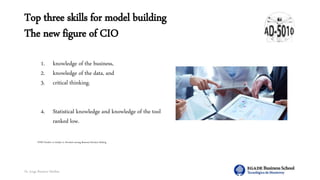
Top three skills for model building
The new figure of CIO
1. knowledge of the business,
2. knowledge of the data, and
3. critical thinking.
4. Statistical knowledge and knowledge of the tool
ranked low.
TDWI Predicti ve Analyti cs: Revoluti onizing Business Decision Making
Dr. Jorge Ramírez Medina
Any successful new technology attracts imitators
• Maintaining bargaining power
• Complementary assets (an co-opetition ecosystem )
Adam Brandenburger and Barry Nalebuff
• Try to shape the competitive environment, changing the basis of competition
• Using the technology to create barriers to entry
Dr. Jorge Ramírez Medina
Uber Model
• Download and read Uber Case P81, and write a short report. Please use all the class’ concepts that
apply..
• Using Employee performance Data Set, look for what influences Attrition?
• Answer question No. 2
Detailed explanation by professor at regular class time.
Dr. Jorge Ramírez Medina
21ST Technology vs 20TH Regulation
• Uber Model
• Uber Rollout and Regulatory Challenges
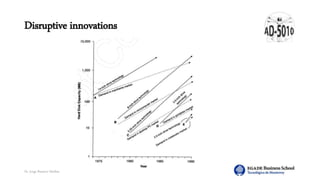
• Uber’s Experience in Washington, D.C.
Dr. Jorge Ramírez Medina
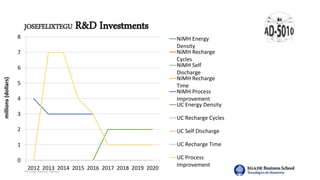
21ST Technology vs 20TH Regulation
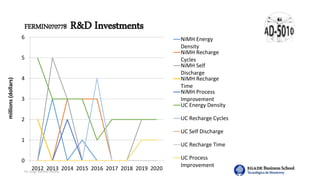
• Uber Model
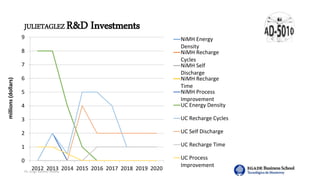
• Uber Rollout and Regulatory Challenges
• Uber’s Experience in Washington, D.C.
• Uber’s Experience in Mexico, D.C.
Baby, you can('t) drive my car.
Dr. Jorge Ramírez Medina
Illegal and unregulated?
Uber is just another gypsy cab versión
Adrian Lajous
The regulatory framework
• Ley de Movilidad, (art. 5)
• Reglamento de Transporte del Distrito Federal (art. 43)
• Ley de Movilidad, (art. 82, 84, 85, 89)
• Ley de Movilidad
“transporte ilegal de pasajeros” … “quien preste servicio público, privado, mercantil o de transporte de pasajeros sin contar con la
concesión o permiso correspondiente”.
Dr. Jorge Ramírez Medina
Turnover
Employee
performance Data
Set
Dr. Jorge Ramírez Medina
Case questions
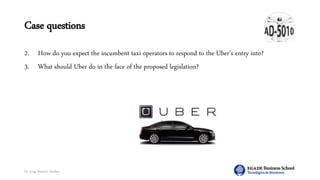
2. How do you expect the incumbent taxi operators to respond to the Uber’s entry into?
3. What should Uber do in the face of the proposed legislation?
Dr. Jorge Ramírez Medina
A two tales history
• Strengths/Weaknesses
• Opportunities/ Threats
Dr. Jorge Ramírez Medina
The regulatory path
1. Start operations, leaving aside the legal provisions in force, illegally or unregulated in many cases,
relying on private law (hiring a private service) offering competitive advantages such as
innovation and better service.
2. Competitors (taxi services and some services including passenger transport) seeking to stop its
operation and request the intervention of the responsible authority.
3. Operation is prohibited, generated controversy and activate defense mechanisms orchestrated by
the users of the service
4. They are regulated.
Dr. Jorge Ramírez Medina
Final thoughts
• Uber first enters a market with an offering based on a new technology (have a first-mover advantage).
• But a real advantage does not come merely from being first; it comes only when the first mover can use its lead to
create a competitive advantage.
• Complementary goods and services, waits for a dominant design to emerge.
• Very few of the original entrants (that is, the pioneers) survive the consolidation of the Market
• Those who win in the end are almost never the first into the new market.
Dr. Jorge Ramírez Medina
Simulation Back Bay Battery (v2)
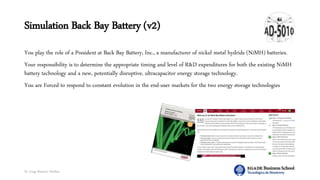
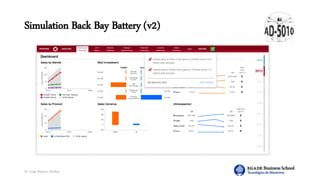
You play the role of a President at Back Bay Battery, Inc., a manufacturer of nickel metal hydride (NiMH) batteries.
Your responsibility is to determine the appropriate timing and level of R&D expenditures for both the existing NiMH
battery technology and a new, potentially disruptive, ultracapacitor energy storage technology.
You are Forced to respond to constant evolution in the end-user markets for the two energy storage technologies
Dr. Jorge Ramírez Medina
Simulation Back Bay Battery (v2)
Dr. Jorge Ramírez Medina
Simulation Back Bay Battery (v2)
Dr. Jorge Ramírez Medina
Simulation Back Bay Battery (v2)
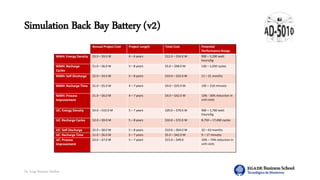
Annual Project Cost Project Length Total Cost Potential
Performance Range
NiMH: Energy Density $3.0 – $9.0 M 4 – 6 years $12.0 – $54.0 M 900 – 5,200 watt
hours/kg
NiMH: Recharge
Cycles
$1.0 – $6.0 M 5 – 8 years $5.0 – $48.0 M 530 – 1,050 cycles
NiMH: Self Discharge $2.0 – $4.0 M 5 – 8 years $10.0 – $32.0 M 11 – 21 months
NiMH: Recharge Time $1.0 – $5.0 M 4 – 7 years $4.0 – $35.0 M 105 – 210 minutes
NiMH: Process
Improvement
$1.0 – $6.0 M 4 – 7 years $4.0 – $42.0 M 10% - 56% reduction in
unit costs
UC: Energy Density $4.0 – $10.0 M 5 – 7 years $20.0 – $70.0 M 900 – 1,700 watt
hours/kg
UC: Recharge Cycles $2.0 – $9.0 M 5 – 8 years $10.0 – $72.0 M 8,750 – 17,490 cycles
UC: Self Discharge $2.0 – $8.0 M 5 – 8 years $10.0 – $64.0 M 32 – 63 months
UC: Recharge Time $1.0 – $6.0 M 5 – 7 years $5.0 – $42.0 M 9 – 17 minutes
UC: Process
Improvement
$3.0 – $7.0 M 5 – 7 years $15.0 – $49.0 10% – 74% reduction in
unit costs
Dr. Jorge Ramírez Medina
Simulation Back Bay Battery (v2)
Dr. Jorge Ramírez Medina
Simulation Back Bay Battery (v2)
Dr. Jorge Ramírez Medina
Simulation Back Bay Battery (v2)
Dr. Jorge Ramírez Medina
Simulation Back Bay Battery (v2)
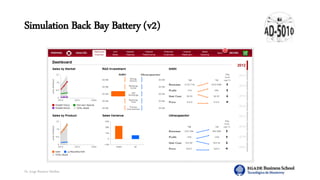
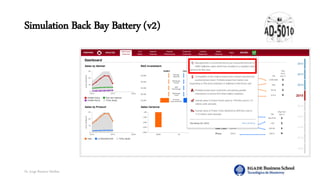
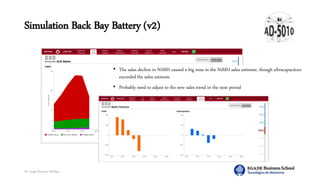
• The sales decline in NiMH caused a big miss in the NiMH sales estimate, though ultracapacitors
exceeded the sales estimate
• Probably need to adjust to the new sales trend in the next period
Dr. Jorge Ramírez Medina
Simulation Back Bay Battery (v2)
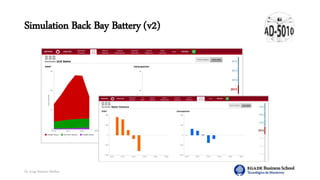
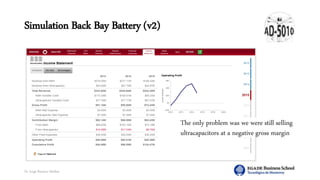
The only problem was we were still selling
ultracapacitors at a negative gross margin
Dr. Jorge Ramírez Medina
Simulation Back Bay Battery (v2)
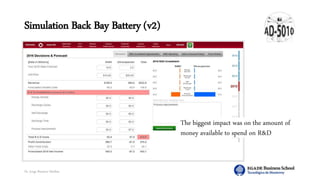
The biggest impact was on the amount of
money available to spend on R&D
Dr. Jorge Ramírez Medina
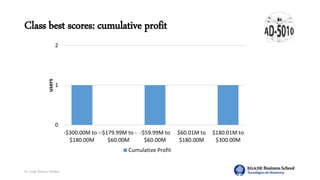
Class best scores: cumulative profit
0
1
2
-$300.00M to -
$180.00M
-$179.99M to -
$60.00M
-$59.99M to
$60.00M
$60.01M to
$180.00M
$180.01M to
$300.00M
users
Cumulative Profit
Dr. Jorge Ramírez Medina
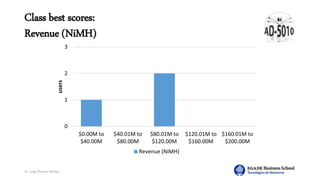
Class best scores:
Revenue (NiMH)
0
1
2
3
$0.00M to
$40.00M
$40.01M to
$80.00M
$80.01M to
$120.00M
$120.01M to
$160.00M
$160.01M to
$200.00M
users
Revenue (NiMH)
Dr. Jorge Ramírez Medina
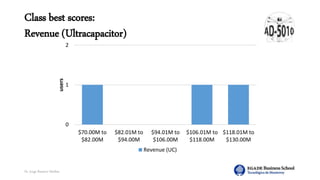
Class best scores:
Revenue (Ultracapacitor)
0
1
2
$70.00M to
$82.00M
$82.01M to
$94.00M
$94.01M to
$106.00M
$106.01M to
$118.00M
$118.01M to
$130.00M
users
Revenue (UC)
Dr. Jorge Ramírez Medina
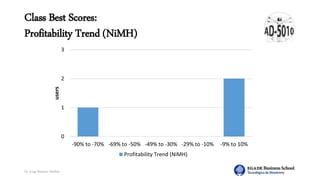
Class Best Scores:
Profitability Trend (NiMH)
0
1
2
3
-90% to -70% -69% to -50% -49% to -30% -29% to -10% -9% to 10%
users
Profitability Trend (NiMH)
Dr. Jorge Ramírez Medina
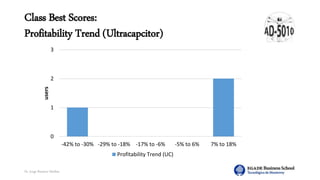
Class Best Scores:
Profitability Trend (Ultracapcitor)
0
1
2
3
-42% to -30% -29% to -18% -17% to -6% -5% to 6% 7% to 18%
users
Profitability Trend (UC)
Dr. Jorge Ramírez Medina
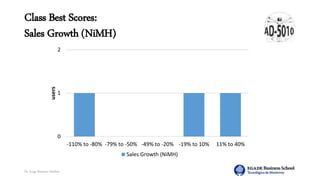
Class Best Scores:
Sales Growth (NiMH)
0
1
2
-110% to -80% -79% to -50% -49% to -20% -19% to 10% 11% to 40%
users
Sales Growth (NiMH)
Dr. Jorge Ramírez Medina
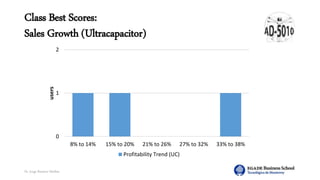
Class Best Scores:
Sales Growth (Ultracapacitor)
0
1
2
8% to 14% 15% to 20% 21% to 26% 27% to 32% 33% to 38%
users
Profitability Trend (UC)
Dr. Jorge Ramírez Medina
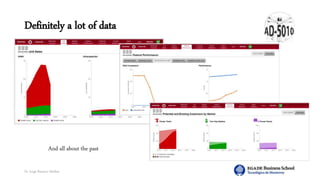
Definitely a lot of data
And all about the past
Dr. Jorge Ramírez Medina
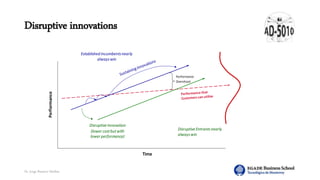
Disruptive innovations
Performance
Time
DisruptiveInnovation
(lower costbutwith
lower performance)
DisruptiveEntrantsnearly
alwayswin
Established Incumbentsnearly
alwayswin
Performance
Overshoot
Dr. Jorge Ramírez Medina
Disruptive innovations
Dr. Jorge Ramírez Medina
JOSEFELIXTEGU R&D Investments
0
1
2
3
4
5
6
7
8
2012 2013 2014 2015 2016 2017 2018 2019 2020
millions(dollars)
NiMH Energy
Density
NiMH Recharge
Cycles
NiMH Self
Discharge
NiMH Recharge
Time
NiMH Process
Improvement
UC Energy Density
UC Recharge Cycles
UC Self Discharge
UC Recharge Time
UC Process
Improvement
Dr. Jorge Ramírez Medina
FERMIN070778 R&D Investments
0
1
2
3
4
5
6
2012 2013 2014 2015 2016 2017 2018 2019 2020
millions(dollars)
NiMH Energy
Density
NiMH Recharge
Cycles
NiMH Self
Discharge
NiMH Recharge
Time
NiMH Process
Improvement
UC Energy Density
UC Recharge Cycles
UC Self Discharge
UC Recharge Time
UC Process
Improvement
Dr. Jorge Ramírez Medina
JULIETAGLEZ R&D Investments
0
1
2
3
4
5
6
7
8
9
2012 2013 2014 2015 2016 2017 2018 2019 2020
millions(dollars)
NiMH Energy
Density
NiMH Recharge
Cycles
NiMH Self
Discharge
NiMH Recharge
Time
NiMH Process
Improvement
UC Energy Density
UC Recharge Cycles
UC Self Discharge
UC Recharge Time
UC Process
Improvement
Dr. Jorge Ramírez Medina
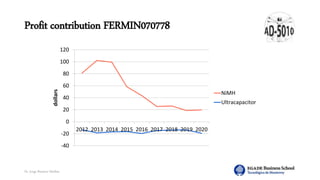
Profit contribution FERMIN070778
-40
-20
0
20
40
60
80
100
120
2012 2013 2014 2015 2016 2017 2018 2019 2020
dollars
NiMH
Ultracapacitor
Dr. Jorge Ramírez Medina
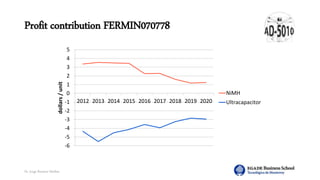
Profit contribution FERMIN070778
-6
-5
-4
-3
-2
-1
0
1
2
3
4
5
2012 2013 2014 2015 2016 2017 2018 2019 2020
dollars/unit
NiMH
Ultracapacitor
Dr. Jorge Ramírez Medina
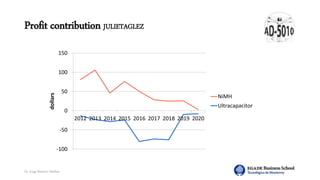
Profit contribution JULIETAGLEZ
-100
-50
0
50
100
150
2012 2013 2014 2015 2016 2017 2018 2019 2020
dollars
NiMH
Ultracapacitor
Dr. Jorge Ramírez Medina
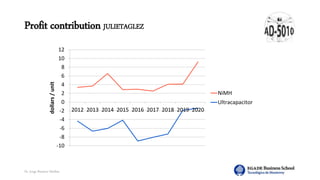
Profit contribution JULIETAGLEZ
-10
-8
-6
-4
-2
0
2
4
6
8
10
12
2012 2013 2014 2015 2016 2017 2018 2019 2020
dollars/unit
NiMH
Ultracapacitor
Dr. Jorge Ramírez Medina
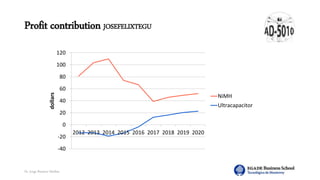
Profit contribution JOSEFELIXTEGU
-40
-20
0
20
40
60
80
100
120
2012 2013 2014 2015 2016 2017 2018 2019 2020
dollars
NiMH
Ultracapacitor
Dr. Jorge Ramírez Medina
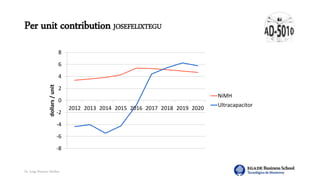
Per unit contribution JOSEFELIXTEGU
-8
-6
-4
-2
0
2
4
6
8
2012 2013 2014 2015 2016 2017 2018 2019 2020
dollars/unit
NiMH
Ultracapacitor
Dr. Jorge Ramírez Medina
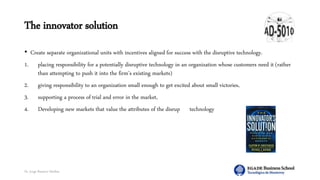
The innovator solution
• Create separate organizational units with incentives aligned for success with the disruptive technology.
1. placing responsibility for a potentially disruptive technology in an organization whose customers need it (rather
than attempting to push it into the firm’s existing markets)
2. giving responsibility to an organization small enough to get excited about small victories,
3. supporting a process of trial and error in the market,
4. Developing new markets that value the attributes of the disruptive technology
Dr. Jorge Ramírez Medina
The innovator solution
“Incumbents should work to prevent the emergence of a technological gap by continuous innovation,
protecting the installed base (by maintaining backward compatibility, providing attractive licensing to
producers of complementary goods, and increasing customer switching costs), and shaping customers’
perceptions that the platform will continue to dominate.”
Melissa Schilling, management and organizations at New York University Stern School of Business.
Dr. Jorge Ramírez Medina
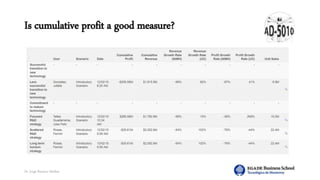
Is cumulative profit a good measure?
Dr. Jorge Ramírez Medina
Case
Dr. Jorge Ramírez Medina
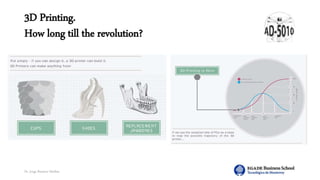
3D Printing.
How long till the revolution?
Dr. Jorge Ramírez Medina
Analysis
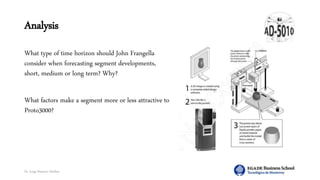
What type of time horizon should John Frangella
consider when forecasting segment developments,
short, medium or long term? Why?
What factors make a segment more or less attractive to
Proto3000?
Dr. Jorge Ramírez Medina
Readings
Dr. Jorge Ramírez Medina

S11 ad5015

  • 1.
    Lecture 11 Watson exercise(Uber Model) Simulator Assessment Dudley Dentist and Design
  • 2.
    Dr. Jorge RamírezMedina Top three skills for model building The new figure of CIO 1. knowledge of the business, 2. knowledge of the data, and 3. critical thinking. 4. Statistical knowledge and knowledge of the tool ranked low. TDWI Predicti ve Analyti cs: Revoluti onizing Business Decision Making
  • 3.
    Dr. Jorge RamírezMedina Any successful new technology attracts imitators • Maintaining bargaining power • Complementary assets (an co-opetition ecosystem ) Adam Brandenburger and Barry Nalebuff • Try to shape the competitive environment, changing the basis of competition • Using the technology to create barriers to entry
  • 4.
    Dr. Jorge RamírezMedina Uber Model • Download and read Uber Case P81, and write a short report. Please use all the class’ concepts that apply.. • Using Employee performance Data Set, look for what influences Attrition? • Answer question No. 2 Detailed explanation by professor at regular class time.
  • 5.
    Dr. Jorge RamírezMedina 21ST Technology vs 20TH Regulation • Uber Model • Uber Rollout and Regulatory Challenges • Uber’s Experience in Washington, D.C.
  • 6.
    Dr. Jorge RamírezMedina 21ST Technology vs 20TH Regulation • Uber Model • Uber Rollout and Regulatory Challenges • Uber’s Experience in Washington, D.C. • Uber’s Experience in Mexico, D.C. Baby, you can('t) drive my car.
  • 7.
    Dr. Jorge RamírezMedina Illegal and unregulated? Uber is just another gypsy cab versión Adrian Lajous The regulatory framework • Ley de Movilidad, (art. 5) • Reglamento de Transporte del Distrito Federal (art. 43) • Ley de Movilidad, (art. 82, 84, 85, 89) • Ley de Movilidad “transporte ilegal de pasajeros” … “quien preste servicio público, privado, mercantil o de transporte de pasajeros sin contar con la concesión o permiso correspondiente”.
  • 8.
    Dr. Jorge RamírezMedina Turnover Employee performance Data Set
  • 9.
    Dr. Jorge RamírezMedina Case questions 2. How do you expect the incumbent taxi operators to respond to the Uber’s entry into? 3. What should Uber do in the face of the proposed legislation?
  • 10.
    Dr. Jorge RamírezMedina A two tales history • Strengths/Weaknesses • Opportunities/ Threats
  • 11.
    Dr. Jorge RamírezMedina The regulatory path 1. Start operations, leaving aside the legal provisions in force, illegally or unregulated in many cases, relying on private law (hiring a private service) offering competitive advantages such as innovation and better service. 2. Competitors (taxi services and some services including passenger transport) seeking to stop its operation and request the intervention of the responsible authority. 3. Operation is prohibited, generated controversy and activate defense mechanisms orchestrated by the users of the service 4. They are regulated.
  • 12.
    Dr. Jorge RamírezMedina Final thoughts • Uber first enters a market with an offering based on a new technology (have a first-mover advantage). • But a real advantage does not come merely from being first; it comes only when the first mover can use its lead to create a competitive advantage. • Complementary goods and services, waits for a dominant design to emerge. • Very few of the original entrants (that is, the pioneers) survive the consolidation of the Market • Those who win in the end are almost never the first into the new market.
  • 13.
    Dr. Jorge RamírezMedina Simulation Back Bay Battery (v2) You play the role of a President at Back Bay Battery, Inc., a manufacturer of nickel metal hydride (NiMH) batteries. Your responsibility is to determine the appropriate timing and level of R&D expenditures for both the existing NiMH battery technology and a new, potentially disruptive, ultracapacitor energy storage technology. You are Forced to respond to constant evolution in the end-user markets for the two energy storage technologies
  • 14.
    Dr. Jorge RamírezMedina Simulation Back Bay Battery (v2)
  • 15.
    Dr. Jorge RamírezMedina Simulation Back Bay Battery (v2)
  • 16.
    Dr. Jorge RamírezMedina Simulation Back Bay Battery (v2) Annual Project Cost Project Length Total Cost Potential Performance Range NiMH: Energy Density $3.0 – $9.0 M 4 – 6 years $12.0 – $54.0 M 900 – 5,200 watt hours/kg NiMH: Recharge Cycles $1.0 – $6.0 M 5 – 8 years $5.0 – $48.0 M 530 – 1,050 cycles NiMH: Self Discharge $2.0 – $4.0 M 5 – 8 years $10.0 – $32.0 M 11 – 21 months NiMH: Recharge Time $1.0 – $5.0 M 4 – 7 years $4.0 – $35.0 M 105 – 210 minutes NiMH: Process Improvement $1.0 – $6.0 M 4 – 7 years $4.0 – $42.0 M 10% - 56% reduction in unit costs UC: Energy Density $4.0 – $10.0 M 5 – 7 years $20.0 – $70.0 M 900 – 1,700 watt hours/kg UC: Recharge Cycles $2.0 – $9.0 M 5 – 8 years $10.0 – $72.0 M 8,750 – 17,490 cycles UC: Self Discharge $2.0 – $8.0 M 5 – 8 years $10.0 – $64.0 M 32 – 63 months UC: Recharge Time $1.0 – $6.0 M 5 – 7 years $5.0 – $42.0 M 9 – 17 minutes UC: Process Improvement $3.0 – $7.0 M 5 – 7 years $15.0 – $49.0 10% – 74% reduction in unit costs
  • 17.
    Dr. Jorge RamírezMedina Simulation Back Bay Battery (v2)
  • 18.
    Dr. Jorge RamírezMedina Simulation Back Bay Battery (v2)
  • 19.
    Dr. Jorge RamírezMedina Simulation Back Bay Battery (v2)
  • 20.
    Dr. Jorge RamírezMedina Simulation Back Bay Battery (v2) • The sales decline in NiMH caused a big miss in the NiMH sales estimate, though ultracapacitors exceeded the sales estimate • Probably need to adjust to the new sales trend in the next period
  • 21.
    Dr. Jorge RamírezMedina Simulation Back Bay Battery (v2) The only problem was we were still selling ultracapacitors at a negative gross margin
  • 22.
    Dr. Jorge RamírezMedina Simulation Back Bay Battery (v2) The biggest impact was on the amount of money available to spend on R&D
  • 23.
    Dr. Jorge RamírezMedina Class best scores: cumulative profit 0 1 2 -$300.00M to - $180.00M -$179.99M to - $60.00M -$59.99M to $60.00M $60.01M to $180.00M $180.01M to $300.00M users Cumulative Profit
  • 24.
    Dr. Jorge RamírezMedina Class best scores: Revenue (NiMH) 0 1 2 3 $0.00M to $40.00M $40.01M to $80.00M $80.01M to $120.00M $120.01M to $160.00M $160.01M to $200.00M users Revenue (NiMH)
  • 25.
    Dr. Jorge RamírezMedina Class best scores: Revenue (Ultracapacitor) 0 1 2 $70.00M to $82.00M $82.01M to $94.00M $94.01M to $106.00M $106.01M to $118.00M $118.01M to $130.00M users Revenue (UC)
  • 26.
    Dr. Jorge RamírezMedina Class Best Scores: Profitability Trend (NiMH) 0 1 2 3 -90% to -70% -69% to -50% -49% to -30% -29% to -10% -9% to 10% users Profitability Trend (NiMH)
  • 27.
    Dr. Jorge RamírezMedina Class Best Scores: Profitability Trend (Ultracapcitor) 0 1 2 3 -42% to -30% -29% to -18% -17% to -6% -5% to 6% 7% to 18% users Profitability Trend (UC)
  • 28.
    Dr. Jorge RamírezMedina Class Best Scores: Sales Growth (NiMH) 0 1 2 -110% to -80% -79% to -50% -49% to -20% -19% to 10% 11% to 40% users Sales Growth (NiMH)
  • 29.
    Dr. Jorge RamírezMedina Class Best Scores: Sales Growth (Ultracapacitor) 0 1 2 8% to 14% 15% to 20% 21% to 26% 27% to 32% 33% to 38% users Profitability Trend (UC)
  • 30.
    Dr. Jorge RamírezMedina Definitely a lot of data And all about the past
  • 31.
    Dr. Jorge RamírezMedina Disruptive innovations Performance Time DisruptiveInnovation (lower costbutwith lower performance) DisruptiveEntrantsnearly alwayswin Established Incumbentsnearly alwayswin Performance Overshoot
  • 32.
    Dr. Jorge RamírezMedina Disruptive innovations
  • 33.
    Dr. Jorge RamírezMedina JOSEFELIXTEGU R&D Investments 0 1 2 3 4 5 6 7 8 2012 2013 2014 2015 2016 2017 2018 2019 2020 millions(dollars) NiMH Energy Density NiMH Recharge Cycles NiMH Self Discharge NiMH Recharge Time NiMH Process Improvement UC Energy Density UC Recharge Cycles UC Self Discharge UC Recharge Time UC Process Improvement
  • 34.
    Dr. Jorge RamírezMedina FERMIN070778 R&D Investments 0 1 2 3 4 5 6 2012 2013 2014 2015 2016 2017 2018 2019 2020 millions(dollars) NiMH Energy Density NiMH Recharge Cycles NiMH Self Discharge NiMH Recharge Time NiMH Process Improvement UC Energy Density UC Recharge Cycles UC Self Discharge UC Recharge Time UC Process Improvement
  • 35.
    Dr. Jorge RamírezMedina JULIETAGLEZ R&D Investments 0 1 2 3 4 5 6 7 8 9 2012 2013 2014 2015 2016 2017 2018 2019 2020 millions(dollars) NiMH Energy Density NiMH Recharge Cycles NiMH Self Discharge NiMH Recharge Time NiMH Process Improvement UC Energy Density UC Recharge Cycles UC Self Discharge UC Recharge Time UC Process Improvement
  • 36.
    Dr. Jorge RamírezMedina Profit contribution FERMIN070778 -40 -20 0 20 40 60 80 100 120 2012 2013 2014 2015 2016 2017 2018 2019 2020 dollars NiMH Ultracapacitor
  • 37.
    Dr. Jorge RamírezMedina Profit contribution FERMIN070778 -6 -5 -4 -3 -2 -1 0 1 2 3 4 5 2012 2013 2014 2015 2016 2017 2018 2019 2020 dollars/unit NiMH Ultracapacitor
  • 38.
    Dr. Jorge RamírezMedina Profit contribution JULIETAGLEZ -100 -50 0 50 100 150 2012 2013 2014 2015 2016 2017 2018 2019 2020 dollars NiMH Ultracapacitor
  • 39.
    Dr. Jorge RamírezMedina Profit contribution JULIETAGLEZ -10 -8 -6 -4 -2 0 2 4 6 8 10 12 2012 2013 2014 2015 2016 2017 2018 2019 2020 dollars/unit NiMH Ultracapacitor
  • 40.
    Dr. Jorge RamírezMedina Profit contribution JOSEFELIXTEGU -40 -20 0 20 40 60 80 100 120 2012 2013 2014 2015 2016 2017 2018 2019 2020 dollars NiMH Ultracapacitor
  • 41.
    Dr. Jorge RamírezMedina Per unit contribution JOSEFELIXTEGU -8 -6 -4 -2 0 2 4 6 8 2012 2013 2014 2015 2016 2017 2018 2019 2020 dollars/unit NiMH Ultracapacitor
  • 42.
    Dr. Jorge RamírezMedina The innovator solution • Create separate organizational units with incentives aligned for success with the disruptive technology. 1. placing responsibility for a potentially disruptive technology in an organization whose customers need it (rather than attempting to push it into the firm’s existing markets) 2. giving responsibility to an organization small enough to get excited about small victories, 3. supporting a process of trial and error in the market, 4. Developing new markets that value the attributes of the disruptive technology
  • 43.
    Dr. Jorge RamírezMedina The innovator solution “Incumbents should work to prevent the emergence of a technological gap by continuous innovation, protecting the installed base (by maintaining backward compatibility, providing attractive licensing to producers of complementary goods, and increasing customer switching costs), and shaping customers’ perceptions that the platform will continue to dominate.” Melissa Schilling, management and organizations at New York University Stern School of Business.
  • 44.
    Dr. Jorge RamírezMedina Is cumulative profit a good measure?
  • 45.
    Dr. Jorge RamírezMedina Case
  • 46.
    Dr. Jorge RamírezMedina 3D Printing. How long till the revolution?
  • 47.
    Dr. Jorge RamírezMedina Analysis What type of time horizon should John Frangella consider when forecasting segment developments, short, medium or long term? Why? What factors make a segment more or less attractive to Proto3000?
  • 48.
    Dr. Jorge RamírezMedina Readings
  • 49.

Editor's Notes

  • #4  An innovator can reduce the bargaining power of other by commoditizing them in three ways: encouraging competitors by sharing information, creating standard interfaces with the innovator’s own technology, and subsidizing entrants. Microsoft has been able to diminish the power of Intel by supporting its competitor, AMD. Encouraging competition in the other parts of the ecosystem increases an innovator’s ability to capture value from the entire industry. Firms competing using existing technologies can shape their competitive environments, but new technology provides new opportunities to do so. Innovators can: ● Establish the dominant design. ● Commoditize the other elements of the ecosystem. ● Use the new technology to create barriers to entry. ● Use the ecosystem to compete. ● Create a technology platform. by influencing the strategic decisions of competitors, suppliers, customers, and others in the ecosystem
  • #5 .Attrition-> desgaste
  • #6 Uber introduced its service in 2010 in San Francisco, under the name “UberCab.” On October 20, the San Francisco Metro Transit Authority and the Public Utilities Commission of California issued a cease and desist order against the company. The regulators based their order on their contention that UberCab was operating in a similar manner as a taxicab company, but without a taxi license (or the insurance required of taxicabs) Actualmente, la empresa está valuada en 17 mil millones de dólares –con perspectiva de crecer hasta 25 mil millones en 2015–. Opera en 45 países y 205 ciudades del mundo
  • #7 En las ciudades donde se encuentra más arraigado Über ya cuenta con tres líneas de servicio: Über Black, con automóviles de lujo, Über X, con vehículos comerciales mucho más accesibles y Über XL Uber SUV Como la mayoría de las propuestas innovadoras. La incursión de Über en los sistemas de transporte alrededor del mundo ha sido disruptiva
  • #8 La Ley de Movilidad (art. 5) reconoce el derecho a la movilidad pero establece que éste deberá garantizarse mediante todos los transportes en la ley definición de Taxi como “vehículo destinado al servicio de transporte público individual de pasajeros el Reglamento de Tránsito del DF en su artículo 43 especifica quién puede prestar el servicio de transporte público individual “concesionarios y permisionarios de taxis en sus modalidades libre y de sitio”. Para esto, tendría que satisfacer con los requisitos establecidos en los artículos 82, 84, 85 y 89 de la Ley de Movilidad, donde se establecen los requisitos para el servicio público concesionado (número de licencia, tarjetón, foto y nombre del conductor, matrícula, etc), así como las especificaciones, técnicas
  • #10 1.- Que alternativas tiene Uber que considerar en relación a los problemas regulatorios para comenzar el servicio en ciudades nuevas? Cuáles son las ventajas y desventajas? La tropicalización de las normas en la forma de operar de Uber en cada región se vuelve de suma importancia. No solamente para cada estado, incluso para cada país. Dentro de las ventajas y desventajas de operar en una zona gris del marco legal son:  El negocio puede operar mientras se define la tropicalización de las leyes.  Mientras eso sucede, la ley no puede defenderte.  Una vez que se define, el negocio tiene que legalizarse de manera muy ágil lo que incurre en fuertes costos en tiempo y dinero. 2.- Como esperarías que los operadores de taxi respondan a la entrada de Uber? Definitivamente de manera poco favorable. Tomando a su favor las indefiniciones de la ley e incluso haciendo a un lado la ética. 3.- Que debería hacer Uber en la propuesta de DC. La decisión que tome UBER impactará de manera positiva o negativa a largo plazo el negocio, ya que cambiar la legislación es un proceso complejo y que toma mucho tiempo. La decisión de Uber debe considerar el tema financiero, legal, comercial, etc.
  • #11 1.- Que alternativas tiene Uber que considerar en relación a los problemas regulatorios para comenzar el servicio en ciudades nuevas? Cuáles son las ventajas y desventajas? La tropicalización de las normas en la forma de operar de Uber en cada región se vuelve de suma importancia. No solamente para cada estado, incluso para cada país. Dentro de las ventajas y desventajas de operar en una zona gris del marco legal son:  El negocio puede operar mientras se define la tropicalización de las leyes.  Mientras eso sucede, la ley no puede defenderte.  Una vez que se define, el negocio tiene que legalizarse de manera muy ágil lo que incurre en fuertes costos en tiempo y dinero. 2.- Como esperarías que los operadores de taxi respondan a la entrada de Uber? Definitivamente de manera poco favorable. Tomando a su favor las indefiniciones de la ley e incluso haciendo a un lado la ética. 3.- Que debería hacer Uber en la propuesta de DC. La decisión que tome UBER impactará de manera positiva o negativa a largo plazo el negocio, ya que cambiar la legislación es un proceso complejo y que toma mucho tiempo. La decisión de Uber debe considerar el tema financiero, legal, comercial, etc.
  • #12 Uber typically ignored regulatory issues when first entering a new city, and rapidly built a presence in a new city. When confronted with challenges by regulators, it seems to have tried to finesse the issue , and buy time, which it used to build support For instance, in San Francisco, it dropped “Cab” from its name when presented with a “cease and desist” order, but made no other changes, despite many other areas of regulatory conflict. They continued to operate, building their base of support among both local citizens and legislators
  • #13 So a question for the students is “Why Uber didn’t pursue this path?” The answers that will come (we have seen a little of this when teachingthis case), are: 1. Uber would get squeezed by existing companies, and so not get much money for their product; 2. the companies could copy the product once they saw it; 3. by remaining independent , Uber can improve the market efficiency more and, therefore, earn more profits; 4. They want tom change the world, and the way they entered was more effective at attacking the entrenched interests.
  • #14 requires the effective identification of the most critical pieces of data for diagnosis, strategy development, and decision making; all while meeting both short-term and long-term performance requirements for the business. While the performance evolution does not track the real-world case, the plethora of numerical indicators exposes students to decision making in real-life management situations
  • #15 The NiMH business starts out looking pretty healthy NiMH sales into the Power Tools market are growing strongly Profitability is on a good up trend, and sales are growing strongly in the power tools segment. Historically all of the R&D investment has been made in NiMH features, although ultracapacitor revenues are starting to tick upwards.
  • #16 Power Tools manufactures are buying a lot of batteries because outside of recharge time, the current product offering serves needs quite well. The company’s best customers are no doubt pushing for improvements in energy density and recharge time; some might like to see improvements in recharge cycles as well. Students hopefully will have realized that for some attributes a larger value is better (energy density, recharge cycles, self-discharge to 50%) while for the others lower is better (recharge time, price).
  • #17 managers don’t need to invest the full amount every year to see progress. Improvement will follow an S-curve based on cumulative spending, so the best strategy for seeing results is to spend above a critical threshold for a multi-year period. Benefits will accrue with a time lag, and similarly they will fall of with a time lag.
  • #18 In the first year of investment, there is little the manager can do wrong vis-à-vis investment strategy. Sales are rising strongly and this tends to “lift all boats” regardless of which way they are deployed. Como en la vida real, los mercados alcistas esconden muchos pasos en falso.
  • #19 By 2014, competition has started to impact sales. Most students will miss this turn in sales unless they play the simulation several times, otherwise it is really impossible to predict. The warning that “Management is concerned about your inaccurate forecast of NiMH battery sales which has resulted in a negative sales variance for this year” should be a trigger to students to forecast carefully for the next year. There are no adverse consequences unless they fail to compensate, as it takes a significant negative variance for one year or a consistently negative variance for three years to be fired. If the student defaults to the automatic estimate for 2014, the variance won’t be enough to get fired.
  • #20 The actual sales level of both NiMH and of ultracapacitors is determined partly by market competitive trends (substitution, etc.), but a student’s actual sales level will be governed by their feature performance level on attributes important to each of the three segments, and their price relative to the rest of the market.
  • #22 The income statement page can be displayed by $, per unit, and percentages. The per unit display is a convenient way to see actual unit costs and gross margins, though this information is also available on the dashboard.
  • #23 As overall market prices and sales decrease, the revenue percentage driven amount of money available for R&D contracts quickly. Hopefully this will instill the importance of making investments when the core business is healthy. As the total dollars available for R&D declines, it becomes progressively more difficult to invest enough in either features or cost reduction (process improvement) fast enough, and students quickly reach a critical threshold where if they have made sufficient timely investments they will successfully start growing the ultracapacitor business.
  • #32 But as is generally the case with disruptive innovations, ultracapacitors are “not good enough” for most markets initially Though there are some people who are buying them! Pay attention to the improvement trajectory
  • #33 But as is generally the case with disruptive innovations, ultracapacitors are “not good enough” for most markets initially Though there are some people who are buying them! Pay attention to the improvement trajectory
  • #37 The pricing strategy begs whether company were willing to tolerate losses Estimating sales, especially of the emerging technology, is challenging Dependent on price relative to market, and the feature performance of your product compared to desired attributes
  • #38 The pricing strategy begs whether company were willing to tolerate losses Estimating sales, especially of the emerging technology, is challenging Dependent on price relative to market, and the feature performance of your product compared to desired attributes
  • #39 The pricing strategy begs whether company were willing to tolerate losses Estimating sales, especially of the emerging technology, is challenging Dependent on price relative to market, and the feature performance of your product compared to desired attributes
  • #40 The pricing strategy begs whether company were willing to tolerate losses Estimating sales, especially of the emerging technology, is challenging Dependent on price relative to market, and the feature performance of your product compared to desired attributes
  • #41 The pricing strategy begs whether company were willing to tolerate losses Estimating sales, especially of the emerging technology, is challenging Dependent on price relative to market, and the feature performance of your product compared to desired attributes
  • #42 The pricing strategy begs whether company were willing to tolerate losses Estimating sales, especially of the emerging technology, is challenging Dependent on price relative to market, and the feature performance of your product compared to desired attributes
  • #43 Christensen’s proposal may not be radical enough, however, for wrenching technological change. Foster cites RCA’s failure to transition from vacuum tubes to transistors, and the bias-ply tire manufacturers’ loss of 50% of their market share to radial-ply tires in just 18 months. “It is relatively easy to spot new technologies on the horizon and to decide to monitor them or perhaps invest in them. What is much harder, indeed agonizing at times, is to stunt the growth of the older technology by withholding development funds from it even though progress can be made. People lose their jobs, friendships are destroyed, often the entire business must change.” Incumbent booksellers such as Barnes and Noble and Borders, for example, would have had to dismantle their brick-and-mortar businesses rapidly to respond effectively to Amazon’s new technology.
  • #44 Microsoft’s technology strategy for its operating system software is a notable example. By making its products backward-compatible—that is, able to operate with previous versions—Microsoft has worked to reduce switching costs for existing customers who purchase upgrades while preserving switching costs for those thinking of moving to competing software. By ensuring backward compatibility, Microsoft has been able to dominate the PC software industry over generations of software evolution
  • #45 Students often instinctively try to maximize cumulative profit, though the results table offers an opportunity to consider other ways to rank.
  • #47 http://www.visualcapitalist.com/3d-printing-disruptive-technology/ http://www.thingiverse.com Then ask them to “Think about what iTunes and the movie sites represent in terms of the disruption of the music and movie industries and whether the presence of sites of such as thingiverse.com might indicate something similar happening to manufacturing?/
  • #48 Short term: 1-2 years Given the long-term nature of the types of investments required to serve a particular segment (e.g., negotiated licences with key suppliers, training programs for key personnel, etc.) short-term developments will likely require reactions rather than planned strategic actions. Inherent uncertainty in disruptive nature of markets may result in non-synergistic opportunities presenting themselves to Proto3000. Following these will result in the firm being whipsawed between directions making leadership in important sectors difficult to maintain. Medium term: 3-4 years Long enough to give Frangella time to select strategic directions and complete meaningful implementations. More uncertainty than short-term forecasts, but less than longer term. Will be verified in relatively short time period, so that if elements of forecast appear to change and particular segments do not look favorable, then a strategy pivot can be considered. Long term: 5 years + Length makes level of uncertainty too high as many things are expected to change within 3D printing in this time period