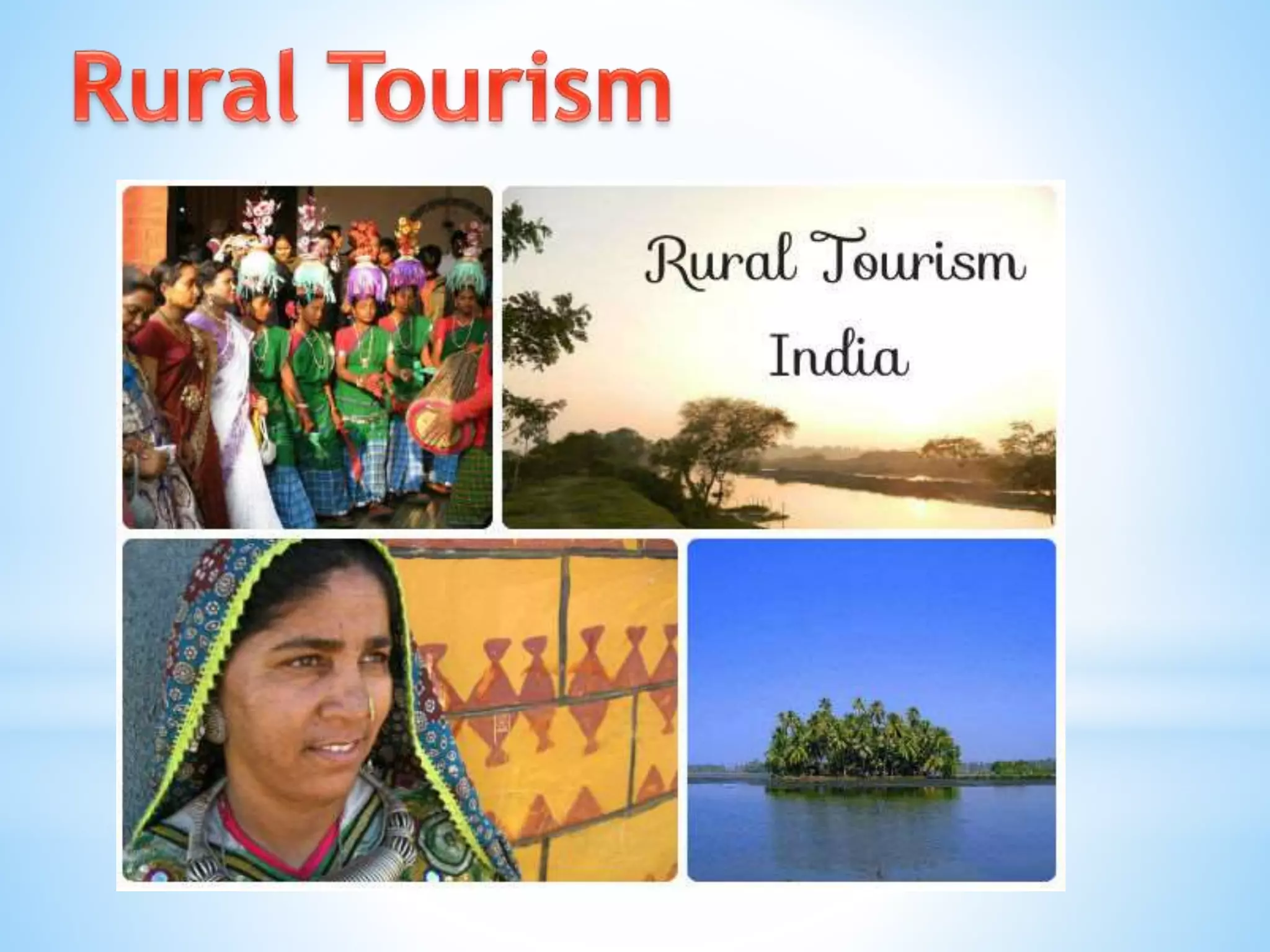
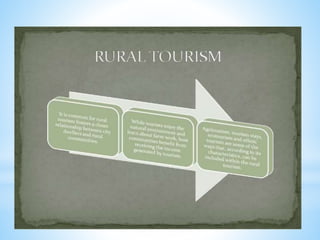
• Any form of tourism that showcases the rural life, art, culture and
heritage at rural locations, thereby benefiting the local community
economically and socially as well as enabling interaction between the
tourists and the locals for a more enriching tourism experience can be
termed as rural tourism. Rural tourism is essentially an activity which
takes place in the countryside. It is multi-faceted and may entail
farm/agricultural tourism, cultural tourism, nature tourism, adventure
tourism, and eco-tourism. As against conventional tourism, rural
tourism has certain typical characteristics like; it is experience oriented,
the locations are sparsely populated, it is predominantly in natural
environment, it meshes with seasonality and local events and is based on
preservation of culture , heritage and traditions.
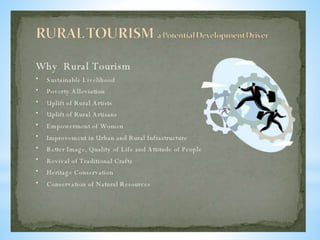
• Generating income and jobs
• Exchange between rural and urban areas
• Multiplier effect through small scale direct
investments
• Strengthening local and regional structures by
creating networks
• Stimulating physical infrastructural developments
• Enlarging diversity of economic developments
• Awareness of values of an area [landscape,
nature, culture, and its economic potential]
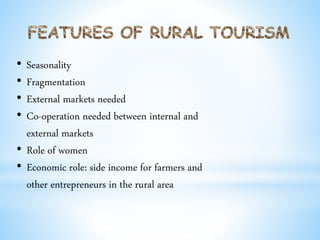
• Seasonality
• Fragmentation
• External markets needed
• Co-operation needed between internal and
external markets
• Role of women
• Economic role: side income for farmers and
other entrepreneurs in the rural area
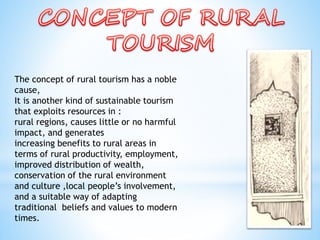
The concept of rural tourism has a noble
cause,
It is another kind of sustainable tourism
that exploits resources in :
rural regions, causes little or no harmful
impact, and generates
increasing benefits to rural areas in
terms of rural productivity, employment,
improved distribution of wealth,
conservation of the rural environment
and culture ,local people’s involvement,
and a suitable way of adapting
traditional beliefs and values to modern
times.
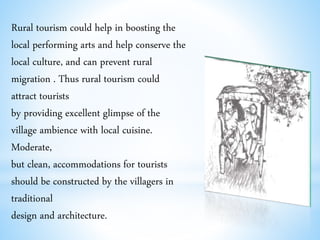
Rural tourism could help in boosting the
local performing arts and help conserve the
local culture, and can prevent rural
migration . Thus rural tourism could
attract tourists
by providing excellent glimpse of the
village ambience with local cuisine.
Moderate,
but clean, accommodations for tourists
should be constructed by the villagers in
traditional
design and architecture.
The rural people can learn to
develop the healthy environment
with proper sanitation ,roads,
electricity, telecommunication, etc.
for better living on one side on
other side the tourist can exploit
natural resources and have a heavy
impact on the environment.
The rural people will learn how to lead healthy and hygienic life from the
urban people visitors.
• Infrastructure development will lead to healthy
tourism.
• The impact of rural environment can improve
the state of body and mind.
• Help in create and maintain the natural park.
• Learn the importance of preservation of natural
resources.
• They will learn to develop healthy environment
with proper sanitation , roads, electricity ,
telecommunication, etc.
• They will learn to use modern tools and
technology.
• They will learn to preserve the natural habitats,
bio-diversity historical monuments.
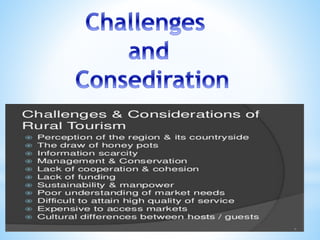
The major challenges are need to preserve the environment and natural resources,
the need for education, proper understanding for both tourists and local people,
and the need to generate a democratic movement which helps people at all levels
to participate in tourism development . Also they need to focus on occupation
training , handicraft promotion, and improvement of both the landscape and the
basic infrastructure, to increase the villagers quality of life by creating a healthy
environment . The cooperative system in rural tourism can be an effective
approach in bringing positive impact in rural areas. Local people can monitor and
control the negative impacts of tourism on their own society, if they have an equal
stake and authority in management and development.
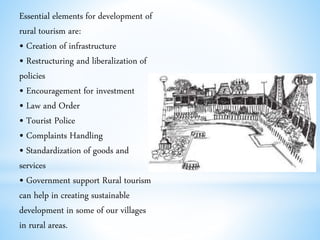
Essential elements for development of
rural tourism are:
• Creation of infrastructure
• Restructuring and liberalization of
policies
• Encouragement for investment
• Law and Order
• Tourist Police
• Complaints Handling
• Standardization of goods and
services
• Government support Rural tourism
can help in creating sustainable
development in some of our villages
in rural areas.
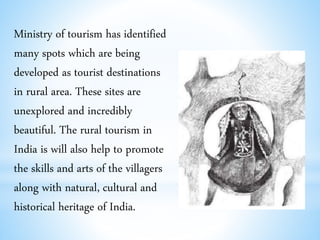
Ministry of tourism has identified
many spots which are being
developed as tourist destinations
in rural area. These sites are
unexplored and incredibly
beautiful. The rural tourism in
India is will also help to promote
the skills and arts of the villagers
along with natural, cultural and
historical heritage of India.
Rural tourism
Rural tourism

Rural tourism

  • 4.
    • Any formof tourism that showcases the rural life, art, culture and heritage at rural locations, thereby benefiting the local community economically and socially as well as enabling interaction between the tourists and the locals for a more enriching tourism experience can be termed as rural tourism. Rural tourism is essentially an activity which takes place in the countryside. It is multi-faceted and may entail farm/agricultural tourism, cultural tourism, nature tourism, adventure tourism, and eco-tourism. As against conventional tourism, rural tourism has certain typical characteristics like; it is experience oriented, the locations are sparsely populated, it is predominantly in natural environment, it meshes with seasonality and local events and is based on preservation of culture , heritage and traditions.
  • 6.
    • Generating incomeand jobs • Exchange between rural and urban areas • Multiplier effect through small scale direct investments • Strengthening local and regional structures by creating networks • Stimulating physical infrastructural developments • Enlarging diversity of economic developments • Awareness of values of an area [landscape, nature, culture, and its economic potential]
  • 8.
    • Seasonality • Fragmentation •External markets needed • Co-operation needed between internal and external markets • Role of women • Economic role: side income for farmers and other entrepreneurs in the rural area
  • 9.
    The concept ofrural tourism has a noble cause, It is another kind of sustainable tourism that exploits resources in : rural regions, causes little or no harmful impact, and generates increasing benefits to rural areas in terms of rural productivity, employment, improved distribution of wealth, conservation of the rural environment and culture ,local people’s involvement, and a suitable way of adapting traditional beliefs and values to modern times.
  • 11.
    Rural tourism couldhelp in boosting the local performing arts and help conserve the local culture, and can prevent rural migration . Thus rural tourism could attract tourists by providing excellent glimpse of the village ambience with local cuisine. Moderate, but clean, accommodations for tourists should be constructed by the villagers in traditional design and architecture.
  • 12.
    The rural peoplecan learn to develop the healthy environment with proper sanitation ,roads, electricity, telecommunication, etc. for better living on one side on other side the tourist can exploit natural resources and have a heavy impact on the environment.
  • 13.
    The rural peoplewill learn how to lead healthy and hygienic life from the urban people visitors. • Infrastructure development will lead to healthy tourism. • The impact of rural environment can improve the state of body and mind. • Help in create and maintain the natural park. • Learn the importance of preservation of natural resources. • They will learn to develop healthy environment with proper sanitation , roads, electricity , telecommunication, etc. • They will learn to use modern tools and technology. • They will learn to preserve the natural habitats, bio-diversity historical monuments.
  • 14.
    The major challengesare need to preserve the environment and natural resources, the need for education, proper understanding for both tourists and local people, and the need to generate a democratic movement which helps people at all levels to participate in tourism development . Also they need to focus on occupation training , handicraft promotion, and improvement of both the landscape and the basic infrastructure, to increase the villagers quality of life by creating a healthy environment . The cooperative system in rural tourism can be an effective approach in bringing positive impact in rural areas. Local people can monitor and control the negative impacts of tourism on their own society, if they have an equal stake and authority in management and development.
  • 16.
    Essential elements fordevelopment of rural tourism are: • Creation of infrastructure • Restructuring and liberalization of policies • Encouragement for investment • Law and Order • Tourist Police • Complaints Handling • Standardization of goods and services • Government support Rural tourism can help in creating sustainable development in some of our villages in rural areas.
  • 17.
    Ministry of tourismhas identified many spots which are being developed as tourist destinations in rural area. These sites are unexplored and incredibly beautiful. The rural tourism in India is will also help to promote the skills and arts of the villagers along with natural, cultural and historical heritage of India.