In this case study thermal fatigue of 400 series martensitic stainless steel that called
WELDCLAD 3HT is producing by COREIWRE have been evaluated in the
temperature of 100-600 °C in comparison with ss 316L that normally use in ROT
(Run Out Table roll) rolls .
ROT rolls are used at the end of hot rolling line and environment that includes
shower of water, fluctuation of temperature during operation and suddenly stopped
of production. Therefore, among heating and cooling periodic cycle , thermal
fatigue resistance is an important one that affects of the life span of ROT.
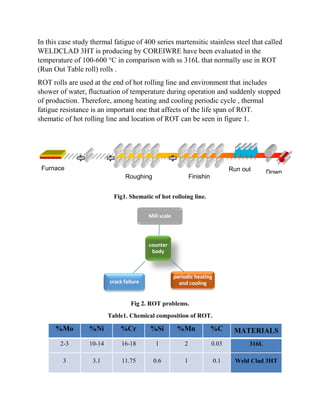
shematic of hot rolling line and location of ROT can be seen in figure 1.
Fig1. Shematic of hot rolloing line.
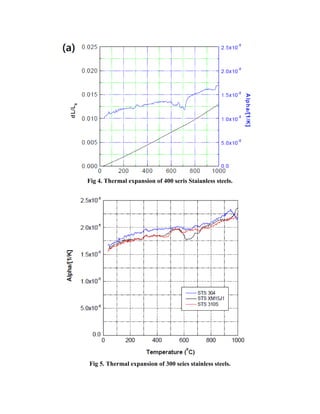
Fig 2. ROT problems.
Table1. Chemical composition of ROT.
counter
body
Mill scale
periodic heating
and coolingcrack failure
MATERIALS%C%Mn%Si%Cr%Ni%Mo
316L0.032116-1810-142-3
Weld Clad 3HT0.110.611.753.13
Furnace
Finishin
g
Roughing
Run out
Table
Down
table 1 showes chemical composition of material that used for ROT. It is clear that
in Weld clad 3HT amount of carbon is increased and amount of other element such
as Ni and Cr is redused. 316L steel is austenitic steel and weld clad 3HT is
martensitic steel so amount of Cr is redused because if the amount of Cr is be high,
chromium carbide produce in grain boundries and we see corrosion in grain
boundries. Ni is stabilizer in austenitic stainless steels. So in martensitic steels it
should be lesser. Mo is an element that increase fatigue resistance of steels and in
weld clad 3HT is 3%.
Fig 3 shows metallographic structure of weld clad 3HT it is clear that structure is
martensitic.
Fig 3. Metallographic structure of weld clad 3HT.
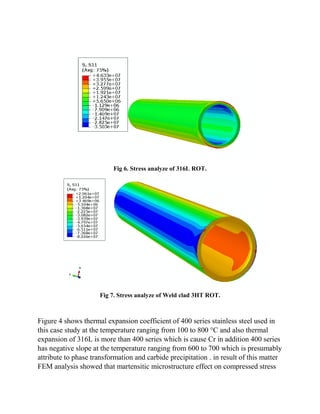
Fig 4. Thermal expansion of 400 seris Staianless steels.
Fig 5. Thermal expansion of 300 seies stainless steels.
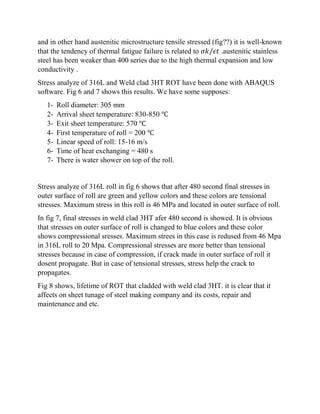
Fig 6. Stress analyze of 316L ROT.
Fig 7. Stress analyze of Weld clad 3HT ROT.
Figure 4 shows thermal expansion coefficient of 400 series stainless steel used in
this case study at the temperature ranging from 100 to 800 °C and also thermal
expansion of 316L is more than 400 series which is cause Cr in addition 400 series
has negative slope at the temperature ranging from 600 to 700 which is presumably
attribute to phase transformation and carbide precipitation . in result of this matter
FEM analysis showed that martensitic microstructure effect on compressed stress
and in other hand austenitic microstructure tensile stressed (fig??) it is well-known
that the tendency of thermal fatigue failure is related to 𝜎𝑘/𝜖𝑡 .austenitic stainless
steel has been weaker than 400 series due to the high thermal expansion and low
conductivity .
Stress analyze of 316L and Weld clad 3HT ROT have been done with ABAQUS
software. Fig 6 and 7 shows this results. We have some supposes:
1- Roll diameter: 305 mm
2- Arrival sheet temperature: 830-850 ℃
3- Exit sheet temperature: 570 ℃
4- First temperature of roll = 200 ℃
5- Linear speed of roll: 15-16 m/s
6- Time of heat exchanging = 480 s
7- There is water shower on top of the roll.
Stress analyze of 316L roll in fig 6 shows that after 480 second final stresses in
outer surface of roll are green and yellow colors and these colors are tensional
stresses. Maximum stress in this roll is 46 MPa and located in outer surface of roll.
In fig 7, final stresses in weld clad 3HT afer 480 second is showed. It is obvious
that stresses on outer surface of roll is changed to blue colors and these color
shows compressional sresses. Maximum strees in this case is redused from 46 Mpa
in 316L roll to 20 Mpa. Compressional stresses are more better than tensional
stresses because in case of compression, if crack made in outer surface of roll it
dosent propagate. But in case of tensional stresses, stress help the crack to
propagates.
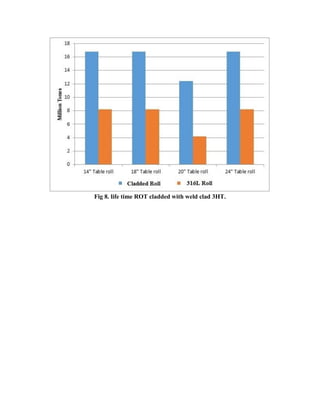
Fig 8 shows, lifetime of ROT that cladded with weld clad 3HT. it is clear that it
affects on sheet tunage of steel making company and its costs, repair and
maintenance and etc.
Fig 8. life time ROT cladded with weld clad 3HT.

Run out table rolls

  • 1.
    In this casestudy thermal fatigue of 400 series martensitic stainless steel that called WELDCLAD 3HT is producing by COREIWRE have been evaluated in the temperature of 100-600 °C in comparison with ss 316L that normally use in ROT (Run Out Table roll) rolls . ROT rolls are used at the end of hot rolling line and environment that includes shower of water, fluctuation of temperature during operation and suddenly stopped of production. Therefore, among heating and cooling periodic cycle , thermal fatigue resistance is an important one that affects of the life span of ROT. shematic of hot rolling line and location of ROT can be seen in figure 1. Fig1. Shematic of hot rolloing line. Fig 2. ROT problems. Table1. Chemical composition of ROT. counter body Mill scale periodic heating and coolingcrack failure MATERIALS%C%Mn%Si%Cr%Ni%Mo 316L0.032116-1810-142-3 Weld Clad 3HT0.110.611.753.13 Furnace Finishin g Roughing Run out Table Down
  • 2.
    table 1 showeschemical composition of material that used for ROT. It is clear that in Weld clad 3HT amount of carbon is increased and amount of other element such as Ni and Cr is redused. 316L steel is austenitic steel and weld clad 3HT is martensitic steel so amount of Cr is redused because if the amount of Cr is be high, chromium carbide produce in grain boundries and we see corrosion in grain boundries. Ni is stabilizer in austenitic stainless steels. So in martensitic steels it should be lesser. Mo is an element that increase fatigue resistance of steels and in weld clad 3HT is 3%. Fig 3 shows metallographic structure of weld clad 3HT it is clear that structure is martensitic. Fig 3. Metallographic structure of weld clad 3HT.
  • 3.
    Fig 4. Thermalexpansion of 400 seris Staianless steels. Fig 5. Thermal expansion of 300 seies stainless steels.
  • 4.
    Fig 6. Stressanalyze of 316L ROT. Fig 7. Stress analyze of Weld clad 3HT ROT. Figure 4 shows thermal expansion coefficient of 400 series stainless steel used in this case study at the temperature ranging from 100 to 800 °C and also thermal expansion of 316L is more than 400 series which is cause Cr in addition 400 series has negative slope at the temperature ranging from 600 to 700 which is presumably attribute to phase transformation and carbide precipitation . in result of this matter FEM analysis showed that martensitic microstructure effect on compressed stress
  • 5.
    and in otherhand austenitic microstructure tensile stressed (fig??) it is well-known that the tendency of thermal fatigue failure is related to 𝜎𝑘/𝜖𝑡 .austenitic stainless steel has been weaker than 400 series due to the high thermal expansion and low conductivity . Stress analyze of 316L and Weld clad 3HT ROT have been done with ABAQUS software. Fig 6 and 7 shows this results. We have some supposes: 1- Roll diameter: 305 mm 2- Arrival sheet temperature: 830-850 ℃ 3- Exit sheet temperature: 570 ℃ 4- First temperature of roll = 200 ℃ 5- Linear speed of roll: 15-16 m/s 6- Time of heat exchanging = 480 s 7- There is water shower on top of the roll. Stress analyze of 316L roll in fig 6 shows that after 480 second final stresses in outer surface of roll are green and yellow colors and these colors are tensional stresses. Maximum stress in this roll is 46 MPa and located in outer surface of roll. In fig 7, final stresses in weld clad 3HT afer 480 second is showed. It is obvious that stresses on outer surface of roll is changed to blue colors and these color shows compressional sresses. Maximum strees in this case is redused from 46 Mpa in 316L roll to 20 Mpa. Compressional stresses are more better than tensional stresses because in case of compression, if crack made in outer surface of roll it dosent propagate. But in case of tensional stresses, stress help the crack to propagates. Fig 8 shows, lifetime of ROT that cladded with weld clad 3HT. it is clear that it affects on sheet tunage of steel making company and its costs, repair and maintenance and etc.
  • 6.
    Fig 8. lifetime ROT cladded with weld clad 3HT.