

Run-on


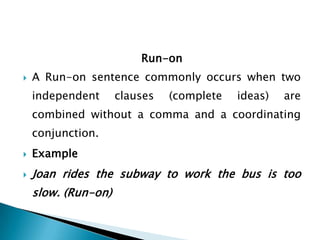
A Run-on sentence commonly occurs when two
independent

clauses

(complete

ideas)

are

combined without a comma and a coordinating
conjunction.


Example



Joan rides the subway to work the bus is too

slow. (Run-on)
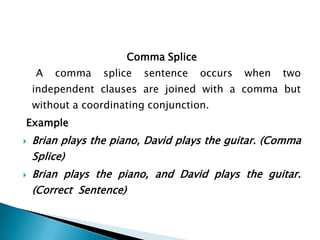
Comma Splice
A

comma

splice

sentence

occurs

when

two

independent clauses are joined with a comma but
without a coordinating conjunction.
Example




Brian plays the piano, David plays the guitar. (Comma
Splice)
Brian plays the piano, and David plays the guitar.
(Correct Sentence)


1.

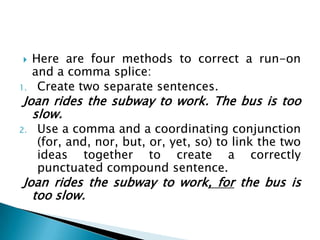
Here are four methods to correct a run-on
and a comma splice:
Create two separate sentences.

Joan rides the subway to work. The bus is too
slow.

2.

Use a comma and a coordinating conjunction
(for, and, nor, but, or, yet, so) to link the two
ideas together to create a correctly
punctuated compound sentence.

Joan rides the subway to work, for the bus is
too slow.
3.

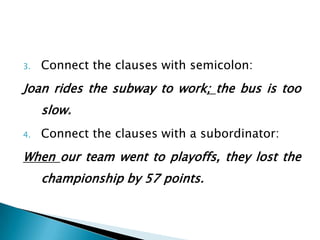
Connect the clauses with semicolon:

Joan rides the subway to work; the bus is too
slow.
4.

Connect the clauses with a subordinator:

When our team went to playoffs, they lost the
championship by 57 points.

Run on & comma splice

  • 2.
    Run-on  A Run-on sentencecommonly occurs when two independent clauses (complete ideas) are combined without a comma and a coordinating conjunction.  Example  Joan rides the subway to work the bus is too slow. (Run-on)
  • 3.
    Comma Splice A comma splice sentence occurs when two independent clausesare joined with a comma but without a coordinating conjunction. Example   Brian plays the piano, David plays the guitar. (Comma Splice) Brian plays the piano, and David plays the guitar. (Correct Sentence)
  • 4.
     1. Here are fourmethods to correct a run-on and a comma splice: Create two separate sentences. Joan rides the subway to work. The bus is too slow. 2. Use a comma and a coordinating conjunction (for, and, nor, but, or, yet, so) to link the two ideas together to create a correctly punctuated compound sentence. Joan rides the subway to work, for the bus is too slow.
  • 5.
    3. Connect the clauseswith semicolon: Joan rides the subway to work; the bus is too slow. 4. Connect the clauses with a subordinator: When our team went to playoffs, they lost the championship by 57 points.