CISV’s Educational Approach
     ...and how it relates to PROFILE RAISING
CISV’s Statement of Purpose
CISV EDUCATES AND INSPIRES ACTION FOR A MORE JUST AND
                   PEACEFUL WORLD
Learning By Doing
        “Learning by doing” is a part of any CISV activity.
         Participants “DO”, have a hands-on experience
              “REFLECT” on what they have done
            “GENERALIZE” what they have learned
                “APPLY” what they have learned
By “DOING”, we gain the ATTITUDES, SKILLS,
  KNOWLEDGE that guide us on our way to
          meeting our GOALS.
Goals and Indicators
Every CISV program, activity or training has GOALS and INDICATORS


  Indicators are comprised of ATTITUDES, SKILLS, KNOWLEDGE
                              ATTITUDES SKILLS
Profile Raising Training
   OUR GOALS:
   Goal 1: To prepare trainees to use CISV’s approach to active global citizenship


Goal 2: To prepare trainees to effectively undertake their practical responsibilities
within CISV

      Goal 3: To prepare trainees to contribute to the development and
      growth of CISV as an organization

Goal 4: To prepare trainees to interact effectively and appropriately in diverse
environments
...it starts with the “WHY”


                QuickTimeª and a
                  decompressor
        are needed to see this picture.
The Golden Circle
  ...28 days kids teens moms peace games camp
  citizens friendship bracelets and board meetings
  200 cities and nineteen fifties airplanes ASK
  and... it was fun...

CISV educates and inspires action for a more just
and peaceful world. CISV believes that the more
we understand and cooperate with people of
other cultures, the more just and peaceful our
communities and our world become. I
participated in a CISV activity about diversity and
it inspired me to start a cultures festival at my
school.
Back in 1985, Texas had a big problem. A
garbage problem.

To battle this big, expensive roadside mess,
the Texas Highway Commission launched an
extensive public education campaign.

Using research, the State of Texas identified
its worst offenders and how best to reach
them, and with that — a legend was born.
QuickTimeª and a
          decompressor
are needed to see this picture.
Strategic Planning

•   Building a communications strategy is NOT ROCKET SCIENCE!

•   It DOES require TIME, COMMITMENT and FOCUS.

•   Building consensus around the decisions you will need to make is not
    easy -- but it is NECESSARY.
Getting Started...
•   Goals, Objectives, Decision Makers

•   Context (internal and external scans)

•   Strategic CHOICES (Audience, Readiness, Concerns, Theme,
    Message, Messenger)

•   Communications Activities (Tactics, Timelines, Assignments, Budget)

•   Measuring Success

•   Reality Checks
Decisions


•   Goals (Statement of Purpose)

•   Objectives (S.M.A.R.T.)

•   Decision Makers
                                      “If you don’t know where
                                       you’re going, every road
                                          will lead you there”
                                                        - Lewis Carroll
Context

•   Internal Scan (What staff, resources and tools do you have to use
    when planning your communications?)

•   External Scan (assess the environment for your communications
    efforts. What’s happening around you that will affect your
    communications strategy.)
Strategic Choices
•   Define your AUDIENCE (Hint: “the general public” is not a target
    audience! The “media” is not one either.)

•   Check for READINESS, from your audience perspective

•   Map the CORE CONCERNS of your audience (what will compell
    your audeince to move towards your objectives?)

•   Decide on your THEME (how will you approach the conversation
    with your audience?)
Strategic Choices (cont)

•   Craft your MESSAGE (What will you say to your audience?
    Remember that a message is more than a re-worded mission
    statement)

•   Decide who will be your MESSENGER (People listen to people they
    like. Not to organizations or institutions)
Communications Activities

•   Tactics (how will you carry your message to your audience)

•   Timelines (when, but realistically...)

•   Assignments (give small, digestable tasks to individuals)

•   Budget (TIME AND MONEY)
Measuring Success
•   Monitor your progress

•   Identifying both quantifiable and anecdotal ways to measure success

•   Measure OUTPUTS and OUTCOMES (outputs = measures of effort;
    outcomes = changes that occur)

•   Measurements need to be DEFINED and REVIEWED.

•   Don’t wait until the end!
Reality Check
•   Think you’re done? Think again!

•   Is your strategy DOABLE? Are your resources AVAILABLE? Are your
    objectives SMART? Are there assumptions that require re-checking?
    Do you have support from your CHAPTER?

•   NO? GO BACK AND REVISE!

•   Otherwise - let’s get started!
What’s In a BRAND?


'Brands are the express checkout for people living their lives at ever increasing speed.'
                                                                    - Brandweek Magazine
What’s In a BRAND?
A brand's value is merely the sum total of
how much extra people will pay, or how
often they choose, the expectations,
memories, stories and relationships of one
brand over the alternatives.

                     If you’ve never heard of it, if you wouldn’t
                     choose it, if you don’t recommend it, then     http://sethgodin.typepad.com/


                     there is no brand, at least not for you.
Why ONLINE BRANDING is
key (time for some stats...):

                        The AVERAGE
                      CANADIAN spends
                            17 hours
                       online each week
                         (and that’s not
                       including email...)

                                Source:
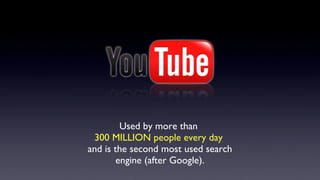
Used by more than
 300 MILLION people every day
and is the second most used search
        engine (after Google).
70%
  of online Canadians are
          active on
at least one social network


              Source:
70%
 of social media users use their social
           network to READ.
They will go there to read what others
     say about a product, service,
              organization.
                    Source: NM Incite, a McKinsey / Nielsen Company (2010)
CISV...?


            How is CISV’s online presence?
 Does your Chapter have a social media go-to person?
Is social media part of your overall PR / media strategy?
CISV believes in the value of
diversity...

We also understand that large,
diverse organizations need to
have a familiar look and feel
when they are communicating.           Find
                                 “Looking Good”
                                   on Resources
Build awareness, encourage literacy, and support access
Create a uniform approach
Set aside the necessary resources (Volunteers?
Budget?)
Develop and work your media plan
Manage expectations
AWARENESS:
  - Encourage people to use social media
  - Improve your internal communications


LITERACY:
  - Offer training
  - Offer resources


ACCESS:
  - Remove barriers to participation
  - Change attitudes
UNIFORM APPROACH:

       Social Media is not “the JB’s thing”!

       It is probably one of our best tools for
       recruitment, fundraising

       Branding, Branding, Branding...
RESOURCES:
 Social Media might be cheaper (in $$$) than
 other forms of media engagement, but doing
 it right requires time, commitment and
 yes - sometimes, budget.
DEVELOP YOUR MEDIA PLAN

 When appropriate, include social media in
 your strategic plan.
MANAGE EXPECTATIONS:

  The easy way - preaching to the choir,
  engaging those who are already engaged.

  The right way takes time. A lot of time.

  Keep your Chapter “in the loop”.
Build awareness, encourage literacy, and support access
Create a uniform approach
Set aside the necessary resources (Volunteers?
Budget?)
Develop and work your media plan
Manage expectations
“First, we shape our tools.
Then, they shape us.”
                    - Marshall McLuhan
Any person involved with CISV has
to communicate about CISV in one
way or another.

Whatever your involvement with
CISV, there will always be times
when you will have to explain what        Find
                                      “Just Saying”

the organization is, why it exists,   on Resources


and what it does.
Social Media is not where the kids go on the internet to
play!

Your members will see it, potential new families will see it,
potential leaders will see it, potential partner LMOs will see
it, potential sponsors and donors will see it.
Rtf2012

Rtf2012

  • 1.
    CISV’s Educational Approach ...and how it relates to PROFILE RAISING
  • 2.
    CISV’s Statement ofPurpose CISV EDUCATES AND INSPIRES ACTION FOR A MORE JUST AND PEACEFUL WORLD
  • 4.
    Learning By Doing “Learning by doing” is a part of any CISV activity. Participants “DO”, have a hands-on experience “REFLECT” on what they have done “GENERALIZE” what they have learned “APPLY” what they have learned By “DOING”, we gain the ATTITUDES, SKILLS, KNOWLEDGE that guide us on our way to meeting our GOALS.
  • 5.
    Goals and Indicators EveryCISV program, activity or training has GOALS and INDICATORS Indicators are comprised of ATTITUDES, SKILLS, KNOWLEDGE ATTITUDES SKILLS
  • 6.
    Profile Raising Training OUR GOALS: Goal 1: To prepare trainees to use CISV’s approach to active global citizenship Goal 2: To prepare trainees to effectively undertake their practical responsibilities within CISV Goal 3: To prepare trainees to contribute to the development and growth of CISV as an organization Goal 4: To prepare trainees to interact effectively and appropriately in diverse environments
  • 7.
    ...it starts withthe “WHY” QuickTimeª and a decompressor are needed to see this picture.
  • 8.
    The Golden Circle ...28 days kids teens moms peace games camp citizens friendship bracelets and board meetings 200 cities and nineteen fifties airplanes ASK and... it was fun... CISV educates and inspires action for a more just and peaceful world. CISV believes that the more we understand and cooperate with people of other cultures, the more just and peaceful our communities and our world become. I participated in a CISV activity about diversity and it inspired me to start a cultures festival at my school.
  • 11.
    Back in 1985,Texas had a big problem. A garbage problem. To battle this big, expensive roadside mess, the Texas Highway Commission launched an extensive public education campaign. Using research, the State of Texas identified its worst offenders and how best to reach them, and with that — a legend was born.
  • 12.
    QuickTimeª and a decompressor are needed to see this picture.
  • 13.
    Strategic Planning • Building a communications strategy is NOT ROCKET SCIENCE! • It DOES require TIME, COMMITMENT and FOCUS. • Building consensus around the decisions you will need to make is not easy -- but it is NECESSARY.
  • 14.
    Getting Started... • Goals, Objectives, Decision Makers • Context (internal and external scans) • Strategic CHOICES (Audience, Readiness, Concerns, Theme, Message, Messenger) • Communications Activities (Tactics, Timelines, Assignments, Budget) • Measuring Success • Reality Checks
  • 15.
    Decisions • Goals (Statement of Purpose) • Objectives (S.M.A.R.T.) • Decision Makers “If you don’t know where you’re going, every road will lead you there” - Lewis Carroll
  • 16.
    Context • Internal Scan (What staff, resources and tools do you have to use when planning your communications?) • External Scan (assess the environment for your communications efforts. What’s happening around you that will affect your communications strategy.)
  • 17.
    Strategic Choices • Define your AUDIENCE (Hint: “the general public” is not a target audience! The “media” is not one either.) • Check for READINESS, from your audience perspective • Map the CORE CONCERNS of your audience (what will compell your audeince to move towards your objectives?) • Decide on your THEME (how will you approach the conversation with your audience?)
  • 18.
    Strategic Choices (cont) • Craft your MESSAGE (What will you say to your audience? Remember that a message is more than a re-worded mission statement) • Decide who will be your MESSENGER (People listen to people they like. Not to organizations or institutions)
  • 19.
    Communications Activities • Tactics (how will you carry your message to your audience) • Timelines (when, but realistically...) • Assignments (give small, digestable tasks to individuals) • Budget (TIME AND MONEY)
  • 20.
    Measuring Success • Monitor your progress • Identifying both quantifiable and anecdotal ways to measure success • Measure OUTPUTS and OUTCOMES (outputs = measures of effort; outcomes = changes that occur) • Measurements need to be DEFINED and REVIEWED. • Don’t wait until the end!
  • 21.
    Reality Check • Think you’re done? Think again! • Is your strategy DOABLE? Are your resources AVAILABLE? Are your objectives SMART? Are there assumptions that require re-checking? Do you have support from your CHAPTER? • NO? GO BACK AND REVISE! • Otherwise - let’s get started!
  • 22.
    What’s In aBRAND? 'Brands are the express checkout for people living their lives at ever increasing speed.' - Brandweek Magazine
  • 23.
    What’s In aBRAND? A brand's value is merely the sum total of how much extra people will pay, or how often they choose, the expectations, memories, stories and relationships of one brand over the alternatives. If you’ve never heard of it, if you wouldn’t choose it, if you don’t recommend it, then http://sethgodin.typepad.com/ there is no brand, at least not for you.
  • 24.
    Why ONLINE BRANDINGis key (time for some stats...): The AVERAGE CANADIAN spends 17 hours online each week (and that’s not including email...) Source:
  • 25.
    Used by morethan 300 MILLION people every day and is the second most used search engine (after Google).
  • 26.
    70% ofonline Canadians are active on at least one social network Source:
  • 27.
    70% of socialmedia users use their social network to READ. They will go there to read what others say about a product, service, organization. Source: NM Incite, a McKinsey / Nielsen Company (2010)
  • 31.
    CISV...? How is CISV’s online presence? Does your Chapter have a social media go-to person? Is social media part of your overall PR / media strategy?
  • 33.
    CISV believes inthe value of diversity... We also understand that large, diverse organizations need to have a familiar look and feel when they are communicating. Find “Looking Good” on Resources
  • 35.
    Build awareness, encourageliteracy, and support access Create a uniform approach Set aside the necessary resources (Volunteers? Budget?) Develop and work your media plan Manage expectations
  • 36.
    AWARENESS: -Encourage people to use social media - Improve your internal communications LITERACY: - Offer training - Offer resources ACCESS: - Remove barriers to participation - Change attitudes
  • 37.
    UNIFORM APPROACH: Social Media is not “the JB’s thing”! It is probably one of our best tools for recruitment, fundraising Branding, Branding, Branding...
  • 38.
    RESOURCES: Social Mediamight be cheaper (in $$$) than other forms of media engagement, but doing it right requires time, commitment and yes - sometimes, budget.
  • 39.
    DEVELOP YOUR MEDIAPLAN When appropriate, include social media in your strategic plan.
  • 40.
    MANAGE EXPECTATIONS: The easy way - preaching to the choir, engaging those who are already engaged. The right way takes time. A lot of time. Keep your Chapter “in the loop”.
  • 41.
    Build awareness, encourageliteracy, and support access Create a uniform approach Set aside the necessary resources (Volunteers? Budget?) Develop and work your media plan Manage expectations
  • 42.
    “First, we shapeour tools. Then, they shape us.” - Marshall McLuhan
  • 44.
    Any person involvedwith CISV has to communicate about CISV in one way or another. Whatever your involvement with CISV, there will always be times when you will have to explain what Find “Just Saying” the organization is, why it exists, on Resources and what it does.
  • 45.
    Social Media isnot where the kids go on the internet to play! Your members will see it, potential new families will see it, potential leaders will see it, potential partner LMOs will see it, potential sponsors and donors will see it.