How Will Internal Combustion Engine
                            Vehicles Contribute to Meeting CO2
                            Emissions Targets?
                            Bibendum Challenge 2010

                            Rio de Janeiro


                            Selda Gunsel
                            Vice President, Fuels and B2B Technology


Copyright of Shell Global Solutions                                    May 2010   1
A New Energy Future


                                      By 2050 global CO2 emissions must fall by at least 50%, yet
                                      energy demand is predicted to double.


                                      Securing new sources of energy and squeezing more from
                                      existing resources are vital to meet soaring long-term
                                      demand.


                                      More efficient energy use can help save resources and cut
                                      greenhouse gases.


                                      Satisfying the world’s demand for energy will take multiple
                                      resources - from fossil fuels to renewables - developed into
                                      smarter products in tandem with improved use within a more
                                      efficient infrastructure.
Copyright of Shell Global Solutions                                                    May 2010      2
Transport Energy Demand Will Increase Rapidly


Global population is growing and demand for mobility is increasing
Number of road vehicles is expected to double to more than two billion by 2050
Energy-related CO2 emissions – approx 62% of the global total
Transport accounts for about 23% of energy-related CO2 emissions - road
transport accounts for 17%

 Energy Related CO2 Emissions*                                            Estimate of worldwide vehicle demand
                                        Industry & Manufacturing: 76.5%
                                        Power Generation
                                        Buildings & Commerce

                                        Road Transport: 17% Commercial
                                        Heavy Duty and Passenger Light
                                        Duty Vehicles

                                        Other Transport: 6.5%
                                        Rail, Aviation, Marine


 Source: International Energy Agency                                      Source: World Business Council for Sustainable Development
 * 62% of global CO2 emissions                                            2007

  Copyright of Shell Global Solutions                                                                                       May 2010   3
Options for Reducing Carbon From Transport

                                                              Alternative
                                                           combustion modes

                                             Lighter materials        Turbo charging &
                                                                     Engine downsizing
                                             Reduced
                                              friction
                                                          Efficiency Hybridization
                                                        Improvement
                                            Clean diesel                      Improved
                                                             Energy efficient Transmissions
                                                               lubricants
                                            Eco-Driving
                                                                             H2 Fuel Cell
                                                     Vehicle
                                                   Downsizing              Advanced Biofuels
                             Intelligent traffic             E-Mobility
                                                                                Conventional Biofuels
                                         Demand
                                                    Decarbonisation
                                      Interventions    CNG Low carbon
                                                                                   manufacturing
                            Modal shift            Speed Limits
                                                                          LNG

                                      Road pricing                        Carbon Capture & Storage


Copyright of Shell Global Solutions                                                                     May 2010   4
Fuel & Lubricant Options for Sustainable Transport


Conventional fuels – improved
efficiency


Conventional biofuels – ethanol
and biodiesel


Advanced biofuels – novel
feedstocks and processes


Advanced lubricants – for
improved efficiency


  Copyright of Shell Global Solutions                 May 2010   5
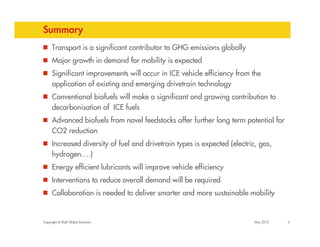
Summary
      Transport is a significant contributor to GHG emissions globally
      Major growth in demand for mobility is expected
      Significant improvements will occur in ICE vehicle efficiency from the
      application of existing and emerging drivetrain technology
      Conventional biofuels will make a significant and growing contribution to
      decarbonisation of ICE fuels
      Advanced biofuels from novel feedstocks offer further long term potential for
      CO2 reduction
      Increased diversity of fuel and drivetrain types is expected (electric, gas,
      hydrogen….)
      Energy efficient lubricants will improve vehicle efficiency
      Interventions to reduce overall demand will be required
      Collaboration is needed to deliver smarter and more sustainable mobility


Copyright of Shell Global Solutions                                         May 2010   6
Q&A


      7
Rt1 gunsel.s shell sl

Rt1 gunsel.s shell sl

  • 1.
    How Will InternalCombustion Engine Vehicles Contribute to Meeting CO2 Emissions Targets? Bibendum Challenge 2010 Rio de Janeiro Selda Gunsel Vice President, Fuels and B2B Technology Copyright of Shell Global Solutions May 2010 1
  • 2.
    A New EnergyFuture By 2050 global CO2 emissions must fall by at least 50%, yet energy demand is predicted to double. Securing new sources of energy and squeezing more from existing resources are vital to meet soaring long-term demand. More efficient energy use can help save resources and cut greenhouse gases. Satisfying the world’s demand for energy will take multiple resources - from fossil fuels to renewables - developed into smarter products in tandem with improved use within a more efficient infrastructure. Copyright of Shell Global Solutions May 2010 2
  • 3.
    Transport Energy DemandWill Increase Rapidly Global population is growing and demand for mobility is increasing Number of road vehicles is expected to double to more than two billion by 2050 Energy-related CO2 emissions – approx 62% of the global total Transport accounts for about 23% of energy-related CO2 emissions - road transport accounts for 17% Energy Related CO2 Emissions* Estimate of worldwide vehicle demand Industry & Manufacturing: 76.5% Power Generation Buildings & Commerce Road Transport: 17% Commercial Heavy Duty and Passenger Light Duty Vehicles Other Transport: 6.5% Rail, Aviation, Marine Source: International Energy Agency Source: World Business Council for Sustainable Development * 62% of global CO2 emissions 2007 Copyright of Shell Global Solutions May 2010 3
  • 4.
    Options for ReducingCarbon From Transport Alternative combustion modes Lighter materials Turbo charging & Engine downsizing Reduced friction Efficiency Hybridization Improvement Clean diesel Improved Energy efficient Transmissions lubricants Eco-Driving H2 Fuel Cell Vehicle Downsizing Advanced Biofuels Intelligent traffic E-Mobility Conventional Biofuels Demand Decarbonisation Interventions CNG Low carbon manufacturing Modal shift Speed Limits LNG Road pricing Carbon Capture & Storage Copyright of Shell Global Solutions May 2010 4
  • 5.
    Fuel & LubricantOptions for Sustainable Transport Conventional fuels – improved efficiency Conventional biofuels – ethanol and biodiesel Advanced biofuels – novel feedstocks and processes Advanced lubricants – for improved efficiency Copyright of Shell Global Solutions May 2010 5
  • 6.
    Summary Transport is a significant contributor to GHG emissions globally Major growth in demand for mobility is expected Significant improvements will occur in ICE vehicle efficiency from the application of existing and emerging drivetrain technology Conventional biofuels will make a significant and growing contribution to decarbonisation of ICE fuels Advanced biofuels from novel feedstocks offer further long term potential for CO2 reduction Increased diversity of fuel and drivetrain types is expected (electric, gas, hydrogen….) Energy efficient lubricants will improve vehicle efficiency Interventions to reduce overall demand will be required Collaboration is needed to deliver smarter and more sustainable mobility Copyright of Shell Global Solutions May 2010 6
  • 7.