Learning from the learners’ experiences Dr. Rhona Sharpe Oxford Centre for Staff and Learning Development [email_address]
Some credits Sarah Knight Ellen Lessner Rhona Sharpe Greg Benfield Eta DeCicco Helen Beetham Ruslan Ramanau Linda Creanor Grainne Conole Amanda Jefferies Liz Masterman Judy Hardy Rob Howe E.A. Draffan Mary Thorpe
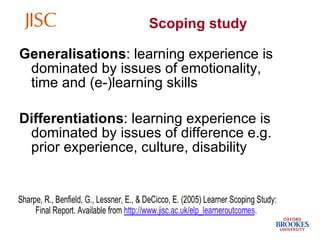
Generalisations : learning experience is dominated by issues of emotionality, time and (e-)learning skills  Differentiations : learning experience is dominated by issues of difference e.g. prior experience, culture, disability Scoping study
An ‘underworld’ of digital communication among learners (LEX, Creanor et al 2006) Google and Wikipedia preferred information search & retrieval tools  (LXP, Conole et al 2006) “ technologically adept and had integrated ICT into their lives”  (JISC 2007: 10)
STROLL
Great Expectations of ICT From thema, jisc/mori/lead
http://www.heacademy.ac.uk/home elesig.ning.com


Frameworks elesig.ning.com
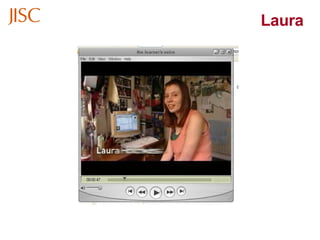
Laura
Effective e-learners “ effective learners tend to be skilled networkers and often use the technology to pull in support when needed....[and have] the capacity to network with others through a variety of communication channels and networking.” (Creanor et al, 2006, LEX Study Final Report) Effective communicators (e4L) Agile technology users (LexDis)
Effective e-learners Interacts frequently Accesses resources Prior experience High expectations Uses databases Positive attitude Effective searching Managing time Reflective Takes responsibility Confident Participation  Active  Excited Frequent logon Engaged Determined Methodical Did reading Self assessed Deep approach Sharing Independent
Review of blended e-learning Sharpe, R., Benfield, G., Roberts, G. & Francis, R. (2006)  The undergraduate experience of blended e-learning: a review of UK literature and practice undertaken for the Higher Education Academy   Generalisations :  Learners value flexible access to course resources and make regular and frequent use of electronic resources.  Differentiations : students vary in how they conceive of their own, and their tutors’ roles in the learning process.
Brookes Pathfinder Evaluation Questionnaire in four sections: demographic profile of the respondents patterns in accessing online resources and choice in forms of interpersonal contact patterns in online media use views on learner choice, learning community and self-regulation in learning  Almost 1200 survey respondents, representing at least 10% of full time, undergraduate population of each school
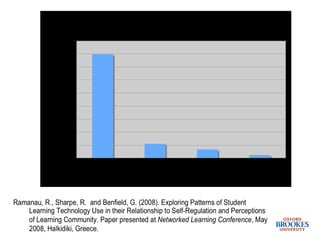
Section C Use of online media Item Mean Item Mean C2 read learning materials 3.8 C15 upload multimedia 2.4 C4 access library online 3.7 C17 listen audio 3.4 C5 learning resources 3.7 C18 watch video 3.5 C6 Brookes resources 3.5 C19 play games alone 2.1 C8 online forums 1.9 C20 play multiplayer games 1.8 C9 blog posts 1.6 C21 share files 2.5 C10 own blog 1.6 C24 virtual worlds (2nd life) 1.4 C11 web site contribution 1.8 C25 social bookmarking 1.3
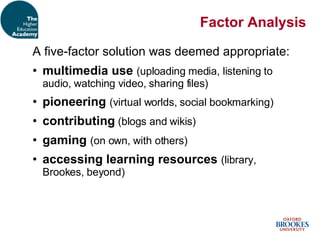
Factor Analysis A five-factor solution was deemed appropriate:  multimedia   use   (uploading media, listening to audio, watching video, sharing files) pioneering   (virtual worlds, social bookmarking) contributing  (blogs and wikis) gaming   (on own, with others)  accessing learning resources  (library, Brookes, beyond)
Age Differences Age was a strong predictor of online media usage (ANOVA tests for all the five factor-based scales were significant at the .001 level) Age band more likely less likely 17-19 years Gaming 20-25 years Contributing Multimedia use 25+ years Access learning resources Pioneering
School Differences School affiliation was a strong predictor of online media usage (ANOVA tests for all the five factor-based scales were significant at the .001 level) School Scored higher than other schools on these factors Health and Social Care Social Sciences and Law Access Learning Resources Technology Contribution Technology Business Gaming  Pioneering
Differences by year of study Year of study did  not  appear to be a predictor of student scores on the five factor-based scales,  except  … accessing learning resources  increased year on year
Correlations with perceptions of learning Perception of learning (section D subscale) Positive correlations with online patterns of use (section C factors) Learning community (CEQ) Multimedia Contributing Accessing learning resources Use of peers (MSLQ) Multimedia Contributing Accessing learning resources Gaming
Brookes Pathfinder Findings Distinct patterns of use, that conform with previous and expected findings concerning age and year of study. Predictors of patterns of use: perceptions of learning community and use of peers school age (year of study)
 
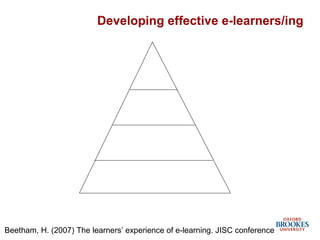
Developing effective e-learners/ing Beetham, H. (2007) The learners’ experience of e-learning. JISC conference
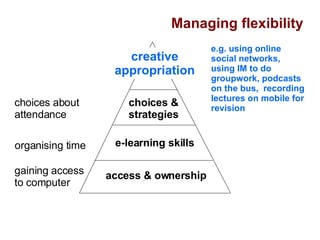
Managing flexibility access & ownership e-learning skills choices & strategies creative appropriation e.g. using online social networks, using IM to do groupwork, podcasts on the bus,  recording lectures on mobile for revision  choices about attendance organising time gaining access to computer
Summary F rom learner experience to  learners’ experiences individual differences a nd change over time. This diversity can, in part, be explained by  context (learning design, faculty, cohort)  learners’ perceptions of learning b y development in skills and strategies needed for academic study in digital age
STROLL Learners
The role of learner experience research Provides a window into the lived world of pervasive, personalised, mobile technology use. D iscovering the ways in which learners are creatively appropriating technologies to support their study Developing research tools which will help us better understand the patterns and relationships between elements of this complex, multifaceted phenomenon. Supporting the development of skills and strategies appropriate for learning in the digital age.
What next?

Rs Greenwichslides

  • 1.
    Learningfrom the learners’ experiences Dr. Rhona Sharpe Oxford Centre for Staff and Learning Development [email_address]
  • 2.
    Some credits SarahKnight Ellen Lessner Rhona Sharpe Greg Benfield Eta DeCicco Helen Beetham Ruslan Ramanau Linda Creanor Grainne Conole Amanda Jefferies Liz Masterman Judy Hardy Rob Howe E.A. Draffan Mary Thorpe
  • 3.
    Generalisations : learningexperience is dominated by issues of emotionality, time and (e-)learning skills Differentiations : learning experience is dominated by issues of difference e.g. prior experience, culture, disability Scoping study
  • 4.
    An ‘underworld’ ofdigital communication among learners (LEX, Creanor et al 2006) Google and Wikipedia preferred information search & retrieval tools (LXP, Conole et al 2006) “ technologically adept and had integrated ICT into their lives” (JISC 2007: 10)
  • 5.
  • 6.
    Great Expectations ofICT From thema, jisc/mori/lead
  • 7.
  • 8.
  • 9.
  • 10.
  • 11.
  • 12.
  • 13.
    Effective e-learners “effective learners tend to be skilled networkers and often use the technology to pull in support when needed....[and have] the capacity to network with others through a variety of communication channels and networking.” (Creanor et al, 2006, LEX Study Final Report) Effective communicators (e4L) Agile technology users (LexDis)
  • 14.
    Effective e-learners Interactsfrequently Accesses resources Prior experience High expectations Uses databases Positive attitude Effective searching Managing time Reflective Takes responsibility Confident Participation Active Excited Frequent logon Engaged Determined Methodical Did reading Self assessed Deep approach Sharing Independent
  • 15.
    Review of blendede-learning Sharpe, R., Benfield, G., Roberts, G. & Francis, R. (2006) The undergraduate experience of blended e-learning: a review of UK literature and practice undertaken for the Higher Education Academy Generalisations : Learners value flexible access to course resources and make regular and frequent use of electronic resources. Differentiations : students vary in how they conceive of their own, and their tutors’ roles in the learning process.
  • 16.
    Brookes Pathfinder EvaluationQuestionnaire in four sections: demographic profile of the respondents patterns in accessing online resources and choice in forms of interpersonal contact patterns in online media use views on learner choice, learning community and self-regulation in learning Almost 1200 survey respondents, representing at least 10% of full time, undergraduate population of each school
  • 17.
    Section C Useof online media Item Mean Item Mean C2 read learning materials 3.8 C15 upload multimedia 2.4 C4 access library online 3.7 C17 listen audio 3.4 C5 learning resources 3.7 C18 watch video 3.5 C6 Brookes resources 3.5 C19 play games alone 2.1 C8 online forums 1.9 C20 play multiplayer games 1.8 C9 blog posts 1.6 C21 share files 2.5 C10 own blog 1.6 C24 virtual worlds (2nd life) 1.4 C11 web site contribution 1.8 C25 social bookmarking 1.3
  • 18.
    Factor Analysis Afive-factor solution was deemed appropriate: multimedia use (uploading media, listening to audio, watching video, sharing files) pioneering (virtual worlds, social bookmarking) contributing (blogs and wikis) gaming (on own, with others) accessing learning resources (library, Brookes, beyond)
  • 19.
    Age Differences Agewas a strong predictor of online media usage (ANOVA tests for all the five factor-based scales were significant at the .001 level) Age band more likely less likely 17-19 years Gaming 20-25 years Contributing Multimedia use 25+ years Access learning resources Pioneering
  • 20.
    School Differences Schoolaffiliation was a strong predictor of online media usage (ANOVA tests for all the five factor-based scales were significant at the .001 level) School Scored higher than other schools on these factors Health and Social Care Social Sciences and Law Access Learning Resources Technology Contribution Technology Business Gaming Pioneering
  • 21.
    Differences by yearof study Year of study did not appear to be a predictor of student scores on the five factor-based scales, except … accessing learning resources increased year on year
  • 22.
    Correlations with perceptionsof learning Perception of learning (section D subscale) Positive correlations with online patterns of use (section C factors) Learning community (CEQ) Multimedia Contributing Accessing learning resources Use of peers (MSLQ) Multimedia Contributing Accessing learning resources Gaming
  • 23.
    Brookes Pathfinder FindingsDistinct patterns of use, that conform with previous and expected findings concerning age and year of study. Predictors of patterns of use: perceptions of learning community and use of peers school age (year of study)
  • 24.
  • 25.
    Developing effective e-learners/ingBeetham, H. (2007) The learners’ experience of e-learning. JISC conference
  • 26.
    Managing flexibility access& ownership e-learning skills choices & strategies creative appropriation e.g. using online social networks, using IM to do groupwork, podcasts on the bus, recording lectures on mobile for revision choices about attendance organising time gaining access to computer
  • 27.
    Summary F romlearner experience to learners’ experiences individual differences a nd change over time. This diversity can, in part, be explained by context (learning design, faculty, cohort) learners’ perceptions of learning b y development in skills and strategies needed for academic study in digital age
  • 28.
  • 29.
    The role oflearner experience research Provides a window into the lived world of pervasive, personalised, mobile technology use. D iscovering the ways in which learners are creatively appropriating technologies to support their study Developing research tools which will help us better understand the patterns and relationships between elements of this complex, multifaceted phenomenon. Supporting the development of skills and strategies appropriate for learning in the digital age.
  • 30.