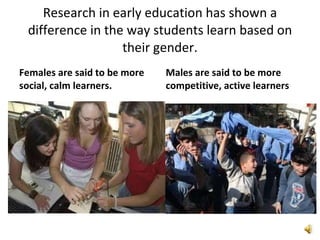
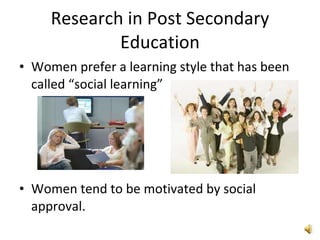
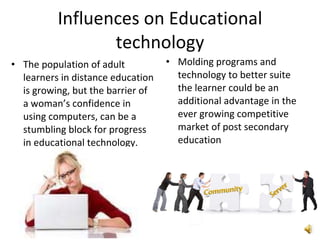
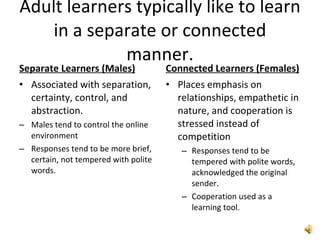
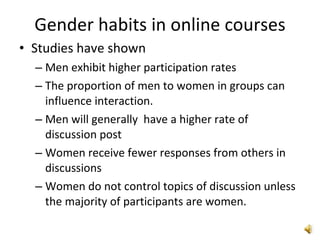
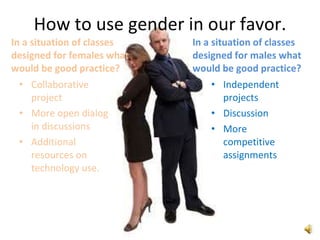
The document discusses how gender differences can impact success in online education. It suggests that catering courses to different learning preferences could increase achievement rates. Specifically, it notes that females tend to prefer social and collaborative learning while males tend to like independent and competitive activities. The document recommends designing online classes and technologies to suit these gender-based preferences in order to boost outcomes and meet the needs of a growing adult learner demographic.