Rotary India WinS
(WASH in Schools)
WinS Workshop
RI Districts 3011 & 3012
22nd July,, 2015
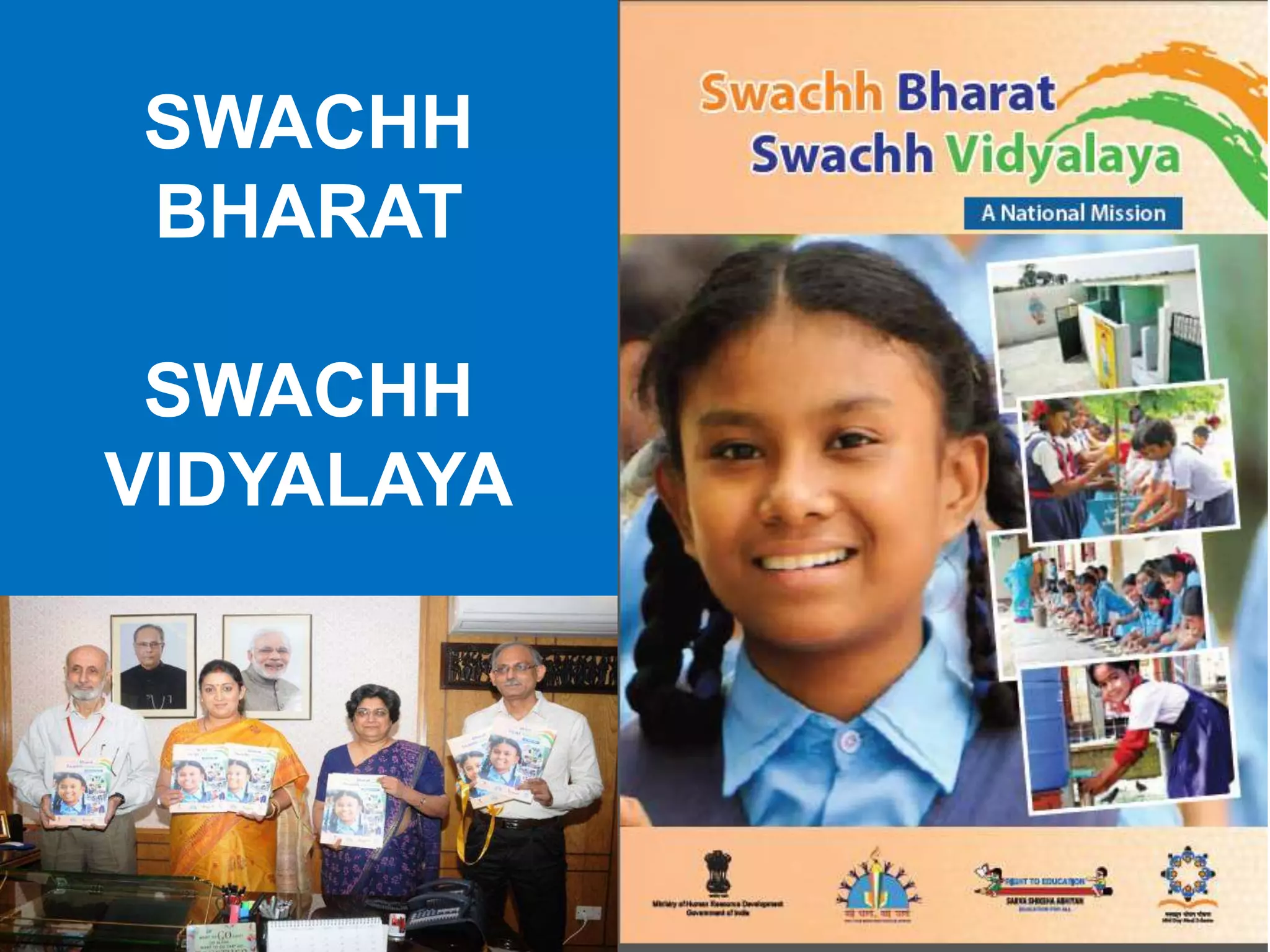
SWACHH
BHARAT
SWACHH
VIDYALAYA
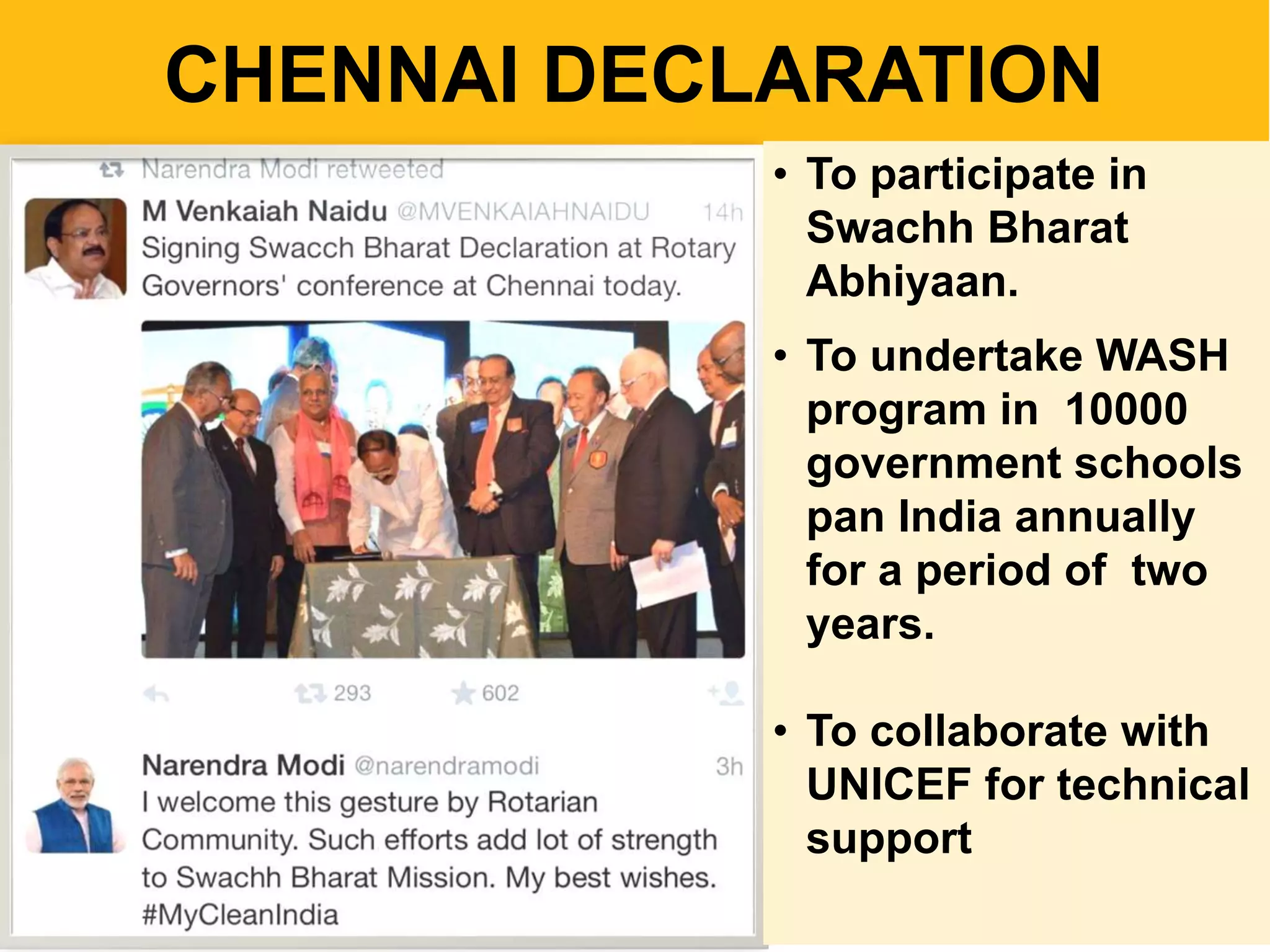
CHENNAI DECLARATION
• To participate in
Swachh Bharat
Abhiyaan.
• To undertake WASH
program in 10000
government schools
pan India annually
for a period of two
years.
• To collaborate with
UNICEF for technical
support
Understanding with HRD Ministry
• 10,000 government schools pan India for O&M
and BCC
• Name of school with location and U DISE code to
be submitted to Rotary india WinS Committee by
clubs to its District WinS Coordinator.
• District to furnish the list of schools with UDISE
code in the batch of 100 schools.
• Both in urban and rural areas
• Any primary/upper primary, secondary school
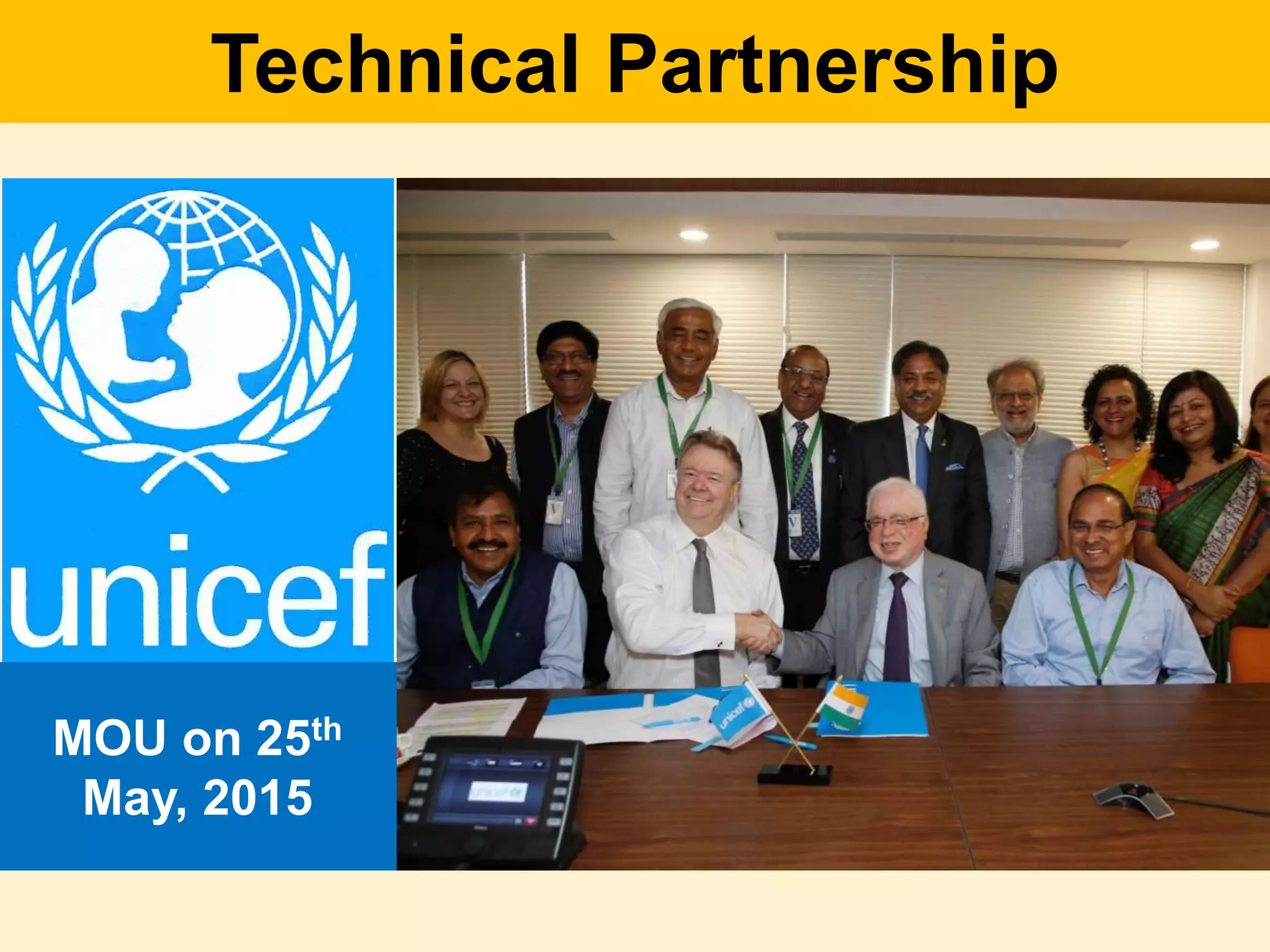
Technical Partnership
MOU on 25th
May, 2015
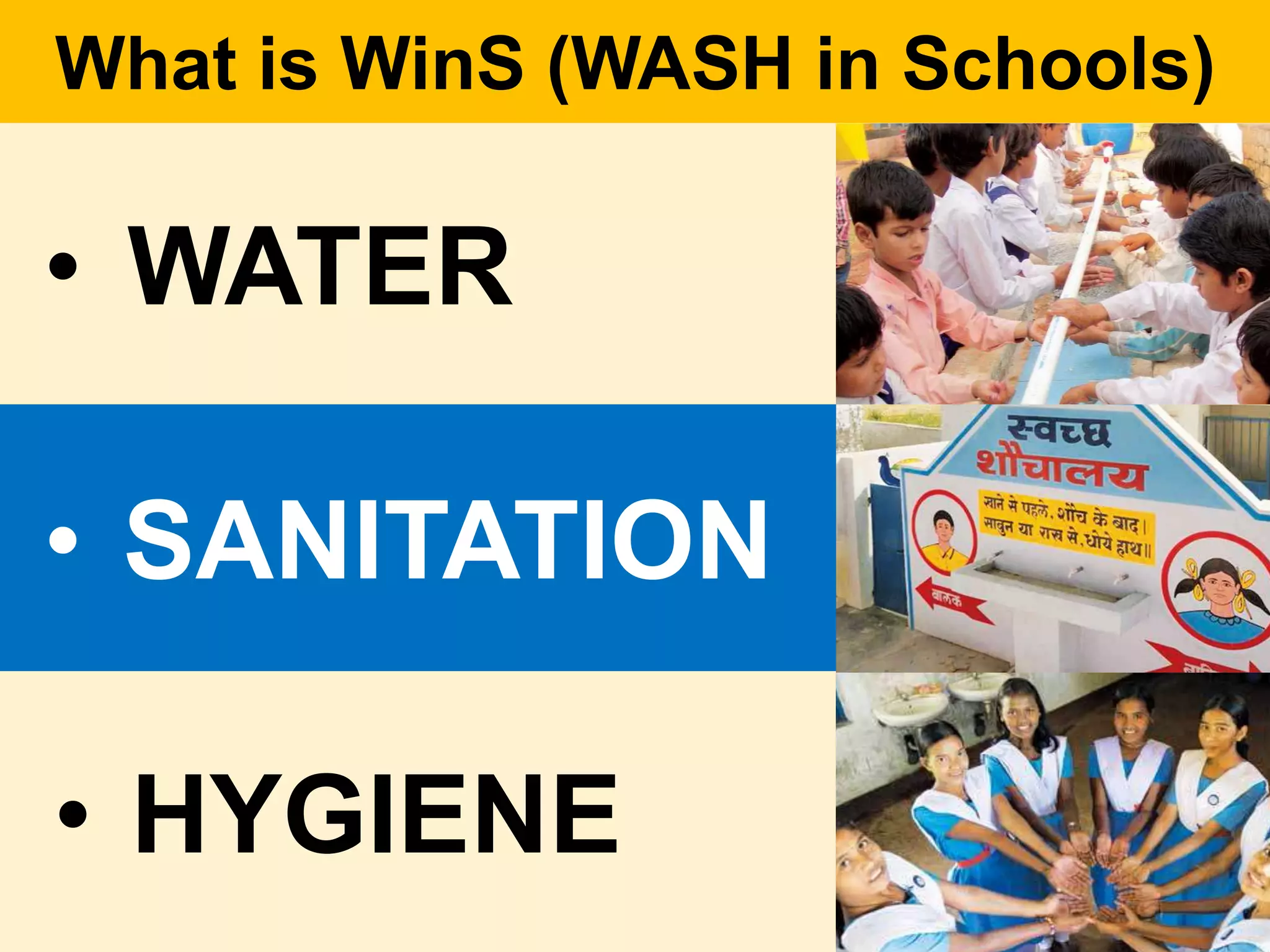
What is WinS (WASH in Schools)
• WATER
• HYGIENE
• SANITATION
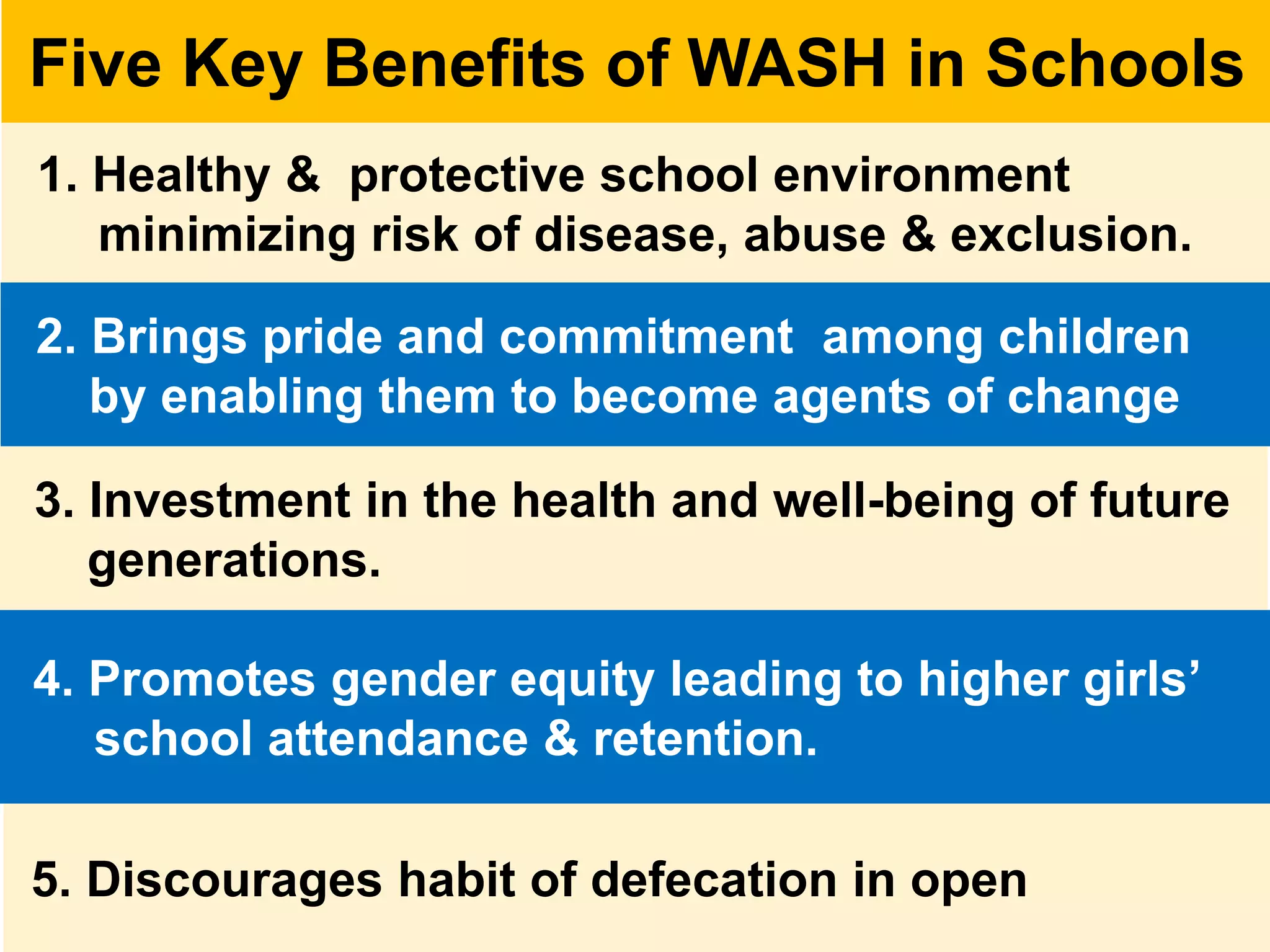
Five Key Benefits of WASH in Schools
1. Healthy & protective school environment
minimizing risk of disease, abuse & exclusion.
3. Investment in the health and well-being of future
generations.
4. Promotes gender equity leading to higher girls’
school attendance & retention.
2. Brings pride and commitment among children
by enabling them to become agents of change
5. Discourages habit of defecation in open
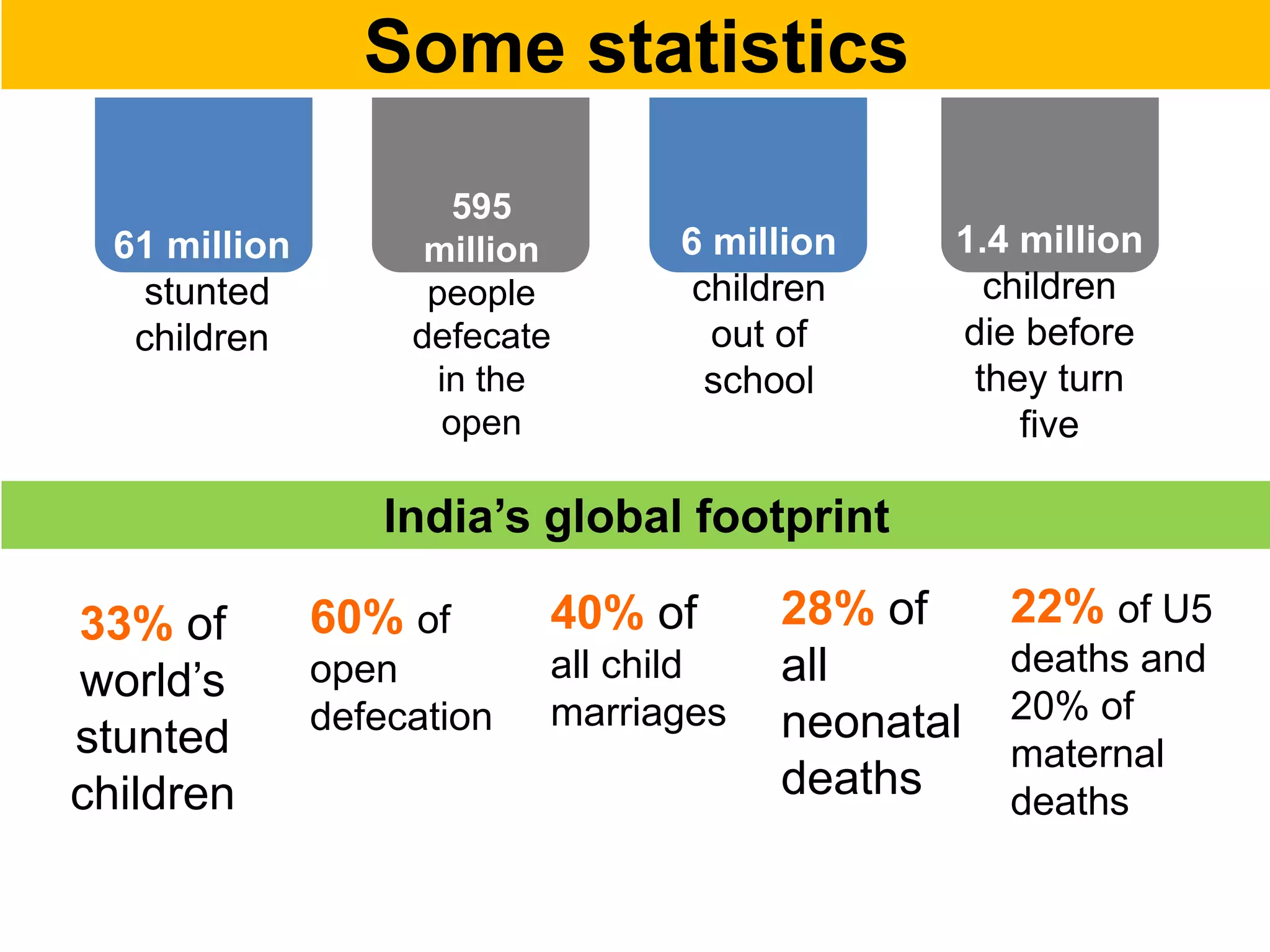
61 million
stunted
children
595
million
people
defecate
in the
open
6 million
children
out of
school
1.4 million
children
die before
they turn
five
India’s global footprint
28% of
all
neonatal
deaths
22% of U5
deaths and
20% of
maternal
deaths
60% of
open
defecation
40% of
all child
marriages
33% of
world’s
stunted
children
Some statistics
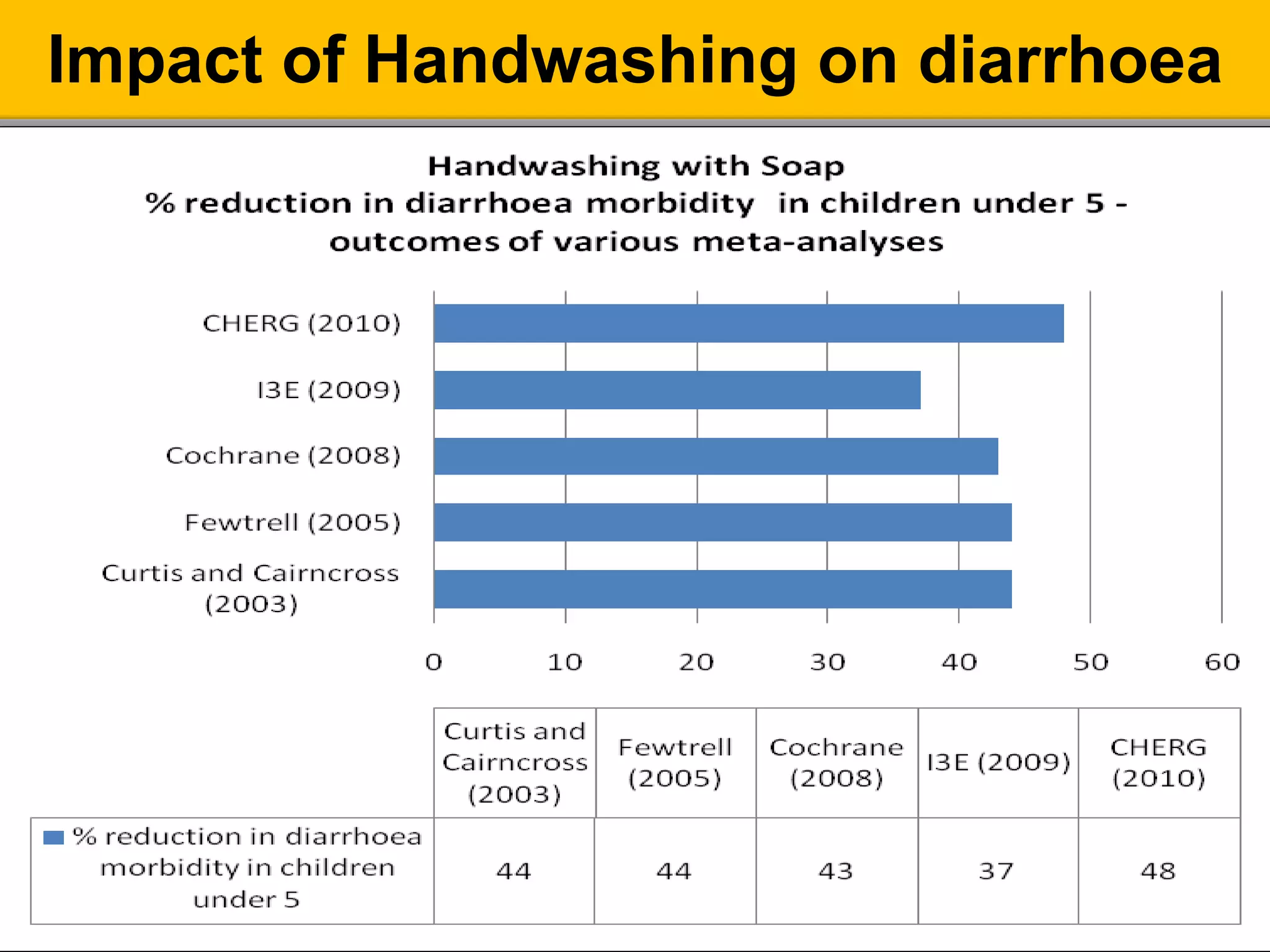
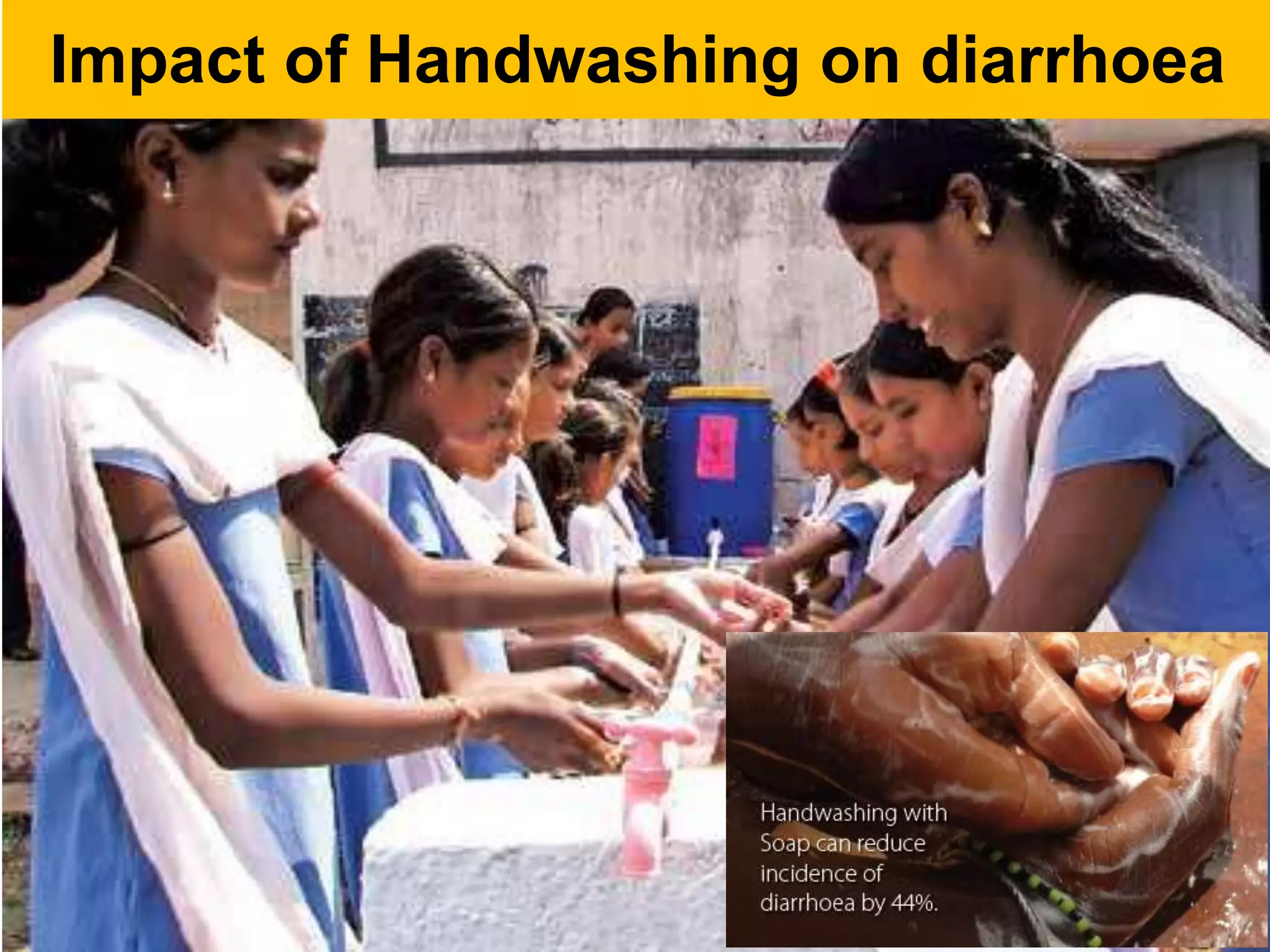
Impact of Handwashing on diarrhoea
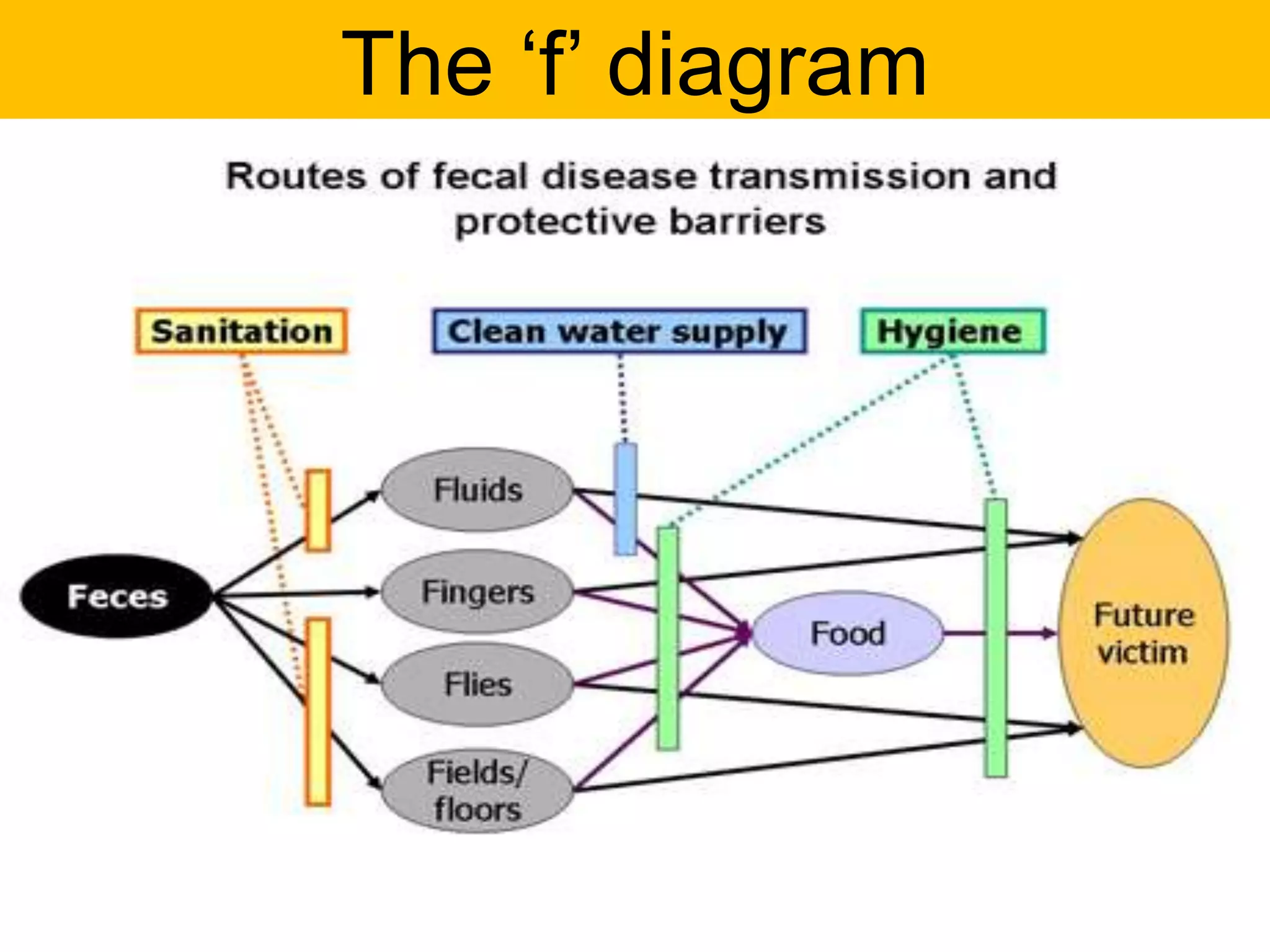
The ‘f’ diagram
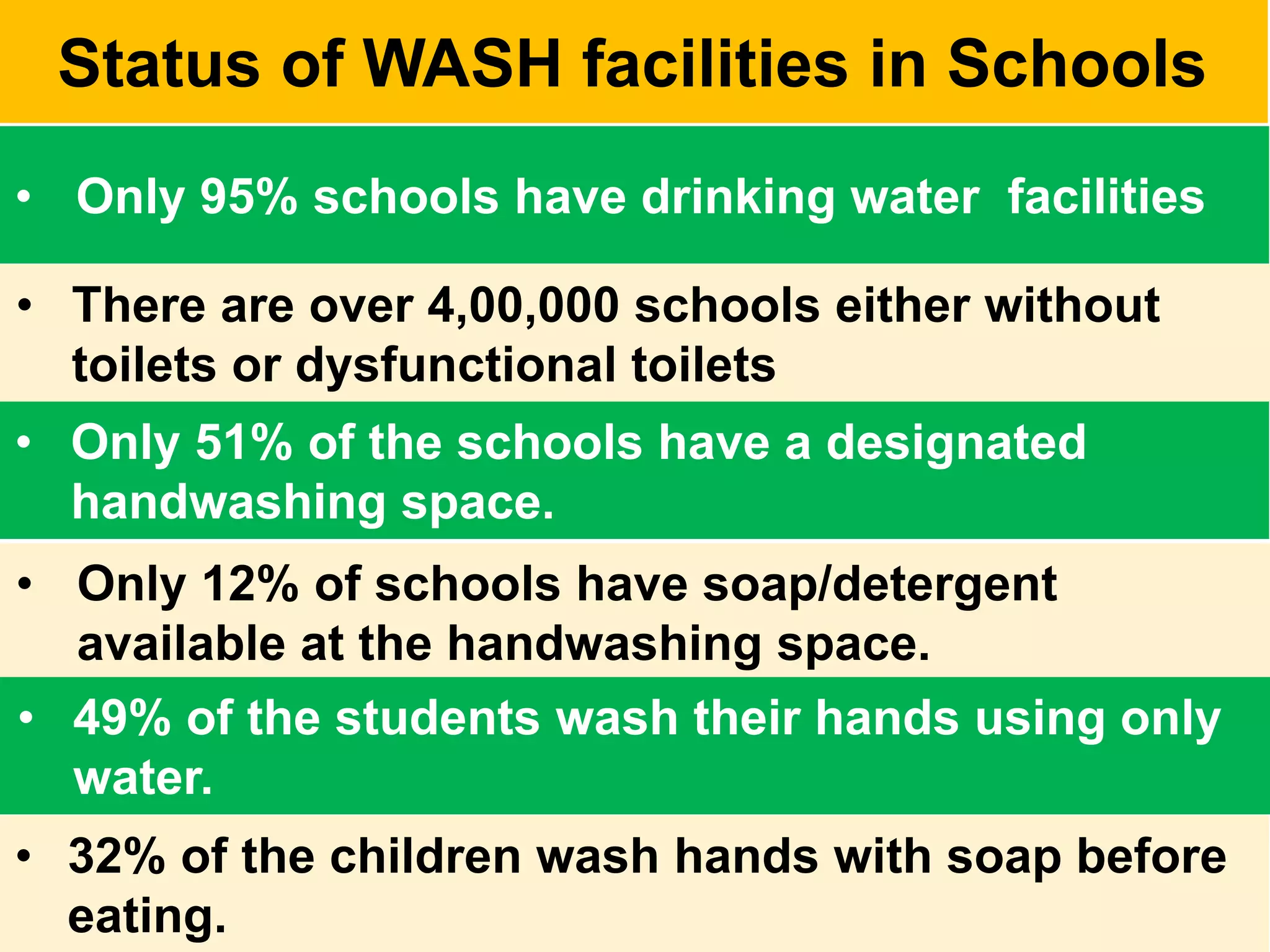
Status of WASH facilities in Schools
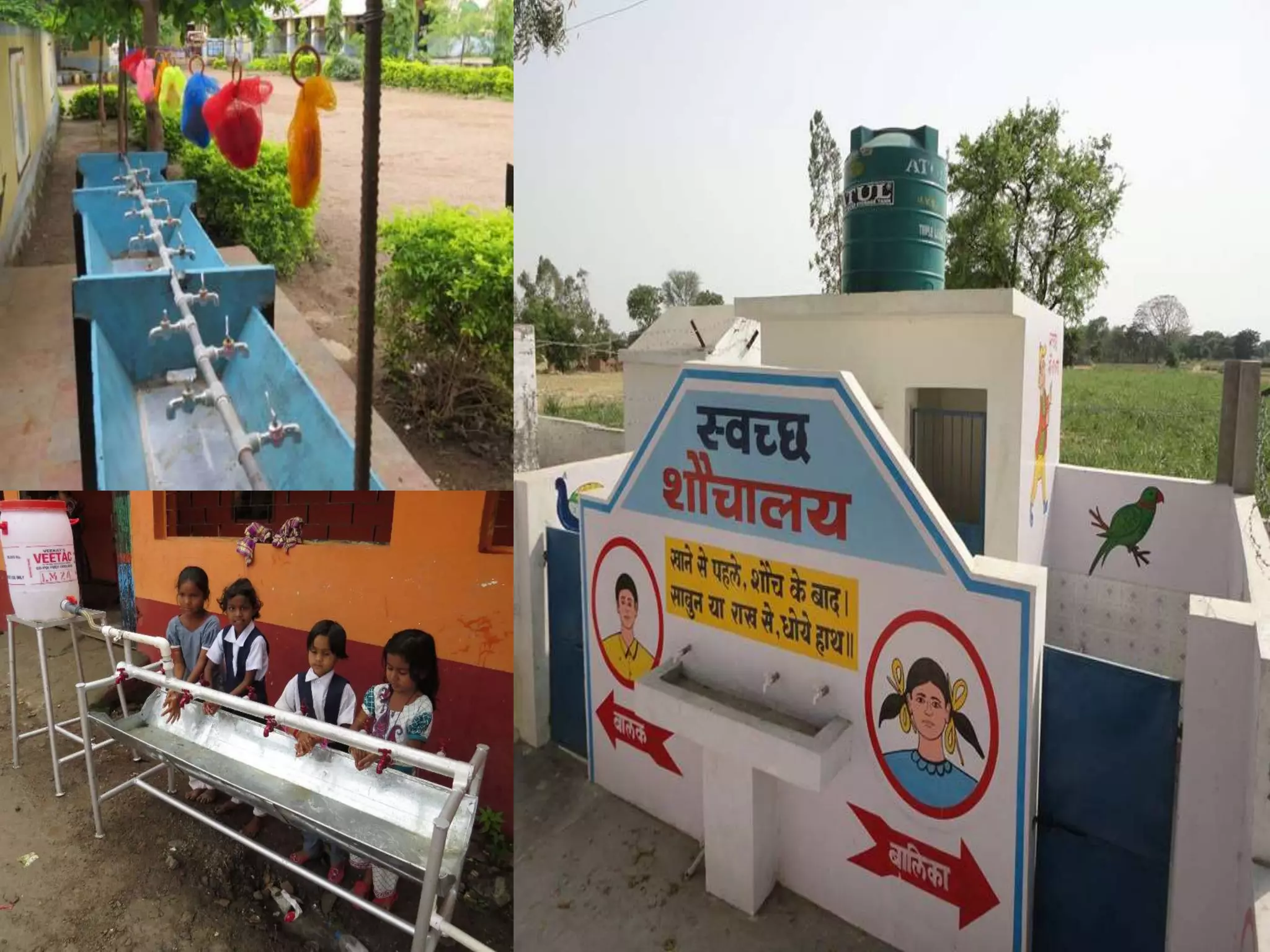
• Only 95% schools have drinking water facilities
• Only 51% of the schools have a designated
handwashing space.
• Only 12% of schools have soap/detergent
available at the handwashing space.
• 49% of the students wash their hands using only
water.
• 32% of the children wash hands with soap before
eating.
• There are over 4,00,000 schools either without
toilets or dysfunctional toilets
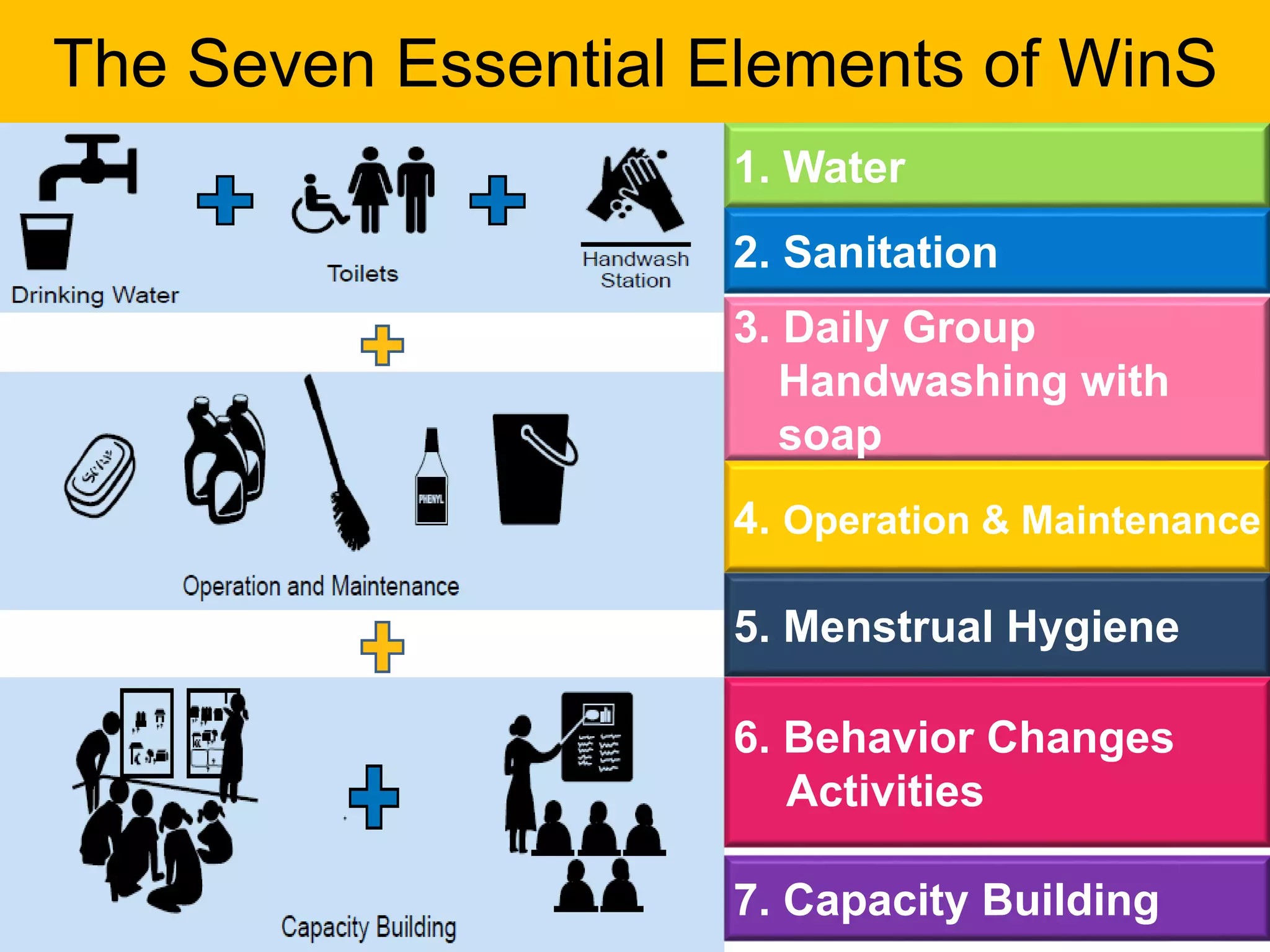
The Seven Essential Elements of WinS
1. Water
2. Sanitation
3. Daily Group
Handwashing with
soap
4. Operation & Maintenance
5. Menstrual Hygiene
6. Behavior Changes
Activities
7. Capacity Building
The Three Star Approach
for
WASH in Schools
Simple • Scalable • Sustainable
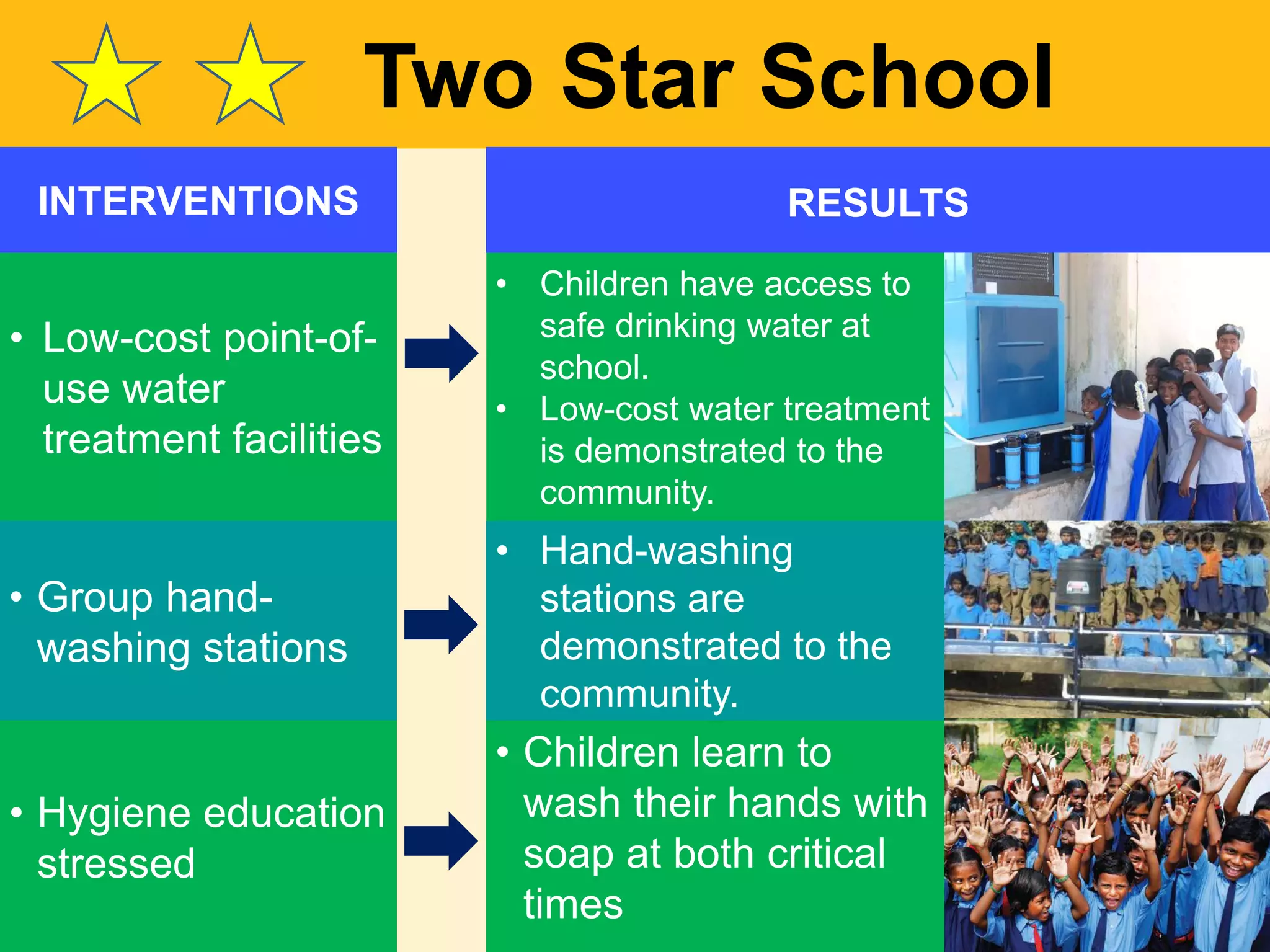
• Children have access to
safe drinking water at
school.
• Low-cost water treatment
is demonstrated to the
community.
• Low-cost point-of-
use water
treatment facilities
Two Star School
INTERVENTIONS RESULTS
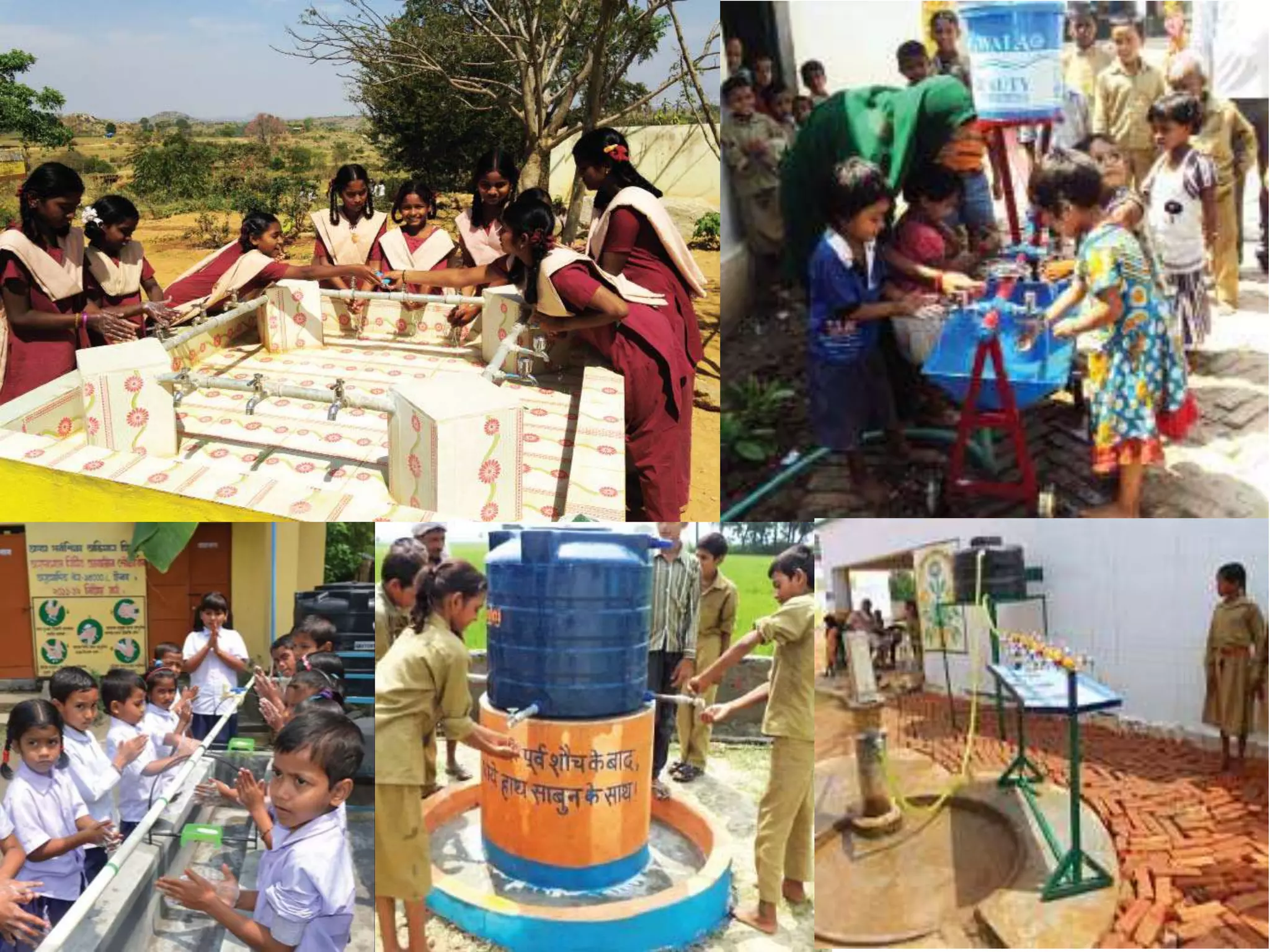
• Group hand-
washing stations
• Hand-washing
stations are
demonstrated to the
community.
• Hygiene education
stressed
• Children learn to
wash their hands with
soap at both critical
times
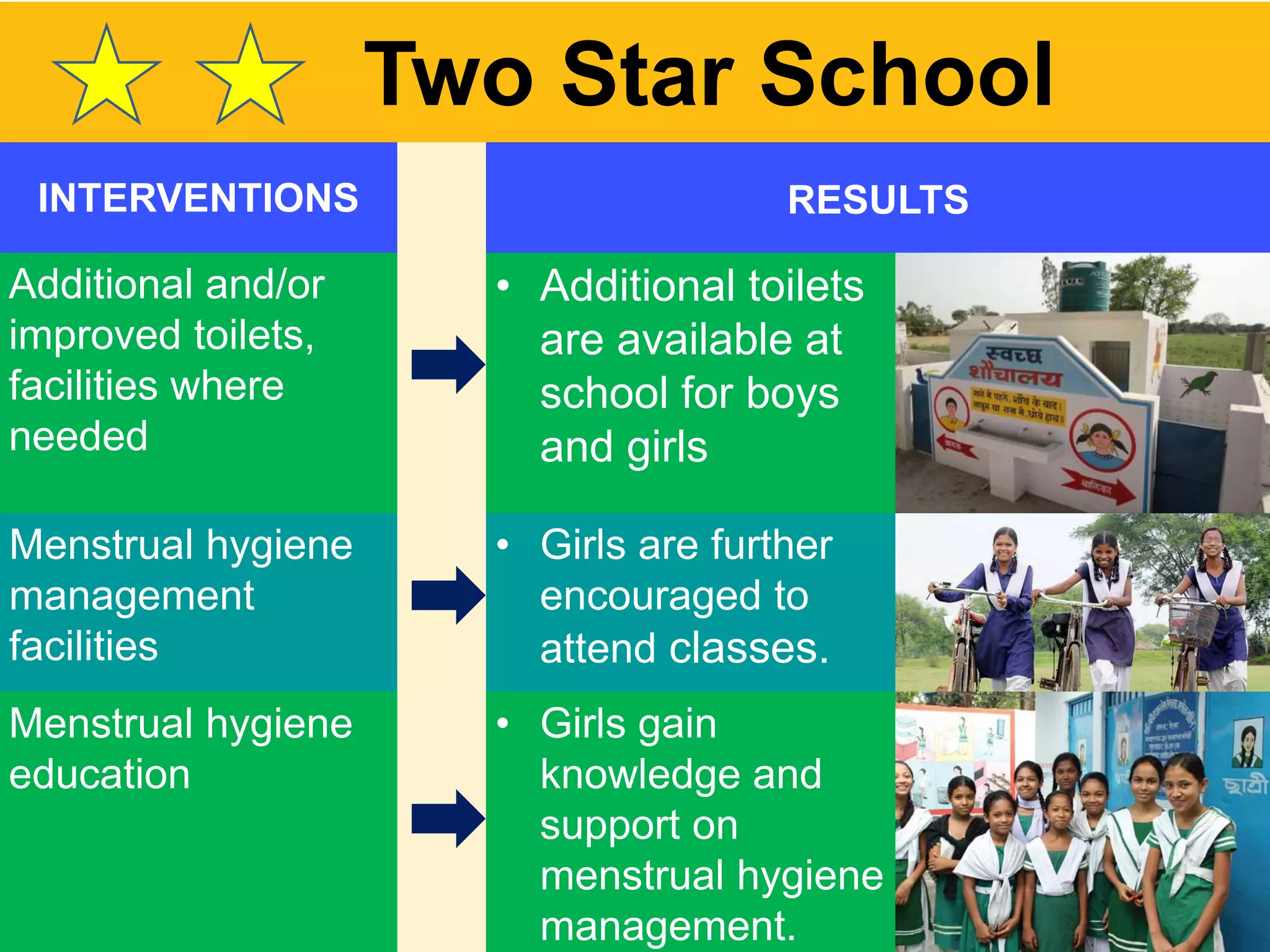
• Additional toilets
are available at
school for boys
and girls
Additional and/or
improved toilets,
facilities where
needed
INTERVENTIONS
INTERVENTIONS RESULTS
Two Star School
• Girls are further
encouraged to
attend classes.
Menstrual hygiene
management
facilities
Menstrual hygiene
education
• Girls gain
knowledge and
support on
menstrual hygiene
management.
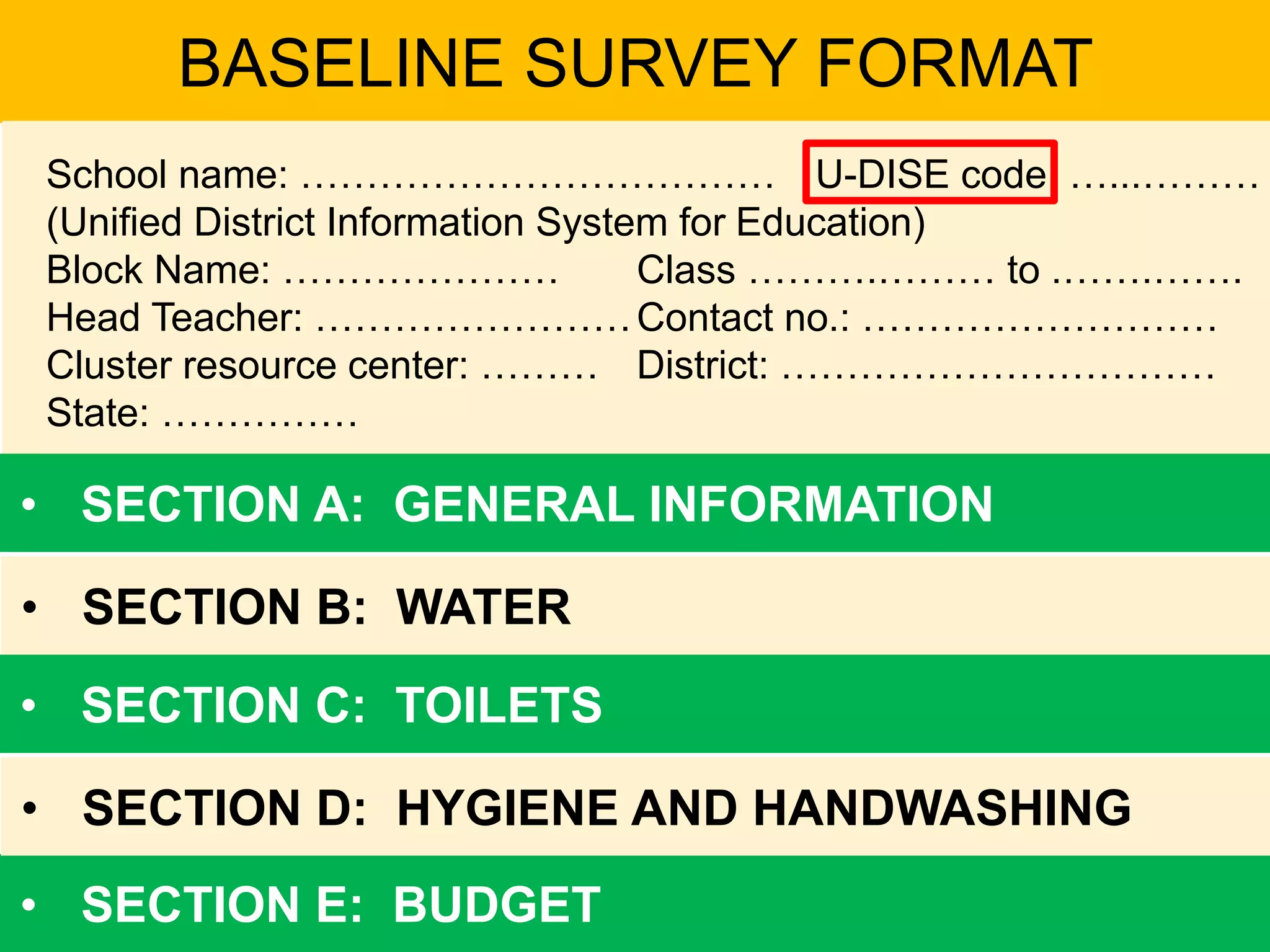
BASELINE SURVEY FORMAT
School name: ……………………………… U-DISE code: …...………
(Unified District Information System for Education)
Block Name: ………………… Class ……….……… to .…….…….
Head Teacher: ……………………Contact no.: ………………………
Cluster resource center: ……… District: ……………………………
State: ……………
• SECTION A: GENERAL INFORMATION
• SECTION B: WATER
• SECTION E: BUDGET
• SECTION D: HYGIENE AND HANDWASHING
• SECTION C: TOILETS
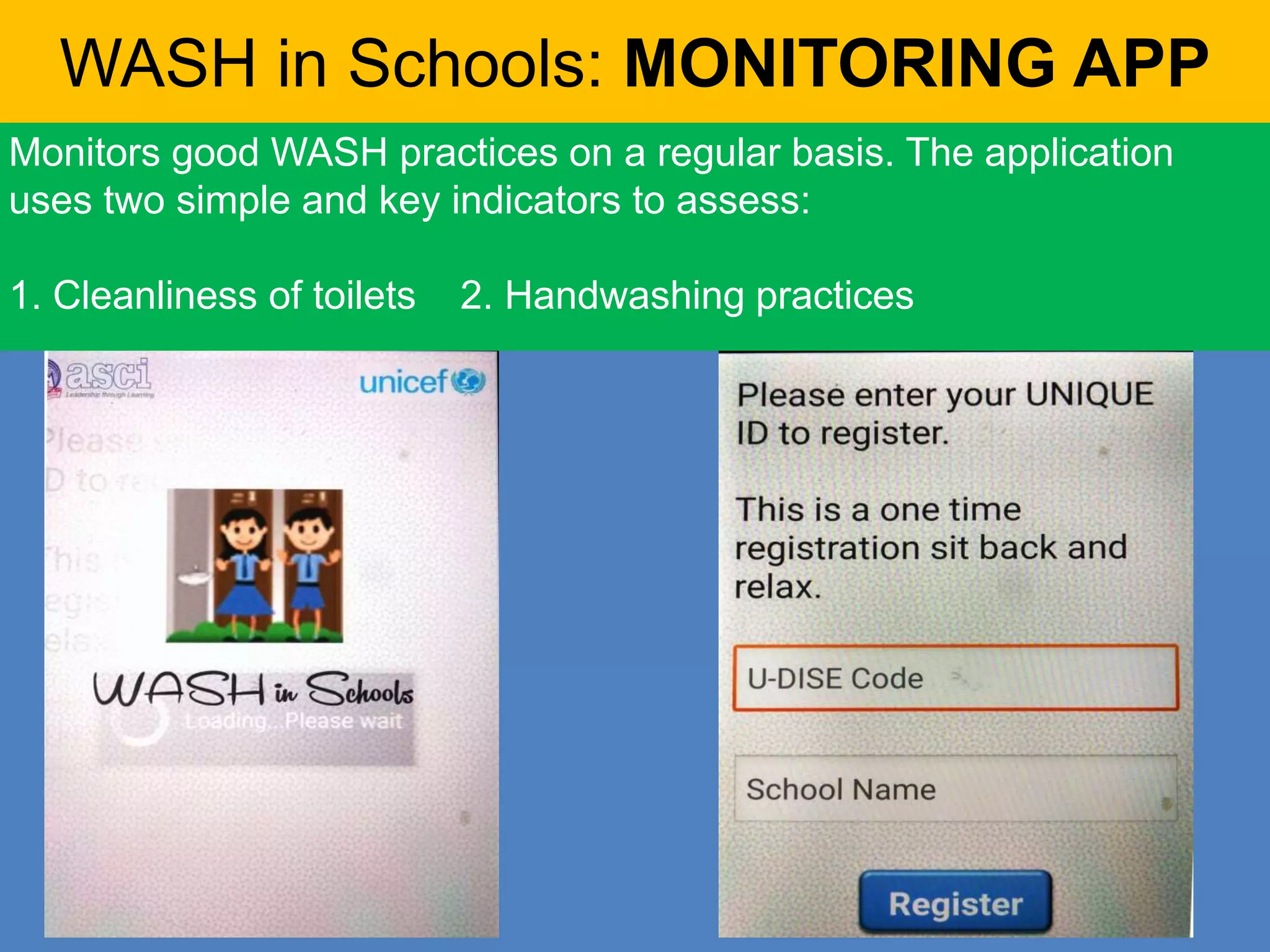
WASH in Schools: MONITORING APP
Monitors good WASH practices on a regular basis. The application
uses two simple and key indicators to assess:
1. Cleanliness of toilets 2. Handwashing practices
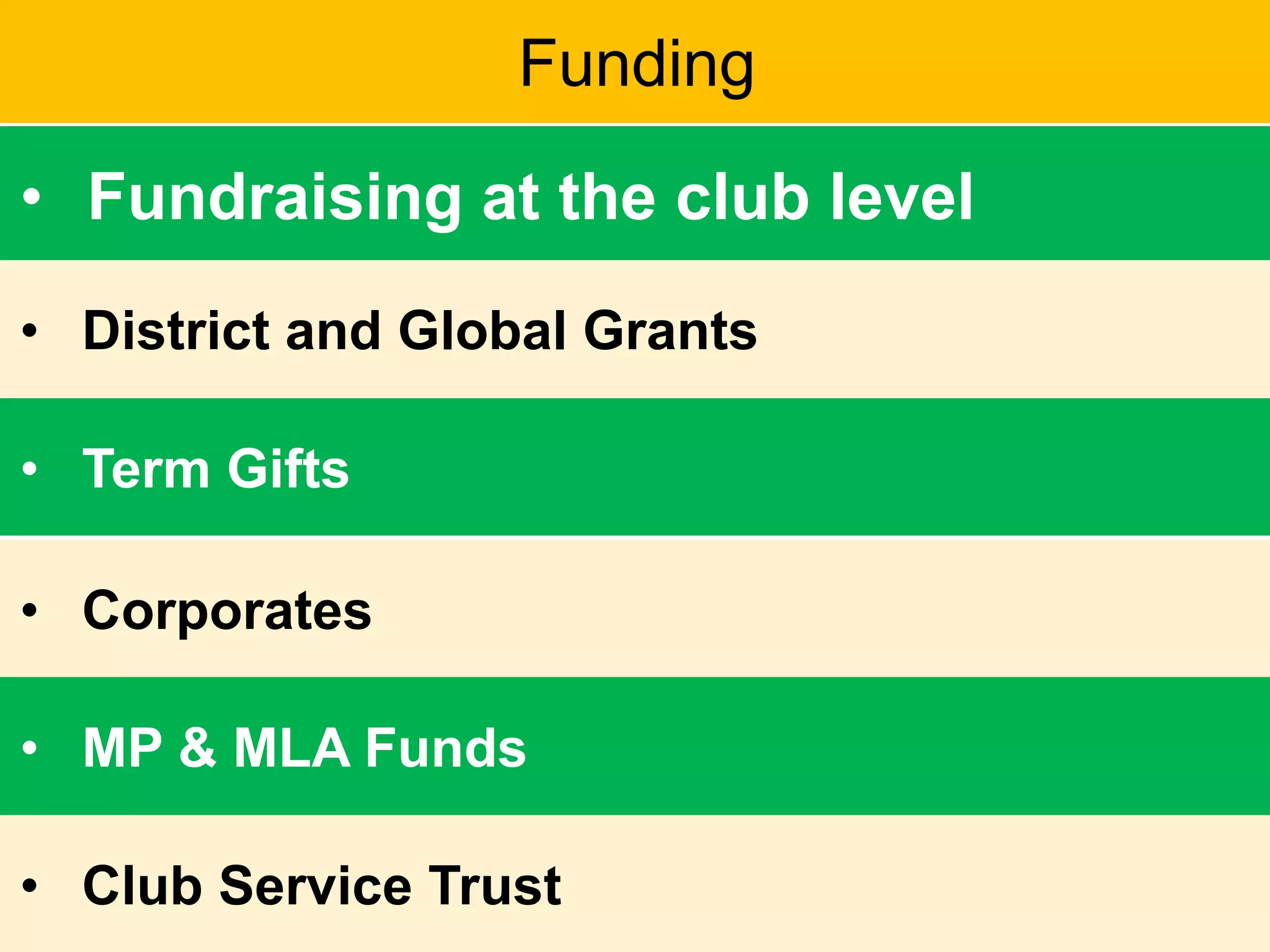
Funding
• Fundraising at the club level
• District and Global Grants
• Term Gifts
• Corporates
• MP & MLA Funds
• Club Service Trust
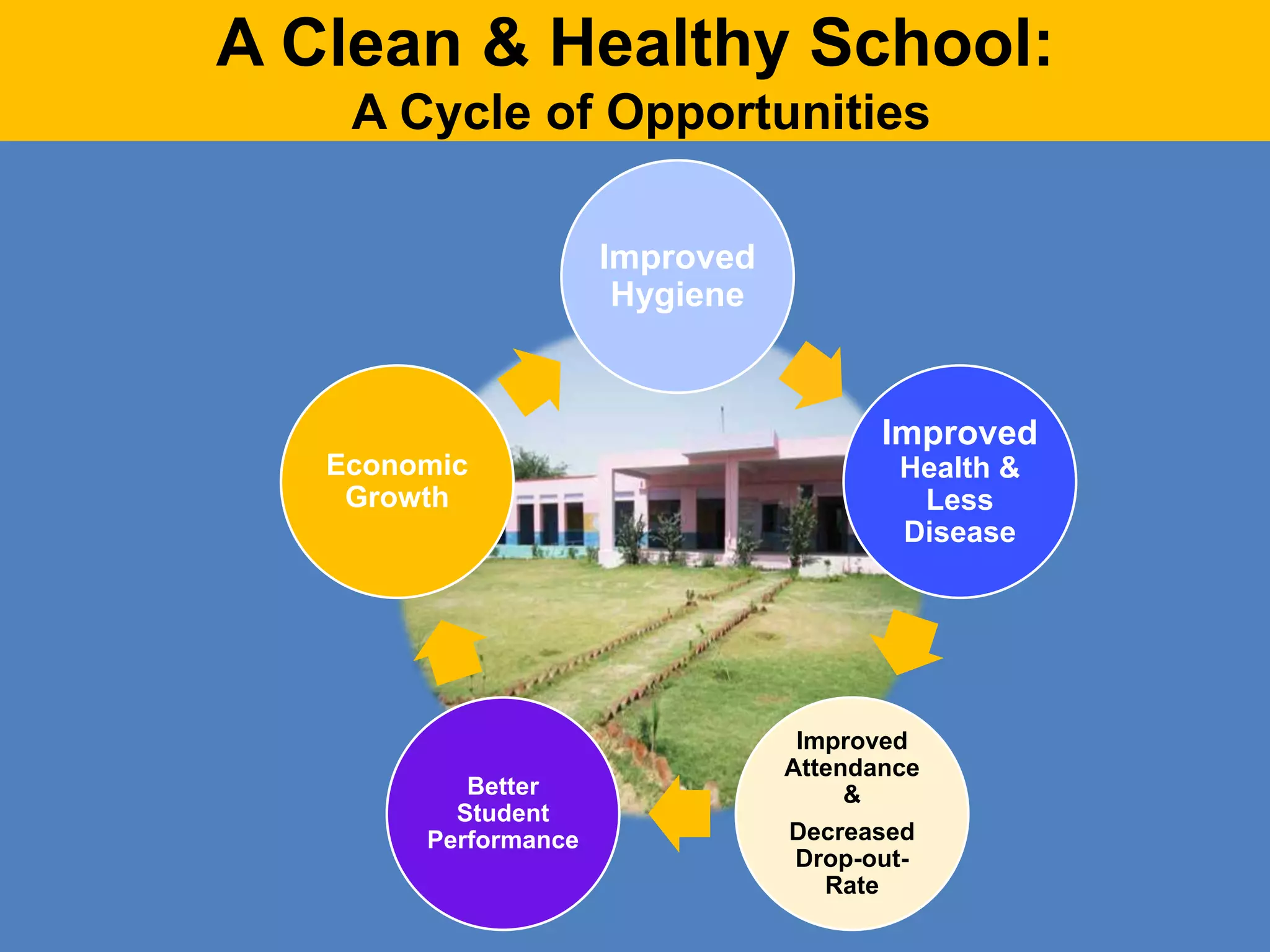
A Clean & Healthy School:
A Cycle of Opportunities
Improved
Hygiene
Improved
Health &
Less
Disease
Improved
Attendance
&
Decreased
Drop-out-
Rate
Better
Student
Performance
Economic
Growth
thank you!
Rtn. Ramesh Aggarwal
Member Secretary & Coordinator (North) Rotary WinS Committee
Member RI PRIP Tanaka’s Endowed Peace Fellowship Committee
Assistant Public Image Coordinator, Zones 4 & 6A
National Committee Member, Happy Schools, RILM
District Trainer, RI District 3012( 2015-16)
District Governor RID 3010 (2012-13)

Rotary India WASH in Schools Program

  • 1.
    Rotary India WinS (WASHin Schools) WinS Workshop RI Districts 3011 & 3012 22nd July,, 2015
  • 2.
  • 3.
    CHENNAI DECLARATION • Toparticipate in Swachh Bharat Abhiyaan. • To undertake WASH program in 10000 government schools pan India annually for a period of two years. • To collaborate with UNICEF for technical support
  • 4.
    Understanding with HRDMinistry • 10,000 government schools pan India for O&M and BCC • Name of school with location and U DISE code to be submitted to Rotary india WinS Committee by clubs to its District WinS Coordinator. • District to furnish the list of schools with UDISE code in the batch of 100 schools. • Both in urban and rural areas • Any primary/upper primary, secondary school
  • 5.
  • 6.
    What is WinS(WASH in Schools) • WATER • HYGIENE • SANITATION
  • 7.
    Five Key Benefitsof WASH in Schools 1. Healthy & protective school environment minimizing risk of disease, abuse & exclusion. 3. Investment in the health and well-being of future generations. 4. Promotes gender equity leading to higher girls’ school attendance & retention. 2. Brings pride and commitment among children by enabling them to become agents of change 5. Discourages habit of defecation in open
  • 8.
    61 million stunted children 595 million people defecate in the open 6million children out of school 1.4 million children die before they turn five India’s global footprint 28% of all neonatal deaths 22% of U5 deaths and 20% of maternal deaths 60% of open defecation 40% of all child marriages 33% of world’s stunted children Some statistics
  • 9.
  • 10.
  • 11.
  • 12.
    Status of WASHfacilities in Schools • Only 95% schools have drinking water facilities • Only 51% of the schools have a designated handwashing space. • Only 12% of schools have soap/detergent available at the handwashing space. • 49% of the students wash their hands using only water. • 32% of the children wash hands with soap before eating. • There are over 4,00,000 schools either without toilets or dysfunctional toilets
  • 13.
    The Seven EssentialElements of WinS 1. Water 2. Sanitation 3. Daily Group Handwashing with soap 4. Operation & Maintenance 5. Menstrual Hygiene 6. Behavior Changes Activities 7. Capacity Building
  • 14.
    The Three StarApproach for WASH in Schools Simple • Scalable • Sustainable
  • 15.
    • Children haveaccess to safe drinking water at school. • Low-cost water treatment is demonstrated to the community. • Low-cost point-of- use water treatment facilities Two Star School INTERVENTIONS RESULTS • Group hand- washing stations • Hand-washing stations are demonstrated to the community. • Hygiene education stressed • Children learn to wash their hands with soap at both critical times
  • 16.
    • Additional toilets areavailable at school for boys and girls Additional and/or improved toilets, facilities where needed INTERVENTIONS INTERVENTIONS RESULTS Two Star School • Girls are further encouraged to attend classes. Menstrual hygiene management facilities Menstrual hygiene education • Girls gain knowledge and support on menstrual hygiene management.
  • 17.
    BASELINE SURVEY FORMAT Schoolname: ……………………………… U-DISE code: …...……… (Unified District Information System for Education) Block Name: ………………… Class ……….……… to .…….……. Head Teacher: ……………………Contact no.: ……………………… Cluster resource center: ……… District: …………………………… State: …………… • SECTION A: GENERAL INFORMATION • SECTION B: WATER • SECTION E: BUDGET • SECTION D: HYGIENE AND HANDWASHING • SECTION C: TOILETS
  • 18.
    WASH in Schools:MONITORING APP Monitors good WASH practices on a regular basis. The application uses two simple and key indicators to assess: 1. Cleanliness of toilets 2. Handwashing practices
  • 21.
    Funding • Fundraising atthe club level • District and Global Grants • Term Gifts • Corporates • MP & MLA Funds • Club Service Trust
  • 22.
    A Clean &Healthy School: A Cycle of Opportunities Improved Hygiene Improved Health & Less Disease Improved Attendance & Decreased Drop-out- Rate Better Student Performance Economic Growth
  • 23.
    thank you! Rtn. RameshAggarwal Member Secretary & Coordinator (North) Rotary WinS Committee Member RI PRIP Tanaka’s Endowed Peace Fellowship Committee Assistant Public Image Coordinator, Zones 4 & 6A National Committee Member, Happy Schools, RILM District Trainer, RI District 3012( 2015-16) District Governor RID 3010 (2012-13)