ROLE OF POPULATION IN DEVELOPMENT
AND UNDER DEVELOPING COUNTRIES
POPULATION
A population is number of living people that live together
in the same place A city’s population is the number of
people living in that city. These people are
called inhabitants or residents. The population includes all
individuals that live in that certain area.
The maximum population that can be supported in an area is called the carrying capacity.
POPULATION
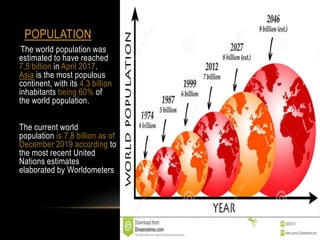
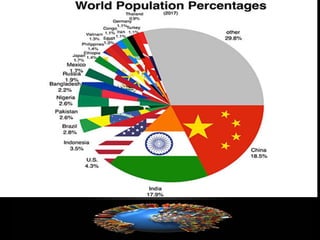
The world population was
estimated to have reached
7.5 billion in April 2017.
Asia is the most populous
continent, with its 4.3 billion
inhabitants being 60% of
the world population.
The current world
population is 7.8 billion as of
December 2019 according to
the most recent United
Nations estimates
elaborated by Worldometers
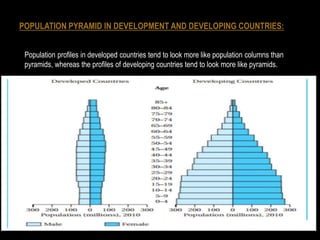
Population profiles in developed countries tend to look more like population columns than
pyramids, whereas the profiles of developing countries tend to look more like pyramids.
POPULATION PYRAMID IN DEVELOPMENT AND DEVELOPING COUNTRIES:
• Higher rate of population requires
more investments
• Adverse effects on per capital
income
• Problems of unemployement
• Food problems
• Reduction in efficiency of labor force
• Decline social infrastructure
• Adverse effects on environment
• Obstacle of self reliance
• Growing population lower standards
of living
• Economic development
• Source of labor
• Income boost
• Increasing trade structure
• Increased innovation
• Sign of social health
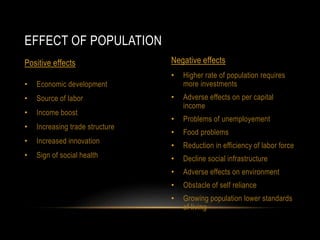
EFFECT OF POPULATION
Positive effects Negative effects
• Developing countries have agriculture
development
• Developing countries have lower per
capita income
• Developing countries facing population
explosion
• Developing countries have higher birth
rate and lower death rate
• Developing countries facing financial
problems
• Developing countries are unable to
extend social welfare
• Developed countries have industrial
development
• Developed countries have higher per
capita income
• Developed countries have lesser
population
• Developed countries have low birth
and death rate
• Developed country have nourishing
economy
• Developed countries are able to offer
many welfare measures for their
population
Developed countries are less effects
by population due to following
reasons
Developing countries are more
effected by population due to
following reasons
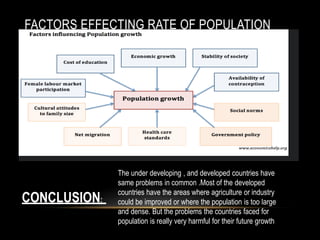
FACTORS EFFECTING RATE OF POPULATION
CONCLUSION:
The under developing , and developed countries have
same problems in common .Most of the developed
countries have the areas where agriculture or industry
could be improved or where the population is too large
and dense. But the problems the countries faced for
population is really very harmful for their future growth
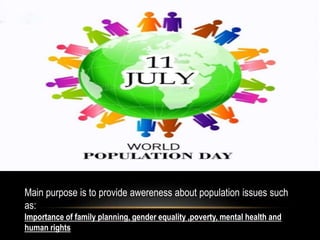
Main purpose is to provide awereness about population issues such
as:
Importance of family planning, gender equality ,poverty, mental health and
human rights
Role of population in development and under developing   copy

Role of population in development and under developing copy

  • 1.
    ROLE OF POPULATIONIN DEVELOPMENT AND UNDER DEVELOPING COUNTRIES
  • 2.
    POPULATION A population isnumber of living people that live together in the same place A city’s population is the number of people living in that city. These people are called inhabitants or residents. The population includes all individuals that live in that certain area. The maximum population that can be supported in an area is called the carrying capacity.
  • 3.
    POPULATION The world populationwas estimated to have reached 7.5 billion in April 2017. Asia is the most populous continent, with its 4.3 billion inhabitants being 60% of the world population. The current world population is 7.8 billion as of December 2019 according to the most recent United Nations estimates elaborated by Worldometers
  • 5.
    Population profiles indeveloped countries tend to look more like population columns than pyramids, whereas the profiles of developing countries tend to look more like pyramids. POPULATION PYRAMID IN DEVELOPMENT AND DEVELOPING COUNTRIES:
  • 6.
    • Higher rateof population requires more investments • Adverse effects on per capital income • Problems of unemployement • Food problems • Reduction in efficiency of labor force • Decline social infrastructure • Adverse effects on environment • Obstacle of self reliance • Growing population lower standards of living • Economic development • Source of labor • Income boost • Increasing trade structure • Increased innovation • Sign of social health EFFECT OF POPULATION Positive effects Negative effects
  • 7.
    • Developing countrieshave agriculture development • Developing countries have lower per capita income • Developing countries facing population explosion • Developing countries have higher birth rate and lower death rate • Developing countries facing financial problems • Developing countries are unable to extend social welfare • Developed countries have industrial development • Developed countries have higher per capita income • Developed countries have lesser population • Developed countries have low birth and death rate • Developed country have nourishing economy • Developed countries are able to offer many welfare measures for their population Developed countries are less effects by population due to following reasons Developing countries are more effected by population due to following reasons
  • 8.
    FACTORS EFFECTING RATEOF POPULATION CONCLUSION: The under developing , and developed countries have same problems in common .Most of the developed countries have the areas where agriculture or industry could be improved or where the population is too large and dense. But the problems the countries faced for population is really very harmful for their future growth
  • 9.
    Main purpose isto provide awereness about population issues such as: Importance of family planning, gender equality ,poverty, mental health and human rights