CLASSICAL CONDITIONING
AND
ITS ROLE
IN
ADVERTISEMENT
PRESENTED BY: SUDESHNA MOHAPATRA
8TH SEMESTER, IMBA
Classical Conditioning
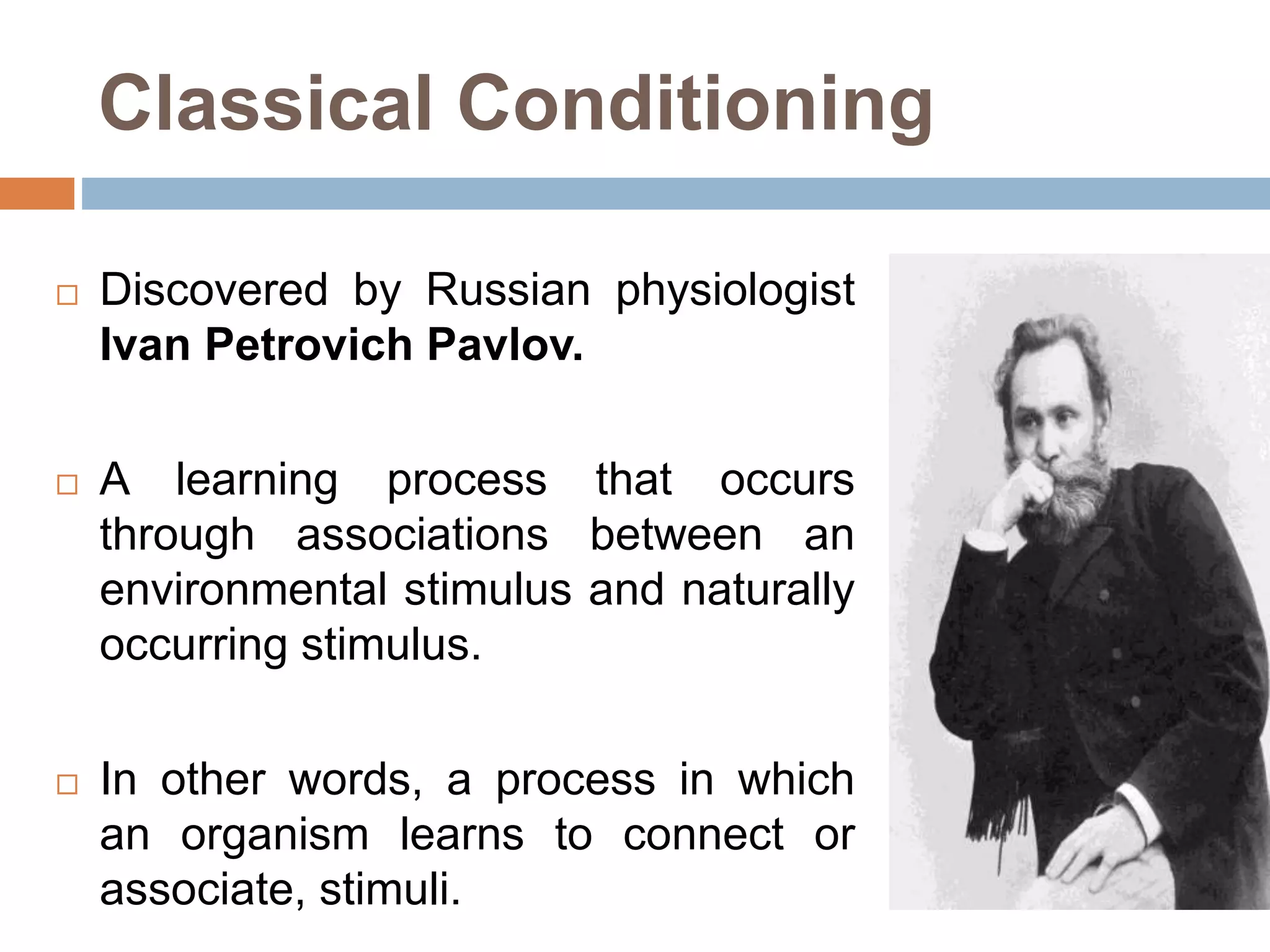
 Discovered by Russian physiologist
Ivan Petrovich Pavlov.
 A learning process that occurs
through associations between an
environmental stimulus and naturally
occurring stimulus.
 In other words, a process in which
an organism learns to connect or
associate, stimuli.
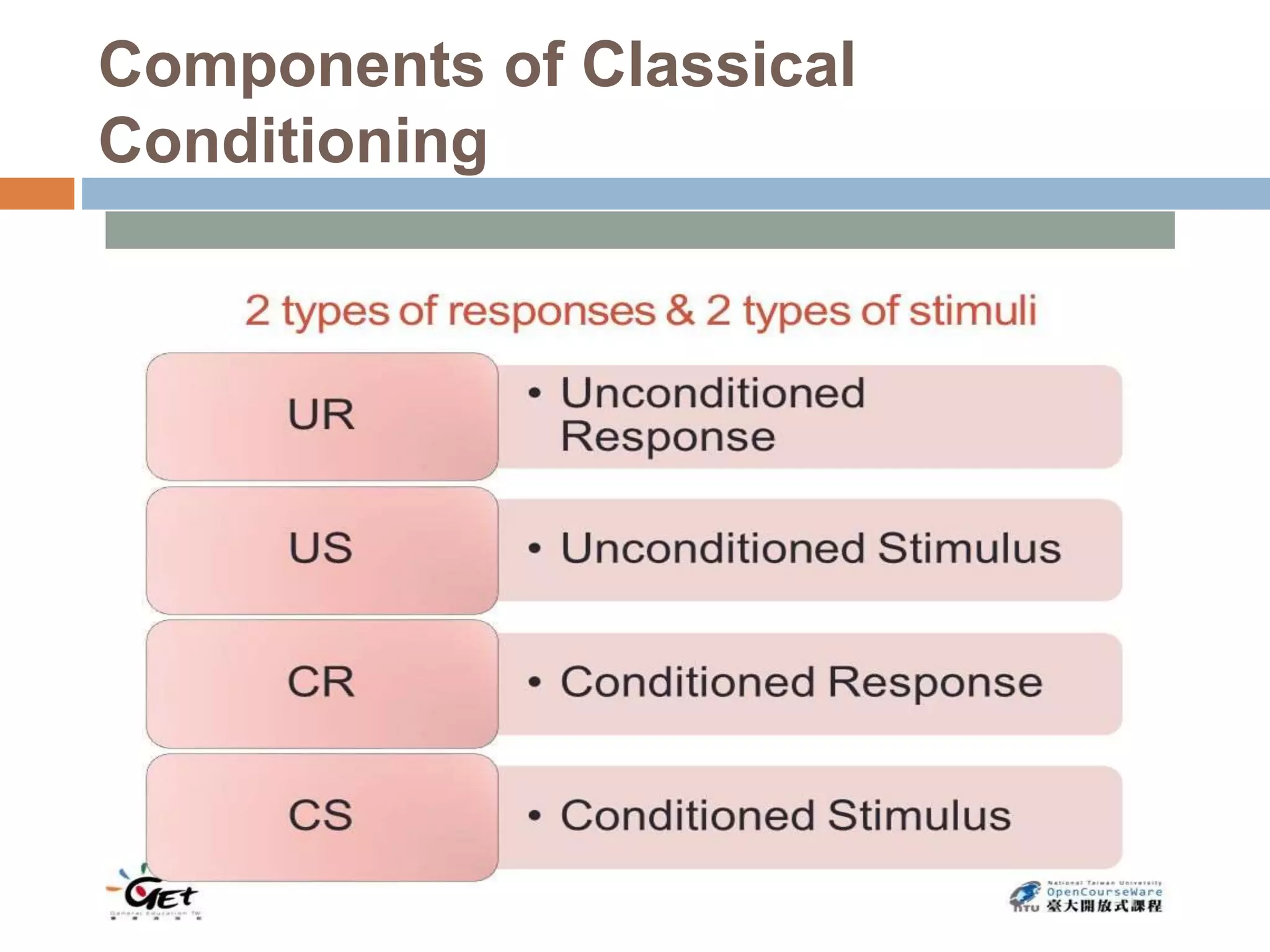
Components of Classical
Conditioning
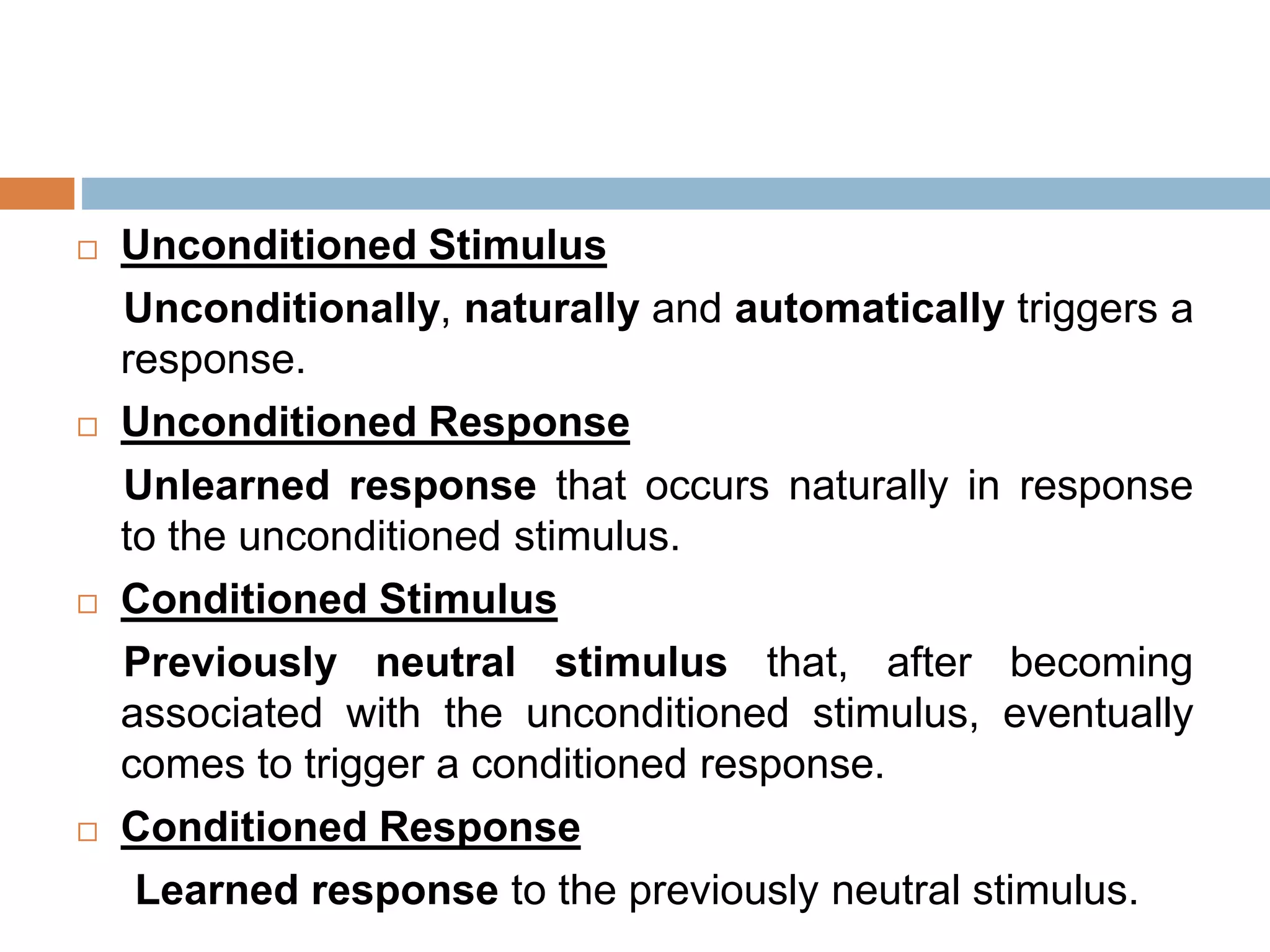
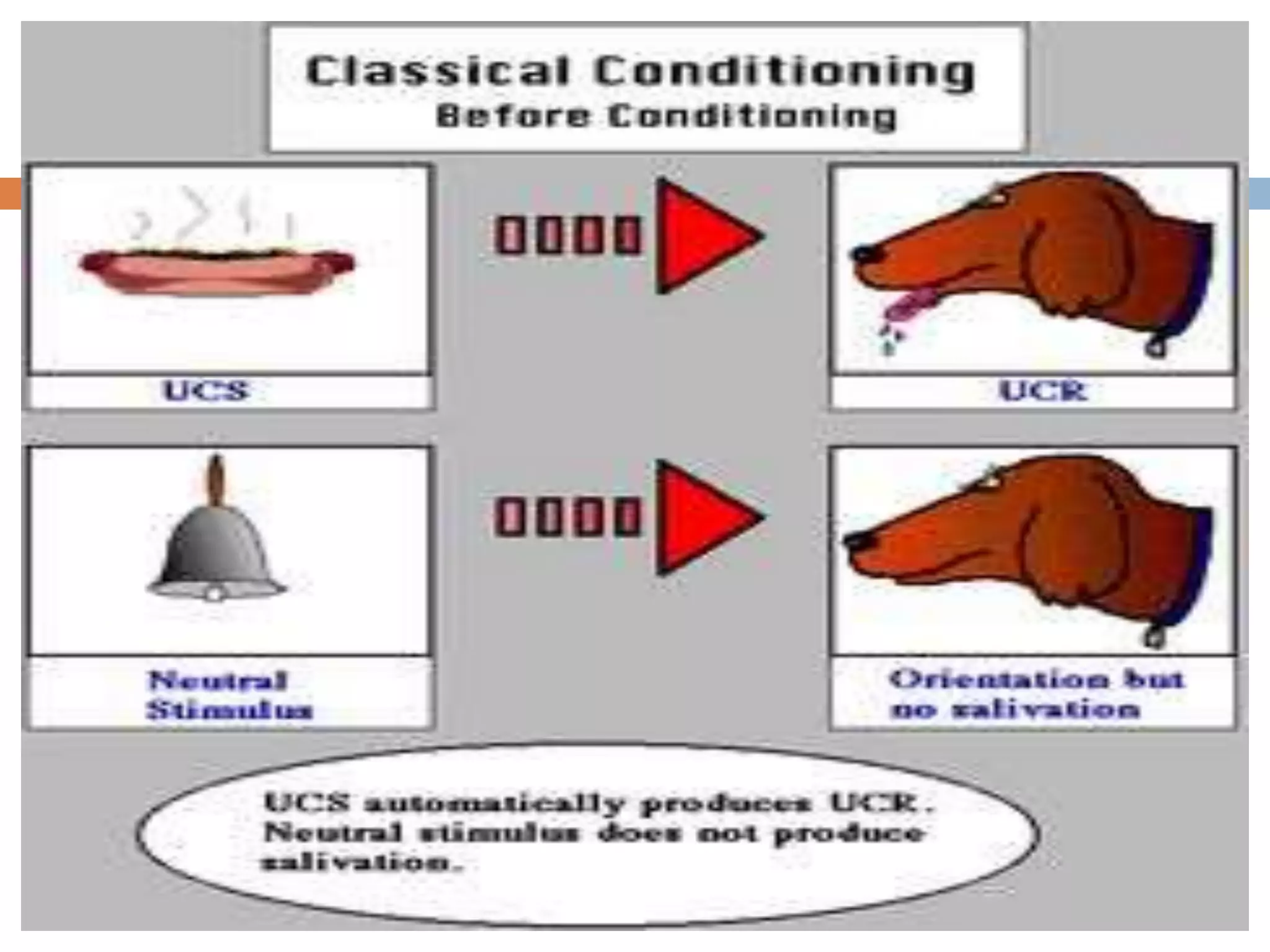
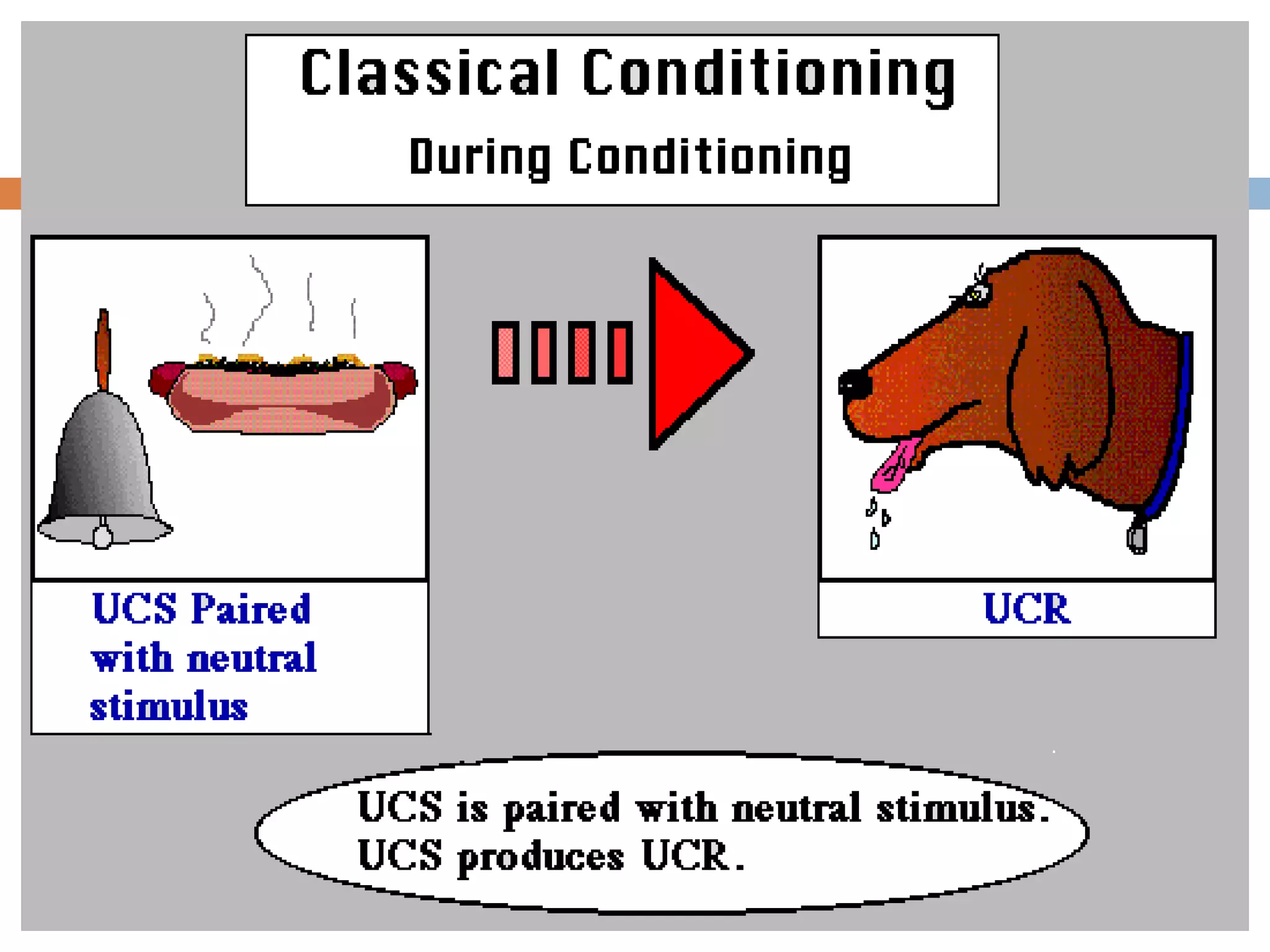
 Unconditioned Stimulus
Unconditionally, naturally and automatically triggers a
response.
 Unconditioned Response
Unlearned response that occurs naturally in response
to the unconditioned stimulus.
 Conditioned Stimulus
Previously neutral stimulus that, after becoming
associated with the unconditioned stimulus, eventually
comes to trigger a conditioned response.
 Conditioned Response
Learned response to the previously neutral stimulus.
Applications of the Theory in
Advertisement
 Repetition
 Stimulus Generalization
 Stimuli Discrimination
Repetition
 Repetition increases the strength of the
association between conditioned stimulus and
an unconditioned stimulus and slows the
process of forgetting.
 Repetition of advertisement by avoiding
advertising wearout making use of
cosmetic variation or substansive variation.
 Avertising wearout: Stage, an advertisement
reaches after being printed or aired so many
times that its effect on the brand’s sale is zero or
negative.
 Cosmetic variation: Changes more peripheral
to the product or advertisement by changing the
appearance of the ad using color, print style,
format or characterizations.
 Substansive variation: Changes from ad to ad
that are central to the product being advertised by
Stimulus Generalization
 Stimulus generalization is the tendency of a
subject to respond to a stimulus or a group of
stimuli similar but not identical to the original
Conditioned Stimulus.
 When a consumer learns certain attributes
about a particular product of a particular brand,
through stimulus generalization the consumer
will associate the products of the same brand
with similar attributes.
Marketing Strategies based on
Stimulus Generalization
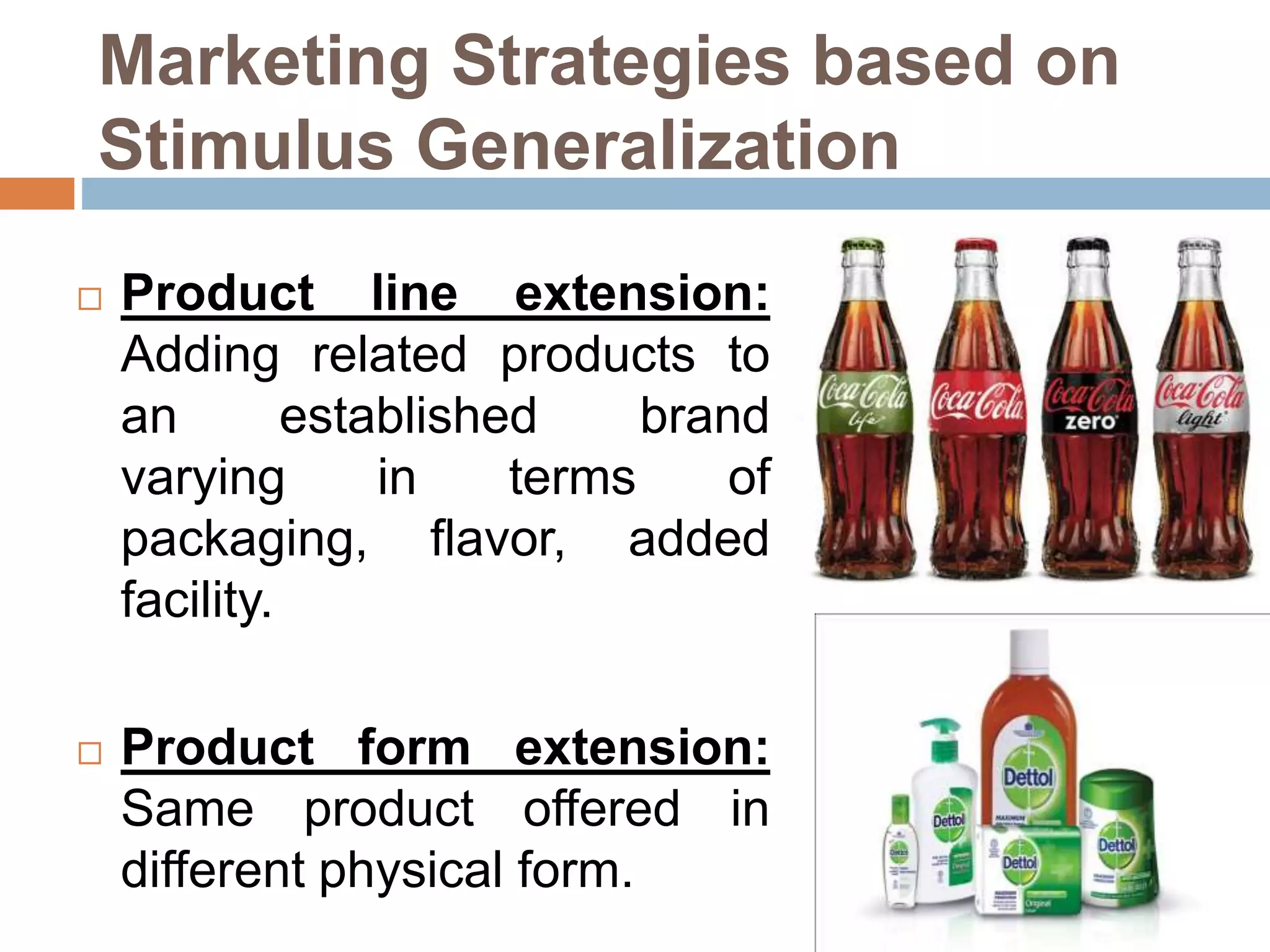
 Product line extension:
Adding related products to
an established brand
varying in terms of
packaging, flavor, added
facility.
 Product form extension:
Same product offered in
different physical form.
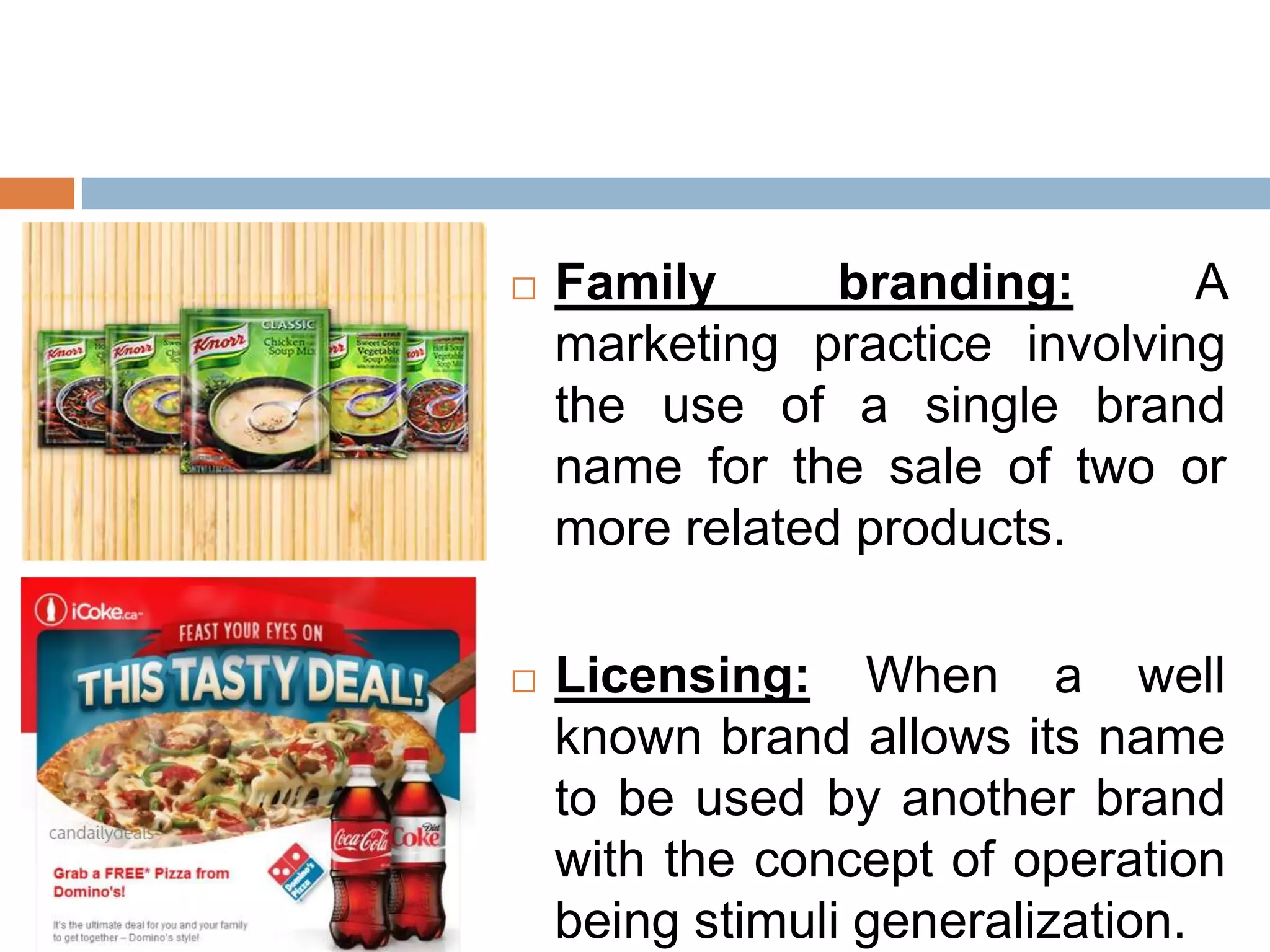
 Family branding: A
marketing practice involving
the use of a single brand
name for the sale of two or
more related products.
 Licensing: When a well
known brand allows its name
to be used by another brand
with the concept of operation
being stimuli generalization.
 Product category extension: Same brand
name used by a company to enter into a
completely unrelated product segment.
Company diversifies into other products, once
the brand name is established.
Ex: Britannia
Stimuli Discrimination
 The ability in the consumer to discriminate one
cue or stimuli from the other and position them
according to his or her needs.
 Stimulus discrimination by consumer is often
rewarded as he/she chooses a particular
product, leaving another similar or substitute
product.
Role of classical conditioning in advertisement

Role of classical conditioning in advertisement

  • 1.
    CLASSICAL CONDITIONING AND ITS ROLE IN ADVERTISEMENT PRESENTEDBY: SUDESHNA MOHAPATRA 8TH SEMESTER, IMBA
  • 2.
    Classical Conditioning  Discoveredby Russian physiologist Ivan Petrovich Pavlov.  A learning process that occurs through associations between an environmental stimulus and naturally occurring stimulus.  In other words, a process in which an organism learns to connect or associate, stimuli.
  • 3.
  • 4.
     Unconditioned Stimulus Unconditionally,naturally and automatically triggers a response.  Unconditioned Response Unlearned response that occurs naturally in response to the unconditioned stimulus.  Conditioned Stimulus Previously neutral stimulus that, after becoming associated with the unconditioned stimulus, eventually comes to trigger a conditioned response.  Conditioned Response Learned response to the previously neutral stimulus.
  • 8.
    Applications of theTheory in Advertisement  Repetition  Stimulus Generalization  Stimuli Discrimination
  • 9.
    Repetition  Repetition increasesthe strength of the association between conditioned stimulus and an unconditioned stimulus and slows the process of forgetting.  Repetition of advertisement by avoiding advertising wearout making use of cosmetic variation or substansive variation.
  • 10.
     Avertising wearout:Stage, an advertisement reaches after being printed or aired so many times that its effect on the brand’s sale is zero or negative.  Cosmetic variation: Changes more peripheral to the product or advertisement by changing the appearance of the ad using color, print style, format or characterizations.  Substansive variation: Changes from ad to ad that are central to the product being advertised by
  • 11.
    Stimulus Generalization  Stimulusgeneralization is the tendency of a subject to respond to a stimulus or a group of stimuli similar but not identical to the original Conditioned Stimulus.  When a consumer learns certain attributes about a particular product of a particular brand, through stimulus generalization the consumer will associate the products of the same brand with similar attributes.
  • 12.
    Marketing Strategies basedon Stimulus Generalization  Product line extension: Adding related products to an established brand varying in terms of packaging, flavor, added facility.  Product form extension: Same product offered in different physical form.
  • 13.
     Family branding:A marketing practice involving the use of a single brand name for the sale of two or more related products.  Licensing: When a well known brand allows its name to be used by another brand with the concept of operation being stimuli generalization.
  • 14.
     Product categoryextension: Same brand name used by a company to enter into a completely unrelated product segment. Company diversifies into other products, once the brand name is established. Ex: Britannia
  • 15.
    Stimuli Discrimination  Theability in the consumer to discriminate one cue or stimuli from the other and position them according to his or her needs.  Stimulus discrimination by consumer is often rewarded as he/she chooses a particular product, leaving another similar or substitute product.