RISK BEHAVIOURS
Dr Kishore Maheshwari


Millions of people in our country are risking their
lives due to lack of knowledge



Let us understand such Risk Behavior, avoid it
and spread the knowledge to others



Risk behaviors are those activities in our day to
day life that can lead us to killer diseases like
AIDS, Hepatitis and Syphilis



Not only their lives but the lives of dependant also
at stake as these diseases spread through close
contact









Unprotected sex.
Sex outside marriage.
Sharing same needle for IV injections
Use of contaminated needles and its
multiple use.
Sharing personal utilities.
Unsafe blood transfusion.
Lack of awareness.
Rationale for Prevention among
Youth


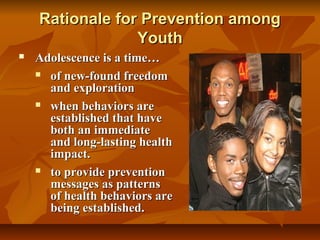
Adolescence is a time…
 of new-found freedom
and exploration
 when behaviors are
established that have
both an immediate
and long-lasting health
impact.
 to provide prevention
messages as patterns
of health behaviors are
being established.
HIV/AIDS


Acquired immunodeficiency syndrome (AIDS) is a
disease of the human immune system caused by the
human immunodeficiency virus (HIV)



25 Lac people are affected by HIV in India (2006)



Found high among people who visit sex workers,
multiple or un-known or un-reliable sex partners,
men having sex with men, drug users and
transgender



There is no cure to AIDS
Today, 30 September 2010
14,000 new infections in the world
In the 1 hour we talk: 600 new infection
All preventable through human actions
Every 6 seconds, someone becomes HIV
positive
Not
transmitted
through
everyday
social contact
Asymptomatic for the initial few years
Medical treatment and psycho-social support is needed

Remember, it is not cure
Viral Hepatitis


Hepatitis means inflammation of the liver

Inflammation is the painful, red swelling that
result when tissues of the body become injured or
infected and can cause organs to not work properly


Hepatitis is a disease that affects the liver. It is
often caused by viruses such as


hepatitis B virus (HBV)
 hepatitis C virus (HCV)

The Liver
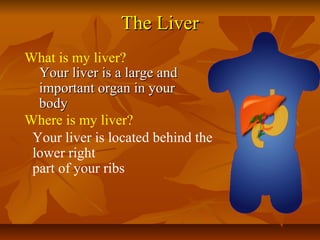
What is my liver?
Your liver is a large and
important organ in your
body
Where is my liver?
Your liver is located behind the
lower right
part of your ribs
The Liver

What does my liver do?

• Stores vitamins, sugars, fats and
other nutrients from the food that
you eat
• Builds chemicals that your body
needs to stay healthy
• Breaks down harmful substances,
like alcohol and other toxic
(poisonous) chemicals
• Removes waste products from
your blood
• Makes sure that your body has
just the right amount of other
chemicals that it needs


Jaundice



Fatigue



Abdominal pain



Loss of appetite



Nausea



Vomiting



Joint pain



Symptoms
Of Hepatitis
HEPATITIS B (HBV)
Kamdo or Pelya (Poisonous)
>Life threatening liver infection caused by the

hepatitis B virus
>8 % of world’s population carries HBV
infection
>About 4 crore HBsAg carriers in India
>1 lac die every year in India
>50 to 100 times more infectious than HIV
>Chronic >Hepatitis B eventually lead to liver
cirrhosis or liver cancer
>No specific treatment for Hepatitis B


Hepatitis B vaccination
can provide effective
protection



First Dose: Today
Second Dose: 1 month
after 1st dose
Third Dose: 6 months
after 1st dose
Booster Dose: 5 years
after 1st dose






HEPATITIS B VACCINATION








PRATHAMA BLOOD CENTER launched
Hepatitis B Vaccination Program”
To protect voluntary blood donors
Free for Prathama’s five times blood
donors
For others it is available just Rs 50
To get maximum protection start early and
get vaccine shots as per suggested schedule
HEPATITIS C (HCV)
>30 crore people are infected world wide & Majority
are not aware of their infection status as they find
No symptoms
>60%–70% of chronically infected persons have
evidence liver cirrhosis, eventually leading to liver
cancer or liver failure
>Symptoms include loss of apatite, weight loss, mild
flue like illness, nausea, jaundice, itchy skin
>Vaccine for Hepatitis C is not available & Only
preventive measures is the solution
SYPHILIS (TPHA)


Sexually transmitted disease caused by bacteria
called Treponema pallidum Systemic disease seek
treatment for signs or symptoms



Infects the genital area, lips, mouth, or anus of both
men and women



At early stage a single, small, painless sore causes
swelling in nearby lymph nodes



If do not treat usually causes non-itchy skin rash on
your hands and feet



Curable when treated in primary stage









Exposed parts should be washed with soap
water as soon as after the act
If not treated, symptoms may disappear but
infection remains in body and progresses
with increasingly serious symptoms
Easily transmit other infections like HIV,
Hep B and HCV
Can also lead to death in rare cases
Syphilis/AIDS cannot be contracted
through toilet seats, daily activities, hot tubs
or sharing utensils or clothings
Transmition Of Risk Behaviours
>body fluids like blood, semen, vaginal fluid,
preseminal fluid, and breast milk
>Sexual contacts (anal, vaginal or oral),
>Unsafe blood / blood product transfusion,
organ transplant
>Contaminated needles
>Mother to child during pregnancy, and breast
feeding
>Syphylis can pass through broken skin on other
parts of the body
we encourages











All our blood donors to follow safe sex
practices
Be faithful to one partner
Use latex condoms
Avoid drug abuse
Always insist for safe and reliable blood
transfusion when in need
Ensure Standard single use needles and
synergies
Avoid sharing personal utilities like razors
& tooth brushes
YOU ARE AT RISK











If you are exposed to blood or body fluids
If your mother have had Hepatitis B, Hepatitis
C or HIV history
If you have had sex with an infected person
If you were tattooed or pierced with
unsterilized tools
If you are accidentally exposed to used needle
If you share razors or toothbrush
If you share drug needles or syringes
If you are on hemodialysis
YOU ARE NOT AT RISK










If you shake hands or hug an infected
person
Eating food or drinking water
If you share toilet seats or towels
If you use latex condom correctly and
consistently
If you maintain steady or reliable sex
partner
If you take blood from reliable blood
centre
Do not donate blood











body organs, other tissues or semen if you are
infected
Avoid multiple sexual partners.
Do not share tooth brushes, razors etc.
Cover cuts and sores on the skin.
Get family members vaccinated for Hepatitis B.
Check the reliability of blood / blood products
before transfusion.
Stay away from drug abuse
Always use disposable syringes & needles
THANK YOU
This slide presentation was brought to
you by the
Stay Safe. Be Safe.
Help Prathama
Blood Centre to
organise

‘Awareness Drive’
at your premise

Risk behaviours ppt

  • 1.
  • 2.
     Millions of peoplein our country are risking their lives due to lack of knowledge  Let us understand such Risk Behavior, avoid it and spread the knowledge to others  Risk behaviors are those activities in our day to day life that can lead us to killer diseases like AIDS, Hepatitis and Syphilis  Not only their lives but the lives of dependant also at stake as these diseases spread through close contact
  • 3.
           Unprotected sex. Sex outsidemarriage. Sharing same needle for IV injections Use of contaminated needles and its multiple use. Sharing personal utilities. Unsafe blood transfusion. Lack of awareness.
  • 5.
    Rationale for Preventionamong Youth  Adolescence is a time…  of new-found freedom and exploration  when behaviors are established that have both an immediate and long-lasting health impact.  to provide prevention messages as patterns of health behaviors are being established.
  • 6.
    HIV/AIDS  Acquired immunodeficiency syndrome(AIDS) is a disease of the human immune system caused by the human immunodeficiency virus (HIV)  25 Lac people are affected by HIV in India (2006)  Found high among people who visit sex workers, multiple or un-known or un-reliable sex partners, men having sex with men, drug users and transgender  There is no cure to AIDS
  • 7.
    Today, 30 September2010 14,000 new infections in the world In the 1 hour we talk: 600 new infection All preventable through human actions Every 6 seconds, someone becomes HIV positive
  • 8.
    Not transmitted through everyday social contact Asymptomatic forthe initial few years Medical treatment and psycho-social support is needed Remember, it is not cure
  • 9.
    Viral Hepatitis  Hepatitis meansinflammation of the liver Inflammation is the painful, red swelling that result when tissues of the body become injured or infected and can cause organs to not work properly  Hepatitis is a disease that affects the liver. It is often caused by viruses such as  hepatitis B virus (HBV)  hepatitis C virus (HCV) 
  • 10.
    The Liver What ismy liver? Your liver is a large and important organ in your body Where is my liver? Your liver is located behind the lower right part of your ribs
  • 11.
    The Liver What doesmy liver do? • Stores vitamins, sugars, fats and other nutrients from the food that you eat • Builds chemicals that your body needs to stay healthy • Breaks down harmful substances, like alcohol and other toxic (poisonous) chemicals • Removes waste products from your blood • Makes sure that your body has just the right amount of other chemicals that it needs
  • 12.
     Jaundice  Fatigue  Abdominal pain  Loss ofappetite  Nausea  Vomiting  Joint pain  Symptoms Of Hepatitis
  • 13.
    HEPATITIS B (HBV) Kamdoor Pelya (Poisonous) >Life threatening liver infection caused by the hepatitis B virus >8 % of world’s population carries HBV infection >About 4 crore HBsAg carriers in India >1 lac die every year in India >50 to 100 times more infectious than HIV >Chronic >Hepatitis B eventually lead to liver cirrhosis or liver cancer >No specific treatment for Hepatitis B
  • 14.
     Hepatitis B vaccination canprovide effective protection  First Dose: Today Second Dose: 1 month after 1st dose Third Dose: 6 months after 1st dose Booster Dose: 5 years after 1st dose   
  • 15.
    HEPATITIS B VACCINATION      PRATHAMABLOOD CENTER launched Hepatitis B Vaccination Program” To protect voluntary blood donors Free for Prathama’s five times blood donors For others it is available just Rs 50 To get maximum protection start early and get vaccine shots as per suggested schedule
  • 16.
    HEPATITIS C (HCV) >30crore people are infected world wide & Majority are not aware of their infection status as they find No symptoms >60%–70% of chronically infected persons have evidence liver cirrhosis, eventually leading to liver cancer or liver failure >Symptoms include loss of apatite, weight loss, mild flue like illness, nausea, jaundice, itchy skin >Vaccine for Hepatitis C is not available & Only preventive measures is the solution
  • 17.
    SYPHILIS (TPHA)  Sexually transmitteddisease caused by bacteria called Treponema pallidum Systemic disease seek treatment for signs or symptoms  Infects the genital area, lips, mouth, or anus of both men and women  At early stage a single, small, painless sore causes swelling in nearby lymph nodes  If do not treat usually causes non-itchy skin rash on your hands and feet  Curable when treated in primary stage
  • 18.
         Exposed parts shouldbe washed with soap water as soon as after the act If not treated, symptoms may disappear but infection remains in body and progresses with increasingly serious symptoms Easily transmit other infections like HIV, Hep B and HCV Can also lead to death in rare cases Syphilis/AIDS cannot be contracted through toilet seats, daily activities, hot tubs or sharing utensils or clothings
  • 19.
    Transmition Of RiskBehaviours >body fluids like blood, semen, vaginal fluid, preseminal fluid, and breast milk >Sexual contacts (anal, vaginal or oral), >Unsafe blood / blood product transfusion, organ transplant >Contaminated needles >Mother to child during pregnancy, and breast feeding >Syphylis can pass through broken skin on other parts of the body
  • 20.
    we encourages        All ourblood donors to follow safe sex practices Be faithful to one partner Use latex condoms Avoid drug abuse Always insist for safe and reliable blood transfusion when in need Ensure Standard single use needles and synergies Avoid sharing personal utilities like razors & tooth brushes
  • 21.
    YOU ARE ATRISK         If you are exposed to blood or body fluids If your mother have had Hepatitis B, Hepatitis C or HIV history If you have had sex with an infected person If you were tattooed or pierced with unsterilized tools If you are accidentally exposed to used needle If you share razors or toothbrush If you share drug needles or syringes If you are on hemodialysis
  • 22.
    YOU ARE NOTAT RISK       If you shake hands or hug an infected person Eating food or drinking water If you share toilet seats or towels If you use latex condom correctly and consistently If you maintain steady or reliable sex partner If you take blood from reliable blood centre
  • 23.
    Do not donateblood         body organs, other tissues or semen if you are infected Avoid multiple sexual partners. Do not share tooth brushes, razors etc. Cover cuts and sores on the skin. Get family members vaccinated for Hepatitis B. Check the reliability of blood / blood products before transfusion. Stay away from drug abuse Always use disposable syringes & needles
  • 24.
    THANK YOU This slidepresentation was brought to you by the Stay Safe. Be Safe. Help Prathama Blood Centre to organise ‘Awareness Drive’ at your premise

Editor's Notes

  • #6 Once healthy behaviors are established they more likely to be sustained throughout adulthood