
Ring opening polymerization
by N-heterocyclic olefins
Hiren, Mohammed 09/12/2016
Paper 1 – N-heterocyclic olefins as organic catalysts for
polymerization: preparation of well defined poly(propylene
oxide)
Paper 2 – Highly polarized alkenes as organocatalysts for the
polymerization of lactones and trimethylene carbonate
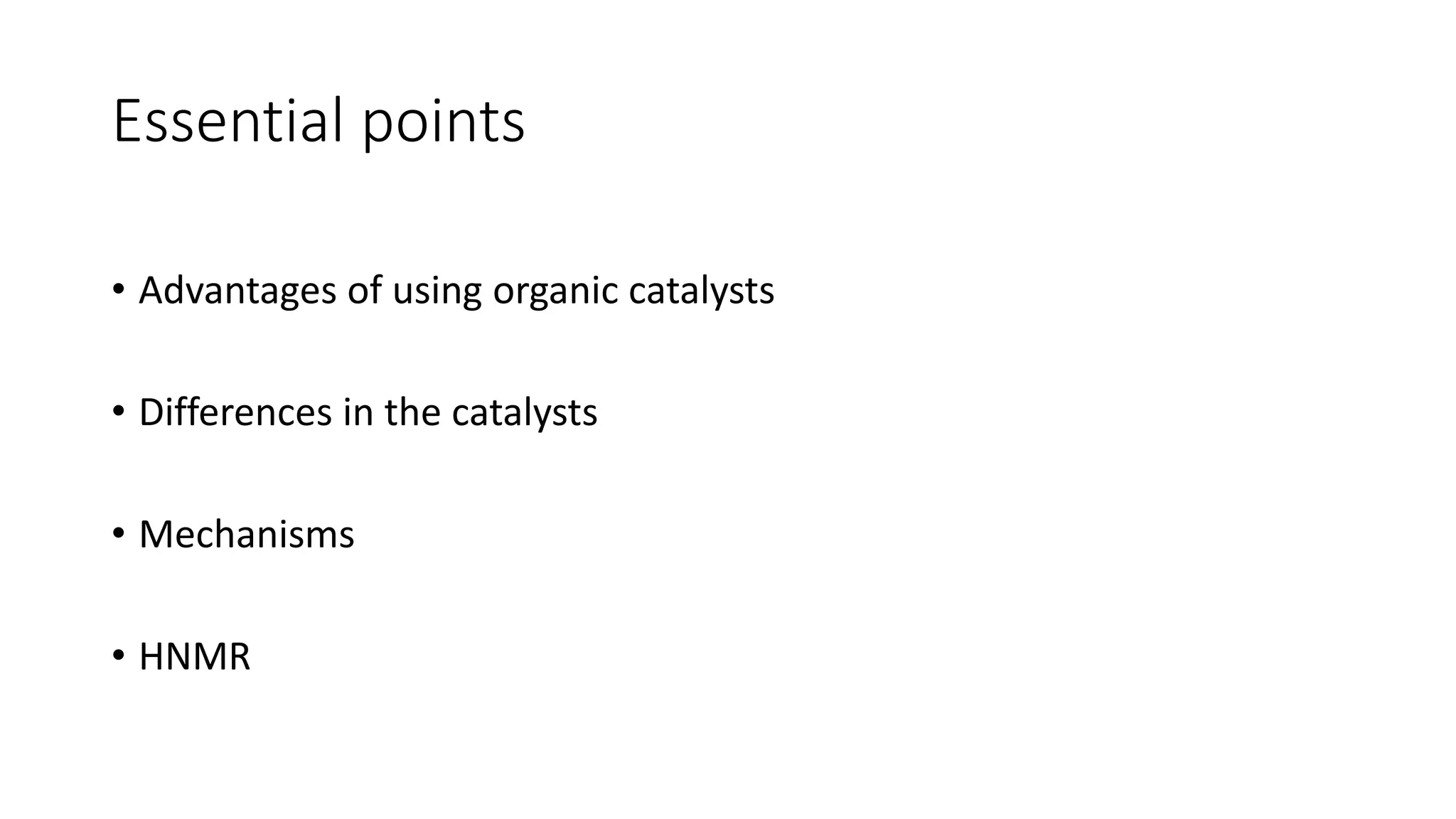
Essential points
• Advantages of using organic catalysts
• Differences in the catalysts
• Mechanisms
• HNMR
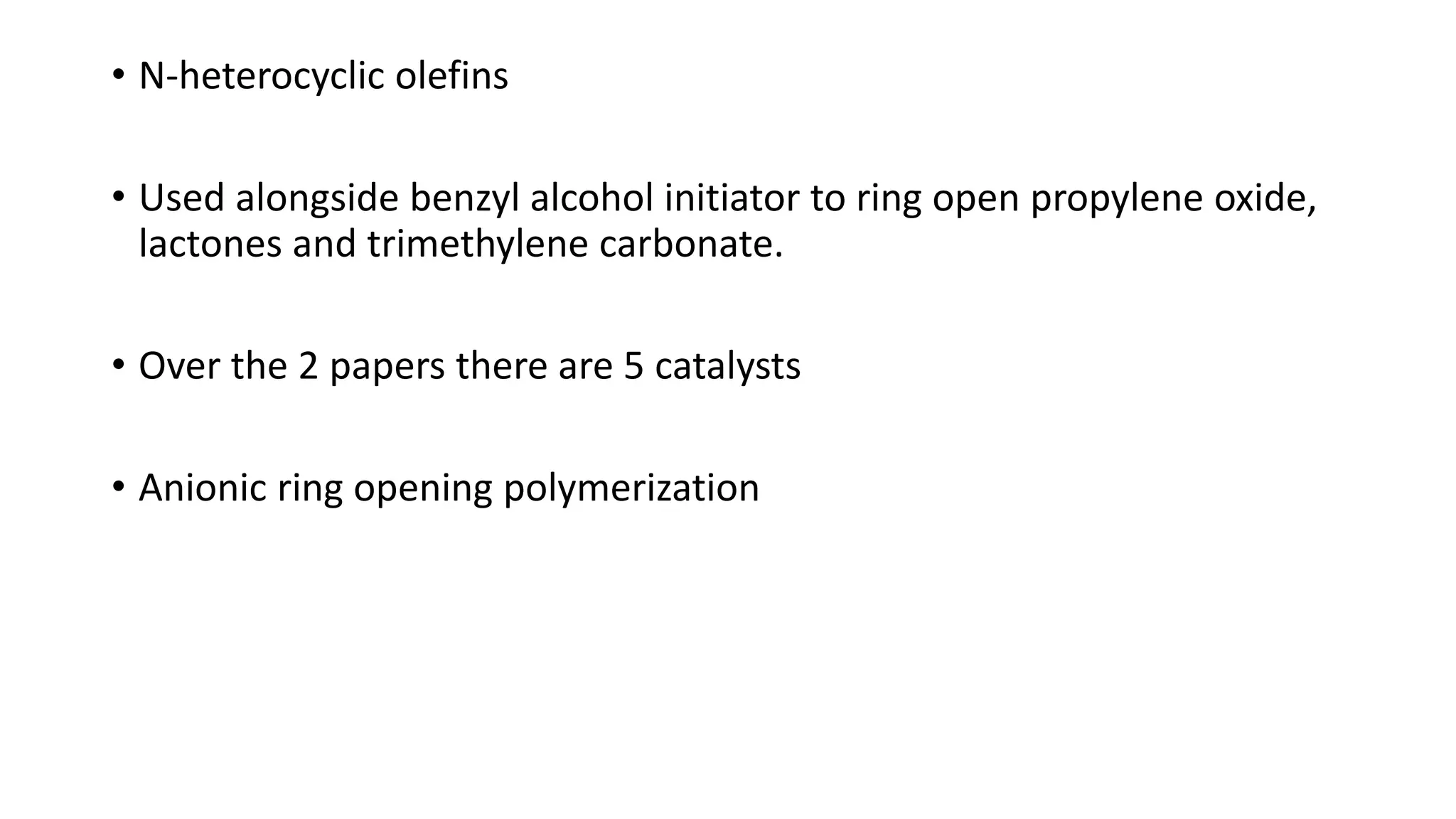
• N-heterocyclic olefins
• Used alongside benzyl alcohol initiator to ring open propylene oxide,
lactones and trimethylene carbonate.
• Over the 2 papers there are 5 catalysts
• Anionic ring opening polymerization
Paper 1
Catalysts 1-4 + monomer
Propylene oxide
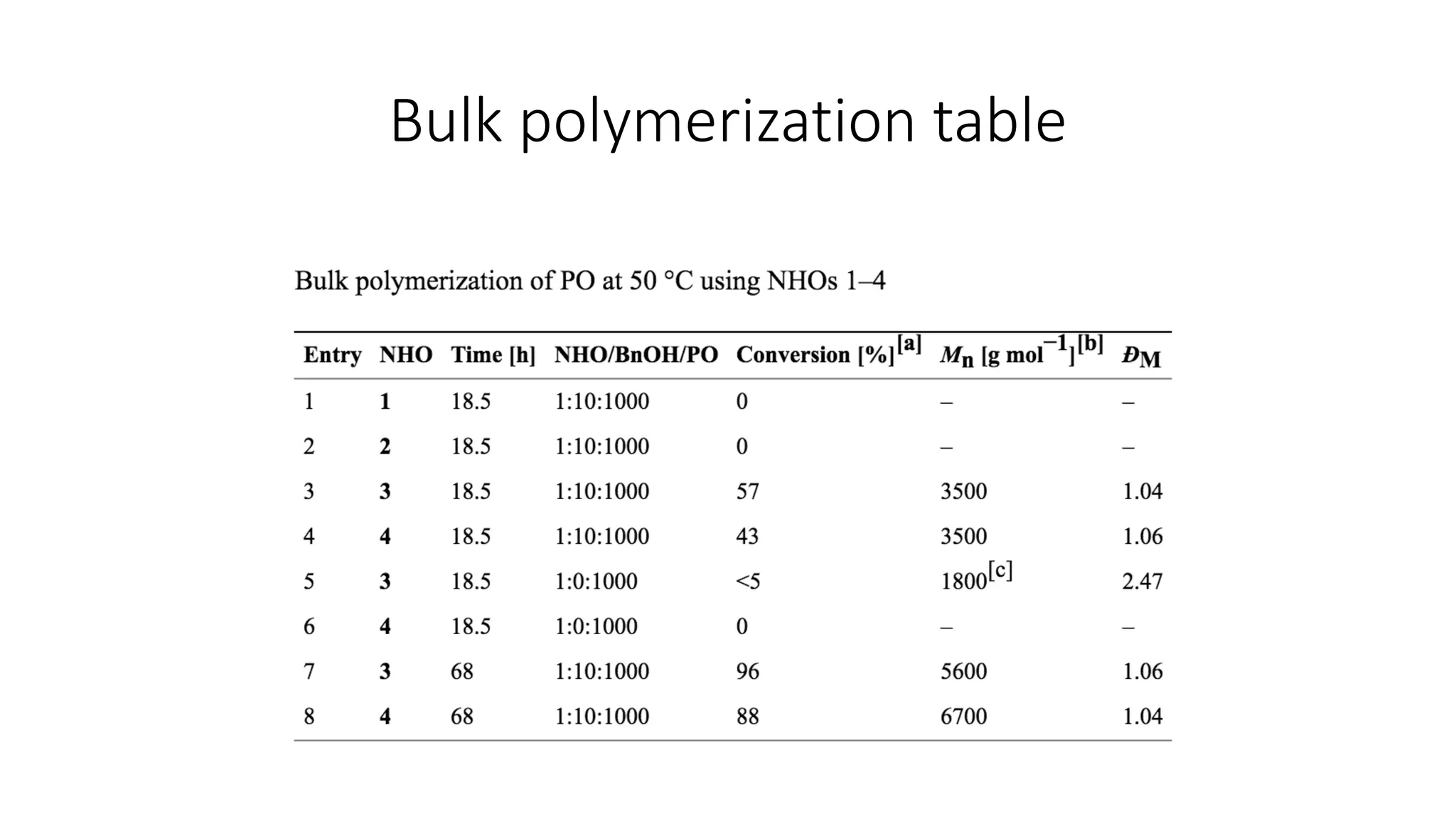
Bulk polymerization table
Catalyst 3
• Less control over the reaction
• Produced a primary carbanion
• Impurities in the polymer produced
• 2 proposed mechanisms
Mechanism
Deprotonation
Nucleophilic attack
CATALYST 4
• More control over the reaction
• It forms a tertiary carbanion which favors the anionic polymerization
over the zwitterionic polymerization.
• Abstracts protons from the initiator better than catalyst 3, as it’s a
stronger base.
Changing the concentration of initiator
HNMR Green = aromatic
Red = methylene unit
BnOH
Advantages of 4 over 3
• Stronger base
• More stable, able to predict the outcome
• Produces less impurities in polymer
Paper 2
N-heterocyclic olefins
-More active than NHCs in ROP.
-Exocyclic carbon partially anionic.
-Ring size + substitutions affect the activity.
-The stability of the carbanion.
-
S. Naumann, A. W. Thomas, and A. P. Dove, ACS Macro Lett. 2016, 5
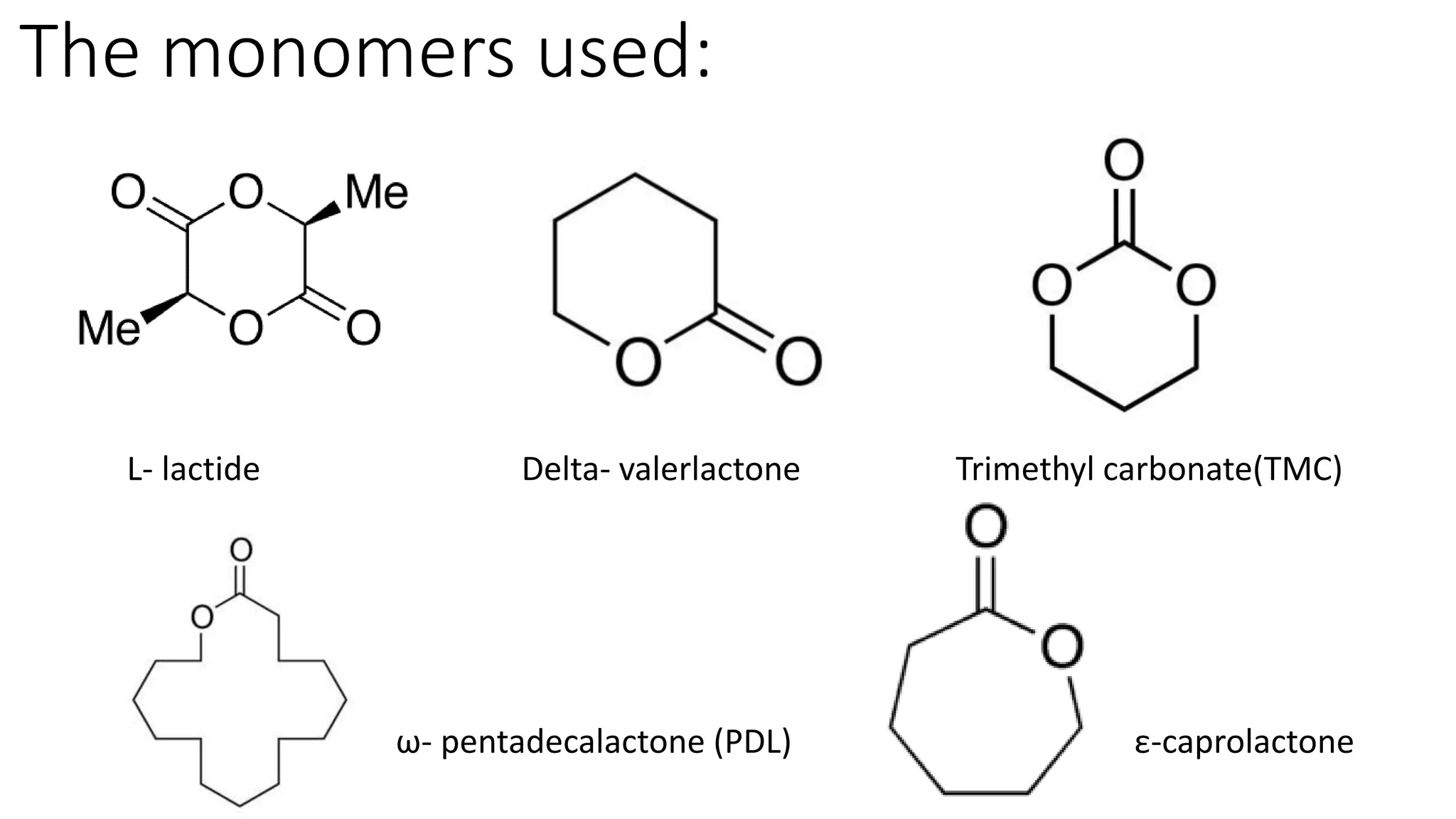
The monomers used:
L- lactide Delta- valerlactone Trimethyl carbonate(TMC)
ω- pentadecalactone (PDL) ε-caprolactone
S. Naumann, A. W. Thomas, and A. P. Dove, ACS Macro Letters. 2016, 5
The deactivation of the
catalyst occurred.
Substitutions avoid the
deprotonation.
S. Naumann, A. W. Thomas, and A. P. Dove, ACS Macro
Letters. 2016, 5
High Conversion (No BnOH).
The ratio increases the activity.
No improvement in control.
Broad Mwt distribution.
 Low catalyst loading.
Advantages of NHO’s
• Less toxic than organometallic compounds.
• They produce a high conversion with and without initiators.
• Easy to edit the structure in order to change the activity.
• ability to operate under alternative polymerization mechanisms.

Ring opening polymerization using N-heterocyclic olefins

  • 1.
    Ring opening polymerization byN-heterocyclic olefins Hiren, Mohammed 09/12/2016
  • 2.
    Paper 1 –N-heterocyclic olefins as organic catalysts for polymerization: preparation of well defined poly(propylene oxide) Paper 2 – Highly polarized alkenes as organocatalysts for the polymerization of lactones and trimethylene carbonate
  • 3.
    Essential points • Advantagesof using organic catalysts • Differences in the catalysts • Mechanisms • HNMR
  • 4.
    • N-heterocyclic olefins •Used alongside benzyl alcohol initiator to ring open propylene oxide, lactones and trimethylene carbonate. • Over the 2 papers there are 5 catalysts • Anionic ring opening polymerization
  • 5.
  • 6.
    Catalysts 1-4 +monomer Propylene oxide
  • 7.
  • 8.
    Catalyst 3 • Lesscontrol over the reaction • Produced a primary carbanion • Impurities in the polymer produced • 2 proposed mechanisms
  • 9.
  • 10.
    CATALYST 4 • Morecontrol over the reaction • It forms a tertiary carbanion which favors the anionic polymerization over the zwitterionic polymerization. • Abstracts protons from the initiator better than catalyst 3, as it’s a stronger base.
  • 12.
  • 13.
    HNMR Green =aromatic Red = methylene unit BnOH
  • 14.
    Advantages of 4over 3 • Stronger base • More stable, able to predict the outcome • Produces less impurities in polymer
  • 15.
  • 16.
    N-heterocyclic olefins -More activethan NHCs in ROP. -Exocyclic carbon partially anionic. -Ring size + substitutions affect the activity. -The stability of the carbanion. - S. Naumann, A. W. Thomas, and A. P. Dove, ACS Macro Lett. 2016, 5
  • 17.
    The monomers used: L-lactide Delta- valerlactone Trimethyl carbonate(TMC) ω- pentadecalactone (PDL) ε-caprolactone
  • 18.
    S. Naumann, A.W. Thomas, and A. P. Dove, ACS Macro Letters. 2016, 5
  • 19.
    S. Naumann, A.W. Thomas, and A. P. Dove, ACS Macro Letters. 2016, 5 The deactivation of the catalyst occurred. Substitutions avoid the deprotonation.
  • 20.
    S. Naumann, A.W. Thomas, and A. P. Dove, ACS Macro Letters. 2016, 5 High Conversion (No BnOH). The ratio increases the activity. No improvement in control. Broad Mwt distribution.  Low catalyst loading.
  • 22.
    Advantages of NHO’s •Less toxic than organometallic compounds. • They produce a high conversion with and without initiators. • Easy to edit the structure in order to change the activity. • ability to operate under alternative polymerization mechanisms.