
RIN case studies in the life sciences: 
findings on data management
Aaron Griffiths
14 October 2009
Forthcoming 
RIN/British Library report: 
Case studies in the life sciences: Understanding 
researchers’ information needs and uses
(November 2009)
Research by ISSTI and DCC (Edinburgh)
RIN case studies aim: 
“To enhance understanding of how researchers 
locate, evaluate, organise, manage, transform 
and communicate information sources as an 
integrated part of the research process, with a 
view to identifying how information‐related 
policy, strategy and practice might be 
improved to meet the needs of researchers.”
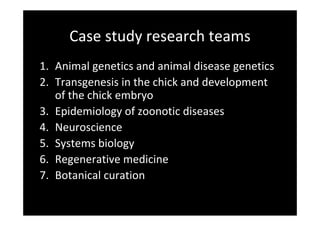
Case study research teams
1. Animal genetics and animal disease genetics
2. Transgenesis in the chick and development 
of the chick embryo
3. Epidemiology of zoonotic diseases
4. Neuroscience
5. Systems biology
6. Regenerative medicine
7. Botanical curation
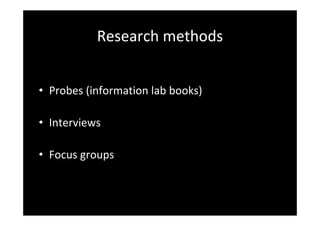
Research methods
• Probes (information lab books)
• Interviews
• Focus groups
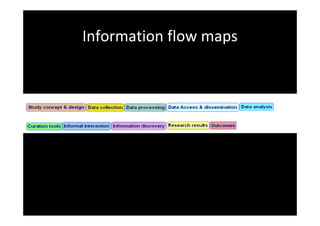
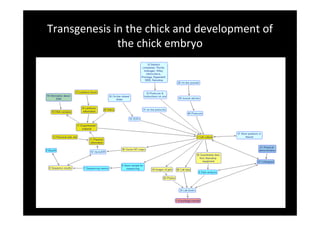
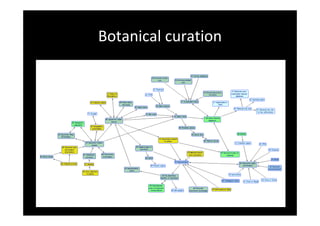
Information flow maps
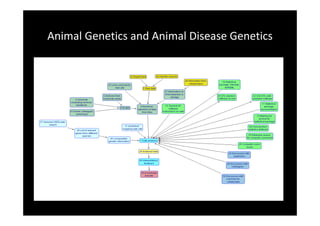
Animal Genetics and Animal Disease Genetics 
Transgenesis in the chick and development of 
the chick embryo
Botanical curation
Getting to grips with managing data
1. There is little evidence of planned data 
management as standard practice
2. Confusion over terms has implications for 
practice
3. Effective curation needs human infrastructure, 
and the more local the better
A culture of sharing – with caveats
• Ethos of sharing in the life sciences
• Different modes of sharing
Constraints on sharing
• Barriers to sharing and re‐using: 
– career imperatives
– protectiveness
– confidentiality
– lack of trust in cyberspace
• Provisos for sharing
Needs for data services & support
• Most groups need more locally‐available 
support on handling data
• Challenges include data volumes and 
standardisation requirements
• Funding concerns over data curation
Conclusions
• Gulfs between practices and e‐science visions
• Diversity of research and information flows
• Policy to be informed by researchers’
practices
Recommendations: funders
• Engage further with researchers to identify constraints 
and develop more experimental policies to build upon 
existing information sharing
• Define more closely which data and information they 
expect to be shared, to what ends and under what 
circumstances
• Monitor the development of hybrid information 
support roles
• Assess national requirements for skills in research data 
curation and support
Recommendations: HEIs
• Attend to features of current professional 
formation processes ‐ including training and 
career development, and professional 
recognition and reward structures ‐ which 
currently inhibit the effective use and 
exchange of information
Recommendations: library and 
information service providers
• Work towards better portals and tools to 
identify information resources
• Work towards developing easy‐to‐use, tool‐
based support for researchers to undertake 
their own data curation
• More active engagement between data 
producers and curators
aaron.griffiths@rin.ac.uk

RIN case studies in the life sciences: findings on data management