IS THERE A LINK BETWEEN THE DIET OF PREGNANT WOMEN AND THE RISK OF DEVELOPING PREECLAMPSIA?
AIMS No specific aetiology has been discovered for preeclampsia.  This study aims to identify whether there is a link between overall diet and the risk of developing preeclampsia
WHAT IS PREECLAMPSIA? Affects between 3% and 10% of pregnant women hypertension (≥ 140/90 mmHg) with proteinuria  (≥ 1+ on urine dipstick) after 20 weeks of gestation
WHAT ARE THE DANGERS? Perinatal Mortality Intrauterine growth restriction of the fetus  Preterm labour In the developed world there is a fivefold increase of perinatal mortality of infants born to preeclamptic mothers Maternal Death One of the leading causes  Responsible for 10-15% of maternal deaths in the developed world Responsible for 20-80% of maternal deaths in the developing world
RISKS OF PREECLAMPSIA There are defined independent risks for preeclampsia  hypertension obesity  diabetes  DIET?
METHODOLOGY This will be a descriptive quantitative study to identify whether there is a link between the diet and nutritional supplements of pregnant women (prior to and throughout their pregnancy) and the occurrence of preeclampsia.
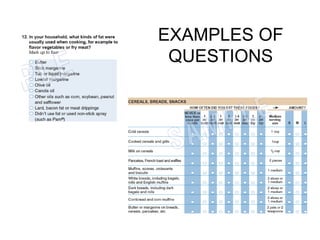
METHODS Sample  –  1,000 women   from a variety of maternity settings Inclusion criteria  –  women that fit the definition of pre-eclampsia Exclusion criteria  –  women who have pre-determined risk factors to pre-eclampsia Instrument  –  food frequency questionnaire Data collection  –  education by research assistants 4 weeks after birth
EXAMPLES OF QUESTIONS
DATA ANALYSIS Questionnaire to be coded to enable data analysis Interpretation – to include frequency distribution Multivariate pattern analysis Cluster analysis
EXPECTED OUTCOMES This study may bring to light food groups that are risk factors for preeclampsia Subsequent risk could be reduced by implementing valid and researched nutritional advice based on this research This in turn could reduce neonatal and maternal mortality rates
References Bodnar, L.M., Tang, G., Ness, R.B., Harger, G., & Roberts, J.M. (2006, June). Periconceptional multivitamin use reduces the risk of preeclampsia.  Epidemiology, 164 (5), 470-477. Retrieved March 23 2010 from Midirs database.  Fred Hutchinson Cancer Research Centre. (2010).  Food frequency questionnaires . Retrieved from  http://www.fhcrc.org/science/shared_resources/nutrition/ffq/gsel.pdf Haugen, M., Brantsœter, A.L., Trogstad, L., Alexander, J., Roth, C., Magnus, P., & Meltzer, H.M. (2009, September). Vitamin D supplementation and reduced risk of preeclampsia in nulliparous women.  Epidemiology, 20 (5), 720-726. Retrieved March 23 2010 from Midirs database. Hu, F.B (2002) Dietary pattern analysis: a new direction in nutritional epidemiology.  Current Opinion in Lipidology 13 (1) 3-9 Israel, G.D. (2009)  Determining sample size.  Retrieved from  http://edis.ifas.ufl.edu/pd006 Kourlaba, G., Panagiotakos, D.B., & Stavrinos, V. (2008). The diagnostic accuracy of composite indices is associated with the number of partitions of their components: a simulation study.  Advances and Applications in Statistics 8 : 89–99. Meads, C.A., Cnossen, J.S., Meher, S., Juarez-Garcia, A., ter Riet, G., Duley, L, Roberts, T.E., Mol, B.W., Van der Post, J.A., Leeflang, M.M, Barton, P.M., Hyder, C.J., Gupta, J.K, & Khan, K.S. (2008). Methods of prediction and prevention of pre-eclampsia: systematic reviews of accuracy and effectiveness literature with economic modeling.  Health technology assessment 12 (6) 1-286. Retrieved from http://www.hta.ac.uk Peterson, H. (2010).  Genetic studies of preeclampsia.  Stockholm: Karolinksa Institutet, Department of Biosciences and Nutrition. Roberts, J.M., Balk, J.L., Bodnar, L.M., Belizán, J.M., Bergel, E., & Martinez, A. (2003, May). Nutrient involvement in preeclampsia.  The Journal of Nutrition, 133,  1684S-1692S. Retrieved March 23 2010 from Midirs database. Zhang, C., Williams, M., King, I.B., Dashow, E.E., Sorensen, T.K., Frederick, I.O., & Luthy, D. (2002, January). Vitamin C and the risk of preeclampsia – results from dietary questionnaire and plasma assay.  Epidemiology, 13 (4), 409-416. Retrieved March 22 2010 from Midirs database.

Preeclampsia research presentation

  • 1.
    IS THERE ALINK BETWEEN THE DIET OF PREGNANT WOMEN AND THE RISK OF DEVELOPING PREECLAMPSIA?
  • 2.
    AIMS No specificaetiology has been discovered for preeclampsia. This study aims to identify whether there is a link between overall diet and the risk of developing preeclampsia
  • 3.
    WHAT IS PREECLAMPSIA?Affects between 3% and 10% of pregnant women hypertension (≥ 140/90 mmHg) with proteinuria (≥ 1+ on urine dipstick) after 20 weeks of gestation
  • 4.
    WHAT ARE THEDANGERS? Perinatal Mortality Intrauterine growth restriction of the fetus Preterm labour In the developed world there is a fivefold increase of perinatal mortality of infants born to preeclamptic mothers Maternal Death One of the leading causes Responsible for 10-15% of maternal deaths in the developed world Responsible for 20-80% of maternal deaths in the developing world
  • 5.
    RISKS OF PREECLAMPSIAThere are defined independent risks for preeclampsia hypertension obesity diabetes DIET?
  • 6.
    METHODOLOGY This willbe a descriptive quantitative study to identify whether there is a link between the diet and nutritional supplements of pregnant women (prior to and throughout their pregnancy) and the occurrence of preeclampsia.
  • 7.
    METHODS Sample – 1,000 women from a variety of maternity settings Inclusion criteria – women that fit the definition of pre-eclampsia Exclusion criteria – women who have pre-determined risk factors to pre-eclampsia Instrument – food frequency questionnaire Data collection – education by research assistants 4 weeks after birth
  • 8.
  • 9.
    DATA ANALYSIS Questionnaireto be coded to enable data analysis Interpretation – to include frequency distribution Multivariate pattern analysis Cluster analysis
  • 10.
    EXPECTED OUTCOMES Thisstudy may bring to light food groups that are risk factors for preeclampsia Subsequent risk could be reduced by implementing valid and researched nutritional advice based on this research This in turn could reduce neonatal and maternal mortality rates
  • 11.
    References Bodnar, L.M.,Tang, G., Ness, R.B., Harger, G., & Roberts, J.M. (2006, June). Periconceptional multivitamin use reduces the risk of preeclampsia. Epidemiology, 164 (5), 470-477. Retrieved March 23 2010 from Midirs database. Fred Hutchinson Cancer Research Centre. (2010). Food frequency questionnaires . Retrieved from http://www.fhcrc.org/science/shared_resources/nutrition/ffq/gsel.pdf Haugen, M., Brantsœter, A.L., Trogstad, L., Alexander, J., Roth, C., Magnus, P., & Meltzer, H.M. (2009, September). Vitamin D supplementation and reduced risk of preeclampsia in nulliparous women. Epidemiology, 20 (5), 720-726. Retrieved March 23 2010 from Midirs database. Hu, F.B (2002) Dietary pattern analysis: a new direction in nutritional epidemiology. Current Opinion in Lipidology 13 (1) 3-9 Israel, G.D. (2009) Determining sample size. Retrieved from http://edis.ifas.ufl.edu/pd006 Kourlaba, G., Panagiotakos, D.B., & Stavrinos, V. (2008). The diagnostic accuracy of composite indices is associated with the number of partitions of their components: a simulation study. Advances and Applications in Statistics 8 : 89–99. Meads, C.A., Cnossen, J.S., Meher, S., Juarez-Garcia, A., ter Riet, G., Duley, L, Roberts, T.E., Mol, B.W., Van der Post, J.A., Leeflang, M.M, Barton, P.M., Hyder, C.J., Gupta, J.K, & Khan, K.S. (2008). Methods of prediction and prevention of pre-eclampsia: systematic reviews of accuracy and effectiveness literature with economic modeling. Health technology assessment 12 (6) 1-286. Retrieved from http://www.hta.ac.uk Peterson, H. (2010). Genetic studies of preeclampsia. Stockholm: Karolinksa Institutet, Department of Biosciences and Nutrition. Roberts, J.M., Balk, J.L., Bodnar, L.M., Belizán, J.M., Bergel, E., & Martinez, A. (2003, May). Nutrient involvement in preeclampsia. The Journal of Nutrition, 133, 1684S-1692S. Retrieved March 23 2010 from Midirs database. Zhang, C., Williams, M., King, I.B., Dashow, E.E., Sorensen, T.K., Frederick, I.O., & Luthy, D. (2002, January). Vitamin C and the risk of preeclampsia – results from dietary questionnaire and plasma assay. Epidemiology, 13 (4), 409-416. Retrieved March 22 2010 from Midirs database.