RICKETS
CAUSES OF RICKETS
 VITAMIN D DISORDERS
 CALCIUM DEFICIENCY
 PHOSPHORUS DEFICIENCY
 RENAL LOSSES
VITAMIN D DISORDERS
 Nutritional vitamin D deficiency
 Congenital vitamin D deficiency
 Secondary vitamin D deficiency
 Malabsorption
 Increased degradation
 Decreased liver 25-hydroxylase
 Vitamin D–dependent rickets type 1
 Vitamin D–dependent rickets type 2
 Chronic renal failure
CALCIUM DEFICIENCY
 Low intake
 Diet
 Premature infants (rickets of prematurity)
 Malabsorption
 Primary disease
 Dietary inhibitors of calcium absorption
PHOSPHORUS DEFICIENCY
 Inadequate intake
 Premature infants (rickets of prematurity)
 Aluminum-containing antacids
RENAL LOSSES
 X-linked hypophosphatemic rickets*
 Autosomal dominant hypophosphatemic rickets*
 Autosomal recessive hypophosphatemic rickets*
 Hereditary hypophosphatemic rickets with hypercalciuria
 Overproduction of phosphatonin
 Tumor-induced rickets*
 McCune-Albright syndrome*
 Epidermal nevus syndrome*
 Neurofibromatosis*
 Fanconi syndrome
 Dent disease
 Distal renal tubular acidosis
CLINICAL FEATURES OF RICKETS
 GENERAL
 Failure to thrive
 Listlessness
Protruding abdomen
Muscle weakness (especially proximal)
Fractures
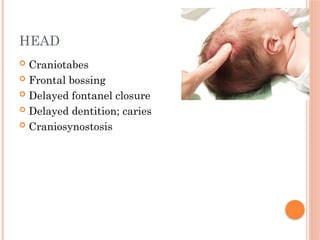
HEAD
 Craniotabes
 Frontal bossing
 Delayed fontanel closure
 Delayed dentition; caries
 Craniosynostosis
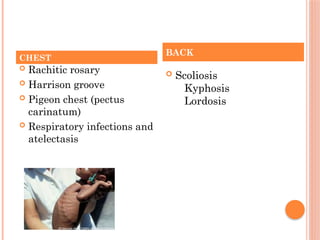
 Rachitic rosary
 Harrison groove
 Pigeon chest (pectus
carinatum)
 Respiratory infections and
atelectasis
 Scoliosis
Kyphosis
Lordosis
CHEST
BACK
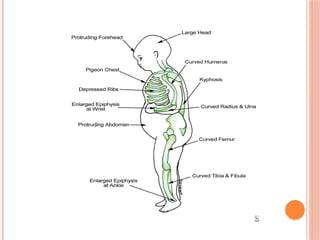
EXTREMITIES
 Enlargement of wrists and ankles
 Valgus or varus deformities
 Windswept deformity (combination of valgus
deformity of 1 leg with varus deformity of the
other leg)
 Anterior bowing of the tibia and femur
 Coxa vara
 Leg pain
HYPOCALCEMIC SYMPTOMS
 Tetany
Seizures
Stridor due to laryngeal spasm
VITAMIN D DEFICIENCY
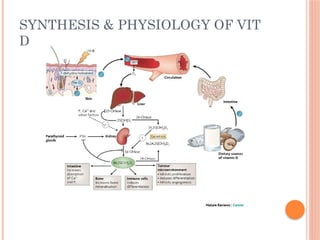
SYNTHESIS & PHYSIOLOGY OF VIT
D
NUTRITIONAL VITAMIN D
DEFICIENCY
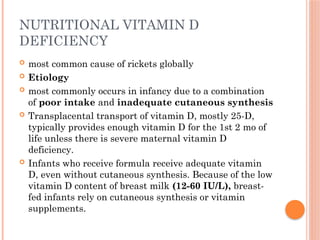
 most common cause of rickets globally
 Etiology
 most commonly occurs in infancy due to a combination
of poor intake and inadequate cutaneous synthesis
 Transplacental transport of vitamin D, mostly 25-D,
typically provides enough vitamin D for the 1st 2 mo of
life unless there is severe maternal vitamin D
deficiency.
 Infants who receive formula receive adequate vitamin
D, even without cutaneous synthesis. Because of the low
vitamin D content of breast milk (12-60 IU/L), breast-
fed infants rely on cutaneous synthesis or vitamin
supplements.
 Cutaneous synthesis can be limited due to the
 ineffectiveness of the winter sun in stimulating
vitamin D synthesis;
 avoidance of sunlight due to concerns about cancer,
neighborhood safety, or cultural practices
 decreased cutaneous synthesis because of increased
skin pigmentation.
TREATMENT
 vitamin D and adequate nutritional intake of calcium
and phosphorus.
 2 strategies for administration of vitamin D.
 1. Stoss therapy, 300,000-600,000 IU of vitamin D are
administered orally or intramuscularly as 2-4 doses over 1
day. Because the doses are observed, stoss therapy is ideal
in situations where adherence to therapy is questionable.
 2. The alternative is daily, high-dose vitamin D, with doses
ranging from 2,000-5,000 IU/day over 4-6 wk.
 Either strategy should be followed by daily vitamin D
intake of 400 IU/day if <1 yr old or 600 IU/day if >1 yr,
typically given as a multivitamin.
 It is important to ensure that children receive adequate
dietary calcium and phosphorus; - milk, formula, and other
dairy products.
TREATMENT CONTD…
 Symptomatic hypocalcemia - need intravenous
calcium acutely, followed by oral calcium
supplements, which typically can be tapered over 2-
6 wk in children who receive adequate dietary
calcium.
 IV bolus (20 mg/kg of calcium chloride or 100 mg/kg
of calcium gluconate). Some patients require a
continuous intravenous calcium drip, titrated to
maintain the desired serum calcium level.
 Transient use of intravenous or oral 1,25-D
(calcitriol) is often helpful in reversing
hypocalcemia in the acute phase by providing
active vitamin D .
 Calcitriol doses are typically 0.05 µg/kg/day.
PROGNOSIS
 Excellent response
 Radiologic healing occurring within a few months.
Laboratory test results should also normalize rapidly.
Many of the bone malformations improve dramatically,
but children with severe disease can have permanent
deformities and short stature.
 Rarely, patients benefit from orthopedic intervention for
leg deformities, although this is generally not done until
the metabolic bone disease has healed, there is clear
evidence that the deformity will not self-resolve, and the
deformity is causing functional problems.
Prevention
 universal administration of a daily multivitamin
containing 400 IU of vitamin D to infants who are breast-
fed. Older children should receive 600 IU/day.
CONGENITAL VITAMIN D
DEFICIENCY
 Rare and occurs when there is severe maternal
vitamin D deficiency during pregnancy
 Maternal risk factors
 poor dietary intake of vitamin D,
 lack of adequate sun exposure,
 closely spaced pregnancies.
CONGENITAL VITAMIN D
DEFICIENCY
 These newborns can have symptomatic
hypocalcemia, intrauterine growth retardation,
and decreased bone ossification, along with
classic rachitic changes. More subtle maternal
vitamin D deficiency can have an adverse effect
on neonatal bone density and birthweight, cause
a defect in dental enamel, and predispose infants
to neonatal hypocalcemic tetany.
 Treatment - vitamin D supplementation and
adequate intake of calcium and phosphorus.
 Prevention - Use of prenatal vitamins
containing vitamin D
SECONDARY VITAMIN D
DEFICIENCY
 Etiology
 Inadequate absorption
 Cholestatic liver disease, defects in bile acid
metabolism, cystic fibrosis and other causes of
pancreatic dysfunction,
 celiac disease, and Crohn disease.
 intestinal lymphangiectasia and after intestinal
resection
 Decreased hydroxylation in the liver
 Increased degradation
 phenobarbital , phenytoin
 isoniazid , rifampin
TREATMENT
 vitamin D deficiency due to malabsorption requires high
doses of vitamin D. Because of its better absorption, 25-D
(25-50 µg/day or 5-7 µg/kg/day) is superior to vitamin D3.
The dose is adjusted based on monitoring of serum levels
of 25-D. Alternatively, patients may be treated with 1,25-
D, which also is better absorbed in the presence of fat
malabsorption, or with parenteral vitamin D.
 Children with rickets due to increased degradation of
vitamin D by the CYP system require the same acute
therapy as indicated for nutritional deficiency followed by
long-term administration of high doses of vitamin D (e.g.,
1,000 IU/day), with dosing titrated based on serum levels
of 25-D. Some patients require as much as 4,000 IU/day.
VITAMIN D–DEPENDENT RICKETS,
TYPE 1
 autosomal recessive disorder,
 have mutations in the gene encoding renal 1α-
hydroxylase, preventing conversion of 25-D into 1,25-
D.
 normally present during the 1st 2 yr of life
 can have any of the classic features of rickets including
symptomatic hypocalcemia.
 have normal levels of 25-D but low levels of 1,25-D,
high PTH and low serum phosphorus levels
 renal tubular dysfunction can cause a metabolic
acidosis and generalized aminoaciduria.
TREATMENT VDDR TYPE-1
 long-term treatment with 1,25-D (calcitriol).
Initial doses are 0.25-2 µg/day, and lower doses
are used once the rickets has healed. Especially
during initial therapy, it is important to ensure
adequate intake of calcium.
 The dose of calcitriol is adjusted to maintain a
low-normal serum calcium level, a normal
serum phosphorus level, and a high-normal
serum PTH level. This avoids excessive dosing
of calcitriol, which can cause hypercalciuria and
nephrocalcinosis. Hence, patient monitoring
includes periodic assessment of urinary calcium
excretion, with a target of <4 mg/kg/day.
VITAMIN D–DEPENDENT RICKETS,
TYPE 2
 autosomal recessive disorder
 mutations in the gene encoding the vitamin D
receptor, preventing a normal physiologic
response to 1,25-D.
 Levels of 1,25-D are extremely elevated
 Most patients present during infancy,
 Less-severe disease is associated with a partially
functional vitamin D receptor.
 Approximately 50-70% of children have alopecia,
which tends to be associated with a more severe
form of the disease.
 Epidermal cysts are a less common manifestation
VITAMIN D–DEPENDENT RICKETS,
TYPE 2 TREATMENT
 Some patients respond to extremely high doses of
vitamin D2, 25-D or 1,25-D, especially patients
without alopecia. This response is due to a partially
functional vitamin D receptor. All patients with this
disorder should be given a 3-6 mo trial of high-dose
vitamin D and oral calcium. The initial dose of 1,25-
D should be 2 µg/day, but some patients require doses
as high as 50-60 µg/day.
 Calcium doses are 1,000-3,000 mg/day. Patients who
do not respond to high-dose vitamin D may be treated
with long-term intravenous calcium, with possible
transition to very high dose oral calcium supplements.
Treatment of patients who do not respond to vitamin D
is difficult.
CHRONIC RENAL FAILURE
 decreased activity of 1α-hydroxylase in the
kidney, leading to diminished production of 1,25-
D.
 In chronic renal failure, unlike the other causes
of vitamin D deficiency, patients have
hyperphosphatemia as a result of decreased
renal excretion
CHRONIC RENAL FAILURE
TREATMENT
 Therapy requires the use of a form of vitamin D
that can act without 1-hydroxylation by the
kidney (calcitriol), which both permits adequate
absorption of calcium and directly suppresses the
parathyroid gland.
 normalization of the serum phosphorus level via
a combination of dietary phosphorus
restriction and the use of oral phosphate
binders
CALCIUM DEFICIENCY
 secondary to inadequate dietary calcium typically <200 mg/day
 rickets develops after children have been weaned from breast milk or
formula and is more likely to occur in children who are weaned early
 little intake of dairy products or other sources of calcium. In addition,
because of reliance on grains and green leafy vegetables, the diet may
be high in phytate, oxalate, and phosphate, which decrease
absorption of dietary calcium.
 In industrialized countries, rickets due to calcium deficiency can
occur in children who consume an unconventional diet.
 Examples include children with milk allergy who have low dietary calcium
and children who transition from formula or breast milk to juice, soda, or a
calcium-poor soy drink, without an alternative source of dietary calcium.
 children who receive intravenous nutrition without adequate calcium.
 Malabsorption of calcium can occur in celiac disease, intestinal
abetalipoproteinemia, and after small bowel resection. There may be
concurrent malabsorption of vitamin D.
CALCIUM DEFICIENCY
 Clinical manifestations
 have the classic signs and symptoms of rickets
 Presentation can occur during infancy or early
childhood, although some cases are diagnosed in
teenagers.
 Because calcium deficiency occurs after the cessation
of breast-feeding, it tends to occur later than the
nutritional vitamin D deficiency that is associated
with breast-feeding.
DIAGNOSIS
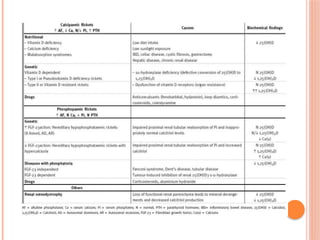
 Laboratory findings include increased levels of
alkaline phosphatase, PTH, and 1,25-D (see
Table 48-4). Calcium levels may be normal or
low, although symptomatic hypocalcemia is
uncommon. There is decreased urinary excretion
of calcium, and serum phosphorus levels may be
low due to renal wasting of phosphate from
secondary hyperparathyroidism, which can also
cause aminoaciduria. In some children, there is
coexisting nutritional vitamin D deficiency, with
low 25-D levels.
TREATMENT
 providing adequate calcium, typically as a
dietary supplement
 700 mg/day of elemental calcium [1-3 yr age],
 1,000 mg/day of elemental calcium [4-8 yr age],
 1,300 mg/day of elemental calcium [9-18 yr age]
 Vitamin D supplementation is necessary if there
is concurrent vitamin D deficiency .
 Prevention
 discouraging early cessation of breast-feeding
and increasing dietary sources of calcium
 school-based milk programs
PHOSPHOROUS DEFICIENCY
 Inadequate Intake
 starvation or severe anorexia
 Malabsorption - celiac disease, cystic fibrosis,
cholestatic liver disease
 if rickets develops, the primary problem is
usually malabsorption of vitamin D and/or
calcium.
 Isolated malabsorption of phosphorus - long-term
use of aluminum-containing antacids
PHOSPHATONIN/FIBROBLAST GROWTH FACTOR–23 (FGF-23)
 decreases renal tubular reabsorption of phosphate
 decreases the activity of renal 1α-hydroxylase,
 phosphate-wasting diseases
 X-linked hypophosphatemic rickets*
 Autosomal dominant hypophosphatemic rickets*
 Autosomal recessive hypophosphatemic rickets*
 Overproduction of FGF-23
Tumor-induced rickets*
McCune-Albright syndrome*
Epidermal nevus syndrome*
Neurofibromatosis*
X-LINKED HYPOPHOSPHATEMIC RICKETS
 X-linked dominant disorder
 female carriers are affected
 Among the genetic disorders causing rickets due to
hypophosphatemia, this is the most common, with a
prevalence of 1/20,000.
 Pathophysiology
 defective gene is called PHEX because it is a
PHosphate-regulating gene with homology to
Endopeptidases on the X chromosome.
 The product of this gene appears to have an indirect
role in inactivating FGF-23. Mutations in the PHEX
gene lead to increased levels of FGF-23
 Clinical Manifestations
 have rickets, but abnormalities of the lower
extremities and poor growth are the dominant
features. Delayed dentition and tooth abscesses
are also common
 short stature
X-LINKED HYPOPHOSPHATEMIC
RICKETS
 Treatment
 oral phosphorus and 1,25-D (calcitriol).
 daily need for phosphorus supplementation is 1-
3 g of elemental phosphorus divided into 4-5
doses. Frequent dosing helps to prevent
prolonged decrements in serum phosphorus
because there is a rapid decline after each dose.
In addition, frequent dosing decreases diarrhea,
a complication of high-dose oral phosphorus.
 Calcitrol is administered 30-70 ng/kg/day divided
into 2 doses.
X-LINKED HYPOPHOSPHATEMIC
RICKETS
 Complications of treatment occur when there is not an adequate
balance between phosphorus supplementation and calcitriol.
 Excess phosphorus, by decreasing enteral calcium absorption,
leads to secondary hyperparathyroidism, with worsening of the
bone lesions.
 In contrast, excess calcitriol causes hypercalciuria and
nephrocalcinosis and can even cause hypercalcemia.
 Hence, laboratory monitoring of treatment includes serum calcium,
phosphorus, alkaline phosphatase, PTH, and urinary calcium, as
well as periodic renal ultrasounds to evaluate patients for
nephrocalcinosis.
 Because of variation in the serum phosphorus level and the
importance of avoiding excessive phosphorus dosing, normalization
of alkaline phosphatase levels is a more useful method of assessing
the therapeutic response than measuring serum phosphorus.
 For children with significant short stature- growth
 Children with severe deformities -osteotomies
 Prognosis
 Girls generally have less severe disease than
boys, probably due to the X-linked inheritance.
 Short stature can persist despite healing of the
rickets. Adults generally do well with less
aggressive treatment, and some receive calcitriol
alone. Adults with bone pain or other symptoms
improve with oral phosphorus supplementation
and calcitriol.
AUTOSOMAL DOMINANT HYPOPHOSPHATEMIC
RICKETS
 less common than XLH
 mutation in the gene encoding FGF-23. The
mutation prevents degradation of FGF-23 by
proteases, leading to increased levels .
 Laboratory parameters & treatment are similar
to XLH rickets
AUTOSOMAL RECESSIVE
HYPOPHOSPHATEMIC RICKETS
 an extremely rare disorder due to mutations in
the gene encoding dentin matrix protein 1,
which results in elevated levels of FGF-23,
 Treatment is similar to the approach used in
XLH.
HEREDITARY HYPOPHOSPHATEMIC RICKETS WITH
HYPERCALCIURIA (HHRH)
 Pathophysiology
 autosomal recessive disorder
 Clinical Manifestations
 The dominant symptoms are rachitic leg
abnormalities, muscle weakness, and bone pain.
 Patients can have disproportionate short stature,
 some family members have no evidence of rickets but
have kidney stones secondary to hypercalciuria.
 Treatment
 oral phosphorus replacement (1-2.5 g/day of elemental
phosphorus in 5 divided oral doses). Treatment of the
hypophosphatemia decreases serum levels of 1,25-D
and corrects the hypercalciuria. The response to
therapy is usually excellent, with resolution of pain,
weakness, and radiographic evidence of rickets.
OVERPRODUCTION OF FGF-23
 Tumor-induced rickets*
 McCune-Albright syndrome*
 Epidermal nevus syndrome*
 Neurofibromatosis*
TUMOR-INDUCED
OSTEOMALACIA
 more common in adults than in children,
 Most tumors are mesenchymal in origin and are
usually benign, small, and located in bone.
 These tumors secrete a number of different putative
phosphatonins (FGF-23, frizzled-related protein 4, and
matrix extracellular phosphoglycoprotein).
 produce a biochemical phenotype that is similar to
XLH, including urinary phosphate wasting,
hypophosphatemia, elevated alkaline phosphatase
levels, and low or inappropriately normal 1,25-D levels .
 Curative treatment is excision of the tumor. If the
tumor cannot be removed, treatment is identical to that
used for XLH.
MCCUNE-ALBRIGHT SYNDROME
 triad of polyostotic fibrous dysplasia, hyperpigmented
macules, and polyendocrinopathy
RICKETS OF PREMATURITY
 Rickets in very low birthweight infants
 Pathogenesis
 The transfer of calcium and phosphorus from
mother to fetus occurs throughout pregnancy, but
80% occurs during the 3rd trimester. Premature
birth interrupts this process, with rickets
developing when the premature infant does not
have an adequate supply of calcium and
phosphorus to support mineralization of the
growing skeleton.
 Most cases occur in infants with a birthweight
<1,000 g.
 It is more likely to develop in infants with lower
birthweight and younger gestational age.
 Rickets occurs because unsupplemented breast
milk and standard infant formula do not contain
enough calcium and phosphorus to supply the
needs of the premature infant.
 Other risk factors include cholestatic jaundice, a
complicated neonatal course, prolonged use of
parenteral nutrition, the use of soy formula, and
medications such as diuretics and corticosteroids
RICKETS, types, clinical features and management

RICKETS, types, clinical features and management

  • 1.
  • 2.
    CAUSES OF RICKETS VITAMIN D DISORDERS  CALCIUM DEFICIENCY  PHOSPHORUS DEFICIENCY  RENAL LOSSES
  • 3.
    VITAMIN D DISORDERS Nutritional vitamin D deficiency  Congenital vitamin D deficiency  Secondary vitamin D deficiency  Malabsorption  Increased degradation  Decreased liver 25-hydroxylase  Vitamin D–dependent rickets type 1  Vitamin D–dependent rickets type 2  Chronic renal failure
  • 4.
    CALCIUM DEFICIENCY  Lowintake  Diet  Premature infants (rickets of prematurity)  Malabsorption  Primary disease  Dietary inhibitors of calcium absorption
  • 5.
    PHOSPHORUS DEFICIENCY  Inadequateintake  Premature infants (rickets of prematurity)  Aluminum-containing antacids
  • 6.
    RENAL LOSSES  X-linkedhypophosphatemic rickets*  Autosomal dominant hypophosphatemic rickets*  Autosomal recessive hypophosphatemic rickets*  Hereditary hypophosphatemic rickets with hypercalciuria  Overproduction of phosphatonin  Tumor-induced rickets*  McCune-Albright syndrome*  Epidermal nevus syndrome*  Neurofibromatosis*  Fanconi syndrome  Dent disease  Distal renal tubular acidosis
  • 7.
    CLINICAL FEATURES OFRICKETS  GENERAL  Failure to thrive  Listlessness Protruding abdomen Muscle weakness (especially proximal) Fractures
  • 8.
    HEAD  Craniotabes  Frontalbossing  Delayed fontanel closure  Delayed dentition; caries  Craniosynostosis
  • 9.
     Rachitic rosary Harrison groove  Pigeon chest (pectus carinatum)  Respiratory infections and atelectasis  Scoliosis Kyphosis Lordosis CHEST BACK
  • 10.
    EXTREMITIES  Enlargement ofwrists and ankles  Valgus or varus deformities  Windswept deformity (combination of valgus deformity of 1 leg with varus deformity of the other leg)  Anterior bowing of the tibia and femur  Coxa vara  Leg pain
  • 11.
  • 13.
  • 14.
  • 15.
    NUTRITIONAL VITAMIN D DEFICIENCY most common cause of rickets globally  Etiology  most commonly occurs in infancy due to a combination of poor intake and inadequate cutaneous synthesis  Transplacental transport of vitamin D, mostly 25-D, typically provides enough vitamin D for the 1st 2 mo of life unless there is severe maternal vitamin D deficiency.  Infants who receive formula receive adequate vitamin D, even without cutaneous synthesis. Because of the low vitamin D content of breast milk (12-60 IU/L), breast- fed infants rely on cutaneous synthesis or vitamin supplements.
  • 16.
     Cutaneous synthesiscan be limited due to the  ineffectiveness of the winter sun in stimulating vitamin D synthesis;  avoidance of sunlight due to concerns about cancer, neighborhood safety, or cultural practices  decreased cutaneous synthesis because of increased skin pigmentation.
  • 17.
    TREATMENT  vitamin Dand adequate nutritional intake of calcium and phosphorus.  2 strategies for administration of vitamin D.  1. Stoss therapy, 300,000-600,000 IU of vitamin D are administered orally or intramuscularly as 2-4 doses over 1 day. Because the doses are observed, stoss therapy is ideal in situations where adherence to therapy is questionable.  2. The alternative is daily, high-dose vitamin D, with doses ranging from 2,000-5,000 IU/day over 4-6 wk.  Either strategy should be followed by daily vitamin D intake of 400 IU/day if <1 yr old or 600 IU/day if >1 yr, typically given as a multivitamin.  It is important to ensure that children receive adequate dietary calcium and phosphorus; - milk, formula, and other dairy products.
  • 18.
    TREATMENT CONTD…  Symptomatichypocalcemia - need intravenous calcium acutely, followed by oral calcium supplements, which typically can be tapered over 2- 6 wk in children who receive adequate dietary calcium.  IV bolus (20 mg/kg of calcium chloride or 100 mg/kg of calcium gluconate). Some patients require a continuous intravenous calcium drip, titrated to maintain the desired serum calcium level.  Transient use of intravenous or oral 1,25-D (calcitriol) is often helpful in reversing hypocalcemia in the acute phase by providing active vitamin D .  Calcitriol doses are typically 0.05 µg/kg/day.
  • 19.
    PROGNOSIS  Excellent response Radiologic healing occurring within a few months. Laboratory test results should also normalize rapidly. Many of the bone malformations improve dramatically, but children with severe disease can have permanent deformities and short stature.  Rarely, patients benefit from orthopedic intervention for leg deformities, although this is generally not done until the metabolic bone disease has healed, there is clear evidence that the deformity will not self-resolve, and the deformity is causing functional problems. Prevention  universal administration of a daily multivitamin containing 400 IU of vitamin D to infants who are breast- fed. Older children should receive 600 IU/day.
  • 20.
    CONGENITAL VITAMIN D DEFICIENCY Rare and occurs when there is severe maternal vitamin D deficiency during pregnancy  Maternal risk factors  poor dietary intake of vitamin D,  lack of adequate sun exposure,  closely spaced pregnancies.
  • 21.
    CONGENITAL VITAMIN D DEFICIENCY These newborns can have symptomatic hypocalcemia, intrauterine growth retardation, and decreased bone ossification, along with classic rachitic changes. More subtle maternal vitamin D deficiency can have an adverse effect on neonatal bone density and birthweight, cause a defect in dental enamel, and predispose infants to neonatal hypocalcemic tetany.  Treatment - vitamin D supplementation and adequate intake of calcium and phosphorus.  Prevention - Use of prenatal vitamins containing vitamin D
  • 22.
    SECONDARY VITAMIN D DEFICIENCY Etiology  Inadequate absorption  Cholestatic liver disease, defects in bile acid metabolism, cystic fibrosis and other causes of pancreatic dysfunction,  celiac disease, and Crohn disease.  intestinal lymphangiectasia and after intestinal resection  Decreased hydroxylation in the liver  Increased degradation  phenobarbital , phenytoin  isoniazid , rifampin
  • 23.
    TREATMENT  vitamin Ddeficiency due to malabsorption requires high doses of vitamin D. Because of its better absorption, 25-D (25-50 µg/day or 5-7 µg/kg/day) is superior to vitamin D3. The dose is adjusted based on monitoring of serum levels of 25-D. Alternatively, patients may be treated with 1,25- D, which also is better absorbed in the presence of fat malabsorption, or with parenteral vitamin D.  Children with rickets due to increased degradation of vitamin D by the CYP system require the same acute therapy as indicated for nutritional deficiency followed by long-term administration of high doses of vitamin D (e.g., 1,000 IU/day), with dosing titrated based on serum levels of 25-D. Some patients require as much as 4,000 IU/day.
  • 24.
    VITAMIN D–DEPENDENT RICKETS, TYPE1  autosomal recessive disorder,  have mutations in the gene encoding renal 1α- hydroxylase, preventing conversion of 25-D into 1,25- D.  normally present during the 1st 2 yr of life  can have any of the classic features of rickets including symptomatic hypocalcemia.  have normal levels of 25-D but low levels of 1,25-D, high PTH and low serum phosphorus levels  renal tubular dysfunction can cause a metabolic acidosis and generalized aminoaciduria.
  • 25.
    TREATMENT VDDR TYPE-1 long-term treatment with 1,25-D (calcitriol). Initial doses are 0.25-2 µg/day, and lower doses are used once the rickets has healed. Especially during initial therapy, it is important to ensure adequate intake of calcium.  The dose of calcitriol is adjusted to maintain a low-normal serum calcium level, a normal serum phosphorus level, and a high-normal serum PTH level. This avoids excessive dosing of calcitriol, which can cause hypercalciuria and nephrocalcinosis. Hence, patient monitoring includes periodic assessment of urinary calcium excretion, with a target of <4 mg/kg/day.
  • 26.
    VITAMIN D–DEPENDENT RICKETS, TYPE2  autosomal recessive disorder  mutations in the gene encoding the vitamin D receptor, preventing a normal physiologic response to 1,25-D.  Levels of 1,25-D are extremely elevated  Most patients present during infancy,  Less-severe disease is associated with a partially functional vitamin D receptor.  Approximately 50-70% of children have alopecia, which tends to be associated with a more severe form of the disease.  Epidermal cysts are a less common manifestation
  • 27.
    VITAMIN D–DEPENDENT RICKETS, TYPE2 TREATMENT  Some patients respond to extremely high doses of vitamin D2, 25-D or 1,25-D, especially patients without alopecia. This response is due to a partially functional vitamin D receptor. All patients with this disorder should be given a 3-6 mo trial of high-dose vitamin D and oral calcium. The initial dose of 1,25- D should be 2 µg/day, but some patients require doses as high as 50-60 µg/day.  Calcium doses are 1,000-3,000 mg/day. Patients who do not respond to high-dose vitamin D may be treated with long-term intravenous calcium, with possible transition to very high dose oral calcium supplements. Treatment of patients who do not respond to vitamin D is difficult.
  • 28.
    CHRONIC RENAL FAILURE decreased activity of 1α-hydroxylase in the kidney, leading to diminished production of 1,25- D.  In chronic renal failure, unlike the other causes of vitamin D deficiency, patients have hyperphosphatemia as a result of decreased renal excretion
  • 29.
    CHRONIC RENAL FAILURE TREATMENT Therapy requires the use of a form of vitamin D that can act without 1-hydroxylation by the kidney (calcitriol), which both permits adequate absorption of calcium and directly suppresses the parathyroid gland.  normalization of the serum phosphorus level via a combination of dietary phosphorus restriction and the use of oral phosphate binders
  • 30.
    CALCIUM DEFICIENCY  secondaryto inadequate dietary calcium typically <200 mg/day  rickets develops after children have been weaned from breast milk or formula and is more likely to occur in children who are weaned early  little intake of dairy products or other sources of calcium. In addition, because of reliance on grains and green leafy vegetables, the diet may be high in phytate, oxalate, and phosphate, which decrease absorption of dietary calcium.  In industrialized countries, rickets due to calcium deficiency can occur in children who consume an unconventional diet.  Examples include children with milk allergy who have low dietary calcium and children who transition from formula or breast milk to juice, soda, or a calcium-poor soy drink, without an alternative source of dietary calcium.  children who receive intravenous nutrition without adequate calcium.  Malabsorption of calcium can occur in celiac disease, intestinal abetalipoproteinemia, and after small bowel resection. There may be concurrent malabsorption of vitamin D.
  • 31.
    CALCIUM DEFICIENCY  Clinicalmanifestations  have the classic signs and symptoms of rickets  Presentation can occur during infancy or early childhood, although some cases are diagnosed in teenagers.  Because calcium deficiency occurs after the cessation of breast-feeding, it tends to occur later than the nutritional vitamin D deficiency that is associated with breast-feeding.
  • 32.
    DIAGNOSIS  Laboratory findingsinclude increased levels of alkaline phosphatase, PTH, and 1,25-D (see Table 48-4). Calcium levels may be normal or low, although symptomatic hypocalcemia is uncommon. There is decreased urinary excretion of calcium, and serum phosphorus levels may be low due to renal wasting of phosphate from secondary hyperparathyroidism, which can also cause aminoaciduria. In some children, there is coexisting nutritional vitamin D deficiency, with low 25-D levels.
  • 33.
    TREATMENT  providing adequatecalcium, typically as a dietary supplement  700 mg/day of elemental calcium [1-3 yr age],  1,000 mg/day of elemental calcium [4-8 yr age],  1,300 mg/day of elemental calcium [9-18 yr age]  Vitamin D supplementation is necessary if there is concurrent vitamin D deficiency .  Prevention  discouraging early cessation of breast-feeding and increasing dietary sources of calcium  school-based milk programs
  • 34.
    PHOSPHOROUS DEFICIENCY  InadequateIntake  starvation or severe anorexia  Malabsorption - celiac disease, cystic fibrosis, cholestatic liver disease  if rickets develops, the primary problem is usually malabsorption of vitamin D and/or calcium.  Isolated malabsorption of phosphorus - long-term use of aluminum-containing antacids
  • 35.
    PHOSPHATONIN/FIBROBLAST GROWTH FACTOR–23(FGF-23)  decreases renal tubular reabsorption of phosphate  decreases the activity of renal 1α-hydroxylase,  phosphate-wasting diseases  X-linked hypophosphatemic rickets*  Autosomal dominant hypophosphatemic rickets*  Autosomal recessive hypophosphatemic rickets*  Overproduction of FGF-23 Tumor-induced rickets* McCune-Albright syndrome* Epidermal nevus syndrome* Neurofibromatosis*
  • 36.
    X-LINKED HYPOPHOSPHATEMIC RICKETS X-linked dominant disorder  female carriers are affected  Among the genetic disorders causing rickets due to hypophosphatemia, this is the most common, with a prevalence of 1/20,000.  Pathophysiology  defective gene is called PHEX because it is a PHosphate-regulating gene with homology to Endopeptidases on the X chromosome.  The product of this gene appears to have an indirect role in inactivating FGF-23. Mutations in the PHEX gene lead to increased levels of FGF-23
  • 37.
     Clinical Manifestations have rickets, but abnormalities of the lower extremities and poor growth are the dominant features. Delayed dentition and tooth abscesses are also common  short stature X-LINKED HYPOPHOSPHATEMIC RICKETS
  • 38.
     Treatment  oralphosphorus and 1,25-D (calcitriol).  daily need for phosphorus supplementation is 1- 3 g of elemental phosphorus divided into 4-5 doses. Frequent dosing helps to prevent prolonged decrements in serum phosphorus because there is a rapid decline after each dose. In addition, frequent dosing decreases diarrhea, a complication of high-dose oral phosphorus.  Calcitrol is administered 30-70 ng/kg/day divided into 2 doses. X-LINKED HYPOPHOSPHATEMIC RICKETS
  • 39.
     Complications oftreatment occur when there is not an adequate balance between phosphorus supplementation and calcitriol.  Excess phosphorus, by decreasing enteral calcium absorption, leads to secondary hyperparathyroidism, with worsening of the bone lesions.  In contrast, excess calcitriol causes hypercalciuria and nephrocalcinosis and can even cause hypercalcemia.  Hence, laboratory monitoring of treatment includes serum calcium, phosphorus, alkaline phosphatase, PTH, and urinary calcium, as well as periodic renal ultrasounds to evaluate patients for nephrocalcinosis.  Because of variation in the serum phosphorus level and the importance of avoiding excessive phosphorus dosing, normalization of alkaline phosphatase levels is a more useful method of assessing the therapeutic response than measuring serum phosphorus.  For children with significant short stature- growth  Children with severe deformities -osteotomies
  • 40.
     Prognosis  Girlsgenerally have less severe disease than boys, probably due to the X-linked inheritance.  Short stature can persist despite healing of the rickets. Adults generally do well with less aggressive treatment, and some receive calcitriol alone. Adults with bone pain or other symptoms improve with oral phosphorus supplementation and calcitriol.
  • 41.
    AUTOSOMAL DOMINANT HYPOPHOSPHATEMIC RICKETS less common than XLH  mutation in the gene encoding FGF-23. The mutation prevents degradation of FGF-23 by proteases, leading to increased levels .  Laboratory parameters & treatment are similar to XLH rickets
  • 42.
    AUTOSOMAL RECESSIVE HYPOPHOSPHATEMIC RICKETS an extremely rare disorder due to mutations in the gene encoding dentin matrix protein 1, which results in elevated levels of FGF-23,  Treatment is similar to the approach used in XLH.
  • 43.
    HEREDITARY HYPOPHOSPHATEMIC RICKETSWITH HYPERCALCIURIA (HHRH)  Pathophysiology  autosomal recessive disorder
  • 44.
     Clinical Manifestations The dominant symptoms are rachitic leg abnormalities, muscle weakness, and bone pain.  Patients can have disproportionate short stature,  some family members have no evidence of rickets but have kidney stones secondary to hypercalciuria.  Treatment  oral phosphorus replacement (1-2.5 g/day of elemental phosphorus in 5 divided oral doses). Treatment of the hypophosphatemia decreases serum levels of 1,25-D and corrects the hypercalciuria. The response to therapy is usually excellent, with resolution of pain, weakness, and radiographic evidence of rickets.
  • 45.
    OVERPRODUCTION OF FGF-23 Tumor-induced rickets*  McCune-Albright syndrome*  Epidermal nevus syndrome*  Neurofibromatosis*
  • 46.
    TUMOR-INDUCED OSTEOMALACIA  more commonin adults than in children,  Most tumors are mesenchymal in origin and are usually benign, small, and located in bone.  These tumors secrete a number of different putative phosphatonins (FGF-23, frizzled-related protein 4, and matrix extracellular phosphoglycoprotein).  produce a biochemical phenotype that is similar to XLH, including urinary phosphate wasting, hypophosphatemia, elevated alkaline phosphatase levels, and low or inappropriately normal 1,25-D levels .  Curative treatment is excision of the tumor. If the tumor cannot be removed, treatment is identical to that used for XLH.
  • 47.
    MCCUNE-ALBRIGHT SYNDROME  triadof polyostotic fibrous dysplasia, hyperpigmented macules, and polyendocrinopathy
  • 50.
    RICKETS OF PREMATURITY Rickets in very low birthweight infants  Pathogenesis  The transfer of calcium and phosphorus from mother to fetus occurs throughout pregnancy, but 80% occurs during the 3rd trimester. Premature birth interrupts this process, with rickets developing when the premature infant does not have an adequate supply of calcium and phosphorus to support mineralization of the growing skeleton.
  • 51.
     Most casesoccur in infants with a birthweight <1,000 g.  It is more likely to develop in infants with lower birthweight and younger gestational age.  Rickets occurs because unsupplemented breast milk and standard infant formula do not contain enough calcium and phosphorus to supply the needs of the premature infant.  Other risk factors include cholestatic jaundice, a complicated neonatal course, prolonged use of parenteral nutrition, the use of soy formula, and medications such as diuretics and corticosteroids

Editor's Notes

  • #6 * Diseases secondary to excess phosphatonin
  • #14 ultraviolet B radiation 296-310nm, The efficiency of this process is decreased by melanin; hence, more sun exposure is necessary for vitamin D synthesis in people with increased skin pigmentation. Measures to decrease sun exposure, such as covering the skin with clothing or applying sunscreen, also decrease vitamin D synthesis. Children who spend less time outside have reduced vitamin D synthesis. The winter sun away from the equator is ineffective at mediating vitamin D synthesis. There are few natural dietary sources of vitamin D. Fish liver oils have a high vitamin D content. Other good dietary sources include fatty fish and egg yolks. Most children in industrialized countries receive vitamin D via fortified foods, especially formula and milk (both of which contain 400 IU/L) and some breakfast cereals and breads. Supplemental vitamin D may be vitamin D2 (which comes from plants or yeast) or vitamin D. Breast milk has a low vitamin D content, approximately 12-60 IU/L. Vitamin D is transported bound to vitamin D–binding protein to the liver, where 25-hydroxlase converts vitamin D into 25-hydroxyvitamin D (25-D), the most abundant circulating form of vitamin D. Because there is little regulation of this liver hydroxylation step, measurement of 25-D is the standard method for determining a patient's vitamin D status. The final step in activation occurs in the kidney, where 1α-hydroxylase adds a second hydroxyl group, resulting in 1,25-dihydroxyvitamin D (1,25-D). The 1α-hydroxylase is upregulated by PTH and hypophosphatemia; hyperphosphatemia and 1,25-D inhibit this enzyme. Most 1,25-D circulates bound to vitamin D–binding protein. 1,25-D acts by binding to an intracellular receptor, and the complex affects gene expression by interacting with vitamin D–response elements. In the intestine, this binding results in a marked increase in calcium absorption, which is highly dependent on 1,25-D. There is also an increase in phosphorus absorption, but this effect is less significant because most dietary phosphorus absorption is vitamin D independent. 1,25-D also has direct effects on bone, including mediating resorption. 1,25-D directly suppresses PTH secretion by the parathyroid gland, thus completing a negative feedback loop. PTH secretion is also suppressed by the increase in serum calcium mediated by 1,25-D. 1,25-D inhibits its own synthesis in the kidney and increases the synthesis of inactive metabolites.
  • #15 Vitamin D deficiency most commonly occurs in infancy due to a combination of poor intake and inadequate cutaneous synthesis. Transplacental transport of vitamin D, mostly 25-D, typically provides enough vitamin D for the 1st 2 mo of life unless there is severe maternal vitamin D deficiency. Infants who receive formula receive adequate vitamin D, even without cutaneous synthesis. Because of the low vitamin D content of breast milk, breast-fed infants rely on cutaneous synthesis or vitamin supplements. Cutaneous synthesis can be limited due to the ineffectiveness of the winter sun in stimulating vitamin D synthesis; avoidance of sunlight due to concerns about cancer, neighborhood safety, or cultural practices; and decreased cutaneous synthesis because of increased skin pigmentation. The effect of skin pigmentation explains why most cases of nutritional rickets in the USA and northern Europe occur in breast-fed children of African descent or other dark-pigmented populations. The additional impact of the winter sun is supported by the fact that such infants more commonly present in the late winter or spring. In some groups, complete covering of infants or the practice of not taking infants outside has a significant role, explaining the occurrence of rickets in infants living in areas of abundant sunshine, such as the Middle East. Because the mothers of some infants can have the same risk factors, decreased maternal vitamin D can also contribute, both by leading to reduced vitamin D content in breast milk and by lessening transplacental delivery of vitamin D. Rickets caused by vitamin D deficiency can also be secondary to unconventional dietary practices, such as vegan diets that use unfortified soy milk or rice milk.
  • #18 calcium gluconate -10ml vial (50mg/ml)
  • #20 Congenital rickets is quite rare in industrialized countries and occurs when there is severe maternal vitamin D deficiency during pregnancy. Maternal risk factors include poor dietary intake of vitamin D, lack of adequate sun exposure, and closely spaced pregnancies. These newborns can have symptomatic hypocalcemia, intrauterine growth retardation, and decreased bone ossification, along with classic rachitic changes. More subtle maternal vitamin D deficiency can have an adverse effect on neonatal bone density and birthweight, cause a defect in dental enamel, and predispose infants to neonatal hypocalcemic tetany. Treatment of congenital rickets includes vitamin D supplementation and adequate intake of calcium and phosphorus. Use of prenatal vitamins containing vitamin D prevents this entity.
  • #22 Along with inadequate intake, vitamin D deficiency can develop due to inadequate absorption, decreased hydroxylation in the liver, and increased degradation. Because vitamin D is fat-soluble, its absorption may be decreased in patients with a variety of liver and GI diseases, including cholestatic liver disease, defects in bile acid metabolism, cystic fibrosis and other causes of pancreatic dysfunction, celiac disease, and Crohn disease. Malabsorption of vitamin D can also occur with intestinal lymphangiectasia and after intestinal resection. Severe liver disease, which is usually also associated with malabsorption, can cause a decrease in 25-D formation due to insufficient enzyme activity. Because of the large reserve of 25-hydroxlase activity in the liver, vitamin D deficiency due to liver disease usually requires a loss of >90% of liver function. A variety of medications increase the degradation of vitamin D by inducing the cytochrome P450 (CYP) system. Rickets due to vitamin D deficiency can develop in children receiving anticonvulsants such as phenobarbital or phenytoin or antituberculosis medications such as isoniazid or rifampin.
  • #26 Some patients respond to extremely high doses of vitamin D2, 25-D or 1,25-D, especially patients without alopecia. This response is due to a partially functional vitamin D receptor. All patients with this disorder should be given a 3-6 mo trial of high-dose vitamin D and oral calcium. The initial dose of 1,25-D should be 2 ?g/day, but some patients require doses as high as 50-60 ?g/day. Calcium doses are 1,000-3,000 mg/day. Patients who do not respond to high-dose vitamin D may be treated with long-term intravenous calcium, with possible transition to very high dose oral calcium supplements. Treatment of patients who do not respond to vitamin D is difficult.
  • #28 Therapy requires the use of a form of vitamin D that can act without 1-hydroxylation by the kidney (calcitriol), which both permits adequate absorption of calcium and directly suppresses the parathyroid gland. Because hyperphosphatemia is a stimulus for PTH secretion, normalization of the serum phosphorus level via a combination of dietary phosphorus restriction and the use of oral phosphate binders is as important as the use of activated vitamin D.
  • #29 Therapy requires the use of a form of vitamin D that can act without 1-hydroxylation by the kidney (calcitriol), which both permits adequate absorption of calcium and directly suppresses the parathyroid gland. Because hyperphosphatemia is a stimulus for PTH secretion, normalization of the serum phosphorus level via a combination of dietary phosphorus restriction and the use of oral phosphate binders is as important as the use of activated vitamin D.
  • #34 With the exception of starvation or severe anorexia, it is almost impossible to have a diet that is deficient in phosphorus, because phosphorus is present in most foods Isolated malabsorption of phosphorus occurs in patients with long-term use of aluminum-containing antacids. These compounds are very effective at chelating phosphate in the GI tract, leading to decreased absorption. This decreased absorption results in hypophosphatemia with secondary osteomalacia in adults and rickets in children. This entity responds to discontinuation of the antacid and short-term phosphorus supplementation.
  • #35 Phosphatonin is a humoral mediator that decreases renal tubular reabsorption of phosphate and therefore decreases serum phosphorus. Phosphatonin also decreases the activity of renal 1α-hydroxylase, resulting in a decrease in the production of 1,25-D. Fibroblast growth factor–23 (FGF-23) is the most well characterized phosphatonin, but there are a number of other putative phosphatonins (discussed later). Increased levels of phosphatonin cause many of the phosphate-wasting diseases (see Table 48-2).
  • #36 inhibition of phosphate reabsorption in the proximal tubule, phosphate excretion is increased, inhibits renal 1α-hydroxylase, leading to decreased production of 1,25-D.