RICKETS
DR.VASANT DHAWAS
GUIDE – DR ROOPAL KHOBRAGADE
DEFINITION
Disease of growing bone caused by unmineralized matrix at
the growth plates in children before fusion of the epiphyses.
METABOLISM OF VITAMIN D
Action of parathyroid hormone
Action Fibroblast growth factor
Inhibit renal sodium
dependent phosphate
reabsorbtion
Decreases the activity of
renal 1α-hydroxylase
Increase in urinary
phosphate excreation
Decrease intestinal
phosphate absorption
Fibroblast Growth Factor-23 (FGF-23 )
(humoral mediator synthesized by osteocytes)
Decreases serum phosphate
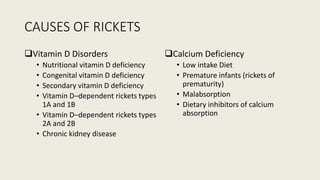
CAUSES OF RICKETS
Vitamin D Disorders
• Nutritional vitamin D deficiency
• Congenital vitamin D deficiency
• Secondary vitamin D deficiency
• Vitamin D–dependent rickets types
1A and 1B
• Vitamin D–dependent rickets types
2A and 2B
• Chronic kidney disease
Calcium Deficiency
• Low intake Diet
• Premature infants (rickets of
prematurity)
• Malabsorption
• Dietary inhibitors of calcium
absorption
Phosphorus Deficiency
• Inadequate intake
• Premature infants (rickets of
prematurity)
• Aluminum-containing
antacids
Renal Losses
• X-linked hypophosphatemic rickets*
• Autosomal dominant hypophosphatemic
rickets*
• Autosomal recessive hypophosphatemic rickets
types 1 and 2*
• Hereditary hypophosphatemic rickets with
hypercalciuria
• Overproduction of fibroblast growth factor-23
• Tumor-induced rickets*
• McCune-Albright syndrome*
• Epidermal nevus syndrome*
• Neurofibromatosis*
• Fanconi syndrome
• Dent disease
• Distal renal tubular acidosis
CLINICAL FEATURES
Head
Craniotabes
• Softening of the cranial bones.
• Detected by applying pressure at the occiput or
over the parietal bones.
• Secondary
Hydrocephalus
Osteogenesis imperfecta
Syphilis.
• Normal finding in many newborns, especially near the suture
lines, but typically disappears within a few months of birth.
 Other features
• Frontal bossing
• Delayed closure of fontanel
• Delayed dentition
• No incisors by age 10 month
• No molars by age 18 month
• Craniosynostosis
CHEST
Rachitic rosary
• Widening of the costochondral junctions.
• Feels like the beads of a rosary when
examiner moves fingers along the
costochondral junctions from rib to rib.
Harrison groove
• The horizontal depression
along the lower anterior chest
• Due to pulling of the softened
ribs by the diaphragm during
inspiration.
• Softening of the ribs impairs
air movement and predisposes
patients to atelectasis and
pneumonia
Extremities
• Enlargement of wrists and
ankles
• Valgus or varus deformities
• Windswept deformity
• Anterior bowing of tibia
and femur
Back
• Kyphosis:
• Extreme forward curvature of the upper back
bone (thoracic spine) with convexity backward
(forward bending).
• Severe kyphosis causes formation of a
protuberance which is called Pott curvature
• Lordosis:
• Extreme forward curvature of back bone in
lumbar region also called hollow back or saddle
back
• Scoliosis: Lateral curvature of spine
Hypocalcemic Symptoms
• Tetany
• Seizures
• Stridor caused by laryngeal spasm
RADIOLOGICAL FEATURES
Fraying
• The edge of the metaphysis loses
its sharp border.
Cupping
• The edge of the metaphysis which
are convex or flat surface change
to concave surface.
• Most easily seen at the distal
ends of the radius, ulna, and
fibula
Widening of the distal end of the
metaphysis
• Clinically related to thickened wrists
and ankles, as well as the rachitic
rosary.
Other radiologic features
• Coarse trabeculation of the diaphysis
• Generalized rarefaction.
Nutritional Vitamin D Deficiency
ETIOLOGY
• Vitamin D deficiency remains the most common cause of rickets
globally
• More common in infancy  poor intake + inadequate cutaneous
synthesis.
• Poor intake because of low content of vitamin D in breast milk.
• Cutaneous synthesis can be limited because of the avoidance of sunlight
as a cultural practices; and increased skin pigmentation.
• Transplacental transport of vitamin D, mostly 25 hydroxy vitamin D,
typically provides enough vitamin D for the first 2 month of life unless
there is severe maternal vitamin D deficiency.
LAB FINDING
• Variable Hypocalcemia
• Elevated parathorhormone Hypophosphatemia
• Combined hypophosphatemia and hyperparathyroidism variable
1,25-D levels (low, normal, or high) is secondary to the upregulation of
renal 1α-hydroxylase
• The level of 1,25-D is only low when there is severe vitamin D
deficiency.
• Metabolic acidosis is present secondary to PTH-induced renal
bicarbonate wasting.
DIAGNOSIS
• History of poor vitamin D intake with risk factors for decreased
cutaneous synthesis.
• Radiographic changes consistent with rickets.
• Typical laboratory findings.
• A normal Parathyroid level almost never occurs with vitamin D
deficiency
TREATMENT
• Vitamin D + Calcium + Phosphorus.
• There are 2 strategies for administration of vitamin D.
• Stoss therapy
• Vitamin D (300,000-600,000 IU) is administered orally or intramuscularly as 2-
4 doses over 1 day
• Since the doses are observed, stoss therapy is ideal in patients in whom
adherence to therapy is questionable.
• Alternative therapy
• Daily vitamin D with a minimum dose of 2,000 IU/day for a minimum of 3
month.
• Either strategy should be followed by daily vitamin D intake of 400 IU/day
typically given as multivitamin.
• Ensure that children receive adequate dietary calcium and phosphorus.
• Symptomatic hypocalcemia: Intravenous calcium acutely, followed by
oral calcium supplements, which can be tapered over 2-6 week in
children who receive adequate dietary calcium.
• Transient use of intravenous or oral 1,25 dihydroxy vitamin D
(calcitriol) is often helpful in reversing hypocalcaemia in the acute
phase by providing active vitamin D during time required to convert
supplemental vitamin D in to active vitamin D.
PROGNOSIS
• Excellent response to treatment
• Radiologic healing occurring within a few months.
• Many of the bone malformations improve dramatically, but
children with severe disease can have permanent deformities.
PREVENTION
• Most cases of nutritional rickets can be prevented by universal
administration of 400 IU of vitamin D to infants
• For the older children, diet should have the source of vitamin D.
Refractory rickets
Definition
• Rickets that do not responds to
usual treatment of nutritional
rickets.
• It is broadly classified into two
categories
• Defect in vitamin D
metabolism
• Low phosphate disorder
Congenital Vitamin D Deficiency
• Occurs when there is severe maternal vitamin D deficiency during
pregnancy.
• Maternal risk factors:
poor dietary intake of vitamin D
lack of adequate sun exposure
closely spaced pregnancies.
• Newborns can have
Symptomatic hypocalcemia
Intrauterine growth retardation
Decreased bone ossification
Defect in dental enamel
• Treatment
Vitamin D supplementation
Adequate intake of calcium and phosphorus.
• Prevention
Use of prenatally vitamin D containing (600 IU).
Secondary Vitamin D Deficiency
ETIOLOGY
 Inadequate absorption
• Cholestatic liver disease,
• Cystic fibrosis
• Celiac disease,
• Crohn disease.
• Intestinal lymphangiectasia
• After intestinal resection.
 Decreased hydroxylation in the liver
• Due to insufficient enzyme activity of 25 hydroxylase
 Increased degradation.
• Drug inducing the cytochrome P450 (CYP)
• Anticonvulsants (e.g., phenobarbital, phenytoin)
• Antituberculosis medications (e.g., isoniazid, rifampin).
Treatment
• Malabsorption
• Requires high doses of vitamin D.
25 Hydroxy vitamin D (25-50 µg/day or 5-7 µg/kg/day) is
superior to vitamin D3
• Alternatively:
1,25 dihydroxy vitamin D(also better absorbed in the
presence of fat malabsorption) or with parenteral vitamin D.
• Children with rickets due to increased degradation of vitamin D by the
CYP system
• Require the same acute therapy as indicated for nutritional deficiency
Long-term administration of high doses of vitamin D (e.g., 1,000 IU/day) (with
dosing titrated based on serum levels of 25-D).
Vitamin D–Dependent Rickets, Type 1
 Type 1 A
• Autosomal recessive disorder
• Mutations in the gene encoding renal 1α-hydroxylase
• Preventing conversion of 25-D into 1,25-D.
• Normally present during the first 2 Year of life
• Normal levels of 25-D but low levels of 1,25-D
• High PTH
• Metabolic acidosis and generalized aminoaciduria(renal tubular
dysfunction
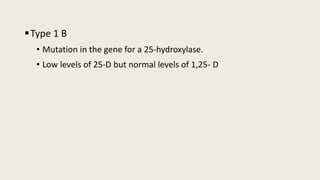
Type 1 B
• Mutation in the gene for a 25-hydroxylase.
• Low levels of 25-D but normal levels of 1,25- D
Treatment
• Long-term treatment with 1,25-D (calcitriol).
• Initial doses are 0.25-2 µg/day, and lower doses are used once the
rickets has healed.
• During initial therapy, it is important to ensure adequate intake of
calcium.
• The dose of calcitriol is adjusted to maintain a
low-normal serum calcium level.
normal serum phosphorus level.
high normal serum PTH level.
• Patient monitoring includes periodic assessment of urinary calcium
excretion, with a target of < 4 mg/kg/day.
Vitamin D–Dependent Rickets type 2
 Type 2 A
• Autosomal recessive disorder
• Mutations in the gene encoding the vitamin D receptor
• Preventing a normal physiologic response to 1,25-D.
• Levels of 1,25-D are extremely elevated in this
• Most patients present during infancy
• Less severely affected so patients might not be diagnosed until adulthood.
• 50–70% of children have alopecia
• Type 2 B
• Overexpression of a hormone response element–binding protein that interferes with
the actions of 1,25-D
Treatment
• Some patients, especially patients without alopecia respond to
extremely high doses of vitamin D2 ,25-D or 1,25-D.
• Response is caused by a partially functional vitamin D receptor
• All patients should be given a 3-6 month trial of high-dose vitamin D
and oral calcium.
Chronic Kidney Disease
• In chronic kidney disease, there is decreased activity of 1α-hydroxylase
in the kidney diminished production of 1,25-D.
• In chronic kidney disease, unlike the other causes of vitamin D
deficiency, patients have hyperphosphatemia as a result of decreased
renal excretion
• Along with inadequate calcium absorption and secondary
hyperparathyroidism, the rickets may be worsened by the metabolic
acidosis of chronic renal failure.
Treatment
• A form of vitamin D that can act without 1- hydroxylation by the
kidney is used (i.e calcitriol).
• It permits adequate absorption of calcium and directly suppresses the
parathyroid gland.
• Because hyperphosphatemia is a stimulus for PTH secretion, helps
normalization of the serum phosphorus level, through a combination
of dietary phosphorus restriction and oral phosphate binders is used.
CALCIUM DEFICIENCY
CAUSES
• After weaning /early weaned.
• Low calcium content in diet(< 200 mg/day )
• Grains and green leafy vegetables, the diet may be high in phytate, oxalate,
and phosphate, which decrease absorption of dietary calcium.
• In children who receive intravenous nutrition without adequate calcium.
• Malabsorption of calcium can occur
• in celiac disease,
• intestinal abetalipoproteinemia
• after small bowel resection.
Clinical Manifestations
• Classic signs and symptoms of rickets
• Presentation: infancy or early childhood, although some cases
are diagnosed in teenagers.
• Because calcium deficiency occurs after the cessation of
breastfeeding, it tends to occur later than the nutritional vitamin
D deficiency which is associated with breastfeeding.
Laboratory findings
• Increased levels of Alkaline phosphatase, PTH, and 1,25-D
• Calcium levels may be normal or low, although symptomatic
hypocalcaemia is uncommon.
• Decreased urinary excretion of calcium
• Serum phosphorus levels will be decreased as a result of renal
wasting of phosphate from secondary hyperparathyroidism.
• In some children, there is coexisting nutritional vitamin D deficiency,
they have low 25-D levels.
Treatment
• Focuses on providing adequate calcium supplemention
700 mg/day[age 1-3 yr]
1,000 mg/day [4-8 yr]
1,300 mg/day [9-18 yr]
• Vitamin D supplementation is necessary if there is concurrent
vitamin D deficiency
Prevention
• Discouraging early cessation of breastfeeding
• Increasing dietary sources of calcium
Phosphorus Deficiency
Inadequate Intake
• Starvation or Severe anorexia,
• Associated with malabsorption (celiac disease, cystic
fibrosis, cholestatic liver disease), but if rickets develops in
it,primary because of malabsorption of vitamin D and/or
calcium.
• Isolated malabsorption of phosphorus occurs in patients
with long-term use of aluminum-containing antacids.
Hypophosphatemic Rickets
Fibroblast growth factor
Decreases renal tubular
reabsorption of phosphate
Decreases the activity of
renal 1α-hydroxylase
Decreases serum
phosphorus
Decrease in the production
of 1,25-D.
Fibroblast Growth Factor-23 (FGF-23 )
(humoral mediator synthesized by osteocytes)
X-Linked Hypophosphatemic Rickets
• X linked hypophosphatemic rickets (XLH ) is the most common genetic
cause of rickets. (with a prevalence of 1/20,000)
• The defective gene is on the X chromosome.
• Female carriers are affected, as it is an X-linked dominant disorder.
• Pathophysiology
• The defective gene: PHEX (phosphate-regulating gene with homology
to endopeptidases on the X chromosome)
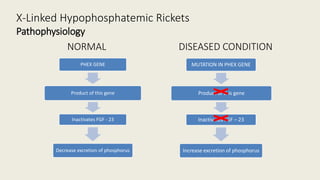
X-Linked Hypophosphatemic Rickets
Pathophysiology
NORMAL DISEASED CONDITION
PHEX GENE
Product of this gene
Inactivates FGF - 23
Decrease excretion of phosphorus
MUTATION IN PHEX GENE
Product of this gene
Inactivates FGF – 23
Increase excretion of phosphorus
Clinical Manifestations
• Rickets
• Abnormalities of the lower extremities and poor growth
are the dominant features.
• Delayed dentition and tooth abscesses are also
common.
• Some child have short stature without clinically evident
bone disease.
• Laboratory Finding
• High renal excretion of phosphateHypophosphatemia.
• Increased Alkaline phosphatase
• PTH and serum calcium levels are normal
• Hypophosphatemia normally upregulates renal 1α-hydroxylase
and should lead to an increase in 1,25-D.
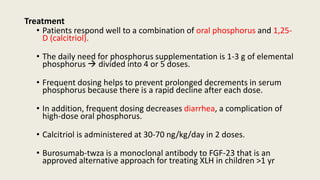
Treatment
• Patients respond well to a combination of oral phosphorus and 1,25-
D (calcitriol).
• The daily need for phosphorus supplementation is 1-3 g of elemental
phosphorus  divided into 4 or 5 doses.
• Frequent dosing helps to prevent prolonged decrements in serum
phosphorus because there is a rapid decline after each dose.
• In addition, frequent dosing decreases diarrhea, a complication of
high-dose oral phosphorus.
• Calcitriol is administered at 30-70 ng/kg/day in 2 doses.
• Burosumab-twza is a monoclonal antibody to FGF-23 that is an
approved alternative approach for treating XLH in children >1 yr
• Complications of treatment occur when there is not an adequate
balance between phosphorus supplementation and calcitriol.
• Excess phosphorus, by decreasing enteral calcium absorption, leads
to secondary hyperparathyroidism, with worsening of the bone
lesions.
• In contrast, excess calcitriol causes hypercalciuria and
nephrocalcinosis.
• Therefore, laboratory monitoring of treatment includes: serum
calcium, phosphorus, ALP, PTH, and urinary calcium, as well as
periodic renal ultrasound to evaluate patients for nephrocalcinosis
• Normalization of ALP levels is a more useful method of assessing the
therapeutic response than measuring serum phosphorus.
• For children with significant short stature, growth hormone is an
effective option.
• Children with severe deformities might need osteotomies, but these
procedures should be done only when treatment has led to
resolution of the bone disease.
Autosomal Dominant Hypophosphatemic Rickets
• Less common than X-Linked Hypophosphatemic Rickets.
• Incomplete penetrance and variable age of onset.
• Mutation in the gene encoding FGF-23 (FGF23 ).
• The mutation prevents degradation of FGF-23 by proteases, leading its
level to increase.
• The actions of FGF-23 include decreased reabsorption of phosphate in the
renal proximal tubule, which results in hypophosphatemia, and inhibition
of the 1α-hydroxylase in the kidney, causing a decrease in 1,25-D synthesis.
• In ADHR, as in XLH, abnormal laboratory findings are hypophosphatemia,
elevated ALP level, and a low or inappropriately normal 1,25-D level.
• Treatment is similar as in X-Linked Hypophosphatemic Rickets.
Autosomal Recessive Hypophosphatemic Rickets
• Type 1
• mutations in the gene encoding dentin matrix protein 1 (DMP1 ).
• Type 2
• mutations in the ENPP1 gene
• It also causes generalized arterial calcification of infancy.
• Both types of ARHR are associated with elevated levels of FGF-23,
leading to renal phosphate wasting, hypophosphatemia, and low or
inappropriately normal levels of 1,25-D.
• Treatment
• Similar to X-Linked Hypophosphatemic Rickets.
• Although monitoring for arterial calcification is prudent in patients with
ENPP1 mutations
RENAL TUBULAR ACIDOSIS
• Rickets may be present in RTA, particularly in proximal renal tubular
acidosis.
• Hypophosphatemia and phosphaturia are comman in proximal tubular
dysfunction.
• Bone demineralization without overt rickets usually is detected in distal
(type I) RTA.
• This metabolic bone disease may be characterized by bone pain, growth
retardation, osteopenia, and, occasionally, pathologic fractures.
• Administration of sufficient bicarbonate to reverse acidosis reverses bone
dissolution and the hypercalciuria that is common in distal RTA.
Rickets of Prematurity Rickets
• Transfer of calcium and phosphorus from mother to fetus occurs
throughout pregnancy, but 80% occurs during the 3rd trimester.
• Premature birth interrupts this process  Developes rickets.
• Most cases of rickets of prematurity occur in infants with a
birthweight <1000 gm.
• Rickets occurs because unsupplemented breast milk and standard
infant formula do not contain enough calcium and phosphorus to
supply the needs of the premature infant.
Clinical Manifestations
• Rickets of prematurity occurs 1-4 months after birth.
• Infants can have non-traumatic fractures.
• Because fractures and softening of the ribs lead to decreased chest
compliance, some infants have respiratory distress from atelectasis
and poor ventilation.
• This rachitic respiratory distress usually develops >5 week after birth,
distinguishing it from the early-onset respiratory disease of
premature infants.
• These infants have poor linear growth
• Enamel hypoplasia.
• Poor bone mineralizationdolichocephaly.
• Most infants with rickets of prematurity have no clinical
manifestations, and the diagnosis is based on radiographic and
laboratory findings.
Laboratory Findings
• Because of inadequate intake, the serum phosphorus level is low or
low-normal.
• Renal conservation of phosphate leading to a low urine phosphate
level.
• Most patients have normal levels of 25-D, unless there has been
inadequate intake or poor absorption.
• The hypophosphatemia stimulates renal 1α-hydroxylase 1,25-D are
high or high-normal. These high levels can contribute to bone
demineralization.
• Serum levels of calcium are low, normal, or high, and patients often
have hypercalciuria.
• Elevated serum calcium levels and hypercalciuria are secondary
increased intestinal absorption.
• Inability to deposit calcium in bone because of an inadequate
phosphorus supply.
• In it, there is inadequate supply of calcium and phosphorus, but the
deficiency in phosphorus is greater.
• Alkaline phosphatase levels are often elevated, but some affected
infants have normal levels.
• No single blood test is 100% sensitive for the diagnosis of rickets.
• The diagnosis should be suspected in infants with
Alkaline phosphatase >5-6 times the upper limit of normal for
adults (unless there is concomitant liver disease) or
Phosphorus level < 5.6 mg/dl.
Diagnosis
Screening tests
• Weekly measurements of calcium, phosphorus, and ALP.
• Periodic measurement of the serum bicarbonate
concentration is also important, because metabolic
acidosis causes dissolution of bone.
• At least one screening radiograph for rickets at 6-8 wk of
age indicated in high-risk infants.
Prevention
• Adequate amounts of calcium, phosphorus, and vitamin D
significantly decreases the risk of rickets of prematurity.
• Parenteral nutrition is often necessary initially in very premature
infants so early transition to enteral feedings is also helpful.
Treatment
• These infants should receive either human milk fortified with calcium
and phosphorus or preterm infant formula which has higher
concentrations of calcium and phosphorus than standard.
• Approximately 400 IU/day of vitamin D through formula and vitamin
supplements
THANK YOU

RICKETS.pptx

  • 1.
  • 2.
    DEFINITION Disease of growingbone caused by unmineralized matrix at the growth plates in children before fusion of the epiphyses.
  • 3.
  • 4.
  • 5.
    Action Fibroblast growthfactor Inhibit renal sodium dependent phosphate reabsorbtion Decreases the activity of renal 1α-hydroxylase Increase in urinary phosphate excreation Decrease intestinal phosphate absorption Fibroblast Growth Factor-23 (FGF-23 ) (humoral mediator synthesized by osteocytes) Decreases serum phosphate
  • 6.
    CAUSES OF RICKETS VitaminD Disorders • Nutritional vitamin D deficiency • Congenital vitamin D deficiency • Secondary vitamin D deficiency • Vitamin D–dependent rickets types 1A and 1B • Vitamin D–dependent rickets types 2A and 2B • Chronic kidney disease Calcium Deficiency • Low intake Diet • Premature infants (rickets of prematurity) • Malabsorption • Dietary inhibitors of calcium absorption
  • 7.
    Phosphorus Deficiency • Inadequateintake • Premature infants (rickets of prematurity) • Aluminum-containing antacids Renal Losses • X-linked hypophosphatemic rickets* • Autosomal dominant hypophosphatemic rickets* • Autosomal recessive hypophosphatemic rickets types 1 and 2* • Hereditary hypophosphatemic rickets with hypercalciuria • Overproduction of fibroblast growth factor-23 • Tumor-induced rickets* • McCune-Albright syndrome* • Epidermal nevus syndrome* • Neurofibromatosis* • Fanconi syndrome • Dent disease • Distal renal tubular acidosis
  • 8.
    CLINICAL FEATURES Head Craniotabes • Softeningof the cranial bones. • Detected by applying pressure at the occiput or over the parietal bones. • Secondary Hydrocephalus Osteogenesis imperfecta Syphilis. • Normal finding in many newborns, especially near the suture lines, but typically disappears within a few months of birth.
  • 9.
     Other features •Frontal bossing • Delayed closure of fontanel • Delayed dentition • No incisors by age 10 month • No molars by age 18 month • Craniosynostosis
  • 10.
    CHEST Rachitic rosary • Wideningof the costochondral junctions. • Feels like the beads of a rosary when examiner moves fingers along the costochondral junctions from rib to rib.
  • 11.
    Harrison groove • Thehorizontal depression along the lower anterior chest • Due to pulling of the softened ribs by the diaphragm during inspiration. • Softening of the ribs impairs air movement and predisposes patients to atelectasis and pneumonia
  • 12.
    Extremities • Enlargement ofwrists and ankles • Valgus or varus deformities • Windswept deformity • Anterior bowing of tibia and femur
  • 13.
    Back • Kyphosis: • Extremeforward curvature of the upper back bone (thoracic spine) with convexity backward (forward bending). • Severe kyphosis causes formation of a protuberance which is called Pott curvature • Lordosis: • Extreme forward curvature of back bone in lumbar region also called hollow back or saddle back • Scoliosis: Lateral curvature of spine Hypocalcemic Symptoms • Tetany • Seizures • Stridor caused by laryngeal spasm
  • 14.
    RADIOLOGICAL FEATURES Fraying • Theedge of the metaphysis loses its sharp border. Cupping • The edge of the metaphysis which are convex or flat surface change to concave surface. • Most easily seen at the distal ends of the radius, ulna, and fibula
  • 15.
    Widening of thedistal end of the metaphysis • Clinically related to thickened wrists and ankles, as well as the rachitic rosary. Other radiologic features • Coarse trabeculation of the diaphysis • Generalized rarefaction.
  • 16.
    Nutritional Vitamin DDeficiency ETIOLOGY • Vitamin D deficiency remains the most common cause of rickets globally • More common in infancy  poor intake + inadequate cutaneous synthesis. • Poor intake because of low content of vitamin D in breast milk. • Cutaneous synthesis can be limited because of the avoidance of sunlight as a cultural practices; and increased skin pigmentation. • Transplacental transport of vitamin D, mostly 25 hydroxy vitamin D, typically provides enough vitamin D for the first 2 month of life unless there is severe maternal vitamin D deficiency.
  • 17.
    LAB FINDING • VariableHypocalcemia • Elevated parathorhormone Hypophosphatemia • Combined hypophosphatemia and hyperparathyroidism variable 1,25-D levels (low, normal, or high) is secondary to the upregulation of renal 1α-hydroxylase • The level of 1,25-D is only low when there is severe vitamin D deficiency. • Metabolic acidosis is present secondary to PTH-induced renal bicarbonate wasting.
  • 18.
    DIAGNOSIS • History ofpoor vitamin D intake with risk factors for decreased cutaneous synthesis. • Radiographic changes consistent with rickets. • Typical laboratory findings. • A normal Parathyroid level almost never occurs with vitamin D deficiency
  • 19.
    TREATMENT • Vitamin D+ Calcium + Phosphorus. • There are 2 strategies for administration of vitamin D. • Stoss therapy • Vitamin D (300,000-600,000 IU) is administered orally or intramuscularly as 2- 4 doses over 1 day • Since the doses are observed, stoss therapy is ideal in patients in whom adherence to therapy is questionable. • Alternative therapy • Daily vitamin D with a minimum dose of 2,000 IU/day for a minimum of 3 month. • Either strategy should be followed by daily vitamin D intake of 400 IU/day typically given as multivitamin. • Ensure that children receive adequate dietary calcium and phosphorus.
  • 20.
    • Symptomatic hypocalcemia:Intravenous calcium acutely, followed by oral calcium supplements, which can be tapered over 2-6 week in children who receive adequate dietary calcium. • Transient use of intravenous or oral 1,25 dihydroxy vitamin D (calcitriol) is often helpful in reversing hypocalcaemia in the acute phase by providing active vitamin D during time required to convert supplemental vitamin D in to active vitamin D.
  • 21.
    PROGNOSIS • Excellent responseto treatment • Radiologic healing occurring within a few months. • Many of the bone malformations improve dramatically, but children with severe disease can have permanent deformities. PREVENTION • Most cases of nutritional rickets can be prevented by universal administration of 400 IU of vitamin D to infants • For the older children, diet should have the source of vitamin D.
  • 22.
    Refractory rickets Definition • Ricketsthat do not responds to usual treatment of nutritional rickets. • It is broadly classified into two categories • Defect in vitamin D metabolism • Low phosphate disorder
  • 23.
    Congenital Vitamin DDeficiency • Occurs when there is severe maternal vitamin D deficiency during pregnancy. • Maternal risk factors: poor dietary intake of vitamin D lack of adequate sun exposure closely spaced pregnancies.
  • 24.
    • Newborns canhave Symptomatic hypocalcemia Intrauterine growth retardation Decreased bone ossification Defect in dental enamel • Treatment Vitamin D supplementation Adequate intake of calcium and phosphorus. • Prevention Use of prenatally vitamin D containing (600 IU).
  • 25.
    Secondary Vitamin DDeficiency ETIOLOGY  Inadequate absorption • Cholestatic liver disease, • Cystic fibrosis • Celiac disease, • Crohn disease. • Intestinal lymphangiectasia • After intestinal resection.  Decreased hydroxylation in the liver • Due to insufficient enzyme activity of 25 hydroxylase  Increased degradation. • Drug inducing the cytochrome P450 (CYP) • Anticonvulsants (e.g., phenobarbital, phenytoin) • Antituberculosis medications (e.g., isoniazid, rifampin).
  • 26.
    Treatment • Malabsorption • Requireshigh doses of vitamin D. 25 Hydroxy vitamin D (25-50 µg/day or 5-7 µg/kg/day) is superior to vitamin D3 • Alternatively: 1,25 dihydroxy vitamin D(also better absorbed in the presence of fat malabsorption) or with parenteral vitamin D.
  • 27.
    • Children withrickets due to increased degradation of vitamin D by the CYP system • Require the same acute therapy as indicated for nutritional deficiency Long-term administration of high doses of vitamin D (e.g., 1,000 IU/day) (with dosing titrated based on serum levels of 25-D).
  • 28.
    Vitamin D–Dependent Rickets,Type 1  Type 1 A • Autosomal recessive disorder • Mutations in the gene encoding renal 1α-hydroxylase • Preventing conversion of 25-D into 1,25-D. • Normally present during the first 2 Year of life • Normal levels of 25-D but low levels of 1,25-D • High PTH • Metabolic acidosis and generalized aminoaciduria(renal tubular dysfunction
  • 29.
    Type 1 B •Mutation in the gene for a 25-hydroxylase. • Low levels of 25-D but normal levels of 1,25- D
  • 30.
    Treatment • Long-term treatmentwith 1,25-D (calcitriol). • Initial doses are 0.25-2 µg/day, and lower doses are used once the rickets has healed. • During initial therapy, it is important to ensure adequate intake of calcium. • The dose of calcitriol is adjusted to maintain a low-normal serum calcium level. normal serum phosphorus level. high normal serum PTH level. • Patient monitoring includes periodic assessment of urinary calcium excretion, with a target of < 4 mg/kg/day.
  • 31.
    Vitamin D–Dependent Ricketstype 2  Type 2 A • Autosomal recessive disorder • Mutations in the gene encoding the vitamin D receptor • Preventing a normal physiologic response to 1,25-D. • Levels of 1,25-D are extremely elevated in this • Most patients present during infancy • Less severely affected so patients might not be diagnosed until adulthood. • 50–70% of children have alopecia • Type 2 B • Overexpression of a hormone response element–binding protein that interferes with the actions of 1,25-D
  • 32.
    Treatment • Some patients,especially patients without alopecia respond to extremely high doses of vitamin D2 ,25-D or 1,25-D. • Response is caused by a partially functional vitamin D receptor • All patients should be given a 3-6 month trial of high-dose vitamin D and oral calcium.
  • 33.
    Chronic Kidney Disease •In chronic kidney disease, there is decreased activity of 1α-hydroxylase in the kidney diminished production of 1,25-D. • In chronic kidney disease, unlike the other causes of vitamin D deficiency, patients have hyperphosphatemia as a result of decreased renal excretion • Along with inadequate calcium absorption and secondary hyperparathyroidism, the rickets may be worsened by the metabolic acidosis of chronic renal failure.
  • 34.
    Treatment • A formof vitamin D that can act without 1- hydroxylation by the kidney is used (i.e calcitriol). • It permits adequate absorption of calcium and directly suppresses the parathyroid gland. • Because hyperphosphatemia is a stimulus for PTH secretion, helps normalization of the serum phosphorus level, through a combination of dietary phosphorus restriction and oral phosphate binders is used.
  • 35.
    CALCIUM DEFICIENCY CAUSES • Afterweaning /early weaned. • Low calcium content in diet(< 200 mg/day ) • Grains and green leafy vegetables, the diet may be high in phytate, oxalate, and phosphate, which decrease absorption of dietary calcium. • In children who receive intravenous nutrition without adequate calcium. • Malabsorption of calcium can occur • in celiac disease, • intestinal abetalipoproteinemia • after small bowel resection.
  • 36.
    Clinical Manifestations • Classicsigns and symptoms of rickets • Presentation: infancy or early childhood, although some cases are diagnosed in teenagers. • Because calcium deficiency occurs after the cessation of breastfeeding, it tends to occur later than the nutritional vitamin D deficiency which is associated with breastfeeding.
  • 37.
    Laboratory findings • Increasedlevels of Alkaline phosphatase, PTH, and 1,25-D • Calcium levels may be normal or low, although symptomatic hypocalcaemia is uncommon. • Decreased urinary excretion of calcium • Serum phosphorus levels will be decreased as a result of renal wasting of phosphate from secondary hyperparathyroidism. • In some children, there is coexisting nutritional vitamin D deficiency, they have low 25-D levels.
  • 38.
    Treatment • Focuses onproviding adequate calcium supplemention 700 mg/day[age 1-3 yr] 1,000 mg/day [4-8 yr] 1,300 mg/day [9-18 yr] • Vitamin D supplementation is necessary if there is concurrent vitamin D deficiency Prevention • Discouraging early cessation of breastfeeding • Increasing dietary sources of calcium
  • 39.
    Phosphorus Deficiency Inadequate Intake •Starvation or Severe anorexia, • Associated with malabsorption (celiac disease, cystic fibrosis, cholestatic liver disease), but if rickets develops in it,primary because of malabsorption of vitamin D and/or calcium. • Isolated malabsorption of phosphorus occurs in patients with long-term use of aluminum-containing antacids.
  • 40.
    Hypophosphatemic Rickets Fibroblast growthfactor Decreases renal tubular reabsorption of phosphate Decreases the activity of renal 1α-hydroxylase Decreases serum phosphorus Decrease in the production of 1,25-D. Fibroblast Growth Factor-23 (FGF-23 ) (humoral mediator synthesized by osteocytes)
  • 41.
    X-Linked Hypophosphatemic Rickets •X linked hypophosphatemic rickets (XLH ) is the most common genetic cause of rickets. (with a prevalence of 1/20,000) • The defective gene is on the X chromosome. • Female carriers are affected, as it is an X-linked dominant disorder. • Pathophysiology • The defective gene: PHEX (phosphate-regulating gene with homology to endopeptidases on the X chromosome)
  • 42.
    X-Linked Hypophosphatemic Rickets Pathophysiology NORMALDISEASED CONDITION PHEX GENE Product of this gene Inactivates FGF - 23 Decrease excretion of phosphorus MUTATION IN PHEX GENE Product of this gene Inactivates FGF – 23 Increase excretion of phosphorus
  • 43.
    Clinical Manifestations • Rickets •Abnormalities of the lower extremities and poor growth are the dominant features. • Delayed dentition and tooth abscesses are also common. • Some child have short stature without clinically evident bone disease.
  • 44.
    • Laboratory Finding •High renal excretion of phosphateHypophosphatemia. • Increased Alkaline phosphatase • PTH and serum calcium levels are normal • Hypophosphatemia normally upregulates renal 1α-hydroxylase and should lead to an increase in 1,25-D.
  • 45.
    Treatment • Patients respondwell to a combination of oral phosphorus and 1,25- D (calcitriol). • The daily need for phosphorus supplementation is 1-3 g of elemental phosphorus  divided into 4 or 5 doses. • Frequent dosing helps to prevent prolonged decrements in serum phosphorus because there is a rapid decline after each dose. • In addition, frequent dosing decreases diarrhea, a complication of high-dose oral phosphorus. • Calcitriol is administered at 30-70 ng/kg/day in 2 doses. • Burosumab-twza is a monoclonal antibody to FGF-23 that is an approved alternative approach for treating XLH in children >1 yr
  • 46.
    • Complications oftreatment occur when there is not an adequate balance between phosphorus supplementation and calcitriol. • Excess phosphorus, by decreasing enteral calcium absorption, leads to secondary hyperparathyroidism, with worsening of the bone lesions. • In contrast, excess calcitriol causes hypercalciuria and nephrocalcinosis. • Therefore, laboratory monitoring of treatment includes: serum calcium, phosphorus, ALP, PTH, and urinary calcium, as well as periodic renal ultrasound to evaluate patients for nephrocalcinosis
  • 47.
    • Normalization ofALP levels is a more useful method of assessing the therapeutic response than measuring serum phosphorus. • For children with significant short stature, growth hormone is an effective option. • Children with severe deformities might need osteotomies, but these procedures should be done only when treatment has led to resolution of the bone disease.
  • 48.
    Autosomal Dominant HypophosphatemicRickets • Less common than X-Linked Hypophosphatemic Rickets. • Incomplete penetrance and variable age of onset. • Mutation in the gene encoding FGF-23 (FGF23 ). • The mutation prevents degradation of FGF-23 by proteases, leading its level to increase. • The actions of FGF-23 include decreased reabsorption of phosphate in the renal proximal tubule, which results in hypophosphatemia, and inhibition of the 1α-hydroxylase in the kidney, causing a decrease in 1,25-D synthesis. • In ADHR, as in XLH, abnormal laboratory findings are hypophosphatemia, elevated ALP level, and a low or inappropriately normal 1,25-D level. • Treatment is similar as in X-Linked Hypophosphatemic Rickets.
  • 49.
    Autosomal Recessive HypophosphatemicRickets • Type 1 • mutations in the gene encoding dentin matrix protein 1 (DMP1 ). • Type 2 • mutations in the ENPP1 gene • It also causes generalized arterial calcification of infancy. • Both types of ARHR are associated with elevated levels of FGF-23, leading to renal phosphate wasting, hypophosphatemia, and low or inappropriately normal levels of 1,25-D. • Treatment • Similar to X-Linked Hypophosphatemic Rickets. • Although monitoring for arterial calcification is prudent in patients with ENPP1 mutations
  • 50.
    RENAL TUBULAR ACIDOSIS •Rickets may be present in RTA, particularly in proximal renal tubular acidosis. • Hypophosphatemia and phosphaturia are comman in proximal tubular dysfunction. • Bone demineralization without overt rickets usually is detected in distal (type I) RTA. • This metabolic bone disease may be characterized by bone pain, growth retardation, osteopenia, and, occasionally, pathologic fractures. • Administration of sufficient bicarbonate to reverse acidosis reverses bone dissolution and the hypercalciuria that is common in distal RTA.
  • 51.
    Rickets of PrematurityRickets • Transfer of calcium and phosphorus from mother to fetus occurs throughout pregnancy, but 80% occurs during the 3rd trimester. • Premature birth interrupts this process  Developes rickets. • Most cases of rickets of prematurity occur in infants with a birthweight <1000 gm. • Rickets occurs because unsupplemented breast milk and standard infant formula do not contain enough calcium and phosphorus to supply the needs of the premature infant.
  • 52.
    Clinical Manifestations • Ricketsof prematurity occurs 1-4 months after birth. • Infants can have non-traumatic fractures. • Because fractures and softening of the ribs lead to decreased chest compliance, some infants have respiratory distress from atelectasis and poor ventilation. • This rachitic respiratory distress usually develops >5 week after birth, distinguishing it from the early-onset respiratory disease of premature infants.
  • 53.
    • These infantshave poor linear growth • Enamel hypoplasia. • Poor bone mineralizationdolichocephaly. • Most infants with rickets of prematurity have no clinical manifestations, and the diagnosis is based on radiographic and laboratory findings.
  • 54.
    Laboratory Findings • Becauseof inadequate intake, the serum phosphorus level is low or low-normal. • Renal conservation of phosphate leading to a low urine phosphate level. • Most patients have normal levels of 25-D, unless there has been inadequate intake or poor absorption. • The hypophosphatemia stimulates renal 1α-hydroxylase 1,25-D are high or high-normal. These high levels can contribute to bone demineralization.
  • 55.
    • Serum levelsof calcium are low, normal, or high, and patients often have hypercalciuria. • Elevated serum calcium levels and hypercalciuria are secondary increased intestinal absorption. • Inability to deposit calcium in bone because of an inadequate phosphorus supply. • In it, there is inadequate supply of calcium and phosphorus, but the deficiency in phosphorus is greater.
  • 56.
    • Alkaline phosphataselevels are often elevated, but some affected infants have normal levels. • No single blood test is 100% sensitive for the diagnosis of rickets. • The diagnosis should be suspected in infants with Alkaline phosphatase >5-6 times the upper limit of normal for adults (unless there is concomitant liver disease) or Phosphorus level < 5.6 mg/dl.
  • 57.
    Diagnosis Screening tests • Weeklymeasurements of calcium, phosphorus, and ALP. • Periodic measurement of the serum bicarbonate concentration is also important, because metabolic acidosis causes dissolution of bone. • At least one screening radiograph for rickets at 6-8 wk of age indicated in high-risk infants.
  • 58.
    Prevention • Adequate amountsof calcium, phosphorus, and vitamin D significantly decreases the risk of rickets of prematurity. • Parenteral nutrition is often necessary initially in very premature infants so early transition to enteral feedings is also helpful. Treatment • These infants should receive either human milk fortified with calcium and phosphorus or preterm infant formula which has higher concentrations of calcium and phosphorus than standard. • Approximately 400 IU/day of vitamin D through formula and vitamin supplements
  • 59.

Editor's Notes

  • #9 The sensation is similar to the feel of pressing into a Ping-Pong ball and then releasing.
  • #10 Central 7.5 mo Lateral incisor 8 mo Canine 16-20 mo First molar 12-16 mo Second molar 20-30 mo-----Craniosynostosis is defined as premature closure of the cranial sutures and is classified as primary or secondary. It is associated with varying types of abnormal skull shape. Primary craniosynostosis refers to closure of one or more sutures owing to abnormalities of skull development, whereas secondary craniosynostosis results from failure of brain growth
  • #12 Enlargement at the wrists and ankles Growth plate widening
  • #13 (valgus deformity of one leg with varus deformity of other leg)
  • #15 Rachitic changes are most easily visualized on posteroanterior radiographs of thewrist,
  • #18 Hypocalcemia is a variable finding because the elevated PTH acts to increase the serum calcium concentration-----, is caused by PTH-induced renal losses of phosphate, combined with a decrease in intestinal absorption. ----There may also be generalized aminoaciduria.
  • #20 Children with nutritional vitamin D deficiency should receive vitamin D and adequate nutritional intake of calcium and phosphorus. ----; this dietary intake is usually provided by milk, formula, and other dairy products, although calcium supplements may be needed in some patients.
  • #22  Rarely, patients benefit from orthopedic intervention for leg deformities, although this is generally not done until the metabolic bone disease has healed, there is clear evidence that the deformity will not self-resolve, and the deformity is causing functional problems.
  • #26 Because vitamin D is fat soluble, its absorption may be decreased in patients with a variety of liver and GI diseases, including --------Because of the large reserve of 25-hydroxlase activity in the liver, vitamin D deficiency caused by liver disease usually requires a loss of >90% of liver function
  • #27 Treatment of vitamin D deficiency attributable to ----Because of its better absorption, ----). Some patients require as much as 4,000 IU/day
  • #31 TO avoids excessive dosing of calcitriol, which can cause hypercalciuria AND SUBSIQUENTLY CAUSE nephrocalcinosis
  • #32 which tends to be associated with a more severe form of the disease and can range from alopecia areata to alopecia totalis. Epidermal cysts are a less common manifestation.
  • #33 in patients with vitamin D–dependent rickets type 2A, but may also occur in vitamin D–dependent rickets type 2B. . The initial dose of 1,25-D should be 2 µg/day, but some patients require doses ashigh as 50-60 µg/day. Calcium doses are 1,000-3,000 mg/day. Patients who do not respond to high-dose vitamin D may be treated with long-term IV calcium, with possible transition to very high dose oral calcium supplements. Treatment of patients who do not respond to vitamin D is difficult.
  • #35 Chronic metabolic acidosis should be corrected using alkali
  • #36 Because breast milk and formula are excellent sources of calcium, this form of rickets develops after -------There may be concurrent malabsorption of vitamin D.
  • #39 . In countries such as Kenya, where many children have diets high in cereal with negligible intake of cow's milk, schoolbased milk programs have been effective in reducing the prevalence of rickets
  • #40 Phosphorus Deficiency Inadequate Intake With the exception of
  • #42 The product of this gene appears to have an indirect role in inactivating FGF-23. Mutations in PHEXlead to increased levels of FGF-23. Because the actions of FGF-23 include inhibition of phosphate reabsorption in the proximal tubule, phosphate excretion is increased. FGF-23 also inhibits renal 1α-hydroxylase, leading to decreased production of 1,25-D.
  • #46 . Burosumab-twza is a monoclonal antibody to FGF-23 that is an approved alternative approach for treating XLH in children >1 yr. ------. Because of variation in the serum phosphorus level and the importance of avoiding excessive phosphorus dosing,
  • #51 Bone demineralization in distal RTA probably relates to dissolution of bone because the calcium carbonate in bone serves as a buffer against the metabolic acidosis due to the hydrogen ions retained by patients with RTA.
  • #53 , with negative effects on growth persisting beyond 1 yr of age. An additional long-term effect is
  • #55 tubular reabsorption of phosphate is >95%.--------. In some cases, normal ALP levels may be secondary to resolution of the bone demineralization because of an adequate mineral supply despite the continued presence of radiologic changes, which take longer to resolve ----However, ALP levels may be normal despite active disease. ------
  • #58 Because many premature infants have no overt clinical manifestations of rickets, ----
  • #59 In the past, adequate parenteral calcium and phosphorus delivery was difficult because of limits secondary to insolubility of these ions when their concentrations were increased.---