Evaluating the Think Kidneys
Programme
Dr Richard Fluck
richard.fluck@nhs.net,
Chair, Think Kidney
| 2
An ‘intermediate’ health state
Associated with other serious illness
Important marker of illness severity
“Force multiplier” for poor outcomes
but …….
Potential to improve care
Reduce avoidable harm - death and
morbidity
Reduce cost
11/04/2017AKI FrontiersRSM March 2017 Richard Fluck
Our shared purpose: reduce harm related to AKI
Support commissioners and organisational leads in
driving and championing the need to improve acute
kidney injury care.
Provide clinicians and patients with the education,
information and access to and about acute kidney
injury to inform individual care
Establish the data flows to allow successful audit
and quality improvement
11/04/2017 | 3AKI FrontiersRSM March 2017 Richard Fluck
Building the programme: collaboration
11/04/2017AKI Frontiers RSM March 2017 Richard Fluck 4
Support commissioners and organisational leads in driving
and championing the need to improve acute kidney injury
care.
11/04/2017 5AKI Frontiers RSM March 2017 Richard Fluck
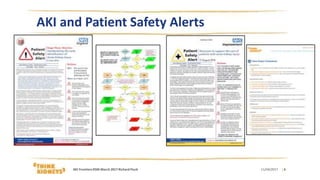
AKI and Patient Safety Alerts
11/04/2017 | 6AKI FrontiersRSM March 2017 Richard Fluck
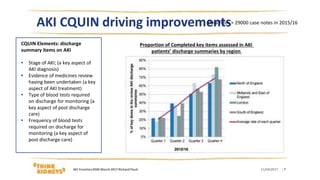
AKI CQUIN driving improvements
CQUIN Elements: discharge
summary items on AKI
• Stage of AKI; (a key aspect of
AKI diagnosis)
• Evidence of medicines review
having been undertaken (a key
aspect of AKI treatment)
• Type of blood tests required
on discharge for monitoring (a
key aspect of post discharge
care)
• Frequency of blood tests
required on discharge for
monitoring (a key aspect of
post discharge care)
Data from > 29000 case notes in 2015/16
Proportion of Completed key items assessed in AKI
patients’ discharge summaries by region
11/04/2017 | 7AKI FrontiersRSM March 2017 Richard Fluck
Provide clinicians and patients with the education,
information and access to and about acute kidney injury to
inform individual care
11/04/2017 8AKI Frontiers RSM March 2017 Richard Fluck
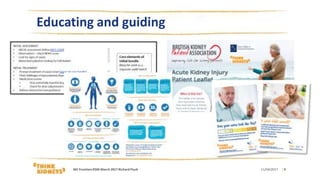
Educating and guiding
11/04/2017 | 9AKI FrontiersRSM March 2017 Richard Fluck
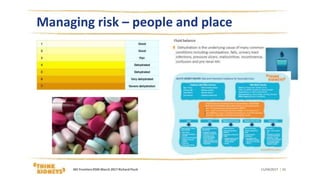
Managing risk – people and place
11/04/2017 | 10AKI FrontiersRSM March 2017 Richard Fluck
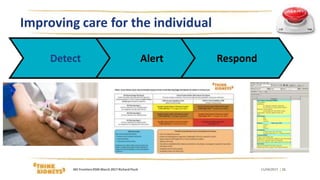
Detect Alert
Improving care for the individual
Respond
11/04/2017 | 11AKI FrontiersRSM March 2017 Richard Fluck
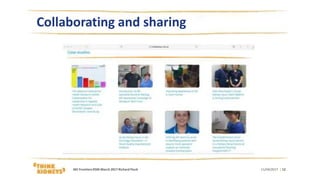
Collaborating and sharing
11/04/2017 | 12AKI FrontiersRSM March 2017 Richard Fluck
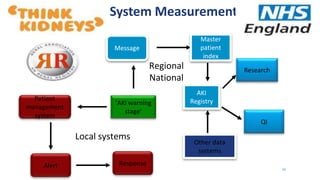
Establish the data flows to allow successful audit and
quality improvement
11/04/2017 13AKI Frontiers RSM March 2017 Richard Fluck
‘AKI warning
stage’
Patient
management
system
Alert Response
Local systems
Message
Master
patient
index
Other data
systems
AKI
Registry
Regional
National
Research
QI
System Measurement
14
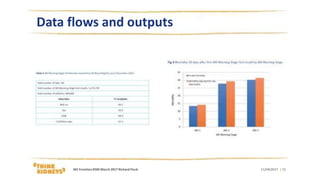
Data flows and outputs
11/04/2017 | 15AKI FrontiersRSM March 2017 Richard Fluck
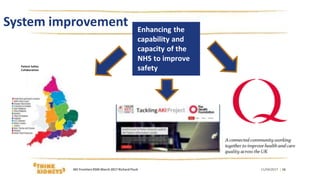
System improvement Enhancing the
capability and
capacity of the
NHS to improve
safetyPatient Safety
Collaboratives
11/04/2017 | 16AKI FrontiersRSM March 2017 Richard Fluck
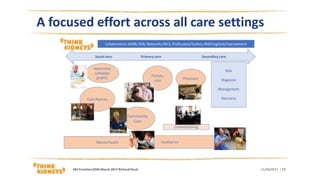
A focused effort across all care settings
11/04/2017 | 17AKI FrontiersRSM March 2017 Richard Fluck
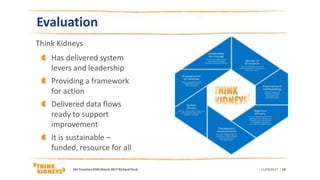
Evaluation
Think Kidneys
Has delivered system
levers and leadership
Providing a framework
for action
Delivered data flows
ready to support
improvement
It is sustainable –
funded, resource for all
11/04/2017 | 18AKI FrontiersRSM March 2017 Richard Fluck
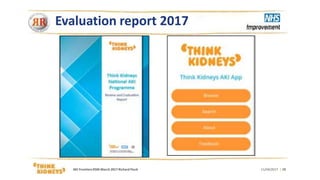
Evaluation report 2017
11/04/2017 | 19AKI FrontiersRSM March 2017 Richard Fluck
The chairs, co-chairs and
teams of all the workstreams
in ‘Think Kidneys’
Joan Russell
Head of Patient Safety
NHS England
joan.russell@nhs.net
Ron Cullen
Director
UK Renal Registry
Ron.Cullen@renalregistry.nhs.uk
Karen Thomas
Think Kidneys Programme Manager
UK Renal Registry
Karen.Thomas@renalregistry.nhs.uk
www.linkedin.com/company/think-
kidneys
www.twitter.com/ThinkKidneys
www.facebook.com/thinkkidneys
www.youtube.com/user/thinkkidneys
www.slideshare.net/ThinkKidneys
www.thinkkidneys.nhs.uk
Acknowledgements
11/04/2017 | 20AKI FrontiersRSM March 2017 Richard Fluck

Richard Fluck AKI Frontiers Slide Set

  • 1.
    Evaluating the ThinkKidneys Programme Dr Richard Fluck richard.fluck@nhs.net, Chair, Think Kidney
  • 2.
    | 2 An ‘intermediate’health state Associated with other serious illness Important marker of illness severity “Force multiplier” for poor outcomes but ……. Potential to improve care Reduce avoidable harm - death and morbidity Reduce cost 11/04/2017AKI FrontiersRSM March 2017 Richard Fluck
  • 3.
    Our shared purpose:reduce harm related to AKI Support commissioners and organisational leads in driving and championing the need to improve acute kidney injury care. Provide clinicians and patients with the education, information and access to and about acute kidney injury to inform individual care Establish the data flows to allow successful audit and quality improvement 11/04/2017 | 3AKI FrontiersRSM March 2017 Richard Fluck
  • 4.
    Building the programme:collaboration 11/04/2017AKI Frontiers RSM March 2017 Richard Fluck 4
  • 5.
    Support commissioners andorganisational leads in driving and championing the need to improve acute kidney injury care. 11/04/2017 5AKI Frontiers RSM March 2017 Richard Fluck
  • 6.
    AKI and PatientSafety Alerts 11/04/2017 | 6AKI FrontiersRSM March 2017 Richard Fluck
  • 7.
    AKI CQUIN drivingimprovements CQUIN Elements: discharge summary items on AKI • Stage of AKI; (a key aspect of AKI diagnosis) • Evidence of medicines review having been undertaken (a key aspect of AKI treatment) • Type of blood tests required on discharge for monitoring (a key aspect of post discharge care) • Frequency of blood tests required on discharge for monitoring (a key aspect of post discharge care) Data from > 29000 case notes in 2015/16 Proportion of Completed key items assessed in AKI patients’ discharge summaries by region 11/04/2017 | 7AKI FrontiersRSM March 2017 Richard Fluck
  • 8.
    Provide clinicians andpatients with the education, information and access to and about acute kidney injury to inform individual care 11/04/2017 8AKI Frontiers RSM March 2017 Richard Fluck
  • 9.
    Educating and guiding 11/04/2017| 9AKI FrontiersRSM March 2017 Richard Fluck
  • 10.
    Managing risk –people and place 11/04/2017 | 10AKI FrontiersRSM March 2017 Richard Fluck
  • 11.
    Detect Alert Improving carefor the individual Respond 11/04/2017 | 11AKI FrontiersRSM March 2017 Richard Fluck
  • 12.
    Collaborating and sharing 11/04/2017| 12AKI FrontiersRSM March 2017 Richard Fluck
  • 13.
    Establish the dataflows to allow successful audit and quality improvement 11/04/2017 13AKI Frontiers RSM March 2017 Richard Fluck
  • 14.
    ‘AKI warning stage’ Patient management system Alert Response Localsystems Message Master patient index Other data systems AKI Registry Regional National Research QI System Measurement 14
  • 15.
    Data flows andoutputs 11/04/2017 | 15AKI FrontiersRSM March 2017 Richard Fluck
  • 16.
    System improvement Enhancingthe capability and capacity of the NHS to improve safetyPatient Safety Collaboratives 11/04/2017 | 16AKI FrontiersRSM March 2017 Richard Fluck
  • 17.
    A focused effortacross all care settings 11/04/2017 | 17AKI FrontiersRSM March 2017 Richard Fluck
  • 18.
    Evaluation Think Kidneys Has deliveredsystem levers and leadership Providing a framework for action Delivered data flows ready to support improvement It is sustainable – funded, resource for all 11/04/2017 | 18AKI FrontiersRSM March 2017 Richard Fluck
  • 19.
    Evaluation report 2017 11/04/2017| 19AKI FrontiersRSM March 2017 Richard Fluck
  • 20.
    The chairs, co-chairsand teams of all the workstreams in ‘Think Kidneys’ Joan Russell Head of Patient Safety NHS England joan.russell@nhs.net Ron Cullen Director UK Renal Registry Ron.Cullen@renalregistry.nhs.uk Karen Thomas Think Kidneys Programme Manager UK Renal Registry Karen.Thomas@renalregistry.nhs.uk www.linkedin.com/company/think- kidneys www.twitter.com/ThinkKidneys www.facebook.com/thinkkidneys www.youtube.com/user/thinkkidneys www.slideshare.net/ThinkKidneys www.thinkkidneys.nhs.uk Acknowledgements 11/04/2017 | 20AKI FrontiersRSM March 2017 Richard Fluck

Editor's Notes

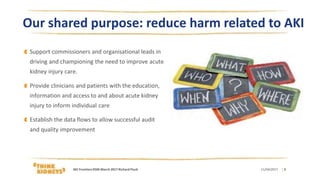
  • #4 Focused on: Who: who is at risk, vulnerable population, important triggers When: when do people sustain AKI, how is early diagnosis supported How: how should AKI be managed, prevention+treatment+recovery What: what do people need to know, public patients/carers, professionals