Dr Clair Sullivan MBBS(Hons) MD FRACP
Dr Andrew Staib MBBS FACEM
The ED-inpatient
Interface: A User’s
Guide
Outline
- work so far linking ED process measures to inpatient
outcomes
- characterise the ED-inpatient interface (Edii)
- look at the future of EDii
Our day jobs
• We work at one of Australia’s leading hospitals
• Over 700 beds, over 60 000 ED presentations/year
• 90 000 admissions to ward/year
• Over 750 000 outpatient appointments/year
• Nearly 1000 doctors, 6000 staff
• Massive basic science and clinical research facility
• Like most Australian hospitals, no health systems
research
• We are not managers/administrators but systems
physicians
Slope = -1.802 ± 0.207
Y-intercept = 116 ± 4.689
X-intercept = 64
R2 = 0.873
P<0.0001
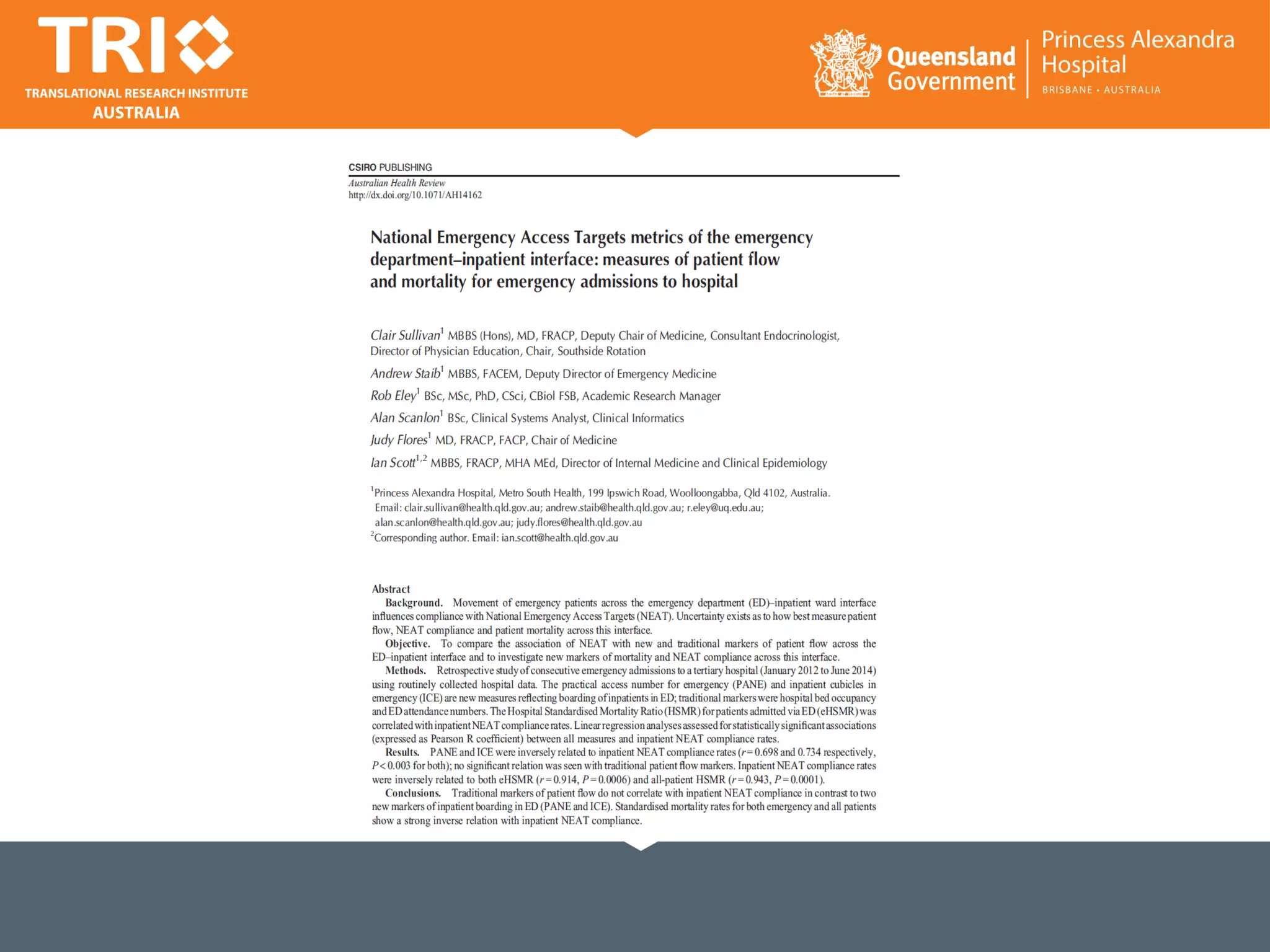
Emergency HSMR and Inpatient NEAT: An Even
More Powerful Association
Sullivan C, Staib, A., Eley, R., Scanlon, A., Flores, J., Scott, I. NEAT metrics of the ED-inpatient interface: measures of
patient flow and mortality for emergency admissions to hospital. Australian Health Review. 2015 May 18. doi:
10.1071/AH14162. [Epub ahead of print]
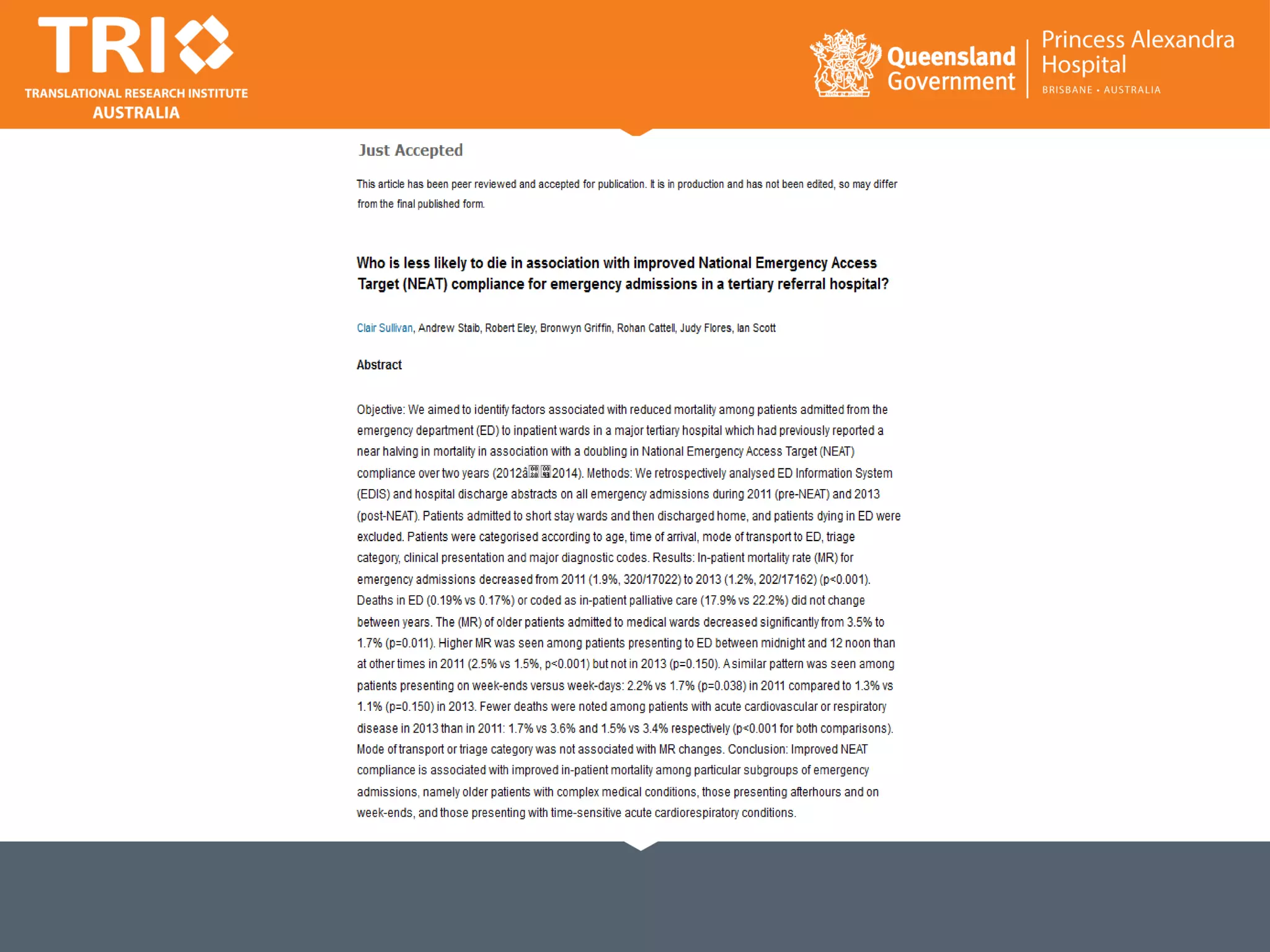
Which patients are more sensitive to the quality of the ED-inpatient interface?
Sullivan C, Staib, A., Eley, R., Scanlon, A., Flores, J., Scott, I Who is less likely to die in association with
improved National Emergency Access Target compliance for emergency admissions in a tertiary
referral hospital?. Australian Health Review. 2015 May 18. doi: 10.1071/AH14242 [Epub ahead of
print]
Which diseases are more sensitive to the quality of the ED-inpatient interface?
Sullivan C, Staib, A., Eley, R., Scanlon, A., Flores, J., Scott, I Who is less likely to die in association with improved
National Emergency Access Target compliance for emergency admissions in a tertiary referral hospital?. Australian
Health Review. 2015 May 18. doi: 10.1071/AH14242 [Epub ahead of print]
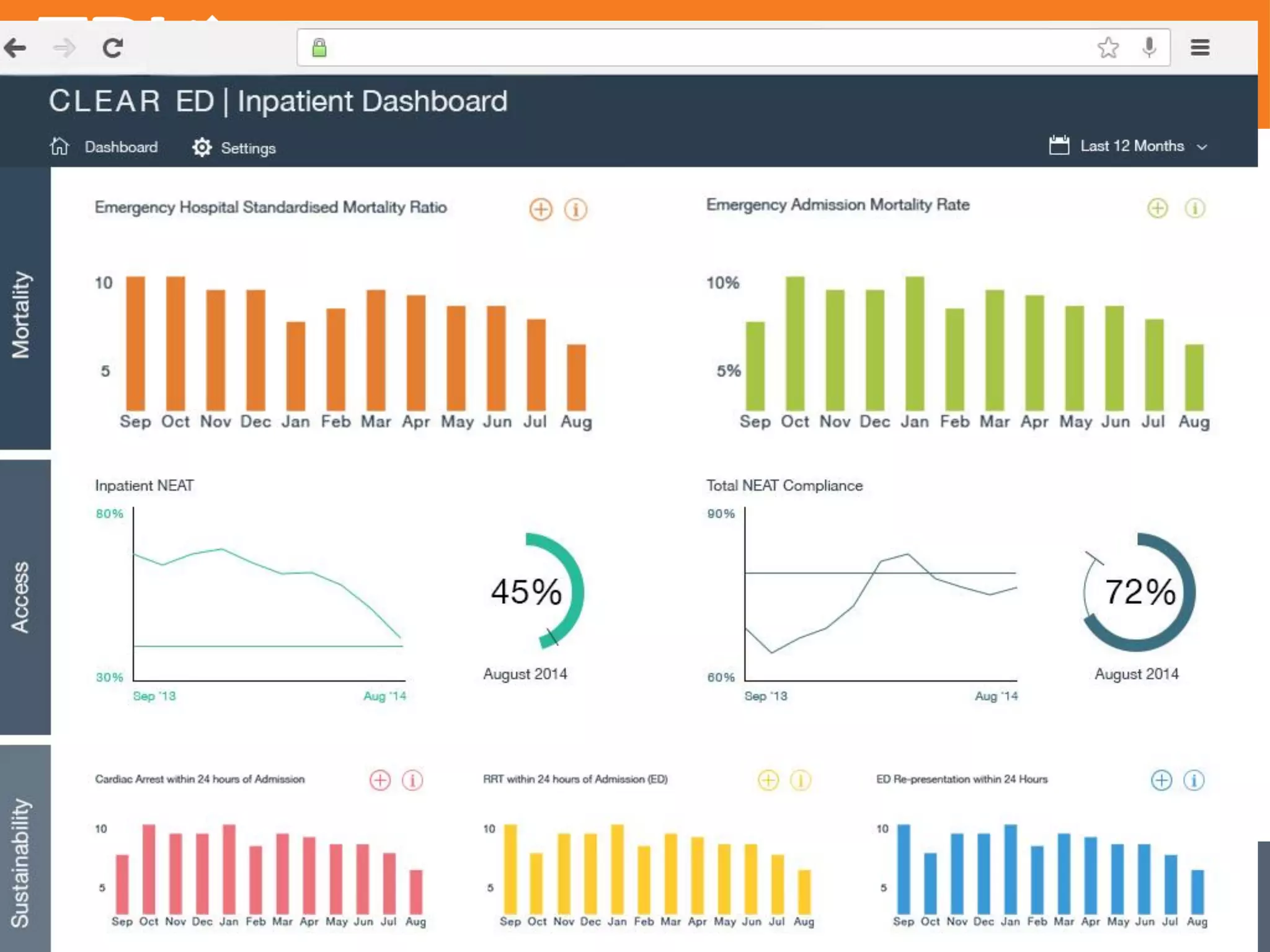
The EDii Patient Safety Dashboard
Linking Process Measures and
Outcomes
What is the ED-inpatient interface
(EDii)?
• Transfer of patient care from ED clinicians to inpatient
clinicians
• Not a place, but a process
• Often a complicated period of shared care
• Lots of professional tension across EDii
Sullivan C and Staib A (2015) The Health Advocate
Lawrence, Sullivan et al (2016) EMA in press
The ED-inpatient interface (EDii)
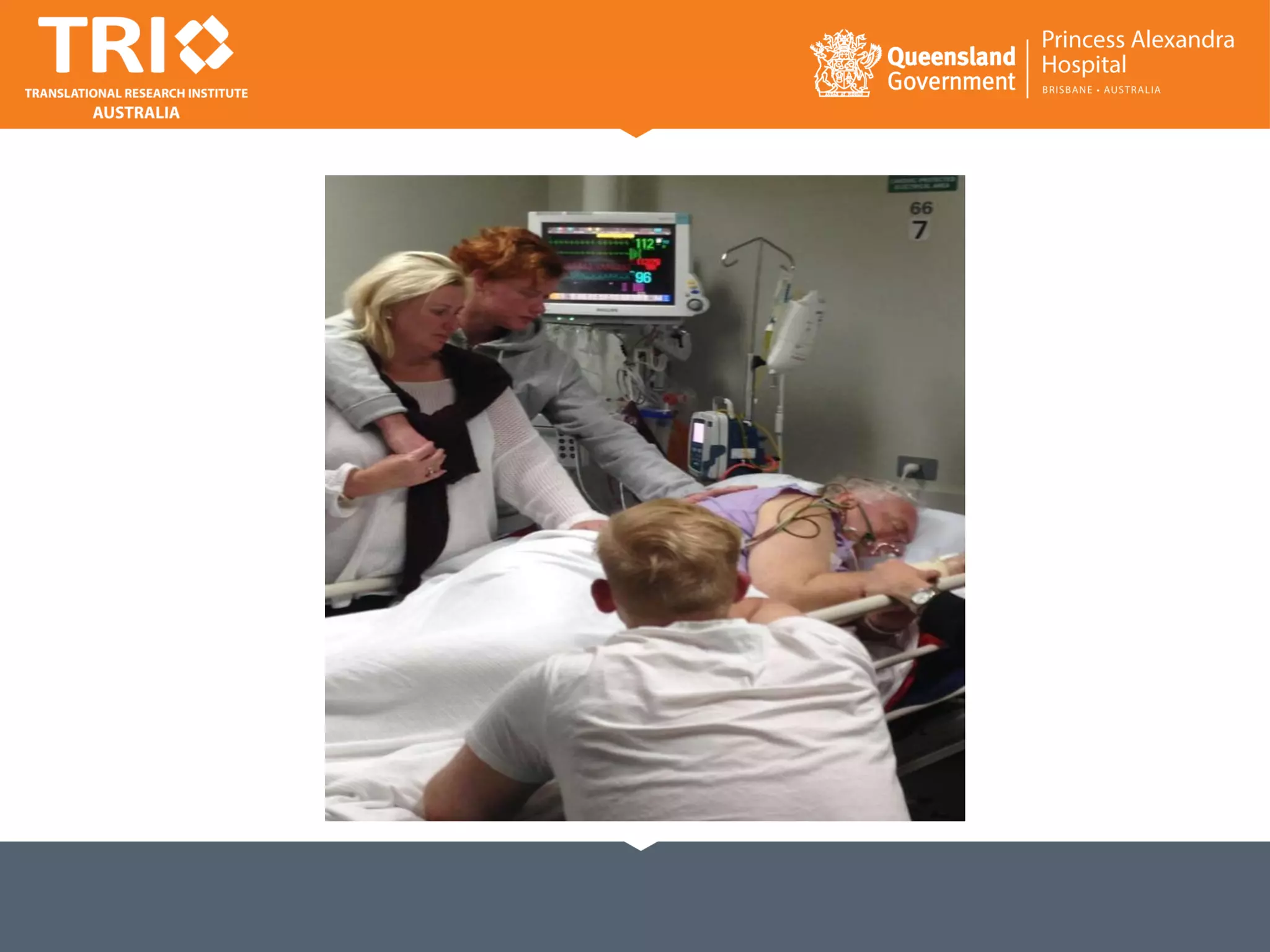
• Sickest, most complex patients
• At their most vulnerable
• Patients are harmed with EDii dysfunction
Fatovich, D.M., Y. Nagree, and P. Sprivulis, Access block causes emergency
department overcrowding and ambulance diversion in Perth, Western
Australia. Emerg Med J, 2005. 22(5): p. 351-4.
EDii is important
• scale
-8 million ED attendances/ year
-2.5 million of these patients admitted/year
Australian Institute of Health and Welfare, Australian Hospital Statistics 2013-2014,
Emergency department care. Commonwealth Government Canberra. p19.
EDii is important
• Cost
Average cost of ED admission $8 280
30 000 ED admissions/year
$248 400 000/year at PAH is spent on Edii
HIMS data PAH accessed September 2015
EDii is important
• Politics
It’s the only area of practice where politicians have
imposed time targets for clinical care…without a
robust system for monitoring patient outcomes
Stokes, B., Four Hour Rule Program Progress and Issues Review, in Delivering a Healthy WA, D.o.
Health, Editor 2011, Government of Western Australia. p. 1-84.
EDii is hard
1. Complex negotiation between clinical services
(each team has different priorities)
2. Incomplete available clinical information and
diagnostic uncertainty
3. Rapid changes in patient condition
Sullivan C and Staib A (2015) The Health Advocate
EDii is hard
4. The unscheduled nature of the care competing with
scheduled events for inpatient teams
5. Limited resources including ED pressures
(overcrowding) and inpatient pressures (limited bed
availability)
6. Time pressures
Sullivan C and Staib A The Health Advocate
EDii dysfunction
• Access Block:
-Proportion of patients waiting >8 hours to get to an
inpatient bed
-Is a symptom of EDii dysfunction
-Lack of inpatient beds is just one cause of Edii
dysfunction…
Richardson, D.B., Access block point prevalence study 2014: 4-hour target still out of reach, in
Australian College of Emergency Medicine Conference -2014, ACEM, Editor 2014: Melbourne
What do we know about EDii?
• Not much (remarkable given the NEAT!)
• Because traditionally siloed
• Lots of ED research
• Lots of inpatient research
• Nothing much on the interface
-care delivered by separate tribes
-data across the interface not linked
Sullivan C and Staib A The Health Advocate IN PRESS
Future of EDii
• Why have we been so focussed on process
measures?
• Makes no sense
• But easy to measure…
• Shouldn't we focus on the patients?
The future of EDii
• We and others have shown that by focussing on the
patient (important to us) means that lots of the process
measures get better (important to exec)
• We want to deliver high value care
• When determining the value of our care, we should
look at the triple test (process measures, cost, patient
outcomes )
Partington, Andrew, Chew, Derek P., Ben-Tovim, David, Horsfall, Matthew, Hakendorf, Paul, and Karnon,
Jonathan (2016). Screening for important unwarranted variation in clinical practice: a triple-test of
processes of care, costs and patient outcomes. Aust. Health Review
The future of EDii
The future of EDii
• Historical : measure process measures, who knows
about patients?
The future of EDii
• We are focussed on patient outcomes
• Everything we do is focussed on improving the
efficiency and quality of care we give to our patients
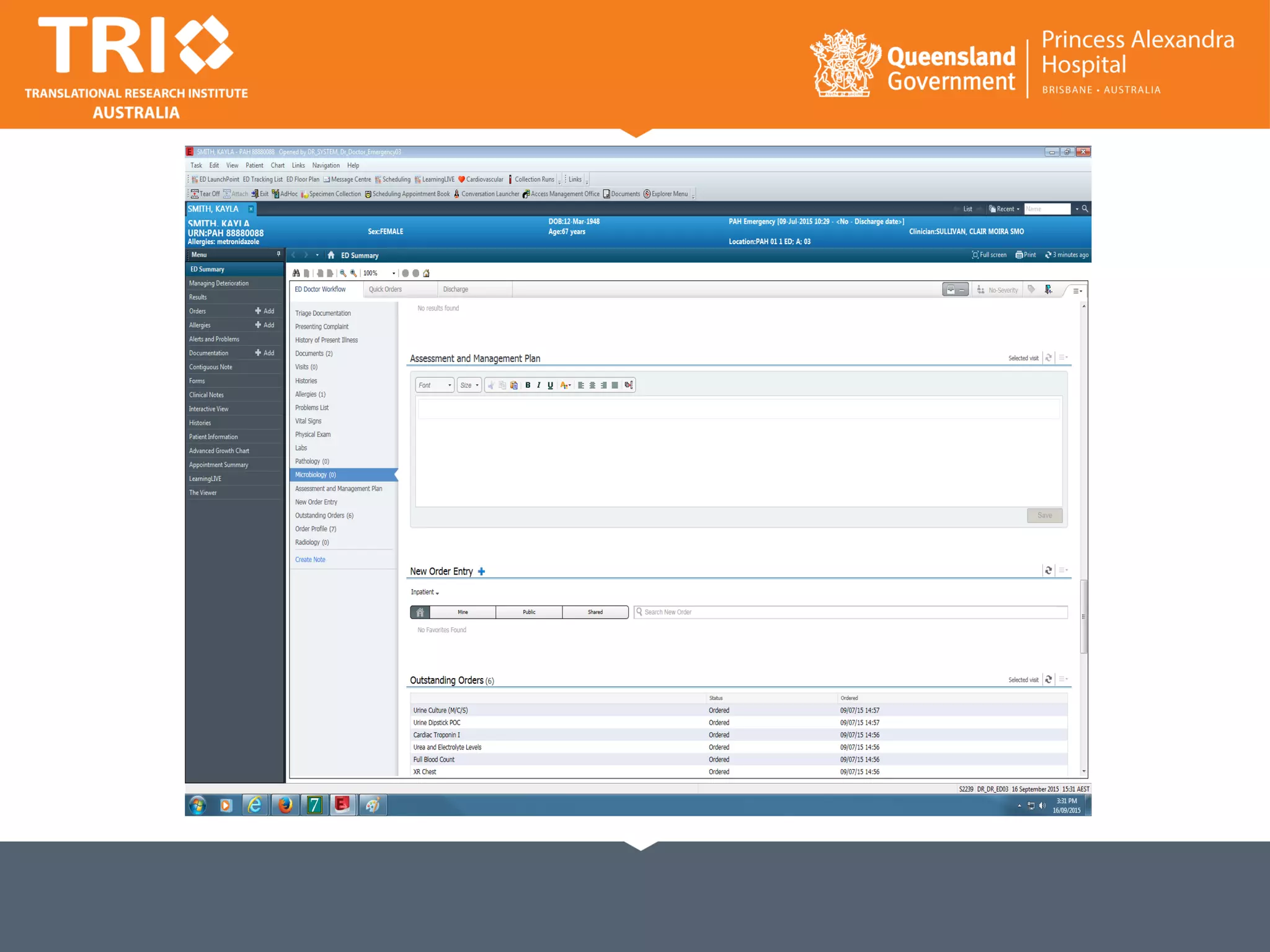
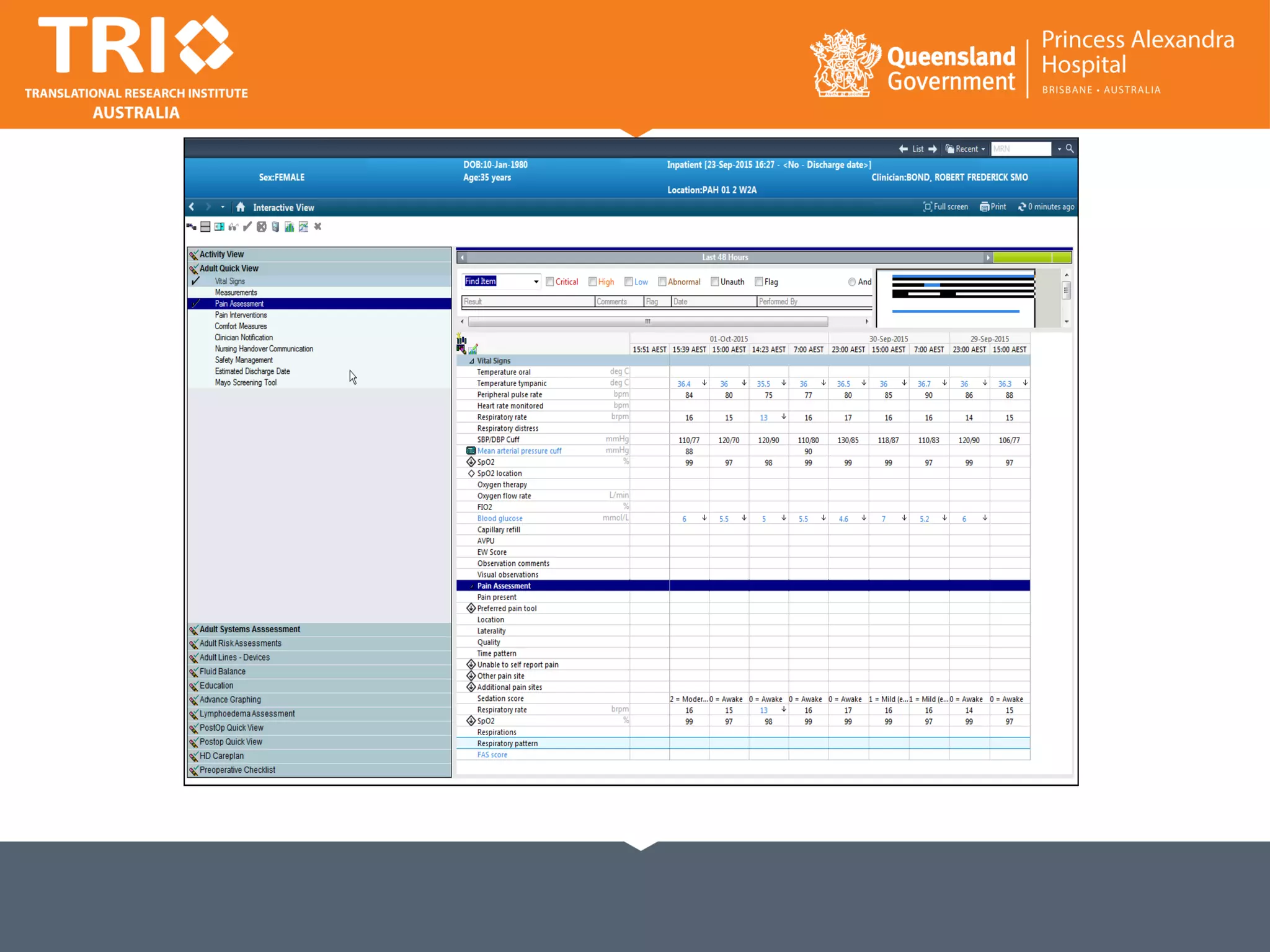
• No paper obs chart
• Obs taken then uploaded into EMR via
wifi
• Deteriorating patients identified via
“between the flags”
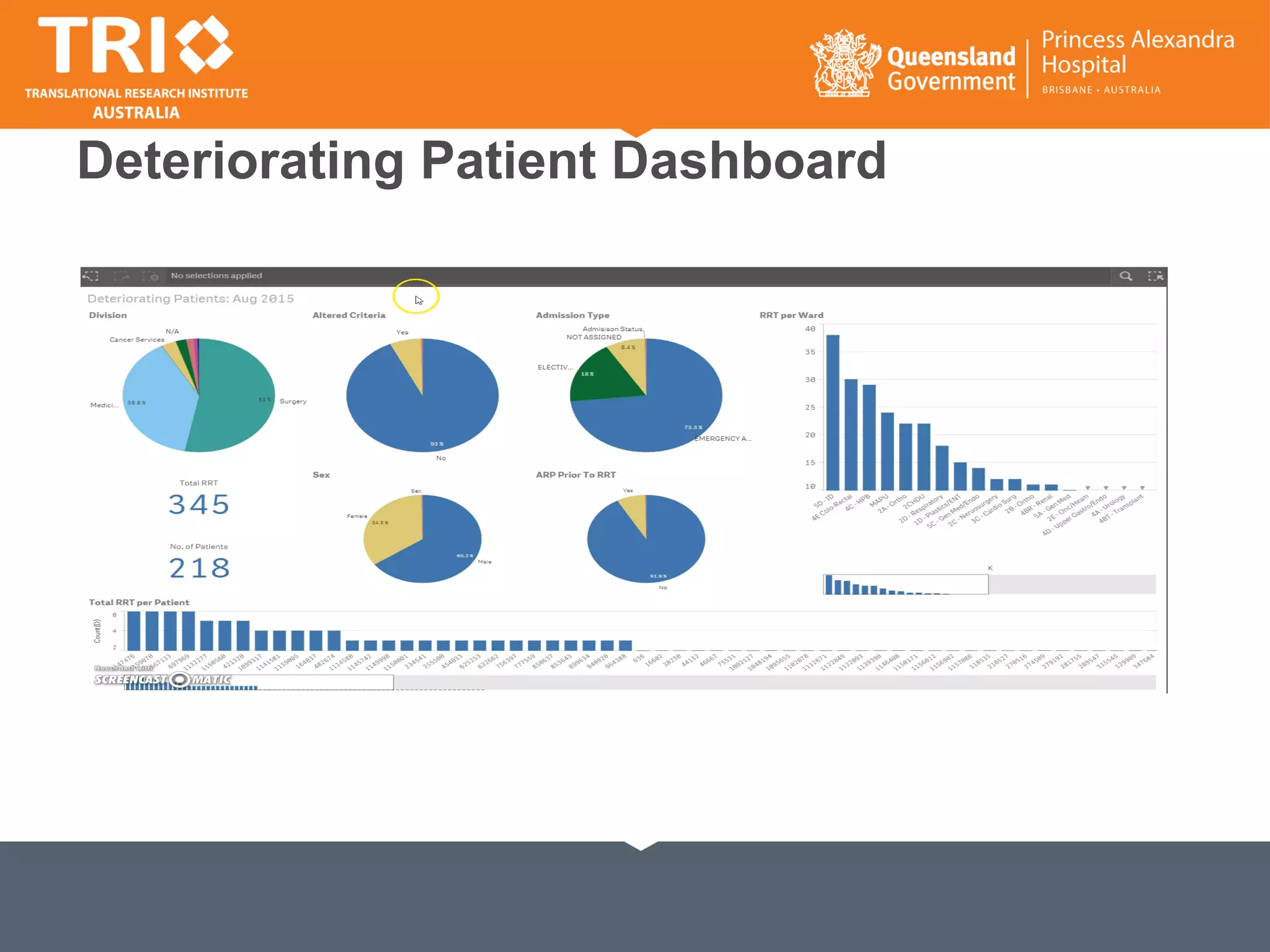
Deteriorating Patient Dashboard
Summary
• As our health system matures, shift will move away
from process measures to patient centred care
• The size, scale and public profile of EDii make this
system an ideal forum to pioneer patient focussed
care
• All clinical redesign we undertaken should pass the
Ben Tovim triple test (cost, process measures, patient
outcomes)
References
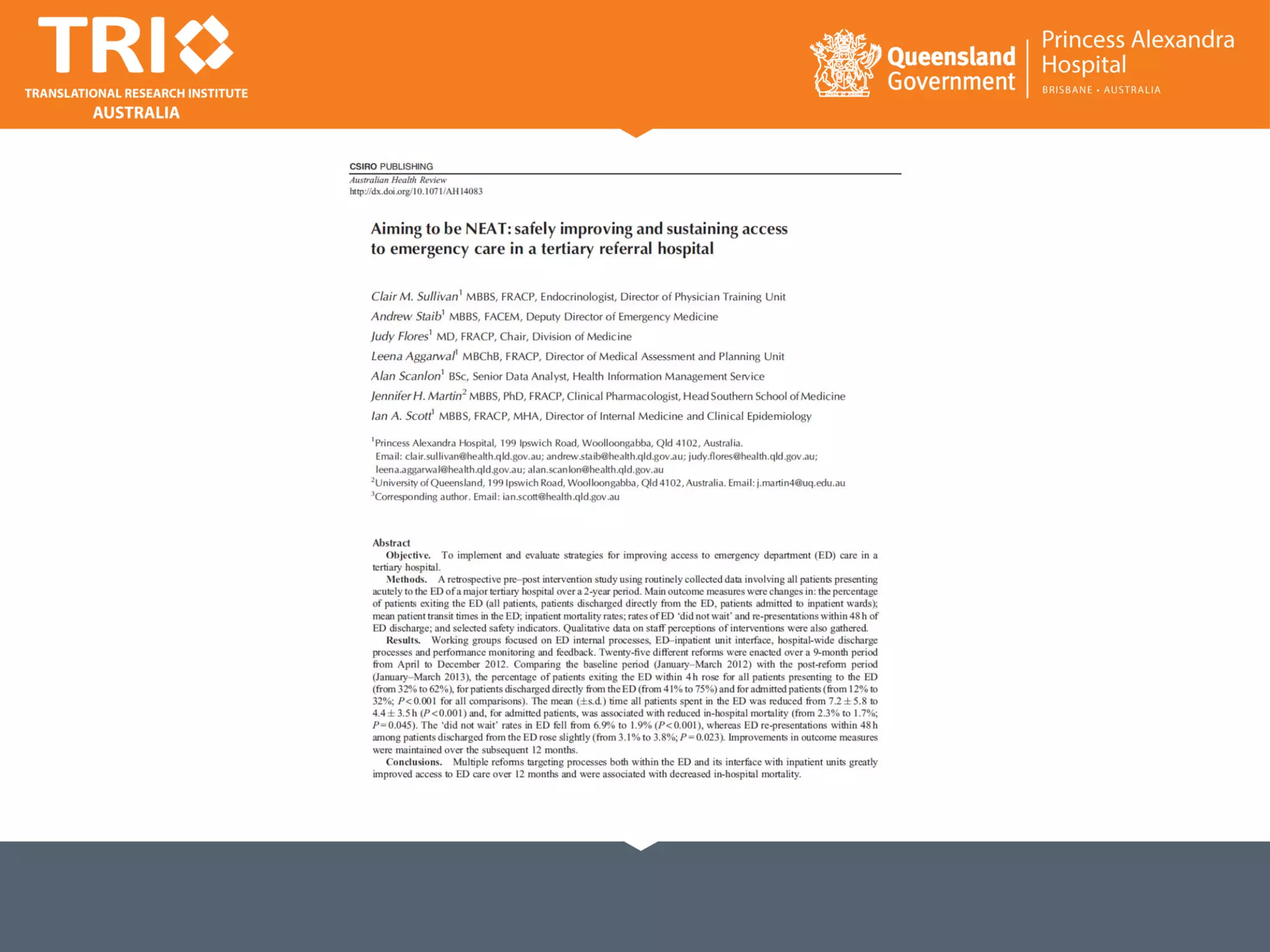
• Sullivan CM, Staib, A., Flores, J., Aggarwal, L., Scanlon, A., Martin, J. H., Scott, I. A. Aiming to be
NEAT: safely improving and sustaining access to emergency care in a tertiary referral hospital.
Australian health review : a publication of the Australian Hospital Association. 2014 Oct 9.
PubMed PMID: 25297518. Epub 2014/10/10. Eng.
• Sullivan C, Staib, A., Eley, R., Scanlon, A., Flores, J., Scott, I. NEAT metrics of the ED-inpatient
interface: measures of patient flow and mortality for emergency admissions to hospital. Australian
Health Review. 2015 May 18. doi: 10.1071/AH14162. [Epub ahead of print]
• Sullivan C, Staib, A., Eley, R., Scanlon, A., Flores, J., Scott, I Who is less likely to die in
association with improved National Emergency Access Target compliance for emergency
admissions in a tertiary referral hospital?. Australian Health Review. 2015 May 18. doi:
10.1071/AH14242 [Epub ahead of print]
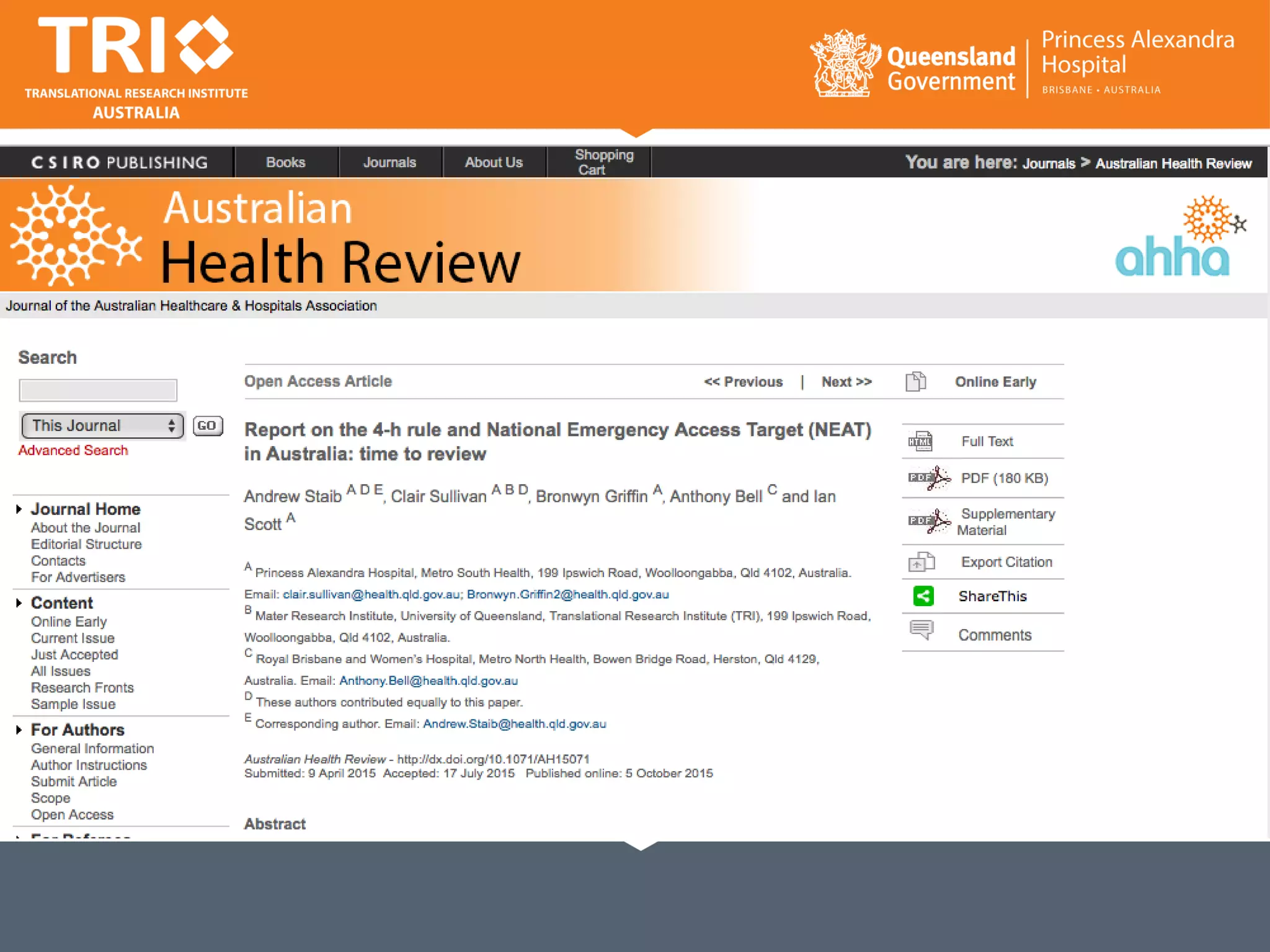
• Sullivan C, Staib, AN., Eley R., Griffin, BG., Flores, J., Cattell, R., and Scott, I. A report on the Four
Hour Rule and the National Emergency Access Target: time to review . Australian Health Review.
2015; IN PRESS abstract online AH15071 17th July 2015
Sullivan C and Staib A (December 2015) Emergency Admissions: caring for our most vulnerable
patients (8-11) The Health Advocate
Lawrence, Sullivan et al (2016) Admission of medical patients from the Emergency Department: An
assessment of the attitudes, perspectives and practices of Internal Medicine and Emergency
Medicine trainees Emergency Medicine Australasia IN PRESS
Linking NEAT performance with quality outcomes

Linking NEAT performance with quality outcomes

  • 1.
    Dr Clair SullivanMBBS(Hons) MD FRACP Dr Andrew Staib MBBS FACEM The ED-inpatient Interface: A User’s Guide
  • 2.
    Outline - work sofar linking ED process measures to inpatient outcomes - characterise the ED-inpatient interface (Edii) - look at the future of EDii
  • 3.
    Our day jobs •We work at one of Australia’s leading hospitals • Over 700 beds, over 60 000 ED presentations/year • 90 000 admissions to ward/year • Over 750 000 outpatient appointments/year • Nearly 1000 doctors, 6000 staff • Massive basic science and clinical research facility • Like most Australian hospitals, no health systems research • We are not managers/administrators but systems physicians
  • 7.
    Slope = -1.802± 0.207 Y-intercept = 116 ± 4.689 X-intercept = 64 R2 = 0.873 P<0.0001 Emergency HSMR and Inpatient NEAT: An Even More Powerful Association Sullivan C, Staib, A., Eley, R., Scanlon, A., Flores, J., Scott, I. NEAT metrics of the ED-inpatient interface: measures of patient flow and mortality for emergency admissions to hospital. Australian Health Review. 2015 May 18. doi: 10.1071/AH14162. [Epub ahead of print]
  • 9.
    Which patients aremore sensitive to the quality of the ED-inpatient interface? Sullivan C, Staib, A., Eley, R., Scanlon, A., Flores, J., Scott, I Who is less likely to die in association with improved National Emergency Access Target compliance for emergency admissions in a tertiary referral hospital?. Australian Health Review. 2015 May 18. doi: 10.1071/AH14242 [Epub ahead of print]
  • 10.
    Which diseases aremore sensitive to the quality of the ED-inpatient interface? Sullivan C, Staib, A., Eley, R., Scanlon, A., Flores, J., Scott, I Who is less likely to die in association with improved National Emergency Access Target compliance for emergency admissions in a tertiary referral hospital?. Australian Health Review. 2015 May 18. doi: 10.1071/AH14242 [Epub ahead of print]
  • 12.
    The EDii PatientSafety Dashboard Linking Process Measures and Outcomes
  • 14.
    What is theED-inpatient interface (EDii)? • Transfer of patient care from ED clinicians to inpatient clinicians • Not a place, but a process • Often a complicated period of shared care • Lots of professional tension across EDii Sullivan C and Staib A (2015) The Health Advocate Lawrence, Sullivan et al (2016) EMA in press
  • 15.
    The ED-inpatient interface(EDii) • Sickest, most complex patients • At their most vulnerable • Patients are harmed with EDii dysfunction Fatovich, D.M., Y. Nagree, and P. Sprivulis, Access block causes emergency department overcrowding and ambulance diversion in Perth, Western Australia. Emerg Med J, 2005. 22(5): p. 351-4.
  • 16.
    EDii is important •scale -8 million ED attendances/ year -2.5 million of these patients admitted/year Australian Institute of Health and Welfare, Australian Hospital Statistics 2013-2014, Emergency department care. Commonwealth Government Canberra. p19.
  • 17.
    EDii is important •Cost Average cost of ED admission $8 280 30 000 ED admissions/year $248 400 000/year at PAH is spent on Edii HIMS data PAH accessed September 2015
  • 18.
    EDii is important •Politics It’s the only area of practice where politicians have imposed time targets for clinical care…without a robust system for monitoring patient outcomes Stokes, B., Four Hour Rule Program Progress and Issues Review, in Delivering a Healthy WA, D.o. Health, Editor 2011, Government of Western Australia. p. 1-84.
  • 19.
    EDii is hard 1.Complex negotiation between clinical services (each team has different priorities) 2. Incomplete available clinical information and diagnostic uncertainty 3. Rapid changes in patient condition Sullivan C and Staib A (2015) The Health Advocate
  • 20.
    EDii is hard 4.The unscheduled nature of the care competing with scheduled events for inpatient teams 5. Limited resources including ED pressures (overcrowding) and inpatient pressures (limited bed availability) 6. Time pressures Sullivan C and Staib A The Health Advocate
  • 21.
    EDii dysfunction • AccessBlock: -Proportion of patients waiting >8 hours to get to an inpatient bed -Is a symptom of EDii dysfunction -Lack of inpatient beds is just one cause of Edii dysfunction… Richardson, D.B., Access block point prevalence study 2014: 4-hour target still out of reach, in Australian College of Emergency Medicine Conference -2014, ACEM, Editor 2014: Melbourne
  • 22.
    What do weknow about EDii? • Not much (remarkable given the NEAT!) • Because traditionally siloed • Lots of ED research • Lots of inpatient research • Nothing much on the interface -care delivered by separate tribes -data across the interface not linked Sullivan C and Staib A The Health Advocate IN PRESS
  • 23.
    Future of EDii •Why have we been so focussed on process measures? • Makes no sense • But easy to measure… • Shouldn't we focus on the patients?
  • 25.
    The future ofEDii • We and others have shown that by focussing on the patient (important to us) means that lots of the process measures get better (important to exec) • We want to deliver high value care • When determining the value of our care, we should look at the triple test (process measures, cost, patient outcomes ) Partington, Andrew, Chew, Derek P., Ben-Tovim, David, Horsfall, Matthew, Hakendorf, Paul, and Karnon, Jonathan (2016). Screening for important unwarranted variation in clinical practice: a triple-test of processes of care, costs and patient outcomes. Aust. Health Review
  • 26.
  • 27.
    The future ofEDii • Historical : measure process measures, who knows about patients?
  • 29.
    The future ofEDii • We are focussed on patient outcomes • Everything we do is focussed on improving the efficiency and quality of care we give to our patients
  • 33.
    • No paperobs chart • Obs taken then uploaded into EMR via wifi • Deteriorating patients identified via “between the flags”
  • 34.
  • 35.
    Summary • As ourhealth system matures, shift will move away from process measures to patient centred care • The size, scale and public profile of EDii make this system an ideal forum to pioneer patient focussed care • All clinical redesign we undertaken should pass the Ben Tovim triple test (cost, process measures, patient outcomes)
  • 36.
    References • Sullivan CM,Staib, A., Flores, J., Aggarwal, L., Scanlon, A., Martin, J. H., Scott, I. A. Aiming to be NEAT: safely improving and sustaining access to emergency care in a tertiary referral hospital. Australian health review : a publication of the Australian Hospital Association. 2014 Oct 9. PubMed PMID: 25297518. Epub 2014/10/10. Eng. • Sullivan C, Staib, A., Eley, R., Scanlon, A., Flores, J., Scott, I. NEAT metrics of the ED-inpatient interface: measures of patient flow and mortality for emergency admissions to hospital. Australian Health Review. 2015 May 18. doi: 10.1071/AH14162. [Epub ahead of print] • Sullivan C, Staib, A., Eley, R., Scanlon, A., Flores, J., Scott, I Who is less likely to die in association with improved National Emergency Access Target compliance for emergency admissions in a tertiary referral hospital?. Australian Health Review. 2015 May 18. doi: 10.1071/AH14242 [Epub ahead of print] • Sullivan C, Staib, AN., Eley R., Griffin, BG., Flores, J., Cattell, R., and Scott, I. A report on the Four Hour Rule and the National Emergency Access Target: time to review . Australian Health Review. 2015; IN PRESS abstract online AH15071 17th July 2015
  • 37.
    Sullivan C andStaib A (December 2015) Emergency Admissions: caring for our most vulnerable patients (8-11) The Health Advocate Lawrence, Sullivan et al (2016) Admission of medical patients from the Emergency Department: An assessment of the attitudes, perspectives and practices of Internal Medicine and Emergency Medicine trainees Emergency Medicine Australasia IN PRESS