National Services for
Health Improvement
(NSHI)
Cardiovascular Programme
Aims
To understand your needs and priorities for your CVD
services and demonstrate we have the capability,
experience
and track record to work in partnership to develop and
deliver
a programme to support you achieve your desired
outcomes
and leave a legacy for continued management of CVD
Cardiovascular disease
• CVD still remains responsible for approx. a third of deaths in the
UK each year.
• In 2011 there were estimated to be nearly 5 million people over
the age of 16 living with CVD.
• There are millions of people with undiagnosed risk factors or
conditions who are not being managed
• Significant numbers of patients are not receiving optimal
management and appropriate ongoing support
• There is considerable variation in the quality of services and
outcomes across the country
• Past gains will not be sustained
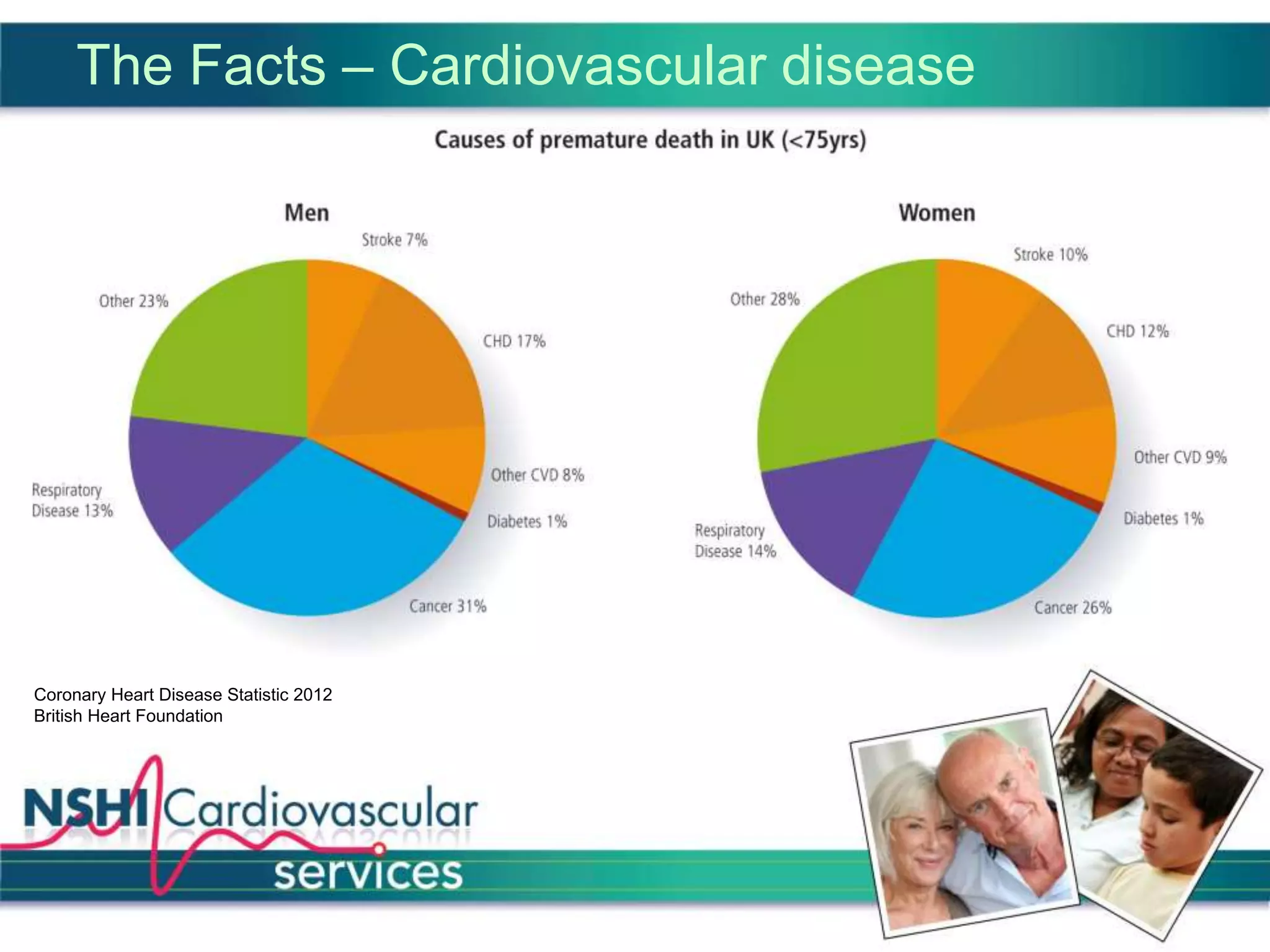
The Facts – Cardiovascular disease
Coronary Heart Disease Statistic 2012
British Heart Foundation
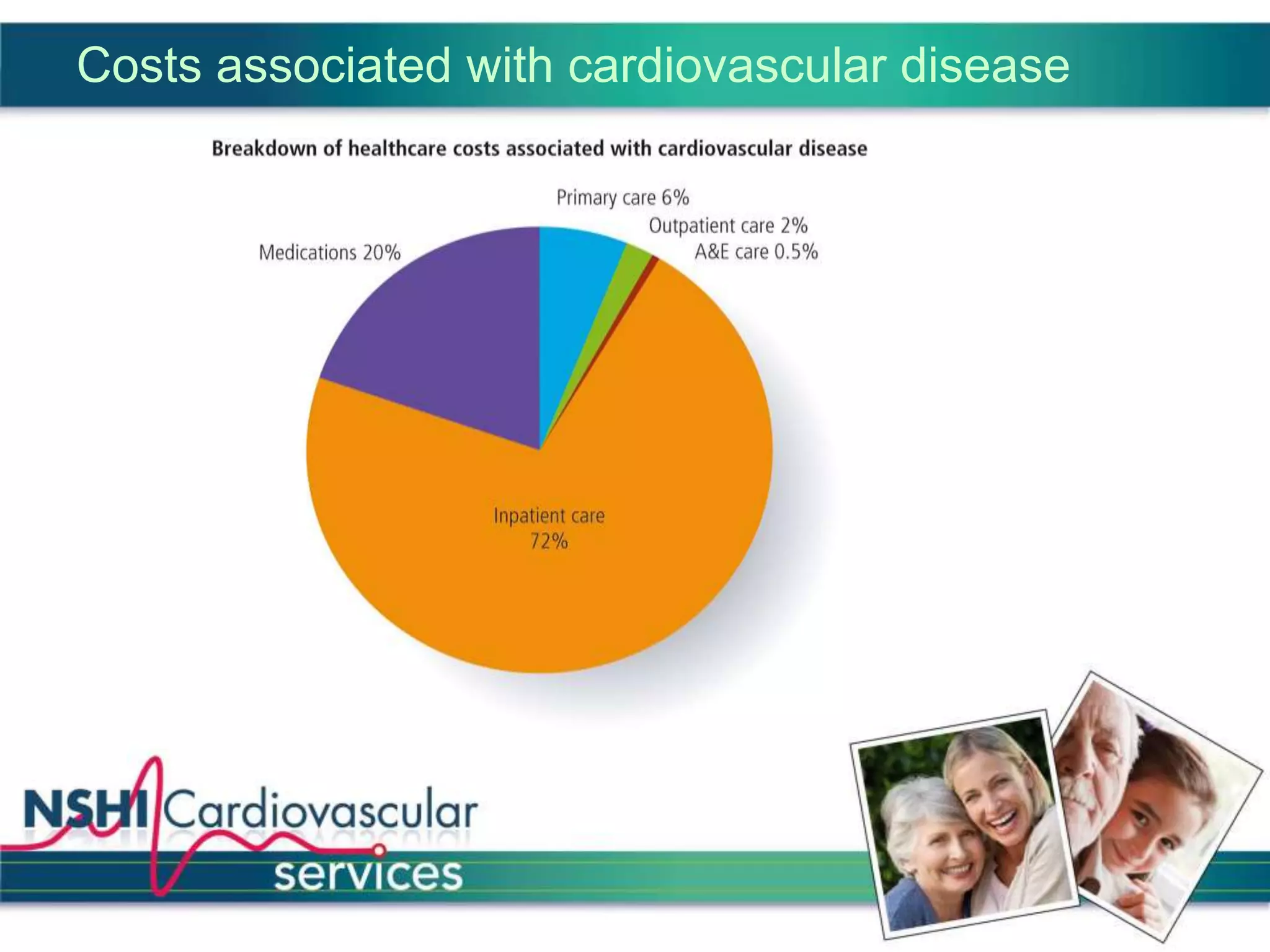
Costs associated with cardiovascular disease
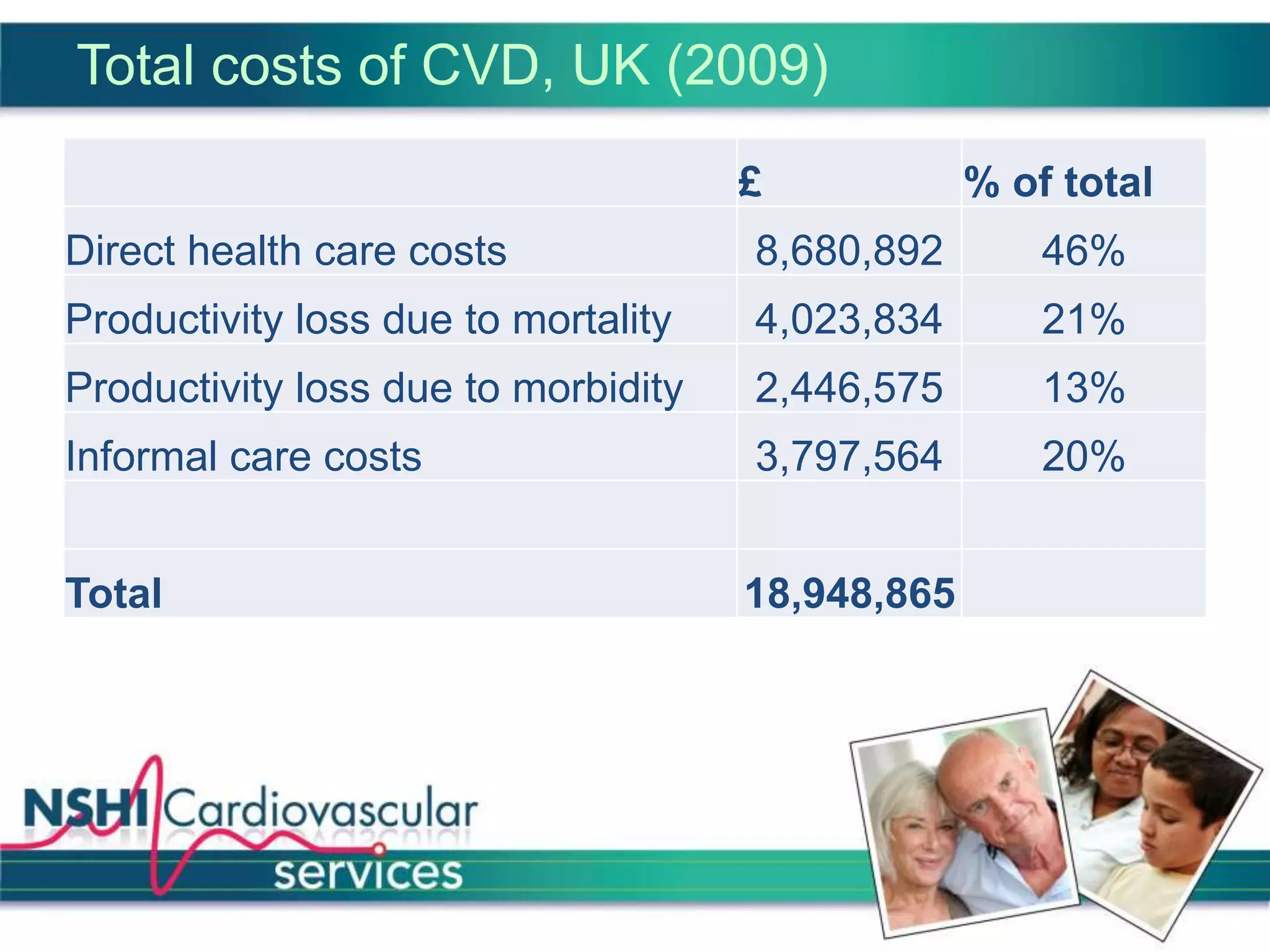
Total costs of CVD, UK (2009)
£ % of total
Direct health care costs 8,680,892 46%
Productivity loss due to mortality 4,023,834 21%
Productivity loss due to morbidity 2,446,575 13%
Informal care costs 3,797,564 20%
Total 18,948,865
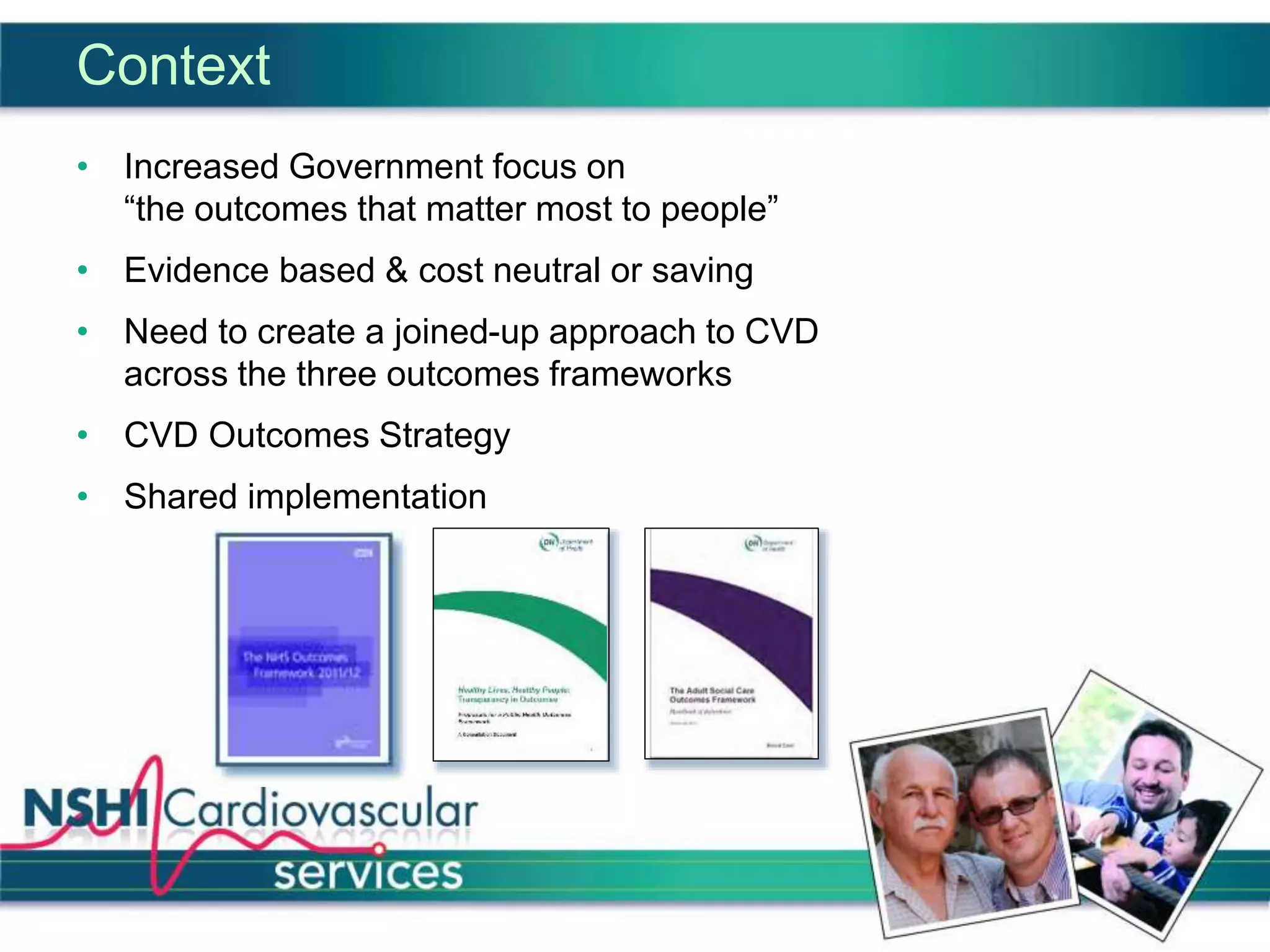
Context
• Increased Government focus on
“the outcomes that matter most to people”
• Evidence based & cost neutral or saving
• Need to create a joined-up approach to CVD
across the three outcomes frameworks
• CVD Outcomes Strategy
• Shared implementation
CVD OS Scope and recommendations
“To improve outcomes for people with,
or at risk of developing, CVD”
• Manage CVD as a single family of diseases
• Improve prevention & risk management
• Improving and enhancing case finding in primary care
• Better early management and secondary prevention
in the community
• Improve acute care
• Improve care for patients living with CVD
• Improve end of life care for patients with CVD
Implications of CVD OS for Primary Care
Many of the actions required to meet the recommendations
fall on Primary care services
• CCGs will be required to commission services
in line with NICE clinical guidelines
• Implement Integrated CVD Assessment
• Improve identification & management of all CVD conditions in
primary care
• Improved & earlier referral to secondary care
• Better care planning
NSHI – Our History & reputation
• Management team designed and delivered services
to over 10,000 primary care practices
• Delivered CV and Diabetes services to >3,000 UK practices
• Our work is outcome focussed with an academic driver
• Designed and delivered services to >70% PCTs/CCGs
• All senior management work directly with the NHS
• Outstanding and consistent KPI delivery
• Appreciated for how we manage people
• Long term partner – currently our average retention
of nursing contracts is greater than 6 years
Our Nurses
Pharmaceutical Field Awards
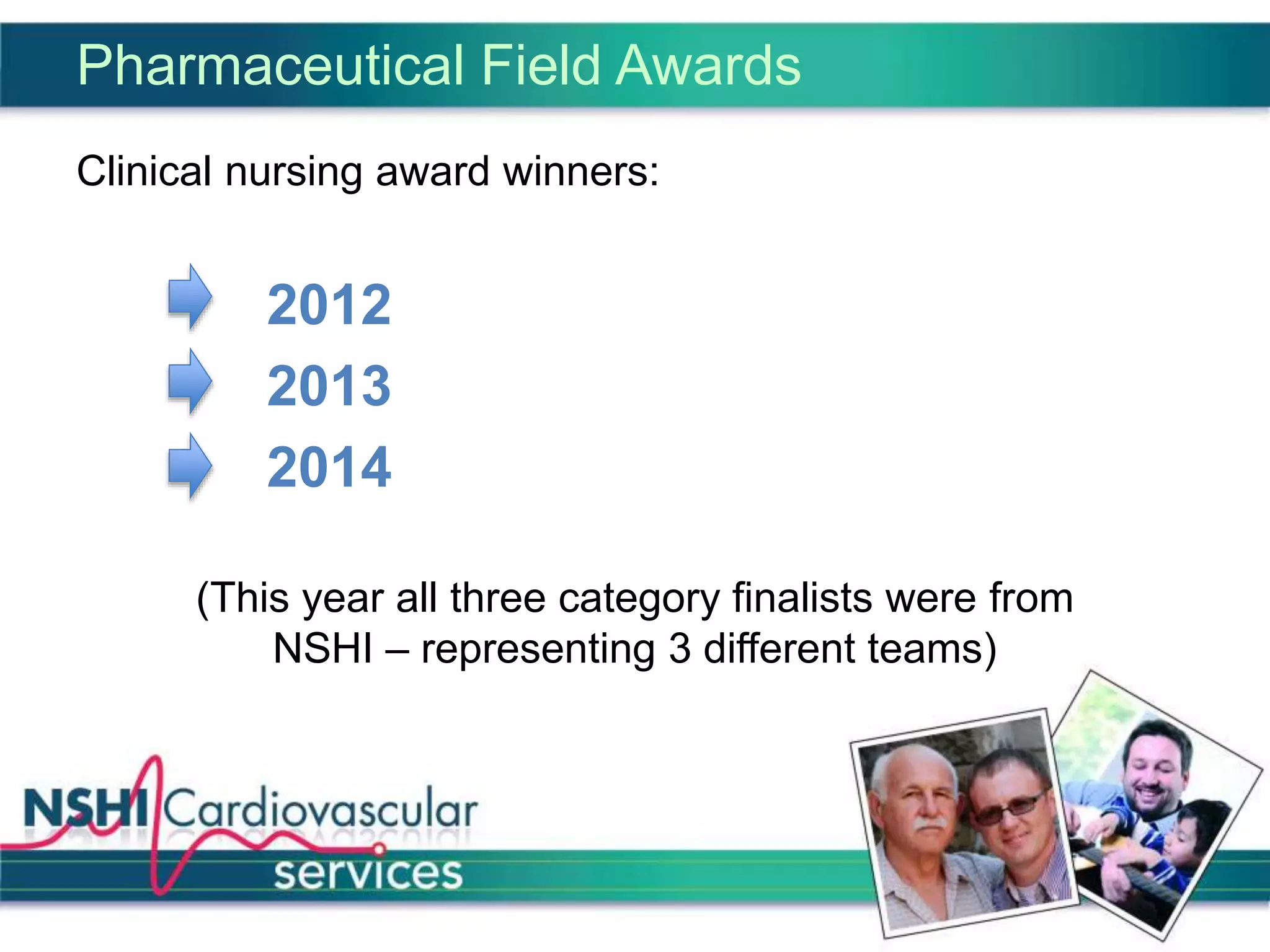
Clinical nursing award winners:
2012
2013
2014
(This year all three category finalists were from
NSHI – representing 3 different teams)
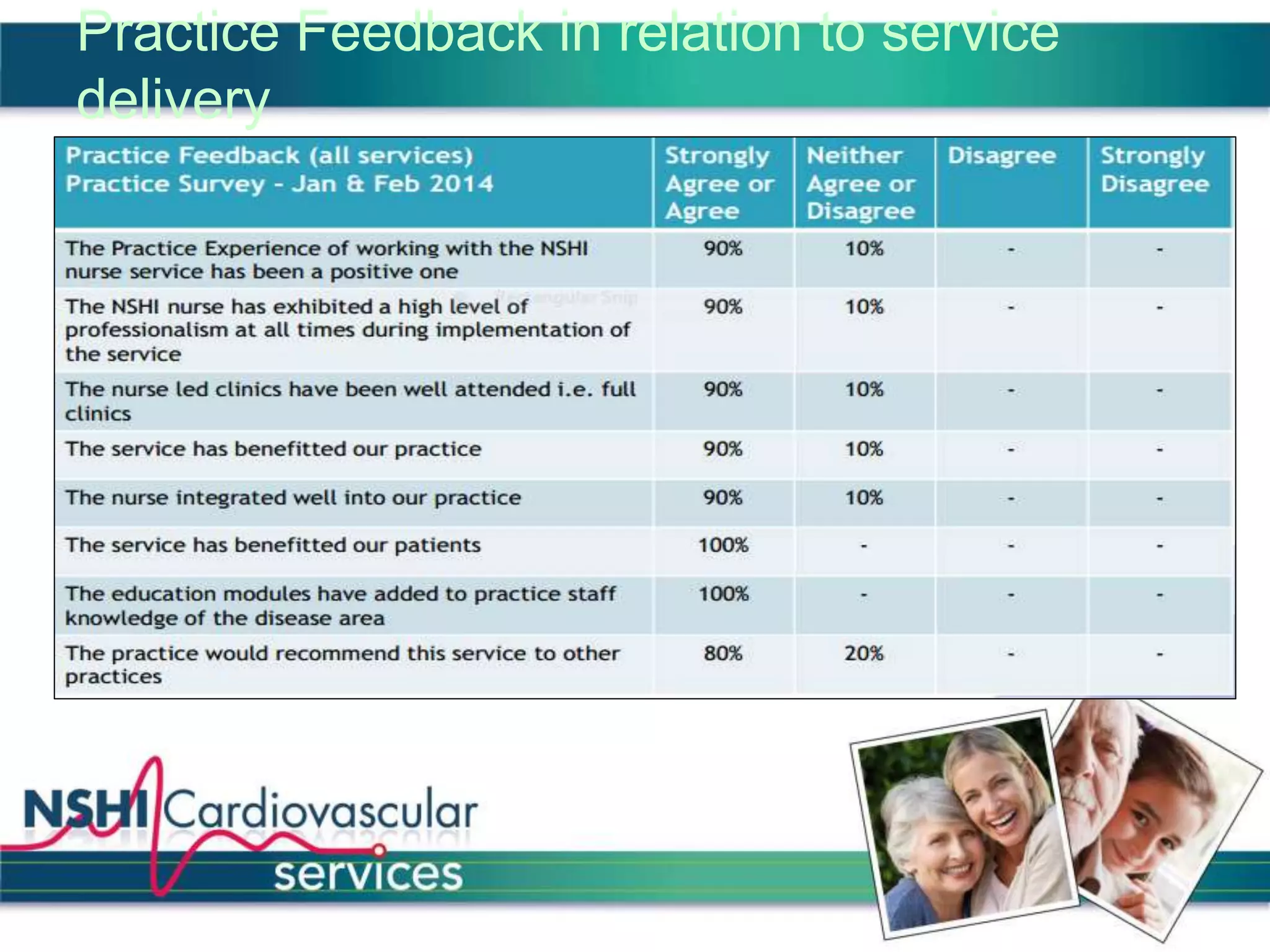
Practice Feedback in relation to service
delivery
NSHI – CVD Top line Programme outcomes
• Set the foundation for reducing admissions and readmissions
• Reduce inappropriate referrals to secondary care
• Improve the patient experience
• Reduce inequalities of patient management across the locality
• Medicines management in line with national and local guidance and
applied uniformly across the CCG locality
• Improve the efficiency of service delivery and utilisation of resource
• Increase the uptake of patient health-checks and follow-up
• Identification and treatment of undiagnosed and lost-to-follow-up patients
• Developing skills within the primary care teams
Contact the Author
• Adrian Radue
• Director CSO
• Office: 01322 312049
•
• National Services for Health Improvement Ltd
• www.nshi.co.uk
• NSHI Ltd
Nucleus@The Bridge
London Science and Business Park
Brunel Way
Dartford Kent DA1 5GA

NSHI Ltd CVD Programme Key Facts 2014

  • 1.
    National Services for HealthImprovement (NSHI) Cardiovascular Programme
  • 2.
    Aims To understand yourneeds and priorities for your CVD services and demonstrate we have the capability, experience and track record to work in partnership to develop and deliver a programme to support you achieve your desired outcomes and leave a legacy for continued management of CVD
  • 3.
    Cardiovascular disease • CVDstill remains responsible for approx. a third of deaths in the UK each year. • In 2011 there were estimated to be nearly 5 million people over the age of 16 living with CVD. • There are millions of people with undiagnosed risk factors or conditions who are not being managed • Significant numbers of patients are not receiving optimal management and appropriate ongoing support • There is considerable variation in the quality of services and outcomes across the country • Past gains will not be sustained
  • 4.
    The Facts –Cardiovascular disease Coronary Heart Disease Statistic 2012 British Heart Foundation
  • 5.
    Costs associated withcardiovascular disease
  • 6.
    Total costs ofCVD, UK (2009) £ % of total Direct health care costs 8,680,892 46% Productivity loss due to mortality 4,023,834 21% Productivity loss due to morbidity 2,446,575 13% Informal care costs 3,797,564 20% Total 18,948,865
  • 7.
    Context • Increased Governmentfocus on “the outcomes that matter most to people” • Evidence based & cost neutral or saving • Need to create a joined-up approach to CVD across the three outcomes frameworks • CVD Outcomes Strategy • Shared implementation
  • 8.
    CVD OS Scopeand recommendations “To improve outcomes for people with, or at risk of developing, CVD” • Manage CVD as a single family of diseases • Improve prevention & risk management • Improving and enhancing case finding in primary care • Better early management and secondary prevention in the community • Improve acute care • Improve care for patients living with CVD • Improve end of life care for patients with CVD
  • 9.
    Implications of CVDOS for Primary Care Many of the actions required to meet the recommendations fall on Primary care services • CCGs will be required to commission services in line with NICE clinical guidelines • Implement Integrated CVD Assessment • Improve identification & management of all CVD conditions in primary care • Improved & earlier referral to secondary care • Better care planning
  • 10.
    NSHI – OurHistory & reputation • Management team designed and delivered services to over 10,000 primary care practices • Delivered CV and Diabetes services to >3,000 UK practices • Our work is outcome focussed with an academic driver • Designed and delivered services to >70% PCTs/CCGs • All senior management work directly with the NHS • Outstanding and consistent KPI delivery • Appreciated for how we manage people • Long term partner – currently our average retention of nursing contracts is greater than 6 years
  • 11.
  • 12.
    Pharmaceutical Field Awards Clinicalnursing award winners: 2012 2013 2014 (This year all three category finalists were from NSHI – representing 3 different teams)
  • 13.
    Practice Feedback inrelation to service delivery
  • 14.
    NSHI – CVDTop line Programme outcomes • Set the foundation for reducing admissions and readmissions • Reduce inappropriate referrals to secondary care • Improve the patient experience • Reduce inequalities of patient management across the locality • Medicines management in line with national and local guidance and applied uniformly across the CCG locality • Improve the efficiency of service delivery and utilisation of resource • Increase the uptake of patient health-checks and follow-up • Identification and treatment of undiagnosed and lost-to-follow-up patients • Developing skills within the primary care teams
  • 15.
    Contact the Author •Adrian Radue • Director CSO • Office: 01322 312049 • • National Services for Health Improvement Ltd • www.nshi.co.uk • NSHI Ltd Nucleus@The Bridge London Science and Business Park Brunel Way Dartford Kent DA1 5GA