



Definition
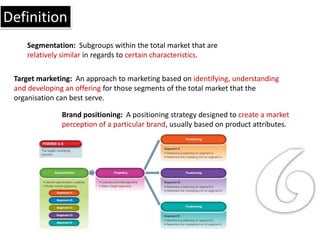
    Segmentation: Subgroups within the total market that are
    relatively similar in regards to certain characteristics.

 Target marketing: An approach to marketing based on identifying, understanding
 and developing an offering for those segments of the total market that the
 organisation can best serve.

               Brand positioning: A positioning strategy designed to create a market
               perception of a particular brand, usually based on product attributes.
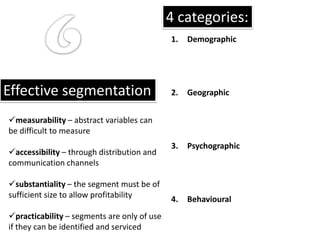
4 categories:
                                             1.   Demographic


Effective segmentation                       2.   Geographic


measurability – abstract variables can
be difficult to measure
                                             3.   Psychographic
accessibility – through distribution and
communication channels

substantiality – the segment must be of
sufficient size to allow profitability       4.   Behavioural
practicability – segments are only of use
if they can be identified and serviced
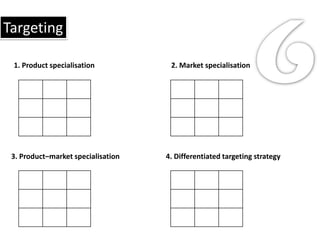
Targeting

 1. Product specialisation           2. Market specialisation


 3. Product–market specialisation   4. Differentiated targeting strategy
Definition
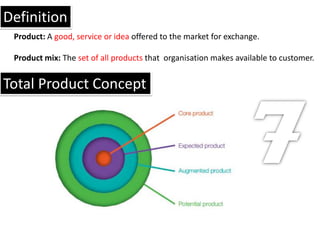
 Product: A good, service or idea offered to the market for exchange.

 Product mix: The set of all products that organisation makes available to customer.


Total Product Concept
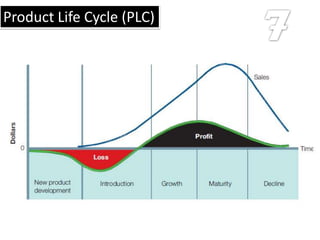
Product Life Cycle (PLC)
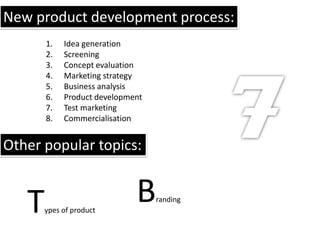
New product development process:
       1.   Idea generation
       2.   Screening
       3.   Concept evaluation
       4.   Marketing strategy
       5.   Business analysis
       6.   Product development
       7.   Test marketing
       8.   Commercialisation


Other popular topics:


   T   ypes of product
                             B    randing
Definition
      Integrated marketing communications (IMC):
       The coordination of promotional efforts (advertising, sales
      promotion, personal selling, and public relation) to maximise the
      communication effect.

Objective of Promotion
        To create awareness
        To stimulate demand in the target market
        To encourage reseller support
        To build and maintain competitive advantages

Promotion Mix

                               +
       1.   Advertising
       2.   Public relations        Benefits & Limitations
       3.   Sales promotion
       4.   Personal selling
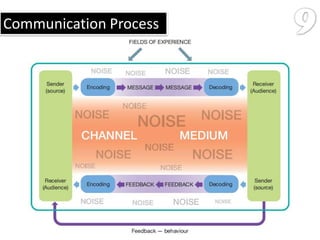
Communication Process
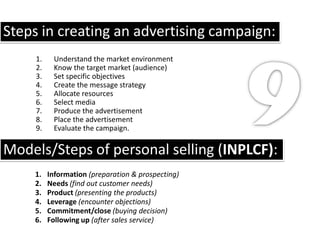
Steps in creating an advertising campaign:
     1.    Understand the market environment
     2.    Know the target market (audience)
     3.    Set specific objectives
     4.    Create the message strategy
     5.    Allocate resources
     6.    Select media
     7.    Produce the advertisement
     8.    Place the advertisement
     9.    Evaluate the campaign.

Models/Steps of personal selling (INPLCF):
    1.    Information (preparation & prospecting)
    2.    Needs (find out customer needs)
    3.    Product (presenting the products)
    4.    Leverage (encounter objections)
    5.    Commitment/close (buying decision)
    6.    Following up (after sales service)
Characteristics of services
    Intangibility


    Inseparability (or simultaneity)


    Heterogeneity


    Perishability
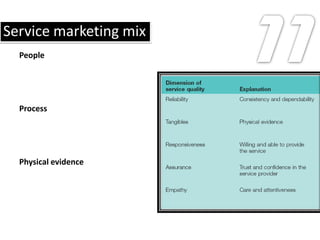
Service marketing mix
  People


  Process


  Physical evidence
Challenges
 Churn


 Search qualities


 Experience qualities


 Managing differentiation

                             Delivering consistent customer service quality requires:
                                 1. understanding customers’ expectations
                                 2. establishing service quality standards
                                 3. managing customers’ service expectations
                                 4. measuring employee performance
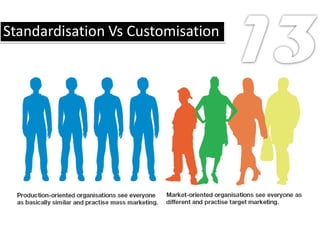
Standardisation Vs Customisation
IM Environment

  Political


  Economic


  Social cultural


  Technology


  Legal
How to enter international market

  Exporting

  Licensing

  Franchising
                            Reasons for international marketing:
                            The world holds more potential
  Contract manufacturing
                            customers than the home market alone
                            Communication/transport technology
  Strategic alliance       makes it a realistic option
                            Increasingly free trading environment
                            makes international marketing easier and
  Joint venture
                            domestic competition greater
                            May find a market that does not have
  Investment               access to its product
                            Can achieve greater economies of scale

Revision(vu)

  • 2.
    Definition Segmentation: Subgroups within the total market that are relatively similar in regards to certain characteristics. Target marketing: An approach to marketing based on identifying, understanding and developing an offering for those segments of the total market that the organisation can best serve. Brand positioning: A positioning strategy designed to create a market perception of a particular brand, usually based on product attributes.
  • 3.
    4 categories: 1. Demographic Effective segmentation 2. Geographic measurability – abstract variables can be difficult to measure 3. Psychographic accessibility – through distribution and communication channels substantiality – the segment must be of sufficient size to allow profitability 4. Behavioural practicability – segments are only of use if they can be identified and serviced
  • 4.
    Targeting 1. Productspecialisation 2. Market specialisation 3. Product–market specialisation 4. Differentiated targeting strategy
  • 6.
    Definition Product: Agood, service or idea offered to the market for exchange. Product mix: The set of all products that organisation makes available to customer. Total Product Concept
  • 7.
  • 8.
    New product developmentprocess: 1. Idea generation 2. Screening 3. Concept evaluation 4. Marketing strategy 5. Business analysis 6. Product development 7. Test marketing 8. Commercialisation Other popular topics: T ypes of product B randing
  • 10.
    Definition Integrated marketing communications (IMC):  The coordination of promotional efforts (advertising, sales promotion, personal selling, and public relation) to maximise the communication effect. Objective of Promotion  To create awareness  To stimulate demand in the target market  To encourage reseller support  To build and maintain competitive advantages Promotion Mix + 1. Advertising 2. Public relations Benefits & Limitations 3. Sales promotion 4. Personal selling
  • 11.
  • 12.
    Steps in creatingan advertising campaign: 1. Understand the market environment 2. Know the target market (audience) 3. Set specific objectives 4. Create the message strategy 5. Allocate resources 6. Select media 7. Produce the advertisement 8. Place the advertisement 9. Evaluate the campaign. Models/Steps of personal selling (INPLCF): 1. Information (preparation & prospecting) 2. Needs (find out customer needs) 3. Product (presenting the products) 4. Leverage (encounter objections) 5. Commitment/close (buying decision) 6. Following up (after sales service)
  • 14.
    Characteristics of services  Intangibility  Inseparability (or simultaneity)  Heterogeneity  Perishability
  • 15.
    Service marketing mix People Process Physical evidence
  • 16.
    Challenges Churn Searchqualities Experience qualities Managing differentiation Delivering consistent customer service quality requires: 1. understanding customers’ expectations 2. establishing service quality standards 3. managing customers’ service expectations 4. measuring employee performance
  • 18.
  • 19.
    IM Environment Political  Economic  Social cultural  Technology  Legal
  • 20.
    How to enterinternational market  Exporting  Licensing  Franchising Reasons for international marketing: The world holds more potential  Contract manufacturing customers than the home market alone Communication/transport technology  Strategic alliance makes it a realistic option Increasingly free trading environment makes international marketing easier and  Joint venture domestic competition greater May find a market that does not have  Investment access to its product Can achieve greater economies of scale