Marketing, Advertising, and Sales Promotions
       for Entrepreneurial Business
    Monday September 20, - December 6, 2010
            6:30 PM to 9:30 PM
          Bunche Hall, RM 1209A

David Novak   david@tradewindmarketing . com


                                               1
 How do you select the right market?
 How can you differentiate your product or service from your
    competitor?
   How do you best reach your market?
   What pricing structure should you employ?
   How do you build a strong customer base?
   How do you maintain customer loyalty?
   How do you continuously build market share?
   How can you get the maximum results from your
    team/employees?
   How can we compete in a dynamic, competitive and global
    market?


                                                                2
 Marketer- someone soliciting an action
 Prospect- someone being solicited
 Need – a specific requirement
   Food, clothing, homes, entertainment
 Want – something specific
   Hamburger, BMW
 Demand – having the resources to fill the need/want
   Income
   Grades
 Value and Satisfaction – What the customer PERCEIVES


                                                         3
 Product
                      Price
                 Promotion
                    Place

These have been the “traditional" tools”…. the strategic
  requirements necessary to meet an organization’s
                marketing objectives


                                                           4
 Product- An acceptable
  product or service that creates a
  need to buy for the prospect
 Price- A competitive and fair
  price
 Promotion- What strategies
  will you use to communicate with
  the customer
 Place- How easy is it for the
  customer to do business with you


                                      5
 The Marketing Mix is comprised of the tools
 that a business chooses to use in obtaining its
 marketing objectives
  Product             Price
   Variety      List Price
   Quality      Discounts
   Design        Allowances
   Features      Terms
   Packaging      Credit policies


                                                   6
Promotion           Place
 Sales promotions    Location
 Advertising               Warehousing
 Public relations    Convenience
 Sales force           Inventory


                                         7
 Product “Quality”
 Personal “Pride”
 Professional “customer service”
 Power “sales programs” designed to “sell
 solutions” and not only product
   Achieved through training
   Shared knowledge
   Commitment from everyone in the company


                                              8
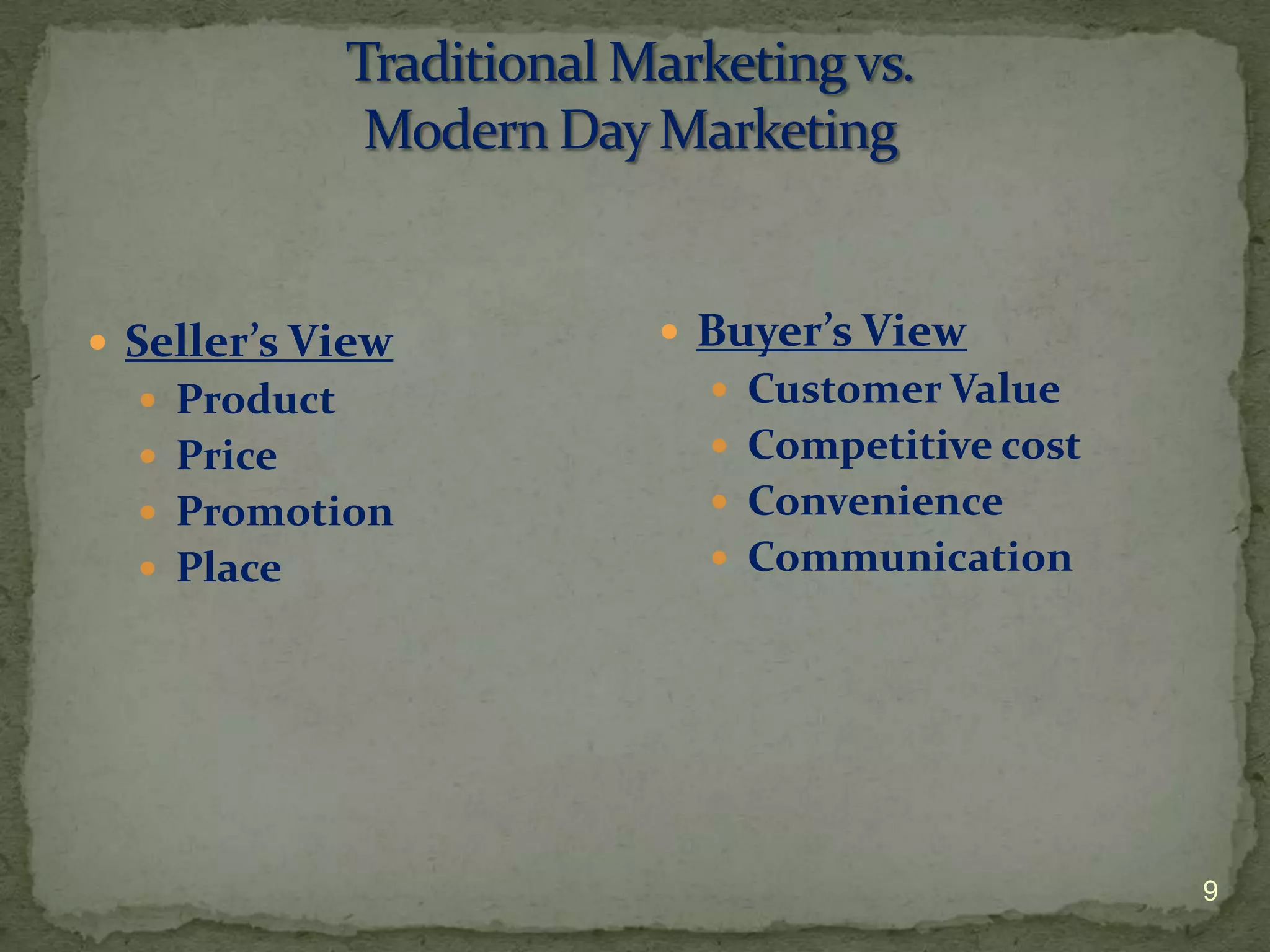
 Seller’s View    Buyer’s View
   Product          Customer Value
   Price            Competitive cost
   Promotion        Convenience
   Place            Communication


                                         9
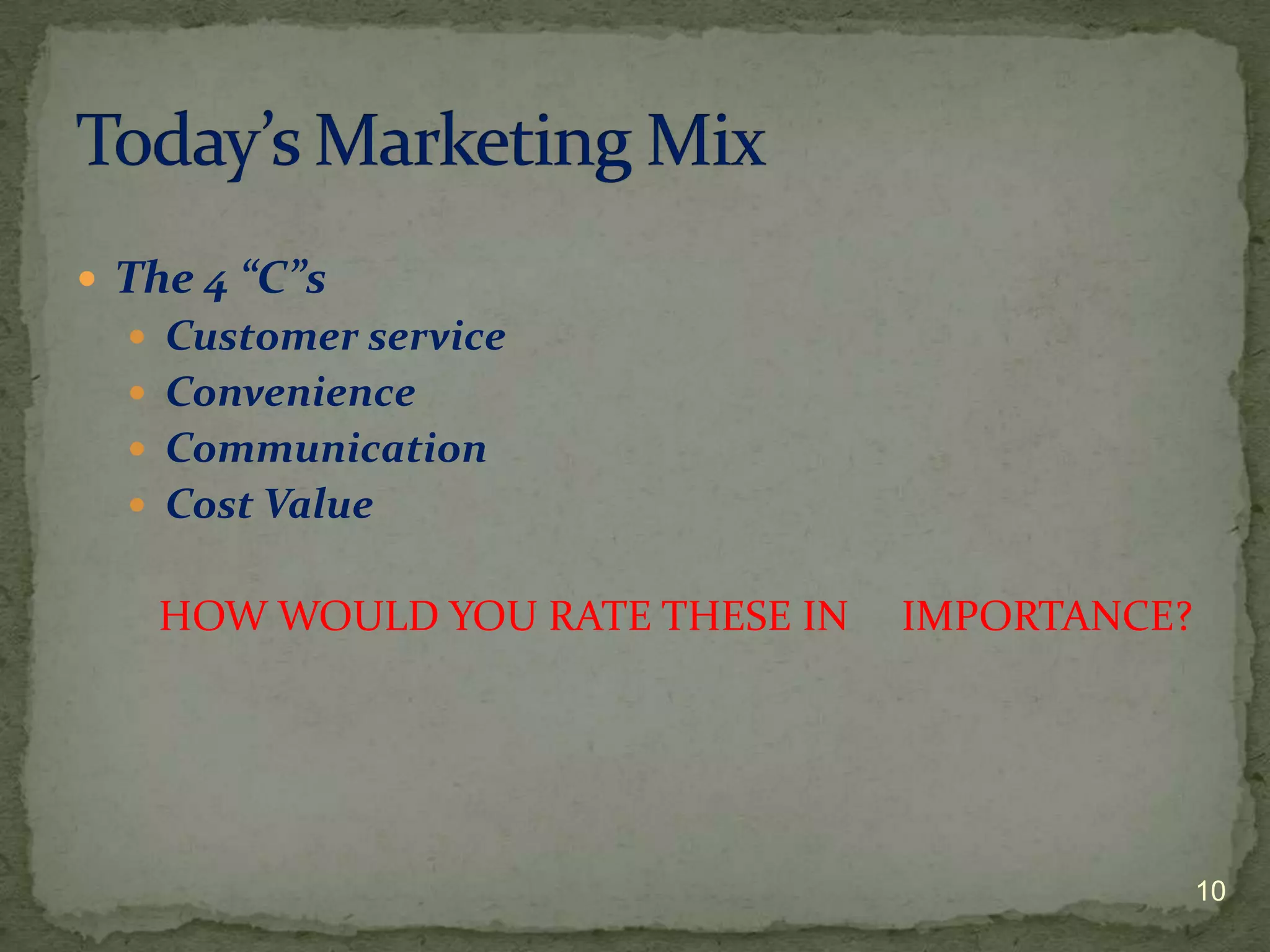
 The 4 “C”s
   Customer service
   Convenience
   Communication
   Cost Value


   HOW WOULD YOU RATE THESE IN   IMPORTANCE?


                                               10
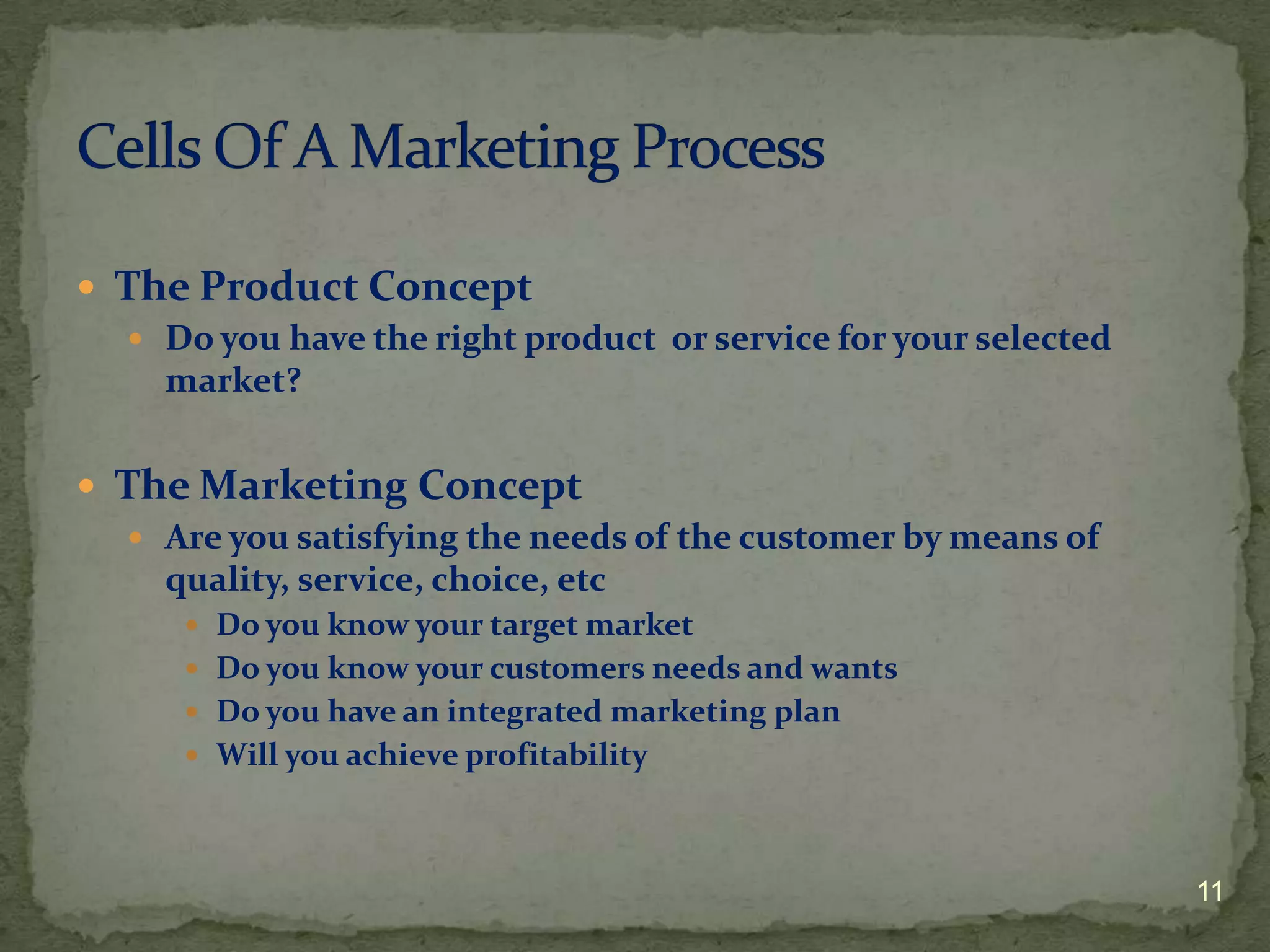
 The Product Concept
   Do you have the right product or service for your selected
    market?


 The Marketing Concept
   Are you satisfying the needs of the customer by means of
    quality, service, choice, etc
       Do you know your target market
       Do you know your customers needs and wants
       Do you have an integrated marketing plan
       Will you achieve profitability


                                                                 11
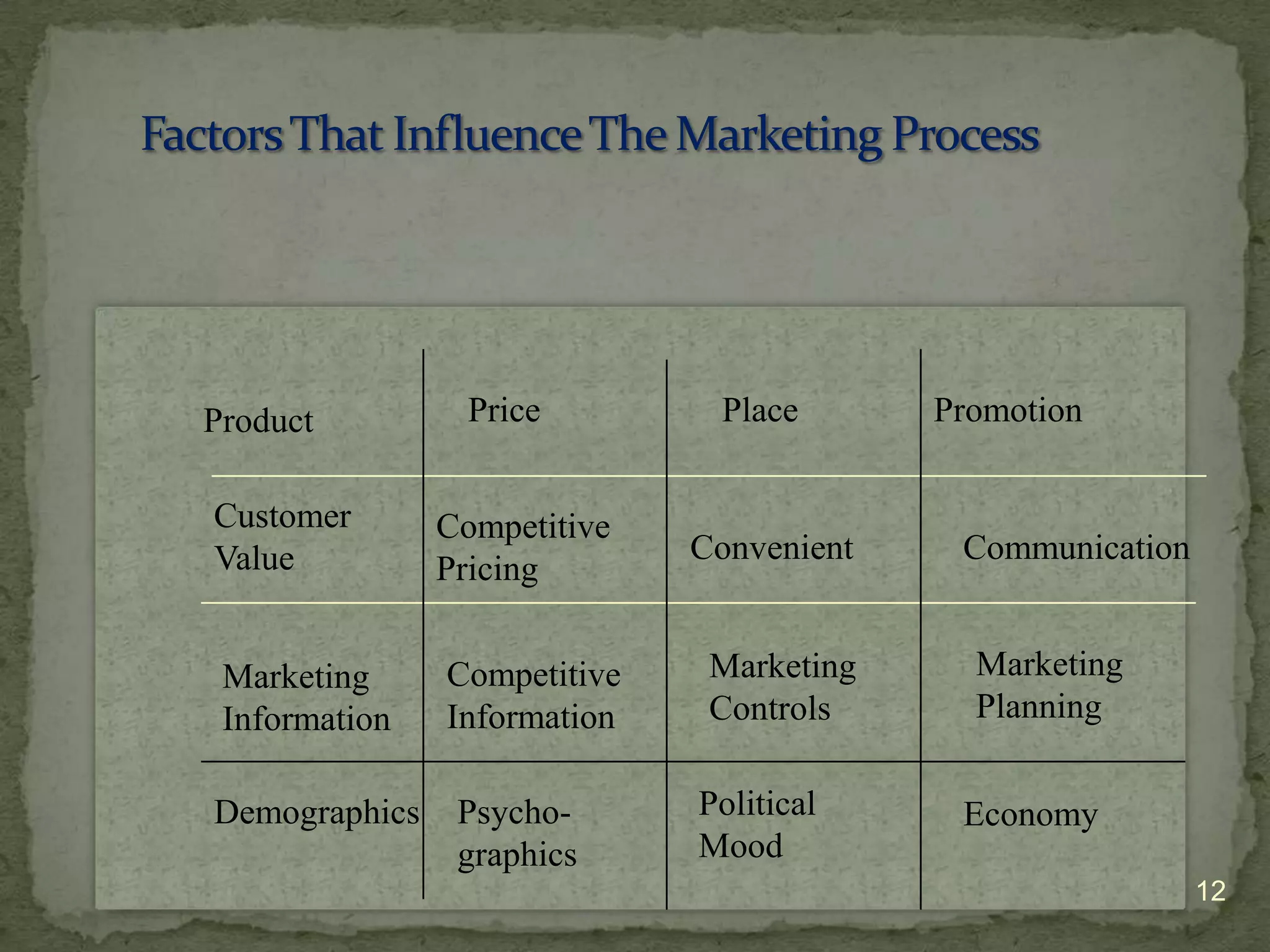
Product          Price        Place       Promotion

Customer       Competitive
Value                        Convenient    Communication
               Pricing


 Marketing     Competitive    Marketing     Marketing
 Information   Information    Controls      Planning

Demographics    Psycho-      Political     Economy
                graphics     Mood
                                                           12
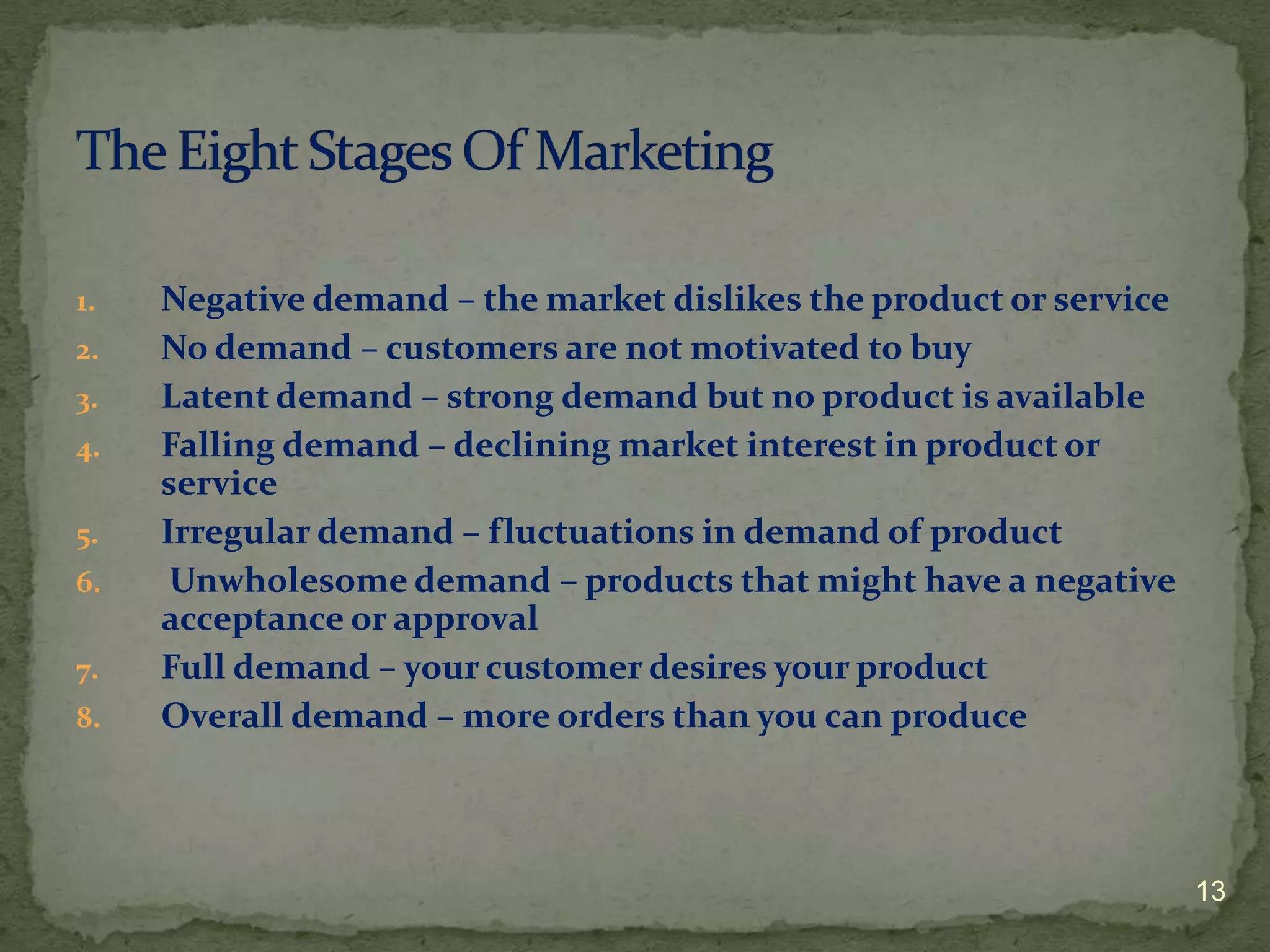
1.   Negative demand – the market dislikes the product or service
2.   No demand – customers are not motivated to buy
3.   Latent demand – strong demand but no product is available
4.   Falling demand – declining market interest in product or
     service
5.   Irregular demand – fluctuations in demand of product
6.    Unwholesome demand – products that might have a negative
     acceptance or approval
7.   Full demand – your customer desires your product
8.   Overall demand – more orders than you can produce


                                                                    13
 All the aspects of the company support the marketing
 effort
   Administrative
   Customer Service
   Production
   Traffic Department
      TOP MANAGEMENT COMMITTMENT


                                                         14
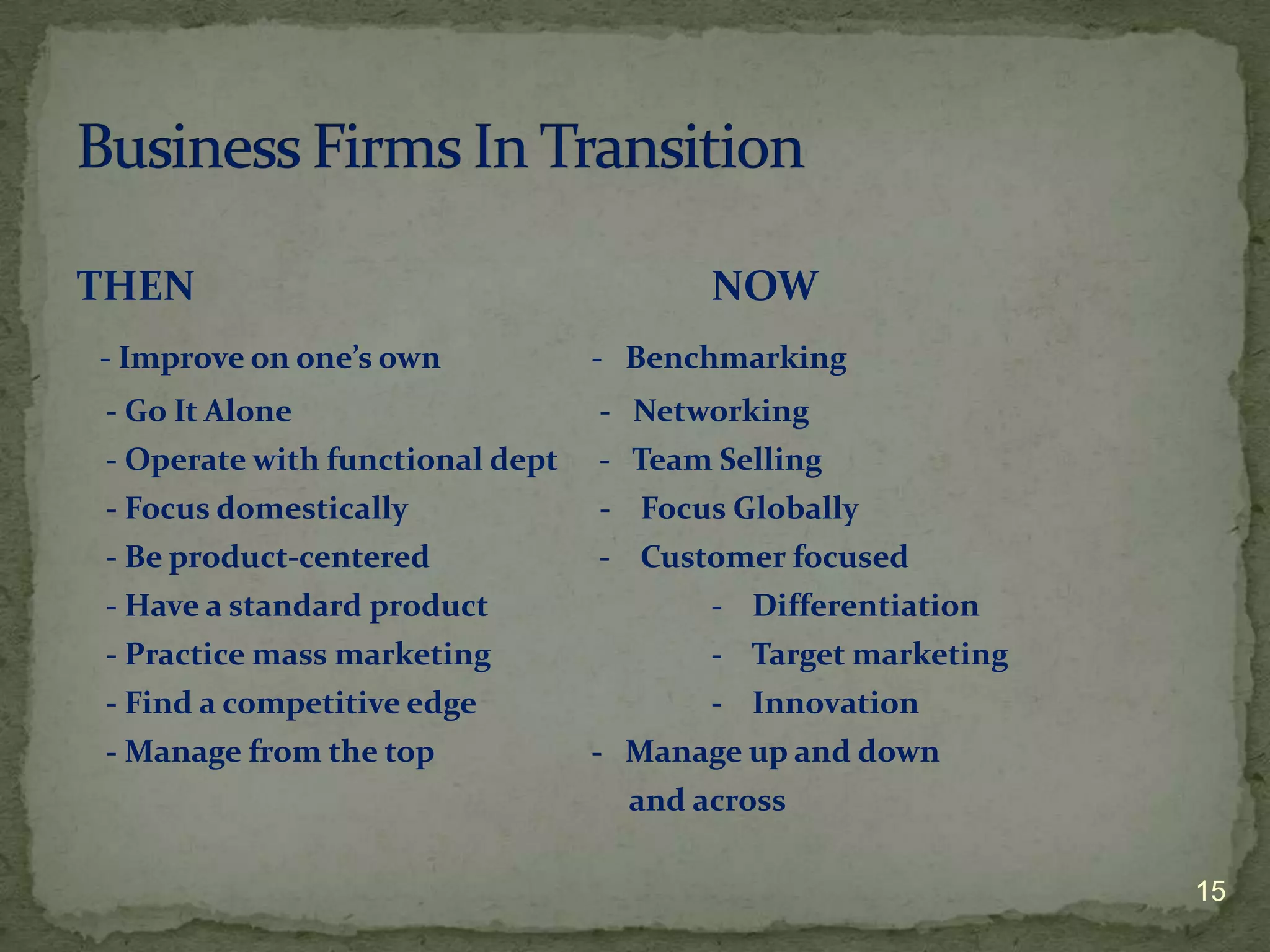
THEN                                     NOW
- Improve on one’s own            - Benchmarking
 - Go It Alone                    - Networking
 - Operate with functional dept   - Team Selling
 - Focus domestically             - Focus Globally
 - Be product-centered            - Customer focused
 - Have a standard product               - Differentiation
 - Practice mass marketing               - Target marketing
 - Find a competitive edge               - Innovation
 - Manage from the top            - Manage up and down
                                    and across

                                                              15
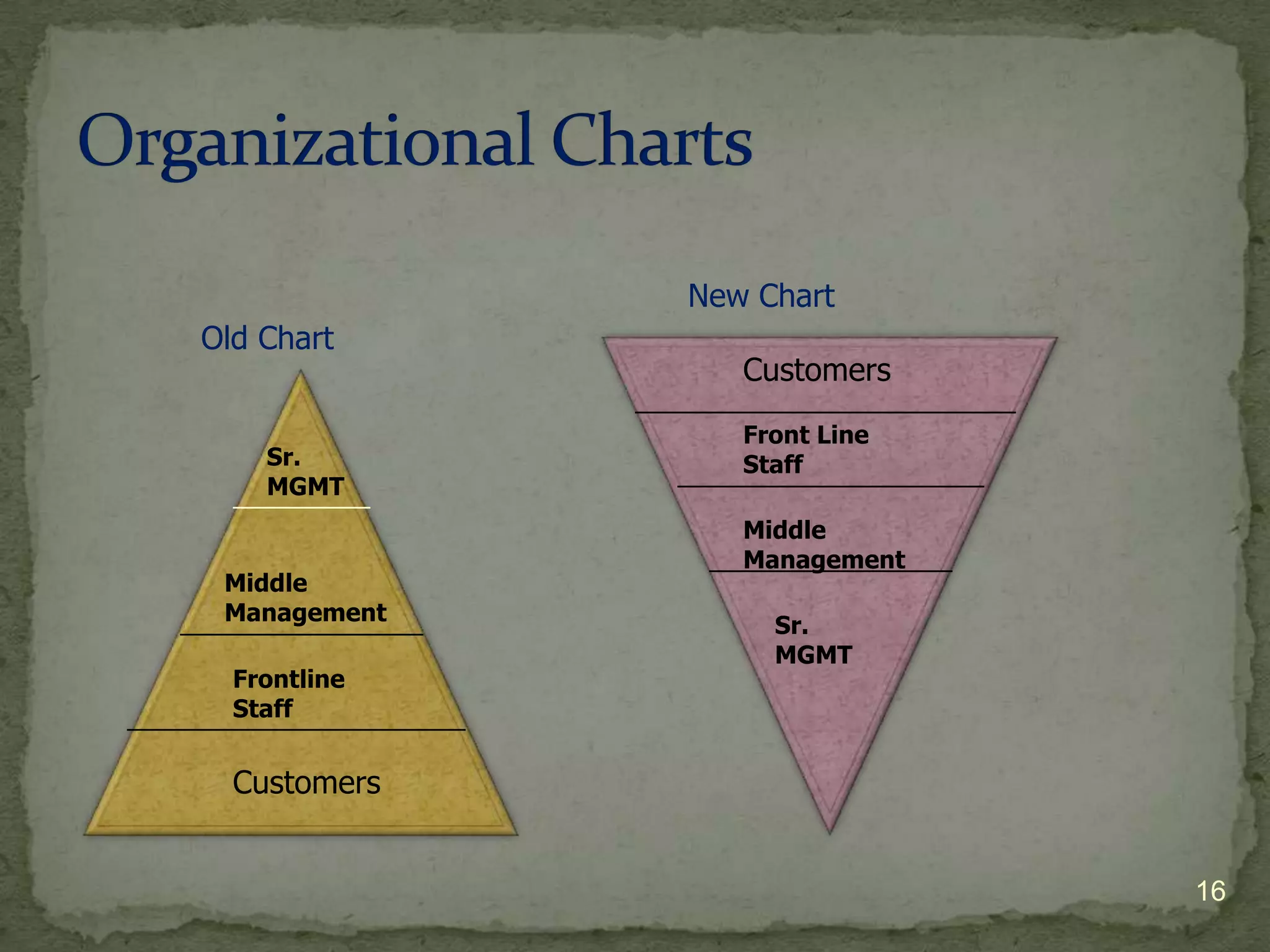
New Chart
Old Chart
                 Customers
                 Front Line
    Sr.          Staff
    MGMT
                 Middle
                 Management
 Middle
 Management
                   Sr.
                   MGMT
  Frontline
  Staff


  Customers


                              16
 Creates repeat and loyal customers
 Trust and integrity are established
 Two-way communications
 Profit is a measure of success for all parties
  involved
 Long-term partnerships
 Win-Win relationships


                                                   17
 T – Purpose of marketing is to make a sale
 R – Purpose of marketing is to create a customer


 T – Sale is a result and the measure of success
 R – Sale is the beginning of a long-term relationship


 T – Business is defined by its products and services
 R – Business is defined by its relationships


 T – Price is determined by competitive forces
 R – Price is determined by negotiation and joint decision-making


                                                                     18
 T – Communications are aimed at groups of businesses and
  customers
 R – Communications are targeted and tailored to individual
  customers

 T – Companies and individuals are valued for its products
  and services
 R – Companies and individuals are valued for its
  quality, service and problem solving skills

 T- Traditional Marketing philosophy was to “Make the next
  sale, find the next customer”
 R – Modern Day Marketing is “Satisfy the customer by
  delivering superior value”
                                                               19
 “Have It Your Way” – Burger King
 “Putting People First” – British Airways
 “Lowest prices guaranteed, or we will give you
  an additional 10% off the price” – Home Depot
 “Fly The Friendly Skies” –United Airlines
   Starbucks
   Wal-Mart
   Ben & Jerry’s Ice Cream


                                                   20
 “Your first obligation is to find out the mission
 that you are meant for…. Your mission will
 manifest in you when you decide to listen to
 your heart’s desire”
         Naomi Stephens, “Finding Your Mission”


       Say Who You Are
       What You do
       What Is Your Purpose
       Say What You Stand For


                                                      21

Week one presentation~spring 2011

  • 1.
    Marketing, Advertising, andSales Promotions for Entrepreneurial Business Monday September 20, - December 6, 2010 6:30 PM to 9:30 PM Bunche Hall, RM 1209A David Novak david@tradewindmarketing . com 1
  • 2.
     How doyou select the right market?  How can you differentiate your product or service from your competitor?  How do you best reach your market?  What pricing structure should you employ?  How do you build a strong customer base?  How do you maintain customer loyalty?  How do you continuously build market share?  How can you get the maximum results from your team/employees?  How can we compete in a dynamic, competitive and global market? 2
  • 3.
     Marketer- someonesoliciting an action  Prospect- someone being solicited  Need – a specific requirement  Food, clothing, homes, entertainment  Want – something specific  Hamburger, BMW  Demand – having the resources to fill the need/want  Income  Grades  Value and Satisfaction – What the customer PERCEIVES 3
  • 4.
     Product  Price  Promotion  Place These have been the “traditional" tools”…. the strategic requirements necessary to meet an organization’s marketing objectives 4
  • 5.
     Product- Anacceptable product or service that creates a need to buy for the prospect  Price- A competitive and fair price  Promotion- What strategies will you use to communicate with the customer  Place- How easy is it for the customer to do business with you 5
  • 6.
     The MarketingMix is comprised of the tools that a business chooses to use in obtaining its marketing objectives Product Price Variety List Price Quality Discounts Design Allowances Features Terms Packaging Credit policies 6
  • 7.
    Promotion Place Sales promotions Location Advertising Warehousing Public relations Convenience Sales force Inventory 7
  • 8.
     Product “Quality” Personal “Pride”  Professional “customer service”  Power “sales programs” designed to “sell solutions” and not only product  Achieved through training  Shared knowledge  Commitment from everyone in the company 8
  • 9.
     Seller’s View  Buyer’s View  Product  Customer Value  Price  Competitive cost  Promotion  Convenience  Place  Communication 9
  • 10.
     The 4“C”s  Customer service  Convenience  Communication  Cost Value HOW WOULD YOU RATE THESE IN IMPORTANCE? 10
  • 11.
     The ProductConcept  Do you have the right product or service for your selected market?  The Marketing Concept  Are you satisfying the needs of the customer by means of quality, service, choice, etc  Do you know your target market  Do you know your customers needs and wants  Do you have an integrated marketing plan  Will you achieve profitability 11
  • 12.
    Product Price Place Promotion Customer Competitive Value Convenient Communication Pricing Marketing Competitive Marketing Marketing Information Information Controls Planning Demographics Psycho- Political Economy graphics Mood 12
  • 13.
    1. Negative demand – the market dislikes the product or service 2. No demand – customers are not motivated to buy 3. Latent demand – strong demand but no product is available 4. Falling demand – declining market interest in product or service 5. Irregular demand – fluctuations in demand of product 6. Unwholesome demand – products that might have a negative acceptance or approval 7. Full demand – your customer desires your product 8. Overall demand – more orders than you can produce 13
  • 14.
     All theaspects of the company support the marketing effort  Administrative  Customer Service  Production  Traffic Department  TOP MANAGEMENT COMMITTMENT 14
  • 15.
    THEN NOW - Improve on one’s own - Benchmarking - Go It Alone - Networking - Operate with functional dept - Team Selling - Focus domestically - Focus Globally - Be product-centered - Customer focused - Have a standard product - Differentiation - Practice mass marketing - Target marketing - Find a competitive edge - Innovation - Manage from the top - Manage up and down and across 15
  • 16.
    New Chart Old Chart Customers Front Line Sr. Staff MGMT Middle Management Middle Management Sr. MGMT Frontline Staff Customers 16
  • 17.
     Creates repeatand loyal customers  Trust and integrity are established  Two-way communications  Profit is a measure of success for all parties involved  Long-term partnerships  Win-Win relationships 17
  • 18.
     T –Purpose of marketing is to make a sale  R – Purpose of marketing is to create a customer  T – Sale is a result and the measure of success  R – Sale is the beginning of a long-term relationship  T – Business is defined by its products and services  R – Business is defined by its relationships  T – Price is determined by competitive forces  R – Price is determined by negotiation and joint decision-making 18
  • 19.
     T –Communications are aimed at groups of businesses and customers  R – Communications are targeted and tailored to individual customers  T – Companies and individuals are valued for its products and services  R – Companies and individuals are valued for its quality, service and problem solving skills  T- Traditional Marketing philosophy was to “Make the next sale, find the next customer”  R – Modern Day Marketing is “Satisfy the customer by delivering superior value” 19
  • 20.
     “Have ItYour Way” – Burger King  “Putting People First” – British Airways  “Lowest prices guaranteed, or we will give you an additional 10% off the price” – Home Depot  “Fly The Friendly Skies” –United Airlines  Starbucks  Wal-Mart  Ben & Jerry’s Ice Cream 20
  • 21.
     “Your firstobligation is to find out the mission that you are meant for…. Your mission will manifest in you when you decide to listen to your heart’s desire”  Naomi Stephens, “Finding Your Mission”  Say Who You Are  What You do  What Is Your Purpose  Say What You Stand For 21