Governance Innovation Unit
Prime Minister’s Office
Understanding SDGs
Scopes & Challenges for Bangladesh
28th October 2015
Training event on Revisiting MDG & Understanding SDGs
Karabi Hall, Prime Minister’s Office
Presented by Dr. Aminul Islam
Senior Adviser, Sustainable Development, UNDP, Bangladesh
Why we are Here Today?
 Orientation on the Post-2015 Development Agenda and
Sustainable Development Goals
 Lay the groundwork for taking action to advocate the
Participants to be leaders in implementing the SDGs at
home and abroad
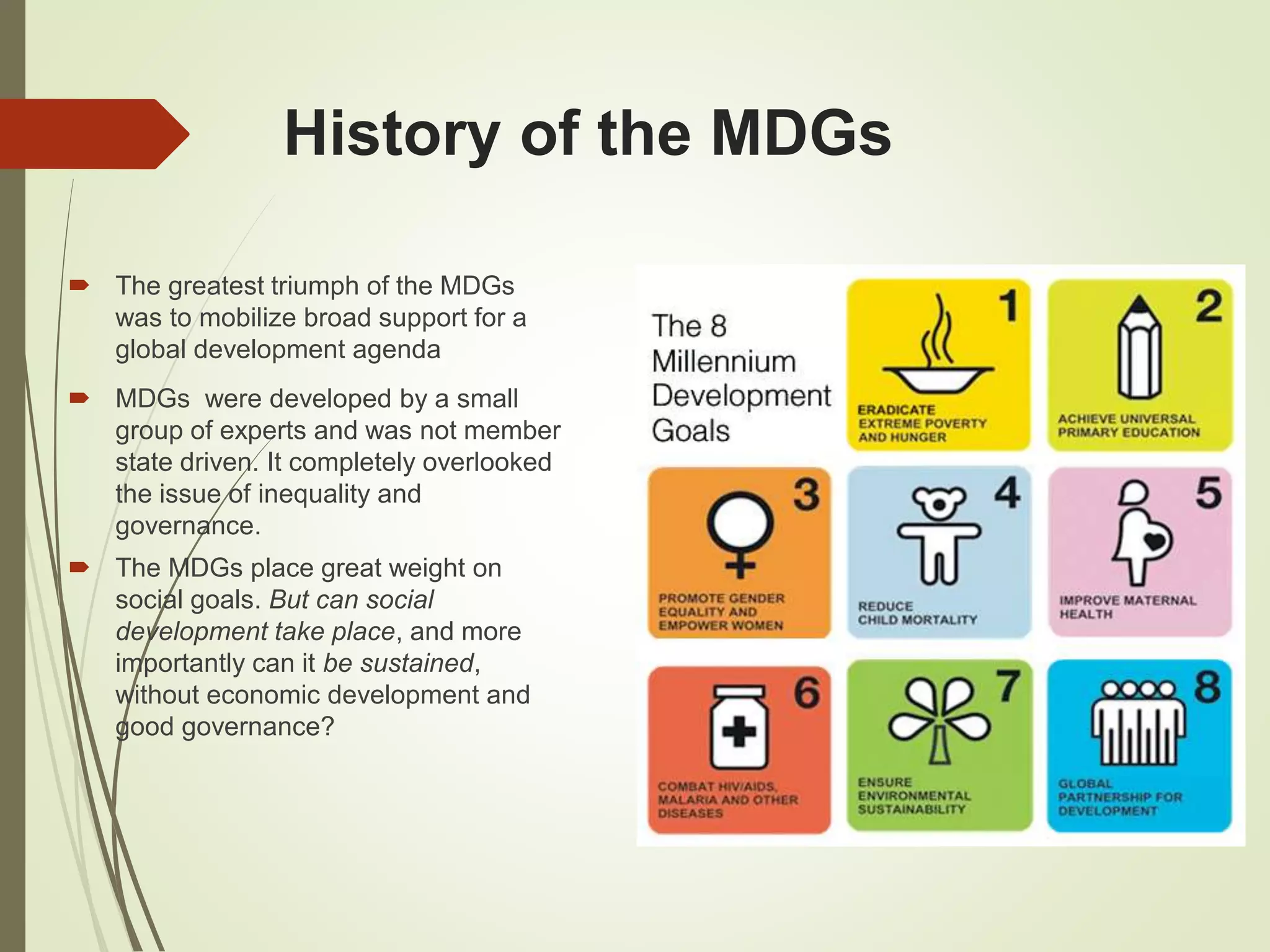
History of the MDGs
 The greatest triumph of the MDGs
was to mobilize broad support for a
global development agenda
 MDGs were developed by a small
group of experts and was not member
state driven. It completely overlooked
the issue of inequality and
governance.
 The MDGs place great weight on
social goals. But can social
development take place, and more
importantly can it be sustained,
without economic development and
good governance?
The Strengths of SDGs over MDGs
Key Strengths of the proposed SDGs include:-
 Stand alone goal of Inequality (within and between countries)
 Stand alone goal on gender inequality , including ending of all forms of
violence, discrimination, child marriages, and female genital
mutilations
 Environmental issues are strongly represented – fulfilling a long
sought marriage between development and environment (climate
change, marine and land base ecosystems, and sustainable
consumption and production)
 Governance - for the first time – incorporating a goal and targets on
governance and peaceful societies (legal identity, tackling corruption
and bribery etc)
 Participatory/Inclusiveness Process in formulation of the SDGs: The
participation and buy in of a wide range of stakeholders including
member states and non governmental organizations
 The broad nature of the SDG is also a reflection of the nature of
challenges facing the world today
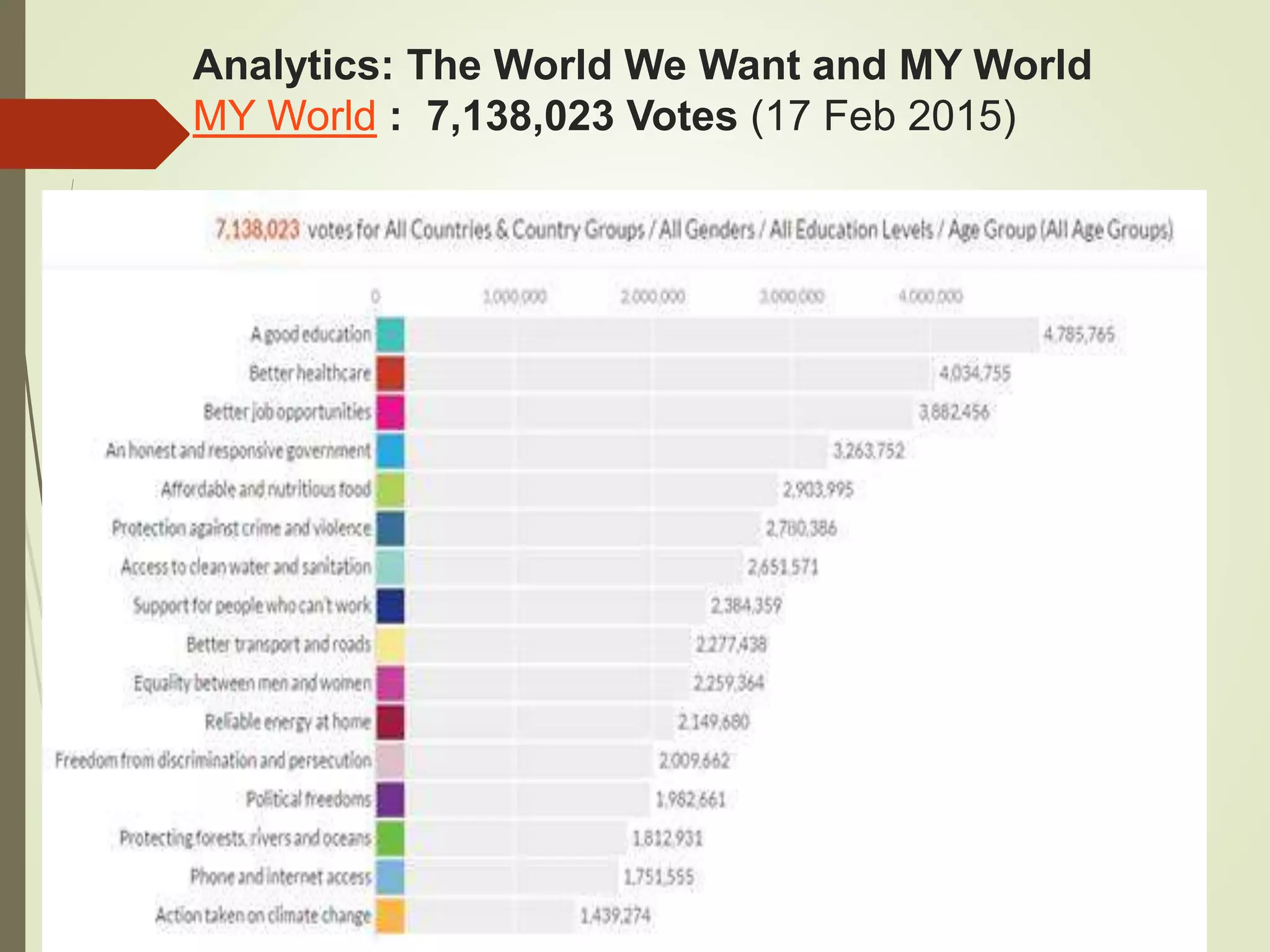
Analytics: The World We Want and MY World
MY World : 7,138,023 Votes (17 Feb 2015)
Sustainable development:
Meeting the needs of the present
without compromising the ability of
future generations to meet their
own needs.
 World Commission on Environment and Development (1987): Our Common
Future
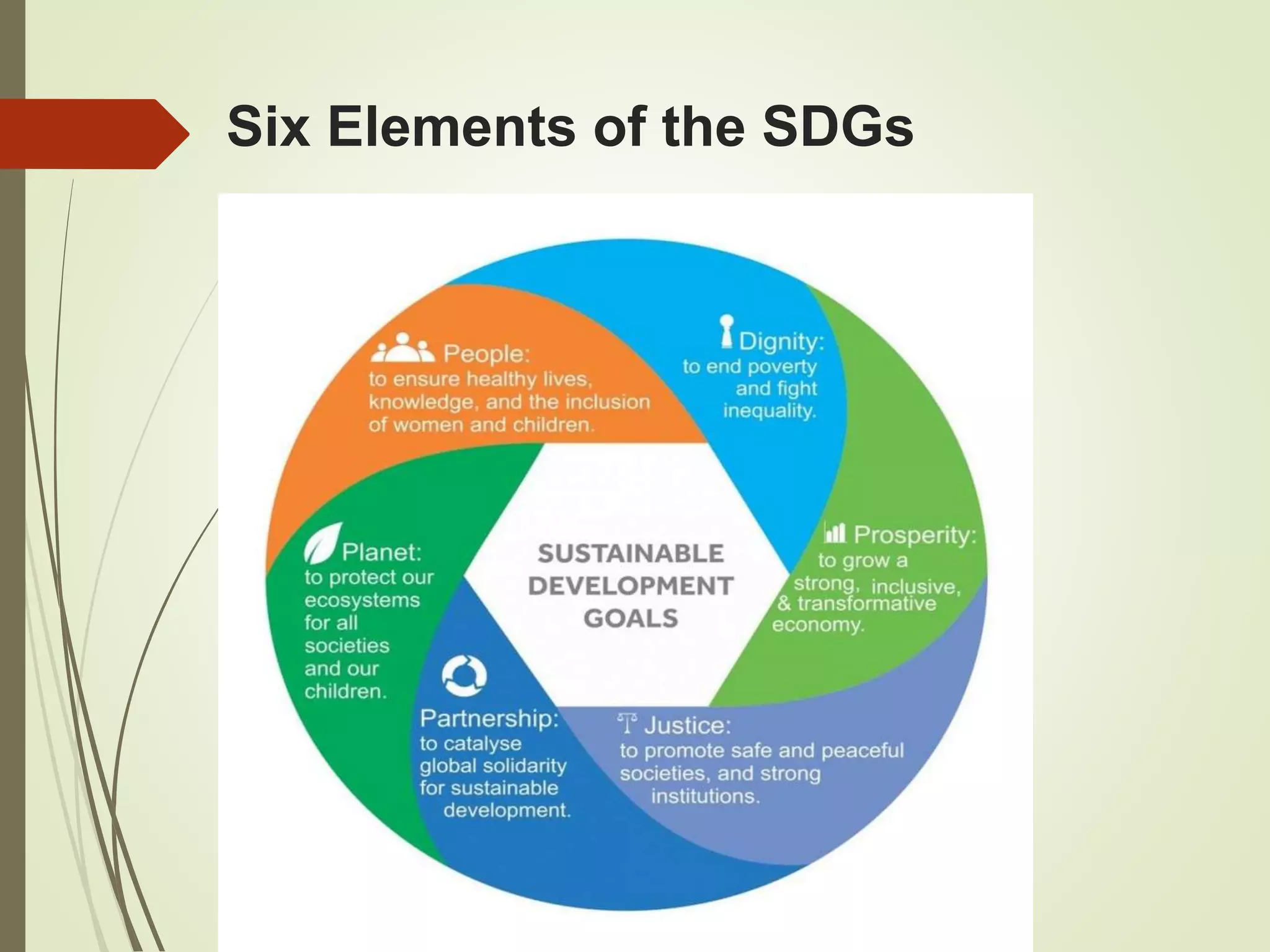
Six Elements of the SDGs
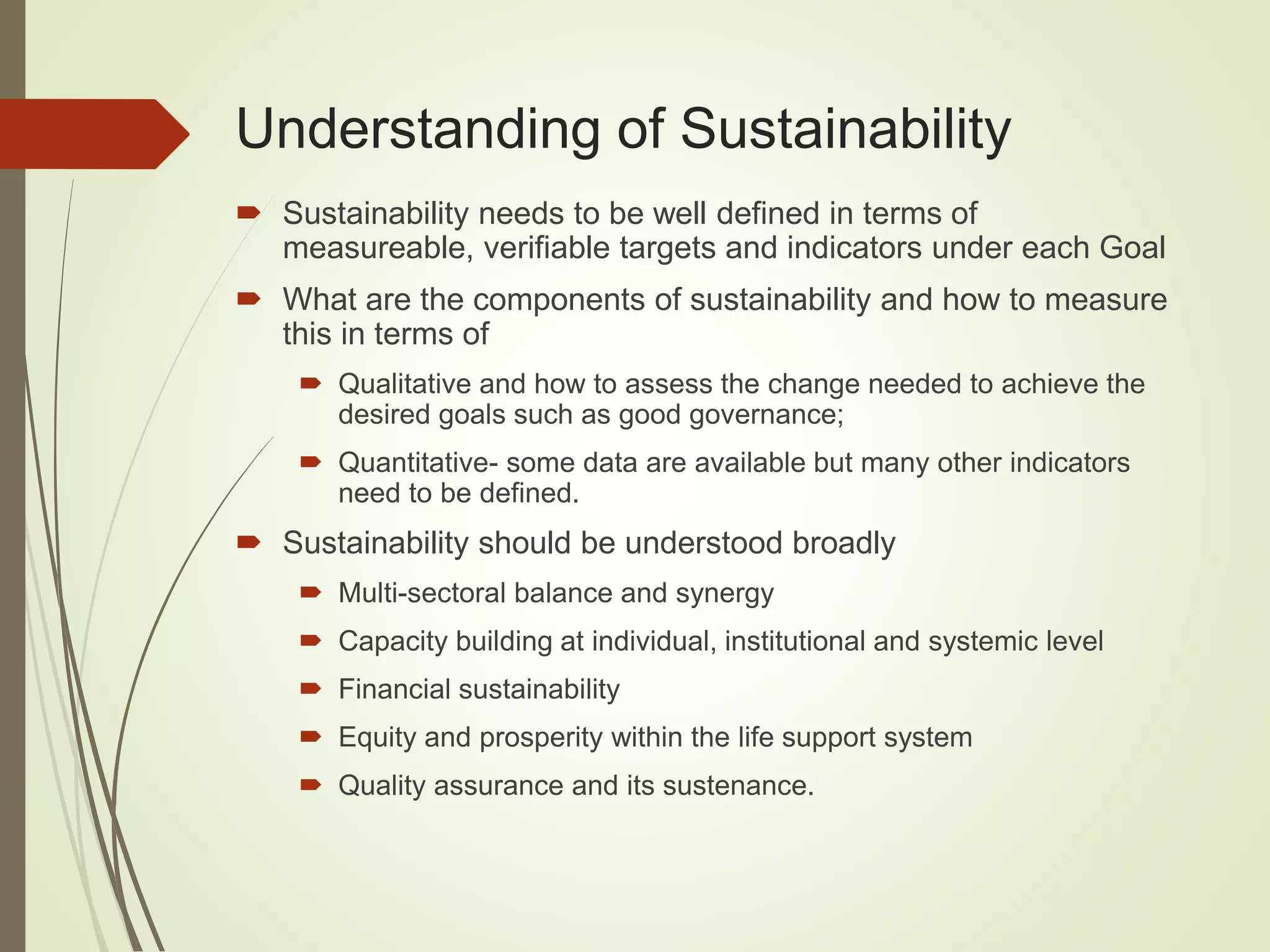
Understanding of Sustainability
 Sustainability needs to be well defined in terms of
measureable, verifiable targets and indicators under each Goal
 What are the components of sustainability and how to measure
this in terms of
 Qualitative and how to assess the change needed to achieve the
desired goals such as good governance;
 Quantitative- some data are available but many other indicators
need to be defined.
 Sustainability should be understood broadly
 Multi-sectoral balance and synergy
 Capacity building at individual, institutional and systemic level
 Financial sustainability
 Equity and prosperity within the life support system
 Quality assurance and its sustenance.
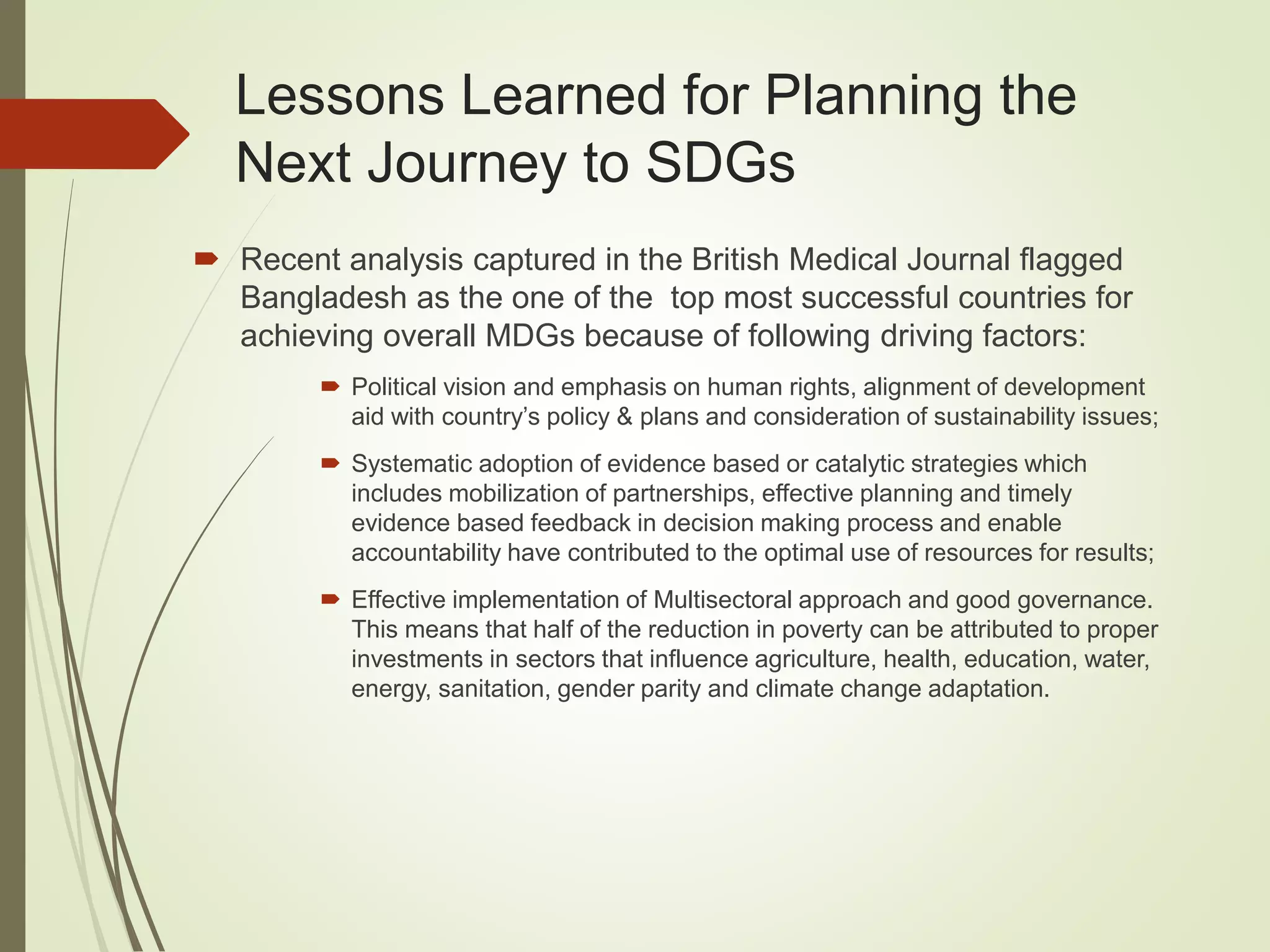
Lessons Learned for Planning the
Next Journey to SDGs
 Recent analysis captured in the British Medical Journal flagged
Bangladesh as the one of the top most successful countries for
achieving overall MDGs because of following driving factors:
 Political vision and emphasis on human rights, alignment of development
aid with country’s policy & plans and consideration of sustainability issues;
 Systematic adoption of evidence based or catalytic strategies which
includes mobilization of partnerships, effective planning and timely
evidence based feedback in decision making process and enable
accountability have contributed to the optimal use of resources for results;
 Effective implementation of Multisectoral approach and good governance.
This means that half of the reduction in poverty can be attributed to proper
investments in sectors that influence agriculture, health, education, water,
energy, sanitation, gender parity and climate change adaptation.
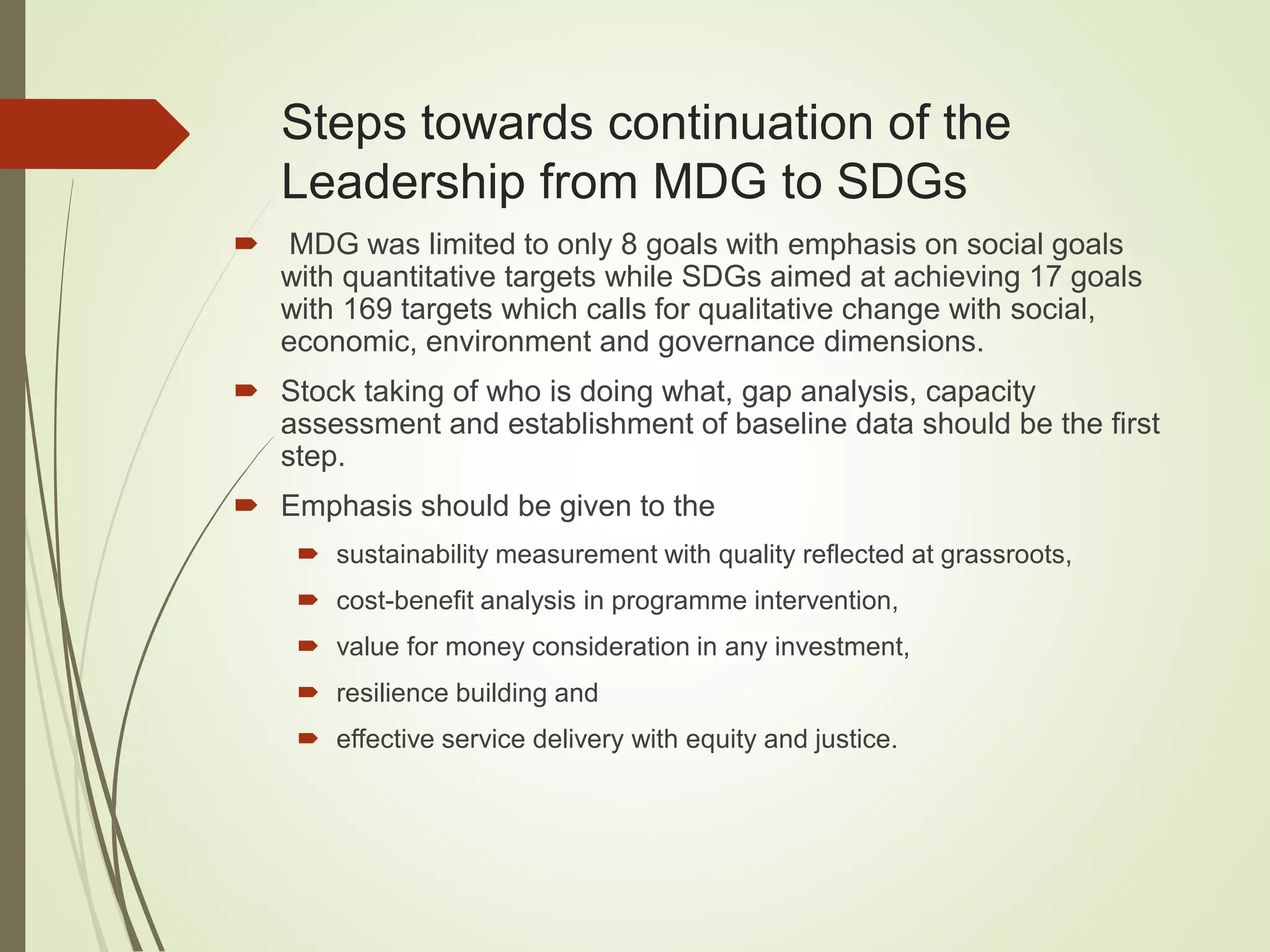
Steps towards continuation of the
Leadership from MDG to SDGs
 MDG was limited to only 8 goals with emphasis on social goals
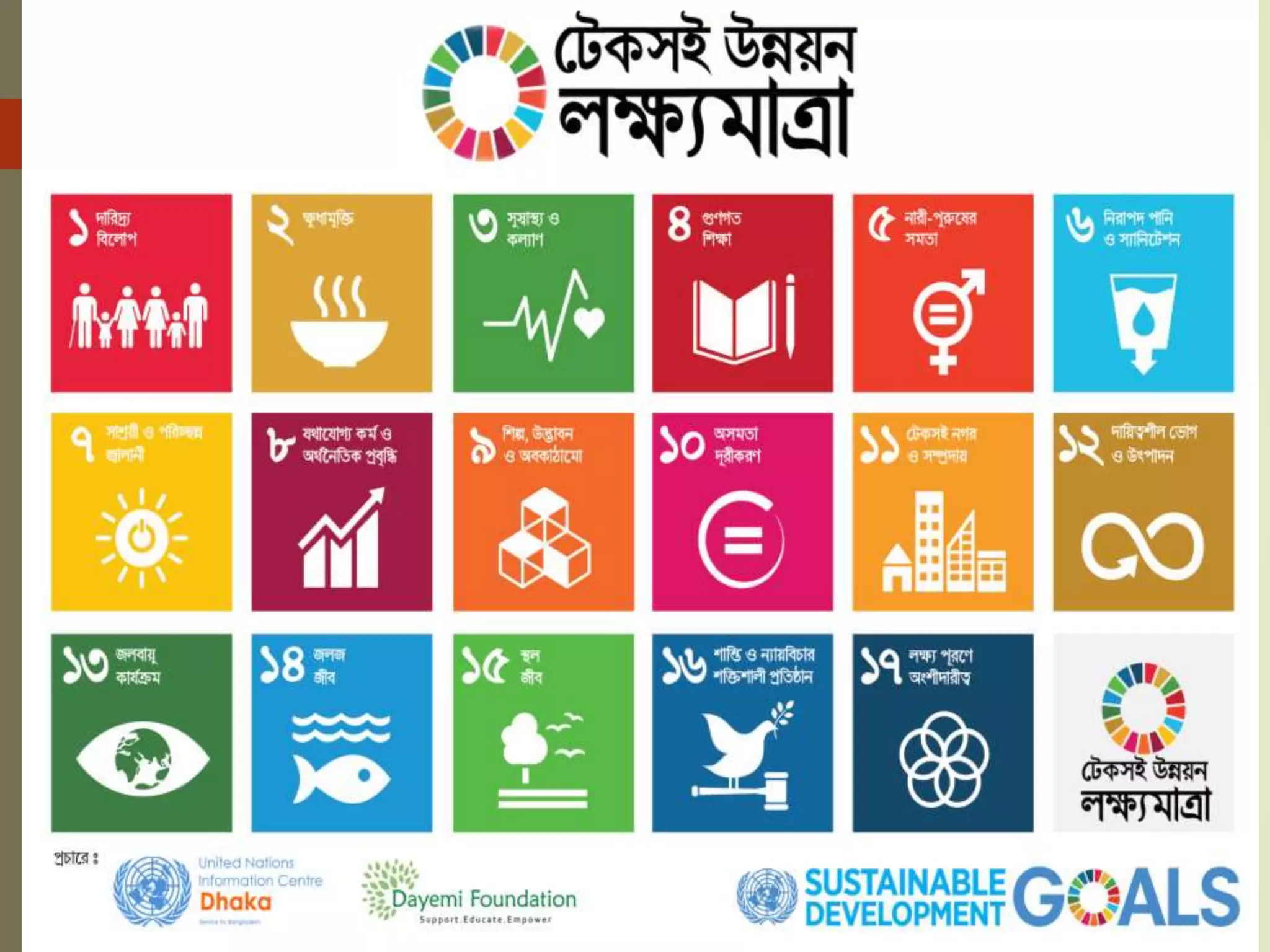
with quantitative targets while SDGs aimed at achieving 17 goals
with 169 targets which calls for qualitative change with social,
economic, environment and governance dimensions.
 Stock taking of who is doing what, gap analysis, capacity
assessment and establishment of baseline data should be the first
step.
 Emphasis should be given to the
 sustainability measurement with quality reflected at grassroots,
 cost-benefit analysis in programme intervention,
 value for money consideration in any investment,
 resilience building and
 effective service delivery with equity and justice.
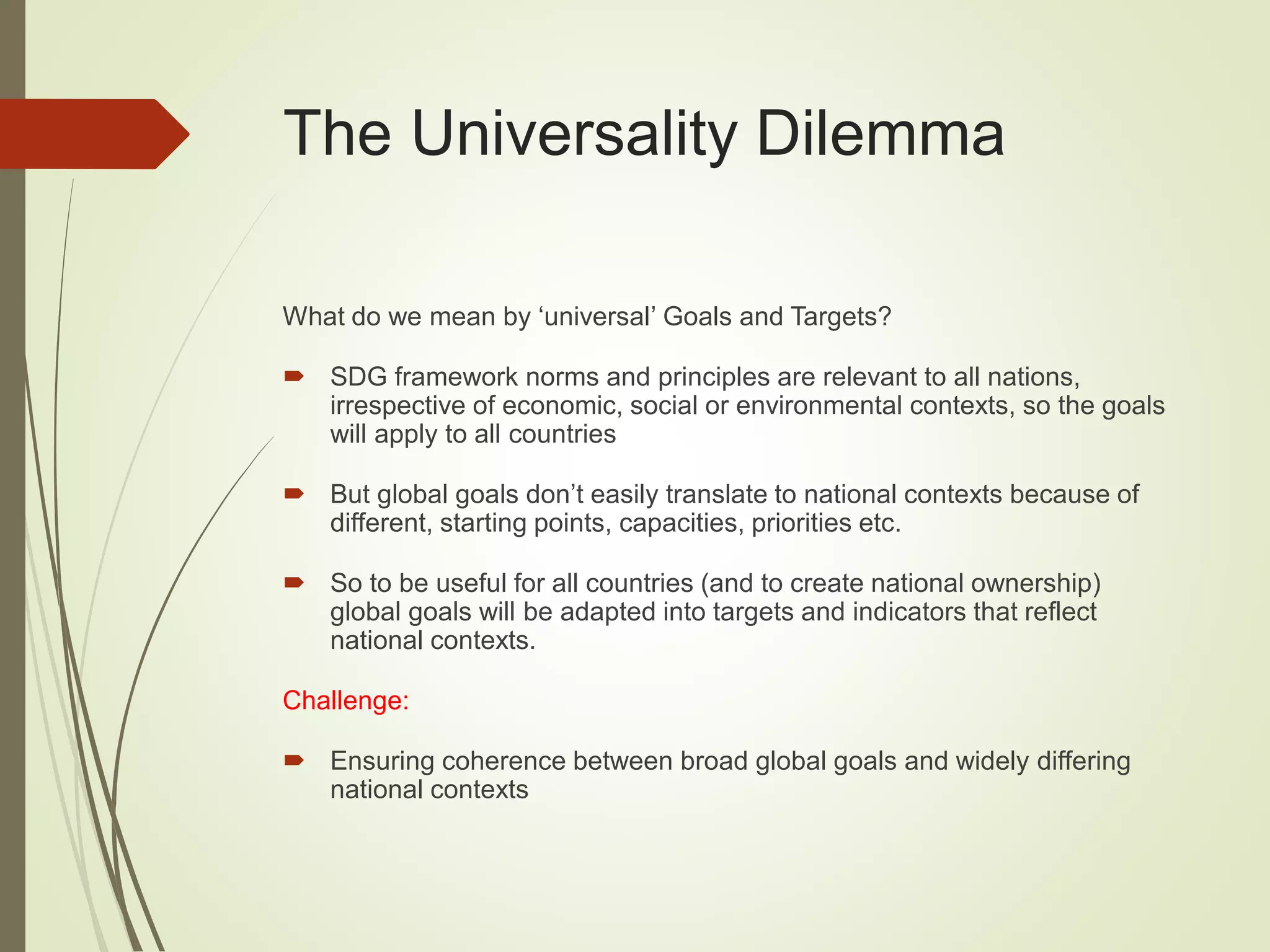
The Universality Dilemma
What do we mean by ‘universal’ Goals and Targets?
 SDG framework norms and principles are relevant to all nations,
irrespective of economic, social or environmental contexts, so the goals
will apply to all countries
 But global goals don’t easily translate to national contexts because of
different, starting points, capacities, priorities etc.
 So to be useful for all countries (and to create national ownership)
global goals will be adapted into targets and indicators that reflect
national contexts.
Challenge:
 Ensuring coherence between broad global goals and widely differing
national contexts
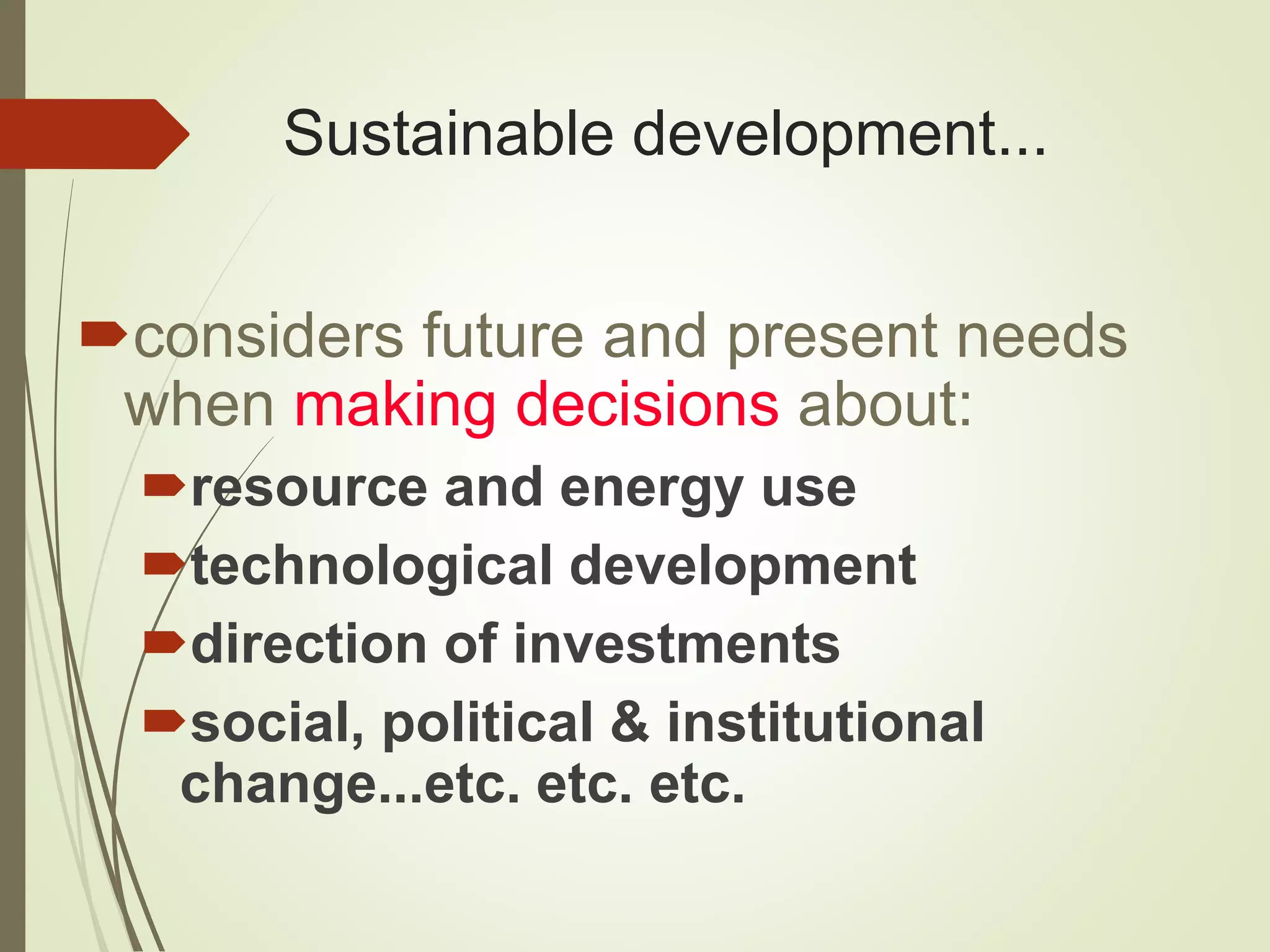
Sustainable development...
considers future and present needs
when making decisions about:
resource and energy use
technological development
direction of investments
social, political & institutional
change...etc. etc. etc.
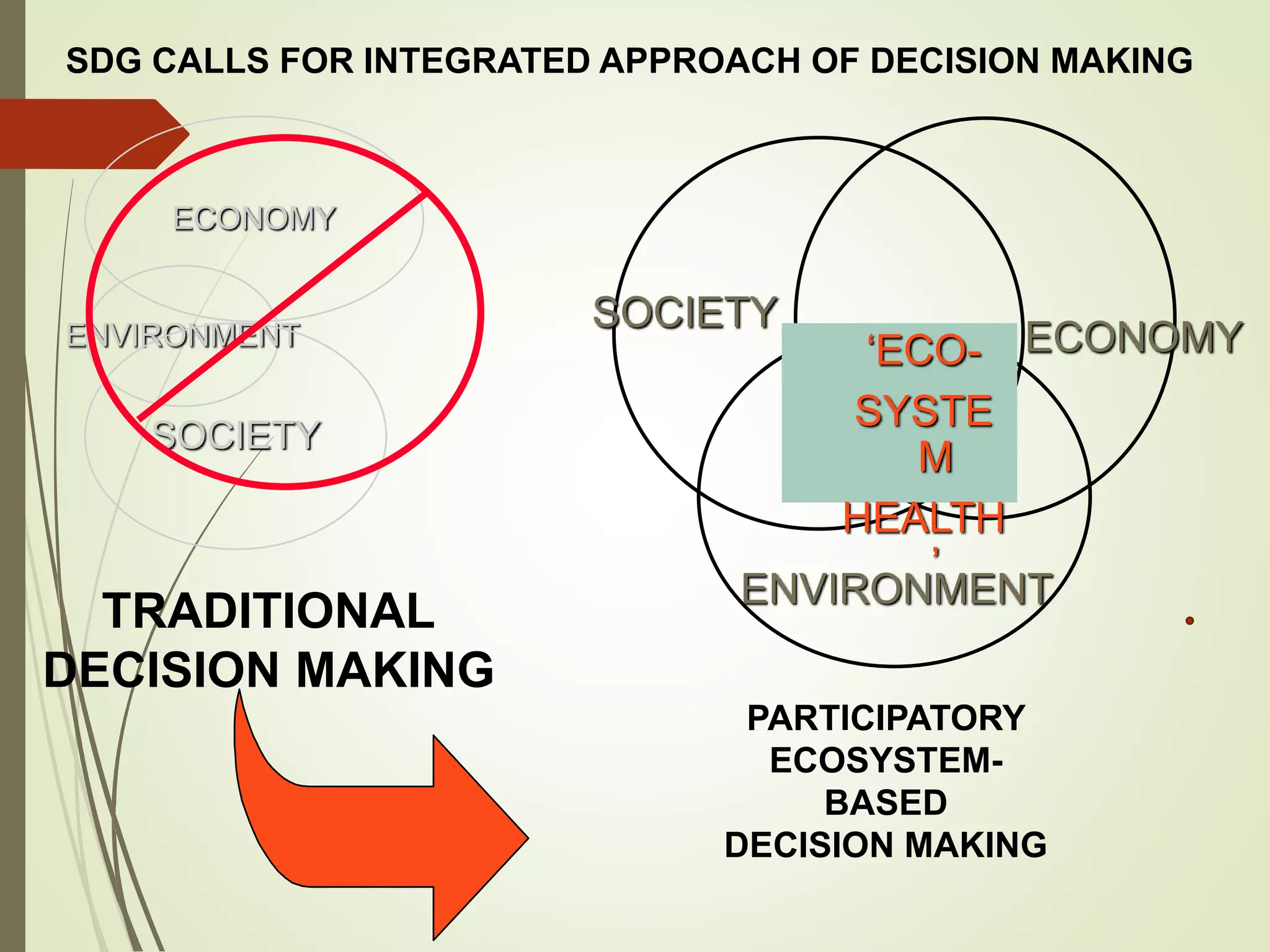
SOCIETY
ENVIRONMENT
ECONOMY
ECONOMY
ENVIRONMENT
SOCIETY
TRADITIONAL
DECISION MAKING
PARTICIPATORY
ECOSYSTEM-
BASED
DECISION MAKING
‘ECO-
SYSTE
M
HEALTH
’
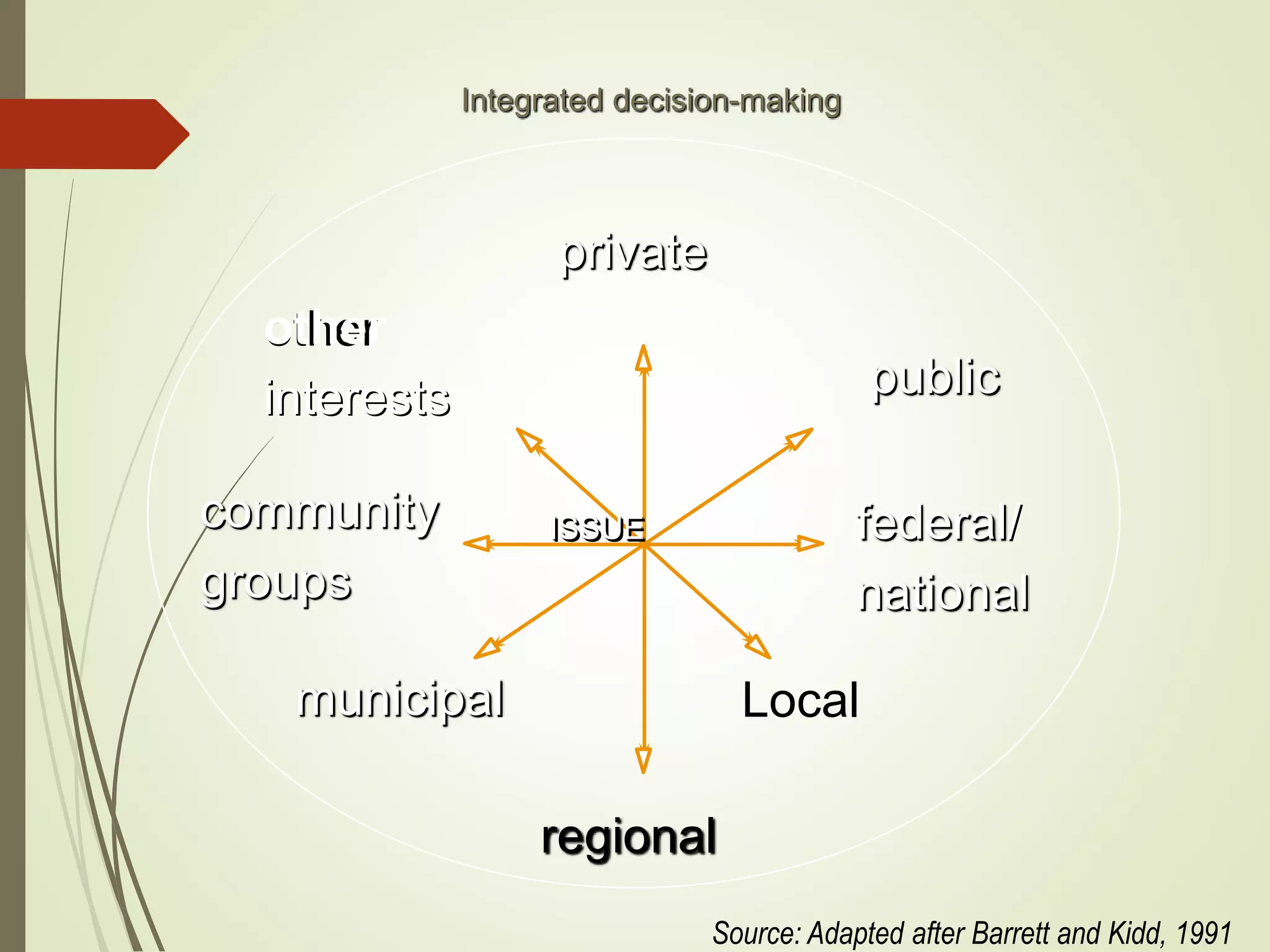
SDG CALLS FOR INTEGRATED APPROACH OF DECISION MAKING
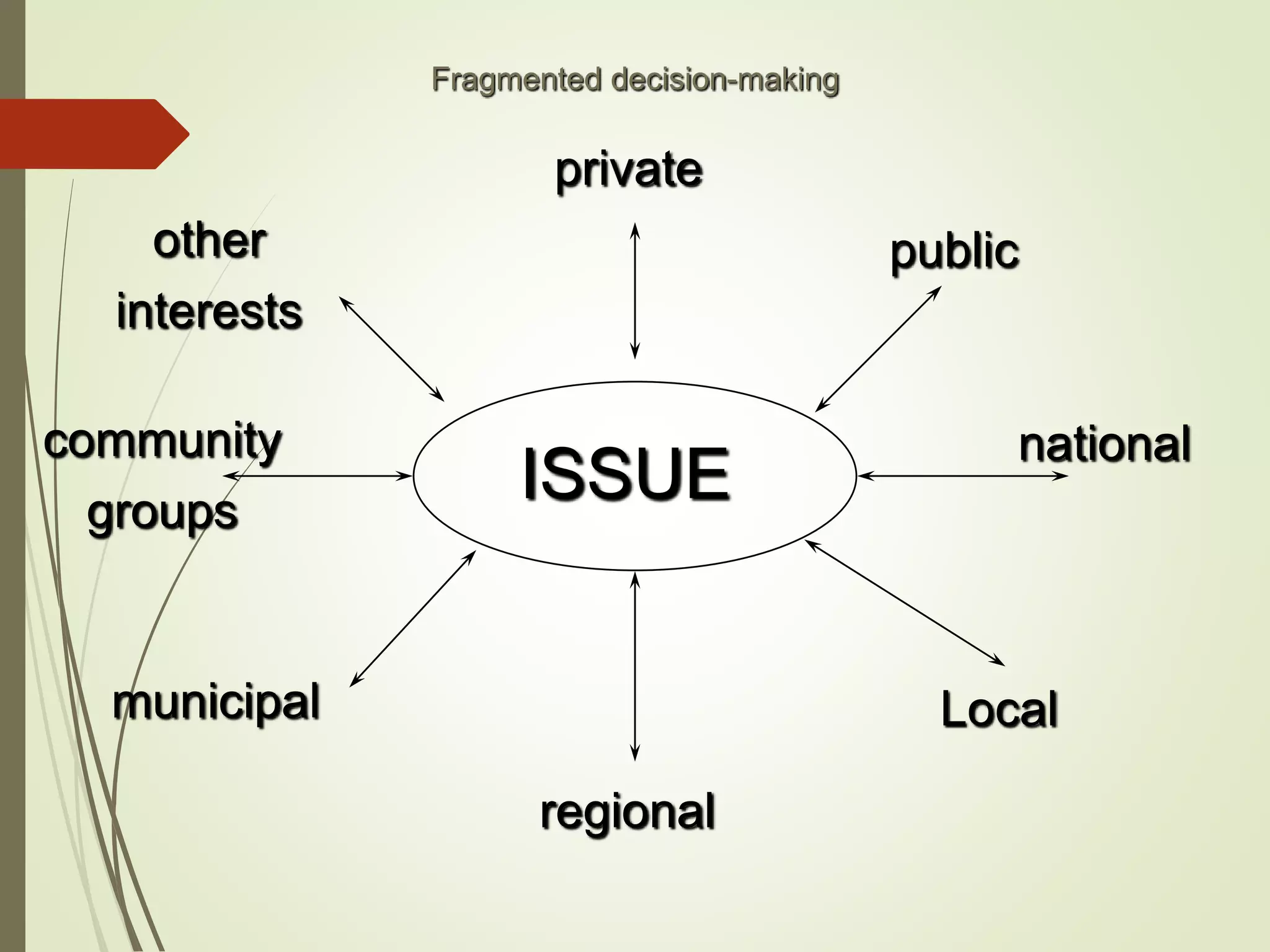
Fragmented decision-making
ISSUE
national
municipal
public
private
Local
regional
other
interests
community
groups
Integrated decision-making
regional
municipalmunicipal
privateprivate
communitycommunity
groupsgroups
publicpublic
otherother
interestsinterests
federal/federal/
nationalnational
ISSUEISSUE
Source: Adapted after Barrett and Kidd, 1991
Local
Decentralized Local Planning
A. Piloting SDG implementation through formation of Village / Local
Sustainable Development Groups
B. Sectoral Planning (e.g. Agriculture, Water, Health, Energy) - How the
plans are incorporating and addressing the SDG’s goals through their
plans
C. Resource and Budget Mapping
D. Integrated Planning – Vertical–horizontal integration and coordination
among relevant departments
E. Participatory Planning –Participation in rural and urban planning of
multi-stakeholders
F. Application of Planning Tools Currently in Use for gathering of relevant
data, analysing it to set priorities, matching the set priorities to
available budgets.
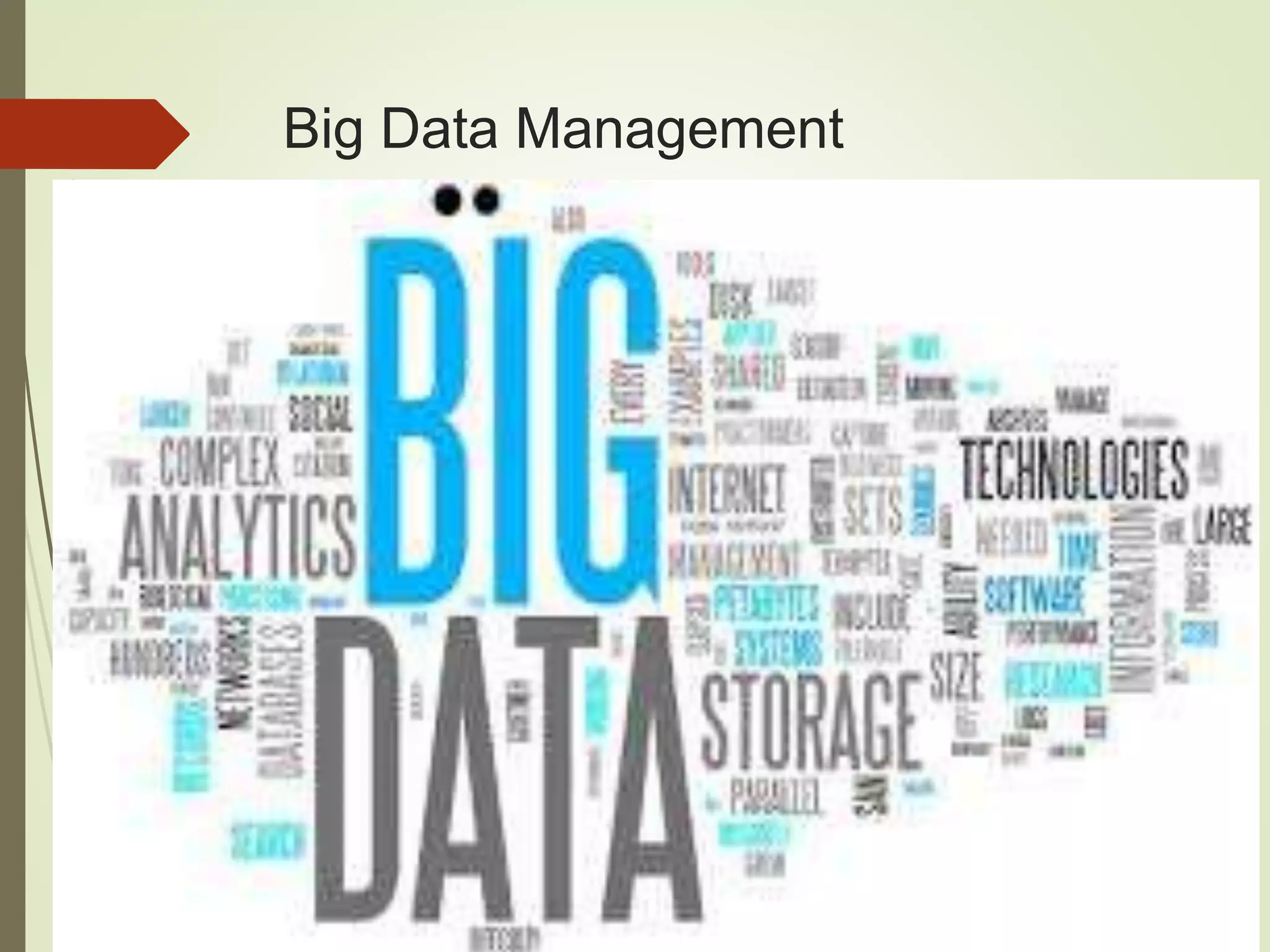
Big Data Management
Way Forward
 Localizing the SDG? What does this mean in practice?
 Implementation Plan and institutional arrangement (Local SD Group). Piloting
and mainstreaming.
 Establish clearly defined indicators /targets and baseline. Participatory and
Localizing monitoring SDGs at village/ward to disaggregated data at sub-
national and national level and capacity issues
 Localizing as the role of LGIs in partnership with broad-based stakeholders for
implementation of the goals – capacity issues?
 Incredible MDG achievements in terms of quantitative figures now on calls for
qualitative improvement to ensure sustainability;
 Integration within the SDG framework is essential in that a number of
development challenges - gender, equality, rights, governance, and resilience,
cut across all of the goals which calls for whole of the Government approach;
 The unfinished business of the MDGs - what worked and what didn’t work?
 Role defined in terms of Mandates of each Ministries and Agencies
 Big data/data revolution – Is there a role for the UN and DPs in Bangladesh?
 Look at the capacity gaps and data requirements and even test some of the
proposed SDGs to inform the data and capacity gaps.

Revised Presentation at GIU-PMO-28-Oct-2015[1]

  • 1.
    Governance Innovation Unit PrimeMinister’s Office Understanding SDGs Scopes & Challenges for Bangladesh 28th October 2015 Training event on Revisiting MDG & Understanding SDGs Karabi Hall, Prime Minister’s Office Presented by Dr. Aminul Islam Senior Adviser, Sustainable Development, UNDP, Bangladesh
  • 2.
    Why we areHere Today?  Orientation on the Post-2015 Development Agenda and Sustainable Development Goals  Lay the groundwork for taking action to advocate the Participants to be leaders in implementing the SDGs at home and abroad
  • 3.
    History of theMDGs  The greatest triumph of the MDGs was to mobilize broad support for a global development agenda  MDGs were developed by a small group of experts and was not member state driven. It completely overlooked the issue of inequality and governance.  The MDGs place great weight on social goals. But can social development take place, and more importantly can it be sustained, without economic development and good governance?
  • 4.
    The Strengths ofSDGs over MDGs Key Strengths of the proposed SDGs include:-  Stand alone goal of Inequality (within and between countries)  Stand alone goal on gender inequality , including ending of all forms of violence, discrimination, child marriages, and female genital mutilations  Environmental issues are strongly represented – fulfilling a long sought marriage between development and environment (climate change, marine and land base ecosystems, and sustainable consumption and production)  Governance - for the first time – incorporating a goal and targets on governance and peaceful societies (legal identity, tackling corruption and bribery etc)  Participatory/Inclusiveness Process in formulation of the SDGs: The participation and buy in of a wide range of stakeholders including member states and non governmental organizations  The broad nature of the SDG is also a reflection of the nature of challenges facing the world today
  • 5.
    Analytics: The WorldWe Want and MY World MY World : 7,138,023 Votes (17 Feb 2015)
  • 6.
    Sustainable development: Meeting theneeds of the present without compromising the ability of future generations to meet their own needs.  World Commission on Environment and Development (1987): Our Common Future
  • 7.
  • 26.
    Understanding of Sustainability Sustainability needs to be well defined in terms of measureable, verifiable targets and indicators under each Goal  What are the components of sustainability and how to measure this in terms of  Qualitative and how to assess the change needed to achieve the desired goals such as good governance;  Quantitative- some data are available but many other indicators need to be defined.  Sustainability should be understood broadly  Multi-sectoral balance and synergy  Capacity building at individual, institutional and systemic level  Financial sustainability  Equity and prosperity within the life support system  Quality assurance and its sustenance.
  • 27.
    Lessons Learned forPlanning the Next Journey to SDGs  Recent analysis captured in the British Medical Journal flagged Bangladesh as the one of the top most successful countries for achieving overall MDGs because of following driving factors:  Political vision and emphasis on human rights, alignment of development aid with country’s policy & plans and consideration of sustainability issues;  Systematic adoption of evidence based or catalytic strategies which includes mobilization of partnerships, effective planning and timely evidence based feedback in decision making process and enable accountability have contributed to the optimal use of resources for results;  Effective implementation of Multisectoral approach and good governance. This means that half of the reduction in poverty can be attributed to proper investments in sectors that influence agriculture, health, education, water, energy, sanitation, gender parity and climate change adaptation.
  • 28.
    Steps towards continuationof the Leadership from MDG to SDGs  MDG was limited to only 8 goals with emphasis on social goals with quantitative targets while SDGs aimed at achieving 17 goals with 169 targets which calls for qualitative change with social, economic, environment and governance dimensions.  Stock taking of who is doing what, gap analysis, capacity assessment and establishment of baseline data should be the first step.  Emphasis should be given to the  sustainability measurement with quality reflected at grassroots,  cost-benefit analysis in programme intervention,  value for money consideration in any investment,  resilience building and  effective service delivery with equity and justice.
  • 29.
    The Universality Dilemma Whatdo we mean by ‘universal’ Goals and Targets?  SDG framework norms and principles are relevant to all nations, irrespective of economic, social or environmental contexts, so the goals will apply to all countries  But global goals don’t easily translate to national contexts because of different, starting points, capacities, priorities etc.  So to be useful for all countries (and to create national ownership) global goals will be adapted into targets and indicators that reflect national contexts. Challenge:  Ensuring coherence between broad global goals and widely differing national contexts
  • 30.
    Sustainable development... considers futureand present needs when making decisions about: resource and energy use technological development direction of investments social, political & institutional change...etc. etc. etc.
  • 31.
  • 32.
  • 33.
  • 34.
    Decentralized Local Planning A.Piloting SDG implementation through formation of Village / Local Sustainable Development Groups B. Sectoral Planning (e.g. Agriculture, Water, Health, Energy) - How the plans are incorporating and addressing the SDG’s goals through their plans C. Resource and Budget Mapping D. Integrated Planning – Vertical–horizontal integration and coordination among relevant departments E. Participatory Planning –Participation in rural and urban planning of multi-stakeholders F. Application of Planning Tools Currently in Use for gathering of relevant data, analysing it to set priorities, matching the set priorities to available budgets.
  • 35.
  • 36.
    Way Forward  Localizingthe SDG? What does this mean in practice?  Implementation Plan and institutional arrangement (Local SD Group). Piloting and mainstreaming.  Establish clearly defined indicators /targets and baseline. Participatory and Localizing monitoring SDGs at village/ward to disaggregated data at sub- national and national level and capacity issues  Localizing as the role of LGIs in partnership with broad-based stakeholders for implementation of the goals – capacity issues?  Incredible MDG achievements in terms of quantitative figures now on calls for qualitative improvement to ensure sustainability;  Integration within the SDG framework is essential in that a number of development challenges - gender, equality, rights, governance, and resilience, cut across all of the goals which calls for whole of the Government approach;  The unfinished business of the MDGs - what worked and what didn’t work?  Role defined in terms of Mandates of each Ministries and Agencies  Big data/data revolution – Is there a role for the UN and DPs in Bangladesh?  Look at the capacity gaps and data requirements and even test some of the proposed SDGs to inform the data and capacity gaps.