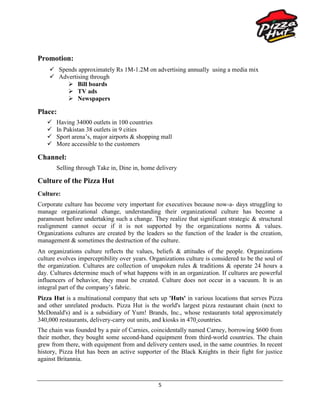
Review of Culture and Multinational Management<br />Culture varies in different countries. Culture is pervasive and shared beliefs, norms, values, and symbols that guide everyday life. Culture affects all aspects of life. Easily observable aspect of culture is known as front stage of culture: e.g., Japanese executive bows. Aspect that only insiders or members of the culture understand is known as back stage of culture, e.g. Japanese saying “it’s difficult” and twisting head to one side really means it’s impossible. Culture is divided into three levels & they are National culture, Business culture & Occupational and organizational culture. <br />In order to determine cultural differences & basic values two diagnostic models are there to aid the multinational managers, the “Hofstede model of national culture” & “7d culture model”.<br />“Hofstede’s model of national culture” is having five dimensions of basic values e.g. Power distance, Uncertainty avoidance, Individualism, Masculinity & Long-term orientation. Power distance concerns how cultures deal with inequality.Uncertainty avoidance is the norms,values & beliefs regarding tolerance for ambiguity.individualism & collectivism focuses on the relationship between the individuals & the group.masculanity deals with the tendency of the culture to support traditional masculine orientation & long term orientation is the blief in substantial savings, willingness to invest,sensitivity to sovial relationships& pragmatic adaption. 7d  cultural dimension model there are some dimensions that deal with relationships include universalism Vs particularism, collectivism Vs individualism, neutral Vs affective,  diffuse VS specific, achievement Vs ascription, sequential Vs synchronic, & internal Vs external control.In individualistic countries people are responsible for themselves. <br />Universalism vs. particularism refers to how people treat each other based on rules or personal relationships. In collectivist societies people are defined by group memberships and responsibility, achievement, and rewards are group-based. In individualist societies individual is assumed responsible for success or failure. Neutral vs effective refer acceptability of expressing emotions. In specific vs diffuse it is seen to what extent  an individual’s life is involved in work. Achievement vs ascription describes the manner in which society gives status. <br />Dimensions dealing with how a culture manages time and how it deals with nature are sequential vs. synchronic and internal vs. external control. In time orientation it is seen that how cultures deal with the past, present, and future. Internal control & external control is concerned with beliefs regarding control of one’s fate., means does nature dominate us or do we dominate nature.<br />Introduction:<br />Type: Wholly owned subsidiary<br />Founded: Wichita, Kansas, USA, 1958<br />Headquarter: Addison, Texas, USA<br />Ceo: David C. Novak<br />Slogan: “now you are eating”<br />Employees: 300,000+<br />Parent: Yum! Brands since 1997<br />Website: www.pizzahut.com<br />                www.pizzahut.net.pk<br />History<br />1958- Frank & Dan Carney open the first Pizza Hut in Wichita & Kansas<br />1972- Thousand restaurants are open throughout USA<br />1973- Pizza Hut went international<br />1977- Pepsi Company bought Pizza Hut<br />1982- JV between Pepsi Company & Whitbread<br />1997- Pepsi moved aside from drinks & Tricon Global came into being<br />2002- Tricon Global became Yum! Brands Inc.<br />2006- WB sold their shares to Yum<br />2008- Bought Godfathers pizza in Ireland with 28 stores<br />Fun Facts in Pizza Huts History:<br />Pizza Hut are the world’s largest users of cheese, over the course of a summer it is estimated that Pizza Hut uses a hundred million pounds of cheese. Pizza Hut uses 300 million pounds of cheese annually.
Pizza Hut purchases more than 3% of all cheese productions in the United States, which require a herd of about 170,000 dairy Cows to produce it.
They also use 700.000.000 pounds of pepperoni & 525.000.000 pounds of tomatoes in one year.
Gorbachev (the former president of USSR) also played in a Pizza Hut commercial.
In 2001 Pizza Hut sponsored a pizza delivery to the international space station.
The oldest Pizza Hut is still functional is in Wichita, Kansas.Mission Statement:<br />“ To be the best pizza for every pizza occasion”
“Alone we are delicious, together we are Yum!”
We are P.E.A.R.L.S

Review & culture

  • 1.
    Review of Cultureand Multinational Management<br />Culture varies in different countries. Culture is pervasive and shared beliefs, norms, values, and symbols that guide everyday life. Culture affects all aspects of life. Easily observable aspect of culture is known as front stage of culture: e.g., Japanese executive bows. Aspect that only insiders or members of the culture understand is known as back stage of culture, e.g. Japanese saying “it’s difficult” and twisting head to one side really means it’s impossible. Culture is divided into three levels & they are National culture, Business culture & Occupational and organizational culture. <br />In order to determine cultural differences & basic values two diagnostic models are there to aid the multinational managers, the “Hofstede model of national culture” & “7d culture model”.<br />“Hofstede’s model of national culture” is having five dimensions of basic values e.g. Power distance, Uncertainty avoidance, Individualism, Masculinity & Long-term orientation. Power distance concerns how cultures deal with inequality.Uncertainty avoidance is the norms,values & beliefs regarding tolerance for ambiguity.individualism & collectivism focuses on the relationship between the individuals & the group.masculanity deals with the tendency of the culture to support traditional masculine orientation & long term orientation is the blief in substantial savings, willingness to invest,sensitivity to sovial relationships& pragmatic adaption. 7d cultural dimension model there are some dimensions that deal with relationships include universalism Vs particularism, collectivism Vs individualism, neutral Vs affective, diffuse VS specific, achievement Vs ascription, sequential Vs synchronic, & internal Vs external control.In individualistic countries people are responsible for themselves. <br />Universalism vs. particularism refers to how people treat each other based on rules or personal relationships. In collectivist societies people are defined by group memberships and responsibility, achievement, and rewards are group-based. In individualist societies individual is assumed responsible for success or failure. Neutral vs effective refer acceptability of expressing emotions. In specific vs diffuse it is seen to what extent an individual’s life is involved in work. Achievement vs ascription describes the manner in which society gives status. <br />Dimensions dealing with how a culture manages time and how it deals with nature are sequential vs. synchronic and internal vs. external control. In time orientation it is seen that how cultures deal with the past, present, and future. Internal control & external control is concerned with beliefs regarding control of one’s fate., means does nature dominate us or do we dominate nature.<br />Introduction:<br />Type: Wholly owned subsidiary<br />Founded: Wichita, Kansas, USA, 1958<br />Headquarter: Addison, Texas, USA<br />Ceo: David C. Novak<br />Slogan: “now you are eating”<br />Employees: 300,000+<br />Parent: Yum! Brands since 1997<br />Website: www.pizzahut.com<br /> www.pizzahut.net.pk<br />History<br />1958- Frank & Dan Carney open the first Pizza Hut in Wichita & Kansas<br />1972- Thousand restaurants are open throughout USA<br />1973- Pizza Hut went international<br />1977- Pepsi Company bought Pizza Hut<br />1982- JV between Pepsi Company & Whitbread<br />1997- Pepsi moved aside from drinks & Tricon Global came into being<br />2002- Tricon Global became Yum! Brands Inc.<br />2006- WB sold their shares to Yum<br />2008- Bought Godfathers pizza in Ireland with 28 stores<br />Fun Facts in Pizza Huts History:<br />Pizza Hut are the world’s largest users of cheese, over the course of a summer it is estimated that Pizza Hut uses a hundred million pounds of cheese. Pizza Hut uses 300 million pounds of cheese annually.
  • 2.
    Pizza Hut purchasesmore than 3% of all cheese productions in the United States, which require a herd of about 170,000 dairy Cows to produce it.
  • 3.
    They also use700.000.000 pounds of pepperoni & 525.000.000 pounds of tomatoes in one year.
  • 4.
    Gorbachev (the formerpresident of USSR) also played in a Pizza Hut commercial.
  • 5.
    In 2001 PizzaHut sponsored a pizza delivery to the international space station.
  • 6.
    The oldest PizzaHut is still functional is in Wichita, Kansas.Mission Statement:<br />“ To be the best pizza for every pizza occasion”
  • 7.
    “Alone we aredelicious, together we are Yum!”
  • 8.