Return Home Interview
Intelligence
DI Mark Hine
MPS Missing People Data
• 2014/15 – 43,000 missing reports
• 21,000 Adult reports (17,000 individuals)
• 22,000 Children reports (12,000 individuals)
• 20% of all recorded missing demand in UK.
• 2015/16 – 46,000+ Missing reports
Thousands of opportunities
to gather intelligence
Learning from the Oxfordshire Serious Case
Review
• Child sexual exploitation is
happening everywhere - If it isn’t
actively sought it will not be
uncovered. This requires
different skills – police officers to
act more like social workers,
social workers to act more like
detectives.
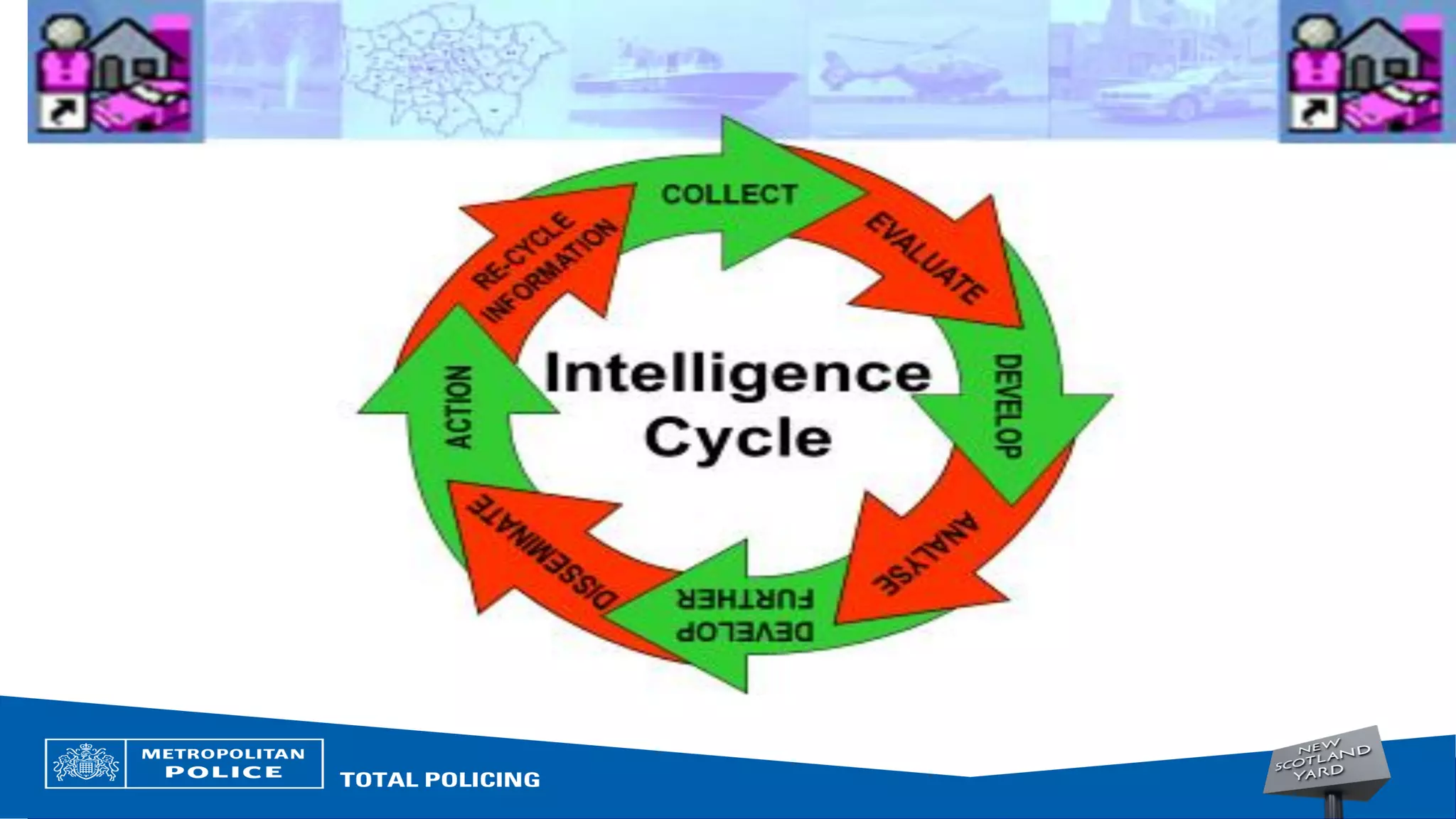
Intelligence – What is it?
•Intelligence is the product of information
concerning criminality
•Information that has a significant impact on
Police proactivity which has been taken in
its raw state, evaluated, analysed and
interpreted.
Intelligence- Why do we want it?
SAFEGUARDING
Intelligence – How to gather it
•P - Plan and prepare
•E - Engage and Explain
•A - Account
•C - Clarify
•E - Evaluate
Questioning – Open/Closed
• A closed question can shut down a conversation because it
provides little opportunity for the other person to continue
as the answers will be mainly ‘yes’ or ‘no’.
• Open questions tend to promote discussion. This type of
question cannot be simply answered by ‘yes’ or ‘no’. Open
questions force people to consider a point and provide you
with their thoughts.
• Open questions help you get information because they
encourage people to talk, they are useful when it comes to
opening a recall of an incident or series of events.
Account – Detail, Detail, Detail!
•What is it all about?
•Where have you been?
•Who is involved?
•What places are involved?
•What exactly has happened?
•Descriptions
Provenance
•How do you know this
information
•Who else knows this
information
Information Sharing
• Fears about sharing information cannot be allowed to stand in the
way of the need to safeguard and promote the welfare of children at
risk of abuse or neglect. No practitioner should assume that someone
else will pass on information which may be critical to keeping a child
safe.
• All organisations should have arrangements in place which set out
clearly the processes and the principles for sharing information
internally. In addition, these arrangements should cover sharing
information with other organisations and practitioners, including third
party providers to which local authorities have chosen to delegate
children’s social care functions, and the Local Safeguarding Children
Board (LSCB).
How do I share Intelligence ?
•Missing Persons Unit
•MASH
•Referral Desks.
Case Study
• 15 year old Female, Missing.
• Returned home and commissioned RHI completed.
• Female disclosed she had some underwear modelling pictures taken
by a photographer. She provided his name.
• Information passed to Police who completed further research.
• Photographer was known to Police having been arrested for sexual
activity with child in the past and suspected of approaching young
females asking if they want to engage in pornographic films. He also
matched description of male acting suspiciously in park.
Case Study - continued
• Female spoken to by Police and further intelligence gained.
• She had been approached by male in Asda and she agreed to meet.
He had provided alcohol to give her ‘confidence’
• He took pictures in her underwear.
• Decision made to arrest on suspicion of possession of Indecent
Images.
• Home address searched and phone/computer seized – examined and
further intelligence gathered regarding other females.
• Photographer on bail, Intelligence searched to ID other females.

Return Home Interview Intelligence

  • 1.
  • 2.
    MPS Missing PeopleData • 2014/15 – 43,000 missing reports • 21,000 Adult reports (17,000 individuals) • 22,000 Children reports (12,000 individuals) • 20% of all recorded missing demand in UK. • 2015/16 – 46,000+ Missing reports Thousands of opportunities to gather intelligence
  • 3.
    Learning from theOxfordshire Serious Case Review • Child sexual exploitation is happening everywhere - If it isn’t actively sought it will not be uncovered. This requires different skills – police officers to act more like social workers, social workers to act more like detectives.
  • 4.
    Intelligence – Whatis it? •Intelligence is the product of information concerning criminality •Information that has a significant impact on Police proactivity which has been taken in its raw state, evaluated, analysed and interpreted.
  • 5.
    Intelligence- Why dowe want it? SAFEGUARDING
  • 6.
    Intelligence – Howto gather it •P - Plan and prepare •E - Engage and Explain •A - Account •C - Clarify •E - Evaluate
  • 7.
    Questioning – Open/Closed •A closed question can shut down a conversation because it provides little opportunity for the other person to continue as the answers will be mainly ‘yes’ or ‘no’. • Open questions tend to promote discussion. This type of question cannot be simply answered by ‘yes’ or ‘no’. Open questions force people to consider a point and provide you with their thoughts. • Open questions help you get information because they encourage people to talk, they are useful when it comes to opening a recall of an incident or series of events.
  • 8.
    Account – Detail,Detail, Detail! •What is it all about? •Where have you been? •Who is involved? •What places are involved? •What exactly has happened? •Descriptions
  • 9.
    Provenance •How do youknow this information •Who else knows this information
  • 10.
    Information Sharing • Fearsabout sharing information cannot be allowed to stand in the way of the need to safeguard and promote the welfare of children at risk of abuse or neglect. No practitioner should assume that someone else will pass on information which may be critical to keeping a child safe. • All organisations should have arrangements in place which set out clearly the processes and the principles for sharing information internally. In addition, these arrangements should cover sharing information with other organisations and practitioners, including third party providers to which local authorities have chosen to delegate children’s social care functions, and the Local Safeguarding Children Board (LSCB).
  • 11.
    How do Ishare Intelligence ? •Missing Persons Unit •MASH •Referral Desks.
  • 13.
    Case Study • 15year old Female, Missing. • Returned home and commissioned RHI completed. • Female disclosed she had some underwear modelling pictures taken by a photographer. She provided his name. • Information passed to Police who completed further research. • Photographer was known to Police having been arrested for sexual activity with child in the past and suspected of approaching young females asking if they want to engage in pornographic films. He also matched description of male acting suspiciously in park.
  • 14.
    Case Study -continued • Female spoken to by Police and further intelligence gained. • She had been approached by male in Asda and she agreed to meet. He had provided alcohol to give her ‘confidence’ • He took pictures in her underwear. • Decision made to arrest on suspicion of possession of Indecent Images. • Home address searched and phone/computer seized – examined and further intelligence gathered regarding other females. • Photographer on bail, Intelligence searched to ID other females.