





Re-thinking Perf Tuning
with HTTP2
Vinci Rufus
Google Developer Expert
@areai51
The Best Practices of Today
may become
Anti-Patterns Tomorrow
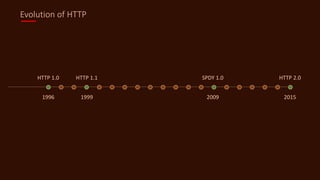
Evolution of HTTP
1996 1999 2009 2015
HTTP 1.0 HTTP 1.1 SPDY 1.0 HTTP 2.0
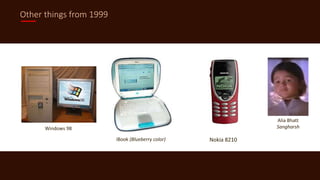
Other things from 1999
Alia Bhatt
SangharshWindows 98
iBook (Blueberry color) Nokia 8210
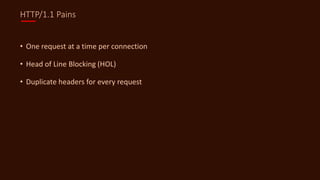
HTTP/1.1 Pains
• One request at a time per connection
• Head of Line Blocking (HOL)
• Duplicate headers for every request
Performance ‘Best’ Practices
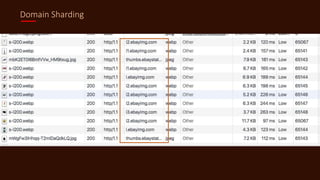
Domain Sharding
The first time I got to know about Image Sprites
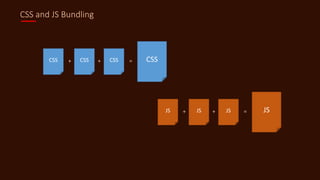
CSS and JS Bundling
JS + = JSJS + JS
CSS + = CSSCSS + CSS
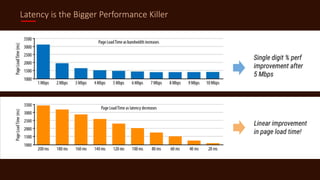
Latency is the Bigger Performance Killer
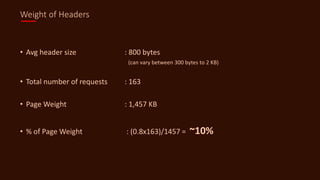
Weight of Headers
• Avg header size : 800 bytes
(can vary between 300 bytes to 2 KB)
• Total number of requests : 163
• Page Weight : 1,457 KB
• % of Page Weight : (0.8x163)/1457 = ~10%
HTTP2 (at a glance)
Elevator Pitch
http://http2.golang.org/gophertiles?latency=0 https://http2.akamai.com/demo
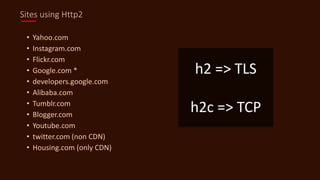
Sites using Http2
• Yahoo.com
• Instagram.com
• Flickr.com
• Google.com *
• developers.google.com
• Alibaba.com
• Tumblr.com
• Blogger.com
• Youtube.com
• twitter.com (non CDN)
• Housing.com (only CDN)
h2 => TLS
h2c => TCP
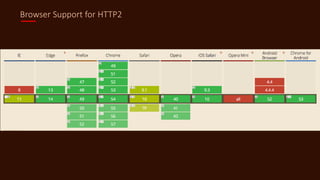
Browser Support for HTTP2
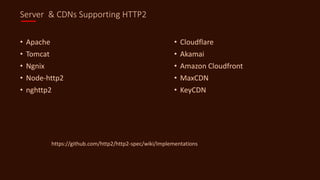
Server & CDNs Supporting HTTP2
• Apache
• Tomcat
• Ngnix
• Node-http2
• nghttp2
• Cloudflare
• Akamai
• Amazon Cloudfront
• MaxCDN
• KeyCDN
https://github.com/http2/http2-spec/wiki/Implementations
http2 Features
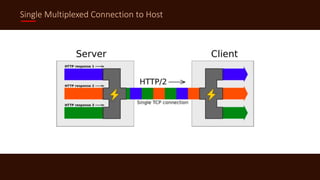
Single Multiplexed Connection to Host
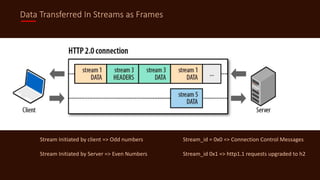
Data Transferred In Streams as Frames
Stream Initiated by client => Odd numbers
Stream Initiated by Server => Even Numbers
Stream_id = 0x0 => Connection Control Messages
Stream_id 0x1 => http1.1 requests upgraded to h2
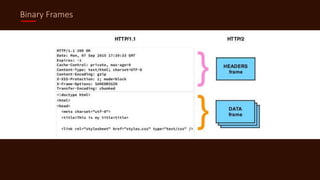
Binary Frames
http2 Performance
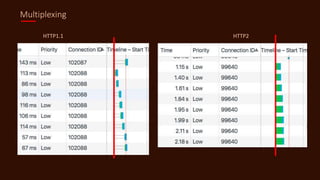
Multiplexing
HTTP1.1 HTTP2
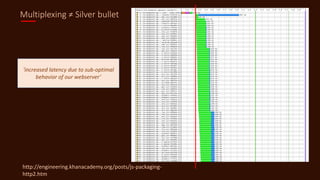
Multiplexing ≠ Silver bullet
http://engineering.khanacademy.org/posts/js-packaging-
http2.htm
‘increased latency due to sub-optimal
behavior of our webserver’
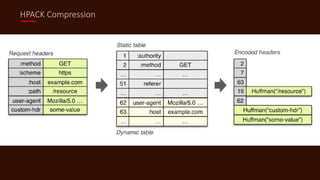
HPACK Compression
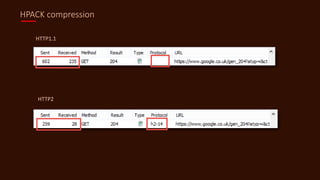
HPACK compression
HTTP1.1
HTTP2
Stream Priority
• Based on Dependencies and Weights
• Weight [1 - 256]
*
A
10
B
1
*
A
10
B
1
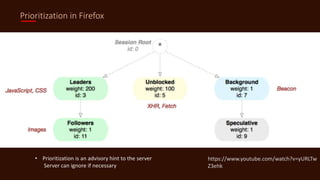
Prioritization in Firefox
• Prioritization is an advisory hint to the server
Server can ignore if necessary
https://www.youtube.com/watch?v=yURLTw
Z3ehk
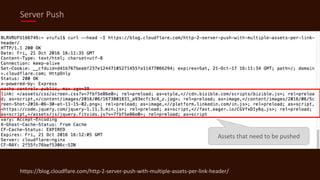
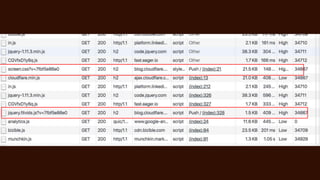
Server Push
https://blog.cloudflare.com/http-2-server-push-with-multiple-assets-per-link-header/
Assets that need to be pushed
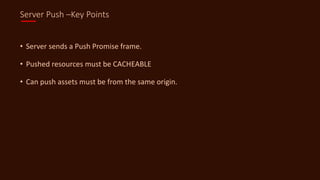
Server Push –Key Points
• Server sends a Push Promise frame.
• Pushed resources must be CACHEABLE
• Can push assets must be from the same origin.
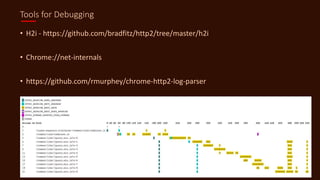
Tools for Debugging
• H2i - https://github.com/bradfitz/http2/tree/master/h2i
• Chrome://net-internals
• https://github.com/rmurphey/chrome-http2-log-parser
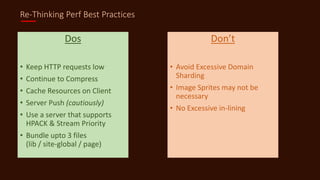
Re-Thinking Perf Best Practices
Dos
• Keep HTTP requests low
• Continue to Compress
• Cache Resources on Client
• Server Push (cautiously)
• Use a server that supports
HPACK & Stream Priority
• Bundle upto 3 files
(lib / site-global / page)
Don’t
• Avoid Excessive Domain
Sharding
• Image Sprites may not be
necessary
• No Excessive in-lining
Thank You!!

Re-thinking Performance tuning with HTTP2

Editor's Notes

  • #9 When http1.1 came out… Image slicing was a critical piece of our web development. Where we would take up 1 single image and cut it into pieces and put them into tables. Because smaller the asset the faster it would load.
  • #10 We have to reduce the HTTP requests. CSS and JS bundling doesn’t make logical sense. Many of us did it just because we needed a better Yslow Score or Google Page Speed Index. Many of us avoided doing it because it would break our page.
  • #11 Latency and RTT are the bigger performance killers. Beyond a point bandwidth doesn’t matter.
  • #12 More importantly more number of requests leads to more page weight due to the additional overhead of header bytes sent with every request especially things like the user-agent, and cookies.
  • #25 The reason we kept sending the headers with each asset was because http is stateless, http2 is also still a stateless protocol. But there is a separate spec that talks about compressing the headers using HPACK and Hoffman Code Hpack uses a look up table for the most common request header and puts them into a static table. 61 Header values as a part of the static table. Dynamic entries can be added from #62 onwards