


Globalization & Retail Sector
By-P1103
   P1125
   P1146
   P1152
   P1157
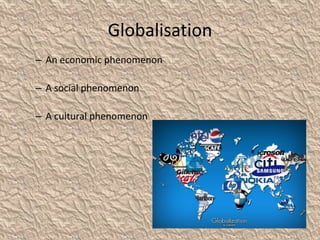
Globalisation
– An economic phenomenon

– A social phenomenon

– A cultural phenomenon
Globalisation
Benefits of Globalisation
 Increased choice

 Greater potential for growth

 Increase international
  economies of scale

 Greater employment
  opportunities

 Massive increases in wealth
  for many countries
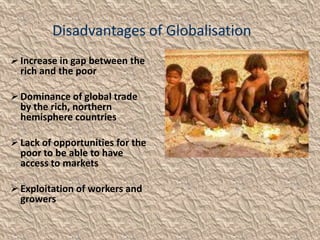
Disadvantages of Globalisation
 Increase in gap between the
  rich and the poor

 Dominance of global trade
  by the rich, northern
  hemisphere countries

 Lack of opportunities for the
  poor to be able to have
  access to markets

 Exploitation of workers and
  growers
Retail Sector
•   Goods and Services(Marketing Intermediary)
•   14% GDP
•   2nd Sector
•   5th in World
•   2nd in Asia
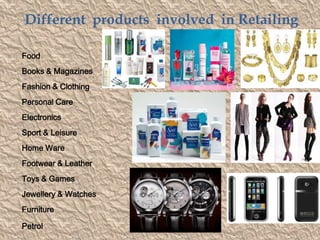
Different products involved in Retailing

Food
Books & Magazines
Fashion & Clothing
Personal Care
Electronics
Sport & Leisure
Home Ware
Footwear & Leather
Toys & Games
Jewellery & Watches
Furniture

Petrol
Division of Retail Sectors
• Organized

• Unorganized
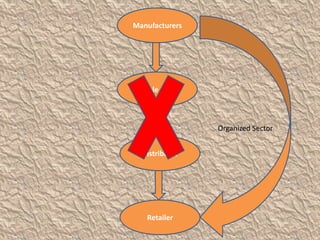
Manufacturers


Whole seller


                Organized Sector


  Distributor


   Retailer
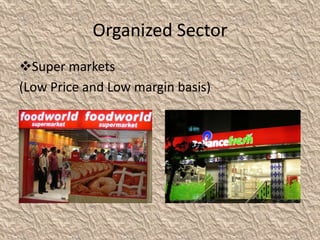
Organized Sector
Super markets
(Low Price and Low margin basis)
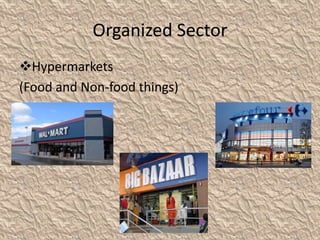
Organized Sector
Hypermarkets
(Food and Non-food things)
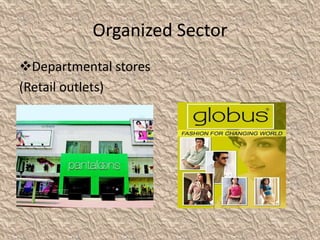
Organized Sector
Departmental stores
(Retail outlets)
Organized Sector
Specialty stores
(Books and Sales of Music Cassettes)
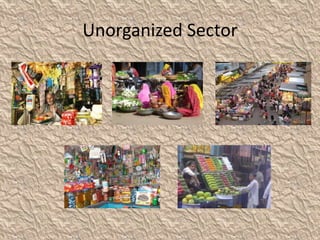
Unorganized Sector
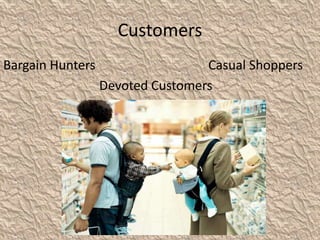
Customers
Bargain Hunters                   Casual Shoppers
                  Devoted Customers
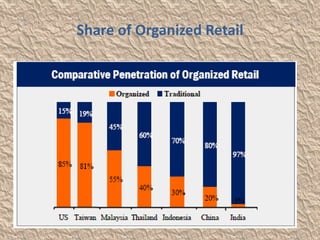
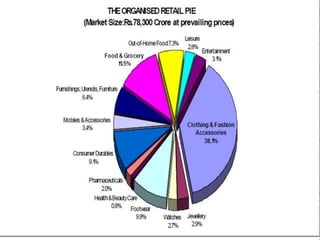
Share of Organized Retail
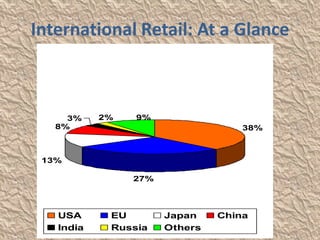
International Retail: At a Glance


     3%    2%   9%
   8%                              38%


 13%

                27%


   USA      EU        Japan    China
   India    Russia    Others
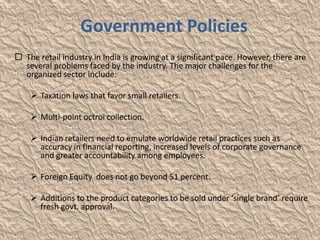
Government Policies
 The retail industry in India is growing at a significant pace. However, there are
  several problems faced by the industry. The major challenges for the
  organized sector include:

     Taxation laws that favor small retailers.

     Multi-point octroi collection.

     Indian retailers need to emulate worldwide retail practices such as
      accuracy in financial reporting, increased levels of corporate governance
      and greater accountability among employees.

     Foreign Equity does not go beyond 51 percent.

     Additions to the product categories to be sold under ‘single brand’ require
      fresh govt. approval.
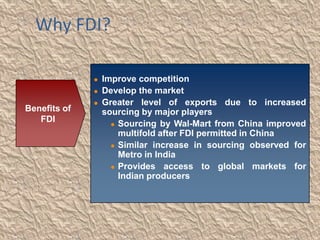
Why FDI?

                 Improve competition
                 Develop the market
                 Greater level of exports due to increased
Benefits of       sourcing by major players
   FDI
                     Sourcing by Wal-Mart from China improved
                      multifold after FDI permitted in China
                     Similar increase in sourcing observed for
                      Metro in India
                     Provides   access to global markets for
                      Indian producers
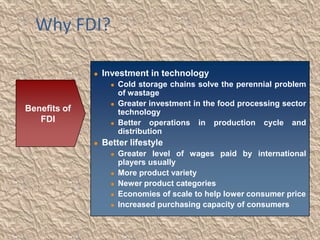
Why FDI?

                 Investment in technology
                       Cold storage chains solve the perennial problem
                        of wastage
                       Greater investment in the food processing sector
Benefits of             technology
   FDI                 Better operations in production cycle and
                        distribution
                 Better lifestyle
                       Greater level of wages paid by international
                        players usually
                       More product variety
                       Newer product categories
                       Economies of scale to help lower consumer price
                       Increased purchasing capacity of consumers
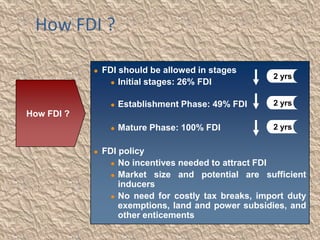
How FDI ?

               FDI should be allowed in stages
                                                      2 yrs
                   Initial stages: 26% FDI


                     Establishment Phase: 49% FDI    2 yrs
How FDI ?
                     Mature Phase: 100% FDI          2 yrs


               FDI policy
                   No incentives needed to attract FDI

                   Market size and potential are sufficient
                    inducers
                   No need for costly tax breaks, import duty
                    exemptions, land and power subsidies, and
                    other enticements
SWOT Analysis
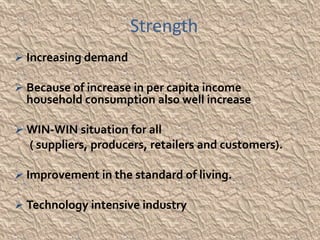
Strength
 Increasing demand

 Because of increase in per capita income
  household consumption also well increase

 WIN-WIN situation for all
  ( suppliers, producers, retailers and customers).

 Improvement in the standard of living.

 Technology intensive industry
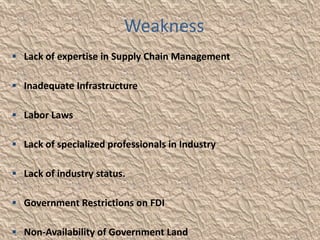
Weakness
 Lack of expertise in Supply Chain Management

 Inadequate Infrastructure

 Labor Laws

 Lack of specialized professionals in Industry

 Lack of industry status.

 Government Restrictions on FDI

 Non-Availability of Government Land
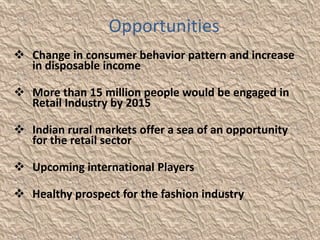
Opportunities
 Change in consumer behavior pattern and increase
  in disposable income

 More than 15 million people would be engaged in
  Retail Industry by 2015

 Indian rural markets offer a sea of an opportunity
  for the retail sector

 Upcoming international Players

 Healthy prospect for the fashion industry
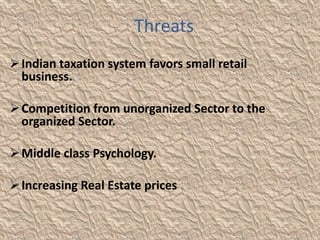
Threats
 Indian taxation system favors small retail
  business.

 Competition from unorganized Sector to the
  organized Sector.

 Middle class Psychology.

 Increasing Real Estate prices
Retail sector by Anup Sukumaran

Retail sector by Anup Sukumaran

  • 1.
    Globalization & RetailSector By-P1103 P1125 P1146 P1152 P1157
  • 2.
    Globalisation – An economicphenomenon – A social phenomenon – A cultural phenomenon
  • 3.
  • 4.
    Benefits of Globalisation Increased choice  Greater potential for growth  Increase international economies of scale  Greater employment opportunities  Massive increases in wealth for many countries
  • 5.
    Disadvantages of Globalisation Increase in gap between the rich and the poor  Dominance of global trade by the rich, northern hemisphere countries  Lack of opportunities for the poor to be able to have access to markets  Exploitation of workers and growers
  • 6.
    Retail Sector • Goods and Services(Marketing Intermediary) • 14% GDP • 2nd Sector • 5th in World • 2nd in Asia
  • 7.
    Different products involvedin Retailing Food Books & Magazines Fashion & Clothing Personal Care Electronics Sport & Leisure Home Ware Footwear & Leather Toys & Games Jewellery & Watches Furniture Petrol
  • 8.
    Division of RetailSectors • Organized • Unorganized
  • 9.
    Manufacturers Whole seller Organized Sector Distributor Retailer
  • 10.
    Organized Sector Super markets (LowPrice and Low margin basis)
  • 11.
  • 12.
  • 13.
    Organized Sector Specialty stores (Booksand Sales of Music Cassettes)
  • 14.
  • 15.
    Customers Bargain Hunters Casual Shoppers Devoted Customers
  • 16.
  • 19.
    International Retail: Ata Glance 3% 2% 9% 8% 38% 13% 27% USA EU Japan China India Russia Others
  • 20.
    Government Policies  Theretail industry in India is growing at a significant pace. However, there are several problems faced by the industry. The major challenges for the organized sector include:  Taxation laws that favor small retailers.  Multi-point octroi collection.  Indian retailers need to emulate worldwide retail practices such as accuracy in financial reporting, increased levels of corporate governance and greater accountability among employees.  Foreign Equity does not go beyond 51 percent.  Additions to the product categories to be sold under ‘single brand’ require fresh govt. approval.
  • 21.
    Why FDI?  Improve competition  Develop the market  Greater level of exports due to increased Benefits of sourcing by major players FDI  Sourcing by Wal-Mart from China improved multifold after FDI permitted in China  Similar increase in sourcing observed for Metro in India  Provides access to global markets for Indian producers
  • 22.
    Why FDI?  Investment in technology  Cold storage chains solve the perennial problem of wastage  Greater investment in the food processing sector Benefits of technology FDI  Better operations in production cycle and distribution  Better lifestyle  Greater level of wages paid by international players usually  More product variety  Newer product categories  Economies of scale to help lower consumer price  Increased purchasing capacity of consumers
  • 23.
    How FDI ?  FDI should be allowed in stages 2 yrs  Initial stages: 26% FDI  Establishment Phase: 49% FDI 2 yrs How FDI ?  Mature Phase: 100% FDI 2 yrs  FDI policy  No incentives needed to attract FDI  Market size and potential are sufficient inducers  No need for costly tax breaks, import duty exemptions, land and power subsidies, and other enticements
  • 24.
  • 25.
    Strength  Increasing demand Because of increase in per capita income household consumption also well increase  WIN-WIN situation for all ( suppliers, producers, retailers and customers).  Improvement in the standard of living.  Technology intensive industry
  • 26.
    Weakness  Lack ofexpertise in Supply Chain Management  Inadequate Infrastructure  Labor Laws  Lack of specialized professionals in Industry  Lack of industry status.  Government Restrictions on FDI  Non-Availability of Government Land
  • 27.
    Opportunities  Change inconsumer behavior pattern and increase in disposable income  More than 15 million people would be engaged in Retail Industry by 2015  Indian rural markets offer a sea of an opportunity for the retail sector  Upcoming international Players  Healthy prospect for the fashion industry
  • 28.
    Threats  Indian taxationsystem favors small retail business.  Competition from unorganized Sector to the organized Sector.  Middle class Psychology.  Increasing Real Estate prices