AGILE
USER
RESEARCH
MANIFESTO
Wojciech Chojnacki, Strategy Director at Symetria
I remember a story told to me by a participant at a UX training I was
giving. His company was building a new module an existing digital
product. They had a great multidisciplinary team, user experience
capabilities and well defined Agile process.
They had done a preliminary user research, built user journeys and
were developing user stories. Still, with the progression of the
project they felt more and more frustrated.
Once upon a time …
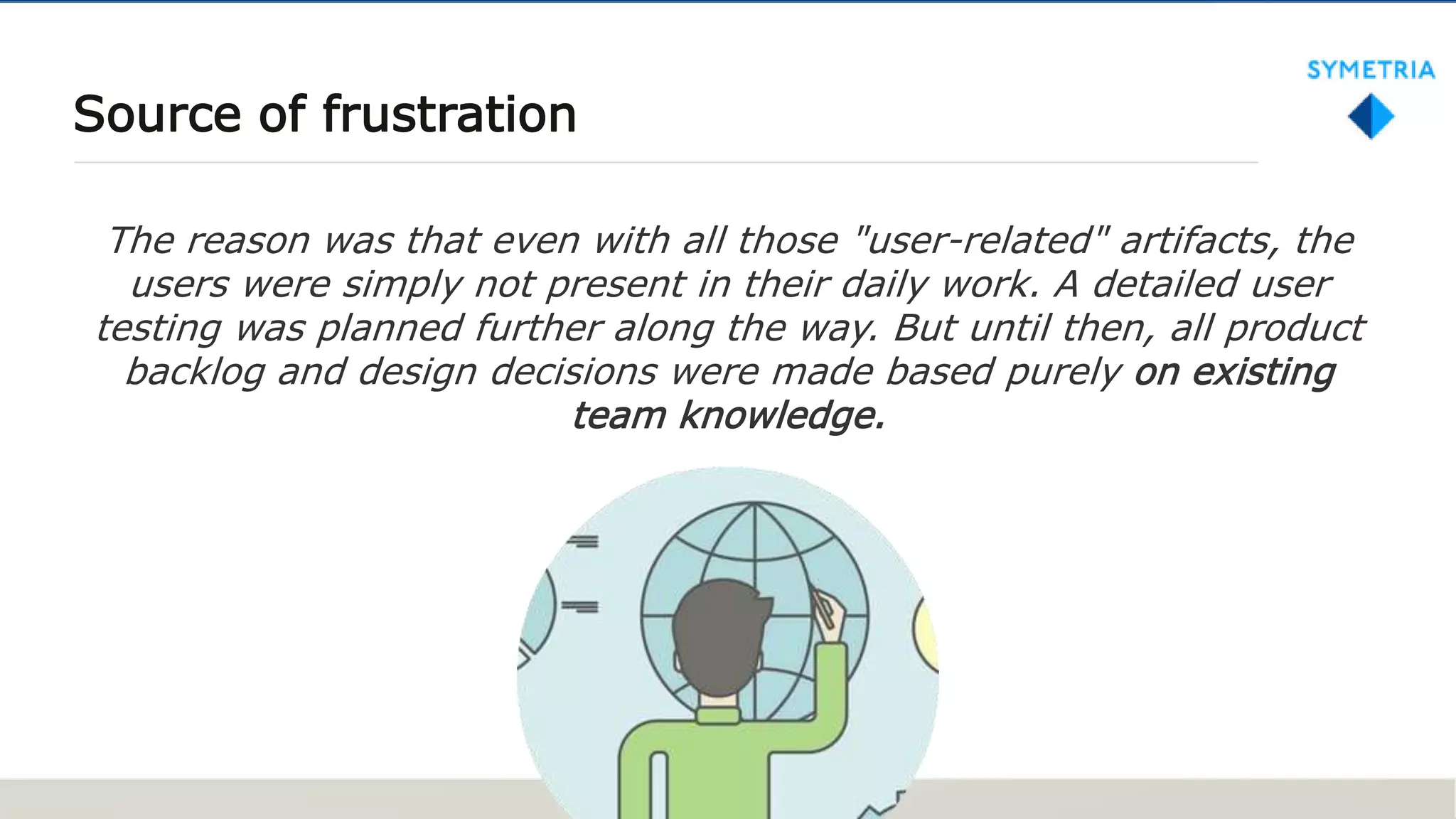
The reason was that even with all those "user-related" artifacts, the
users were simply not present in their daily work. A detailed user
testing was planned further along the way. But until then, all product
backlog and design decisions were made based purely on existing
team knowledge.
Source of frustration
Source of frustration #2
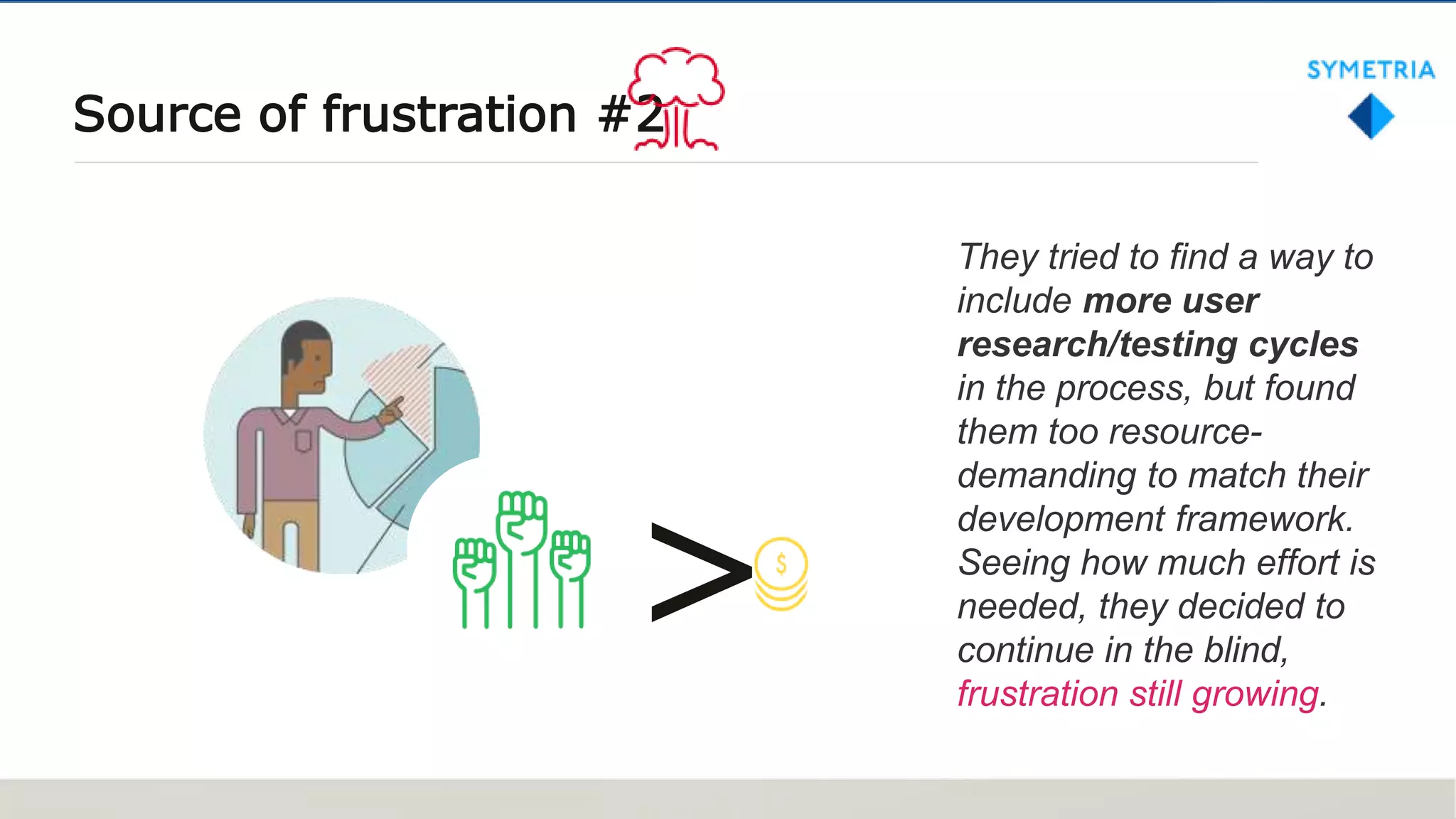
They tried to find a way to
include more user
research/testing cycles
in the process, but found
them too resource-
demanding to match their
development framework.
Seeing how much effort is
needed, they decided to
continue in the blind,
frustration still growing.
>
Don’t we know enough about users?
As an UX practitioner I sometimes
forget how scary the term “User
Research” sounds. It sounds like
something that takes weeks. Sounds
like a small chance of return on
investment. Sounds like something
that you better outsource to an
agency. And do it only if you really
have those couple of extra bucks to
spare.
UX is impossible without user research and
testing
How they perceive our products and interact with
them to reach those goals.
What they think about our new ideas for a product
or feature.
Do they understand its value and how they can use it.
Designing a product, we simply have to know how our users think about their
tasks and goals.
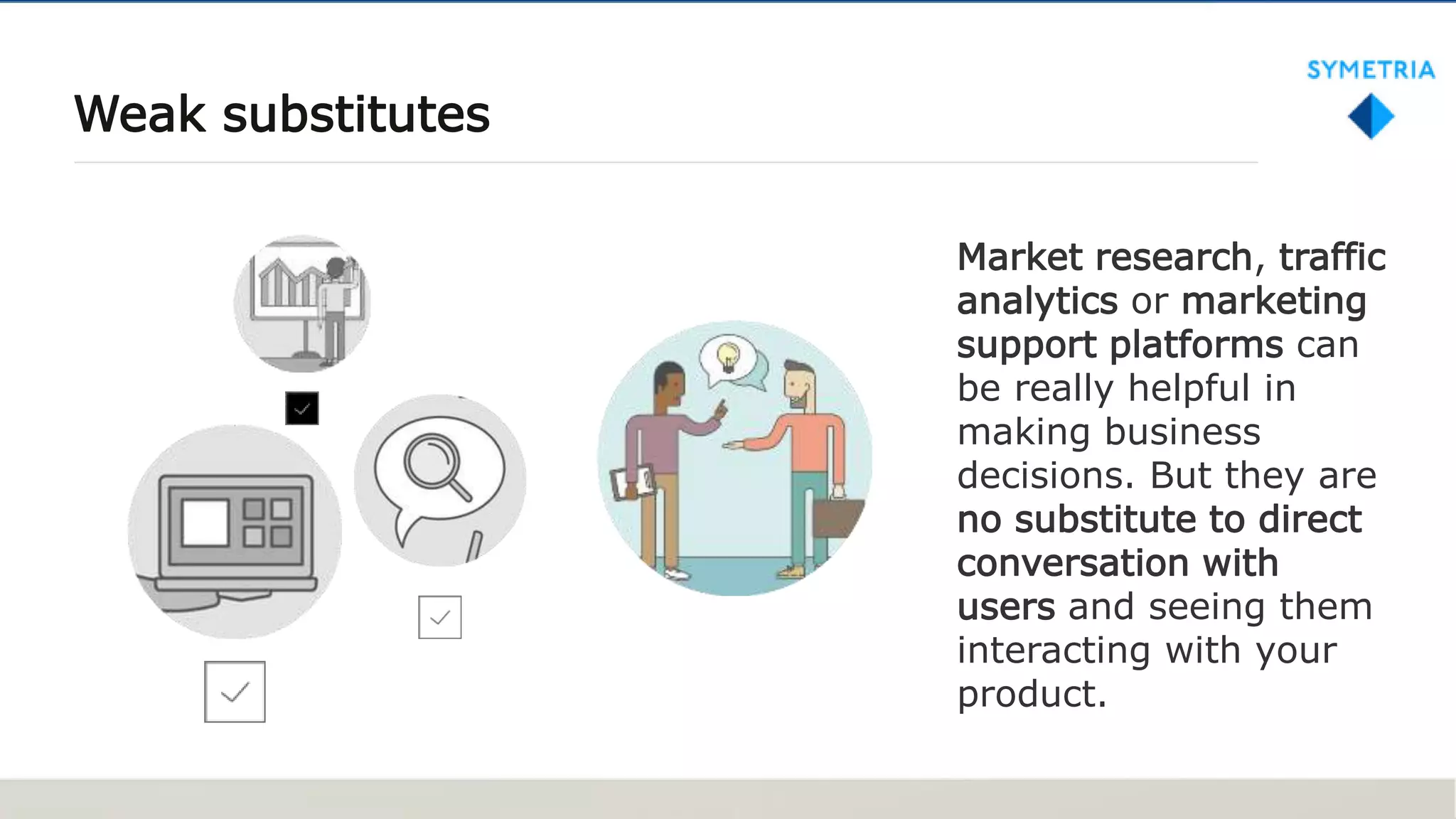
Weak substitutes
Market research, traffic
analytics or marketing
support platforms can
be really helpful in
making business
decisions. But they are
no substitute to direct
conversation with
users and seeing them
interacting with your
product.
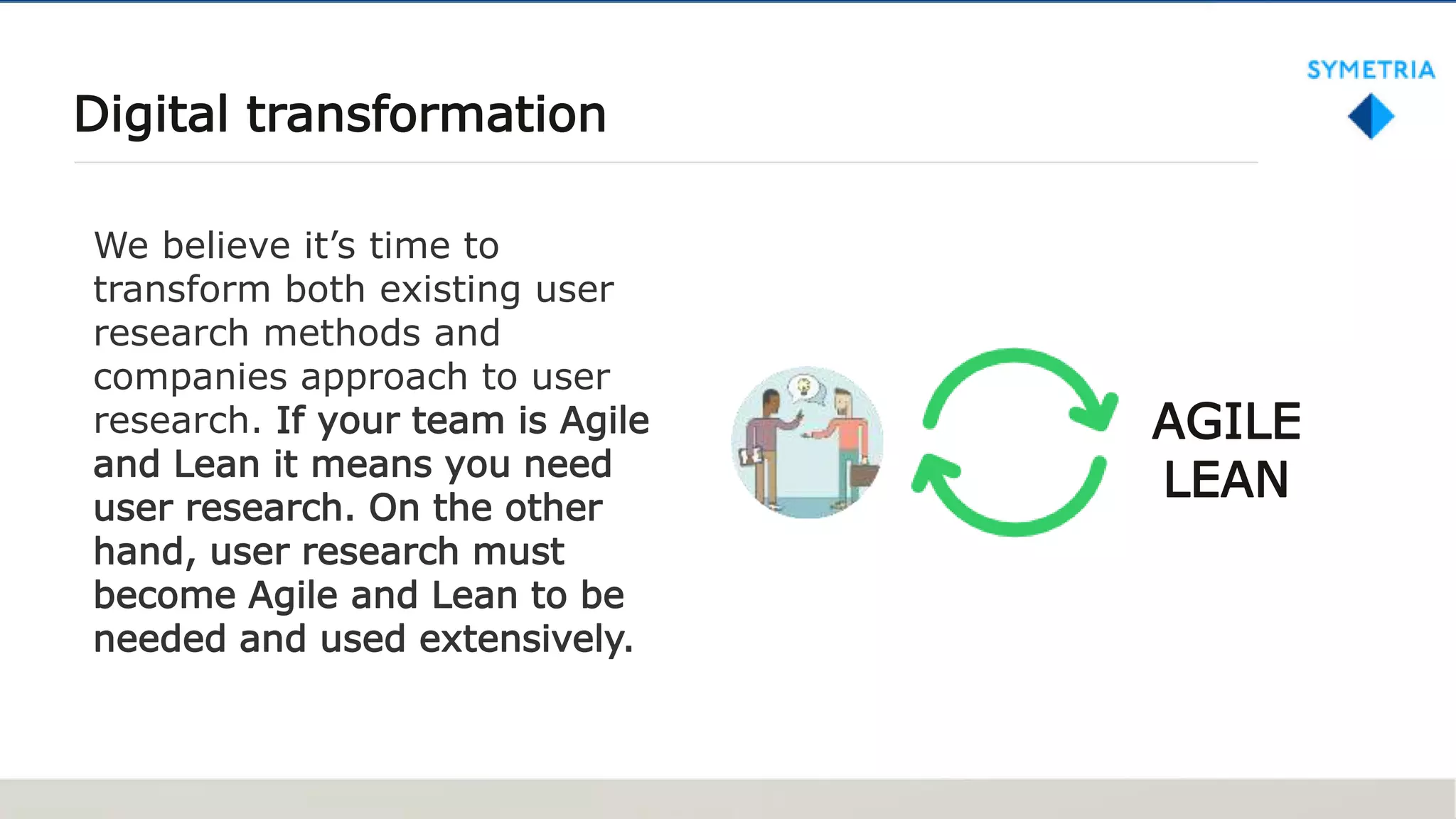
Digital transformation
We believe it’s time to
transform both existing user
research methods and
companies approach to user
research. If your team is Agile
and Lean it means you need
user research. On the other
hand, user research must
become Agile and Lean to be
needed and used extensively.
AGILE
LEAN
IN AGILE
WORLD
USER
RESEARCH
RULES
AGILE
USER RESEARCH
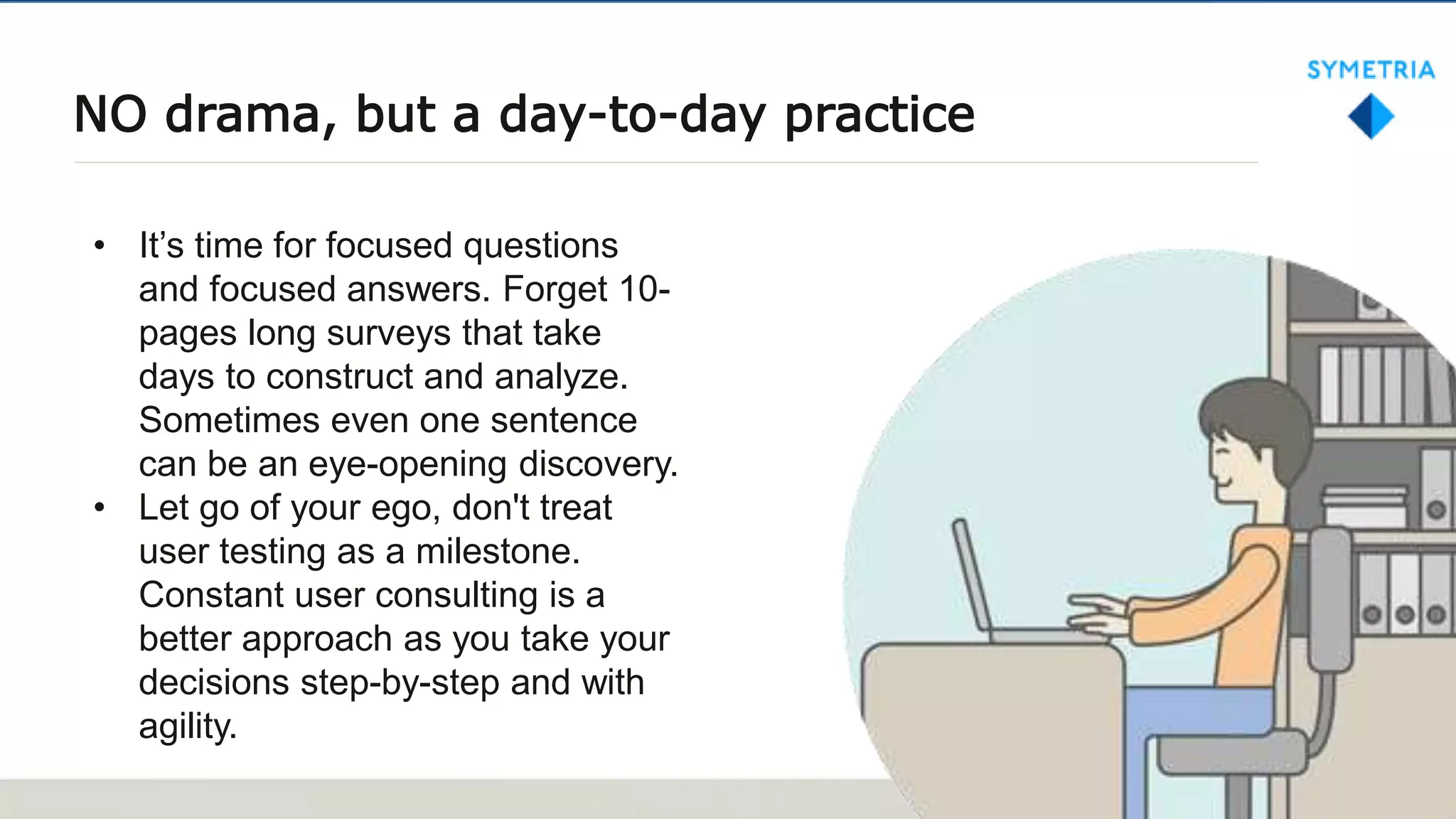
NO drama, but a day-to-day practice
• It’s time for focused questions
and focused answers. Forget 10-
pages long surveys that take
days to construct and analyze.
Sometimes even one sentence
can be an eye-opening discovery.
• Let go of your ego, don't treat
user testing as a milestone.
Constant user consulting is a
better approach as you take your
decisions step-by-step and with
agility.
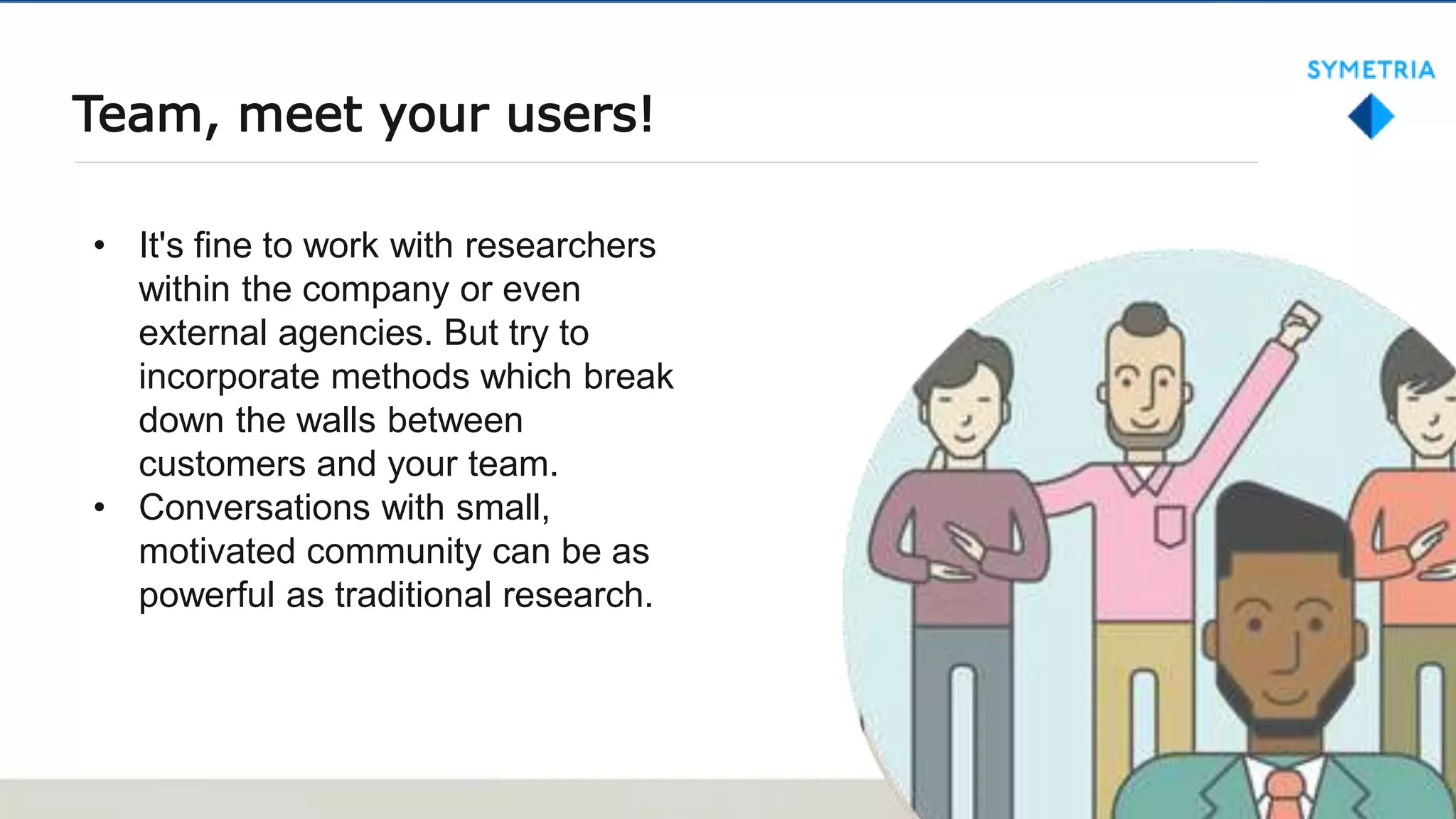
Team, meet your users!
• It's fine to work with researchers
within the company or even
external agencies. But try to
incorporate methods which break
down the walls between
customers and your team.
• Conversations with small,
motivated community can be as
powerful as traditional research.
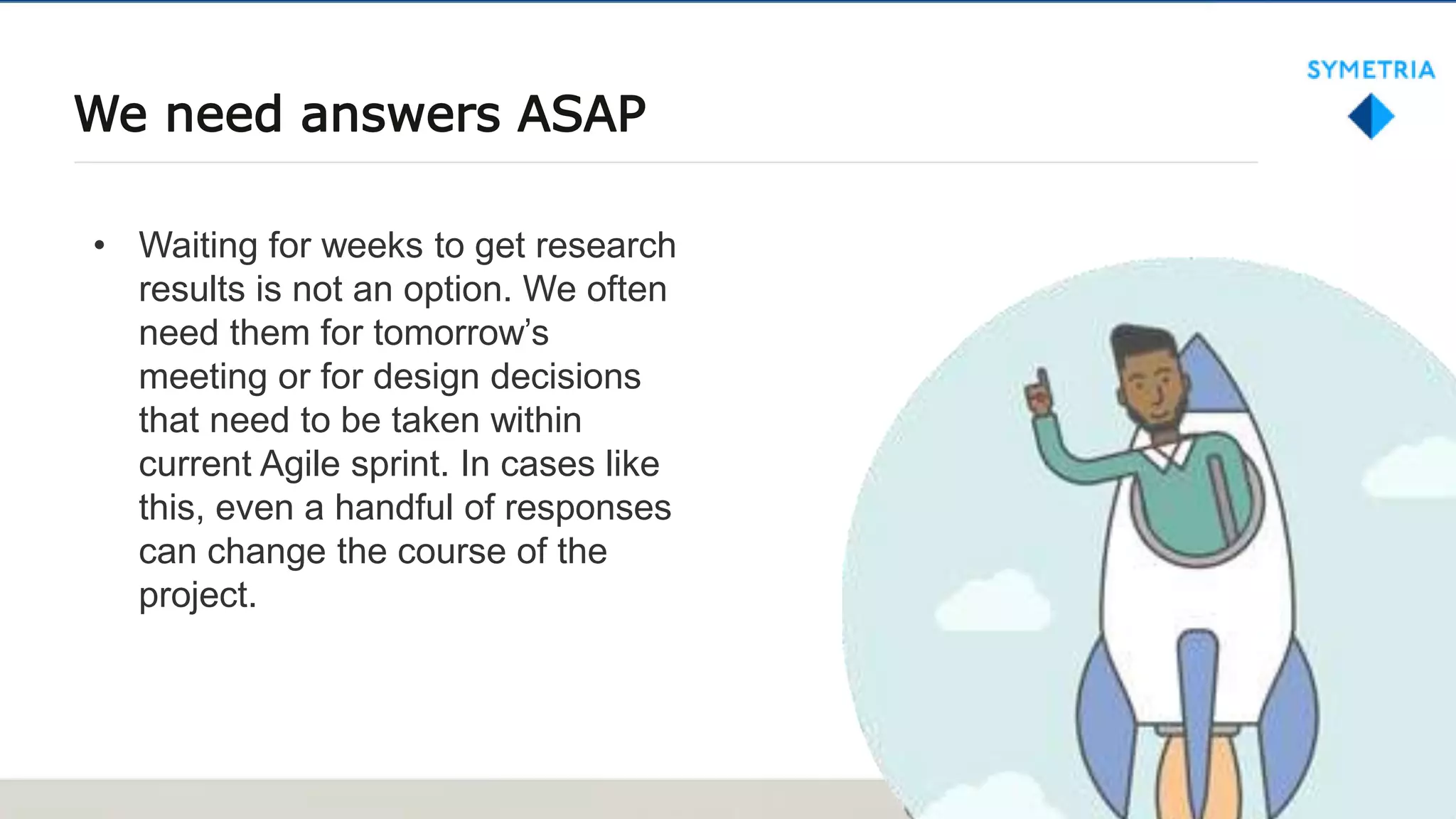
We need answers ASAP
• Waiting for weeks to get research
results is not an option. We often
need them for tomorrow’s
meeting or for design decisions
that need to be taken within
current Agile sprint. In cases like
this, even a handful of responses
can change the course of the
project.
?
AGILE
USER
RESEARCH
Agile User Research
Our answer to this challenge is Respoteam, a tool which helps you
build an online user resarch room where you can consult ideas,
designs and content with a team of users.
Idea we had when designing Respoteam has expanded into a full
Manifesto, which we’d now love to share and discuss. We believe
more research methods and tools can be build based on that
foundation.
4 principles of
AGILE
USER
RESEARCH
MANIFESTO
1. Quick readings over complex studies
Multiaspect studies are
helpful, but not if the
results come a week
too late.
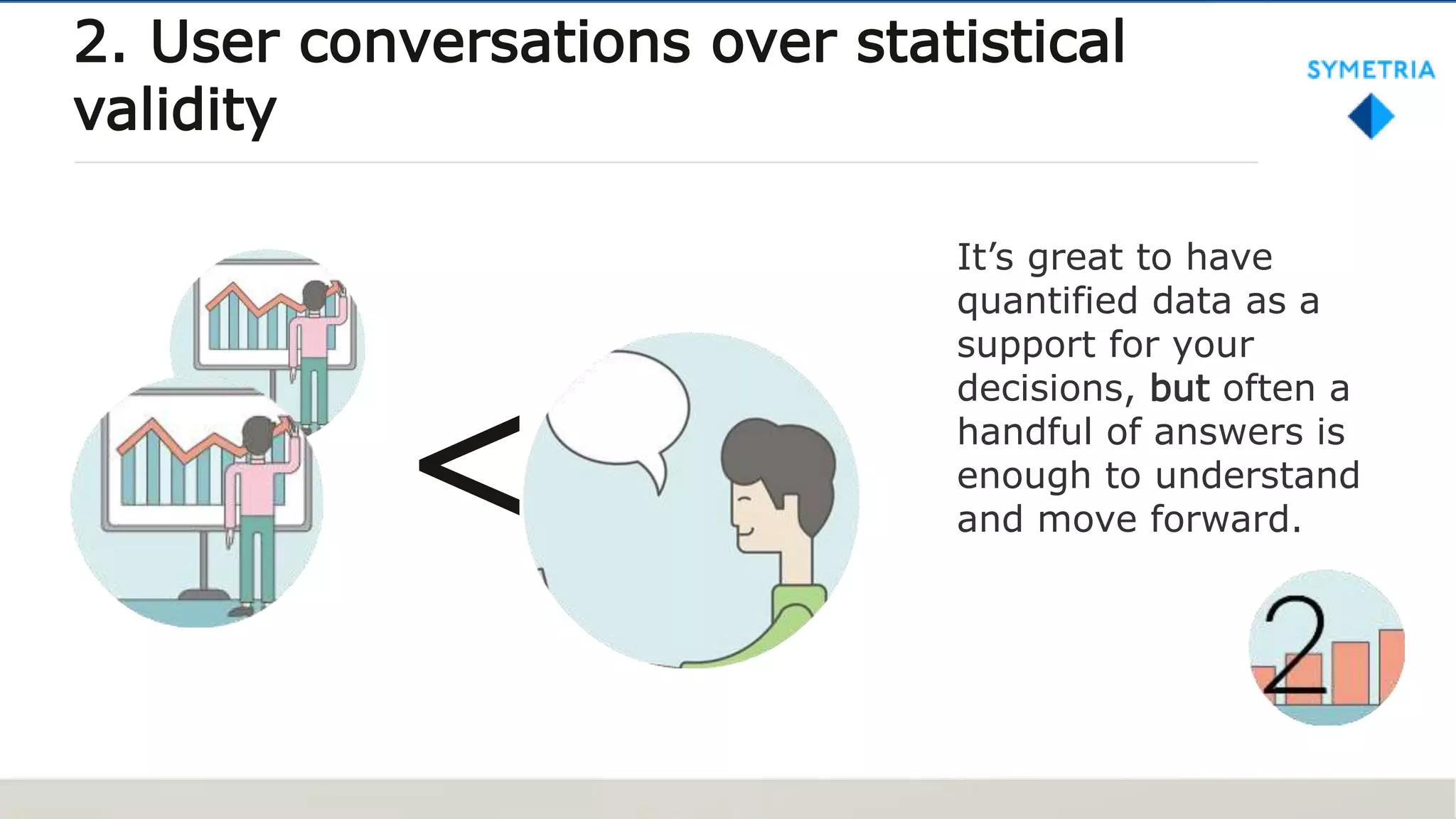
It’s great to have
quantified data as a
support for your
decisions, but often a
handful of answers is
enough to understand
and move forward.
2. User conversations over statistical
validity
<
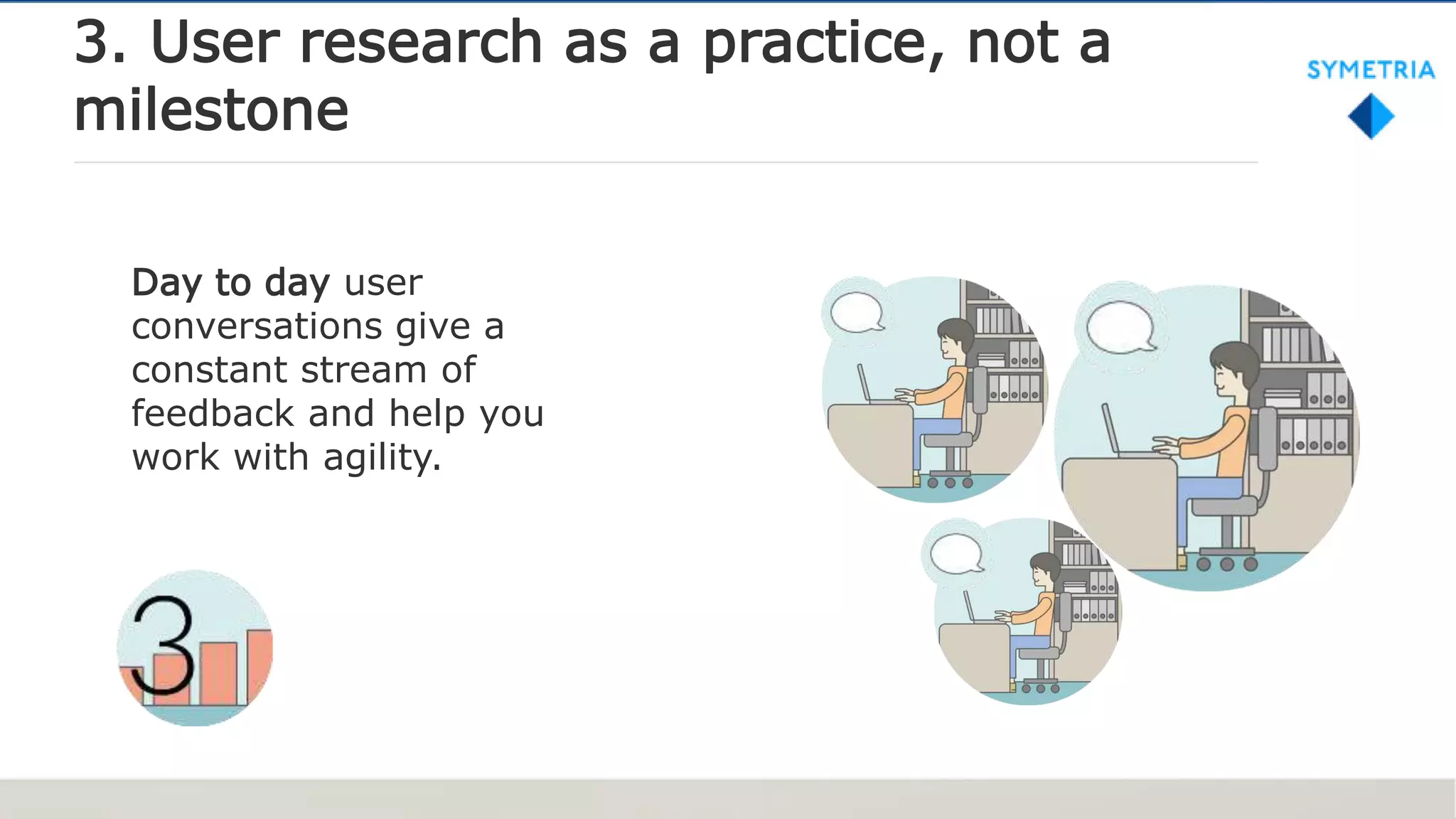
3. User research as a practice, not a
milestone
Day to day user
conversations give a
constant stream of
feedback and help you
work with agility.
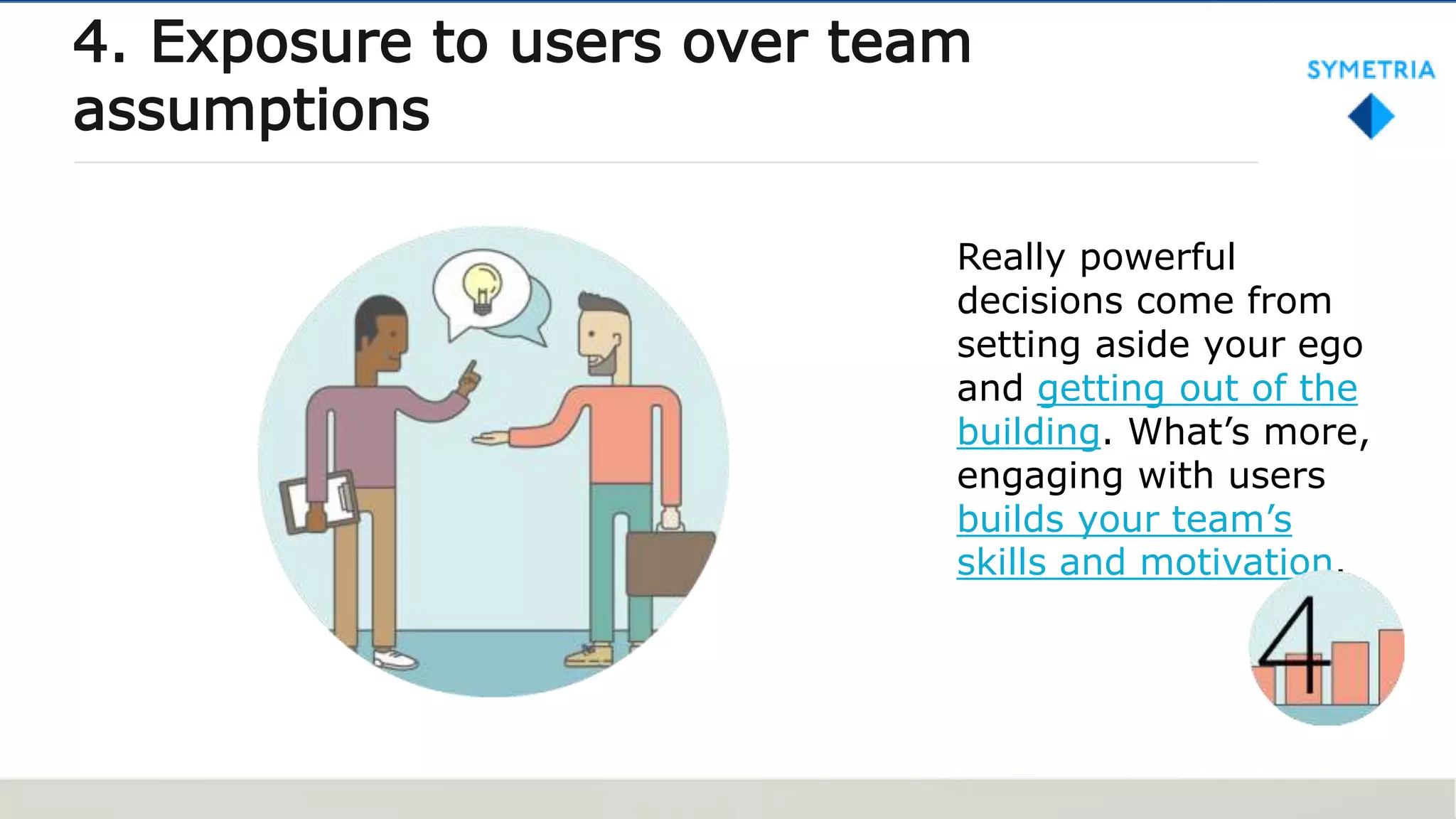
Really powerful
decisions come from
setting aside your ego
and getting out of the
building. What’s more,
engaging with users
builds your team’s
skills and motivation.
4. Exposure to users over team
assumptions
Do you agree?
Were you able to
make it happen?
Let us know about
your agile research
practices!
SIGN UP
WHY UX
IS NOT
AGILE
FRIENDLY ?
Read another article »
AGILE
USER
RESEARCH
MANIFESTO

Respoteam Agile User Research Manifesto

  • 1.
  • 2.
    Wojciech Chojnacki, StrategyDirector at Symetria I remember a story told to me by a participant at a UX training I was giving. His company was building a new module an existing digital product. They had a great multidisciplinary team, user experience capabilities and well defined Agile process. They had done a preliminary user research, built user journeys and were developing user stories. Still, with the progression of the project they felt more and more frustrated. Once upon a time …
  • 3.
    The reason wasthat even with all those "user-related" artifacts, the users were simply not present in their daily work. A detailed user testing was planned further along the way. But until then, all product backlog and design decisions were made based purely on existing team knowledge. Source of frustration
  • 4.
    Source of frustration#2 They tried to find a way to include more user research/testing cycles in the process, but found them too resource- demanding to match their development framework. Seeing how much effort is needed, they decided to continue in the blind, frustration still growing. >
  • 5.
    Don’t we knowenough about users? As an UX practitioner I sometimes forget how scary the term “User Research” sounds. It sounds like something that takes weeks. Sounds like a small chance of return on investment. Sounds like something that you better outsource to an agency. And do it only if you really have those couple of extra bucks to spare.
  • 6.
    UX is impossiblewithout user research and testing How they perceive our products and interact with them to reach those goals. What they think about our new ideas for a product or feature. Do they understand its value and how they can use it. Designing a product, we simply have to know how our users think about their tasks and goals.
  • 7.
    Weak substitutes Market research,traffic analytics or marketing support platforms can be really helpful in making business decisions. But they are no substitute to direct conversation with users and seeing them interacting with your product.
  • 8.
    Digital transformation We believeit’s time to transform both existing user research methods and companies approach to user research. If your team is Agile and Lean it means you need user research. On the other hand, user research must become Agile and Lean to be needed and used extensively. AGILE LEAN
  • 9.
  • 10.
    NO drama, buta day-to-day practice • It’s time for focused questions and focused answers. Forget 10- pages long surveys that take days to construct and analyze. Sometimes even one sentence can be an eye-opening discovery. • Let go of your ego, don't treat user testing as a milestone. Constant user consulting is a better approach as you take your decisions step-by-step and with agility.
  • 11.
    Team, meet yourusers! • It's fine to work with researchers within the company or even external agencies. But try to incorporate methods which break down the walls between customers and your team. • Conversations with small, motivated community can be as powerful as traditional research.
  • 12.
    We need answersASAP • Waiting for weeks to get research results is not an option. We often need them for tomorrow’s meeting or for design decisions that need to be taken within current Agile sprint. In cases like this, even a handful of responses can change the course of the project.
  • 13.
  • 14.
    Agile User Research Ouranswer to this challenge is Respoteam, a tool which helps you build an online user resarch room where you can consult ideas, designs and content with a team of users. Idea we had when designing Respoteam has expanded into a full Manifesto, which we’d now love to share and discuss. We believe more research methods and tools can be build based on that foundation.
  • 15.
  • 16.
    1. Quick readingsover complex studies Multiaspect studies are helpful, but not if the results come a week too late.
  • 17.
    It’s great tohave quantified data as a support for your decisions, but often a handful of answers is enough to understand and move forward. 2. User conversations over statistical validity <
  • 18.
    3. User researchas a practice, not a milestone Day to day user conversations give a constant stream of feedback and help you work with agility.
  • 19.
    Really powerful decisions comefrom setting aside your ego and getting out of the building. What’s more, engaging with users builds your team’s skills and motivation. 4. Exposure to users over team assumptions
  • 20.
    Do you agree? Wereyou able to make it happen? Let us know about your agile research practices!
  • 21.
  • 22.
    WHY UX IS NOT AGILE FRIENDLY? Read another article »
  • 23.