Muhammad Salman
Nursing lecturer
 Following are the upper respiratory system
disorders.
 1. sinusitis
 2. pharyngitis
 3. tonsillitis
 Define sinuses
 Types of sinuses
 Physiology of sinuses
 Define sinusitis
 Causes of sinusitis
 Sign and symptoms
 Diagnosis
 Medical management
 Nursing management
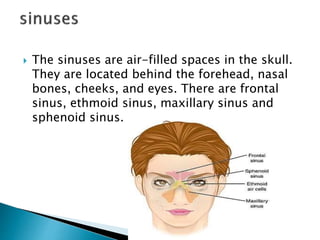
 The sinuses are air-filled spaces in the skull.
They are located behind the forehead, nasal
bones, cheeks, and eyes. There are frontal
sinus, ethmoid sinus, maxillary sinus and
sphenoid sinus.
 Sinuses secrete mucus, the mucus is drained
into nose through its lateral wall through
opening called ostium.
 To make skull lighter
 Warm up and humidify the inspired air
 Add resonance to voice.
 1. frontal sinus air-filled cavities located just
behind your eyes in the brow region.
 2. ethmoid sinus They are located between
the eyes, on either side of the septum.
 3. maxillary sinus lies within the body of the
maxillary bone.
 4. sphenoid sinus The sphenoidal sinuses are
situated back of the nose in the sphenoidal
bone
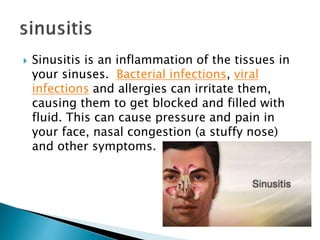
 Sinusitis is an inflammation of the tissues in
your sinuses. Bacterial infections, viral
infections and allergies can irritate them,
causing them to get blocked and filled with
fluid. This can cause pressure and pain in
your face, nasal congestion (a stuffy nose)
and other symptoms.
 Bacteria Streptococcus pneumonia
 Virus influenza viruses
 Allergens
 Small growths in the lining of the nose
called nasal polyp.
 A deviated septum, which is a shift in the
nasal cavity
 Common symptoms of sinusitis include:
 A stuffy or blocked nose
 A thick white, yellow, or green discharge from
the nose
 Pain in the teeth
 Pain or pressure in the face. This often feels
worse when a person bends forward.
 Fever, headache
 fatigue
 Allergy test
 Blood test
 X-ray
 MRI and CT scan of over all skull.
 Antibiotics
 Anti viral
 Pain killer
 Fever reliever
 Decongestants in the form of nasal spray
 Anti allergic
 Surgery for removing nasal polyp.
 Encourage for water intake to help loosen
secretions.
 Elevate the head when lying down to relieve
the stuffy feeling.
 Administer medications just like antibiotic,
antiviral and painkiller.
 Educate the patient to avoid cold environment
 Avoid smoking
 Warm compresses apply in the sinus area
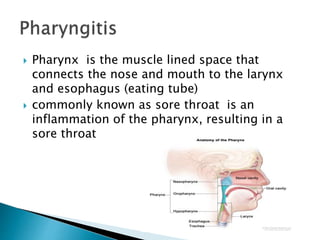
 Pharynx is the muscle lined space that
connects the nose and mouth to the larynx
and esophagus (eating tube)
 commonly known as sore throat is an
inflammation of the pharynx, resulting in a
sore throat
 There are numerous viral and bacterial agents
that can cause pharyngitis. They include:
 measles
 adenovirus, which is one of the causes of
the common cold
 chickenpox
 whooping cough called pertussis
 group A streptococcus
 Viruses are the most common cause of sore
throats. Pharyngitis is most commonly caused by
viral infections such as the common
cold, influenza
 sneezing
 runny nose
 headache
 cough
 fatigue
 body aches
 chills
 fever
 Physical exam. To examine some symptoms
just like swelling lymph nodes, redness and
skin rashes.
 Throat culture
 If the patient suspects sore throat , they will
likely take a throat culture. This involves
using a cotton swab to take a sample of the
secretions from patient throat. This test
perform to find out streptococcus.
 Blood tests
 drinking plenty of fluids to
prevent dehydration
 eating warm broth
 using a humidifier
 resting until you feel better
 Pain killer
 Fever reliever
 Antibiotics
 antivirals
 Maintaining proper hygiene can prevent many
cases of pharyngitis.
 To prevent pharyngitis:
 avoid sharing food, drinks, and eating utensils
 avoid individuals who are sick
 wash your hands often, especially before eating
and after coughing or sneezing
 use alcohol-based hand sanitizers when soap
and water aren’t available
 avoid smoking and inhaling secondhand smoke
 Educate Rest, oral fluids, and salt-water
gargling (for soothing effect) are the main
supportive measures in patients with viral
pharyngitis.
 Administer Analgesics and antipyretics may
be used for relief of pain or pyrexia
 In sever situation administer iv fluid and
antibiotics.
 Tepid sponging to reduce temperature.
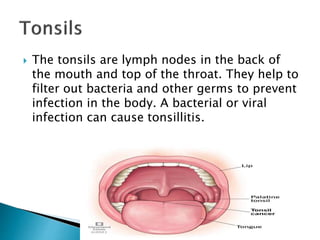
 The tonsils are lymph nodes in the back of
the mouth and top of the throat. They help to
filter out bacteria and other germs to prevent
infection in the body. A bacterial or viral
infection can cause tonsillitis.
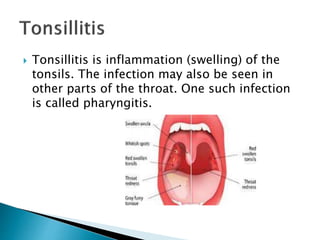
 Tonsillitis is inflammation (swelling) of the
tonsils. The infection may also be seen in
other parts of the throat. One such infection
is called pharyngitis.
 Acute tonsillitis. These symptoms usually last
3 or 4 days but can last up to 2 weeks.
 Recurrent tonsillitis. This is when you get
tonsillitis several times in a year.
 Chronic tonsillitis. This is when you have a
long-term tonsil infection.
 Streptococcus pyogenes
 flu virus (influenza)
 Adenoviruses · Epstein-Barr virus
 Epstein-Barr virus
 Bardotella pertussis
 varicella-zoster virus
 Measles virus
 The main symptoms of tonsillitis are inflamed and
swollen tonsils, sometimes severe enough to make it
hard to breathe through your mouth. Other
symptoms include:
 Throat pain or tenderness
 Fever
 Red tonsils
 A white or yellow coating on your tonsils
 Painful blisters or ulcers on your throat
 Headache
 Ear pain
 Trouble swallowing
 Fever and chills
 Bad breath
 A scratchy or muffled voice
 Stiff neck
 Physical examination
 Blood test
 Throat swab
 A collection of pus around your tonsil
(peritonsillar abscess)
 Middle ear infection
 Breathing problems or breathing that stops
and starts while you sleep (obstructive sleep
apnea)
 Tonsillar cellulitis, or infection that spreads
and deeply penetrates nearby tissues
 Tonsillitis Treatments
 If your tests find bacteria, you’ll
get antibiotics
 Antivirals
 Antipyretic
 Pain killer
 Get lots of rest
 Eat smooth foods, such as ice cream
 Gargle with warm salt water
 Suck on lozenges with benzocaine or other
medications to numb your throat
 Take over-the-counter pain relievers such as
acetaminophen or ibuprofen
 Tonsils are an important part of your immune
system, But if the tonsillitis keeps coming
back or won’t go away, or if swollen tonsils
make it hard for you to breathe or eat, you
might need to have your tonsils taken out.
This surgery is called tonsillectomy.
 doctor uses a sharp tool called a scalpel to
take out your tonsils. But other options are
available, including lasers, radio waves,
ultrasonic energy, or electrocautery to
remove enlarged tonsils
 Educate about surgery procedure
 Sign inform consent
 NPO
 Hydrate the patient
 Pass iv line
 Check hemoglobin level
 Administer medication specially antibiotics
 Check surgery site for any bleeding
 Pain management
 Check respiratory pattern
 Break NPO start cold oral fluid just like juice
etc.
 Maintain proper hygiene of surgical site for
prevention of infection

Respiratory system disorders part 1.pptx

  • 1.
  • 2.
     Following arethe upper respiratory system disorders.  1. sinusitis  2. pharyngitis  3. tonsillitis
  • 3.
     Define sinuses Types of sinuses  Physiology of sinuses  Define sinusitis  Causes of sinusitis  Sign and symptoms  Diagnosis  Medical management  Nursing management
  • 4.
     The sinusesare air-filled spaces in the skull. They are located behind the forehead, nasal bones, cheeks, and eyes. There are frontal sinus, ethmoid sinus, maxillary sinus and sphenoid sinus.
  • 5.
     Sinuses secretemucus, the mucus is drained into nose through its lateral wall through opening called ostium.  To make skull lighter  Warm up and humidify the inspired air  Add resonance to voice.
  • 6.
     1. frontalsinus air-filled cavities located just behind your eyes in the brow region.  2. ethmoid sinus They are located between the eyes, on either side of the septum.  3. maxillary sinus lies within the body of the maxillary bone.  4. sphenoid sinus The sphenoidal sinuses are situated back of the nose in the sphenoidal bone
  • 7.
     Sinusitis isan inflammation of the tissues in your sinuses. Bacterial infections, viral infections and allergies can irritate them, causing them to get blocked and filled with fluid. This can cause pressure and pain in your face, nasal congestion (a stuffy nose) and other symptoms.
  • 8.
     Bacteria Streptococcuspneumonia  Virus influenza viruses  Allergens  Small growths in the lining of the nose called nasal polyp.  A deviated septum, which is a shift in the nasal cavity
  • 9.
     Common symptomsof sinusitis include:  A stuffy or blocked nose  A thick white, yellow, or green discharge from the nose  Pain in the teeth  Pain or pressure in the face. This often feels worse when a person bends forward.  Fever, headache  fatigue
  • 10.
     Allergy test Blood test  X-ray  MRI and CT scan of over all skull.
  • 11.
     Antibiotics  Antiviral  Pain killer  Fever reliever  Decongestants in the form of nasal spray  Anti allergic  Surgery for removing nasal polyp.
  • 12.
     Encourage forwater intake to help loosen secretions.  Elevate the head when lying down to relieve the stuffy feeling.  Administer medications just like antibiotic, antiviral and painkiller.  Educate the patient to avoid cold environment  Avoid smoking  Warm compresses apply in the sinus area
  • 13.
     Pharynx isthe muscle lined space that connects the nose and mouth to the larynx and esophagus (eating tube)  commonly known as sore throat is an inflammation of the pharynx, resulting in a sore throat
  • 14.
     There arenumerous viral and bacterial agents that can cause pharyngitis. They include:  measles  adenovirus, which is one of the causes of the common cold  chickenpox  whooping cough called pertussis  group A streptococcus  Viruses are the most common cause of sore throats. Pharyngitis is most commonly caused by viral infections such as the common cold, influenza
  • 15.
     sneezing  runnynose  headache  cough  fatigue  body aches  chills  fever
  • 16.
     Physical exam.To examine some symptoms just like swelling lymph nodes, redness and skin rashes.  Throat culture  If the patient suspects sore throat , they will likely take a throat culture. This involves using a cotton swab to take a sample of the secretions from patient throat. This test perform to find out streptococcus.  Blood tests
  • 17.
     drinking plentyof fluids to prevent dehydration  eating warm broth  using a humidifier  resting until you feel better  Pain killer  Fever reliever  Antibiotics  antivirals
  • 18.
     Maintaining properhygiene can prevent many cases of pharyngitis.  To prevent pharyngitis:  avoid sharing food, drinks, and eating utensils  avoid individuals who are sick  wash your hands often, especially before eating and after coughing or sneezing  use alcohol-based hand sanitizers when soap and water aren’t available  avoid smoking and inhaling secondhand smoke
  • 19.
     Educate Rest,oral fluids, and salt-water gargling (for soothing effect) are the main supportive measures in patients with viral pharyngitis.  Administer Analgesics and antipyretics may be used for relief of pain or pyrexia  In sever situation administer iv fluid and antibiotics.  Tepid sponging to reduce temperature.
  • 20.
     The tonsilsare lymph nodes in the back of the mouth and top of the throat. They help to filter out bacteria and other germs to prevent infection in the body. A bacterial or viral infection can cause tonsillitis.
  • 21.
     Tonsillitis isinflammation (swelling) of the tonsils. The infection may also be seen in other parts of the throat. One such infection is called pharyngitis.
  • 22.
     Acute tonsillitis.These symptoms usually last 3 or 4 days but can last up to 2 weeks.  Recurrent tonsillitis. This is when you get tonsillitis several times in a year.  Chronic tonsillitis. This is when you have a long-term tonsil infection.
  • 23.
     Streptococcus pyogenes flu virus (influenza)  Adenoviruses · Epstein-Barr virus  Epstein-Barr virus  Bardotella pertussis  varicella-zoster virus  Measles virus
  • 24.
     The mainsymptoms of tonsillitis are inflamed and swollen tonsils, sometimes severe enough to make it hard to breathe through your mouth. Other symptoms include:  Throat pain or tenderness  Fever  Red tonsils  A white or yellow coating on your tonsils  Painful blisters or ulcers on your throat  Headache  Ear pain  Trouble swallowing  Fever and chills  Bad breath
  • 25.
     A scratchyor muffled voice  Stiff neck
  • 26.
     Physical examination Blood test  Throat swab
  • 27.
     A collectionof pus around your tonsil (peritonsillar abscess)  Middle ear infection  Breathing problems or breathing that stops and starts while you sleep (obstructive sleep apnea)  Tonsillar cellulitis, or infection that spreads and deeply penetrates nearby tissues
  • 28.
     Tonsillitis Treatments If your tests find bacteria, you’ll get antibiotics  Antivirals  Antipyretic  Pain killer
  • 29.
     Get lotsof rest  Eat smooth foods, such as ice cream  Gargle with warm salt water  Suck on lozenges with benzocaine or other medications to numb your throat  Take over-the-counter pain relievers such as acetaminophen or ibuprofen
  • 30.
     Tonsils arean important part of your immune system, But if the tonsillitis keeps coming back or won’t go away, or if swollen tonsils make it hard for you to breathe or eat, you might need to have your tonsils taken out. This surgery is called tonsillectomy.
  • 31.
     doctor usesa sharp tool called a scalpel to take out your tonsils. But other options are available, including lasers, radio waves, ultrasonic energy, or electrocautery to remove enlarged tonsils
  • 32.
     Educate aboutsurgery procedure  Sign inform consent  NPO  Hydrate the patient  Pass iv line  Check hemoglobin level
  • 33.
     Administer medicationspecially antibiotics  Check surgery site for any bleeding  Pain management  Check respiratory pattern  Break NPO start cold oral fluid just like juice etc.  Maintain proper hygiene of surgical site for prevention of infection