Download as PDF, PPTX
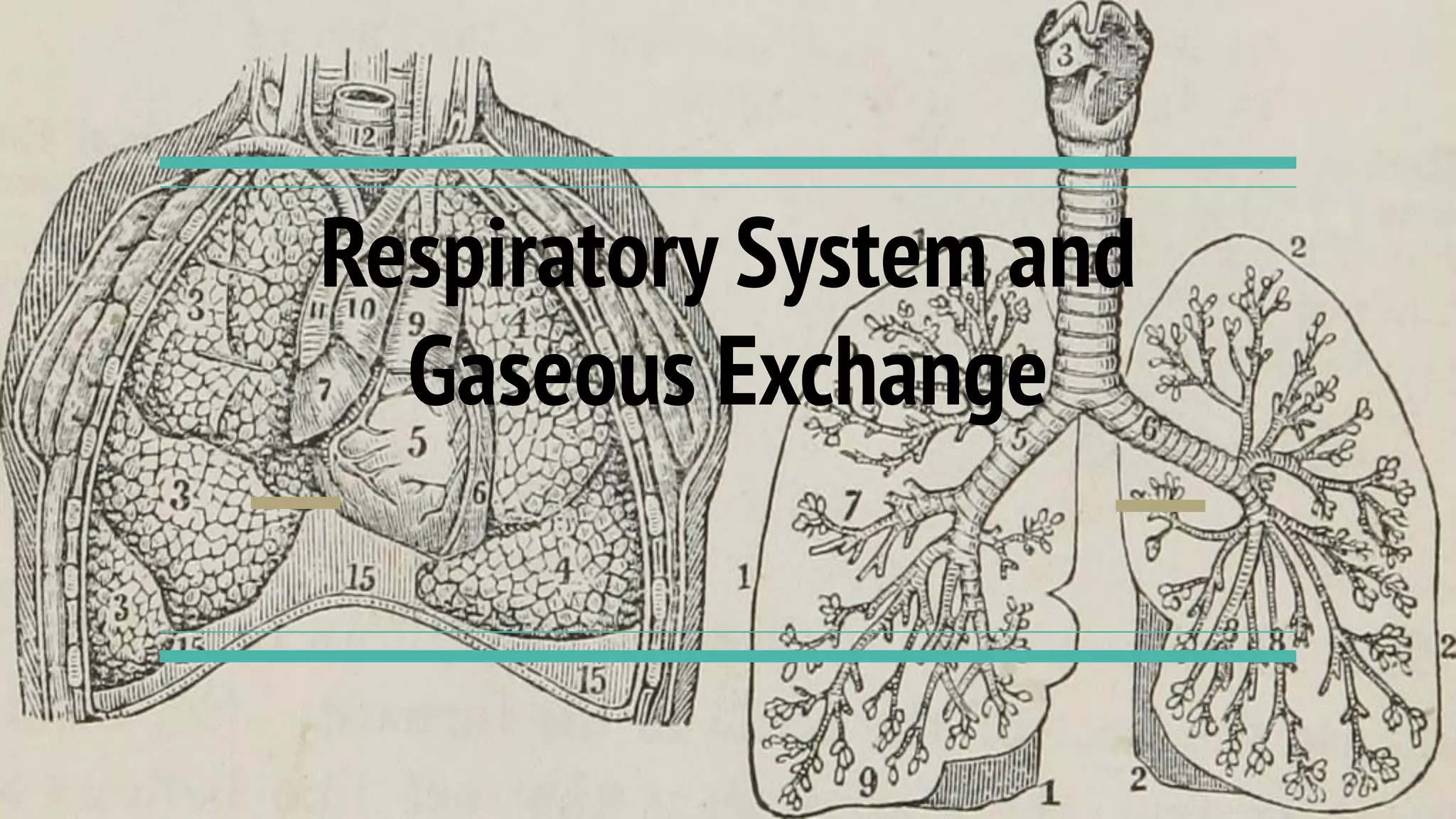
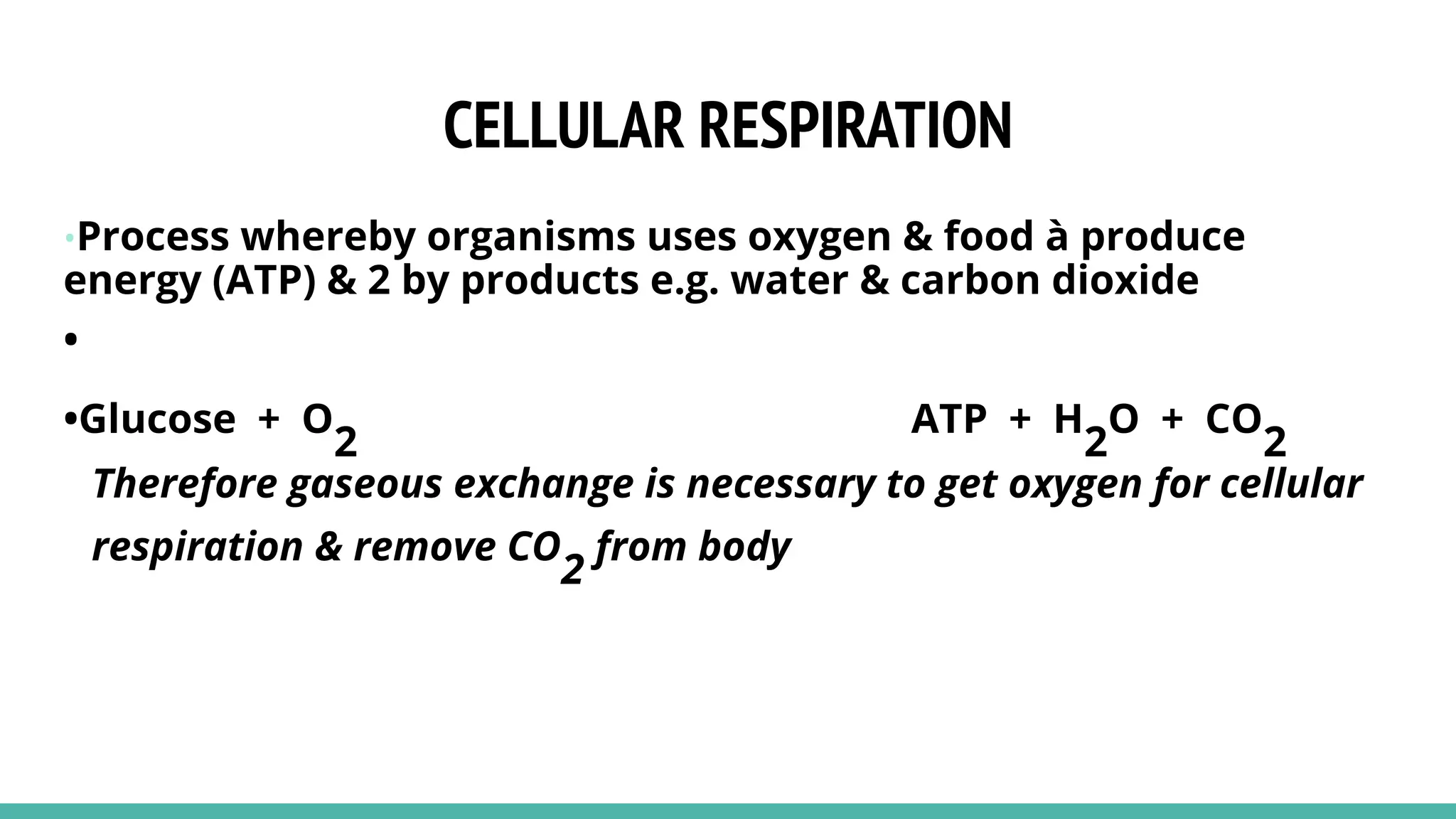
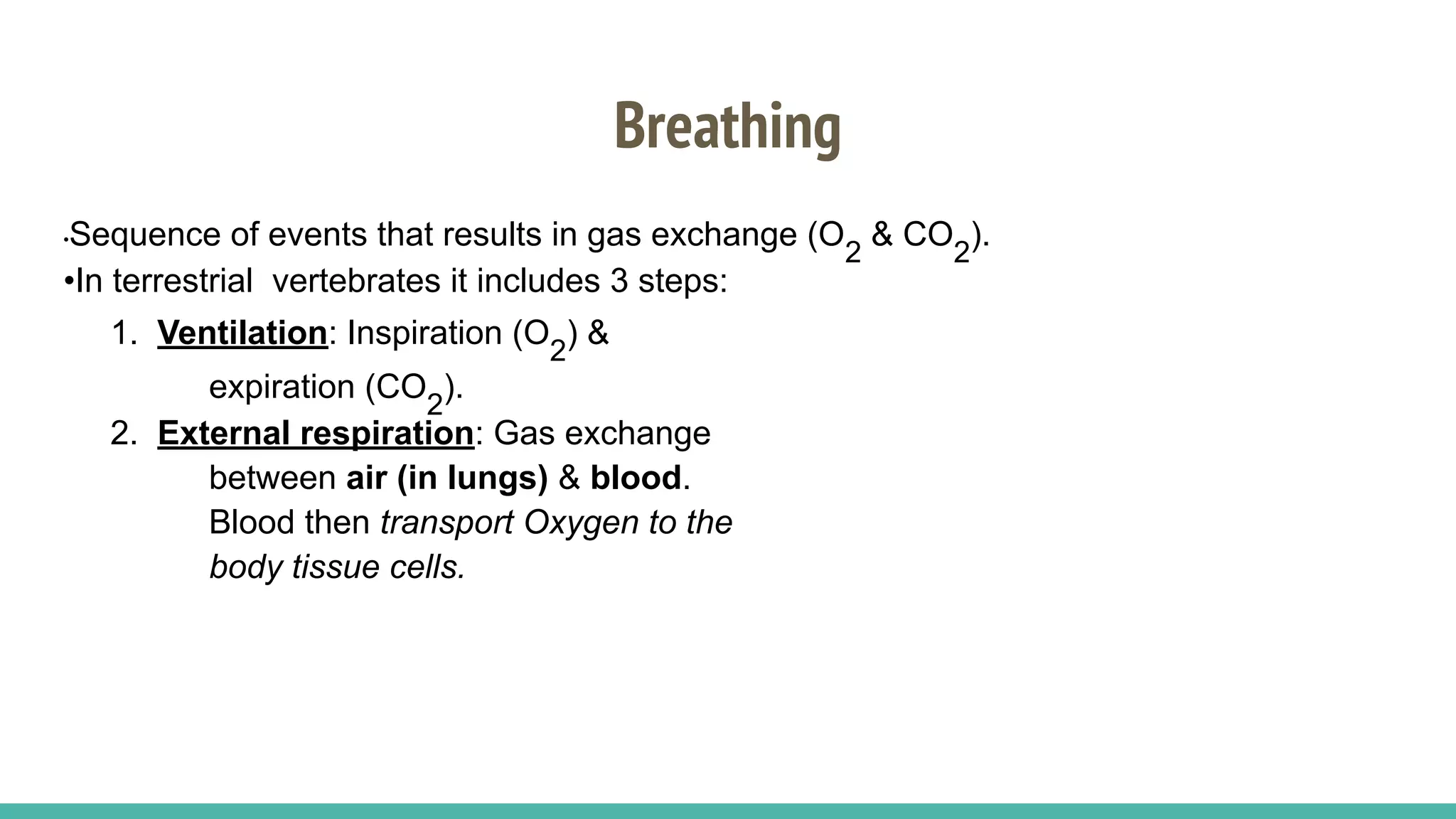
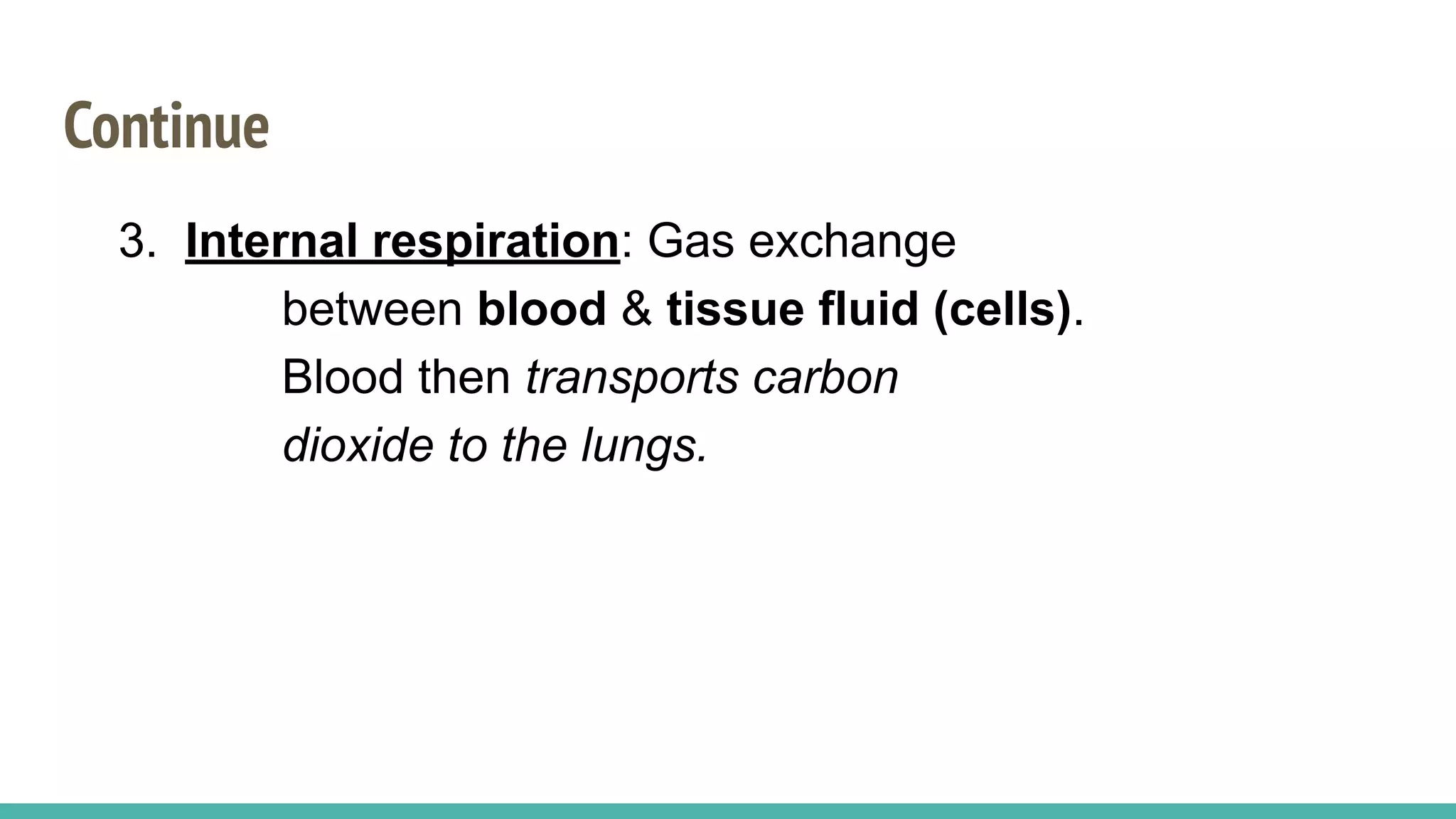
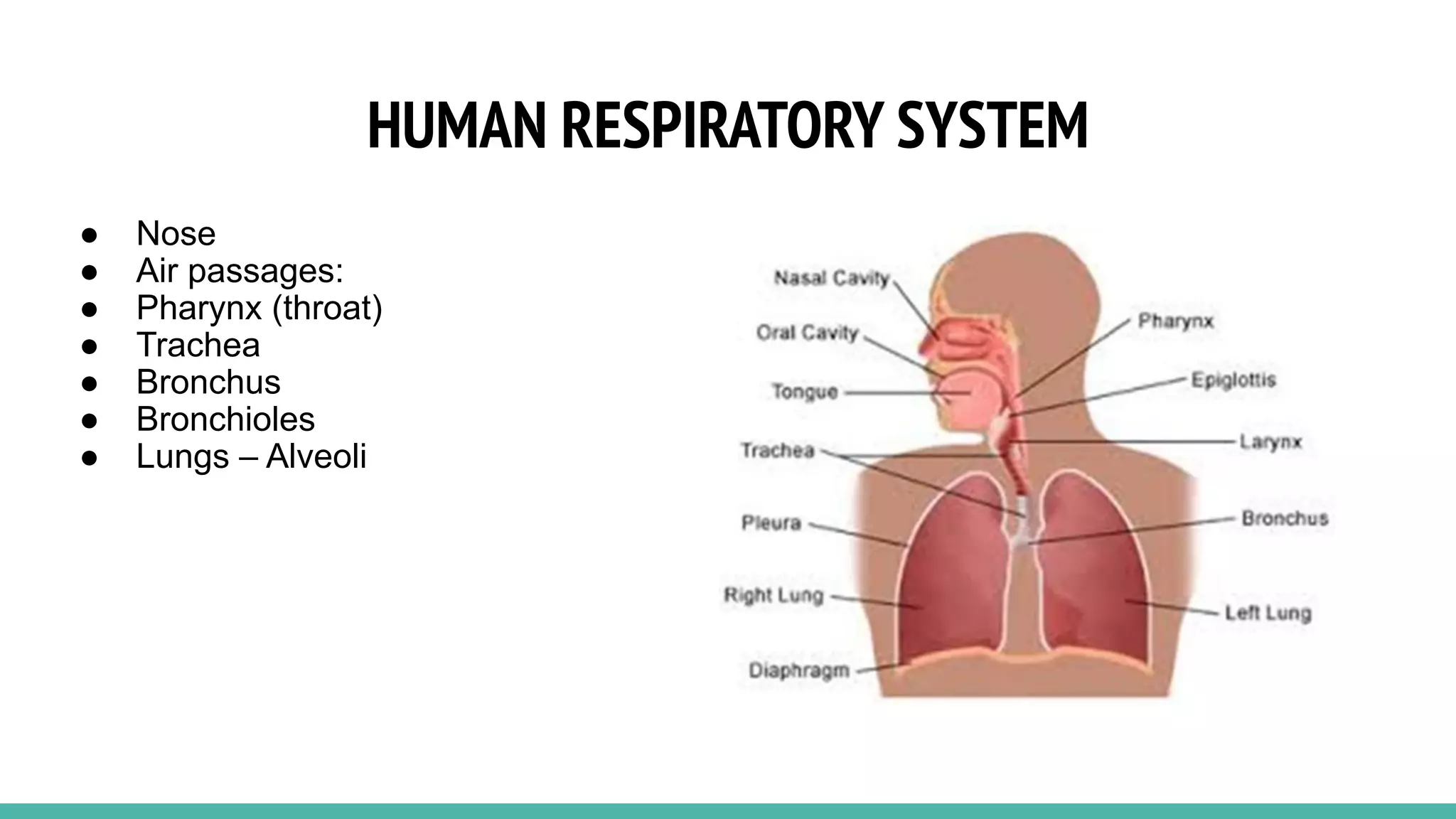

Cellular respiration requires oxygen to produce energy from glucose and produces carbon dioxide as a byproduct, so gaseous exchange is necessary to supply oxygen and remove carbon dioxide from the body. Breathing involves three steps - ventilation, external respiration, and internal respiration - to take in oxygen through inspiration and expiration and exchange gases between the air, blood, and tissue cells to supply cells with oxygen and remove carbon dioxide. The human respiratory system includes the nose, air passages like the pharynx, trachea, bronchi and bronchioles, and lungs containing alveoli to facilitate this gas exchange through breathing.


![presentation_01_Phyisology[2].pptxiqrauni](https://cdn.slidesharecdn.com/ss_thumbnails/presentation01phyisology2-250513161035-9c3b94de-thumbnail.jpg?width=640&height=640&fit=bounds)


