
Computational Thinking (CT)
219001250 AD DAYA
Table of Contents:
1. What is computational thinking?
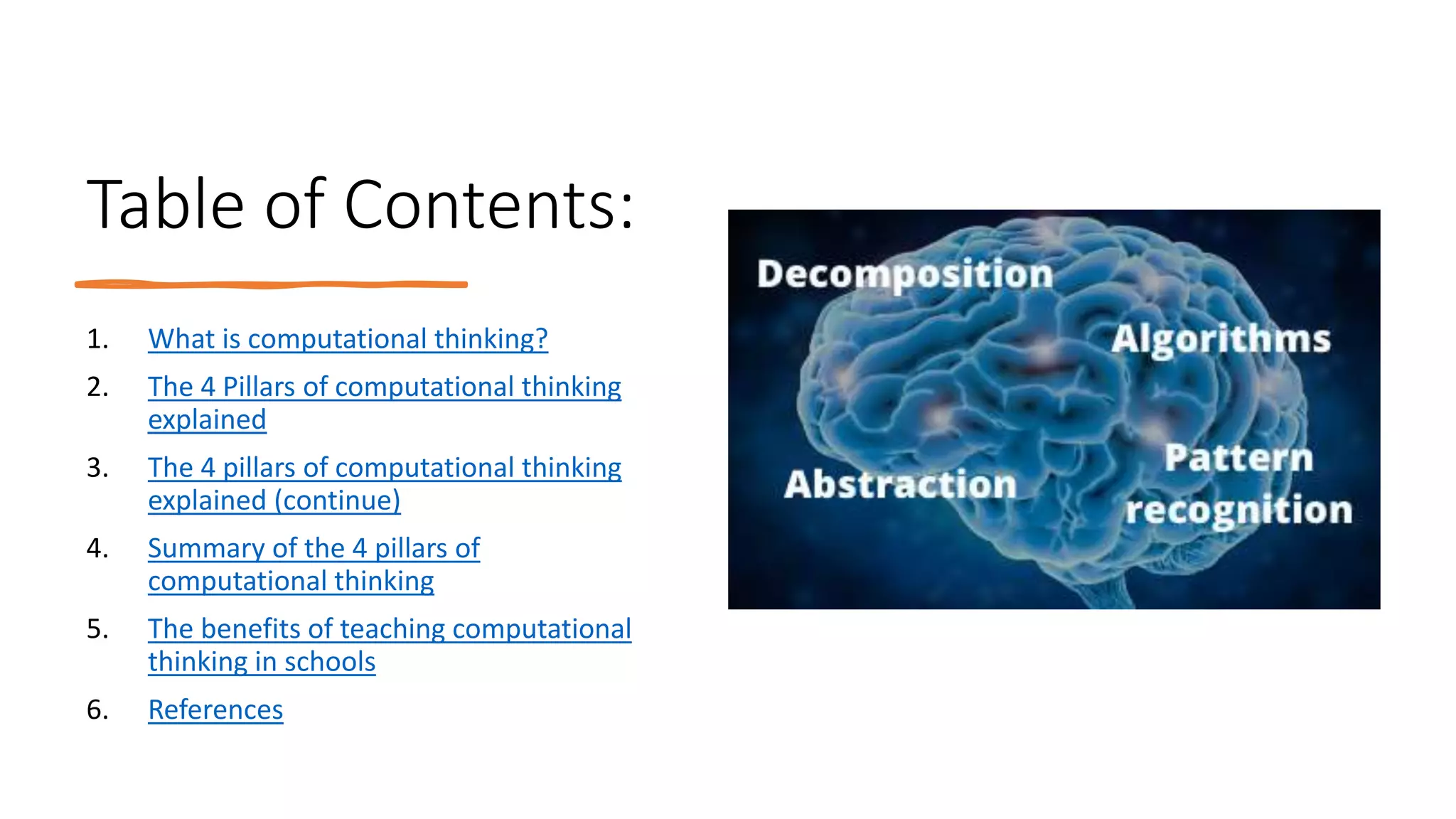
2. The 4 Pillars of computational thinking
explained
3. The 4 pillars of computational thinking
explained (continue)
4. Summary of the 4 pillars of
computational thinking
5. The benefits of teaching computational
thinking in schools
6. References
WHAT IS COMPUTATIONAL
THINKING?
• Computational thinking is the ability to take a complex
problem and break it down into smaller steps in order
to solve the problem. This is operating the same way in
which a computer operates when solving a problem,
hence the term “computational thinking”. It is the set of
skills needed to solve problems in a way a computer
would (Victoria, 2022).
Click the video above for more
information on CT
THE 4 PILLARS OF
COMPUTATIONAL
THINKING
THE 4 PILLARS OF COMPUTATIONAL THINKING
EXPLAINED:
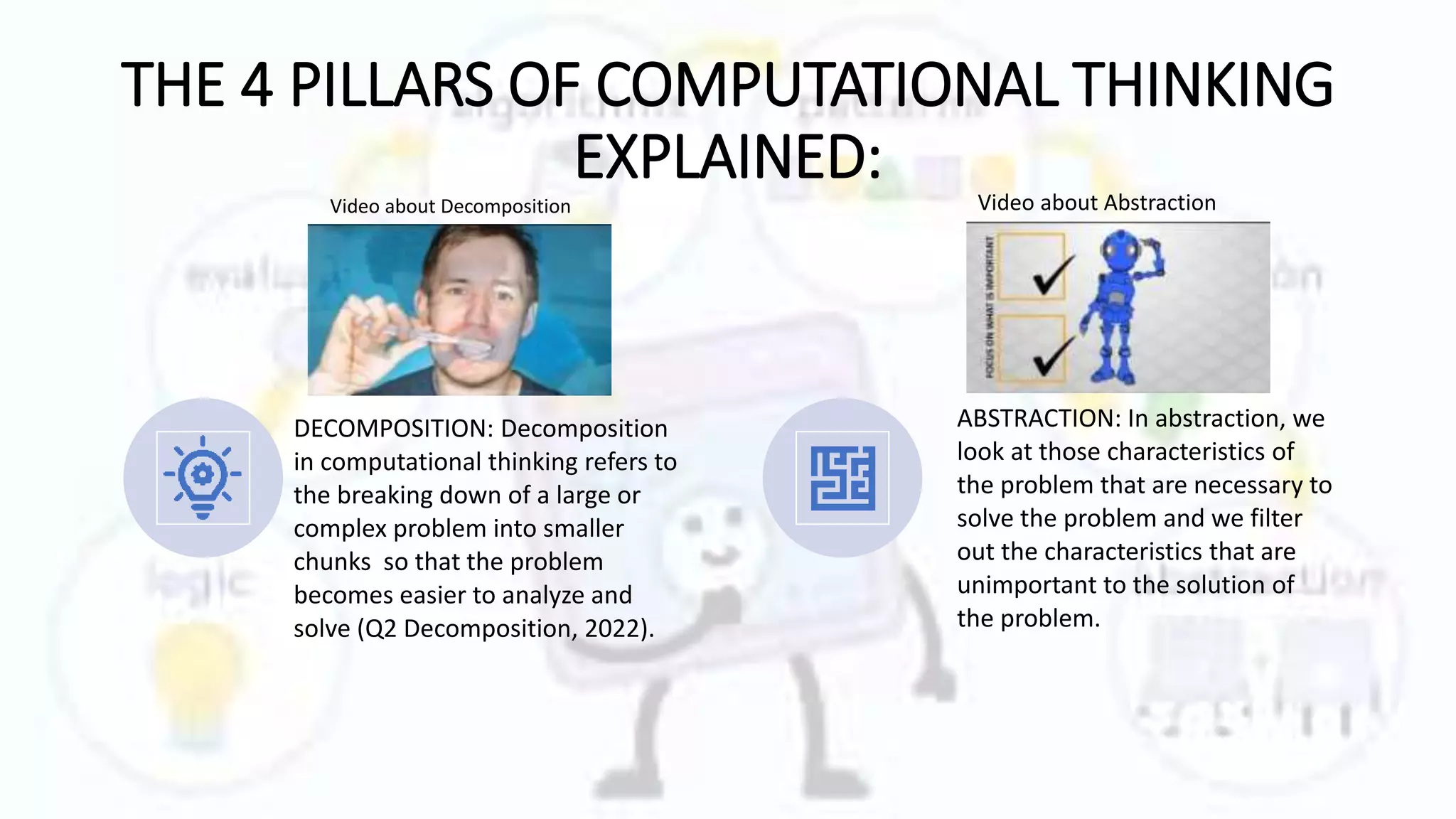
DECOMPOSITION: Decomposition
in computational thinking refers to
the breaking down of a large or
complex problem into smaller
chunks so that the problem
becomes easier to analyze and
solve (Q2 Decomposition, 2022).
ABSTRACTION: In abstraction, we
look at those characteristics of
the problem that are necessary to
solve the problem and we filter
out the characteristics that are
unimportant to the solution of
the problem.
Video about Decomposition Video about Abstraction
THE 4 PILLARS OF
COMPUTATIONAL THINKING
EXPLAINED:
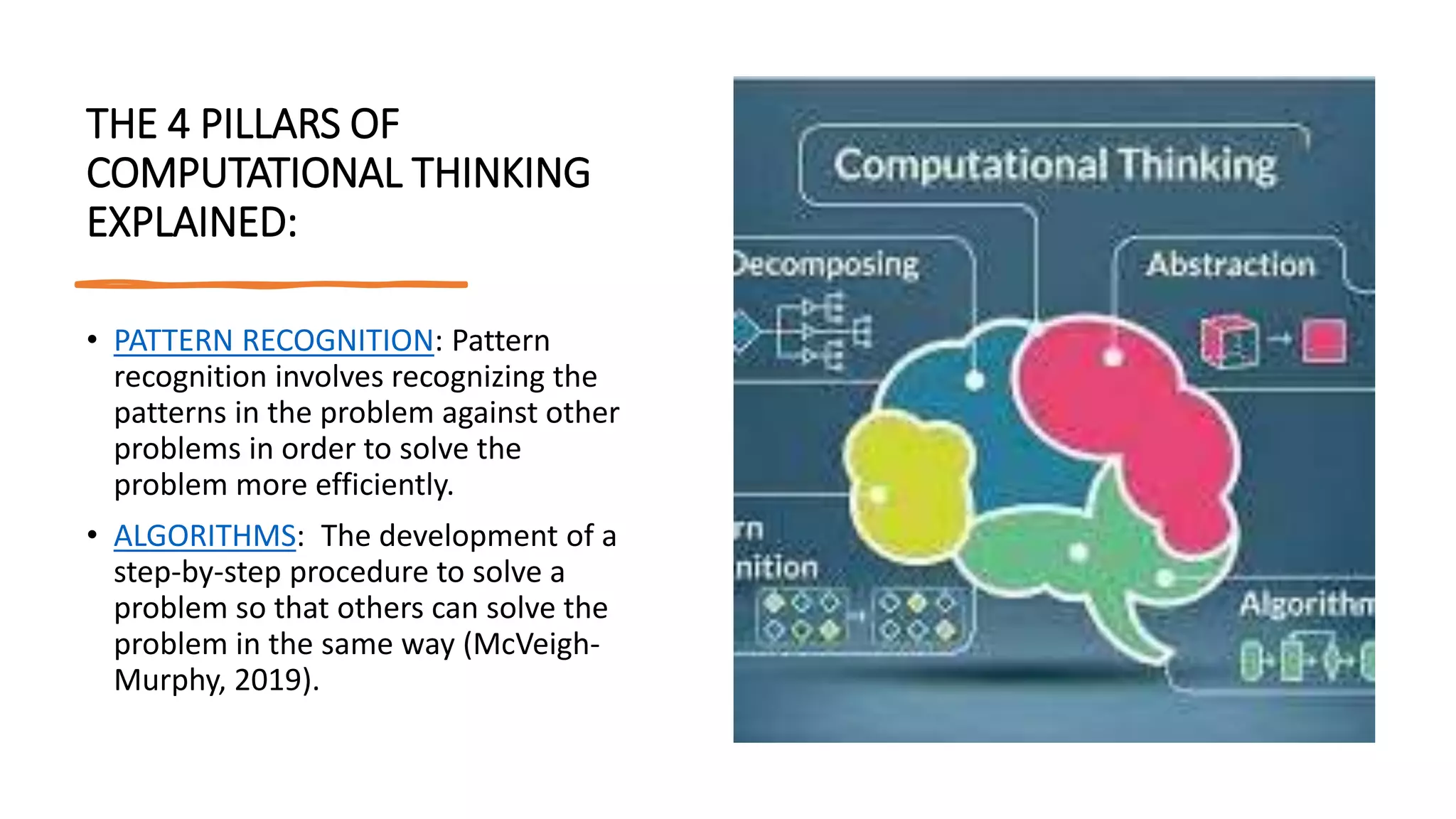
• PATTERN RECOGNITION: Pattern
recognition involves recognizing the
patterns in the problem against other
problems in order to solve the
problem more efficiently.
• ALGORITHMS: The development of a
step-by-step procedure to solve a
problem so that others can solve the
problem in the same way (McVeigh-
Murphy, 2019).
THE 4 PILLARS OF COMPUTATIONAL THINKING
SUMMARY:
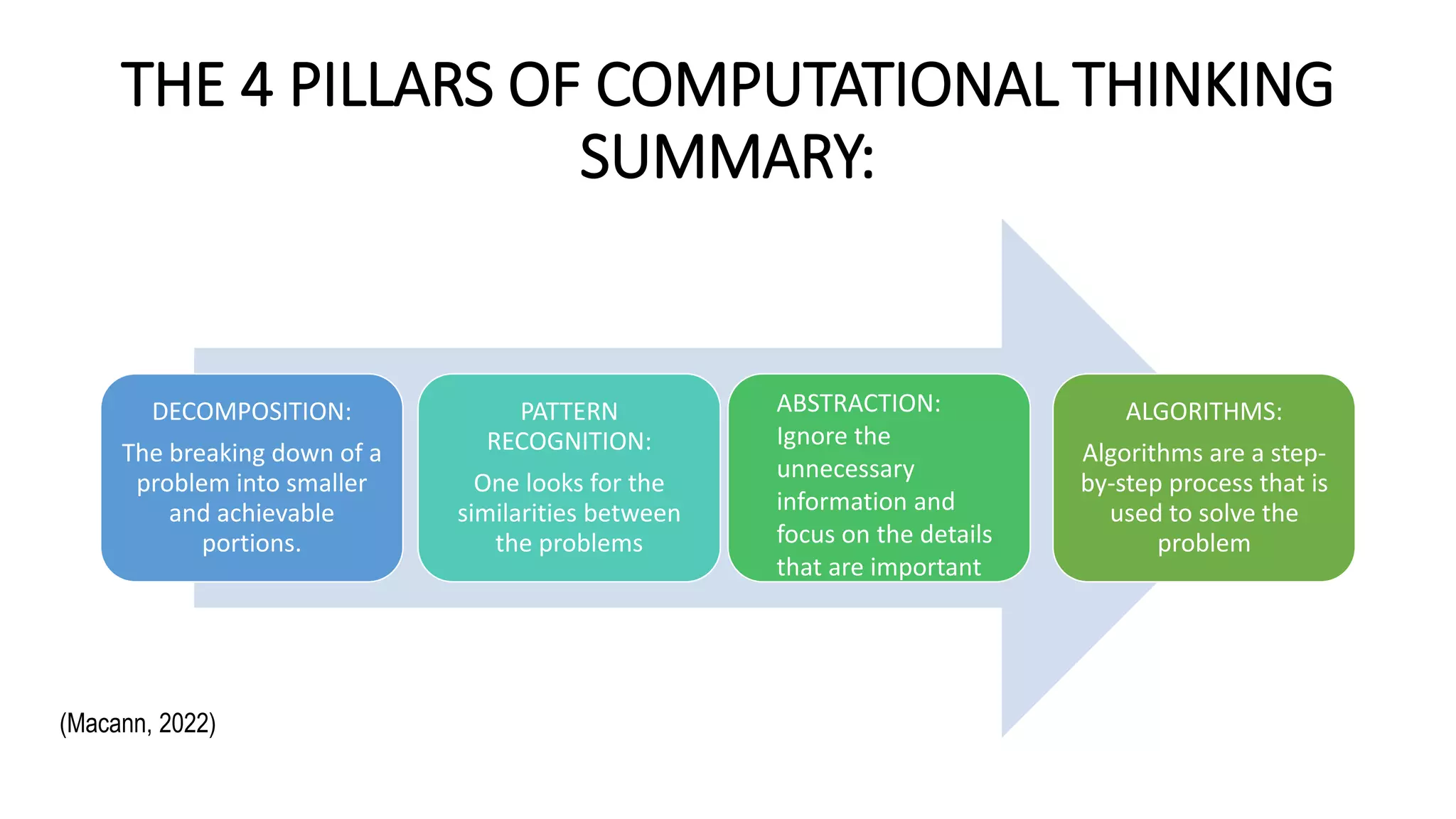
DECOMPOSITION:
The breaking down of a
problem into smaller
and achievable
portions.
PATTERN
RECOGNITION:
One looks for the
similarities between
the problems
ALGORITHMS:
Algorithms are a step-
by-step process that is
used to solve the
problem
ABSTRACTION:
Ignore the
unnecessary
information and
focus on the details
that are important
(Macann, 2022)
BENEFITS OF TEACHING CT IN SCHOOLS:
• Computational thinking leads to problem solving. By teaching CT in the
classroom, the educator is fostering learners who are problem solvers and
enhances their ability to solve problems.
• Computational thinking in the classroom leads to the creation of new
ideas. Innovation plays a large role in CT and allows for learners to solve
problems creatively and apply their ideas to create something new
(Cummins, 2020).
• Computational thinking creates learners that are producers of knowledge
and not just the consumers of knowledge. This allows learners to expand
their knowledge by creating rather than just following instructions.
• Computational Thinking is a lifelong skill that can be learned and used in
many fields of work. It also enables one to view the world differently and
opens doors of opportunities for learning and creating (Cummins, 2020).
• It is important to keep up with technology as the world is becoming
increasingly reliant on technology, hence computational thinking will
afford all learners the ability to successfully use the 21st century tools that
will enable them to stay ahead in this fast-paced world.
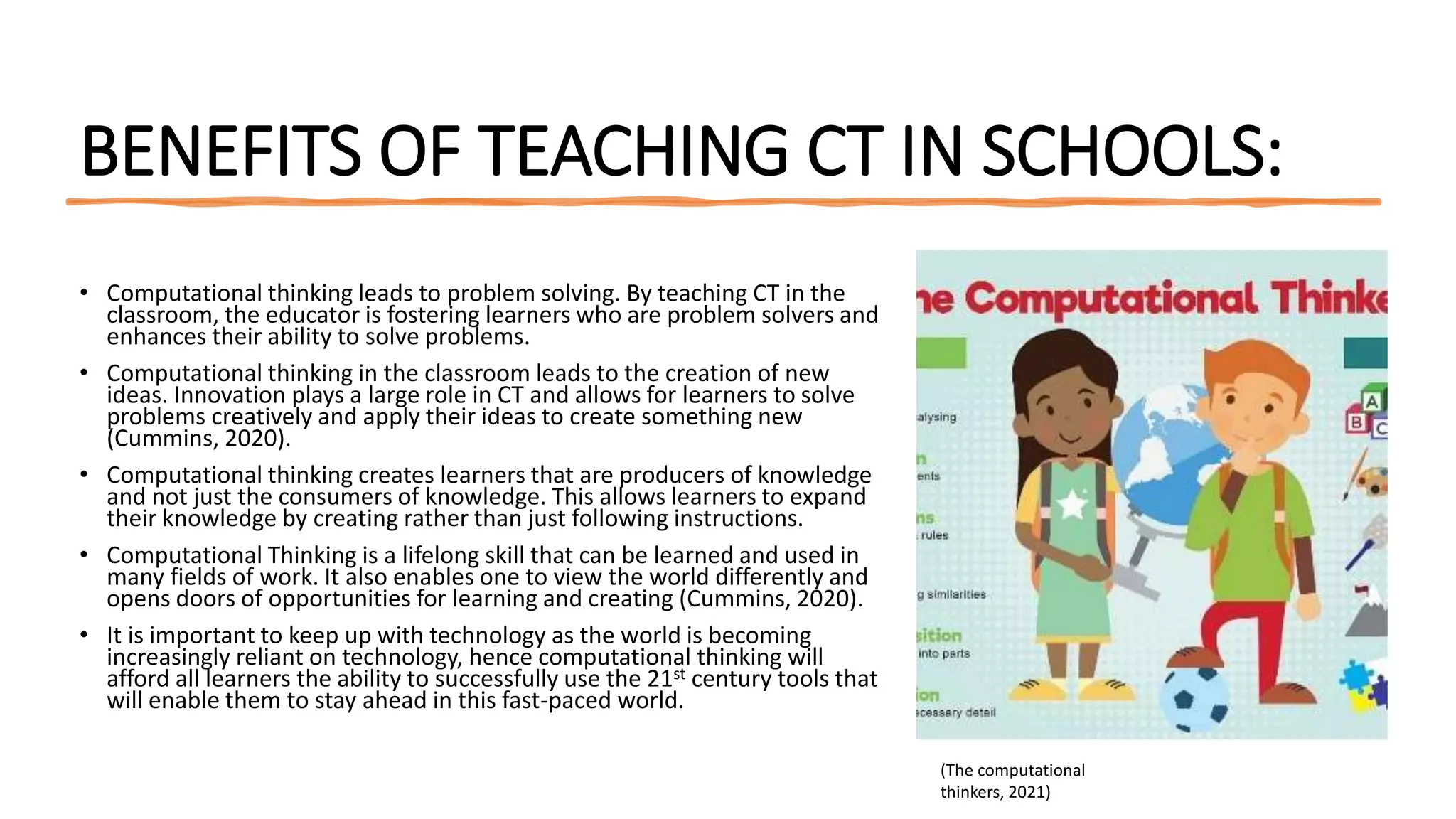
(The computational
thinkers, 2021)
REFERENCES:
• Cummins, K., 2020. Five reasons why computational thinking is an essential tool for teachers and students. — Innovative Teaching Ideas.
[online] Innovative Teaching Ideas. Available at: https://innovativeteachingideas.com/blog/five-reasons-why-computational-thinking-is-an-
essential-tool-for-teachers-and-students [Accessed 10 October 2022].
• Macann, V., 2022. The 4 parts of computational thinking in the digital technologies curriculum > Learning Architects. [online] Learning
Architects. Available at: https://www.learningarchitects.com/the-4-parts-of-computational-thinking-in-the-digital-technologies-curriculum/
[Accessed 10 October 2022].
• McVeigh-Murphy, A., 2019. Computational Thinking, Algorithmic Thinking, & Design Thinking Defined. [online] Equip.learning.com.
Available at: https://equip.learning.com/computational-thinking-algorithmic-thinking-design-thinking [Accessed 10 October 2022].
• Remc.org. 2022. Q2 Decomposition. [online] Available at: https://www.remc.org/21Things4Students/21/21-computational-thinking/q2-
decomposition/ [Accessed 10 October 2022].
• Victoria, K., 2022. Why thinking like a computer builds skills for success. [online] Teach Your Kids Code. Available at:
https://teachyourkidscode.com/what-is-computational-thinking/ [Accessed 10 October 2022].
• 2021. The computational thinkers. [image] Available at: https://blog.playosmo.com/teaching-computational-thinking-to-kids/ [Accessed 10
October 2022].

Computational thinking

  • 1.
  • 2.
    Table of Contents: 1.What is computational thinking? 2. The 4 Pillars of computational thinking explained 3. The 4 pillars of computational thinking explained (continue) 4. Summary of the 4 pillars of computational thinking 5. The benefits of teaching computational thinking in schools 6. References
  • 3.
    WHAT IS COMPUTATIONAL THINKING? •Computational thinking is the ability to take a complex problem and break it down into smaller steps in order to solve the problem. This is operating the same way in which a computer operates when solving a problem, hence the term “computational thinking”. It is the set of skills needed to solve problems in a way a computer would (Victoria, 2022). Click the video above for more information on CT
  • 4.
    THE 4 PILLARSOF COMPUTATIONAL THINKING
  • 5.
    THE 4 PILLARSOF COMPUTATIONAL THINKING EXPLAINED: DECOMPOSITION: Decomposition in computational thinking refers to the breaking down of a large or complex problem into smaller chunks so that the problem becomes easier to analyze and solve (Q2 Decomposition, 2022). ABSTRACTION: In abstraction, we look at those characteristics of the problem that are necessary to solve the problem and we filter out the characteristics that are unimportant to the solution of the problem. Video about Decomposition Video about Abstraction
  • 6.
    THE 4 PILLARSOF COMPUTATIONAL THINKING EXPLAINED: • PATTERN RECOGNITION: Pattern recognition involves recognizing the patterns in the problem against other problems in order to solve the problem more efficiently. • ALGORITHMS: The development of a step-by-step procedure to solve a problem so that others can solve the problem in the same way (McVeigh- Murphy, 2019).
  • 7.
    THE 4 PILLARSOF COMPUTATIONAL THINKING SUMMARY: DECOMPOSITION: The breaking down of a problem into smaller and achievable portions. PATTERN RECOGNITION: One looks for the similarities between the problems ALGORITHMS: Algorithms are a step- by-step process that is used to solve the problem ABSTRACTION: Ignore the unnecessary information and focus on the details that are important (Macann, 2022)
  • 8.
    BENEFITS OF TEACHINGCT IN SCHOOLS: • Computational thinking leads to problem solving. By teaching CT in the classroom, the educator is fostering learners who are problem solvers and enhances their ability to solve problems. • Computational thinking in the classroom leads to the creation of new ideas. Innovation plays a large role in CT and allows for learners to solve problems creatively and apply their ideas to create something new (Cummins, 2020). • Computational thinking creates learners that are producers of knowledge and not just the consumers of knowledge. This allows learners to expand their knowledge by creating rather than just following instructions. • Computational Thinking is a lifelong skill that can be learned and used in many fields of work. It also enables one to view the world differently and opens doors of opportunities for learning and creating (Cummins, 2020). • It is important to keep up with technology as the world is becoming increasingly reliant on technology, hence computational thinking will afford all learners the ability to successfully use the 21st century tools that will enable them to stay ahead in this fast-paced world. (The computational thinkers, 2021)
  • 9.
    REFERENCES: • Cummins, K.,2020. Five reasons why computational thinking is an essential tool for teachers and students. — Innovative Teaching Ideas. [online] Innovative Teaching Ideas. Available at: https://innovativeteachingideas.com/blog/five-reasons-why-computational-thinking-is-an- essential-tool-for-teachers-and-students [Accessed 10 October 2022]. • Macann, V., 2022. The 4 parts of computational thinking in the digital technologies curriculum > Learning Architects. [online] Learning Architects. Available at: https://www.learningarchitects.com/the-4-parts-of-computational-thinking-in-the-digital-technologies-curriculum/ [Accessed 10 October 2022]. • McVeigh-Murphy, A., 2019. Computational Thinking, Algorithmic Thinking, & Design Thinking Defined. [online] Equip.learning.com. Available at: https://equip.learning.com/computational-thinking-algorithmic-thinking-design-thinking [Accessed 10 October 2022]. • Remc.org. 2022. Q2 Decomposition. [online] Available at: https://www.remc.org/21Things4Students/21/21-computational-thinking/q2- decomposition/ [Accessed 10 October 2022]. • Victoria, K., 2022. Why thinking like a computer builds skills for success. [online] Teach Your Kids Code. Available at: https://teachyourkidscode.com/what-is-computational-thinking/ [Accessed 10 October 2022]. • 2021. The computational thinkers. [image] Available at: https://blog.playosmo.com/teaching-computational-thinking-to-kids/ [Accessed 10 October 2022].