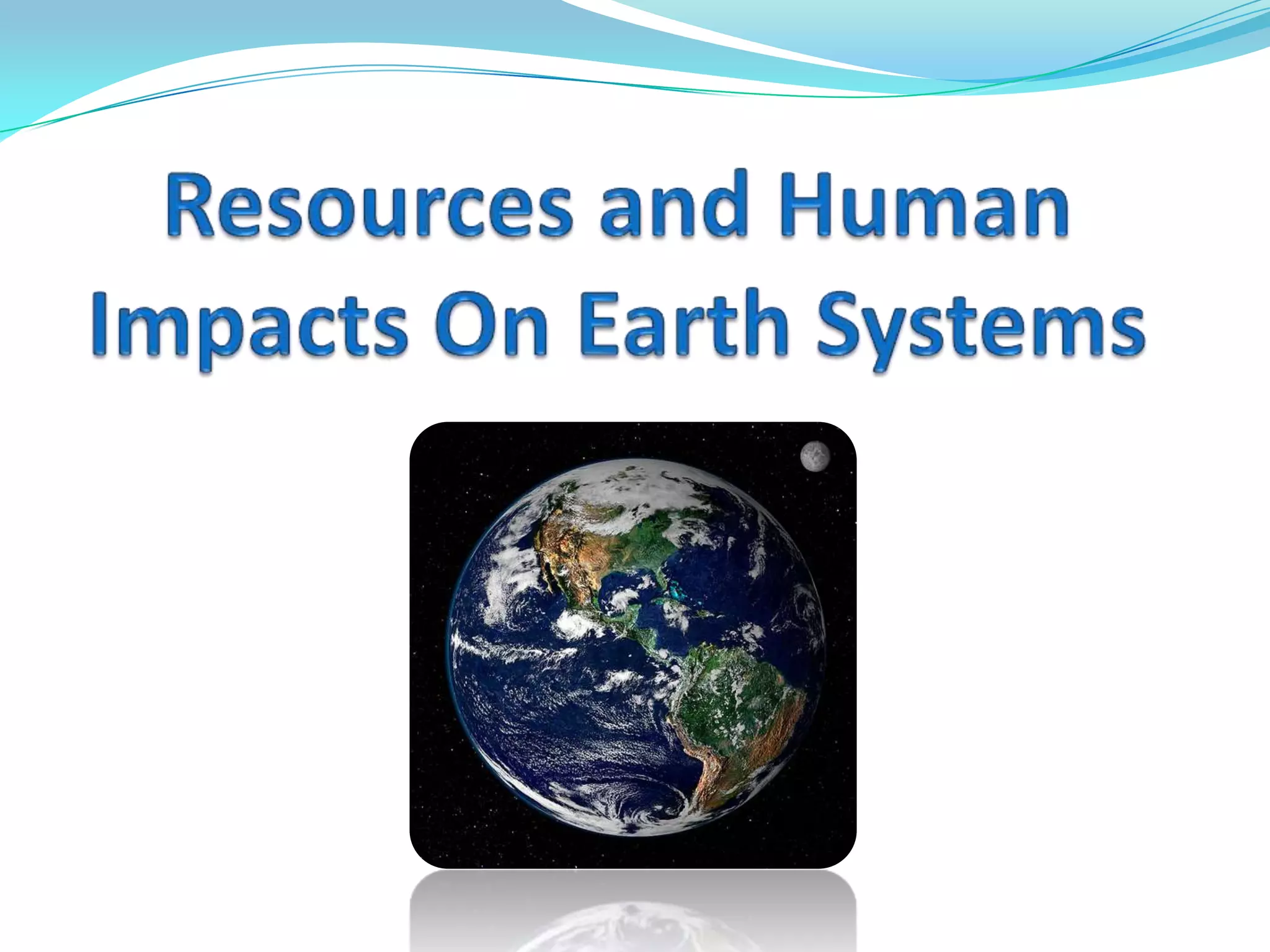
Resources and Human Impacts On Earth Systems
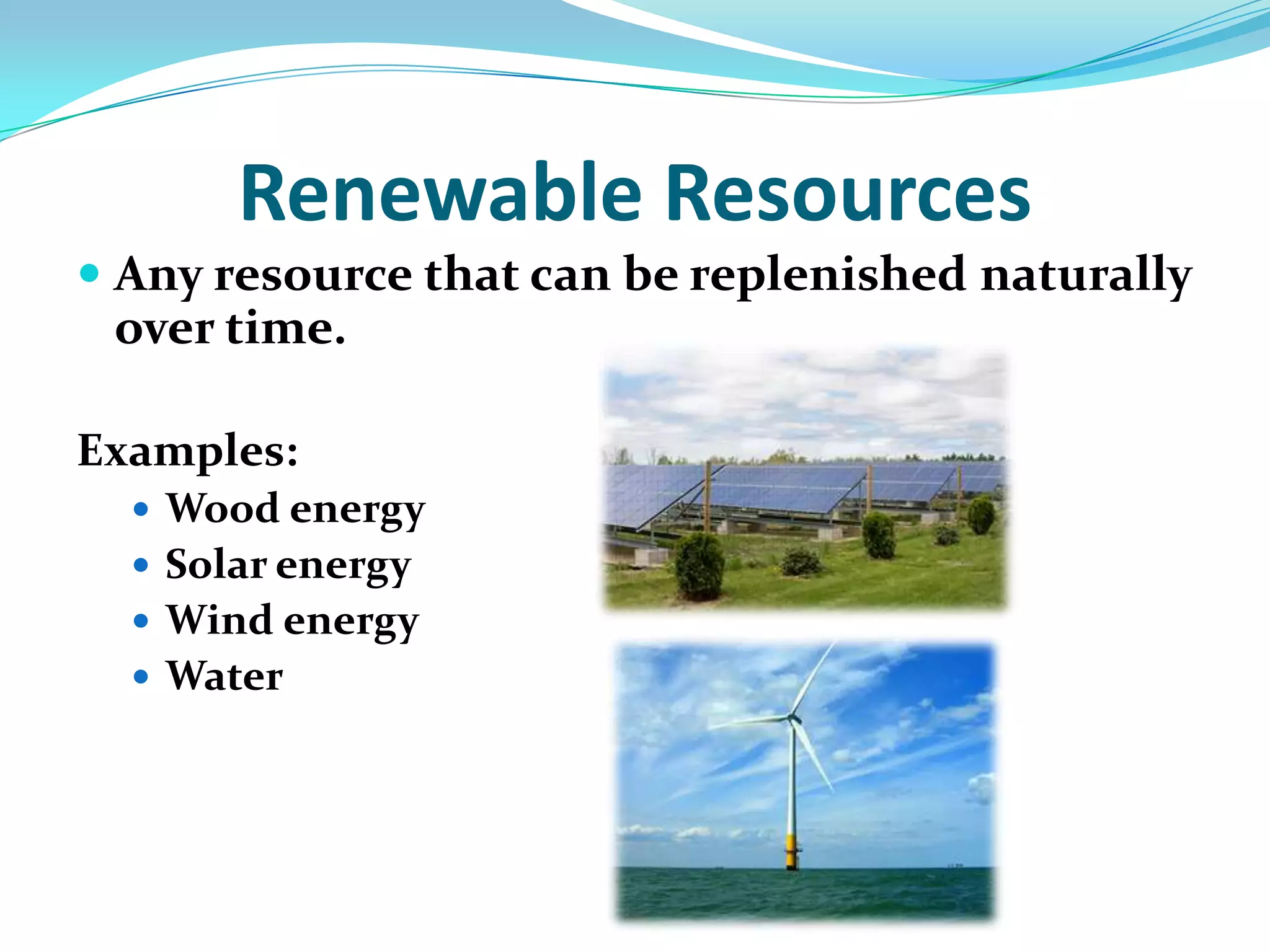
Renewable ResourcesAny resource that can be replenished naturally over time. Examples:Wood energySolar energyWind energyWater
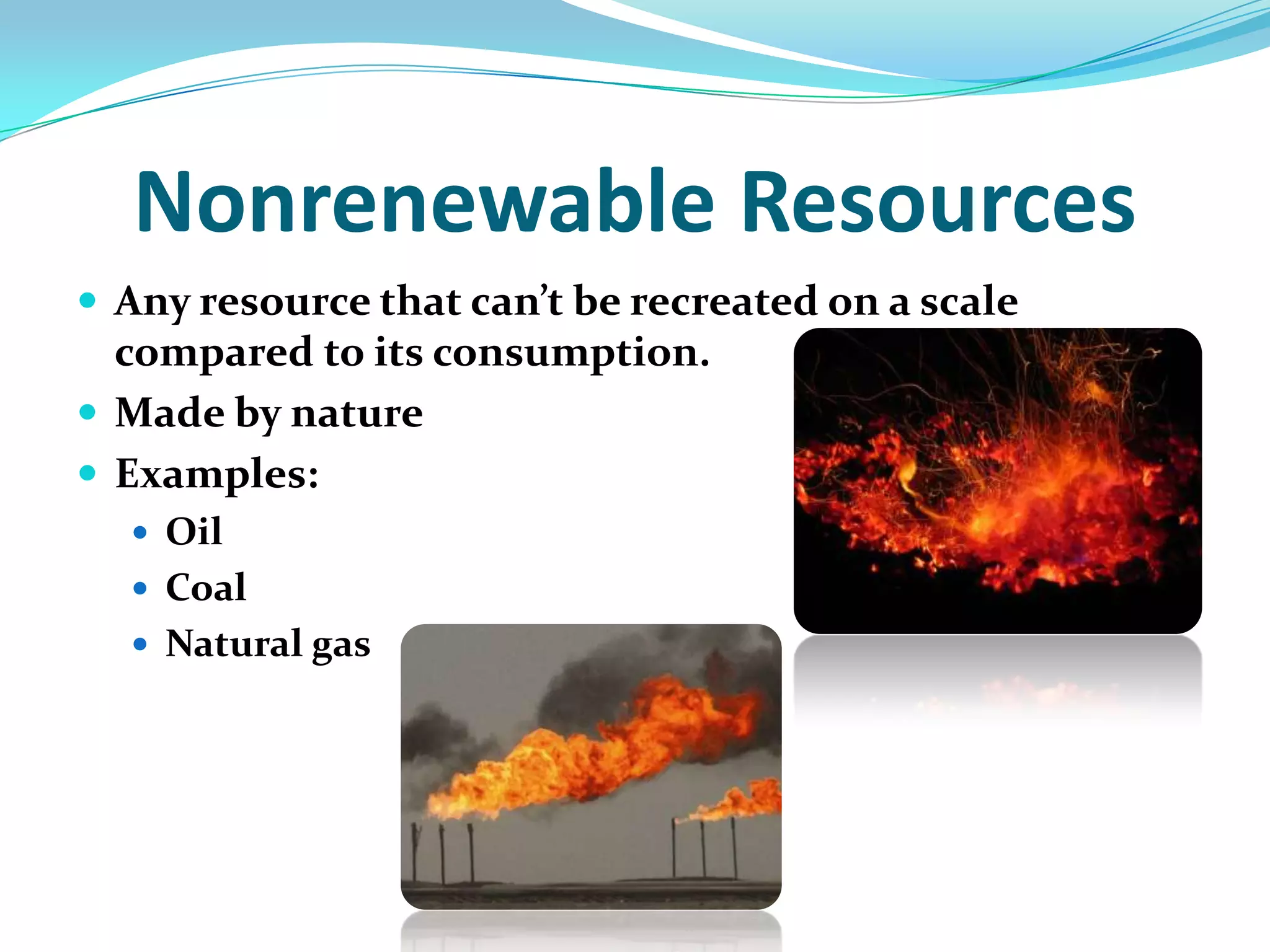
Nonrenewable ResourcesAny resource that can’t be recreated on a scale compared to its consumption. Made by natureExamples:OilCoalNatural gas
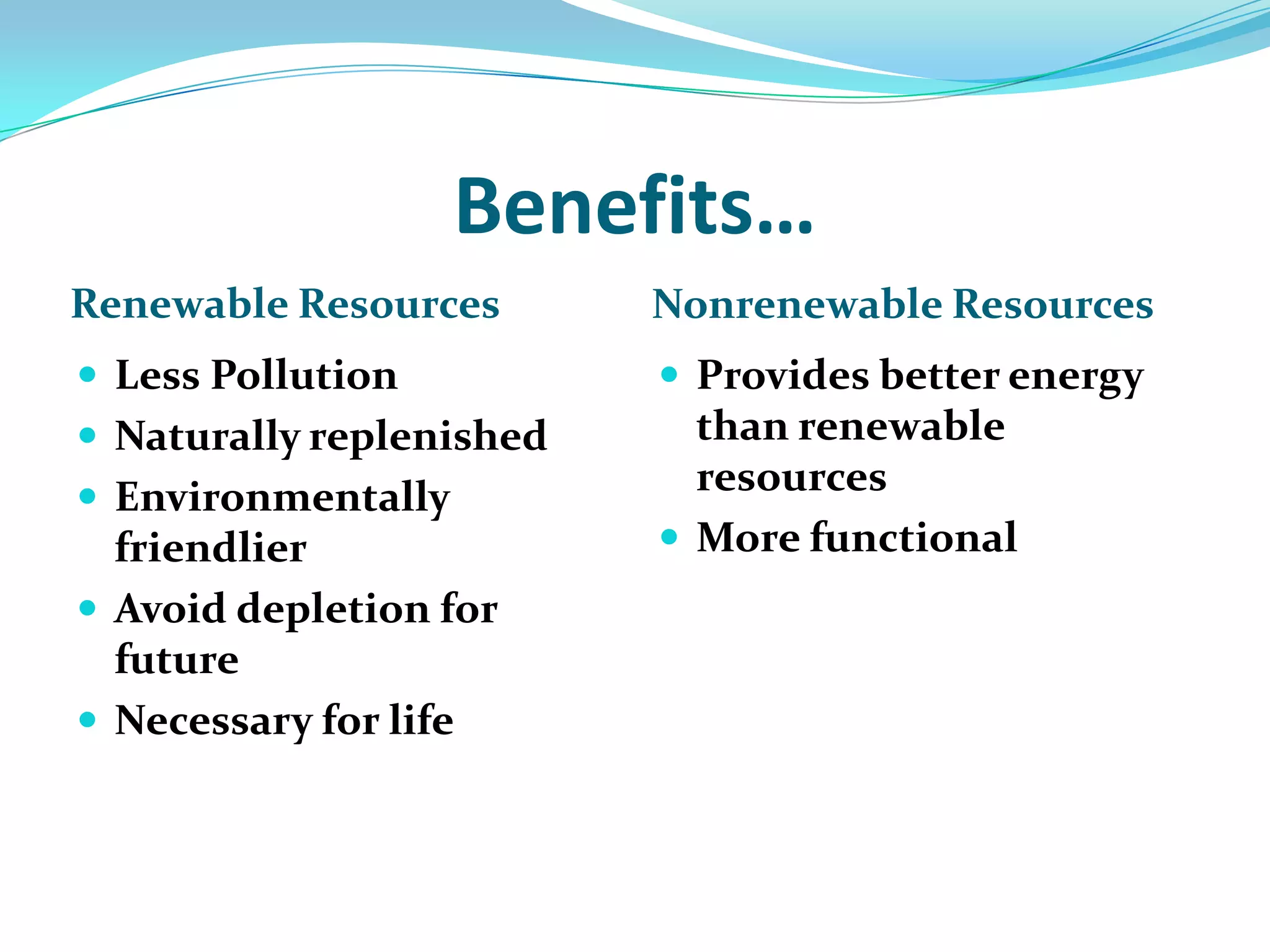
Benefits…Renewable ResourcesNonrenewable ResourcesLess PollutionNaturally replenishedEnvironmentally friendlier Avoid depletion for futureNecessary for life Provides better energy than renewable resourcesMore functional
Costs…Renewable ResourcesNonrenewable ResourcesNot practicalHard to maintainExpensiveoverusedWill eventually run outCan’t be remadeCan’t be replenishedTakes millions of years to be made
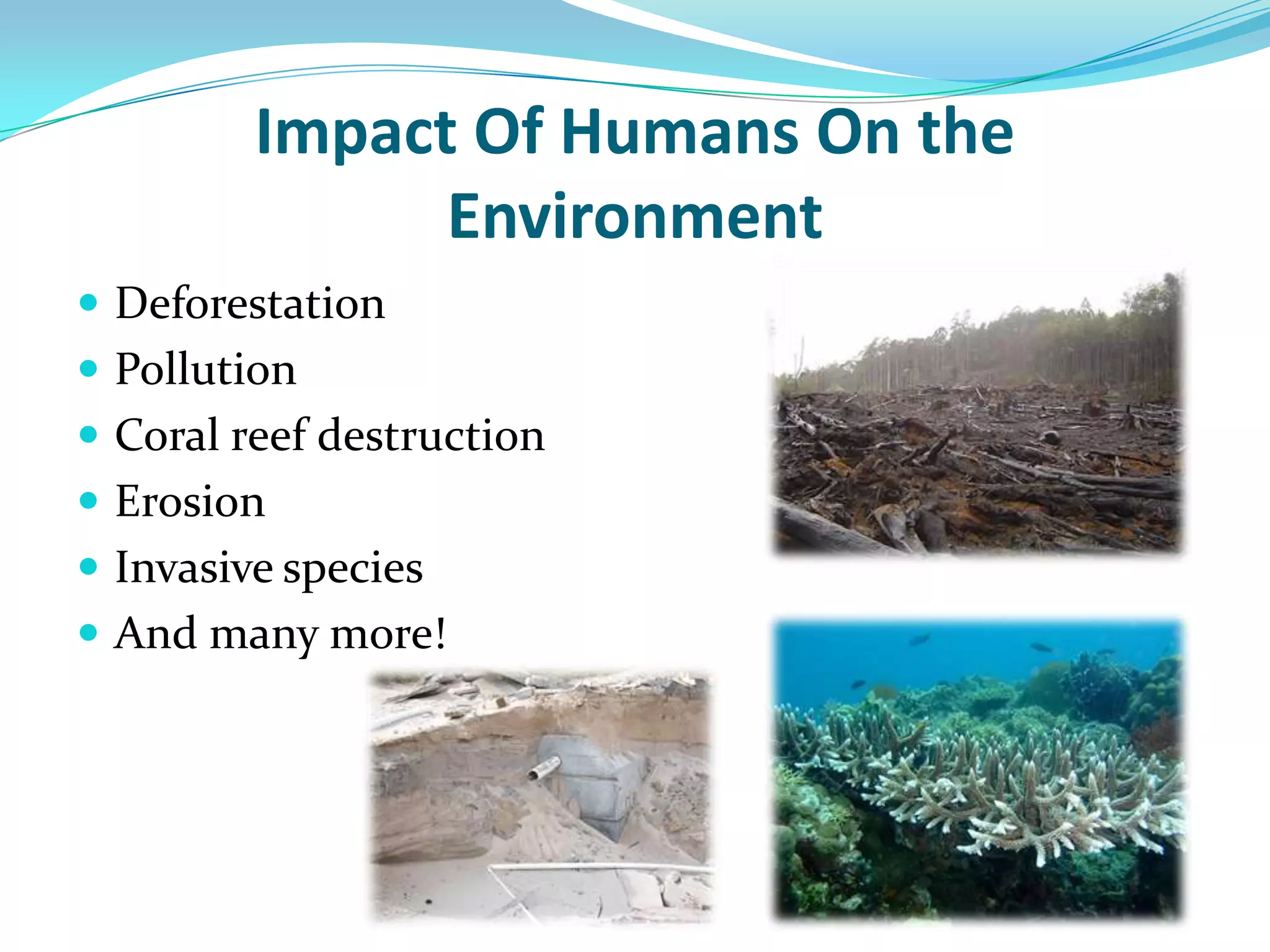
Impact Of Humans On the EnvironmentDeforestationPollutionCoral reef destructionErosionInvasive speciesAnd many more!
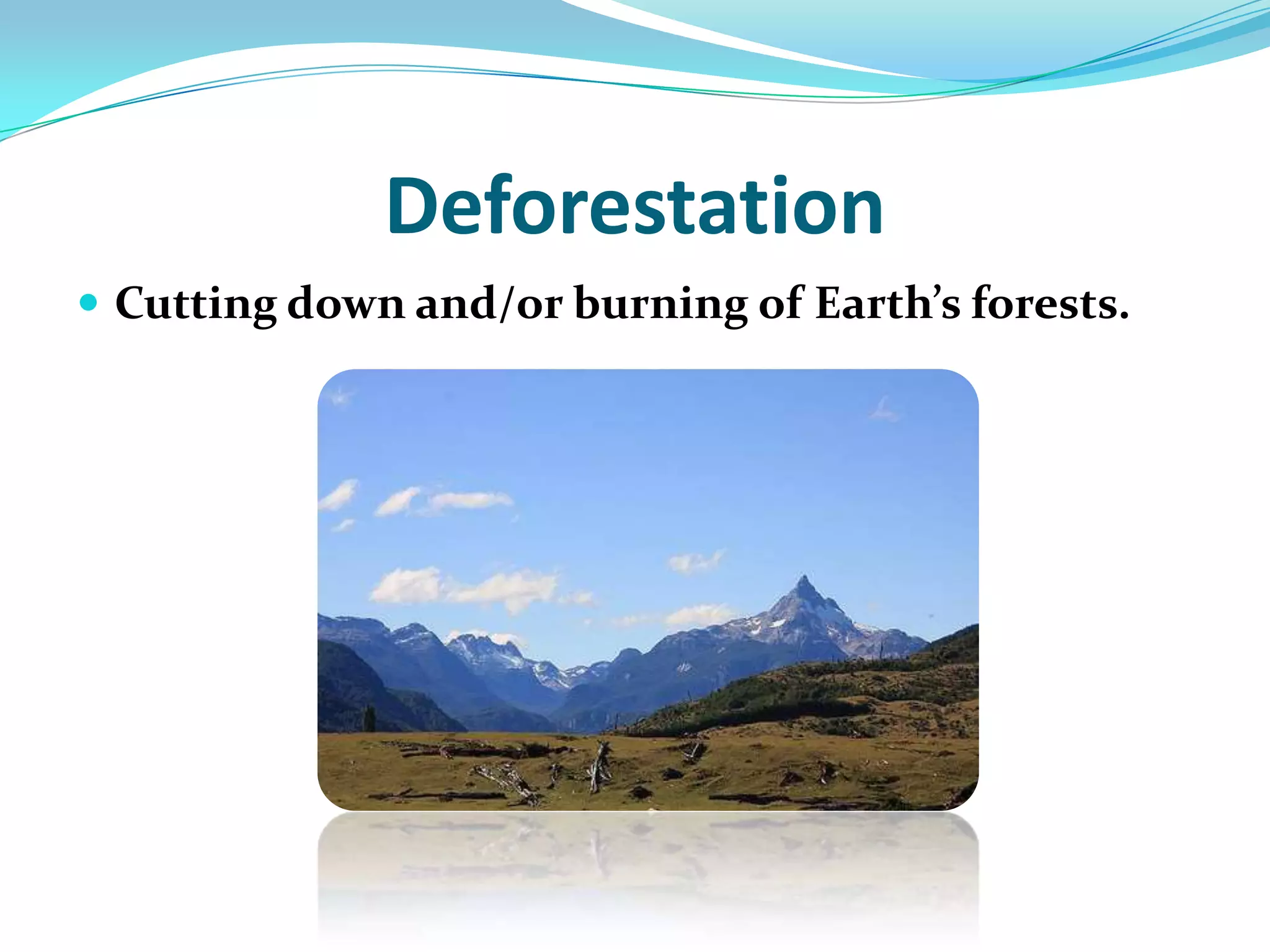
DeforestationCutting down and/or burning of Earth’s forests.
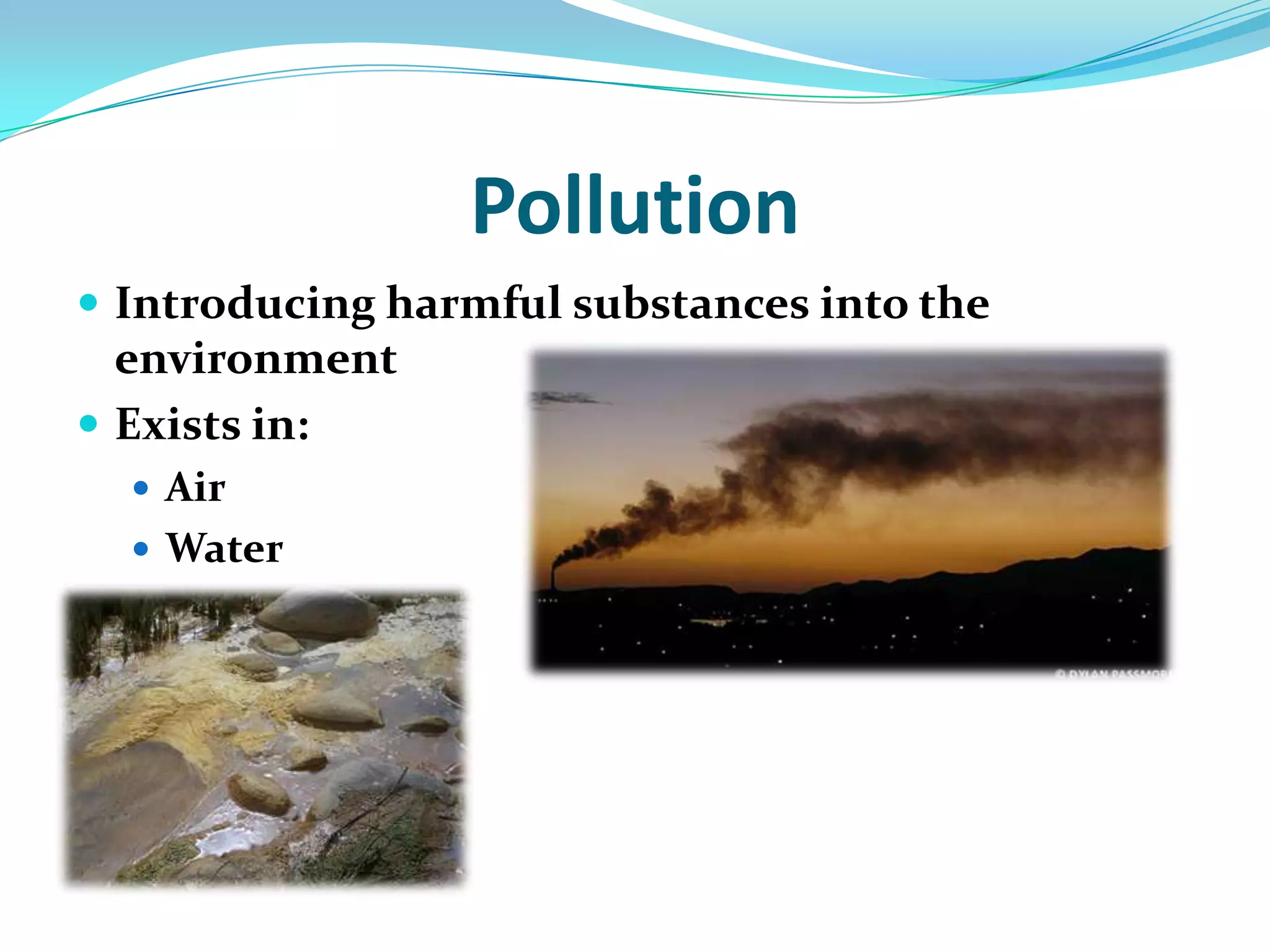
PollutionIntroducing harmful substances into the environmentExists in:Air Water
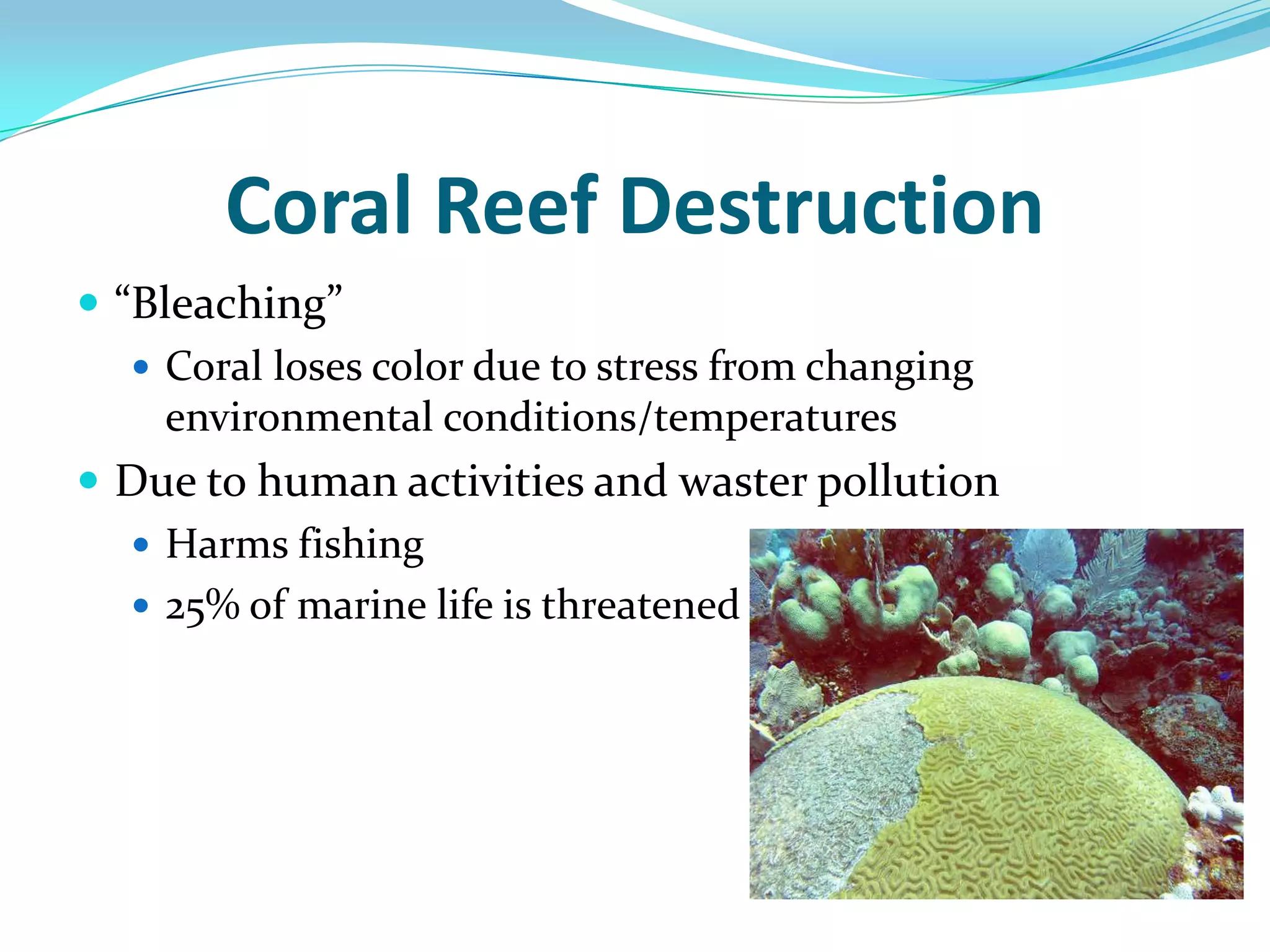
Coral Reef Destruction“Bleaching” Coral loses color due to stress from changing environmental conditions/temperaturesDue to human activities and waster pollutionHarms fishing25% of marine life is threatened
Importance…Harmful to all people especially children and elderlyBetter world for future generationsLess ozone depletionEmissions of harmful substances in environmentCo2 (automobiles)Industry
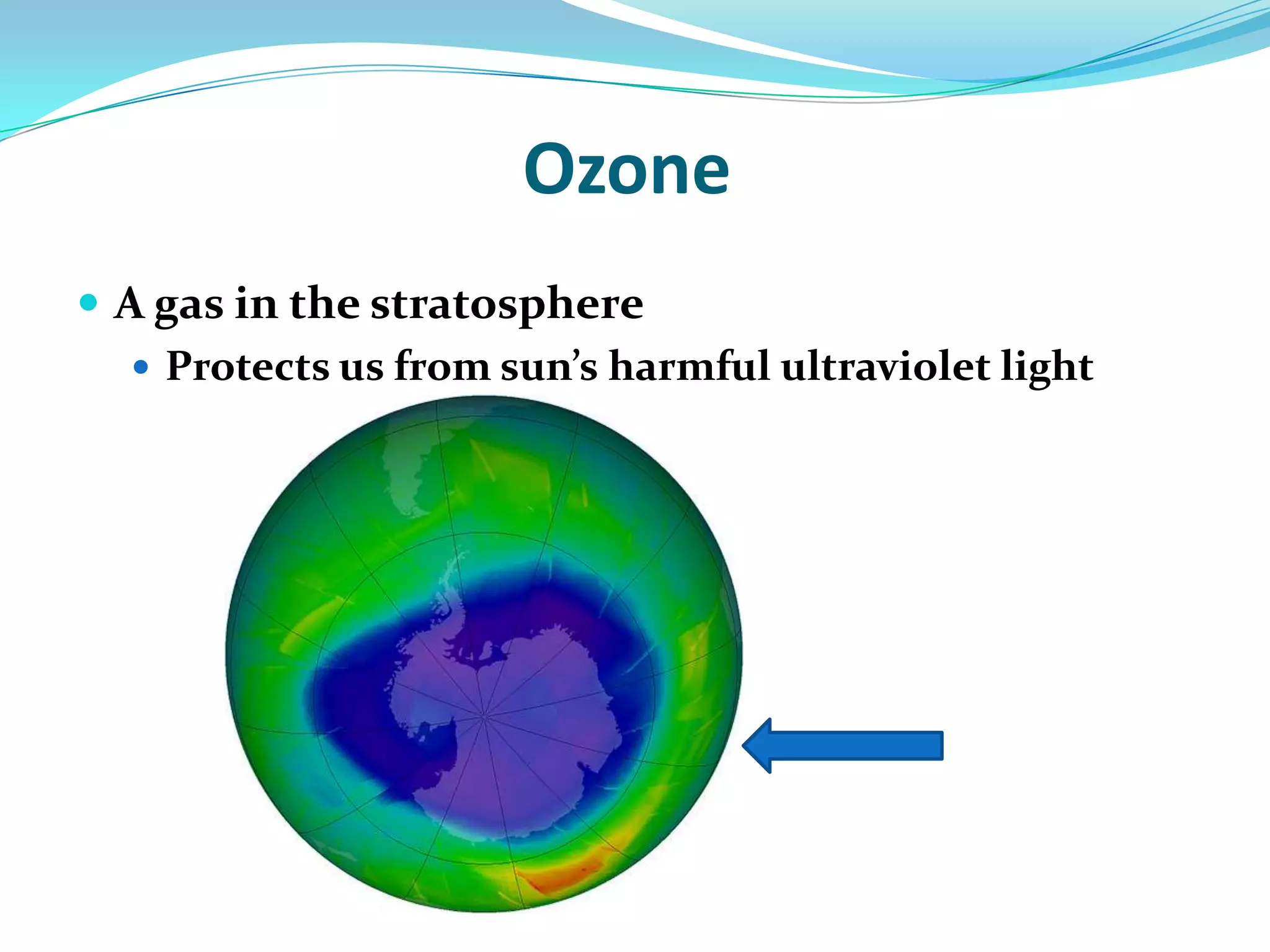
OzoneA gas in the stratosphereProtects us from sun’s harmful ultraviolet light
DepletionHoles created in the ozone layer due to human activitiesDangerous gas Speeds greenhouse effect Trapping of sun’s warmth into earth’s atmosphere Gases such as CO2 and methane cause thisCauses earth’s temperature to riseGlobal warming contributor
Importance…Damage plant life cycles food chain disruptionAll life will be threatenedHealth problemscancerDamages environmentGreenhouse effect increaseCauses global warming to speed up
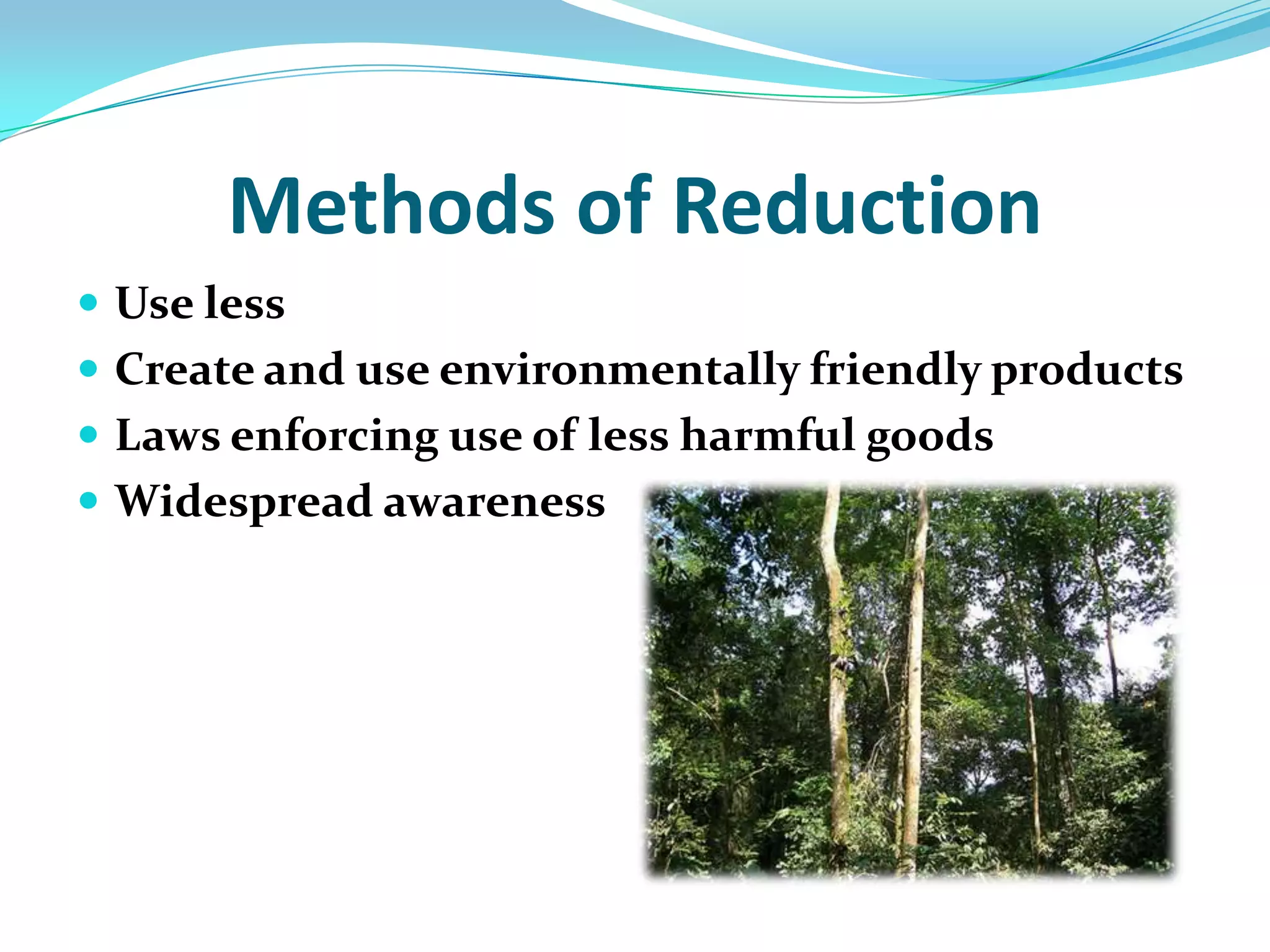
Methods of ReductionUse lessCreate and use environmentally friendly productsLaws enforcing use of less harmful goodsWidespread awareness
Conclusion…With knowledge and motivation we can make the world a safer place!Humans create many problems in the environmentCoral reef destruction, deforestation, pollution, etc.These can damage health and disrupt life cyclesOur world uses renewable and nonrenewable resources everydaysome can be recreated, others take millions of years
Works CitedPhotos:AdmlCrunch, Pollution, Feb. 2, 2008, AttributionCrustmania, Deforestation, Sept. 4, 2006, AttributionCveldestra, Brain Coral Bleaching, Apr 27, 2010, AttributionDylan Passmore, 09-5815, Jan. 4, 2009, AttributionElgutek, Coals, Aug. 14, 2006, AttributionJhyerczyk, Natural Gas, Feb. 17, 2009, AttributionModery, Rain Forest, Jun. 25, 2006, AttributionMuffet, Solar Array, May 12,2011, AttributionNASA Goddard Photo and Video, Earth From Space, Oct. 17, 2000, AttributionNASA Goddard Photo and Video, 2009 Anarctic Ozone Hole, Spt. 16, 2009. AttributionPhault, Off-Shore Wind Farm Turbine, Jul. 8, 2006, AttributionRelapsednun, Deforestation, Jan. 20, 2009, AttributionSarahDepper, Staghorn Coral, Mar. 10, 2010, AttributionSoil Science, Beach Erosion at the Outer Banks, may 15,2005, Attribution
Works Cited Cont.Information:Dictionary.comUcusa.orgEnotes.comThinkquest.orgWikianswers.com

Resources and Human Impacts on Earth Systems

  • 1.
    Resources and HumanImpacts On Earth Systems
  • 2.
    Renewable ResourcesAny resourcethat can be replenished naturally over time. Examples:Wood energySolar energyWind energyWater
  • 3.
    Nonrenewable ResourcesAny resourcethat can’t be recreated on a scale compared to its consumption. Made by natureExamples:OilCoalNatural gas
  • 4.
    Benefits…Renewable ResourcesNonrenewable ResourcesLessPollutionNaturally replenishedEnvironmentally friendlier Avoid depletion for futureNecessary for life Provides better energy than renewable resourcesMore functional
  • 5.
    Costs…Renewable ResourcesNonrenewable ResourcesNotpracticalHard to maintainExpensiveoverusedWill eventually run outCan’t be remadeCan’t be replenishedTakes millions of years to be made
  • 6.
    Impact Of HumansOn the EnvironmentDeforestationPollutionCoral reef destructionErosionInvasive speciesAnd many more!
  • 7.
    DeforestationCutting down and/orburning of Earth’s forests.
  • 8.
    PollutionIntroducing harmful substancesinto the environmentExists in:Air Water
  • 9.
    Coral Reef Destruction“Bleaching”Coral loses color due to stress from changing environmental conditions/temperaturesDue to human activities and waster pollutionHarms fishing25% of marine life is threatened
  • 10.
    Importance…Harmful to allpeople especially children and elderlyBetter world for future generationsLess ozone depletionEmissions of harmful substances in environmentCo2 (automobiles)Industry
  • 11.
    OzoneA gas inthe stratosphereProtects us from sun’s harmful ultraviolet light
  • 12.
    DepletionHoles created inthe ozone layer due to human activitiesDangerous gas Speeds greenhouse effect Trapping of sun’s warmth into earth’s atmosphere Gases such as CO2 and methane cause thisCauses earth’s temperature to riseGlobal warming contributor
  • 13.
    Importance…Damage plant lifecycles food chain disruptionAll life will be threatenedHealth problemscancerDamages environmentGreenhouse effect increaseCauses global warming to speed up
  • 14.
    Methods of ReductionUselessCreate and use environmentally friendly productsLaws enforcing use of less harmful goodsWidespread awareness
  • 15.
    Conclusion…With knowledge andmotivation we can make the world a safer place!Humans create many problems in the environmentCoral reef destruction, deforestation, pollution, etc.These can damage health and disrupt life cyclesOur world uses renewable and nonrenewable resources everydaysome can be recreated, others take millions of years
  • 16.
    Works CitedPhotos:AdmlCrunch, Pollution,Feb. 2, 2008, AttributionCrustmania, Deforestation, Sept. 4, 2006, AttributionCveldestra, Brain Coral Bleaching, Apr 27, 2010, AttributionDylan Passmore, 09-5815, Jan. 4, 2009, AttributionElgutek, Coals, Aug. 14, 2006, AttributionJhyerczyk, Natural Gas, Feb. 17, 2009, AttributionModery, Rain Forest, Jun. 25, 2006, AttributionMuffet, Solar Array, May 12,2011, AttributionNASA Goddard Photo and Video, Earth From Space, Oct. 17, 2000, AttributionNASA Goddard Photo and Video, 2009 Anarctic Ozone Hole, Spt. 16, 2009. AttributionPhault, Off-Shore Wind Farm Turbine, Jul. 8, 2006, AttributionRelapsednun, Deforestation, Jan. 20, 2009, AttributionSarahDepper, Staghorn Coral, Mar. 10, 2010, AttributionSoil Science, Beach Erosion at the Outer Banks, may 15,2005, Attribution
  • 17.