Research Trends:
Qualitative Analysis in
CSCL
eisawn Jeong, PhD
allym University, S. Korea
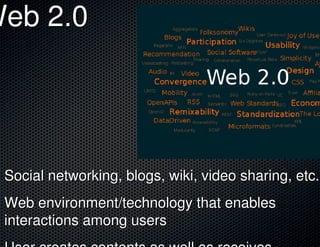
Web 2.0


 Social networking, blogs, wiki, video sharing, etc.
 Web environment/technology that enables
 interactions among users
Collaboration and learning

 Effectiveness of collaboration as a tool for learning
 and knowledge building
 Increased use of technology to support learning
 CSCL: Computer-Supported Collaborative Learnin
 Multi-disciplinary and multi-method research
 approaches
Goals of the talk
 Methodological trends in Computer-Supported
 Collaborative Learning
 Mixed-Method approaches
 Methodological issues and challenges


 Disclaimer: Speaker’s methodological background
 (cognitive psychology, verbal data analysis)
Methodological trends
 Meta content-analysis of CSCL empirical research
 papers
 On-going research
 Jeong, H., & Hmelo-Silver, C. (2010). An overview of CSCL
 methodologies. Paper presented at the International Conferenc
 of the Learning Sciences, Chicago.

 Jeong, H., & Hmelo-Silver, C. (2011). A portrait of CSCL
 methodologies. Paper to be presented at the Computer-Suppor
 Collaborative Learning, Hong Kong.
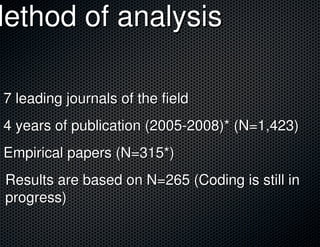
Method of analysis

 7 leading journals of the field
 4 years of publication (2005-2008)* (N=1,423)
 Empirical papers (N=315*)
 Results are based on N=265 (Coding is still in
 progress)
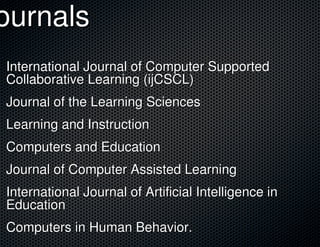
ournals
International Journal of Computer Supported
Collaborative Learning (ijCSCL)
Journal of the Learning Sciences
Learning and Instruction
Computers and Education
Journal of Computer Assisted Learning
International Journal of Artificial Intelligence in
Education
Computers in Human Behavior.
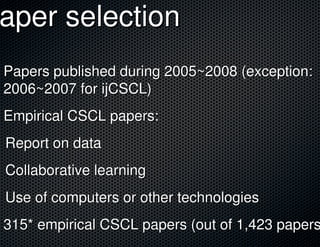
Paper selection
 aper
 Papers published during 2005~2008 (exception:
 2006~2007 for ijCSCL)
 Empirical CSCL papers:
 Report on data
 Collaborative learning
 Use of computers or other technologies
 315* empirical CSCL papers (out of 1,423 papers
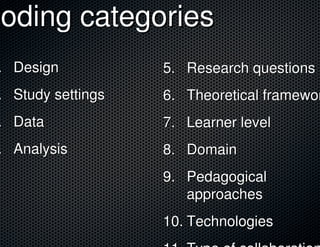
Coding categories
 . Design           5. Research questions
 . Study settings   6. Theoretical framewor
 . Data             7. Learner level
 . Analysis         8. Domain
                    9. Pedagogical
                       approaches
                    10. Technologies
Research design
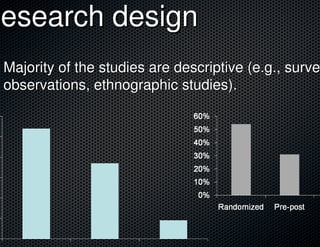
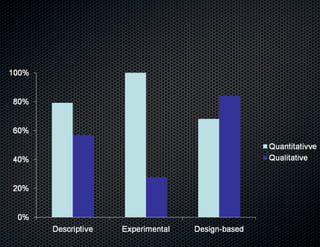
 Majority of the studies are descriptive (e.g., surve
 observations, ethnographic studies).
Research settings
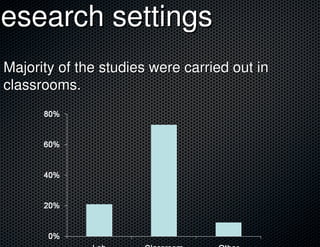
 Majority of the studies were carried out in
 classrooms.
Data types
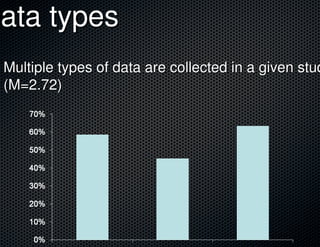
 Multiple types of data are collected in a given stud
 (M=2.72)
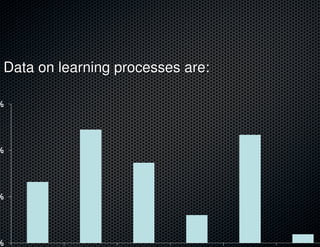
Data on learning processes are:
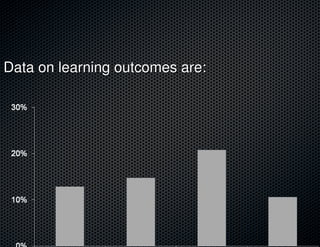
Data on learning outcomes are:
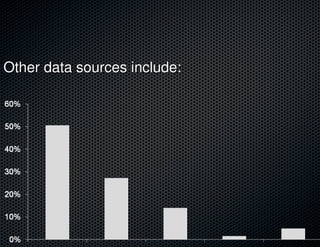
Other data sources include:
nalyses
Analyses
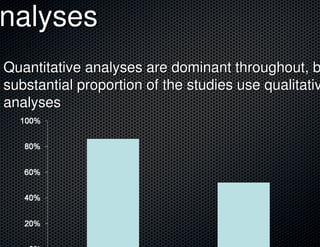
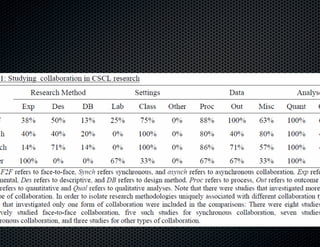
 Quantitative analyses are dominant throughout, b
 substantial proportion of the studies use qualitativ
 analyses
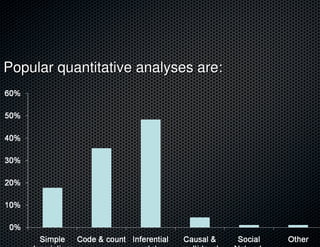
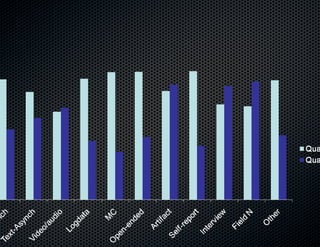
Popular quantitative analyses are:
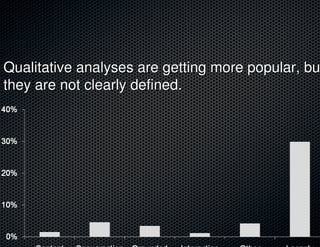
Qualitative analyses are getting more popular, bu
they are not clearly defined.
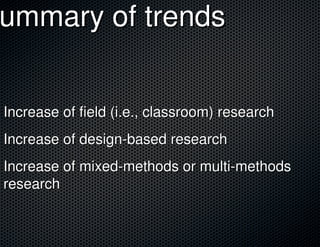
Summary of trends
 ummary


 Increase of field (i.e., classroom) research
 Increase of design-based research
 Increase of mixed-methods or multi-methods
 research
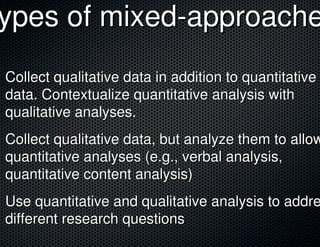
ypes of mixed-approache
Collect qualitative data in addition to quantitative
data. Contextualize quantitative analysis with
qualitative analyses.
Collect qualitative data, but analyze them to allow
quantitative analyses (e.g., verbal analysis,
quantitative content analysis)
Use quantitative and qualitative analysis to addre
different research questions
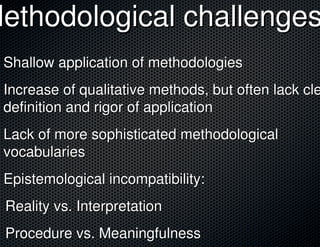
Methodological challenges
 Shallow application of methodologies
 Increase of qualitative methods, but often lack cle
 definition and rigor of application
 Lack of more sophisticated methodological
 vocabularies
 Epistemological incompatibility:
 Reality vs. Interpretation
 Procedure vs. Meaningfulness
Presented at the Asia-Pacific conference on
     Qualitative Research in Web 2.0
      22 & 23 Feb 2011, Macau SAR


          For more information
   Please visit: http://www.merlien.org

Research trends qualitative analysis in cscl

  • 1.
    Research Trends: Qualitative Analysisin CSCL eisawn Jeong, PhD allym University, S. Korea
  • 2.
    Web 2.0 Socialnetworking, blogs, wiki, video sharing, etc. Web environment/technology that enables interactions among users
  • 3.
    Collaboration and learning Effectiveness of collaboration as a tool for learning and knowledge building Increased use of technology to support learning CSCL: Computer-Supported Collaborative Learnin Multi-disciplinary and multi-method research approaches
  • 4.
    Goals of thetalk Methodological trends in Computer-Supported Collaborative Learning Mixed-Method approaches Methodological issues and challenges Disclaimer: Speaker’s methodological background (cognitive psychology, verbal data analysis)
  • 5.
    Methodological trends Metacontent-analysis of CSCL empirical research papers On-going research Jeong, H., & Hmelo-Silver, C. (2010). An overview of CSCL methodologies. Paper presented at the International Conferenc of the Learning Sciences, Chicago. Jeong, H., & Hmelo-Silver, C. (2011). A portrait of CSCL methodologies. Paper to be presented at the Computer-Suppor Collaborative Learning, Hong Kong.
  • 6.
    Method of analysis 7 leading journals of the field 4 years of publication (2005-2008)* (N=1,423) Empirical papers (N=315*) Results are based on N=265 (Coding is still in progress)
  • 7.
    ournals International Journal ofComputer Supported Collaborative Learning (ijCSCL) Journal of the Learning Sciences Learning and Instruction Computers and Education Journal of Computer Assisted Learning International Journal of Artificial Intelligence in Education Computers in Human Behavior.
  • 8.
    Paper selection aper Papers published during 2005~2008 (exception: 2006~2007 for ijCSCL) Empirical CSCL papers: Report on data Collaborative learning Use of computers or other technologies 315* empirical CSCL papers (out of 1,423 papers
  • 9.
    Coding categories .Design 5. Research questions . Study settings 6. Theoretical framewor . Data 7. Learner level . Analysis 8. Domain 9. Pedagogical approaches 10. Technologies
  • 10.
    Research design Majorityof the studies are descriptive (e.g., surve observations, ethnographic studies).
  • 11.
    Research settings Majorityof the studies were carried out in classrooms.
  • 12.
    Data types Multipletypes of data are collected in a given stud (M=2.72)
  • 13.
    Data on learningprocesses are:
  • 14.
    Data on learningoutcomes are:
  • 15.
  • 16.
    nalyses Analyses Quantitative analysesare dominant throughout, b substantial proportion of the studies use qualitativ analyses
  • 17.
  • 18.
    Qualitative analyses aregetting more popular, bu they are not clearly defined.
  • 19.
    Summary of trends ummary Increase of field (i.e., classroom) research Increase of design-based research Increase of mixed-methods or multi-methods research
  • 20.
    ypes of mixed-approache Collectqualitative data in addition to quantitative data. Contextualize quantitative analysis with qualitative analyses. Collect qualitative data, but analyze them to allow quantitative analyses (e.g., verbal analysis, quantitative content analysis) Use quantitative and qualitative analysis to addre different research questions
  • 24.
    Methodological challenges Shallowapplication of methodologies Increase of qualitative methods, but often lack cle definition and rigor of application Lack of more sophisticated methodological vocabularies Epistemological incompatibility: Reality vs. Interpretation Procedure vs. Meaningfulness
  • 25.
    Presented at theAsia-Pacific conference on Qualitative Research in Web 2.0 22 & 23 Feb 2011, Macau SAR For more information Please visit: http://www.merlien.org