Dr. Kaali Dass, PMP, PhD
27th Oct 2017
Research to Real-World Projects
 Q & A
 Skills: To Lead Enterprise Projects
 Organization: Vision, Strategy, & Execution
 Environment: Know your Industry
Agenda
Environment: Know your Industry
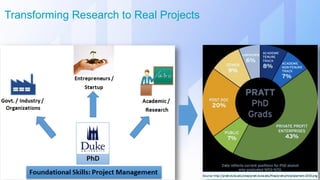
Transforming Research to Real Projects
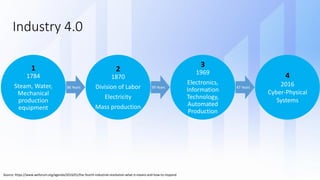
Industry 4.0
Source: https://www.weforum.org/agenda/2016/01/the-fourth-industrial-revolution-what-it-means-and-how-to-respond
1
1784
Steam, Water,
Mechanical
production
equipment
86 Years 99 Years 47 Years
3
1969
Electronics,
Information
Technology,
Automated
Production
4
2016
Cyber-Physical
Systems
2
1870
Division of Labor
Electricity
Mass production
Market Disruptors
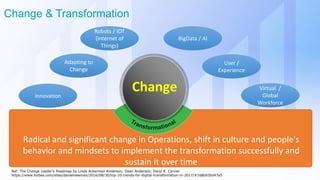
Change
Radical and significant change in Operations, shift in culture and people's
behavior and mindsets to implement the transformation successfully and
sustain it over time
Change & Transformation
Ref: The Change Leader's Roadmap by Linda Ackerman Anderson; Dean Anderson; Daryl R. Conner
https://www.forbes.com/sites/danielnewman/2016/08/30/top-10-trends-for-digital-transformation-in-2017/#168b93b047a5
Adapting to
Change
User /
Experience
Innovation
Virtual /
Global
Workforce
Robots / IOT
(Internet of
Things)
BigData / AI
Source: http://www.businessinsider.com/chambers-40-of-companies-are-dying-2015-6
http://www.aei.org/publication/fortune-500-firms-1955-v-2016-only-12-remain-thanks-to-the-creative-destruction-that-fuels-economic-prosperity/
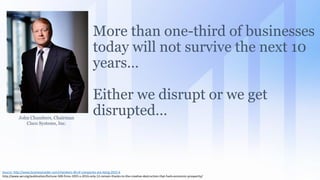
John Chambers, Chairman
Cisco Systems, Inc.
More than one-third of businesses
today will not survive the next 10
years…
Either we disrupt or we get
disrupted…
Source: https://www.innosight.com/insight/corporate-longevity-turbulence-ahead-for-large-organizations/
http://www.aei.org/publication/fortune-500-firms-1955-v-2016-only-12-remain-thanks-to-the-creative-destruction-that-fuels-economic-prosperity/
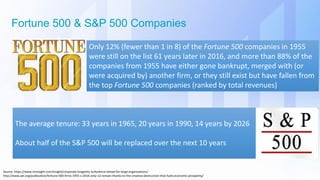
Only 12% (fewer than 1 in 8) of the Fortune 500 companies in 1955
were still on the list 61 years later in 2016, and more than 88% of the
companies from 1955 have either gone bankrupt, merged with (or
were acquired by) another firm, or they still exist but have fallen from
the top Fortune 500 companies (ranked by total revenues)
Fortune 500 & S&P 500 Companies
The average tenure: 33 years in 1965, 20 years in 1990, 14 years by 2026
About half of the S&P 500 will be replaced over the next 10 years
Organization: Vision, Strategy, & Execution
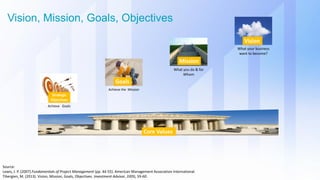
Vision, Mission, Goals, Objectives
Source:
Lewis, J. P. (2007).Fundamentals of Project Management (pp. 44-55). American Management Association International.
Tibergien, M. (2013). Vision, Mission, Goals, Objectives. Investment Advisor, 33(9), 59-60.
What you do & for
Whom
Mission
Achieve Goals
Strategic
Objectives
Goals
Achieve the Mission
Core Values
What your business
want to become?
Vision
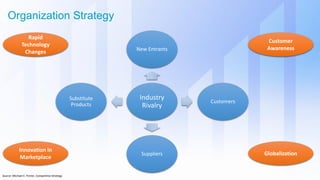
Organization Strategy
Source: Michael E. Porter, Competitive Strategy
Rapid
Technology
Changes
Innovation in
Marketplace
Customer
Awareness
Globalization
Industry
Rivalry
New Entrants
Customers
Suppliers
Substitute
Products
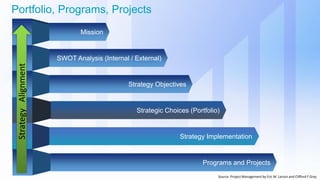
SWOT Analysis (Internal / External)
Strategic Choices (Portfolio)
Strategy Implementation
Programs and Projects
Mission
Source: Project Management by Eric W. Larson and Clifford F Gray
Strategy Objectives
Portfolio, Programs, Projects
StrategyAlignment
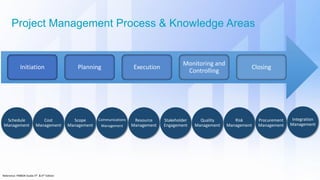
Project Management Process & Knowledge Areas
Initiation Planning Execution
Monitoring and
Controlling
Closing
Resource
Management
Quality
Management
Procurement
Management
Risk
Management
Communications
Management
Cost
Management
Schedule
Management
Scope
Management
Stakeholder
Engagement
Integration
Management
Reference: PMBOK Guide 5th & 6th Edition
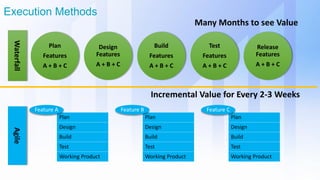
Execution Methods
Release
Features
A + B + C
Test
Features
A + B + C
Build
Features
A + B + C
Design
Features
A + B + C
Plan
Features
A + B + C
WaterfallAgile
Plan
Design
Build
Test
Working Product
Feature A
Plan
Design
Build
Test
Working Product
Feature B
Plan
Design
Build
Test
Working Product
Feature C
Many Months to see Value
Incremental Value for Every 2-3 Weeks
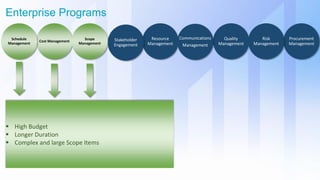
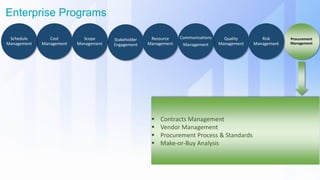
Enterprise Programs
Resource
Management
Quality
Management
Procurement
Management
Risk
Management
Communications
Management
Cost Management
Schedule
Management
Scope
Management
Stakeholder
Engagement
 High Budget
 Longer Duration
 Complex and large Scope Items
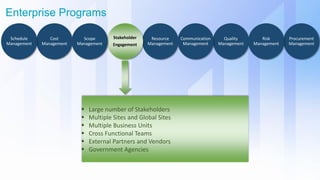
Enterprise Programs
Resource
Management
Quality
Management
Procurement
Management
Risk
Management
Stakeholder
Engagement
Cost
Management
Schedule
Management
Scope
Management
Communication
Management
 Large number of Stakeholders
 Multiple Sites and Global Sites
 Multiple Business Units
 Cross Functional Teams
 External Partners and Vendors
 Government Agencies
Enterprise Programs
Resource
Management
Quality
Management
Procurement
Management
Risk
Management
Cost
Management
Schedule
Management
Scope
Management
Stakeholder
Engagement
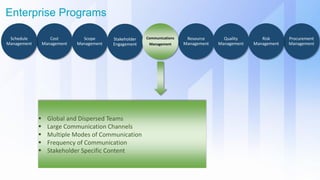
Communications
Management
 Global and Dispersed Teams
 Large Communication Channels
 Multiple Modes of Communication
 Frequency of Communication
 Stakeholder Specific Content
Enterprise Programs
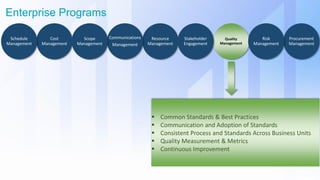
Quality
Management
Procurement
Management
Risk
Management
Communications
Management
Cost
Management
Schedule
Management
Scope
Management
Stakeholder
Engagement
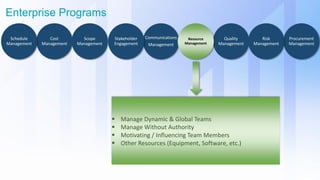
Resource
Management
 Manage Dynamic & Global Teams
 Manage Without Authority
 Motivating / Influencing Team Members
 Other Resources (Equipment, Software, etc.)
Enterprise Programs
Resource
Management
Quality
Management
Procurement
Management
Risk
Management
Communications
Management
Cost
Management
Schedule
Management
Scope
Management
Stakeholder
Engagement
 Common Standards & Best Practices
 Communication and Adoption of Standards
 Consistent Process and Standards Across Business Units
 Quality Measurement & Metrics
 Continuous Improvement
Enterprise Programs
Resource
Management
Quality
Management
Procurement
Management
Risk
Management
Communications
Management
Cost
Management
Schedule
Management
Scope
Management
Stakeholder
Engagement
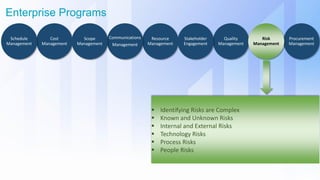
 Identifying Risks are Complex
 Known and Unknown Risks
 Internal and External Risks
 Technology Risks
 Process Risks
 People Risks
Stakeholder
Engagement
Enterprise Programs
Resource
Management
Quality
Management
Procurement
Management
Risk
Management
Communications
Management
Cost
Management
Schedule
Management
Scope
Management
 Contracts Management
 Vendor Management
 Procurement Process & Standards
 Make-or-Buy Analysis
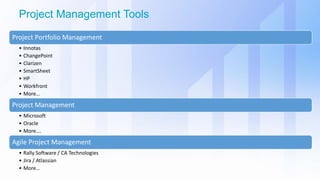
Project Management Tools
Project Portfolio Management
• Innotas
• ChangePoint
• Clarizen
• SmartSheet
• HP
• Workfront
• More…
Project Management
• Microsoft
• Oracle
• More….
Agile Project Management
• Rally Software / CA Technologies
• Jira / Atlassian
• More…
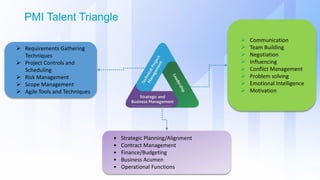
Skills: To Lead Enterprise Projects
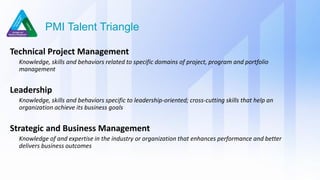
PMI Talent Triangle
Technical Project Management
Knowledge, skills and behaviors related to specific domains of project, program and portfolio
management
Leadership
Knowledge, skills and behaviors specific to leadership-oriented; cross-cutting skills that help an
organization achieve its business goals
Strategic and Business Management
Knowledge of and expertise in the industry or organization that enhances performance and better
delivers business outcomes
PMI Talent Triangle
 Requirements Gathering
Techniques
 Project Controls and
Scheduling
 Risk Management
 Scope Management
 Agile Tools and Techniques
 Communication
 Team Building
 Negotiation
 Influencing
 Conflict Management
 Problem solving
 Emotional Intelligence
 Motivation
• Strategic Planning/Alignment
• Contract Management
• Finance/Budgeting
• Business Acumen
• Operational Functions
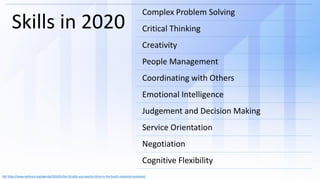
Ref: https://www.weforum.org/agenda/2016/01/the-10-skills-you-need-to-thrive-in-the-fourth-industrial-revolution/
Skills in 2020
Complex Problem Solving
Critical Thinking
Creativity
People Management
Coordinating with Others
Emotional Intelligence
Judgement and Decision Making
Service Orientation
Negotiation
Cognitive Flexibility
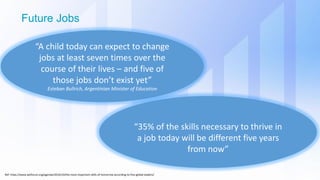
Future Jobs
Ref: https://www.weforum.org/agenda/2016/10/the-most-important-skills-of-tomorrow-according-to-five-global-leaders/
“A child today can expect to change
jobs at least seven times over the
course of their lives – and five of
those jobs don’t exist yet”
Esteban Bullrich, Argentinian Minister of Education
“35% of the skills necessary to thrive in
a job today will be different five years
from now”
Know Your Industry
Understand your organization Culture and Strategy
Align your Research Objectives towards Organization’s
Strategy
Improve your Skills on Business, Technical, and Leadership
Key Takeaways
If your actions inspire others to
dream more, learn more, do more
and become more, you are a leader
John Quincy Adams
Q&A
dassconnet@gmail.com
https://www.linkedin.com/in/kaalidass

Research to Realworld Projects