Research
proposal
Group “5”
Angira Chy, Bishnu Mainali,
Durga Chaulagai, Ranjana Chy,
Rashmi Niroula, TulshaDahal
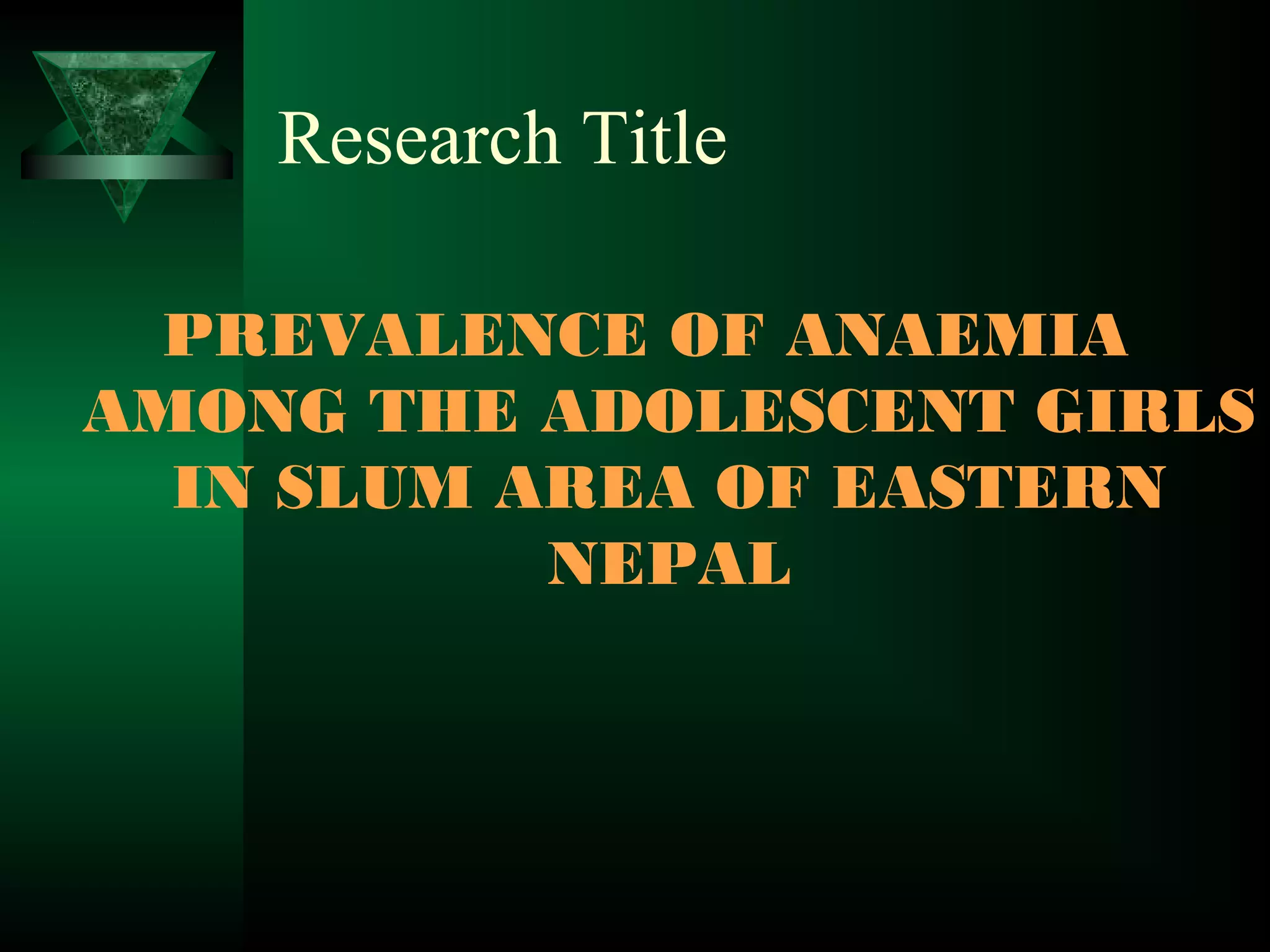
Research Title
PREVALENCE OF ANAEMIA
AMONG THE ADOLESCENT GIRLS
IN SLUM AREA OF EASTERN
NEPAL
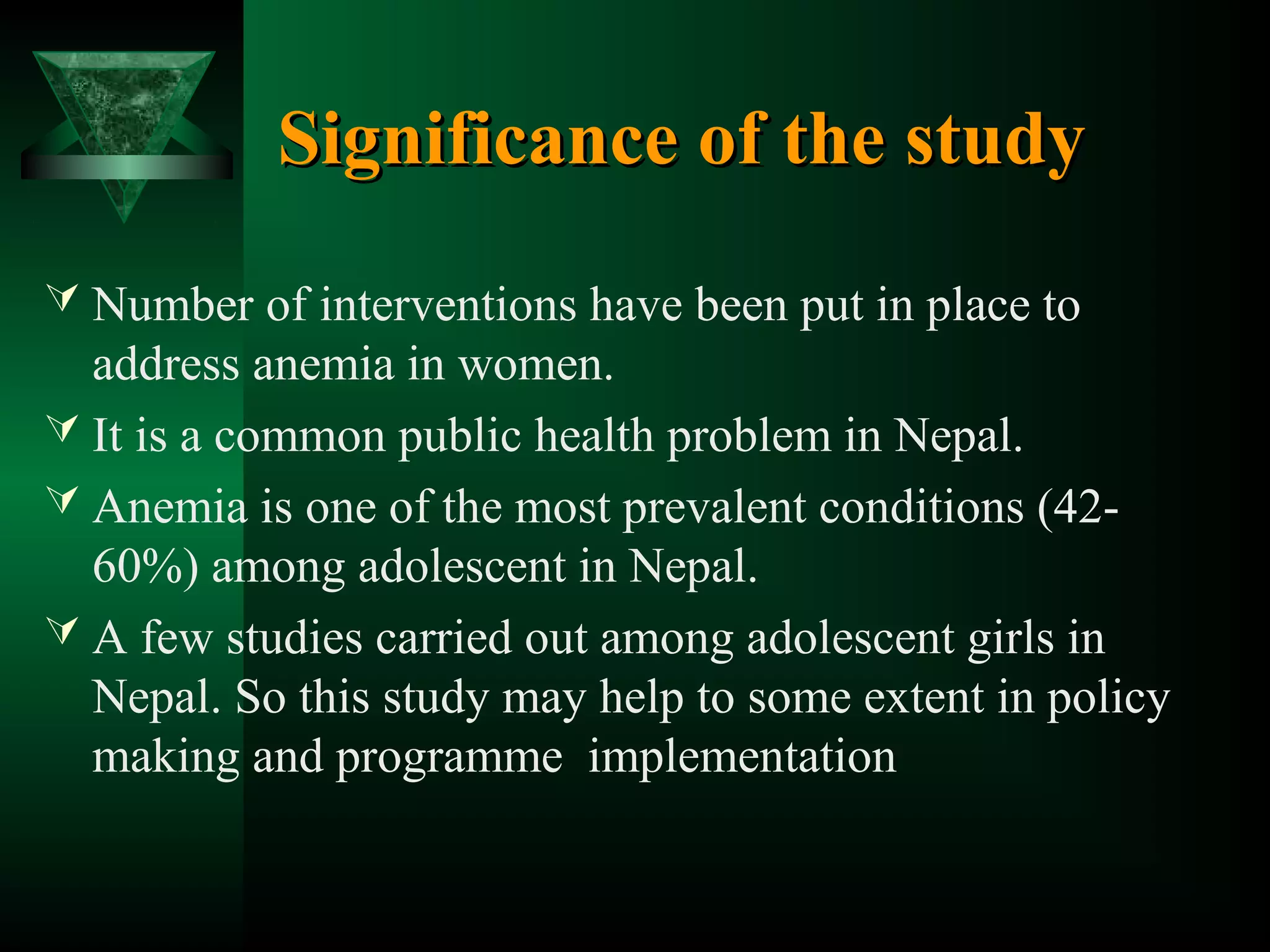
Significance of the study
 Number of interventions have been put in place to

address anemia in women.
 It is a common public health problem in Nepal.
 Anemia is one of the most prevalent conditions (4260%) among adolescent in Nepal.
 A few studies carried out among adolescent girls in
Nepal. So this study may help to some extent in policy
making and programme implementation
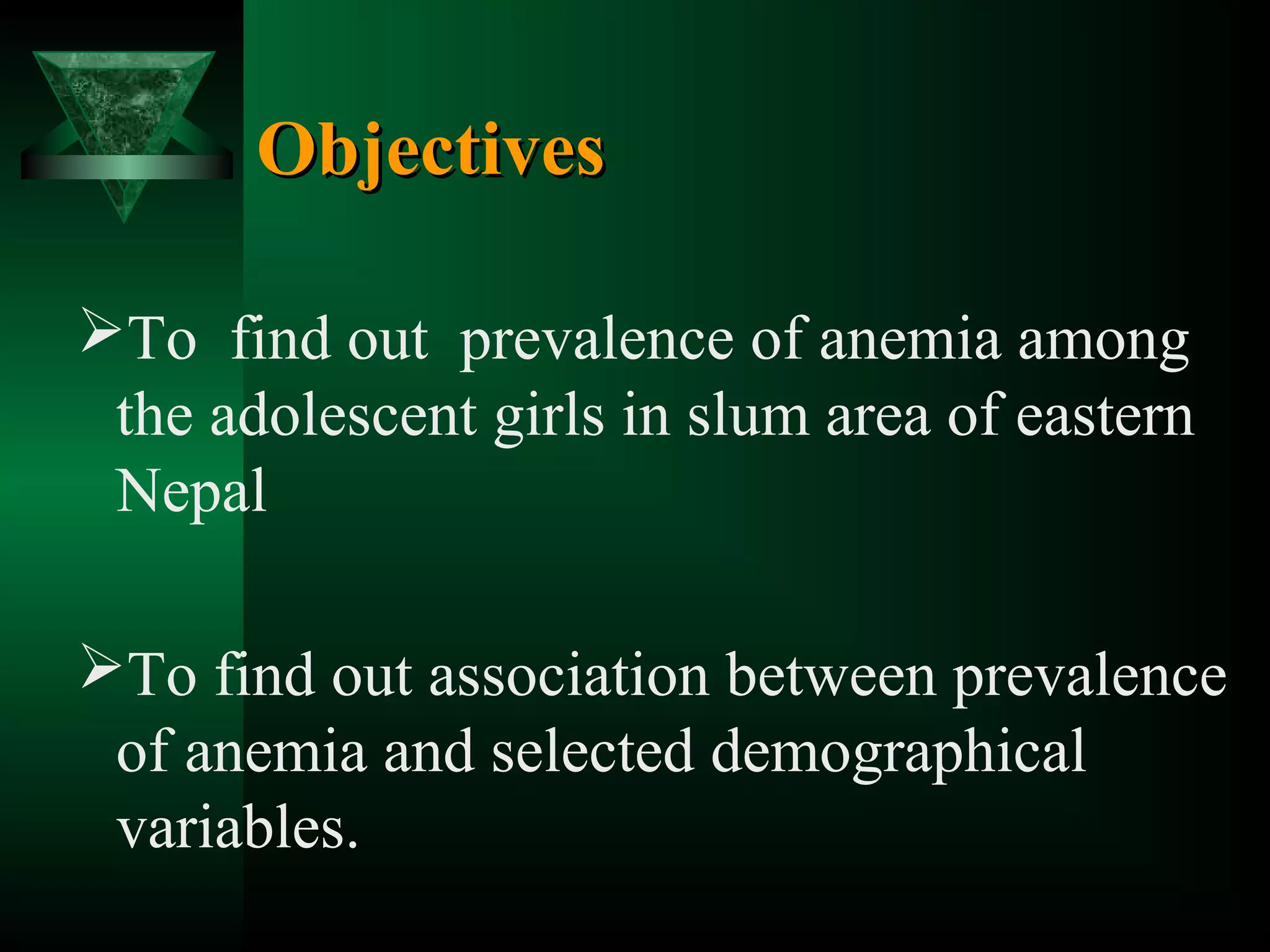
Objectives
To find out prevalence of anemia among
the adolescent girls in slum area of eastern
Nepal
To find out association between prevalence
of anemia and selected demographical
variables.
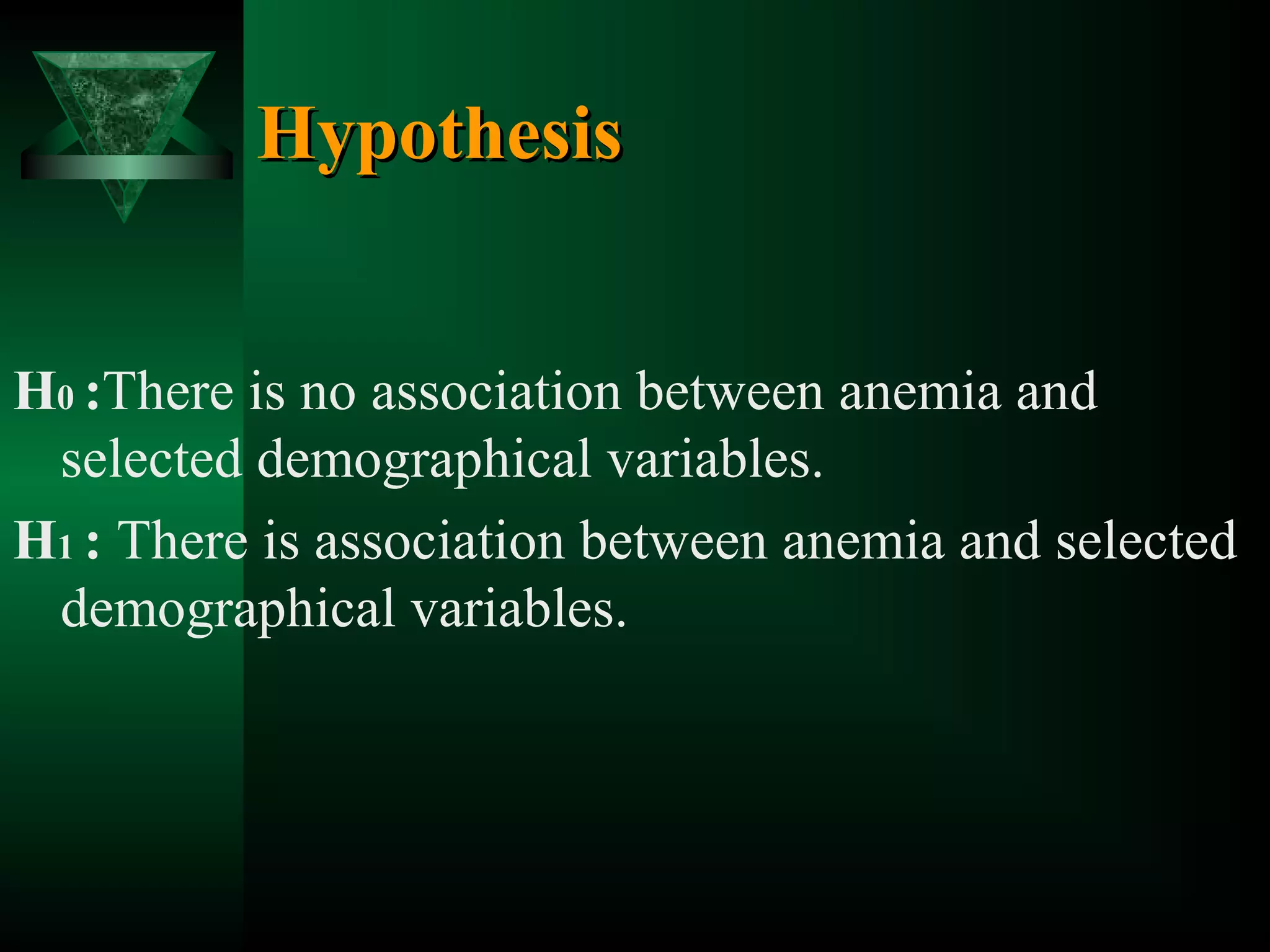
Hypothesis
H0 :There is no association between anemia and
selected demographical variables.
H1 : There is association between anemia and selected
demographical variables.
Variables
Dependent variables
 Anaemia
Independent variables
 Age
 Economic status
 Educational status / literacy
 Occupation
 Type of Family
 Cultural practice
 Availability of health services
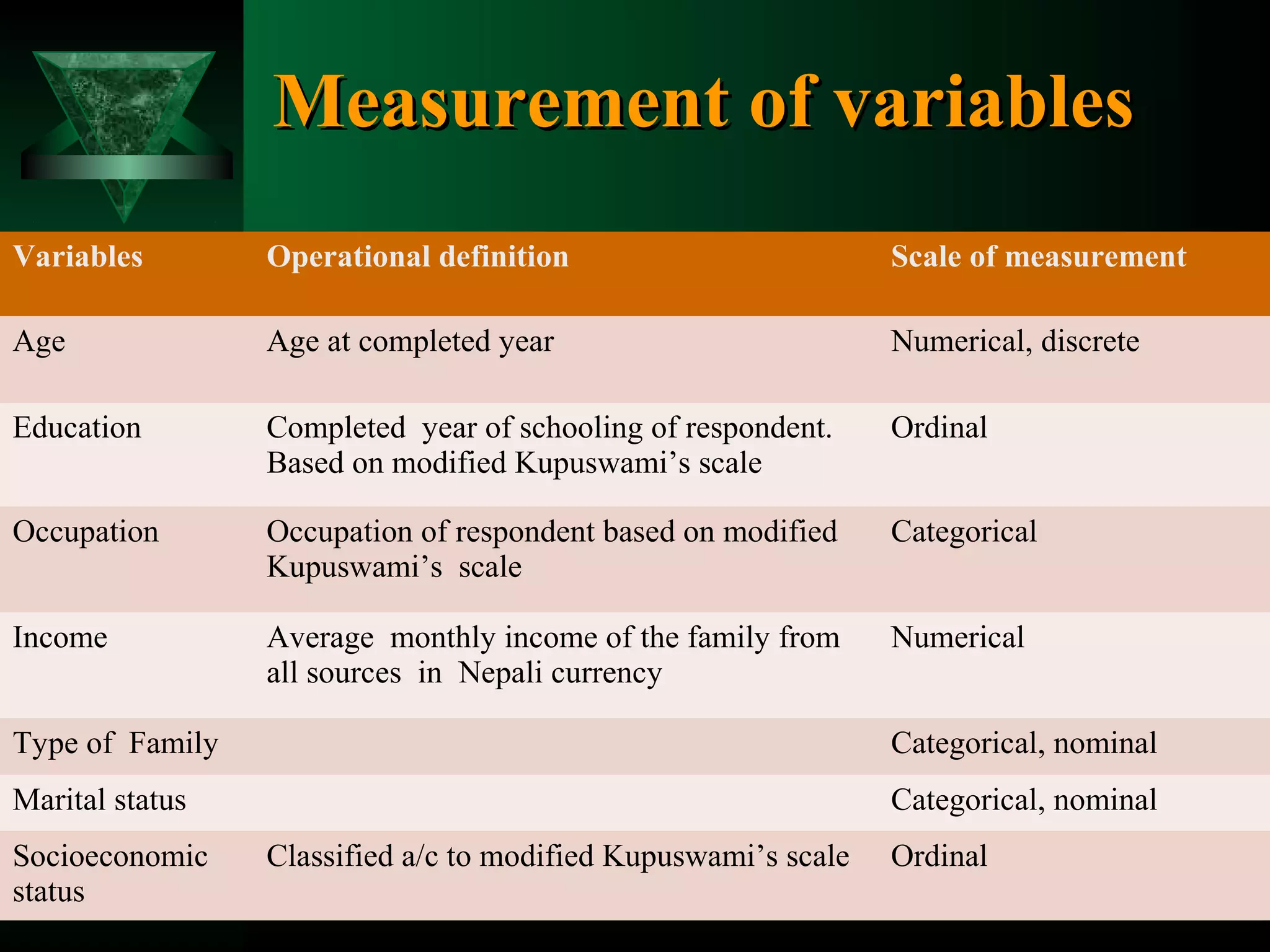
Measurement of variables
Variables

Operational definition

Scale of measurement

Age

Age at completed year

Numerical, discrete

Education

Completed year of schooling of respondent.
Based on modified Kupuswami’s scale

Ordinal

Occupation

Occupation of respondent based on modified
Kupuswami’s scale

Categorical

Income

Average monthly income of the family from
all sources in Nepali currency

Numerical

Type of Family

Categorical, nominal

Marital status

Categorical, nominal

Socioeconomic
status

Classified a/c to modified Kupuswami’s scale

Ordinal
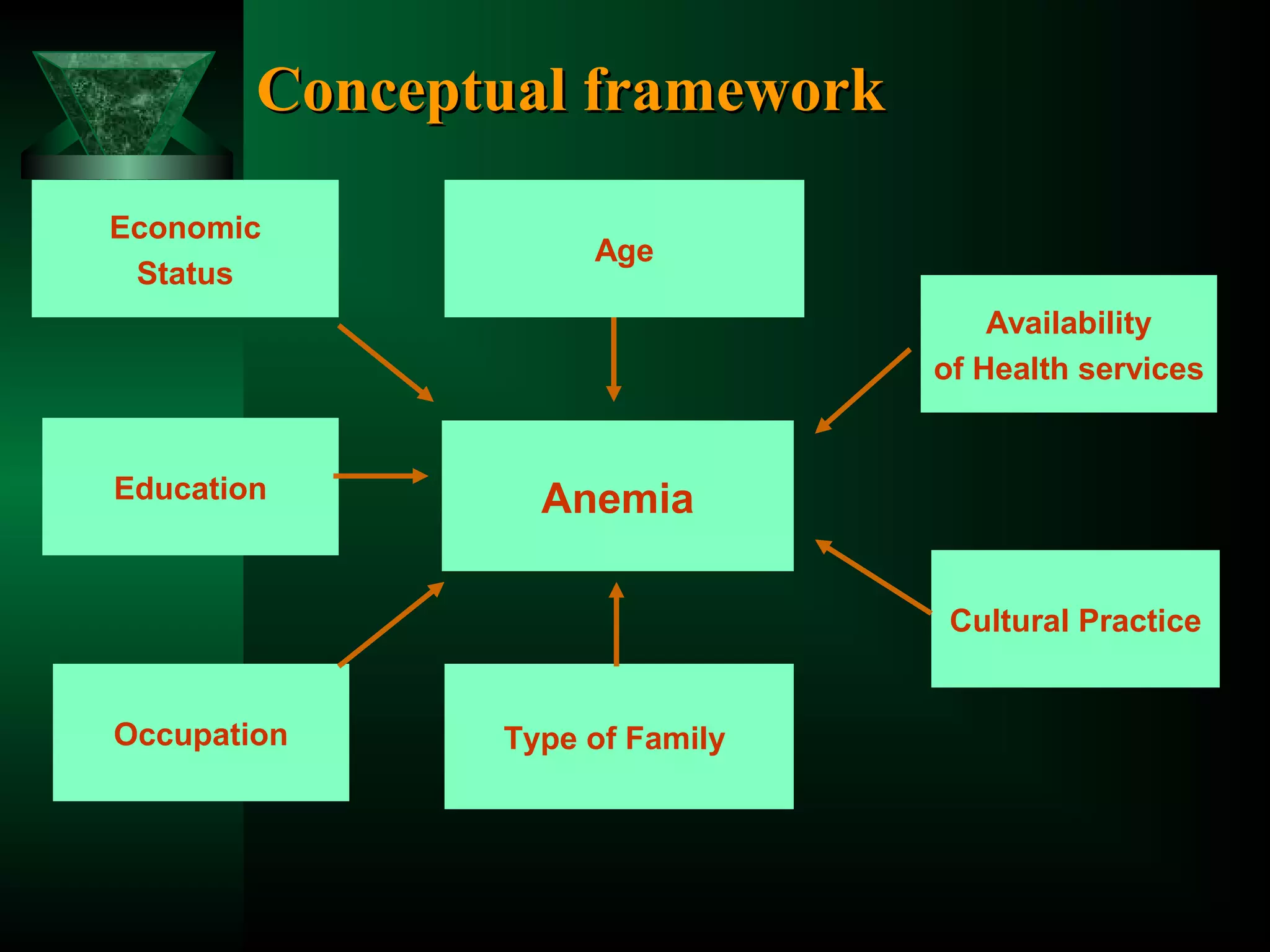
Conceptual framework
Economic
Status

Age
Availability
of Health services

Education

Anemia
Cultural Practice

Occupation

Type of Family
Methodology
Study design
 Descriptive and cross-sectional
Study area
 Slum area of selected municipality of Eastern Nepal
Study population
 The total adolescent of slum community living in
selected municipality
Methodology……
Sampling frame
 List of all adolescents of slum area of selected
municipality
Sampling unit
 Sampling unit was taken as individual adolescent
aged between 10-19 years.
Sample size
 Using formula 4pq/L2
Methodology……
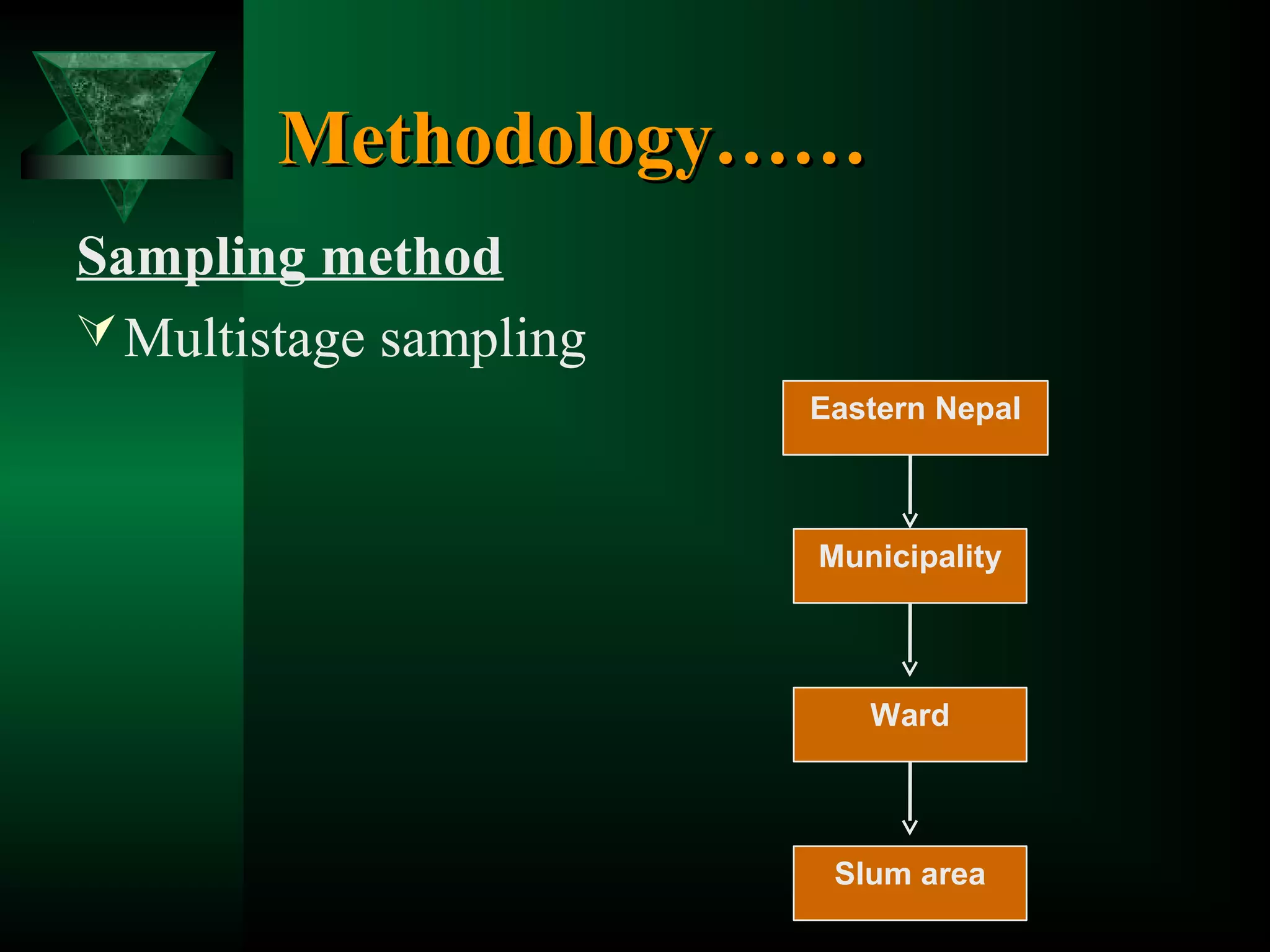
Sampling method
 Multistage sampling
Eastern Nepal

Municipality

Ward

Slum area
Methodology……
Data Tools and Techniques: Semi-structured questionnaires will be used for
interview, haemoglobinometer will be used for Hb
test.
Validity of tools : Pre-testing of tools will be done before the data
collection in the similar setting.
 Analysis of Data: Mean, Median, S.D. Chi square
test
Delimitation of study
Adolescent girls from 10 to 19 years only from
selected slum area will be included in the study.
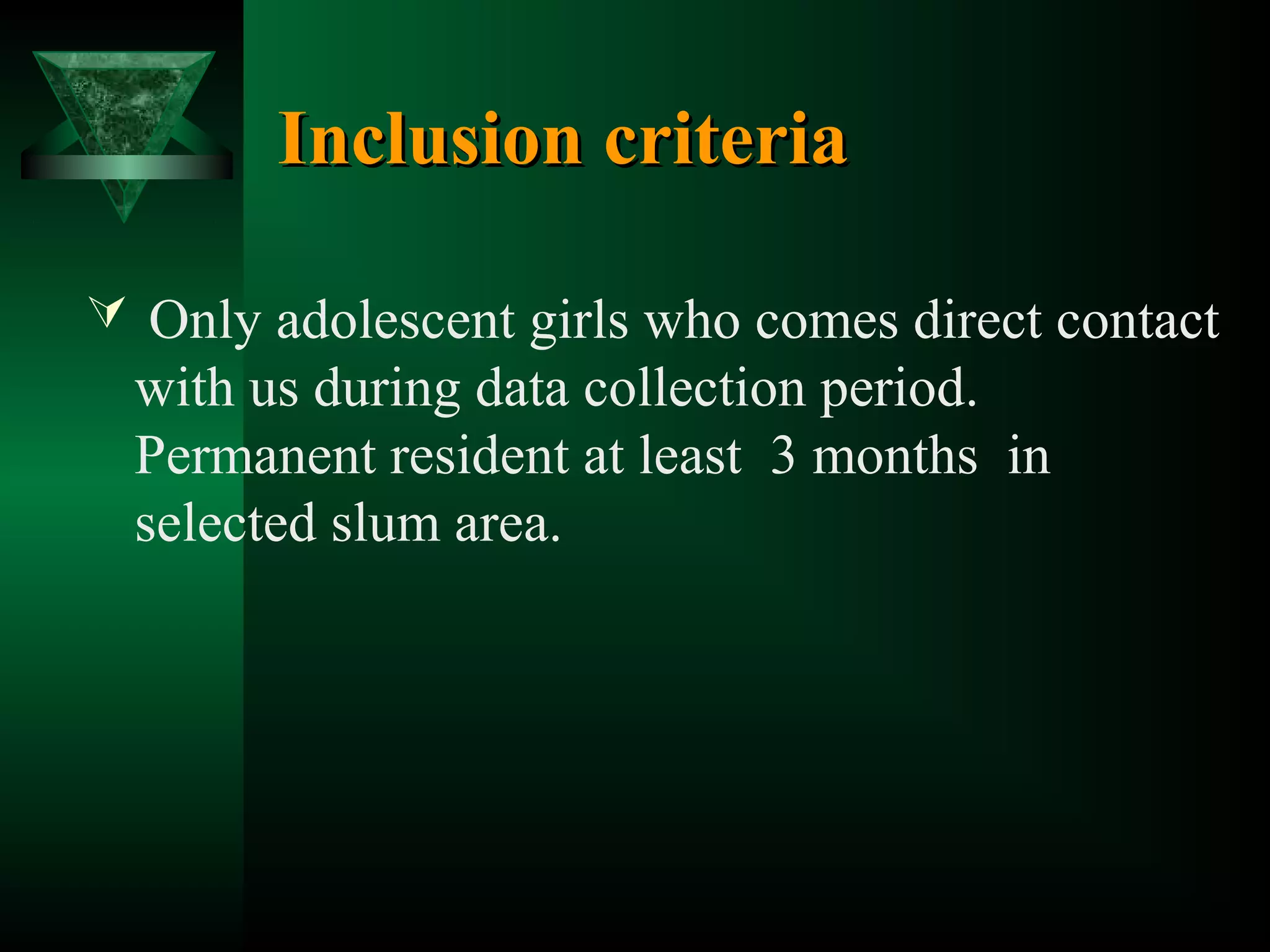
Inclusion criteria
 Only adolescent girls who comes direct contact

with us during data collection period.
Permanent resident at least 3 months in
selected slum area.
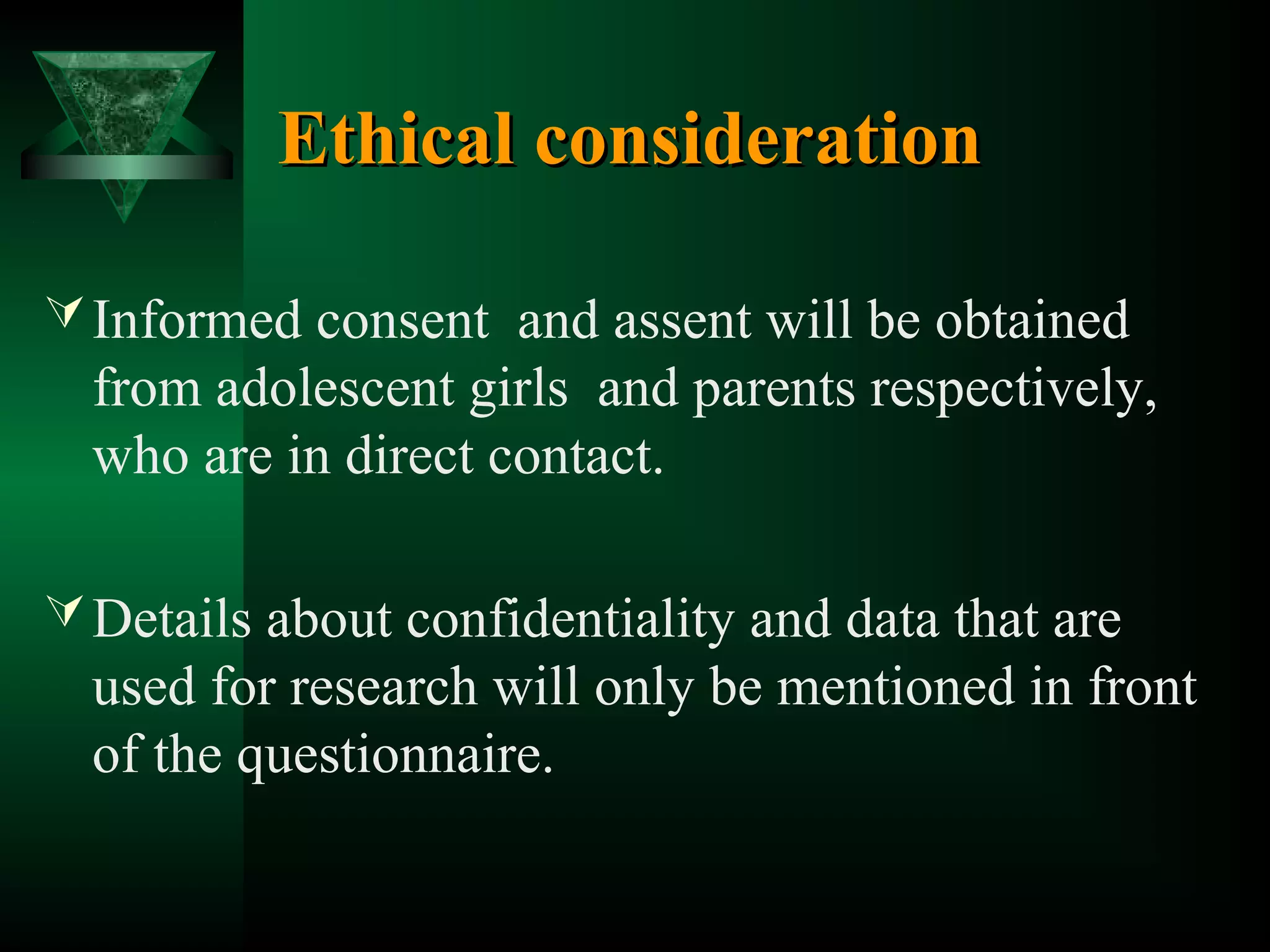
Ethical consideration
 Informed consent and assent will be obtained

from adolescent girls and parents respectively,
who are in direct contact.
 Details about confidentiality and data that are

used for research will only be mentioned in front
of the questionnaire.
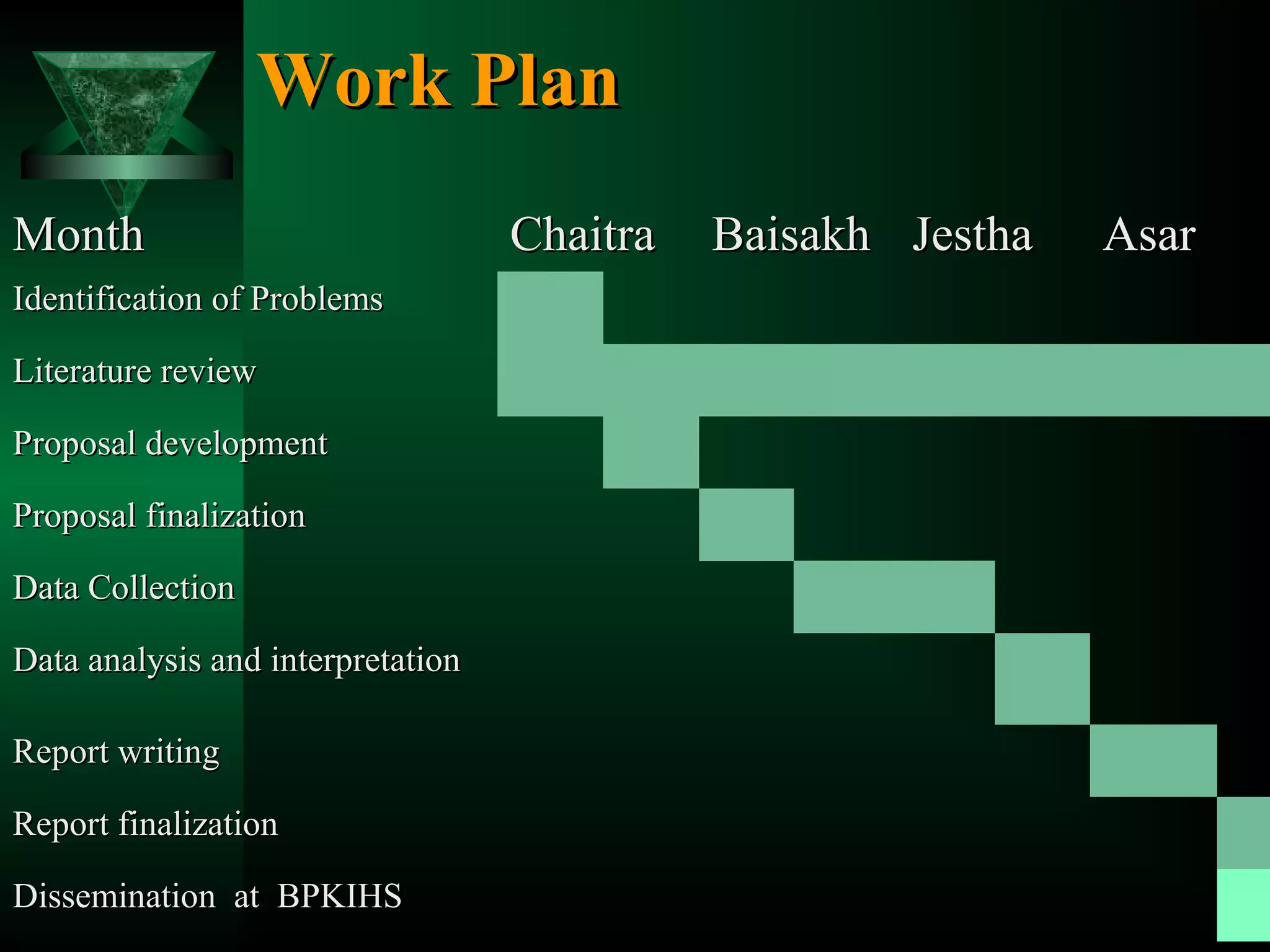
Work Plan
Month
Identification of Problems
Literature review
Proposal development
Proposal finalization
Data Collection
Data analysis and interpretation
Report writing
Report finalization
Dissemination at BPKIHS

Chaitra

Baisakh Jestha

Asar
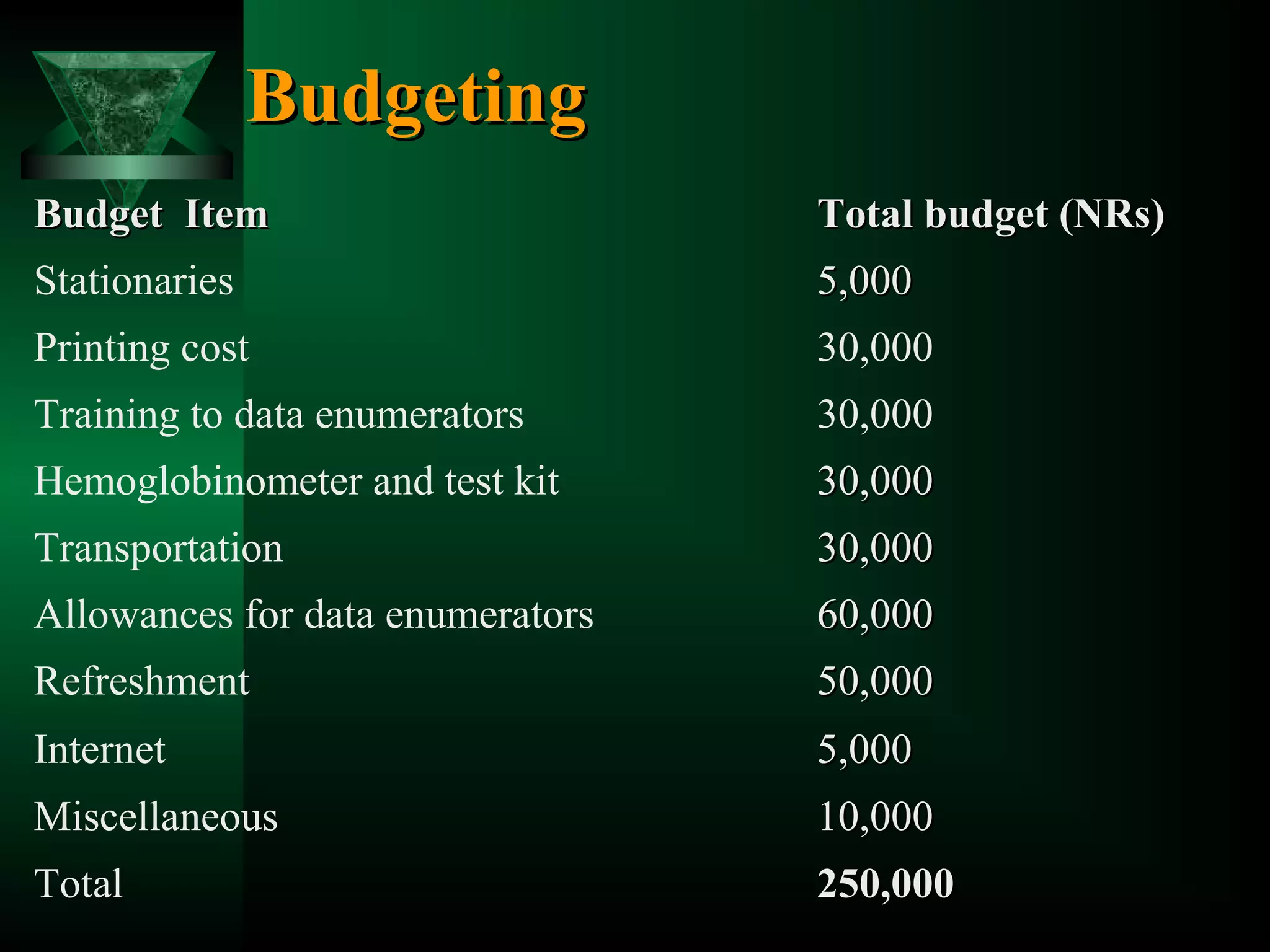
Budgeting
Budget Item

Total budget (NRs)

Stationaries

5,000

Printing cost

30,000

Training to data enumerators

30,000

Hemoglobinometer and test kit

30,000

Transportation

30,000

Allowances for data enumerators

60,000

Refreshment

50,000

Internet

5,000

Miscellaneous

10,000

Total

250,000
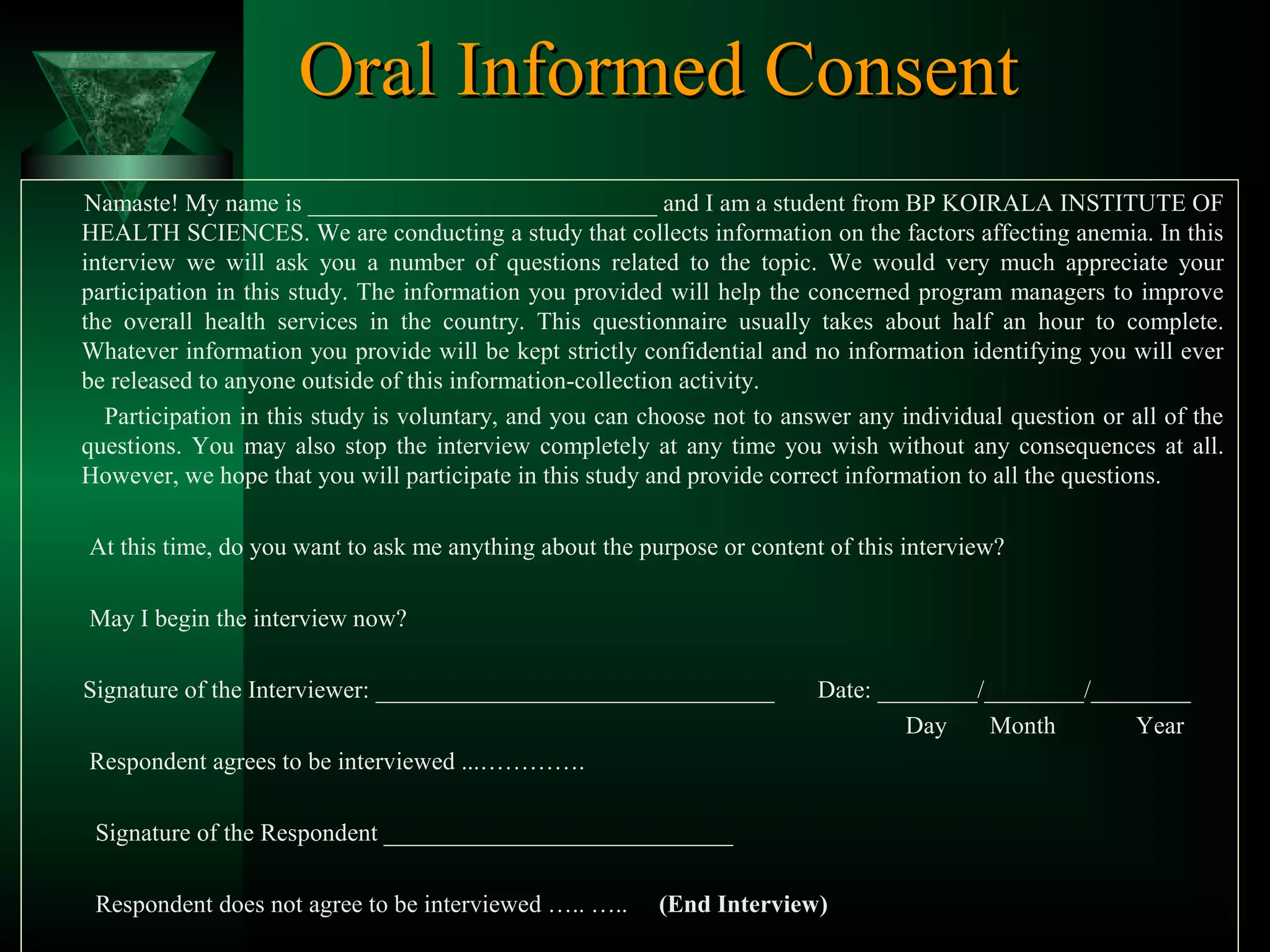
Oral Informed Consent
Namaste! My name is ____________________________ and I am a student from BP KOIRALA INSTITUTE OF
HEALTH SCIENCES. We are conducting a study that collects information on the factors affecting anemia. In this
interview we will ask you a number of questions related to the topic. We would very much appreciate your
participation in this study. The information you provided will help the concerned program managers to improve
the overall health services in the country. This questionnaire usually takes about half an hour to complete.
Whatever information you provide will be kept strictly confidential and no information identifying you will ever
be released to anyone outside of this information-collection activity.
Participation in this study is voluntary, and you can choose not to answer any individual question or all of the
questions. You may also stop the interview completely at any time you wish without any consequences at all.
However, we hope that you will participate in this study and provide correct information to all the questions.
At this time, do you want to ask me anything about the purpose or content of this interview?
May I begin the interview now?
Signature of the Interviewer: ________________________________

Date: ________/________/________
Day
Month
Year

Respondent agrees to be interviewed ...………….
Signature of the Respondent ____________________________
Respondent does not agree to be interviewed ….. …..

(End Interview)
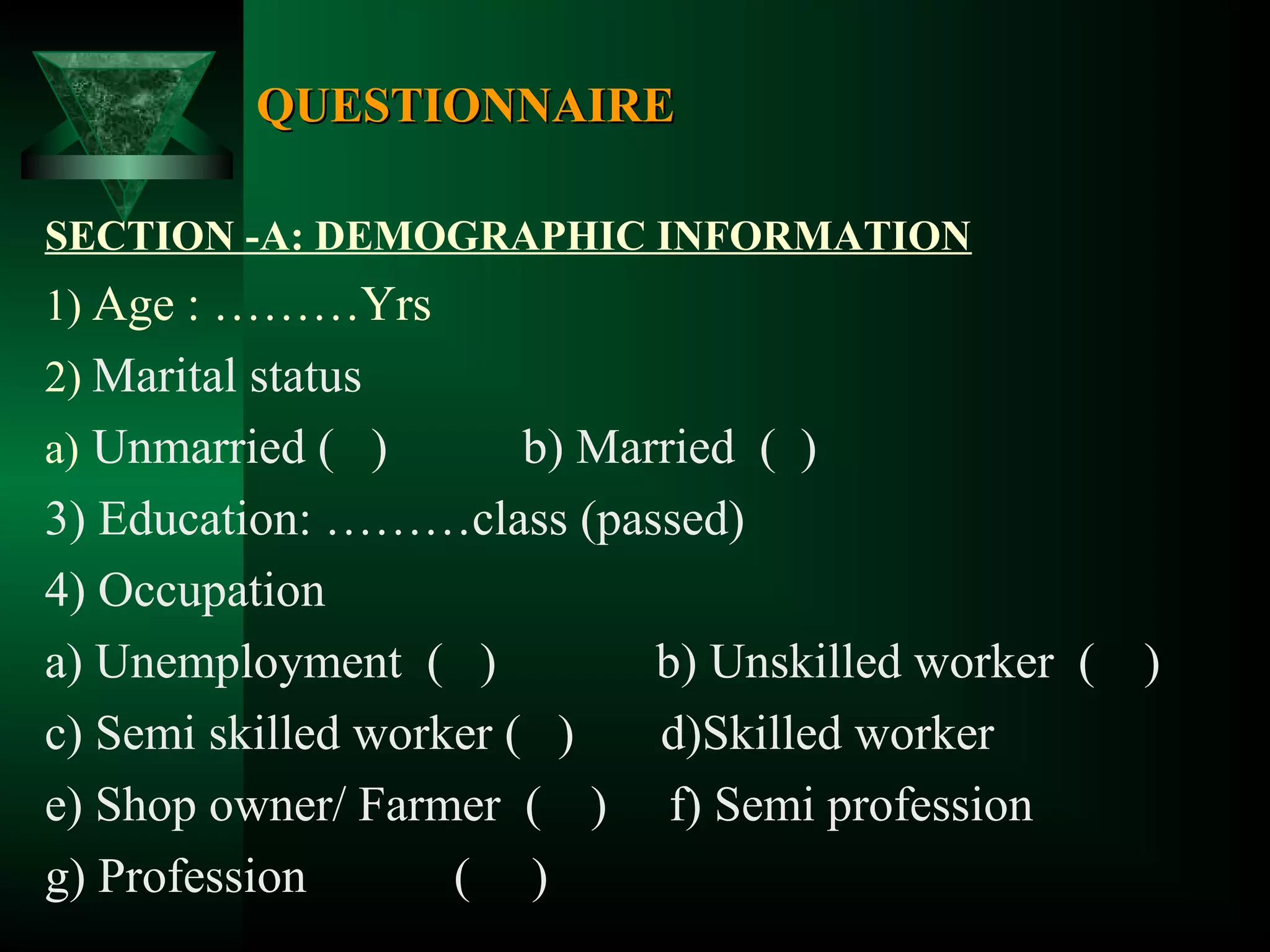
QUESTIONNAIRE
SECTION -A: DEMOGRAPHIC INFORMATION

1) Age : ………Yrs
2) Marital status
a) Unmarried ( )

b) Married ( )
3) Education: ………class (passed)
4) Occupation
a) Unemployment ( )
b) Unskilled worker ( )
c) Semi skilled worker ( )
d)Skilled worker
e) Shop owner/ Farmer ( ) f) Semi profession
g) Profession
( )
Thank you

Research proposal anemia

  • 1.
    Research proposal Group “5” Angira Chy,Bishnu Mainali, Durga Chaulagai, Ranjana Chy, Rashmi Niroula, TulshaDahal
  • 2.
    Research Title PREVALENCE OFANAEMIA AMONG THE ADOLESCENT GIRLS IN SLUM AREA OF EASTERN NEPAL
  • 3.
    Significance of thestudy  Number of interventions have been put in place to address anemia in women.  It is a common public health problem in Nepal.  Anemia is one of the most prevalent conditions (4260%) among adolescent in Nepal.  A few studies carried out among adolescent girls in Nepal. So this study may help to some extent in policy making and programme implementation
  • 4.
    Objectives To find outprevalence of anemia among the adolescent girls in slum area of eastern Nepal To find out association between prevalence of anemia and selected demographical variables.
  • 5.
    Hypothesis H0 :There isno association between anemia and selected demographical variables. H1 : There is association between anemia and selected demographical variables.
  • 6.
    Variables Dependent variables  Anaemia Independentvariables  Age  Economic status  Educational status / literacy  Occupation  Type of Family  Cultural practice  Availability of health services
  • 7.
    Measurement of variables Variables Operationaldefinition Scale of measurement Age Age at completed year Numerical, discrete Education Completed year of schooling of respondent. Based on modified Kupuswami’s scale Ordinal Occupation Occupation of respondent based on modified Kupuswami’s scale Categorical Income Average monthly income of the family from all sources in Nepali currency Numerical Type of Family Categorical, nominal Marital status Categorical, nominal Socioeconomic status Classified a/c to modified Kupuswami’s scale Ordinal
  • 8.
    Conceptual framework Economic Status Age Availability of Healthservices Education Anemia Cultural Practice Occupation Type of Family
  • 9.
    Methodology Study design  Descriptiveand cross-sectional Study area  Slum area of selected municipality of Eastern Nepal Study population  The total adolescent of slum community living in selected municipality
  • 10.
    Methodology…… Sampling frame  Listof all adolescents of slum area of selected municipality Sampling unit  Sampling unit was taken as individual adolescent aged between 10-19 years. Sample size  Using formula 4pq/L2
  • 11.
    Methodology…… Sampling method  Multistagesampling Eastern Nepal Municipality Ward Slum area
  • 12.
    Methodology…… Data Tools andTechniques: Semi-structured questionnaires will be used for interview, haemoglobinometer will be used for Hb test. Validity of tools : Pre-testing of tools will be done before the data collection in the similar setting.  Analysis of Data: Mean, Median, S.D. Chi square test
  • 13.
    Delimitation of study Adolescentgirls from 10 to 19 years only from selected slum area will be included in the study.
  • 14.
    Inclusion criteria  Onlyadolescent girls who comes direct contact with us during data collection period. Permanent resident at least 3 months in selected slum area.
  • 15.
    Ethical consideration  Informedconsent and assent will be obtained from adolescent girls and parents respectively, who are in direct contact.  Details about confidentiality and data that are used for research will only be mentioned in front of the questionnaire.
  • 16.
    Work Plan Month Identification ofProblems Literature review Proposal development Proposal finalization Data Collection Data analysis and interpretation Report writing Report finalization Dissemination at BPKIHS Chaitra Baisakh Jestha Asar
  • 17.
    Budgeting Budget Item Total budget(NRs) Stationaries 5,000 Printing cost 30,000 Training to data enumerators 30,000 Hemoglobinometer and test kit 30,000 Transportation 30,000 Allowances for data enumerators 60,000 Refreshment 50,000 Internet 5,000 Miscellaneous 10,000 Total 250,000
  • 18.
    Oral Informed Consent Namaste!My name is ____________________________ and I am a student from BP KOIRALA INSTITUTE OF HEALTH SCIENCES. We are conducting a study that collects information on the factors affecting anemia. In this interview we will ask you a number of questions related to the topic. We would very much appreciate your participation in this study. The information you provided will help the concerned program managers to improve the overall health services in the country. This questionnaire usually takes about half an hour to complete. Whatever information you provide will be kept strictly confidential and no information identifying you will ever be released to anyone outside of this information-collection activity. Participation in this study is voluntary, and you can choose not to answer any individual question or all of the questions. You may also stop the interview completely at any time you wish without any consequences at all. However, we hope that you will participate in this study and provide correct information to all the questions. At this time, do you want to ask me anything about the purpose or content of this interview? May I begin the interview now? Signature of the Interviewer: ________________________________ Date: ________/________/________ Day Month Year Respondent agrees to be interviewed ...…………. Signature of the Respondent ____________________________ Respondent does not agree to be interviewed ….. ….. (End Interview)
  • 19.
    QUESTIONNAIRE SECTION -A: DEMOGRAPHICINFORMATION 1) Age : ………Yrs 2) Marital status a) Unmarried ( ) b) Married ( ) 3) Education: ………class (passed) 4) Occupation a) Unemployment ( ) b) Unskilled worker ( ) c) Semi skilled worker ( ) d)Skilled worker e) Shop owner/ Farmer ( ) f) Semi profession g) Profession ( )
  • 21.