




To Our
Presentation
Group name- Green Belt
Group Member & ID
Md. Hashibul Hossain (G. Leader) - PG 11-30-14-019
Dr. Sumi Saha - PG 11-30-14-003
Dr. Fateha Begum - PG 11-30-14-032
Dr. Ishrat Raihan - PG 11-30-14-033
Dr. Nusrat Jahan - PG 11-30-14-040
Shanur Zinia Parvin - PG 11-30-14-041
Harej Al Mamun - PG 11-30-14-035
Md. Masum Billah - PG 11-30-14-020
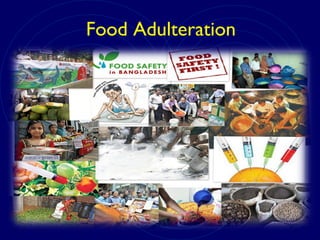
Food Adulteration
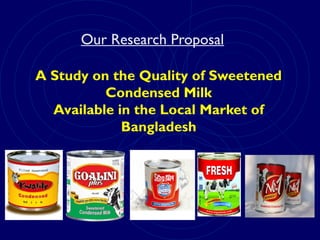
A Study on the Quality of Sweetened
Condensed Milk
Available in the Local Market of
Bangladesh
Our Research Proposal
Condensed milk is cow's milk from which
water has been removed. It is most
often found in the form of sweetened
condensed milk, with sugar added, and
the two terms "condensed milk" and
"sweetened condensed milk" are often
used synonymously today.
Condensed milk
Introduction
Food habit of common people is changing. They
prefer more healthy delicious foods form fresh
raw milk.
The condensed milk industry did not develop in
the same way, as did the ice cream industry,
that is, by successive, accidental or incidental
practices. Many workers attempted to improve
the quality of condensed milk .
The quality was designed in accordance with the
condensed milk manufacturing procedure
discovered first by scientist Gail Borden in 1896.
Three years after it first emerged that condensed
milk produced by Bangladeshi manufacturers
contained little or no milk and was in fact
condensed vegetable fat. the companies are
continuing to supply their spurious product to
the market on the strength of a High Court stay
order on legal action against them.
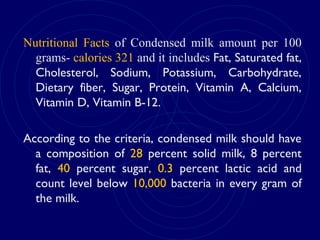
Nutritional Facts of Condensed milk amount per 100
grams- calories 321 and it includes Fat, Saturated fat,
Cholesterol, Sodium, Potassium, Carbohydrate,
Dietary fiber, Sugar, Protein, Vitamin A, Calcium,
Vitamin D, Vitamin B-12.
According to the criteria, condensed milk should have
a composition of 28 percent solid milk, 8 percent
fat, 40 percent sugar, 0.3 percent lactic acid and
count level below 10,000 bacteria in every gram of
the milk.
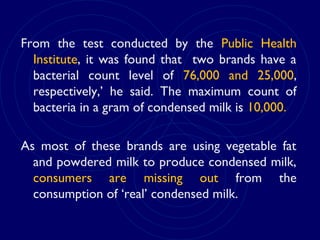
From the test conducted by the Public Health
Institute, it was found that two brands have a
bacterial count level of 76,000 and 25,000,
respectively,’ he said. The maximum count of
bacteria in a gram of condensed milk is 10,000.
As most of these brands are using vegetable fat
and powdered milk to produce condensed milk,
consumers are missing out from the
consumption of ‘real’ condensed milk.
Effects on Health
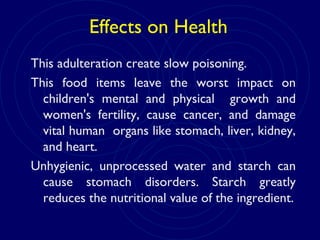
This adulteration create slow poisoning.
This food items leave the worst impact on
children's mental and physical growth and
women's fertility, cause cancer, and damage
vital human organs like stomach, liver, kidney,
and heart.
Unhygienic, unprocessed water and starch can
cause stomach disorders. Starch greatly
reduces the nutritional value of the ingredient.
Statement of the problem
The high court verdict was against the sale
and production of this powdered milk. ‘We
still cannot tell whether the company abided
by the high court verdict,’ says one CAB
official. Along with powdered milk, the
brands are using Hoya powder, water, sugar,
artificial color, flavor and vegetable fat to
produce condensed milk.
Currently, 7,68,000 cans of
condensed milk are sold daily. ‘The
daily demand shows the massive
consumption of condensed milk
and thus the immense health
hazard being faced by the nation,’
says one CAB.
Statement of the problem
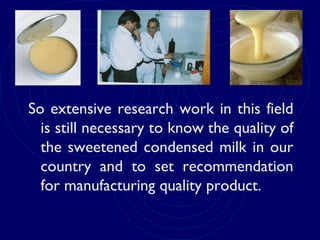
So extensive research work in this field
is still necessary to know the quality of
the sweetened condensed milk in our
country and to set recommendation
for manufacturing quality product.
General Objective
To prevent adulteration of sweetened
condensed milk.
To inform the consumers about the quality
of sweetened condensed milk they are
consuming the local markets.
Specific Objective
(i) To evaluate the physical, chemical and
microbiological qualities of sweetened
condensed milk available in local market.
(ii)To compare the quality of different
brands of sweetened condensed milk on
the basis of physical chemical and
microbiological parameters.
Review of Literature
1. Bangladesh Journal of Scientific and Industrial Research
2. www.banglajol.info
3. www.sos-arsenic.net/english/environment/food-poison.html
4. www.equitybd.org
5. BSTI. (2000) BS specification for sweetened condensed milk.
Bangladesh Standard and Testing Institution, Dhaka.
6. http://www.thedailystar.net/newDesign/news-details.php?
nid=198096
7. www.journalofdairyscience.org
8. Wikipedia
Any Question

Research Proposal about Food Adulteration

  • 1.
  • 2.
    Group name- GreenBelt Group Member & ID Md. Hashibul Hossain (G. Leader) - PG 11-30-14-019 Dr. Sumi Saha - PG 11-30-14-003 Dr. Fateha Begum - PG 11-30-14-032 Dr. Ishrat Raihan - PG 11-30-14-033 Dr. Nusrat Jahan - PG 11-30-14-040 Shanur Zinia Parvin - PG 11-30-14-041 Harej Al Mamun - PG 11-30-14-035 Md. Masum Billah - PG 11-30-14-020
  • 3.
  • 4.
    A Study onthe Quality of Sweetened Condensed Milk Available in the Local Market of Bangladesh Our Research Proposal
  • 5.
    Condensed milk iscow's milk from which water has been removed. It is most often found in the form of sweetened condensed milk, with sugar added, and the two terms "condensed milk" and "sweetened condensed milk" are often used synonymously today. Condensed milk
  • 6.
    Introduction Food habit ofcommon people is changing. They prefer more healthy delicious foods form fresh raw milk. The condensed milk industry did not develop in the same way, as did the ice cream industry, that is, by successive, accidental or incidental practices. Many workers attempted to improve the quality of condensed milk .
  • 7.
    The quality wasdesigned in accordance with the condensed milk manufacturing procedure discovered first by scientist Gail Borden in 1896. Three years after it first emerged that condensed milk produced by Bangladeshi manufacturers contained little or no milk and was in fact condensed vegetable fat. the companies are continuing to supply their spurious product to the market on the strength of a High Court stay order on legal action against them.
  • 8.
    Nutritional Facts ofCondensed milk amount per 100 grams- calories 321 and it includes Fat, Saturated fat, Cholesterol, Sodium, Potassium, Carbohydrate, Dietary fiber, Sugar, Protein, Vitamin A, Calcium, Vitamin D, Vitamin B-12. According to the criteria, condensed milk should have a composition of 28 percent solid milk, 8 percent fat, 40 percent sugar, 0.3 percent lactic acid and count level below 10,000 bacteria in every gram of the milk.
  • 9.
    From the testconducted by the Public Health Institute, it was found that two brands have a bacterial count level of 76,000 and 25,000, respectively,’ he said. The maximum count of bacteria in a gram of condensed milk is 10,000. As most of these brands are using vegetable fat and powdered milk to produce condensed milk, consumers are missing out from the consumption of ‘real’ condensed milk.
  • 10.
    Effects on Health Thisadulteration create slow poisoning. This food items leave the worst impact on children's mental and physical growth and women's fertility, cause cancer, and damage vital human organs like stomach, liver, kidney, and heart. Unhygienic, unprocessed water and starch can cause stomach disorders. Starch greatly reduces the nutritional value of the ingredient.
  • 11.
    Statement of theproblem The high court verdict was against the sale and production of this powdered milk. ‘We still cannot tell whether the company abided by the high court verdict,’ says one CAB official. Along with powdered milk, the brands are using Hoya powder, water, sugar, artificial color, flavor and vegetable fat to produce condensed milk.
  • 12.
    Currently, 7,68,000 cansof condensed milk are sold daily. ‘The daily demand shows the massive consumption of condensed milk and thus the immense health hazard being faced by the nation,’ says one CAB. Statement of the problem
  • 13.
    So extensive researchwork in this field is still necessary to know the quality of the sweetened condensed milk in our country and to set recommendation for manufacturing quality product.
  • 14.
    General Objective To preventadulteration of sweetened condensed milk. To inform the consumers about the quality of sweetened condensed milk they are consuming the local markets.
  • 15.
    Specific Objective (i) Toevaluate the physical, chemical and microbiological qualities of sweetened condensed milk available in local market. (ii)To compare the quality of different brands of sweetened condensed milk on the basis of physical chemical and microbiological parameters.
  • 16.
    Review of Literature 1.Bangladesh Journal of Scientific and Industrial Research 2. www.banglajol.info 3. www.sos-arsenic.net/english/environment/food-poison.html 4. www.equitybd.org 5. BSTI. (2000) BS specification for sweetened condensed milk. Bangladesh Standard and Testing Institution, Dhaka. 6. http://www.thedailystar.net/newDesign/news-details.php? nid=198096 7. www.journalofdairyscience.org 8. Wikipedia
  • 18.