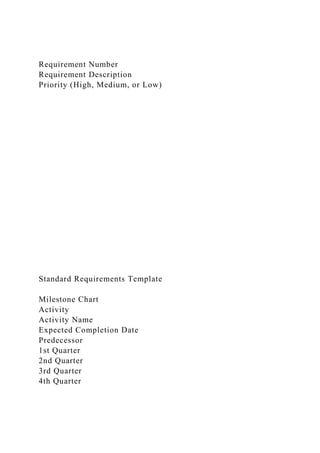
Requirement Number
Requirement Description
Priority (High, Medium, or Low)
Standard Requirements Template
Milestone Chart
Activity
Activity Name
Expected Completion Date
Predecessor
1st Quarter
2nd Quarter
3rd Quarter
4th Quarter
Jan
Feb
Mar
Apr
May
Jun
Jul
Aug
Sep
Oct
Nov
Dec
1
2
3
= Expected completion date
= Actual completion date
QSO 640 Milestone Two Guidelines and Rubric
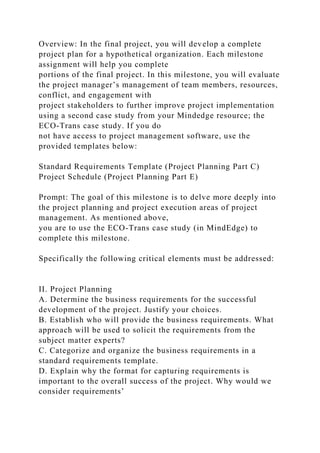
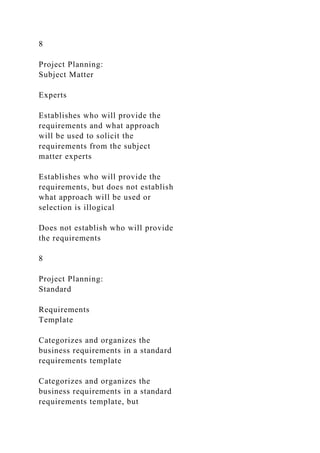
Overview: In the final project, you will develop a complete
project plan for a hypothetical organization. Each milestone
assignment will help you complete
portions of the final project. In this milestone, you will evaluate
the project manager’s management of team members, resources,
conflict, and engagement with
project stakeholders to further improve project implementation
using a second case study from your Mindedge resource; the
ECO-Trans case study. If you do
not have access to project management software, use the
provided templates below:
Standard Requirements Template (Project Planning Part C)
Project Schedule (Project Planning Part E)
Prompt: The goal of this milestone is to delve more deeply into
the project planning and project execution areas of project
management. As mentioned above,
you are to use the ECO-Trans case study (in MindEdge) to
complete this milestone.
Specifically the following critical elements must be addressed:
II. Project Planning
A. Determine the business requirements for the successful
development of the project. Justify your choices.
B. Establish who will provide the business requirements. What
approach will be used to solicit the requirements from the
subject matter experts?
C. Categorize and organize the business requirements in a
standard requirements template.
D. Explain why the format for capturing requirements is
important to the overall success of the project. Why would we
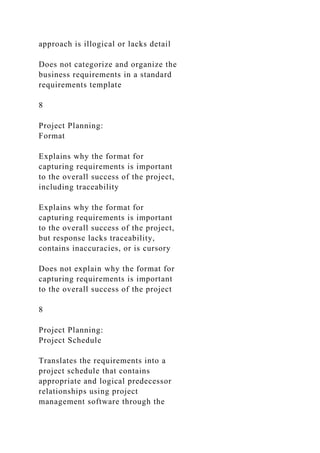
consider requirements’
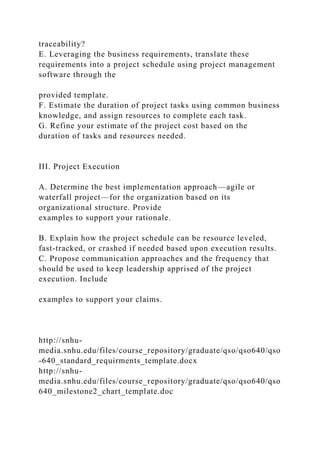
traceability?
E. Leveraging the business requirements, translate these
requirements into a project schedule using project management
software through the
provided template.
F. Estimate the duration of project tasks using common business
knowledge, and assign resources to complete each task.
G. Refine your estimate of the project cost based on the
duration of tasks and resources needed.
III. Project Execution
A. Determine the best implementation approach—agile or
waterfall project—for the organization based on its
organizational structure. Provide
examples to support your rationale.
B. Explain how the project schedule can be resource leveled,
fast-tracked, or crashed if needed based upon execution results.
C. Propose communication approaches and the frequency that
should be used to keep leadership apprised of the project
execution. Include
examples to support your claims.
http://snhu-
media.snhu.edu/files/course_repository/graduate/qso/qso640/qso
-640_standard_requirments_template.docx
http://snhu-
media.snhu.edu/files/course_repository/graduate/qso/qso640/qso
640_milestone2_chart_template.doc
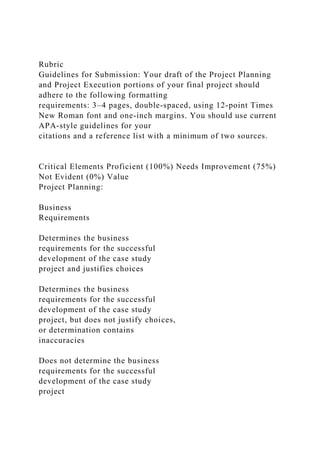
Rubric
Guidelines for Submission: Your draft of the Project Planning
and Project Execution portions of your final project should
adhere to the following formatting
requirements: 3–4 pages, double-spaced, using 12-point Times
New Roman font and one-inch margins. You should use current
APA-style guidelines for your
citations and a reference list with a minimum of two sources.
Critical Elements Proficient (100%) Needs Improvement (75%)
Not Evident (0%) Value
Project Planning:
Business
Requirements
Determines the business
requirements for the successful
development of the case study
project and justifies choices
Determines the business
requirements for the successful
development of the case study
project, but does not justify choices,
or determination contains
inaccuracies
Does not determine the business
requirements for the successful
development of the case study
project
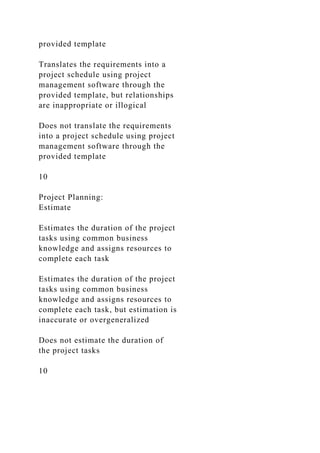
8
Project Planning:
Subject Matter
Experts
Establishes who will provide the
requirements and what approach
will be used to solicit the
requirements from the subject
matter experts
Establishes who will provide the
requirements, but does not establish
what approach will be used or
selection is illogical
Does not establish who will provide
the requirements
8
Project Planning:
Standard
Requirements
Template
Categorizes and organizes the
business requirements in a standard
requirements template
Categorizes and organizes the
business requirements in a standard
requirements template, but
approach is illogical or lacks detail
Does not categorize and organize the
business requirements in a standard
requirements template
8
Project Planning:
Format
Explains why the format for
capturing requirements is important
to the overall success of the project,
including traceability
Explains why the format for
capturing requirements is important
to the overall success of the project,
but response lacks traceability,
contains inaccuracies, or is cursory
Does not explain why the format for
capturing requirements is important
to the overall success of the project
8
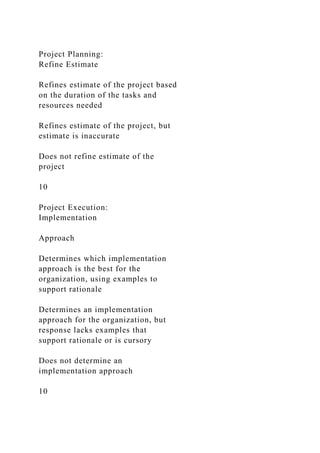
Project Planning:
Project Schedule
Translates the requirements into a
project schedule that contains
appropriate and logical predecessor
relationships using project
management software through the
provided template
Translates the requirements into a
project schedule using project
management software through the
provided template, but relationships
are inappropriate or illogical
Does not translate the requirements
into a project schedule using project
management software through the
provided template
10
Project Planning:
Estimate
Estimates the duration of the project
tasks using common business
knowledge and assigns resources to
complete each task
Estimates the duration of the project
tasks using common business
knowledge and assigns resources to
complete each task, but estimation is
inaccurate or overgeneralized
Does not estimate the duration of
the project tasks
10
Project Planning:
Refine Estimate
Refines estimate of the project based
on the duration of the tasks and
resources needed
Refines estimate of the project, but
estimate is inaccurate
Does not refine estimate of the
project
10
Project Execution:
Implementation
Approach
Determines which implementation
approach is the best for the
organization, using examples to
support rationale
Determines an implementation
approach for the organization, but
response lacks examples that
support rationale or is cursory
Does not determine an
implementation approach
10
Project Execution:
Project Schedule
Explains how the project schedule
can be resource leveled, fast-tracked,
or crashed if needed based upon
execution results
Explains how the project schedule
can be resource leveled, fast-tracked,
or crashed, but response is
inaccurate or overgeneralized
Does not explain how the project
schedule can be resource leveled,
fast-tracked, or crashed
10
Project Execution:
Keep Leadership
Apprised
Proposes communication
approaches and frequency to keep
leadership apprised of the project
execution, using examples to support
claims
Proposes communication
approaches and frequency to keep
leadership apprised of the project
execution, but response lacks
examples that support claims or is
inappropriate
Does not propose communication
approaches and frequency to keep
leadership apprised
10
Articulation of
Response
Submission has no major errors
related to citations, grammar,
spelling, syntax, or organization
Submission has major errors related
to citations, grammar, spelling,
syntax, or organization that
negatively impact readability and
articulation of main ideas
Submission has critical errors related
to citations, grammar, spelling,
syntax, or organization that prevent
understanding of ideas
8
Total 100%

Requirement NumberRequirement DescriptionPriority (High, Mediu.docx

  • 1.
    Requirement Number Requirement Description Priority(High, Medium, or Low) Standard Requirements Template Milestone Chart Activity Activity Name Expected Completion Date Predecessor 1st Quarter 2nd Quarter 3rd Quarter 4th Quarter
  • 2.
  • 3.
    3 = Expected completiondate = Actual completion date QSO 640 Milestone Two Guidelines and Rubric
  • 4.
    Overview: In thefinal project, you will develop a complete project plan for a hypothetical organization. Each milestone assignment will help you complete portions of the final project. In this milestone, you will evaluate the project manager’s management of team members, resources, conflict, and engagement with project stakeholders to further improve project implementation using a second case study from your Mindedge resource; the ECO-Trans case study. If you do not have access to project management software, use the provided templates below: Standard Requirements Template (Project Planning Part C) Project Schedule (Project Planning Part E) Prompt: The goal of this milestone is to delve more deeply into the project planning and project execution areas of project management. As mentioned above, you are to use the ECO-Trans case study (in MindEdge) to complete this milestone. Specifically the following critical elements must be addressed: II. Project Planning A. Determine the business requirements for the successful development of the project. Justify your choices. B. Establish who will provide the business requirements. What approach will be used to solicit the requirements from the subject matter experts? C. Categorize and organize the business requirements in a standard requirements template. D. Explain why the format for capturing requirements is important to the overall success of the project. Why would we consider requirements’
  • 5.
    traceability? E. Leveraging thebusiness requirements, translate these requirements into a project schedule using project management software through the provided template. F. Estimate the duration of project tasks using common business knowledge, and assign resources to complete each task. G. Refine your estimate of the project cost based on the duration of tasks and resources needed. III. Project Execution A. Determine the best implementation approach—agile or waterfall project—for the organization based on its organizational structure. Provide examples to support your rationale. B. Explain how the project schedule can be resource leveled, fast-tracked, or crashed if needed based upon execution results. C. Propose communication approaches and the frequency that should be used to keep leadership apprised of the project execution. Include examples to support your claims. http://snhu- media.snhu.edu/files/course_repository/graduate/qso/qso640/qso -640_standard_requirments_template.docx http://snhu- media.snhu.edu/files/course_repository/graduate/qso/qso640/qso 640_milestone2_chart_template.doc
  • 6.
    Rubric Guidelines for Submission:Your draft of the Project Planning and Project Execution portions of your final project should adhere to the following formatting requirements: 3–4 pages, double-spaced, using 12-point Times New Roman font and one-inch margins. You should use current APA-style guidelines for your citations and a reference list with a minimum of two sources. Critical Elements Proficient (100%) Needs Improvement (75%) Not Evident (0%) Value Project Planning: Business Requirements Determines the business requirements for the successful development of the case study project and justifies choices Determines the business requirements for the successful development of the case study project, but does not justify choices, or determination contains inaccuracies Does not determine the business requirements for the successful development of the case study project
  • 7.
    8 Project Planning: Subject Matter Experts Establisheswho will provide the requirements and what approach will be used to solicit the requirements from the subject matter experts Establishes who will provide the requirements, but does not establish what approach will be used or selection is illogical Does not establish who will provide the requirements 8 Project Planning: Standard Requirements Template Categorizes and organizes the business requirements in a standard requirements template Categorizes and organizes the business requirements in a standard requirements template, but
  • 8.
    approach is illogicalor lacks detail Does not categorize and organize the business requirements in a standard requirements template 8 Project Planning: Format Explains why the format for capturing requirements is important to the overall success of the project, including traceability Explains why the format for capturing requirements is important to the overall success of the project, but response lacks traceability, contains inaccuracies, or is cursory Does not explain why the format for capturing requirements is important to the overall success of the project 8 Project Planning: Project Schedule Translates the requirements into a project schedule that contains appropriate and logical predecessor relationships using project management software through the
  • 9.
    provided template Translates therequirements into a project schedule using project management software through the provided template, but relationships are inappropriate or illogical Does not translate the requirements into a project schedule using project management software through the provided template 10 Project Planning: Estimate Estimates the duration of the project tasks using common business knowledge and assigns resources to complete each task Estimates the duration of the project tasks using common business knowledge and assigns resources to complete each task, but estimation is inaccurate or overgeneralized Does not estimate the duration of the project tasks 10
  • 10.
    Project Planning: Refine Estimate Refinesestimate of the project based on the duration of the tasks and resources needed Refines estimate of the project, but estimate is inaccurate Does not refine estimate of the project 10 Project Execution: Implementation Approach Determines which implementation approach is the best for the organization, using examples to support rationale Determines an implementation approach for the organization, but response lacks examples that support rationale or is cursory Does not determine an implementation approach 10
  • 11.
    Project Execution: Project Schedule Explainshow the project schedule can be resource leveled, fast-tracked, or crashed if needed based upon execution results Explains how the project schedule can be resource leveled, fast-tracked, or crashed, but response is inaccurate or overgeneralized Does not explain how the project schedule can be resource leveled, fast-tracked, or crashed 10 Project Execution: Keep Leadership Apprised Proposes communication approaches and frequency to keep leadership apprised of the project execution, using examples to support claims Proposes communication approaches and frequency to keep leadership apprised of the project execution, but response lacks examples that support claims or is inappropriate
  • 12.
    Does not proposecommunication approaches and frequency to keep leadership apprised 10 Articulation of Response Submission has no major errors related to citations, grammar, spelling, syntax, or organization Submission has major errors related to citations, grammar, spelling, syntax, or organization that negatively impact readability and articulation of main ideas Submission has critical errors related to citations, grammar, spelling, syntax, or organization that prevent understanding of ideas 8 Total 100%