REPUTATION MANAGEMENT
REPUTATION
☺ The beliefs or opinions that are
generally held about someone or
something.
☺ Activities performed by individual or
organization which attempt to maintain
or create a certain frame of mind
regarding themselves in the public eye.
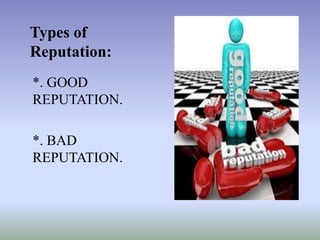
Types of
Reputation:
*. GOOD
REPUTATION.
*. BAD
REPUTATION.
Developing a Good Corporate Reputation
 Be obsessed with your
product or service.
 Deserve confidence.
 Be available.
 Admit mistakes.
 Engage people’s interest.
 Have something to say.
Benefits of Reputation
 Attracting customers
 Motivating employees
 Generating investment interest
 Increasing job satisfaction
 Garnering positive comments from financial
analysts
 Generating positive news media coverage
 Attracting top employee talent
 Improving financial performance
REPUTATION MANAGEMENT
 Reputation management is the practice of
understanding or influencing an individual’s or
business’s reputation.
 It is the practice of monitoring the reputation of an
individual or brand, addressing contents which are
damaging to it, and using customer feedback to get
feedback or early warning signals to reputation
problems.
 Most of the reputation management is focused on
pushing down negative search results.
Objectives of Reputation Management
 Maintain a favourable reputation in the workplace and
marketplace.
 Enhance and build the organization's good name and
reputation.
 Establish acceptable
practices, policies, procedures, systems and standards
that will avoid damage to the organization's reputation.
 Prepare and equip the management team to take full
responsibility for managing the company’s reputation.
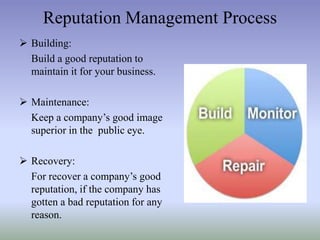
Reputation Management Process
 Building:
Build a good reputation to
maintain it for your business.
 Maintenance:
Keep a company’s good image
superior in the public eye.
 Recovery:
For recover a company’s good
reputation, if the company has
gotten a bad reputation for any
reason.
Most Reputed companies in India
• Survey by Nielsen Corporate
Image Monitor
• It represents the views of 1,790
people from different walks of
life, including policy
makers, influence groups, the
financial
community, investors, corporat
e peers and the general
consumer, across the top seven
metros.
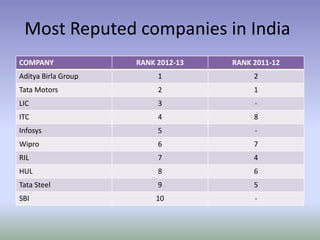
Most Reputed companies in India
COMPANY

RANK 2012-13

RANK 2011-12

Aditya Birla Group

1

2

Tata Motors

2

1

LIC

3

-

ITC

4

8

Infosys

5

-

Wipro

6

7

RIL

7

4

HUL

8

6

Tata Steel

9

5

SBI

10

-
Does a Good Reputation Protect Against
Reputational Damage?
• Benjamin Franklin: “It takes many
good deeds to build a good
reputation, and only one bad one to
lose it.”

• Donaldson: “The old saw that a
reputation takes years to
accumulate, but can be destroyed
overnight, is only half true. If you
have a good reputation, you are
given the benefit of the doubt. If a
company has a bad reputation, it
gets the detriment of the doubt.”
A Good reputation might help in 3
ways when bad things happen:
1. The reputational
capital hypothesis.
2. The shield
hypothesis.
3. The benefit-of-thedoubt hypothesis.
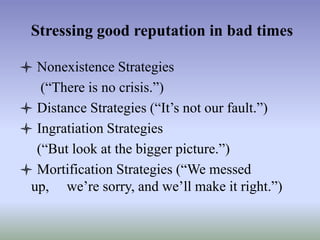
Stressing good reputation in bad times
 Nonexistence Strategies
(“There is no crisis.”)
 Distance Strategies (“It’s not our fault.”)
 Ingratiation Strategies
(“But look at the bigger picture.”)
 Mortification Strategies (“We messed
up, we’re sorry, and we’ll make it right.”)
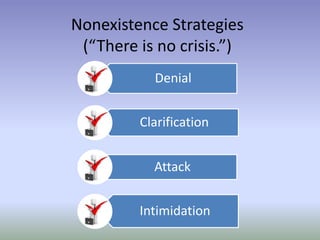
Nonexistence Strategies
(“There is no crisis.”)
Denial
Clarification
Attack
Intimidation
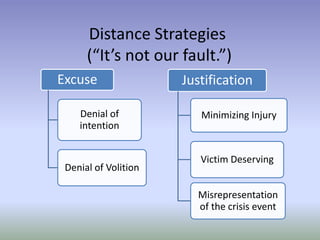
Distance Strategies
(“It’s not our fault.”)
Excuse
Denial of
intention

Denial of Volition

Justification
Minimizing Injury

Victim Deserving
Misrepresentation
of the crisis event
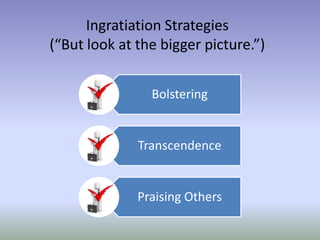
Ingratiation Strategies
(“But look at the bigger picture.”)
Bolstering

Transcendence

Praising Others
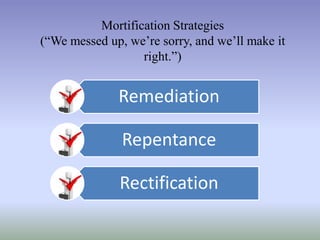
Mortification Strategies
(“We messed up, we’re sorry, and we’ll make it
right.”)

Remediation
Repentance
Rectification
Reputational Risk
• Reputational risk, often called reputation
risk, is a type of risk related to the
trustworthiness of business.
• Damage to a firm's reputation can result in lost
revenue or destruction of shareholder
value, even if the company is not found guilty
of a crime.
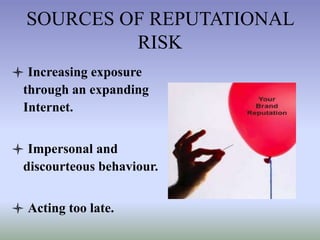
SOURCES OF REPUTATIONAL
RISK
 Increasing exposure
through an expanding
Internet.
 Impersonal and
discourteous behaviour.
 Acting too late.
CONCLUSION

Nothing is more
important to a business
than its reputation.
Without a good
reputation, success is
limited and a company’s
long-term future is cast
in doubt.
Thank You!

Presented By

Reputation management

  • 1.
  • 2.
    REPUTATION ☺ The beliefsor opinions that are generally held about someone or something. ☺ Activities performed by individual or organization which attempt to maintain or create a certain frame of mind regarding themselves in the public eye.
  • 3.
  • 4.
    Developing a GoodCorporate Reputation  Be obsessed with your product or service.  Deserve confidence.  Be available.  Admit mistakes.  Engage people’s interest.  Have something to say.
  • 5.
    Benefits of Reputation Attracting customers  Motivating employees  Generating investment interest  Increasing job satisfaction  Garnering positive comments from financial analysts  Generating positive news media coverage  Attracting top employee talent  Improving financial performance
  • 6.
    REPUTATION MANAGEMENT  Reputationmanagement is the practice of understanding or influencing an individual’s or business’s reputation.  It is the practice of monitoring the reputation of an individual or brand, addressing contents which are damaging to it, and using customer feedback to get feedback or early warning signals to reputation problems.  Most of the reputation management is focused on pushing down negative search results.
  • 7.
    Objectives of ReputationManagement  Maintain a favourable reputation in the workplace and marketplace.  Enhance and build the organization's good name and reputation.  Establish acceptable practices, policies, procedures, systems and standards that will avoid damage to the organization's reputation.  Prepare and equip the management team to take full responsibility for managing the company’s reputation.
  • 8.
    Reputation Management Process Building: Build a good reputation to maintain it for your business.  Maintenance: Keep a company’s good image superior in the public eye.  Recovery: For recover a company’s good reputation, if the company has gotten a bad reputation for any reason.
  • 9.
    Most Reputed companiesin India • Survey by Nielsen Corporate Image Monitor • It represents the views of 1,790 people from different walks of life, including policy makers, influence groups, the financial community, investors, corporat e peers and the general consumer, across the top seven metros.
  • 10.
    Most Reputed companiesin India COMPANY RANK 2012-13 RANK 2011-12 Aditya Birla Group 1 2 Tata Motors 2 1 LIC 3 - ITC 4 8 Infosys 5 - Wipro 6 7 RIL 7 4 HUL 8 6 Tata Steel 9 5 SBI 10 -
  • 11.
    Does a GoodReputation Protect Against Reputational Damage? • Benjamin Franklin: “It takes many good deeds to build a good reputation, and only one bad one to lose it.” • Donaldson: “The old saw that a reputation takes years to accumulate, but can be destroyed overnight, is only half true. If you have a good reputation, you are given the benefit of the doubt. If a company has a bad reputation, it gets the detriment of the doubt.”
  • 12.
    A Good reputationmight help in 3 ways when bad things happen: 1. The reputational capital hypothesis. 2. The shield hypothesis. 3. The benefit-of-thedoubt hypothesis.
  • 13.
    Stressing good reputationin bad times  Nonexistence Strategies (“There is no crisis.”)  Distance Strategies (“It’s not our fault.”)  Ingratiation Strategies (“But look at the bigger picture.”)  Mortification Strategies (“We messed up, we’re sorry, and we’ll make it right.”)
  • 14.
    Nonexistence Strategies (“There isno crisis.”) Denial Clarification Attack Intimidation
  • 15.
    Distance Strategies (“It’s notour fault.”) Excuse Denial of intention Denial of Volition Justification Minimizing Injury Victim Deserving Misrepresentation of the crisis event
  • 16.
    Ingratiation Strategies (“But lookat the bigger picture.”) Bolstering Transcendence Praising Others
  • 17.
    Mortification Strategies (“We messedup, we’re sorry, and we’ll make it right.”) Remediation Repentance Rectification
  • 18.
    Reputational Risk • Reputationalrisk, often called reputation risk, is a type of risk related to the trustworthiness of business. • Damage to a firm's reputation can result in lost revenue or destruction of shareholder value, even if the company is not found guilty of a crime.
  • 19.
    SOURCES OF REPUTATIONAL RISK Increasing exposure through an expanding Internet.  Impersonal and discourteous behaviour.  Acting too late.
  • 20.
    CONCLUSION Nothing is more importantto a business than its reputation. Without a good reputation, success is limited and a company’s long-term future is cast in doubt.
  • 21.