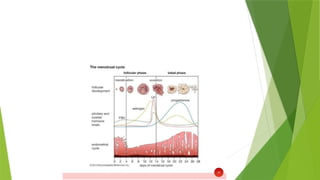
Menstrual cycle
physiology
Definition
The cyclic events that take place in a
rhythmic fashion during the reproductive
period of a woman’s life is called menstrual
cycle.
MC starts at the age of 12-15 years.
First occurrence of menstruation called
menarche
Permanent cessation of C is called
menopause(45-50 years)
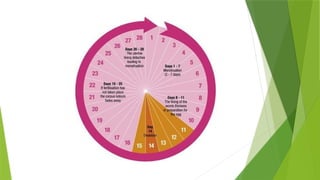
Duration of menstrual cycle- 28 days.
THE HYPOTHALAMIC-
PITUITARY-OVARIAN AXIS
The phases of the MC and ovulation are
regulated by interaction between
hypothalamus, anterior pituitary and ovaries
 • The interaction involves hormones.
Continued
ENDOCRINE GLAND
 Hypothalamus
 Anterior pituitary
 Ovaries
Hormones
 Gonadotrophin releasing hormone
 Follicular stimulating hormone
 Luteinising hormone
 Estrogen and progesterone
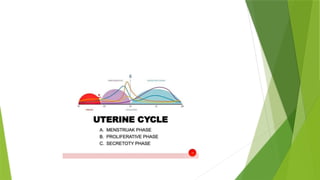
PHASES OF MENSTRUAL CYCLE
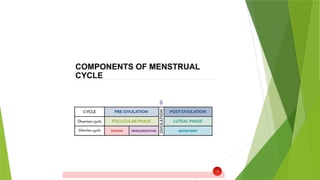
 There are two main components of the menstrual cycle :
 The changes that happens in the ovaries (Ovarian Cycle)
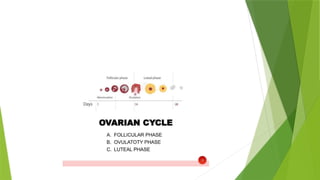
 The ovarian cycle is divided into three phases:
 Follicular, Ovulatory and Luteal.
 The variations that take place in the uterus (Uterine Cycle).
 The uterine cycle into three phases:
 Menstrual, Proliferative and Secretory.
Ovarian changes:
Two phases
‣ Follicular phase
 ‣ Luteal phase
FOLLICULAR PHASE
Follicular phase begins with menses on first day ofthe menstrual cycle and ends
with ovulation( Day 1to Day 14 of 28-days cycle)
At the beginning of menstrual cycle, GnRH (pulsatile
manner) > FSH and LH. FSH is responsible for the recruitment and growth of
several primordial follicle.
 Only one follicle on one of the ovaries reaches maturity (Graafian follicle)
which secretes estrogen.
FOLLICULAR PHASE CONT.
 Increase in estrogen level causes
 Negative feedback on the pituitary to stop FSH
 The uterine lining (endometrium) to grow thicker
OVULATORY PHASE
The estrogen peak stimulates secretion of LH,leading to the LH peak which leads
to thefollicle to burst open, releasing the mature ovum, a process called
ovulation
The remaining Graafian follicle forms Corpus luteum.
Ovulation occurs on day 14 of a 28-day cycle.
 High estrogen also suppress FSH secretion so no further follicles grow.
LUTEAL PHASE
After ovulation,LH levels remain elevated and cause the remnants of the follicle
to develop into a yellow body called the corpus luteum.
In addition to producing estrogen, the corpus luteum secretes a hormone called
progesterone.
 When progesterone reaches a high level it inhibits the secretion of LH leads to
degeneration of the corpus luteum (If fertilization does not take place).
LUTEAL PHASE CONT.
Degeneration of corpus luteum leads decrease in estrogen and progesterone
level and separation of the endometrium (menstruation).
Decrease in estrogen and progesterone level stimulates the hypothalamus to
secrete more Gnrh, a new cycle is started.
If fertilization and implantation occurs, placenta secretes human chorionic
gonadotropin hormone
 (hCG) which stimulates and maintain the corpus luteum. hCG leads to positive
urine pregnancy test.
SECRETORY PHASE Cont..
Ischemic Phase – on days 27 and 28, estrogen and progesterone levels fall
because the corpus luteum is no longer producing them.
Without these hormones to maintain the blood vessel network, the uterine lining
becomes ischemic.
 When the lining start slough, the woman has come full cycle and is once
again at day 1 of the menstrual cycle.
MENSTRUAL PHASE
First day of the menstrual cycle is marked by the onset of menstruation (period)
During the menstrual phase of the uterine cycle, the uterine lining is shed
because of low levels of progesterone and estrogen.
At the same time, a follicle is beginning to develop and starts producing.
 The menstrual phase ends when the menstrual period stops on approximately
day 5.
PROLIFERATIVE PHASE
When estrogen levels are high enough, the endometrium begins to regenerate
Estrogen stimulates blood vessels to develop the blood vessels in turn bring
nutrients and oxygen to the uterine lining, and it begins to grow and become
thicker.
 The proliferative phase ends with ovulation on day 14.
SECRETORY PHASE
After ovulation, the corpus luteum begins to produce progesterone.
This hormone causes the uterine lining to become rich in nutrients in preparation
for pregnancy.
 Estrogen levels also remain high so that the lining is maintained, If pregnancy
doesn’t occur, the corpus luteum gradually degenerates, and the woman
enters the ischemic phase of the menstrual cycle
SECRETORY PHASE
Ischemic Phase – on days 27 and 28, estrogen and progesterone levels fall
because the corpus luteum is no longer producing them.
Without these hormones to maintain the blood vessel network, the uterine lining
becomes ischemic.
 When the lining start slough, the woman has come full cycle and is once
again at day 1 of the menstrual cycle.
Thankyou

menstrual cycle physiology .pptx

  • 1.
  • 2.
    Definition The cyclic eventsthat take place in a rhythmic fashion during the reproductive period of a woman’s life is called menstrual cycle. MC starts at the age of 12-15 years. First occurrence of menstruation called menarche Permanent cessation of C is called menopause(45-50 years) Duration of menstrual cycle- 28 days.
  • 4.
    THE HYPOTHALAMIC- PITUITARY-OVARIAN AXIS Thephases of the MC and ovulation are regulated by interaction between hypothalamus, anterior pituitary and ovaries  • The interaction involves hormones.
  • 5.
    Continued ENDOCRINE GLAND  Hypothalamus Anterior pituitary  Ovaries Hormones  Gonadotrophin releasing hormone  Follicular stimulating hormone  Luteinising hormone  Estrogen and progesterone
  • 6.
    PHASES OF MENSTRUALCYCLE  There are two main components of the menstrual cycle :  The changes that happens in the ovaries (Ovarian Cycle)  The ovarian cycle is divided into three phases:  Follicular, Ovulatory and Luteal.  The variations that take place in the uterus (Uterine Cycle).  The uterine cycle into three phases:  Menstrual, Proliferative and Secretory.
  • 8.
    Ovarian changes: Two phases ‣Follicular phase  ‣ Luteal phase
  • 10.
    FOLLICULAR PHASE Follicular phasebegins with menses on first day ofthe menstrual cycle and ends with ovulation( Day 1to Day 14 of 28-days cycle) At the beginning of menstrual cycle, GnRH (pulsatile manner) > FSH and LH. FSH is responsible for the recruitment and growth of several primordial follicle.  Only one follicle on one of the ovaries reaches maturity (Graafian follicle) which secretes estrogen.
  • 11.
    FOLLICULAR PHASE CONT. Increase in estrogen level causes  Negative feedback on the pituitary to stop FSH  The uterine lining (endometrium) to grow thicker
  • 12.
    OVULATORY PHASE The estrogenpeak stimulates secretion of LH,leading to the LH peak which leads to thefollicle to burst open, releasing the mature ovum, a process called ovulation The remaining Graafian follicle forms Corpus luteum. Ovulation occurs on day 14 of a 28-day cycle.  High estrogen also suppress FSH secretion so no further follicles grow.
  • 13.
    LUTEAL PHASE After ovulation,LHlevels remain elevated and cause the remnants of the follicle to develop into a yellow body called the corpus luteum. In addition to producing estrogen, the corpus luteum secretes a hormone called progesterone.  When progesterone reaches a high level it inhibits the secretion of LH leads to degeneration of the corpus luteum (If fertilization does not take place).
  • 14.
    LUTEAL PHASE CONT. Degenerationof corpus luteum leads decrease in estrogen and progesterone level and separation of the endometrium (menstruation). Decrease in estrogen and progesterone level stimulates the hypothalamus to secrete more Gnrh, a new cycle is started. If fertilization and implantation occurs, placenta secretes human chorionic gonadotropin hormone  (hCG) which stimulates and maintain the corpus luteum. hCG leads to positive urine pregnancy test.
  • 15.
    SECRETORY PHASE Cont.. IschemicPhase – on days 27 and 28, estrogen and progesterone levels fall because the corpus luteum is no longer producing them. Without these hormones to maintain the blood vessel network, the uterine lining becomes ischemic.  When the lining start slough, the woman has come full cycle and is once again at day 1 of the menstrual cycle.
  • 17.
    MENSTRUAL PHASE First dayof the menstrual cycle is marked by the onset of menstruation (period) During the menstrual phase of the uterine cycle, the uterine lining is shed because of low levels of progesterone and estrogen. At the same time, a follicle is beginning to develop and starts producing.  The menstrual phase ends when the menstrual period stops on approximately day 5.
  • 18.
    PROLIFERATIVE PHASE When estrogenlevels are high enough, the endometrium begins to regenerate Estrogen stimulates blood vessels to develop the blood vessels in turn bring nutrients and oxygen to the uterine lining, and it begins to grow and become thicker.  The proliferative phase ends with ovulation on day 14.
  • 19.
    SECRETORY PHASE After ovulation,the corpus luteum begins to produce progesterone. This hormone causes the uterine lining to become rich in nutrients in preparation for pregnancy.  Estrogen levels also remain high so that the lining is maintained, If pregnancy doesn’t occur, the corpus luteum gradually degenerates, and the woman enters the ischemic phase of the menstrual cycle
  • 20.
    SECRETORY PHASE Ischemic Phase– on days 27 and 28, estrogen and progesterone levels fall because the corpus luteum is no longer producing them. Without these hormones to maintain the blood vessel network, the uterine lining becomes ischemic.  When the lining start slough, the woman has come full cycle and is once again at day 1 of the menstrual cycle.
  • 22.