
REPORTS
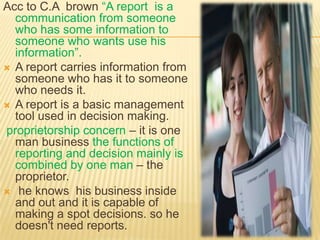
Acc to C.A brown “A report is a
  communication from someone
  who has some information to
  someone who wants use his
  information”.
 A report carries information from
  someone who has it to someone
  who needs it.
 A report is a basic management
  tool used in decision making.
proprietorship concern – it is one
  man business the functions of
  reporting and decision mainly is
  combined by one man – the
  proprietor.
 he knows his business inside
  and out and it is capable of
  making a spot decisions. so he
  doesn't need reports.
But large scale organisations
  with multifasives activities do
  need them. Different
  departments handle different
  activities. Different
  departments handle different
  activities.
  the reports may be oral or
  written
1. Oral reports:
 simple and easy to present
 It may consist in the
   communication of an
   impression and observation
 Sometimes it may be usefull
2.Written reports:
 written report is in the
  permanent record. The reporter
  cannot deny it.
 Writer tries to be accurate and
  precise
  oral report tends to be vague
  may be encounter based by the
  presence of irrelevant facts are
  overlooked.
 Written reports can change
  hands without any changes of
  desorption during transmission.
 A written report can be referred
  again and again.
FUNCTIONAL AREAS OF REPORT
1.  INFORMATIONAL FUNCTIONS:
    vital informational
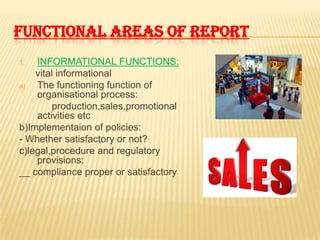
a)  The functioning function of
    organisational process:
         production,sales,promotional
    activities etc
b)Implementaion of policies:
- Whether satisfactory or not?
c)legal,procedure and regulatory
    provisions:
__ compliance proper or satisfactory
d)The working of the office and
  field staff:
__ intergrity,sincerety, and
  efficiency.
e)Create a data base for future
  reference

2)Analytical functions:
  a) helpful in decision making
  b)playing a persuasive role:-
SPECIAL FEATURES OF A REPORT
1.A report discusses an event/situation that is already over –
 it refers to the past so it is written mostly in the past tense.
 other tenses may be used in conclusion/recommendation if any.
2.A report is solicited document:
i.e. someone wants a report to be prepared.
3.A report is usually an upward communication within the
     organisation. Prepared in a formal tone.
Eg: sales executive, submitting a report to the sales manager
ii)Accountant to accounting officer.
  4.A report has a conclusing in the form of
     findings,suggestions,recommendations etc.
Suggestions and recommendations are included only if specifically
     asked for.
TYPES OF REPORTS

1.On the basis of legal
  formalities to be complied:
a)INFORMAL REPORTS:
   person to person
  communication range from a
  short fragmentary statement of
  facts on a single page to more
  developed one.
b)FORMAL REPORTS:
prepared and prescribed format.
Format reports can be statutory or
i)Statutory report:
   reports submitted at the
   statutory meetings of the
   shareholders .
Directors report to the annual
   general meetings ,annual report
   ,auditors report .
ii)Non statutory reports:
    on the basis of the frequency of
   issue, a report can be periodic or
   special .
Periodic or routine report: weekly,
   half yearly special reports are
   related to single occasion or
2.On the basis of function, a report can be:
   i)informative ii)interpretative
i) Informative: merely presents the facts
     pertinent of an issue situation.
ii) Interpretative: it analyses the facts ,drews
     conclusions and makes recommendations. So
     it also called analytical or interpretative or
     investigative.
3.On the basis of nature of the subject dealt
     with:
i)Problem –determining report,or
ii) fact finding report
iii)Performance report
iv)Techinical report
4.On the basis of number
   of persons entrusted
   with the drafting of
   report:
    i)reports by individual :
    ii)reports by committees
   or sub committees.
SELECTING A SUITABLE REPORT

Before undertaking to prepare the report consider
   the following:
i)What kind of report is requested or
   accepted?
ii)How much time has been allotted to prepare
   the report ?
iii)What is the purpose of the report?
iv)What exactly is to be examined ?
v)What facts are to be furnished?
vi)Whom is the report meant for? or who is
   going to read the report?
PREPARING A REPORT

Preparing a report involves the following 5
  steps:
1. Investigating the source of information.

2. Taking notes.

3. Analysing the data.

4. Making an outline, and

5. Writing the report.
1.   Investigating the source of information:
       this is the spade work to be done right in the
     beginning
Major sources: company files ,personal
     observation
     ,interviews,letters,questionaires,library
     research etc.
i.   Company files.
ii. Fire accidents or progress of a project
     ,personal observation ,-- on the soft enquiry
iii. Complaints from the customers ,enquiry with
     the staff.
a.  Take out questionnaires .should never be
    lengthy.
b. Frame it in such a way, no lengthy answer is
    needed,
c. Tickling the alternatives is the best.

  if the results of the questionnaire is included in
    the report copy of the questionnaires should
    be enclosed to the questionnaire.
e. For reports on the subjects of general nature
    library research is useful.
2.Taking notes:
   about anything that appears to be related. the
  writer keeps turning them in his mind over and
  over again . A kind of pattern states emerging
  .he begins to be clear about what is relevant
  and what is not
 3.analysing the data:
   A medley of facts are likely to be proclude
  central purpose and lead to confusion on. writer
  should never hurry through this stage this is the
  most important stage . A final pattern emerges.
4.Making an outline:

Reports

  • 1.
  • 2.
    Acc to C.Abrown “A report is a communication from someone who has some information to someone who wants use his information”.  A report carries information from someone who has it to someone who needs it.  A report is a basic management tool used in decision making. proprietorship concern – it is one man business the functions of reporting and decision mainly is combined by one man – the proprietor.  he knows his business inside and out and it is capable of making a spot decisions. so he doesn't need reports.
  • 3.
    But large scaleorganisations with multifasives activities do need them. Different departments handle different activities. Different departments handle different activities. the reports may be oral or written 1. Oral reports:  simple and easy to present  It may consist in the communication of an impression and observation  Sometimes it may be usefull
  • 4.
    2.Written reports:  writtenreport is in the permanent record. The reporter cannot deny it.  Writer tries to be accurate and precise oral report tends to be vague may be encounter based by the presence of irrelevant facts are overlooked.  Written reports can change hands without any changes of desorption during transmission.  A written report can be referred again and again.
  • 5.
    FUNCTIONAL AREAS OFREPORT 1. INFORMATIONAL FUNCTIONS: vital informational a) The functioning function of organisational process: production,sales,promotional activities etc b)Implementaion of policies: - Whether satisfactory or not? c)legal,procedure and regulatory provisions: __ compliance proper or satisfactory
  • 6.
    d)The working ofthe office and field staff: __ intergrity,sincerety, and efficiency. e)Create a data base for future reference 2)Analytical functions: a) helpful in decision making b)playing a persuasive role:-
  • 7.
    SPECIAL FEATURES OFA REPORT 1.A report discusses an event/situation that is already over – it refers to the past so it is written mostly in the past tense. other tenses may be used in conclusion/recommendation if any. 2.A report is solicited document: i.e. someone wants a report to be prepared. 3.A report is usually an upward communication within the organisation. Prepared in a formal tone. Eg: sales executive, submitting a report to the sales manager ii)Accountant to accounting officer. 4.A report has a conclusing in the form of findings,suggestions,recommendations etc. Suggestions and recommendations are included only if specifically asked for.
  • 8.
    TYPES OF REPORTS 1.Onthe basis of legal formalities to be complied: a)INFORMAL REPORTS: person to person communication range from a short fragmentary statement of facts on a single page to more developed one. b)FORMAL REPORTS: prepared and prescribed format. Format reports can be statutory or
  • 9.
    i)Statutory report: reports submitted at the statutory meetings of the shareholders . Directors report to the annual general meetings ,annual report ,auditors report . ii)Non statutory reports: on the basis of the frequency of issue, a report can be periodic or special . Periodic or routine report: weekly, half yearly special reports are related to single occasion or
  • 10.
    2.On the basisof function, a report can be: i)informative ii)interpretative i) Informative: merely presents the facts pertinent of an issue situation. ii) Interpretative: it analyses the facts ,drews conclusions and makes recommendations. So it also called analytical or interpretative or investigative. 3.On the basis of nature of the subject dealt with: i)Problem –determining report,or ii) fact finding report
  • 11.
    iii)Performance report iv)Techinical report 4.Onthe basis of number of persons entrusted with the drafting of report: i)reports by individual : ii)reports by committees or sub committees.
  • 12.
    SELECTING A SUITABLEREPORT Before undertaking to prepare the report consider the following: i)What kind of report is requested or accepted? ii)How much time has been allotted to prepare the report ? iii)What is the purpose of the report? iv)What exactly is to be examined ? v)What facts are to be furnished? vi)Whom is the report meant for? or who is going to read the report?
  • 13.
    PREPARING A REPORT Preparinga report involves the following 5 steps: 1. Investigating the source of information. 2. Taking notes. 3. Analysing the data. 4. Making an outline, and 5. Writing the report.
  • 14.
    1. Investigating the source of information: this is the spade work to be done right in the beginning Major sources: company files ,personal observation ,interviews,letters,questionaires,library research etc. i. Company files. ii. Fire accidents or progress of a project ,personal observation ,-- on the soft enquiry iii. Complaints from the customers ,enquiry with the staff.
  • 15.
    a. Takeout questionnaires .should never be lengthy. b. Frame it in such a way, no lengthy answer is needed, c. Tickling the alternatives is the best. if the results of the questionnaire is included in the report copy of the questionnaires should be enclosed to the questionnaire. e. For reports on the subjects of general nature library research is useful.
  • 16.
    2.Taking notes: about anything that appears to be related. the writer keeps turning them in his mind over and over again . A kind of pattern states emerging .he begins to be clear about what is relevant and what is not 3.analysing the data: A medley of facts are likely to be proclude central purpose and lead to confusion on. writer should never hurry through this stage this is the most important stage . A final pattern emerges.
  • 17.