Rik van den Bosch
Director ISRIC – World Soil Information
Report Soil Data Facility
Developed a work plan for SDF
(2018-2020)
• 2017-2018: Develop technical specifications for
GloSIS and its data products
• 2018 - 2019: Build the infrastructure of GloSIS
and its data products (point data sets and grids)
• 2019 - 2020: Assist with the populating the data
products
Specifications for point databases
• Proposal for the database content:
• Tier 1: comprehensive database
• Tier 2: reference database (well-described, complete)
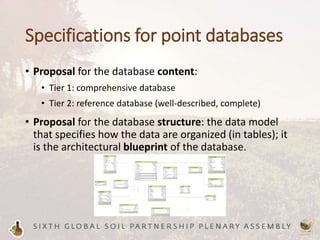
• Proposal for the database structure: the data model
that specifies how the data are organized (in tables); it
is the architectural blueprint of the database.
Specifications for the grids
• Connection established with the developers of the
existing specifications (GlobalSoilMap Consortium)
• Plan to further address this at the 21st World Congress
of Soil Science in Rio de Janeiro, August 2018
Vision document for GloSIS
• GloSIS is the infrastructure that connects the various
data products and allows users to search, find and
(possibly) download data.
• Vision document:
• create a common understanding of the system that we will
be developing
• what should GloSIS look like, what would be the building
blocks (hardware, software, technologies for data exchange)
• Ensure that everybody can participate, irrespective of
the current technological level.
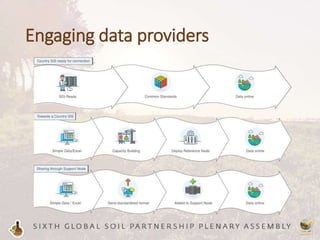
Engaging data providers
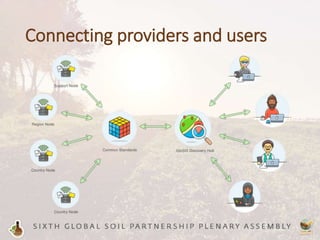
Connecting providers and users
Tasks of the SDF (from call text)
• host, develop and maintain important elements of the spatial
data infrastructure (SDI) (...)
• provide where needed, infrastructure components for INSII
members (...)
• actively participate in the P4WG
• support various technical and product-related elements of GloSIS
• support the design and implementation of GloSIS
• cooperate with FAO to support the delivery of SoilSTAT;
• provide data services that support the aims and objectives
GEOSS.
GloSIS
During the last year
• FAO decided to host the GSOC map
• FAO made clear it was planning to:
• provide an internet domain name, hardware and/or cloud services
• develop data product specifications with the P4WG members and
SDF
• .....
screenshot GSOC
Proposal
P4WG/INSII: Coordination, body to report to
Secretariat
• Facilitates contacts with countries (‘data flows’, capacity building)
SDF (ISRIC)
• Leads in developing the SDI (technical heart) and its data products
for GloSIS
• Reports to P4WG and INSII
• Supports the development of aspects of the discovery hub
FAO
• Leads the development of GloSIS discovery hub
• Hosts GloSIS on top-level domain (www.glosis.org)
All: work together!!
Footnote in the open call for SDF
It may be noted that following the Pillar 4
Implementation Plan, FAO is currently developing a
corporate SDI, which will also be aimed at supporting
the requirements for the Global Soil Information
System.

Report of the Soil Data Facility

  • 1.
    Rik van denBosch Director ISRIC – World Soil Information Report Soil Data Facility
  • 2.
    Developed a workplan for SDF (2018-2020) • 2017-2018: Develop technical specifications for GloSIS and its data products • 2018 - 2019: Build the infrastructure of GloSIS and its data products (point data sets and grids) • 2019 - 2020: Assist with the populating the data products
  • 3.
    Specifications for pointdatabases • Proposal for the database content: • Tier 1: comprehensive database • Tier 2: reference database (well-described, complete) • Proposal for the database structure: the data model that specifies how the data are organized (in tables); it is the architectural blueprint of the database.
  • 4.
    Specifications for thegrids • Connection established with the developers of the existing specifications (GlobalSoilMap Consortium) • Plan to further address this at the 21st World Congress of Soil Science in Rio de Janeiro, August 2018
  • 5.
    Vision document forGloSIS • GloSIS is the infrastructure that connects the various data products and allows users to search, find and (possibly) download data. • Vision document: • create a common understanding of the system that we will be developing • what should GloSIS look like, what would be the building blocks (hardware, software, technologies for data exchange) • Ensure that everybody can participate, irrespective of the current technological level.
  • 6.
  • 7.
  • 8.
    Tasks of theSDF (from call text) • host, develop and maintain important elements of the spatial data infrastructure (SDI) (...) • provide where needed, infrastructure components for INSII members (...) • actively participate in the P4WG • support various technical and product-related elements of GloSIS • support the design and implementation of GloSIS • cooperate with FAO to support the delivery of SoilSTAT; • provide data services that support the aims and objectives GEOSS.
  • 10.
  • 11.
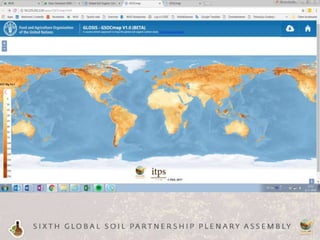
    During the lastyear • FAO decided to host the GSOC map • FAO made clear it was planning to: • provide an internet domain name, hardware and/or cloud services • develop data product specifications with the P4WG members and SDF • ..... screenshot GSOC
  • 12.
    Proposal P4WG/INSII: Coordination, bodyto report to Secretariat • Facilitates contacts with countries (‘data flows’, capacity building) SDF (ISRIC) • Leads in developing the SDI (technical heart) and its data products for GloSIS • Reports to P4WG and INSII • Supports the development of aspects of the discovery hub FAO • Leads the development of GloSIS discovery hub • Hosts GloSIS on top-level domain (www.glosis.org) All: work together!!
  • 13.
    Footnote in theopen call for SDF It may be noted that following the Pillar 4 Implementation Plan, FAO is currently developing a corporate SDI, which will also be aimed at supporting the requirements for the Global Soil Information System.

Editor's Notes

  • #4 Proposal for the database content includes specification of table names, attributes, data type (text, numbers), units, (thus some form of standardization). We are working on these documents and expect to deliver drafts to the P4WG in June. Figure is just an example, has nothing to do with the data model that we are developing. It only shows the idea of a data mode. Remove if you do not like it!
  • #6 Download: if allowed by the data licence that is set by the data provider. We also aim to develop a system that is lightweight and cheap (based open sources software) and easy to deploy, using learned lessons while at the same time relieving data providers from technical details.
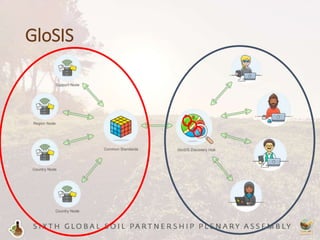
  • #11 Gives a simple graphical overview of the GloSIS federated structure. Soil data can be organized at regional, national or even institutional level. These can all become nodes in the federated database structure. In addition there is the GloSIS support node. The data that each node serves is brought to a common standard through a data exchange mechanism which makes the data searchable and accessible through the GloSIS data discovery hub. Users connect to GloSIS through a discovery hub, a web portal that allows users to search, find and download soil data.