Remotely
Operating
Vehicle (ROV)
Vusal Iskandarov
E221 | ASOIU
Components
What kinds of parts do they
have?
Table of Contents
Introduction
1 What is ROV? Where do we
use them?
3
Types
What kinds of ROVs are
operating around world?
4
Shortcomings
Any problems associated with
ROVs?
2
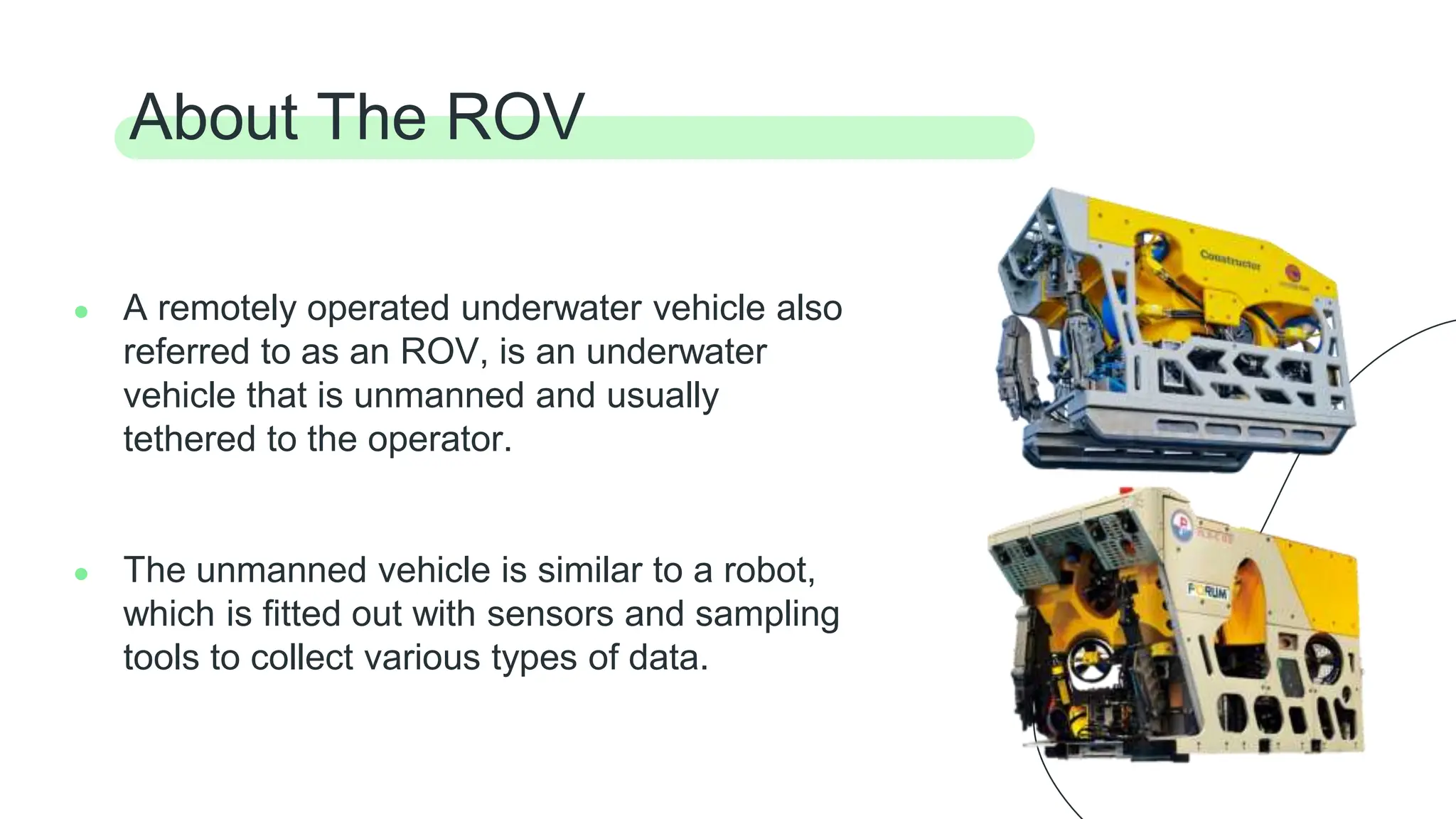
● A remotely operated underwater vehicle also
referred to as an ROV, is an underwater
vehicle that is unmanned and usually
tethered to the operator.
● The unmanned vehicle is similar to a robot,
which is fitted out with sensors and sampling
tools to collect various types of data.
About The ROV
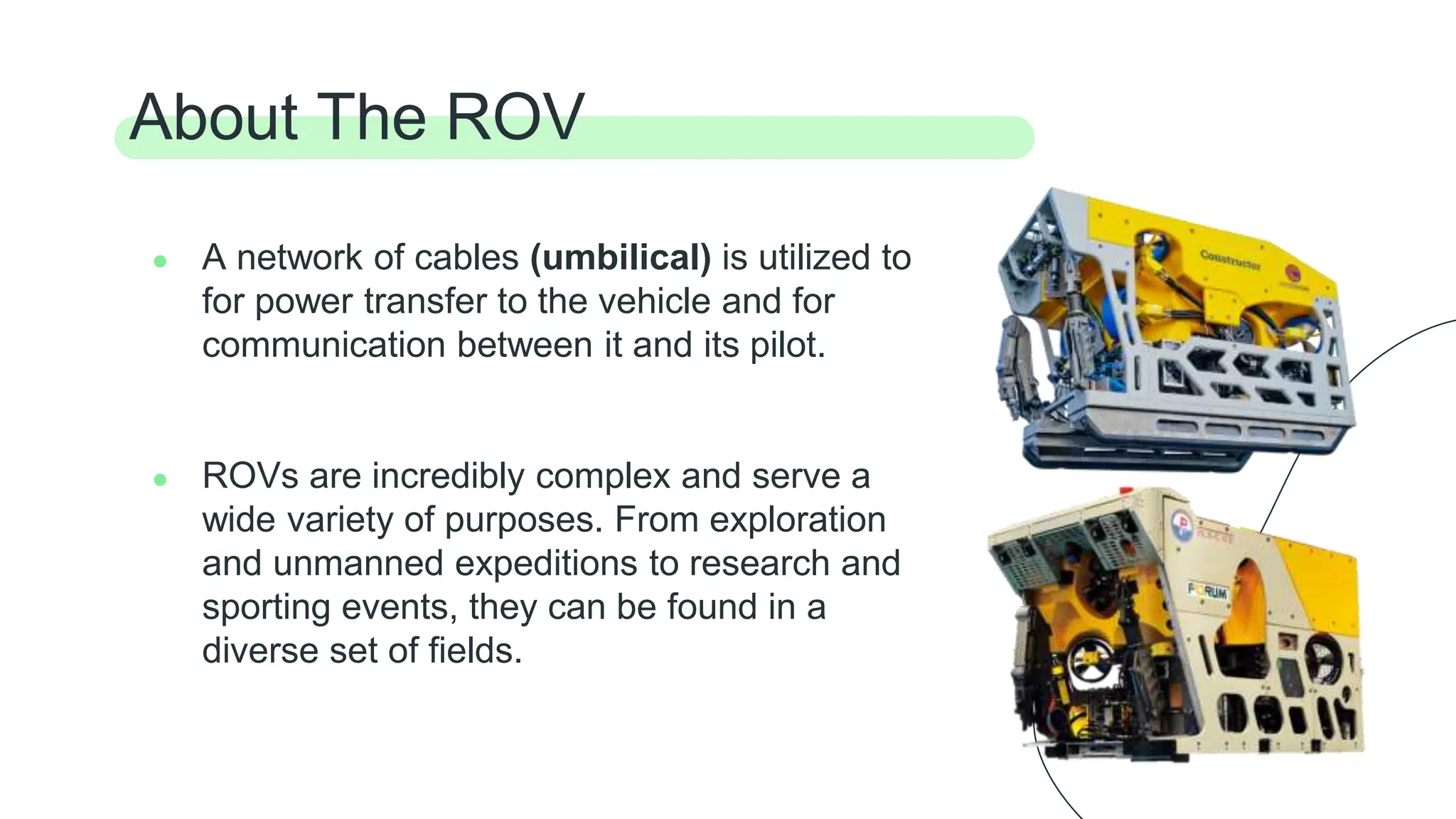
● A network of cables (umbilical) is utilized to
for power transfer to the vehicle and for
communication between it and its pilot.
● ROVs are incredibly complex and serve a
wide variety of purposes. From exploration
and unmanned expeditions to research and
sporting events, they can be found in a
diverse set of fields.
About The ROV
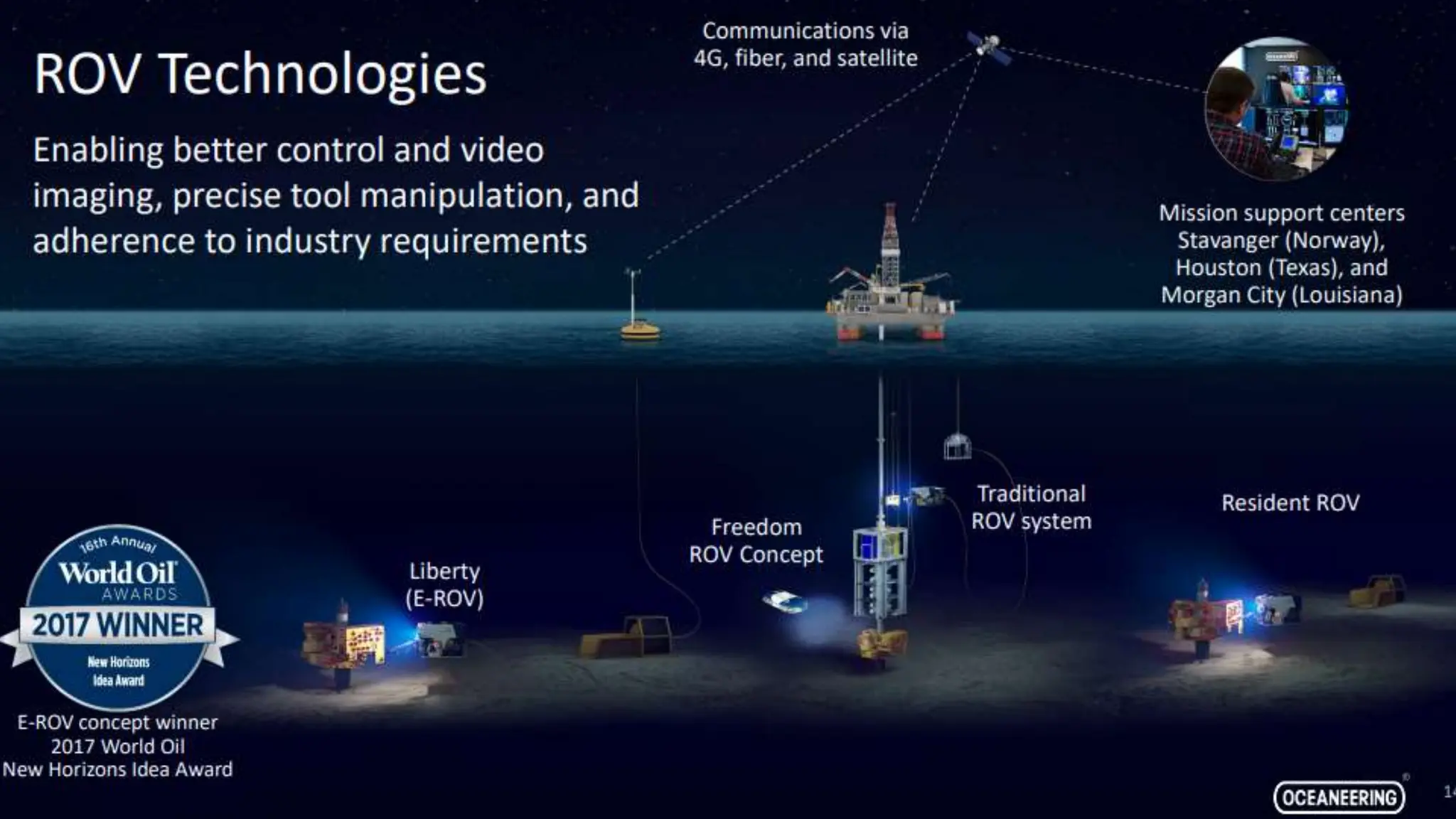
Intervenes faster, keep
production online more
effectively, reduces your
carbon footprint
Resident
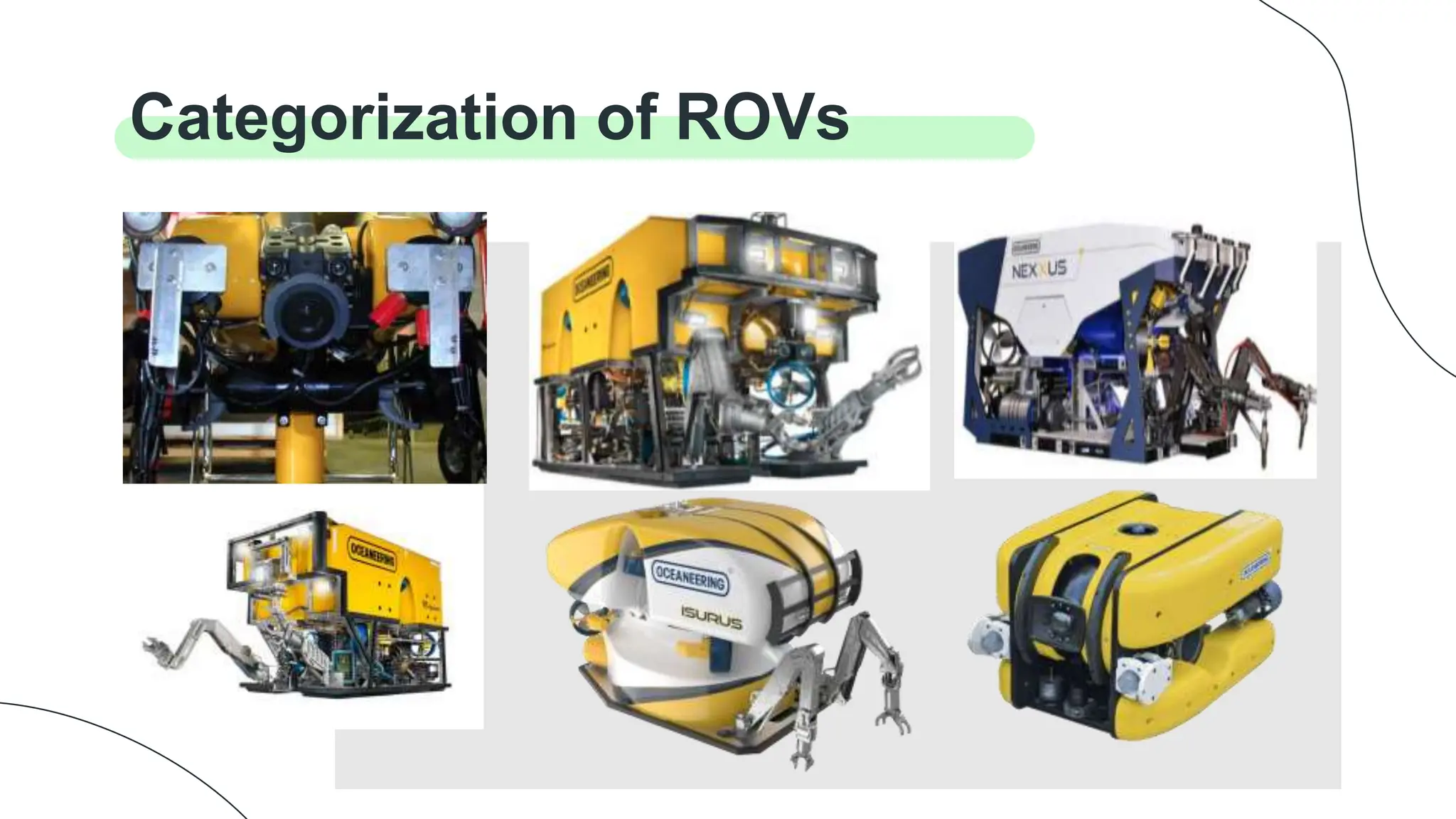
Categorization of ROVs
General
These are specially built
to aid in light survey
tasks as these usually
bear a sonar unit.
Heavy Work Class
From deep water depths to
extreme lifting requirements,
increase efficiency and
decrease downtime
Trenching-Burial
Offers a 200-500 HP
range and can be utilized
till 6000 meters
Light Work Class
Reduces the
environmental impact of
work class ROVs
Observation
Enables reliable
completion of subsea
survey operations
Electrical systems
Mechanical structures
Mechanical systems is
propulsion, which is in the form
of miniature and specialized
marine propellers.
The electrical systems refer
to the wiring and circuitry
that make up the heart of
the ROV.
Components of ROV mechanism
Sensors and appendages
The most common equipment that
is fitted include cameras, depth
gauges, temperature sensors, and
internal system sensors.
Task-specific structures
Task-specific modifications
are what makes an ROV
customizable and usable in
a wide variety of fields.
Preparation and Launching of ROVs
Penetration of wave
surface (splash zone)
Transit to work space
Launching
Pre-laucn
Pre-launch preparations
for operations
Leaving & Data acq
Leaving and transit to
surface, penetration of
surface, hook-up, lifting
and securing on deck
Working
Entering work space,
homing in on work task,
& completion it
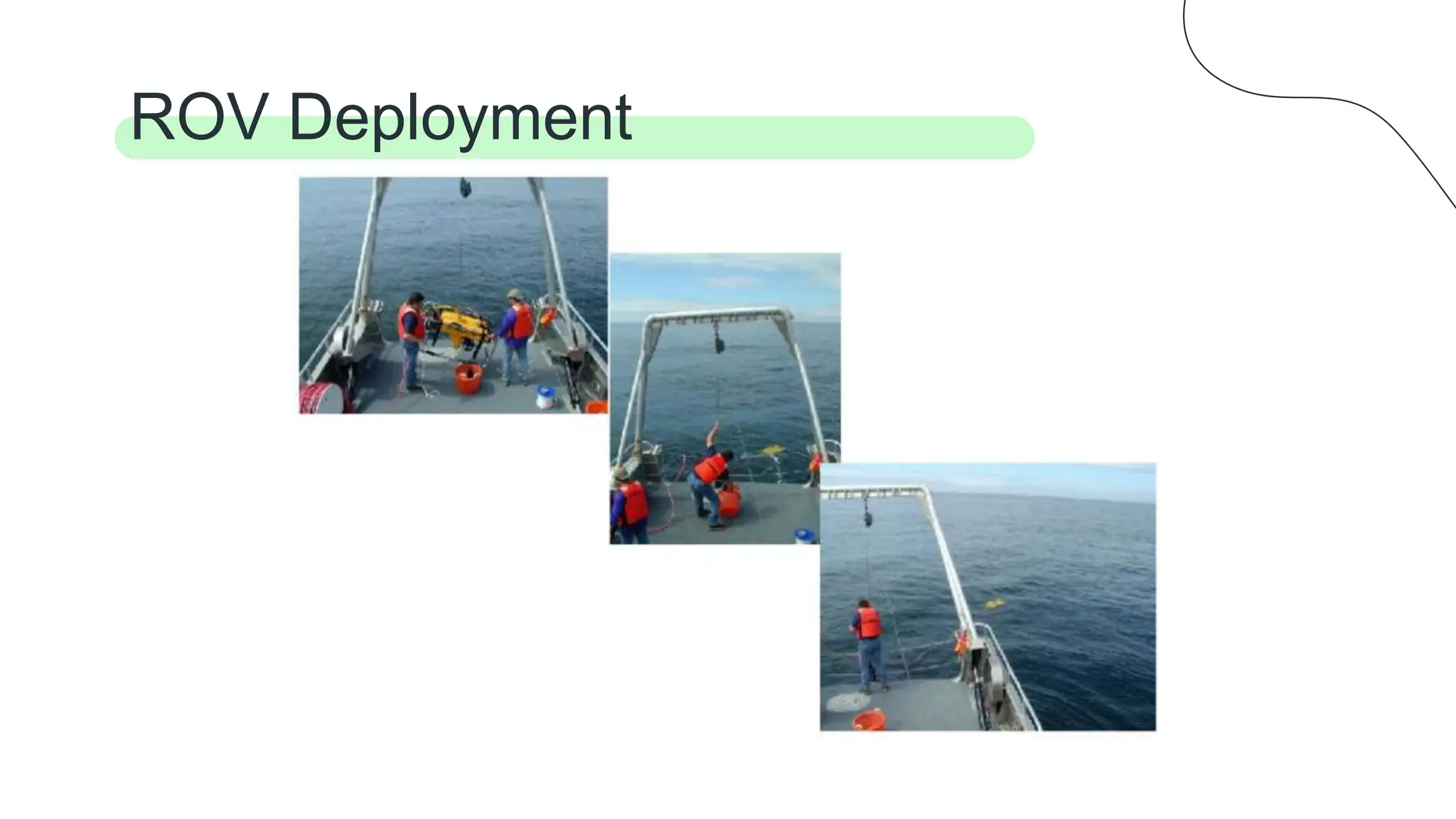
ROV Deployment
ROV Operational goals
1. Visual inspection
• Inspection of underwater structures
• Observation of ongoing work tasks on subsea structures
• Biological observation
2. Different types of mechanical inspection
3. Non-destructive testing
4. Mechanical work
5. Biological sampling, water column and bottom
A Picture Is Worth A
Thousands Words
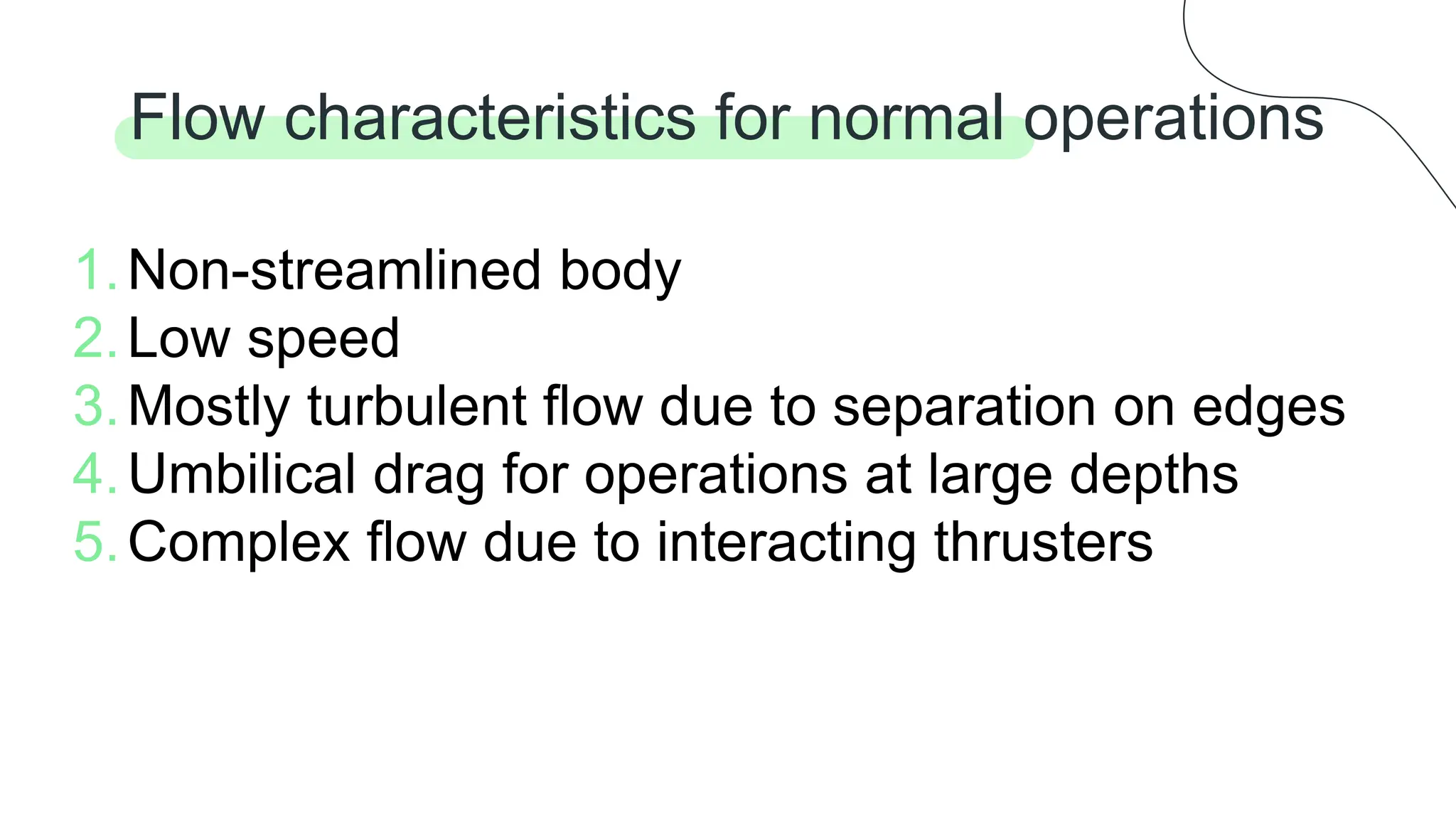
Flow characteristics for normal operations
1.Non-streamlined body
2.Low speed
3.Mostly turbulent flow due to separation on edges
4.Umbilical drag for operations at large depths
5.Complex flow due to interacting thrusters
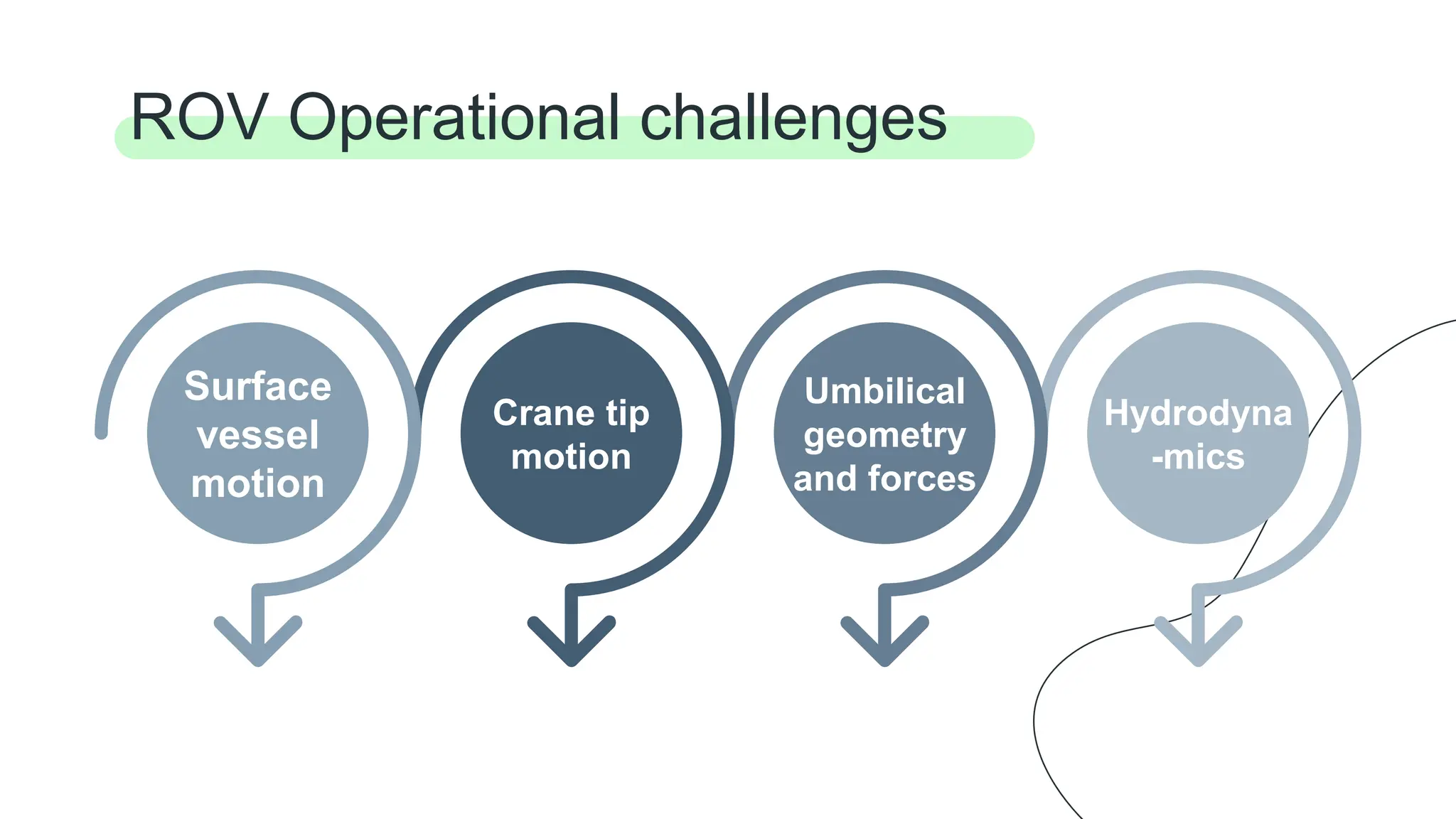
ROV Operational challenges
Hydrodyna
-mics
Umbilical
geometry
and forces
Crane tip
motion
Surface
vessel
motion
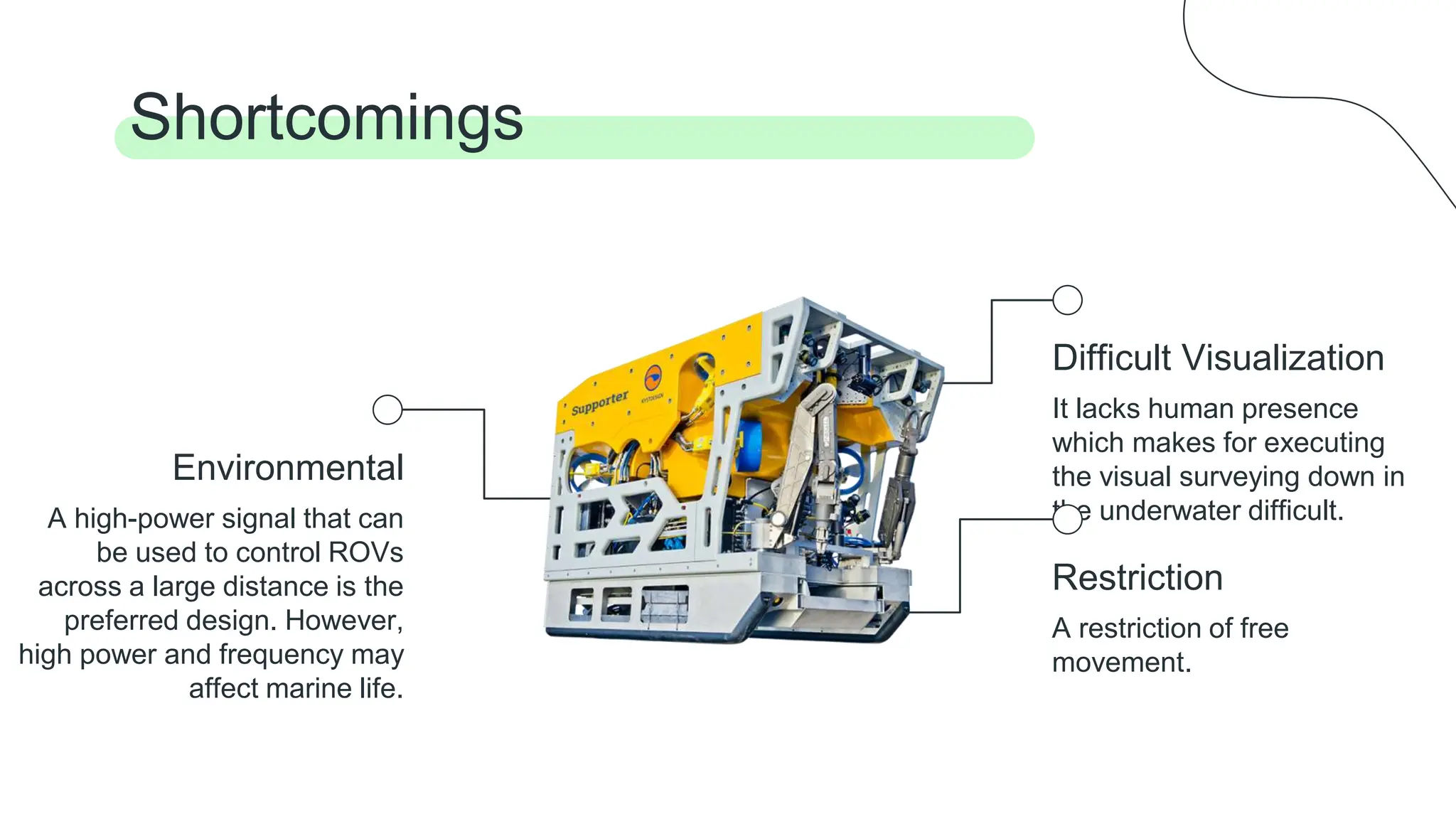
Shortcomings
A restriction of free
movement.
Restriction
Difficult Visualization
It lacks human presence
which makes for executing
the visual surveying down in
the underwater difficult.
A high-power signal that can
be used to control ROVs
across a large distance is the
preferred design. However,
high power and frequency may
affect marine life.
Environmental
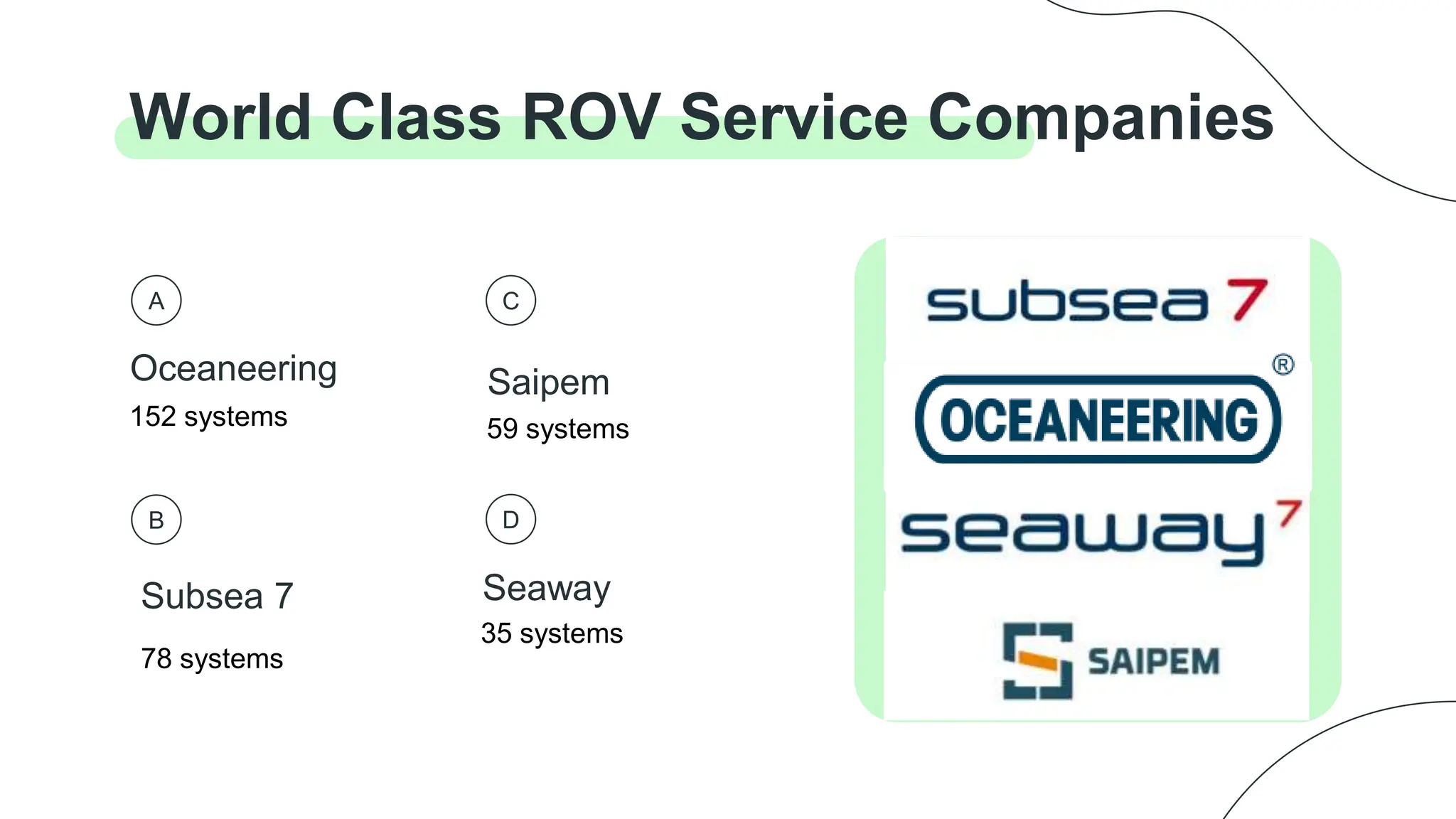
Saipem
Oceaneering
A
World Class ROV Service Companies
Subsea 7 Seaway
B
C
D
A
B
C D
152 systems
78 systems
59 systems
35 systems
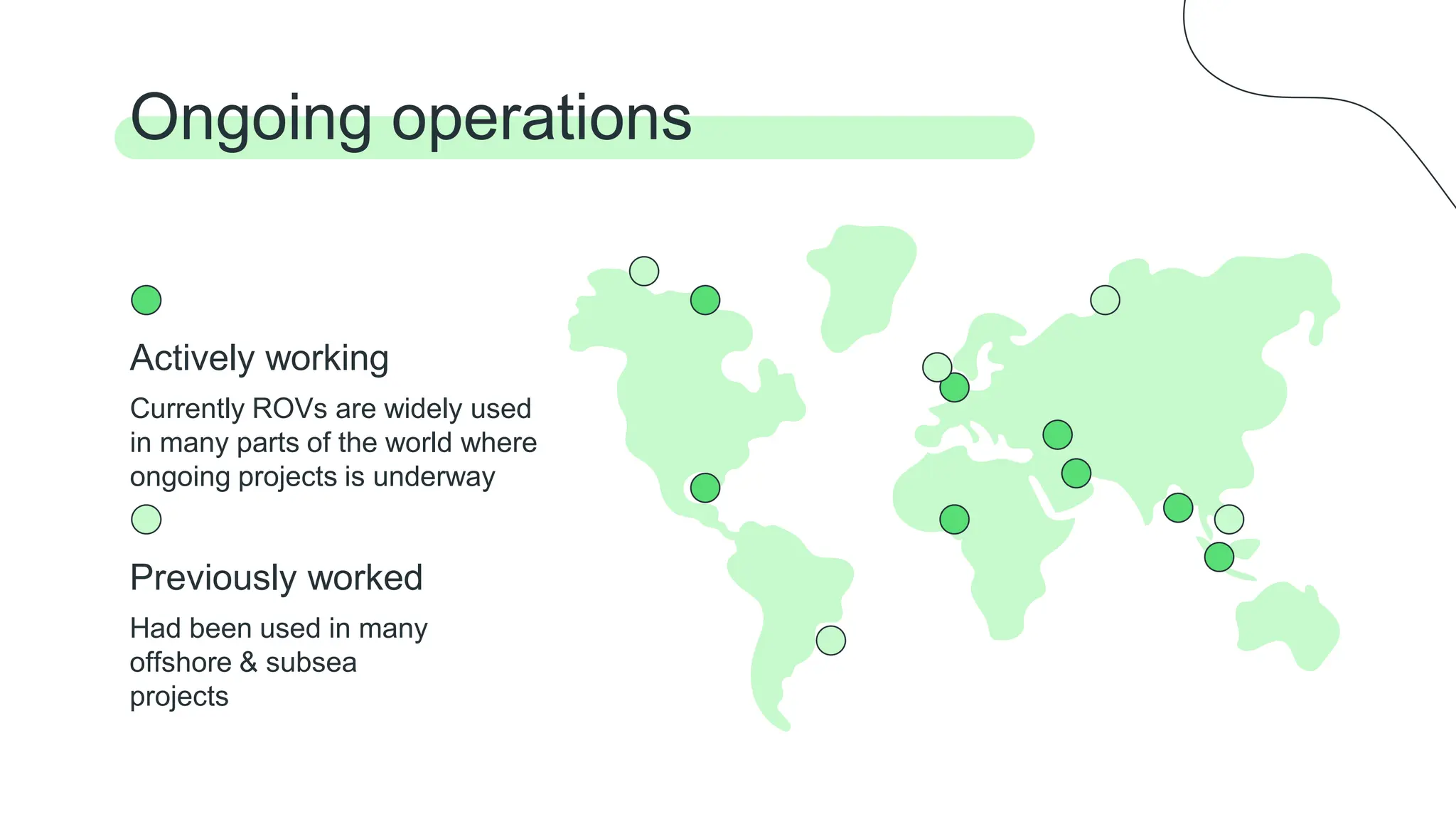
Ongoing operations
Had been used in many
offshore & subsea
projects
Previously worked
Actively working
Currently ROVs are widely used
in many parts of the world where
ongoing projects is underway
CREDITS: This presentation template was created
by Slidesgo, including icons by Flaticon,
infographics & images by Freepik and illustrations
by Stories
Thanks!
Do you have any questions?
i.vusal99@gmail.com
+994 70 511 77 07
List functional
requirements for a
ROV simulator to be
used for accessibility
studies
Question from me
Easy integration of different
kinds of underwater structures
Easy implementation of
different ROVs and different
types of sensors
Realistic model of umbilical
Catalogue of error modes and
related what-if statements
Ability to simulate realistic
environment conditions

Remotely Operating Vehicle (ROV)

  • 1.
  • 2.
    Components What kinds ofparts do they have? Table of Contents Introduction 1 What is ROV? Where do we use them? 3 Types What kinds of ROVs are operating around world? 4 Shortcomings Any problems associated with ROVs? 2
  • 3.
    ● A remotelyoperated underwater vehicle also referred to as an ROV, is an underwater vehicle that is unmanned and usually tethered to the operator. ● The unmanned vehicle is similar to a robot, which is fitted out with sensors and sampling tools to collect various types of data. About The ROV
  • 4.
    ● A networkof cables (umbilical) is utilized to for power transfer to the vehicle and for communication between it and its pilot. ● ROVs are incredibly complex and serve a wide variety of purposes. From exploration and unmanned expeditions to research and sporting events, they can be found in a diverse set of fields. About The ROV
  • 5.
    Intervenes faster, keep productiononline more effectively, reduces your carbon footprint Resident Categorization of ROVs General These are specially built to aid in light survey tasks as these usually bear a sonar unit. Heavy Work Class From deep water depths to extreme lifting requirements, increase efficiency and decrease downtime Trenching-Burial Offers a 200-500 HP range and can be utilized till 6000 meters Light Work Class Reduces the environmental impact of work class ROVs Observation Enables reliable completion of subsea survey operations
  • 6.
    Electrical systems Mechanical structures Mechanicalsystems is propulsion, which is in the form of miniature and specialized marine propellers. The electrical systems refer to the wiring and circuitry that make up the heart of the ROV. Components of ROV mechanism Sensors and appendages The most common equipment that is fitted include cameras, depth gauges, temperature sensors, and internal system sensors. Task-specific structures Task-specific modifications are what makes an ROV customizable and usable in a wide variety of fields.
  • 7.
    Preparation and Launchingof ROVs Penetration of wave surface (splash zone) Transit to work space Launching Pre-laucn Pre-launch preparations for operations Leaving & Data acq Leaving and transit to surface, penetration of surface, hook-up, lifting and securing on deck Working Entering work space, homing in on work task, & completion it
  • 8.
  • 9.
    ROV Operational goals 1.Visual inspection • Inspection of underwater structures • Observation of ongoing work tasks on subsea structures • Biological observation 2. Different types of mechanical inspection 3. Non-destructive testing 4. Mechanical work 5. Biological sampling, water column and bottom
  • 10.
    A Picture IsWorth A Thousands Words
  • 11.
    Flow characteristics fornormal operations 1.Non-streamlined body 2.Low speed 3.Mostly turbulent flow due to separation on edges 4.Umbilical drag for operations at large depths 5.Complex flow due to interacting thrusters
  • 12.
    ROV Operational challenges Hydrodyna -mics Umbilical geometry andforces Crane tip motion Surface vessel motion
  • 13.
    Shortcomings A restriction offree movement. Restriction Difficult Visualization It lacks human presence which makes for executing the visual surveying down in the underwater difficult. A high-power signal that can be used to control ROVs across a large distance is the preferred design. However, high power and frequency may affect marine life. Environmental
  • 14.
    Saipem Oceaneering A World Class ROVService Companies Subsea 7 Seaway B C D A B C D 152 systems 78 systems 59 systems 35 systems
  • 15.
    Ongoing operations Had beenused in many offshore & subsea projects Previously worked Actively working Currently ROVs are widely used in many parts of the world where ongoing projects is underway
  • 16.
    CREDITS: This presentationtemplate was created by Slidesgo, including icons by Flaticon, infographics & images by Freepik and illustrations by Stories Thanks! Do you have any questions? i.vusal99@gmail.com +994 70 511 77 07
  • 17.
    List functional requirements fora ROV simulator to be used for accessibility studies Question from me Easy integration of different kinds of underwater structures Easy implementation of different ROVs and different types of sensors Realistic model of umbilical Catalogue of error modes and related what-if statements Ability to simulate realistic environment conditions

Editor's Notes

  • #7 Task-specific modifications are what makes an ROV customizable and usable in a wide variety of fields. For instance, in historical exploration and wreckage visits, it can be used to collect artefacts with mechanical arms and tools.