Akshay Raju Badore
MPT - CBR
Rehabilitation
 According to WHO “Rehabilitation or
rehab is the combined and coordinated
use of the medical, social, educational,
and vocational measures for training
and re-training the individual to the
highest possible level of functional
ability”
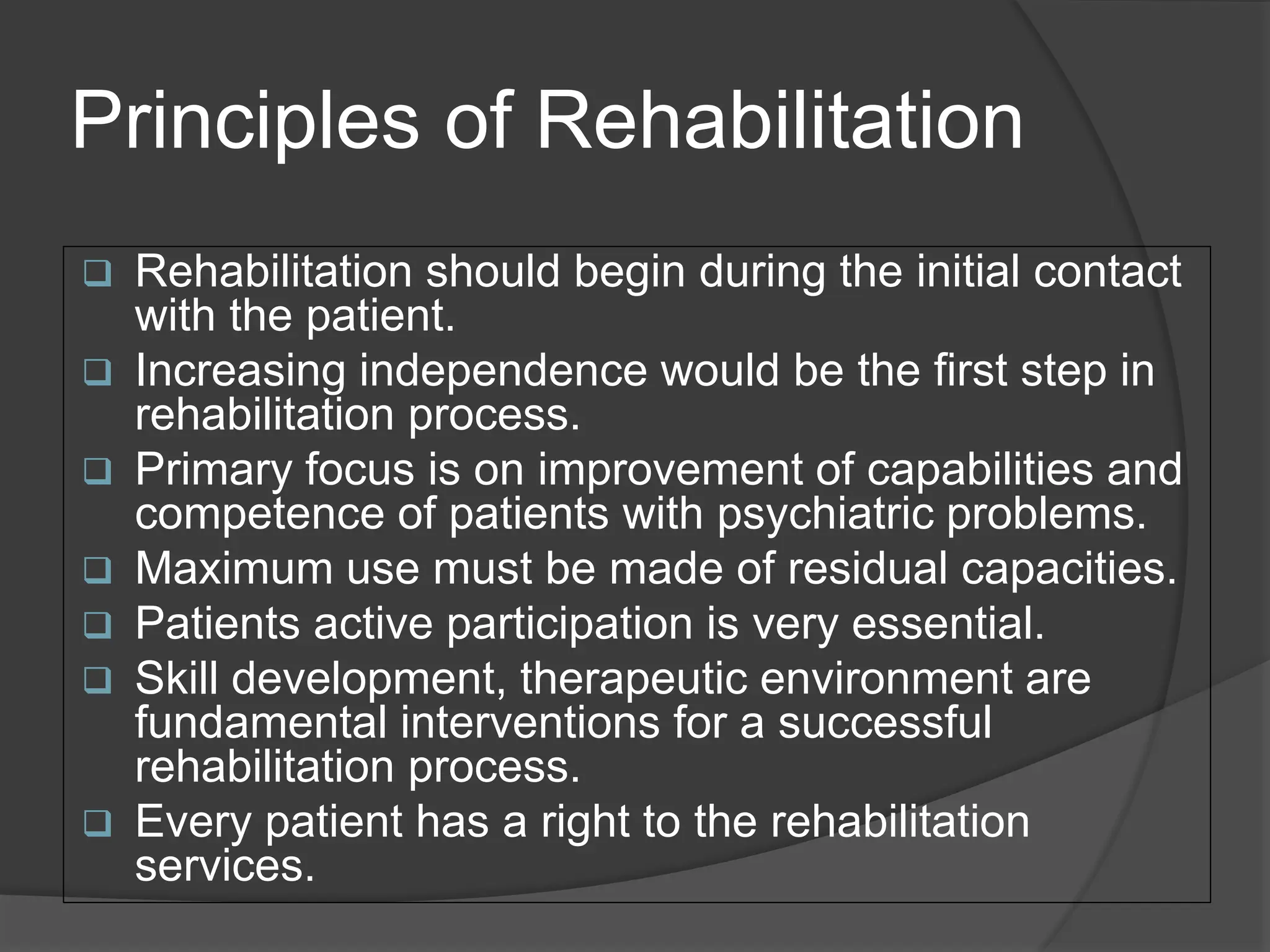
Principles of Rehabilitation
 Rehabilitation should begin during the initial contact
with the patient.
 Increasing independence would be the first step in
rehabilitation process.
 Primary focus is on improvement of capabilities and
competence of patients with psychiatric problems.
 Maximum use must be made of residual capacities.
 Patients active participation is very essential.
 Skill development, therapeutic environment are
fundamental interventions for a successful
rehabilitation process.
 Every patient has a right to the rehabilitation
services.
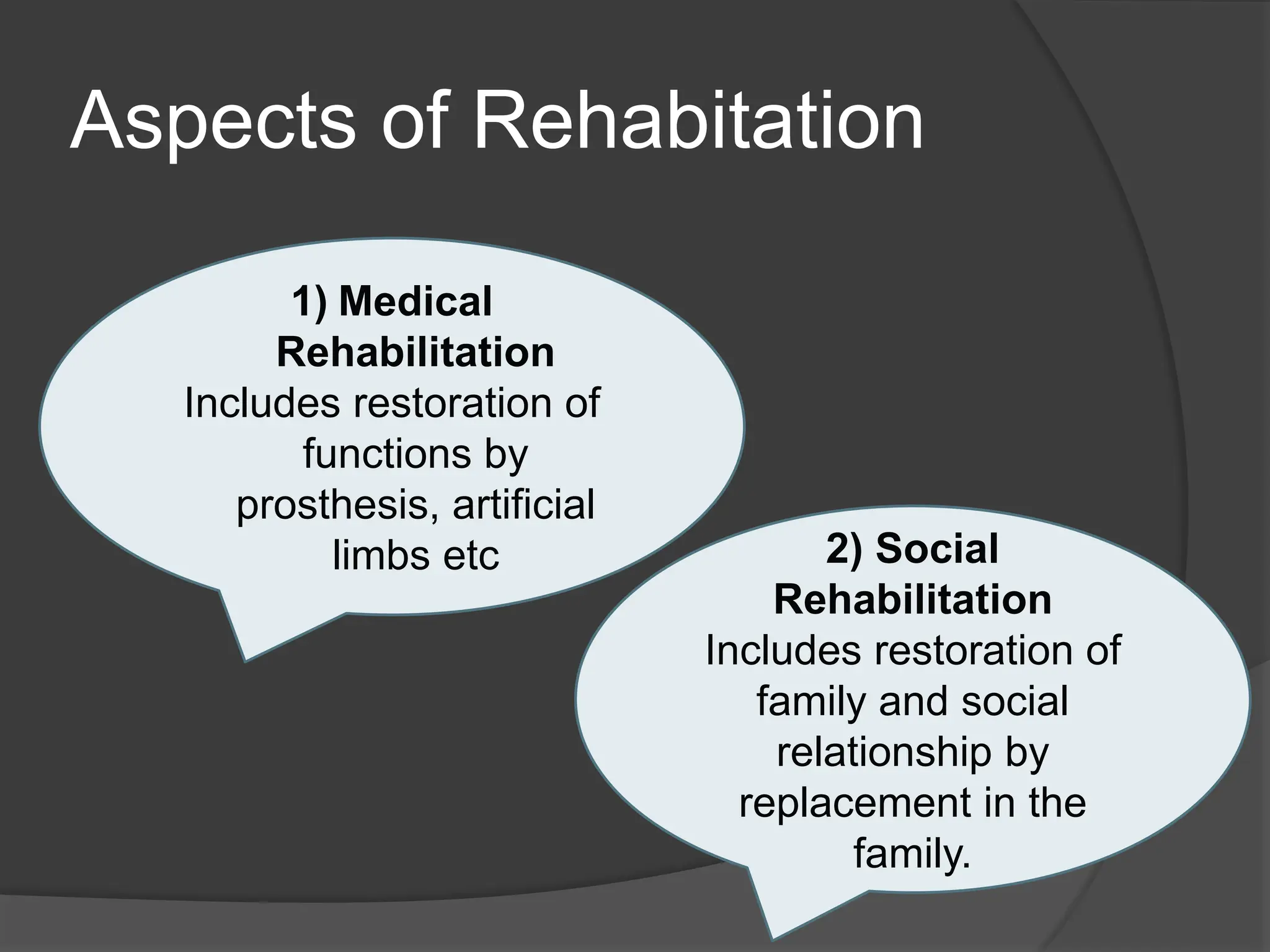
Aspects of Rehabitation
1) Medical
Rehabilitation
Includes restoration of
functions by
prosthesis, artificial
limbs etc 2) Social
Rehabilitation
Includes restoration of
family and social
relationship by
replacement in the
family.
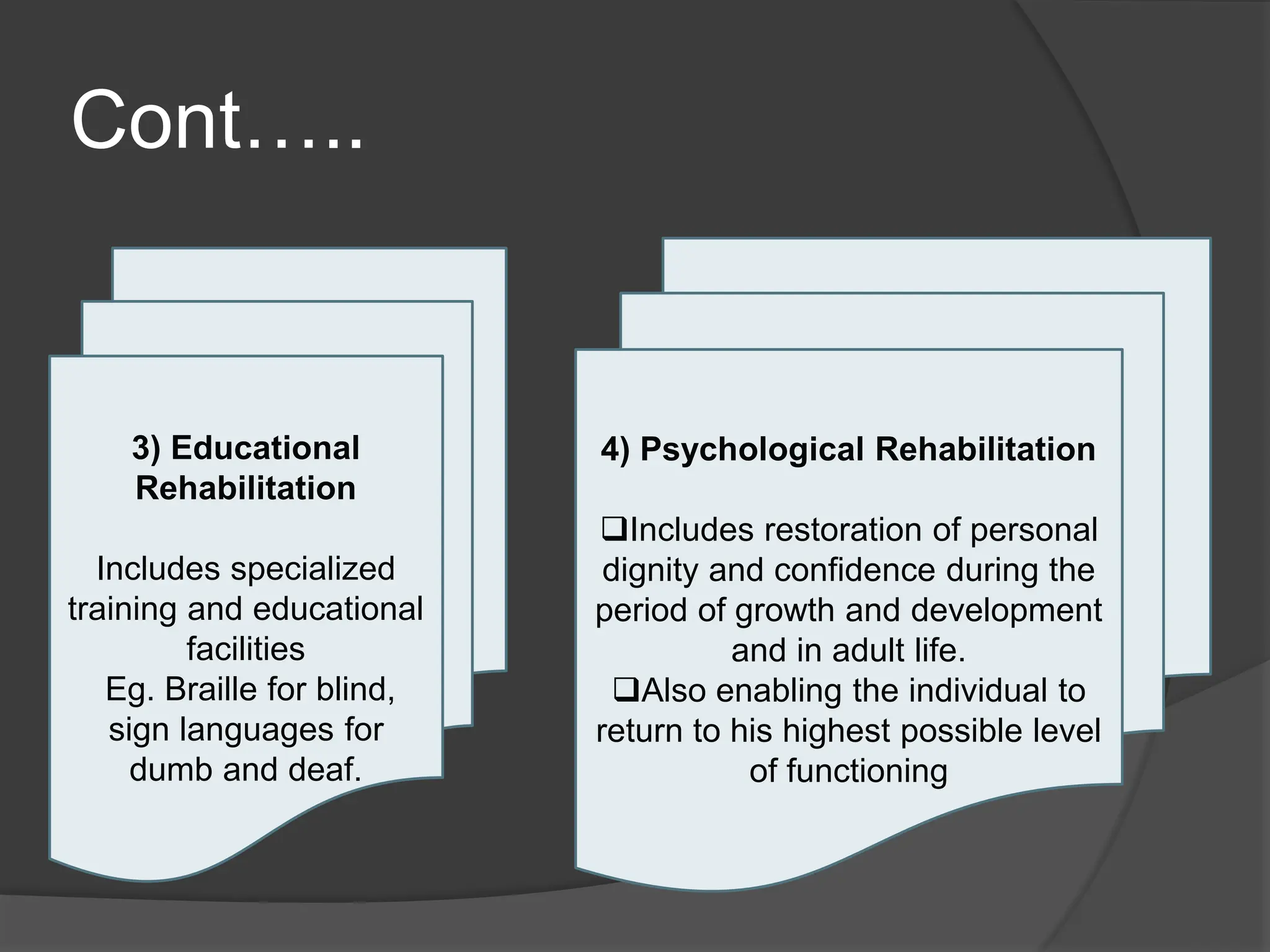
Cont…..
3) Educational
Rehabilitation
Includes specialized
training and educational
facilities
Eg. Braille for blind,
sign languages for
dumb and deaf.
4) Psychological Rehabilitation
Includes restoration of personal
dignity and confidence during the
period of growth and development
and in adult life.
Also enabling the individual to
return to his highest possible level
of functioning
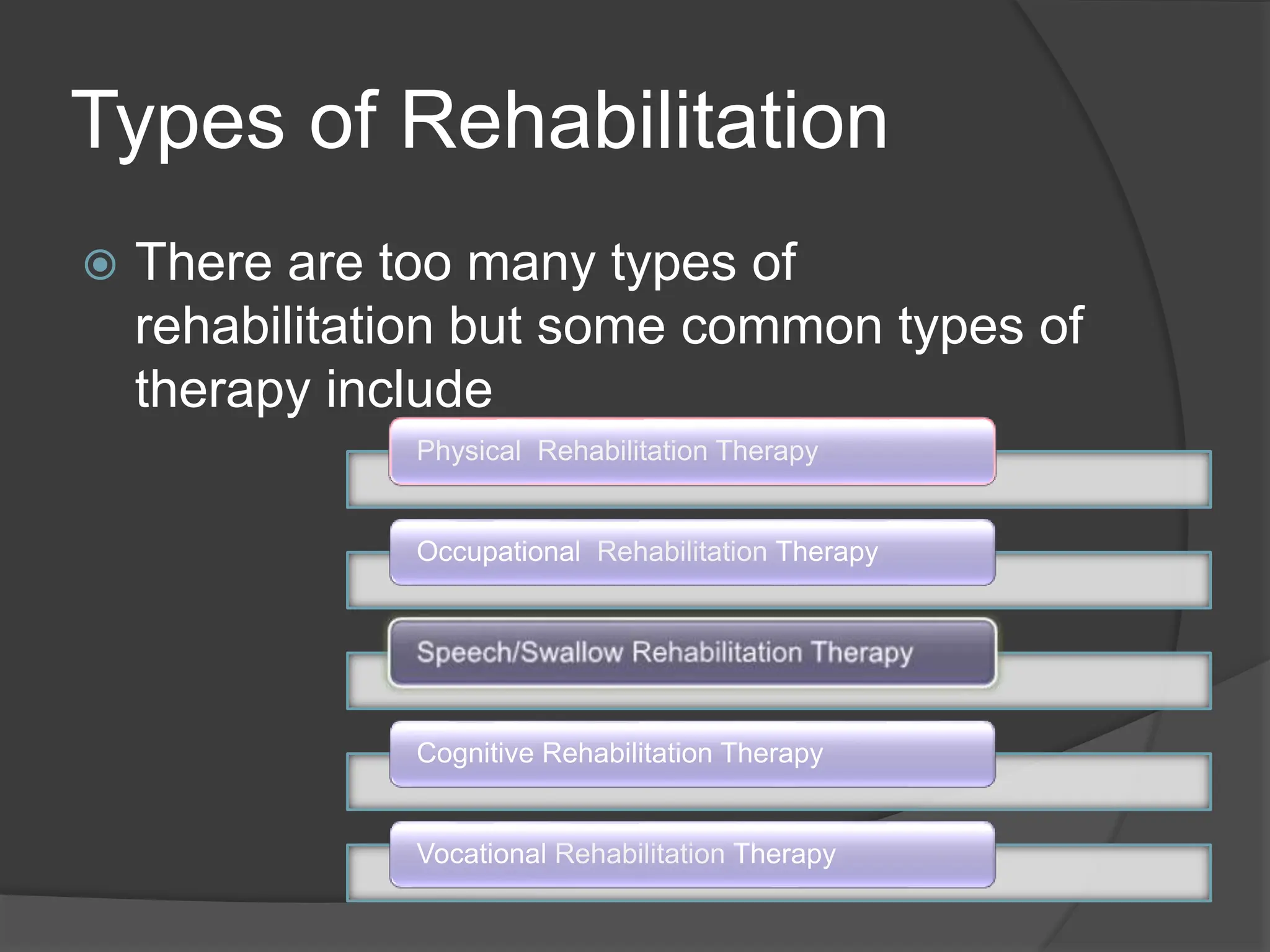
Types of Rehabilitation
 There are too many types of
rehabilitation but some common types of
therapy include
Physical Rehabilitation Therapy
Occupational Rehabilitation Therapy
Cognitive Rehabilitation Therapy
Vocational Rehabilitation Therapy
Physical Rehabilitation
 Physical rehabilitation is for those people
whose lifestyle has changed after they have
gone through a serious illness, surgery,
accident or illness.
 Here the therapist introduces programs to
improve the mobility and functioning of the
injured body part of the patient.
 Proper exercising program is designed to
improve the functioning often physical body.
 Includes therapies that will help a patient
relearn the basic physical and cognitive
functioning.
Occupational Rehabilitation
Therapy
 Occupational therapy will focus very specifically on
the needs of the patient to be able to work as well as
daily living tasks such as grooming and household
care.
 If a patient had a weakness in the fingers for
example, an Occupational therapy will evaluate the
ways in which this patient needs to use those fingers
in their daily life and work and will help them to
adapt.
 Occupational therapy might prescribe adaptations to
the patients home or work environment such as
handrails, modified shower, lowered counters, etc.
 Typical inpatient facilities have kitchens, bathrooms,
and work environments in which they help the patient
practice the life skills that they will need.
Speech/Swallow Rehab Therapy
 If there is a weakness of deficit with the mouth or
throat, it can manifest itself as a lack of clear speech
or a slow or weakened swallow.
 Speech therapists specialize in these oral deficits
and provide exercises that will strengthen the
specific muscles that are slow or weak.
 Speech and swallowing are amazingly complex
activities that requires a great deal of coordination in
all these oral muscles.
 Speech therapists can use a combination of
observation and imaging diagnostics such as moving
x-ray that allow them to understand and treat these
conditions.
Cognitive Rehabilitation Therapy
 Cognitive rehabilitation is a program to help
brain injured or otherwise cognitively impaired
individuals to restore normal functioning, or to
compensate for cognitive deficits.
 It involves relearning or improving skills, such
as thinking, learning, memory, planning and
decision making that may have been lost or
affected by brain injury.
 A computer assisted type of cognitive
rehabilitation therapy called cognitive
remediation therapy has been used to treat
schizophrenia, ADHD, and major depressive
disorders.
Vocational Rehabilitation
Therapy
 Vocational Rehabilitation is a part of
continuous and coordinated process of
rehabilitation which involves the
provision of those vocational services
(for example, vocational guidance,
vocational training and selective
placement) designed to enable a
disabled person to secure and retain
suitable employment.
Phases in Vocational
Rehabilitation
1) Vocational assessment: It is done in four areas viz., clinical,
social, psychological and vocational.
2)Vocational counselling: This includes informing patients and
family members regarding the types of training available.
Family consent should be taken for rehabilitation training.
3) Vocational training: It includes
 Course content
 Duration of training
 Incentives
 Assessment of the progress
 Imparting skills
 Supervisions
4) Job exploration: Finding out various jobs available in the
community.
5) Job placement: This include selecting suitable job,
placement of the patient in the job, checking the facilities
available and evaluating work performance.
6) Follow - up
Other types of rehabilitation
 Cardiac Rehabilitation
 Neurological Rehabilitation
 Drug Rehabilitation
 Alcohol Rehabilitation
 Mental Health Rehabilitation
 Stroke Rehabilitation
 Vestibular Rehabilitation
 Stress Rehabilitation
 Traumatic Brain Injury Rehabilitation
 Criminal Rehabilitation
Thank You

Rehabilitation & Its Types.pptx....... ..

  • 1.
  • 2.
    Rehabilitation  According toWHO “Rehabilitation or rehab is the combined and coordinated use of the medical, social, educational, and vocational measures for training and re-training the individual to the highest possible level of functional ability”
  • 3.
    Principles of Rehabilitation Rehabilitation should begin during the initial contact with the patient.  Increasing independence would be the first step in rehabilitation process.  Primary focus is on improvement of capabilities and competence of patients with psychiatric problems.  Maximum use must be made of residual capacities.  Patients active participation is very essential.  Skill development, therapeutic environment are fundamental interventions for a successful rehabilitation process.  Every patient has a right to the rehabilitation services.
  • 4.
    Aspects of Rehabitation 1)Medical Rehabilitation Includes restoration of functions by prosthesis, artificial limbs etc 2) Social Rehabilitation Includes restoration of family and social relationship by replacement in the family.
  • 5.
    Cont….. 3) Educational Rehabilitation Includes specialized trainingand educational facilities Eg. Braille for blind, sign languages for dumb and deaf. 4) Psychological Rehabilitation Includes restoration of personal dignity and confidence during the period of growth and development and in adult life. Also enabling the individual to return to his highest possible level of functioning
  • 6.
    Types of Rehabilitation There are too many types of rehabilitation but some common types of therapy include Physical Rehabilitation Therapy Occupational Rehabilitation Therapy Cognitive Rehabilitation Therapy Vocational Rehabilitation Therapy
  • 7.
    Physical Rehabilitation  Physicalrehabilitation is for those people whose lifestyle has changed after they have gone through a serious illness, surgery, accident or illness.  Here the therapist introduces programs to improve the mobility and functioning of the injured body part of the patient.  Proper exercising program is designed to improve the functioning often physical body.  Includes therapies that will help a patient relearn the basic physical and cognitive functioning.
  • 8.
    Occupational Rehabilitation Therapy  Occupationaltherapy will focus very specifically on the needs of the patient to be able to work as well as daily living tasks such as grooming and household care.  If a patient had a weakness in the fingers for example, an Occupational therapy will evaluate the ways in which this patient needs to use those fingers in their daily life and work and will help them to adapt.  Occupational therapy might prescribe adaptations to the patients home or work environment such as handrails, modified shower, lowered counters, etc.  Typical inpatient facilities have kitchens, bathrooms, and work environments in which they help the patient practice the life skills that they will need.
  • 9.
    Speech/Swallow Rehab Therapy If there is a weakness of deficit with the mouth or throat, it can manifest itself as a lack of clear speech or a slow or weakened swallow.  Speech therapists specialize in these oral deficits and provide exercises that will strengthen the specific muscles that are slow or weak.  Speech and swallowing are amazingly complex activities that requires a great deal of coordination in all these oral muscles.  Speech therapists can use a combination of observation and imaging diagnostics such as moving x-ray that allow them to understand and treat these conditions.
  • 10.
    Cognitive Rehabilitation Therapy Cognitive rehabilitation is a program to help brain injured or otherwise cognitively impaired individuals to restore normal functioning, or to compensate for cognitive deficits.  It involves relearning or improving skills, such as thinking, learning, memory, planning and decision making that may have been lost or affected by brain injury.  A computer assisted type of cognitive rehabilitation therapy called cognitive remediation therapy has been used to treat schizophrenia, ADHD, and major depressive disorders.
  • 11.
    Vocational Rehabilitation Therapy  VocationalRehabilitation is a part of continuous and coordinated process of rehabilitation which involves the provision of those vocational services (for example, vocational guidance, vocational training and selective placement) designed to enable a disabled person to secure and retain suitable employment.
  • 12.
    Phases in Vocational Rehabilitation 1)Vocational assessment: It is done in four areas viz., clinical, social, psychological and vocational. 2)Vocational counselling: This includes informing patients and family members regarding the types of training available. Family consent should be taken for rehabilitation training. 3) Vocational training: It includes  Course content  Duration of training  Incentives  Assessment of the progress  Imparting skills  Supervisions 4) Job exploration: Finding out various jobs available in the community. 5) Job placement: This include selecting suitable job, placement of the patient in the job, checking the facilities available and evaluating work performance. 6) Follow - up
  • 13.
    Other types ofrehabilitation  Cardiac Rehabilitation  Neurological Rehabilitation  Drug Rehabilitation  Alcohol Rehabilitation  Mental Health Rehabilitation  Stroke Rehabilitation  Vestibular Rehabilitation  Stress Rehabilitation  Traumatic Brain Injury Rehabilitation  Criminal Rehabilitation
  • 14.