The role of participatory design methods in
working with refugees to co-develop games
for learning
Matthew Bates, Nottingham Trent University, UK
RISE Project
• RISE aims to remove the gaps in key competencies
• that are creating barriers to employment
• for refugees in the UK, Germany and Ireland
• via the provision of a focussed curriculum
• and accompanying learning materials,
• including interactive desktop and mobile games learning resources,
• which will be engaging and accessible to the target groups
Investigation
• Participatory design workshops run in the UK, Ireland and Germany
• Spring 2013
• Attempt to apply previous participatory design methods
• With different target demographic of end user
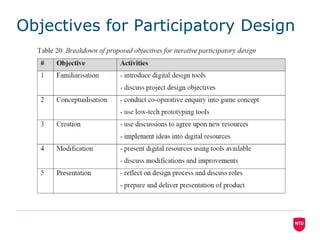
Objectives for Participatory Design
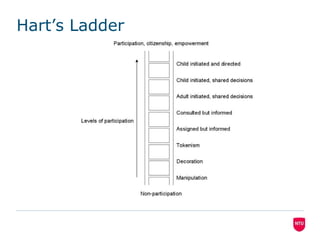
Hart’s Ladder
A Comparison of Approaches

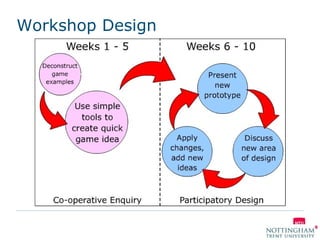
Workshop Design
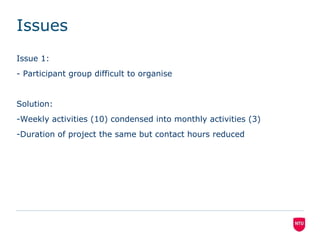
Issues
Issue 1:
- Participant group difficult to organise

Solution:
-Weekly activities (10) condensed into monthly activities (3)
-Duration of project the same but contact hours reduced
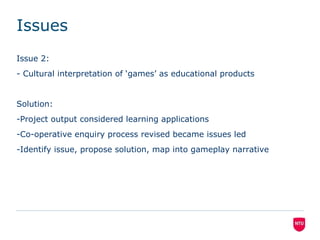
Issues
Issue 2:
- Cultural interpretation of ‘games’ as educational products

Solution:
-Project output considered learning applications
-Co-operative enquiry process revised became issues led
-Identify issue, propose solution, map into gameplay narrative
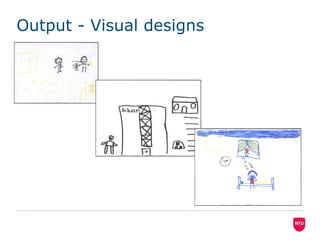
Output - Visual designs
Conclusions
• difficult top apply participatory design methods with demographic
• visual design documents useful for facilitating discussion

• BUT, design decisions are difficult to interpret
• requiring use of a selection matrix to quantify relevance of designs
• to achieve the desired outcomes of the RISE project

• This requires higher level of participation from educators
• which limits participation of end user to lower levels of Hart’s Ladder
Thank you

The role of participatory design in working with refugees to co-develop games for learning

  • 1.
    The role ofparticipatory design methods in working with refugees to co-develop games for learning Matthew Bates, Nottingham Trent University, UK
  • 2.
    RISE Project • RISEaims to remove the gaps in key competencies • that are creating barriers to employment • for refugees in the UK, Germany and Ireland • via the provision of a focussed curriculum • and accompanying learning materials, • including interactive desktop and mobile games learning resources, • which will be engaging and accessible to the target groups
  • 3.
    Investigation • Participatory designworkshops run in the UK, Ireland and Germany • Spring 2013 • Attempt to apply previous participatory design methods • With different target demographic of end user
  • 4.
  • 5.
  • 6.
    A Comparison ofApproaches Workshop Design
  • 7.
    Issues Issue 1: - Participantgroup difficult to organise Solution: -Weekly activities (10) condensed into monthly activities (3) -Duration of project the same but contact hours reduced
  • 8.
    Issues Issue 2: - Culturalinterpretation of ‘games’ as educational products Solution: -Project output considered learning applications -Co-operative enquiry process revised became issues led -Identify issue, propose solution, map into gameplay narrative
  • 9.
  • 10.
    Conclusions • difficult topapply participatory design methods with demographic • visual design documents useful for facilitating discussion • BUT, design decisions are difficult to interpret • requiring use of a selection matrix to quantify relevance of designs • to achieve the desired outcomes of the RISE project • This requires higher level of participation from educators • which limits participation of end user to lower levels of Hart’s Ladder
  • 11.

Editor's Notes

  • #5 Weekly delivery, appraisal and revision of these prototypes by learners then creates an iterative design method that is successful in fulfilling project objectives and deliverables in short projects typically of less than 10 weeks.
  • #6 Visualisation of different levels of participation