Download as PDF, PPTX

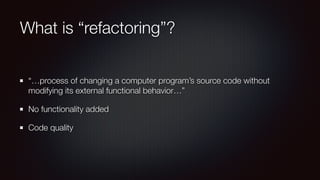
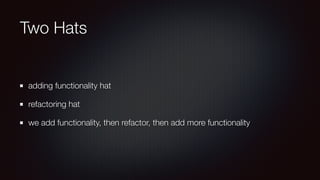
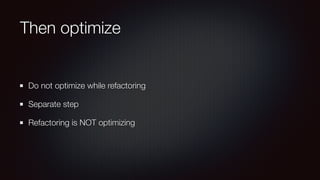

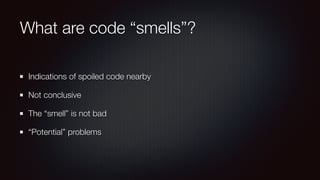
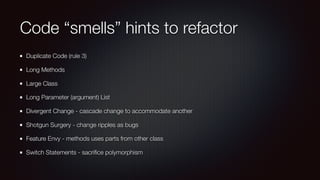
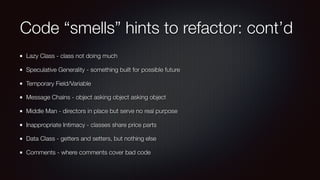
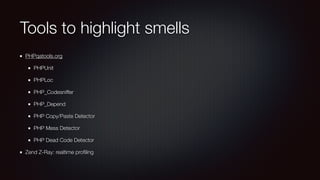




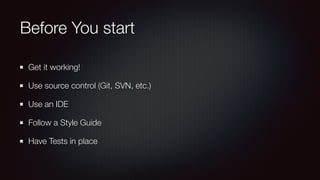




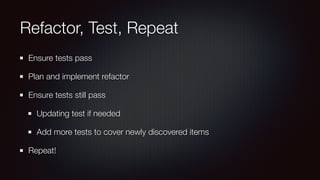
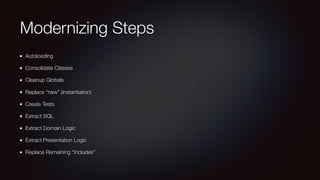
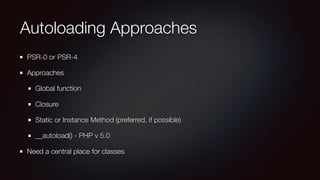

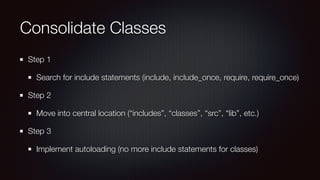

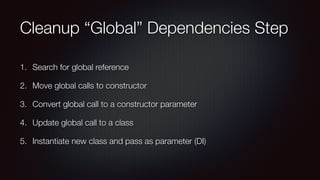

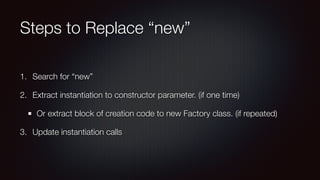







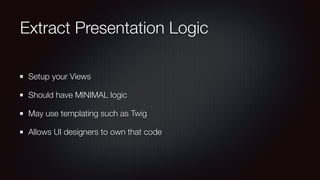

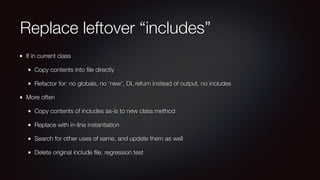

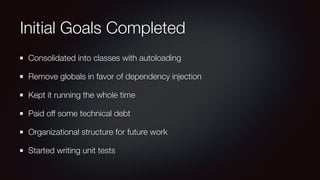
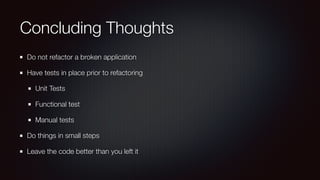

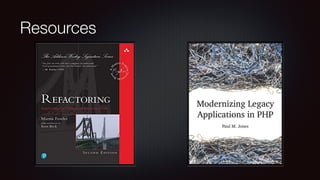


This document discusses strategies for refactoring legacy code to improve its design and maintainability. It defines refactoring as changing code structure without altering functionality. The key steps outlined are to first add new functionality, then refactor, then add more functionality. Code "smells" that indicate areas for refactoring include duplicate code, long methods, large classes, and more. Tools can help detect smells. Technical debt should be paid off incrementally by refactoring in small batches while ensuring tests pass. Specific refactoring techniques include autoloading, consolidating classes, removing globals, replacing instantiation with factories, extracting logic, and more. Testing is important throughout the refactoring process.


![Demystifying Object-Oriented Programming - PHP[tek] 2017](https://cdn.slidesharecdn.com/ss_thumbnails/demystifyingoop-170523183857-thumbnail.jpg?width=640&height=640&fit=bounds)


